10 Gorgeous Shoe Storage Cabinet Ideas for Every Room
- Shoe Storage
 Ben
Ben- 0
- 34 minutes read
Shoes everywhere. On the floor, under the couch, in random piles that seem to multiply overnight. You’ve tried organizing them, but within a week everything’s back to chaos.
I’ve been there—staring at the shoe disaster and wondering why I can’t just be a normal person who puts things away properly.
Here’s what changed everything for me: getting an actual shoe storage cabinet instead of just hoping open racks and piles would magically organize themselves.
Cabinets hide the mess, protect your shoes, and make your space look intentionally designed instead of like a shoe store clearance bin exploded. I’ve tried everything from cheap particle board nightmares that collapsed within months to custom builds that actually lasted.
Let’s talk about 10 shoe cabinet ideas that’ll work for different spaces, budgets, and organizational styles—because not everyone needs the same solution.
1. Minimalist Shoe Cabinet for Small Spaces
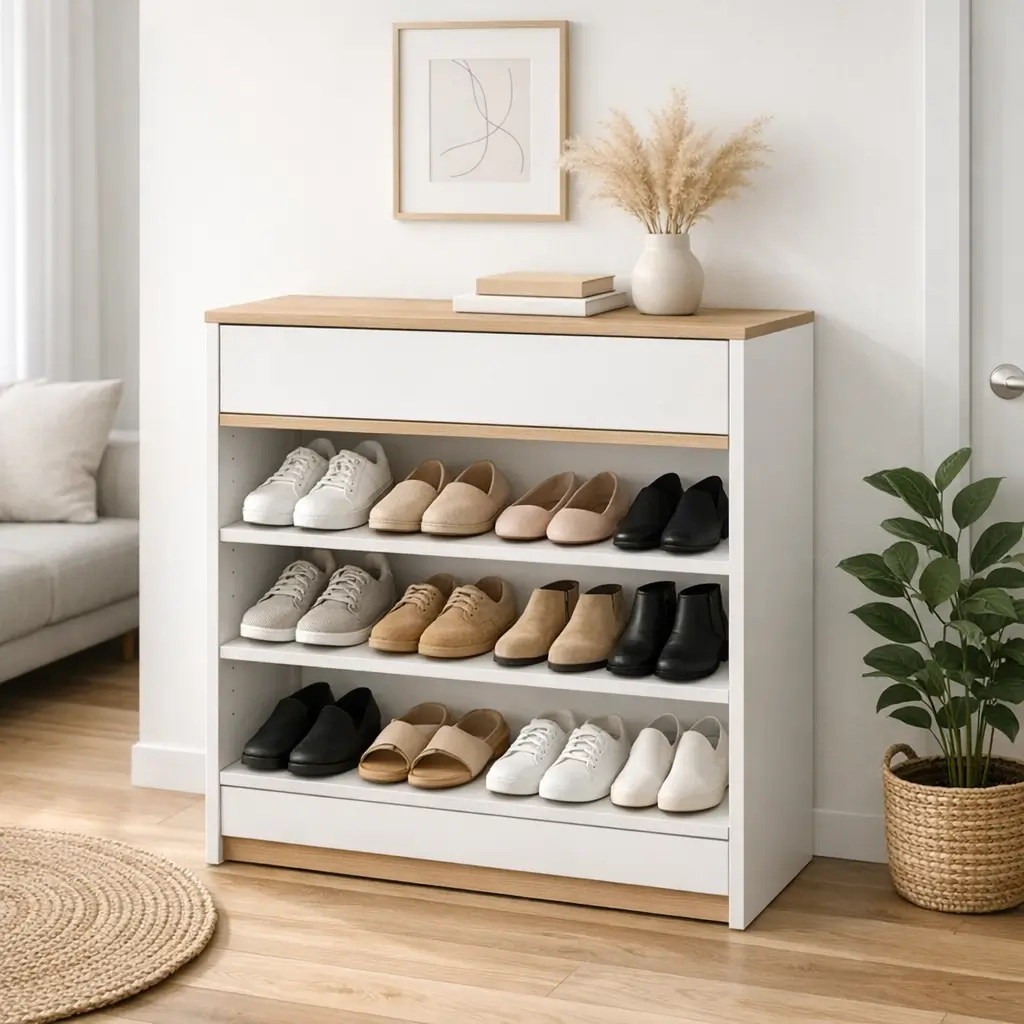
Small spaces demand efficiency, and minimalist shoe cabinets deliver exactly that. I squeezed a slim cabinet into my tiny apartment entryway, and it holds 15 pairs of shoes in a footprint smaller than most chair cushions.
These cabinets are typically narrow (about 6-8 inches deep) with shoes stored vertically or at an angle to maximize capacity while minimizing space usage. The clean lines and simple design mean they don’t visually overwhelm small spaces. Instead of making your entryway feel cramped, they actually make it feel more organized and intentional.
What makes minimalist cabinets perfect for tight spaces:
- Slim profile: Usually 6-10 inches deep, fits anywhere
- Vertical storage: Uses height instead of floor space
- Clean aesthetic: Doesn’t clutter the visual field
- Hidden storage: Doors keep chaos out of sight
I went with a white cabinet that blends into my walls rather than standing out. In small spaces, anything that draws attention needs to earn that attention. My shoe cabinet just quietly does its job without screaming “LOOK AT ME, I’M STORING SHOES!” Which is exactly what I needed.
The vertical storage means shoes stand on their toes or lay at angles. This takes some getting used to—you can’t just toss shoes in carelessly. But once you adjust to the system, it works brilliantly. I can see every pair when I open the door, and grabbing what I need takes seconds instead of the archaeological dig my old system required.
2. DIY Rustic Wooden Shoe Storage Cabinet
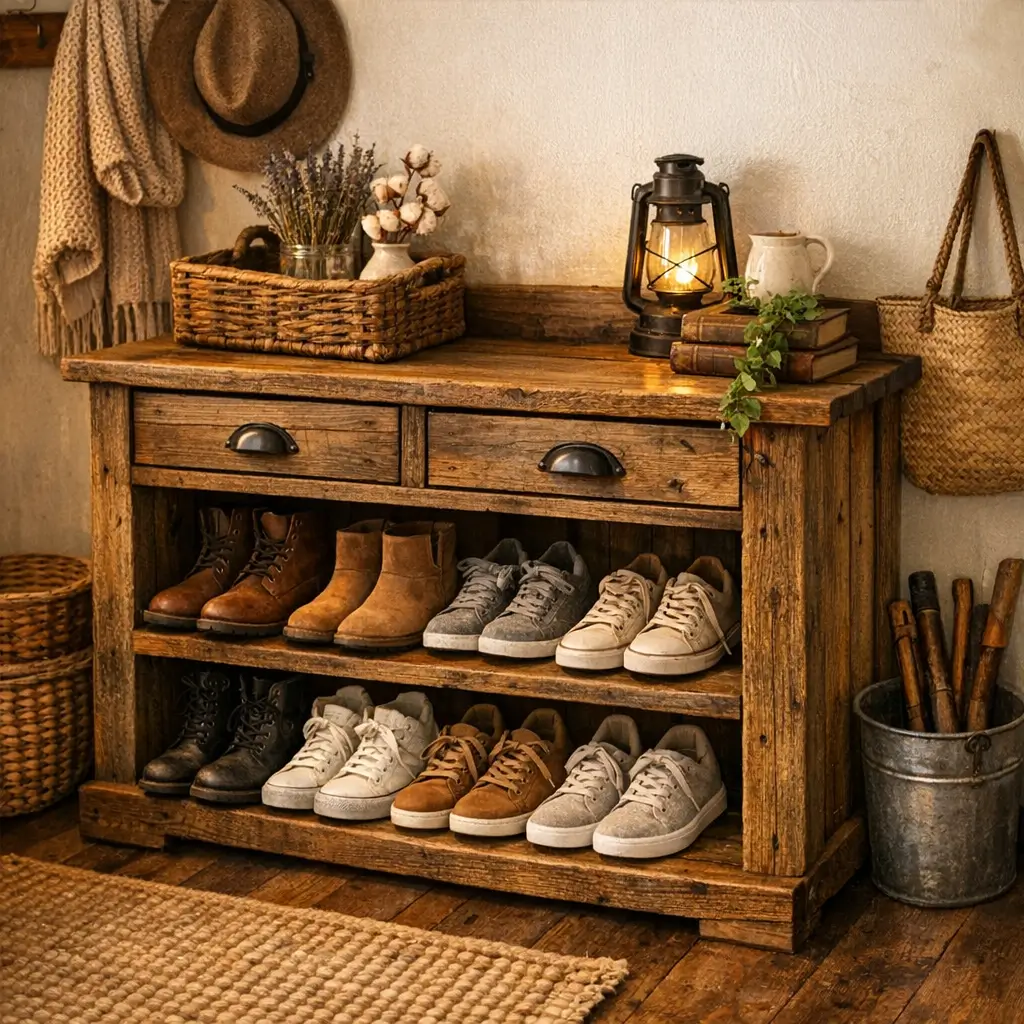
Building your own cabinet sounds intimidating until you realize how simple it actually is. I built a rustic shoe cabinet last year using reclaimed wood and basic tools, and it cost about $60 while looking like something from a boutique furniture store.
The beauty of DIY is complete customization. You build it exactly the size you need, with the number of shelves that makes sense for your collection, finished however matches your style. My cabinet has a weathered barn wood aesthetic that fits my space perfectly—something I could never find pre-made without spending hundreds of dollars.
Why DIY rustic cabinets are worth the effort:
- Custom sizing: Build for your exact space and needs
- Unique character: No two are exactly alike
- Budget-friendly: Usually way cheaper than buying
- Personal satisfaction: You made functional furniture with your hands
The construction is straightforward—basically a box with shelves and doors. I used pocket hole screws for assembly, which require a $40 jig but make everything super simple. No complicated joinery, no advanced woodworking skills required. If you can measure, cut, and drill holes, you can build this.
I finished mine with dark stain and left the wood grain visible for that rustic look. The whole project took one weekend—Saturday for cutting and assembly, Sunday for finishing touches. Now I have a cabinet that holds 20 pairs of shoes and looks way more expensive than it actually was. FYI, the money you save on labor makes the materials seem even cheaper.
3. Floating Wall-Mounted Shoe Cabinet Ideas
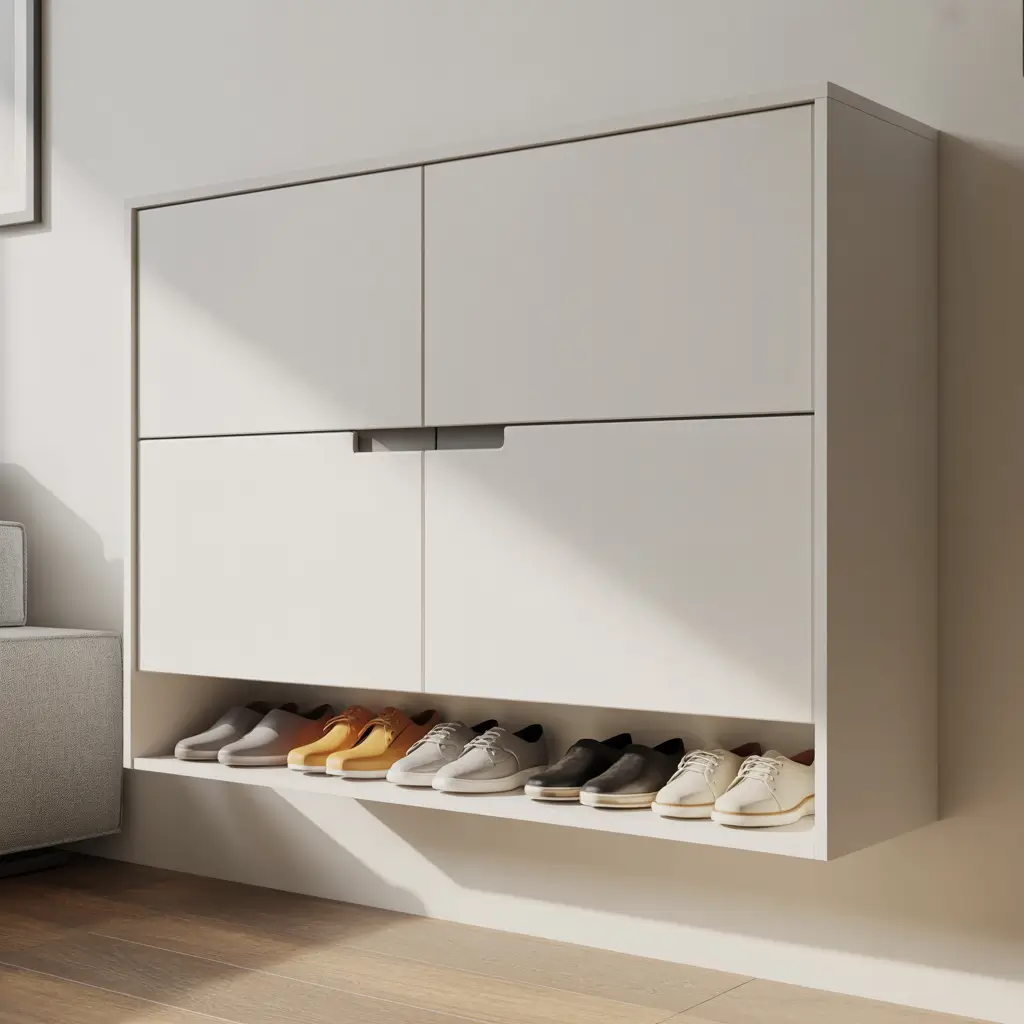
When floor space is nonexistent, mount your cabinet to the wall. I installed a floating shoe cabinet in my hallway about 18 inches off the ground, and it completely transformed the space without using any floor real estate.
These cabinets mount directly to wall studs and appear to float, creating storage without the visual weight of floor-standing furniture. The space underneath stays open, which makes small areas feel bigger and makes cleaning way easier. No more dust bunnies hiding under furniture because there is no “under.”
Floating cabinet advantages:
- Zero floor footprint: Floor stays completely clear
- Modern aesthetic: Looks sleek and intentional
- Easy to clean: Sweep or vacuum right underneath
- Adjustable height: Mount wherever works best
I mounted mine at a height where the top edge is about waist-level, making it easy to reach inside without bending down constantly. The cabinet holds about 12 pairs of shoes in slim compartments that maximize the depth available. Installation required finding studs and using heavy-duty mounting hardware, but the result is rock-solid storage that’s been holding strong for two years.
The key is proper installation. These cabinets are heavier than they look when loaded with shoes, and you absolutely need to hit wall studs or use serious wall anchors. I used 3-inch lag bolts into studs because I’m paranoid about things ripping off walls. Over-engineering is better than under-engineering when it comes to mounted furniture.
Also Read: 10 Smart Outdoor Shoe Storage Ideas That Save Space
4. Modern Entryway Shoe Cabinet with Bench
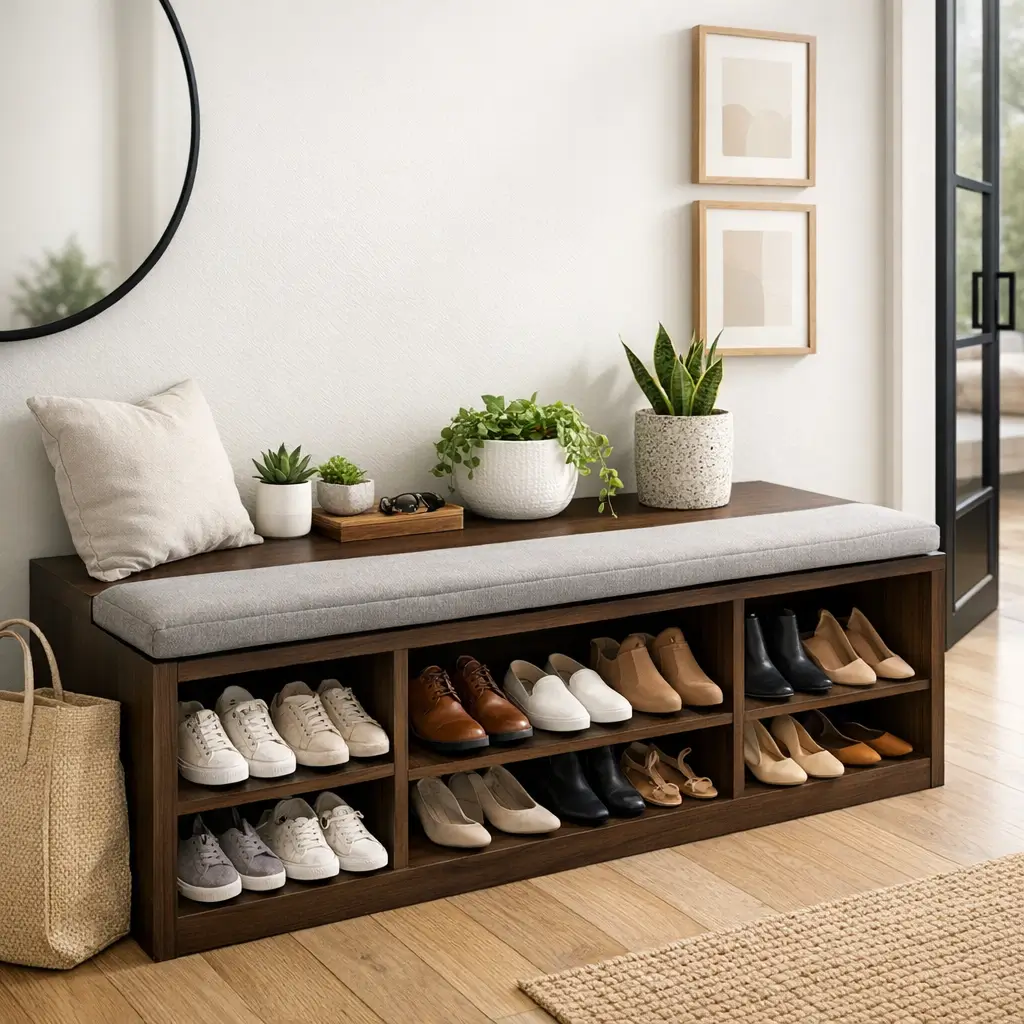
Combining seating with shoe storage is the genius move everyone should make. My entryway cabinet has a padded bench on top and shoe storage underneath, giving me both functions in one piece of furniture.
The bench provides comfortable seating for putting on shoes (no more one-leg hopping while trying to get boots on), while the cabinet below stores about 15 pairs out of sight. The modern design features clean lines and neutral colors that work with basically any decor style. It’s the kind of furniture that looks intentional rather than like you just needed somewhere to dump shoes.
Cabinet with bench benefits:
- Dual functionality: Seating and storage together
- Comfortable shoe routine: Sit down to put shoes on like a civilized person
- Guest-friendly: Provides seating for visitors
- Cohesive design: Looks like furniture, not just storage
I added a cushion on top for extra comfort, which transformed the bench from functional to actually pleasant to use. The cushion is about 3 inches thick memory foam covered in fabric that matches my entryway colors. Small detail, but it makes the difference between storage you use begrudgingly and furniture you actually appreciate.
The cabinet doors use soft-close hinges, which prevent that annoying slam when you close them quickly. I didn’t think this mattered until I had them, and now regular hinges feel barbaric. Soft-close is one of those upgrades that you don’t know you need until you have it, then you can’t imagine living without it.
5. Compact Corner Shoe Storage Cabinet
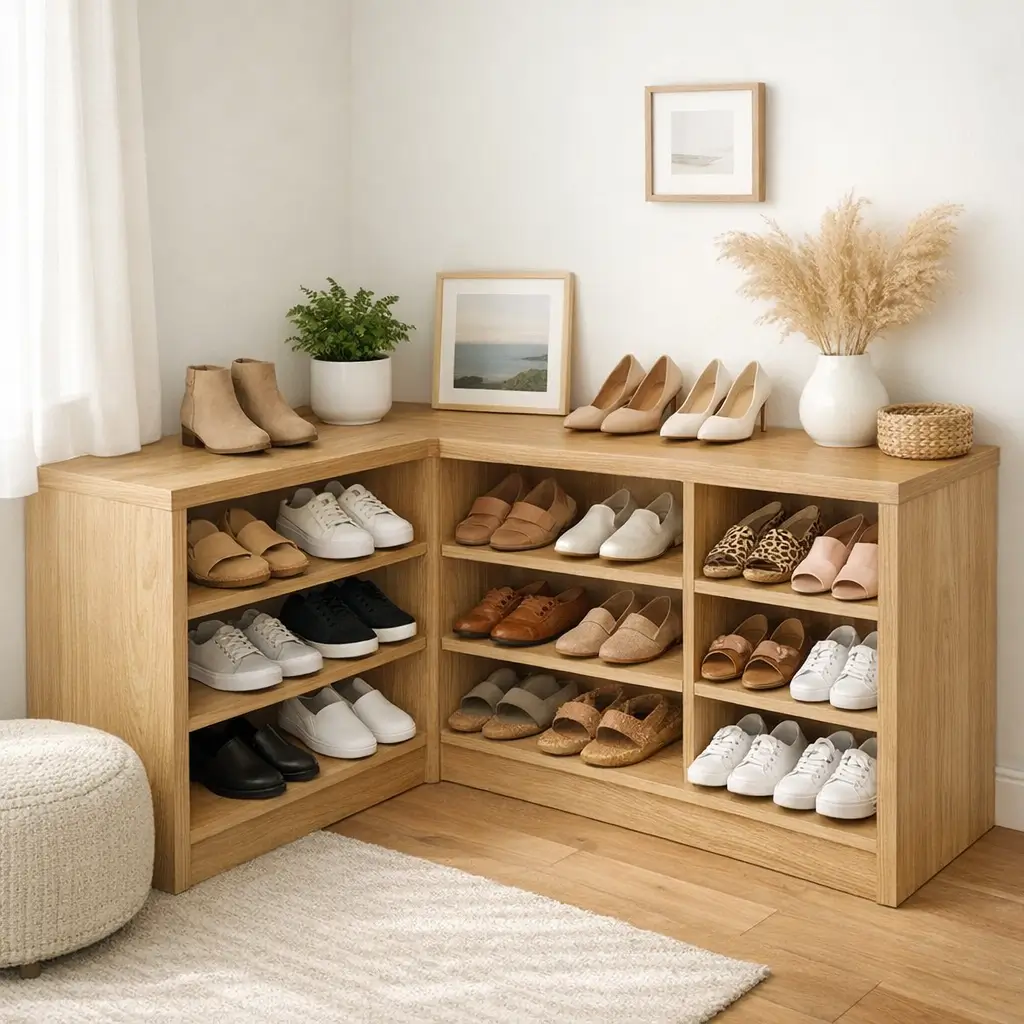
Corners are the most underutilized space in basically every room. I installed a corner shoe cabinet in my bedroom’s awkward corner, and it holds 18 pairs of shoes in a spot that was previously just collecting dust and random items I didn’t know what to do with.
Corner cabinets are specifically designed with angled or triangular footprints that fit perfectly into 90-degree corners. They use space that rectangular furniture can’t effectively occupy, turning dead zones into functional storage. The vertical design maximizes height while keeping the floor footprint minimal.
Why corner cabinets are brilliant:
- Uses wasted space: Makes dead corners functional
- Space-efficient design: Purpose-built for awkward angles
- High capacity: Surprising storage in small footprint
- Keeps floors clear: Vertical storage strategy
My corner cabinet has a triangular footprint that’s about 20 inches per wall but extends about 5 feet tall. The height gives it capacity despite the compact footprint. I organized it with everyday shoes at eye level, special occasion shoes up high, and off-season shoes at the bottom where they’re less accessible but still stored properly.
The angled design means the cabinet door opens fully without hitting adjacent furniture or walls, which is a problem I’ve had with regular cabinets shoved into corners. Purpose-built corner furniture just works better in corner spaces—revolutionary concept, I know :/
6. Luxury Hidden Shoe Cabinet for Bedrooms
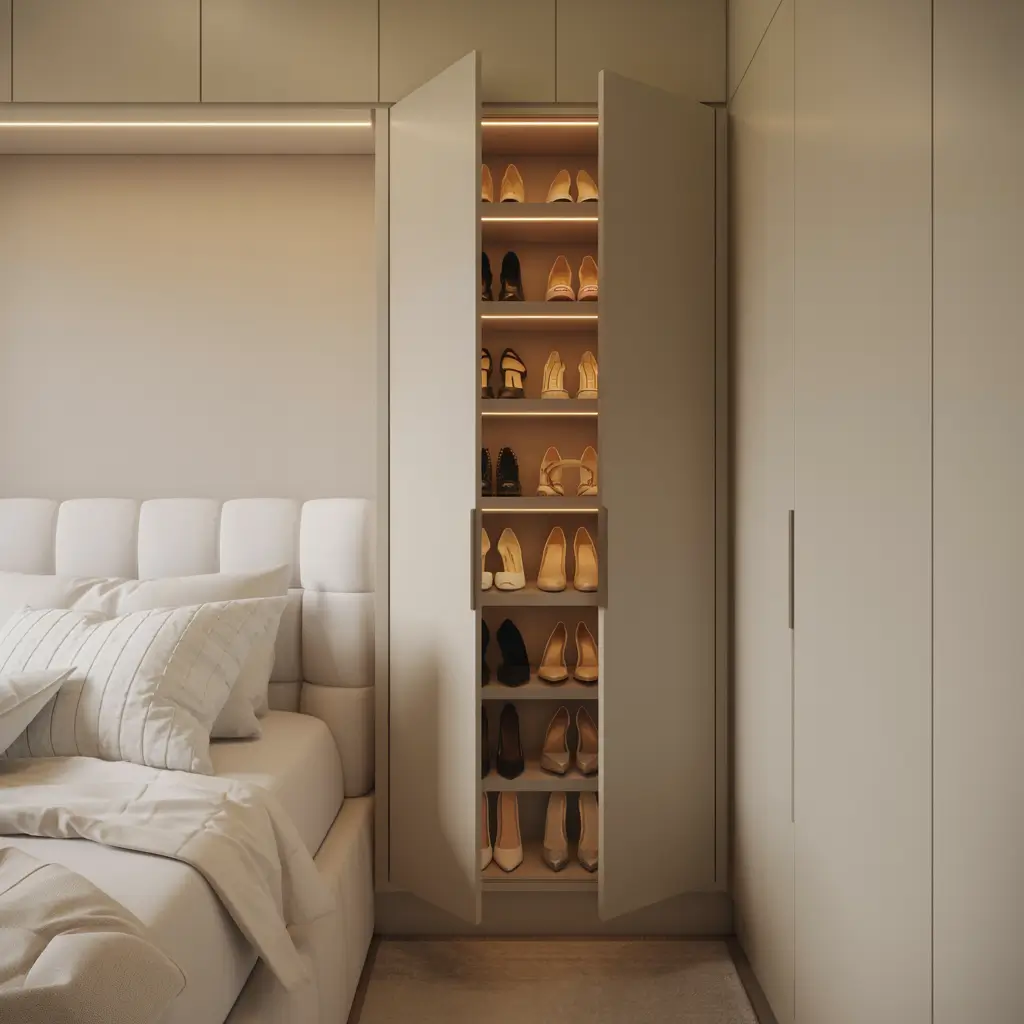
Sometimes you want shoe storage that doesn’t look like shoe storage at all. I have a hidden shoe cabinet in my bedroom that looks like a regular dresser from the outside but has specialized shoe storage inside.
These luxury cabinets are designed to blend into bedroom furniture while providing organized shoe storage behind closed doors. Mine has drawers that look normal but are actually configured with dividers and angled shelves perfect for shoes. Guests have no idea it’s shoe storage—it just looks like a nice piece of bedroom furniture.
Hidden cabinet advantages:
- Discrete storage: Looks like regular furniture
- Bedroom-appropriate: Matches bedroom aesthetics
- Dust protection: Enclosed storage keeps shoes clean
- Premium feel: Feels like a closet upgrade
The interior configuration is what makes these special. Regular drawers wouldn’t work well for shoes, but these have angled bottoms or specialized dividers that present shoes in an organized, visible way. I can open a drawer and immediately see my entire selection of flats, heels, or sneakers depending on which drawer I open.
I keep my nicer shoes in this cabinet—the ones that deserve protection and care. My beat-up everyday sneakers live elsewhere, but the shoes I actually invested money in get the luxury treatment in protected, organized storage. IMO, if you’re spending good money on quality shoes, you should store them properly instead of tossing them in a pile.
Also Read: 12 Simple Shoe Storage Ideas for Small Spaces That Work
7. Multi-Tier Sliding Shoe Cabinet Design
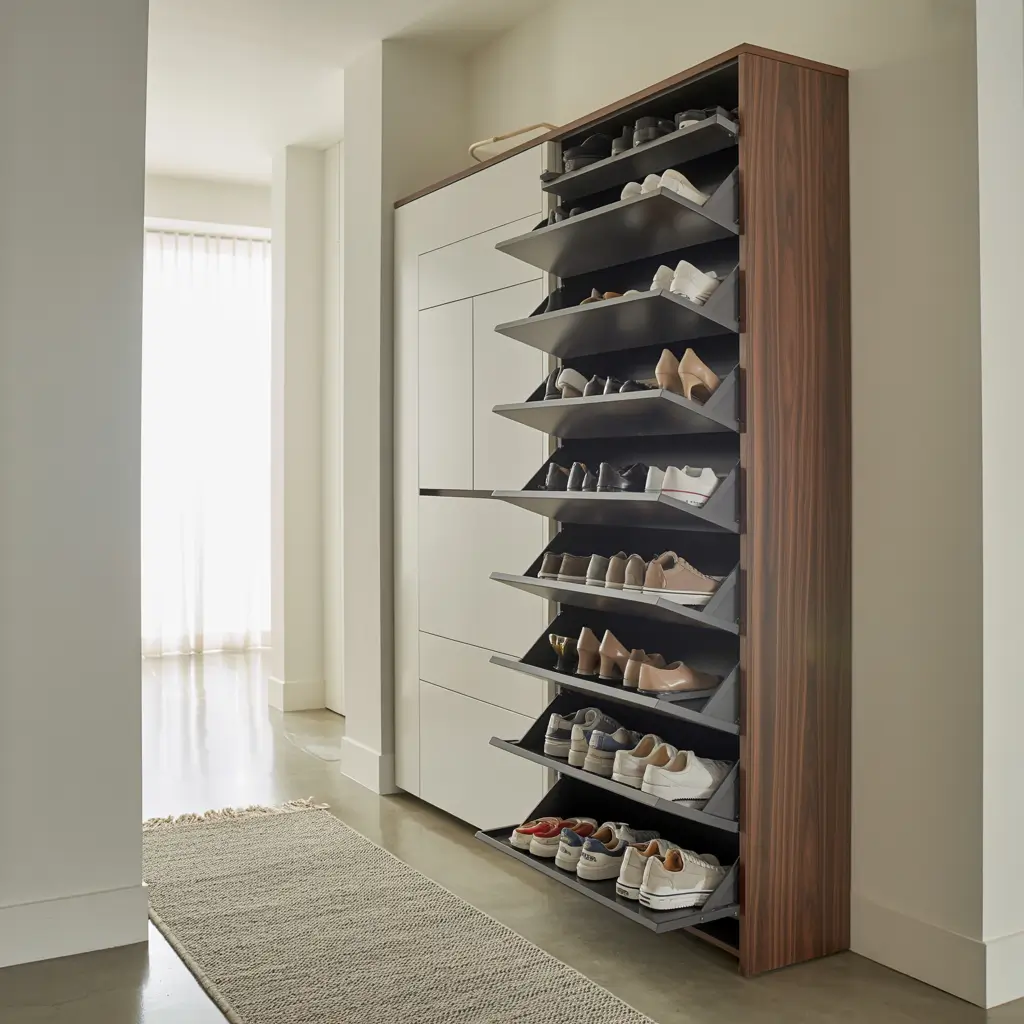
Sliding drawers or tilt-out compartments make accessing shoes ridiculously easy. My multi-tier cabinet has four sliding sections that pull out individually, and each one holds about 8 pairs of shoes.
The sliding mechanism means you’re never digging around the back of a shelf trying to find specific shoes. Pull out the drawer, see everything at once, grab what you need, push it back. It’s like having a filing system for your footwear, and honestly, it’s so much more functional than traditional shelving.
Multi-tier sliding cabinet features:
- Easy access: Pull out exactly the section you need
- Organized sections: Separate different shoe types
- No digging required: See everything immediately
- Smooth operation: Quality slides make it effortless
I organized mine by shoe type—one drawer for sneakers, one for flats, one for heels, one for boots. This system means I know exactly which drawer to open for whatever shoes I need. No more randomly searching through everything hoping to find what I’m looking for.
The quality of the sliding hardware matters hugely. Cheap slides stick, wobble, and eventually break. I upgraded to soft-close drawer slides that glide smoothly and close gently even when fully loaded. The difference between cheap and quality hardware is night and day—spend the extra $20 per drawer, it’s worth it.
8. Open Shelf Shoe Cabinet with Decorative Touch
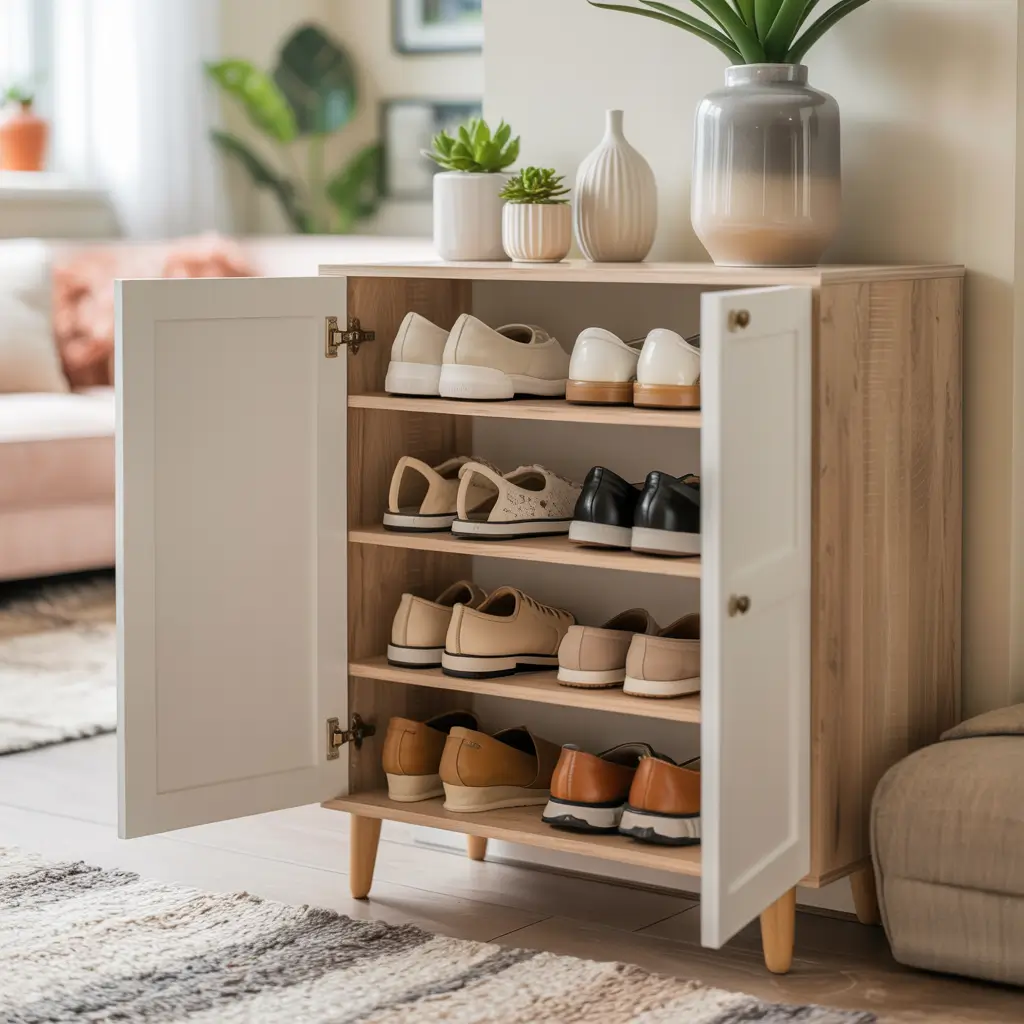
Not all shoe cabinets need doors—open shelf designs can be both functional and decorative. I have an open cabinet in my walk-in closet that displays my shoe collection like a boutique, and it actually looks good instead of messy.
The open design means shoes are visible and accessible at all times. This works if you actually like your shoes and want to display them as part of your decor. My cabinet has multiple shelves at different heights to accommodate various shoe sizes, and the whole thing is styled to look intentional rather than cluttered.
Open shelf cabinet benefits:
- Shoes as decor: Collection becomes part of the aesthetic
- Instant access: Grab and go without opening anything
- Visual inventory: See your entire collection at once
- Encourages organization: Everything’s visible, so you keep it tidy
I arranged my shoes by color gradient, which makes the open shelving look artistic instead of random. The visual progression from light to dark creates an intentional display that people always comment on. It takes maybe five extra seconds to put shoes back in color order, and the aesthetic payoff is worth that tiny bit of effort.
The key to making open shelving work is actually maintaining it. If you’re the type who kicks shoes off and leaves them wherever, open shelving will just showcase your mess. But if you’re willing to put shoes back properly, it creates storage that’s both functional and visually appealing.
9. Kids’ Colorful Shoe Storage Cabinet Ideas
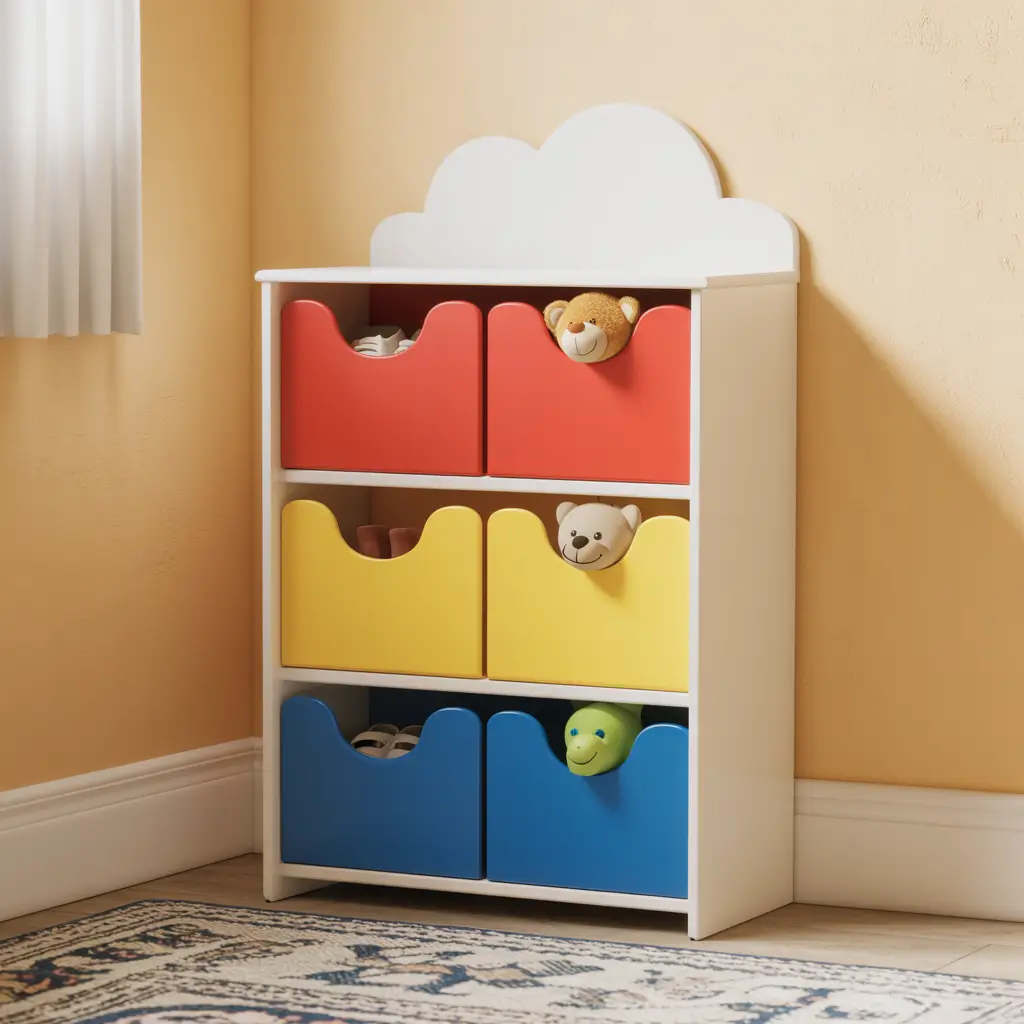
Kids need shoe storage that’s actually accessible and fun to use. I built a low cabinet for my kids with bright colors and easy-open doors, and suddenly they started putting shoes away without constant nagging.
The cabinet sits low enough that even my youngest can reach everything independently. Bright colors and fun handles make it appealing rather than just another chore-related piece of furniture. Each kid has designated sections, which reduces fights about whose shoes are whose and teaches basic organization skills.
Kids’ cabinet features that actually work:
- Low height: Kids can reach everything themselves
- Bright colors: Makes it visually appealing
- Labeled sections: Each kid knows where their shoes go
- Easy-open doors: No complicated latches or mechanisms
I labeled each section with both names and pictures (because young kids can’t read yet), making it obvious where everything belongs. The visual cues mean even my 4-year-old can put shoes away correctly without help. Teaching organizational skills early pays off—these habits stick with them.
The cabinet also includes a small bench on top where kids can sit to put shoes on. This reduces the morning chaos of everyone trying to get ready at once. They sit, put their shoes on, open their section, and grab whatever they need. The process is smooth instead of the usual disaster.
Also Read: 10 Amazing Garage Shoe Storage Ideas to Declutter Fast
10. Space-Saving Narrow Shoe Cabinet Solutions
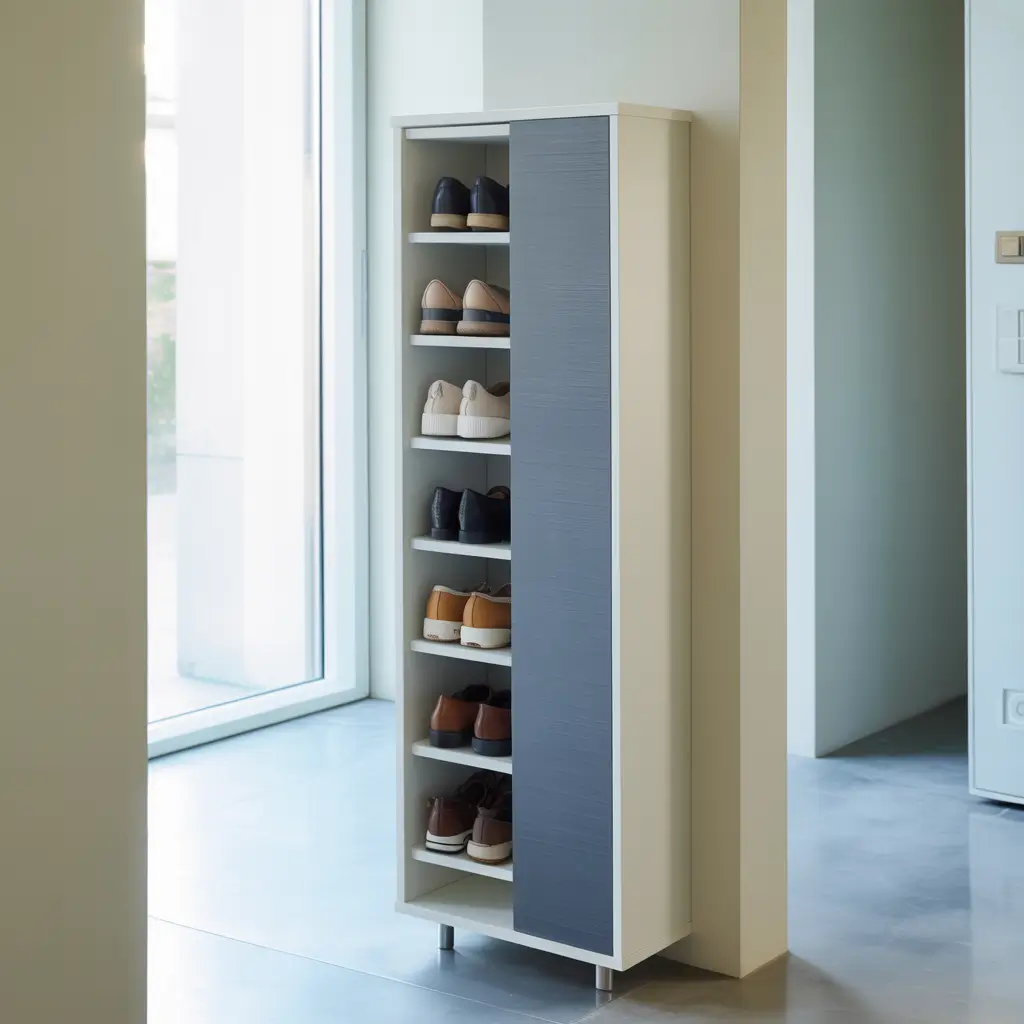
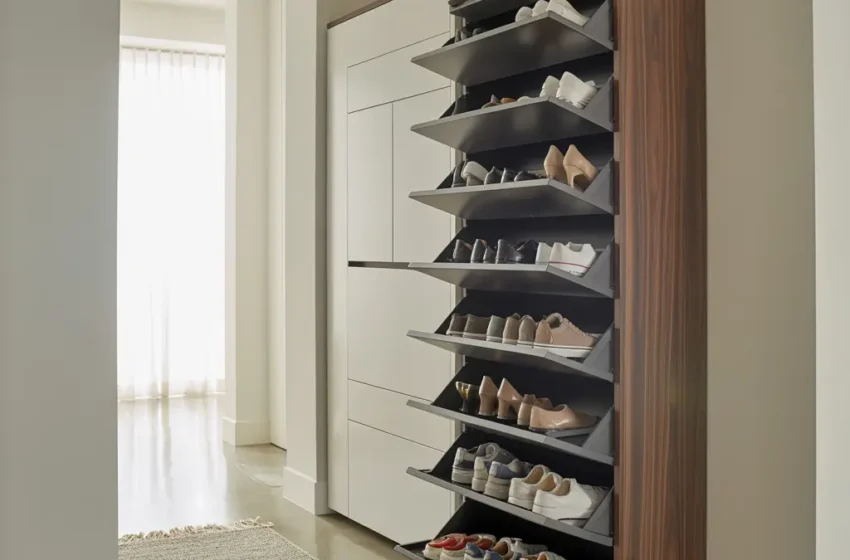
When you have literally no space to spare, narrow cabinets are your salvation. My narrow cabinet is only 10 inches deep but holds 24 pairs of shoes in a footprint that fits basically anywhere.
These ultra-slim cabinets store shoes at extreme angles or vertically to pack maximum capacity into minimal depth. They fit in hallways, behind doors, in closets—anywhere you have a strip of wall and 10 inches to spare. The narrow profile means they don’t dominate the space or create visual clutter.
Narrow cabinet advantages:
- Extreme space efficiency: Fits where nothing else will
- Hallway-friendly: Doesn’t block walkways
- Behind-door placement: Uses otherwise wasted space
- High capacity despite size: Surprisingly holds many pairs
I positioned mine in my hallway where it’s only about 6 inches from the wall but doesn’t impede traffic flow at all. The narrow profile is imperceptible until you actually look at it, and the white finish blends into the wall color. It’s stealth storage that hides in plain sight.
The angled storage means shoes don’t sit flat on shelves—they’re tilted at about 45 degrees. This configuration feels weird at first, but you get used to it quickly. The benefit is seeing every pair at once when you open the door, versus traditional flat storage where shoes hide behind each other.
Making Cabinets Work for Your Life
Shoe storage cabinets aren’t just about hiding shoes—they’re about creating systems that actually match how you live. I’ve had cabinets that looked amazing but were annoying to use, and I’ve had ugly cabinets that were incredibly functional. The sweet spot is finding both form and function in solutions that work for your specific situation.
Think about your daily routine before choosing a cabinet. Which shoes do you wear most often? Those need to be the most accessible. Which shoes are seasonal or rarely worn? Those can go in less convenient storage. I keep my everyday sneakers at eye level in easy-reach spots, while fancy heels I wear twice a year live on higher shelves that require reaching.
Consider where you actually take shoes off and put them on. Your cabinet should live near that spot, not across the house in some theoretically ideal location that you’ll never actually use. I learned this after putting a beautiful cabinet in my bedroom when I actually take shoes off at my front door. The cabinet sat empty while shoes piled by the door until I moved the cabinet to where I actually needed it.
Material quality matters more than you think. Cheap particle board cabinets fall apart when you actually use them daily. I’ve replaced three cheap cabinets in the time my quality wood cabinet has been going strong. Spending more upfront for durable materials saves money long-term and saves you from the frustration of collapsing furniture.
Maintenance is easier with cabinets than open storage. Enclosed storage hides dust and keeps shoes cleaner. I wipe down my cabinet interiors maybe once a month, which beats constantly dusting open shelves. The closed environment also protects shoes from accidental damage, pets, and general household chaos.
Size your cabinet for realistic capacity, not aspirational minimalism. I thought I could get by with a 12-pair cabinet. I own 35 pairs of shoes. Trying to cram everything into inadequate storage just creates overflow chaos. Be honest about how many shoes you have, then buy storage that actually accommodates that reality.
Transform Your Shoe Chaos Into Organization
Your shoe situation doesn’t have to be a constant source of stress and mess. The right cabinet makes organization automatic—you use it because it works, not because you’re forcing yourself to maintain some complicated system.
Start by measuring your available space and counting your actual shoes. These two pieces of information tell you what’s actually possible versus what’s wishful thinking.
I wanted a massive luxury cabinet but had space for a narrow one—accepting reality meant finding a solution that actually fit instead of dreaming about one that never would.
Think about what style of cabinet matches your space and lifestyle. Minimalist, rustic, modern, hidden—choose based on what you’ll actually enjoy using and looking at daily.
Functional storage that you hate looking at becomes storage you ignore, and ignored storage doesn’t help anyone 🙂
Your shoes deserve better than piles on the floor, and you deserve the peace of mind that comes from actual organization.
Pick a cabinet solution that makes sense for your space, commit to using it properly, and enjoy the satisfaction of knowing exactly where your shoes are for once. You’ve got this!