10 Creative Coffee Shop Design Ideas That Attract Customers
- Coffee Shop
 Ben
Ben- 0
- 37 minutes read
So you’re thinking about opening a coffee shop, or maybe you’re looking to give your current spot a facelift? Smart move. Here’s the thing—coffee tastes amazing basically anywhere (okay, maybe not gas station coffee), but people don’t just come to your shop for the caffeine fix. They come for the vibe, the atmosphere, the feeling they get when they walk through that door. I’ve spent way too many hours working from coffee shops, and trust me, I’ve seen what works and what definitely doesn’t. Let’s talk about ten design ideas that’ll have customers snapping photos, staying longer, and actually wanting to come back.
1. Minimalist Neutral Coffee Shop Design
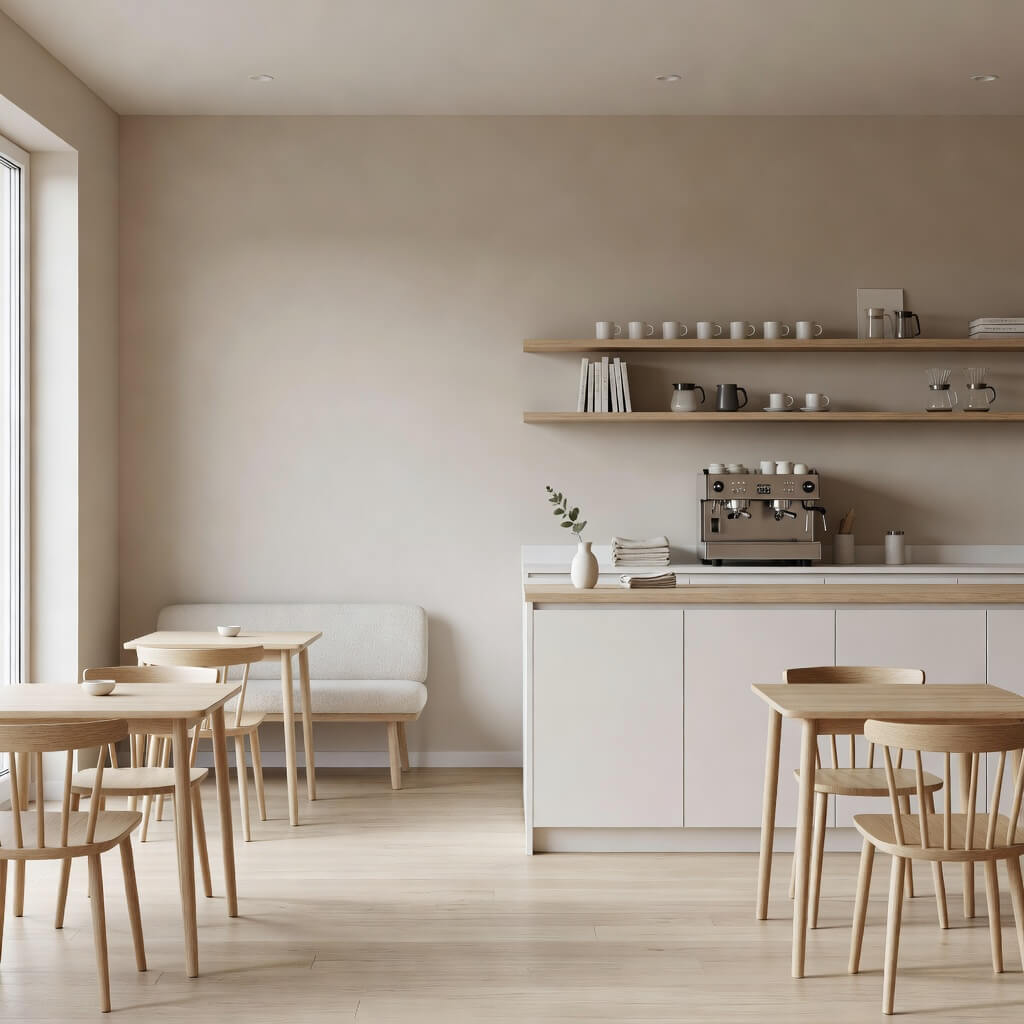
You know what’s incredibly powerful? Empty space. I know it sounds counterintuitive when you’re paying rent per square foot, but hear me out.
Minimalist neutral designs create this calm, almost meditative environment that people are desperately craving these days. Think clean lines, beige and cream tones, natural light flooding in through large windows, and furniture that doesn’t scream for attention. I walked into a minimalist café in Portland last year, and honestly, my stress level dropped the moment I stepped inside. No visual clutter, no overwhelming patterns—just peace.
Here’s what makes this design work:
- Neutral color palette: whites, beiges, soft grays, and warm taupes
- Simple furniture: clean-lined wooden tables and understated chairs
- Strategic negative space: don’t fill every corner with stuff
- Natural materials: untreated wood, concrete, simple ceramics
- Soft lighting: warm bulbs that create ambiance without being harsh
The beauty of minimalist design is that it lets your coffee and your customers become the focal point. You’re not competing with crazy décor—you’re creating a canvas where people can relax, work, or catch up with friends. Plus, this style photographs beautifully with natural light, which means free marketing when your customers post their lattes on Instagram. You’re welcome.
One warning though—minimalist doesn’t mean boring or sterile. You still need warmth. I’ve been to “minimalist” shops that felt like walking into a dentist’s waiting room, and yeah, that’s not the vibe. Add texture through natural materials, incorporate some greenery (even one or two statement plants work), and make sure your lighting is warm, not cold and clinical.
2. Industrial Brick Wall Café Interior
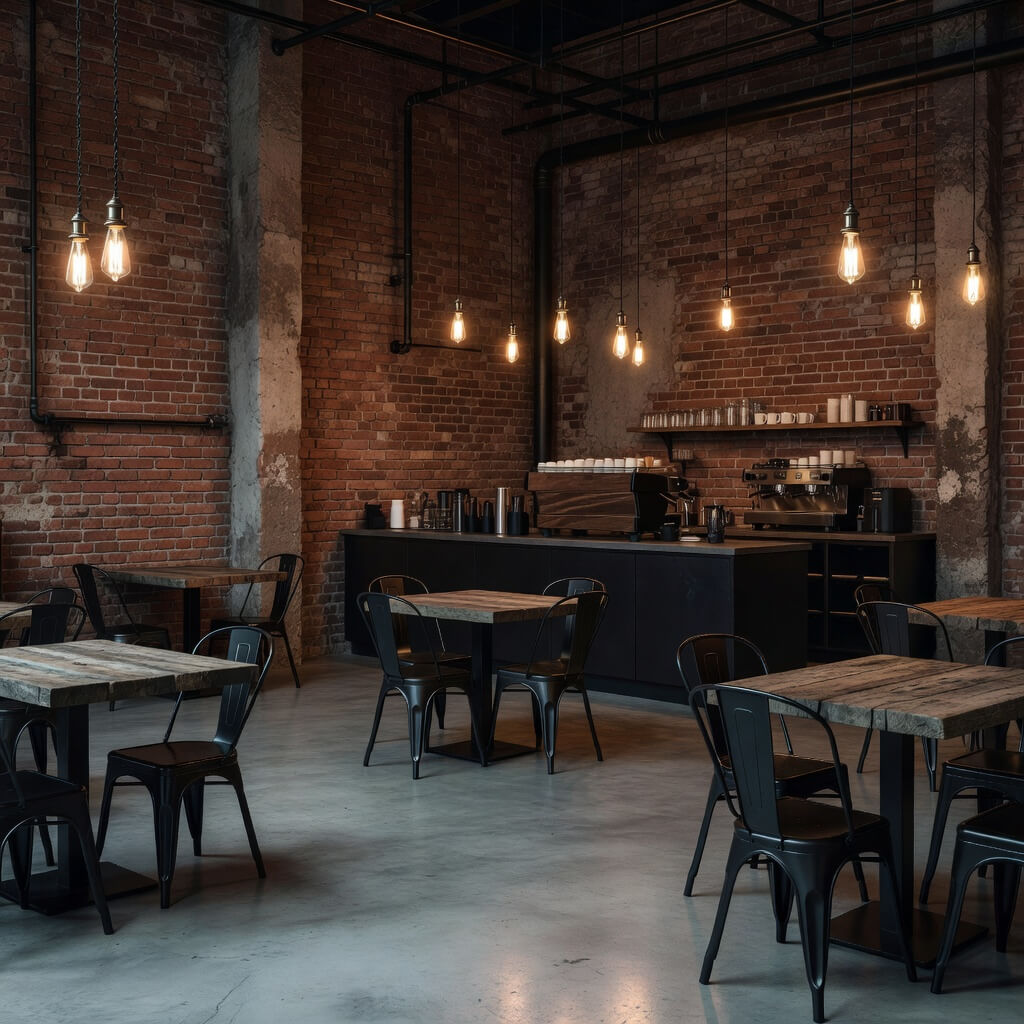
Ever wonder why exposed brick walls make everything look cooler? There’s something raw and authentic about industrial design that people absolutely eat up.
I’m talking exposed brick walls, metal fixtures, Edison bulbs hanging from the ceiling, and that whole “converted warehouse” aesthetic. This design tells a story—it says your coffee shop has character, history, and isn’t trying too hard to impress anyone. It just is cool.
Key elements of the industrial look:
- Exposed brick or concrete walls: the more weathered, the better
- Metal accents: iron pipes, steel furniture legs, industrial-style shelving
- Edison bulbs and pendant lighting: those vintage-looking filament bulbs are chef’s kiss
- Reclaimed wood: for tables, countertops, or accent walls
- Open ceiling: show off those ducts, pipes, and beams
- Leather seating: brown leather bar stools or booth seating adds warmth
The industrial style works particularly well if your building actually has history. Got exposed brick hiding under drywall? Reveal that beauty. Old wooden beams in the ceiling? Flaunt them. Sometimes the best design choice is simply uncovering what’s already there.
I remember this one café in Brooklyn (I know, how cliché) that had this incredible industrial vibe. They kept the original factory floors, exposed all the brick, and added these massive communal wooden tables made from reclaimed wood. The place was packed every single time I went, and people would literally wait 20 minutes for a seat. The design did half the marketing for them.
Making Industrial Feel Warm
Here’s the catch—industrial can feel cold if you’re not careful. Balance those hard surfaces with softer elements. Add some plants (they pop beautifully against brick), incorporate warm wood tones, and use warmer lighting. You want “urban loft” energy, not “abandoned factory” vibes 🙂
3. Cozy Rustic Wood Coffee Shop
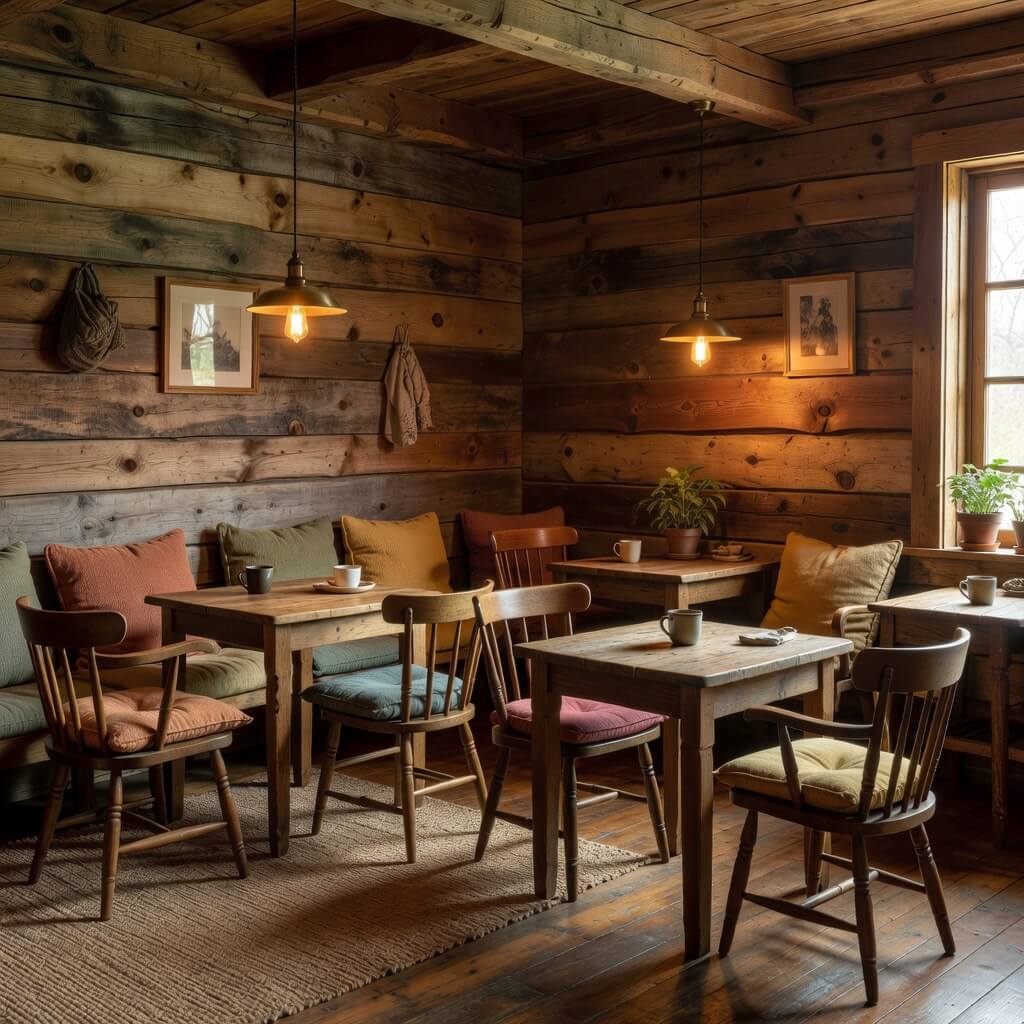
Nothing says “stay awhile” quite like a cozy rustic coffee shop. This is the design equivalent of a warm hug, and people respond to it instinctively.
Think lots of natural wood, from floor to ceiling. Wooden beams overhead, wooden tables, wooden chairs, maybe even wood paneling on the walls. Pair this with soft textiles—cushions, throws, maybe some vintage rugs—and you’ve created a space that feels like a cabin retreat right in the middle of the city.
What makes rustic design irresistible:
- Natural wood everywhere: oak, pine, reclaimed barn wood—the more character, the better
- Stone accents: a stone feature wall or fireplace (if you can swing it)
- Warm, dim lighting: think table lamps and wall sconces
- Comfortable seating: overstuffed chairs, cushioned benches, cozy nooks
- Natural textiles: linen, cotton, wool in earth tones
- Vintage touches: old books, antique coffee grinders, rustic signage
I worked from a rustic coffee shop for an entire winter once, and I swear I was more productive there than anywhere else. Something about being surrounded by warm wood and soft lighting made me actually want to settle in. They had this corner with a worn leather armchair next to a window, and people would literally race to claim that spot every morning.
The rustic look works especially well in colder climates or mountain towns, but honestly? Everyone appreciates coziness. FYI, this style also pairs beautifully with the smell of fresh coffee and baked goods—it’s a sensory experience that keeps people coming back.
Also Read: 10 Space Saving Shoe Rack Wall Design Ideas for Apartments
4. Modern Black & White Coffee Bar
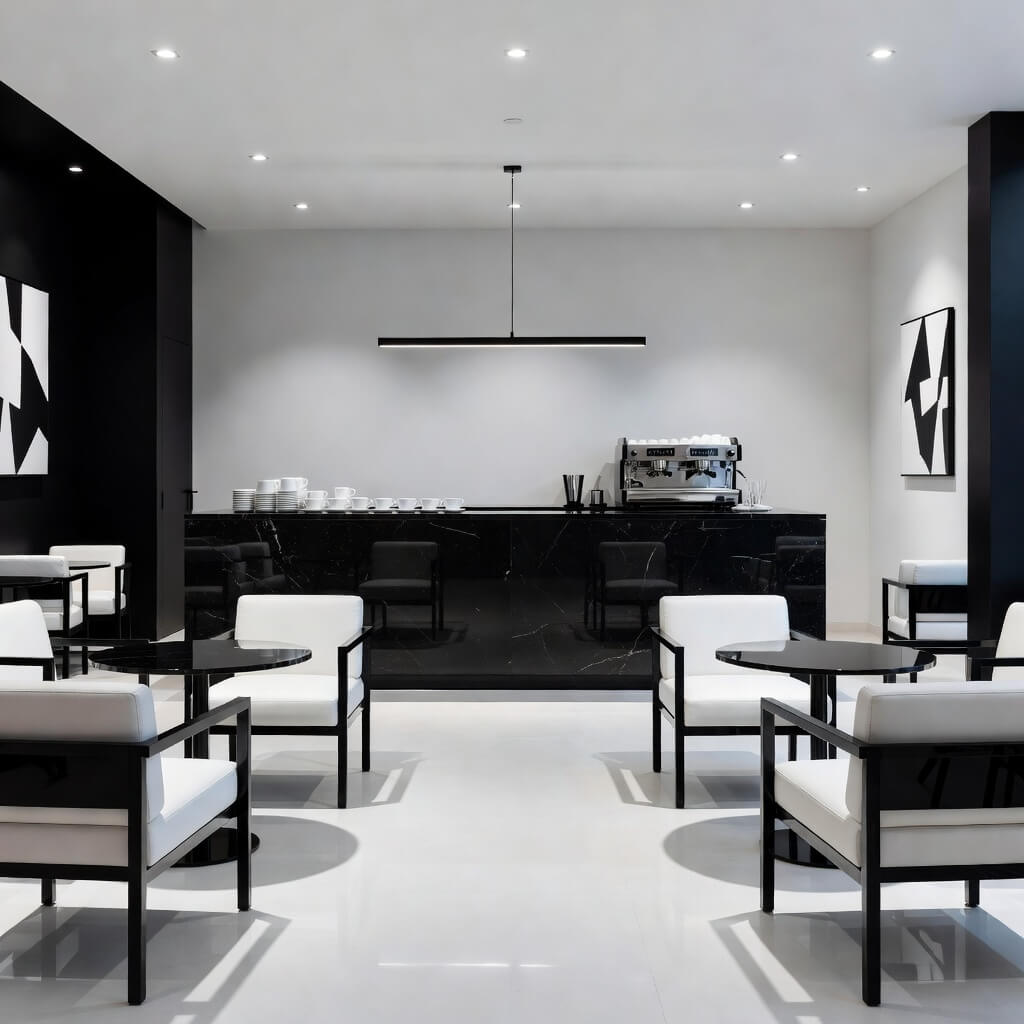
Want to make a bold statement? Go high-contrast with a modern black and white design. This look is sleek, sophisticated, and undeniably striking.
I’m talking crisp white walls with bold black accents, black and white tile floors (checkered patterns work great), black coffee equipment that becomes part of the design, and minimalist furniture in—you guessed it—black and white. This design is confident. It doesn’t apologize for taking up space, and it definitely doesn’t blend into the background.
Elements that make this work:
- Strong contrast: pure white walls against matte black fixtures
- Geometric patterns: black and white tiles, striped details, graphic wall art
- Modern furniture: sleek lines, contemporary shapes
- Metallic accents: chrome or brushed nickel adds sophistication
- Statement lighting: modern chandeliers or sculptural pendant lights in black
- Greenery for pop: plants provide the only color and soften the look
The black and white aesthetic photographs incredibly well, which is huge for social media marketing. Every latte looks Instagram-worthy against a clean black and white backdrop. I’ve noticed that modern coffee bars with this design tend to attract a younger, design-conscious crowd—people who appreciate clean aesthetics and aren’t afraid of bold choices.
Avoiding the Stark Trap
Here’s what you need to watch out for: this design can feel cold or unwelcoming if you don’t add warmth through other elements. Incorporate natural wood (even just cutting boards or serving trays), add plenty of plants, and make sure your lighting creates ambiance. You want “modern and inviting,” not “sterile museum.”
5. Small Space Smart Layout Coffee Shop
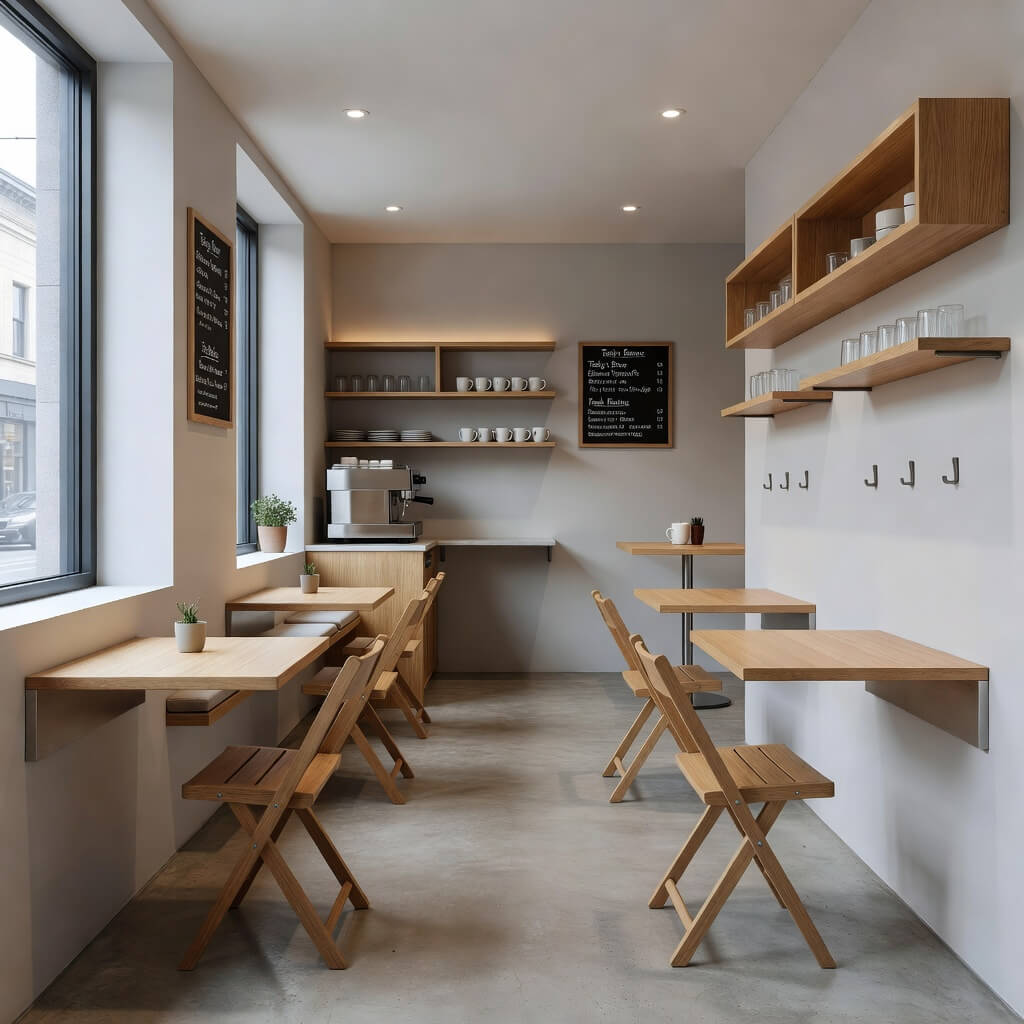
Not everyone has a massive budget or a huge space, and honestly? Small can be mighty when you design it right.
I’ve been to hole-in-the-wall coffee shops that felt more inviting and functional than sprawling cafés that wasted their space. The secret is smart layout planning—using every square foot intentionally and creating the illusion of more space through clever design tricks.
Smart small-space strategies:
- Vertical storage: floor-to-ceiling shelving, wall-mounted everything
- Multi-functional furniture: tables that fold down, nesting stools, benches with storage
- Light colors: whites and light neutrals make spaces feel larger
- Mirrors: strategically placed mirrors create depth and bounce light
- Window counter seating: bar-height counters along windows maximize seating without taking floor space
- Minimalist approach: every item needs to earn its place
The coffee shop near my apartment is probably 400 square feet max, but they’ve designed it so well that it never feels cramped. They installed a narrow counter along one entire wall with bar stools, added floating shelves for retail products, and kept the color palette light and airy. They serve 50+ customers during morning rush without feeling chaotic.
Small spaces also have advantages—they feel intimate and cozy naturally, operational costs are lower, and they’re easier to keep clean and manage. Plus, customers often perceive small, well-designed spaces as more authentic and less corporate. IMO, size matters way less than smart design.
6. Aesthetic Pastel-Themed Café Design
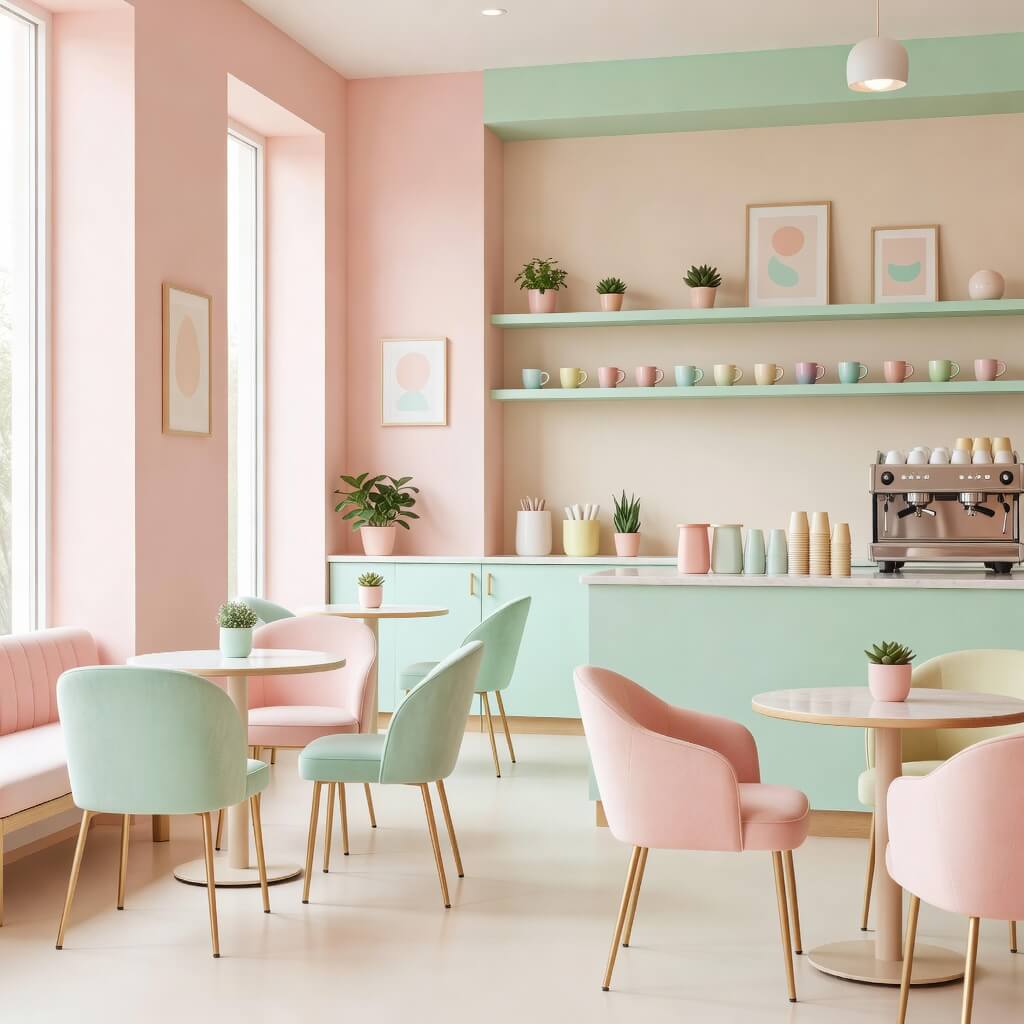
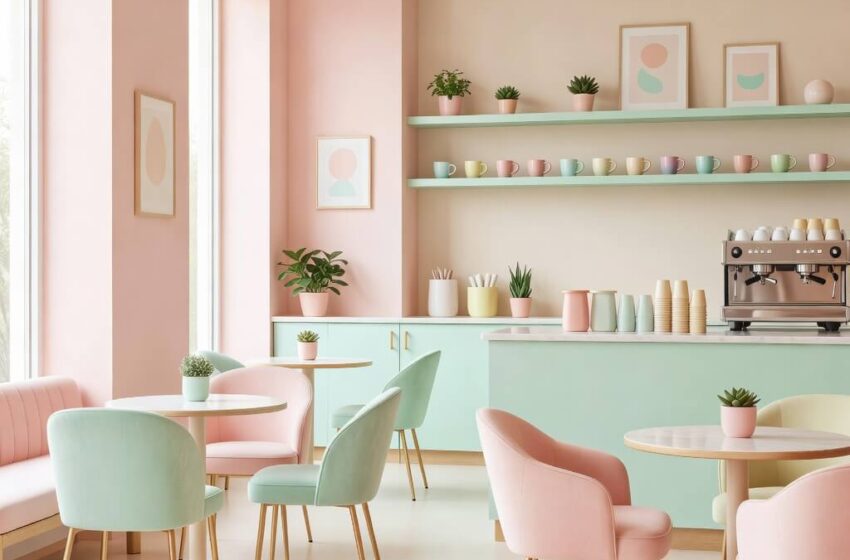
Want to create a space that’s literally designed for Instagram? Pastel-themed cafés are the answer, and they’re not just trendy—they’re smart business.
Soft pinks, mint greens, baby blues, lavender, and peachy tones create this dreamy, feminine, utterly photographable environment. I’m not gonna lie—the first time I walked into a pastel café, I thought it might be too much. But within five minutes, I got it. The space made people happy. Like, genuinely smile-while-ordering-coffee happy.
Creating the perfect pastel aesthetic:
- Soft color palette: choose 2-3 pastel colors as your main scheme
- Cohesive design: from walls to furniture to serving ware, everything coordinates
- Neon signage: a pastel neon sign creates a focal point for photos
- Unique ceiling: maybe a blush pink ceiling or cloud-like installations
- Instagrammable spots: design specific corners or walls as photo opportunities
- Matching details: even your napkins, cups, and menu boards should fit the aesthetic
Here’s the business angle: pastel cafés generate massive free marketing through customer photos. People can’t resist photographing their drinks against those pretty backgrounds. I watched a pastel café in LA gain 10,000 Instagram followers in three months just from customer tags and posts. That’s powerful.
The key is committing fully to the aesthetic. Half-hearted pastel doesn’t work—you need to go all in. And yes, this design definitely skews toward a specific demographic (younger, predominantly female), but if that’s your target market? This is gold.
Also Read: 10 Luxury Unique Shoe Rack Design Ideas for Modern Living
7. Vintage Retro Coffee Shop Interior
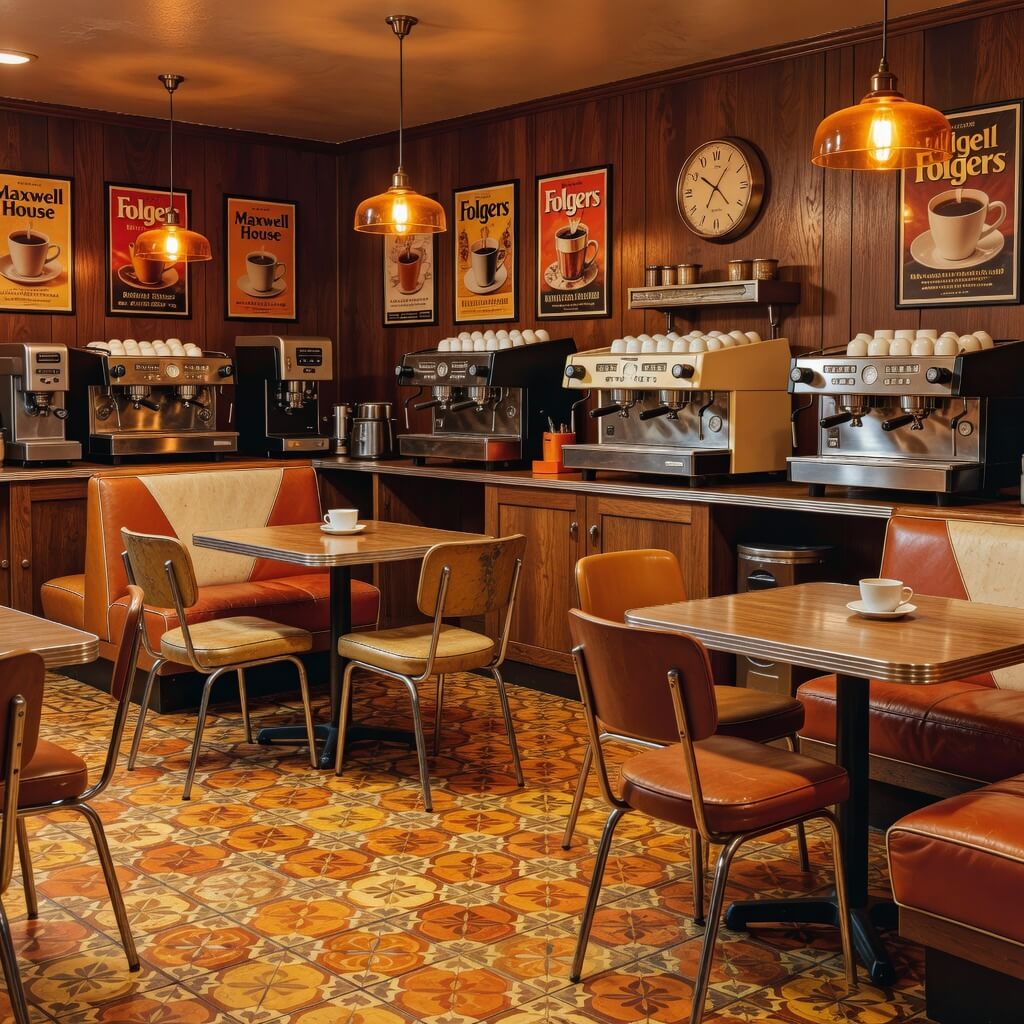
There’s something magical about stepping back in time, and vintage retro design lets you create that experience for your customers.
I’m talking 1950s diner vibes, mid-century modern furniture, vinyl records on the walls, vintage coffee posters, and maybe even a retro jukebox in the corner. This design is playful, nostalgic, and full of personality. It tells customers that you value craftsmanship, quality, and aren’t just following whatever’s trendy this month.
Retro elements that work beautifully:
- Mid-century modern furniture: think Eames chairs, tulip tables, atomic-age designs
- Bold colors: mustard yellow, avocado green, burnt orange, teal
- Checkered floors: classic black and white or colored tiles
- Vintage signage: old Coca-Cola signs, retro coffee advertisements
- Chrome accents: shiny chrome fixtures, vintage coffee machines
- Vinyl records and retro tech: displayed as décor
- Retro lighting: pendant lights with colored glass, vintage lamp shades
I spent an entire afternoon in a ’50s-themed coffee shop once, and the attention to detail was incredible. They had original vintage posters, actual mid-century furniture (not reproductions), and they served coffee in these adorable vintage-style cups. The crowd was super diverse too—older folks loved the nostalgia, while younger customers thought it was quirky and cool.
Sourcing Vintage Pieces
You don’t need to spend a fortune. Hit up estate sales, antique shops, online marketplaces, and flea markets. Sometimes the most authentic pieces are the ones you hunt down yourself. And honestly? A few genuine vintage items mixed with quality reproductions creates the perfect balance of authenticity and practicality.
8. Boho Plant-Filled Coffee Shop Design
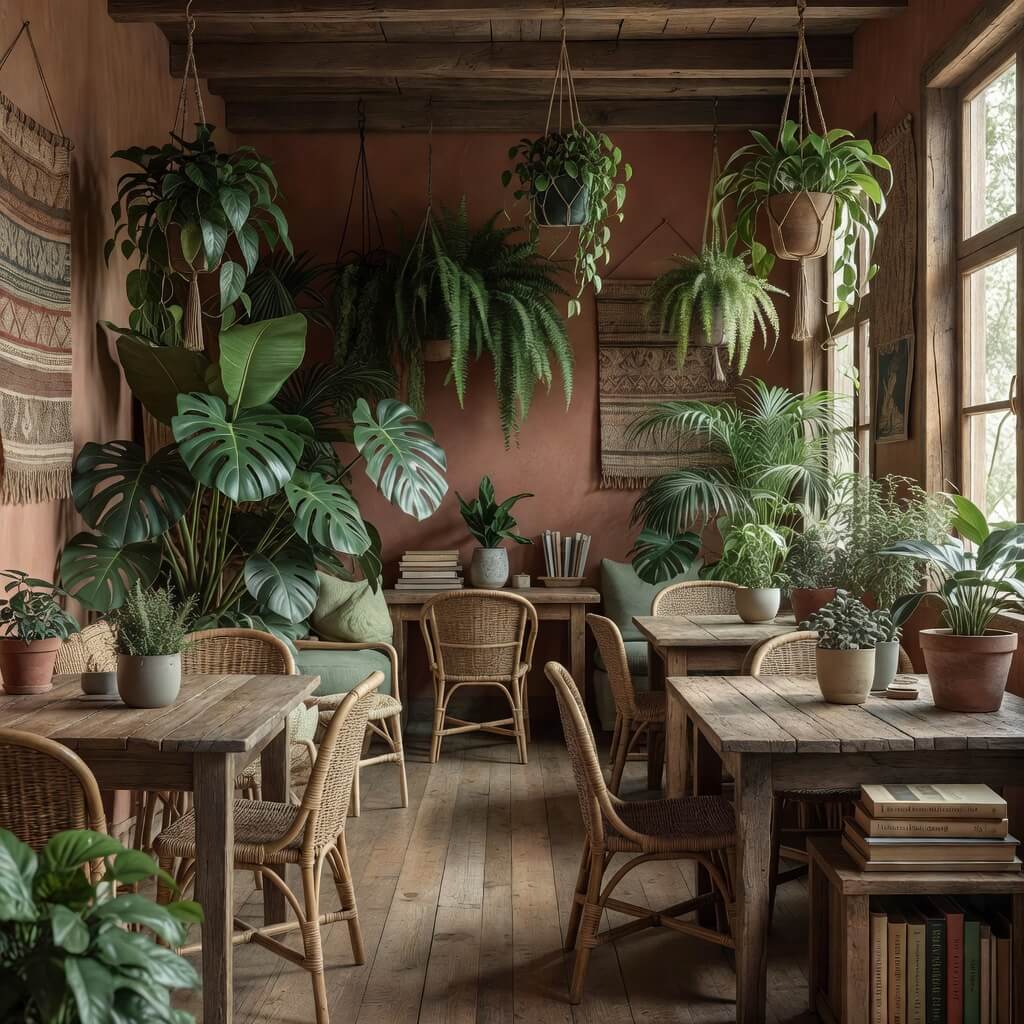
If you’ve ever wanted to drink coffee in a jungle, boho plant-filled design is your aesthetic. This style is relaxed, eclectic, and absolutely packed with greenery.
We’re talking plants everywhere—hanging from the ceiling, lining the windows, climbing up walls, sitting on every available surface. Pair this with natural materials, globally-inspired textiles, and a mix of vintage and handmade furniture, and you’ve created this bohemian paradise that feels both energizing and calming.
Boho design essentials:
- Plants, plants, plants: ferns, pothos, monstera, succulents—variety is key
- Natural materials: rattan, wicker, bamboo, jute, macramé
- Layered textiles: patterned rugs, embroidered cushions, woven wall hangings
- Warm lighting: string lights, lanterns, Moroccan-style lamps
- Mismatched furniture: no two tables or chairs need to match
- Earthy color palette: terracotta, sage green, cream, rust, mustard
- Handmade elements: pottery, artwork, crafted pieces
The boho look attracts creative types and people who value sustainability and natural living. I’ve noticed that plant-filled cafés tend to have incredible communities—regular customers who genuinely become friends because the space feels so welcoming and unpretentious.
Plus, plants literally improve air quality and create oxygen, which is a practical bonus when you’ve got a space full of people. They also provide amazing visual interest without costing a fortune. You can propagate plants and grow your jungle over time, which is way more budget-friendly than, say, installing marble countertops.
9. Luxury Marble Coffee Shop Setup
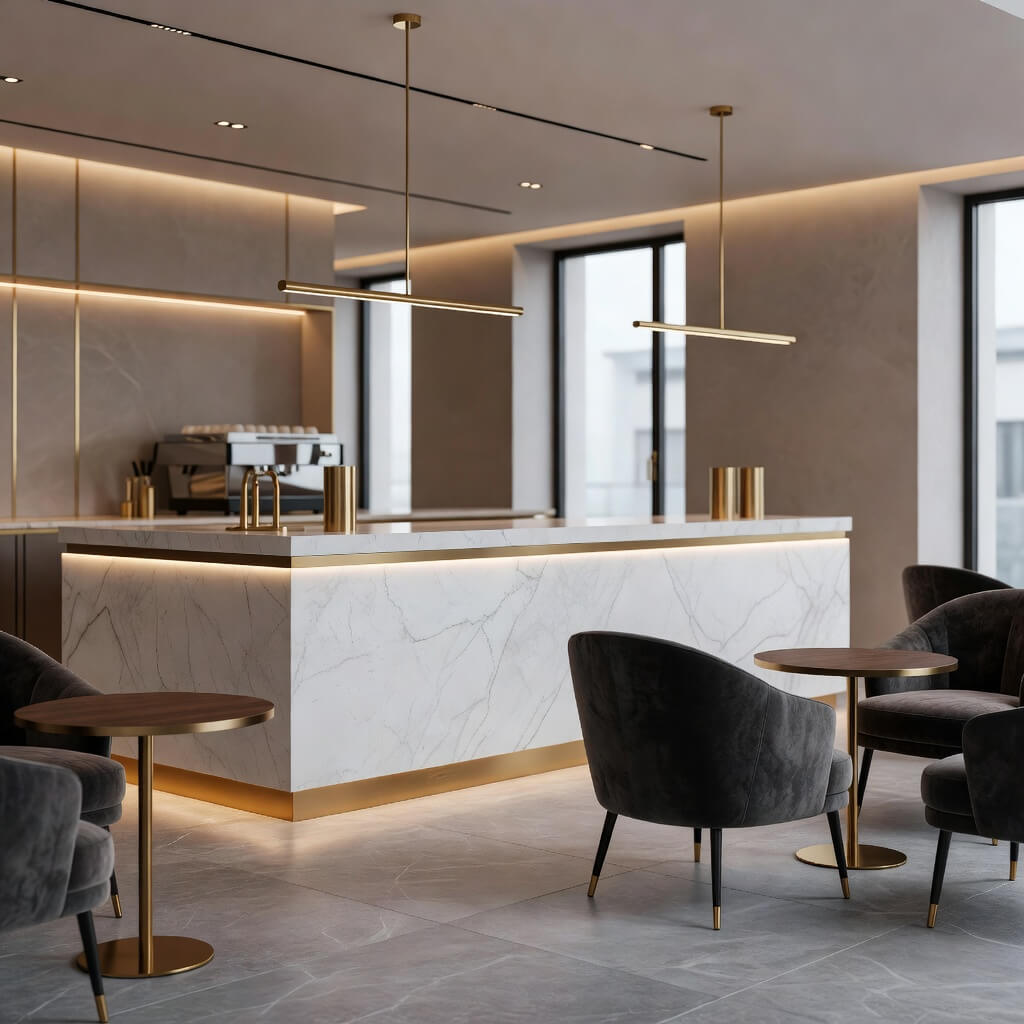
Sometimes you want to tell your customers: we serve premium coffee in a premium space. That’s where luxury marble design comes in.
Marble countertops, marble tables, marble accent walls—this material screams sophistication and quality. Pair it with brass or gold fixtures, plush velvet seating, and crystal chandeliers, and you’ve created a space that feels more like a high-end hotel than your average coffee shop.
Luxury elements that elevate your space:
- Marble surfaces: countertops, tables, wall panels (real or high-quality faux)
- Metallic accents: brass, gold, or rose gold fixtures and details
- Velvet seating: jewel-toned velvet chairs or banquettes
- Crystal or glass: chandeliers, pendant lights, or decorative elements
- High-end finishes: polished concrete floors, designer wallpaper
- Statement art: large-scale artwork or sculptural pieces
- Premium servingware: beautiful cups, saucers, and presentation
Here’s the thing about luxury design—it justifies premium pricing. Customers understand that a $7 latte in a marble-and-brass café makes sense because the entire experience feels upscale. I grabbed coffee at a luxury café in London, and even though I paid more than usual, I didn’t question it because the space made me feel like I was treating myself to something special.
This design works particularly well in upscale neighborhoods, business districts, or as a statement against the “rustic-industrial” trend that’s been everywhere. You’re zigging while everyone else zags, and that differentiation matters.
Also Read: 10 Unique Book Rack Design Modern Ideas for Trendy Spaces
10. Instagram-Worthy Neon Coffee Shop Theme
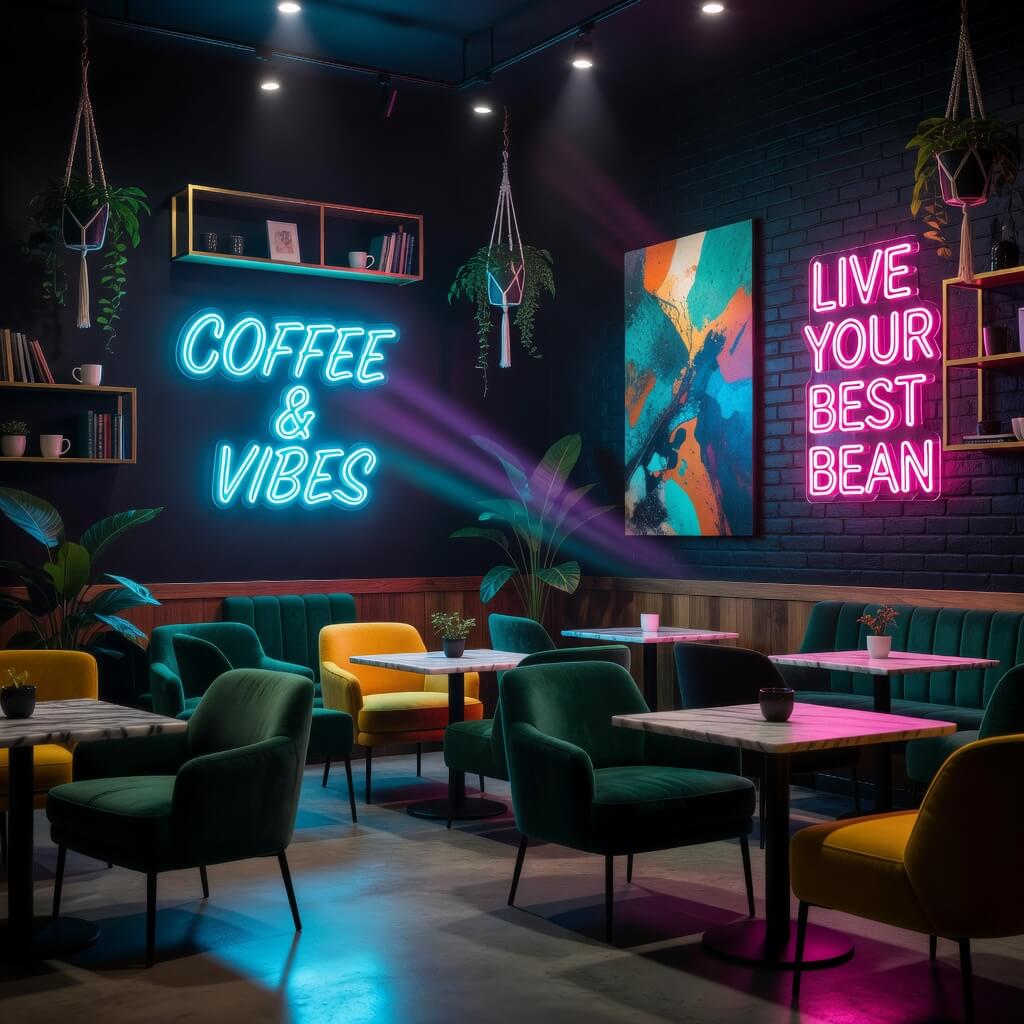
Let’s be real—social media marketing can make or break a coffee shop these days. Why not build that marketing directly into your design with neon everything?
Neon signs, neon lighting, bold colors, and designed-for-photo corners turn your coffee shop into a content creation machine. Every customer becomes a brand ambassador when they can’t resist posting photos of your space. I’ve seen coffee shops double their foot traffic within months of installing the right neon elements.
Neon design strategies:
- Statement neon sign: something witty, motivational, or brand-specific
- Bold color scheme: vibrant, saturated colors that pop in photos
- Designated photo walls: create specific backdrops designed for photography
- Creative neon shapes: coffee cups, lightning bolts, hearts, custom designs
- Contrasting backgrounds: neon pops best against dark or neutral walls
- Multiple photo opportunities: don’t put all your eggs in one basket—create several Instagrammable spots
- Good lighting throughout: natural light or well-placed artificial light for flattering photos
The smartest thing I’ve seen? Coffee shops that create custom hashtags and encourage tagging. One spot in Austin has this massive neon sign that says “But First, Coffee” and their custom hashtag printed right below it. Their Instagram feed is 90% customer-generated content, and they’ve barely spent money on traditional advertising.
The ROI of Being Instagram-Worthy
Think about it—every photo a customer posts reaches hundreds (maybe thousands) of people. That’s free advertising to your exact target demographic. I know someone who opened a neon-themed café and gained 15,000 followers before they even opened because people kept posting construction photos. The hype was real, and opening day was insane.
Just make sure the coffee quality matches the aesthetic. Pretty designs bring people in once, but good coffee brings them back. You need both.
Bringing It All Together
Look, coffee shop design isn’t just about making things pretty (though that definitely helps). It’s about creating an experience that makes people want to stay, return, and tell their friends about you.
The design you choose should align with your brand, your target customers, and honestly, your own personality. If you’re not feeling the pastel aesthetic, don’t force it just because it’s trendy. Authenticity shows, and customers can tell when a space has genuine personality versus when it’s just following formulas.
Think about what makes your coffee shop unique. Maybe you’re in a historic building that’s perfect for vintage design. Maybe you’re in a tiny space that needs smart layout solutions. Maybe you’re targeting young professionals who’ll love that sleek black and white modern look. Your space should tell your story.
And here’s something nobody talks about enough—your design will evolve. That minimalist neutral space might gain more character as you add elements over time. Your plant-filled boho café will literally grow and change. Your neon Instagram spot might need updates as trends shift. That’s okay. Great design is never truly finished; it’s a living thing that grows with your business.
One last thing: whatever design you choose, make sure it photographs well. I hate to be that person, but we live in a visual world where your Instagram feed matters almost as much as your actual space. Good lighting, interesting backgrounds, and photo-worthy details aren’t shallow—they’re smart business strategy.
So which design speaks to you? Maybe you’re feeling that cozy rustic vibe, or perhaps the luxury marble setup matches your upscale coffee dreams. Maybe you want to mix elements—industrial brick walls with boho plants, or minimalist neutral with pops of neon. The beauty of designing your own space is that you get to make the rules.
Just remember: your coffee shop design should make people feel something. Whether that’s relaxed, energized, inspired, nostalgic, or just plain happy—create spaces that connect with people emotionally. That’s what turns first-time visitors into regular customers and regular customers into your coffee shop’s biggest fans. Now go create something amazing—your customers (and your Instagram feed) will thank you.