10 Cozy Coffee Shop Interior Design Ideas Small Space Magic
- Coffee Shop
 Ben
Ben- 0
- 42 minutes read
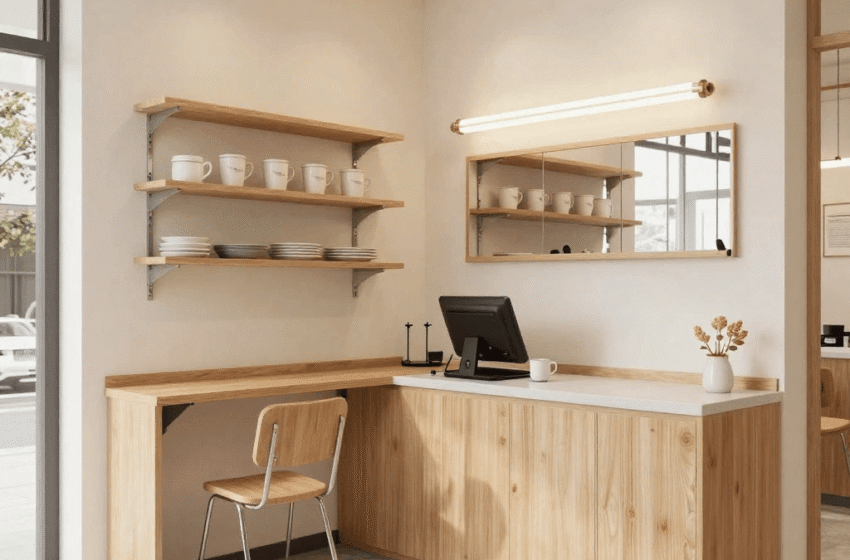
Look, I get it. You’ve got this tiny space, maybe it’s a cramped corner unit or a narrow storefront, and you’re somehow supposed to create the next Instagram-worthy coffee haven that’ll have people lining up around the block. Seems impossible, right? Wrong. Small spaces actually give you this amazing opportunity to get creative and craft something super intimate and memorable. I’ve spent way too many hours (and dollars, let’s be honest) in coffee shops analyzing what makes them tick, and I’m excited to share these game-changing design ideas that’ll transform your petite café into a cozy paradise. Trust me, size doesn’t matter when you’ve got the right design tricks up your sleeve.
1. Minimal Scandinavian Coffee Shop Aesthetic
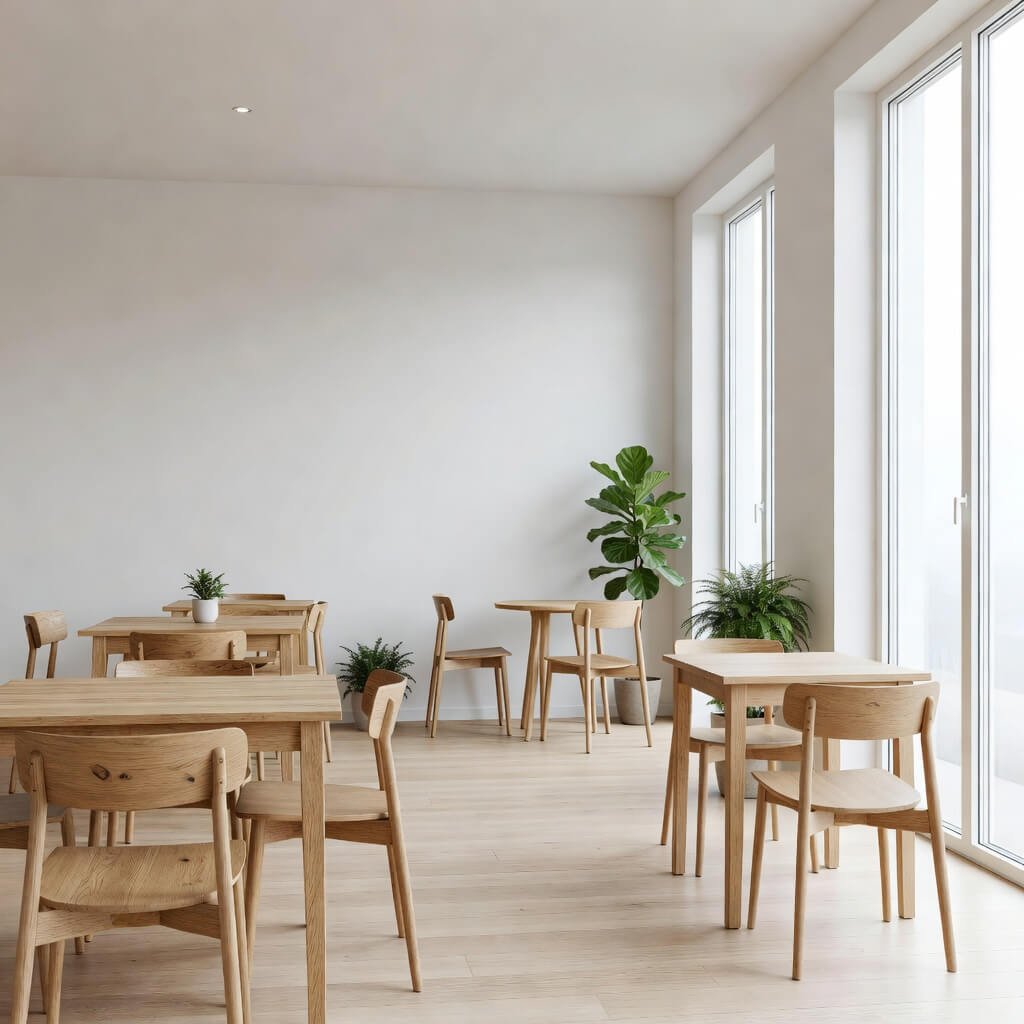
The Beauty of Less is More
You know what blows my mind about Scandinavian design? It somehow manages to feel warm and inviting while being ridiculously minimalist. This style is perfect for small coffee shops because it creates visual breathing room without making your space feel cold or sterile.
The Scandinavian aesthetic thrives on a neutral color palette—think whites, grays, soft beiges, and occasional pops of muted pastels. When you’re working with limited square footage, these light colors bounce light around and make your space feel significantly larger. I visited this tiny coffee shop in Portland that couldn’t have been more than 400 square feet, but the all-white walls and blonde wood furniture made it feel twice that size.
Key Elements to Nail This Look
Here’s what you absolutely need to pull off the Scandinavian vibe:
- Light wood furniture: Opt for birch, ash, or light oak tables and chairs
- Simple, clean lines: No fussy details or ornate decorations
- Functional design: Every piece should serve a purpose
- Natural textures: Incorporate wool throws, linen napkins, ceramic mugs
- Minimal greenery: One or two statement plants, not a jungle
- Pendant lighting: Simple geometric shapes in matte black or copper
The magic happens when you combine function with beauty. Those sleek wooden benches against the wall? They provide seating AND give you storage underneath. That floating shelf displaying ceramic mugs? It’s decor AND your cup storage. See what I’m doing here?
Why It Works for Small Spaces
Scandinavian design doesn’t overwhelm your senses. When customers walk in, they’re not bombarded with visual noise—they can actually relax. The streamlined furniture means easier navigation through tight spaces, and the light color scheme prevents that claustrophobic feeling that can happen in cramped quarters.
2. Industrial Brick Wall Café Interior Design
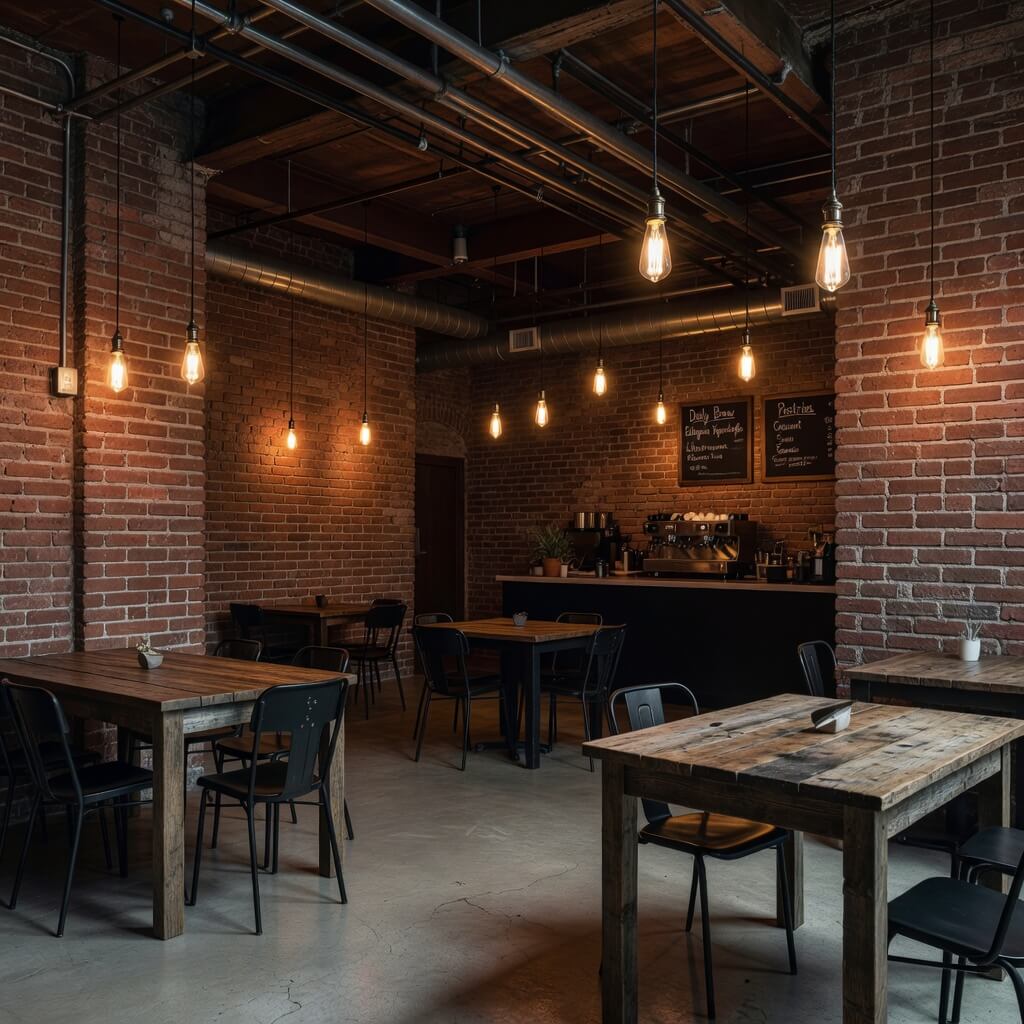
Embracing the Raw and Rough
Okay, confession time: I’m slightly obsessed with exposed brick. There’s something about that weathered, textured look that adds instant character and history to a space. The industrial aesthetic has exploded in popularity (for good reason), and it’s shockingly effective in small coffee shops.
If you’re lucky enough to have original brick walls, don’t you dare cover them up! Strip away any paint or plaster and let that beauty shine. Not blessed with authentic brick? No worries—brick veneer panels or even high-quality brick wallpaper can give you the look without the structural headaches.
Creating the Industrial Vibe
The industrial look goes way beyond just brick walls. You’re building an entire atmosphere here:
- Metal accents: Steel shelving units, iron pipe table legs, metal bar stools
- Edison bulb lighting: Hang them from black pendant cords or industrial cage fixtures
- Concrete elements: Polished concrete floors or concrete countertops
- Reclaimed wood: Old barn wood tables or salvaged timber shelving
- Visible utilities: Don’t hide those ducts and pipes—paint them black and make them a feature
- Vintage industrial decor: Old factory carts, metal signage, antique scales
One coffee shop I frequent converted an old mechanic’s garage, and they kept the roll-up door and oil stains on the concrete floor. That authenticity? Chef’s kiss. You can’t fake that kind of character.
The Small Space Advantage
Here’s the thing about industrial design in tight quarters—it actually works in your favor. The exposed ceiling with visible ductwork creates vertical space and makes your ceilings feel higher. Dark brick walls might sound counterintuitive for small spaces, but when you balance them with proper lighting and lighter elements, they create depth rather than closing things in.
3. Cozy Warm Wooden Coffee Corner Setup
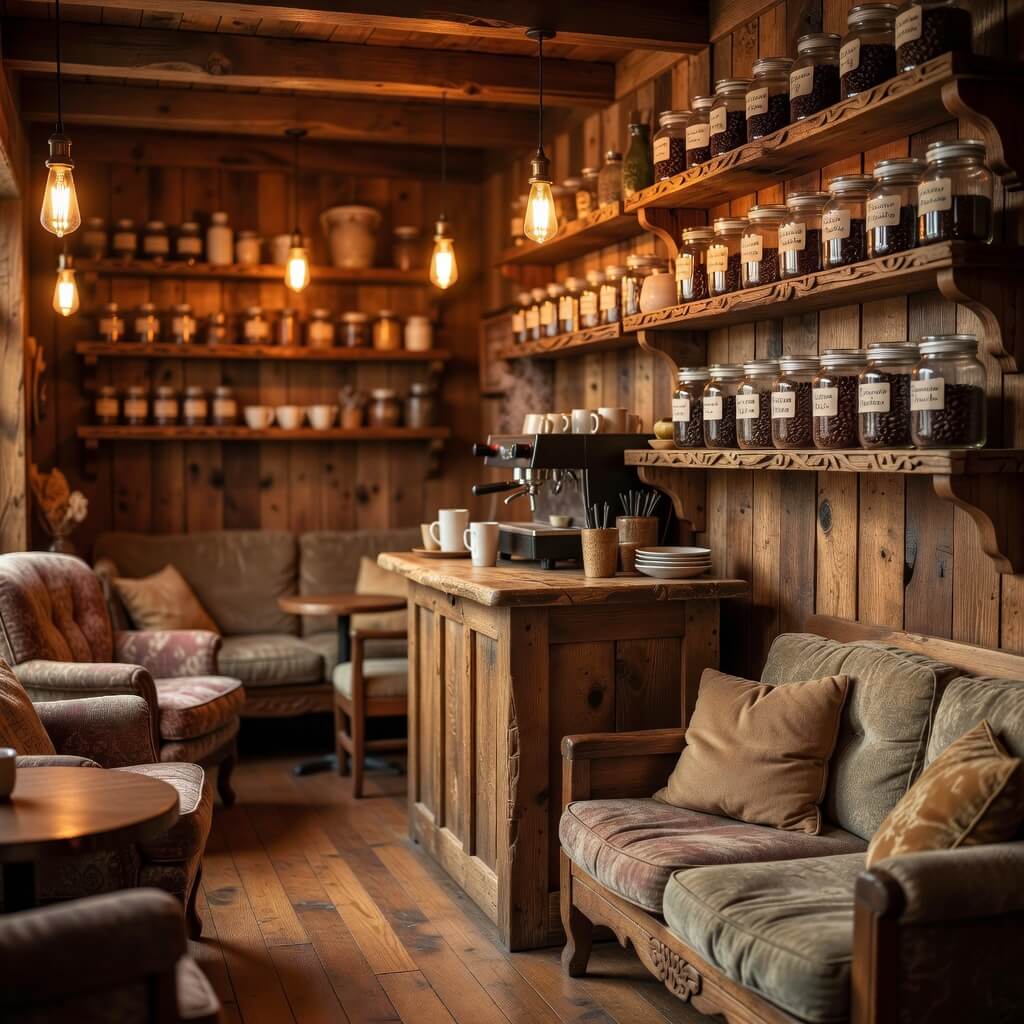
Wood, Glorious Wood
Ever walked into a space and immediately felt… warm? Like genuinely comforted? That’s the power of wood done right. A wooden coffee corner setup transforms your small café into someone’s favorite reading nook or catch-up spot with friends.
I’m talking about rich, warm-toned woods—walnut, mahogany, cherry, or deep oak. These tones create an inviting, homey atmosphere that makes people want to settle in and stay awhile. And isn’t that exactly what you want?
Building Your Wooden Sanctuary
Creating this cozy corner requires layering different wooden elements:
- Wooden wall paneling: Shiplap, tongue and groove, or horizontal planking
- Solid wood tables: Go for sturdy, chunky tables that feel substantial
- Wooden shelving: Open shelves displaying coffee bags, books, plants
- Wood-framed windows: Or add wooden trim to existing windows
- Wooden ceiling beams: Real or decorative, they add architectural interest
- Natural wood chairs: Mix matching sets with mismatched vintage finds
The key is mixing wood tones thoughtfully. Don’t go crazy matchy-matchy—real homes have layers of different woods accumulated over time. That lived-in look feels more authentic and less staged.
Layering in the Coziness
Wood alone doesn’t create cozy—you need to layer in soft elements. Add plush cushions on wooden benches, drape a knit throw over a chair, place a vintage wool rug under a table cluster. Combine the wooden elements with warm lighting—think amber-toned bulbs and small table lamps—and you’ve created magic.
Also Read: 10 Creative Coffee Shop Design Ideas That Attract Customers
4. Luxury Modern Café with Marble Finishes
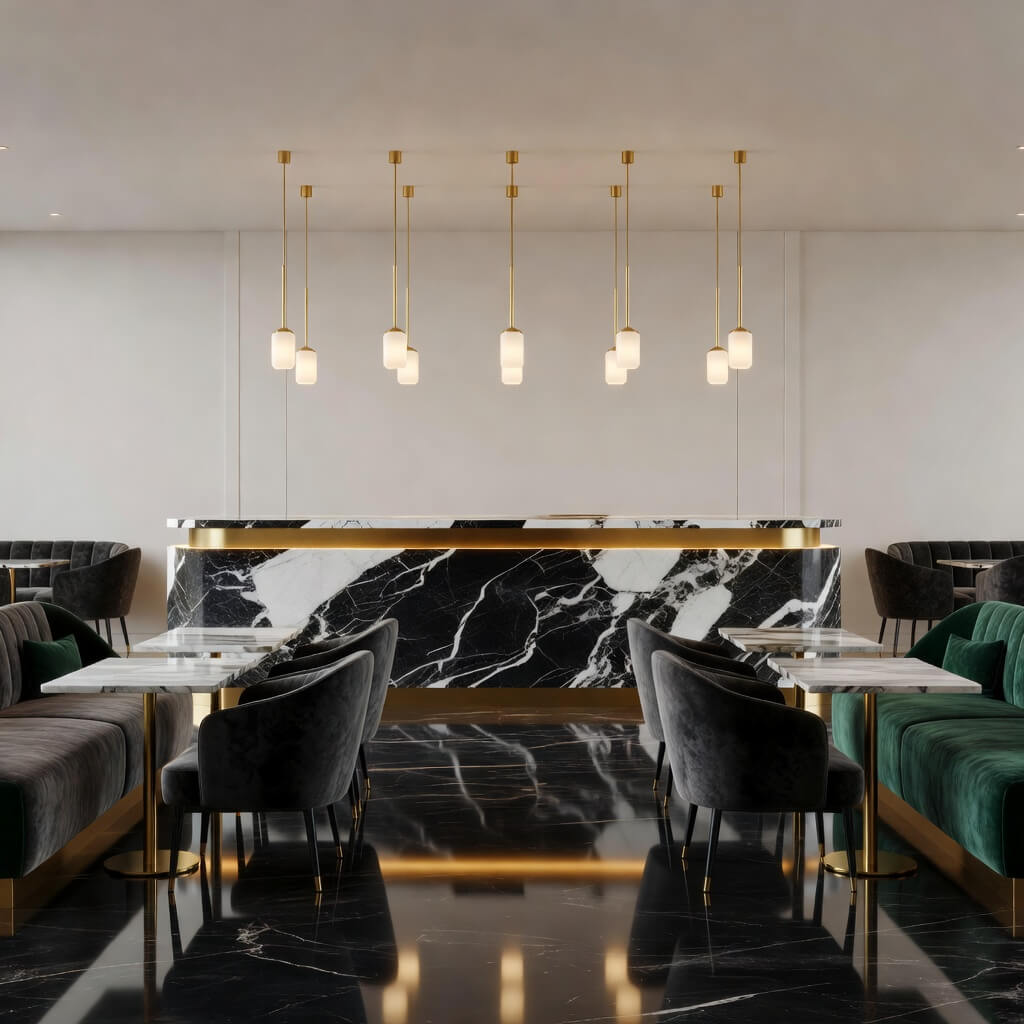
Bringing Elegance to Small Spaces
Who says small can’t be luxurious? FYI, some of the most high-end coffee experiences I’ve had were in boutique-sized cafés that made every inch count. The marble finish aesthetic screams sophistication and elevates your coffee shop into something special.
Marble immediately upgrades any space. Whether it’s Carrara, Calacatta, or black marble with gold veining, this material communicates quality and refinement. Yes, it’s pricier than other options, but you don’t need to marble everything—strategic placement creates maximum impact.
Where to Use Marble Effectively
Smart marble placement in a small space:
- Countertops: Your coffee bar is the focal point—make it stunning
- Tabletops: One or two marble-topped tables create visual interest
- Backsplash: Behind your espresso machine, protect walls and add luxury
- Accent wall: A marble feature wall (or high-quality marble-look tile)
- Shelving: Floating marble shelves for displaying premium products
- Flooring accents: Marble floor inlays or a marble entrance area
Here’s a pro tip I learned the hard way: balance marble with warmer elements. All marble and metal can feel cold and uninviting. Mix in warm wood tones, brass fixtures, velvet seating, and soft lighting to prevent that sterile vibe.
The Psychology of Luxury
When customers walk into a marble-accented café, they subconsciously adjust their expectations. They’re prepared to pay premium prices because the environment communicates premium quality. Your small space becomes an exclusive experience rather than just another coffee shop. Smart, right?
5. Small Space Coffee Shop Smart Layout Design
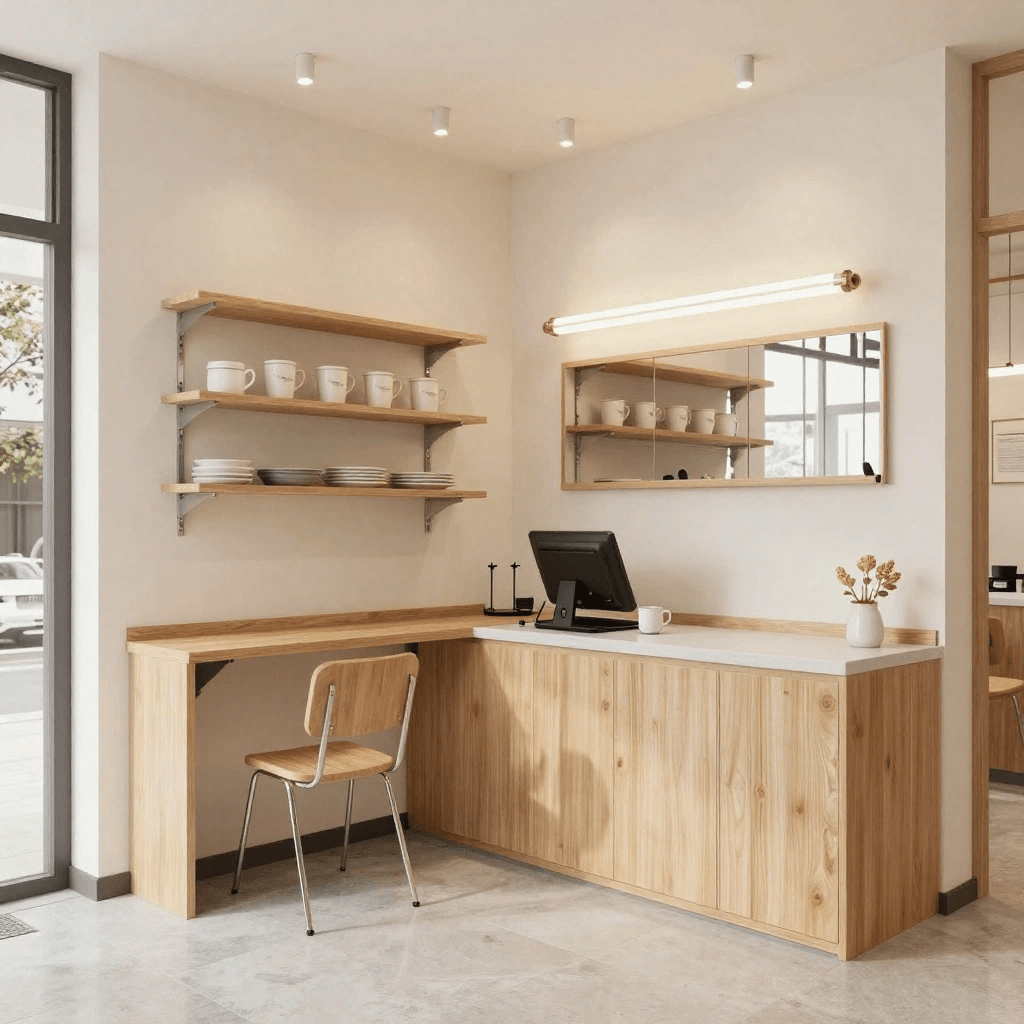
Maximizing Every Square Inch
Alright, let’s talk strategy. This isn’t really a specific aesthetic—it’s the foundation that makes ANY design work in a tiny space. I’ve seen gorgeous coffee shops fail because they didn’t think through their layout, and I’ve seen unremarkable designs succeed because they nailed the flow.
Traffic flow is everything. Your customers shouldn’t bump into each other, block the entrance while ordering, or create bottlenecks. Map out the customer journey from door to counter to seating to exit.
Layout Solutions That Actually Work
Here are the space-saving tactics that consistently deliver:
- Built-in bench seating: Uses walls effectively and eliminates chair backs
- Floating counters: Wall-mounted surfaces take up zero floor space
- Vertical storage: Go UP with floor-to-ceiling shelving
- Multi-functional furniture: Ottomans with storage, nesting tables
- Corner utilization: Dead corners become cozy two-person nooks
- Bar seating along windows: Solo customers love window perches
- Mobile elements: Rolling carts, stackable chairs, folding tables
One brilliant tiny café I visited used bench seating along two walls with a long communal table in the center. It sat maybe 20 people in a 500-square-foot space without feeling cramped. The communal aspect actually enhanced the cozy, friendly vibe.
Creating Zones in Small Spaces
Even in tight quarters, you can create distinct zones. Use different lighting levels, slight floor changes (a small platform), or even strategic furniture placement to designate ordering areas from seating areas. This prevents chaos and makes your space feel larger and more intentional.
6. Vintage Retro Coffee House Interior Style
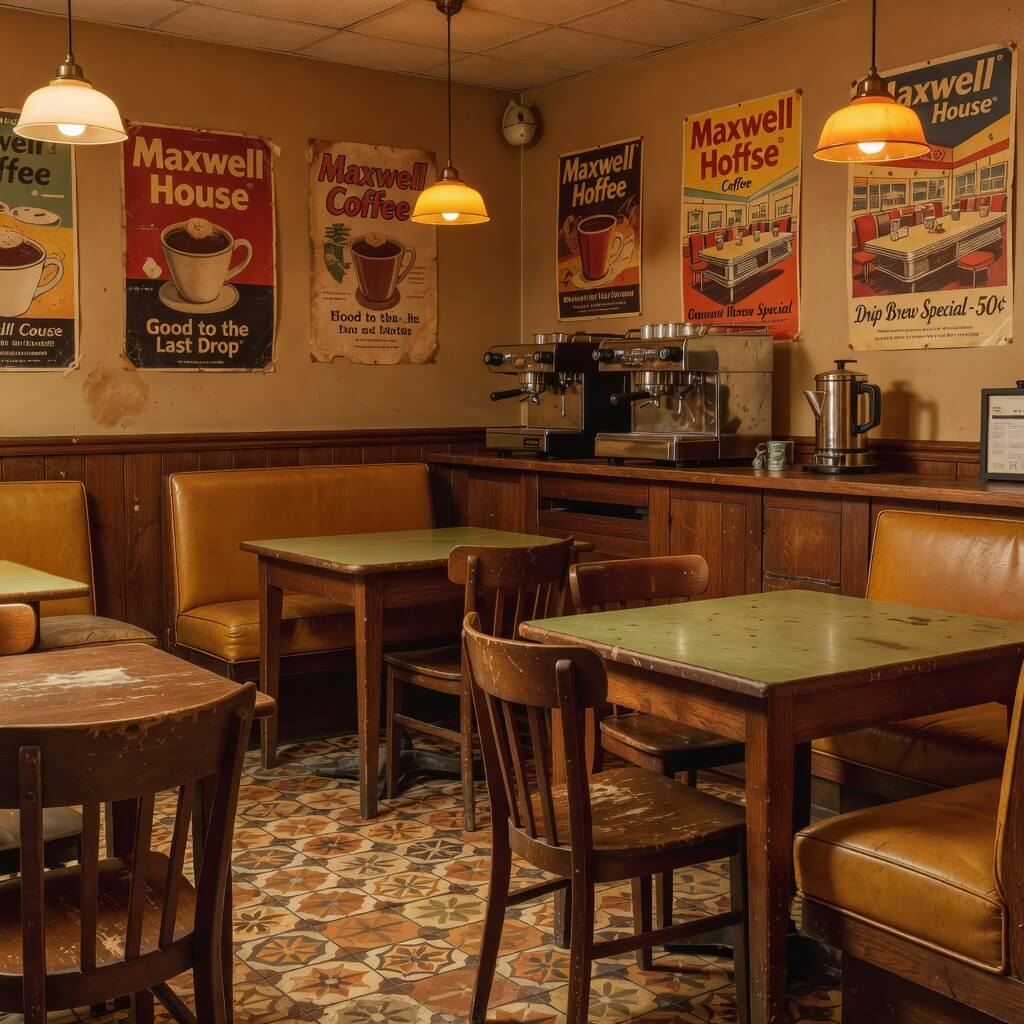
Nostalgia Sells (And Feels Good)
There’s something irresistible about vintage design. Maybe it’s nostalgia for simpler times, or maybe we’re just tired of everything looking the same. Either way, a retro coffee house aesthetic creates a unique personality that people remember.
The beautiful thing about vintage design for small spaces? You can source pieces individually over time rather than buying everything at once. Hit up estate sales, antique shops, flea markets, and online marketplaces. Each piece has a story, and that authenticity shines through.
Nailing Your Retro Era
First, pick your era. The 1950s diner vibe looks totally different from 1970s bohemian or 1960s mod. Here’s a quick breakdown:
1950s-1960s:
- Chrome and Formica tables
- Vinyl booth seating
- Checkered floors
- Pastel color schemes
- Vintage Coca-Cola signs and advertisements
- Jukebox or retro radio
1970s:
- Warm oranges, browns, and mustard yellows
- Macramé wall hangings
- Rattan or wicker furniture
- Geometric patterns
- Hanging plants in ceramic pots
- Vintage coffee tins and grinders
1980s:
- Neon accents
- Memphis design elements
- Bold geometric patterns
- Bright primary colors
- Chrome and glass
- Vintage arcade games or pinball machines
Making Vintage Feel Fresh
The trick is balancing old with new. All vintage can feel like a dusty antique shop (not in a good way). Mix vintage furniture and decor with modern coffee equipment, contemporary lighting, or current menu design. This creates a curated, intentional retro vibe rather than looking like you just grabbed whatever was cheap.
Also Read: 10 Space Saving Shoe Rack Wall Design Ideas for Apartments
7. Nature-Inspired Green Café Interior Concept
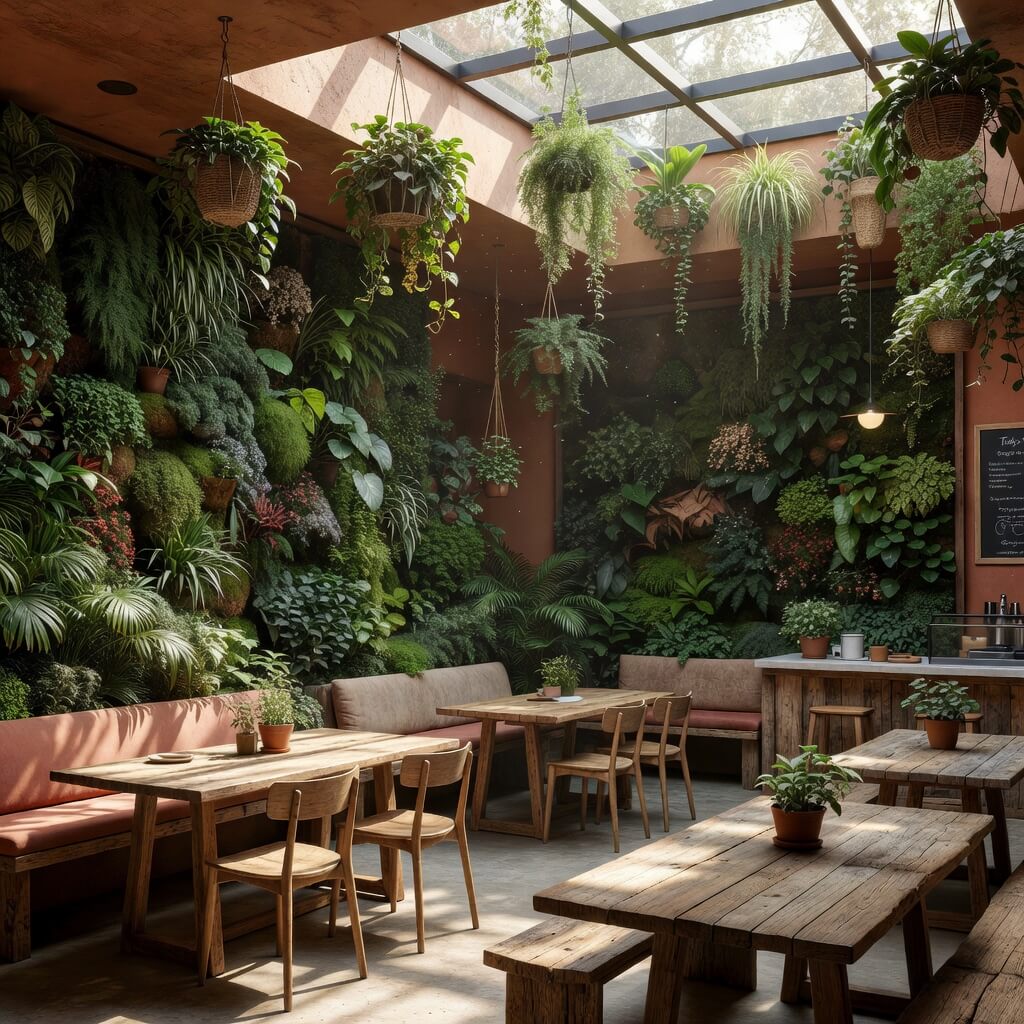
Bringing the Outdoors In
Okay, so I might be biased because I’m a total plant person 🙂 but nature-inspired cafés just hit differently. In our concrete jungles and screen-dominated lives, people crave connection with nature. Your small coffee shop can become an urban oasis.
Biophilic design isn’t just trendy—it’s backed by research showing that natural elements reduce stress, improve mood, and increase creativity. Your customers will literally feel better hanging out in your green café, even if they can’t articulate why.
Creating Your Green Haven
You don’t need a huge budget or a green thumb to pull this off:
- Living walls: Vertical gardens maximize greenery without floor space
- Hanging plants: Pothos, spider plants, and string of pearls cascade beautifully
- Large statement plants: A fiddle leaf fig or monstera in a corner
- Herb wall: Fresh basil, mint, and rosemary (use them in drinks!)
- Natural materials: Bamboo, jute, rattan, stone, cork
- Wood elements: Live edge tables, tree stump stools
- Nature photography: Large prints of forests, mountains, or botanical illustrations
- Natural light: Maximize windows, use sheer curtains
I’ve visited coffee shops with literal trees growing through the floor. Obviously, that’s extreme, but even modest plant integration creates that peaceful, natural atmosphere.
Maintenance Reality Check
Let’s be real—plants require care. Choose hardy, low-maintenance varieties that can handle indoor conditions and occasional neglect. Snake plants, ZZ plants, pothos, and philodendrons are nearly indestructible. Fake plants have come a long way too; high-quality artificial greenery mixed with some real plants can reduce maintenance while maintaining the aesthetic.
8. Japanese Minimal Zen Coffee Shop Design
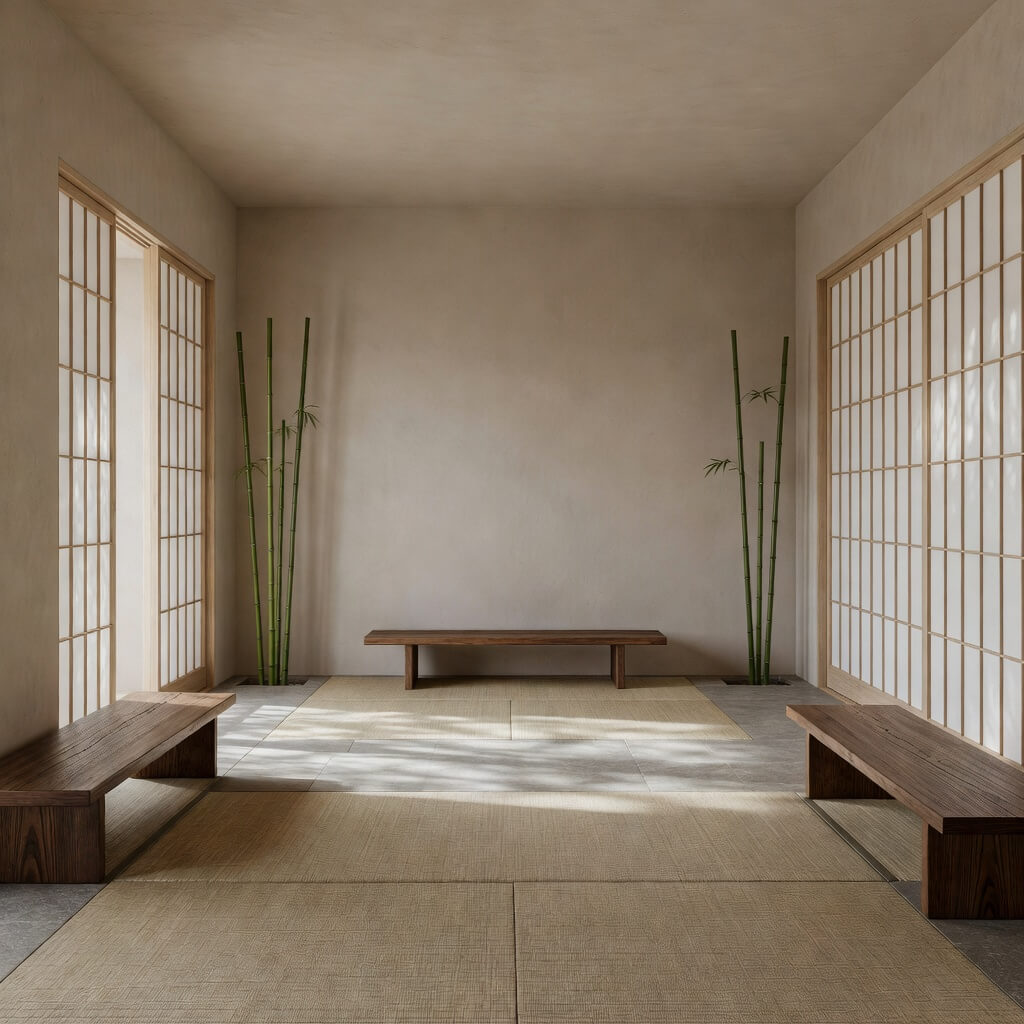
The Art of Calm
Japanese design philosophy centers on simplicity, natural materials, and creating calm, meditative spaces. In our chaotic world, a Zen coffee shop becomes a refuge—a place to slow down and actually be present.
This aesthetic differs from Scandinavian minimalism in subtle but important ways. Japanese design emphasizes natural materials in their most authentic form, asymmetry, and the beauty of imperfection (wabi-sabi). It’s warmer and more organic than stark Scandinavian spaces.
Essential Elements of Zen Design
Creating an authentic Japanese-inspired café requires attention to specific details:
- Natural wood: Unfinished or minimally finished wood showing grain patterns
- Neutral earth tones: Beiges, tans, soft grays, blacks, whites
- Sliding doors or screens: Shoji screens (rice paper panels) divide spaces
- Low seating options: Floor cushions or low benches
- Natural light: Maximize sunlight, use paper lanterns
- Bamboo accents: Bamboo plants, utensils, or decorative elements
- Stone elements: River rocks, stone water features, stone accents
- Minimalist pottery: Simple ceramic cups and vessels
- Ikebana-style floral arrangements: Sparse, intentional flower displays
One coffee shop I visited served matcha in handmade ceramic bowls at a low wooden counter where you sat on floor cushions. It forced you to slow down and actually experience the moment. Brilliant.
The Power of Negative Space
Japanese design embraces empty space—it’s not something to fill but an essential element. In small coffee shops, this means resisting the urge to cram in extra tables or decorate every wall. The emptiness creates calm and, paradoxically, makes the space feel larger.
9. Dark Academia Style Coffee Shop Interior
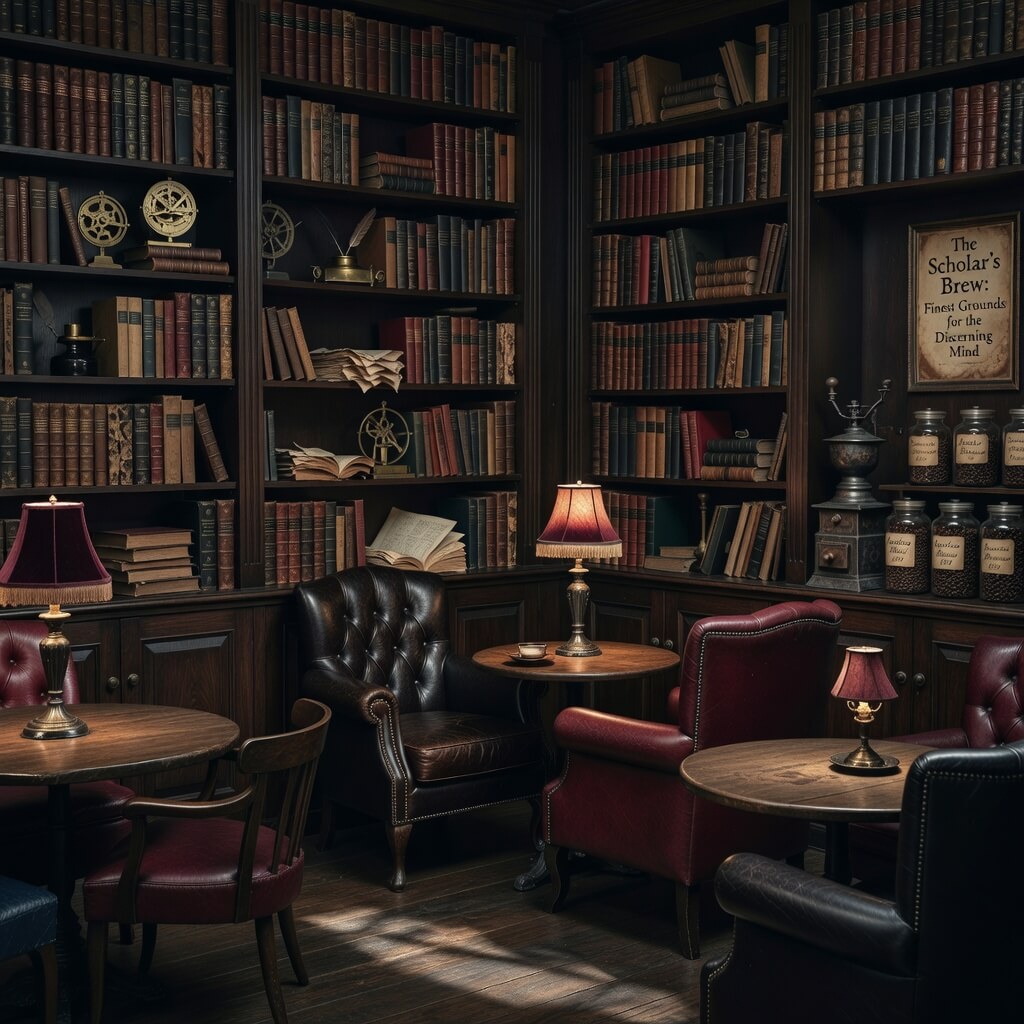
Moody, Mysterious, and Magical
IMO, dark academia is one of the coolest trends to hit interior design in recent years. Think old university libraries, vintage bookshops, and secret scholarly societies. It’s sophisticated, a bit mysterious, and incredibly atmospheric.
This aesthetic works surprisingly well in small spaces because the dark, cozy vibe makes tight quarters feel intentional rather than cramped. You’re creating a cozy cave of knowledge and caffeine, not trying to appear bigger.
Building Your Academic Atmosphere
Here’s how to nail the dark academia look:
- Rich, dark colors: Deep greens, burgundy, navy, chocolate brown, black
- Wood paneling: Dark stained wood on walls or wainscoting
- Leather furniture: Worn leather chairs, button-tufted banquettes
- Books everywhere: Floor-to-ceiling bookshelves, stacked vintage books
- Brass and gold accents: Brass fixtures, gold-framed artwork
- Vintage lighting: Bankers lamps, Tiffany-style lamps, antique chandeliers
- Classical art: Reproductions of Renaissance paintings or botanical prints
- Vintage maps and globes: Old world maps, antique globes
- Writing desks: Small individual desks rather than communal tables
- Persian or Oriental rugs: Layered over dark wood floors
The coffee shop near my old apartment absolutely nailed this. They had vintage typewriters on some tables, old encyclopedias lining the walls, and classical music playing softly. People would spend entire afternoons there writing or studying.
Creating the Right Ambiance
Lighting makes or breaks this aesthetic. You want warm, amber-toned lighting that creates pools of light rather than bright, even illumination. Use table lamps, wall sconces, and lower-wattage bulbs. The slightly dim atmosphere feels intimate and encourages people to settle in with a book or laptop.
Also Read: 10 Luxury Unique Shoe Rack Design Ideas for Modern Living
10. Instagrammable Neon Coffee Shop Design Ideas
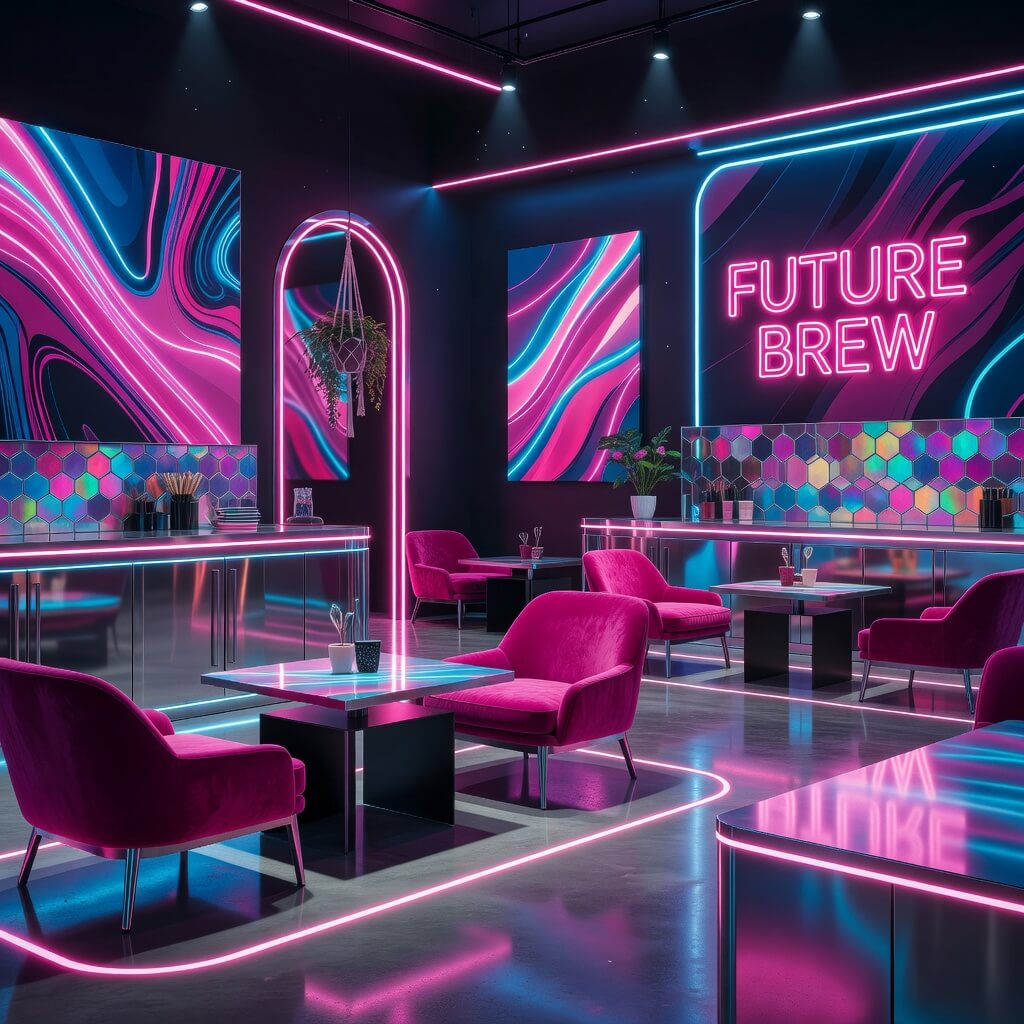
Because Social Media is Reality
Let’s not pretend social media doesn’t matter. An Instagram-worthy café gets free marketing every single day as customers share photos. Neon signs and bold design elements create photo opportunities that turn your customers into your marketing team. Smart? Absolutely.
The neon aesthetic isn’t subtle, but it’s undeniably effective. Bright colors, bold statements, and shareable moments define this style. It appeals to younger demographics and creates a fun, energetic atmosphere.
Designing for the ‘Gram
Creating Instagram-worthy moments requires strategic planning:
- Custom neon signs: Catchy phrases, your logo, coffee puns
- Neon lighting: Pink, blue, yellow, or multi-color neon tubes
- Bold accent walls: Bright colors, interesting wallpaper, murals
- Unique seating: Swing chairs, egg chairs, colorful velvet couches
- Statement lighting: Unique chandeliers or pendant clusters
- Tile patterns: Geometric or colorful floor tiles
- Hanging installations: Flowers, lights, or artistic elements from ceiling
- Mirror walls: Double the visual impact and create photo ops
- Color-blocked walls: Bold color combinations
- Branded packaging: Photogenic cups and bags
Here’s the thing though—it can’t be JUST about Instagram. I’ve been to cafés that looked amazing but had terrible coffee and uncomfortable seating. The novelty wears off fast if the fundamentals aren’t solid.
Strategic Photo Spot Placement
Don’t make people hunt for the Instagrammable spot. Place your neon sign or photo wall near the entrance or ordering counter where everyone naturally passes. Create good lighting conditions—natural light or well-placed artificial lighting that doesn’t create harsh shadows. Consider installing a small shelf or ledge where people can set their coffee while taking selfies (seriously, this matters).
Bringing It All Together
So there you have it—ten completely different approaches to creating magic in a small coffee shop space. The wild thing? You’re not limited to choosing just one. I’ve seen cafés successfully blend Scandinavian minimalism with natural green elements, or mix industrial brick with luxury marble accents, or combine dark academia with neon surprises.
The real secret to small space design is knowing yourself and your target customers. What vibe do you want to create? Who are you trying to attract? What makes your coffee shop unique? Answer those questions honestly, then choose the design elements that support your vision.
Remember, constraints breed creativity. Your small space isn’t a limitation—it’s an opportunity to create something intimate, unique, and memorable that big chain cafés can never replicate. Every design choice matters more when you’re working with limited square footage, which means you’ll actually think through decisions instead of just filling space.
Whether you go full Zen minimalist or embrace maximalist dark academia or create a neon-lit plant paradise, commit to it fully. Half-hearted design reads as confused and forgettable. Bold, intentional design—even in tiny spaces—creates experiences people remember and return to.
Now get out there and create some small space magic. Your future regulars are waiting :/