10 Smart Counter Design Ideas For Small Spaces
- Counter Design
 Ben
Ben- 0
- 43 minutes read
Listen, I get it. You’re staring at that cramped corner of your home, office, or shop, wondering how on earth you’re supposed to fit a functional counter without making the whole place feel like a sardine can. Been there, done that, got the claustrophobia to prove it. The good news? Small spaces don’t mean you have to sacrifice style or functionality—you just need to get creative with your counter designs.
I’ve spent way too many hours obsessing over counter designs (seriously, my browser history is embarrassing), and I’ve picked up some tricks that actually work. Whether you’re setting up a tiny café, redesigning your reception area, or just trying to add some counter space to your shoebox apartment, these ideas will help you maximize every square inch without breaking the bank or your sanity.
Modern Marble Counter Design
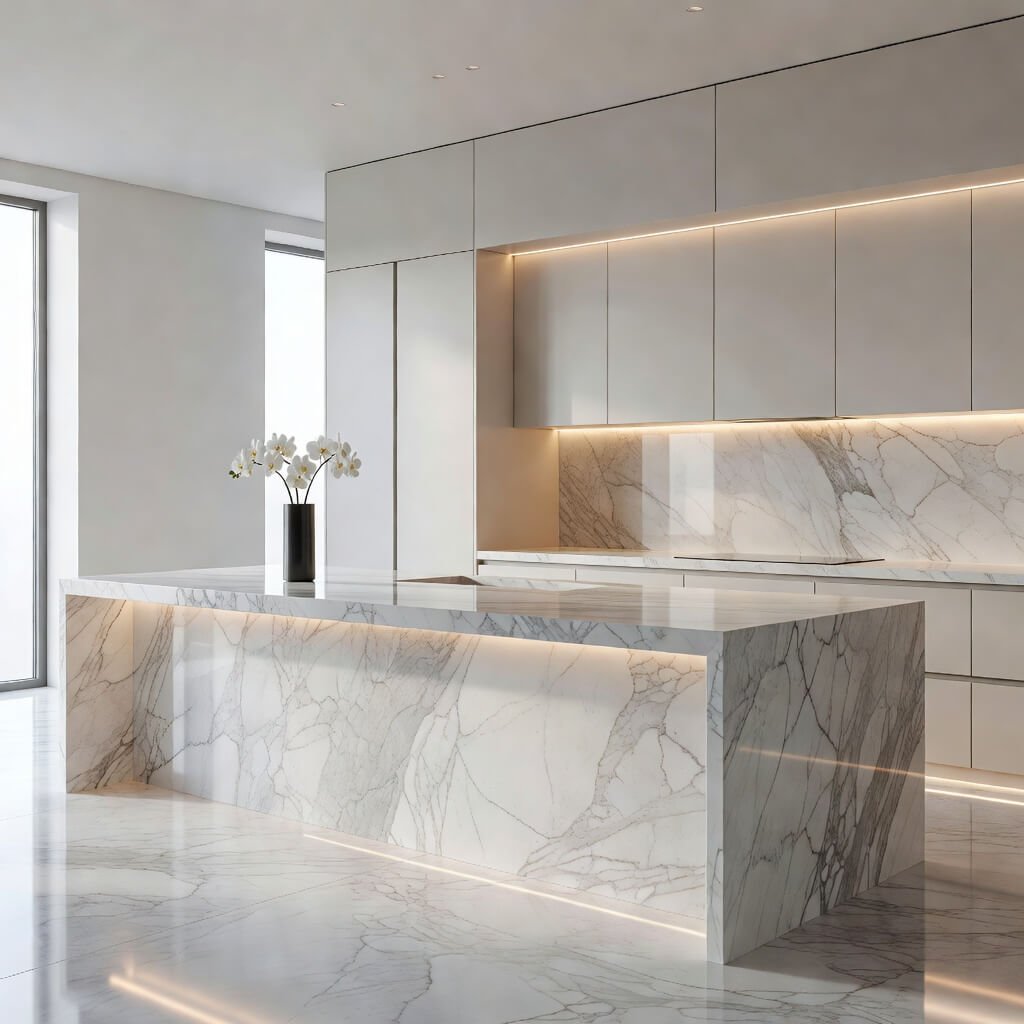
Why Marble Works Wonders in Small Spaces
Here’s the thing about marble—it’s got this weird superpower that makes spaces look bigger and fancier at the same time. The natural veining creates visual interest without overwhelming the eye, and the reflective surface bounces light around like nobody’s business.
I installed a white marble counter in my friend’s tiny boutique last year, and the transformation was insane. The space went from “cramped storage closet” to “upscale Parisian shop” in about three days. The key is keeping the marble pattern subtle and the color light. Carrara marble is your best bet here—it’s got those gorgeous gray veins without looking too busy.
Making Marble Work on a Budget
Now, before you start sweating about the price tag, let me stop you right there. Real marble can cost an arm and a leg, but marble-look quartz or porcelain gives you that same luxe vibe for a fraction of the cost. Plus, these alternatives are way more durable and won’t stain when someone inevitably spills coffee all over them (because they will).
Here’s what you need to consider:
- Keep it thin: A sleek, thin marble slab (around 1-2 inches) looks modern and takes up less visual space
- Waterfall edges: Extend the marble down the sides for a high-end look that draws the eye vertically
- Minimal base: Pair your marble top with thin metal legs or a minimalist cabinet to maintain that airy feel
- Light colors only: Dark marble in small spaces? That’s a hard pass from me
Personal Touch: The Marble Mistake I Made
FYI, I learned this the hard way—don’t go for the super-veiny, dramatic marble in a small space. I thought it would look “interesting” in my home office. Nope. It just looked chaotic and made the room feel even smaller. Stick with subtle patterns, trust me on this one.
Minimalist Wooden Counter Setup
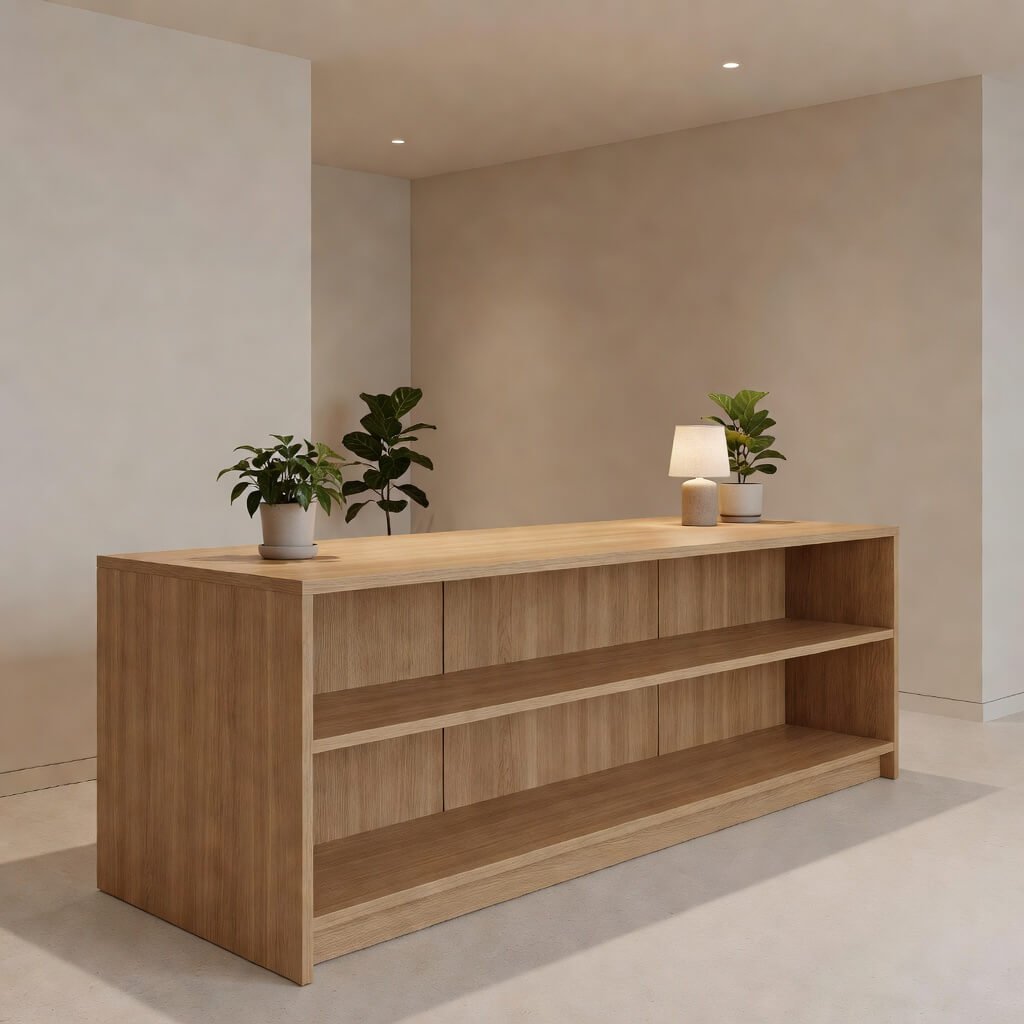
The Beauty of Simplicity
Ever wonder why Scandinavian design took over the world? Because minimalist wooden counters just work, especially when you’re dealing with limited square footage. Wood brings warmth without weight, and a clean minimalist design keeps things from feeling cluttered.
I’m talking light-colored woods like ash, maple, or birch. These babies reflect light beautifully and create that spacious, breathable atmosphere you’re desperately craving. The grain adds texture and interest, so you don’t need to go crazy with decorative elements.
Keeping It Functional
A minimalist setup doesn’t mean boring or impractical. Actually, it’s the opposite. You focus on functionality first, which is exactly what small spaces need. Here’s the minimalist wooden counter formula that never fails:
- Floating design: Mount your wooden counter directly to the wall with concealed brackets—instant floor space win
- Built-in storage: Add subtle drawers or cubbies underneath without breaking the clean lines
- Natural finish: Skip the heavy stains and let the wood’s natural color shine through
- Rounded edges: Softer edges feel less imposing and are safer in tight spaces (plus, no hip bruises!)
The trick is choosing wood with a smooth, matte finish. Glossy finishes can look cheap and show every fingerprint, which is annoying as hell when you’re running a business or trying to maintain that Instagram-worthy home office.
Mix and Match Materials
One thing I love doing is combining wood with other materials. A wooden counter with matte black metal legs or white powder-coated steel supports creates visual interest while maintaining that minimalist vibe. The contrast actually helps define the space better than an all-wood setup would.
Luxury Black And Gold Counter
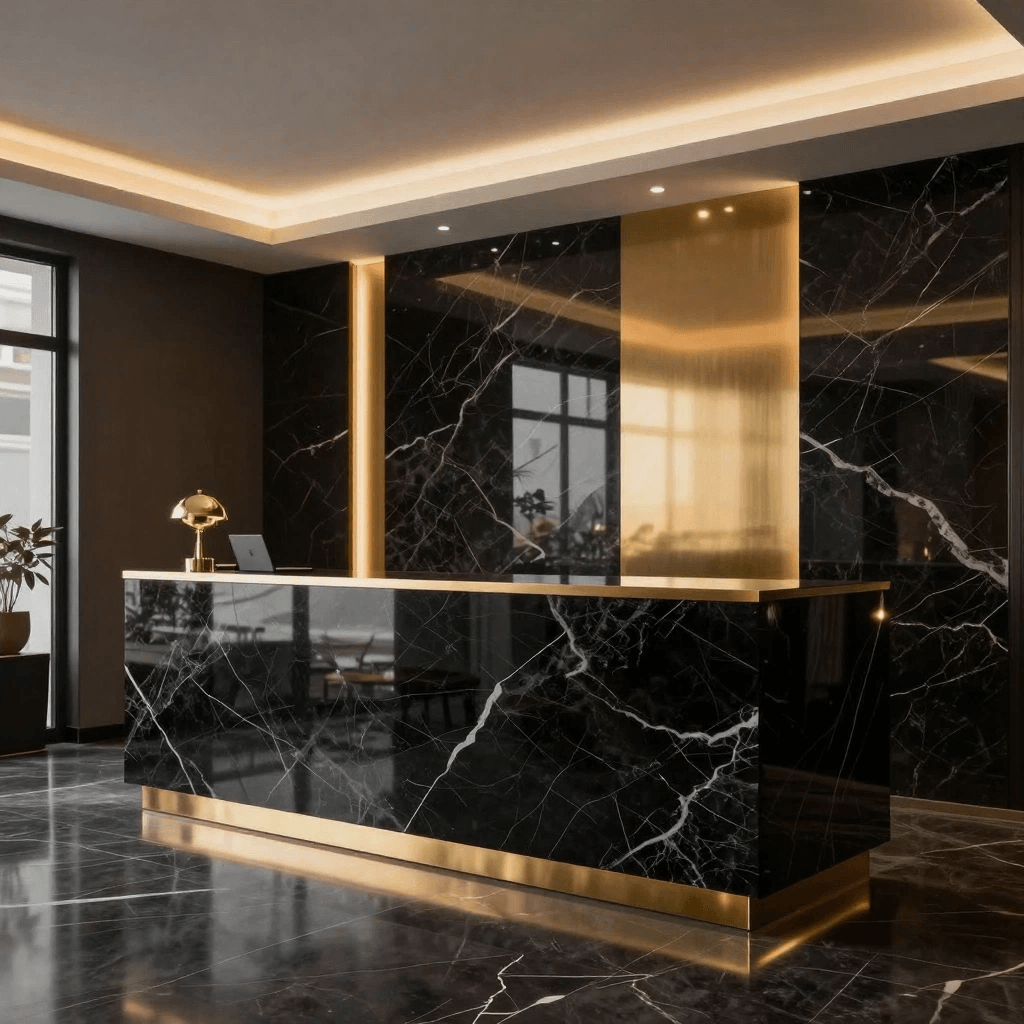
Going Bold in Small Spaces
Okay, I know what you’re thinking—black and gold in a small space sounds like a terrible idea, right? Wrong! When you do it correctly, a luxury black and gold counter becomes the focal point that makes your small space feel intentional and sophisticated rather than just… small.
The secret is using these dramatic colors strategically. You’re not painting everything black and slapping gold everywhere (please don’t do that). Instead, you’re creating a statement piece that elevates the entire space.
Getting the Balance Right
I helped design a reception counter for a small law firm using this exact concept, and people literally stopped in their tracks when they walked in. Here’s how we nailed it:
- Black base, gold accents: Use black for the main counter body and add gold hardware, trim, or inlay details
- Glossy black finish: The shine is crucial—it reflects light and prevents the black from absorbing it all
- Brushed gold, not shiny: Matte or brushed gold looks expensive; super shiny brass looks like a 1980s nightmare
- Keep surrounding walls light: This is non-negotiable. Your walls need to be white or very light gray to make this work
The black and gold combo works because it creates depth and dimension. Your eye focuses on the stunning counter instead of noticing how compact the space actually is. It’s basically an optical illusion, and I’m here for it 🙂
Don’t Overdo It
IMO, the biggest mistake people make with this style is going overboard. You want luxury, not “tacky Vegas hotel lobby.” Use gold accents sparingly—think drawer handles, a thin edge trim, or a small logo detail. The black should do most of the heavy lifting while the gold provides those chef’s kiss moments of elegance.
Also Read: 10 Charming Mini Coffee Shop Design Ideas with Rustic Touch
Space Saving Corner Counter Design
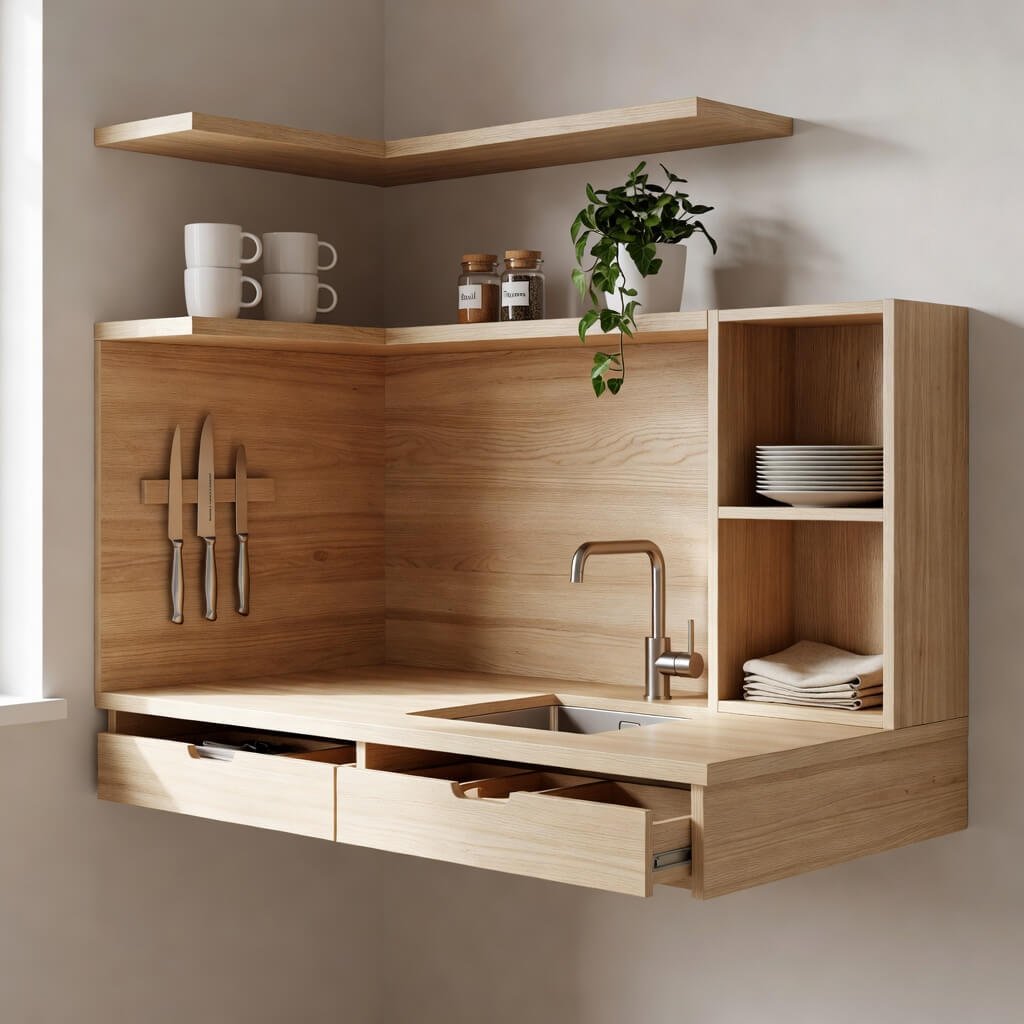
Claiming Dead Space
Can we talk about how everyone ignores corners? Seriously, corners are like the forgotten middle child of interior design, but corner counters are absolute game-changers for small spaces. You’re using space that would otherwise just collect dust and spider webs (delightful).
I squeezed a corner counter into my sister’s tiny bakery, and suddenly she had workspace she didn’t even know was possible. The L-shape or curved design follows the natural flow of the room while maximizing every inch.
Design Options That Actually Work
Not all corner counters are created equal. You’ve got a few solid options depending on your specific space and needs:
- L-shaped design: Two straight counters meeting at a right angle—classic and functional
- Curved corner: A smooth, rounded counter that softens the space and improves traffic flow
- Diagonal cut: Angles the corner at 45 degrees, creating a unique surface area perfect for displays
- Multi-level corner: Different heights for different functions (lower workspace, higher display area)
The curved corner design is my personal favorite because it feels less boxy and makes the space flow better. Plus, you won’t accidentally hip-check yourself on a sharp corner every single day (painful life lesson right there).
Maximizing Corner Counter Functionality
Here’s where corner counters really shine—you can build in storage solutions that would be impossible with a standard straight counter. Think rotating corner cabinets, pull-out drawers, or open shelving that wraps around the angle. Every bit of that corner works for you instead of against you.
Also, don’t forget about the vertical space above your corner counter. Wall-mounted shelves or cabinets that follow the corner’s shape give you even more storage without eating up floor space.
Floating LED Counter Inspiration
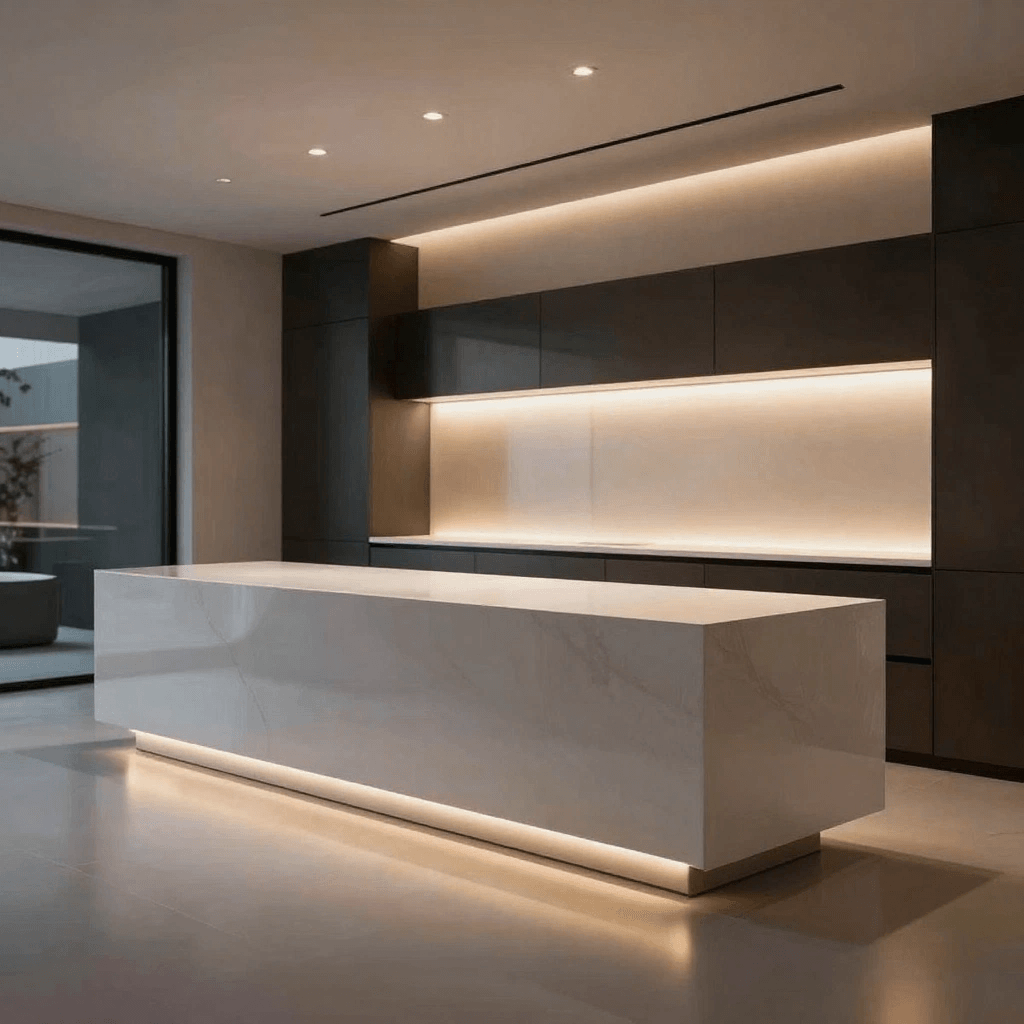
The Future is Now (And It’s Glowing)
Want to know what makes small spaces feel bigger instantly? Light. Lots of it. And floating LED counters deliver light in the coolest possible way while creating the illusion that your counter is literally floating in mid-air. It’s modern, it’s sleek, and it’s honestly kind of addictive once you see it in action.
I installed one of these in my home bar area (yes, I have a home bar, don’t judge), and every single person who visits asks about it. The LED strips hidden under the counter create this amazing glow effect that makes the whole counter feel weightless.
Making the LED Magic Happen
Here’s the setup that works best for small spaces:
- Recessed LED strips: Mount them underneath the counter edge so they’re completely hidden
- Cool white or warm white: Skip the RGB rainbow nonsense unless you’re running a nightclub
- Floating wall mount: Use concealed brackets so the counter appears to hover
- Translucent or light-colored materials: Acrylic, light wood, or white surfaces work best with LED lighting
The technical setup is easier than you’d think. Most LED strip kits come with everything you need, including the adhesive backing and power supply. You literally just stick them on, plug them in, and boom—instant ambiance.
Practical Benefits Beyond Looking Cool
Besides making your space look like it belongs in a sci-fi movie, LED counters are actually practical. The under-counter lighting provides excellent task lighting for whatever you’re doing at the counter. No more squinting in dim corners or turning on harsh overhead lights.
Plus, modern LEDs use almost no electricity and last forever, so you’re not going to see your power bill skyrocket. Win-win situation if you ask me.
Industrial Concrete Counter Style
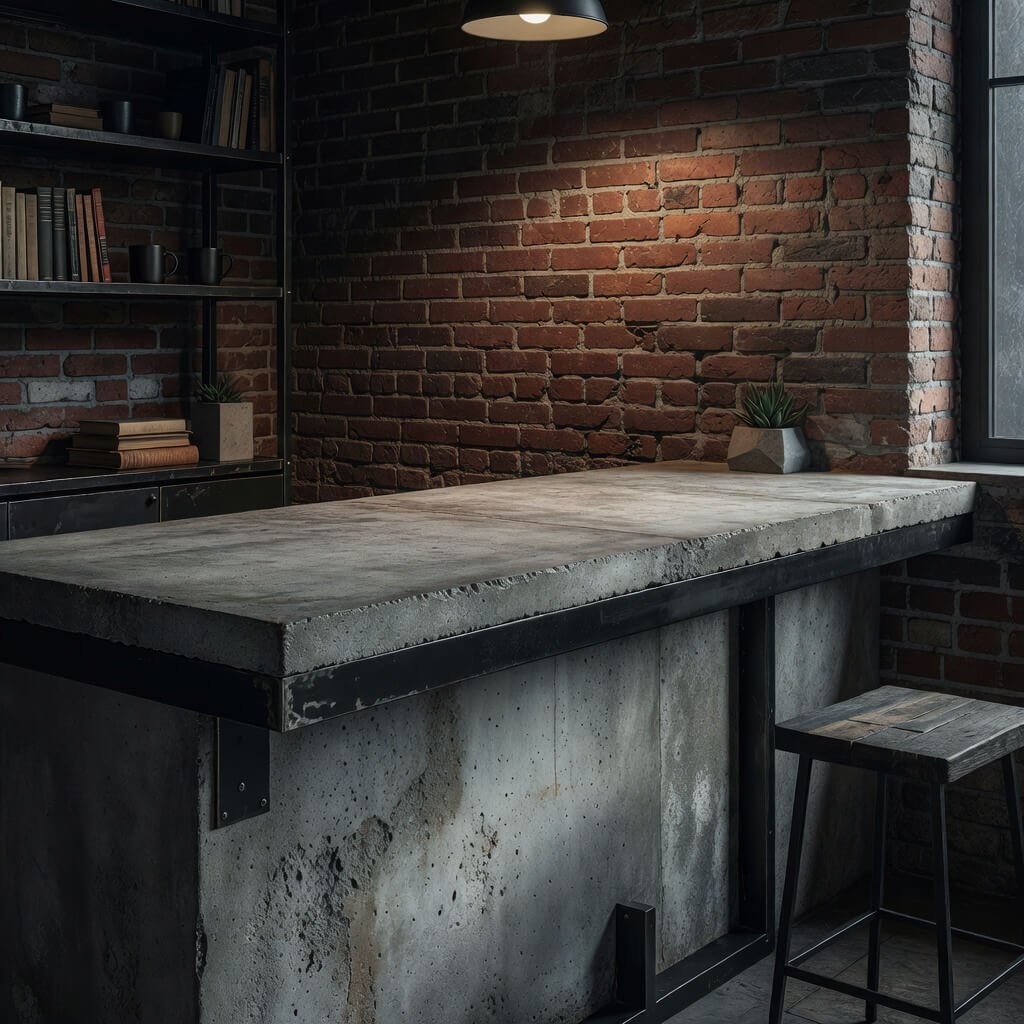
Raw Elegance That Saves Space
Look, concrete might seem like an odd choice for a small space, but hear me out. Industrial concrete counters bring this raw, minimalist aesthetic that’s actually perfect for compact areas. The monolithic look (fancy word for “one solid piece”) creates clean lines without visual clutter.
I’ve seen concrete counters transform tiny coffee shops from forgettable to Instagram-famous. The material itself has texture and character, so you don’t need to add a bunch of decorative stuff that would crowd your space.
Getting the Industrial Look Right
The key to pulling off concrete in a small area is keeping it sleek and refined, not chunky and heavy. Here’s what actually works:
- Smooth finish: Polished or sealed concrete, not rough and pitted
- Thin profile: Keep the counter thickness around 1.5-2 inches, not those massive 4-inch slabs
- Light gray concrete: Dark concrete absorbs light; lighter shades reflect it
- Steel or iron base: Thin metal legs or supports maintain that industrial vibe without bulk
The DIY-Friendly Option
Here’s a secret—you can get the concrete look without actual concrete. Concrete-look laminate or specialty concrete overlays give you the aesthetic for way less money and weight. Real concrete is heavy as hell and needs serious structural support, which might not be feasible in your space.
I went with a concrete overlay system for my garage workshop counter, and it looks legit. Nobody can tell it’s not the real deal unless they try to lift it (which would be weird anyway).
Warming Up the Industrial Vibe
The trick to making industrial concrete work in a small space is balancing the coldness of the material. Add some warm-toned wood shelving, plants, or brass fixtures nearby. The contrast makes both elements pop and prevents your space from feeling like an abandoned warehouse (unless that’s what you’re going for, no judgment).
Also Read: 10 Trendy Coffee Shop Wall Design Ideas Urban Café Inspiration
Small Shop Counter Design Idea
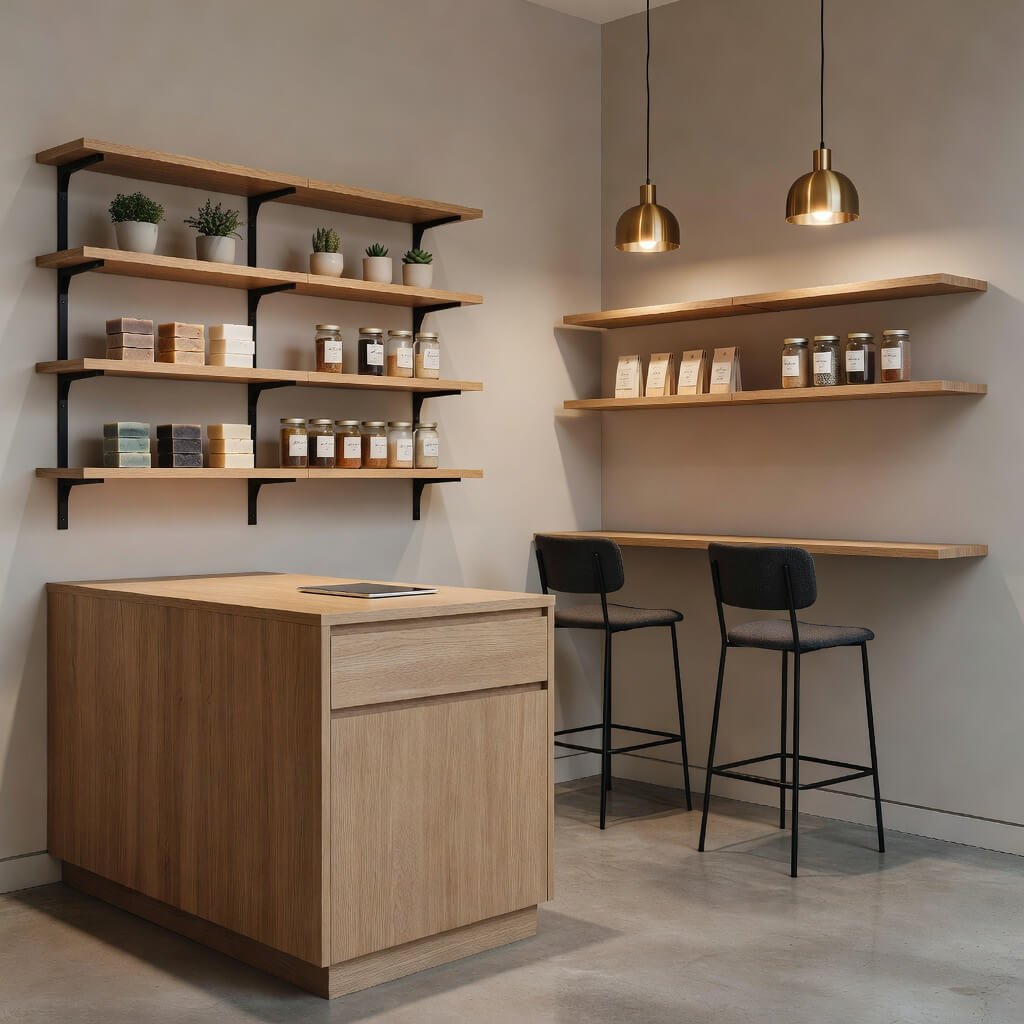
Retail Therapy for Tiny Spaces
Running a small shop means every single inch counts, and your counter needs to work overtime. I’ve designed shop counters for boutiques, bakeries, and even a tiny bookstore, and the challenge is always the same—maximum functionality, minimum footprint.
Your shop counter isn’t just a checkout point; it’s storage, display space, your work area, and often the first thing customers see. No pressure, right? :/
Multi-Functional Design Elements
The best small shop counters I’ve seen incorporate multiple functions seamlessly. You need to think like a puzzle master here:
- Integrated display shelving: Use the front face of your counter for product displays
- Hidden storage: Drawers and cabinets underneath for supplies, bags, and inventory
- Compact POS area: Designated space for your register or tablet that doesn’t dominate the counter
- Customer-facing elements: A small area where customers can set their items or sign receipts comfortably
Mobile shop counters on locking casters are genius for really tight spaces. You can move them around for cleaning, restocking, or changing your layout. I helped a small vintage shop owner install one, and the flexibility completely changed how she used her space.
Materials That Make Sense
For shop counters, durability is king. You need something that looks good but can handle daily wear and tear without showing every scratch and scuff. My top picks:
- Laminate: Affordable, durable, and available in a million styles
- Butcher block: Warm, classic, and hides minor damage well
- Solid surface: Like Corian—looks upscale and resists stains
- Metal: Industrial vibe, incredibly durable, easy to clean
Skip the trendy materials that scratch easily or need constant maintenance. You’re running a business, not starring in a home design show.
Elegant Reception Counter Concept
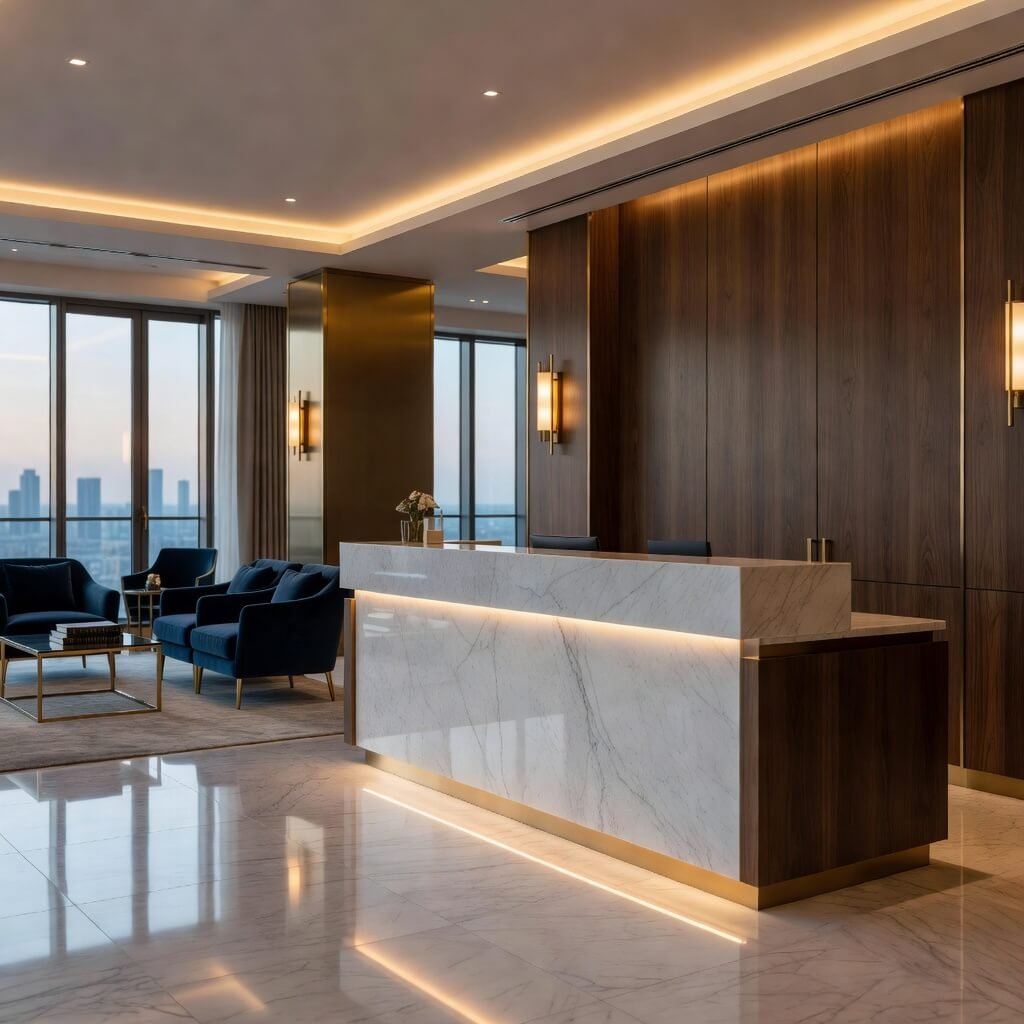
First Impressions Matter (Unfortunately)
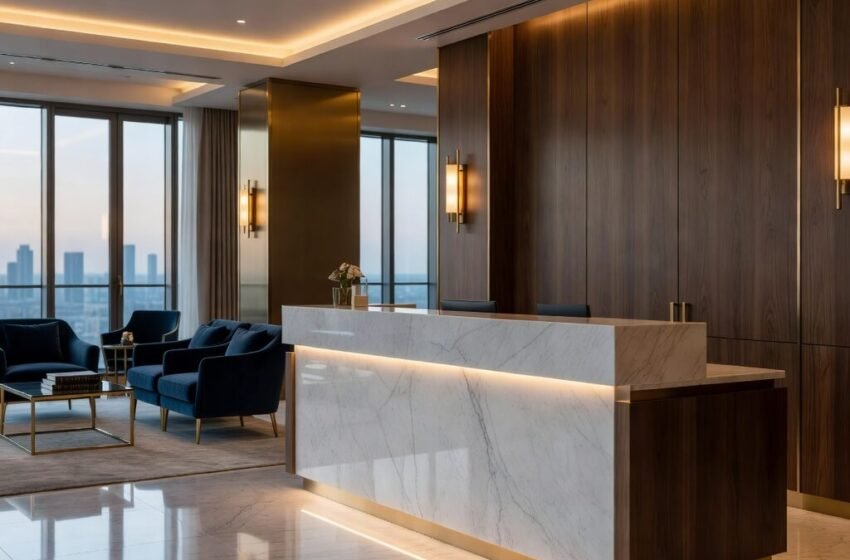
Your reception counter is basically your business’s handshake, and you’ve got about three seconds to make a good impression. Even in a small lobby or entrance area, your reception counter needs to project professionalism and style without overwhelming the space.
I designed a reception counter for a small dental practice last year, and we had maybe 60 square feet to work with. The counter needed to look welcoming but professional, store a ton of paperwork, and fit all their computer equipment. Oh, and look amazing. Easy, right?
Creating That “Wow” Factor
The secret to an elegant reception counter in a small space is thoughtful details. You’re not working with size, so you work with style:
- Quality materials: This is where you invest—real wood veneer, quality laminate, or solid surface materials
- Interesting shapes: Curved fronts, angled sides, or asymmetrical designs create visual interest
- Integrated lighting: Backlit panels, LED strips, or even a statement light fixture above
- Brand integration: Subtle logo placement or colors that match your brand identity
A two-level design works brilliantly for reception counters. The higher level (about 42 inches) provides privacy for paperwork and computer screens, while the lower section (36 inches) creates a comfortable transaction height for guests. This height variation adds dimension without taking up extra floor space.
Technology Integration
Modern reception counters need to accommodate all your tech without looking like a Best Buy exploded. Cable management is crucial—use built-in cable grommets, hidden power strips, and routing channels. Nothing kills elegance faster than a tangled mess of cords hanging everywhere.
I’m obsessed with reception counters that include wireless charging pads built into the surface. Your guests can charge their phones while checking in, and you look like a tech-savvy genius. These are surprisingly affordable to add during the build process.
Scandinavian White Counter Design
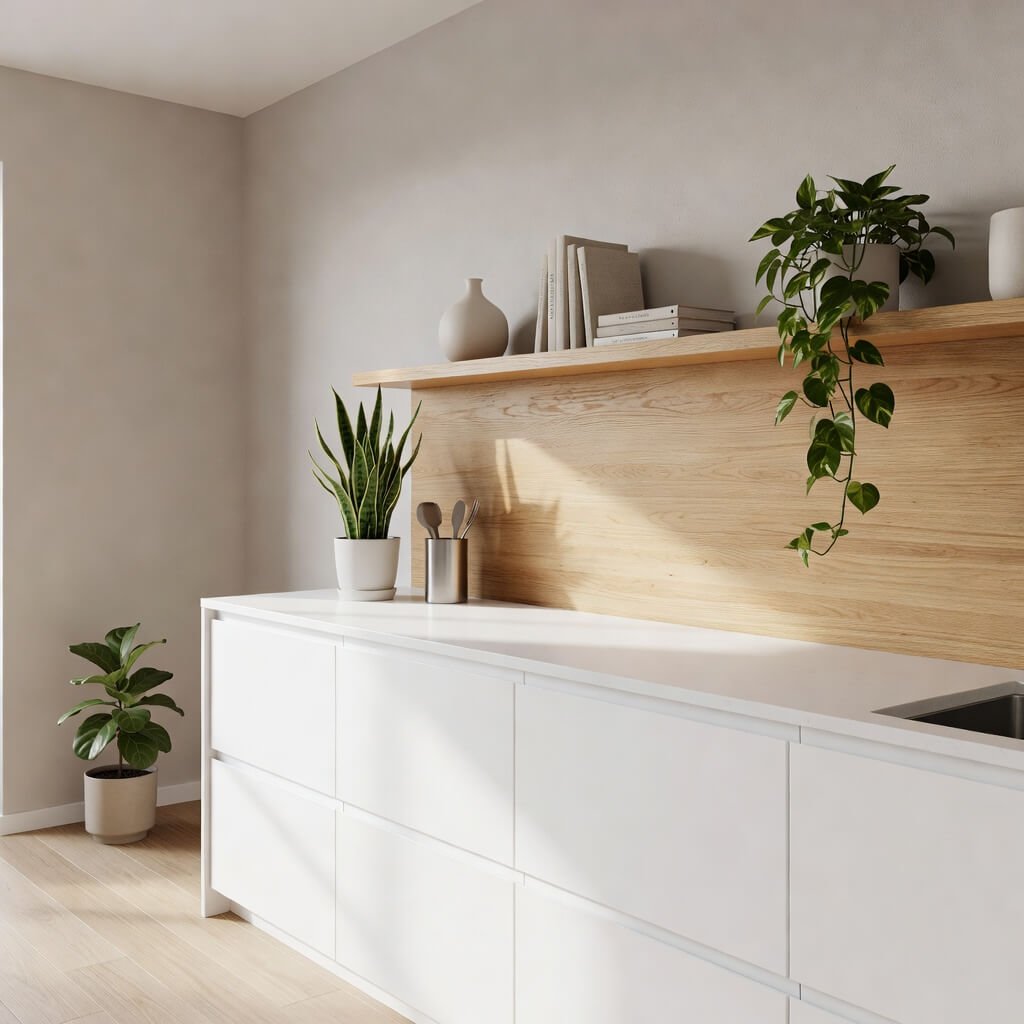
The Power of White (Without the Sterility)
Scandinavian design is having a moment, and for good reason—it’s perfect for small spaces. A white Scandinavian counter brings that clean, airy, uncluttered vibe that makes rooms feel twice their actual size. But here’s the thing: white doesn’t have to mean boring or hospital-like.
The Scandinavian approach combines white with natural materials, subtle textures, and functional design. It’s minimalist, sure, but it’s warm minimalism, not cold and sterile. I designed my entire home office around this concept, and I swear my 100-square-foot room feels at least… 110 square feet now 🙂
Elements of Scandinavian Counter Design
Getting the Scandinavian look right is about layering subtle elements that create a cohesive, calming aesthetic:
- Matte white surfaces: Glossy white can feel cold; matte is softer and more sophisticated
- Natural wood accents: Light wood drawer fronts, wooden handles, or wood-grain details
- Simple hardware: Brushed nickel or matte black handles in clean, geometric shapes
- Open lower shelving: White counters with light wood open shelves underneath
- Minimal ornamentation: Clean lines, no fussy details or elaborate trim
The beauty of this style is how forgiving it is in small spaces. White reflects maximum light, the simple lines don’t create visual chaos, and the natural materials prevent it from feeling cold or unwelcoming.
Adding Personality Without Cluttering
FYI, the biggest challenge with white Scandinavian design is keeping it from looking generic. You add personality through carefully curated accessories—a small plant, a ceramic vase, or a woven basket for storage. Each item serves a purpose while contributing to the overall aesthetic.
Texture is your friend here. A white counter with a subtle wood grain or concrete texture has way more character than a flat, smooth surface. Layer in a textured runner, a ceramic dish, or some matte white storage containers, and suddenly your counter has depth and interest.
Maintaining the Look
Let’s be real—white shows everything. Dirt, scratches, coffee rings, you name it. That’s why material choice is crucial. Go for surfaces that are easy to clean and somewhat stain-resistant. White quartz, solid surface materials, or high-quality laminate all work better than painted wood, which chips and yellows over time.
Also Read: 10 Fresh Coffee Shop Counter Design Ideas for Aesthetic Vibes
Rustic Farmhouse Counter Layout
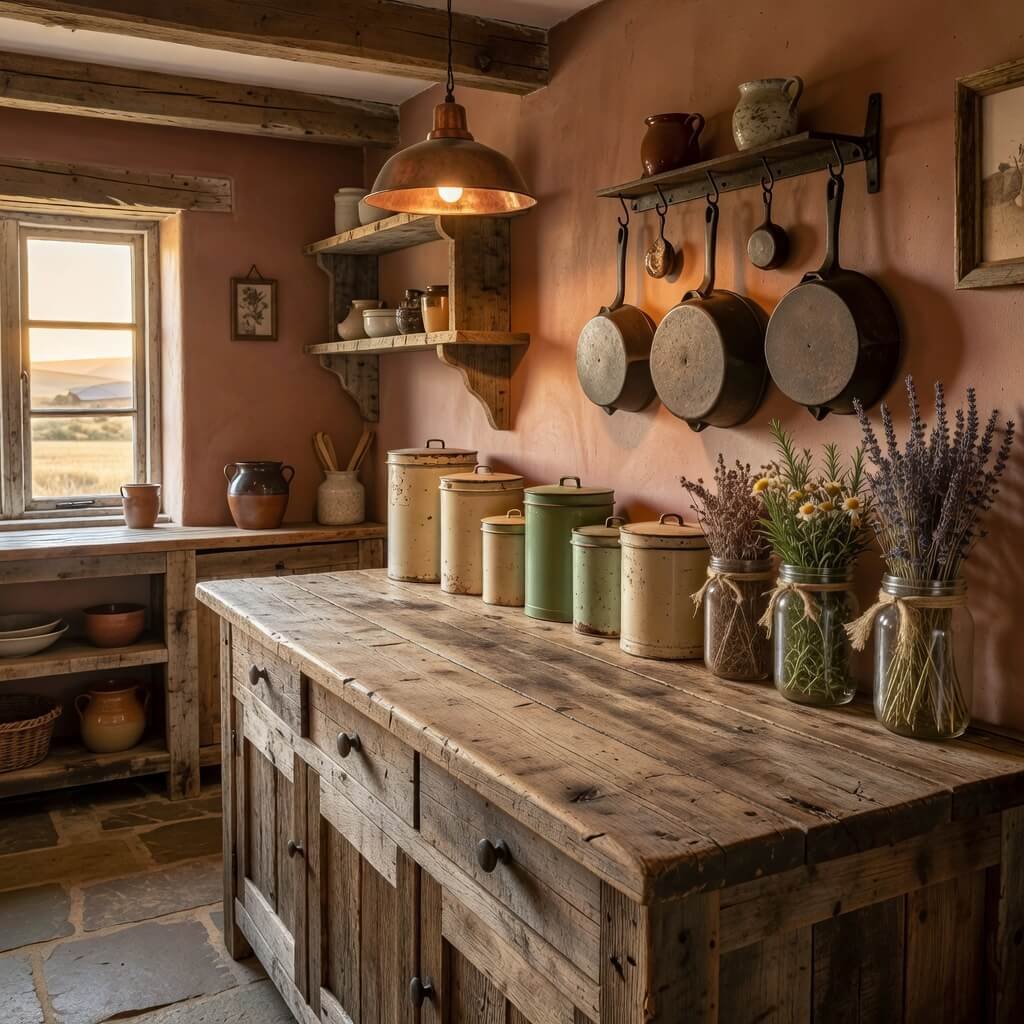
Bringing Countryside Charm to Small Spaces
Okay, last but definitely not least—the rustic farmhouse counter. This style might seem counterintuitive for small spaces (pun intended), but when you do it right, it creates such a cozy, welcoming atmosphere that the size of your space becomes irrelevant.
I helped my parents design a farmhouse-style counter for their tiny guest cottage kitchen, and it completely transformed the feel of the space. The warm wood, vintage-inspired hardware, and practical layout made the small area feel charming rather than cramped.
Key Elements of Farmhouse Style
The farmhouse aesthetic is all about combining rustic elements with practical functionality. Here’s what makes it work in compact spaces:
- Reclaimed wood: Real or realistic-looking reclaimed wood for character and warmth
- Butcher block surfaces: Practical, beautiful, and quintessentially farmhouse
- Vintage hardware: Oil-rubbed bronze, black iron, or antique brass pulls and handles
- Open shelving: Displaying dishes, baskets, or decorative items instead of closed cabinets
- Apron front: A decorative front panel that hides the counter structure while adding charm
Keeping Rustic from Becoming Cluttered
Here’s where people mess up farmhouse style in small spaces—they go overboard with the decorative stuff. Every available surface doesn’t need a mason jar, vintage sign, or chicken figurine (please, no chicken figurines).
The counter itself should have rustic character built in, so you don’t need to pile on accessories. A gorgeous butcher block surface or reclaimed wood front panel does the heavy lifting. Add maybe one or two tasteful decorative elements, and call it a day.
Color Palette Matters
Traditional farmhouse uses lots of white, cream, and natural wood tones—perfect for small spaces. If you want to add color, stick with muted, earthy tones like sage green, dusty blue, or warm gray. These colors complement the rustic vibe without overwhelming your limited square footage.
I’ve seen people try to do farmhouse style with dark wood and heavy finishes in small spaces, and it just doesn’t work. The space feels cave-like and oppressive. Stick with lighter wood finishes and white or cream-colored bases for the counter structure.
Modern Farmhouse Hybrid
If pure rustic isn’t your thing, the modern farmhouse hybrid might be perfect. You take the warm, natural elements of farmhouse style but keep the lines cleaner and more contemporary. Think butcher block counter with sleek metal legs instead of a chunky wooden base. You get the best of both worlds—character and breathing room.
Bringing It All Together
So there you have it—ten counter designs that actually work in small spaces, each bringing something different to the table (another pun, sorry not sorry). The key takeaway here is that small spaces don’t limit your options; they just require smarter choices.
Whether you’re drawn to the luxury of marble and gold, the simplicity of Scandinavian white, or the warmth of rustic farmhouse, you can make it work in your compact area. The trick is understanding how materials, colors, and designs affect spatial perception and using that knowledge to your advantage.
Remember, functionality comes first. A beautiful counter that doesn’t serve your needs is just an expensive obstacle. Think about how you’ll actually use the space daily, then choose a design that supports those functions while looking fantastic.
And hey, don’t be afraid to mix elements from different styles. My favorite counters often combine ideas—like a minimalist wooden design with LED lighting, or a Scandinavian white counter with concrete elements. The design rules are more like guidelines anyway.
Your small space deserves a counter that works as hard as you do while making you smile every time you see it. Now stop reading this article and go make it happen! You’ve got this.