10 Attractive Shop Counter Design Ideas for Trendy Shops
- Counter Design
 Ben
Ben- 0
- 49 minutes read
Look, your shop counter isn’t just a place where transactions happen. It’s basically the throne of your retail empire, and honestly? Most people mess it up. I’ve walked into so many shops where the counter looks like an afterthought—slapped together with zero personality. Your counter is where first impressions either soar or crash and burn, and trust me, customers notice.
So whether you’re opening a new boutique, revamping your existing space, or just daydreaming about what could be, I’m sharing ten counter designs that actually work. These aren’t cookie-cutter ideas you’ll find everywhere. I’m talking about real, actionable concepts that balance style, function, and that elusive “wow” factor every trendy shop needs.
Modern Minimalist Shop Counter Design
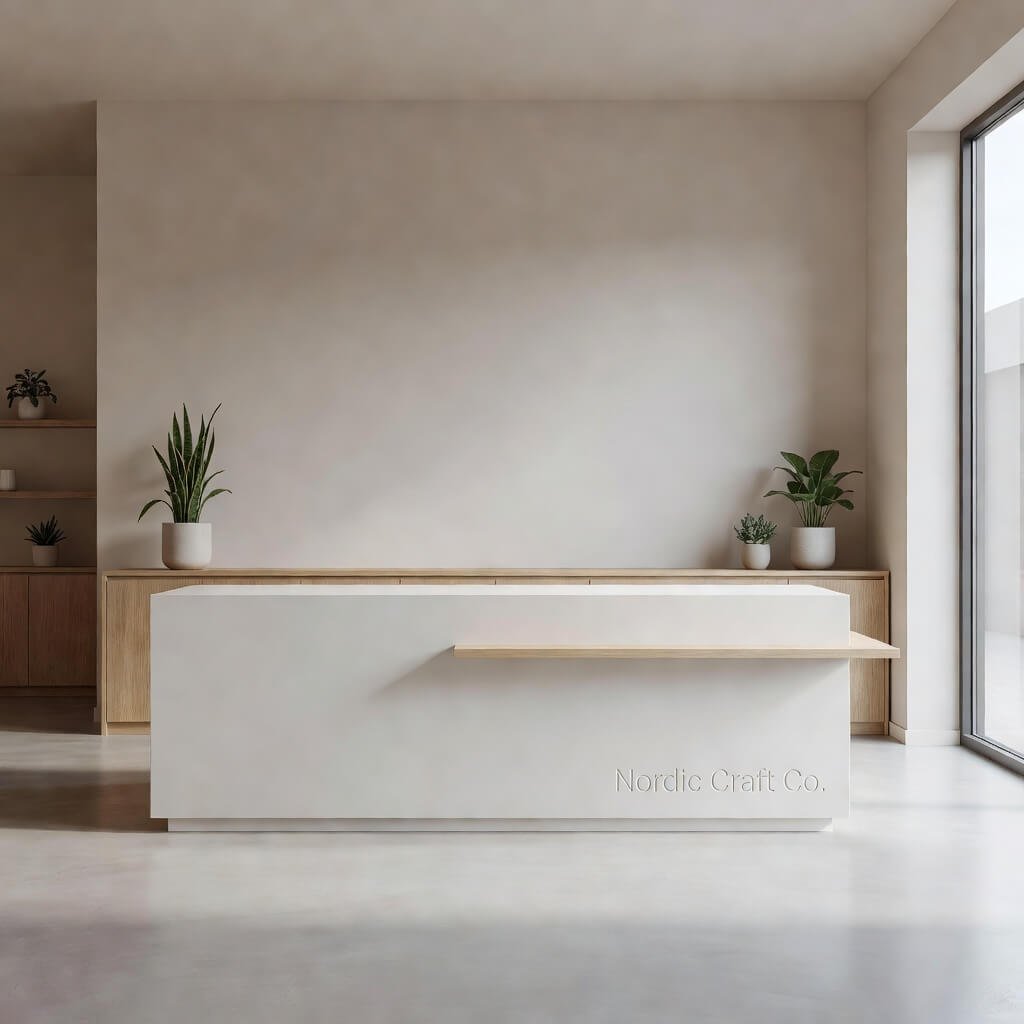
Ever walked into a space and felt instantly calm? That’s what minimalist design does—it strips away the noise and lets your products breathe. A modern minimalist shop counter focuses on clean lines, neutral colors, and functional simplicity. Think white, grey, or black surfaces with zero clutter.
I personally love this approach because it works for almost any product type. Whether you’re selling artisan coffee or handmade jewelry, a minimalist counter doesn’t compete with your merchandise—it complements it. The beauty here is in what you don’t include.
Key Features of Minimalist Counters
Here’s what makes this design tick:
- Sleek surfaces: Go for matte finishes in white, concrete grey, or soft beige
- Hidden storage: Built-in drawers and compartments keep everything organized but invisible
- Minimal hardware: Handleless cabinets or recessed pulls maintain the clean aesthetic
- Monochromatic palette: Stick to 2-3 colors max
The trick with minimalism is restraint. You can’t just throw up a white counter and call it a day. You need to consider proportions, spacing, and how the counter interacts with your overall store layout. I’ve seen shops nail this by adding just one textural element—maybe a wood accent strip or a single potted plant—to prevent the space from feeling sterile.
Making Minimalism Work Practically
Functionality matters more than you think. A minimalist counter looks gorgeous, but if your staff can’t reach the cash register or you don’t have space for your POS system, you’ve failed. I recommend planning for:
- Adequate counter depth: At least 24 inches to accommodate computers, card readers, and wrapping materials
- Cable management: Built-in channels or grommets keep wires hidden
- Strategic lighting: Under-counter LEDs or pendant lights that don’t disrupt the clean lines
One shop I visited in Brooklyn absolutely crushed this concept. They used a floating white counter with a thin profile, backed it with a textured concrete wall, and added a single brass accent line. Simple? Yes. Memorable? Absolutely.
Luxury Marble Front Counter Setup
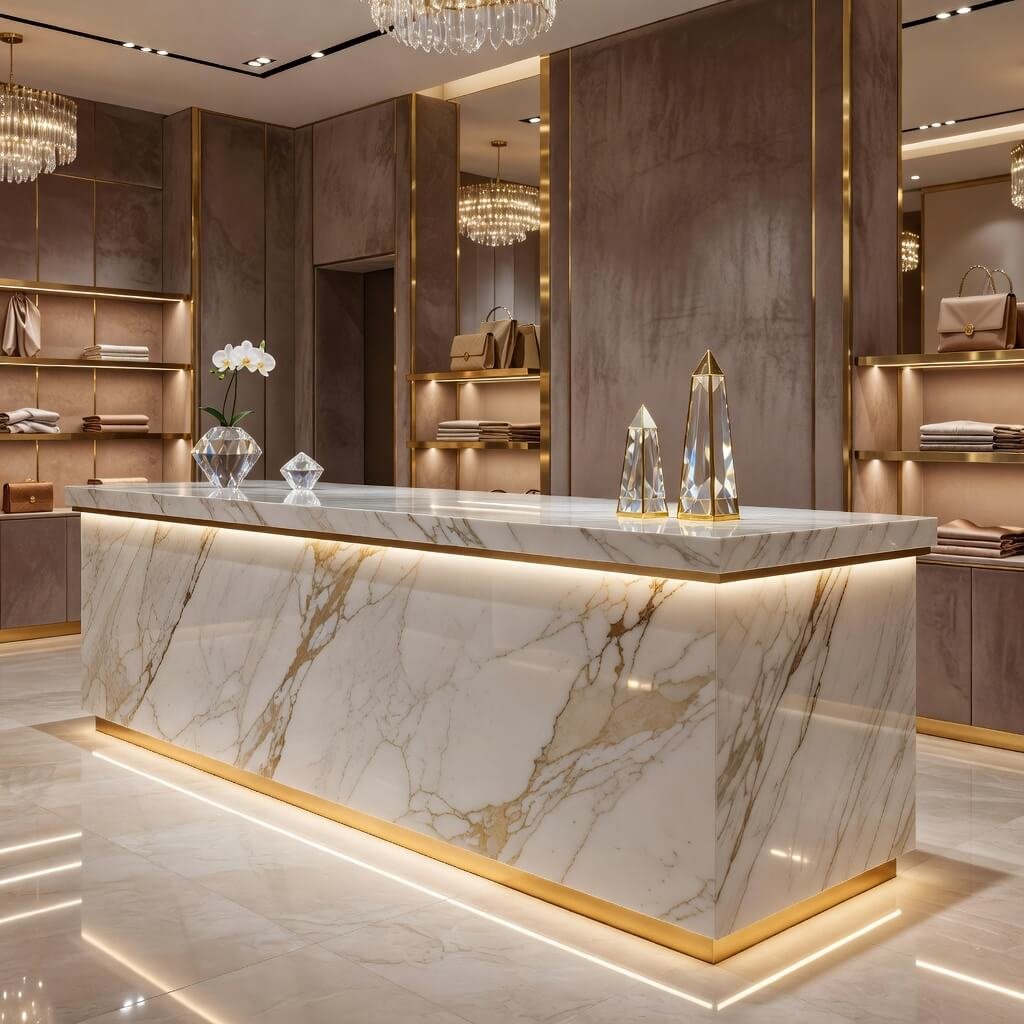
Want to scream “upscale” without actually screaming? Marble does the talking for you. There’s something inherently luxurious about marble—maybe it’s the natural veining, the cool touch, or just the fact that it’s been associated with wealth since, like, ancient Rome. Either way, it works.
I’ll be honest though—marble isn’t for every budget or every aesthetic. But if you’re running a high-end boutique, jewelry store, or premium cosmetics shop, this material immediately elevates your brand perception. Customers feel the quality before they even touch your products.
Types of Marble to Consider
Not all marble is created equal, FYI. Here are your main players:
- Carrara marble: White with grey veining; classic and slightly more affordable
- Calacatta marble: Whiter background with bolder, more dramatic veining; pricier but stunning
- Emperador marble: Rich brown tones; perfect for warmer, traditional spaces
- Nero Marquina: Black marble with white veining; ultra-modern and sophisticated
I personally lean toward Calacatta for that statement factor, but Carrara offers incredible value and still delivers that luxury vibe. Just remember—marble requires maintenance. It stains, it scratches, and it needs sealing. But honestly? Those imperfections add character over time.
Design Combinations That Elevate Marble
Here’s where you get creative. Marble doesn’t need to dominate the entire counter. I’ve seen gorgeous setups where:
- The counter front features a marble slab while the top uses a more practical surface
- Marble appears as accent panels rather than the full structure
- Different marble types mix together for visual interest (careful here—this can go wrong fast)
Pair your marble counter with brass or gold fixtures, soft ambient lighting, and maybe some velvet display elements. You’re creating an experience, not just a transaction point. One jewelry store I visited used backlit marble—the stone was thin enough to let light through, highlighting the natural veining. Absolutely gorgeous.
Small Space Wooden Shop Counter Ideas
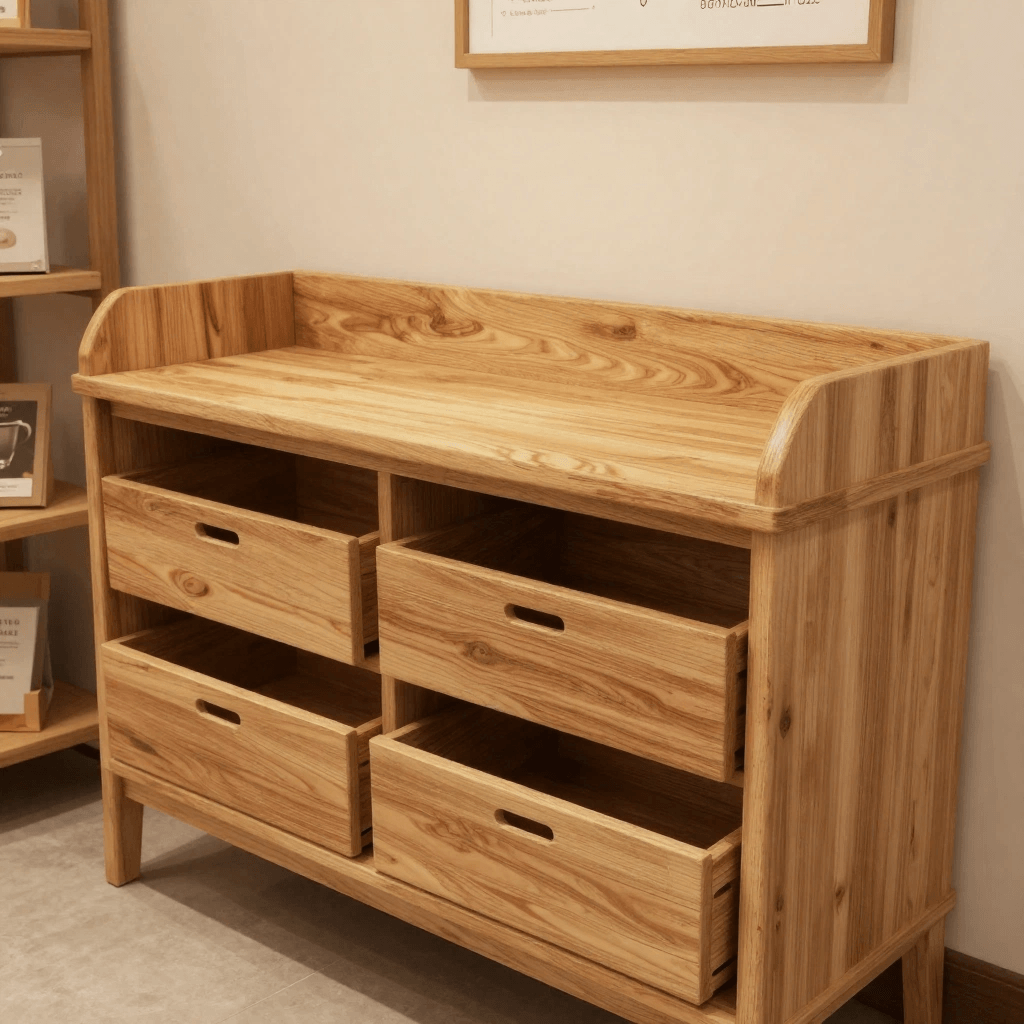
Let’s talk about the elephant in the room—or rather, the lack of room in your shop. Small retail spaces come with big challenges, and your counter can either maximize your limited square footage or waste it. Wooden counters offer warmth, versatility, and customization options perfect for tight spots.
Wood brings an organic, approachable feel that works for coffee shops, boutiques, craft stores, or pretty much any retail concept that wants to feel welcoming rather than corporate. Plus, you can customize dimensions to fit your exact space. No cookie-cutter solutions here.
Space-Maximizing Wooden Counter Features
When you’re working with limited space, every inch counts:
- Multi-level surfaces: Create a transaction area plus a lower shelf for bags or displays
- Built-in display niches: Carve out small sections to showcase products right at the counter
- Fold-down extensions: Add temporary workspace that tucks away when you don’t need it
- Open shelving underneath: Keeps the space feeling less cramped than closed cabinets
I remember this tiny bookshop that used a reclaimed wood counter with a curved front edge. The curve sounds counterintuitive for small spaces (no pun intended), but it actually improved flow—customers didn’t bump into sharp corners. Smart, right?
Wood Types and Finishes for Different Vibes
Your wood choice totally changes the atmosphere:
- Light oak or birch: Scandinavian, airy, modern
- Walnut or mahogany: Rich, traditional, upscale
- Reclaimed barn wood: Rustic, eco-friendly, character-filled
- Bamboo: Sustainable, modern, slightly exotic
Finish matters too. High-gloss looks modern and polished but shows every fingerprint. Matte or satin finishes feel more natural and hide wear better. I’m team matte all the way—less maintenance, more authenticity.
Also Read: 10 Brilliant Bar Counter Design Ideas for Cozy Homes
Glass Display Counter Design for Retail Shops
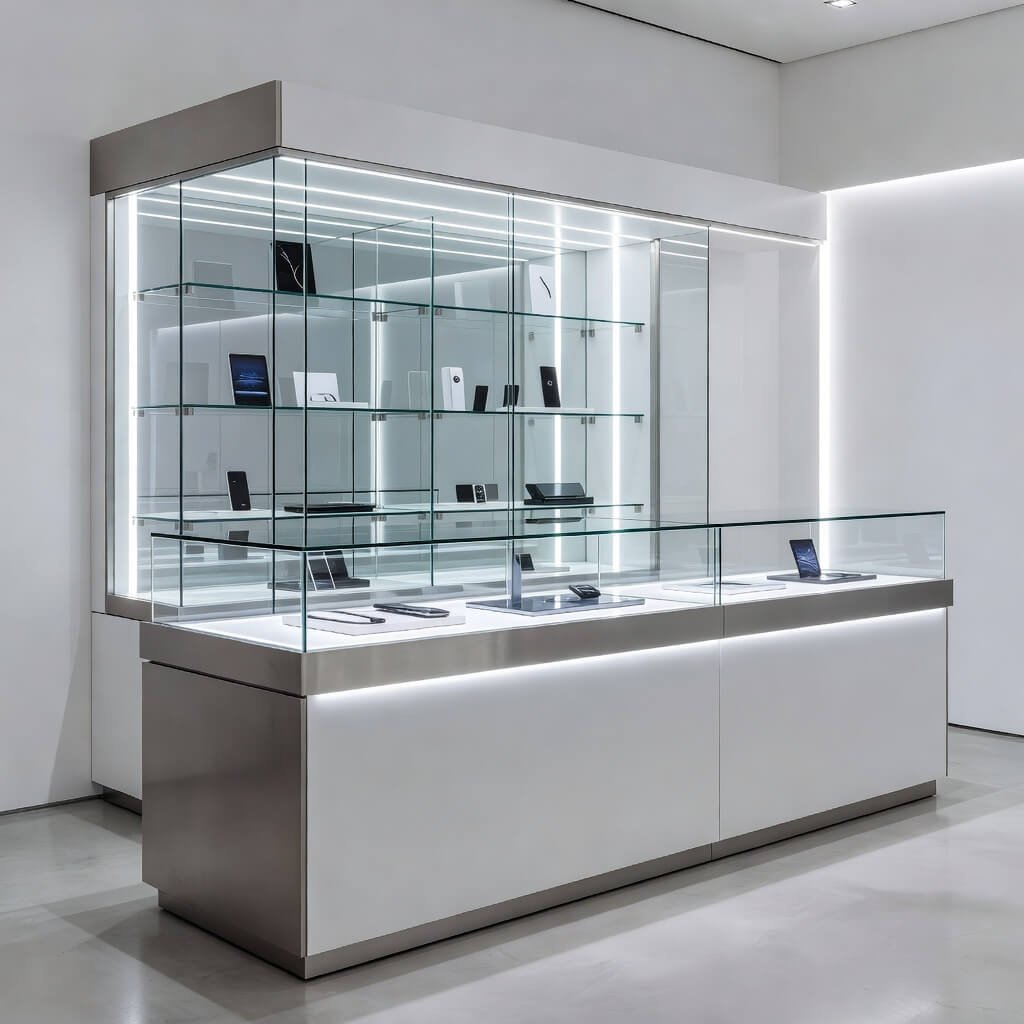
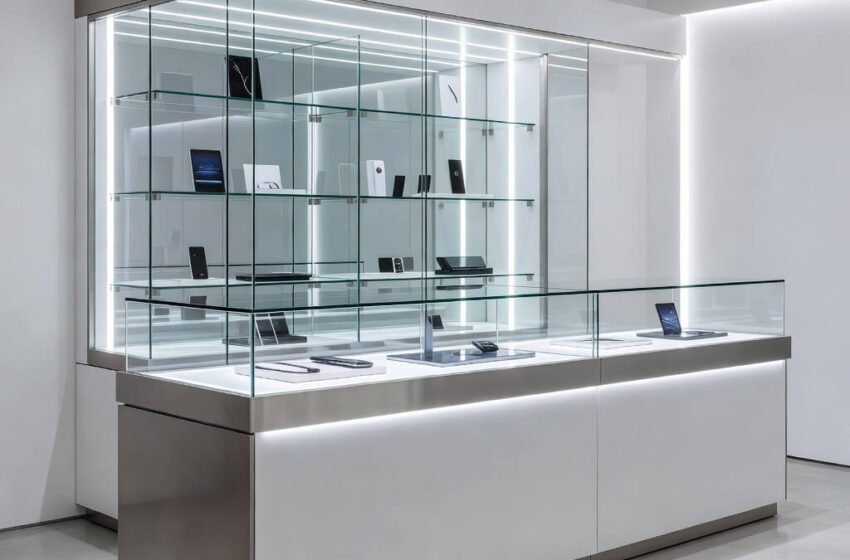
If you’re selling products that deserve to be seen—jewelry, watches, cosmetics, tech gadgets, baked goods—then glass display counters are basically non-negotiable. They transform your counter from a barrier into a showcase, letting customers browse while you maintain control and security.
The psychology here is brilliant. Customers can see products without touching them, which creates desire while protecting inventory. It’s window shopping at the point of sale. Win-win.
Styles of Glass Display Counters
You’ve got options depending on your products and aesthetic:
- Full glass front and top: Maximum visibility; great for jewelry and small valuables
- Glass top with solid base: Display inside while maintaining storage below
- Corner glass units: Maximize awkward corner spaces while creating display zones
- Illuminated glass shelves: LED lighting under each shelf makes products pop
One watch retailer I know uses a counter that’s essentially a glass box—you can see through from all sides. They position it in the center of the store rather than against a wall. Bold move, but it creates this gallery-like experience that perfectly suits their luxury brand.
Practical Considerations for Glass Counters
Real talk—glass requires commitment:
- Cleaning: Fingerprints show constantly. You’ll need to wipe down multiple times daily
- Lighting: Poor lighting makes glass counters pointless; invest in good LED strips
- Security: Use tempered or laminated glass, plus locks on all access points
- Weight capacity: Ensure the frame supports the weight of glass plus products
Is the maintenance worth it? For the right products, absolutely. I’ve watched people gravitate toward glass counters like moths to a flame. The visibility factor genuinely increases sales, especially for impulse-buy items positioned strategically.
Industrial Style Metal & Wood Counter Design
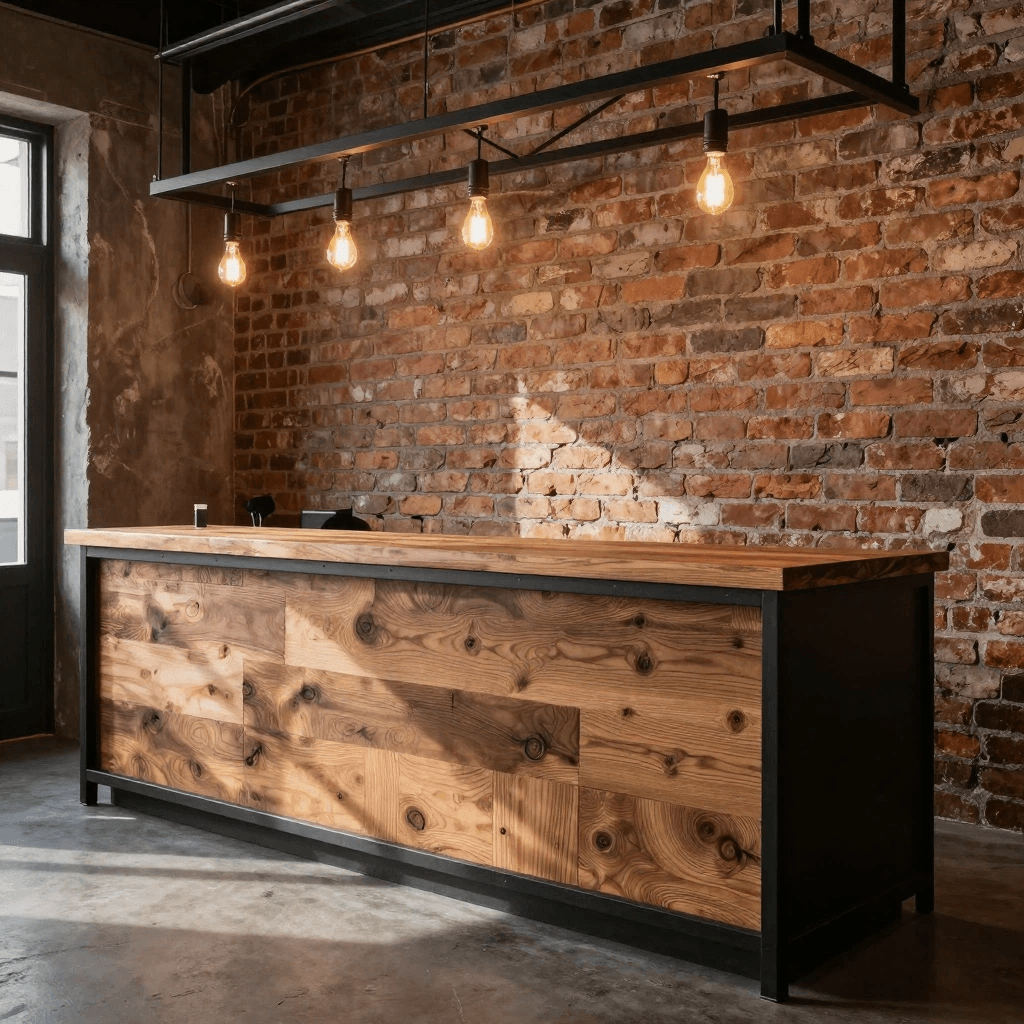
Remember when exposed brick and Edison bulbs took over every coffee shop? The industrial aesthetic isn’t going anywhere, and for good reason—it’s ridiculously versatile. An industrial-style counter combines raw materials like metal and reclaimed wood to create a look that’s both rugged and refined.
This style works particularly well for shops with an edge—barbershops, vinyl record stores, urban fashion boutiques, craft breweries, artisan markets. You want that “we don’t take ourselves too seriously but we’re serious about quality” vibe. IMO, industrial design hits that sweet spot better than most aesthetics 🙂
Core Elements of Industrial Counter Design
Nail these components and you’re golden:
- Metal framework: Black iron pipes, steel frames, or aluminum supports create the structure
- Reclaimed wood surfaces: Barn wood, pallet wood, or salvaged timber for the countertop
- Exposed hardware: Visible bolts, rivets, and brackets become design features
- Dark color palette: Blacks, greys, and natural wood tones dominate
The contrast between cold metal and warm wood creates visual interest that feels intentional and designed, not accidental. I love how this style embraces imperfections—scratches, dents, and patina actually improve the look over time.
Customization Options for Your Space
Industrial doesn’t mean one-size-fits-all. You can adjust the balance:
- Heavy on metal: Creates a more modern, edgy feel
- Heavy on wood: Softens the aesthetic for a rustic-industrial hybrid
- Add leather details: Upholstered fronts or leather accents warm things up
- Incorporate vintage elements: Old factory carts, antique scales, or vintage signage
I visited this menswear shop that built their counter from an actual reclaimed factory worktable. They added a metal framework underneath for stability and storage, but kept the original worn wood top complete with ink stains and tool marks. Every customer commented on it. That’s the power of authentic industrial design.
LED Backlit Modern Shop Counter Concept
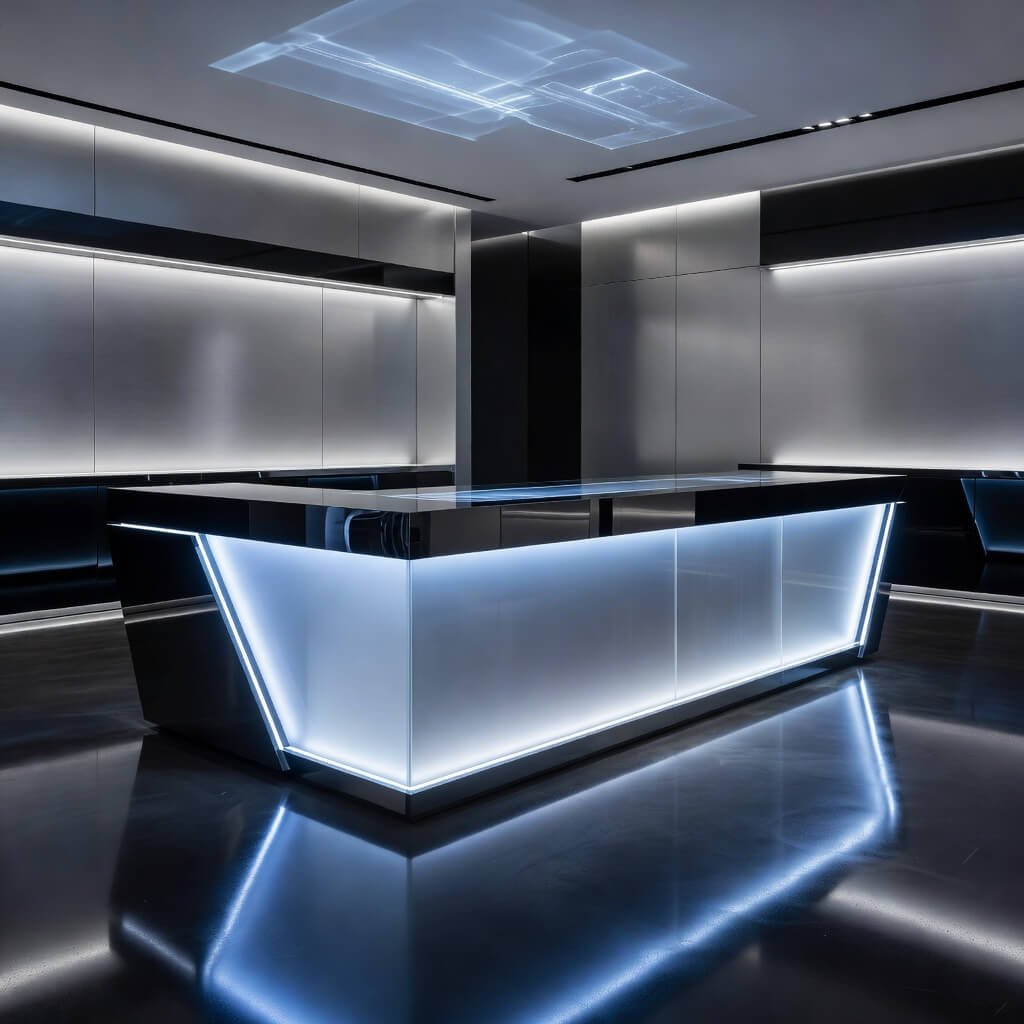
Lighting isn’t just functional—it’s transformational. LED backlit counters create ambiance, highlight your brand, and honestly just look cool. When you light your counter from within or behind, you’re making a statement: “We pay attention to details, and we’re not stuck in the past.”
Modern customers expect modern experiences. Backlighting signals that you’re current, design-conscious, and probably Instagram-worthy. And yes, social media matters for retail spaces now. A photogenic counter gets free marketing every time someone posts from your shop.
Backlighting Techniques and Effects
Here’s how you can incorporate LED lighting:
- Edge-lit acrylic panels: Create a glowing, futuristic effect along counter edges
- Under-counter wash lighting: Illuminate the floor area for dramatic ambiance
- Backlit logo or brand elements: Etch your logo into acrylic and light it from behind
- Color-changing RGB LEDs: Adjust colors for different times of day, seasons, or promotions
I’m a huge fan of subtle white or warm white backlighting rather than bright colors. You want sophisticated, not nightclub (unless you’re actually running a nightclub, in which case, carry on). The goal is enhancement, not distraction.
Combining Backlighting with Materials
LEDs work best when paired with translucent or reflective materials:
- Frosted acrylic or resin: Diffuses light evenly without hotspots
- Onyx or thin marble: Natural stone backlit creates stunning depth
- Colored glass panels: Add brand colors while maintaining the glow effect
- Metallic finishes: Reflect and amplify the lighting for more impact
One tech store I visited used an all-white counter with blue LED underlighting that pulsed gently. Sounds tacky, right? But they executed it perfectly—the pulse was so subtle you barely noticed consciously, but it created this living, breathing quality that matched their innovative brand perfectly.
Energy Efficiency and Longevity
Here’s the practical bit—LEDs aren’t just pretty, they’re smart:
- Low energy consumption: Run all day without killing your electricity bill
- Long lifespan: Quality LEDs last 50,000+ hours; that’s years of operation
- Low heat output: Won’t damage materials or make the counter uncomfortable to lean against
- Easy maintenance: Most systems use plug-and-play connections for simple repairs
Pro tip: Don’t cheap out on the LED strips. Low-quality options fail quickly, produce uneven light, and sometimes emit weird color tints. Spend a bit more upfront and you’ll actually save money long-term.
Also Read: 10 Smart Counter Design Ideas For Small Spaces
Curved Reception Style Shop Counter Design
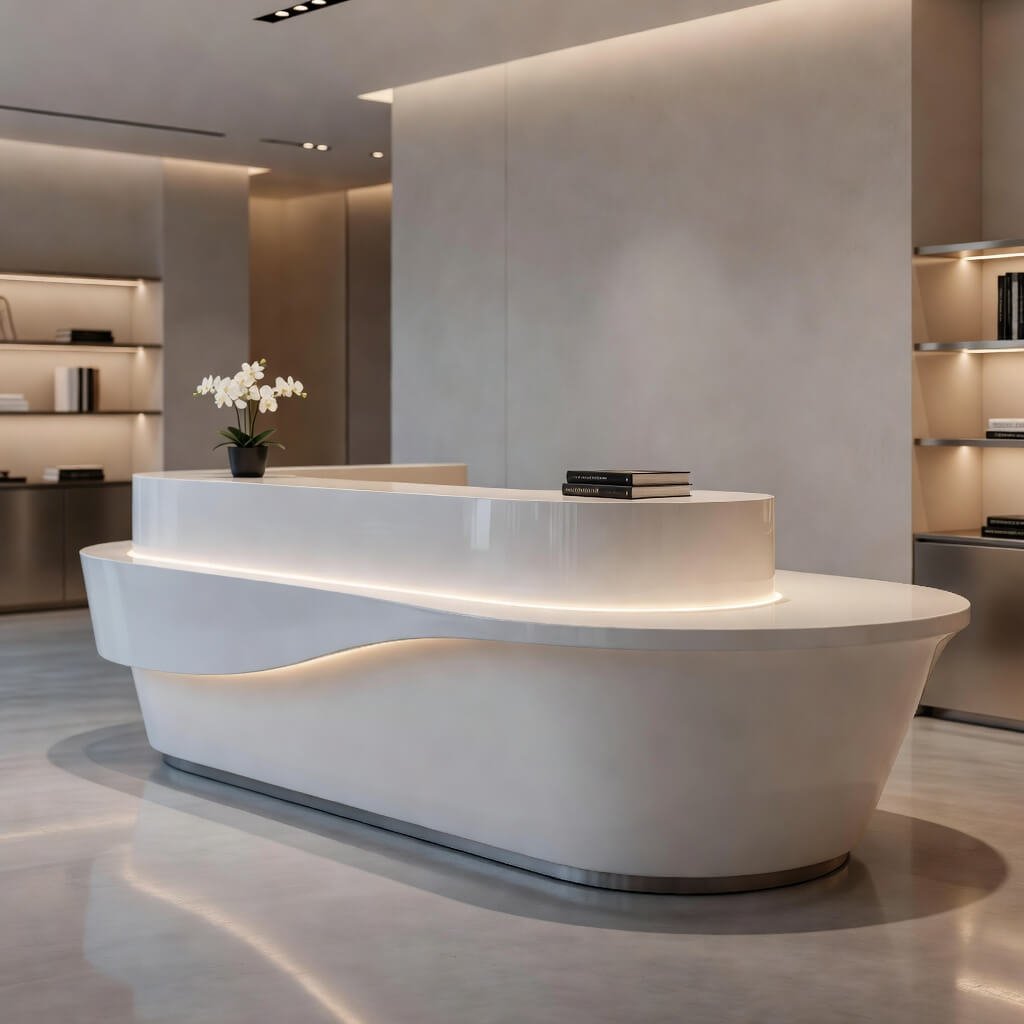
Straight lines are fine, but curved counters create flow, soften spaces, and honestly just feel more welcoming. When you approach a curved counter, there’s no sharp barrier—the design literally wraps around you, creating a more inclusive transaction experience.
I’m obsessed with curved counters for customer-service-heavy businesses. If you run a salon, spa, hotel boutique, or any shop where interaction and experience matter more than quick transactions, curves change the entire dynamic. They signal approachability in a way straight lines simply can’t.
Benefits of Curved Counter Designs
Why go curved? Let me count the ways:
- Improved traffic flow: Customers navigate around curves more naturally than corners
- Softened aesthetic: Reduces the harsh, barrier-like feel of traditional counters
- More interaction space: Curves can create larger surface areas in the same footprint
- Unique visual statement: Most counters are rectangular; curves stand out
Ever noticed how luxury hotel reception desks often feature curves? It’s deliberate. The curve invites approach, suggests fluidity and movement, and creates a high-end impression. You can borrow that same psychology for your retail space.
Design Considerations for Curved Counters
Curves aren’t plug-and-play. You’ll need to plan:
- Custom fabrication: Most curved counters require custom work; budget accordingly
- Material flexibility: Some materials curve better than others (wood, yes; thick granite, not so much)
- Space requirements: Curves need room to breathe; they don’t work well in cramped spaces
- Storage challenges: Curved cabinets underneath can complicate storage layouts
I’ve seen shops compromise by creating a subtle curve—just a gentle arc rather than a dramatic semicircle. You get the benefits without the fabrication complexity. One cosmetics shop used a counter with curved front corners instead of a full curve, which softened the design while keeping costs reasonable.
Budget-Friendly Simple Shop Counter Ideas
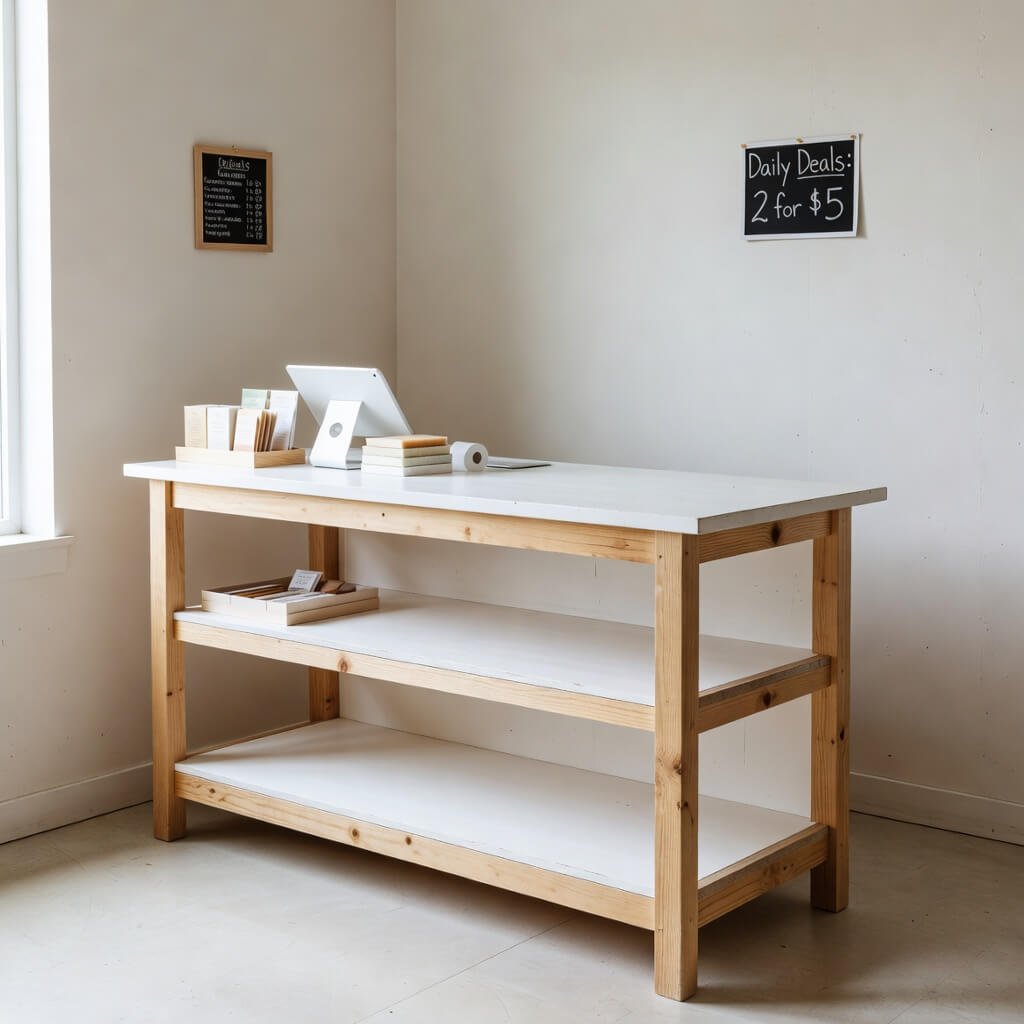
Real talk—not everyone has thousands to drop on a custom marble masterpiece. Maybe you’re just starting out, working with tight margins, or saving your budget for inventory and marketing. Budget-friendly counters can still look fantastic if you’re strategic and creative.
I’ve seen shoestring-budget counters that outshine expensive installations because the owner focused on smart design choices rather than premium materials. It’s not about how much you spend; it’s about how intentionally you spend it.
Affordable Materials That Don’t Look Cheap
Skip the high-end stuff and focus on these cost-effective options:
- Plywood with laminate: Modern laminates look surprisingly good; some mimic wood or concrete beautifully
- IKEA hacking: Buy modular IKEA cabinets and customize the front with paint or panels
- Concrete overlay: Apply a thin concrete layer over existing structures for an industrial look
- Pallet wood: Free or cheap reclaimed pallets, sanded and sealed, create rustic charm
The IKEA hack deserves special mention. I know a boutique owner who bought basic IKEA kitchen cabinets, flipped them sideways, added a custom wood top, and painted the fronts in her brand color. Total cost? About $400. It looked like a $2,000 custom counter. Sometimes you just need to get creative.
DIY vs. Semi-Professional Approaches
How handy are you? That determines your path:
Full DIY approach:
- Watch YouTube tutorials (seriously, you can learn anything)
- Rent tools instead of buying; saves money on one-time projects
- Start with simple designs; avoid complex angles or curves
- Budget extra time; DIY always takes longer than expected
Semi-professional approach:
- Design and purchase materials yourself
- Hire someone for specific tasks like cutting or assembly
- Handle finishing work (painting, sealing) yourself
- Saves 50-70% compared to full professional installation
I’m not gonna lie—DIY isn’t for everyone. If you’re all thumbs with power tools, you might waste more money on mistakes than you’d save. Know your limits, and don’t be afraid to bring in help for the complicated bits.
Making Budget Counters Look Intentional
The difference between “budget” and “cheap-looking” comes down to execution:
- Consistency: Match your counter style to your overall shop aesthetic
- Clean finishes: Spend time on details—no visible screws, uneven edges, or sloppy paint
- Strategic upgrades: Splurge on one element like nice hardware or a quality countertop
- Proper styling: Dress the counter with nice displays, plants, or brand elements
One coffee shop I frequent built their counter from concrete blocks and reclaimed planks—probably $200 in materials. But they finished it beautifully, matched it to their industrial-farmhouse vibe, and styled it with vintage scales and fresh flowers. Nobody thinks “budget” when they see it; they think “authentic and cool.”
High-End Boutique Counter Display Design
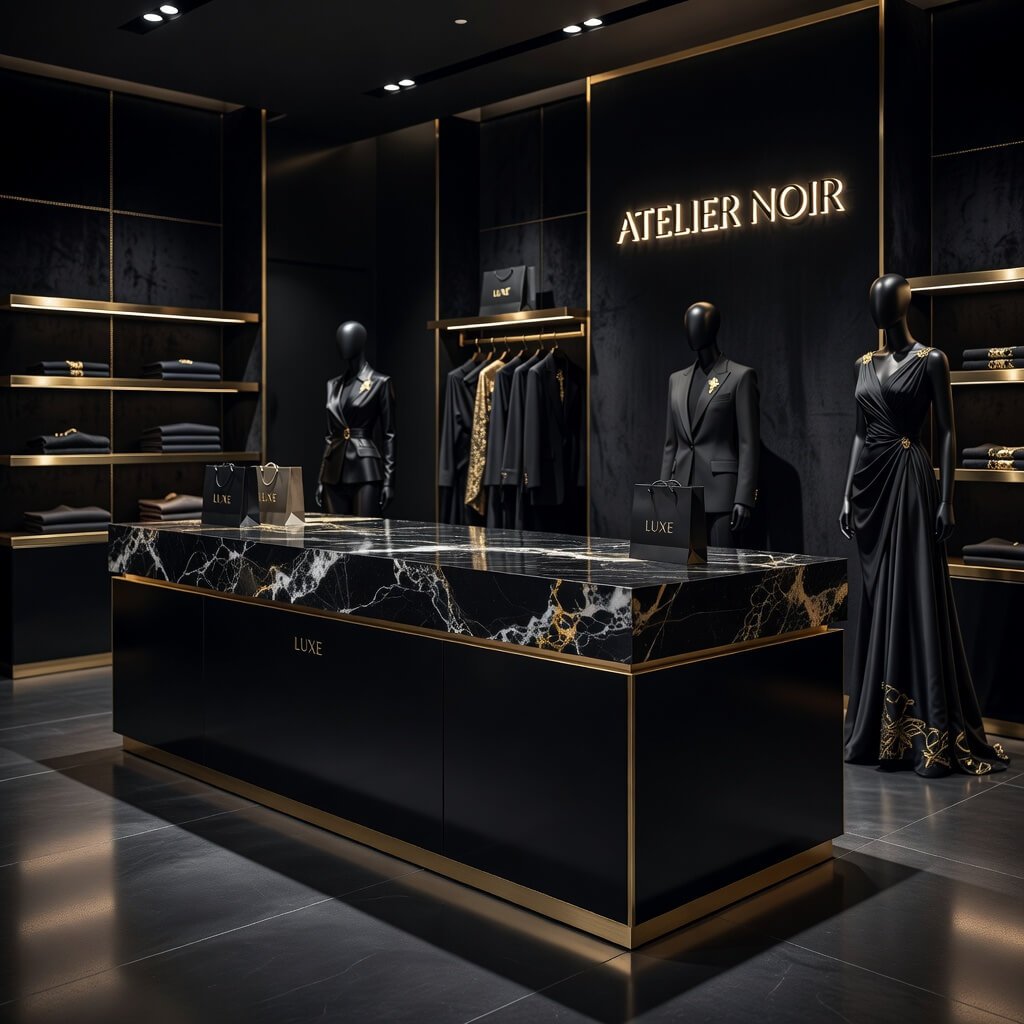
If you’re selling luxury goods—designer fashion, fine jewelry, premium beauty products—your counter needs to match your price point. A high-end boutique counter isn’t just furniture; it’s a brand statement that reinforces the value of everything you sell.
Customers shopping luxury expect luxury experiences. Your counter sets the tone from the moment they walk in. Skimp here, and you undermine the premium positioning of your products. Sorry if that sounds harsh, but it’s true :/
Premium Materials and Finishes
These materials communicate quality instantly:
- Natural stone: Marble, granite, or quartzite with prominent veining
- Exotic woods: Walnut, teak, or rosewood with hand-rubbed finishes
- Polished metals: Brass, copper, or brushed gold accents
- Lacquered surfaces: High-gloss automotive-grade finishes in deep colors
Material quality matters, but so does craftsmanship. Flawless joinery, seamless edges, and invisible hardware separate high-end from merely expensive. I’ve seen counters made from mid-range materials that looked luxury-level because the fabrication was impeccable.
Design Elements That Elevate
Beyond materials, these design choices create that boutique feel:
- Integrated display lighting: Directional spots or strip lighting showcasing featured products
- Custom proportions: Designed specifically for your space and workflow, not standard dimensions
- Architectural details: Columns, inlays, or decorative molding that reference classic design
- Artisanal touches: Hand-carved details, unique hardware, or artist collaborations
The best high-end counters tell a story. One jewelry boutique commissioned a counter inlaid with patterns inspired by art deco architecture—tying to both the vintage jewelry they sold and the historic building they occupied. Customers got it, and it became a conversation piece that reinforced the brand’s narrative.
Worth the Investment?
High-end counters aren’t cheap—think $5,000 to $20,000+ depending on size and materials. But consider:
- Brand perception: Customers judge quality by environment; cheap counters suggest cheap products
- Longevity: Quality construction lasts decades with proper care
- Customer experience: Luxury shoppers expect and appreciate attention to detail
- Marketing value: A stunning counter creates social media content and word-of-mouth
If your average transaction is $500+, investing in a counter that reinforces that value proposition makes business sense. If you’re selling $20 t-shirts, maybe reconsider your priorities.
Also Read: 10 Charming Mini Coffee Shop Design Ideas with Rustic Touch
Compact Corner Shop Counter Layout Ideas
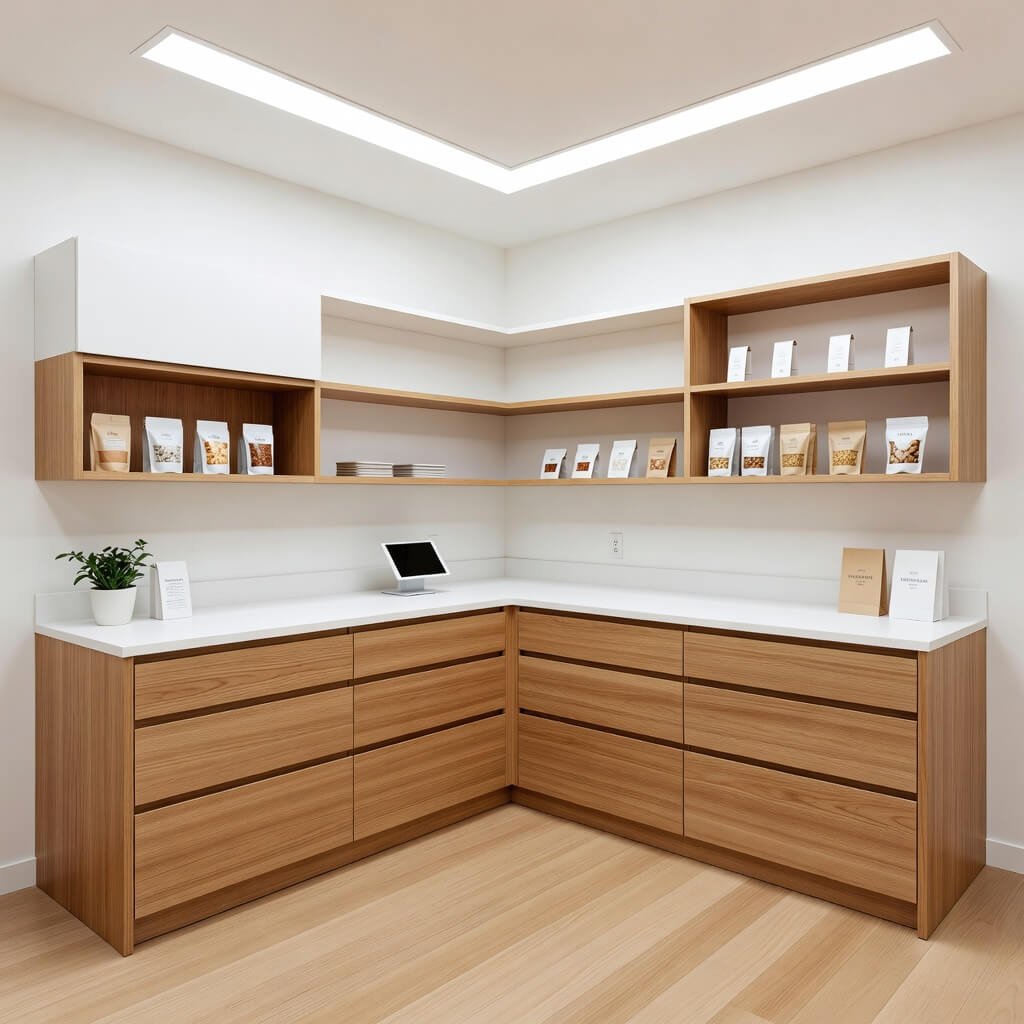
Corners are tricky—they’re often wasted space or awkward to navigate. But a corner counter can actually maximize your retail layout by utilizing space that might otherwise sit empty. I’ve seen corner counters transform cramped shops by creating natural flow and additional transaction points.
The key is designing specifically for the corner rather than forcing a regular counter into a corner space. When you embrace the angle, you unlock possibilities that standard counters can’t offer.
Types of Corner Counter Configurations
Different approaches work for different spaces:
- L-shaped wraparound: Counter extends along two walls, creating ample surface area
- Diagonal corner placement: Cuts across the corner at a 45-degree angle, opening up floor space
- Curved corner design: Smoothly rounds the corner for improved flow and softer aesthetics
- Multi-level corner station: Uses vertical space with upper displays or shelving
I’m partial to the diagonal approach for small shops. By angling the counter across the corner, you actually gain usable floor space in front while still providing adequate counter area. It sounds counterintuitive but works brilliantly in practice.
Maximizing Corner Counter Functionality
Corners offer unique opportunities if you plan carefully:
- Wrap-around storage: Cabinets that extend around both walls provide tons of hidden storage
- Two-sided access: Staff can work from either angle, improving efficiency during busy periods
- Display integration: Use the corner walls behind the counter for shelving or product displays
- Customer queuing: The corner naturally creates a defined space for customers to wait
One bakery I visit regularly uses a corner counter with a diagonal front. They installed a refrigerated display case along one side and the cash register along the other. Customers queue along the display side, browsing pastries while waiting. The layout naturally guides the customer journey—brilliant use of space.
Avoiding Common Corner Counter Mistakes
Corner counters can go wrong if you’re not careful:
- Dead zones: Don’t create corner areas staff can’t reach; plan access carefully
- Tight angles: 90-degree internal corners collect dust and become wasted space
- Poor sightlines: Ensure staff behind a corner counter can still see the entire shop
- Overcrowding: Just because you can fill the corner doesn’t mean you should
Measure twice, build once. Actually, measure three times. Corner angles are less forgiving than you think, and a counter that’s even slightly off looks terrible and functions worse.
Final Thoughts
Look, your shop counter matters more than most people realize. It’s the last thing customers interact with before they leave, and it’s usually the first thing they notice when they walk in. Getting it right—whether that means going full luxury marble or creating a clever budget hack—can genuinely impact your business.
I’ve thrown a lot of ideas at you, and honestly? You don’t need to choose just one. Mix elements that resonate with your brand, your space, and your budget. Maybe you combine industrial metal with LED backlighting, or create a minimalist curved counter, or build a corner unit from reclaimed wood. The best counter designs reflect the unique personality of the shop they serve.
Whatever direction you choose, commit to it fully. A half-hearted counter redesign is worse than no redesign at all. Whether you’re working with $300 or $30,000, intentional design beats expensive mediocrity every single time. Your counter is an investment in your brand experience—make it count.
Now stop reading and start planning. Your dream counter isn’t going to design itself!