10 Premium Office Counter Design Ideas Luxury Front Counter
- Counter Design
 Ben
Ben- 0
- 36 minutes read
You know that moment when you walk into an office and the reception counter just stops you in your tracks? Yeah, I’m talking about those jaw-dropping, Instagram-worthy front desks that make you think, “Okay, these people mean business.” Your office counter isn’t just furniture—it’s your first handshake, your opening line, your “hello, we’re awesome” statement before anyone even speaks to you.
I’ve spent way too many hours obsessing over office counter designs (call it an occupational hazard), and I’m here to share the crème de la crème with you. Whether you’re planning a complete office makeover or just daydreaming about what could be, these ten premium office counter design ideas will give you serious inspiration. Let’s get into it.
Minimalist Floating Office Counter Design
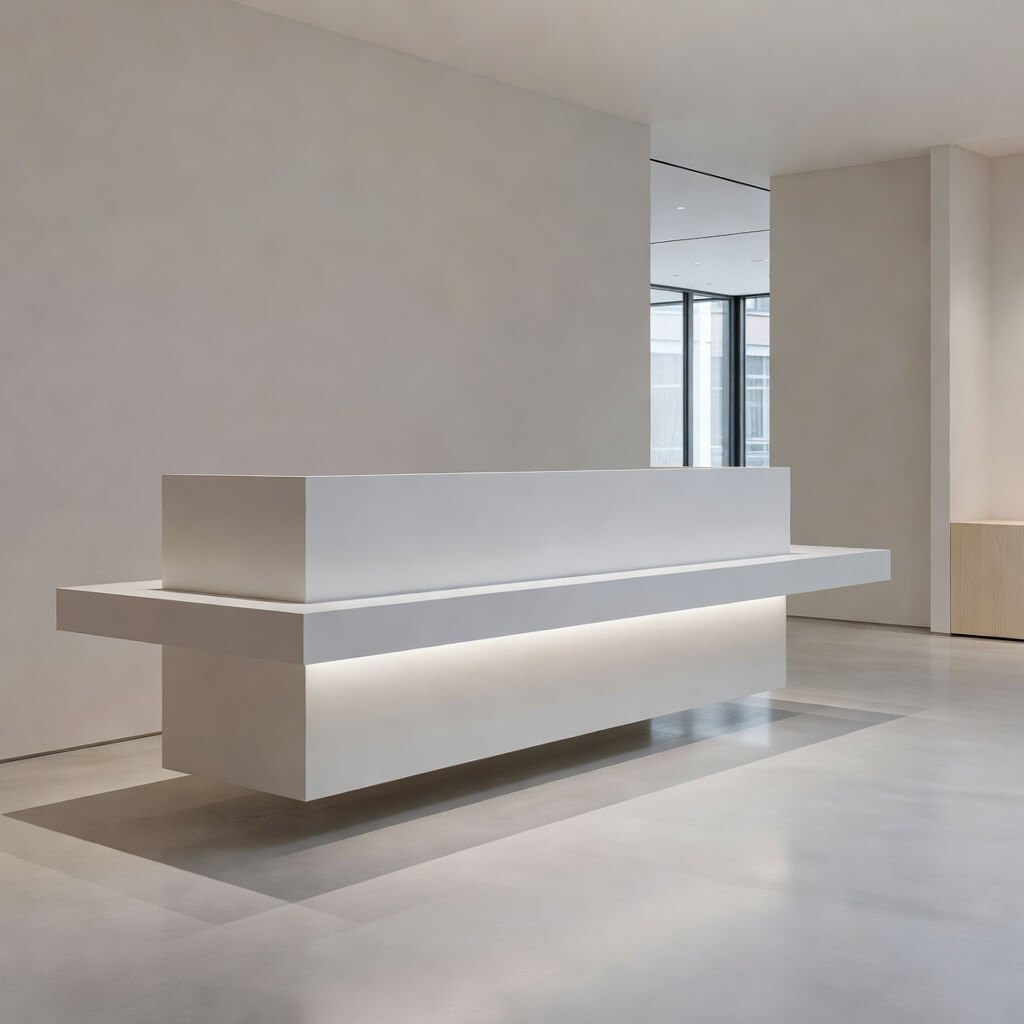
Ever walked into a space and felt like you could breathe easier? That’s the magic of minimalist design, and floating office counters take this concept to another level entirely.
I absolutely love floating counters because they create this illusion of weightlessness. The desk appears to hover off the ground, usually mounted to the wall with hidden brackets or a concealed support system. This design choice opens up the floor space and makes even smaller reception areas feel expansive and airy.
Here’s what makes floating counters so special:
- Space perception: Your eyes naturally follow the uninterrupted floor line, making the area appear larger
- Easy cleaning: No legs or base cabinets means your cleaning crew will actually thank you
- Modern aesthetic: Nothing says “we’re forward-thinking” quite like defying gravity with your furniture
- Customizable height: You control exactly how high you mount it
The materials you choose matter here. I’ve seen stunning floating counters in white lacquer that practically glow against dark walls, and sleek dark wood options that bring warmth without weight. Pair your floating counter with a minimalist backdrop—maybe some subtle texture or a single piece of abstract art—and you’ve got yourself a reception area that whispers sophistication.
One thing to watch out for? You need solid walls for proper installation. Those flimsy drywall partitions won’t cut it, so factor in some reinforcement costs if your walls aren’t up to the task. Trust me, you don’t want your reception desk crashing down during a client meeting. Talk about an awkward first impression 🙂
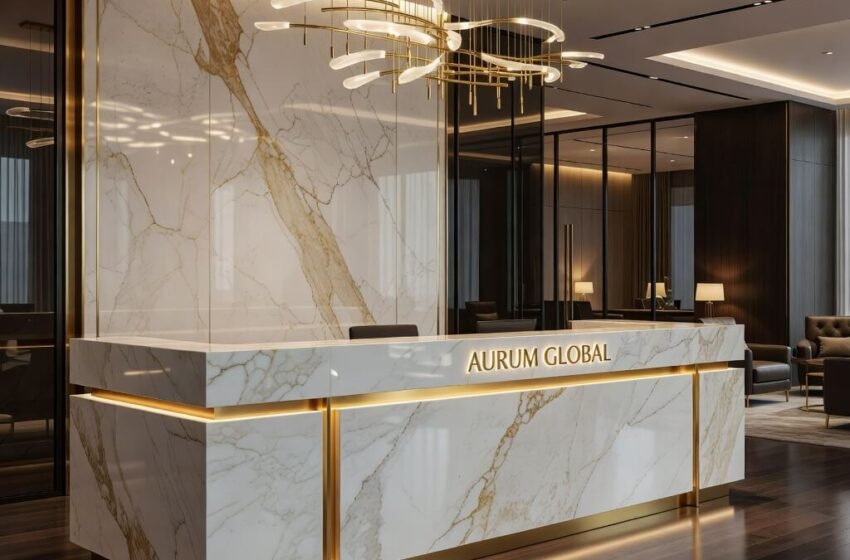
Luxury Marble Reception Desk Concept
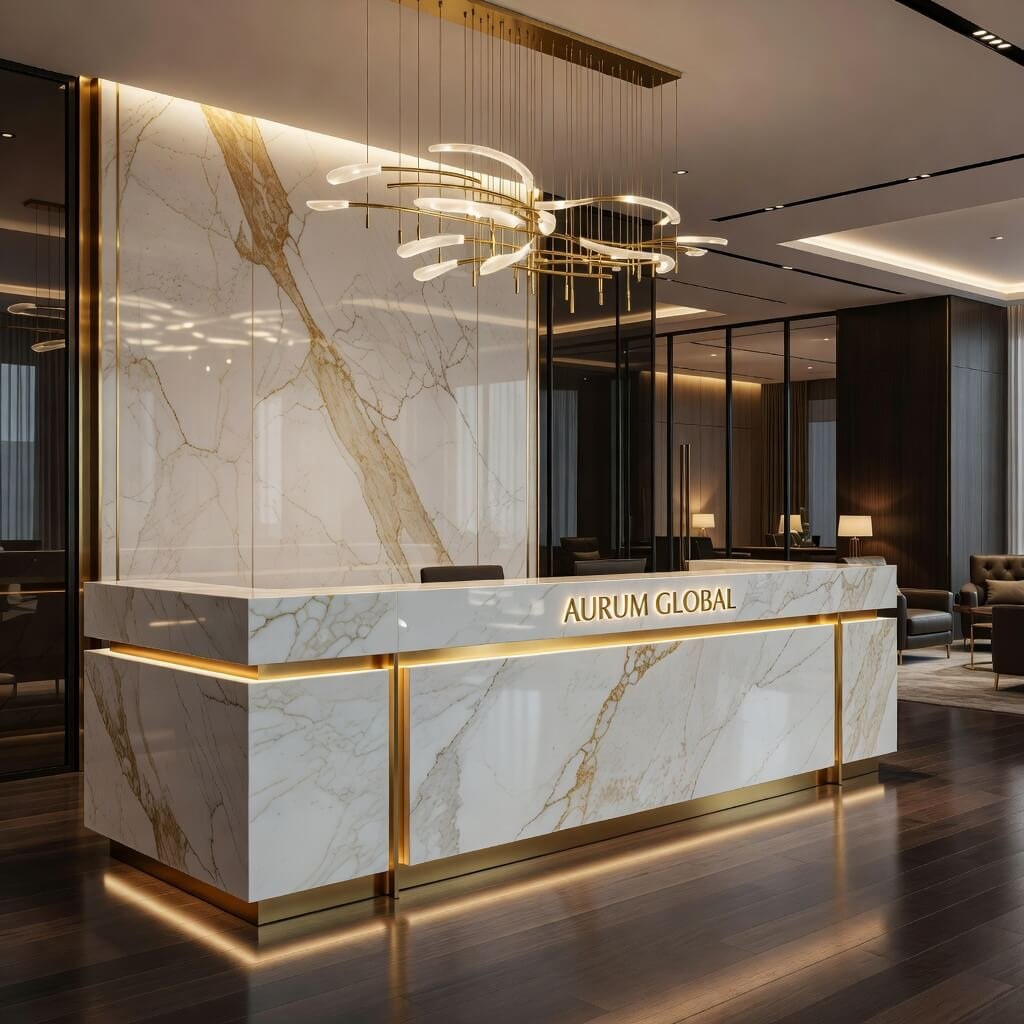
Okay, let’s talk about going full-on opulent. Marble isn’t messing around—it’s been the material of choice for palaces, monuments, and now, your office reception counter.
I won’t lie, marble makes a statement that practically screams luxury. The natural veining patterns mean every marble counter is genuinely one-of-a-kind. You can’t replicate that character with any synthetic material, no matter how hard manufacturers try.
The marble advantage breakdown:
- Timeless appeal: Marble has looked expensive for literally thousands of years and shows no signs of going out of style
- Variety: From classic Carrara white to dramatic Calacatta Gold or moody Nero Marquina, you’ve got options
- Cool to the touch: Literally—marble maintains a cool temperature that feels premium
- Impressive weight: The substantial heft of marble communicates permanence and quality
Now, here’s where I keep it real with you. Marble requires maintenance. It’s porous, which means spilled coffee can stain if you don’t seal it properly. You’ll need to reseal annually and treat it with care. But honestly? For the wow factor it delivers, I think the upkeep is worth it.
I once visited a law office with a massive book-matched marble reception counter—two slabs cut from the same block and mirrored to create a symmetrical pattern. The impact was absolutely stunning. Clients would literally stop and comment on it. That’s the kind of memorable first impression you’re creating here.
Consider pairing your marble counter with brass or gold-tone accents for maximum luxury vibes. Add some plush seating in the waiting area, and you’ve created an environment that tells clients they’re in expert hands.
Modern Wooden Slat Front Desk Design
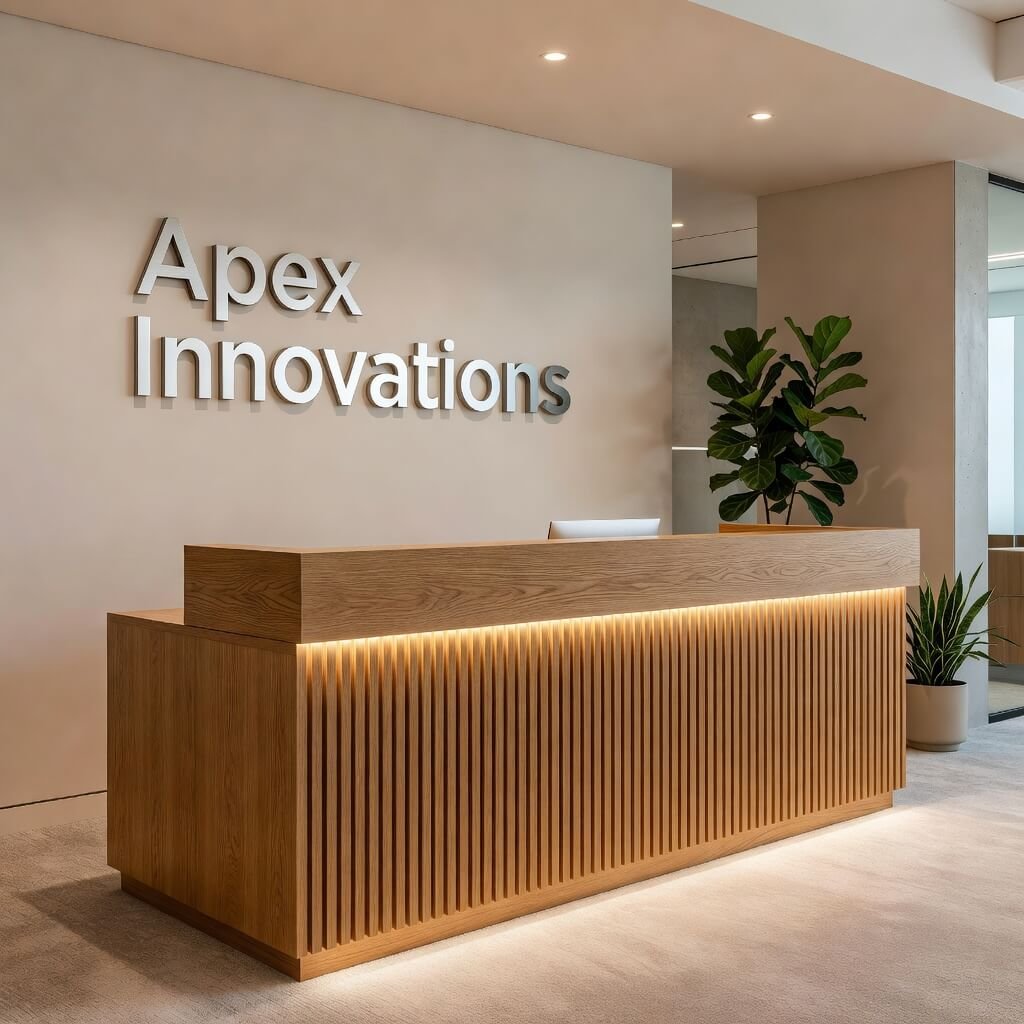
Let me introduce you to the design that somehow manages to be both warm and contemporary—the wooden slat front desk. This style has absolutely exploded in popularity, and for good reason.
Wooden slats create visual interest through repetition and rhythm. You arrange vertical or horizontal wooden strips with spacing between them, creating texture and dimension that flat surfaces simply can’t achieve. The gaps between slats can hide LED lighting, cables, or just create intriguing shadow play throughout the day.
Why wooden slat designs work so well:
- Textural depth: The three-dimensional quality catches light differently throughout the day
- Acoustic benefits: Believe it or not, the slats can help with sound absorption in echoey spaces
- Natural warmth: Wood instantly makes spaces feel more inviting and less sterile
- Customization: You control the wood type, slat width, spacing, and orientation
I’m particularly fond of walnut or oak for this application. Walnut brings rich, chocolate tones that exude sophistication, while oak offers that beautiful grain pattern and lighter color palette. You can go natural and let the wood’s character shine through, or stain it to match your specific brand colors.
One reception counter I designed used vertical slats with a hidden LED strip behind them. When you approached, the counter seemed to glow from within. Clients consistently commented on how welcoming it felt. That’s the power of combining natural materials with subtle modern touches.
The installation isn’t terribly complicated either—most carpenters can handle slat work with the right measurements. Just make sure you seal the wood properly, especially if your reception area serves coffee or refreshments.
Also Read: 10 Elegant Reception Counter Design Ideas for Stylish Interiors
LED Backlit Office Counter Idea
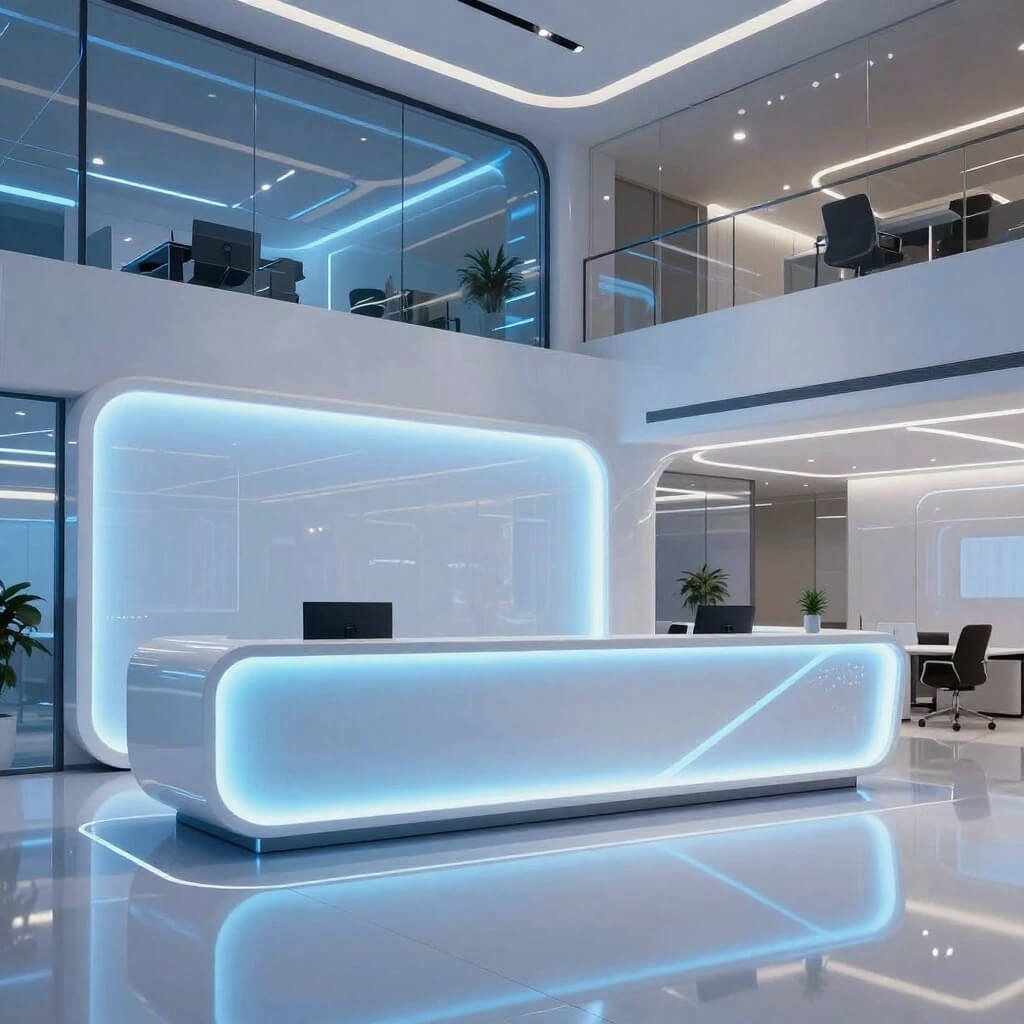
Want to know a secret? Lighting can completely transform a mediocre design into something spectacular. LED backlighting is the design equivalent of Instagram filters—it just makes everything look better.
I’ve become slightly obsessed with backlit counters because they create ambiance in ways traditional lighting never could. You install LED strips behind translucent materials like frosted acrylic, glass, or even thin stone slabs. When you switch them on, the entire counter glows with soft, even illumination.
The LED backlighting benefits:
- Customizable colors: RGB LED strips let you change colors to match events, seasons, or moods
- Energy efficient: LEDs use minimal electricity and last for years
- Dramatic impact: The glow effect photographs beautifully and creates instant visual interest
- Brand integration: Program your company colors into the lighting scheme
The material you backlight matters significantly. Translucent white acrylic creates a clean, futuristic look. Backlit onyx or alabaster gives you luxury with dramatic veining patterns that come alive when illuminated. Frosted glass sits somewhere in between—elegant but not overly flashy.
I remember working on a tech startup’s office where we backlit their reception counter in their signature teal color. The effect was absolutely perfect for their brand—modern, energetic, and memorable. They could dim the lights for a subtle glow during normal hours or crank them up for evening events.
FYI, the installation requires some electrical work, so budget for a licensed electrician. You’ll also want dimmable LED strips with quality controllers—the cheap stuff from random online sellers tends to have uneven lighting and color inconsistencies. Trust me, nothing ruins the effect faster than obvious bright spots or color variations.
L-Shaped Compact Office Reception Counter
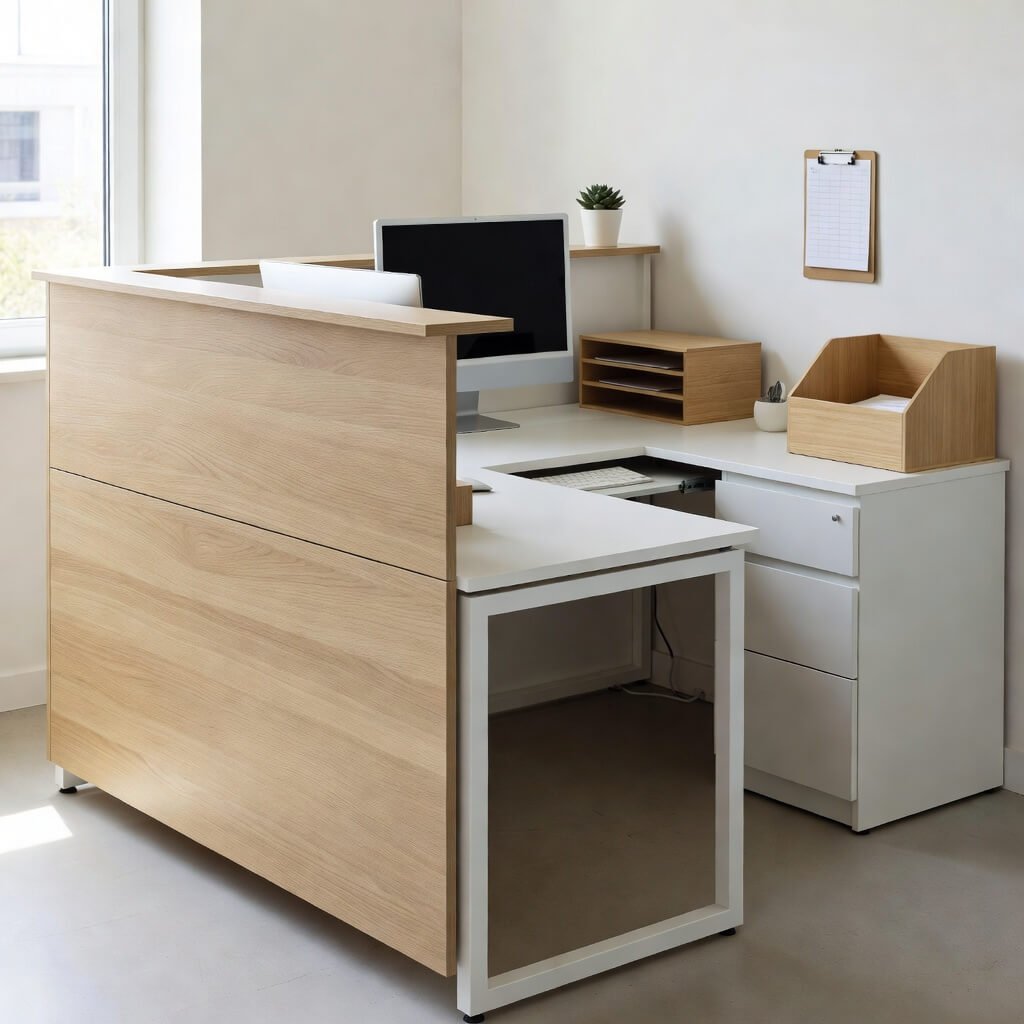
Not everyone has unlimited square footage for their reception area, and honestly? That’s where smart design really proves its worth. The L-shaped counter configuration maximizes functionality while maintaining a premium look in tighter spaces.
I love L-shaped counters because they create natural zoning within the reception area. One leg of the L handles visitor check-in and interaction, while the perpendicular section gives your receptionist private workspace for computer tasks, phone calls, or paperwork.
Why L-shaped layouts make sense:
- Space efficiency: You utilize corner areas that often go to waste
- Privacy zones: The configuration naturally shields work areas from direct visitor view
- Multiple workstations: Two reception staff can work comfortably without bumping elbows
- Storage opportunities: The extended length provides more room for built-in filing, supplies, or equipment
The key to nailing this design is proportion. Measure your available space carefully and make sure neither leg of the L feels cramped or oversized. I typically recommend the visitor-facing section be slightly longer—maybe 6-7 feet—while the perpendicular workspace section can be 4-5 feet.
Material-wise, you’ve got total freedom here. I’ve designed L-shaped counters in everything from budget-friendly laminate to high-end combinations of wood and stone. The shape itself creates visual interest, so you don’t necessarily need exotic materials to make an impact.
One reception area I worked on had a tiny 10×12 foot space to work with. By tucking an L-shaped counter into the corner, we created a functional reception desk that didn’t overwhelm the room. We finished it in white quartz with a waterfall edge and added some greenery on top—the result looked far more expensive than the budget allowed.
Glass and Steel Modern Office Counter Design
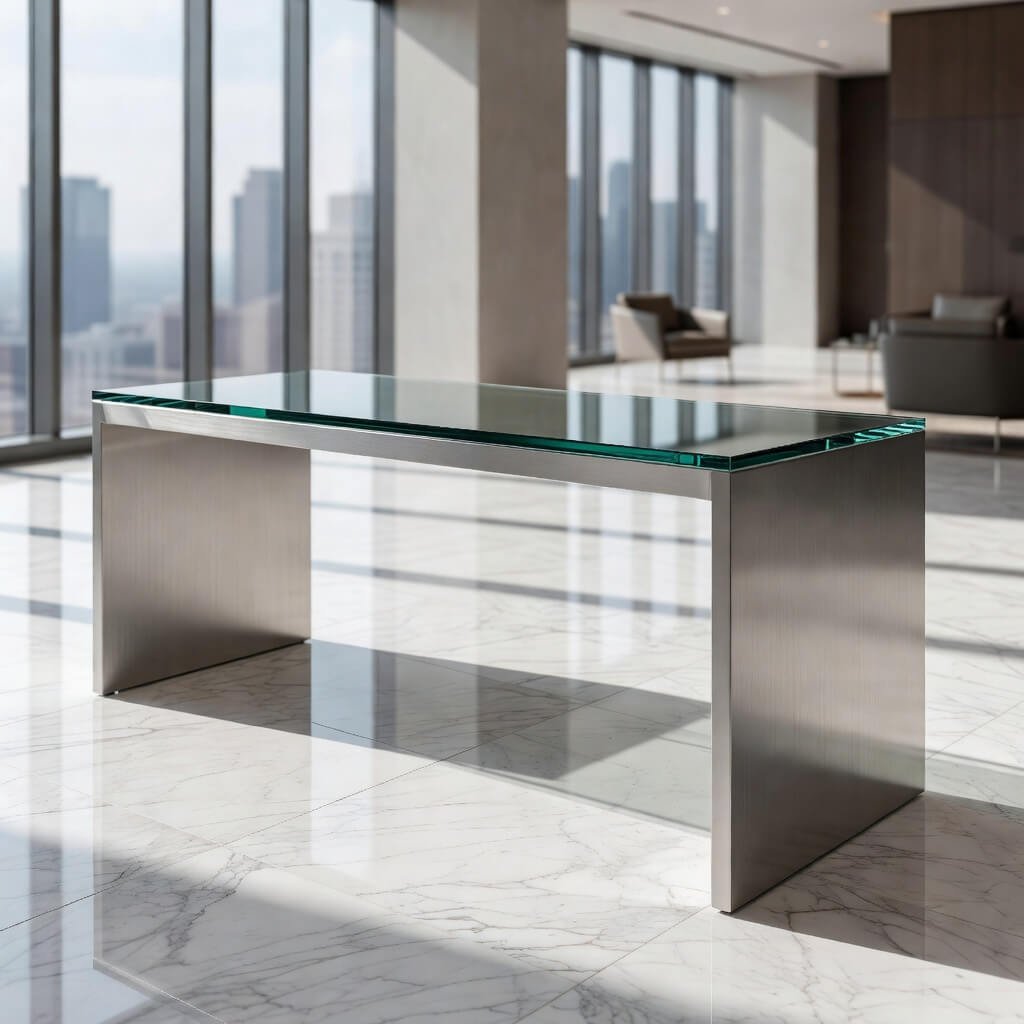
Nothing says “contemporary office” quite like the crisp combination of glass and steel. This pairing delivers an industrial-meets-refined aesthetic that works beautifully for architecture firms, design studios, tech companies, and professional services.
The transparency of glass creates a unique dynamic. Unlike solid counters that create a visual barrier between receptionist and visitor, glass maintains openness while still defining the functional workspace. It’s like having a boundary that doesn’t actually feel like a boundary.
The glass and steel winning formula:
- Visual lightness: Glass doesn’t block sightlines, making spaces feel more open
- Modern credibility: This combination immediately signals that your company is current and progressive
- Material contrast: The interplay between transparent glass and solid steel creates visual interest
- Durability: Tempered glass and powder-coated steel can handle daily use for decades
I typically recommend thick tempered glass (at least 1/2 inch) for the counter surface and front panel. For the steel framework, either brushed stainless or powder-coated steel in black, white, or gray works beautifully. The finish you choose dramatically affects the overall vibe—brushed stainless leans more upscale and polished, while matte black powder-coat gives you that edge contemporary look.
One consideration? Privacy. Since glass is transparent (shocking, I know :/ ), your receptionist’s workspace is on full display. You can address this with frosted glass sections, or by ensuring the design positions computer monitors and paperwork strategically out of direct sightlines.
I worked with a design studio that wanted absolute transparency in their operations—literally. We created a reception counter entirely from clear glass with minimal steel supports. Visitors could see through to the open workspace beyond, which reinforced the company’s collaborative culture. Bold move, but it perfectly matched their brand values.
Also Read: 10 Modern Cash Counter Design Ideas for Luxury Shops
Industrial Style Concrete Reception Desk
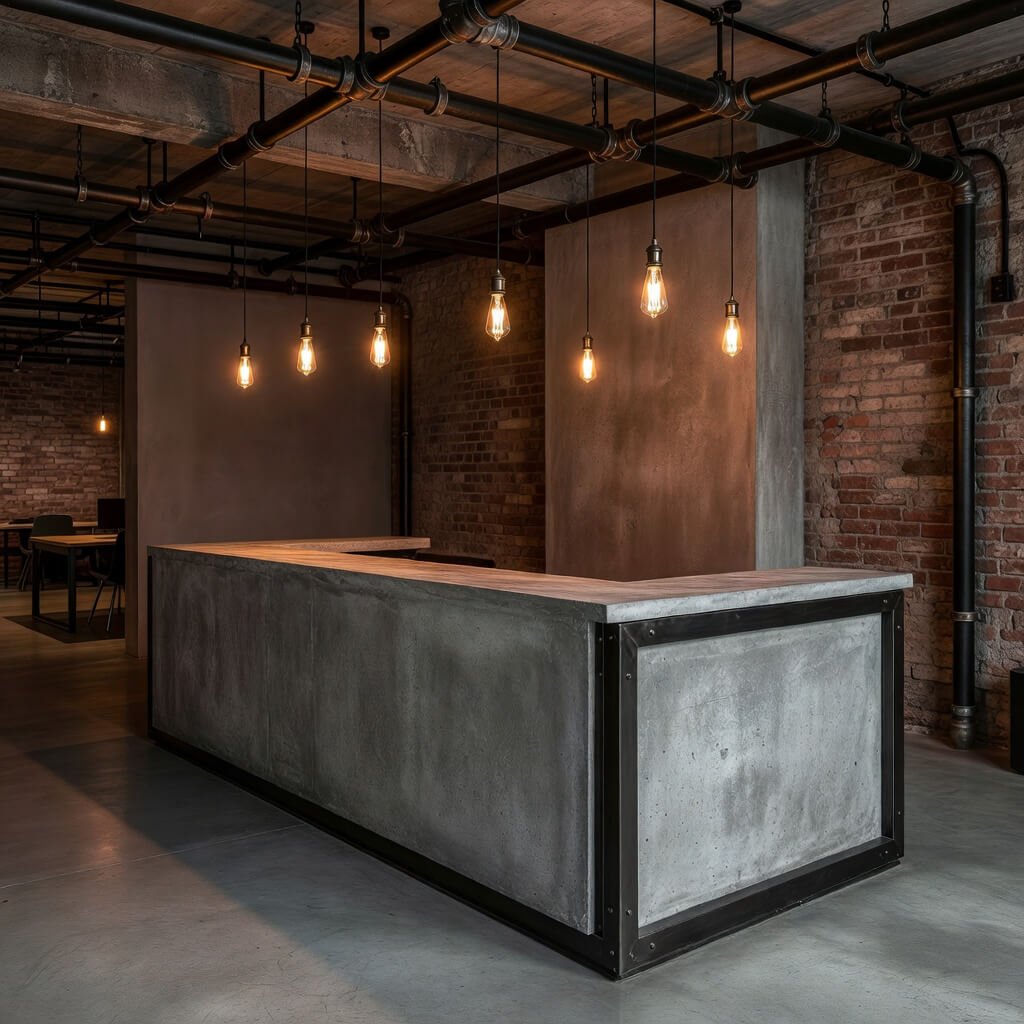
Let’s talk about getting raw and real with concrete. Industrial design has moved from edgy alternative to mainstream sophistication, and concrete reception counters exemplify this shift perfectly.
Concrete offers a unique aesthetic that you simply cannot achieve with other materials. The subtle color variations, occasional air bubbles, and slightly irregular surface tell a story of craftsmanship. This isn’t factory-perfect laminate—it’s got character and presence.
Why concrete counters command attention:
- Substantial weight: The sheer mass communicates permanence and serious business
- Customizable finish: Polished, brushed, exposed aggregate, or smooth—you control the look
- Color options: Pigments let you create anything from classic gray to warm taupe or even deep charcoal
- Integrated features: You can cast your company logo, patterns, or even embedded lighting directly into the concrete
The industrial style works especially well when you pair concrete with other raw materials. Think exposed steel supports, reclaimed wood accents, Edison bulb lighting, or metal pipe shelving. The key is balancing the roughness of concrete with warmer elements so the space doesn’t feel cold or unwelcoming.
I personally love the contrast when you pair a concrete counter with plush, colorful seating in the waiting area. The juxtaposition of hard and soft, industrial and comfortable, creates visual tension that makes the space memorable.
One warning though—concrete is heavy. Like, really heavy. Make sure your floor can handle the weight, especially if you’re in a multi-story building. You’ll also want to seal it properly because unsealed concrete can stain and dust. But honestly, once you’ve got it installed and sealed, concrete counters are practically indestructible.
A brewery I worked with wanted their office reception to reflect their brand’s artisanal roots. We designed a concrete counter with their logo cast directly into the surface and finished it with a beer bottle opener built into the edge. Quirky? Absolutely. Memorable? You bet.
Curved Futuristic Office Counter Layout
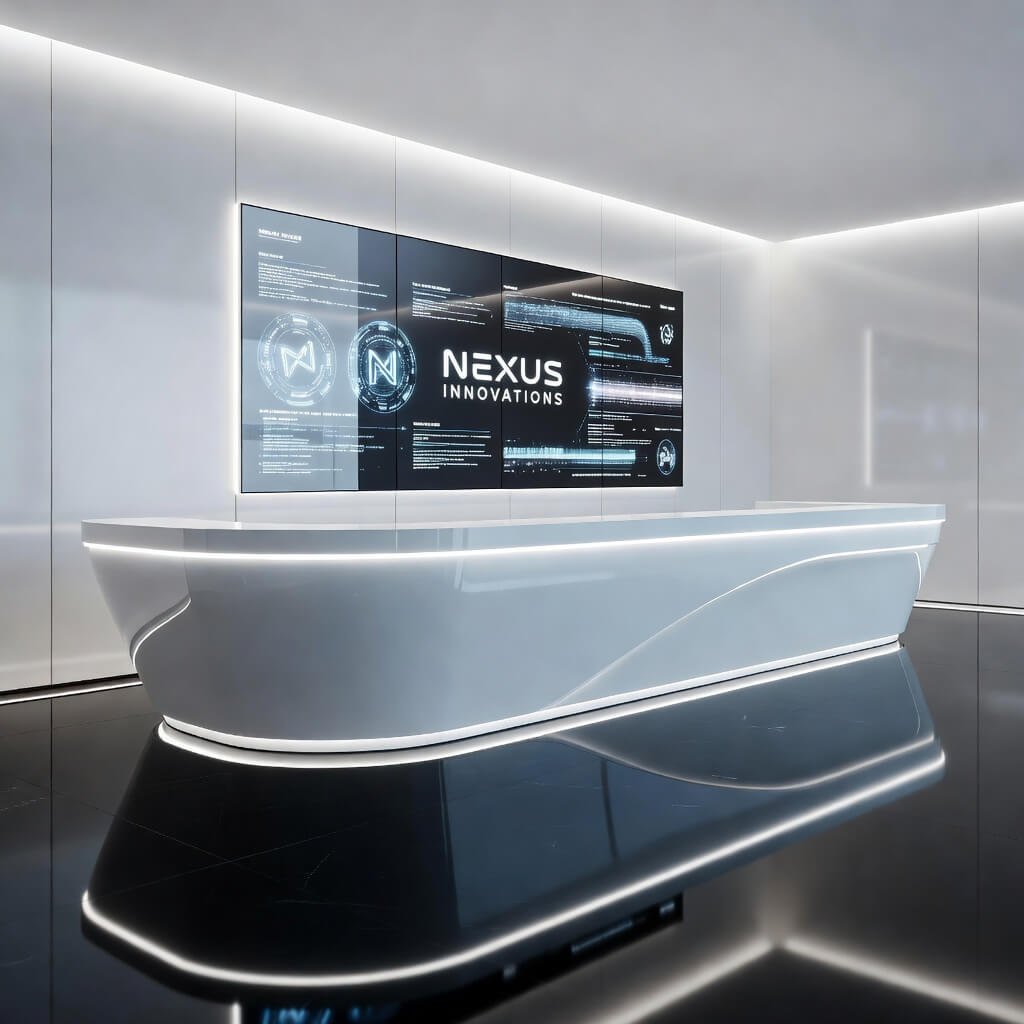
Straight lines are great and all, but curves? Curves bring a whole different energy to your office reception. A curved counter design creates movement, flow, and a distinctly futuristic feel that immediately sets your space apart.
I’m genuinely excited about curved designs because they break free from the rectangular boxes that dominate office furniture. A sweeping curved counter invites visitors to approach from multiple angles and creates a more organic, welcoming experience.
The curved counter advantages:
- Unique visual impact: Curves stand out in a world of squares and rectangles
- Better traffic flow: The organic shape naturally guides people around the space
- Softer energy: Curves feel more approachable and less institutional than hard angles
- Space definition: A curved counter can subtly divide zones without harsh boundaries
The materials you choose for curved designs need to be somewhat flexible or easy to shape. Solid surface materials like Corian work beautifully because fabricators can thermoform them into smooth curves. High-pressure laminate over a curved substrate is a budget-friendly option. For luxury applications, consider curved glass panels or even bent wood veneers.
I worked on a medical spa reception that featured a dramatic serpentine curve spanning nearly 12 feet. We finished it in seamless white solid surface with a subtle shimmer. The effect was simultaneously calming and impressive—perfect for clients coming in for aesthetic treatments.
The fabrication costs run higher than straight counters because you need custom work. Standard materials come in flat sheets, so creating curves requires skilled labor and specialized techniques. But IMO, the wow factor justifies the investment, especially if first impressions matter significantly to your business.
Consider adding LED lighting under a curved counter to emphasize the shape. The light will follow the contours and create beautiful gradients across your flooring.
Small Space Budget Office Counter Setup
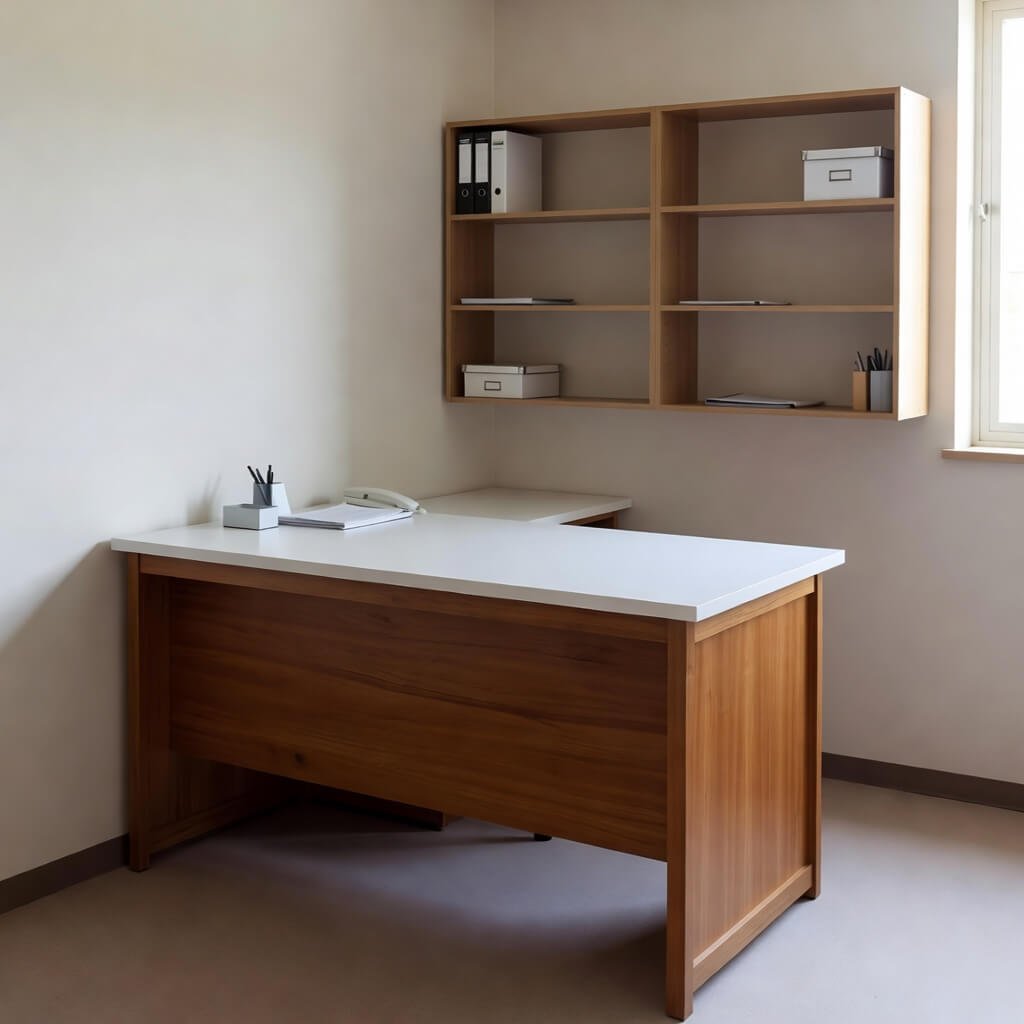
Real talk—not everyone has unlimited funds for their office counter. But here’s the thing: budget constraints can actually spark creative solutions that look far more expensive than they actually are.
I’ve designed plenty of reception counters with tight budgets, and I can tell you that smart material choices and good design thinking beat expensive materials with poor planning every single time.
Budget-friendly counter strategies that actually work:
- Laminate with personality: Modern laminates mimic stone, wood, and even concrete convincingly. Choose interesting patterns and finish with a waterfall edge for an upscale look
- IKEA hacking: Combine standard IKEA cabinets with a custom countertop and facing to create a unique piece at a fraction of custom costs
- Paint and molding: A basic MDF counter becomes elegant with quality paint, trim molding, and good installation
- Focus your budget: Splurge on one element (like a beautiful countertop) and save on the base structure
- DIY elements: Confident with tools? The structure is fairly straightforward; hire pros just for the finish work
I helped a startup create a reception counter for under $800 that looked legitimately premium. We bought IKEA base cabinets in white, had a local fabricator cut a laminate countertop in marble-look pattern with a waterfall edge, and added some peel-and-stick 3D wall panels to the front facing. Total game-changer.
Small spaces actually give you an advantage here—less square footage means less material, which means your budget stretches further. A compact 4-foot counter in a beautiful material will look better than an 8-foot counter in cheap stuff.
Don’t skip the details though. Quality hardware, neat cable management, and good lighting can elevate even budget materials. Nobody scrutinizes whether your counter is real marble or laminate when the overall presentation is clean and thoughtful.
For tight spaces, consider a simple floating shelf counter—literally a thick shelf mounted to the wall with a comfortable standing-height work surface. Add a stylish stool for your receptionist and you’ve got a functional, modern reception area for minimal investment.
Also Read: 10 Gorgeous Bar Counter Design Home Ideas for Chic Homes
High-End Corporate Branding Reception Counter
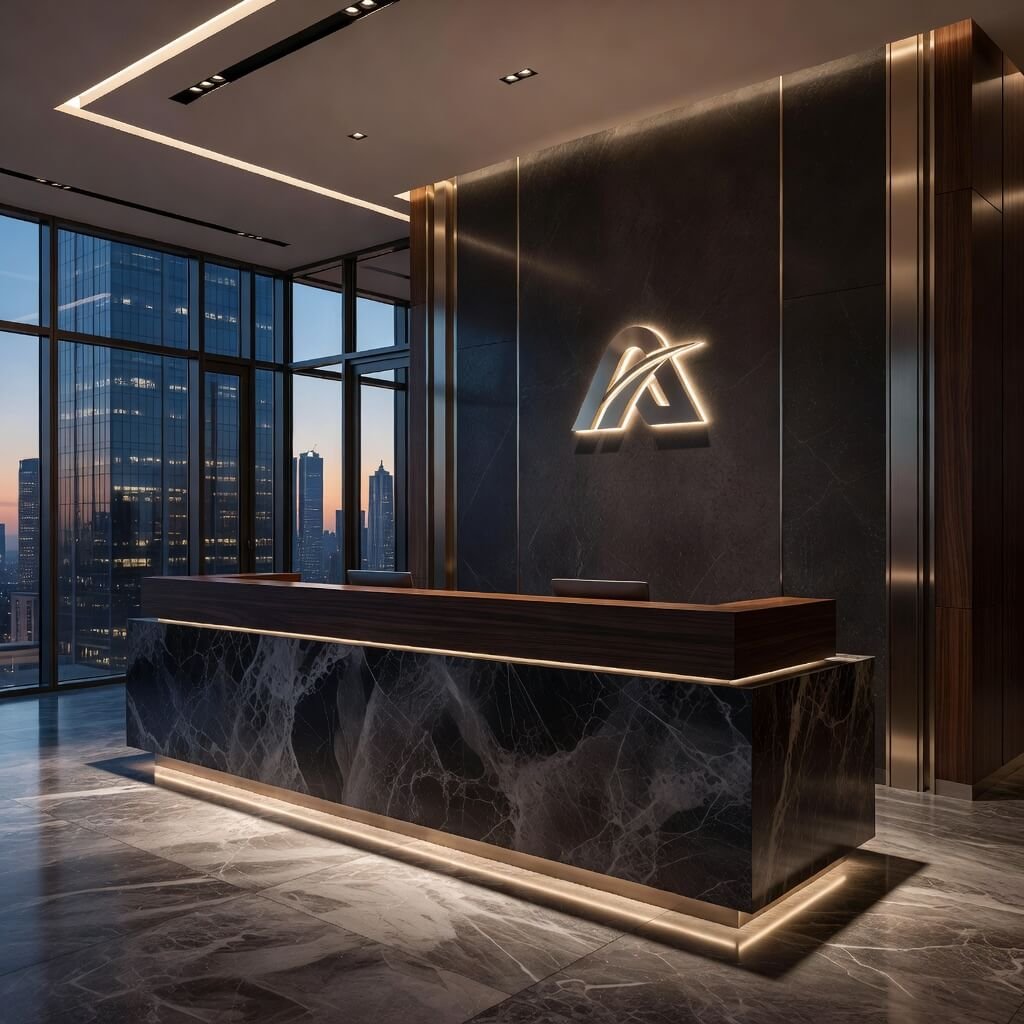
Here’s where design meets marketing in the most tangible way possible. Your reception counter isn’t just furniture—it’s a three-dimensional brand statement that people can touch, see, and experience.
High-end corporate branding counters integrate your company’s visual identity directly into the physical structure. I’m talking about custom colors, logo integration, signature materials, and details that align perfectly with your brand guidelines.
Elements of a branded reception counter:
- Custom colors: Match your exact brand colors through paint, powder-coating, or material selection
- Logo integration: Backlit logos, etched designs, or dimensional letters that make your brand unmistakable
- Signature materials: Choose materials that reflect your brand personality (tech companies might use glass and aluminum; law firms might prefer rich wood and leather)
- Consistent design language: Carry design elements from your marketing materials into the physical counter
- Sensory branding: Consider texture, temperature, and even subtle scents that reinforce brand identity
I worked with a luxury car dealership that wanted their reception counter to echo their brand’s precision engineering and premium positioning. We designed a counter with high-gloss automotive paint in their signature color, integrated their logo in brushed aluminum, and incorporated actual carbon fiber panels—the same material used in their vehicles. Clients immediately connected the counter design to the brand experience.
The investment for truly custom branded counters runs higher—you’re paying for custom fabrication, specialized materials, and detailed finishing work. But if brand consistency matters to your business (and it should), this investment pays dividends in perceived value and memorable impressions.
Don’t forget the subtle touches either. Custom edge profiles, integrated technology that matches your brand’s innovation level, and even the height and proportions can communicate your brand values. An approachable, community-focused organization might choose a lower, more open counter. A prestigious law firm might opt for a taller, more substantial presence.
Work with a designer who genuinely understands your brand, not just someone who can draw a pretty picture. The counter should feel like a natural extension of your entire brand experience, from your website to your business cards to your office space.
Bringing It All Together
So there you have it—ten legitimately premium office counter designs that can transform your reception area from forgettable to phenomenal. Whether you’re leaning toward the ethereal minimalism of a floating counter, the timeless luxury of marble, or the budget-friendly creativity of an IKEA hack, you’ve got options that can work for your space, budget, and brand.
Here’s what I’ve learned after obsessing over office counters for longer than I probably should admit: the best reception counter is the one that authentically represents who you are as a company. Don’t chase trends that don’t match your brand values. A tech startup forcing a traditional marble counter will feel off, just like a prestigious law firm trying to rock an industrial concrete desk might confuse clients.
Think about the experience you want to create. Your reception counter sets the emotional tone before any conversation happens. Make it count.
And hey, whatever you choose, make sure it’s installed properly. I’ve seen too many beautiful designs undermined by sloppy installation, visible cables, or wobbly construction. Invest in good fabricators and installers—they’re worth every penny.
Your office counter is probably the hardest-working piece of furniture in your entire space. It greets every client, holds every coffee cup, and represents your business thousands of times over its lifetime. Choosing the right design isn’t just about aesthetics—it’s about creating a tangible expression of your professional excellence.
Now get out there and create a reception area that makes people stop, stare, and think, “Okay, these people have seriously got it together.” You’ve got this!