10 Premium Outdoor Terrace Ideas Rooftops Luxe Escape
- Terrace Design
 Ben
Ben- 0
- 35 minutes read
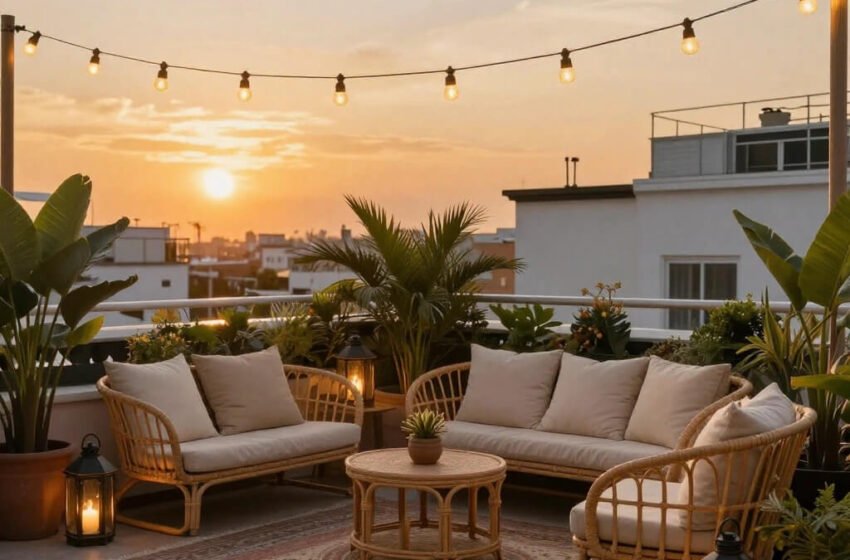
Look, I’ll be straight with you – most rooftop spaces are wasted opportunities. You’ve probably walked past dozens of bland, concrete slabs masquerading as “outdoor areas” that make you wonder if the owners even tried. But here’s the thing: your rooftop can become your personal slice of paradise without breaking the bank or requiring a degree in landscape architecture.
I’ve spent years transforming boring rooftops into spaces that make neighbors jealous and guests never want to leave. Whether you’re working with a tiny balcony or a sprawling terrace, these ten premium rooftop ideas will turn your outdoor space into the luxe escape you’ve been dreaming about. Ready to make your friends question why they’re still hanging out indoors? Let’s get started.
1. Cozy Boho Rooftop Lounge Terrace
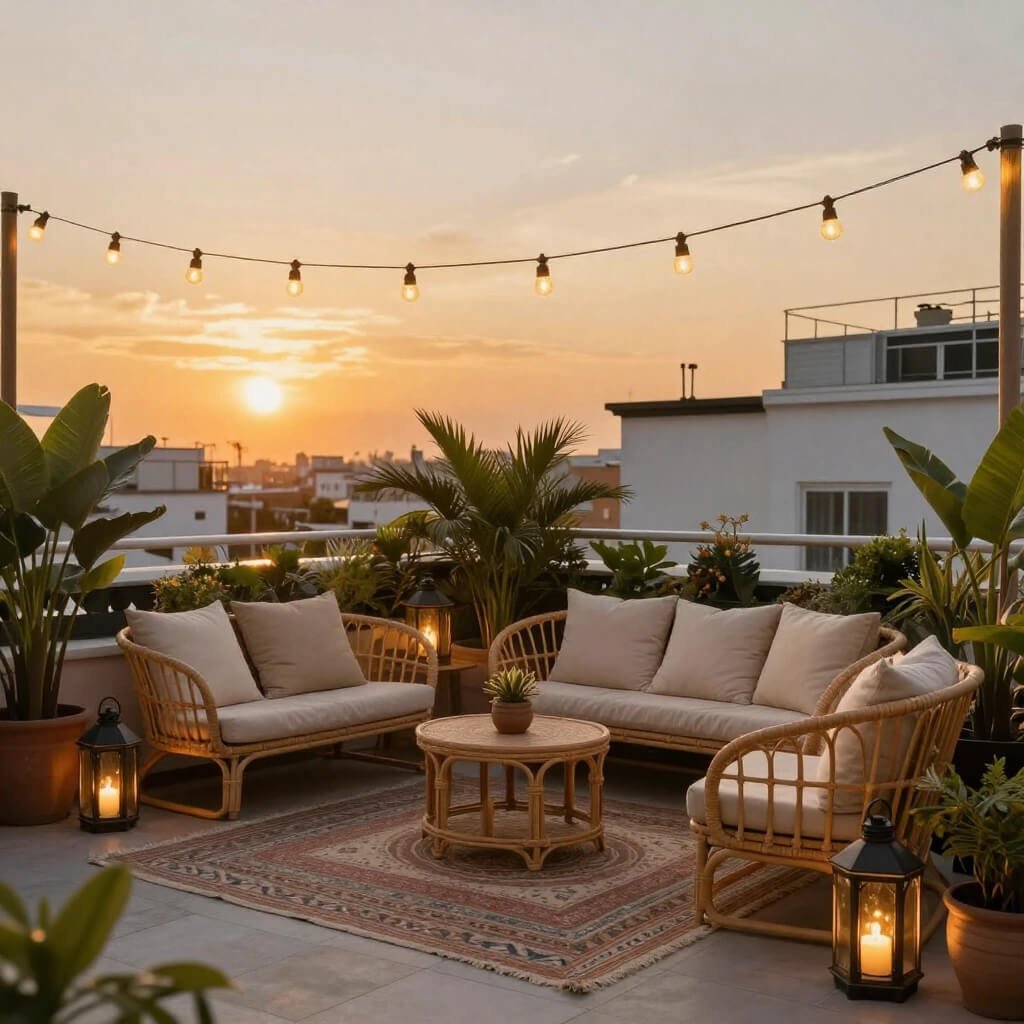
Ever walked into a space that immediately made you want to kick off your shoes and stay forever? That’s the magic of boho design – it creates instant comfort without trying too hard. I’ve seen people transform sterile rooftops into bohemian havens that feel like secret hideaways in the middle of the city.
Creating Your Boho Foundation
Start with layered textiles because nothing says boho like mixing patterns and textures. I always tell people to forget the matching furniture sets – they’re boring and expensive. Instead, hunt for vintage rugs, throw pillows in jewel tones, and macramé wall hangings that add personality without screaming “I bought everything from the same store.”
Your seating should tell a story. Mix low-profile furniture like floor cushions, vintage poufs, and a weathered daybed if you’ve got the space. I once helped a friend create an amazing boho lounge using just Moroccan floor pillows, a bamboo coffee table, and some strategically placed plants. The result? Her rooftop became the go-to spot for every gathering.
Boho Lighting That Sets the Mood
String lights are your best friend here, but skip the basic white ones everyone uses. Look for Edison bulb strings or colorful paper lanterns that cast warm, dreamy shadows. I’m obsessed with battery-powered LED versions because you don’t need to worry about outlets or weather damage.
Add some hurricane lanterns with pillar candles for those magical evening moments. Trust me, there’s nothing quite like the flicker of candlelight against textured fabrics to make your space feel like a page from a travel magazine.
Plant Life That Completes the Vibe
Boho spaces need plants that look effortless but dramatic. Think hanging planters with trailing pothos, large fiddle leaf figs in woven baskets, and clusters of succulents in mismatched pots. The key is making it look like your plants just happened to find the perfect spots naturally.
2. Luxury Minimalist Rooftop Garden Escape
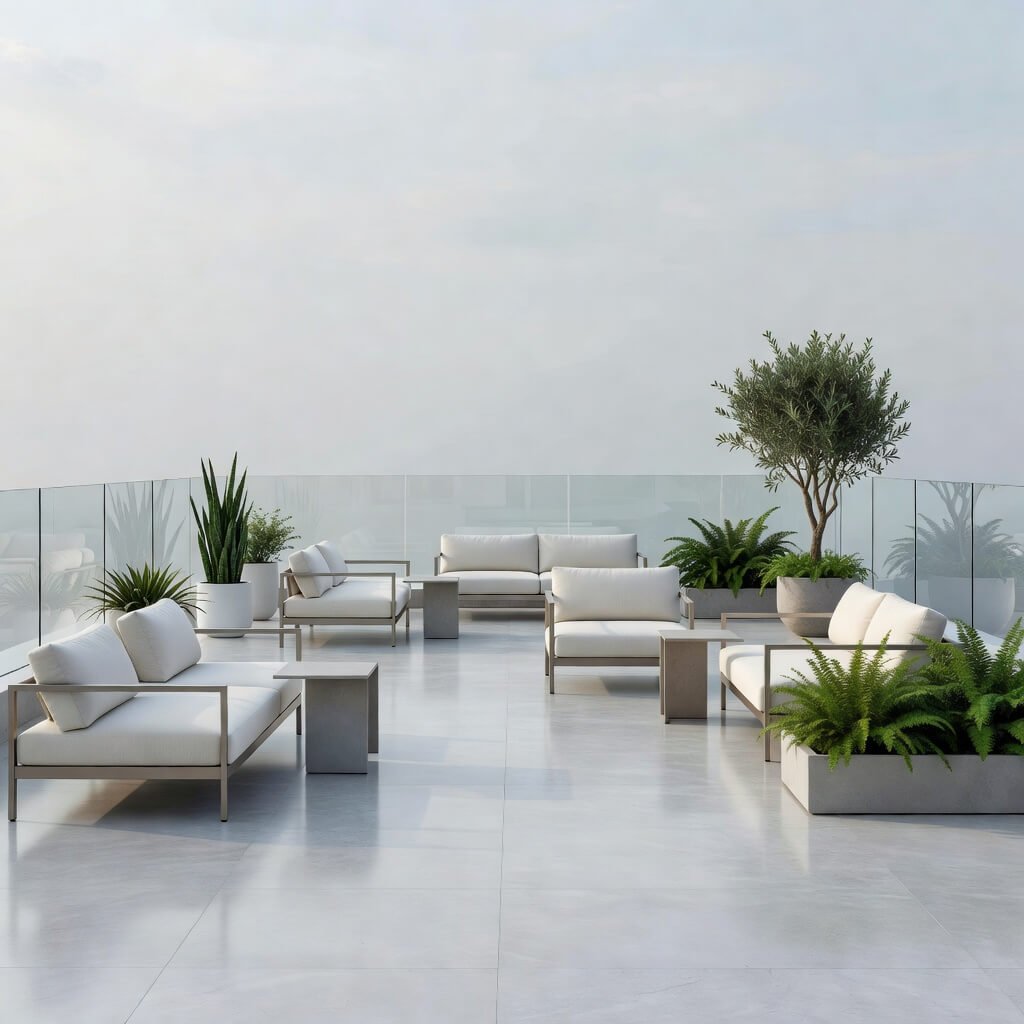
Sometimes less really is more – especially when “less” means sleek sophistication that makes you feel like you’re living in an architectural magazine. I love minimalist rooftops because they prove you don’t need clutter to create impact.
The Power of Clean Lines
Minimalist design succeeds when every element serves a purpose. Your furniture should have simple, geometric shapes in neutral colors like charcoal, white, or warm gray. I prefer modular seating that you can reconfigure based on your mood or the number of guests.
Built-in planters create seamless transitions between different areas. You want your eye to flow naturally across the space without getting caught on unnecessary details. Think of it as creating a zen retreat that happens to be on your roof.
Strategic Plant Placement
In minimalist spaces, plants become sculptures. Choose architectural varieties like ornamental grasses, boxwood spheres, or single-specimen trees that make bold statements. I’ve seen rooftops transformed with just three perfectly placed planters containing identical plants – the repetition creates rhythm and sophistication.
Water features work beautifully in minimalist designs. A simple rectangular fountain or modern fire bowl becomes a focal point that adds movement and sound without visual chaos.
Material Matters
Stick to a limited palette of materials – maybe concrete, steel, and wood, or stone, glass, and one metal finish. The goal is cohesion, not variety. When every element speaks the same design language, your space feels intentional and expensive, even if it wasn’t.
3. Small Space Rooftop Dining Setup Ideas
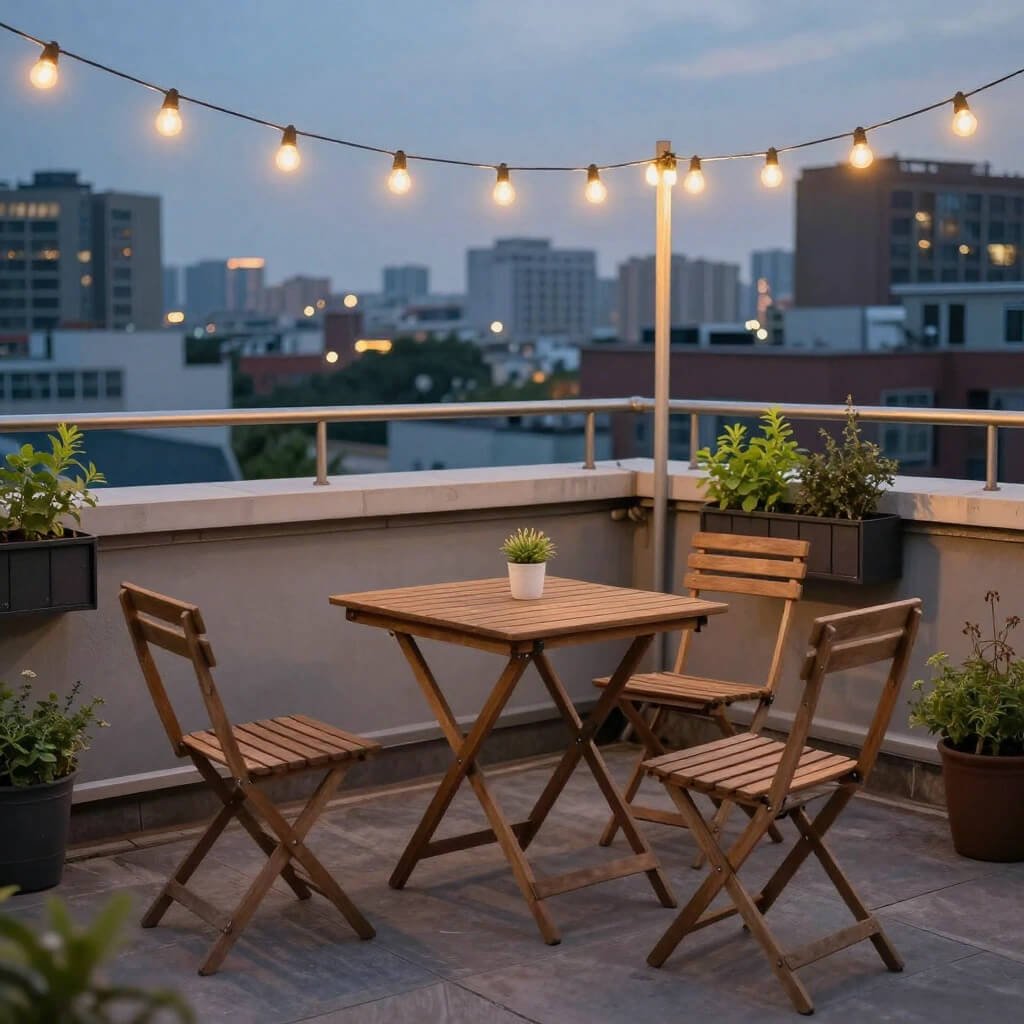
Small rooftops get a bad rap, but honestly? They can be more intimate and functional than sprawling terraces that leave you wondering how to fill all that space. I’ve created dining areas on rooftops barely bigger than a parking space that feel more special than restaurant patios.
Maximizing Your Square Footage
Vertical thinking saves the day in small spaces. Wall-mounted planters, hanging gardens, and tall, narrow furniture help you use every inch without making the space feel cramped. I’m a huge fan of bistro sets because they’re perfectly proportioned for small areas while still feeling substantial.
Consider a fold-down table attached to your wall or railing. When you’re not dining, it disappears completely, giving you back precious floor space for other activities. These work especially well for morning coffee setups or intimate dinners for two.
Creating Intimate Ambiance
Small spaces naturally feel cozy, so lean into that advantage. Overhead lighting like a small chandelier or pendant light makes your dining area feel like a private restaurant booth. I once installed a simple string of café lights in a 6×8 foot space, and it completely transformed the feeling from cramped to charming.
Use privacy screens or tall plants to create boundaries without walls. Bamboo screens, trellis panels with climbing vines, or even a strategically placed umbrella can make your small dining area feel secluded and special.
Smart Storage Solutions
Every piece should multitask in small spaces. Storage benches provide seating and hide cushions or dining accessories. Rolling carts can serve as both bar cart and storage unit, moving wherever you need them most.
Weather-resistant storage boxes double as coffee tables or extra seating when guests arrive. The key is choosing pieces that look intentional, not like obvious storage solutions.
Also Read: 10 Stunning Home Terrace Ideas Rooftops Cozy Transformations
4. Modern Urban Rooftop Chill Zone Design
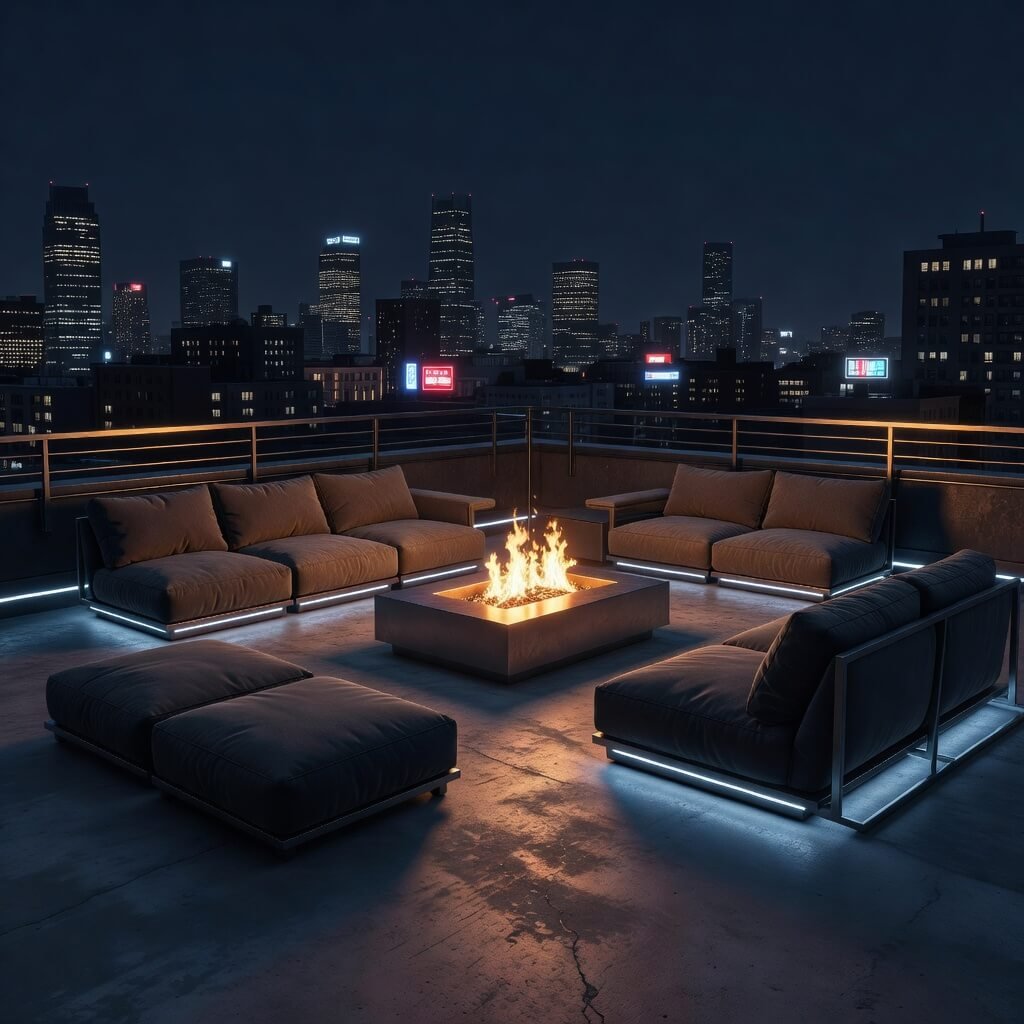
City living calls for spaces that acknowledge the urban environment while providing escape from it. You want your rooftop to feel connected to the energy around you while still being your personal sanctuary. It’s a balancing act, but when you get it right, magic happens.
Embracing the Cityscape
Don’t fight your urban location – celebrate it. Position your seating to take advantage of city views, even if they’re not traditionally “pretty.” Industrial landscapes, distant skylines, and urban sunsets all have their own beauty when you frame them properly.
Modern furniture with clean lines complements urban architecture. Think sleek outdoor sofas, geometric planters, and lighting fixtures that could work in a contemporary gallery. The goal is creating a space that feels sophisticated and current.
Weather-Resistant Luxury
Urban rooftops face unique challenges – wind, pollution, and temperature extremes. Invest in high-quality materials that age gracefully rather than just survive. Powder-coated aluminum, teak, and solution-dyed fabrics maintain their appearance despite city conditions.
Wind protection becomes crucial in urban settings. Glass panels, metal screens, or strategic plantings can create comfortable microclimates without blocking your connection to the city around you.
Technology Integration
Modern urban living often means incorporating technology seamlessly. Outdoor-rated speakers for music, weather-resistant charging stations, and smart lighting systems enhance your rooftop without dominating it. The best technology disappears when you’re not actively using it.
Consider automated irrigation for plants or programmable lighting that adjusts throughout the evening. These systems let you focus on enjoying your space rather than maintaining it.
5. Rooftop Garden with Green Wall Inspiration
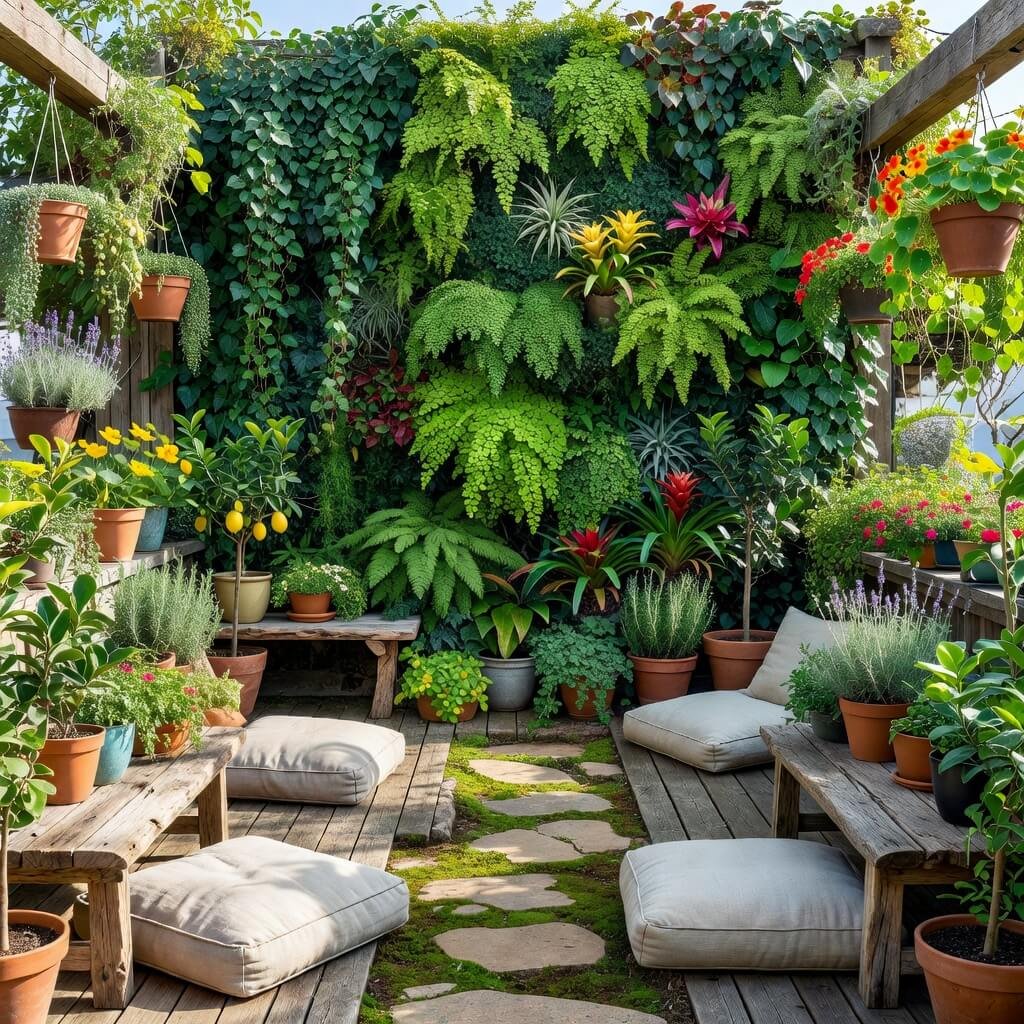
Green walls aren’t just trendy – they’re game-changers for rooftop spaces. I’ve watched vertical gardens transform stark rooftops into lush oases that make you forget you’re stories above street level. Plus, they’re incredibly practical for maximizing growing space when your floor area is limited.
Planning Your Vertical Garden
Structural considerations come first because green walls add significant weight when fully planted and watered. Always check your roof’s load capacity before installing large vertical systems. I prefer modular systems that you can expand gradually rather than committing to massive installations upfront.
Choose plants based on your exposure and maintenance preferences. Succulents work brilliantly for sunny, low-maintenance walls, while ferns and moss create lush, tropical feelings in shadier spots. I’ve had great success mixing edible plants like herbs and leafy greens with ornamental varieties.
Irrigation and Maintenance Systems
Automated watering makes green walls practical for busy lives. Drip irrigation systems with timers ensure consistent moisture without daily attention. I always recommend installing drain systems to protect your roof and neighbors below from excess water.
Consider seasonal flexibility when planning your green wall. Modular systems let you swap plants as seasons change or as your interests evolve. Nothing beats having fresh herbs steps from your outdoor dining area or flowers that change with your mood.
Integrating Walls with Overall Design
Green walls work best when they complement rather than dominate your space. Use them as natural room dividers, privacy screens, or dramatic backdrops for seating areas. I love how vertical gardens soften hard architectural lines while adding movement and life to static spaces.
Combine your green wall with traditional planters and furniture to create layered, interesting compositions. The goal is making your rooftop feel like a natural extension of indoor living rather than just an outdoor add-on.
6. Budget-Friendly Rooftop Makeover Ideas
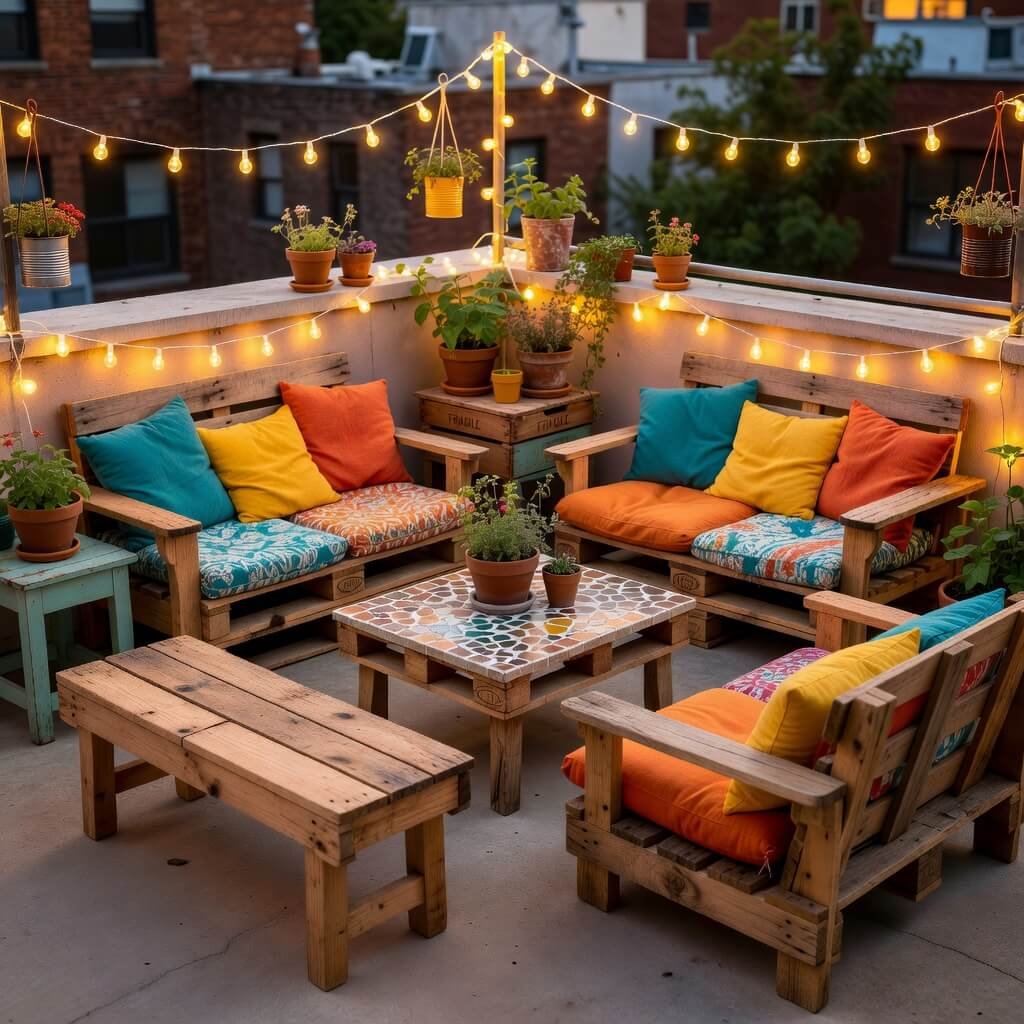
Let’s be real – not everyone has unlimited funds for rooftop renovations. But here’s what I’ve learned: creativity beats cash every time when it comes to outdoor transformations. Some of my favorite rooftop projects happened on shoestring budgets with owners who thought outside the box.
DIY Projects That Deliver Impact
Pallet furniture gets a lot of hate, but done right, it looks intentional and costs almost nothing. I’ve seen amazing outdoor sofas, coffee tables, and plant stands made from pallets with basic tools and weekend effort. Sand them smooth, add weather-resistant stain, and create custom cushions for professional-looking results.
String lighting provides maximum ambiance for minimal investment. Skip expensive hardwired fixtures and choose solar or battery-powered options that you can install without electrical work. I’m talking instant atmosphere for under fifty bucks 🙂
Shopping Smart for Materials
End-of-season sales at garden centers offer incredible deals on plants, planters, and outdoor accessories. I always tell people to buy their big-ticket items in fall when retailers clear inventory. Store them over winter and install in spring when you’re ready to use the space.
Thrift stores and estate sales hide amazing outdoor treasures. Look for vintage planters, outdoor furniture that needs minor repairs, and unique accessories that add character without premium prices. IMO, these pieces often have more personality than new purchases.
Repurposing Indoor Items
Indoor furniture can work outdoors with proper protection and creativity. Metal chairs, wooden benches, and side tables often transition beautifully to covered rooftop areas. Add weather-resistant cushions and you’ve got expensive-looking outdoor furniture for fraction of retail cost.
Consider temporary solutions that let you experiment before investing. Outdoor rugs, removable wallpaper on privacy screens, and potted plants in decorative containers create finished looks without permanent commitments or major expenses.
Also Read: 10 Stylish Small Terrace Ideas for a Luxury Mini Retreat
7. Romantic Rooftop Evening Lighting Setup
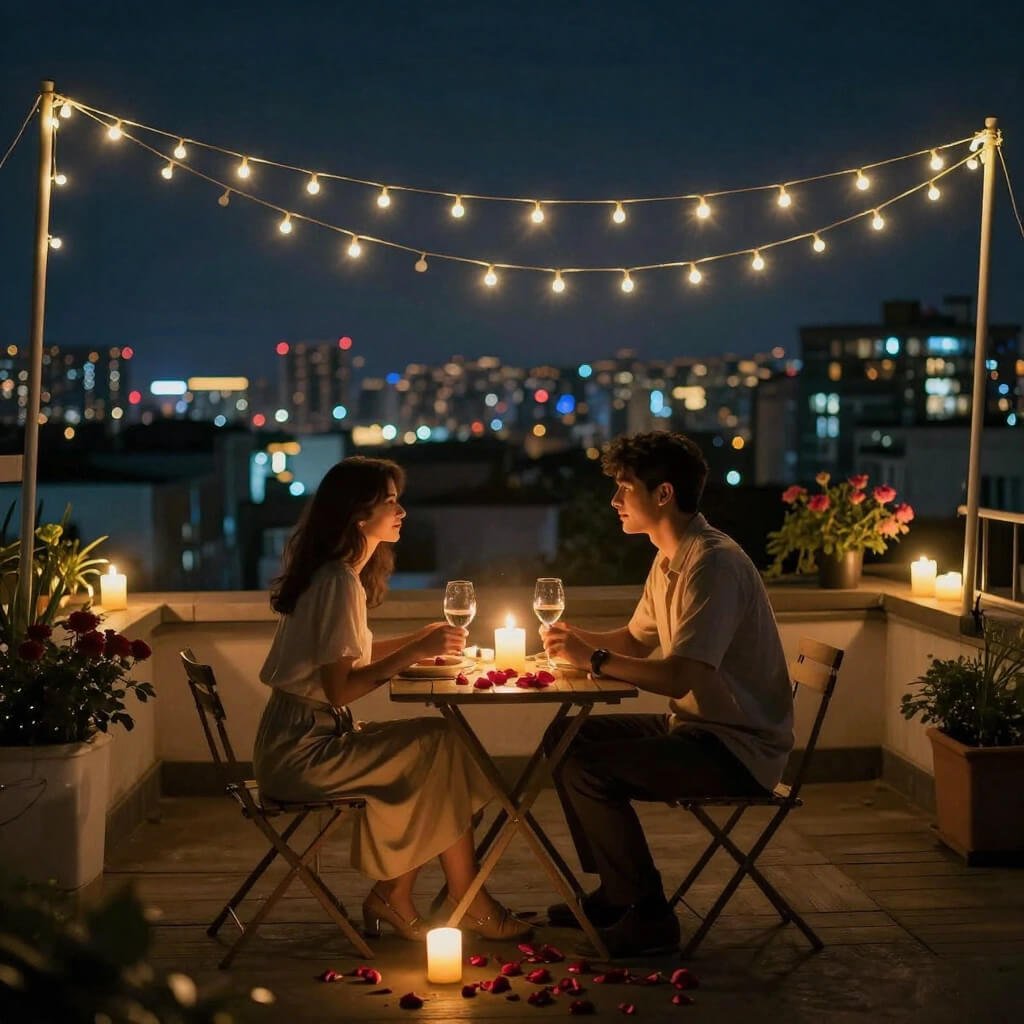
Nothing transforms a space quite like thoughtful lighting. I’ve watched ordinary rooftops become magical evening destinations with the right combination of ambient, task, and accent lighting. The secret? Layering different light sources to create depth and intimacy.
Creating Ambient Foundation
Warm white lighting sets the romantic mood better than stark cool tones. I prefer lights in the 2700K to 3000K range because they mimic candlelight and make everyone look good. String lights remain popular because they work – just avoid the harsh white LED versions that feel more like airport runways than romantic retreats.
Uplighting creates drama by washing walls or tall plants with soft light. Small LED spotlights hidden behind planters or furniture cast beautiful shadows and add visual interest without being obvious about their placement.
Task Lighting for Functionality
You need enough light to actually use your space safely, but task lighting shouldn’t compete with your ambient lighting. Small table lamps with warm bulbs provide reading light without destroying the romantic atmosphere. Battery-powered options give you flexibility without dealing with extension cords.
Pathway lighting keeps everyone safe while adding to the overall ambiance. Solar stake lights along walkways or small LED strips under railings provide necessary illumination while enhancing the romantic mood.
Accent Pieces That Wow
Candles remain the ultimate romantic lighting, but safety comes first on rooftops where wind is always a factor. Enclosed lanterns, hurricane candles, or LED candles that flicker realistically give you the ambiance without fire hazards.
Fire features create instant focal points and gathering spots. Tabletop fire bowls, portable fire pits, or even large candle arrangements provide warmth and mesmerizing movement that draws people together naturally.
8. Japanese Zen Rooftop Terrace Retreat
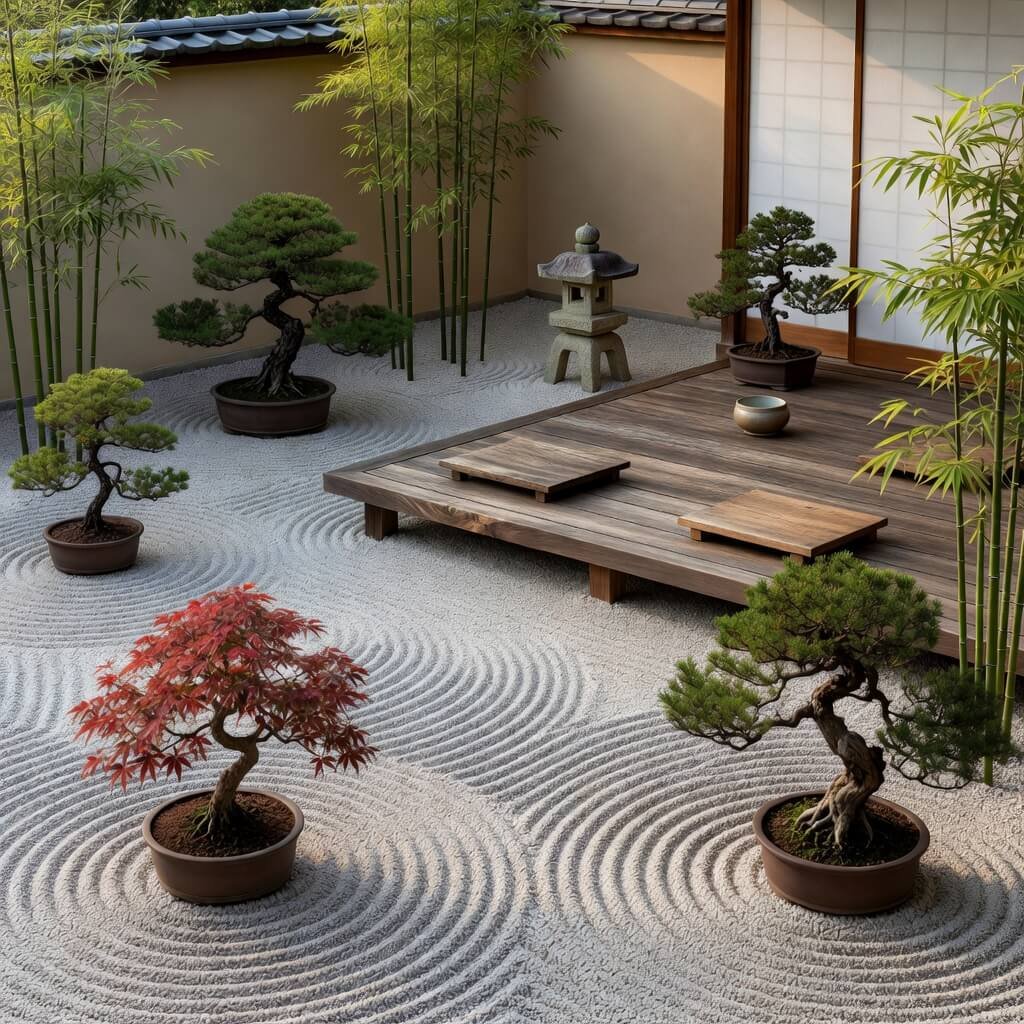
Zen design principles create some of the most peaceful rooftop spaces I’ve encountered. There’s something about the simplicity and intentionality that makes you breathe deeper and stress less. You don’t need to be a meditation expert to appreciate spaces that prioritize harmony and tranquility.
Essential Elements of Zen Design
Natural materials form the foundation of authentic zen spaces. Bamboo, natural stone, untreated wood, and organic textiles create connections to nature that feel grounding rather than decorative. I avoid anything too shiny, bright, or obviously manufactured.
Asymmetrical balance makes zen spaces feel natural rather than forced. Instead of matching pairs of everything, create compositions that feel stable but not overly planned. Three stones instead of two, groupings of five plants instead of four – odd numbers feel more organic.
Water and Sound Elements
Water features provide both visual focus and sound masking in zen gardens. Simple bamboo fountains, stone basins, or minimalist modern fountains add movement and the soothing sound of running water. Even small tabletop fountains can transform the acoustic environment of your rooftop.
Consider the soundscape of your space intentionally. Wind chimes, bamboo fountains, or even the rustling of ornamental grasses can mask urban noise while adding natural sounds that enhance the peaceful atmosphere.
Plant Selection for Serenity
Japanese-inspired plants include bamboo varieties, moss, ferns, and evergreen shrubs that maintain interest year-round. The goal is creating a living landscape that changes subtly with seasons rather than dramatic seasonal displays.
Bonsai and container gardens work beautifully in zen spaces because they emphasize the art of restraint and careful cultivation. Even if you’re not ready for traditional bonsai, small container gardens with carefully chosen plants create similar feelings of contemplation and care.
9. Tropical Rooftop Paradise with Plants
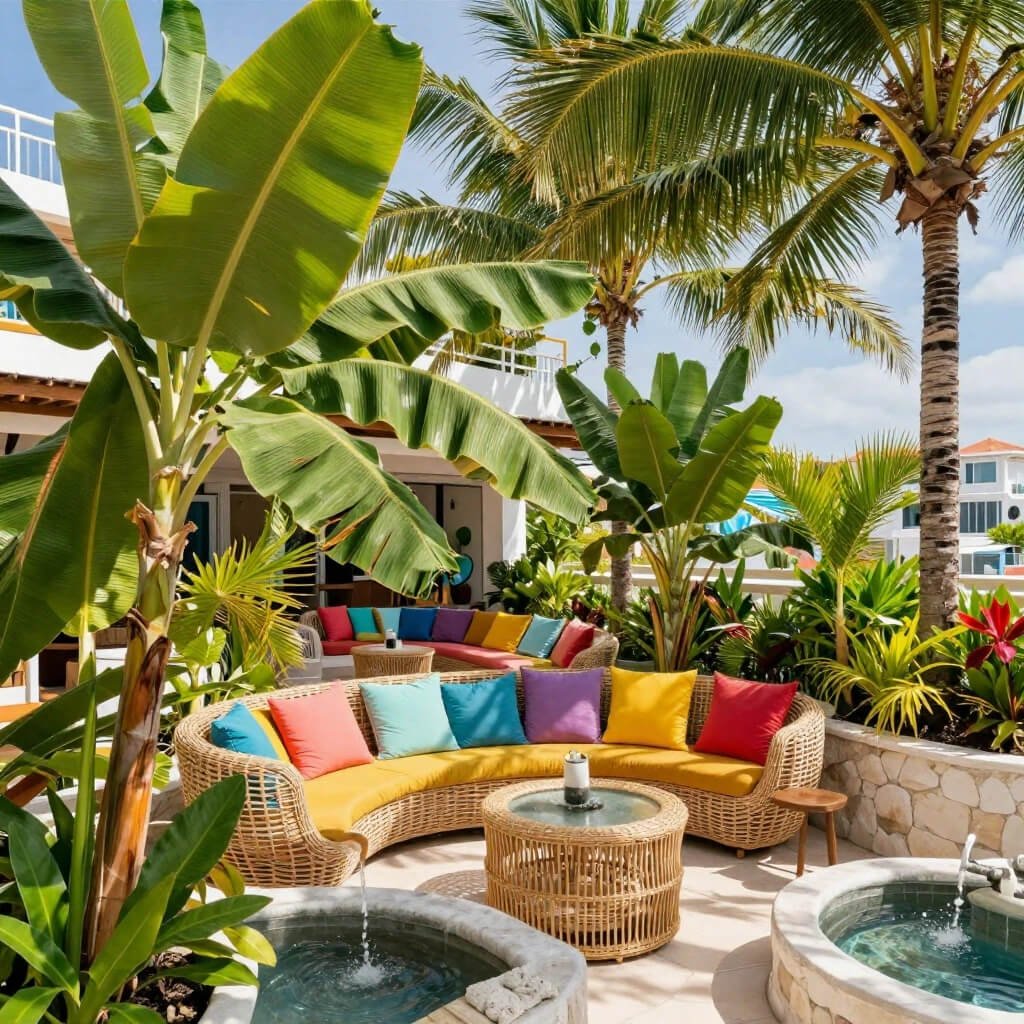
Want to feel like you’re vacationing in the tropics without leaving your building? Tropical plantings create instant escape, and the best part is many tropical plants actually thrive in rooftop conditions. The key is choosing varieties that handle wind and temperature fluctuations while still delivering that lush, exotic feeling.
Choosing Cold-Hardy Tropicals
Not all tropical-looking plants need tropical climates. Hardy palms, bamboos, and broad-leafed evergreens survive surprisingly cold temperatures while maintaining that vacation vibe year-round. I’ve had great success with windmill palms, hardy bamboos, and cold-hardy banana plants in climates that definitely aren’t tropical.
Container growing lets you move tender plants indoors during winter or position them for optimal growing conditions throughout the year. Large containers also create the substantial plantings necessary for authentic tropical feelings.
Creating Layered Tropical Landscapes
Vertical layers mimic natural tropical environments and create the dense, lush feeling that makes tropical gardens so appealing. Tall palms or tree ferns provide canopy, medium shrubs fill the middle layer, and ground covers or trailing plants complete the composition.
Bold foliage defines tropical style more than flowers. Look for plants with large, dramatic leaves, interesting textures, and varied shades of green. Elephant ears, monstera, and large-leafed hostas create instant tropical impact even in temperate climates.
Tropical Accessories and Furniture
Natural materials enhance the tropical theme without feeling like theme park decorations. Teak, bamboo, rattan, and wicker furniture complement tropical plantings while providing comfortable seating that feels appropriate to the setting.
Color schemes in tropical spaces often emphasize greens with accent colors inspired by tropical flowers – coral, bright blue, sunny yellow, or deep purple. The goal is feeling vibrant and alive without being overwhelming or cartoonish.
Also Read: 10 Dreamy Open Terrace Ideas for Cozy Night Ambience
10. Rooftop Coffee Corner Relaxing Setup
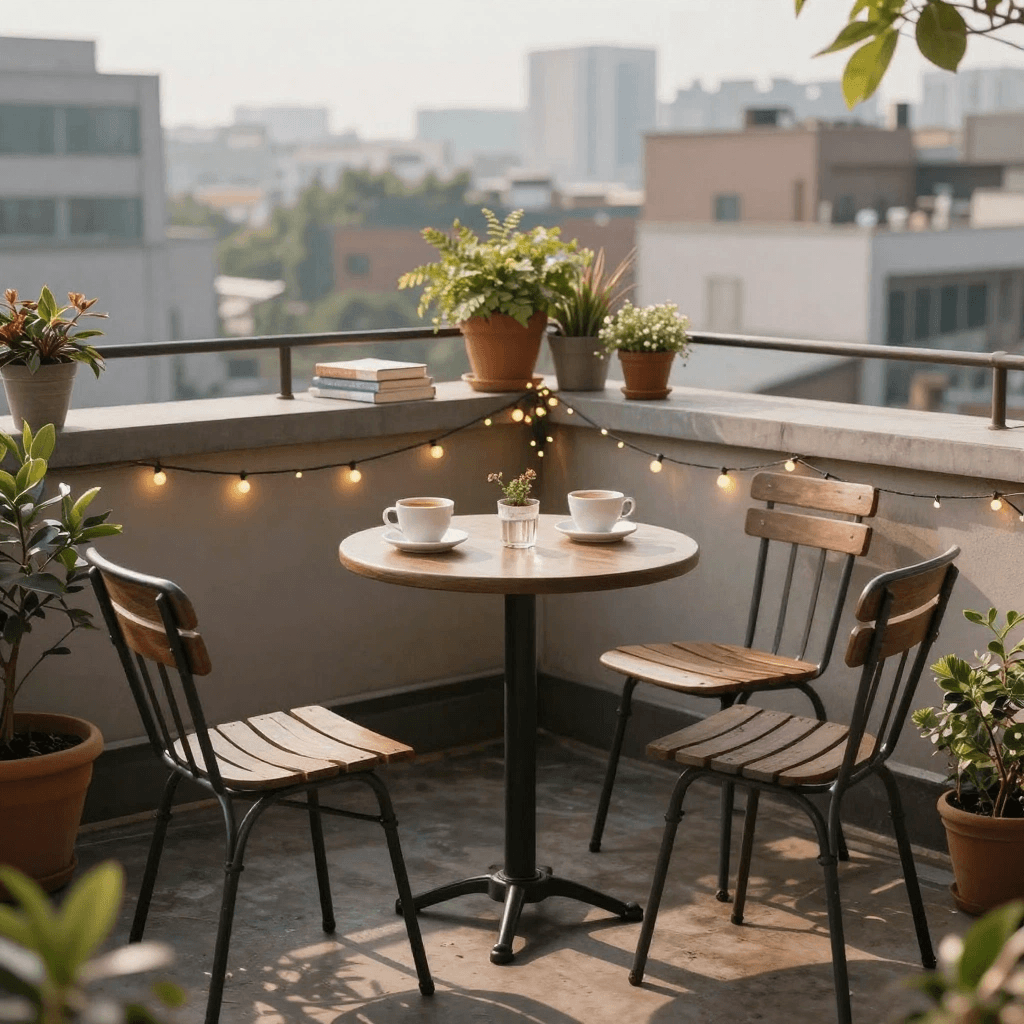
Everyone needs a perfect coffee spot, and rooftops offer unique opportunities for morning rituals that beat any café experience. I’ve designed coffee corners that make people actually look forward to early mornings – and trust me, that’s saying something for this night owl.
Essential Coffee Corner Elements
Comfortable seating designed for lingering is crucial because rushed coffee defeats the purpose. Look for chairs that encourage settling in with proper back support and side tables sized for coffee cups, tablets, or morning reading material.
Weather protection extends your coffee season beyond perfect days. Even simple umbrellas or partial canopies let you enjoy your rooftop coffee corner during light rain or intense sun. I prefer retractable options that don’t dominate the space when you don’t need them.
Storage and Coffee Station Setup
Mobile coffee stations work brilliantly for rooftops where permanent installations aren’t practical. Rolling carts stocked with coffee supplies, portable espresso makers, and morning essentials create café experiences anywhere on your rooftop.
Weather-resistant storage keeps coffee supplies accessible but protected. Sealed containers, small outdoor cabinets, or even decorative storage boxes maintain the aesthetics while keeping everything you need close at hand.
Creating the Perfect Morning Ambiance
Eastern exposure captures morning light beautifully, but if your rooftop faces other directions, work with what you have. Strategic mirrors, light-colored surfaces, or simply choosing the brightest corner can enhance your morning coffee experience.
Plant companions for coffee corners should enhance the peaceful morning mood. Aromatic herbs like lavender or mint, flowering plants that attract morning butterflies, or simple greenery that looks fresh and alive all contribute to starting your day positively.
Making Your Rooftop Dreams Reality
Here’s what I wish someone had told me before my first rooftop project: start small and build gradually. You don’t need to transform everything overnight. Pick one idea that excites you most, execute it well, and then expand from there. I’ve seen too many people overwhelm themselves with massive projects that never get finished.
Budget realistically for both initial setup and ongoing maintenance. Rooftop spaces require more weather-resistant materials and regular upkeep than ground-level gardens. Factor in replacement costs for cushions, plant care, and seasonal storage when planning your investment.
Most importantly, design for how you actually live, not how you think you should live. If you’re not a morning person, don’t focus all your energy on the perfect sunrise coffee spot. If you rarely entertain large groups, prioritize intimate seating over party-sized dining tables.
Your rooftop should reflect your personality and meet your needs – everything else is just decoration. Whether you choose boho comfort, minimalist sophistication, or tropical escape, make it yours and enjoy every moment you spend in your personal sky-high sanctuary. After all, not everyone gets to call a rooftop their own, so make it count! :/