How to Decorate a Fireplace Mantel: Guide for a Stunning Focal Point

The fireplace mantel is the architectural soul of a room, a natural focal point that commands attention and sets the tone for your entire space. Yet, this prime piece of real estate often becomes a landing zone for clutter or remains underutilized due to uncertainty.
Learning how to decorate a fireplace mantel is an art form that blends design principles with personal expression, transforming a blank slate into a curated display that reflects your style and enhances your home’s ambiance. A well-dressed mantel can tell a story, evoke a feeling, and bring a sense of completed harmony to your living area, whether you prefer a timelessly elegant look or a vibrant, eclectic vibe.
This definitive guide will walk you through every step of creating a mantelscape that looks professionally styled. We will delve into the foundational principles of balance and scale, explore a variety of themes from minimalist to maximalist, and provide detailed, seasonal inspiration.
You will learn how to work with your mantel’s specific material—be it wood, stone, or modern concrete—and discover how to choose and arrange objects for maximum impact. Beyond mere aesthetics, we will cover practical considerations and maintenance tips to ensure your display remains fresh and dynamic. By mastering the techniques outlined in this guide, you will gain the confidence to turn your fireplace mantel into a captivating centerpiece that you can adapt and enjoy throughout the year.
Chapter 1: Foundational Principles of Mantel Styling
Before placing a single object, it is crucial to understand the core design concepts that underpin every successful mantel arrangement. These principles provide a framework that ensures your display feels intentional, harmonious, and visually appealing, regardless of the specific decor items you choose to use.
The Golden Rules of Balance and Scale
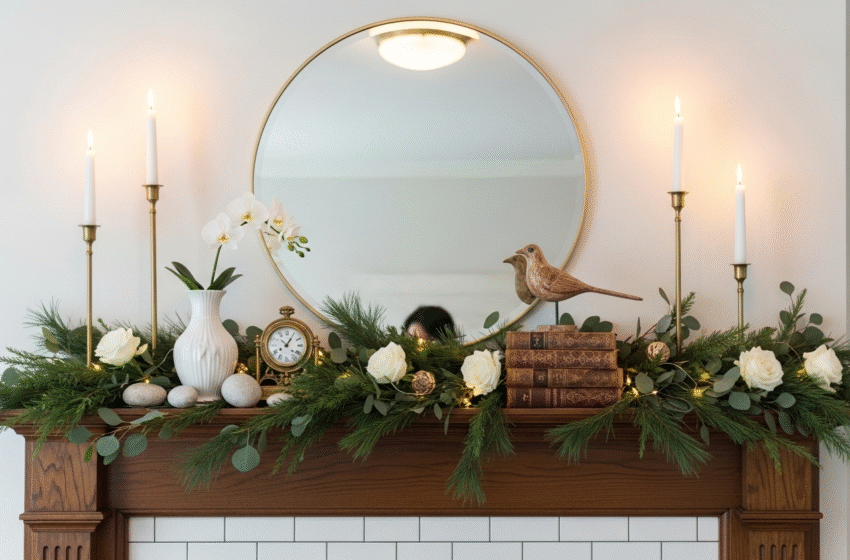
The most important principle to grasp is balance, which does not necessarily mean symmetry. Symmetry is the easiest way to achieve balance and involves creating a mirror image on either side of the mantel’s center point. This approach feels formal, orderly, and calming. For example, a large mirror in the center can be flanked by identical candlesticks and then smaller vases on the outside .
Asymmetrical balance, on the other hand, achieves equilibrium through visual weight rather than identical objects. One side might feature a tall, slender vase while the other side has a cluster of shorter, heavier objects like a stack of books with a small sculpture on top. T
he key is that both sides feel equally weighted. Scale is equally critical; the size of your decor should be proportional to the size of the mantel itself and the surrounding wall. A small, delicate picture will be overwhelmed on a large, expansive wall above a substantial mantel, whereas an oversized piece of art can anchor the space beautifully .
The Styling Triangle and Layering
A powerful technique for creating a dynamic and cohesive arrangement is to think in terms of a “styling triangle.” This involves arranging your key pieces so that their heights form an invisible triangular shape. The highest point is typically the central object, like a piece of art or a mirror, with descending heights flowing out to the sides.
This triangle guides the eye effortlessly across the display. Layering is what adds depth and sophistication, preventing the arrangement from looking flat. Instead of lining everything up in a single row, place some items in front of others. Lean a painting against the wall behind the mantel rather than hanging it, and layer a small vase or candleholder in front of it. This creates a sense of abundance and curated charm.
Practical Considerations and Functionality
While aesthetics are paramount, functionality should not be ignored. It is essential to consider safety first: keep all flammable materials, such as paper, dried flowers, or fabric, well away from the opening of a working fireplace. If you use candles, never leave them burning unattended.
For households with young children or pets, secure heavy objects to prevent accidents and avoid placing fragile items on the very edge. Also, think about the purpose of the room. A mantel in a formal living room might call for more refined objects like porcelain and art, while a family room mantel can incorporate personal photos, children’s artwork, and sturdier, more casual items .
Chapter 2: Curating Your Theme and Core Composition
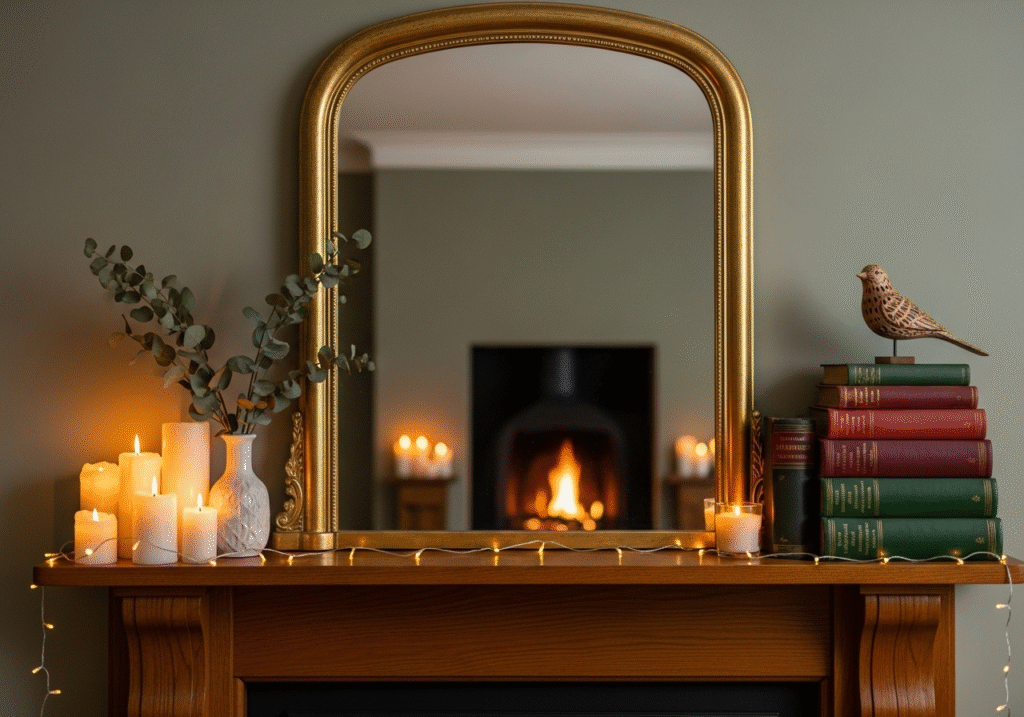
With the foundational principles in mind, the next step is to define your stylistic approach. Your mantel decor should be an extension of your overall interior design theme. Choosing a direction will help you select pieces that work together harmoniously and create the specific mood you desire.
Defining Your Style: From Minimalist to Maximalist
Are you drawn to the clean, uncluttered lines of modern design, or do you prefer the collected, personal feel of a country cottage? Identifying your style is the first step. For a minimalist look, the mantra “less is more” applies. The focus is on the fireplace itself, perhaps with a single, statement-making object like a sculptural vase or one large piece of art. ELLE DECOR A-List designer Rayman Boozer often advises clients to opt for a flatter profile with nothing distracting from the hearth, allowing the fire to be the focus .
This approach aligns with the 2025 trend toward minimalist designs that emphasize clean lines . A traditional style often embraces symmetry and classic elements. Think a gilded mirror centered above the mantel, flanked by a pair of blue and white porcelain jars or elegant candlesticks . This style is timeless and elegant. For those who love a maximalist approach, the mantel is an opportunity to showcase personality. This involves layering patterns, textures, and colors. You might combine art, mirrors, collections of objects, and abundant greenery to create a vibrant, energy-filled display that feels rich and personal.
The Core Composition: Choosing Your Anchor Piece
Every well-designed mantel starts with an anchor piece. This is the largest item that will serve as the focal point of your arrangement and determine the overall scale. The most common anchor pieces are mirrors and artwork. A mirror is a fantastic choice as it reflects light, makes the room feel larger, and can visually open up the space.
A gilded mirror adds traditional glamour , while a simple, unframed round mirror contributes to a modern feel. Artwork is another powerful anchor. This could be one large painting, a collection of smaller framed pieces, or even a single oversized print .
When selecting art, consider the color scheme of the room and use it to tie the space together. For a more contemporary look, consider a vintage sculpture or a unique object that holds significance for you .
Building the Layers: Supporting Elements and Texture
Once your anchor piece is in place, you build the story around it with supporting elements. These items add visual interest, texture, and personality. Candlesticks are a classic choice, providing vertical lines and a sense of warmth. They can be matched for a symmetrical look or mixed and matched for an eclectic feel .
Vases and vessels of varying heights and materials (ceramic, glass, metal) introduce form and shape. Organic elements are perhaps the most important for adding life and softness. A simple vase of fresh flowers, a potted orchid, or even a bundle of dried branches can break up the rigidity of other objects and bring a touch of nature indoors .
For those who prefer low-maintenance options, high-quality faux foliage can provide a similar effect. Finally, do not underestimate the power of books. Stacking a few beautiful books horizontally provides a platform for smaller objects like a small sculpture or a potted plant, adding height and a personal, intellectual touch .
Chapter 3: Seasonal Strategies for a Dynamic Mantel
One of the joys of having a mantel is the ability to refresh its look to reflect the changing seasons. Seasonal decorating keeps your space feeling current and allows you to celebrate different times of the year without a complete room overhaul. The key is to build upon your foundational pieces and introduce seasonal accents.
Spring and Summer Refresh
As winter fades, a spring mantel should feel light, bright, and cheerful. The goal is to create a sense of renewal and freshness. Start by removing heavier winter items like thick garlands and dark-colored candles. Incorporate bright, cheerful elements like fresh flowers in pastel colors . Think tulips, hyacinths, or peonies. Consider adding floral garlands, decorative birdhouses, and colorful vases to bring a lively and vibrant feel to your mantel .
Framed botanical prints and charming figurines can also enhance the seasonal vibe. For summer, embrace a more relaxed and airy aesthetic. Use elements like seashells, driftwood, or clear glass vases filled with simple white blooms like hydrangeas. The palette can be inspired by the sea and sky—think blues, whites, and sandy neutrals.
Autumn Abundance
Autumn is the season for cozy, warm, and inviting decor. It is a time to incorporate rich colors, natural textures, and elements that evoke a sense of harvest and comfort. Start with a focal point like a wreath made of dried magnolia, wheat, or eucalyptus hung above the mantel . Then, layer in a garland across the mantel itself; an oak and acorn garland or a simple iron “Thankful” garland can set a festive tone . Pumpkins are a quintessential fall staple.
While real pumpkins are great, you can also use elegant velvet pumpkins in refined shades like white, gray, or cognac for a chic twist that lasts the entire season . Incorporate lighting to enhance the cozy atmosphere. Flameless wax pumpkin candles or Japanese lantern seed pod string lights provide a soft, ambient glow without the fire risk of real candles . The overall effect should be layered and textured, inviting you to curl up with a blanket.
Winter Warmth and Holiday Glamour
Winter decorating often revolves around the holidays, but the theme can extend through January with a focus on warmth and light. For a cozy, non-festive winter look, use plenty of evergreens, pinecones, and white lights. Candles are essential for creating a warm glow. For holiday-specific decor, you can go full festive. A classic approach involves hanging a lush evergreen wreath and draping a garland of pine or fir along the mantel, intertwined with lights and ribbon.
Holiday-themed stockings can be hung from the mantel if space allows. A more minimalist holiday look, as exemplified by Ina Garten’s approach, might keep it simple yet warm with a gold mirror and a pair of taper candles, proving that moody and minimalist can be perfectly cozy for fireplace season . After the holidays, a simplified version with neutral colors and sparse greenery can carry the winter theme into the new year.
Chapter 4: Working with Your Mantel’s Material and Architecture
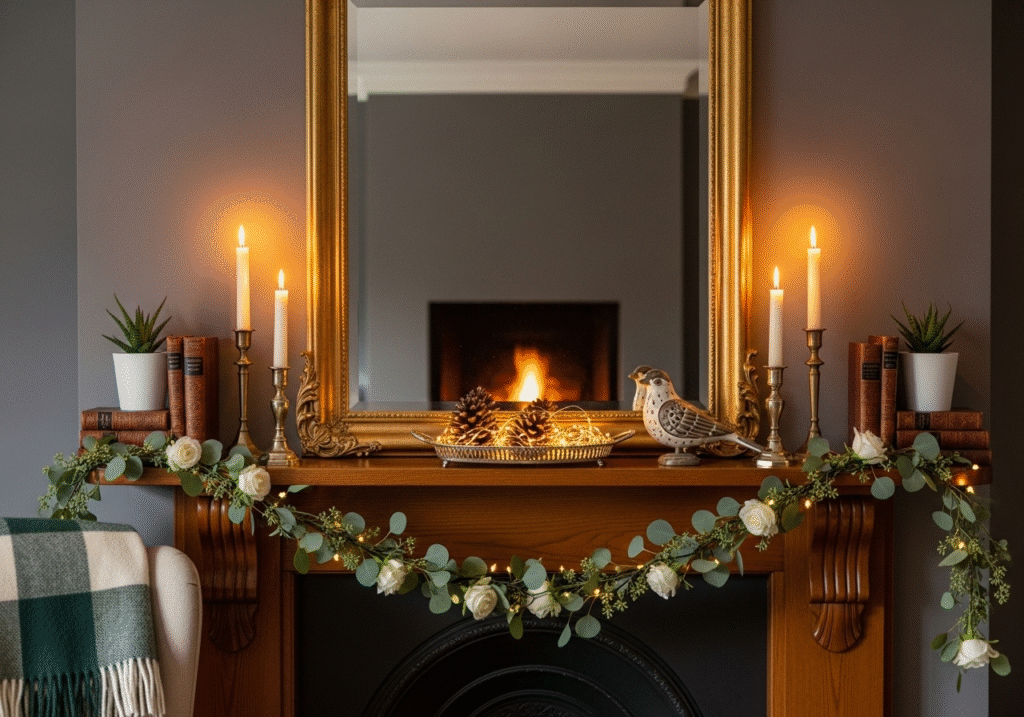
The existing style and material of your fireplace mantel will significantly influence your decor choices. What works for a rustic wood beam will not necessarily suit a sleek marble surround. The most successful designs enhance and highlight the mantel’s inherent characteristics rather than fighting against them.
Classic Wood Mantels
Wood mantels are incredibly versatile and can range from ornately carved to simple and rustic. For an ornate wood mantel, the carving is often the star. In such cases, “there’s no need to dress it up further,” and a more restrained approach is best . A simple floral arrangement and a single piece of art or a mirror may be all that is needed to complement its beauty without creating visual competition.
A simple wood mantel, especially on a brick fireplace, is a timeless combination. Here, you have more freedom. You can paint the mantel to make a statement—a glossy green or a mossy green can be unexpected and beautiful . Alternatively, a classic white mantel provides a perfect, neutral backdrop for any color scheme or decor style, allowing your arranged objects to take center stage .
Stone and Brick Fireplaces
Stone and brick fireplaces bring texture and a sense of history to a room. A natural stone fireplace makes a neutral, powerful statement on its own . When decorating a stone mantel, it is often best to keep the decor simple and substantial to stand up to the strong texture of the stone. A few large, solid objects like a heavy wooden clock, a pair of pottery jugs, or a sturdy candelabra work well.
The goal is to complement the rustic, organic feel rather than detract from it. If you have a brick fireplace, you can choose to highlight its original color or paint it. A painted brick fireplace (white is a popular choice) can brighten a room and provide a more uniform backdrop, allowing for more colorful or delicate decor . If the brick is left exposed, treat it like stone and opt for decor with enough visual weight to balance it.
Modern and Non-Traditional Mantels
Contemporary design often features mantels that are minimal or even non-existent. Linear fireplaces and minimalist designs with sleek surrounds are trending for 2025, focusing on clean lines and the flames themselves . With these fireplaces, the decor strategy shifts. The surround might be a flat, wide ledge perfect for a few carefully curated objects, or the wall above might be completely blank. In these cases, the wall above becomes the canvas.
An oversized, bold piece of abstract art or a very large mirror can create a dramatic focal point. The decor on the ledge itself should be sparse and sculptural—think a single, interesting vessel or a small grouping of geometric objects. The trend toward unique shapes like circular or oval fireplaces also calls for a tailored approach, where the decor should enhance the unique form without cluttering it .
Chapter 5: Maintenance, Evolution, and Final Styling Tips
A beautifully decorated mantel is not a static museum exhibit; it is a living part of your home that should evolve and be maintained. Regular care and a willingness to edit your display will keep it looking its best and prevent it from becoming stale or dusty.
Dusting and Cleaning Strategies
The layered nature of mantel decor means it can be a dust magnet. Establishing a regular cleaning routine is essential. The frequency will depend on your home, but a light dusting every week or two is a good practice. The best method is to remove all items from the mantel.
Wipe down the mantel surface with a appropriate cleaner for the material (wood polish, stone cleaner, etc.). Then, dust each decor item individually before placing it back. This is also a perfect opportunity to rethink your arrangement and try a new layout. For quick touch-ups between deep cleans, use a soft bristle brush or the brush attachment on a vacuum to gently remove surface dust from objects and the mantel itself.
The Art of Editing and Refreshing
It is easy to fall in love with your mantel display, but it is important to know when to edit. Over time, you may acquire new objects or your taste may change. Every few months, take a critical look at your mantel. Does it feel cluttered? Are there items that no longer bring you joy? The editing process involves removing pieces that are redundant, outdated, or no longer fit your aesthetic.
Less is often more. A common mistake is overcrowding the space. If your display feels busy, try removing one or two items and see if it feels more balanced. Editing allows the remaining pieces to shine more brightly. Do not be afraid to store seasonal items and rotate in new pieces to keep the look fresh and engaging throughout the year.
Final Styling Adjustments for a Professional Finish
Once all your items are placed, take a step back and view the mantel from different angles in the room. This is the time for final tweaks. Adjust the angles of picture frames and the positioning of vases. Fluff up the branches in your vase. Make sure your candleholders are straight. A great pro tip is to take a photograph of your arrangement.
The camera lens often reveals imbalances or awkward gaps that the naked eye might miss. Is the styling triangle effective? Does one side feel heavier than the other? Use the photograph as a tool to perfect your composition. Remember, styling a mantel is an iterative process. Live with it for a few days, and if something feels off, do not hesitate to make changes. The goal is to create a display that feels right to you and brings a sense of harmony and beauty to your home.
Conclusion: Your Mantel, Your Masterpiece
Learning how to decorate a fireplace mantel is a journey of understanding fundamental design principles, embracing personal expression, and adapting to the rhythms of the seasons and your own evolving taste. From the clean lines of a minimalist approach to the abundant layers of a maximalist display, the possibilities are endless. The true success of your mantel decor lies not in rigidly following rules, but in creating a space that feels authentically yours—a curated collection that brings you joy and enhances the warmth and welcome of your home.
Remember that the mantel is a dynamic canvas. Do not be afraid to experiment, make mistakes, and start over. With the insights and techniques from this guide, you are now equipped with the knowledge to confidently approach your fireplace mantel and transform it into a stunning focal point that reflects your unique style and story, season after season.