15 Clever Small Mudroom Ideas Entryway Ideas with Smart Storage
- Entryway Decor
 Ben
Ben- 0
- 37 minutes read

Let’s be honest – your entryway probably looks like a tornado hit it most days, right? Mine certainly does, especially when the kids barrel through the door after school, tossing backpacks, shoes, and jackets in every direction except where they belong.
After years of stepping on stray sneakers and fishing mittens out from under the couch, I finally cracked the code on small mudroom organization.
Here’s the thing: you don’t need a massive foyer or a dedicated mudroom to create an organized entryway.
I’ve tested countless solutions in my own cramped 1950s ranch house, and I’m sharing the 15 best small mudroom ideas that actually work in real life – not just on Pinterest boards.
Floating Shelf Mudroom

You know what changed my entryway game completely? Floating shelves. Seriously, these bad boys transformed my tiny entrance from chaos central to an actually functional space.
I installed three staggered floating shelves at different heights, and suddenly I had triple the storage without eating up any floor space. The top shelf holds seasonal items like sunscreen in summer and ice scrapers in winter. The middle one? Perfect for keys, mail, and those random things that always end up by the door.
Why Floating Shelves Rock
The beauty of floating shelves lies in their versatility. You can customize the height based on who uses them – lower for kids, higher for adult stuff you don’t want little hands grabbing. Plus, they make your walls work harder without making the space feel cramped.
Want to maximize this setup? Add small baskets or decorative boxes on each shelf. Trust me, containing the clutter makes all the difference between “organized” and “stuff on a shelf.”
Bench with Hidden Storage

Ever sat on a bench and thought, “This could be doing so much more”? Welcome to the world of storage benches – the Swiss Army knife of mudroom furniture.
I scored a simple wooden bench at a thrift store for $30 and added hinges to the top. Now it holds everything from winter boots to sports equipment. The best part? Nobody knows the chaos hiding underneath when they sit down to tie their shoes.
Making the Most of Your Bench
Here’s my pro tip: use vacuum storage bags inside the bench for seasonal items. I squish down puffy winter coats in summer and beach towels in winter. You’ll be amazed at how much fits when you compress things properly.
Don’t forget to add a cushion on top – it makes the bench more inviting and adds a pop of color to your entryway. Choose a fabric that’s easy to clean because, let’s face it, people will sit on it with wet coats.
Wall-Mounted Hook System

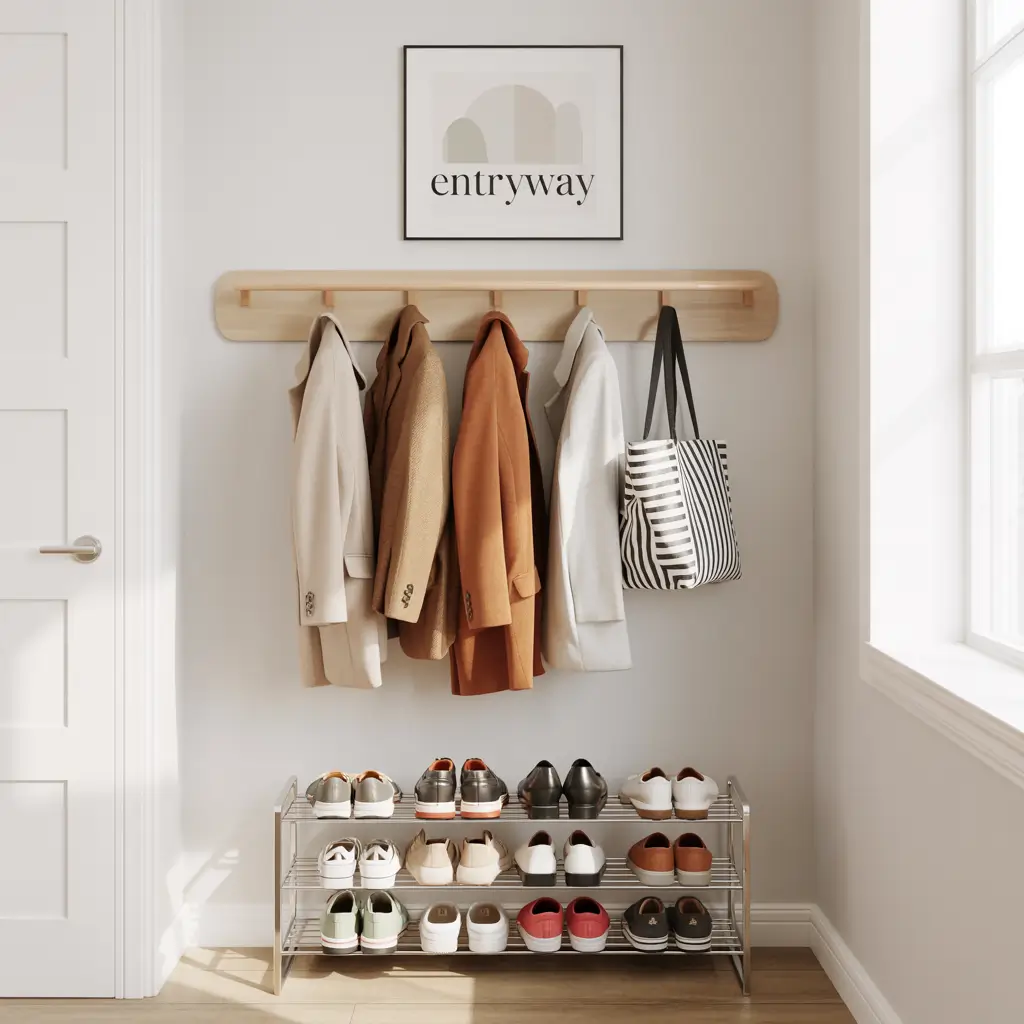
Hooks might seem basic, but hear me out – a strategic hook system can revolutionize your entryway. I’m talking about more than just nailing a few hooks to the wall randomly.
I created zones with my hooks: backpack area at kid height, coat hooks for adults higher up, and a special row just for dog leashes and umbrellas. Each family member gets their designated hook, and suddenly everyone knows exactly where their stuff belongs.
Hook Placement Strategy
The secret sauce? Stagger your hooks both horizontally and vertically. This prevents that annoying thing where all the coats bunch together and you can’t actually see what’s hanging there.
Install hooks at these heights for maximum efficiency:
- 30 inches for small children
- 42 inches for older kids
- 54-60 inches for adults
- 6 inches from the floor for bags you want to drop and go
Also Read: 15 Chic Mudroom Ideas Entryway Ideas and Organized Solutions
Narrow Hallway Mudroom

Got a hallway that’s basically a glorified corridor? Join the club! My hallway measures exactly 36 inches wide, but I turned it into a functional mudroom anyway.
The trick is thinking vertically and using every inch of wall space. I installed narrow floating shelves (only 4 inches deep) that don’t stick out enough to bump into but still hold keys, sunglasses, and mail.
Maximizing Tight Spaces
For super narrow spaces, consider these game-changers:
- Slim profile hooks that fold flat when not in use
- Magnetic strips for keys and small metal items
- Wall-mounted mail sorters that take up zero floor space
- Skinny console tables (more on this later!)
Remember, in a narrow hallway, light colors make everything feel more spacious. I painted my hallway white and added a mirror – instant space doubler!
Built-In Cubbies Design

OK, built-in cubbies require a bit more commitment than slapping up some hooks, but OMG are they worth it. I convinced my husband to help me create a simple cubby system using basic lumber from Home Depot, and it cost us less than $200.
Each family member gets their own cubby – no more “whose glove is this?” debates. The bottom cubbies hold shoes, middle ones for everyday items, and top cubbies for hats and scarves.
DIY Cubby Success Tips
Want to tackle this project? Here’s what I learned the hard way:
- Make cubbies at least 12 inches deep – any shallower and shoes won’t fit properly
- Add a lip or small barrier at the front of shoe cubbies to prevent them from sliding out
- Consider making some cubbies different sizes for variety
The investment pays off quickly when you stop losing your mind every morning trying to find matching shoes.
Over-the-Door Storage
Behind every door lies untapped storage potential! I use over-the-door organizers on literally every door near my entryway, and it’s like having secret storage compartments everywhere.
The coat closet door holds a shoe organizer (but not for shoes – I use it for gloves, hats, and scarves). The basement door has pockets for cleaning supplies and pet gear.
Creative Door Storage Ideas
Think beyond basic shoe organizers:
- Clear pockets work great for finding items quickly
- Mesh organizers allow wet items to dry
- Hook systems on doors can hold bags and backpacks
- Narrow shelving units designed for doors maximize vertical space
FYI, measure your door thickness before buying – not all organizers fit all doors (learned that one the expensive way).
Also Read: 15 Amazing Two Story Foyer Ideas and Modern Entryway Styles
Corner Mudroom Setup

Corners – the Bermuda Triangle of home organization, am I right? For years, I ignored the corner by my front door until I realized I was wasting prime real estate.
I installed a corner bench with L-shaped floating shelves above it. This setup turned dead space into the most functional area of my entryway. The bench provides seating from two angles, and the shelves create tons of storage without protruding into the walking path.
Making Corners Work Harder
Here’s how to maximize corner potential:
- Use triangular shelves specifically designed for corners
- Install hooks on both walls of the corner
- Add a corner-specific coat rack that fits snugly
- Consider a revolving corner shelf unit for easy access
The corner setup works especially well if your door opens into a corner – you’re already looking at that space when you enter.
Slim Console Table Entryway

Who says you need a chunky piece of furniture in your entryway? A slim console table (I’m talking 10-12 inches deep) provides surface space without blocking traffic flow.
I found mine at a garage sale and gave it new life with chalk paint. The top holds a dish for keys, a small lamp, and usually whatever I’m carrying when I walk in. Underneath, I’ve tucked baskets for shoes and bags.
Console Table Hacks
Make your console table work overtime:
- Add S-hooks to the sides for bag storage
- Place a narrow bench or ottoman underneath for seating
- Install a mirror above to check yourself before leaving
- Use the lower shelf (if it has one) for attractive storage baskets
Pro tip: anchor tall, narrow tables to the wall. Nobody wants a tipping hazard in high-traffic areas!
Vertical Shoe Rack Idea

Let’s talk about the elephant in every entryway – shoes. They multiply like rabbits, I swear. My vertical shoe rack solution keeps them contained without sprawling across the floor.
I use a ladder-style shoe rack that leans against the wall. Each rung holds 2-3 pairs of shoes, and it takes up less than a foot of floor space. The angled design means you can actually see all your shoes instead of digging through a pile.
Shoe Storage That Makes Sense
Consider these vertical options:
- Tension rod systems between walls for heels
- Wall-mounted shoe shelves at an angle
- Hanging shoe organizers from ceiling hooks
- Vertical boot trays for wet weather footwear
Remember to keep everyday shoes accessible and rotate seasonal footwear to avoid overcrowding. Nobody needs flip-flops front and center in January (unless you live in Florida, then carry on).
Also Read: 15 Timeless Foyer Tile Ideas Entryway Ideas for Classic Charm
Pegboard Mudroom Wall

Pegboard isn’t just for garages anymore! I installed a painted pegboard wall in my entryway, and it’s basically like having customizable storage that changes with my needs.
Currently, mine holds bags on hooks, baskets for accessories, and even a small shelf for packages. The beauty? When needs change, I just rearrange the pegs. No new holes in the wall, no commitment issues.
Pegboard Perfection Tips
Level up your pegboard game:
- Paint it a fun color to make it decorative, not just functional
- Use varied peg accessories like baskets, shelves, and hooks
- Create zones for different family members or item types
- Add small containers for things like chapstick and hand sanitizer
IMO, pegboard is the most underrated mudroom solution out there. It’s cheap, versatile, and surprisingly attractive when done right.
Minimalist Mudroom Nook

Sometimes less really is more. My sister’s minimalist mudroom puts my organized chaos to shame with its clean lines and clutter-free surfaces.
She keeps only absolute essentials visible: three hooks, one shelf, one basket for shoes. Everything else hides in a small closet nearby. The result? An entryway that always looks Instagram-ready.
Achieving Minimalist Magic
Want to go minimal? Follow these rules:
- One in, one out – new item comes in, old item goes
- Choose quality over quantity for visible items
- Use hidden storage for 90% of your stuff
- Stick to a neutral color palette for a cohesive look
- Install good lighting to highlight the clean space
The minimalist approach requires discipline, but the visual calm you get when entering your home? Totally worth it.
Sliding Barn Door Entryway

Can we talk about how sliding barn doors solve so many problems? They don’t swing into your space, they look amazing, and they can hide storage areas or closets beautifully.
I installed one to cover the closet in my entryway, and it’s both functional and a total conversation starter. Guests always comment on it, and I love that it doesn’t block the hallway when open.
Barn Door Benefits
Here’s why sliding barn doors rock for small spaces:
- No clearance needed for door swing
- Can cover wider openings than traditional doors
- Adds character to bland entryways
- Creates a flexible barrier between spaces
- Hardware doubles as industrial-chic decor
Just ensure you have enough wall space for the door to slide completely open. Measure twice, install once!
Mirror with Storage Hooks

A mirror with built-in hooks is basically the multitasking superhero of entryway furniture. You check your appearance and grab your keys in one spot – efficiency at its finest!
I have one with five hooks underneath, and each hook has a purpose: keys, dog leash, umbrella, reusable shopping bags, and one floating hook for whatever needs a temporary home.
Mirror Placement Magic
Strategic mirror placement can:
- Double the visual space of your entryway
- Provide last-minute appearance checks
- Reflect light to brighten dark corners
- Hide storage solutions when using mirrored cabinet doors
Position mirrors to reflect windows or attractive views, not directly facing clutter zones (unless you enjoy seeing twice the mess).
Rustic Bench Mudroom

There’s something about a rustic wooden bench that makes an entryway feel welcoming. Mine’s made from reclaimed barn wood, and it adds warmth to what could otherwise be a sterile, functional space.
The rustic aesthetic works because imperfections are part of the charm. Scratches and dings from daily use? They just add character. Plus, rustic benches tend to be sturdy enough to handle real-life abuse.
Rustic Style Elements
Enhance your rustic mudroom with:
- Wrought iron hooks for authentic farmhouse vibes
- Woven baskets for natural texture
- Vintage crates as storage cubes
- Distressed wood shelving
- Mason jars for small item storage
The rustic look pairs surprisingly well with modern elements too. Don’t be afraid to mix styles!
Two-Tone Mudroom Wall

Who decided walls had to be one color? Not me! My two-tone mudroom wall creates visual interest and actually serves a purpose beyond looking pretty.
I painted the bottom half of my wall in a darker, durable paint that hides scuff marks from bags and shoes. The upper half stays light and bright. The color break happens at hook height, creating a natural visual line.
Color Strategy for Small Spaces
Two-tone walls can:
- Define zones without physical barriers
- Make ceilings appear higher with vertical emphasis
- Hide wear and tear in high-traffic areas
- Add personality without overwhelming the space
Choose colors that complement each other – I went with navy bottom and white top, but gray and cream or forest green and beige work beautifully too.
Bringing It All Together
After trying all these solutions (yes, I’m a bit obsessed with organization), here’s what I’ve learned: the best mudroom is one that works for YOUR lifestyle.
My floating shelf setup might be perfect for me, but your family might need those built-in cubbies more.
Start with one solution and build from there. You don’t need to transform your entire entryway overnight. Pick the idea that addresses your biggest pain point first.
Can’t find keys? Start with hooks. Shoes everywhere? Vertical rack it is.
Remember, even the tiniest entryway can become functional with some creativity.
My current setup combines several of these ideas – floating shelves up high, hooks at varied heights, and a slim console table with basket storage underneath.
It’s not Pinterest-perfect, but it works for real life, and that’s what matters 🙂
The key to small mudroom success? Think vertically, use every inch wisely, and don’t be afraid to get creative with your solutions.
Your entryway doesn’t need to be huge to be hugely functional. Sometimes the smallest spaces inspire the most innovative solutions.
What’s your biggest entryway challenge? I bet one of these ideas can solve it. And hey, if you come up with your own brilliant solution, I’d love to hear about it.
We’re all in this battle against entryway chaos together!