
Nighttime Dilemma: Is Leaving Gas Fireplace On All Night Safe?


The allure of a gas fireplace is undeniable. With the simple flick of a switch, you can transform a chilly room into a cozy sanctuary. As evening turns to night, a common question arises in the minds of many homeowners: can I leave a gas fireplace on all night? The convenience of constant warmth is tempting, especially during a cold winter’s night. However, the answer to this question is not a simple yes or no. It is a complex issue that hinges on the type of fireplace you own, its specific safety features, and the vital precautions you have in place.
The consensus among industry experts is clear: for safety reasons, you should not leave a gas fireplace on all night or unattended while you are asleep . While modern gas fireplaces are engineered with safety in mind, the risks associated with continuous, unsupervised operation are significant. This comprehensive guide will illuminate the reasons behind this recommendation, exploring the different types of gas fireplaces, the very real dangers of overnight use, and the essential safety measures every homeowner must implement. Our goal is to provide you with the knowledge to enjoy the warmth and ambiance of your fireplace with complete peace of mind, ensuring that your cozy haven remains a safe one.
Understanding Your Gas Fireplace: Type Matters Most
The first step in answering the question of overnight operation is to understand what kind of gas fireplace you have. Not all units are created equal, and their venting systems are the primary factor determining their safety profile and operational limits.
Vented Gas Fireplaces: Inserts and Direct Vent Models
Vented gas fireplaces are designed to expel the byproducts of combustion—including carbon monoxide—to the outside of your home. This category includes two common types:
Gas Fireplace Inserts: These are units designed to be installed into an existing masonry fireplace . They use a pipe that channels exhaust through the existing chimney, and the front is typically sealed with glass to prevent gases from leaking back into the room . When professionally installed and properly sealed, these inserts are considered safe for continuous operation throughout the day, though they still require monitoring .
Direct Vent Fireplaces: This is a versatile option for homes without an existing chimney . A direct vent fireplace has a sealed glass front and uses a pipe that goes directly through an exterior wall to vent fumes outside . Because of this efficient and sealed system, most direct vent fireplaces can also be left on for extended periods, provided the unit is fully sealed .
Vent-Free (Ventless) Gas Fireplaces
Vent-free fireplaces, as the name implies, do not have an external vent . They are engineered to burn gas very cleanly and at a high efficiency, releasing combustion products into the room where they are installed . While they have built-in safety features like oxygen depletion sensors (ODS) that shut off the gas if oxygen levels drop, they are not designed for long-term use .
Manufacturers and experts universally agree that vent-free fireplaces should only be operated for a few hours at a time—typically a maximum of 2 to 3 hours—and should never be used as a primary heat source for extended periods, let alone overnight . Using them beyond their recommended time can lead to a dangerous buildup of moisture and carbon monoxide in your home .
Table: Gas Fireplace Types and Operational Guidelines
The Critical Safety Risks of Leaving a Gas Fireplace On All Night
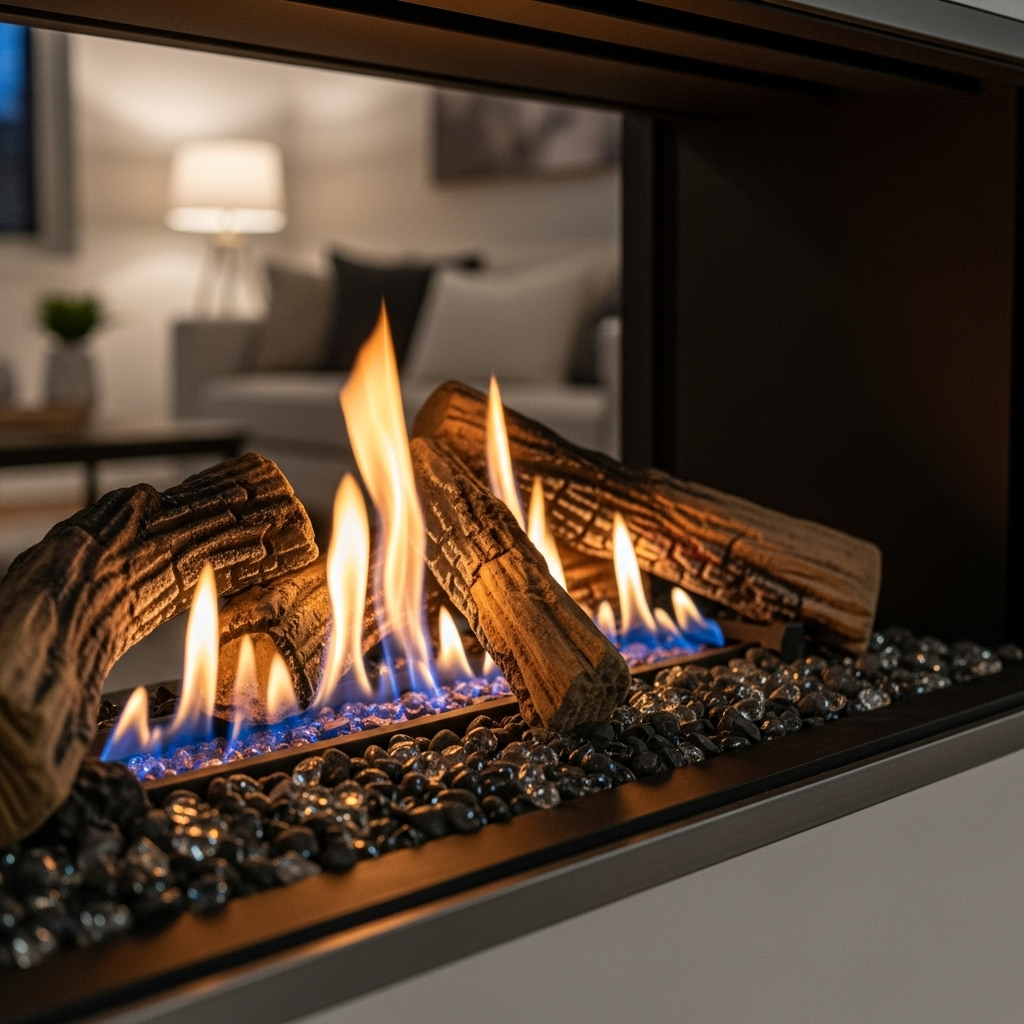
Understanding the “why” behind the safety recommendations is crucial. Leaving a gas fireplace burning while you sleep introduces several significant risks that can have devastating consequences.
Carbon Monoxide: The Invisible Killer
Carbon monoxide (CO) is a colorless, odorless, and tasteless gas produced whenever any fuel—including natural gas and propane—is burned . It is often called the “silent killer” because it is impossible to detect without a specialized alarm.
- How it Happens: A properly functioning and properly vented gas fireplace is designed to channel CO outside . However, a malfunctioning unit, a blocked flue, or a cracked heat exchanger can cause this lethal gas to spill into your home . The risk is even greater with vent-free models, which intentionally release low levels of combustion byproducts into the room .
- The Danger: When inhaled, CO prevents your blood from carrying oxygen. Symptoms of poisoning include headache, dizziness, nausea, confusion, and, in severe cases, it can be fatal, especially when people are asleep and unable to recognize the warning signs .
Fire Hazards and Overheating
While gas fireplaces are generally safe, any appliance with a flame carries an inherent fire risk, which is amplified when left unattended for long periods.
- Combustible Materials: Over time, furniture, curtains, rugs, or holiday decorations can drift or be placed too close to the fireplace. The intense heat radiating from the unit, especially the glass front, can ignite these materials . Experts recommend maintaining a three-foot “kid-free and clutter-free” zone around the appliance .
- Component Failure: Continuous operation for many hours can put stress on the fireplace’s components. A malfunctioning gas valve or electrical issue could, in rare cases, lead to a fire .
Oxygen Depletion and Indoor Air Quality
Fire needs oxygen to burn. When a gas fireplace operates, it consumes oxygen from the surrounding air.
- Oxygen Depletion Sensors: Most modern gas fireplaces are equipped with Oxygen Depletion Sensors (ODS) that automatically shut off the gas supply if oxygen levels in the room become too low . This is a critical safety feature, particularly for vent-free models. However, relying solely on this sensor as a reason to leave the fireplace on overnight is not a safe practice.
- Moisture and Byproducts: Vent-free fireplaces produce water vapor as a byproduct of combustion, which can lead to excessive humidity, window condensation, and potential mold growth . They also release other combustion byproducts that can irritate the respiratory system, which is particularly concerning for individuals with asthma or allergies .
Essential Safety Measures for Every Gas Fireplace Owner
Whether you use your fireplace for two hours or six, your safety depends on a multi-layered approach. Implementing these measures is non-negotiable.
Install and Maintain Carbon Monoxide Detectors
This is the single most important safety step you can take.
- Placement: Install a hard-wired carbon monoxide detector with a battery backup on the same floor level as your gas fireplace, and ideally near sleeping areas . This ensures the alarm will wake you if CO levels rise at night.
- Testing: Test your CO detectors monthly and replace the batteries at least twice a year .
Commit to Annual Professional Inspections
Just like your car, your gas fireplace needs regular check-ups. An annual inspection by a qualified professional is not a suggestion; it is a necessity for safe operation . A certified technician will:
- Check for gas leaks.
- Ensure the venting system is clear and functioning properly.
- Inspect and clean the burner and logs.
- Verify that all safety features, like the ODS and thermocouple, are working correctly .
Practice Daily Vigilance and Common Sense
Safety is a habit. Make these practices part of your routine:
- Read the Manual: Always follow the manufacturer’s instructions for your specific model .
- Keep the Area Clear: Maintain a three-foot clearance between the fireplace and any flammable materials like furniture, curtains, or books .
- Use a Safety Screen: Especially in homes with children or pets, a safety screen provides a crucial barrier against the extremely hot glass front, preventing serious contact burns .
- Never Leave It Unattended: Do not leave the house or go to sleep with the fireplace burning . A responsible adult should always be awake and alert to monitor it.
The Financial and Practical Cost of Continuous Operation
Beyond safety, leaving a gas fireplace on all night has practical implications for your wallet and your appliance.
The Impact on Your Energy Bill
A gas fireplace is a heating appliance, and running it for extended periods will increase your utility bills. The cost varies based on the fireplace’s BTU (British Thermal Unit) rating and local fuel prices .
- Cost Calculation: To calculate the hourly cost, use this formula: (Fireplace BTU rating × fuel cost per therm) ÷ 100,000 = operating cost per hour .
- Example: A 30,000 BTU fireplace with natural gas at $1.50 per therm costs about $0.45 per hour to run. Left on for 8 hours overnight, that would add $3.60 to your daily bill, or over $100 per month if done regularly .
Increased Wear and Tear
Continuous operation accelerates the wear and tear on your fireplace’s components, such as the burner, logs, and ignition system . This can lead to more frequent repairs and a shorter overall lifespan for the unit.
Table: Estimated Cost to Run a Gas Fireplace
| Usage Period | Estimated Cost (Natural Gas) | Estimated Cost (Propane) |
|---|---|---|
| Per Hour | $0.40 – $0.50 | $0.50 – $1.05 |
| Per Night (8 hours) | $3.20 – $4.00 | $4.00 – $8.40 |
| Per Month (Nightly use) | $96 – $120 | $120 – $252 |
Final Verdict: Can I Leave a Gas Fireplace On All Night?
So, can I leave a gas fireplace on all night? After examining the evidence, the expert consensus is a resounding no. The potential risks—from carbon monoxide poisoning and house fires to unhealthy indoor air quality—simply outweigh the benefits of convenience and continuous warmth.
While modern, fully-vented units are designed for extended daytime use under supervision, allowing one to run while you are asleep and unable to monitor it introduces an unacceptable level of risk. Vent-free fireplaces have even stricter time limits and should never be considered for overnight operation.
Your gas fireplace is a wonderful appliance that provides efficient heat and beautiful ambiance. By understanding its limits, respecting the potential dangers, and adhering to a strict regimen of professional maintenance and daily safety practices, you can enjoy its warmth with true peace of mind. Turn it off before you head to bed, and rest easy knowing you have prioritized the safety of your home and your family.