10 Vibrant Basement Color Schemes Ideas for Fun Rooms
- Basement Decor
 Ben
Ben- 0
- 34 minutes read
Remember that basement you swore you’d transform into something amazing? Yeah, the one that’s currently storing Christmas decorations from 2015 and that exercise bike you haven’t touched since… ever. Well, grab your paintbrush because we’re about to turn that forgotten dungeon into the coolest room in your house.
I spent three months renovating my own basement last year, and let me tell you – choosing the right color scheme made all the difference. The space went from feeling like a storage unit to becoming our favorite family hangout spot. And honestly? The paint job did most of the heavy lifting.
Cozy Neutral Basement Color Schemes
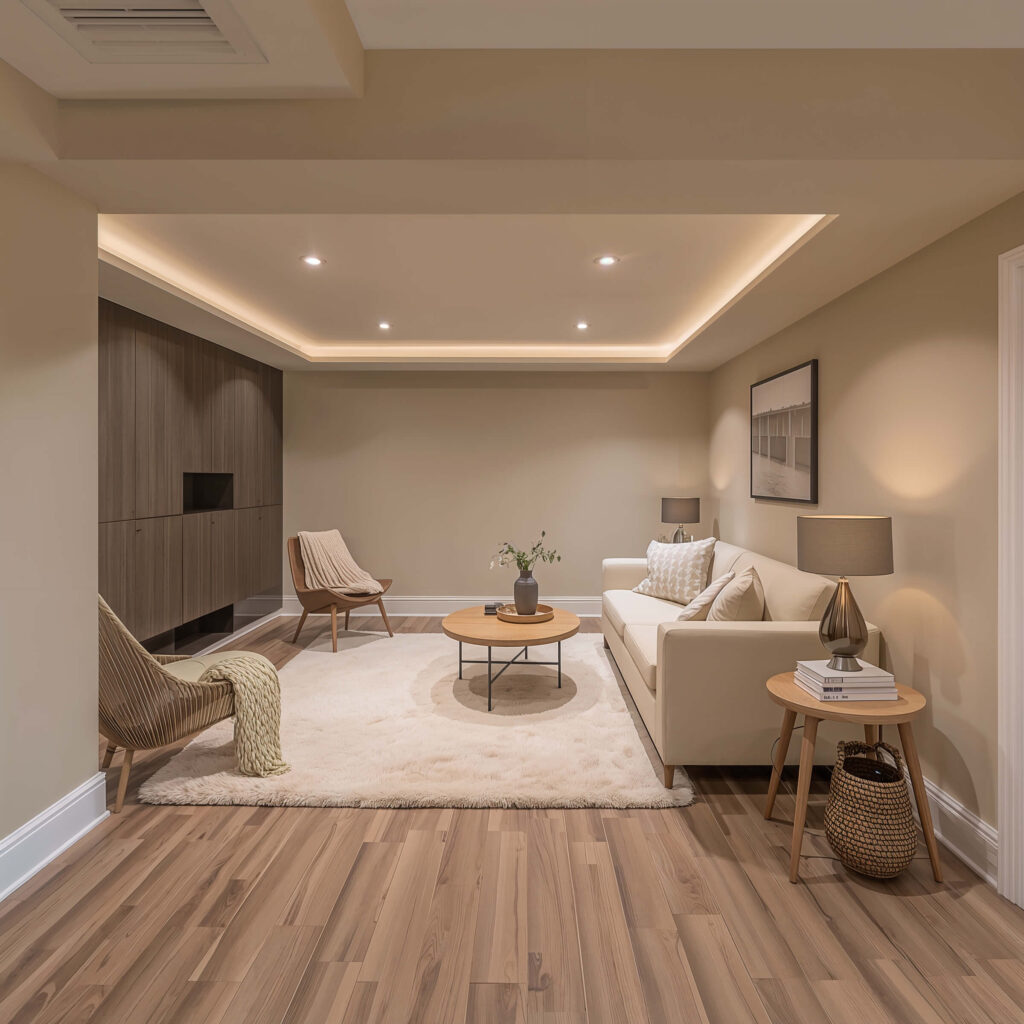
Let’s kick things off with something that won’t give your mother-in-law a heart attack when she visits. Neutral colors create that perfect foundation where you can’t really go wrong. Think warm beiges, soft taupes, and creamy whites that make your basement feel less like a cave and more like an extension of your home.
I love how neutrals work with literally everything you throw at them. Want to add a bright orange couch next year? Go for it. Feeling like switching to minimalist decor? The neutrals have your back. They’re basically the Swiss Army knife of color schemes.
Making Neutrals Pop
Here’s where most people mess up with neutrals – they forget about texture and layering. You need to mix different shades and materials to avoid that “waiting room at the dentist” vibe:
- Layer different shades of beige and cream
- Add textured throw pillows in varying neutral tones
- Incorporate natural materials like jute rugs or linen curtains
- Use warm lighting to enhance the cozy factor
The trick is creating depth without relying on bold colors. I added a shiplap accent wall in my friend’s basement using three different shades of white. Sounds boring? The room looks like it belongs in a design magazine now.
Temperature Matters
Ever notice how some neutrals feel cold while others feel warm? Warm neutrals with yellow or red undertones work magic in basements because they counteract that naturally cool underground feeling. Skip the stark whites unless you want your basement to feel like an Apple store.
Modern Gray and White Basement Ideas
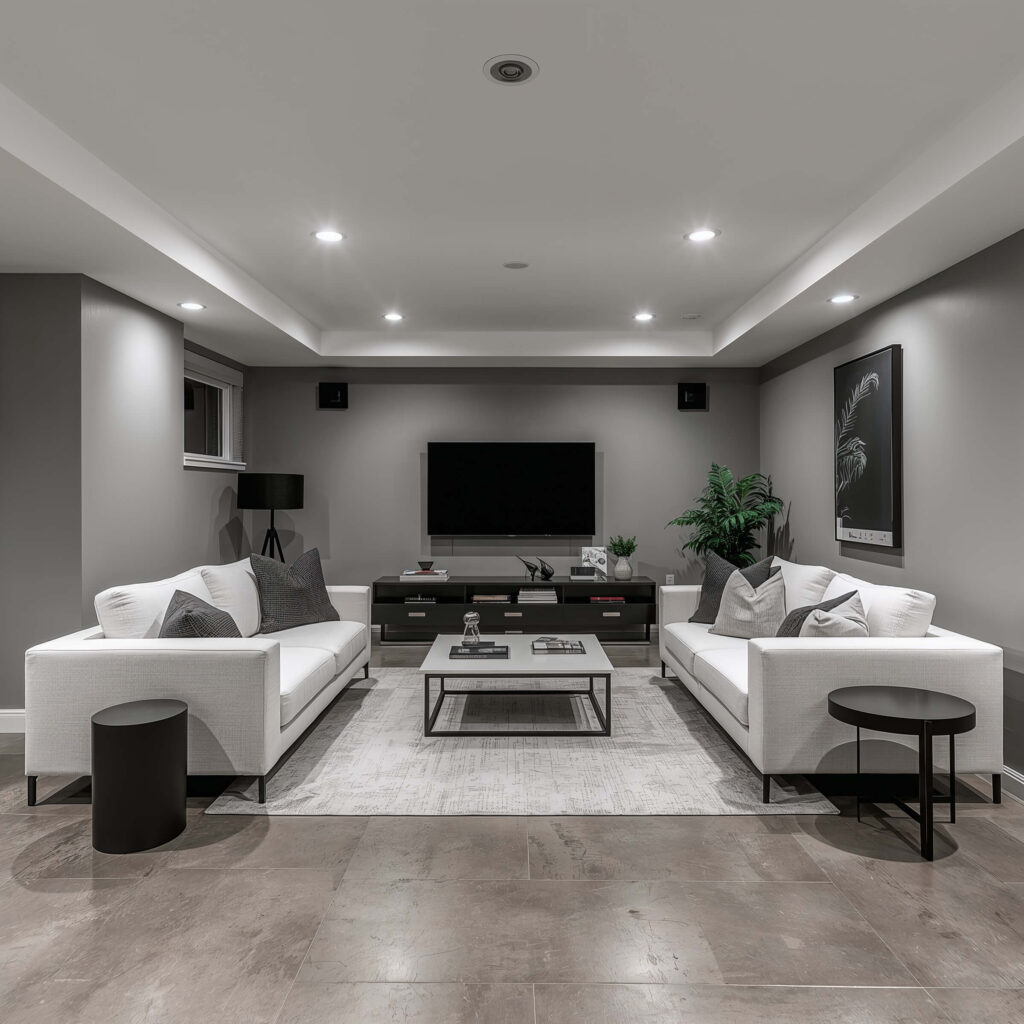
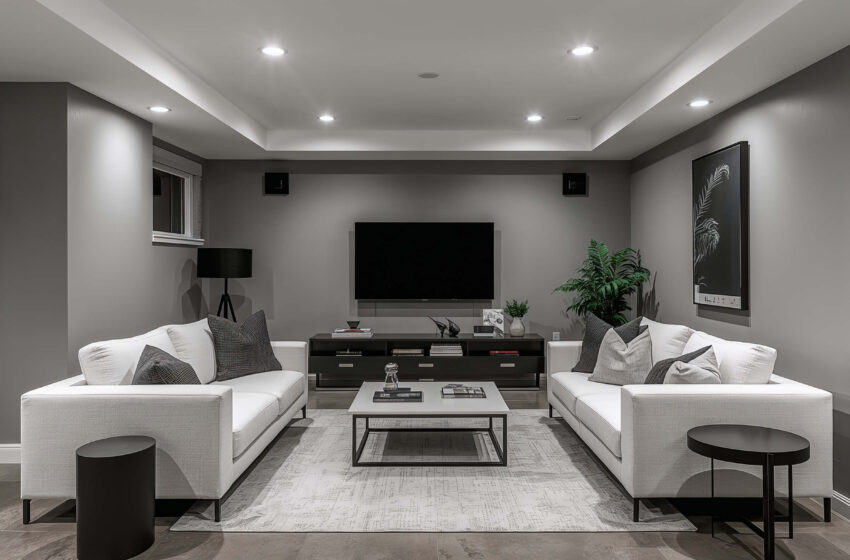
Gray and white might sound basic, but hear me out – this combo hits different when you do it right. Modern gray and white schemes create that sophisticated look without trying too hard. Plus, gray hides scuff marks like a champ (trust me, with three kids, I know).
The key is choosing the right shade of gray. You want something with personality, not that depressing battleship gray that makes everyone feel like they’re in detention. I’m talking about soft dove grays, warm greige tones, or even a dramatic charcoal if you’re feeling brave.
The 60-30-10 Rule
Follow this formula for the perfect balance:
- 60% dominant color (usually your lighter gray or white)
- 30% secondary color (the contrasting shade)
- 10% accent color (throw in some metallics or a pop of color)
This ratio keeps things interesting without overwhelming the space. My neighbor used this exact formula and added copper accents to her gray and white basement. The result? Chef’s kiss.
Playing with Contrast
Want to make your basement feel bigger? Paint the ceiling white and keep the walls gray. This creates vertical space that tricks your brain into thinking the room is taller. Alternatively, painting one wall in dark charcoal while keeping everything else light creates a focal point that screams “I know what I’m doing.”
Warm Earth Tone Basement Palettes
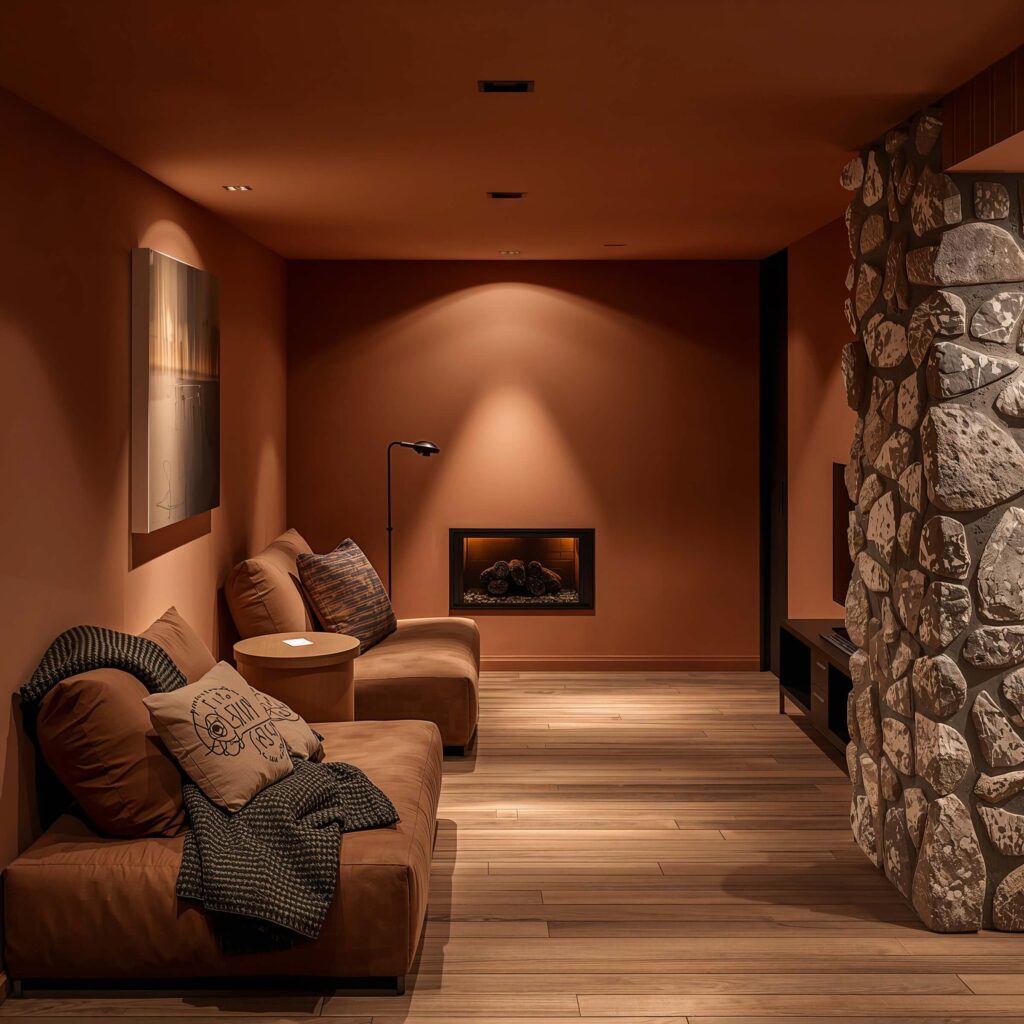
Earth tones bring that organic, grounded feeling to your basement. We’re talking terracotta, ochre, sienna, and all those colors that sound like expensive coffee drinks. These shades create instant warmth and make your basement feel like a natural extension of the outdoors.
I helped my sister paint her basement in earth tones last summer, and now it feels like a cozy cabin retreat. The best part? Earth tones age beautifully. Unlike trendy colors that look dated after two years, these babies get better with time.
Mixing Earth Tones Like a Pro
Here’s what works:
- Terracotta + cream = Mediterranean vibes
- Ochre + deep brown = ’70s revival (in a good way)
- Sage green + sandy beige = Zen retreat
- Rust orange + warm gray = Modern rustic
Don’t be afraid to go bold with earth tones. They’re naturally muted, so even the brighter shades won’t assault your eyeballs at 6 AM.
Texture is Your Best Friend
Earth tones love texture more than millennials love avocado toast. Add woven baskets, rough-hewn wood furniture, and nubby fabrics. The combination creates depth that flat paint alone can’t achieve. Layer different textures to prevent your earth-toned basement from looking flat or muddy.
Also Read: 10 Beautiful Walkout Basement Ideas for Multi-Functional Spaces
Bold and Bright Basement Accent Colors
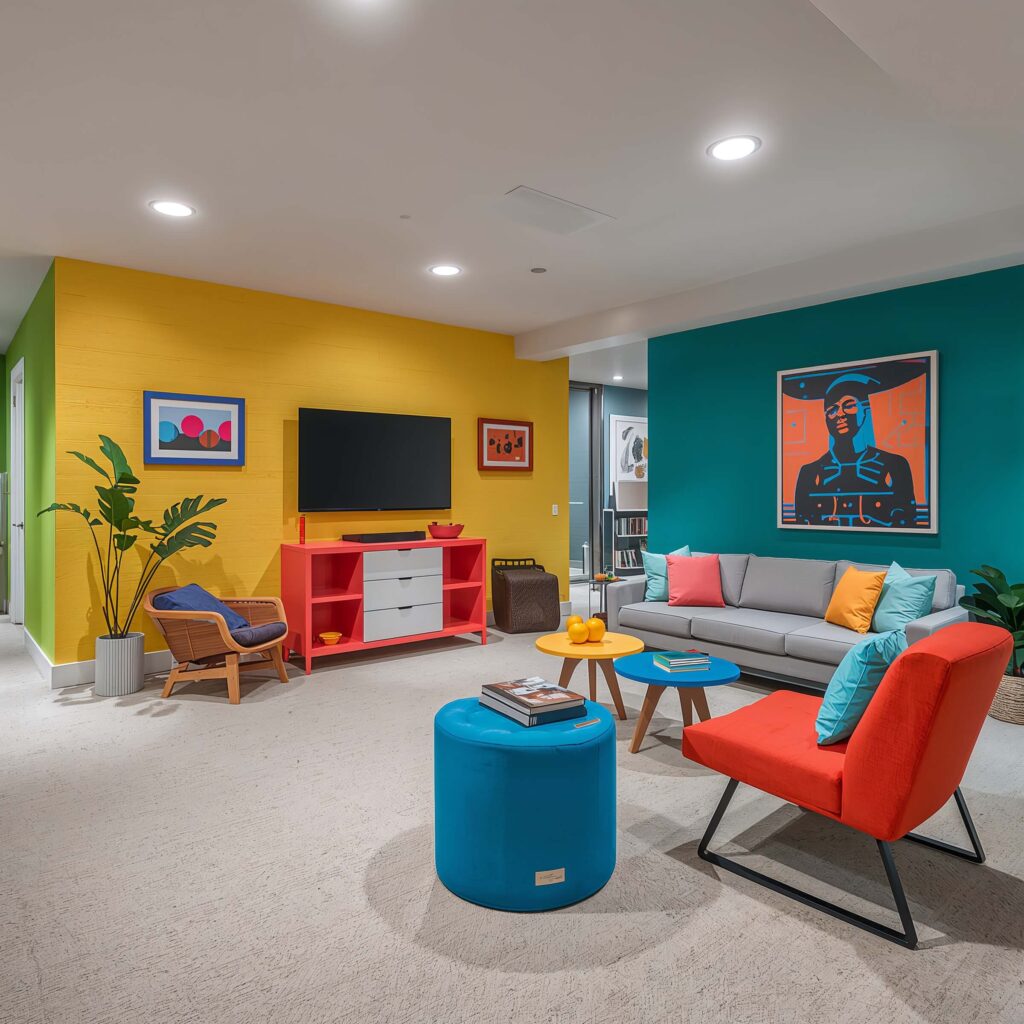
Ready to make a statement? Let’s talk about going bold. Bright accent colors transform basements from forgotten spaces into conversation starters. But here’s the thing – you need strategy, not just enthusiasm.
Pick one wall (just one, I’m begging you) and give it the superstar treatment. Electric blue, hot pink, lime green – whatever makes your heart sing. The other walls should play supporting roles in neutral or complementary shades.
Strategic Color Placement
Where you place bold colors matters:
- Behind the TV or bar area creates a natural focal point
- Stairwell walls make the descent exciting
- Alcoves or nooks become instant features
- Ceiling (yes, really!) adds unexpected drama
My cousin painted her basement ceiling bright turquoise. Everyone thought she’d lost it until they saw the finished room. Now it’s the most Instagrammed spot in her house. Go figure.
Balancing Act
Bold colors need breathing room. For every bright element, add two neutral ones. This balance prevents sensory overload while keeping things interesting. Think of it like adding hot sauce – a little goes a long way.
Minimalist Monochrome Basement Designs
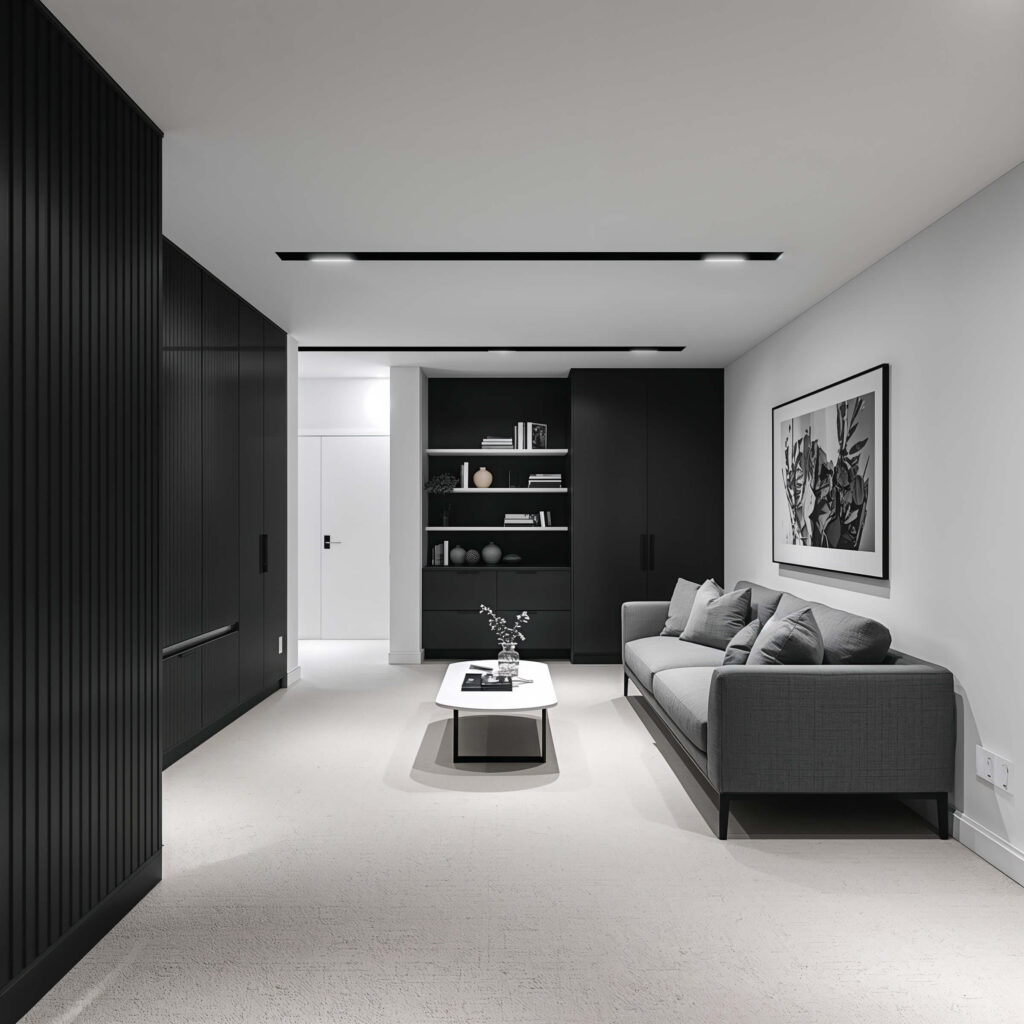
Minimalism isn’t boring – it’s confident. Monochrome schemes create sophisticated spaces that feel intentional, not lazy. Pick your color and explore every shade from barely-there to almost-black.
I converted my basement into a home office using various shades of blue. Navy chairs, powder blue walls, and teal accents. Same color family, zero monotony. The trick is varying the saturation and intensity while staying in your chosen hue.
Making Monochrome Work
Essential elements for success:
- Use at least 5 different shades of your chosen color
- Mix matte and glossy finishes
- Add metallics in the same color family
- Include plenty of white space to let the color breathe
Ever wonder why high-end hotels love monochrome schemes? They create calm, cohesive spaces that feel expensive without actually being expensive. Smart, right?
The Power of Negative Space
Minimalist doesn’t mean empty. Strategic use of negative space makes your chosen elements stand out. Paint three walls in your lightest shade and one in the darkest. Instant drama without the clutter.
Soft Pastel Basement Color Inspirations
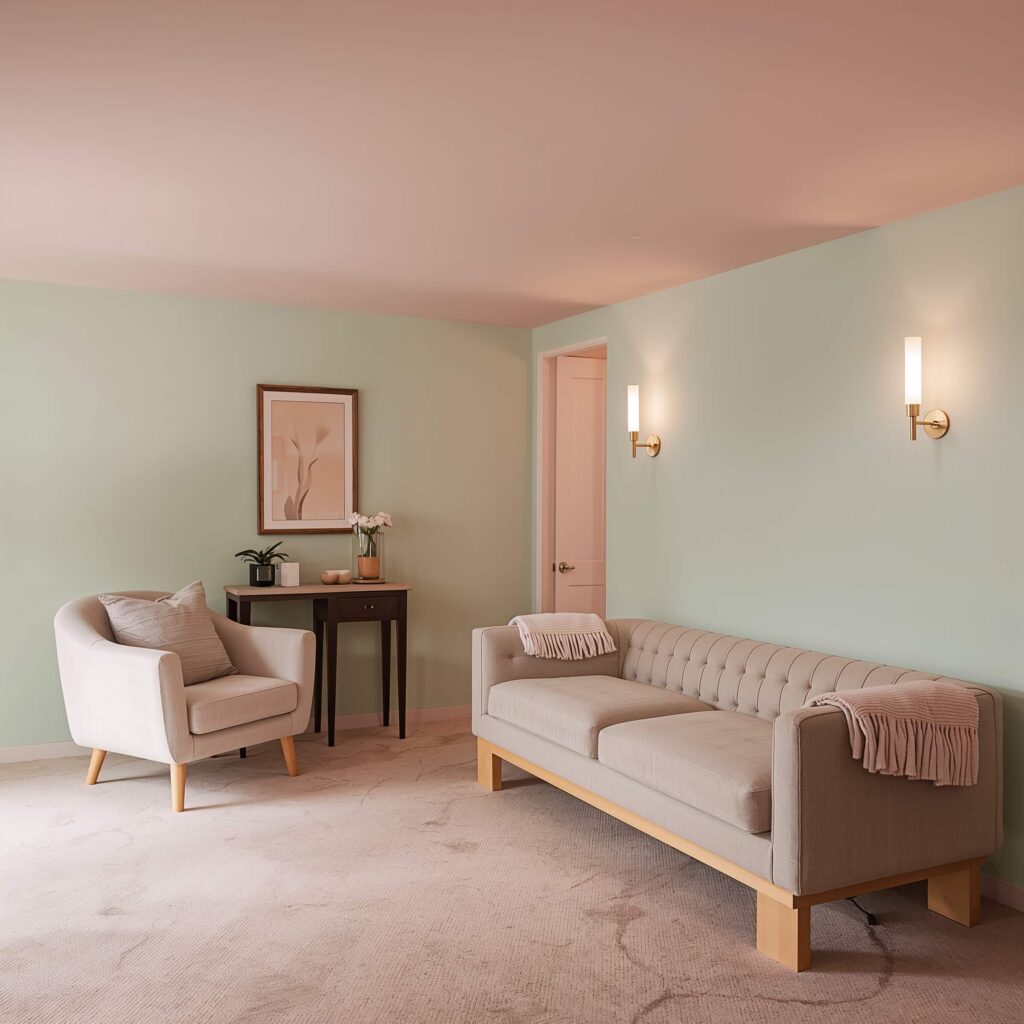
Who says basements can’t be pretty? Soft pastels bring unexpected sweetness to underground spaces. We’re not talking nursery-level cute here – modern pastels have grown up and gotten sophisticated.
Think dusty rose, sage green, soft lavender, and buttery yellow. These colors reflect light beautifully, making your basement feel airy despite the lack of windows. My best friend’s basement game room rocks mint green walls with blush pink accents. Sounds weird? It’s actually stunning.
Adult-Friendly Pastels
Keep pastels mature by:
- Choosing muted versions over candy-bright shades
- Pairing with black or charcoal accents
- Adding industrial elements like metal shelving
- Using geometric patterns instead of florals
The goal is “sophisticated Scandinavian” not “Easter egg explosion.”
Layering Light Colors
Pastels need good lighting to really shine. Layer your light sources – overhead fixtures, table lamps, and LED strips behind furniture. The more light, the better pastels perform. Trust me, I learned this the hard way when my first pastel attempt looked like dirty dishwater in dim light.
Also Read: 10 Brilliant Basement Parking Ideas to Maximize Space
Rustic Wood and Neutral Basement Colors
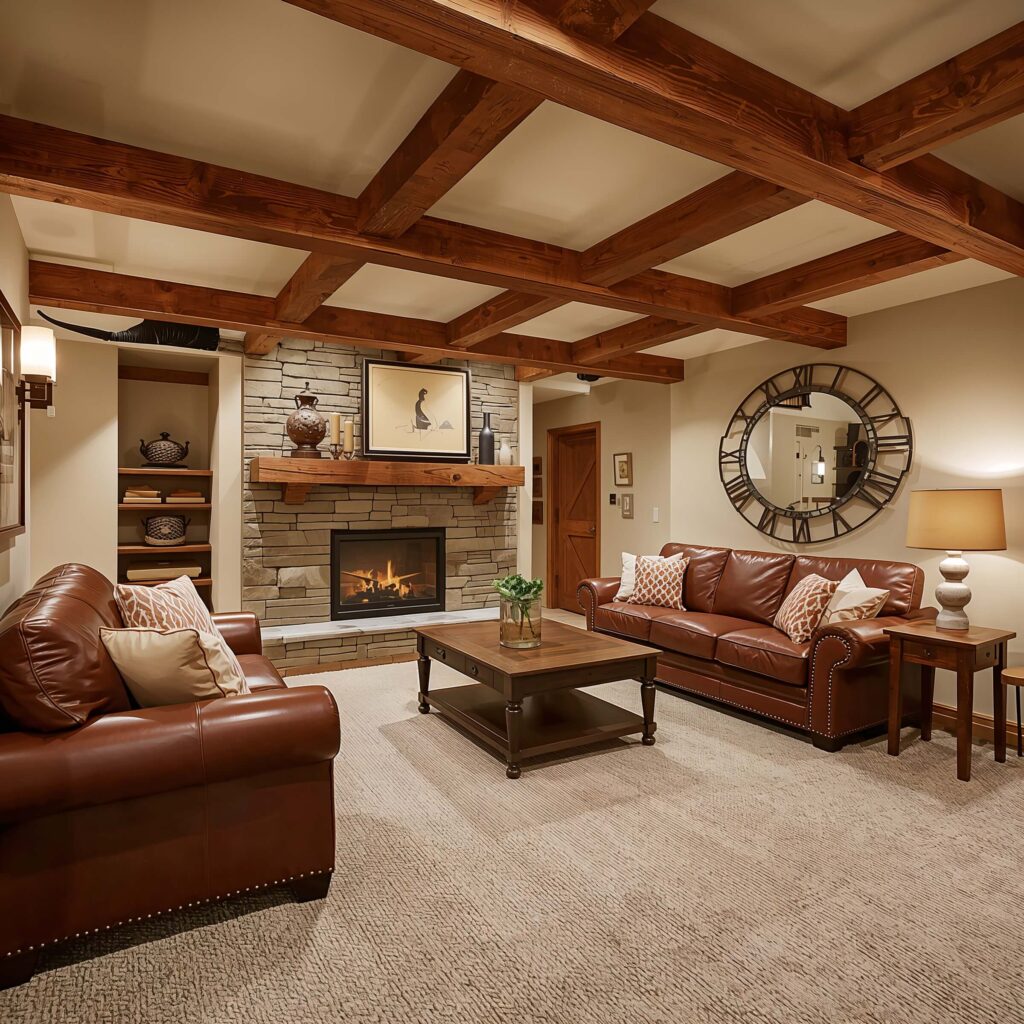
Nothing beats the warmth of wood paired with soft neutrals. This combination creates instant coziness that makes basements feel like luxury lodges. Plus, wood elements hide dings and scratches like nobody’s business.
I installed reclaimed wood paneling on one wall of my basement and painted the others in warm gray. The contrast between rough wood and smooth paint creates visual interest without competing for attention. FYI, reclaimed wood isn’t as expensive as you’d think if you know where to look.
Wood Tone Coordination
Match your wood tones to your neutrals:
- Light woods (pine, birch) + cool grays
- Medium woods (oak, cherry) + warm beiges
- Dark woods (walnut, mahogany) + crisp whites
- Weathered woods + any neutral (they’re basically foolproof)
Preventing Cave Syndrome
Basements with lots of wood can feel dark quickly. Combat this with strategic white or cream elements. Paint the ceiling white, choose light-colored furniture, or add white built-in shelving. The contrast keeps things bright while maintaining that cozy cabin feel.
Sleek Black and Gold Basement Combinations
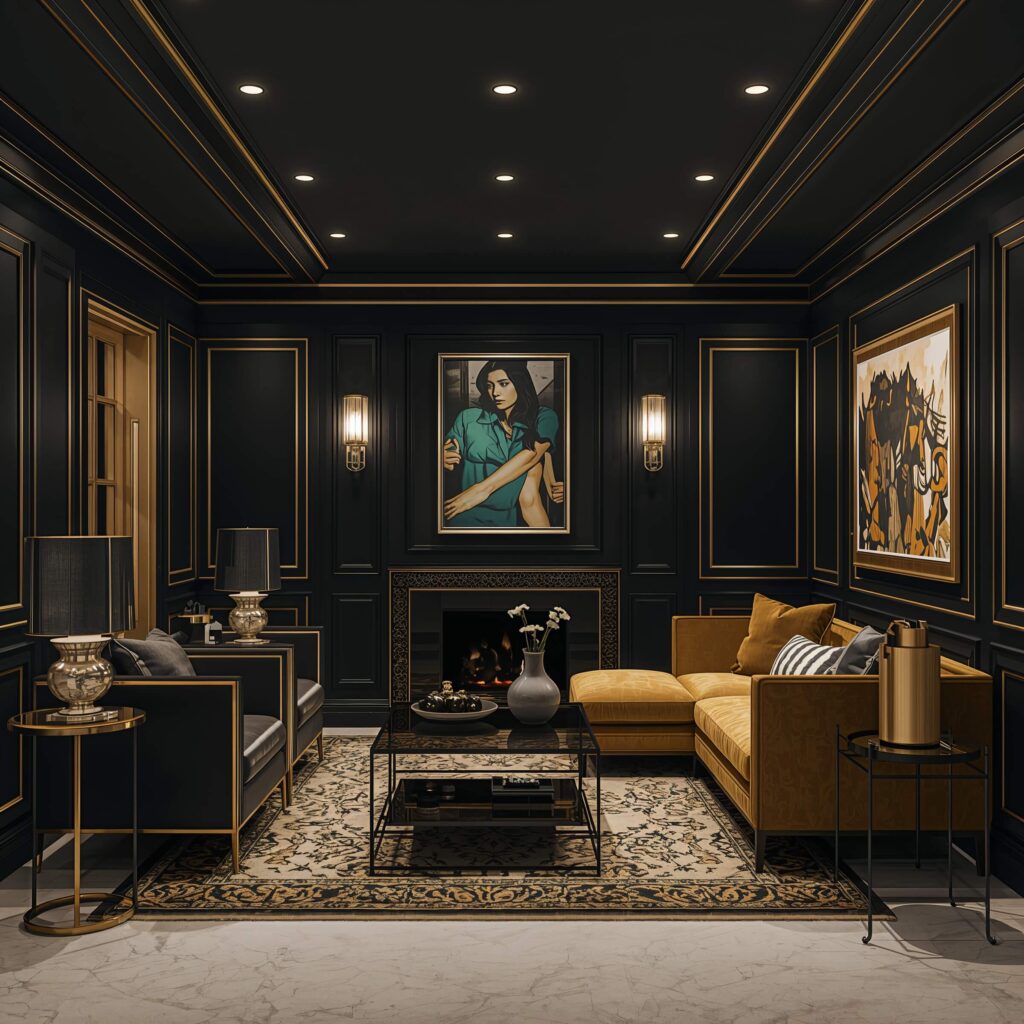
Want instant glamour? Black and gold deliver every time. This power couple creates drama and sophistication that transforms basements into swanky entertainment spaces. Just don’t go overboard unless you want your basement looking like a Vegas casino (although, maybe that’s your thing?).
Start with black as your base – maybe one accent wall or dark furniture. Then sprinkle gold accents throughout: picture frames, light fixtures, hardware. The key is restraint. Gold should whisper luxury, not scream it.
Getting the Ratio Right
The perfect black and gold balance:
- 70% neutral base (whites, grays, or beiges)
- 20% black elements
- 10% gold accents
This formula prevents your basement from feeling like a gothic palace while maintaining that upscale vibe.
Finish Matters
Mix finishes to add depth:
- Matte black walls with glossy gold accents
- Metallic gold wallpaper on one wall with flat black paint on others
- Black leather furniture with brushed gold hardware
My brother-in-law did his entire basement bar area in black and gold. Initially seemed risky, but now everyone wants to host parties there. Sometimes bold choices pay off big time 🙂
Cool Blue and Green Basement Schemes
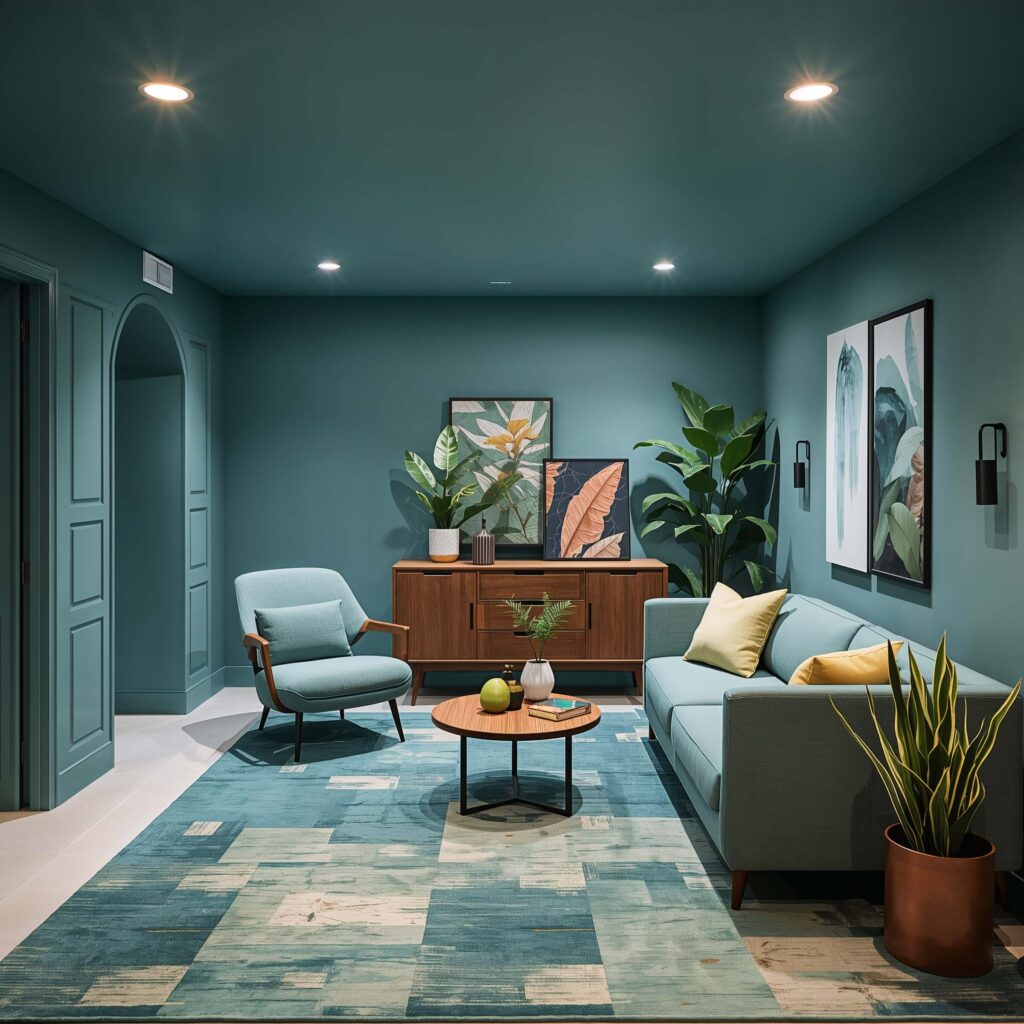
Blue and green together? Absolutely. These cool colors create calm, refreshing spaces perfect for basements that double as home offices or relaxation zones. Think ocean meets forest, not Seahawks fan cave.
I painted my basement in graduating shades from seafoam green to deep teal. The effect feels like being underwater in the best possible way. Cool colors also make spaces feel larger – a major win for smaller basements.
Nature-Inspired Combinations
Winning color combos:
- Navy + sage green = sophisticated and grounding
- Turquoise + lime = energetic yet balanced
- Powder blue + mint = fresh and airy
- Teal + forest green = rich and moody
Temperature Control
Cool colors can make basements feel chilly. Balance them with warm elements:
- Wood furniture or flooring
- Warm metallic accents (brass or copper)
- Plenty of soft textiles
- Warm-toned lighting (3000K bulbs work great)
This balance creates a space that feels fresh without being cold. IMO, it’s the perfect compromise for basements that tend to run cool anyway.
Also Read: 10 Fantastic Basement Kitchen Ideas and Functional Upgrades
Vibrant Color Pops for Basement Walls
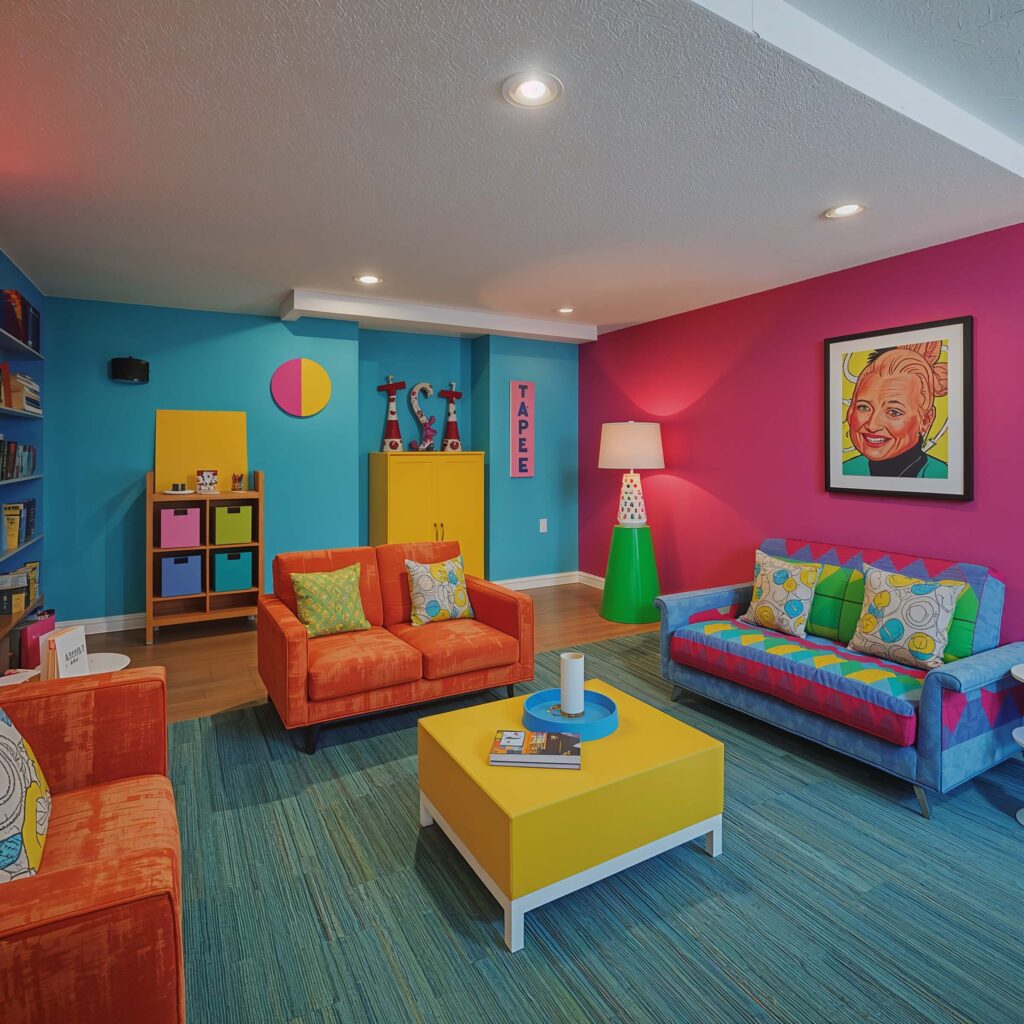
Sometimes you just need to go wild. Strategic color pops turn boring basements into personality-packed spaces. The trick is knowing where to pop and where to stop.
Create a feature wall with removable wallpaper in a crazy pattern. Paint the inside of built-in shelving in unexpected colors. Use neon signs or colorful artwork as focal points. The possibilities are endless when you think beyond just paint.
Color Pop Strategies
Smart ways to add vibrancy:
- Color-blocked geometric patterns on one wall
- Bright doors against neutral walls
- Colorful ceiling beams (if exposed)
- Rainbow bookshelf styling against white walls
- Neon or LED light strips for instant mood changes
The Safety Net Approach
Nervous about commitment? Start with colorful accessories and furniture before painting walls. Bright throw pillows, colorful rugs, and vibrant artwork let you test drive bold colors. Like them? Paint away. Hate them? No harm done.
My friend started with one bright yellow chair in her neutral basement. Six months later, she’d added yellow curtains, artwork, and finally painted an accent wall. Sometimes the best transformations happen gradually.
Mixing Multiple Pops
Want multiple colors? Follow these rules:
- Stick to a cohesive color palette (all warm or all cool tones)
- Keep pops at the same intensity level
- Use white or gray as your base
- Repeat each color at least twice in the room
This approach creates intentional-looking chaos instead of actual chaos. There’s a fine line, trust me.
Bringing It All Together
Choosing your basement color scheme isn’t just about picking pretty colors. Consider how you’ll actually use the space. Party central needs different colors than a meditation room. Kids’ playroom? Different story than a man cave.
Think about lighting too. Basements typically have less natural light, so colors behave differently down there. That perfect shade of blue might look amazing in the paint store but turn prison-gray in your basement. Always test paint samples in your actual space with your actual lighting.
Don’t forget about the existing elements you can’t change. Exposed pipes, concrete floors, support beams – work with them, not against them. Paint pipes black for an industrial look or white to help them disappear. Sometimes the quirks become the features.
Most importantly, trust your gut. Yeah, Pinterest is great for inspiration, but you’re the one living with these colors every day. If you love purple and want purple walls, paint them purple. Life’s too short for beige if beige doesn’t spark joy.
Your basement has potential – it just needs the right color scheme to unlock it. Whether you go bold with bright accent walls or keep it chill with earth tones, the perfect palette transforms your basement from storage space to favorite place.
So what are you waiting for? That basement isn’t going to paint itself. Grab some samples, invite friends over for opinions (and free labor), and start creating the fun room you’ve always wanted. Who knows? By next month, you might actually use that exercise bike… in your gorgeous new basement gym with the perfect color scheme, of course.