10 Bright Basement Family Room Ideas to Maximize Space
- Basement Decor
 Ben
Ben- 0
- 29 minutes read
You know that feeling when you walk into your basement and think, “This could be SO much more than a storage graveyard?” Yeah, I’ve been there. After spending three years staring at my own dungeon-like basement, I finally decided enough was enough. Transforming that forgotten underground space into a bright, functional family room changed our entire home dynamic—and honestly, I’m kicking myself for not doing it sooner.
Let me share what I’ve learned through trial, error, and way too many Pinterest boards. These ideas aren’t just theoretical; they’re battle-tested solutions that actually work when you’re dealing with low ceilings, minimal natural light, and that distinctly “basement-y” vibe we all know and hate.
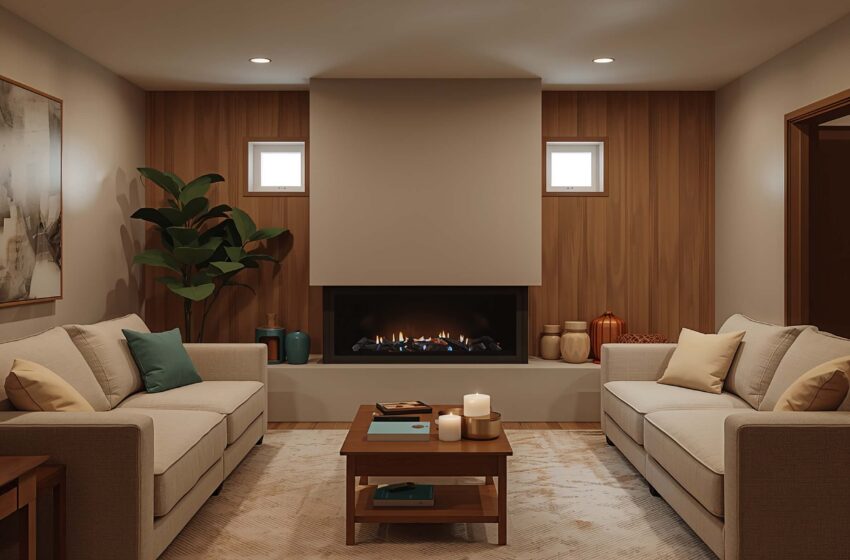
Cozy Basement Family Room with Fireplace
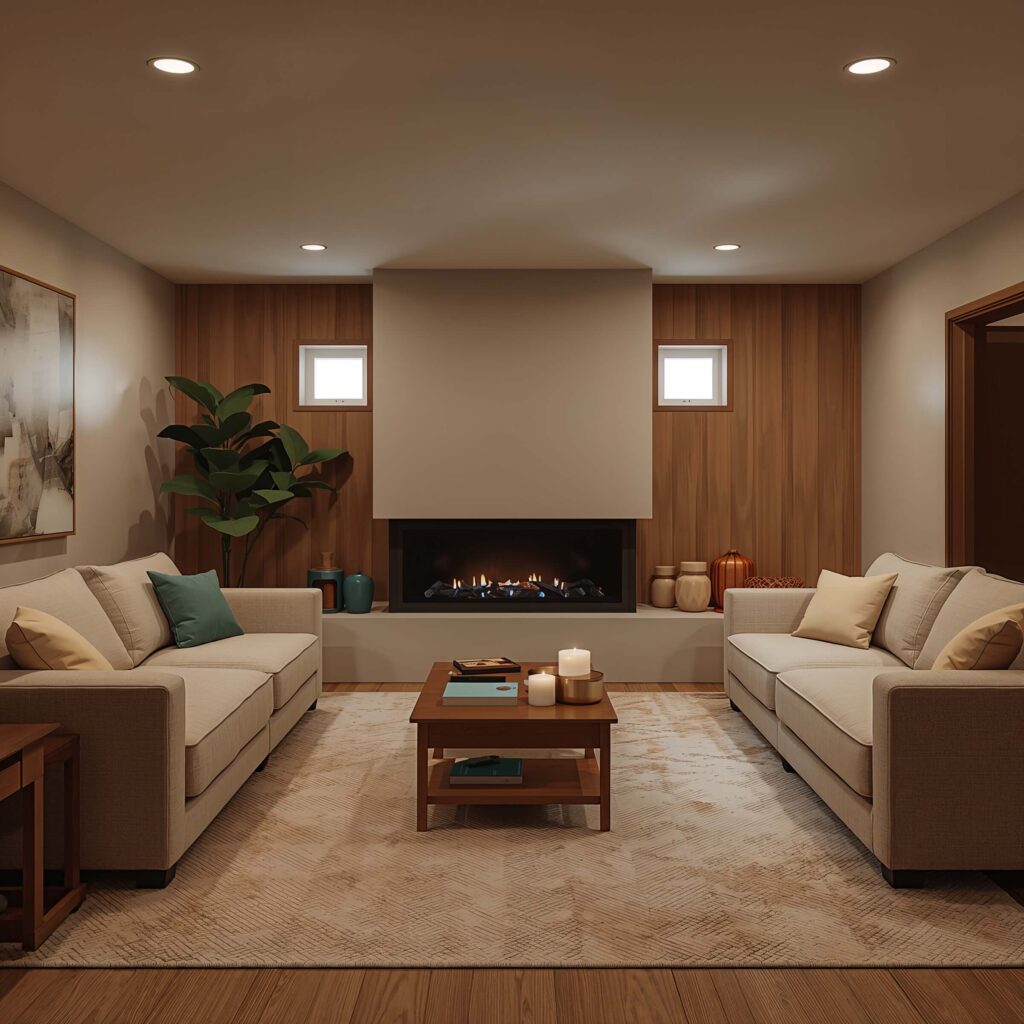
Nothing says “forget you’re underground” quite like a crackling fireplace. When I first suggested adding a fireplace to our basement, my partner looked at me like I’d suggested installing a swimming pool in the attic. But here’s the thing—electric and gas fireplaces have completely revolutionized basement design.
You don’t need a chimney anymore. Modern ventless options give you all the ambiance without the construction nightmare. I installed a linear electric fireplace along one wall, and suddenly our basement went from “storage dungeon” to “cozy retreat.” The warmth it provides isn’t just physical; it creates this psychological comfort that makes everyone actually want to hang out down there.
Making the Fireplace Work for Your Space
Consider these fireplace placement strategies:
- Corner installation saves precious wall space for seating
- TV-above-fireplace combo creates a natural focal point
- Built-in shelving around the fireplace maximizes vertical storage
- Floating mantel adds display space without bulk
The key? Choose light-colored stone or painted brick surrounds. Dark materials will suck up what little light you have. I learned this the hard way when my initial dark stone choice made the room feel like a cave—not the vibe we were going for!
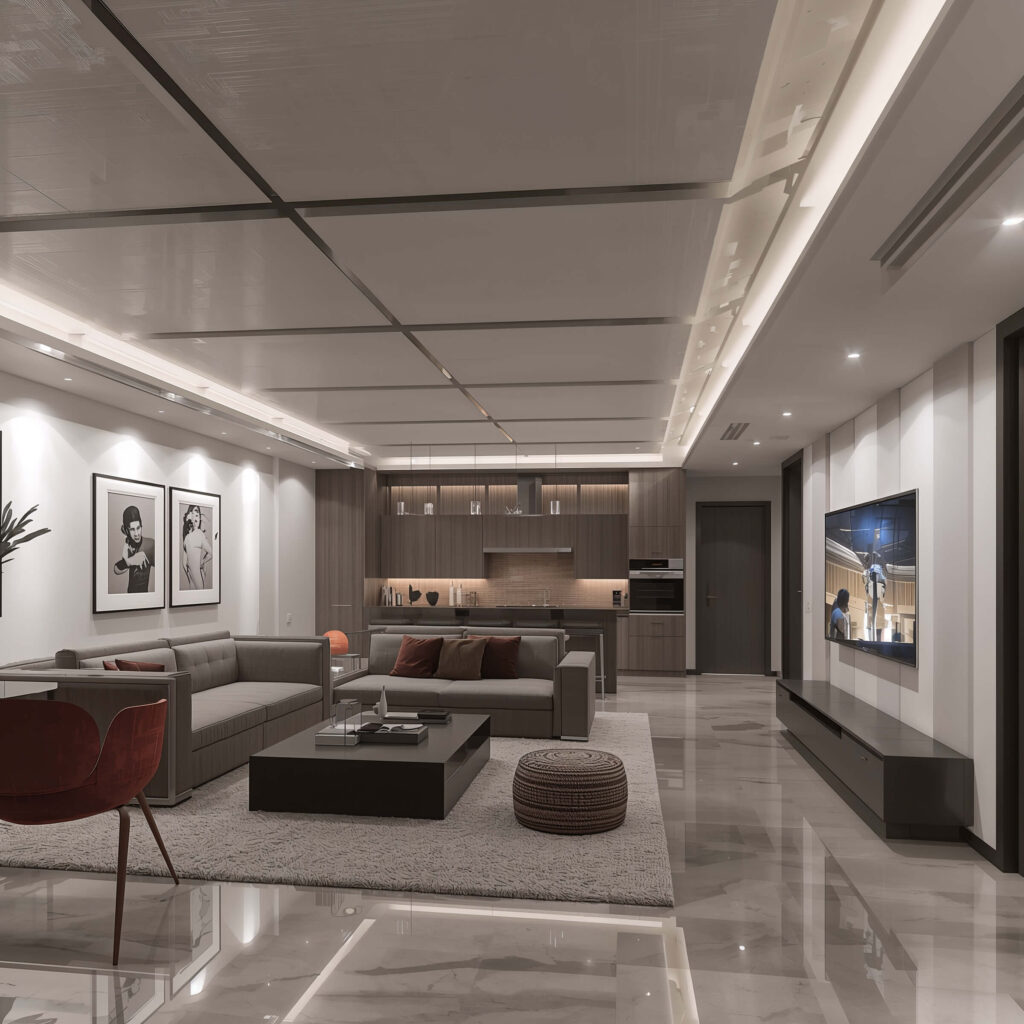
Modern Minimalist Basement Entertainment Space
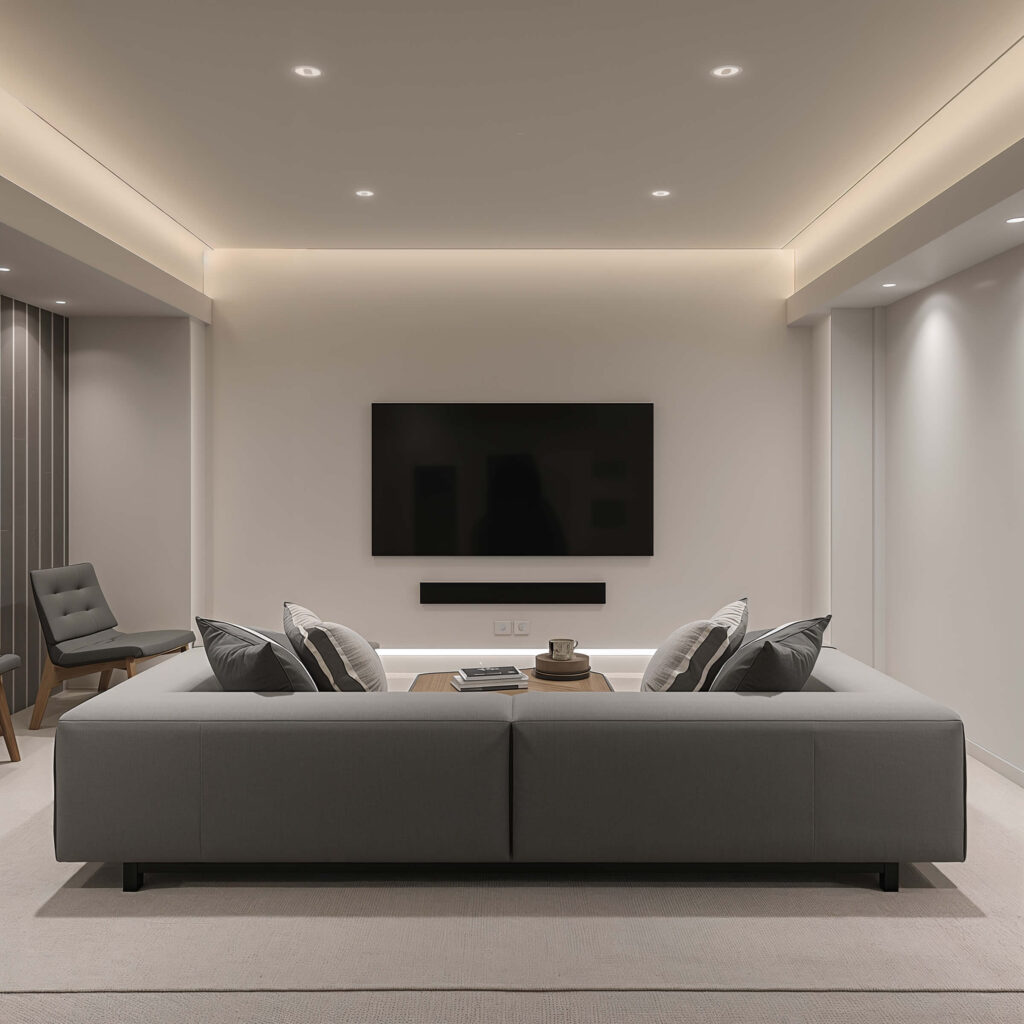
Ever notice how cluttered basements feel even smaller than they actually are? That’s why I’m a huge advocate for the minimalist approach, especially in basement spaces. Clean lines and purposeful furniture choices can make your basement feel twice as large.
I stripped our entertainment area down to the essentials: a sleek sectional, wall-mounted TV, and floating shelves. No coffee table cluttering the center, no unnecessary side tables collecting dust. The result? Our 400-square-foot space suddenly feels massive.
The Minimalist Color Palette That Works
Stick to these color choices:
- Whites and light grays for walls and major furniture
- Natural wood tones for warmth without darkness
- Single accent color (I chose navy) for personality
- Metallic fixtures in brushed gold or chrome for modern edge
Here’s my hot take: those traditional dark basement colors everyone recommends? Total nonsense. Light colors reflect what little light you have, making the space feel airy instead of oppressive. FYI, painting our basement walls from beige to pure white literally changed everything.
Rustic Chic Basement Family Lounge
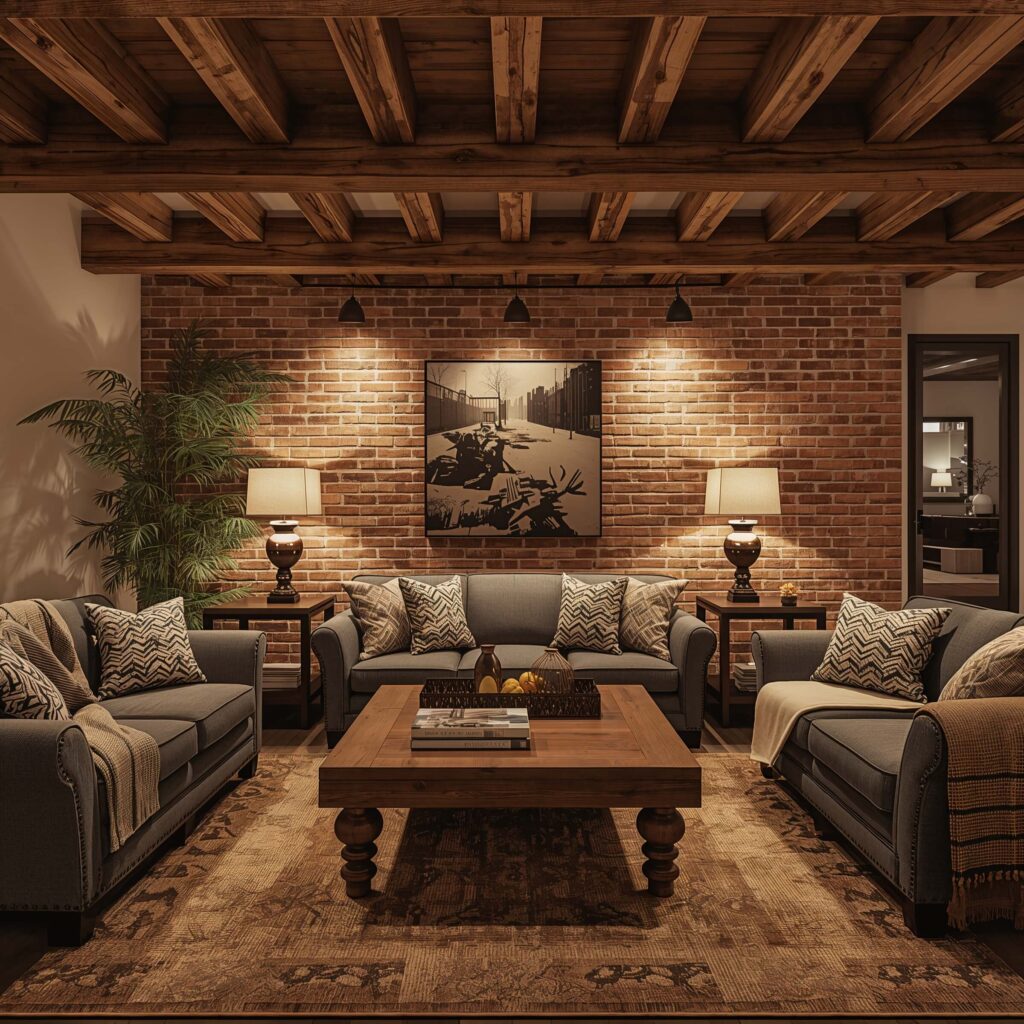
Who says basements can’t have character? The rustic chic approach embraces the basement’s natural quirks while adding sophisticated touches. Exposed ceiling beams, reclaimed wood accents, and industrial lighting create a space that feels intentionally designed, not just finished.
I kept our ceiling joists exposed but painted them white—instant architectural interest without lowering the ceiling height. Added some Edison bulb string lights between the beams, and boom, magazine-worthy ambiance for under $100.
Rustic Elements That Don’t Overwhelm
Balance is everything with rustic design:
- Shiplap on ONE accent wall (all four walls = barn, not lounge)
- Mix textures like leather, linen, and chunky knits
- Industrial pipe shelving for storage with style
- Vintage finds sparingly placed, not cluttered
The trick? Don’t go full farmhouse. A little rustic goes a long way in a basement. Think “urban loft meets cozy cabin,” not “I live in a barn.” 🙂
Read More: 10 Modern Finished Basement Ideas for Small Spaces
Bright and Airy Basement Playroom Ideas
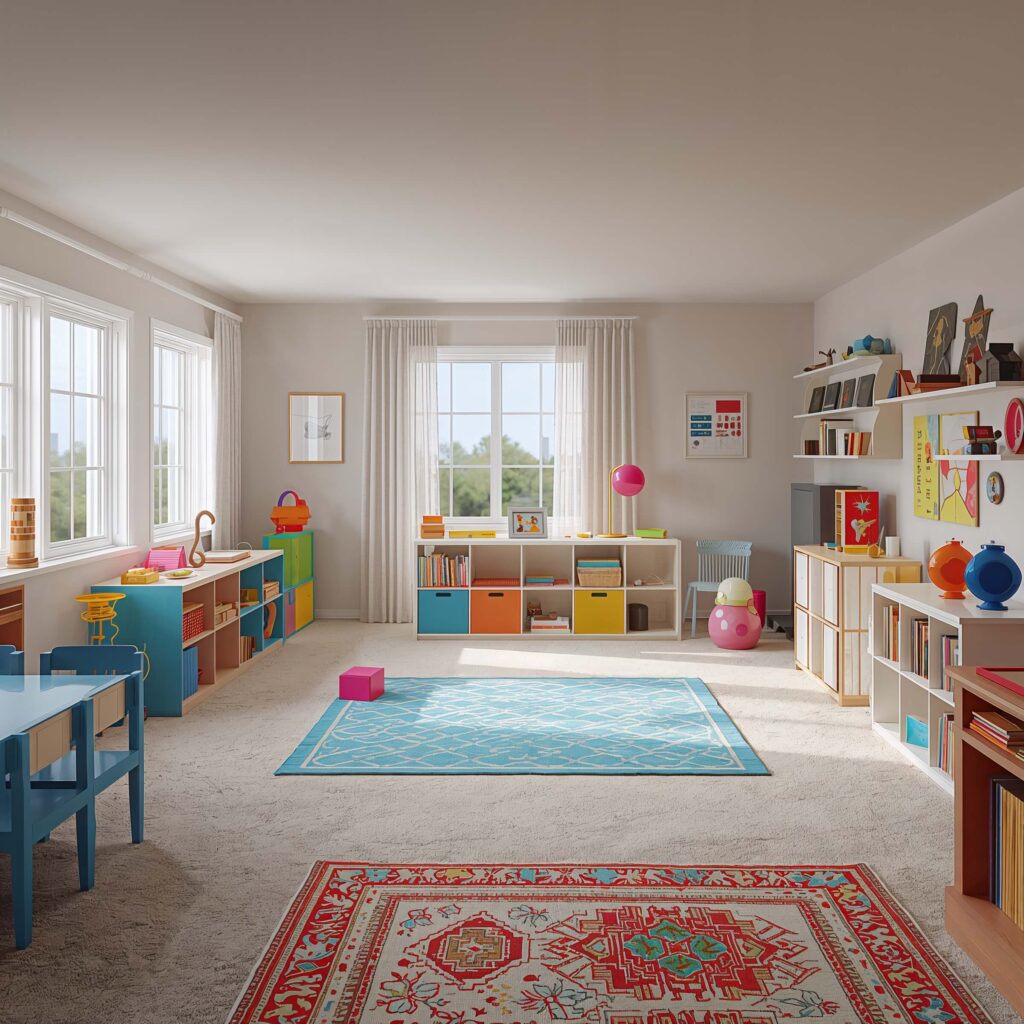
Creating a playroom in the basement sounds counterintuitive, right? Kids need light! They need space! Well, guess what—your basement can provide both with the right approach.
I transformed half our basement into a play paradise by focusing on three things: light multiplication, smart storage, and washable everything. Installed LED panel lights that mimic daylight, added mirrors strategically to bounce light around, and chose furniture that serves double duty.
Kid-Friendly Features That Parents Love
These elements make basement playrooms actually work:
- Foam tile flooring in bright colors (cushioned falls, easy cleaning)
- Wall-mounted storage cubes at kid height
- Wipeable paint finish on all walls (trust me on this)
- Zone creation with area rugs (craft corner, reading nook, active play)
My biggest win? Installing a projector instead of a TV. Movie nights feel special, and when it’s off, there’s more wall space for art displays and learning posters.
Multi-Functional Basement Family Hub
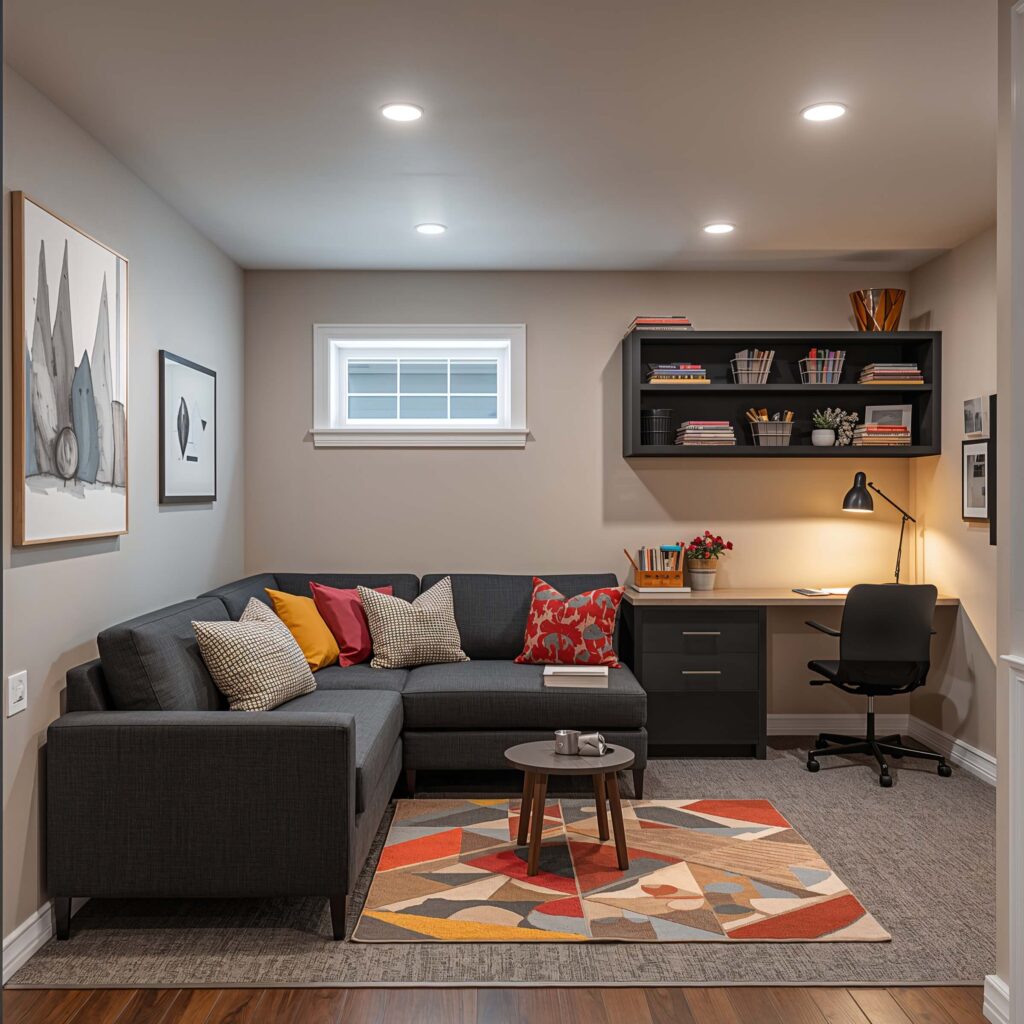
Why limit your basement to one purpose when it can do everything? The multi-functional approach maximizes every square foot while meeting everyone’s needs. Think of it as your family’s Swiss Army knife room.
Our basement now functions as office space, homework station, movie room, and guest quarters. Sounds chaotic? It’s actually incredibly organized. The secret lies in creating distinct zones without building walls.
Zoning Without Walls
Here’s how I divided our space:
- Bookcases as room dividers (storage AND separation)
- Different area rugs to define each zone visually
- Varied lighting for each area’s purpose
- Modular furniture that moves as needs change
That L-shaped desk in the corner? It’s my office by day, kids’ homework station by afternoon, and bar setup for adult gatherings. Furniture that refuses to multitask has no place in a basement family room.
Small Basement Transformation into Cozy Family Room
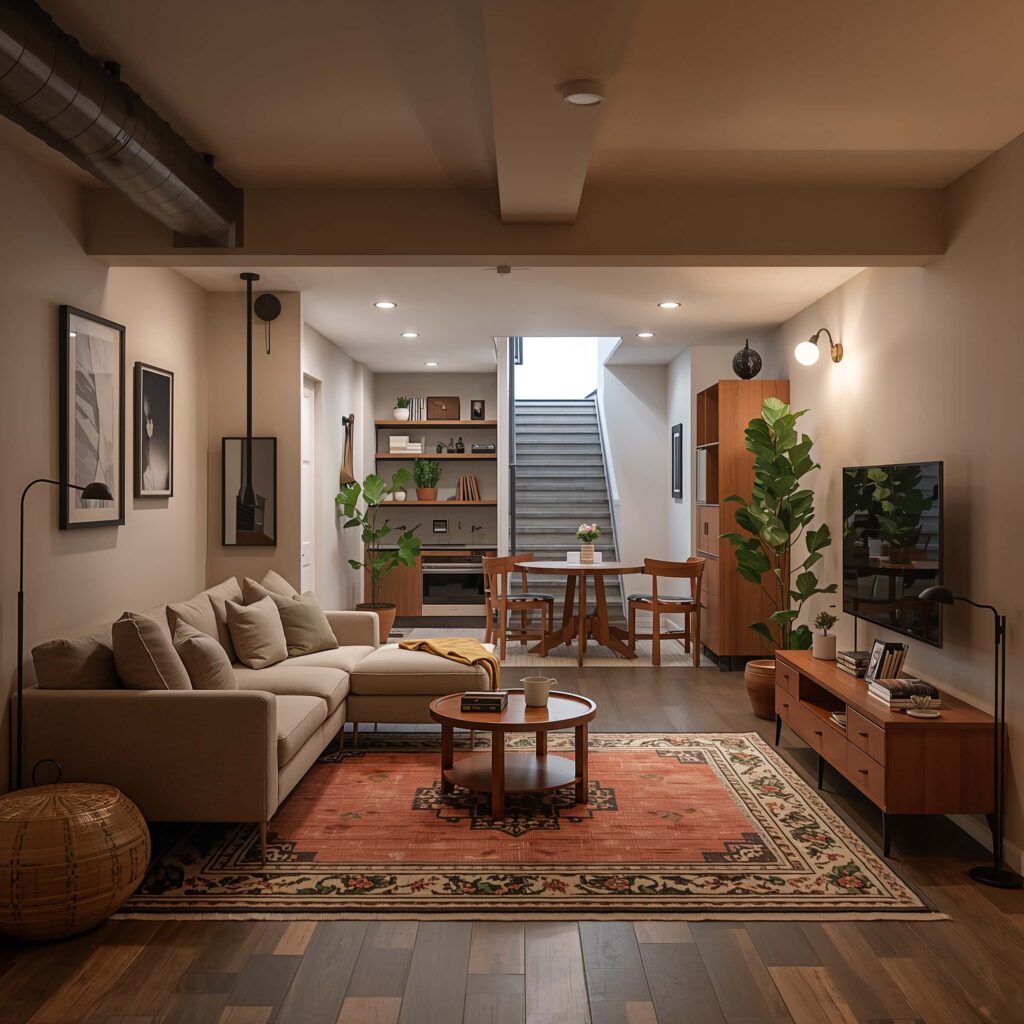
Got a basement that’s more “large closet” than “living space”? Join the club. My first basement was 250 square feet of pure challenge. But here’s what nobody tells you—small basements can feel more inviting than large ones when done right.
I embraced the coziness instead of fighting it. Think ship cabin, not mansion. Every piece of furniture had to earn its spot through function AND form.
Small Space, Big Impact Strategies
Make your tiny basement work harder:
- Built-in seating with storage underneath
- Wall-mounted everything (TV, shelves, even folding tables)
- Mirrors on opposite walls to create depth illusion
- Light, uniform flooring throughout (no transitions to break up space)
IMO, small basements actually make better family rooms because they force togetherness. There’s something special about a space where everyone’s within arm’s reach.
Read More: 10 Luxury Basement Bar Ideas for Ultimate Relaxation
Basement Movie Night Setup with Stylish Decor
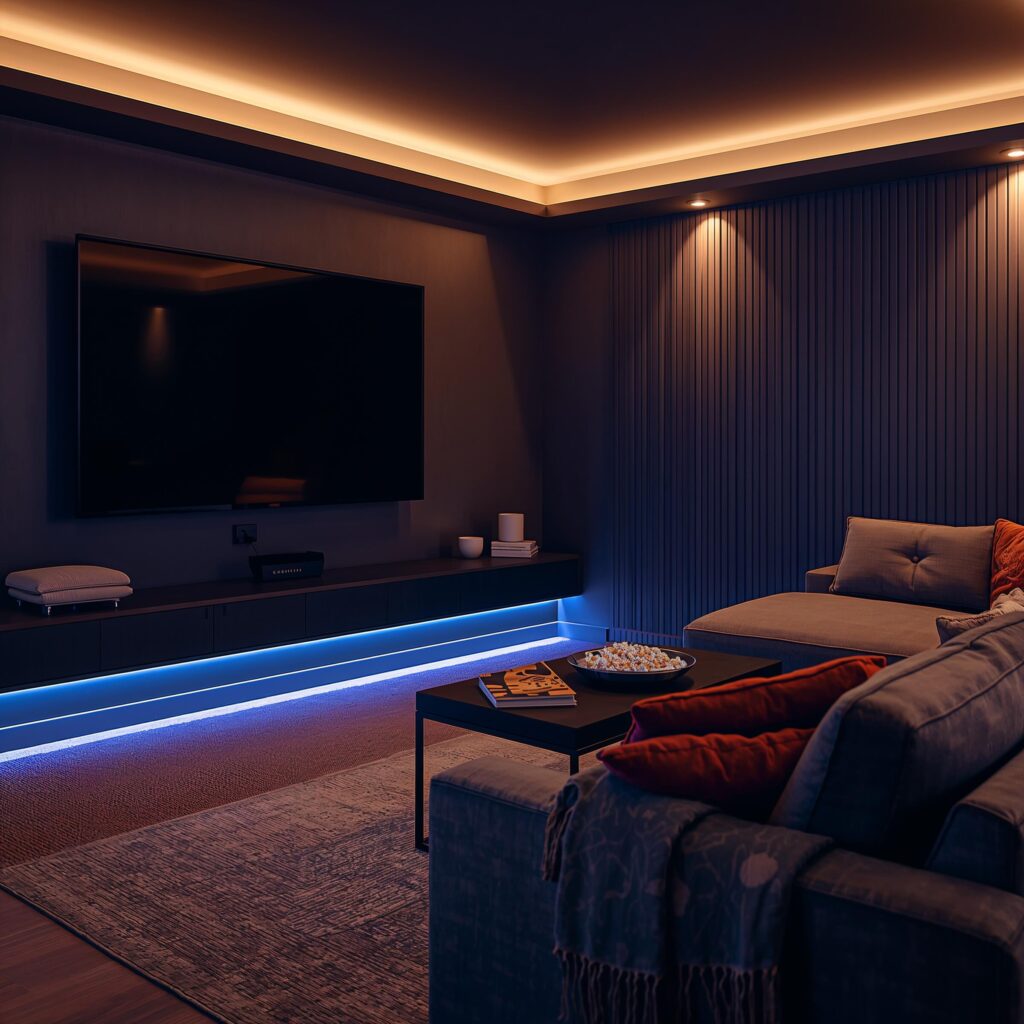
Forget those tacky home theater setups that scream “I peaked in 2003.” Modern basement theaters blend cinema functionality with living room style. You want a space that impresses during movie night but doesn’t look ridiculous during daylight hours.
I ditched the traditional theater seats for a massive sectional with built-in recliners. Added blackout curtains that look like regular drapes when open. The projector? It’s mounted flush to the ceiling and practically invisible when not in use.
Theater Elements That Don’t Dominate
Balance entertainment with everyday living:
- Acoustic panels disguised as art (function meets form)
- Hidden speakers behind fabric wall panels
- Dimmable LED strips for ambiance without permanent fixtures
- Convertible ottoman storage for blankets and remotes
The real game-changer? A white wall works just as well as an expensive screen. Saved me $500 that went toward a better sound system instead.
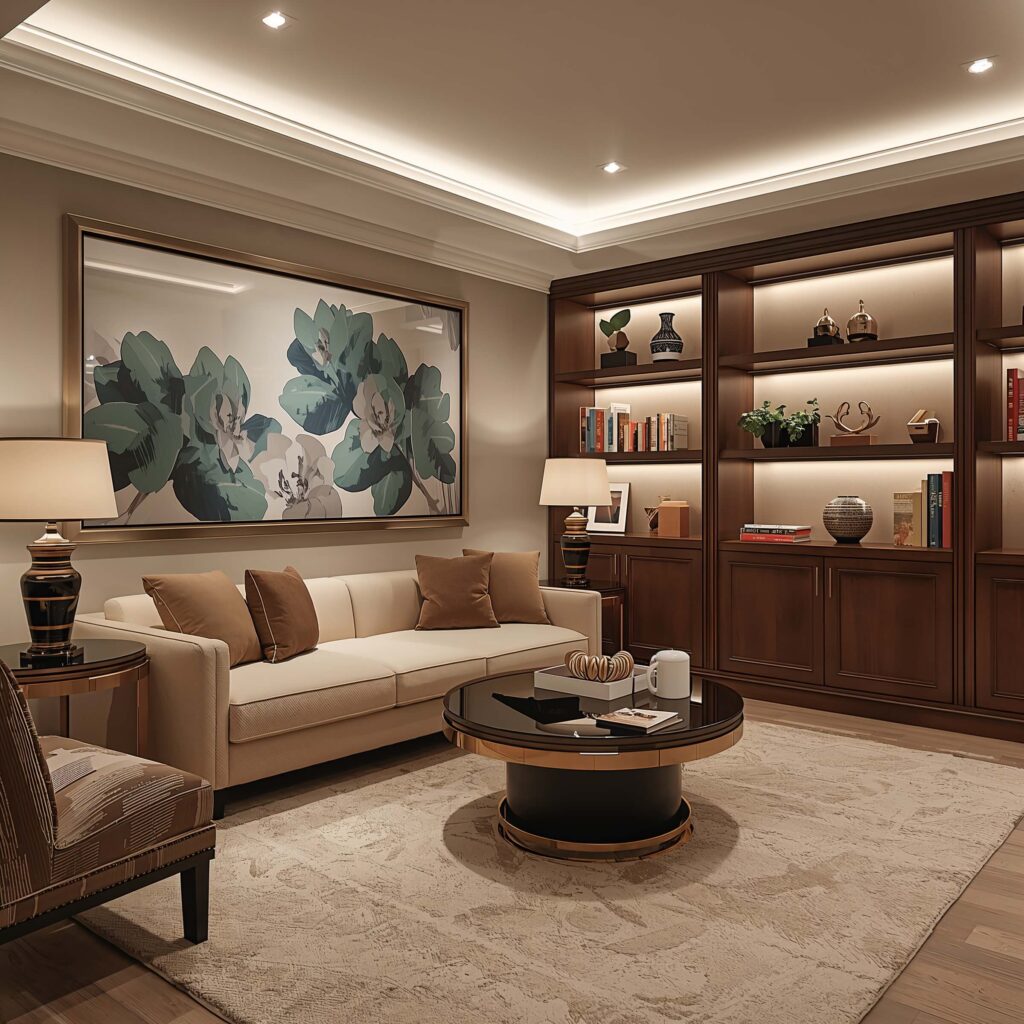
Basement Reading Nook and Family Space Combo
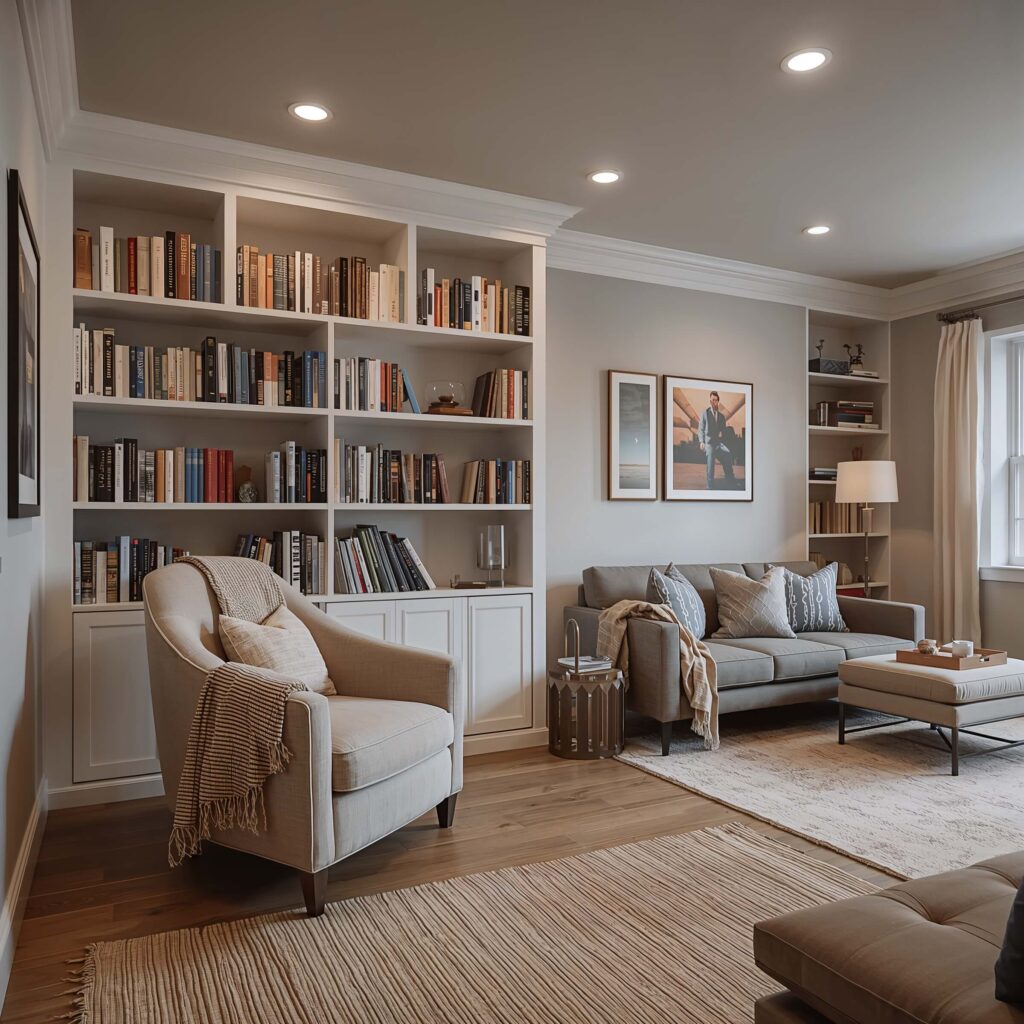
Why do reading nooks always get relegated to bedrooms? A basement reading corner creates a quiet escape while keeping you connected to family activities. It’s introvert heaven—alone but not lonely.
I carved out a corner with a comfortable chair, good task lighting, and built-in bookshelves. The beauty? While someone’s reading, others can watch TV at reasonable volumes. Everyone wins.
Creating the Perfect Reading Zone
Essential elements for basement bibliophiles:
- Adjustable reading light (overhead basement lighting won’t cut it)
- Comfortable seating with good back support
- Small side table for drinks and devices
- Sound-absorbing elements like curtains or tapestries
Position your reading nook away from the TV but within conversation distance. You want retreat, not isolation. My chair faces away from the screen but toward the room—perfect for looking up to chat without losing my page.
Budget-Friendly Basement Makeover Ideas
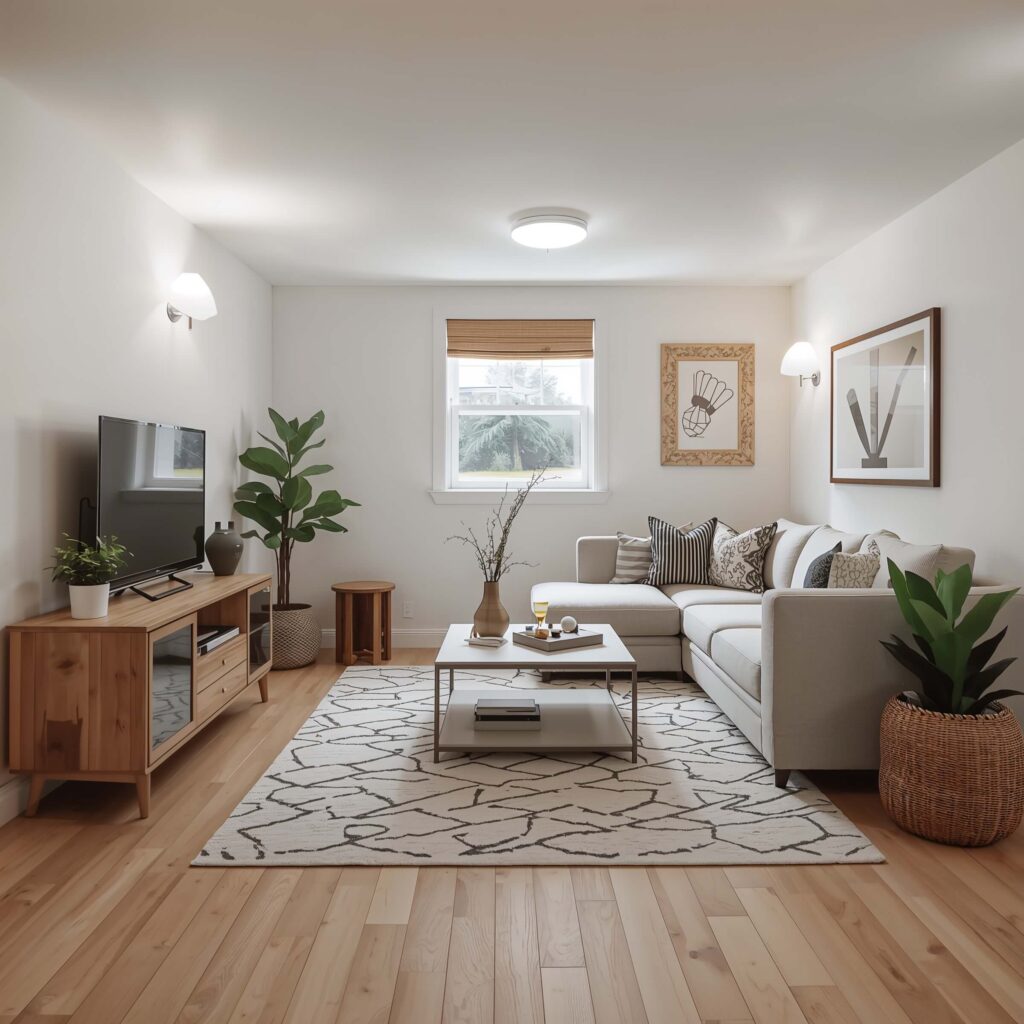
Real talk—basement renovations can destroy your bank account faster than you can say “waterproofing.” But here’s what I discovered after two basement transformations: the most expensive option isn’t always the best option.
My entire second basement makeover cost under $3,000. How? I focused on high-impact, low-cost changes that transformed the feel without gutting everything.
Where to Save and Where to Splurge
Save on these:
- Paint instead of paneling (90% of the impact, 10% of the cost)
- DIY floating shelves versus built-ins
- Area rugs instead of new flooring
- Thrifted and repurposed furniture
Splurge on these:
- Quality lighting (this makes or breaks a basement)
- Moisture control (skip this and regret it forever)
- Comfortable seating (you’ll use it daily)
- Good window treatments for egress windows
My favorite budget hack? Pegboard painted to match the walls. Instant adjustable storage that looks intentional, not cheap. Total cost: $40.
Read More: 10 Budget-Friendly Unfinished Basement Ideas That Wow
Basement Game and Activity Room for Families
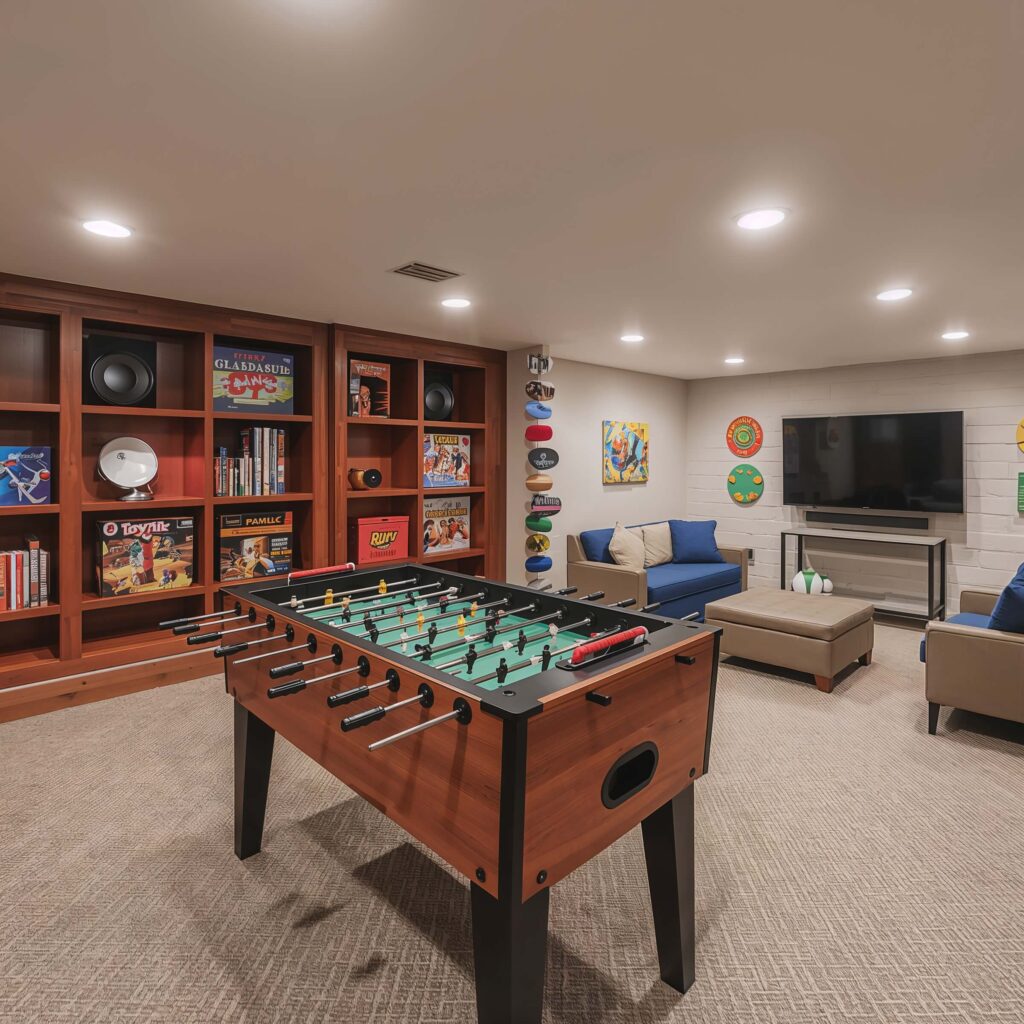
Traditional game rooms feel dated, but modern activity spaces blend digital and analog entertainment seamlessly. No more choosing between pool table or media center—today’s basement can handle both without looking like an arcade exploded.
I organized our game room into active and passive zones. Pool table and dartboard on one side, gaming consoles and board game storage on the other. The magic happens in the flexible center space—yoga in the morning, dance parties at night.
Game Room Essentials That Grow with Your Family
Think long-term with these choices:
- Modular storage systems that adapt as interests change
- Durable, washable surfaces (spills happen during game night)
- Multiple seating options from floor cushions to bar stools
- Adjustable lighting for different activities
Here’s something nobody mentions: wall-mounted game storage changes everything. Our dartboard cabinet closes to hide sharp objects from toddler cousins. The pool cues hang on the wall like art. Visible storage encourages use while keeping floors clear.
Bringing It All Together
After transforming three different basements over the past decade, I can tell you this: the best basement family room is the one your family actually uses. Forget what magazines say you need. Focus on how your family lives.
Start with fixing the basics—moisture, lighting, and temperature control. These aren’t sexy upgrades, but they’re essential. Then layer in the fun stuff based on your family’s actual habits. Love movies? Invest in sound. Bookworms? Focus on cozy seating and task lighting. Kids bouncing off walls? Prioritize durable surfaces and defined play zones.
Remember, your basement doesn’t need to be perfect immediately. My first basement took three years to fully complete, and honestly? We enjoyed every stage. Each improvement made it better, and the gradual transformation let us adjust plans based on what actually worked.
The biggest mistake I see? People trying to make their basement something it’s not. Work with the space’s quirks, not against them. Low ceilings? Embrace the cozy vibe. Weird support poles? Turn them into design features. Limited natural light? Create ambiance that daylight can’t match.
Your basement has massive potential hiding under those stairs. Whether you’re working with 200 or 2,000 square feet, these ideas can transform your underground space into your family’s favorite hangout. Just remember—bright doesn’t always mean more lights, and maximizing space doesn’t mean cramming in everything possible. Sometimes the brightest, most spacious feeling comes from thoughtful choices and strategic simplicity.
Now stop reading and go measure your basement. Your family’s new favorite room is waiting to be created! :/