10 Practical Basement Office Ideas for Any Budget
- Basement Decor
 Ben
Ben- 0
- 34 minutes read
Remember that basement you’ve been avoiding? The one that’s currently storing Christmas decorations from 2015 and that treadmill you swore you’d use? Well, I’ve got news for you – that forgotten space could become your dream office without breaking the bank.
I recently transformed my own dungeon-like basement into a workspace that actually makes me want to work (shocking, I know). After countless Pinterest boards and three failed attempts at assembling IKEA furniture, I learned what actually works. Whether you’re working with a shoestring budget or ready to splurge a bit, these ideas will help you create a basement office that doesn’t feel like you’re working in a cave.
Modern Minimalist Basement Office
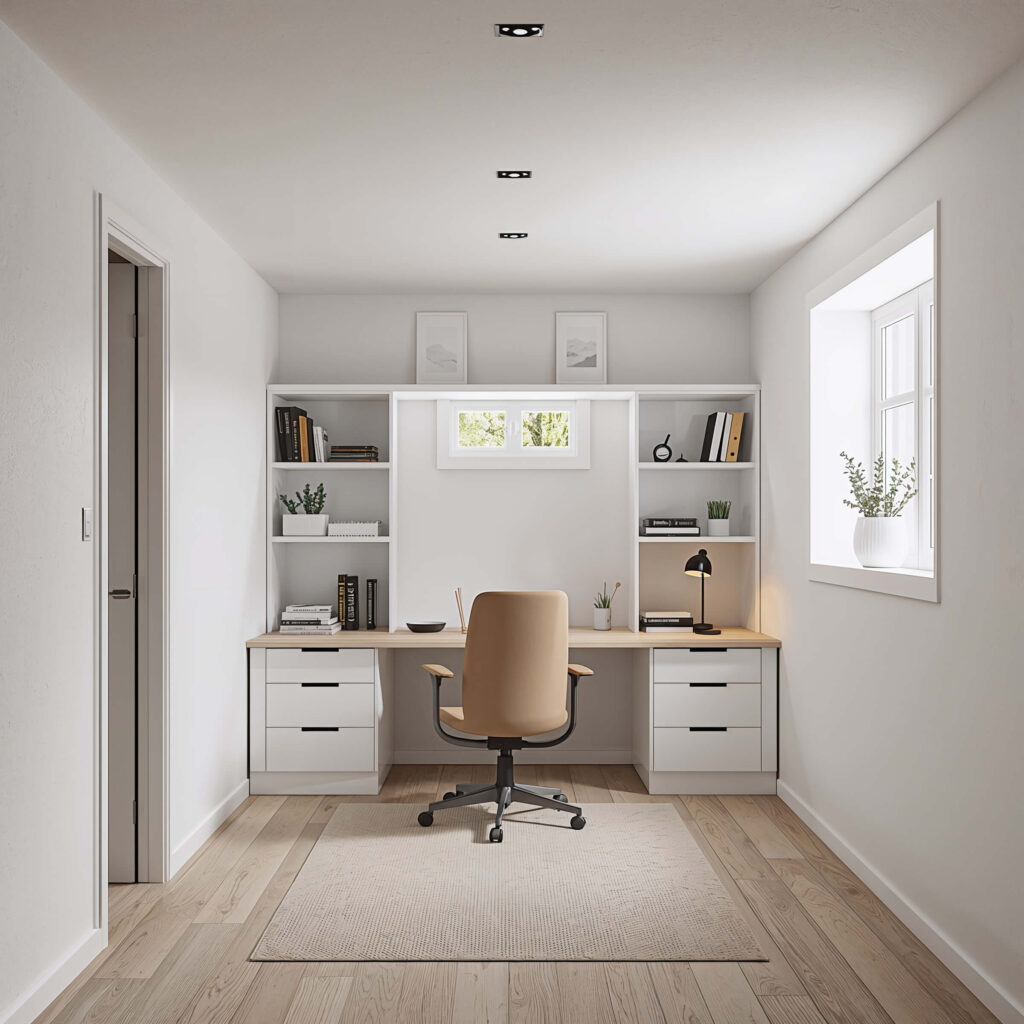
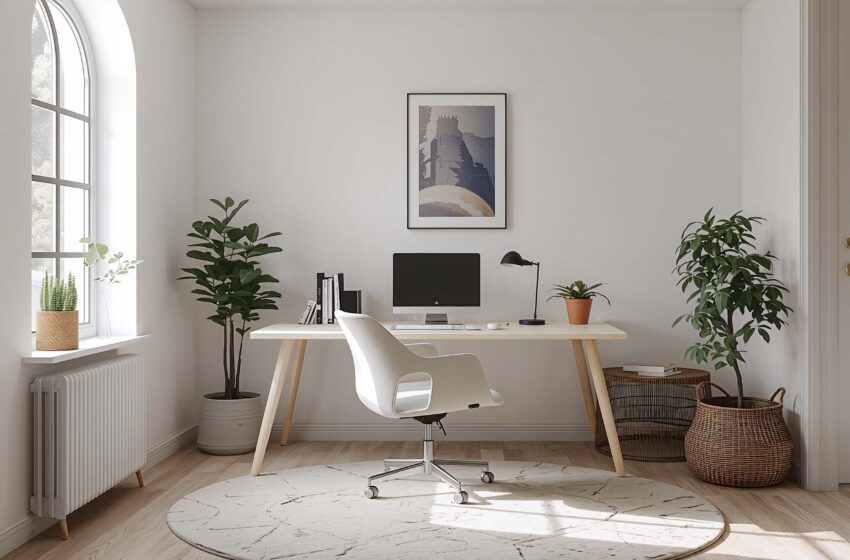
Let’s start with the style that makes everyone feel like they have their life together – modern minimalism. You know the look: clean lines, zero clutter, and that Instagram-worthy aesthetic that screams “I meditate daily and drink green juice.”
The beauty of going minimalist? You actually save money because you’re buying less stuff. I discovered this after blowing my initial budget on unnecessary “office essentials” that ended up cluttering my space. Now I stick to the basics, and my productivity has skyrocketed.
Essential Elements for Your Minimalist Setup
Start with a simple white or light wood desk – nothing fancy, just functional. IKEA’s basic tabletop and legs combo works perfectly and costs under $100. Add a comfortable ergonomic chair (this is where you should splurge a bit), and you’re halfway there.
For storage, think vertical:
- Floating shelves keep floors clear
- Wall-mounted filing systems hide paperwork
- Cable management boxes eliminate visual chaos
- Single drawer unit for essential supplies
Color Palette and Lighting
Stick to neutral colors – whites, grays, and maybe one accent color if you’re feeling wild. I chose navy blue for my accent, and it adds just enough personality without overwhelming the space. Paint those basement walls white to maximize light reflection (trust me, basements need all the help they can get).
Natural light might be limited, but you can fake it. Install LED panel lights that mimic daylight – your eyes will thank you during those long work sessions. Add a sleek desk lamp for task lighting, and suddenly your basement doesn’t feel like a basement anymore.
Cozy Rustic Home Office
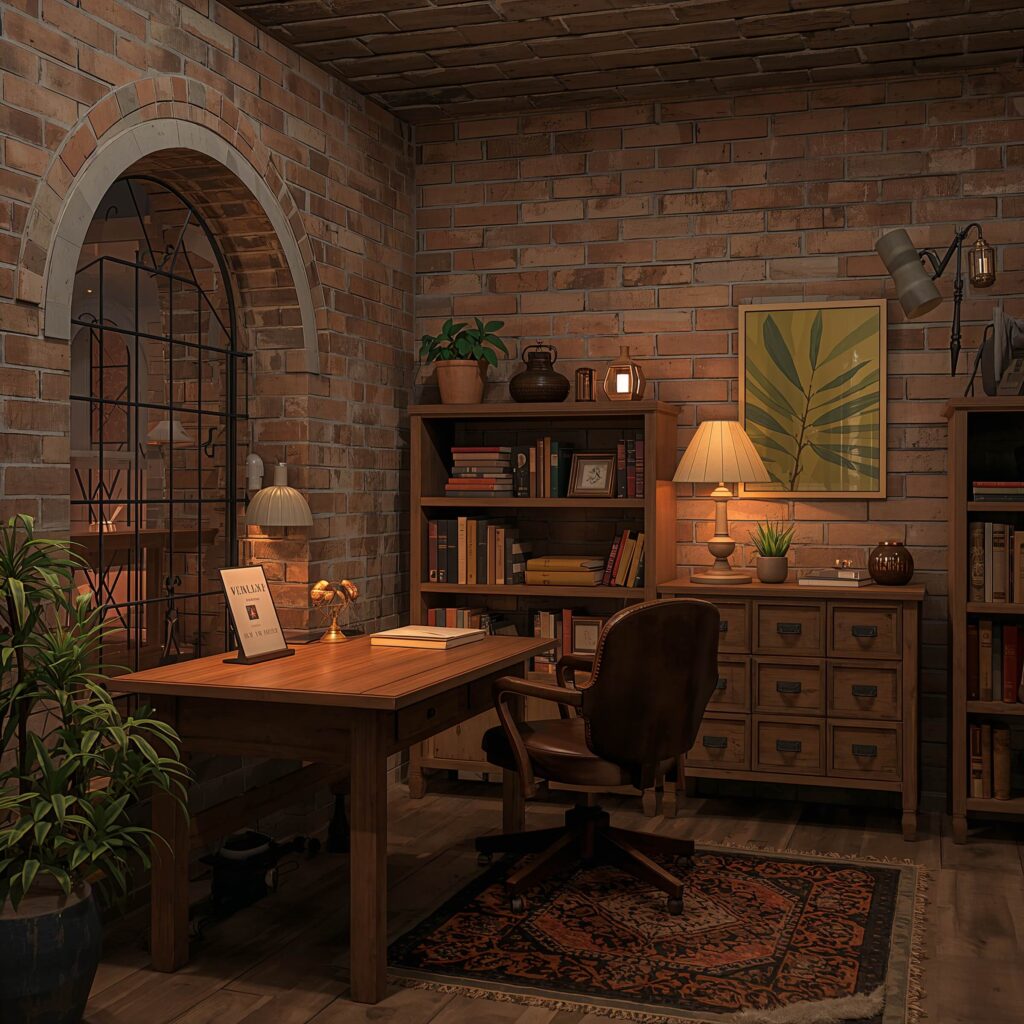
Now, if minimalism makes you feel like you’re working in a hospital, let’s talk rustic charm. This style transforms your basement from cold and unwelcoming to warm and inviting – basically the office equivalent of a warm hug.
I helped my neighbor create this look last year, and honestly? I’m a bit jealous. The vibe is so cozy that even Monday mornings feel less terrible.
Building Your Rustic Foundation
Start with reclaimed wood – it’s sustainable and adds instant character. Check local salvage yards or Facebook Marketplace for old barn wood or pallets. You can DIY a desk for under $200 that looks like it came from a fancy furniture store.
Key rustic elements include:
- Exposed wooden beams (fake ones work too!)
- Vintage metal filing cabinets
- Edison bulb string lights
- Woven baskets for storage
- Leather or fabric office chair with character
Adding Warmth Without the Fireplace
Since we’re in a basement, a real fireplace probably isn’t happening. But who needs real when electric fireplaces exist? You can snag one for around $300, and it adds both warmth and ambiance. Position it where you can see it from your desk – instant productivity boost on cold days.
Layer in textiles to complete the cozy factor. A vintage rug (check thrift stores!), throw pillows on a reading chair, and maybe even curtains if you have windows. The goal is making your basement office feel like a cabin retreat, not a corporate cubicle.
Industrial Chic Workspace
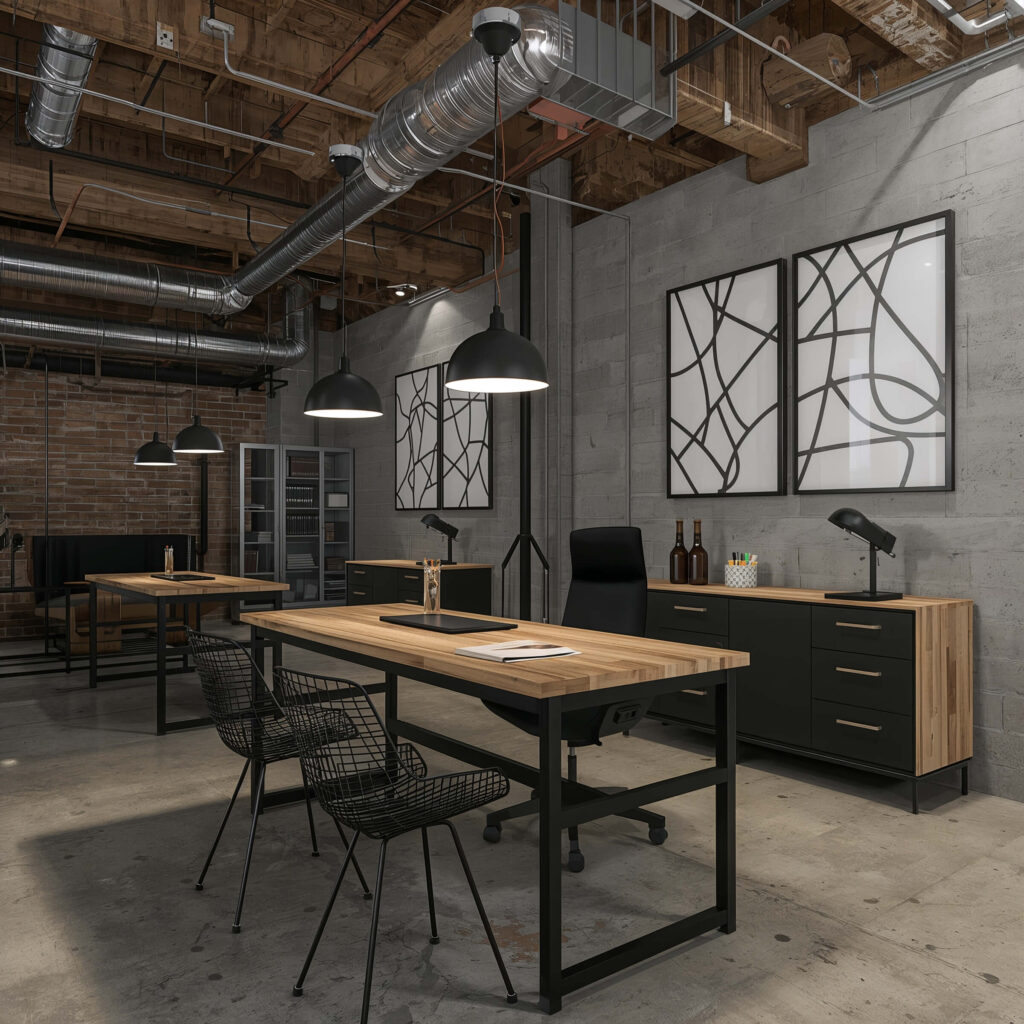
Want to feel like you’re working in a converted Brooklyn warehouse? The industrial look is perfect for basements because it actually celebrates those exposed pipes and concrete walls instead of hiding them.
Working With What You’ve Got
Here’s the thing – basements already have industrial elements. Those concrete floors you were planning to cover? Leave them exposed and seal them for a polished look. Those pipes running across the ceiling? Paint them matte black and call them a design feature. Seriously, you just saved thousands on renovations. You’re welcome 🙂
Essential industrial elements:
- Metal and wood desk combination
- Wire shelving units
- Exposed bulb pendant lights
- Metal storage lockers
- Concrete planters for greenery
DIY Industrial on a Budget
Create your own pipe shelving for under $150 using galvanized pipes from the hardware store. I built mine in an afternoon, and everyone thinks I hired a designer. Mount them directly to the wall studs for a floating effect that screams expensive but costs pennies.
For seating, hit up restaurant supply stores for metal stools or chairs. They’re built to last, surprisingly comfortable with the right cushion, and cost half what you’d pay at furniture stores.
Also Read: 10 Fabulous Basement Floor Ideas and Warm Ambiance
Bright Scandinavian Style Office
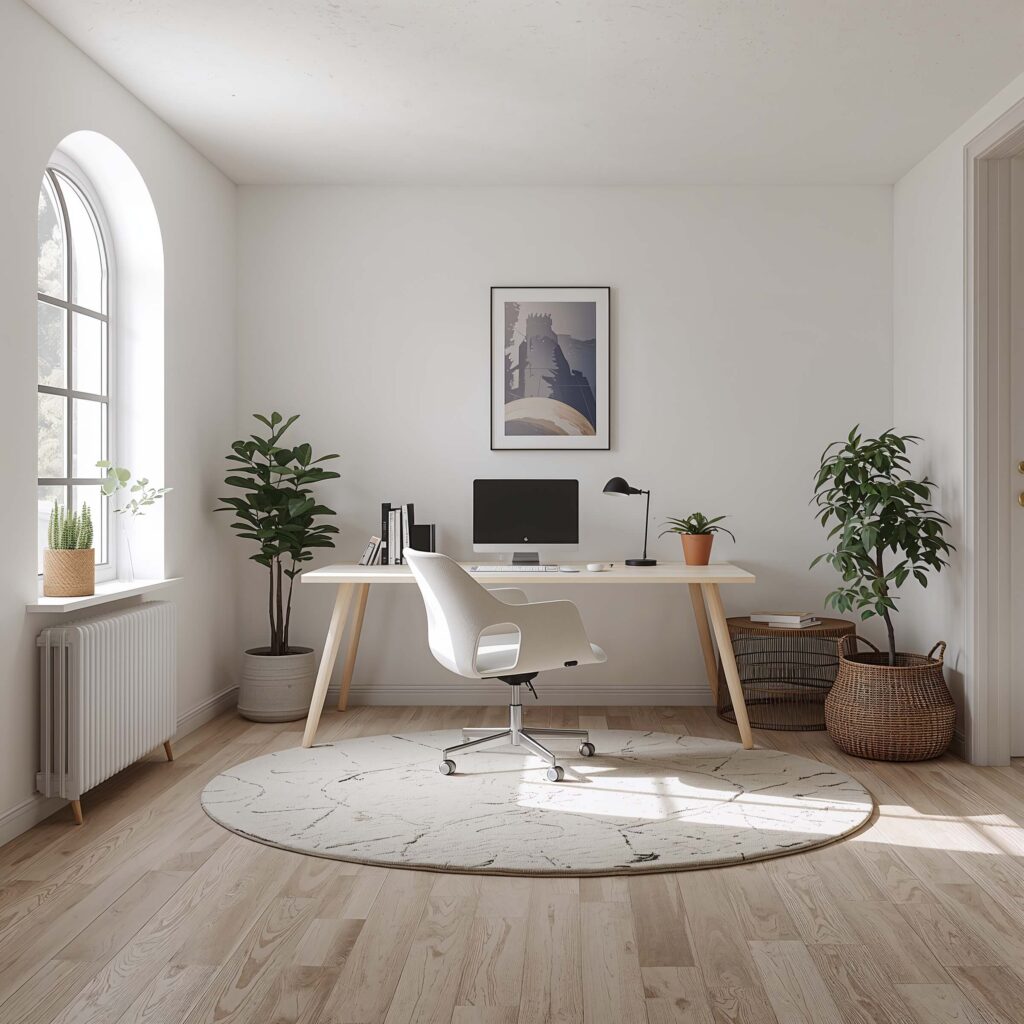
Scandinavian design is basically the answer to every basement’s prayers. It’s all about maximizing light and creating a sense of space – exactly what your underground office needs.
The Hygge Factor
Yes, I’m using the H-word. But creating that cozy-yet-bright Scandinavian vibe actually works wonders for productivity. The style focuses on function without sacrificing comfort, which is exactly what your home office needs.
Start with these basics:
- Light wood furniture (birch or pine)
- White walls and ceilings
- Pops of muted colors (think sage green or dusty pink)
- Geometric patterns in small doses
- Plenty of plants (fake ones work if your basement lacks light)
Lighting Is Everything
Scandinavians know darkness (hello, winter!), so they’ve mastered lighting. Layer your illumination with multiple light sources. I use a combination of overhead track lighting, a statement floor lamp, and LED strips under my shelves. The result? My basement is brighter than my actual living room.
Don’t forget about mirrors. A large mirror opposite any light source doubles its impact. I found a huge one at a yard sale for $20, painted the frame white, and boom – instant brightness multiplier.
Compact L-Shaped Basement Desk Setup
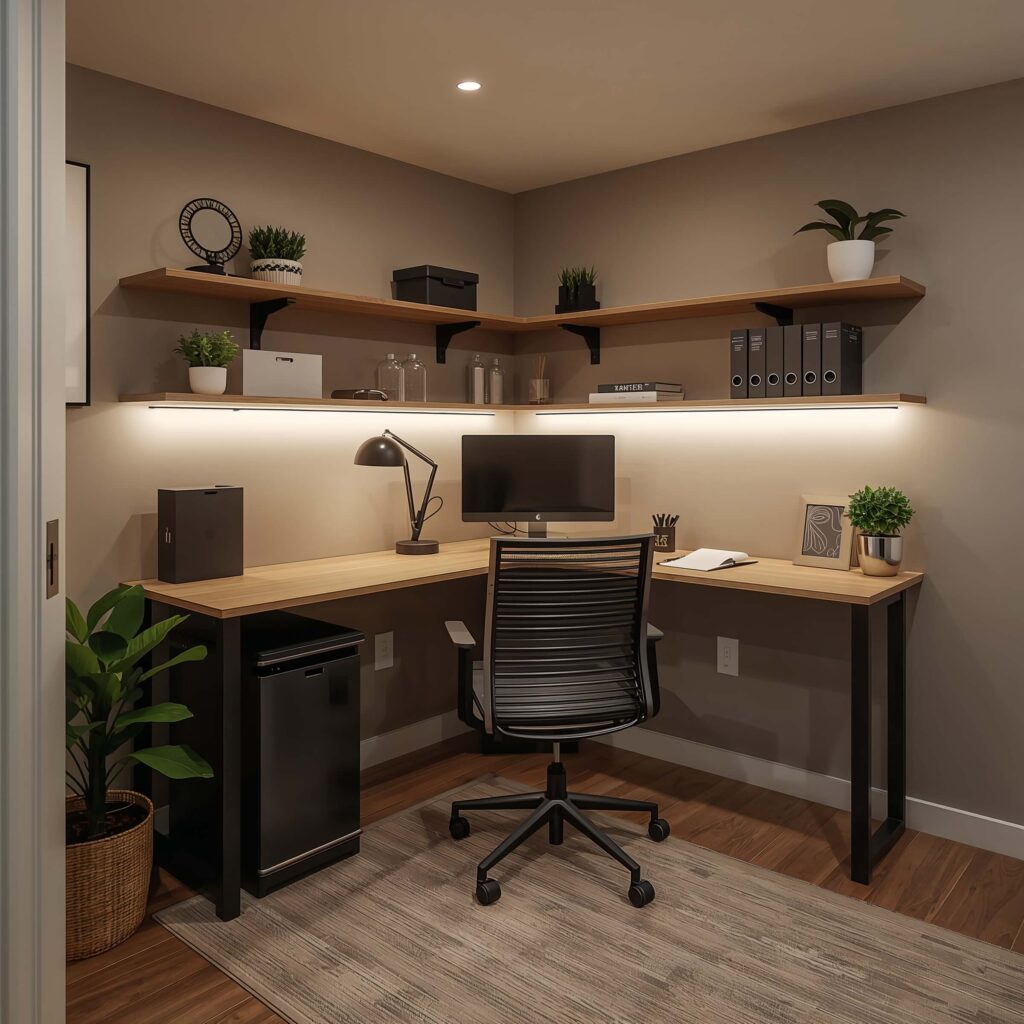
Small basement? No problem. An L-shaped desk maximizes corner space while giving you tons of work surface. This setup saved my sanity when I was working from a 10×10 basement room.
Making the Most of Corners
Corners are usually wasted space, but with an L-shaped configuration, they become your command center. You can dedicate one side to computer work and the other to paperwork, crafts, or that side hustle you’re totally going to start (we all have one, right?).
Budget-friendly L-desk options:
- Two straight desks positioned at 90 degrees ($150-200 total)
- DIY corner desk using butcher block ($200-300)
- Modular desk systems that grow with your needs ($300-500)
Organization Is Key
With an L-shaped setup, you’ve got prime real estate on both sides. Install corner shelves above the desk junction – that dead space becomes perfect for frequently used items. Add a small filing cabinet that fits under one side, and you’ve got storage without sacrificing legroom.
The best part? You can swivel between tasks without getting up. Email on the left, creative projects on the right. It’s like having two offices in one tiny space.
Floating Desk with Wall Storage
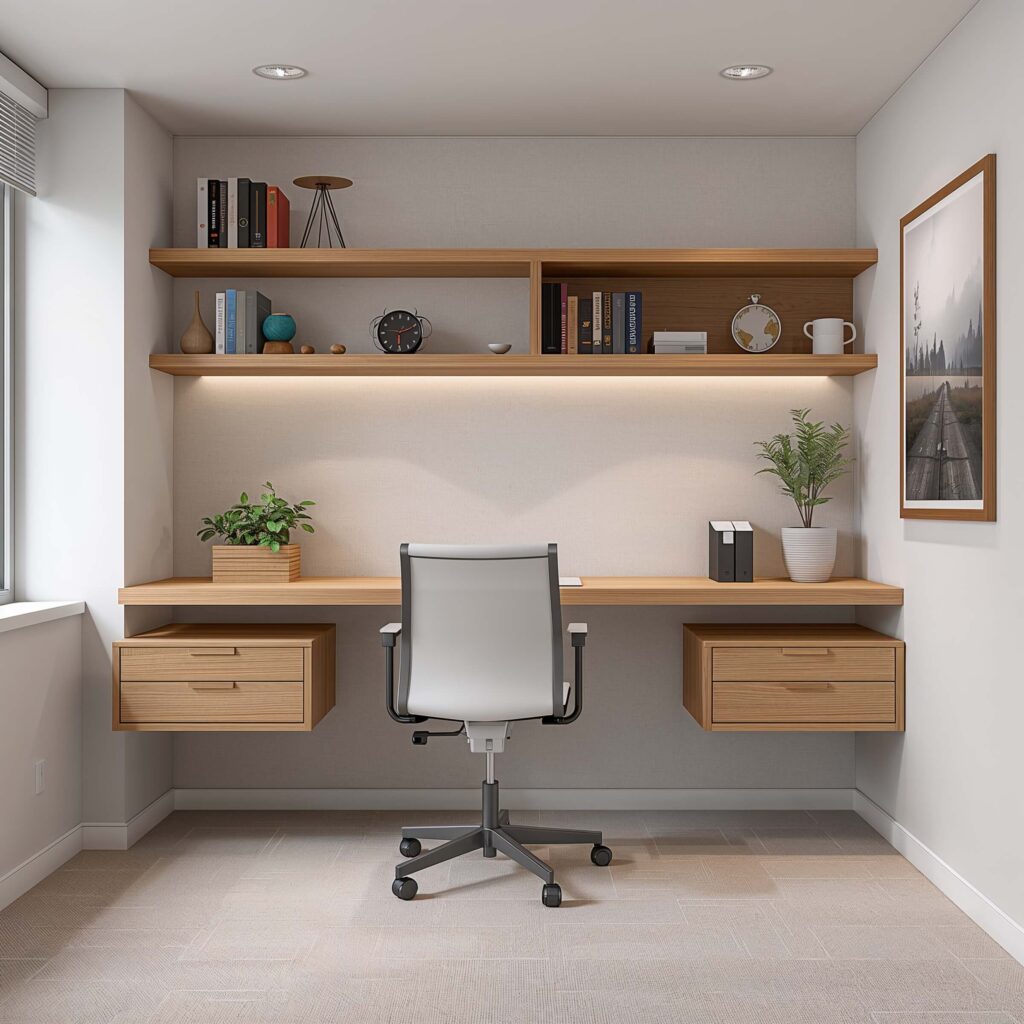
When floor space is at a premium, we go vertical. A floating desk is basically magic – it gives you a full workspace while keeping the floor clear for, well, actually walking around.
Installation Without the Headache
Installing a floating desk sounds intimidating, but it’s actually pretty straightforward. Find the wall studs (buy a stud finder, seriously), use heavy-duty brackets, and you’re golden. I installed mine in two hours, and I’m definitely not winning any DIY awards.
Wall storage combinations that work:
- Pegboard above the desk for customizable organization
- Floating shelves in varying lengths
- Wall-mounted file holders
- Magnetic strips for metal supplies
- Cork boards for inspiration
The Illusion of Space
Here’s the psychological trick – when you can see the floor, the room feels bigger. My 8×10 basement office felt twice as large after I switched to a floating desk. Plus, cleaning is a breeze when you can just sweep under everything.
FYI, make sure your floating desk is at the right height. I learned this the hard way after a week of shoulder pain. Standard desk height is 29-30 inches, but adjust based on your chair and comfort.
Also Read: 10 Brilliant Basement Stairwell Ideas and Stylish Upgrades
Multi-Functional Office & Lounge Area
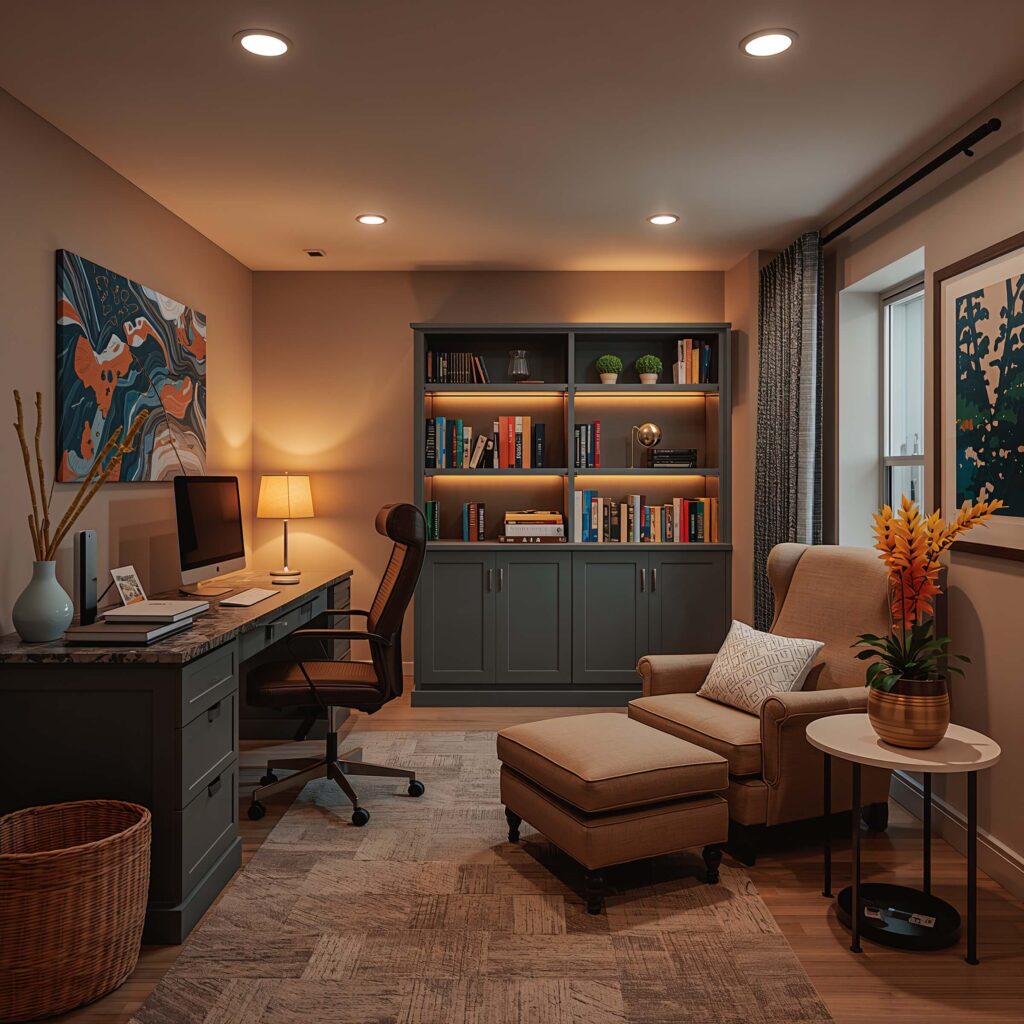
Why choose between an office and a relaxation space when you can have both? A multi-functional setup is perfect if your basement needs to serve multiple purposes (or if you need regular sanity breaks from spreadsheets).
Zoning Your Space
Think of your basement as having invisible zones. The key is creating distinct areas without building walls. I use a bookshelf as a room divider – office on one side, comfy lounge on the other. It’s like having two rooms without the construction costs.
Smart multi-use furniture:
- Sleeper sofa for guests (or power naps)
- Ottoman with storage that doubles as extra seating
- Nesting tables that expand when needed
- Murphy desk that folds away after hours
- Bar cart that holds office supplies by day, beverages by night
Transitioning Between Work and Play
The trick is making the space easily convertible. My desk faces away from the lounge area, so I’m not tempted by the TV during work hours. But when 5 PM hits, I just swivel my chair around and I’m in relaxation mode.
Use lighting to set the mood. Bright white for work hours, warm dimmed lights for evening. Smart bulbs make this transition automatic – because who wants to manually adjust lights like it’s 1999?
Creative Color-Blocked Basement Office
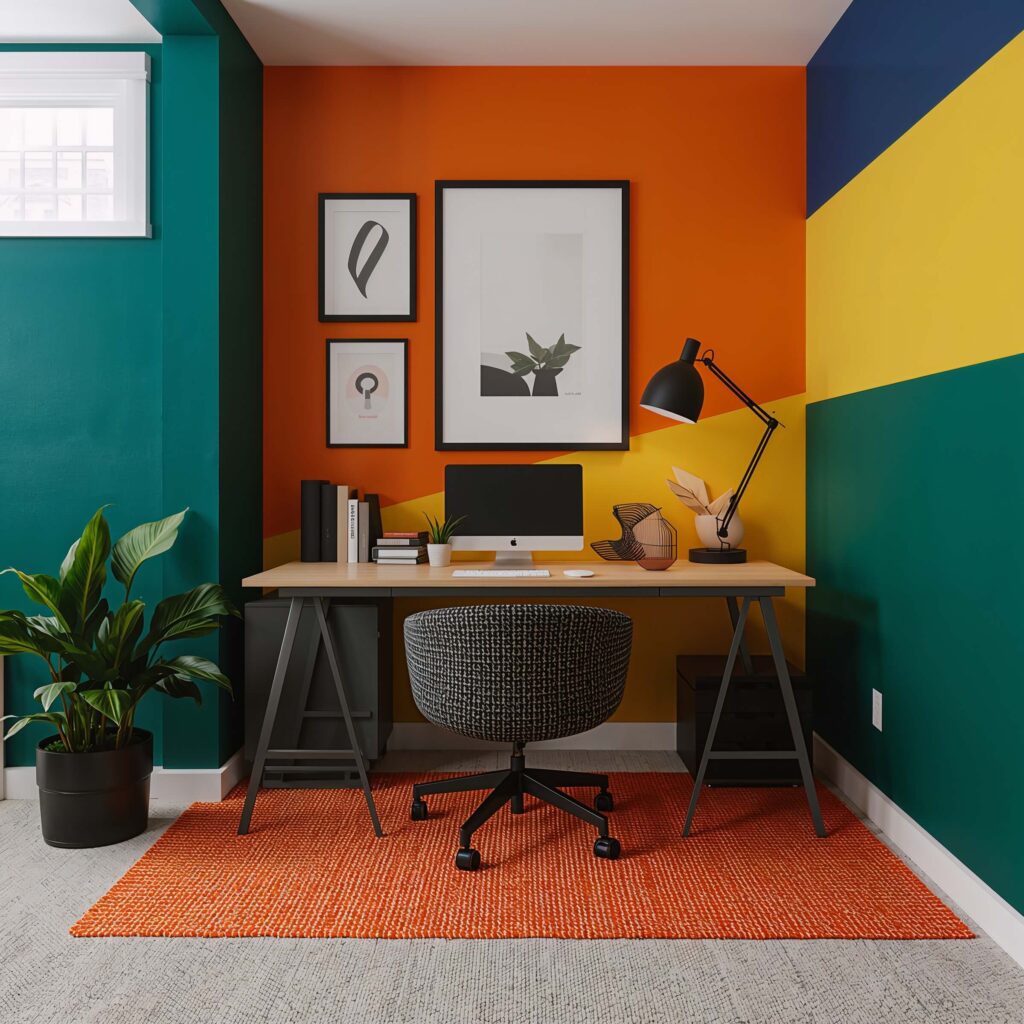
Beige walls are nobody’s friend, especially in a basement. Color-blocking adds personality and energy without overwhelming the space. Plus, it’s an easy DIY project that costs less than ordering takeout for a week.
Choosing Your Palette
Pick two to three colors max – any more and your office looks like a kindergarten classroom. I went with navy, mustard yellow, and white. The contrast keeps me alert without inducing a headache.
Color-blocking techniques:
- Geometric shapes on one accent wall
- Horizontal stripes to make the room feel wider
- Vertical blocks to increase perceived ceiling height
- Painted ceiling for unexpected interest
- Colorful furniture against neutral walls
Paint Hacks for Impact
Here’s a pro tip: paint your door a bold color. It costs $20 and one afternoon, but the impact is huge. My basement door is now bright orange, and honestly? Walking through it feels like entering a creativity portal.
Don’t forget about the ceiling! Most people ignore it, but painting it a lighter shade than your walls makes the room feel taller. I used a pale blue, and visitors always ask if I raised the ceiling (nope, just paint magic).
Basement Office with Hidden Storage
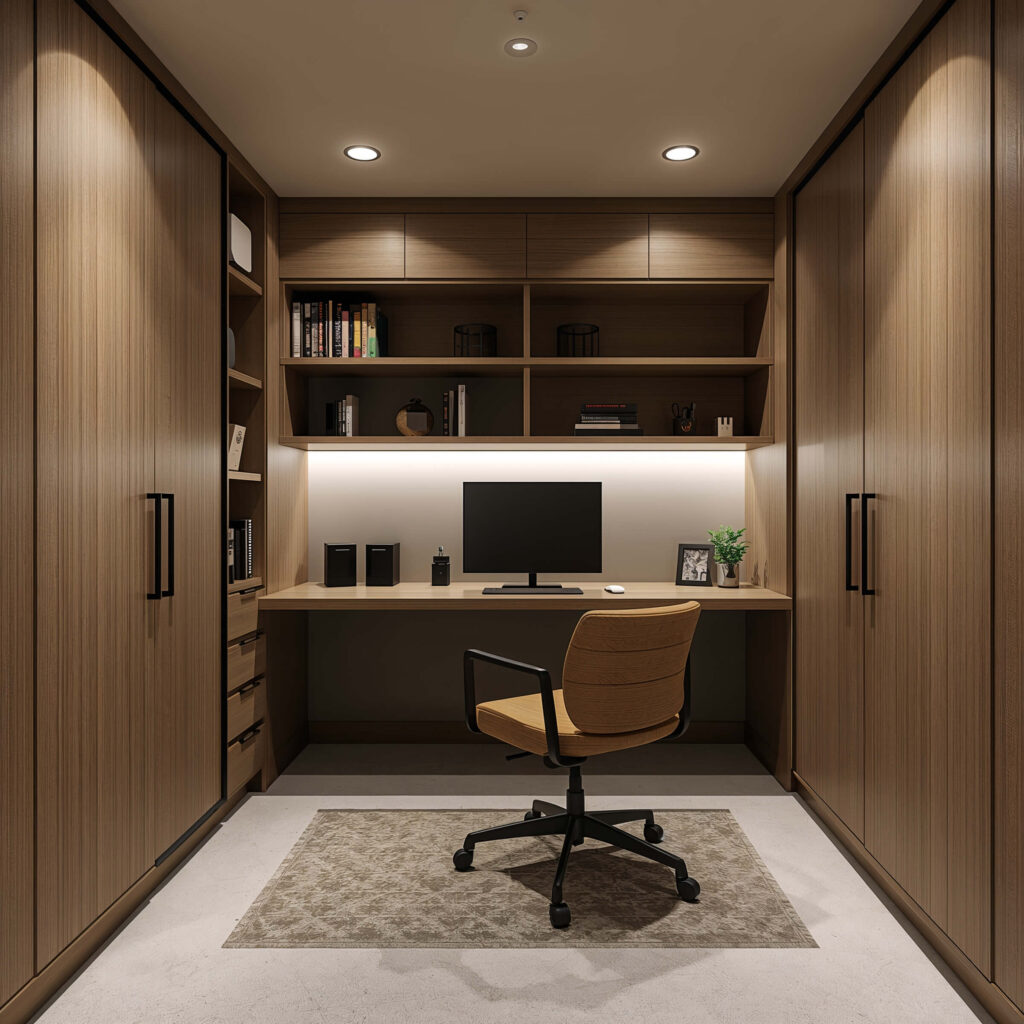
Clutter kills productivity faster than a Netflix notification. Hidden storage keeps your basement office looking professional while hiding all that stuff you definitely need but don’t want to see.
Sneaky Storage Solutions
The secret is making storage look like decor. Those vintage suitcases stacked in the corner? They’re holding my tax documents. That beautiful trunk I use as a coffee table? Full of office supplies. It’s basically organized deception, and I love it.
Clever hidden storage ideas:
- Hollow ottomans for seasonal items
- Behind-door organizers for supplies
- Under-stair drawers if accessible
- False bottom desk drawers for valuables
- Ceiling-mounted bins in dead spaces
Built-In Solutions That Don’t Break the Bank
You don’t need custom cabinetry for built-in storage. Billy bookcases from IKEA with added crown molding look surprisingly upscale. Paint them the same color as your walls, and they practically disappear while holding everything.
I created a hidden filing system using decorative boxes on open shelves. Each box is labeled on the bottom (invisible from eye level) and color-coordinated with my decor. Visitors see style; I see my perfectly organized chaos.
Also Read: 10 Stunning Basement Living Room Ideas and Design Hacks
Tech-Optimized Smart Basement Workspace
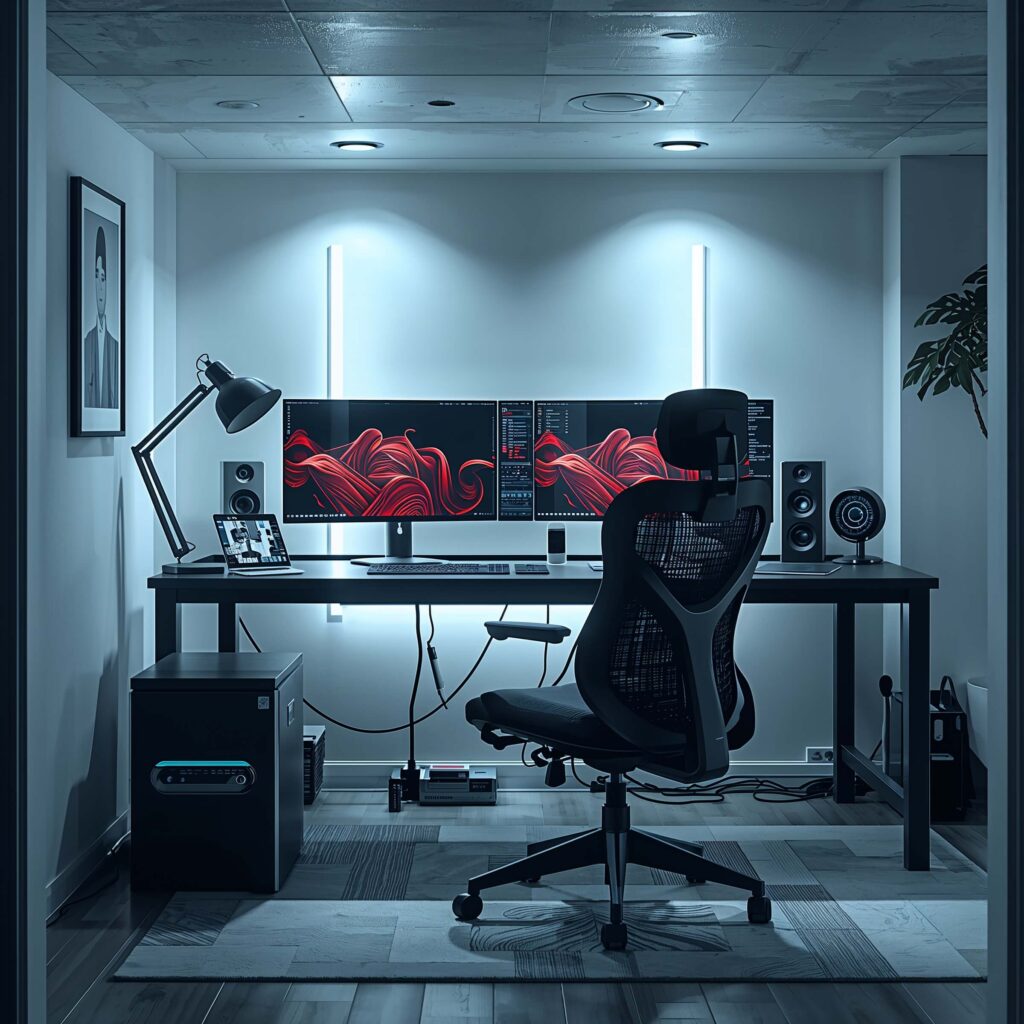
Welcome to the future, where your basement office is smarter than your smartphone. A tech-optimized workspace doesn’t require a Silicon Valley budget – just strategic choices and maybe a few Amazon orders.
Essential Tech Upgrades
Start with reliable WiFi. Basements are notorious for dead zones, so invest in a mesh network or WiFi extender. I spent $100 on a better router, and my video calls no longer look like I’m broadcasting from 1995.
Must-have tech additions:
- USB charging station built into the desk
- Smart power strips for energy efficiency
- Wireless charging pads for devices
- Monitor arms for ergonomic viewing
- Smart speakers for voice control
- Air quality monitor (basements can get musty)
Cable Management That Doesn’t Suck
Nothing ruins a tech setup faster than cable chaos. I use cable raceways painted to match my walls – they’re practically invisible. Under-desk cable trays keep power strips hidden but accessible. The result looks like those pristine setups on tech blogs, but it cost me less than $50 total.
Smart Lighting for Productivity
Install smart bulbs that adjust throughout the day. Cool white in the morning for energy, warm white in the evening for winding down. Some even sync with your calendar to change colors for different types of tasks. IMO, it’s the best $100 I’ve spent on my office.
Don’t forget about bias lighting behind your monitor. It reduces eye strain during those marathon work sessions. LED strips cost $20 and stick right to the back of your screen. Your future self with functioning eyeballs will thank you.
Making It All Work Together
Now that we’ve covered these ten ideas, let’s talk about combining elements for your perfect basement office. You don’t have to pick just one style – I certainly didn’t.
My current setup combines Scandinavian brightness with industrial storage solutions and hidden smart tech. The result is uniquely mine and infinitely more functional than following one design rulebook. Mix and match based on your needs, budget, and personal style.
Whether you go minimalist, rustic, or full-on tech paradise, the key is creating a space that works for your life. Start small, experiment with what feels right, and don’t be afraid to change things up when they’re not working. After all, the best office is one that evolves with you.
Now excuse me while I go enjoy my basement office that no longer feels like a dungeon. Who knew that all it took was some paint, proper lighting, and hiding those Christmas decorations in stylish boxes? Your basement transformation awaits – what are you waiting for?