10 Refreshing Basement Paint Colors Ideas to Lighten Rooms
- Basement Decor
 Ben
Ben- 0
- 28 minutes read
Listen, we both know your basement probably looks like a cave right now. Mine did too until I finally got fed up with squinting every time I went downstairs to grab something from storage. The thing about basements is that they’re naturally working against you – low ceilings, minimal natural light, and that slightly dungeon-esque vibe that makes you want to run back upstairs ASAP.
But here’s the kicker: the right paint color can completely transform that underground bunker into a space you actually want to hang out in. I’m talking about turning your basement from “storage dungeon” to “favorite room in the house” status. And before you roll your eyes thinking this is another generic paint guide, let me tell you – I’ve tested most of these colors in my own basement and my friends’ spaces over the past five years. Some worked brilliantly, others… well, let’s just say I became very familiar with primer 🙂
Light Gray Basement Elegance
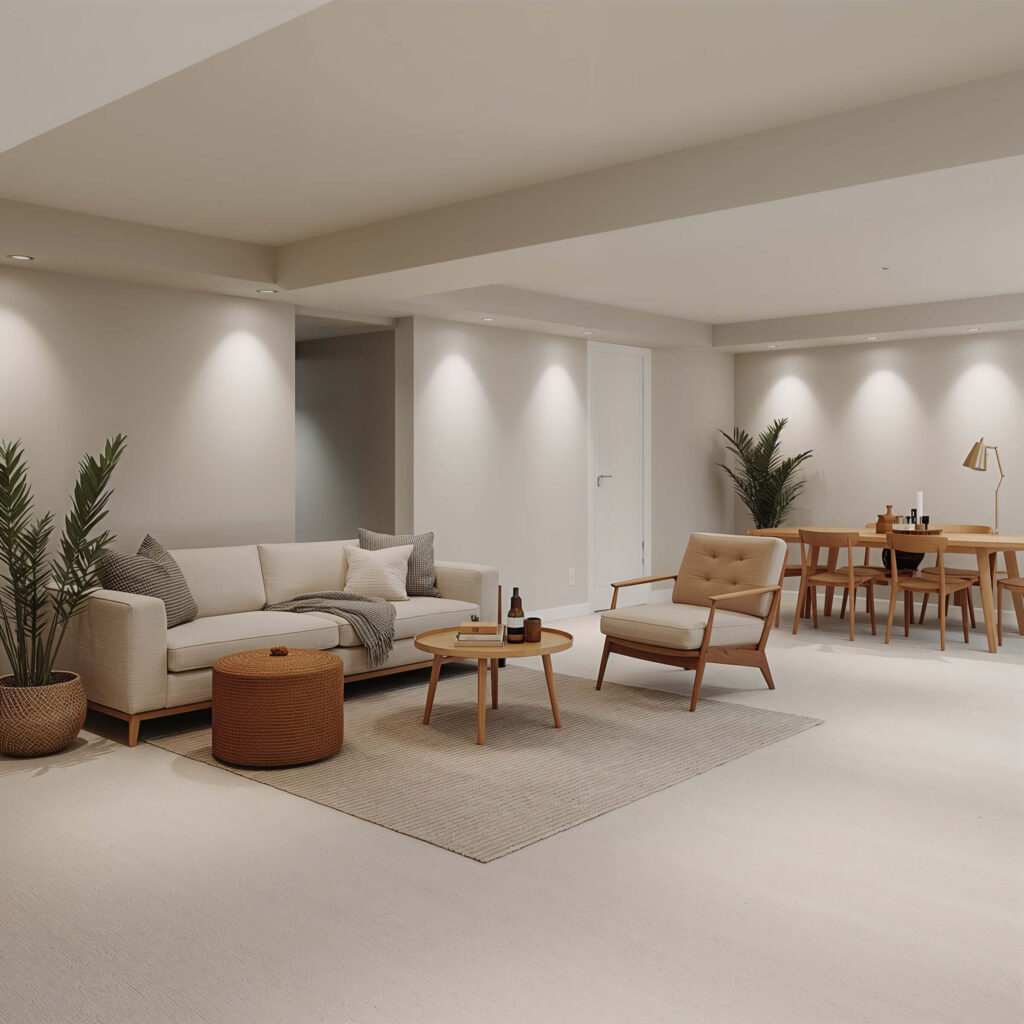
You know what’s funny? Five years ago, everyone thought gray was going out of style. Yet here I am, still recommending it as one of the best basement paint colors you can choose. But not just any gray – I’m talking about light gray, the kind that looks almost white in certain lighting but still has enough depth to hide those inevitable basement imperfections.
I painted my basement walls in Benjamin Moore’s “Cloud Cover” last year, and honestly, it’s been a game-changer. The color reflects what little light comes through those tiny basement windows and bounces it around like a champ. Plus, gray works with literally everything – throw in some colorful furniture, and boom, instant personality without the commitment.
Why Light Gray Works Underground
The science behind this is pretty straightforward. Light gray has an LRV (Light Reflectance Value) between 60-70, which means it reflects most of the light that hits it. Compare that to your typical basement beige (usually around 40-50 LRV), and you’re looking at significantly brighter space.
Here’s what makes light gray particularly brilliant for basements:
- Hides moisture stains better than pure white
- Creates a modern, sophisticated backdrop
- Pairs perfectly with both warm and cool accent colors
- Makes low ceilings appear higher when paired with white trim
Ever wondered why every trendy coffee shop seems to use gray? It’s because the color makes spaces feel larger and more expensive than they actually are. Your basement deserves that same treatment, IMO.
Warm Beige Retreat
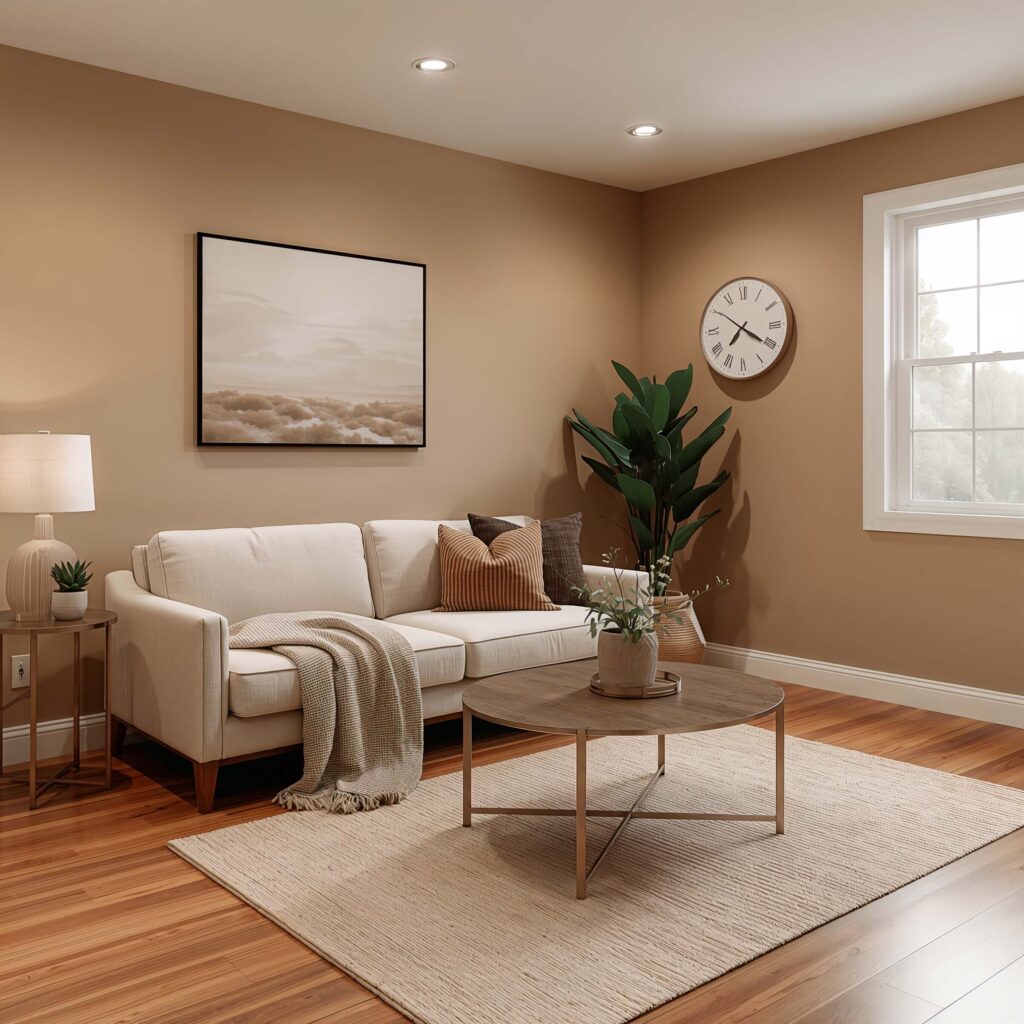
Okay, I know beige gets a bad rap. People act like choosing beige means you’ve given up on life or something. But hear me out – warm beige in a basement is like wearing a cozy sweater on a cold day. It just feels right.
My neighbor Sarah went with Sherwin Williams “Accessible Beige” in her basement, and I’ll admit, I was skeptical at first. But walking into her space now feels like entering a warm hug. The key word here is “warm” – we’re not talking about that sad, contractor-grade beige that looks like cardboard. We’re talking about beige with undertones of gold, peach, or even pink that bring life to an otherwise lifeless space.
Making Beige Work in Modern Basements
The trick with beige is all about the undertones and the finish. Always go with an eggshell or satin finish in basements – flat paint will show every single scuff mark, and trust me, basements get scuffed. Here’s how to make beige feel fresh:
- Choose beiges with warm undertones (avoid anything too yellow)
- Pair with crisp white trim for contrast
- Add black accents through furniture or fixtures for a modern edge
- Layer in natural textures like wood and jute to enhance the warmth
Soft Sage Green Haven
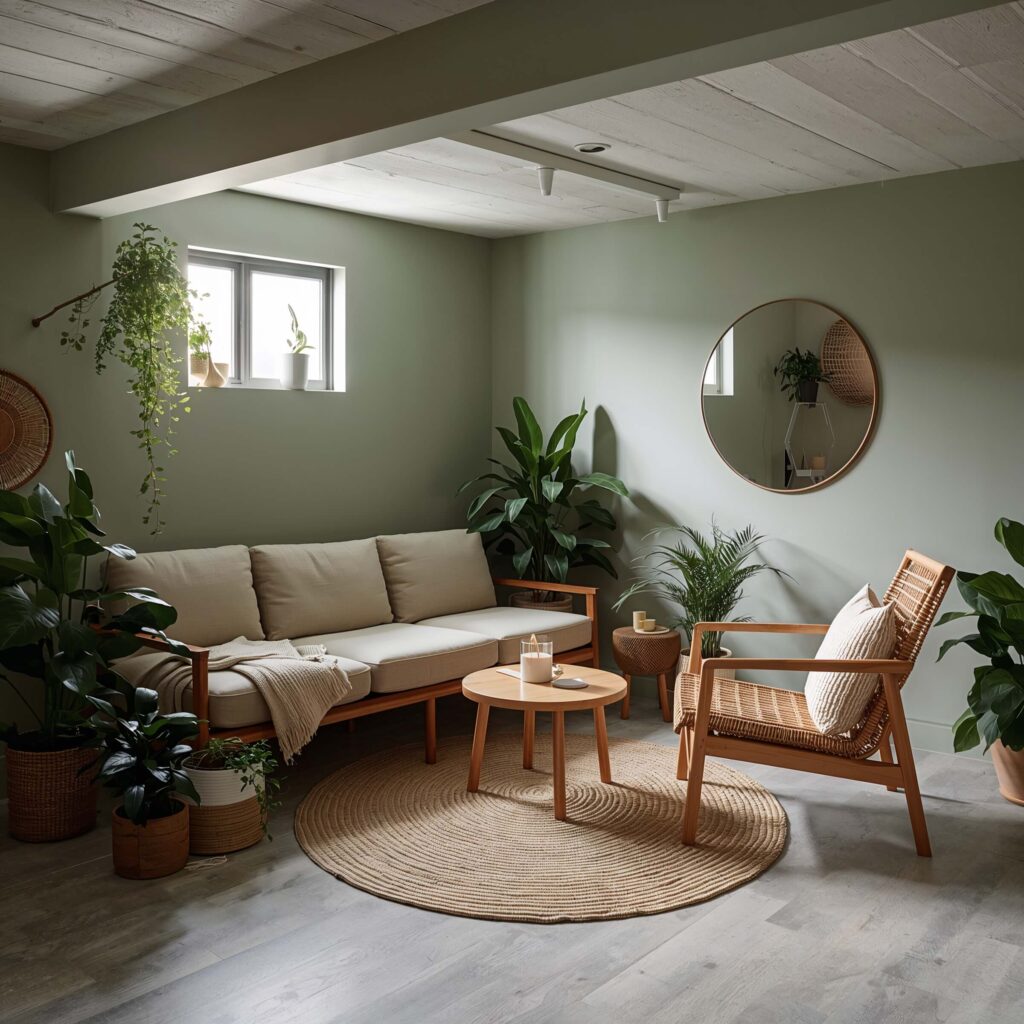
This is where things get interesting. Green in a basement? I know it sounds risky, but soft sage green has this magical ability to make underground spaces feel connected to nature – something basements desperately need.
I first saw sage green work its magic in my friend Tom’s basement home theater. He was going for this whole “outdoor amphitheater” vibe (yeah, he’s extra like that), and somehow it totally worked. The sage green made the space feel fresh and alive rather than closed-in and stale. It’s like bringing a piece of your garden inside, minus the bugs and maintenance.
The Psychology of Green Underground
There’s actual science backing this up. Green is proven to reduce eye strain and create a calming atmosphere – perfect for a basement office or relaxation space. When choosing your sage:
- Look for grays mixed with green, not pure green
- Test the color at different times of day (basement lighting changes drastically)
- Consider painting just one accent wall if you’re nervous
- Pair with natural wood tones and white for balance
Also Read: 10 Charming Small Basement Ideas to Inspire Your Home
Cozy Cream & White Blend
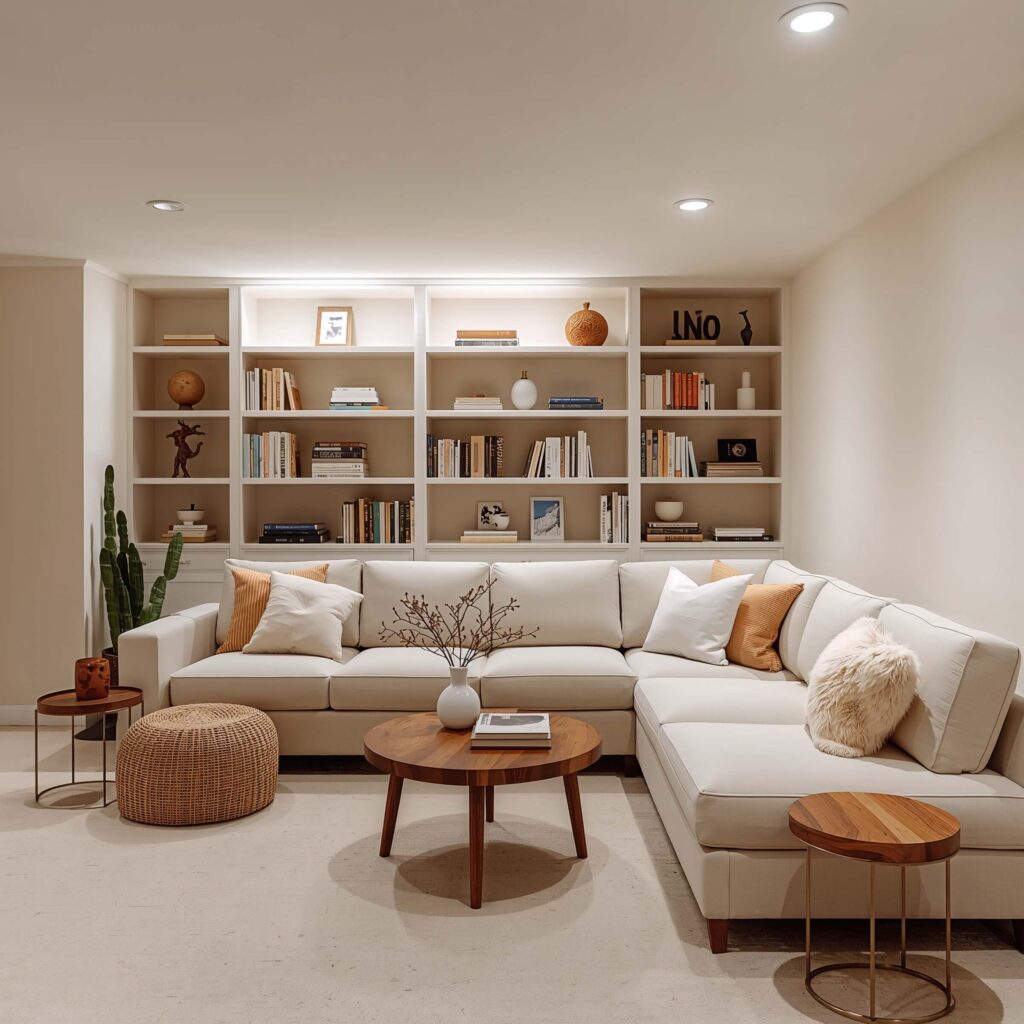
Now, before you say “cream and white sounds boring,” let me stop you right there. I’m not talking about painting everything the same shade of vanilla. I’m talking about strategic layering of different cream and white tones to create depth and interest while maximizing light reflection.
My basement uses three different shades – pure white on the ceiling, warm cream on the walls, and a slightly darker cream on the built-in shelving. Sounds complicated? It’s really not. The effect creates this subtle dimension that makes the space feel professionally designed without actually hiring anyone.
The Cream & White Formula That Works
Here’s my foolproof approach:
- Ceiling: Pure white with 70+ LRV
- Walls: Warm cream with 60-65 LRV
- Accent elements: Slightly darker cream or light taupe
- Trim: Crisp white to define spaces
The beauty of this combo? It makes even the darkest basement feel like it has windows everywhere. Plus, you can throw any color furniture or decor in there, and it’ll look intentional.
Moody Blue Escape
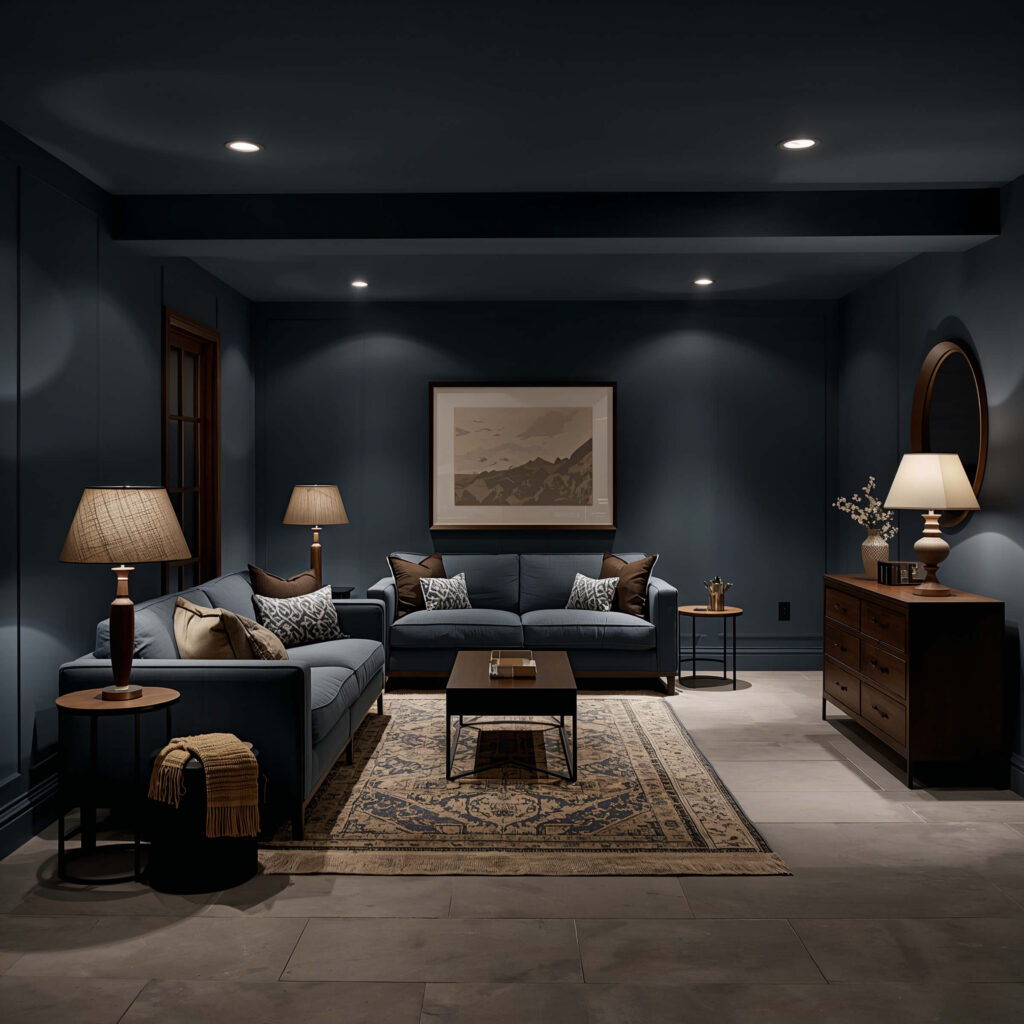
Alright, this one might seem counterintuitive. Wouldn’t blue make a basement feel colder and darker? Not if you choose the right shade. I’m talking about those gorgeous, muted blues with gray undertones – think stormy sky rather than swimming pool.
I helped my cousin paint her basement in Farrow & Ball’s “Parma Gray” (which is actually a beautiful blue-gray), and the transformation was insane. What was once a forgotten storage area became this sophisticated lounge where everyone wants to hang out during parties. She paired it with warm brass fixtures and rich wood furniture, and the contrast is chef’s kiss.
Working With Moody Blues
The key to making blue work in a basement:
- Choose blues with warm gray undertones
- Balance with plenty of warm lighting (3000K bulbs minimum)
- Add warm metallics like brass or copper
- Include soft textures through rugs and throws
Remember, moody doesn’t mean dark. It means atmospheric and intentional. Your basement should feel like a destination, not a detour.
Taupe Tranquility
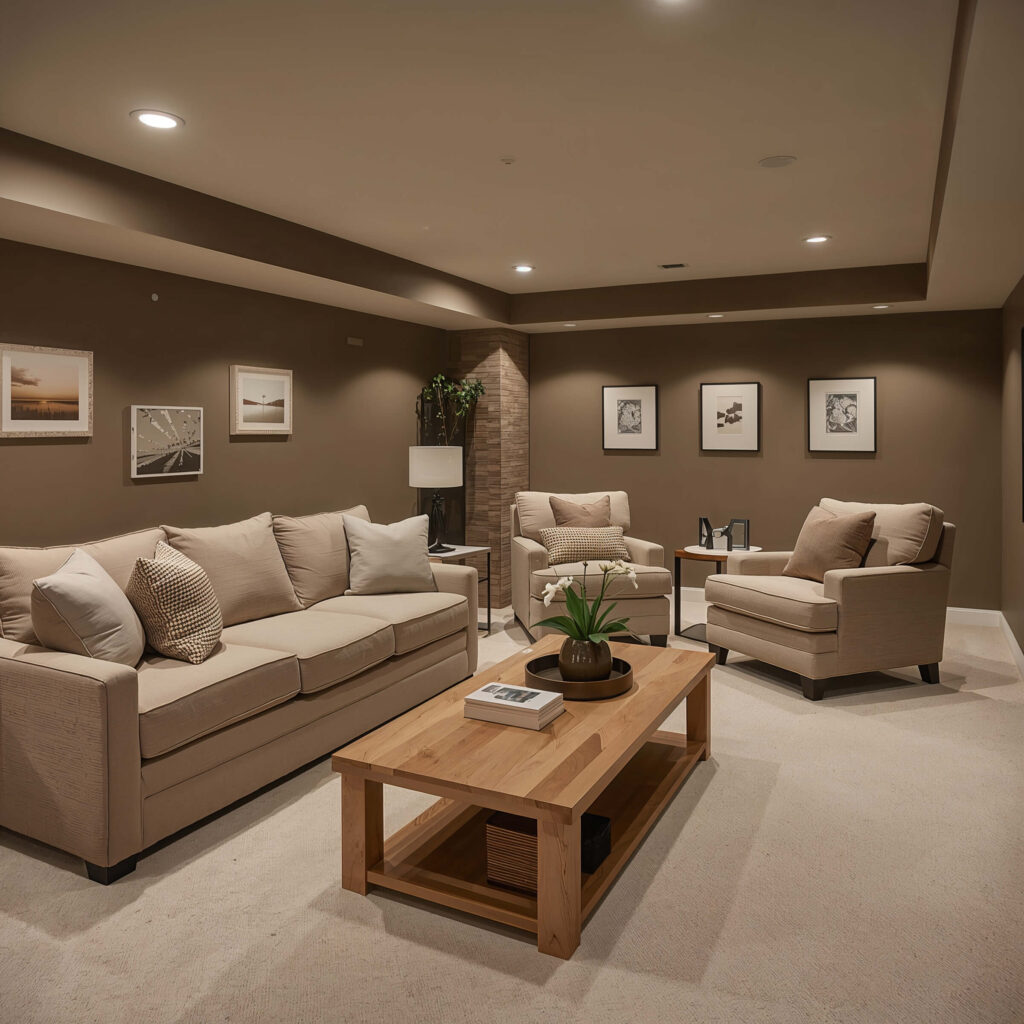
Taupe is having a moment, and honestly, it’s about time. This color is like the Swiss Army knife of paint colors – it goes with everything, hides imperfections, and somehow manages to look both warm and cool depending on the lighting.
I recently used Benjamin Moore’s “Balanced Beige” (which is actually more taupe than beige) in my basement gym area. Why taupe for a gym? Because unlike stark white, it doesn’t show every scuff mark from equipment, and unlike dark colors, it doesn’t make me feel like I’m working out in a bunker.
Why Taupe Beats Beige
Let me break down why taupe might be your basement’s best friend:
- More sophisticated than beige but just as versatile
- Contains gray undertones that work with modern decor
- Excellent at hiding wall imperfections
- Creates a grounding effect that’s perfect for multi-use spaces
Also Read: 10 Genius Basement Storage Ideas to Save Space Instantly
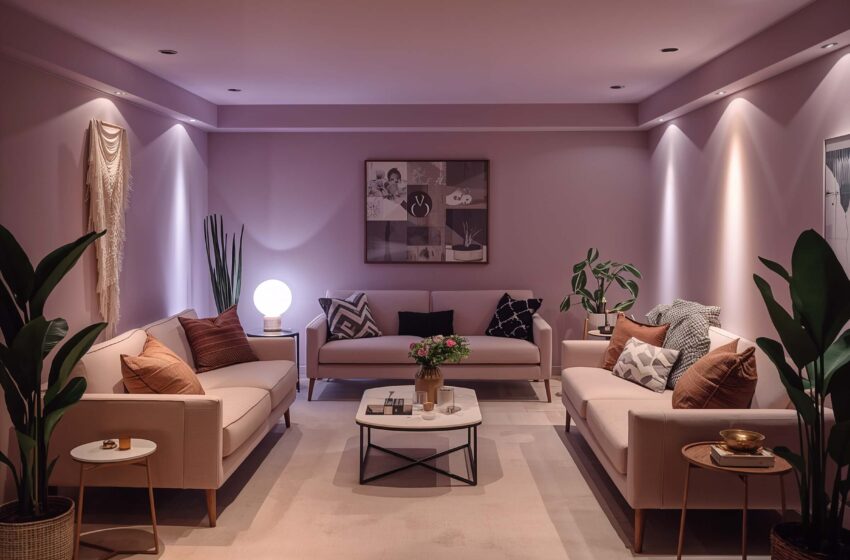
Pale Lavender Comfort
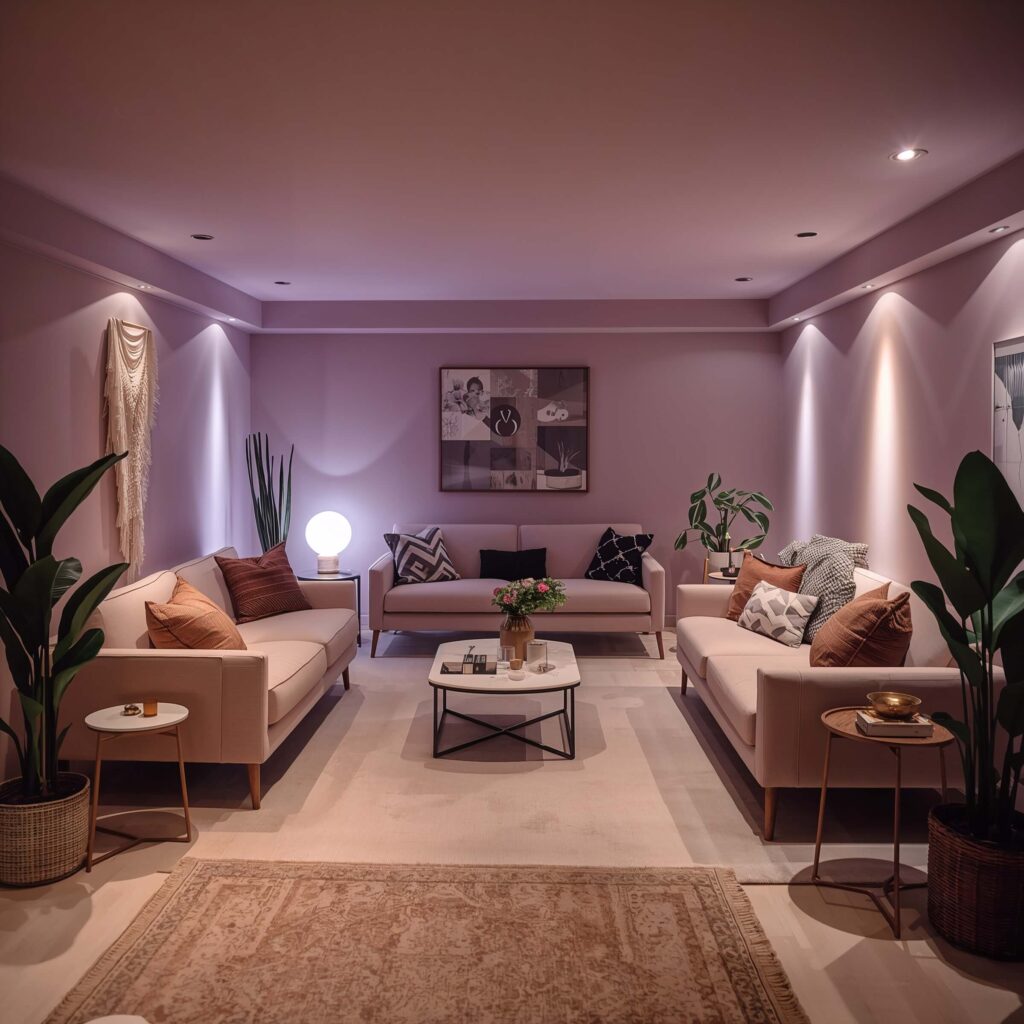
Stay with me here – I know lavender sounds like something from your grandma’s powder room, but modern pale lavenders are having a serious moment. And in a basement? They create this unexpectedly calming vibe that’s perfect for bedrooms or meditation spaces.
My sister was skeptical when I suggested Benjamin Moore’s “Beach Plum” for her basement guest suite. But now? Her guests literally don’t want to leave. The color has just enough gray to feel sophisticated and just enough purple to feel special. It’s like the perfect middle ground between boring and bold.
Making Lavender Work Without Looking Dated
Here’s how to keep lavender fresh:
- Choose lavenders with significant gray undertones
- Keep everything else neutral (white, gray, natural wood)
- Add modern fixtures and clean lines
- Use plenty of white to keep things bright
The result? A space that feels unique without screaming “I painted this purple!”
Bright White Open Space
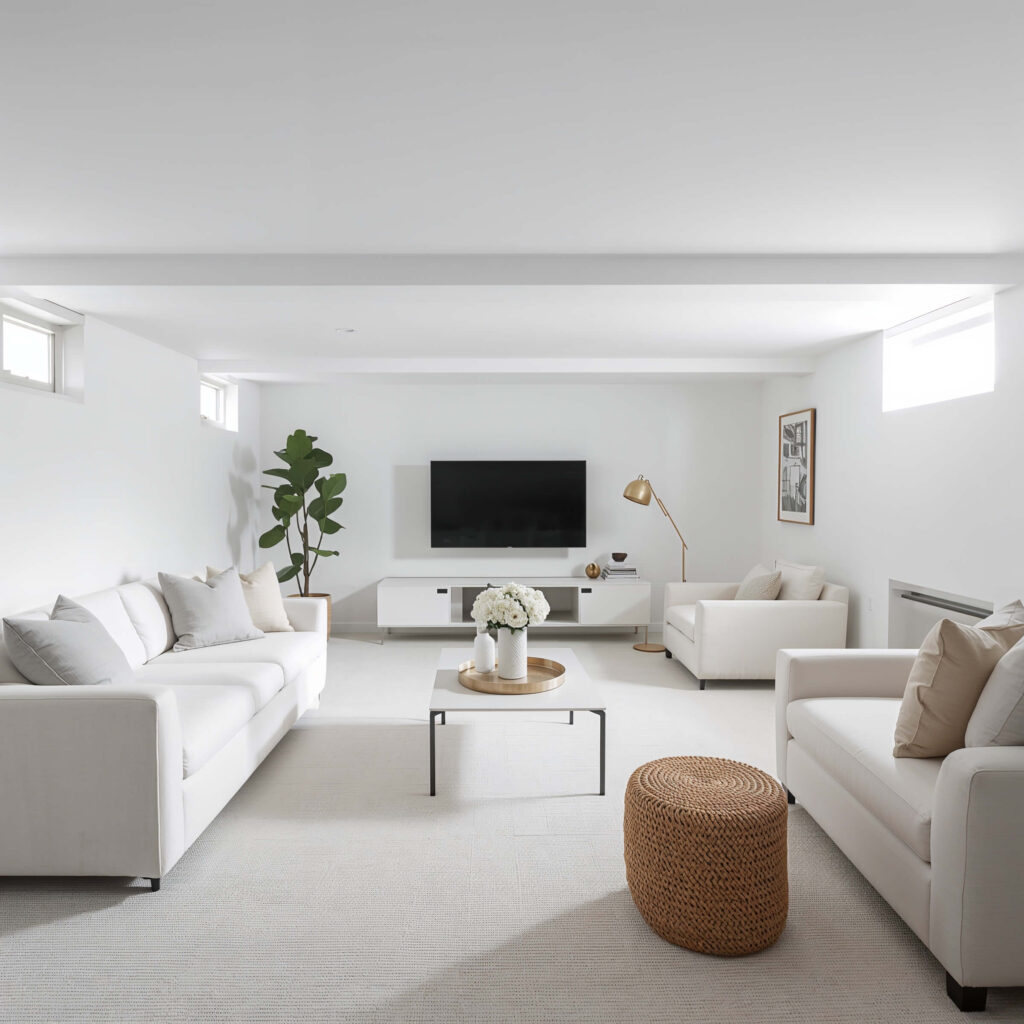
Sometimes, you just need to go full-send with white. And in a basement? Bright white can literally transform the space from dungeon to loft. But here’s the thing – not all whites are created equal.
I learned this the hard way when I painted my first basement “pure white” and it looked like a hospital. The trick is choosing a white with the right undertones for your space. In basements, you typically want whites with warm undertones to combat that naturally cool underground feeling.
Choosing the Right White
My go-to basement whites:
- Benjamin Moore “Cloud White” – warm but not yellow
- Sherwin Williams “Pure White” – clean and modern
- Farrow & Ball “All White” – sophisticated with depth
Pro tip: Always test whites in your actual basement. What looks warm upstairs might look stark underground. FYI, I always paint large swatches and live with them for at least 48 hours before committing.
Charcoal Accent Walls
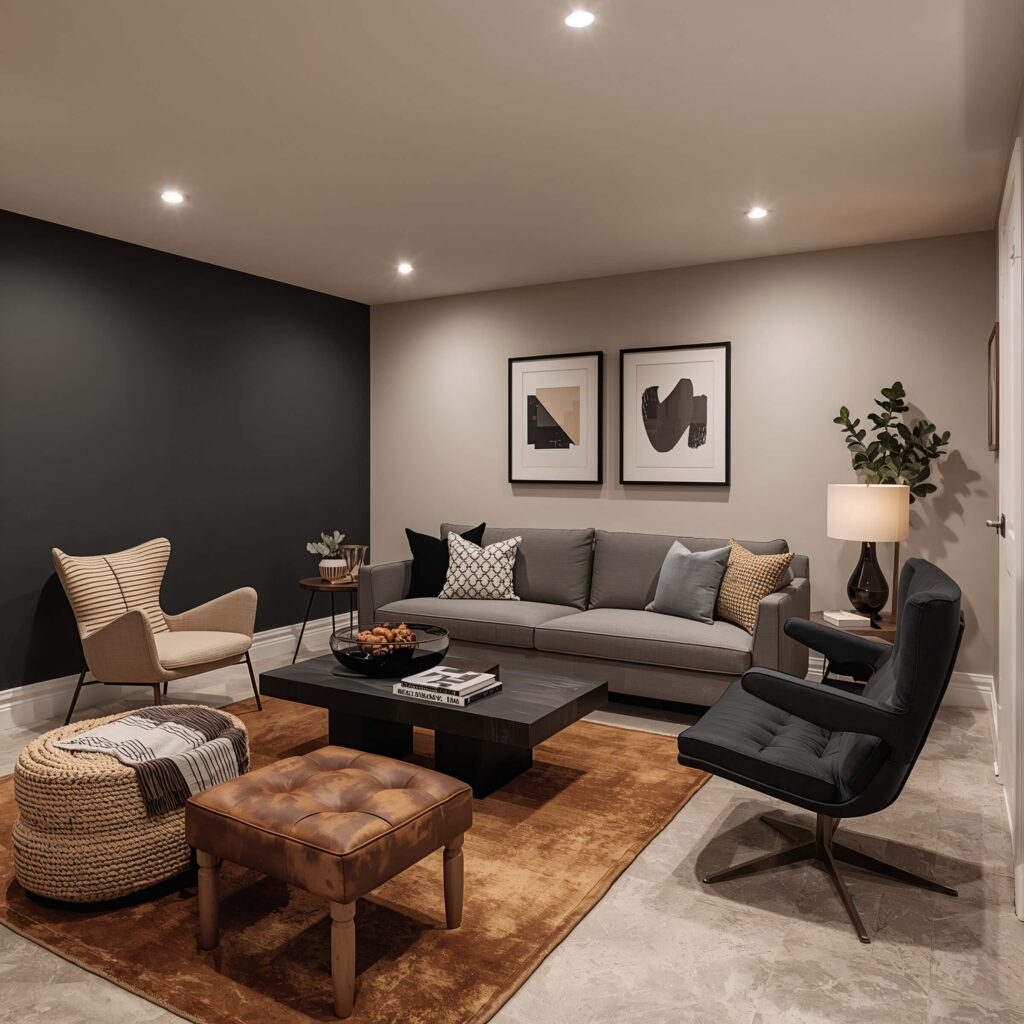
Here’s where we flip the script entirely. While I’ve been preaching light colors, sometimes a strategic dark accent wall can actually make a basement feel larger. Sounds backwards, right? But it’s true.
I painted one wall in my basement entertainment area charcoal (Benjamin Moore “Iron Mountain”), and it created this incredible focal point that makes the room feel intentional rather than just “finished.” The dark wall recedes visually, creating depth, while the lighter surrounding walls keep things bright.
Dark Walls Done Right
Rules for basement accent walls:
- Only one wall – two max if they’re not adjacent
- Choose the wall with the least natural light
- Keep all other walls light and bright
- Add plenty of lighting directed at the dark wall
- Use it as a backdrop for light-colored furniture or art
The contrast creates drama without making the space feel smaller. It’s like wearing all black – somehow slimming and sophisticated when done right.
Also Read: 10 Trendy Cozy Basement Ideas and Stylish Room Makeovers
Muted Pastel Harmony
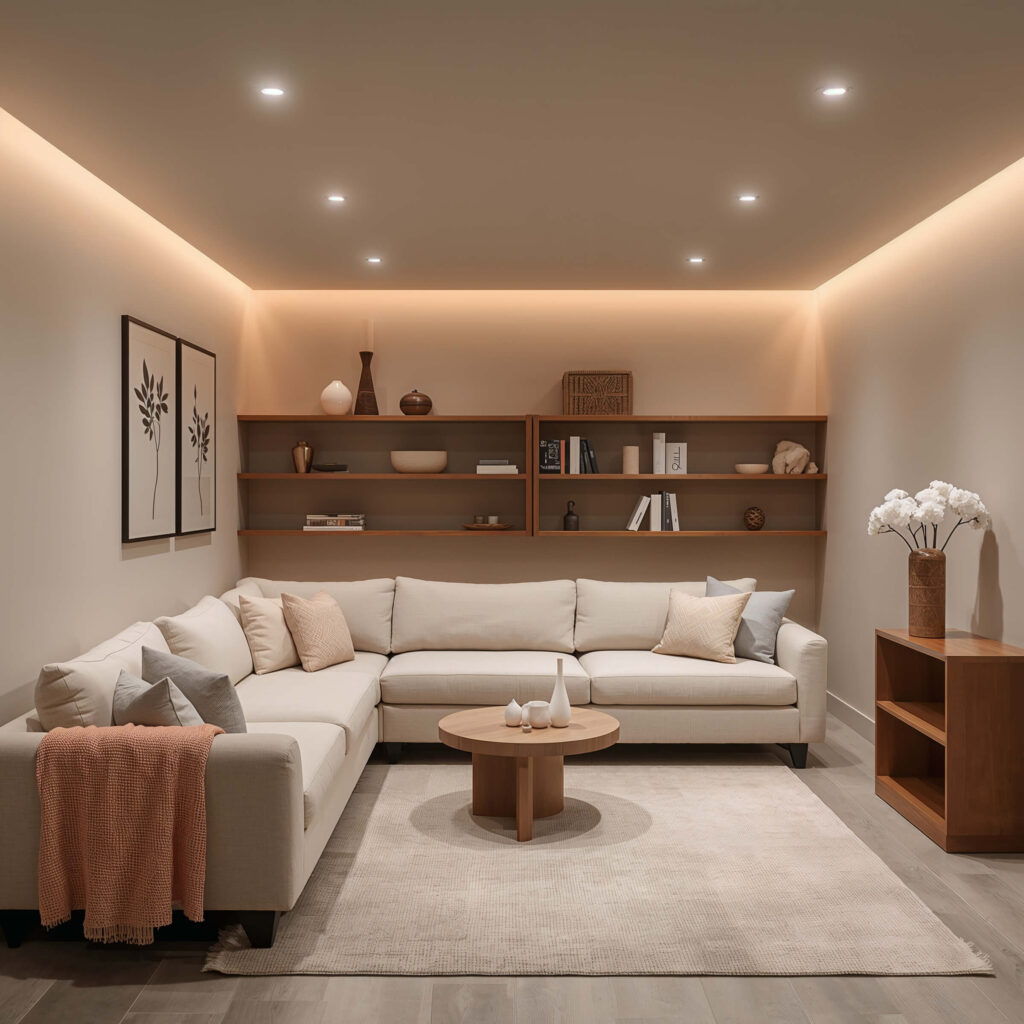
Last but definitely not least, let’s talk about muted pastels. Not Easter egg pastels – I’m talking about sophisticated, grayed-out pastels that whisper rather than shout.
Think dusty rose, sage mint, or butter yellow – all with enough gray mixed in to feel grown-up. I combined three muted pastels in my craft room basement (sage green, dusty pink, and pale gray-blue), and everyone who sees it asks if I hired a designer. Nope, just trusted my gut and went for it.
Creating a Pastel Palette
The secret to adult pastels:
- Choose colors with 30-40% gray mixed in
- Stick to 2-3 colors maximum
- Use the 60-30-10 rule (60% dominant color, 30% secondary, 10% accent)
- Ground with plenty of white and natural wood
- Add black accents to prevent sweetness overload
Making Your Color Choice
Look, at the end of the day, the best basement paint color is the one that makes YOU want to spend time down there. I’ve given you ten solid options that I’ve personally seen transform dungeons into destinations, but your basement is unique.
Consider what you’re actually using the space for. A basement bedroom needs different vibes than a basement bar. Think about your existing furniture, your natural light situation (or lack thereof), and honestly, how much maintenance you’re willing to do.
My advice? Get samples of your top three choices and paint large swatches on different walls. Live with them for a week. See how they look at different times of day, with your artificial lighting, and most importantly, how they make you feel.
Remember, paint is one of the cheapest ways to completely transform a space. If you hate it, you can always repaint. But I’m betting once you see how the right color can lighten and brighten your basement, you’ll wonder why you waited so long to make the change.
Your basement doesn’t have to be the forgotten space where you store Christmas decorations and old exercise equipment. With the right paint color, it can become your favorite retreat, your kids’ hangout spot, or that home office you’ve been dreaming about. So grab a brush, pick a color, and let’s turn that basement into something special. Trust me, your future self will thank you every time you head downstairs :/