10 Modern Bathroom Vanity Ideas to Upgrade Your Bathroom
- Bathroom Design
 Ben
Ben- 0
- 33 minutes read
Let me guess – you’re standing in your bathroom right now, staring at that sad, builder-grade vanity that’s been mocking you since move-in day. I’ve been there.
Actually spent three months brushing my teeth while plotting the demise of my old oak monstrosity before finally taking the plunge into vanity shopping hell.
Here’s what nobody tells you about choosing a bathroom vanity: it’s basically the kitchen island of your bathroom. Get it right, and suddenly your whole morning routine feels like a spa experience.
Get it wrong, and you’ll spend every day wondering why you thought a pedestal sink was “charming” (spoiler: it’s not, it’s just impractical).
After renovating four bathrooms and making approximately 47 trips to various home improvement stores, I’ve learned what actually works versus what just looks good on Instagram.
These ten vanity styles each solve different problems, and I’m betting at least one will make you say “that’s exactly what I need.”
Floating Modern Minimalist Vanity
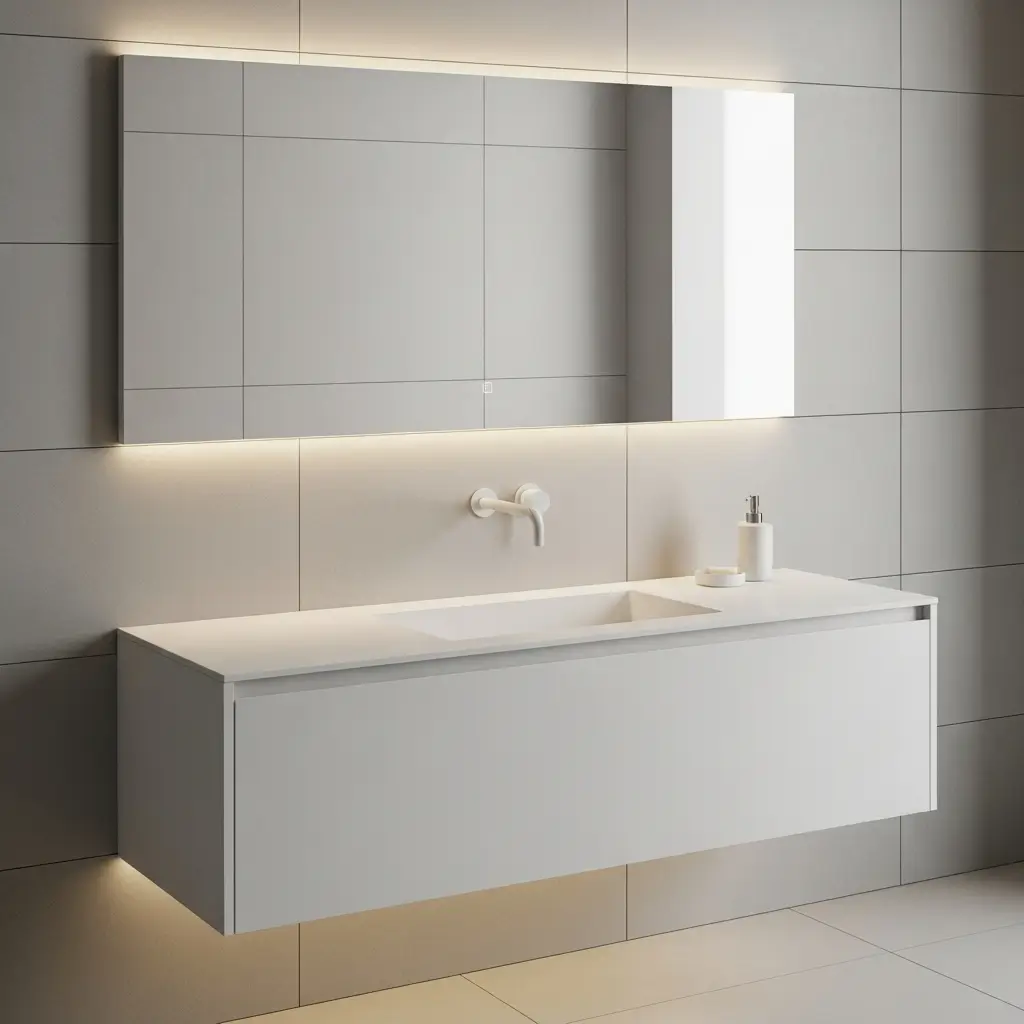
You know that feeling when you walk into a fancy hotel bathroom and everything just feels… cleaner? That’s the magic of a floating vanity. These wall-mounted beauties create the illusion of more space by showing off your floor, and honestly, they make cleaning underneath so much easier. No more getting on your hands and knees to scrub around those annoying vanity legs.
I installed my first floating vanity two years ago in our powder room, and it completely transformed the space. The key is getting the mounting height right – 30 to 36 inches from floor to countertop works for most people. Mount it too high and you’ll feel like a kid at the grown-ups’ sink. Too low and your back will hate you.
The minimalist aspect means clean lines, hidden storage, and zero visual clutter. Think flat-panel doors, push-to-open drawers, and integrated handles. Materials typically include high-gloss lacquer, matte wood veneer, or textured laminate in colors like white, gray, or black.
Making Floating Vanities Work
Here’s what you need to know before committing:
- Wall reinforcement is non-negotiable – these babies need serious support
- Plumbing might need relocating – wall-mounted means pipes go through the wall
- Storage can be limited – minimalist often means minimal storage
- Cost runs higher – expect to pay 20-30% more than traditional vanities
The payoff? Your bathroom instantly feels twice as big, and that under-vanity lighting you can add creates serious ambiance. Plus, your robot vacuum can actually clean the entire bathroom floor. Game changer.
Rustic Farmhouse Wooden Vanity
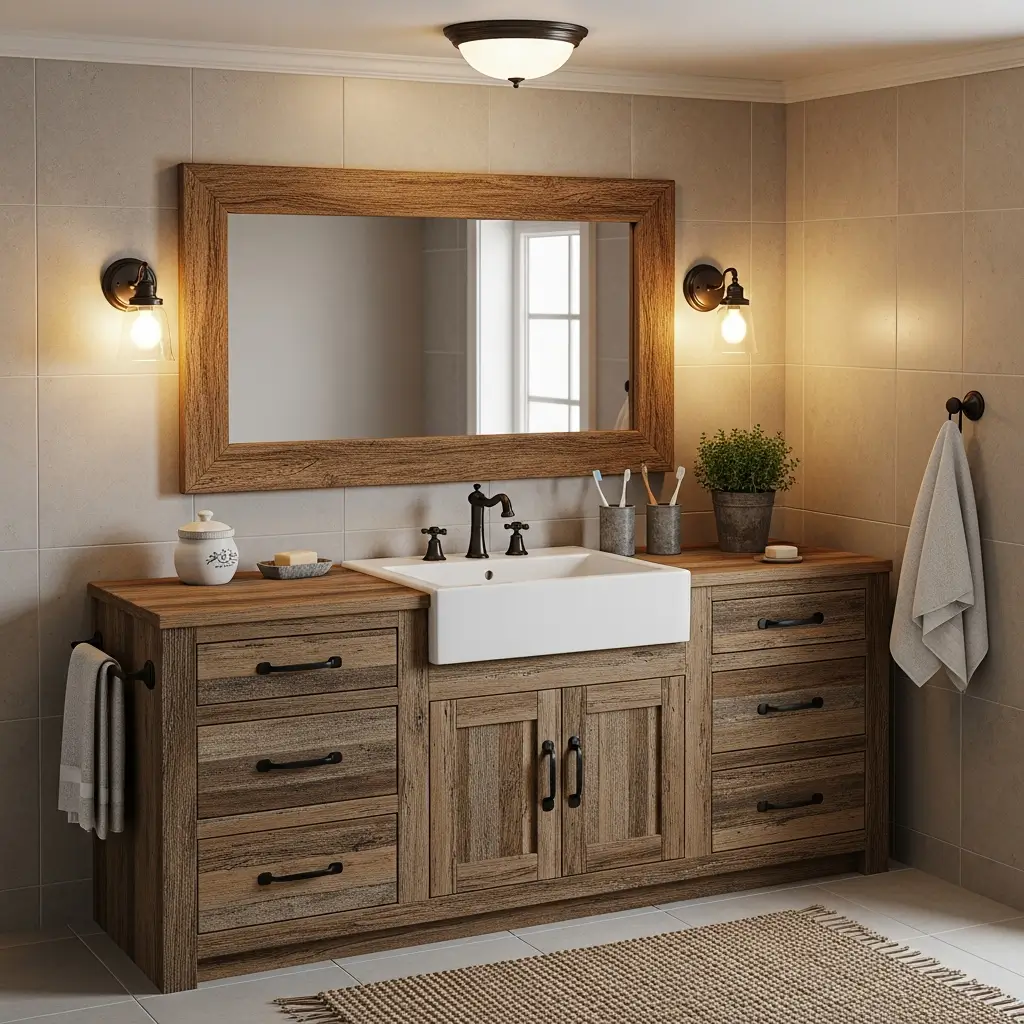
Remember when everyone suddenly decided their bathroom needed to look like a converted barn? The farmhouse trend might have peaked, but a well-done rustic wooden vanity never really goes out of style. The trick is avoiding the “I bought this at a chain store” look and going for authentic character.
My sister went full farmhouse with a vanity made from reclaimed barn wood, and I’ll admit – I was skeptical. But paired with modern fixtures and good lighting, it actually works. The wood brings warmth to all those cold bathroom surfaces, and the natural imperfections add character you can’t fake.
Real rustic vanities feature solid wood construction, visible grain patterns, and slightly distressed finishes. Popular woods include pine, oak, and reclaimed barn wood. The hardware matters too – think oil-rubbed bronze, matte black, or antique brass pulls.
Getting Farmhouse Right Without the Cliché
Avoid the Pinterest-fail farmhouse look:
- Skip the mason jar accessories – your vanity should be rustic, not your entire life
- Mix in modern elements – contemporary faucets keep it fresh
- Choose quality wood – particle board with “rustic finish” fools nobody
- Protect the wood properly – bathrooms are humid; seal that wood or regret it
The maintenance factor is real with wooden vanities. You’ll need to reseal annually, wipe up water immediately, and accept that some weathering will happen. But IMO, that patina development is part of the charm.
Double Sink Contemporary Vanity
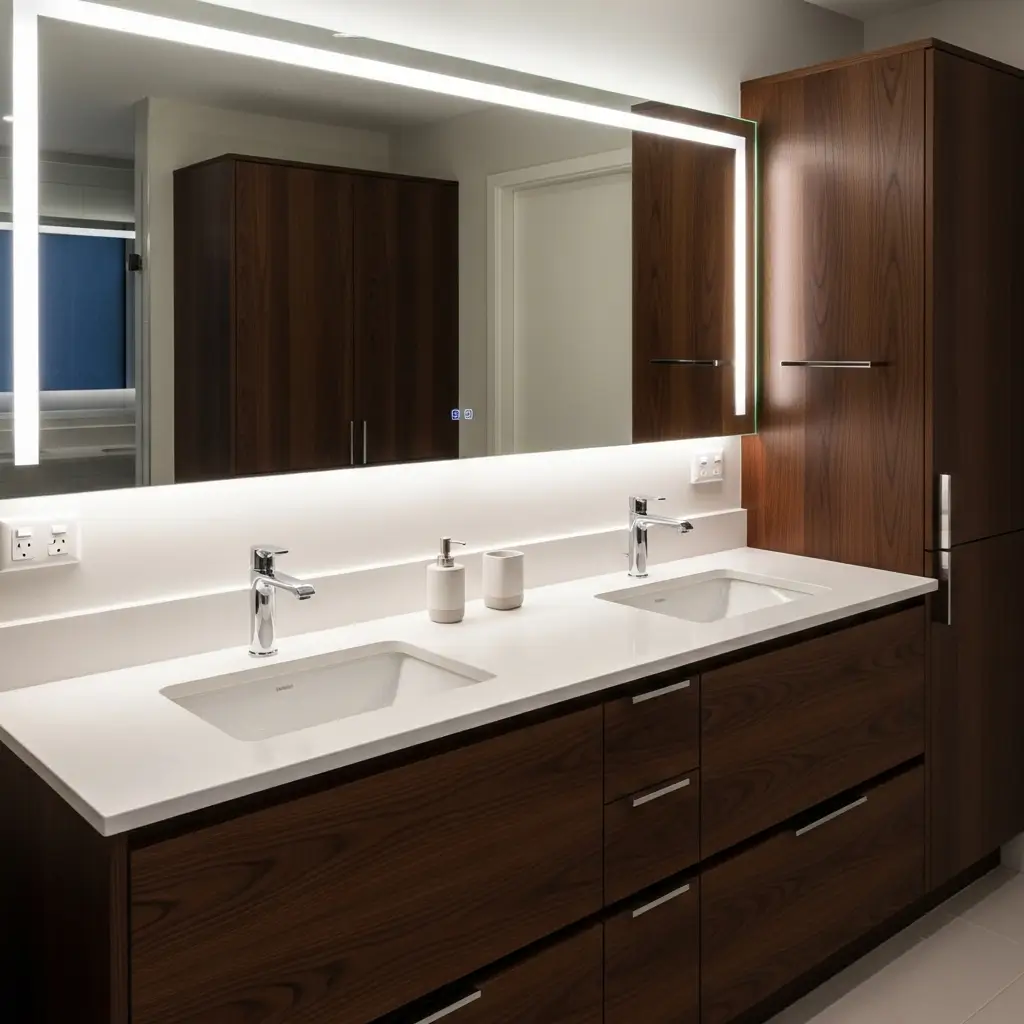
Nothing tests a relationship quite like sharing a single bathroom sink. That’s why the double sink vanity remains the ultimate relationship saver. Contemporary versions take this practical solution and make it actually stylish, not just functional.
I fought my husband on the double sink for months (“our bathroom isn’t that big!”) until we stayed at an Airbnb with one. Three days of both getting ready without playing sink-chicken convinced me. We sacrificed some floor space, but gained our sanity back.
Contemporary double vanities typically span 60 to 84 inches and feature clean lines, minimal ornamentation, and clever storage solutions. Materials lean toward engineered quartz tops, thermofoil cabinets, and integrated sinks. The contemporary style means symmetry without being boring.
Double Sink Reality Check
What they don’t tell you about double sinks:
- Plumbing costs double too – two sinks mean two sets of pipes
- Counter space gets divided – not doubled, divided
- Storage needs planning – two people’s stuff needs organization
- Cleaning takes longer – two sinks to scrub, folks
The secret to making double sinks work? Define territories clearly. Each person gets their side, their drawers, their medicine cabinet space. Sounds rigid, but it prevents the “why is your razor on my side?” arguments at 6 AM.
Also Read: 15 Stunning Small Grey Bathroom Ideas to Maximize Your Space
Compact Small Bathroom Vanity
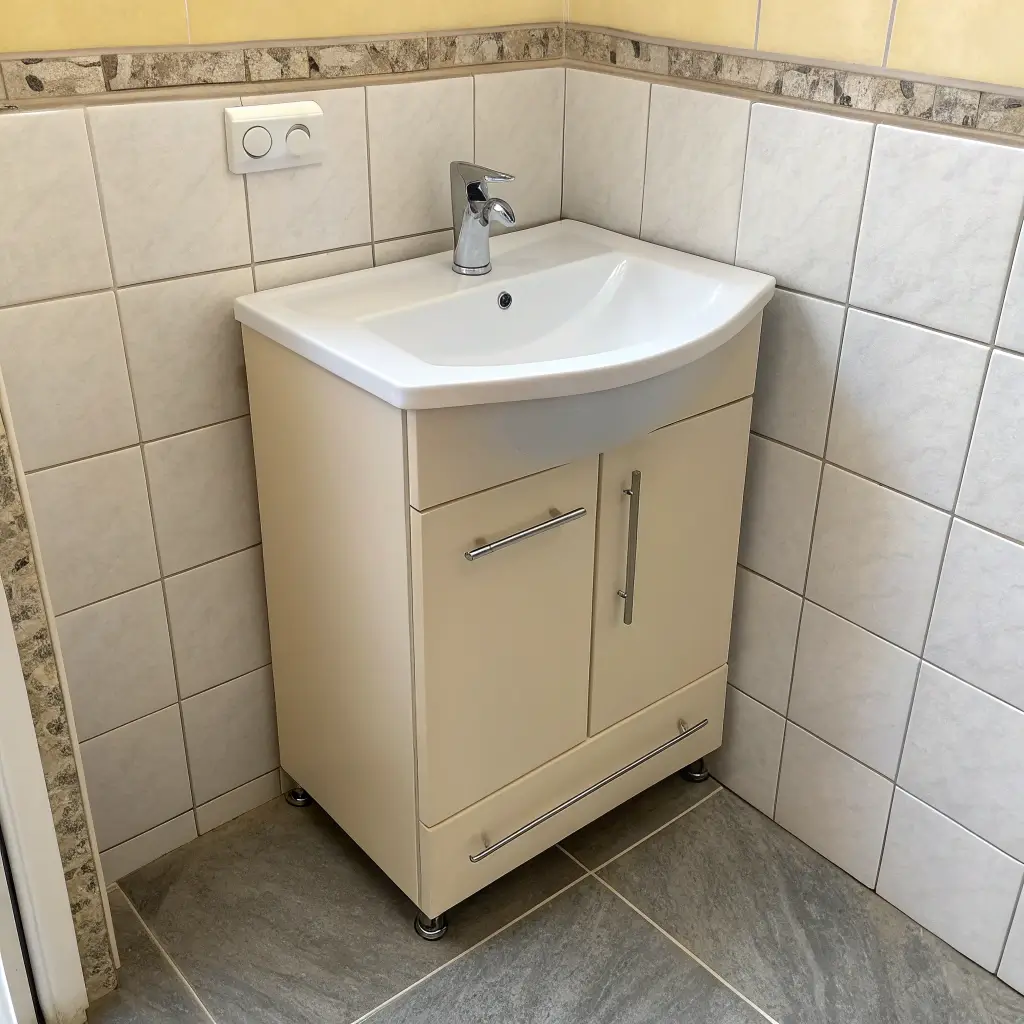
Small bathroom? Join the club. Most of us deal with bathrooms that feel more like closets with plumbing. But a compact vanity doesn’t mean compromising on style or function – it just means getting creative.
My first apartment bathroom was 35 square feet. Thirty-five. The vanity I chose was 24 inches wide, wall-mounted, with a tiny sink that looked like it belonged in an airplane. But you know what? It worked perfectly because it fit the space instead of fighting it.
Small vanities typically range from 16 to 30 inches wide and maximize every inch. Look for features like integrated towel bars, corner-fitting designs, and shallow depths (some are only 16 inches deep). Materials stay light and bright to avoid overwhelming the space.
Small Vanity, Big Impact
Maximize your tiny vanity’s potential:
- Go vertical with storage – wall-mounted cabinets above
- Choose light colors – dark vanities make small spaces feel smaller
- Skip the cabinet doors – open shelving feels less bulky
- Invest in organization – drawer dividers are your friend
- Mount everything possible – faucets, soap dispensers, even toothbrush holders
The biggest mistake with small vanities? Choosing one that’s too small. Measure your space, then get the largest vanity that fits comfortably. Those extra 2-3 inches make a difference in daily use.
Vintage Antique Style Vanity
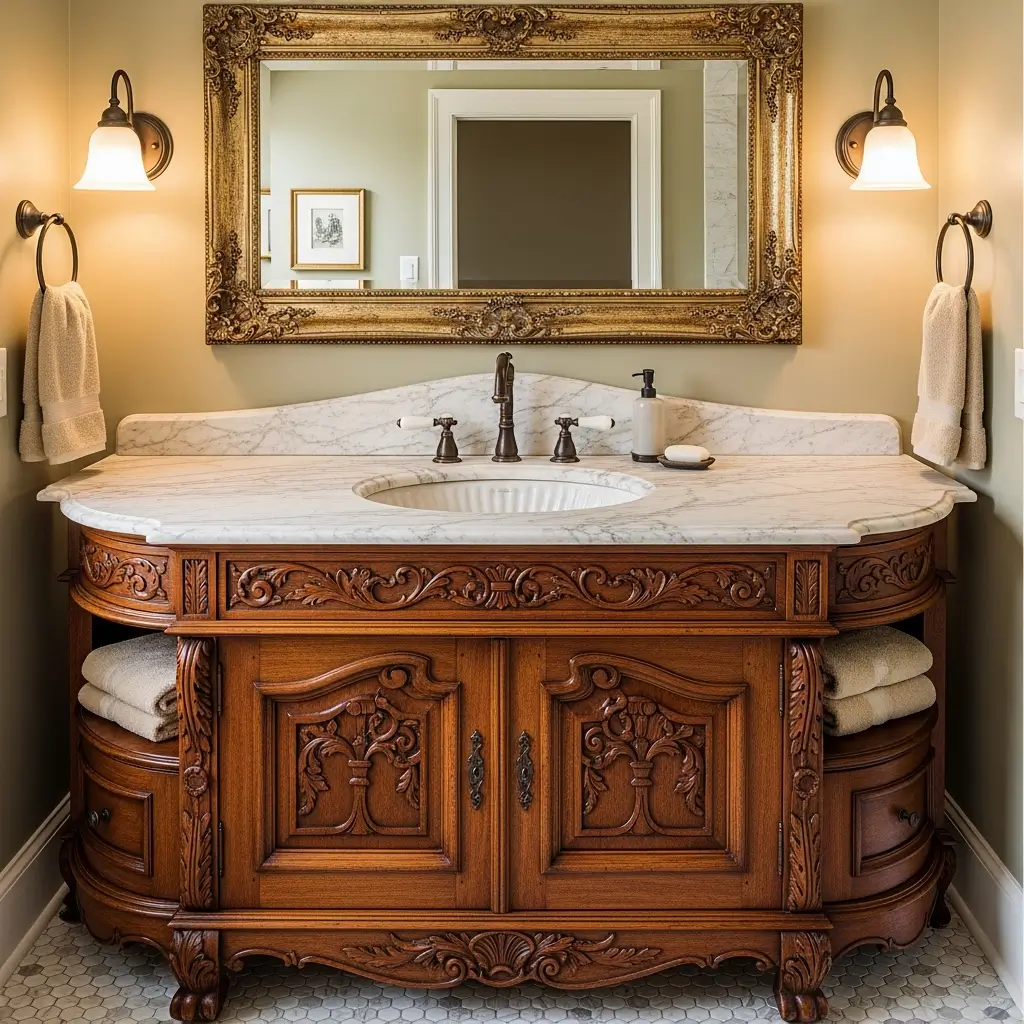
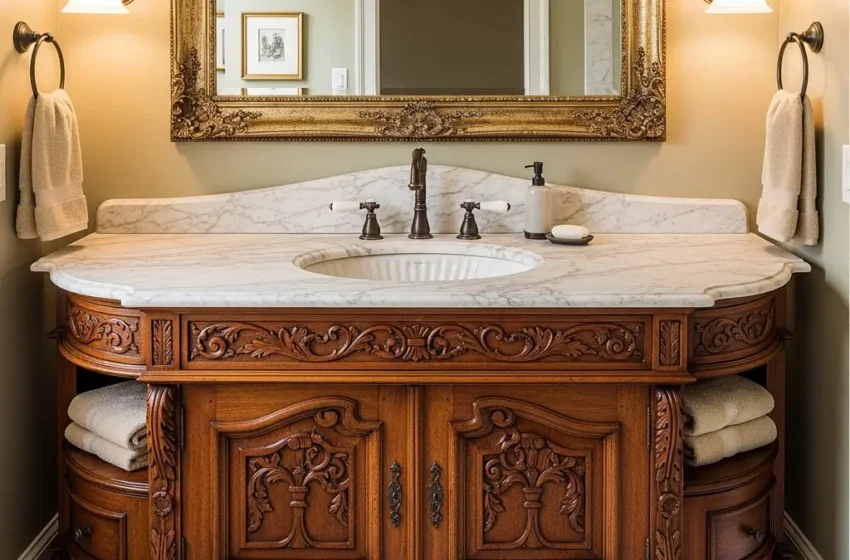
Want your bathroom to feel like it belongs in a Victorian novel? Vintage-inspired vanities bring old-world charm without old-world plumbing problems. These pieces make a statement – usually something like “I have excellent taste and possibly a trust fund.”
I scored an actual antique dresser at an estate sale and converted it to a vanity. Cost me three weekends, multiple YouTube tutorials, and one minor flooding incident (always check your connections twice). But the result? A one-of-a-kind piece that makes everyone ask where I bought it.
True vintage-style vanities feature ornate details, turned legs, and decorative hardware. Materials include solid wood with detailed carvings, marble or granite tops, and porcelain sinks. Colors tend toward rich woods, distressed paints, or antiqued finishes.
Vintage Without the Headaches
Getting that antique look practically:
- Buy reproduction if you’re not handy – real antiques need serious modification
- Ensure modern functionality – vintage charm shouldn’t mean no storage
- Protect the finish religiously – antique finishes hate bathroom humidity
- Mix periods carefully – full Victorian might feel costume-y
The character these vanities bring is unmatched, but they’re high-maintenance relationships. Regular waxing, careful cleaning, and humidity control keep them looking gorgeous instead of genuinely decrepit.
Industrial Metal & Wood Vanity
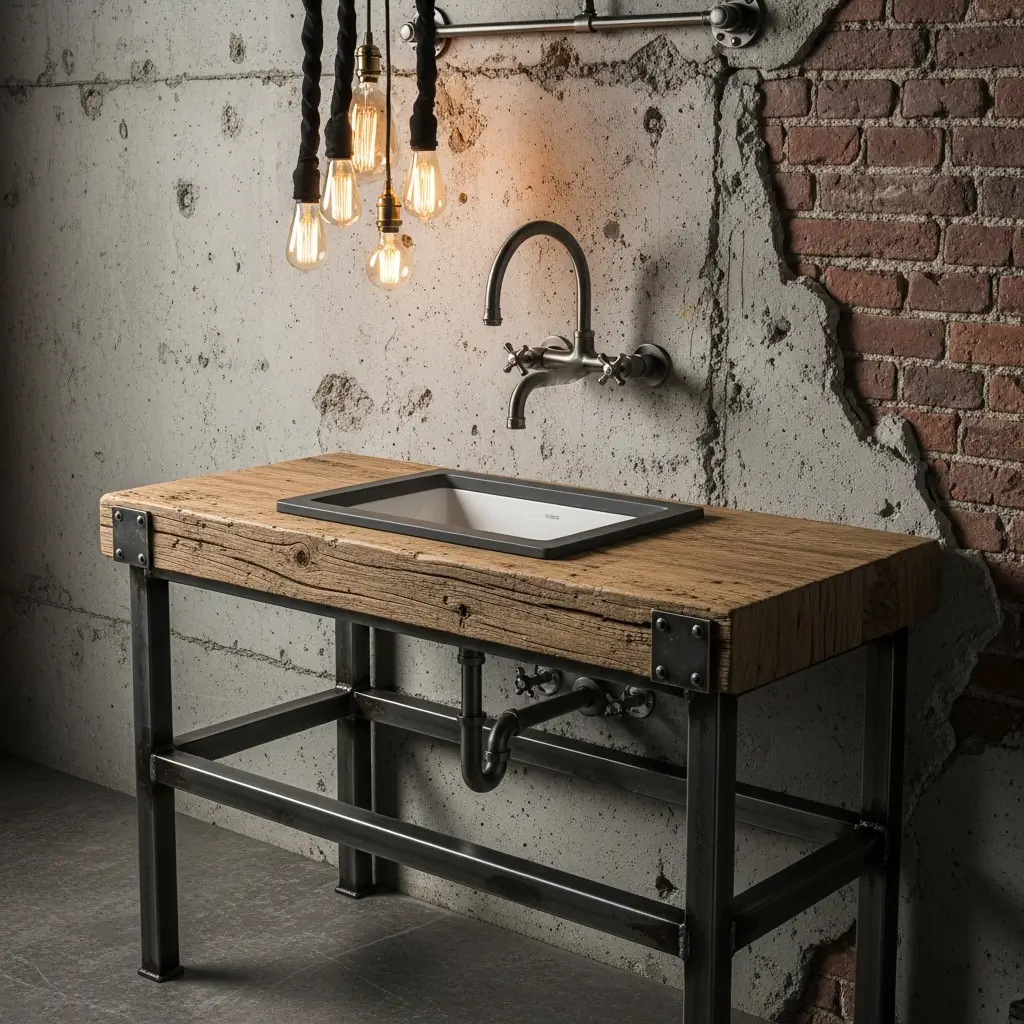
The industrial look says “I’m creative and possibly own a loft.” These metal and wood combinations bring urban edge to any bathroom, even if your urban experience is strictly suburban.
My brother’s industrial vanity started as a plumbing pipe dream (literally – he built the frame from pipes). Paired with a reclaimed wood top and vessel sink, it looks like something from a Brooklyn boutique hotel. Cost him under $400 to build, though he won’t admit how many hardware store trips it took.
Industrial vanities combine raw materials like steel, iron, and unfinished wood. Think exposed pipes as towel bars, mesh baskets for storage, and concrete or wood countertops. The aesthetic celebrates function over form – except it actually looks incredibly cool.
Industrial Style That Actually Works
Nail the industrial look without going overboard:
- Balance hard and soft – add textiles to soften all that metal
- Keep plumbing exposed – but make it intentional, not accidental
- Choose matte finishes – shiny metal reads more modern than industrial
- Add Edison bulbs – lighting makes or breaks this style
- Include wood warmth – pure metal feels cold in bathrooms
The durability factor here is huge. Metal and sealed wood handle bathroom humidity like champs. Just watch for rust on untreated metal – that patina is only charming to a point :/
Also Read: 15 Playful Small Colorful Bathroom Ideas and Colorful Accents
Luxury Marble Top Vanity
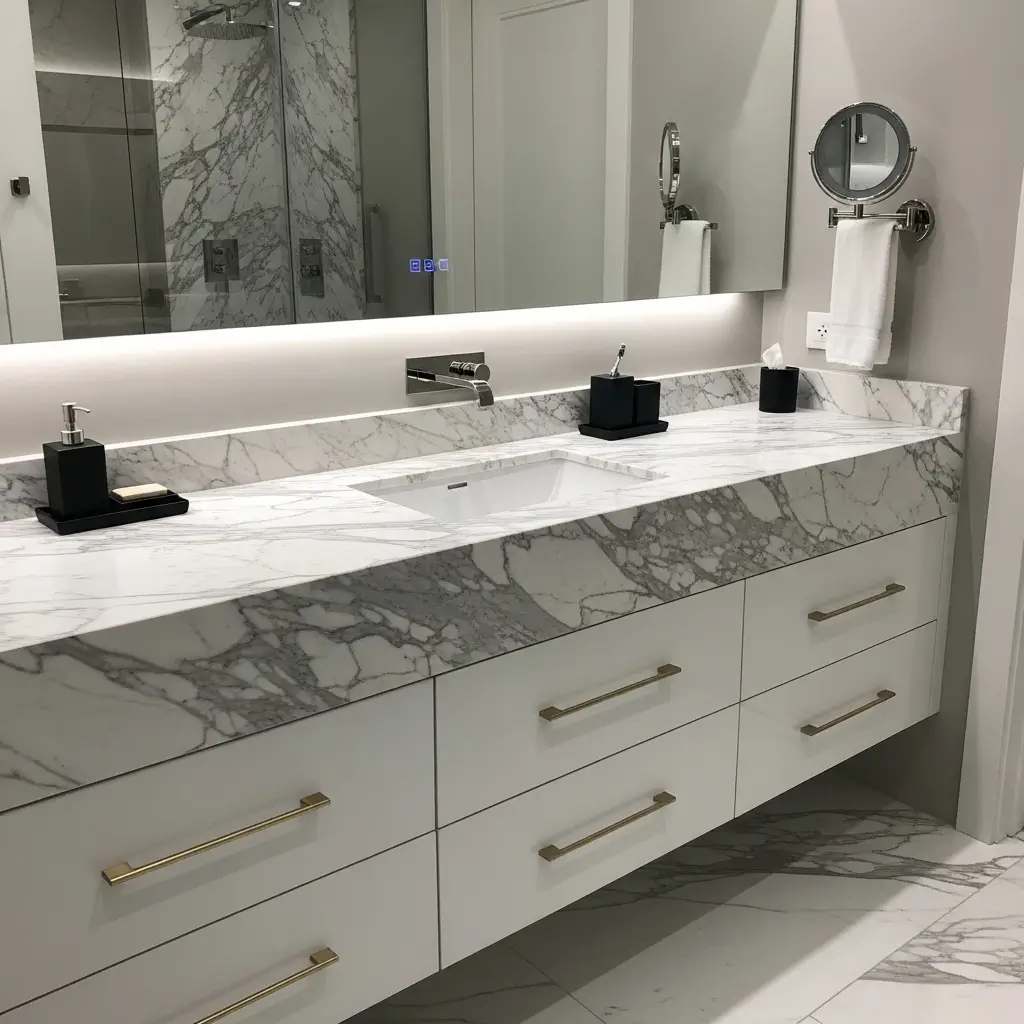
Sometimes you just want to feel fancy. A marble-topped vanity instantly elevates any bathroom from functional to luxurious. Yes, it’s an investment. Yes, it’s high-maintenance. No, you won’t regret it (probably).
I splurged on Carrara marble for our master bath renovation, and every morning feels like I’m getting ready in a high-end hotel. The natural veining patterns mean no two vanities look identical. The cool touch of real stone beats any synthetic material for that authentic luxury feel.
Marble vanities typically feature solid stone tops in Carrara, Calacatta, or Emperador marble. Cabinet styles range from traditional to ultra-modern, but the marble always stars. Expect to pay $1,000 to $5,000 just for the top, depending on size and marble type.
Living With Marble Reality
The truth about marble vanity tops:
- Sealing is mandatory – every 6-12 months, no exceptions
- Staining happens fast – makeup, toothpaste, everything leaves marks
- Etching is real – acidic products create permanent dull spots
- Cost includes installation – DIY marble is asking for disaster
- The look is unmatched – nothing really replicates genuine marble
FYI, engineered quartz that looks like marble exists and requires way less maintenance. But if you want the real thing, accept the commitment. It’s like dating someone really attractive but high-maintenance – worth it if you’re prepared 🙂
Scandinavian Light Wood Vanity
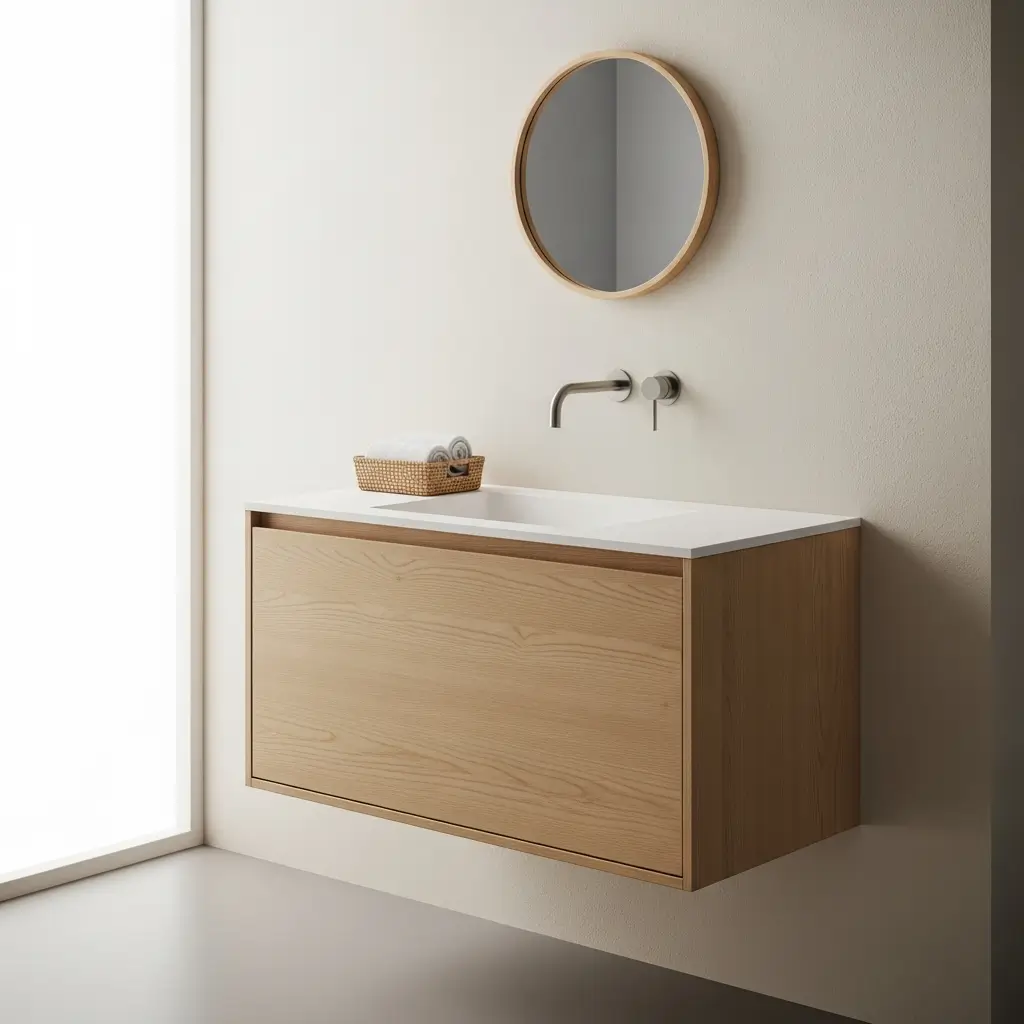
The Scandinavians figured out something we’re still catching up to: simple, functional, and beautiful aren’t mutually exclusive. Their vanity style reflects this with light woods, clean lines, and zero unnecessary frills.
After visiting Copenhagen, I came home and immediately ripped out my busy, over-decorated vanity. Replaced it with a simple white oak piece with flat fronts and integrated handles. The bathroom instantly felt calmer, like a space where I could actually relax.
Scandinavian vanities feature light woods like birch, ash, or white oak, often with natural or white-washed finishes. Hardware stays minimal – think edge pulls or push-to-open mechanisms. Colors stick to whites, light grays, and natural wood tones.
Creating That Nordic Calm
Essential elements for Scandi success:
- Prioritize function – every feature should have purpose
- Embrace negative space – not every surface needs filling
- Choose quality materials – better fewer, nicer things
- Keep colors neutral – save bold for artwork, not vanities
- Add plants – greenery warms up all that minimalism
The maintenance here is refreshingly simple. Light woods show less dust, minimal hardware means less to clean, and the simple design ages gracefully. Perfect for those who want style without the fuss.
Coastal Beach-Inspired Vanity
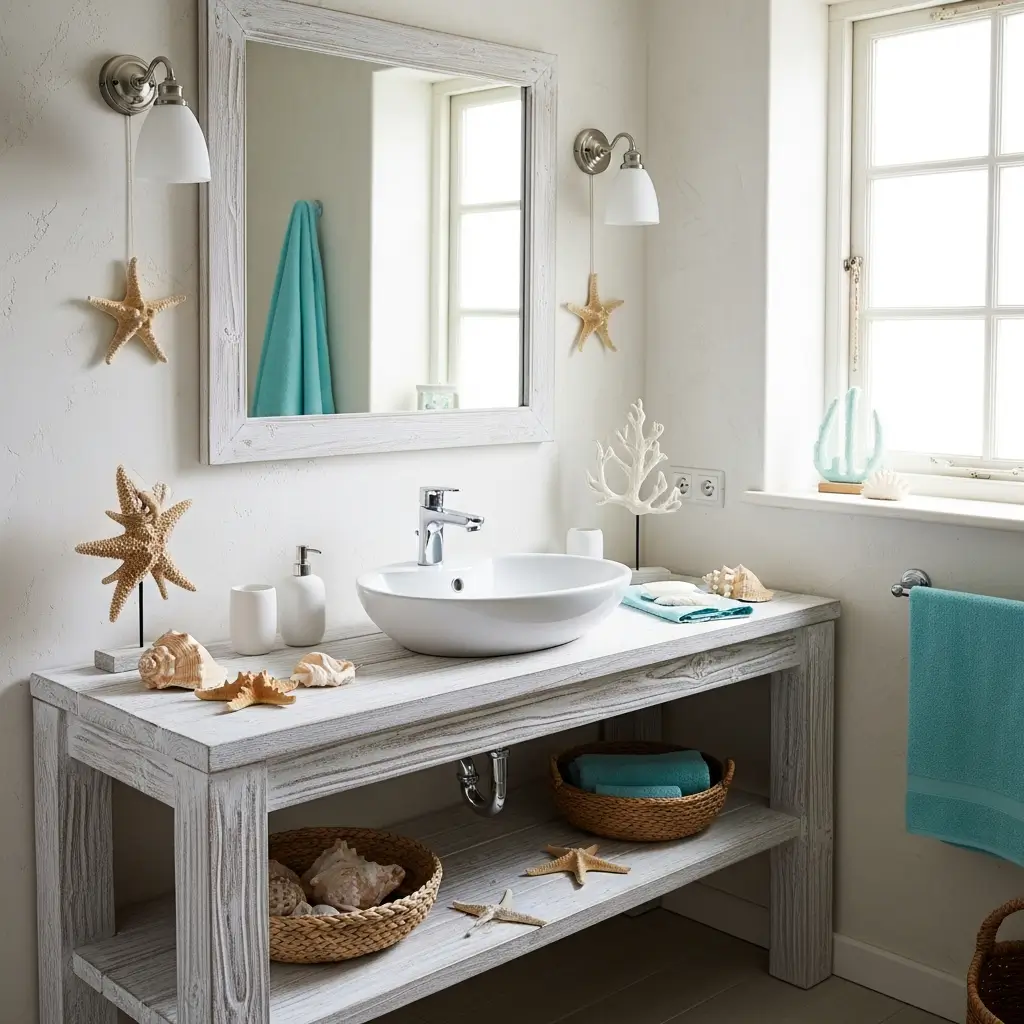
Want to feel like you’re on permanent vacation? A coastal-inspired vanity brings beach house vibes regardless of your actual proximity to water. This isn’t about nautical kitsch – modern coastal is sophisticated, not silly.
My beach house vanity experiment started with a standard white cabinet that I customized with beadboard panels and rope hardware. Added a white quartz top with subtle sand-colored veining, and suddenly my landlocked bathroom felt ocean-adjacent.
Coastal vanities typically feature weathered woods, white or light blue paint, and natural textures. Think shiplap details, louvered doors (like shutters), and hardware in brushed nickel or rope. Tops lean toward white or sand-colored quartz that mimics sea glass.
Coastal Without the Clichés
Skip the seashells and try these instead:
- Weathered finishes – driftwood gray or sun-bleached white
- Natural textures – rattan baskets, jute rope, woven details
- Glass elements – sea glass knobs or vessel sinks
- Light and airy colors – whites, sand, soft aqua
- Horizontal lines – shiplap or beadboard for subtle nautical nods
The beauty of coastal style is its flexibility. Go full beach cottage or just add subtle nods. Either way, the relaxed vibe makes morning routines feel less rushed.
Also Read: 15 Trendy Small Boho Bathroom Ideas and Colorful Designs
Space-Saving Corner Vanity
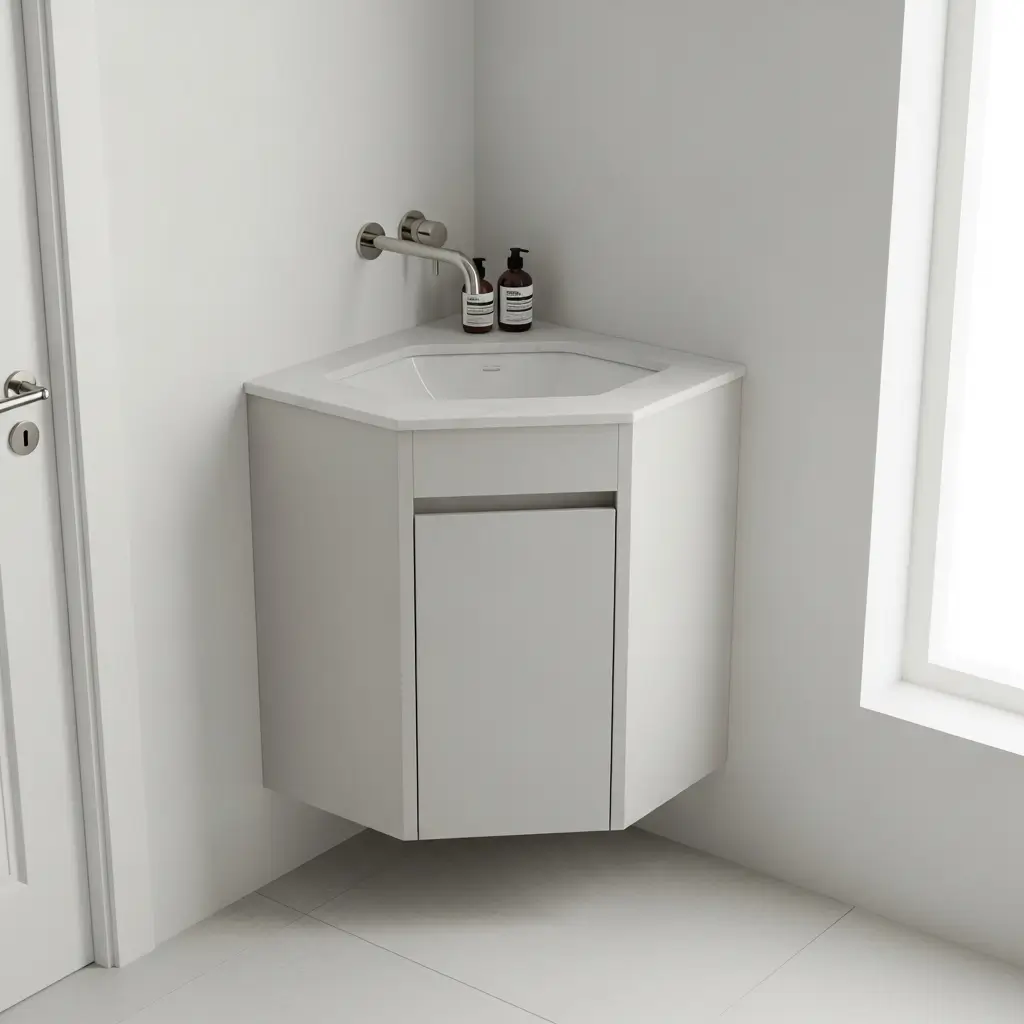
Corners: architecture’s most wasted space. A corner vanity turns that awkward angle into the bathroom’s hero. These geometric gems work especially well in powder rooms or small master baths where every inch counts.
I helped my mom install a corner vanity in her tiny guest bath, and it literally doubled her floor space. The triangular design tucks perfectly into the corner while still providing decent counter space and storage. Who knew geometry could be this practical?
Corner vanities come in triangular or curved designs, typically measuring 24 to 35 inches on each side. Storage options include cabinet doors that follow the angle or open shelving that embraces it. Some feature corner sinks; others offset the basin for more counter space.
Corner Vanity Success Strategies
Make the most of your corner situation:
- Measure twice, order once – corners are unforgiving with sizing errors
- Consider the door swing – ensure cabinet doors clear walls
- Add corner shelves above – maximize vertical corner space
- Choose appropriate fixtures – standard faucets might not fit
- Light it properly – corners can feel dark without good lighting
The biggest corner vanity mistake? Thinking they’re only for tiny bathrooms. Even large bathrooms benefit from corner vanities when you want to maximize floor space for other features.
Making Your Vanity Decision
After all this vanity talk, here’s my honest advice: choose based on your actual life, not your Instagram dreams. That marble top looks gorgeous but requires commitment.
The floating vanity seems spacious but needs wall reinforcement. The farmhouse style feels cozy but demands maintenance.
Consider your daily routine, cleaning tolerance, and budget reality. Measure your space three times. Check your plumbing situation. Factor in installation costs.
Then choose the vanity that makes you excited to start your day – because honestly, we spend enough time in our bathrooms to deserve something we genuinely love.
Whether you go minimal and modern or vintage and ornate, make sure it works for your life. The best vanity is one that functions beautifully and looks good doing it.
Everything else is just details – important details, sure, but details nonetheless. Now stop procrastinating and go measure your bathroom. That sad builder-grade vanity isn’t going to replace itself.