10 Trendy Bedroom Furniture Layout Ideas to Inspire You
- Bedroom Design
 Ben
Ben- 0
- 30 minutes read
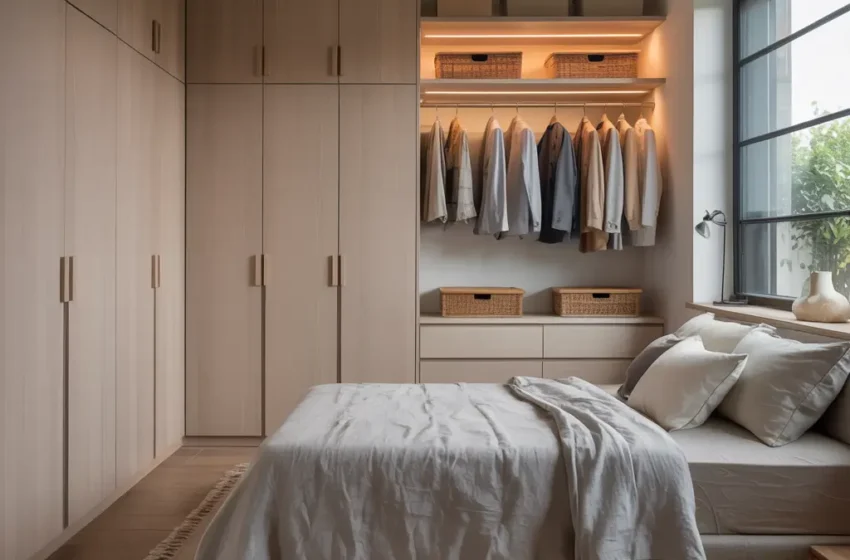
Let’s be honest – arranging bedroom furniture can feel like trying to solve a puzzle with too many pieces and no picture on the box. I spent three years living with my bed awkwardly angled in a corner simply because I couldn’t figure out a better solution.
Then I helped a friend rearrange her room, which led to helping another friend, and before I knew it, I had become the go-to person in my social circle for bedroom layout advice. (Not the strangest skill to be known for, but certainly unexpected!)
What I’ve learned is that the right furniture layout can completely transform how you experience your bedroom. It’s not just about making things fit – it’s about creating flow, functionality, and a space that feels right for your specific needs.
Whether you’re dealing with a tiny studio apartment or a spacious master suite, these ten layout ideas will help you maximize your bedroom’s potential.
Let’s break down some game-changing arrangements that might just make you see your bedroom in a whole new light.
Minimalist Small Bedroom Layout
Making the Most of Minimal Space
Small bedrooms can quickly feel cramped and chaotic, but a minimalist approach to layout can create surprising spaciousness. The key is being ruthlessly selective about what furniture actually deserves precious floor space.
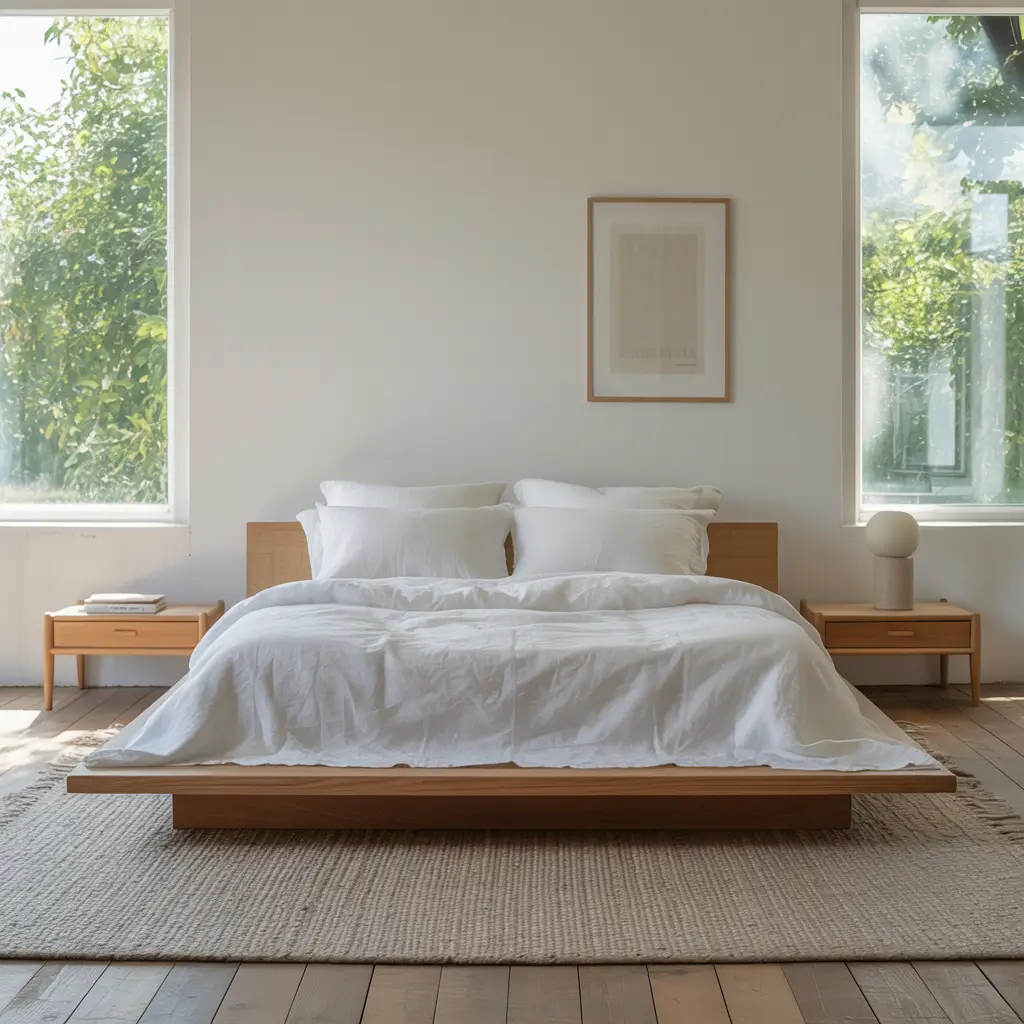
I transformed my 10×11 bedroom using minimalist principles, and the difference was dramatic. I positioned a simple platform bed against the center of the longest wall, flanked by two floating nightstands mounted directly to the wall. These floating pieces created the illusion of more floor space while still providing essential functionality. Instead of a dresser, I opted for under-bed storage containers and installed a slim wardrobe in one corner.
The beauty of minimalist layouts is that they force you to consider what you genuinely need. Do you really require two nightstands? Could a wall-mounted shelf replace that bulky dresser? Every piece needs to earn its place.
Essential Elements for Minimalist Layouts:
• Platform or wall-mounted beds without bulky frames
• Floating nightstands or shelves instead of traditional tables
• Vertical storage solutions that maximize height not width
• Multi-functional furniture pieces that serve multiple purposes
• Strategic negative space that allows for easy movement
What makes this layout work so well in small spaces? It’s all about the visual plane. When furniture appears to float and you can see underneath pieces, your eye travels farther, making the room feel larger than it actually is. I learned this trick after visiting a friend’s tiny New York apartment that somehow felt spacious despite being half the size of mine.
Cozy Corner Bed Arrangement

Embracing the Diagonal
Have you ever considered placing your bed in a corner? While conventional wisdom says to center beds on walls, corner arrangements can unlock surprising benefits in rooms with challenging dimensions or multiple doorways.
I helped a friend with an awkwardly shaped bedroom by positioning her queen bed into the corner, creating an immediate sense of coziness and freeing up the center of the room for a small seating area. We placed a single nightstand along the accessible side of the bed and mounted a small shelf on the wall for the corner side. The transformation was impressive – her room went from feeling cramped to feeling intimate and purposeful.
The corner bed layout creates a natural division of space, essentially creating zones within your bedroom. You gain a more substantial open area for other activities, whether that’s a desk, a reading chair, or simply more room to move around.
Making Corner Layouts Work:
• Angle a headboard across the corner or use pillows to create a comfortable corner arrangement
• Install wall sconces or pendant lights to eliminate the need for a second nightstand
• Use the freed-up central floor space for a seating area or workspace
• Consider a corner shelf unit above the bed for additional storage
• Keep the opposite corner open to prevent the room from feeling unbalanced
The biggest objection people have to corner arrangements? Access on both sides of the bed. This layout obviously works better for single sleepers, but I’ve seen couples make it work by using bedside wall shelves or hanging pendants for the partner sleeping on the inside. Sometimes the trade-off for more usable floor space elsewhere is worth it.
Symmetrical Twin Bed Setup
Double the Style, Double the Function
Twin bed layouts aren’t just for kids’ rooms anymore. A symmetrical twin bed arrangement creates a versatile, balanced space that works beautifully for guest rooms, shared bedrooms, or even primary bedrooms for singles who want a flexible setup.
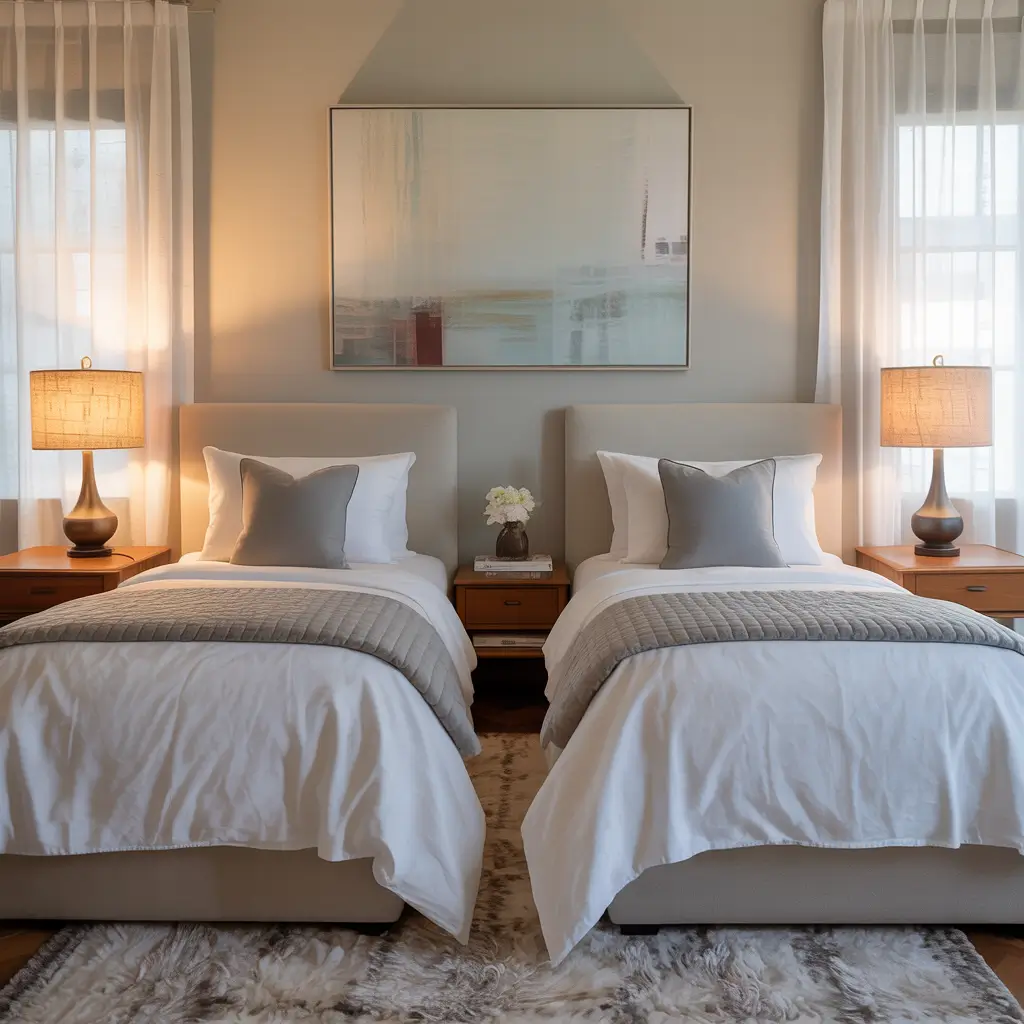
My sister designed her guest room with two twin beds positioned with their headboards against the longest wall, separated by a shared nightstand. The symmetry creates this immediate sense of intention and design consciousness. When she has couples visiting, she pushes the beds together to create a king – this flexibility has made her guest room incredibly functional.
What makes this layout special is the perfect balance it creates. The mirrored arrangement is visually satisfying and creates a sense of order that can make even small spaces feel well-designed rather than cramped.
Creating Perfect Symmetry:
• Position twin beds with headboards against the same wall, with equal space from the edges
• Use a single, shared nightstand or two matching ones
• Center a large dresser or desk on the opposite wall
• Hang identical wall sconces above each bed to save nightstand space
• Add a shared bench at the foot of both beds
Ever noticed how boutique hotels often use this arrangement? It’s because it creates a distinct design statement while maximizing flexibility. The twin bed layout allows the room to accommodate different types of guests while maintaining a cohesive, intentional look. In my own experience, rooms with this layout tend to photograph exceptionally well – bonus points if you’re into sharing your space on social media. 🙂
Aslo Read: 12 Glamorous Luxury Bedroom Furniture Ideas and Dreamy Setups
Multi-Functional Studio Bedroom Layout
When Your Bedroom Is Everything
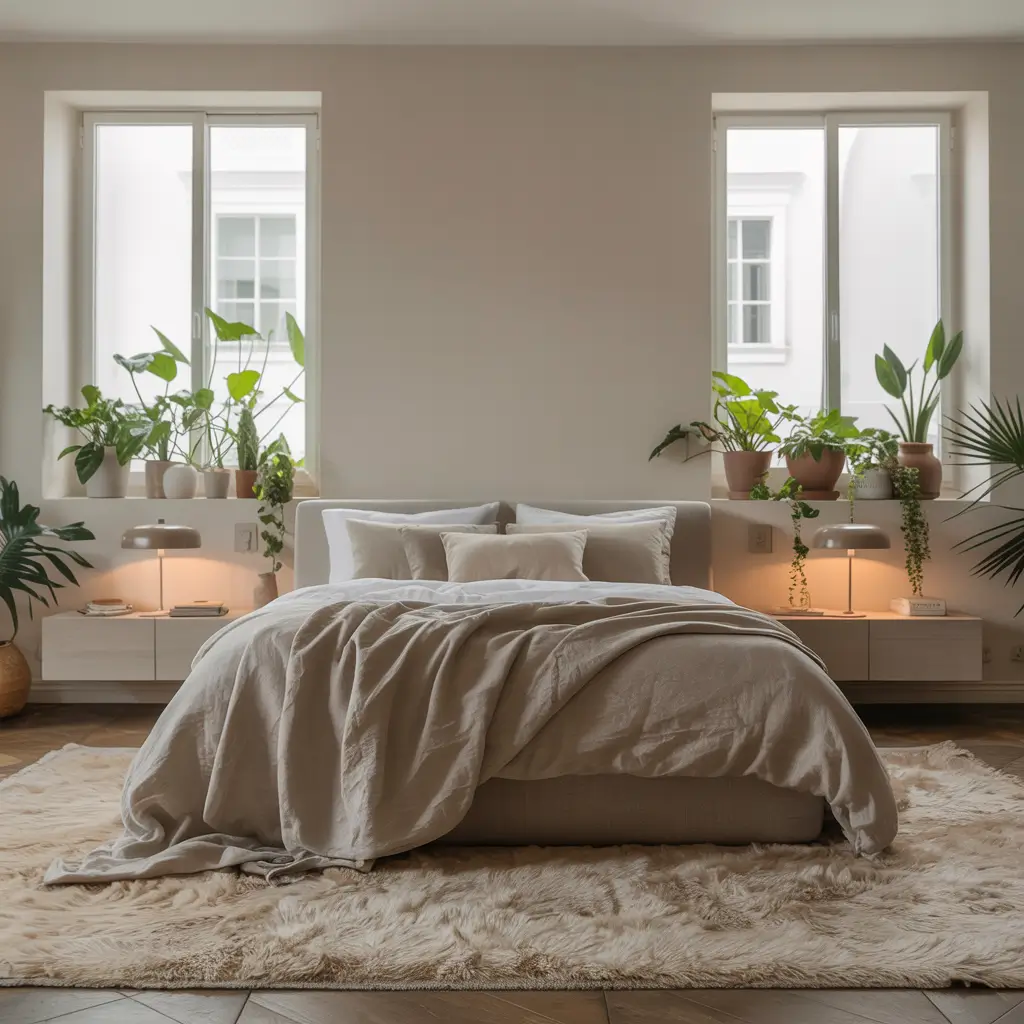
Studio apartment dwellers, I see you! When your bedroom also serves as your living room, dining room, and possibly your office, the layout needs to work overtime to create distinct functional zones within a single space.
I lived in a 400-square-foot studio for two years, and finding the right layout was a game-changer. I positioned my bed along one wall but used a medium-height bookshelf as a room divider, creating separation between my “bedroom” and “living room” areas. A small round table served as both dining table and desk, positioned near the window for natural light. The key was creating the illusion of separate spaces without actual walls.
The multi-functional layout hinges on furniture that can serve multiple purposes and strategic positioning that creates visual boundaries. With thoughtful arrangement, even a tiny studio can feel like it has distinct areas for different activities.
Studio Layout Strategies:
• Use room dividers like bookshelves, curtains, or folding screens to create separate zones
• Position the bed against a wall rather than floating it to maximize open floor space
• Choose furniture that serves multiple functions (sofa beds, drop-leaf tables, storage ottomans)
• Create a consistent path for movement through the space
• Use area rugs to define different functional zones visually
The biggest challenge with studio layouts? Privacy when guests visit. I found that a well-placed folding screen could be stored away most of the time but quickly deployed when friends came over. This temporary wall gave my bedroom area some privacy without requiring permanent architectural changes in my rental.
Floating Furniture for Open Space
Breaking Free from the Walls
One of the most transformative layout changes you can make is pulling your furniture away from the walls. This counterintuitive approach actually makes rooms feel larger and more intentionally designed.
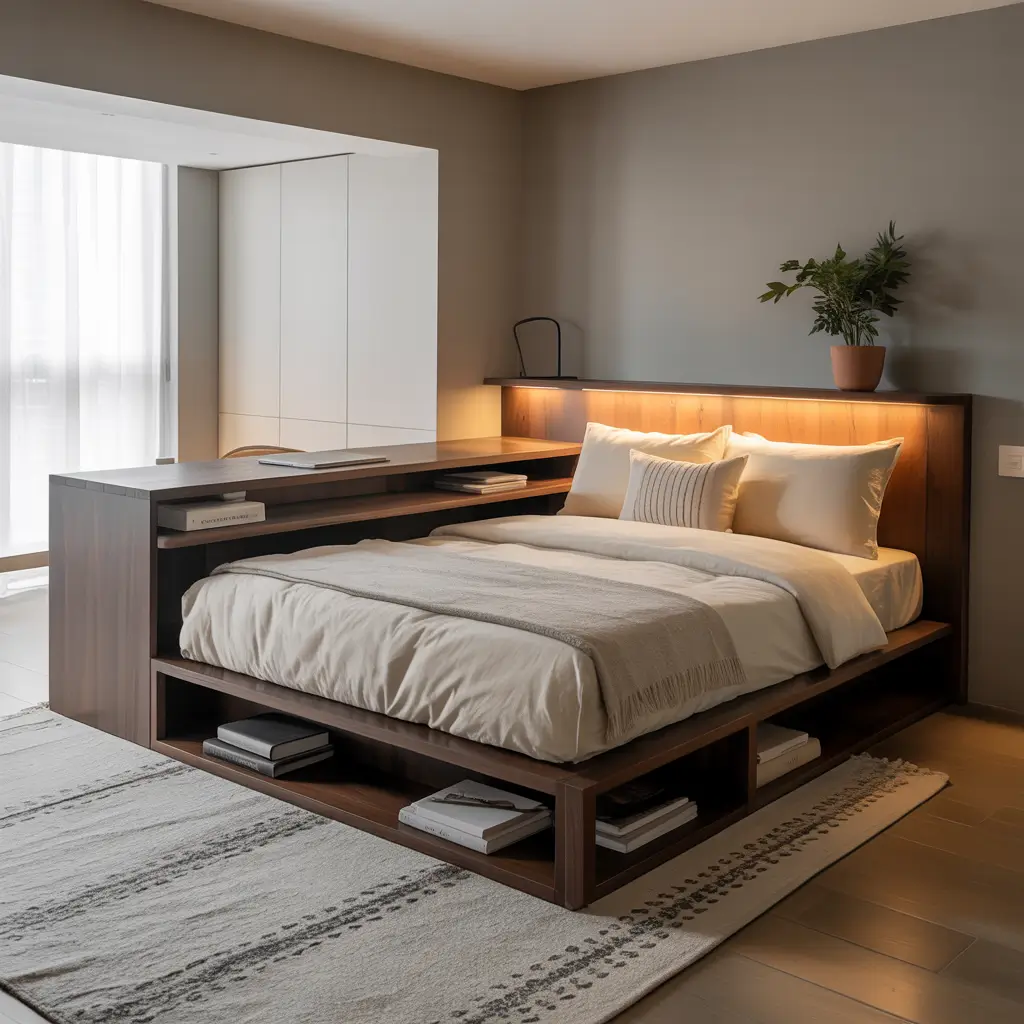
In my current bedroom, I floated my king bed about 18 inches from the wall, creating space for a narrow console table behind the headboard that serves as additional storage and display space. This simple change made my room feel like a high-end hotel suite rather than a standard bedroom. The bed became a centerpiece rather than just another piece pushed against a wall.
Floating furniture works by creating circulation paths around pieces, which makes even large furniture feel less imposing. It also allows you to highlight architectural features like windows or fireplaces by positioning furniture to frame these elements rather than block them.
Tips for Floating Furniture:
• Pull the bed away from the wall by at least 12 inches (more if space allows)
• Position dressers perpendicular to walls to create distinct areas
• Use the space behind floating pieces for additional storage or display
• Ensure pathways around furniture are at least 30 inches wide for comfortable movement
• Anchor the layout with a large area rug that extends beyond the floating pieces
The most common concern about floating furniture? That it wastes space. But in my experience, the improved flow and more sophisticated feel are worth sacrificing a few square feet. Plus, the space behind floating pieces isn’t wasted – it becomes usable in new and interesting ways, like the console behind my bed that now houses books, a small lamp, and plants.
L-Shaped Bedroom Layout for Efficiency

Maximizing Corner Potential
L-shaped layouts use the natural architecture of corners to create efficient, functional bedroom arrangements. This approach makes excellent use of challenging room dimensions by embracing rather than fighting against them.
My cousin’s attic bedroom has sloped ceilings and an awkward layout that made traditional furniture arrangements nearly impossible. We created an L-shaped layout by positioning her bed along one wall and her desk and storage along the perpendicular wall, forming an L. This arrangement worked with the room’s quirks rather than against them, turning limitations into features.
The L-shaped layout creates natural activity zones within the room. One arm of the L typically serves as the sleeping area, while the other becomes workspace, storage, or a dressing area. This division happens organically based on the furniture arrangement, without needing physical dividers.
Creating an Effective L-Shape:
• Position the bed along one wall with the foot of the bed pointing toward the adjacent wall
• Place storage furniture along the perpendicular wall
• Use the inner corner of the L for a reading nook or vanity area
• Keep the center of the room open for easy circulation
• Consider lighting for both arms of the L independently
What I love about L-shaped layouts is how they naturally create cozy nooks within the larger space. In my cousin’s room, the corner where the two arms of the L meet became this perfect spot for a comfortable chair and floor lamp – an instant reading nook that feels separated from the sleeping area despite being in the same room.
Also Read: 10 Modern Dark Furniture Bedroom Ideas with Bold Colors
Window-Focused Reading Nook Arrangement
Bringing the Outside In
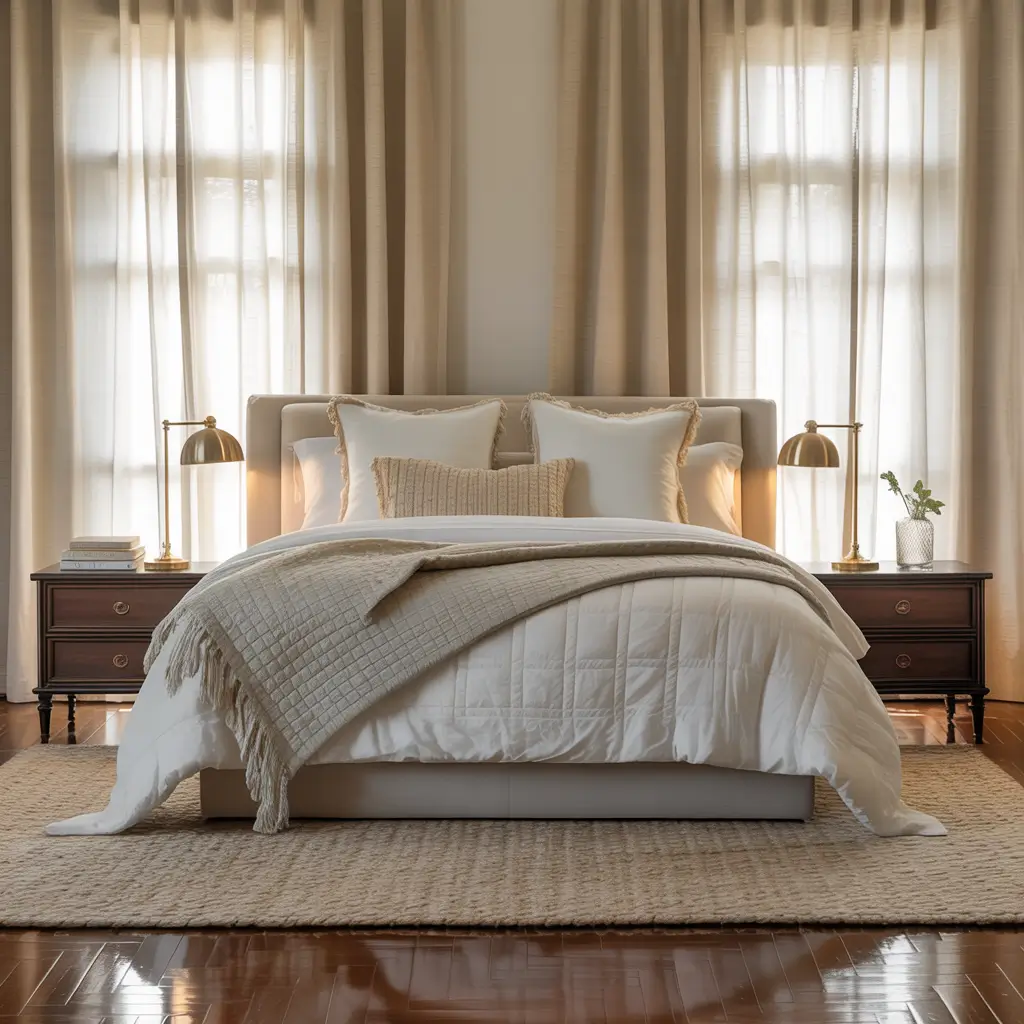
If you’re blessed with a bedroom that has a beautiful window, designing your layout to highlight this feature can transform the entire feeling of the room. A window-focused layout celebrates natural light and creates purposeful connection with the outdoors.
I redesigned my bedroom to focus on a large window overlooking a garden by positioning my reading chair directly in front of it, with a small side table for books and tea. The bed sits perpendicular to the window wall rather than facing it, which allows morning light to filter in without shining directly in my eyes when I’m trying to sleep. This arrangement has made my morning routine so much more pleasant – I actually look forward to waking up now.
The window-focused layout works by treating the window as a feature to be highlighted rather than just another wall element. This approach is particularly effective if your window offers a pleasant view or abundant natural light.
Window-Centric Layout Tips:
• Create a dedicated reading or sitting area directly adjacent to the window
• Position the bed to receive indirect rather than direct light from the window
• Use window treatments that can be fully opened to maximize the effect
• Keep furniture low near windows to avoid blocking light
• Arrange mirrors to reflect and amplify natural light throughout the space
Have you noticed how your mood improves in naturally lit spaces? There’s actual science behind this – natural light exposure increases serotonin levels and improves sleep quality. By arranging your bedroom to maximize window access, you’re not just making a design choice; you’re making a wellness choice. IMO, this makes window-focused layouts worth considering even if you have to compromise elsewhere.
Walkaround King Bed Centerpiece Layout
Making a Grand Statement
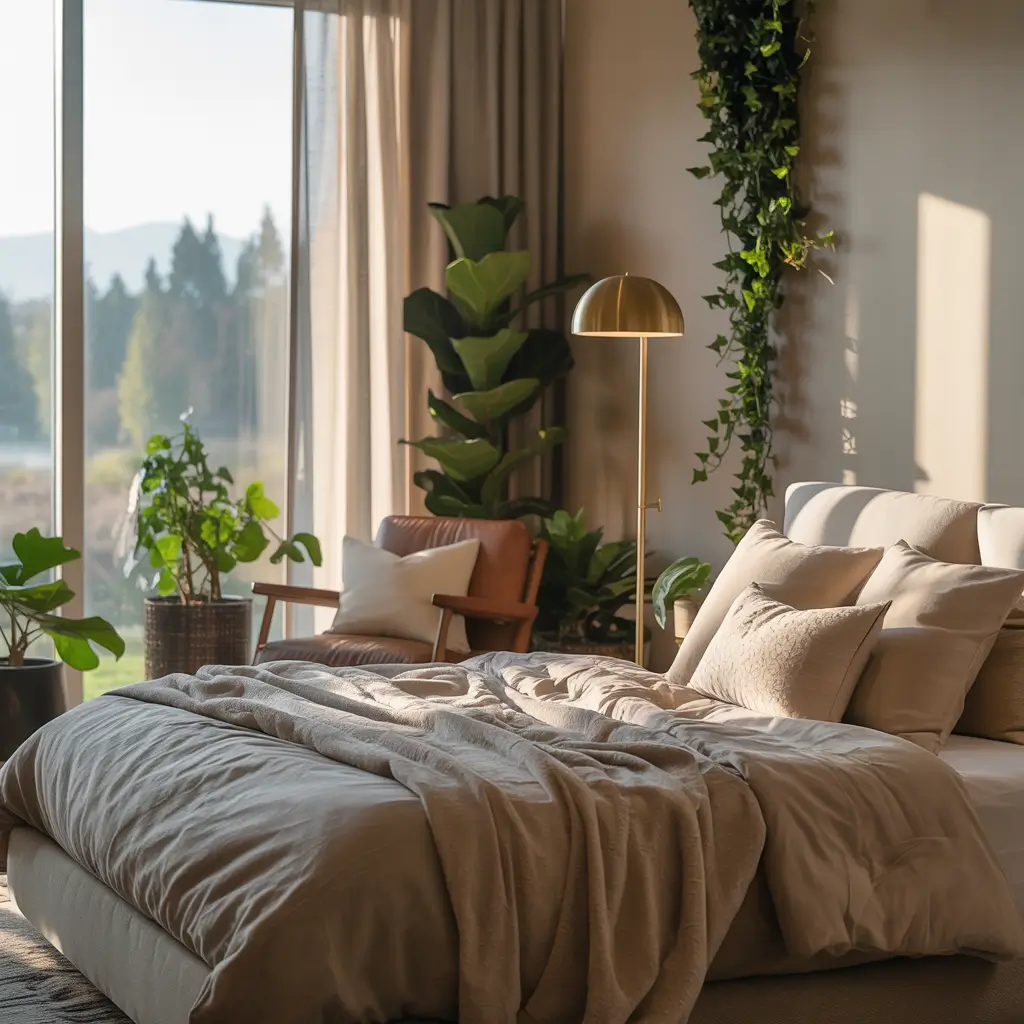
For larger bedrooms, centering a king bed with space on all sides creates a luxurious hotel-like atmosphere. This layout treats your bed as the undeniable focal point of the room, giving it the prominence it deserves.
I helped design a friend’s master bedroom using this approach, and the result was stunning. We centered her king bed on the wall opposite the door, leaving approximately three feet of space on all three sides. Matching nightstands flanked the bed, while a bench sat at its foot. This arrangement created an immediate sense of symmetry and importance when entering the room.
The walkaround layout works because it respects the bed’s role as the most important piece in a bedroom. By giving it space on all sides, you create a sense of importance and luxury. This arrangement also makes practical tasks like making the bed much easier since you can access it from all sides.
Centerpiece Bed Layout Essentials:
• Center the bed on the wall opposite the entry door whenever possible
• Maintain at least 30 inches of clearance on all three sides of the bed
• Use matching nightstands to enhance the symmetrical effect
• Position a dresser or vanity on a different wall to balance the space
• Consider a statement light fixture above the bed to emphasize its importance
FYI, this layout requires the most square footage of any arrangement we’re discussing. You need approximately 12 by 14 feet minimum to make it work comfortably with a king bed. If you have the space, though, it creates an undeniable sense of luxury that other layouts can’t quite match. When guests see a bedroom arranged this way, they instantly recognize it as the primary bedroom.
Closet-Integrated Bedroom Layout
Seamless Storage Solutions
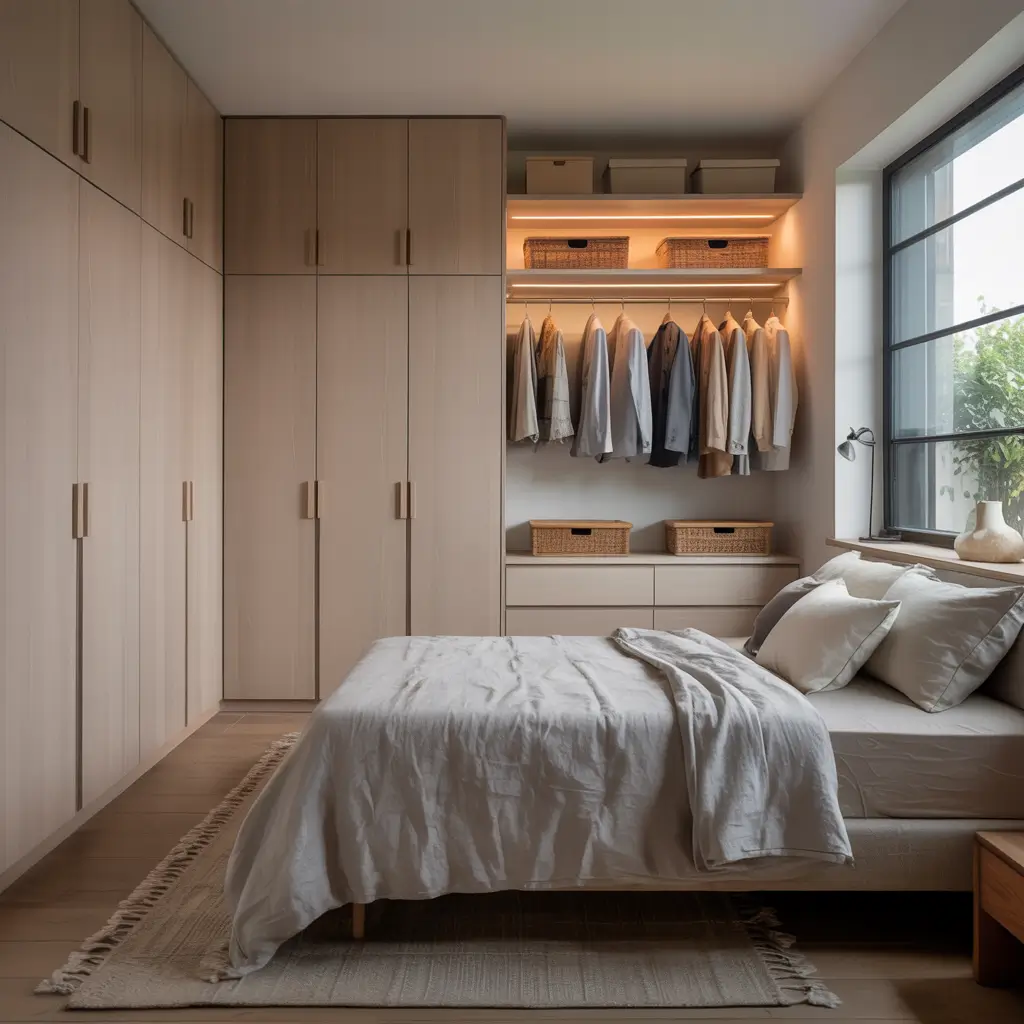
A closet-integrated layout treats your storage as an integral design element rather than an afterthought. This approach creates a seamless flow between sleeping and dressing areas for maximum efficiency in your daily routine.
I redesigned my bedroom to better integrate with my small walk-in closet by positioning my dresser as a natural transition piece between the sleeping area and the closet entrance. I also added a small vanity inside the closet entrance, creating a complete dressing area that connects logically to both the closet and the bedroom. This layout has streamlined my morning routine significantly.
What makes this layout special is how it acknowledges the natural connection between sleeping, dressing, and storage. Instead of treating these as separate functions, the closet-integrated approach creates a logical flow that makes everyday routines more efficient.
Closet Integration Tips:
• Position the bed to create a natural pathway to the closet
• Use furniture to define the transition between sleeping and dressing areas
• Consider replacing closet doors with curtains for easier access and visual flow
• Install a vanity or dressing table near the closet entrance
• Use consistent lighting design throughout both areas to create cohesion
One common mistake? Blocking closet access with poorly positioned furniture. I’ve seen so many bedrooms where accessing the closet requires an awkward shuffle around a bed corner or dresser. A well-planned closet-integrated layout eliminates these pinch points, ensuring smooth movement between areas. After implementing this layout in my own room, I’ve found I’m much more likely to actually put clothes away rather than draping them over chairs – a small but significant lifestyle improvement. :/
Also Read: 10 Stylish Bedroom Furniture Sets Ideas and Modern Decor Looks
Scandinavian Style Open Layout
Breathing Room for Better Living
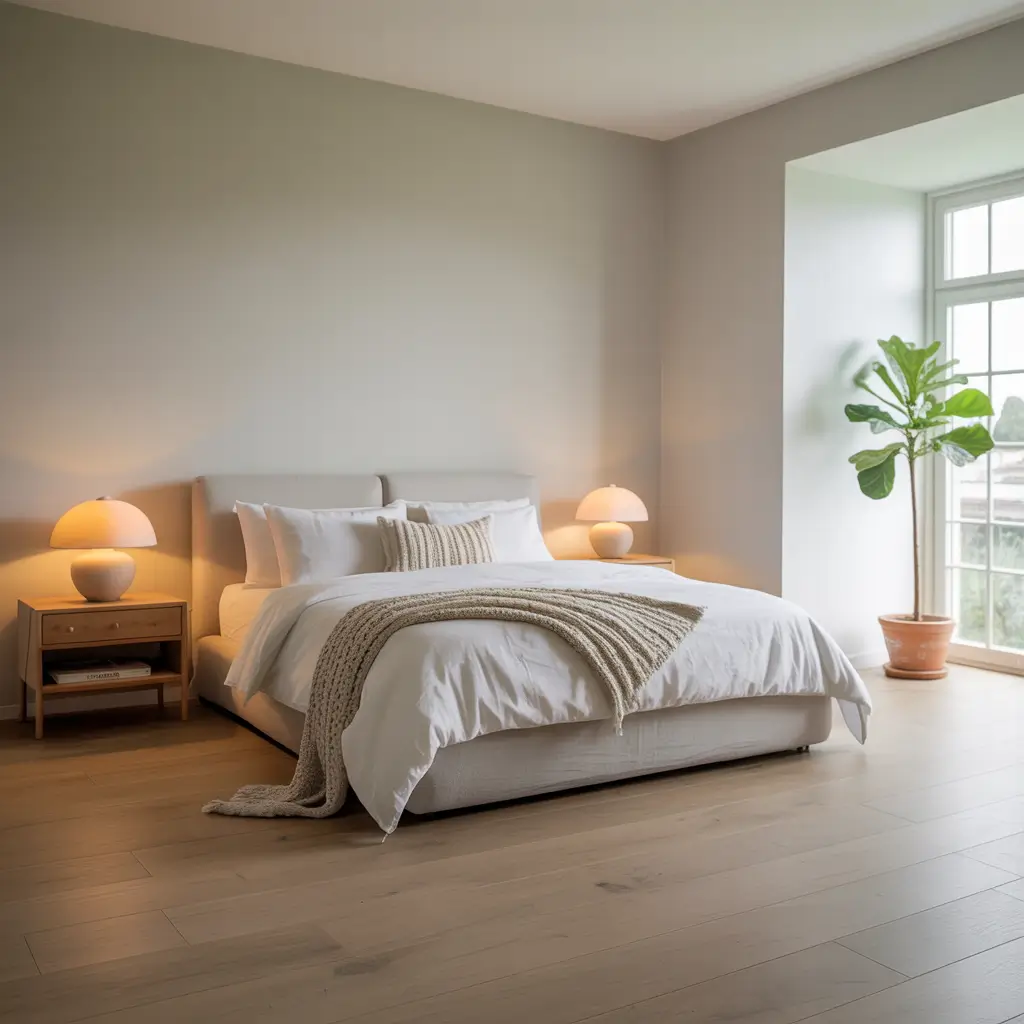
Scandinavian design philosophy embraces open space as an essential element, not just empty area waiting to be filled. This layout approach prioritizes light, air, and simplicity to create peaceful, functional bedrooms.
I transformed my guest bedroom using Scandinavian layout principles, selecting just a few essential pieces – a simple bed frame, one nightstand, and a minimal dresser – and positioning them to maximize open floor space and natural light. The room instantly felt calmer and more intentional, despite having fewer furniture pieces than before.
The Scandinavian open layout works by rejecting the impulse to fill every available space. Instead, it treats empty space as a design element that contributes to the room’s function and feeling. This approach is particularly effective in creating bedrooms that feel like peaceful retreats from busy lives.
Scandinavian Layout Elements:
• Position the bed to maximize natural light exposure
• Keep furniture to a minimal, functional selection
• Maintain clear pathways and open floor space
• Use multifunctional pieces to reduce the number of items needed
• Position furniture to emphasize views to windows or nature when possible
What makes Scandinavian layouts feel so good? They incorporate hygge – that untranslatable Danish concept that encompasses coziness, comfort, and contentment. By creating open, uncluttered spaces with carefully selected furniture, you’re making room for relaxation and wellbeing rather than just stuff. After adopting this approach in my home, I’ve noticed I sleep better and wake up feeling more refreshed.
Making the Right Layout Choice for Your Needs
Now that we’ve explored ten different bedroom layout approaches, you might be wondering which one is right for you.
The truth is, the perfect layout depends on your specific needs, room dimensions, and lifestyle.
I recommend starting with a clear assessment of how you actually use your bedroom. Do you just sleep there, or do you also read, work, exercise, or watch TV? Do you share the space with a partner who has different needs?
Are there architectural features you want to highlight or minimize? Your answers will guide your layout decisions.
Practical considerations matter too. Measure your room dimensions and existing furniture before making any changes. Create a simple floor plan on paper or use one of the many free room planning apps available.
This preparation will save you from the back-breaking experience of moving furniture multiple times because something doesn’t fit as expected (a lesson I learned the hard way).