12 Trendy Best Home Interior Design Ideas to Transform Rooms
- Home Interior Design
 Ben
Ben- 0
- 65 minutes read
Let’s be real—scrolling through those perfect Instagram homes makes you wonder if you accidentally moved into a storage unit instead of an actual house.
You look around at your mismatched furniture, that weird empty corner you’ve been ignoring for two years, and think “how did I get here?”
I’ve spent the last decade obsessing over home design (my bank account wishes I hadn’t), and here’s what I’ve learned: great interior design isn’t about having unlimited money or some magical talent.
It’s about understanding what works, why it works, and having the guts to actually implement it.
So forget those intimidating design magazines that make you feel inadequate. Let’s talk about 10 genuinely achievable interior design ideas that’ll transform your home from “I guess I live here” to “please come over and admire my excellent taste.”
These aren’t just pretty concepts—they’re practical approaches that real people with real budgets can actually pull off.
Ready to stop making excuses and start making your home beautiful? Let’s go.
Minimalist Modern Living Room Makeover
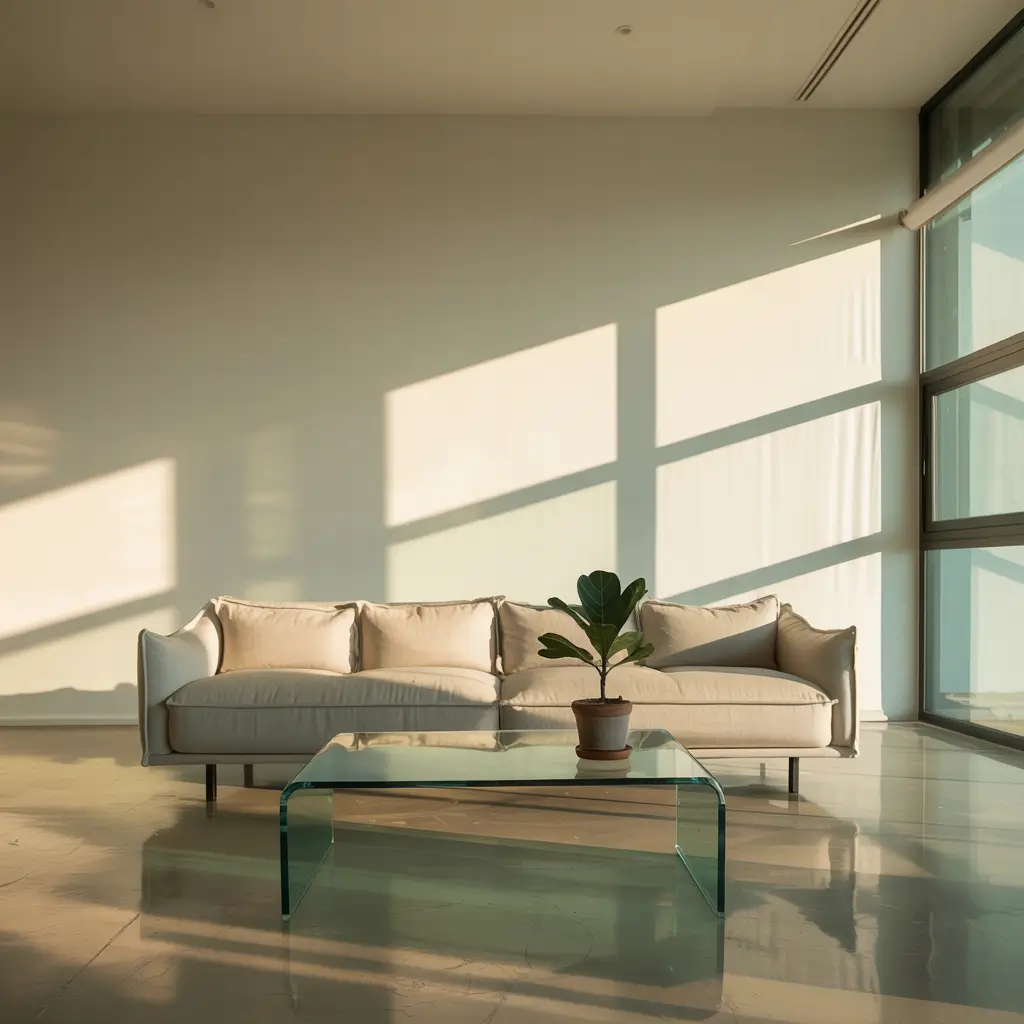
Your living room probably has too much stuff in it. There, I said it. And I’m not even sorry because mine did too until I embraced minimalist modern design.
The Clean Slate Approach
Minimalist modern living rooms work on a simple principle: every item must justify its existence. That decorative bowl you bought three years ago because it was on sale? If it doesn’t serve a purpose or genuinely make you happy, it’s gotta go.
Start by clearing everything out—yes, everything—and only bring back what you actually need:
- One great sofa in a neutral color with clean lines
- Minimal coffee table (glass, wood, or metal—nothing ornate)
- Strategic seating (maybe two accent chairs, max)
- One statement piece (could be art, a unique chair, or a stunning light fixture)
- Hidden storage for all the life stuff you actually need
The Color Psychology
Modern minimalist living rooms typically stick to a restricted palette of 2-3 colors. This isn’t boring—it’s intentional. Choose from:
- Crisp whites with warm wood tones
- Greys with black accents
- Beige with natural textures
- White with one bold accent color (navy, forest green, or charcoal)
The magic happens when you layer different textures within this limited palette. A smooth leather sofa, nubby linen pillows, sleek metal side table, and chunky wool throw create visual interest without color chaos.
What Actually Makes It Work
Here’s the secret most people miss: negative space is a design element. That empty wall? Leave it empty. That bare corner? Embrace it. Not every surface needs something on it.
I redesigned my living room last year using these principles, and guests always comment on how “spacious” it feels—despite the room being literally the same size. The difference? I removed about 40% of my furniture and 70% of my accessories. Turns out, less really is more 🙂
Lighting That Elevates Everything
Modern minimalist spaces need exceptional lighting because you can’t hide behind clutter and decorative distractions:
- One statement overhead fixture (think sculptural pendant or geometric chandelier)
- Floor lamp with clean lines for task lighting
- Recessed lighting if your budget allows
- Natural light maximized through simple window treatments
The goal? Layers of light at different levels creating ambiance without fussiness.
Cozy Scandinavian Bedroom Designs
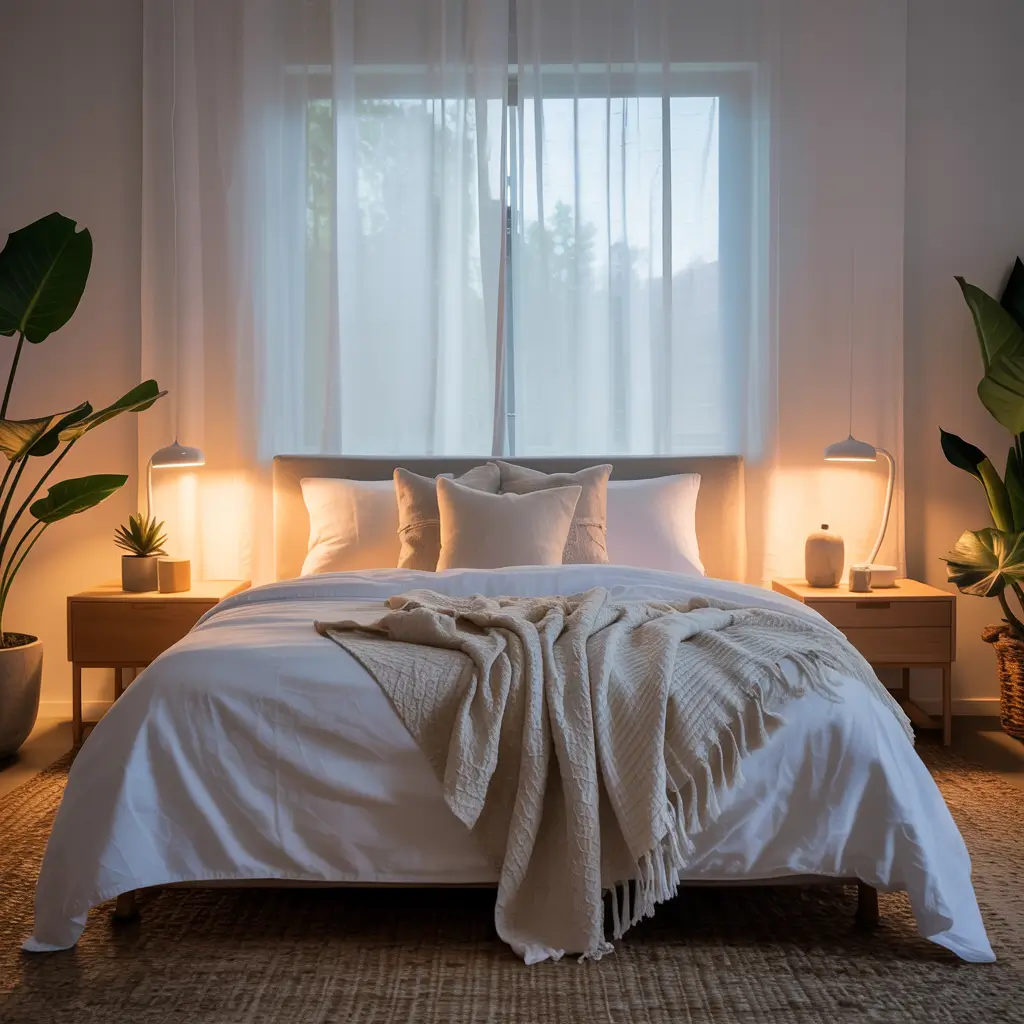
Scandinavian design proves you can have minimalism AND warmth—which honestly feels like design magic.
The Hygge Foundation
Danish hygge (that untranslatable concept of cozy contentment) transforms bedrooms into actual sanctuaries. This approach prioritizes comfort without sacrificing clean aesthetics.
Essential Scandi bedroom elements:
- Light wood furniture in natural finishes (oak, ash, birch)
- White or very light grey walls reflecting maximum light
- Layered textiles in natural materials
- Minimal but meaningful decor
- Plants bringing life to neutral spaces
- Soft, warm lighting at multiple levels
Texture Layering Masterclass
Since Scandi bedrooms use limited colors, texture does the heavy lifting:
- Linen sheets in warm white
- Cotton waffle-weave blanket
- Chunky knit throw across the foot of the bed
- Sheepskin rug beside the bed
- Velvet or textured pillows
- Natural fiber basket for storage
See what’s happening? Five different textures, all in coordinating neutral tones, creating depth and visual interest without pattern chaos.
The Scandi Color Approach
Keep your palette light, bright, and nature-inspired:
- Warm whites and soft greys as your base
- Natural wood tones throughout
- One muted accent color (dusty blue, sage green, or soft blush)
- Black accents used sparingly for definition
The result? Bedrooms that feel spacious, calm, and genuinely restful.
Making It Personal
Scandi design isn’t cold minimalism—it’s warm minimalism. Add personality through:
- Simple framed photography or art
- A single beautiful plant (maybe a fiddle leaf fig)
- Candles in simple holders (Scandinavians love candles for good reason)
- One meaningful object displayed intentionally
I helped my friend transform her cluttered bedroom into a Scandi sanctuary last summer, and she claims her sleep quality improved dramatically. Coincidence? Maybe. But I’m betting the calm, uncluttered environment played a role.
Elegant Open-Concept Kitchen Inspirations
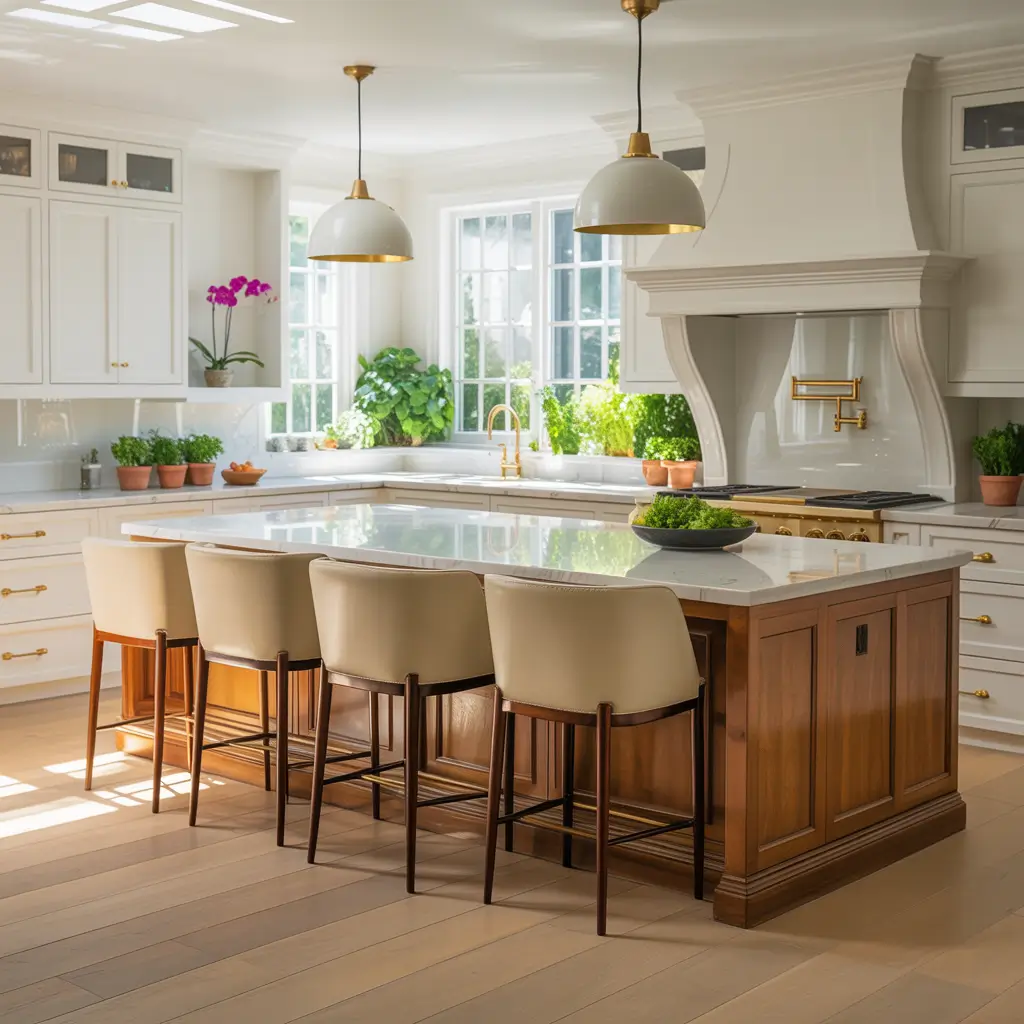
Open-concept kitchens dominate modern homes, but most people struggle to make them feel cohesive and elegant rather than chaotic.
Creating Zones Without Walls
The challenge with open concepts? Defining spaces without physical barriers. Here’s how to nail it:
- Kitchen island as boundary: Creates natural separation between kitchen and living area
- Consistent flooring: Unifies the space visually
- Strategic lighting: Different fixtures define different zones
- Color blocking: Kitchen cabinets in one tone, living area in complementary tones
- Furniture placement: Sofa backs creating implied walls
The Elegant Material Palette
Open-concept elegance requires cohesive material choices that flow throughout the space:
- Countertops: Quartz or marble in neutral tones
- Cabinets: Shaker-style or flat-panel in sophisticated colors
- Hardware: Matching metal finish throughout (brass, black, or polished nickel)
- Backsplash: Subway tile, marble, or simple patterns
- Flooring: Wide-plank hardwood or large-format tile
The key? Choose materials that look expensive but suit your actual budget. Modern quartz often looks more luxurious than cheap granite, and well-painted cabinets beat builder-grade wood.
Color Strategies That Work
For open-concept elegance, consider these proven color approaches:
- All-white kitchen with warm wood accents
- Two-tone cabinets (dark lowers, light uppers or vice versa)
- Navy or forest green cabinets with brass hardware
- Warm grey throughout with white countertops
Whatever you choose, repeat those colors in the adjacent living space through accessories, pillows, or furniture to create flow.
The Details That Matter
Elegant open kitchens pay attention to the small stuff:
- Coordinated bar stools that complement both spaces
- Pendant lights over the island making a statement
- Hidden appliances whenever possible
- Minimal countertop clutter
- Fresh flowers or a simple bowl of fruit
FYI, I’ve noticed that people with elegant open kitchens tend to keep them cleaner—because everything is always on display. Accountability through design, I guess?
Also Read: 12 Lovely Home Interior Design Bedroom Ideas and Trendy Designs
Vibrant Boho Chic Home Corners
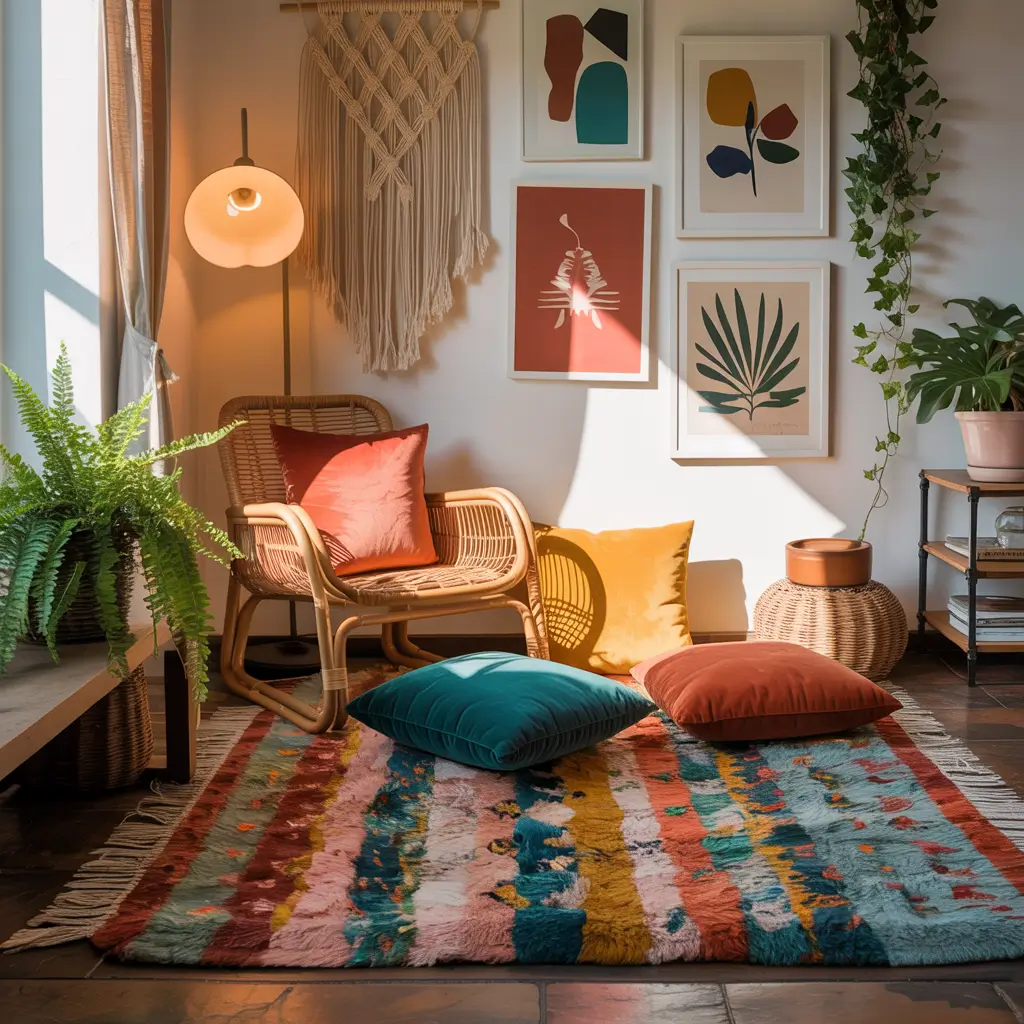
Not everyone wants neutral minimalism. Some of us need color, pattern, and personality—lots of it. Enter boho chic design.
The Boho Formula
Boho style celebrates collected, layered, global-inspired design. Think traveled worldliness mixed with artistic freedom:
- Rich, warm colors: Terracotta, mustard, burnt orange, deep teal
- Patterns on patterns: Moroccan rugs, Turkish pillows, Indian textiles
- Plants everywhere: Hanging, standing, trailing—all of them
- Natural materials: Rattan, macramé, wood, jute, leather
- Vintage and handmade pieces: Items with stories and character
- Layered textiles: Throws, pillows, rugs, wall hangings
Creating Boho Corners
You don’t need to boho-fy your entire home. Strategic boho corners add personality without overwhelming:
Reading Nook: Rattan hanging chair, patterned floor pillows, macramé wall hanging, plants, warm lighting
Bedroom Corner: Vintage rug layered over neutral carpet, floor cushions, small bookshelf with collected objects, hanging plants
Entry Area: Woven baskets for storage, patterned runner, plants, vintage mirror, hooks with interesting textiles
The Cohesion Secret
Random bohemian chaos looks messy, not chic. Create cohesion through repeated colors:
- Choose 4-5 core colors
- Repeat those colors across different patterns and items
- Use one dominant warm tone to anchor everything
- Include natural wood and neutral moments for visual rest
Common Boho Mistakes
Where people go wrong:
- Too literal with themes: Skip the “wanderlust” signs and obvious tourist stuff
- No editing: Even boho needs some restraint
- Ignoring scale: Mix different sized patterns and items
- All new items: Boho thrives on vintage and secondhand finds
IMO, boho is the most personality-rich design style, but it requires confidence and a good eye. Start small with one corner and expand as you develop your vision.
Sleek Industrial Loft Style Interiors
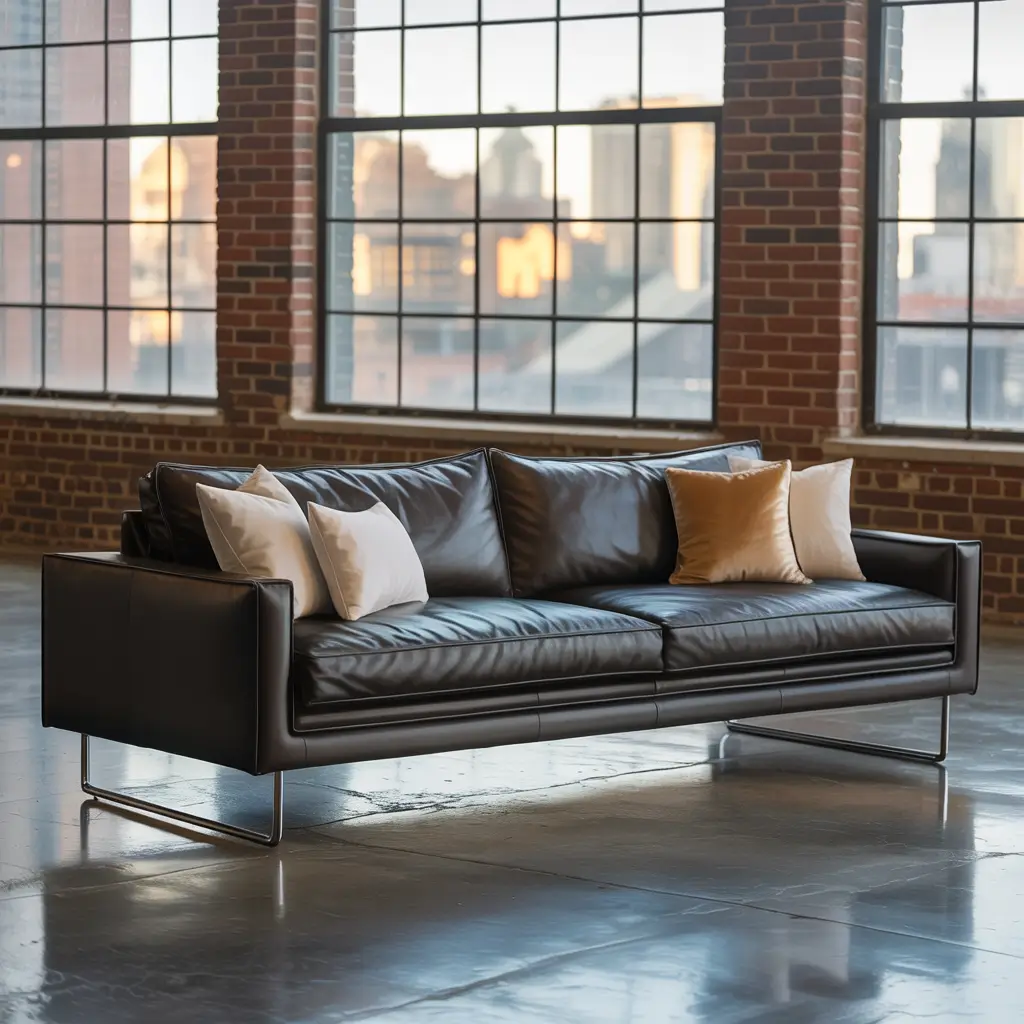
Raw materials, urban edge, and unapologetic masculinity—industrial design brings warehouse cool to residential spaces.
The Industrial Material Mix
Industrial interiors celebrate unfinished and raw elements:
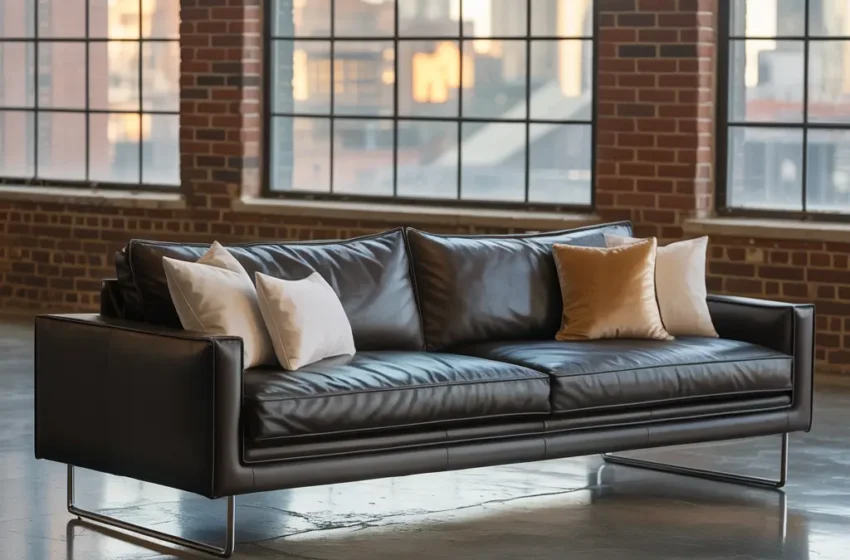
- Exposed brick: Real or faux panels
- Metal everything: Steel, iron, copper, brass
- Concrete: Floors, countertops, or accent walls
- Reclaimed wood: With visible age and character
- Leather: Furniture and accessories
- Edison bulbs: Exposed filaments in cage fixtures
Making Industrial Work in Regular Homes
Don’t have a converted warehouse? You can still achieve this aesthetic:
- Paint walls in industrial colors: Charcoal, dark grey, black, or exposed concrete look
- Install metal shelving: Open industrial units for storage and display
- Choose raw furniture: Metal bed frames, steel dining tables, wooden pieces with metal legs
- Update lighting: Pendant lights with exposed bulbs, pipe fixtures, cage lamps
- Add metal accents: Steel stools, iron wall art, copper accessories
Softening the Edge
Pure industrial feels cold for living spaces. Balance hard materials with soft elements:
- Plush area rugs over concrete or wood floors
- Soft throws and pillows in leather furniture
- Curtains or soft window treatments
- Plants bringing organic warmth
- Warm-toned lighting (not harsh white)
The contrast between tough materials and cozy textiles creates spaces that feel edgy but livable.
Industrial Color Palettes
Stick to urban-inspired colors:
- Greys from light to charcoal
- Black and dark browns
- Rust and copper tones
- Warm metallics
- White for contrast and brightness
Keep the palette relatively neutral—let the materials and textures create the interest.
Serene Japandi Bathroom Retreats
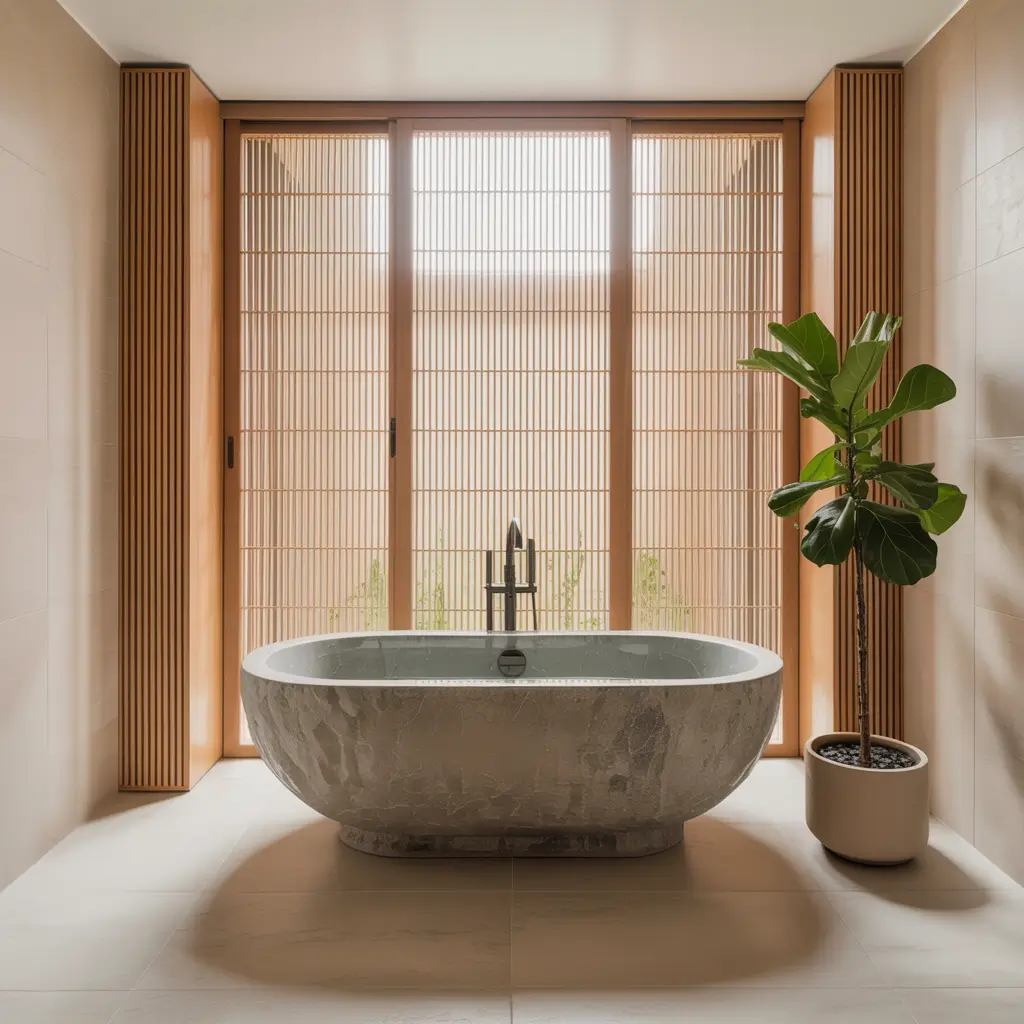
Japandi blends Japanese minimalism with Scandinavian warmth, and bathrooms might be where this hybrid style shines brightest.
The Japandi Philosophy
This style combines Japanese wabi-sabi (embracing imperfection) with Scandinavian hygge (cozy comfort):
- Clean lines and simple forms
- Natural materials celebrated authentically
- Neutral, calming color palettes
- Quality over quantity in every choice
- Connection to nature
- Functional beauty
Bathroom-Specific Applications
Japandi bathrooms create spa-like serenity:
- Floating vanities in natural wood with simple hardware
- Stone or wood-look tile in neutral tones
- Frameless glass showers or simple black frames
- Natural stone vessels or simple ceramic sinks
- Minimal fixtures in matte black or brushed nickel
- Plants that thrive in humidity
- Natural textiles like organic cotton towels
The Material Palette
Focus on authentic, natural materials:
- Light woods (oak, bamboo, teak)
- Natural stone (marble, travertine, slate)
- Matte ceramics
- Linen and cotton textiles
- Black metal accents
- Live plants
Creating the Spa Experience
Transform your bathroom into a daily retreat:
- Soft, warm lighting (no harsh overhead-only situations)
- Hidden storage keeping surfaces clear
- Natural soap and product containers
- Small stool or bench in wood or stone
- One beautiful object (ceramic vase, stone bowl)
- Fluffy towels in white or natural tones
I renovated my bathroom in Japandi style last year, and my morning routine went from “get this over with” to “mini daily spa moment.” The investment in quality materials and thoughtful design genuinely improved my daily life.
Also Read: 10 Inspiring Full Home Interior Design Ideas and Room Transformations
Luxe Contemporary Home Office Ideas

Remote work isn’t going anywhere, so you might as well create an office that doesn’t make you want to fake a commute just to escape it.
The Luxury Foundations
Contemporary luxury offices balance high-end aesthetics with serious functionality:
- Statement desk: Marble, walnut, or high-quality lacquer
- Executive chair: Ergonomic AND beautiful (they exist)
- Built-in storage: Custom or custom-looking solutions
- Premium lighting: Desk lamp that’s a design piece
- Quality tech: Monitor, keyboard, accessories that perform and look good
- Sound management: Rugs, acoustic panels, or fabric wall treatments
Creating Professional Backgrounds
Video calls are life now. Design your space with camera angles in mind:
- Interesting but not distracting background (bookshelf, art, accent wall)
- Good natural light from the side (not behind you)
- Professional color palette (neutrals with one accent color)
- Nothing embarrassing in frame (I learned this the hard way)
The Material Mix
Luxury contemporary offices use sophisticated materials:
- Desk: Marble, walnut, oak, or high-gloss lacquer
- Storage: Matching wood or sleek metal
- Seating: Leather or high-end fabric
- Accents: Brass, gold, or matte black
- Flooring: Hardwood or premium carpet
Making It Actually Functional
Pretty offices are great until you need to actually work. Balance aesthetics with practicality:
- Adequate outlets and cable management
- Proper desk height for ergonomics
- Adjustable lighting for different tasks
- Storage for supplies and equipment
- Comfortable temperature control
- Plants for air quality and mental health
The goal? An office so nice you’ll actually want to work in it, but functional enough that you CAN work in it.
Rustic Farmhouse Dining Room Vibes
Farmhouse style dominates Pinterest for good reason—it creates warm, gathering-focused spaces perfect for making memories.
The Farmhouse Foundation
Rustic farmhouse dining rooms celebrate authenticity and warmth:
- Large wooden table: The bigger and more weathered-looking, the better
- Mixed seating: Bench on one side, chairs on the other
- Neutral palette: Whites, creams, warm greys, natural wood
- Natural materials: Wood, metal, cotton, linen
- Vintage elements: Antique or antique-inspired pieces
- Functional decor: Items that are beautiful AND useful
Creating the Gathering Space
Farmhouse dining rooms prioritize people over perfection:
- Large table accommodating family and guests
- Comfortable seating you can linger in
- Warm lighting encouraging long conversations
- Durable materials handling real life
- Accessible serving and storage
The Material Mix
Combine rustic and refined elements:
- Reclaimed wood or distressed wood table
- White or cream walls
- Wood or metal light fixture
- Linen or cotton curtains
- Vintage or vintage-inspired accessories
- Fresh or dried florals
- Open shelving with displayed dishes
Modern Farmhouse Updates
Pure farmhouse can feel heavy. Modernize through:
- Clean-lined furniture in farmhouse materials
- Edited accessories (not every inch needs decor)
- Modern art in simple frames
- Updated lighting fixtures
- Mix of old and new pieces
The result? Farmhouse warmth without feeling like you’re living in a Cracker Barrel.
Colorful Eclectic Living Spaces

For those thinking “all these neutral spaces are depressing”—eclectic colorful design is your answer.
The Eclectic Approach
Eclectic design mixes styles, periods, colors, and patterns with intention:
- Vintage with modern
- High with low
- Bold colors with neutrals
- Patterns with solids
- Global influences with local finds
Creating Cohesion in Chaos
The secret? Eclectic isn’t random—it’s intentional mixing. Create cohesion through:
- Repeated colors: Choose 5-6 colors and repeat throughout
- Similar scales: Mix styles but keep proportions balanced
- Unified undertones: Warm or cool, stick to one
- Consistent finishes: Repeat metal tones or wood finishes
- Strategic neutral moments: Give the eye places to rest
Color Strategies That Work
Bold color requires strategic application:
- Neutral foundation: White or neutral walls and large furniture
- Colorful accents: Pillows, art, accessories, smaller furniture
- Pattern mixing: Combine different patterns sharing colors
- One statement piece: Bold colored sofa or painted accent wall
- Natural balance: Plants and wood grounding bright colors
The Editing Process
Even eclectic needs boundaries. Edit through these questions:
- Does this item share colors with something else in the room?
- Does the scale work with other furniture?
- Does it genuinely make me happy?
- Is there negative space for visual rest?
I live in a colorful eclectic space, and the number one question people ask? “How did you make this work?” The answer: color repetition and ruthless editing. I try ten things and keep two.
Also Read: 15 Modern Home Office Interior Design Ideas to Spark Creativity
Smart Small Space Interior Hacks
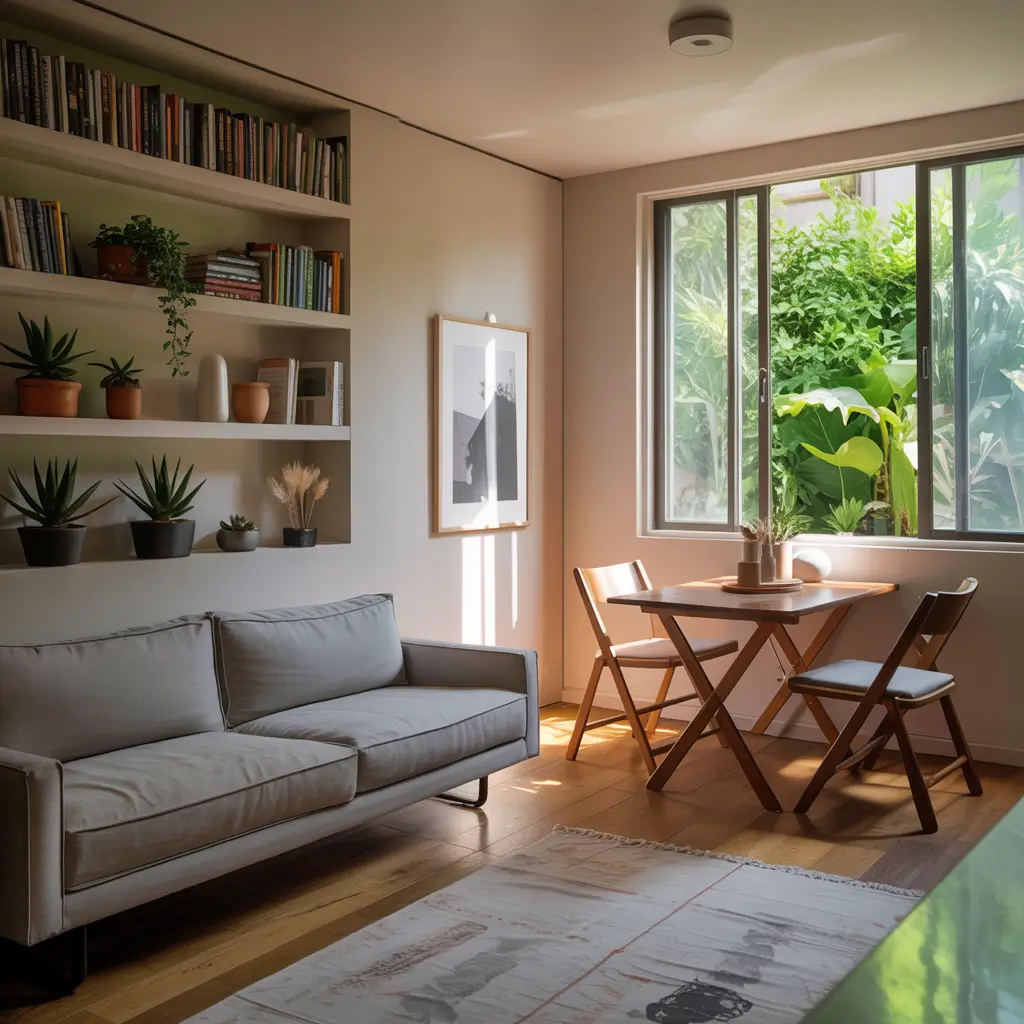
Small spaces aren’t character flaws—they’re design challenges with creative solutions.
The Small Space Mindset
Stop fighting your square footage. Embrace constraints and design strategically:
- Multi-functional everything: Furniture serving multiple purposes
- Vertical thinking: Use wall height aggressively
- Light and bright: Maximize light and use light colors
- Hidden storage: Everything needs a home
- Visual continuity: Reduce breaks creating illusion of space
Space-Maximizing Furniture
Choose pieces working harder:
- Storage ottomans: Seating + storage
- Murphy beds: Bedroom + office/living room
- Extendable dining tables: Daily compact, expandable for guests
- Nesting tables: Multiple tables storing as one
- Floating desks: Work surface without floor space sacrifice
- Wall-mounted everything: Shelves, TV, lighting
The Color and Light Strategy
Small spaces need strategic color and light choices:
- Light, neutral wall colors expanding perceived space
- Consistent flooring throughout eliminating visual breaks
- Mirrors reflecting light and views
- Adequate lighting at multiple levels
- Sheer curtains maximizing natural light
Storage Solutions That Actually Work
Small space storage requires creativity and commitment:
- Under-bed storage (lift platforms or rolling boxes)
- Over-door organizers for everything
- Wall-mounted shelving using vertical space
- Furniture with hidden storage
- Vacuum storage bags for seasonal items
- Regular purging maintaining organization
I lived in a 500-square-foot studio for three years, and people regularly didn’t believe the square footage. The secret? Intentional furniture choices, hidden storage everywhere, and aggressive editing of possessions.
Creating Room Separation
Define zones in open small spaces:
- Area rugs creating visual boundaries
- Furniture placement implying walls
- Lighting changes defining areas
- Shelving units as room dividers
- Curtains creating flexible separation
Making Your Design Decision
Ten ideas, one home. How do you choose?
The Self-Assessment
Ask yourself honestly:
- What’s my actual lifestyle? (Not what I wish it was)
- What’s my maintenance tolerance?
- What’s my budget reality?
- What spaces do I use most?
- What genuinely makes me happy?
Prioritizing Your Spaces
You can’t redesign everything simultaneously. Create a priority list:
- Spaces you use daily (probably kitchen, bedroom, bathroom)
- Spaces guests see (living room, dining room, entry)
- Personal spaces (office, hobby areas)
- Everything else
Focus your budget and energy on the high-impact spaces first.
The Hybrid Approach
Most successful homes blend multiple styles:
- Scandinavian base + boho accents
- Industrial materials + farmhouse warmth
- Minimalist foundation + eclectic personality
- Small space hacks + any aesthetic style
Choose one primary style (70%) and incorporate complementary elements from others (30%).
Starting Your Transformation
Create a realistic plan:
Month 1-2: Research, measure, plan, budget
Month 3-4: Paint, flooring, major structural stuff
Month 5-6: Furniture and lighting
Month 7-8: Accessories and finishing touches
This timeline assumes you’re working room by room. Adjust based on your scope and budget.
Final Thoughts
Here’s what I’ve learned after years of designing, redesigning, and helping others transform their homes: perfect doesn’t exist, but intentional does.
The best interior design isn’t the one that photographs best for Instagram or looks like it came from a magazine. It’s the design that makes YOUR life better, reflects YOUR personality, and functions for YOUR needs.
Maybe that’s a minimalist modern living room where visual calm helps you decompress after chaotic days. Maybe it’s a vibrant eclectic space bursting with color and collected treasures.
Maybe it’s industrial materials softened with cozy textiles, or farmhouse warmth perfect for gathering your people.
The common thread? Intentionality. Choosing pieces, colors, and layouts that serve a purpose rather than just filling space.
Start with one room and one style from this list. Commit to it. See it through. Then build from there. Home design is a marathon, not a sprint—and honestly, the journey is half the fun.
Your home should tell your story, support your life, and make you genuinely happy to be there. Not impress strangers on the internet (though if it does, cool bonus).
Stop pinning inspiration and start making decisions. Your dream home is waiting—but it won’t create itself.
Now go forth and design something beautiful.