12 Minimalist Bookshelf Design Ideas and Clean Decor Styles
- Bookshelf Styling
 Ben
Ben- 0
- 47 minutes read
Your bookshelf probably looks like a crime scene right now, doesn’t it? I know that feeling because I spent years cramming every book I owned into a wobbly IKEA shelf until it started to bow in the middle. It looked less like a curated library and more like a book graveyard.
Once I finally committed to finding some real bookshelf design ideaas, my entire living room transformed from “college dorm” to “sophisticated adult.”
Creating a beautiful bookshelf isn’t just about organizing your books—it’s about telling a story. You don’t need a massive budget or a degree in interior design to pull this off.
You just need a bit of strategy and some clever styling tricks. Let’s explore 12 bookshelf design ideaas that will turn your cluttered shelves into a high-end design feature.
1. Floating Wall Bookshelves
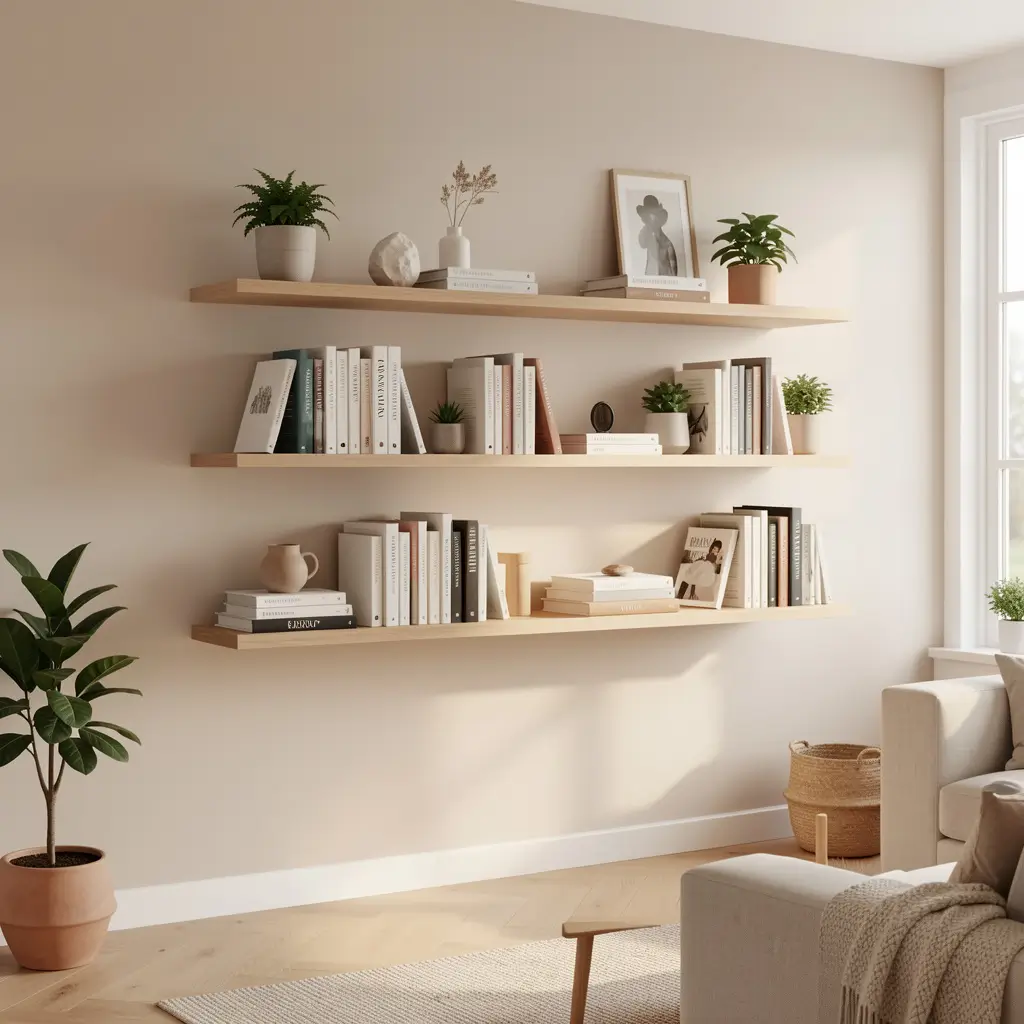
I firmly believe that the floor is lava when you inhabit a small room. Every inch of floor space you occupy with heavy furniture makes the room feel like it’s closing in on you. That is why I absolutely swear by floating wall bookshelves. When you remove the bulky frame of a traditional bookcase, you open up the “visual floor,” which tricks your brain into thinking the room is much larger than it actually is.
Why You Should Ditch the Frame
A floating shelf mounts directly to your wall studs. I installed three reclaimed wood shelves in my living room last summer. This single move freed up about 40% of my floor space. Now, my book collection looks like it’s magically suspended in mid-air. It feels much lighter and more modern than a heavy oak bookcase.
Essential Elements for Your Floating Library
- Sturdy wall anchors and brackets: This is non-negotiable. Books are heavy.
- Shelves made of solid wood or thick MDF: Thin shelves will sag under the weight.
- A mix of vertical and horizontal book stacks: This creates visual interest.
- Negative space: Leave about 30% of the shelf empty to avoid a cluttered look.
- One or two decorative objects per shelf: A small plant or a ceramic vase works wonders.
Does your current bookshelf feel like a magnet for random junk? A floating shelf forces you to stay organized because it lacks deep “junk drawers.” You only keep what you need, and that, my friend, is the secret to a clear mind.
The “Invisible” Bookshelf Trick
For a truly magical look, try the “invisible” bookshelf. These are small, L-shaped metal shelves that you screw into the wall. You place the bottom book over the shelf, and it looks like your books are literally floating without any support. It’s a great conversation starter and perfect for a small, curated collection.
2. Corner Ladder Bookcase
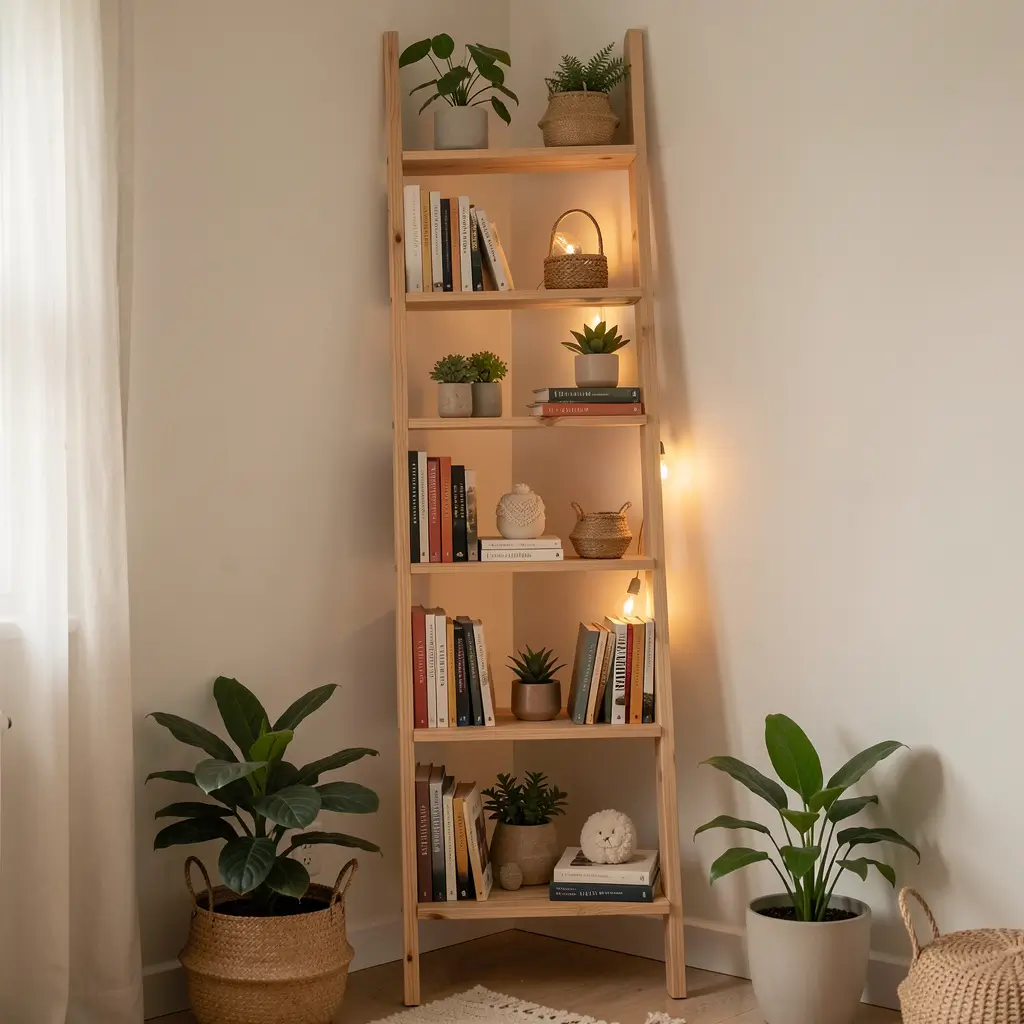
Ever looked at that weird corner behind your door or next to the window and thought, “What a waste of space”? Most people ignore corners, but in a small room, corners represent prime real estate. A corner ladder bookcase allows you to tuck your library away from the main traffic flow of your home.
The “Leaning Tower” Advantage
I love a ladder shelf because it has a very small footprint but provides a surprising amount of storage. It draws the eye upward, making your ceilings feel taller. I use one in my bathroom to hold towels and toiletries, but they work just as well for books.
Styling a Ladder Shelf
- Place heavy items on the bottom shelf for stability.
- Mix books with decorative objects to keep the look light.
- Use a trailing plant on one of the top shelves to add a natural element.
- Don’t overcrowd the shelves. The open design requires some breathing room.
- Secure the top of the shelf to the wall with a small bracket to prevent tipping.
Ever wondered why this works so well? The angled design creates a sense of movement that a standard vertical bookcase lacks. It feels more dynamic and less “stuck” in place. Ladder shelves are a great compromise between open floating shelves and a traditional bookcase.
The Corner-Specific Design
You can find ladder shelves specifically designed to fit into a 90-degree corner. These units often have a quarter-circle shape and are a brilliant way to turn a completely dead zone into a beautiful and functional library nook.
3. Rustic Wooden Crate Shelves
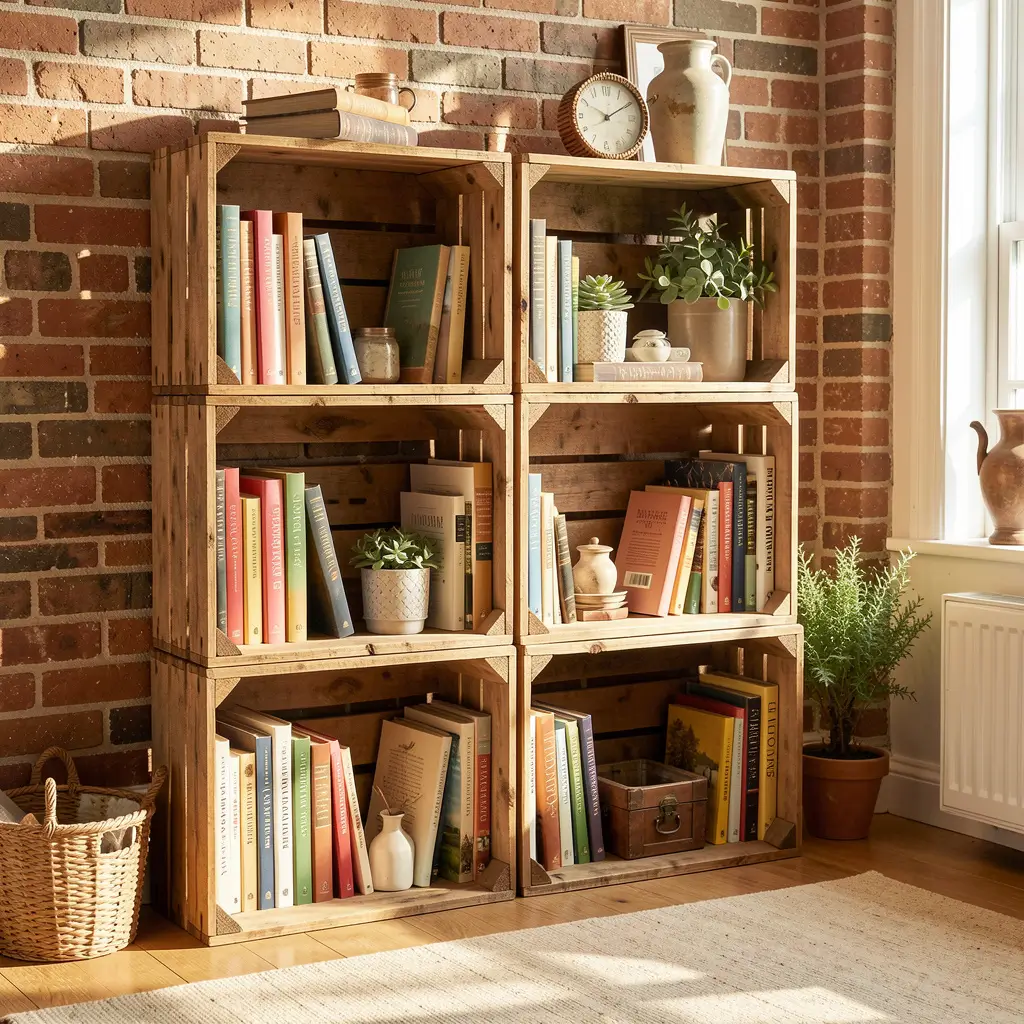
If you crave the warmth of a cozy cabin or an old-world library, rustic wooden crate shelves are your answer. This project allows you to create a custom piece with more character than anything you can buy in a store. Plus, building your own bookshelf is oddly satisfying.
The “Crate and Barrel” Look on a Budget
I recommend sourcing old wooden wine or apple crates from flea markets or antique stores. You can stack them in various configurations to create a modular, rustic shelving unit. I once built a 6-foot-tall bookshelf using six old crates, and it cost me a grand total of $30.
How to Build Your Crate Masterpiece
- Sand the crates thoroughly to remove splinters and rough edges.
- Apply a dark wood stain to bring out the grain and give them a uniform look.
- Arrange the crates in an interesting pattern—some vertical, some horizontal.
- Secure the crates to each other with small screws or wood glue for stability.
- Mount the entire unit to the wall with L-brackets to prevent it from tipping over.
Styling Your Crate Shelves
I love the “shadow box” effect that crates provide. You can place your most beautiful books or objects in their own little “frame.” I suggest painting the inside of one or two crates a contrasting color for a pop of visual interest. Rustic wooden crate shelves celebrate imperfection and a “found object” aesthetic.
Also Read: 10 Creative Bookshelf Aesthetic Decor Ideas for Stylish Shelves
4. Built-In Wall Nook Shelves
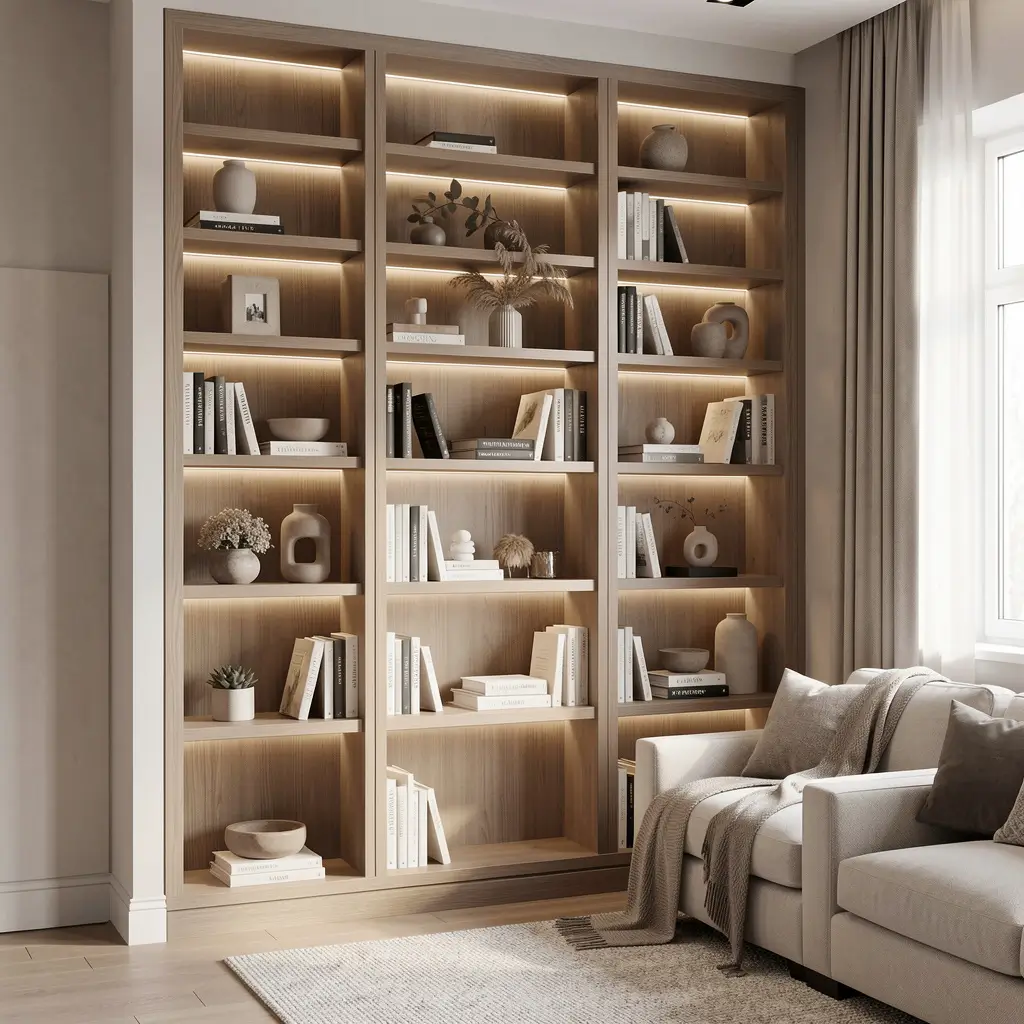
If you want to maximize every single inch of your space, built-in wall nook shelves are the answer. These are custom shelves built directly into the architecture of your home. They look incredibly high-end and can turn an awkward nook or an empty wall into a stunning library.
The Custom-Fit Advantage
Built-ins allow you to utilize spaces that no store-bought furniture could ever fit.
- Around a doorway: This creates a grand “library entrance” feel.
- On either side of a fireplace: A classic look that adds symmetry.
- Under a staircase: Turn that wasted triangle into a reading nook.
- Along a long hallway: A shallow built-in can hold hundreds of paperbacks.
DIY vs. Professional Installation
You can DIY built-ins using pre-made cabinets from a hardware store as your base. I once built a floor-to-ceiling library wall using three IKEA Billy bookcases and some crown molding. It looked like a custom job that cost thousands, but my total investment was under $500.
However, if your walls are crooked or you want a truly seamless look, I recommend hiring a professional carpenter. A well-made built-in adds significant value to your home.
Painting for Impact
I love painting built-ins a dark, moody color like navy blue or charcoal gray. This makes the books and decorative objects pop. You can also paint just the back of the shelves for a more subtle touch of color.
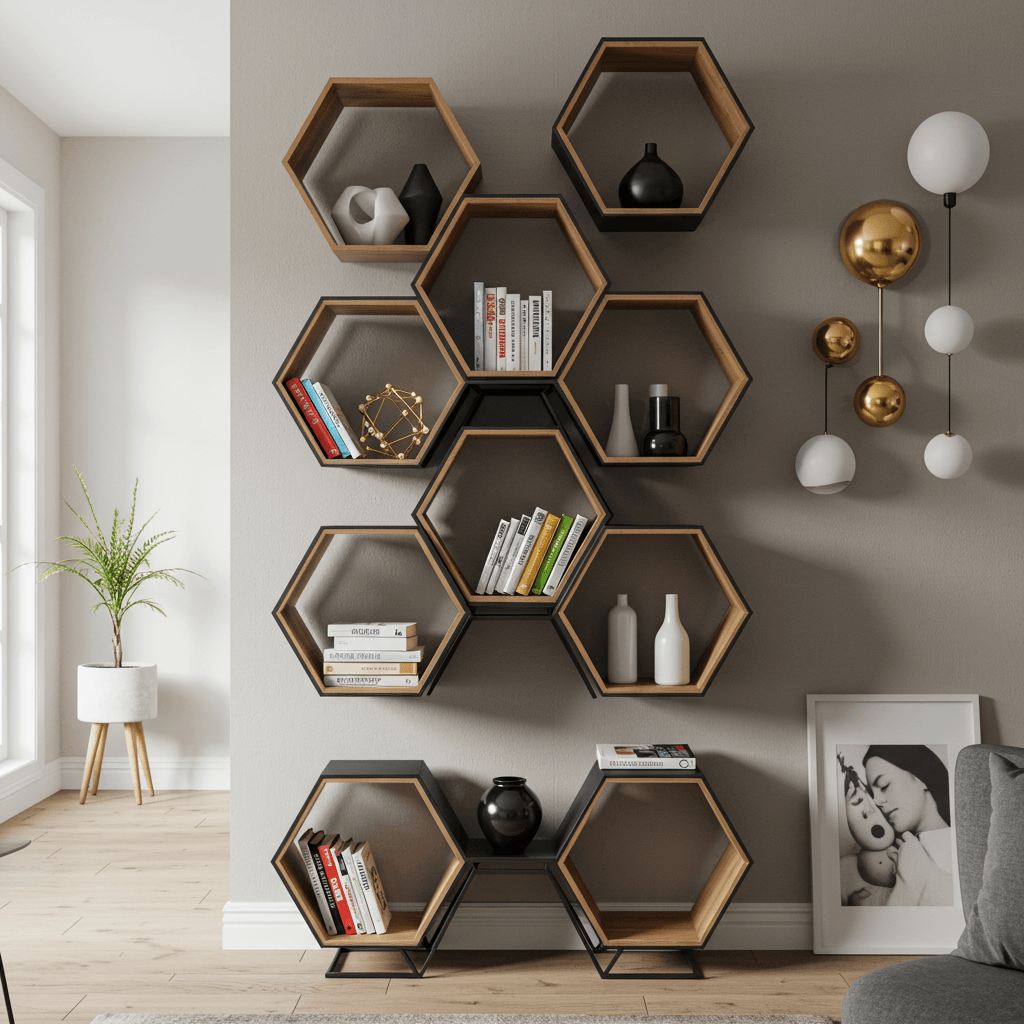
5. Geometric Cube Bookshelf
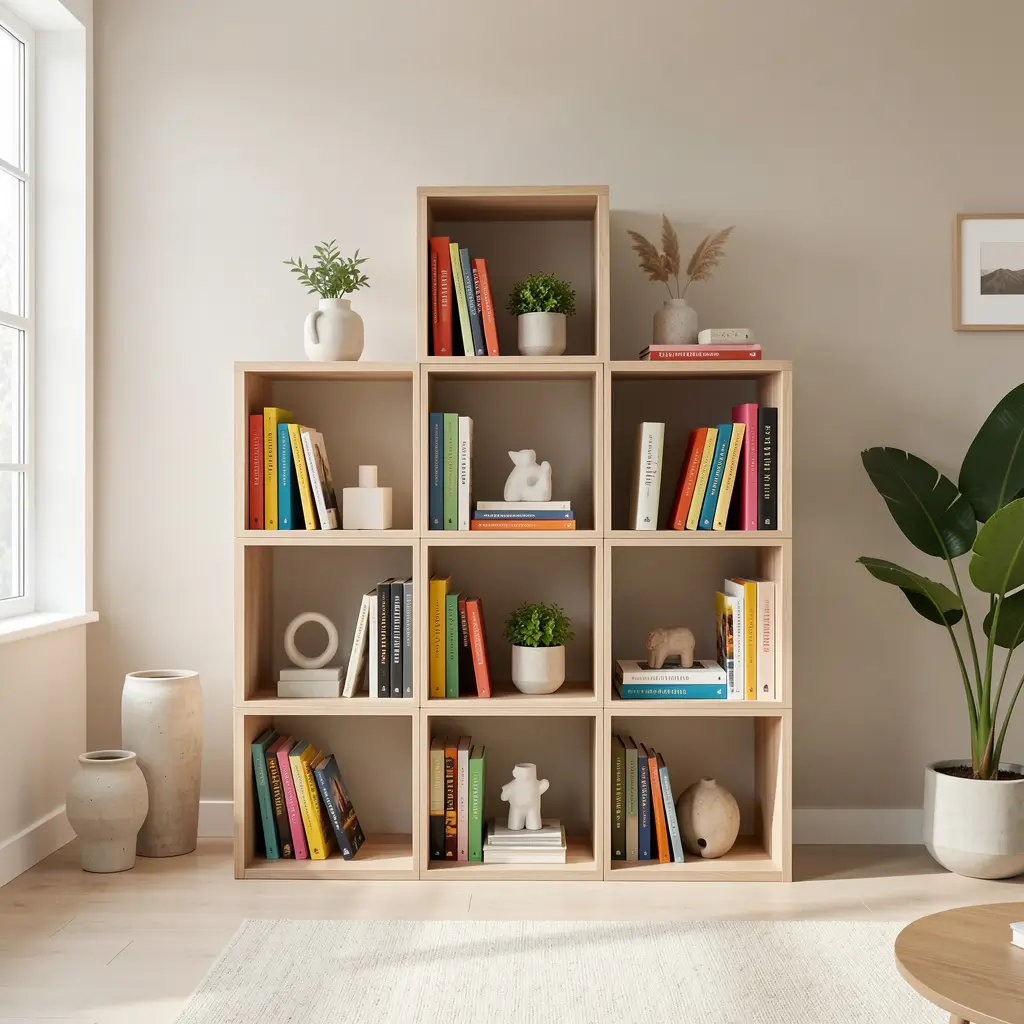
If you love clean lines and a high-end, architectural look, a modern geometric cube bookshelf is for you. This approach uses bold shapes and a “less is more” philosophy to turn your bookshelf into a piece of modern art.
The Power of Shapes
I recommend using bookshelves with asymmetrical or unusual layouts—think staggered shelves or honeycomb-shaped cubbies. If you have a standard rectangular shelf, you can create a geometric feel by how you arrange the items.
How to create a geometric look:
- Use pyramid stacks: Stack your books in a triangle shape.
- Incorporate sculptural objects: Add a metal knot or a glass orb.
- Color block your books: Create sharp, rectangular blocks of color.
- Alternate object shapes: Place a round vase next to a square stack of books.
- Use bold, minimalist bookends in shapes like triangles or circles.
The “Rule of Thirds” in Styling
Ever wondered why designer shelves look so balanced? They use the “rule of thirds.” Divide your shelf into three visual sections. Place your main “heavy” object (like a tall stack of books) in one of the outer thirds, and a smaller object in the opposite third. Leave the middle third mostly empty. This creates a dynamic, pleasing composition.
Keeping it Clean
The key to this style is ruthless editing. You cannot have any clutter. Every single object must be beautiful and intentional. I suggest you keep only your most aesthetically pleasing books on display and hide the rest in a storage ottoman. Modern geometric styling values form over function, so it’s not the best choice for people who need constant access to a huge library.
6. Industrial Pipe & Wood Shelves
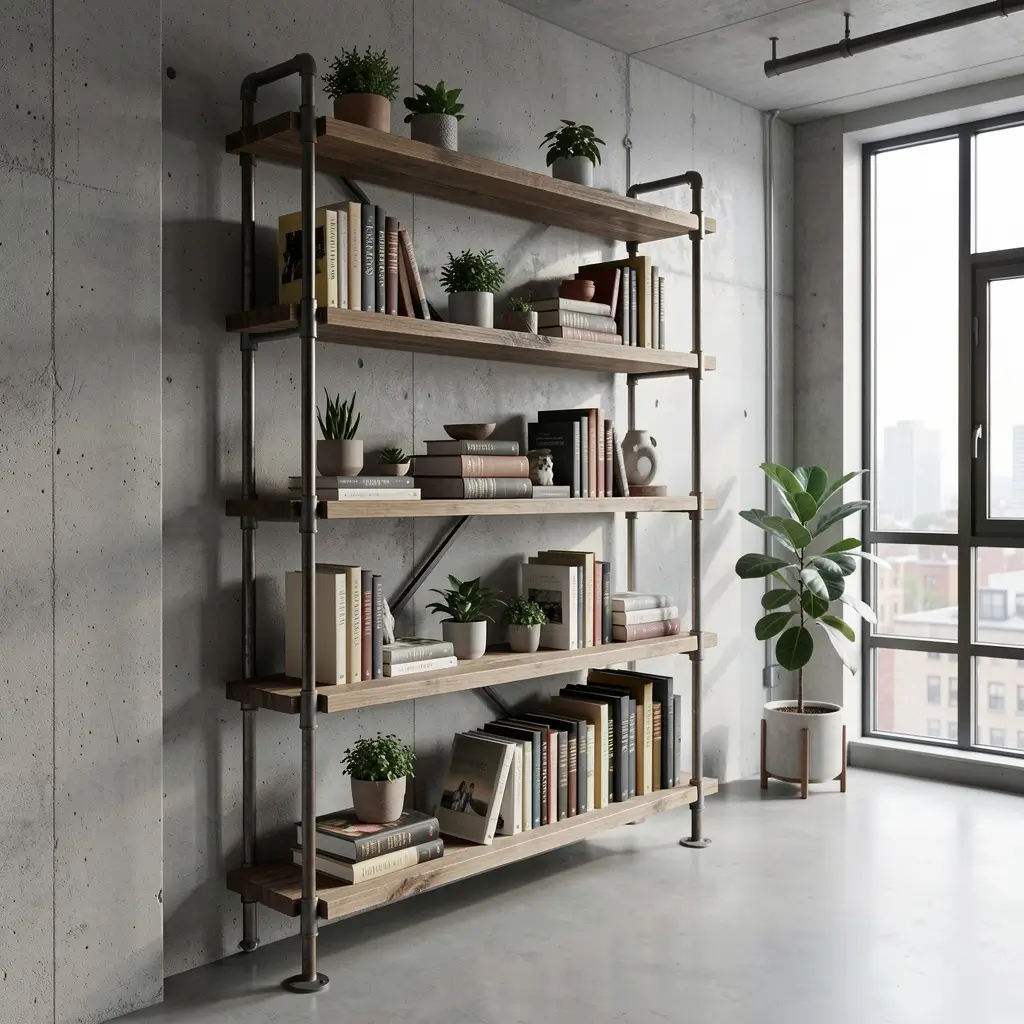
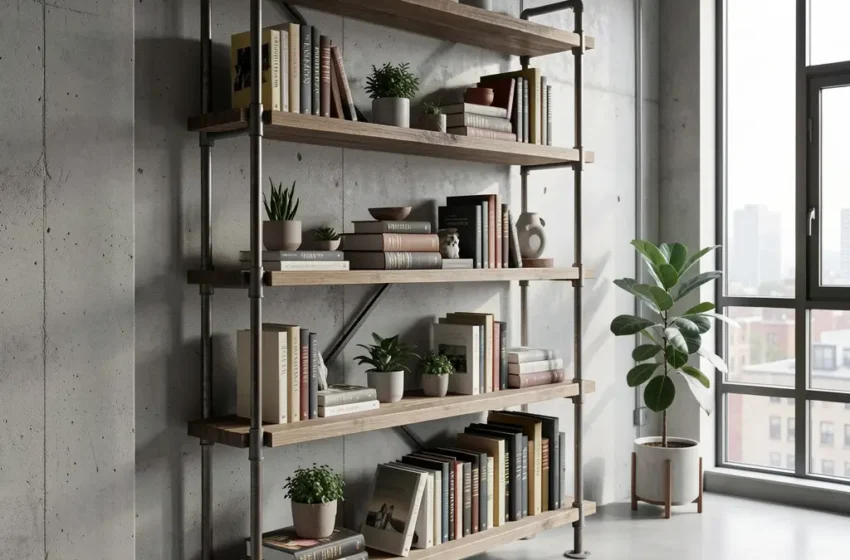
If you crave the warmth of a cozy cabin but the edge of a city loft, industrial pipe & wood shelves are your answer. This DIY project allows you to create a custom piece with more character than anything you can buy in a store. Plus, building your own bookshelf is oddly satisfying.
The “Crate and Barrel” Look on a Budget
I recommend using thick wooden planks (like 2x10s) and black iron pipes from the hardware store. This “pipe and plank” design is incredibly sturdy and gives off a high-end industrial-rustic vibe for a fraction of the cost.
Construction Tips for Beginners
- Sand your wood thoroughly to avoid splinters.
- Use a dark wood stain to bring out the grain.
- Assemble the pipes on the floor before you mount them to the wall.
- Use a level! A crooked bookshelf will haunt your dreams.
- Mount the pipe flanges directly into your wall studs for maximum stability.
I built my own industrial shelves for my office two years ago. They cost about $100 and look better than the $1,000 versions I saw in the catalogs. DIY design celebrates the “unfinished” look, so don’t worry about things being too polished.
Also Read: 12 Inspiring Bookshelf Ideas and Modern Display Tricks
7. Minimalist White Open Shelves
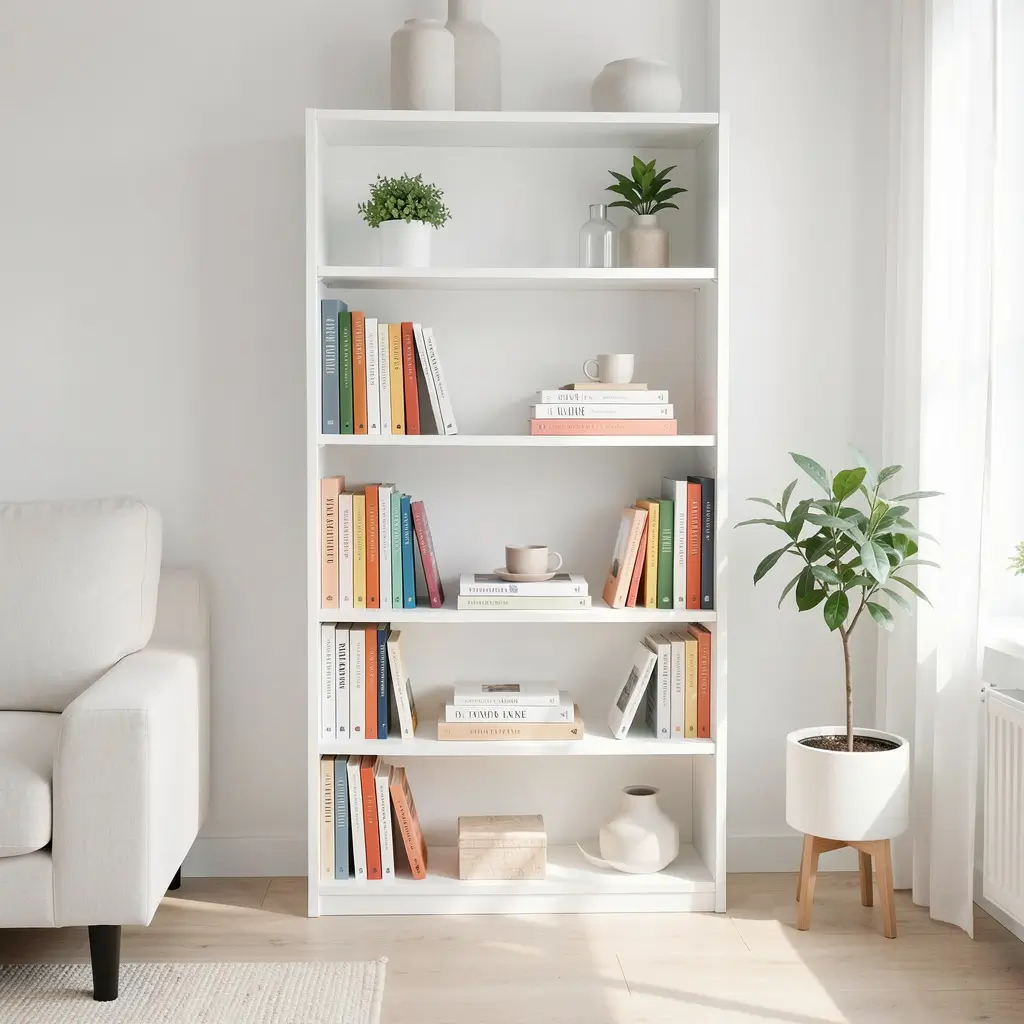
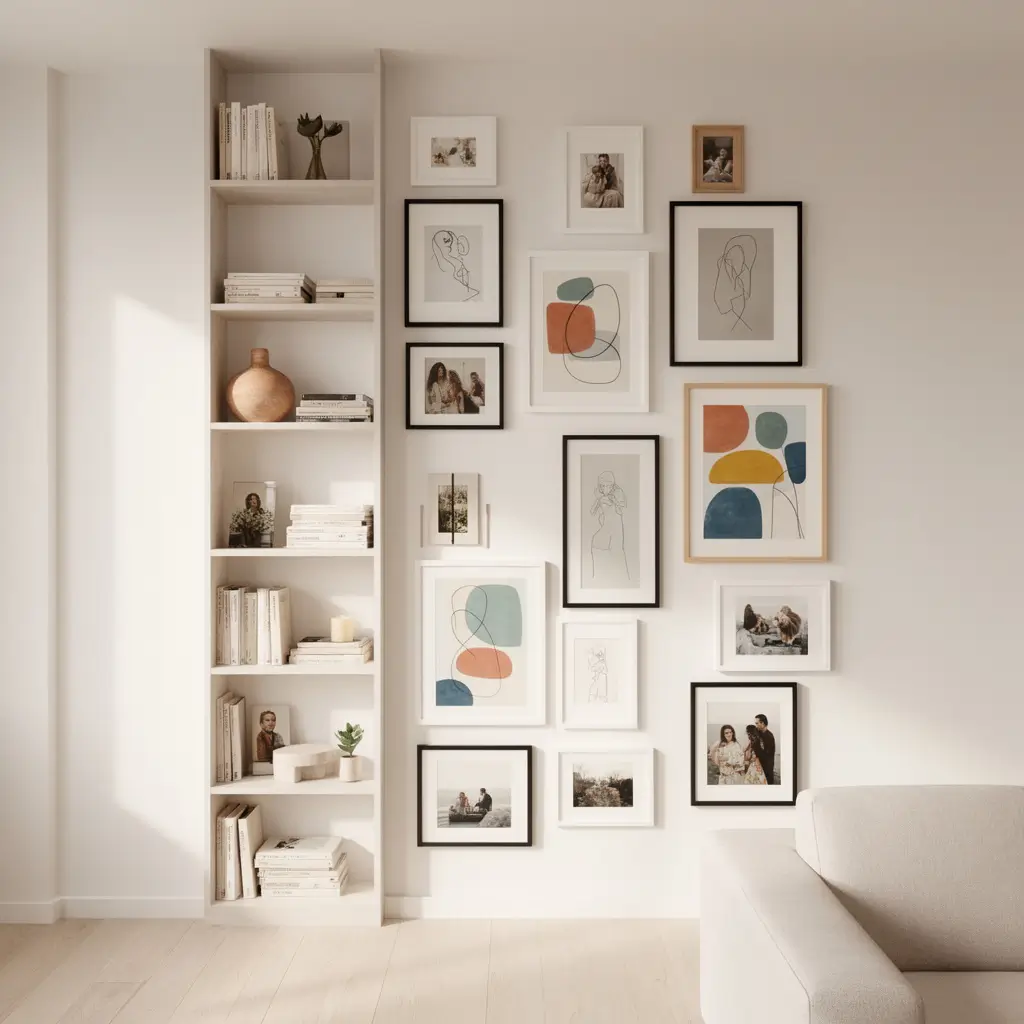
Minimalism doesn’t mean getting rid of all your books. It means you keep only your favorites and display them with intention. Minimalist white open shelves use clean lines and negative space to turn your book collection into a piece of modern art.
The Power of “Breathing Room”
I recommend you leave at least 30-40% of each shelf empty. This “breathing room” is the secret to a high-end, designer look. Instead of cramming every book you own onto the shelf, you create small, curated vignettes.
Essential Minimalist Styling
- A simple, clean-lined bookshelf in all white.
- A “one-in, one-out” rule for new book purchases to prevent clutter.
- Alternating vertical and horizontal book stacks for visual rhythm.
- One or two decorative objects per shelf in a matching color or a natural material.
- A monochromatic color palette for the books and objects.
Ever wondered why designer shelves look so good? They use space as a design element. I suggest you place a small, sculptural object—like a white ceramic vase or a black geometric knot—in the empty space next to your book stacks. This turns your shelf into a curated display rather than just a storage unit.
The “Spine-Out” Debate
I once turned all my books around so only the white pages faced outward. It looked incredibly chic, but then I couldn’t find anything for six months. I don’t recommend that for a functional library, but it is a cool trick for a purely decorative shelf.
8. Color-Coded Book Display
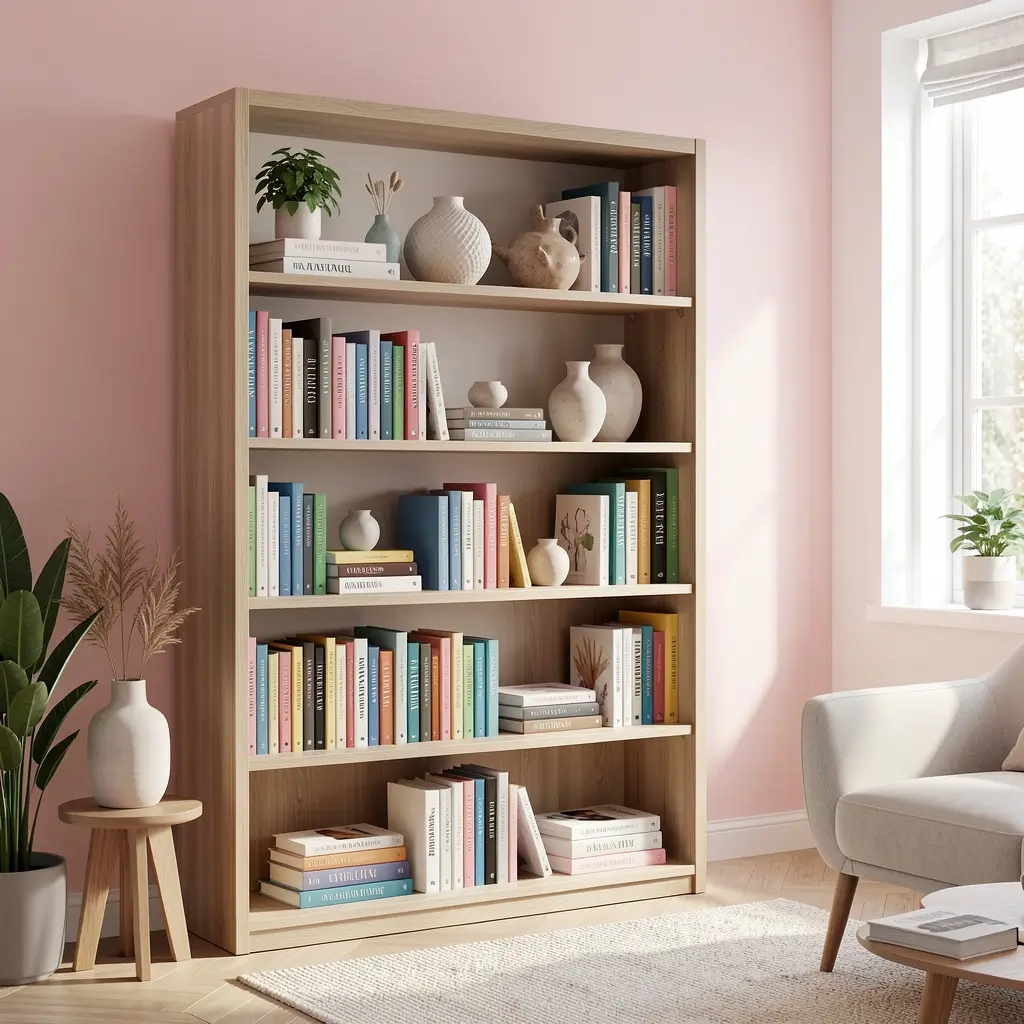
If you have a massive book collection and love a vibrant, artistic look, a color-coded book display is for you. This approach uses the spines of your books themselves as the primary design element, creating a stunning visual gradient that looks like a piece of modern art.
The Rainbow Method
I suggest you arrange your books according to the colors of the rainbow: red, orange, yellow, green, blue, indigo, violet. It creates a “wow” moment that instantly brightens any room. FYI, this method is beautiful, but it makes finding a specific book a nightmare unless you have a photographic memory for book spine colors.
How to Style Your Rainbow
- Start with a neutral bookshelf (white or black) to make the colors pop.
- Remove the dust jackets to reveal the true spine color.
- Group books by shade within each color family (light blues together, dark blues together).
- Add a few decorative objects that match the color of the books on that shelf.
The “Color Block” Alternative
If a full rainbow feels too chaotic, try color blocking. Dedicate one entire shelf to red books, the next to blue, and so on. This provides a bold, graphic look that feels more organized than a blended rainbow. I once styled a bookshelf for a friend using only blue and yellow books, and it became the focal point of her entire apartment.
Rhetorical question: Why hide your beautiful book collection when the spines themselves can be the art? A colorful bookshelf celebrates the visual joy of reading and adds a huge dose of personality to your room.
9. Hidden Storage Bookshelf
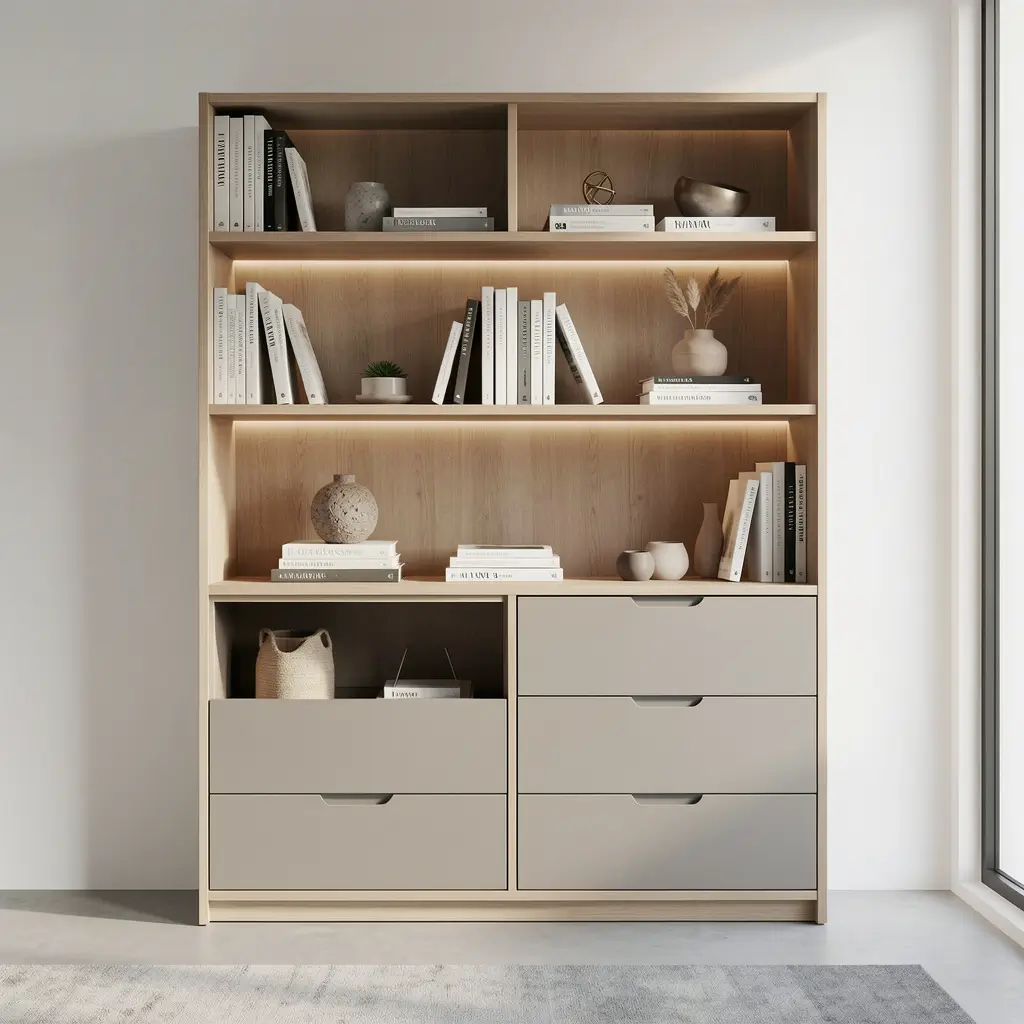
Let’s be honest: not all of our stuff is beautiful. We all have ugly textbooks, messy files, and random electronics that we need but don’t want to look at. A hidden storage bookshelf is the perfect solution. It’s like a mullet for your furniture: business in the back (or bottom), party on the top.
The Best of Both Worlds
I love a bookshelf that has a mix of open shelving and closed cabinets. You can display your beautiful hardcover collection on the open shelves and hide your tax documents and old yearbooks in the cabinets below. This gives you the curated look of open shelving with the practical reality of closed storage.
Smart Hidden Storage
- Woven baskets or fabric bins: These add texture and hide the mess.
- Bookshelves with sliding doors: You can change which sections are hidden.
- Faux book spines: You can buy boxes that look like a stack of vintage books but are actually hollow inside.
- Drawers integrated into the base of the bookshelf.
Rhetorical question: Why stress about making every single item look perfect when you can just hide the ugly stuff? A bookshelf with hidden storage allows you to be a real person with real-life clutter while still maintaining a stylish home. It’s the ultimate design compromise. :/
Also Read: 12 Minimalist Bookshelf Styling Ideas for Clean Spaces
10. Bookshelf Room Divider
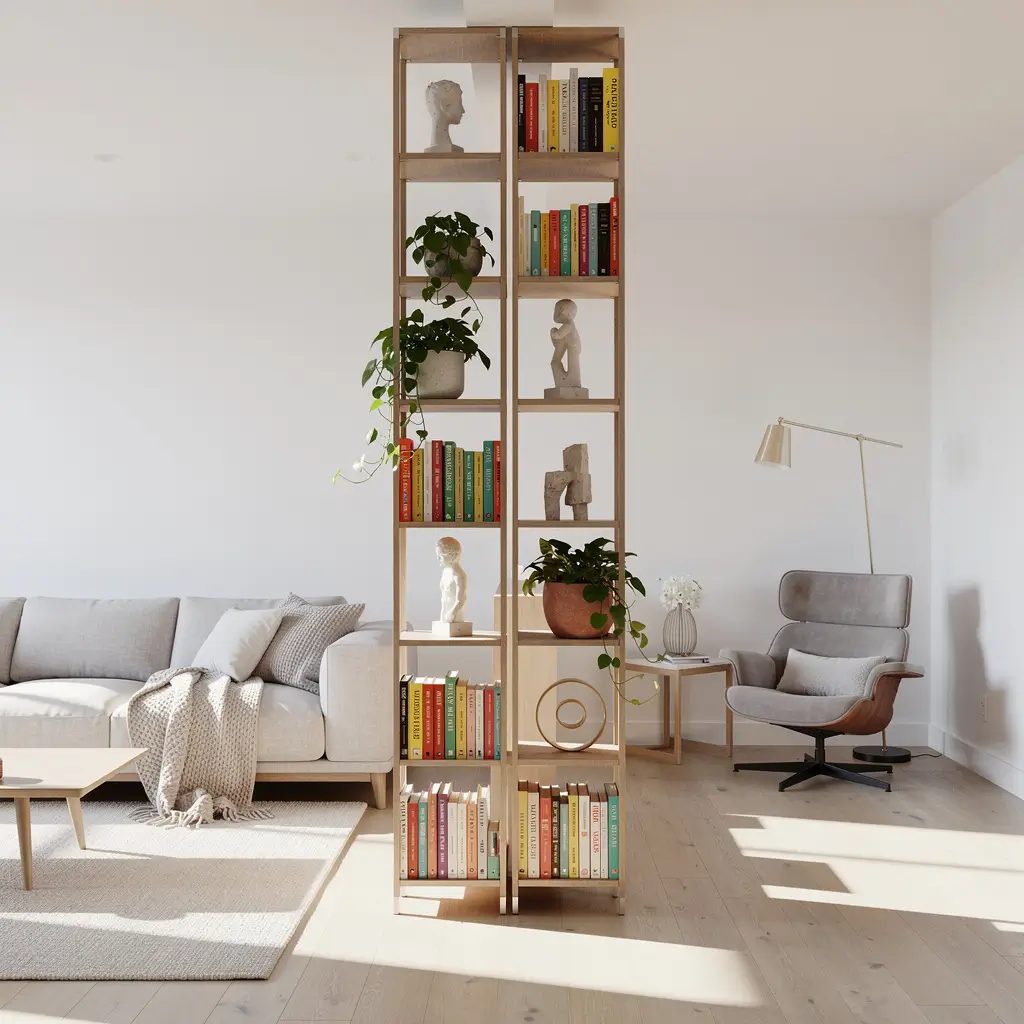
If you live in a studio apartment or have a large open-concept living space, a bookshelf room divider is a genius solution. It creates a physical and visual boundary between two zones without the cost and permanence of building a wall.
The Two-Sided Advantage
I recommend an open-backed bookshelf (like the IKEA Kallax) for this purpose. You can access items from both sides, so it serves as a library for your living room and a storage unit for your dining room at the same time.
How to Style a Room Divider
- Leave some cubes empty to allow light to pass through.
- Alternate the direction of your book stacks on each side.
— Use a mix of books and decorative objects to keep it from looking too heavy. - Place plants on the top shelf to add a touch of nature.
- Secure the bookshelf to the ceiling or a wall for stability, especially if you have kids or pets.
I once used a tall, narrow bookshelf to create a “foyer” in a studio apartment. It gave the entryway a sense of purpose and provided a much-needed spot for keys and mail. A bookshelf room divider adds architecture and function to a shapeless room.
11. Spiral Vertical Book Tower
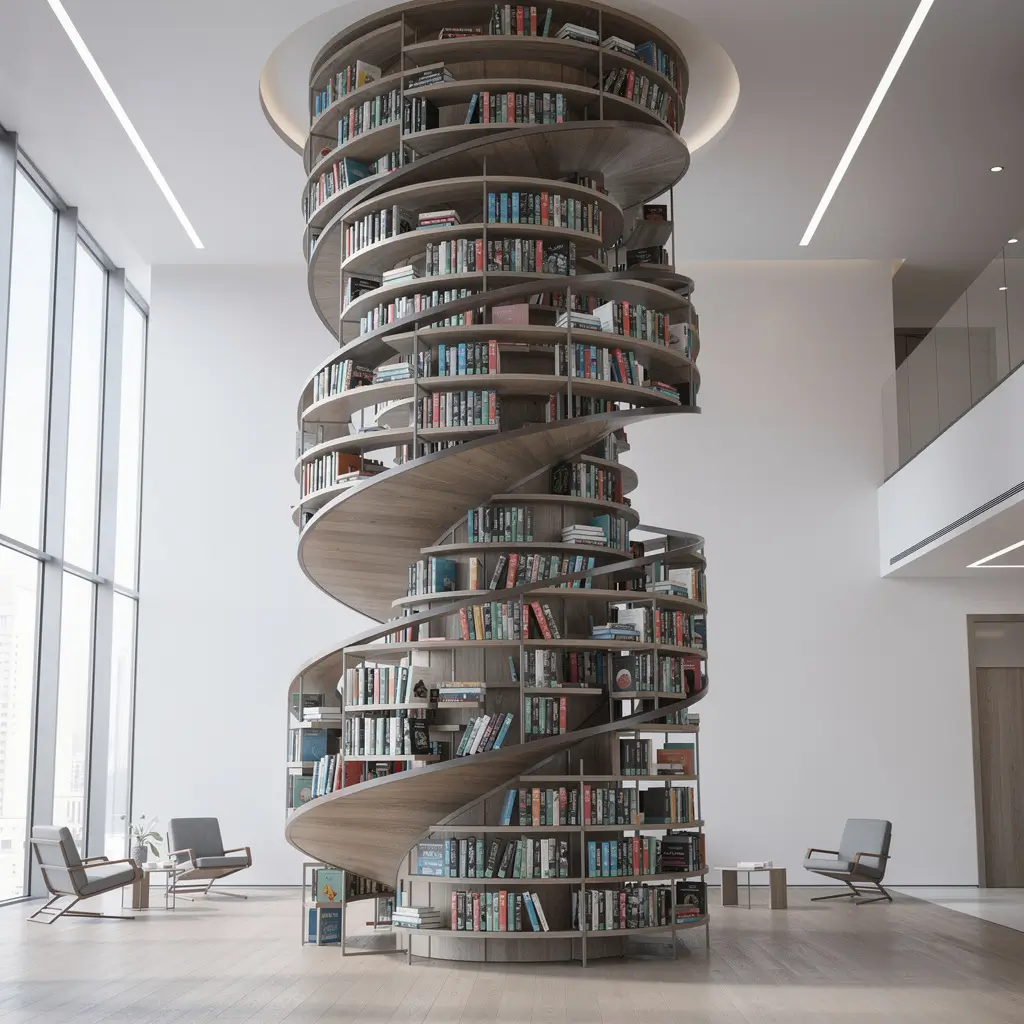
If you are critically low on floor space but have a lot of books, a spiral vertical book tower is your answer. These are slim, metal or wood towers with small, staggered shelves that allow you to stack your books horizontally.
The “Floating Stack” Illusion
When you fill a spiral book tower, the shelf itself almost disappears. It looks like you have a perfectly balanced, freestanding tower of books reaching for the ceiling. It’s a major statement piece and a great conversation starter.
Why This Works for Small Spaces
- Extremely small footprint: Most are only about a foot wide and a foot deep.
- Utilizes vertical space: Draws the eye upward, making the room feel taller.
- Holds a surprising number of books: I’ve seen towers that hold over 100 paperbacks.
- Modern, sculptural look: It’s a piece of art that also happens to hold your library.
IMO, the spiral book tower is the best solution for that awkward, narrow space between a window and a wall. It’s functional, beautiful, and takes up almost no room.
12. Bohemian Macramé Hanging Shelves
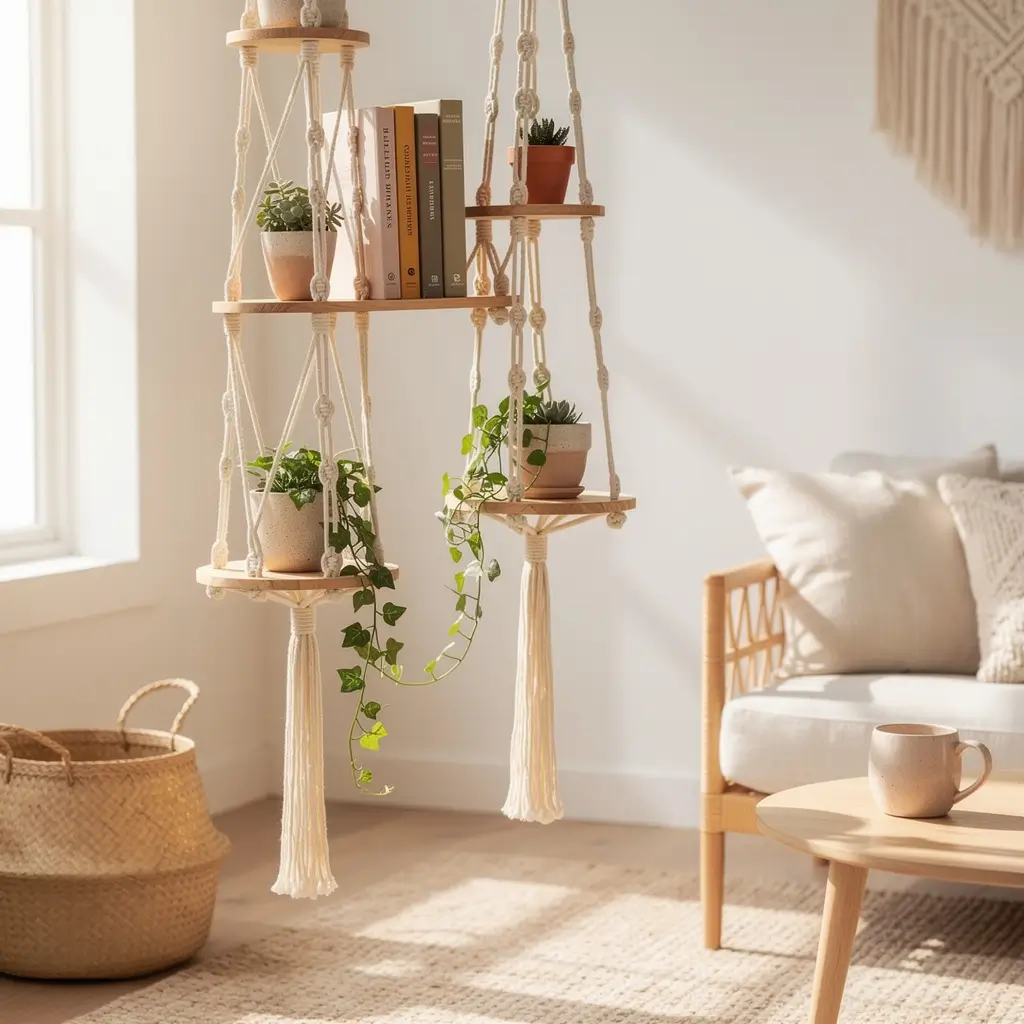
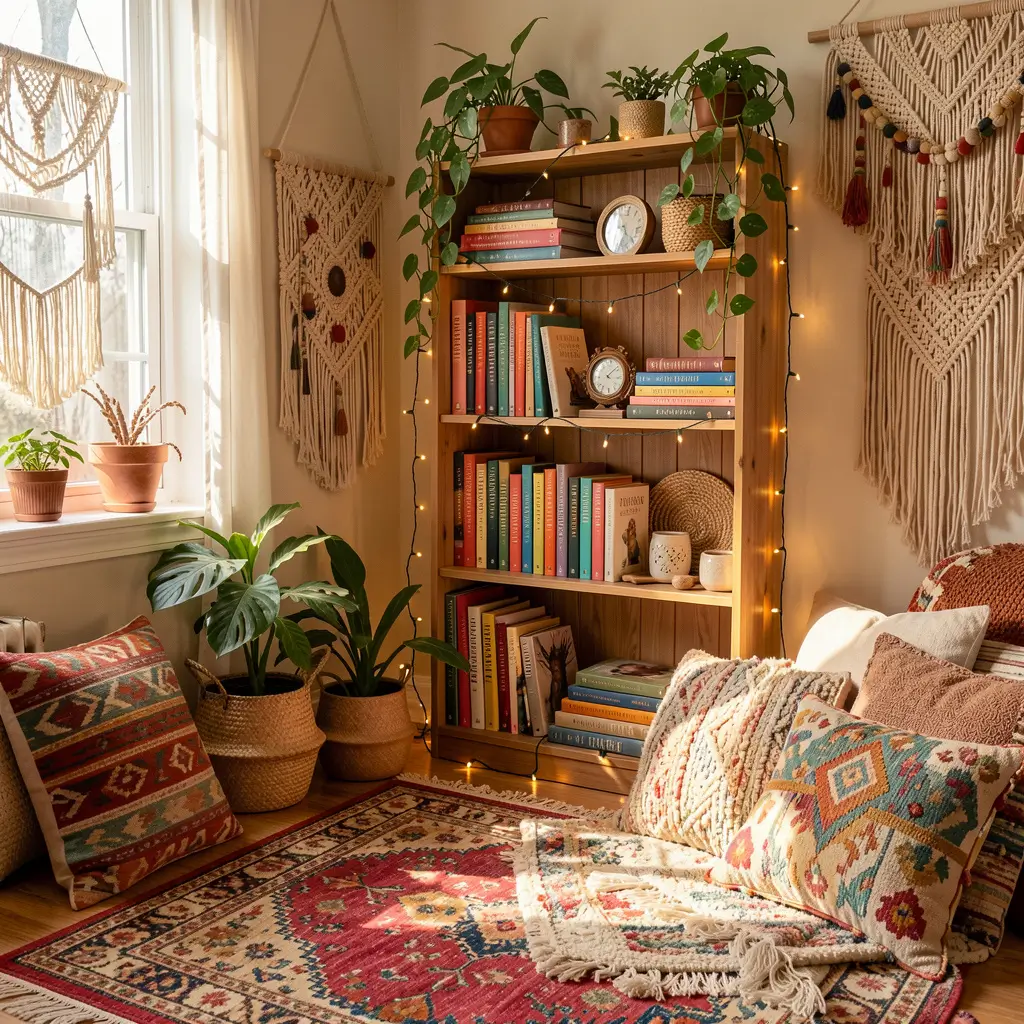
For the Boho-chic enthusiast, Bohemian macramé hanging shelves bring a soft, artistic, and handcrafted vibe to your book display. This project involves using macrame techniques to create a hanger that supports one or two small wooden shelves.
The “Floating” Aesthetic
This project involves threading thick cotton or jute rope through wooden planks. You then hang the entire assembly from a sturdy ceiling hook. It looks incredibly artistic and adds a “handcrafted” vibe to the room. Natural textures lower your stress levels during intense study sessions.
Construction Tips
- Choose a thick, sturdy rope like 1/2 inch cotton or manila.
- Tie uniform knots under each shelf to keep them level.
- Sand the edges of your wood to prevent splinters.
- Mount the top hook into a ceiling joist. Books are heavy, and you don’t want it to fail!
- Keep the weight balanced. This style is best for a few special books, not your entire collection.
I once built one of these for my bedroom, and it became the most-commented-on piece in my house. It’s perfect for showing off your plant collection or your favorite poetry books. Macramé hanging shelves add vertical interest without “eating” the room’s visual space.
Technical Details: The “Rules” of Styling
While I love to say “there are no rules,” there are a few basic design principles that will make your bookshelf look ten times better. Once you learn them, you can break them with confidence.
The Rule of Odds
I suggest you group your decorative objects in odd numbers like three or five. Our brains find odd-numbered groupings more visually appealing and natural than even-numbered ones.
Varying Heights
Never line up all your objects like soldiers. Create a “skyline” on your shelf by mixing tall, medium, and short items. A tall vase, a medium stack of books, and a short candle create a beautiful, balanced vignette.
The 60/30/10 Rule
This color rule works for bookshelves too.
- 60% of your shelf should be your dominant element (usually books).
- 30% should be your secondary element (like baskets or larger decor).
- 10% should be your “accent” (small, metallic, or colorful objects).
Frequently Asked Questions
How do I style a bookshelf without making it look cluttered?
I recommend you follow the “one-third” rule. One-third of your shelf should be books, one-third should be decor, and one-third should be empty space. This breathing room is the key to avoiding a cluttered look.
Should I organize my books by color?
The rainbow bookshelf looks incredible, but it’s not very functional if you actually need to find your books. I suggest organizing by genre and then arranging the spines within that genre in a pleasing color order. It’s a good compromise.
What do I do with my “ugly” paperback books?
You have a few options. You can cover them in matching paper, turn the spines inward (if you don’t need to see the titles), or store them in attractive, lidded boxes on a lower shelf.
My Personal Bookshelf Journey
I want to leave you with a quick story. Three years ago, my bookshelf was an absolute nightmare. I had books stacked two-deep, papers sticking out, and a layer of dust that was probably developing its own ecosystem. I was so embarrassed by it that I would try to block it during Zoom calls.
I finally committed to the Minimalist Open Shelf Decor look. I donated about half my books (it was painful but necessary), bought a few white storage boxes, and started incorporating “negative space.” The first morning I sat down in that clean, organized space, I felt like my brain had been decluttered along with the shelf. That experience is why I’m so passionate about these bookshelf design ideaas. A well-styled shelf is an act of self-care.
Final Thoughts: Your Shelf, Your Story
You don’t need a massive library to have a beautiful bookshelf. The key to these 12 bookshelf design ideaas involves being intentional with every item you choose to display. Start small.
Maybe clear off one shelf this weekend. Add a plant. Group your books by color.
Remember, your bookshelf should serve you, not the other way around. It should be a source of inspiration, a tool for organization, and a reflection of your unique personality.
Pick the idea that resonates most with your lifestyle—whether it’s the sleek floating shelf or the cozy reading nook—and start creating your own personal library.
You deserve a space that makes you feel smart, creative, and inspired.
Now, go grab a stack of books and start styling! And seriously, leave some empty space—your future self will thank you for it. 🙂