10 Inspiring Camper Interior Design Ideas and Multi-Functional Furniture
- Home Interior Design
 Ben
Ben- 0
- 34 minutes read
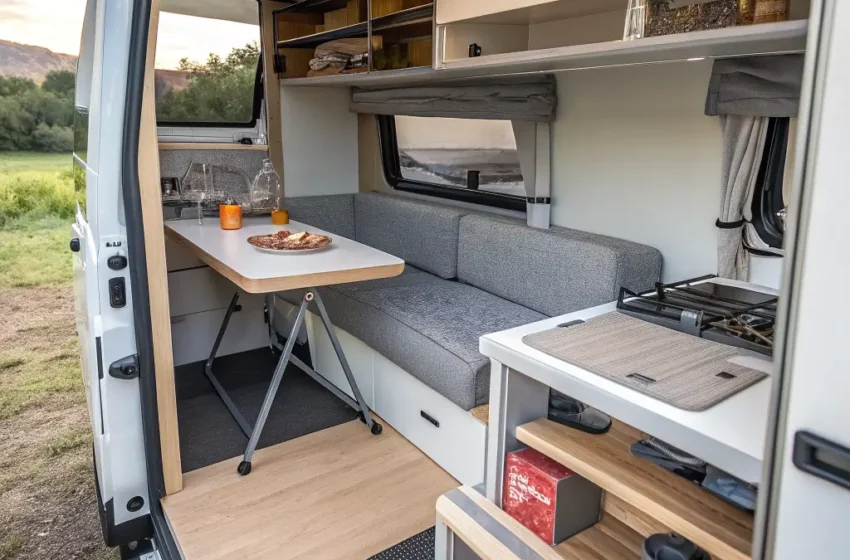
Buying a camper is the easy part. Turning that beige, dated box on wheels into a space you actually want to live in? That’s where things get interesting. I spent six months staring at my 1987 camper’s original brown cabinets and orange curtains before finally admitting that the “vintage charm” excuse was just procrastination in disguise.
The beautiful thing about camper interior design is that you’re working with a blank canvas on wheels. Every square inch matters, every design choice has consequences, and the results of your work travel with you everywhere you go. There’s something deeply satisfying about creating a home that fits in a parking spot.
These ten camper interior design ideas will inspire your renovation whether you’re working with a vintage Airstream, a modern Sprinter van, or something in between. After helping friends renovate five different campers (and completely transforming my own disaster into something Instagram-worthy), I’ve learned what actually works versus what just looks good in photos.
1. Cozy Minimalist Camper Makeover
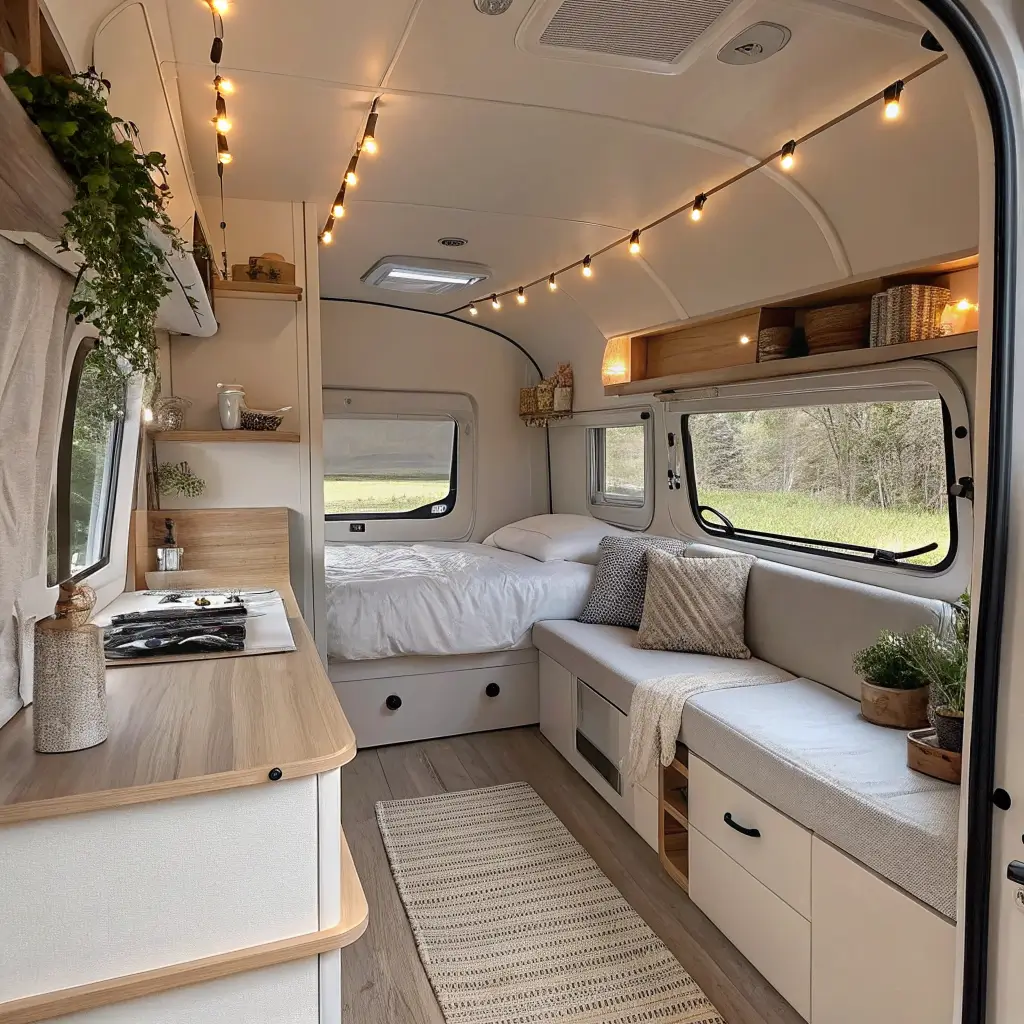
The cozy minimalist camper makeover proves that small spaces thrive with less stuff, not more. This approach strips away unnecessary elements while adding warmth through textures, natural materials, and thoughtful details.
Minimalism in a camper isn’t about living with nothing – it’s about living with only what adds value. Every item must earn its space through either function or joy. I purged approximately 47 decorative pillows from my camper before realizing that three quality cushions made the space feel more luxurious than a dozen cheap ones.
The color palette sets the minimalist foundation. Stick to neutrals with one or two accent colors throughout the entire camper. This visual consistency makes small spaces feel larger and more cohesive than spaces with competing color schemes fighting for attention.
Creating Minimalist Warmth
Essential minimalist camper elements:
- Neutral base colors like white, cream, or soft gray
- Natural wood accents adding warmth without clutter
- Quality textiles in linen, cotton, or wool
- Strategic lighting including warm LED strips
- Hidden storage keeping surfaces clear
- Intentional decorations limited to meaningful items
The minimalist approach works especially well for full-time camper dwellers who need functional living spaces that don’t overwhelm.
2. Rustic Farmhouse Camper Interior
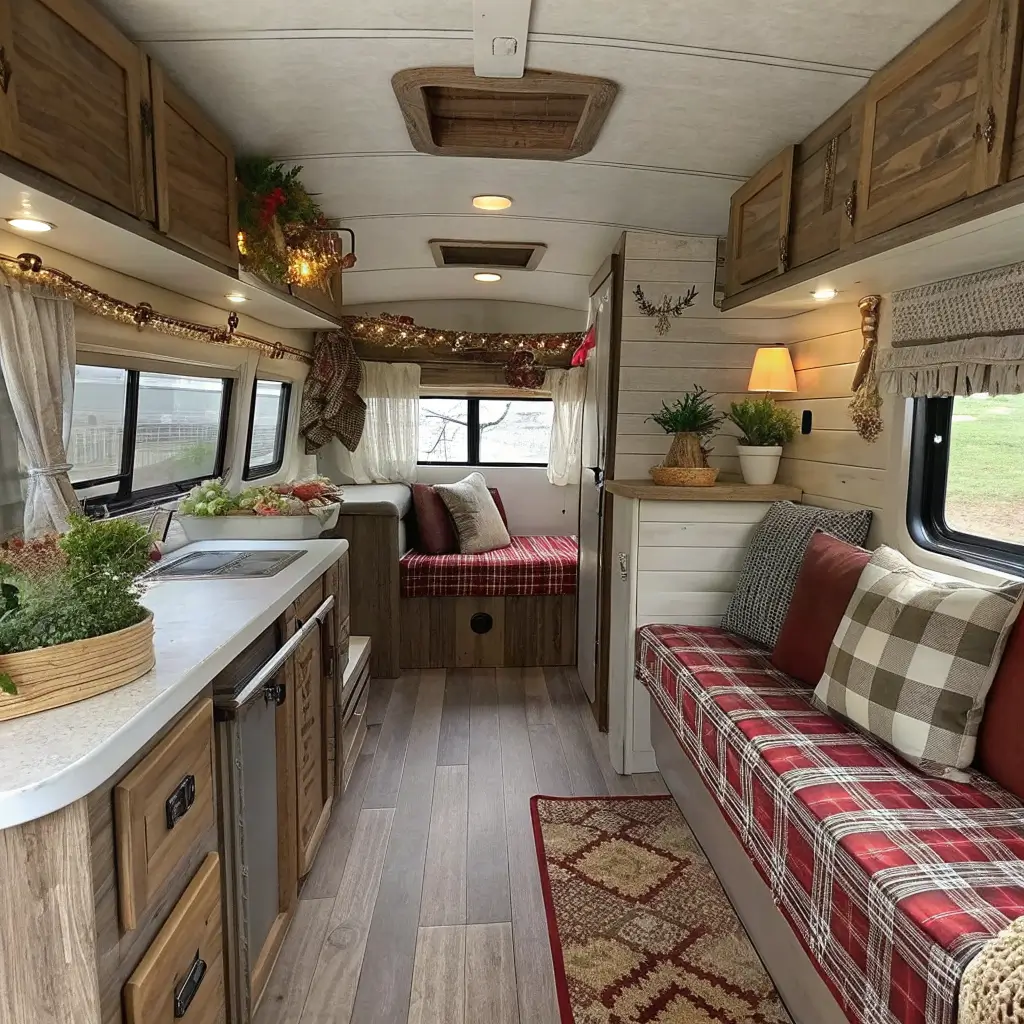
Rustic farmhouse camper interiors bring that cozy countryside feel to wherever you park. This style combines reclaimed materials, vintage finds, and comfortable textures that make your camper feel like a tiny cottage on wheels.
Shiplap transformed the camper renovation world, and for good reason. Real or faux shiplap walls instantly add farmhouse character without complicated installation. I covered my camper’s original paneling with lightweight shiplap alternatives, and the transformation took one weekend.
The farmhouse aesthetic requires authentic touches rather than mass-produced reproductions. Hunt flea markets and thrift stores for genuine vintage pieces that tell stories. That old enamelware pot you find at an estate sale has more character than anything from a big-box store.
Farmhouse Camper Design Elements
Building rustic charm:
- Shiplap or beadboard wall treatments
- Reclaimed wood countertops and accents
- Mason jar storage for practical and decorative use
- Vintage hardware on cabinets and doors
- Neutral checkered fabrics for cushions and curtains
- Edison bulb lighting creating warm ambiance
Farmhouse design appeals to travelers seeking comfort over minimalism and those who love collected, layered interiors.
3. Boho Chic Camper Transformation
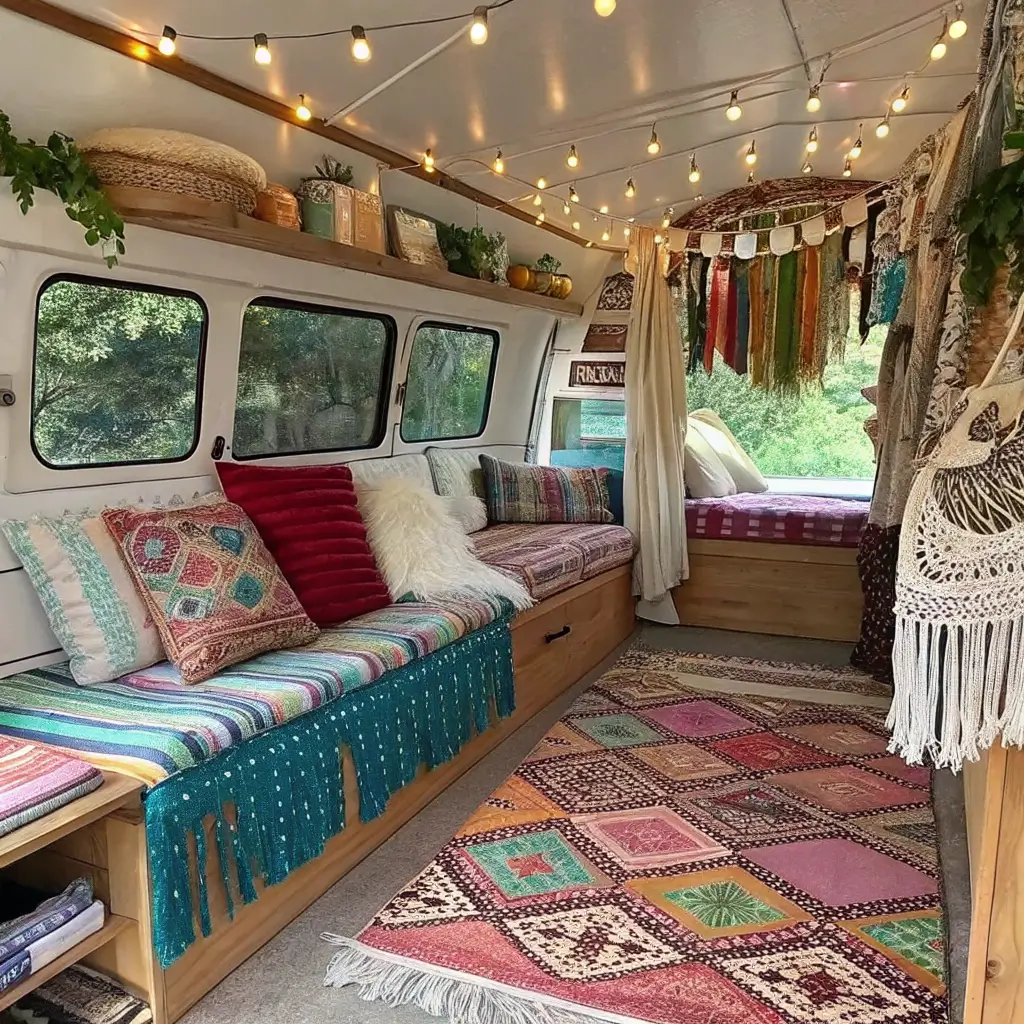
Boho chic camper transformations embrace maximalist creativity within minimal space – proving that tiny homes can handle bold personality. This style welcomes patterns, textures, colors, and collected treasures from your travels.
The layering defines bohemian camper style. Rugs over rugs, pillows on pillows, textiles on every surface create that rich, traveled aesthetic. My boho friend’s camper looks like a Moroccan riad had a baby with a California surf shack – and somehow it works perfectly.
Color palettes in boho campers stay warm but varied. Earth tones anchor the space while jewel-toned accents add depth and interest. The key is maintaining visual warmth even when incorporating bright colors.
Bohemian Camper Essentials
Creating wanderlust vibes:
- Macramé wall hangings adding texture
- Global-inspired textiles from markets and travels
- Plant life throughout the space
- Mixed patterns unified by color family
- Vintage or antique furniture pieces
- Natural materials like rattan and wicker
Boho design attracts creative travelers, festival-goers, and free spirits who want their camper to reflect their adventurous lifestyle.
Also Read: 10 Inspiring Shop Interior Design Ideas for Trendy Shops
4. Tiny Camper Space-Saving Hacks
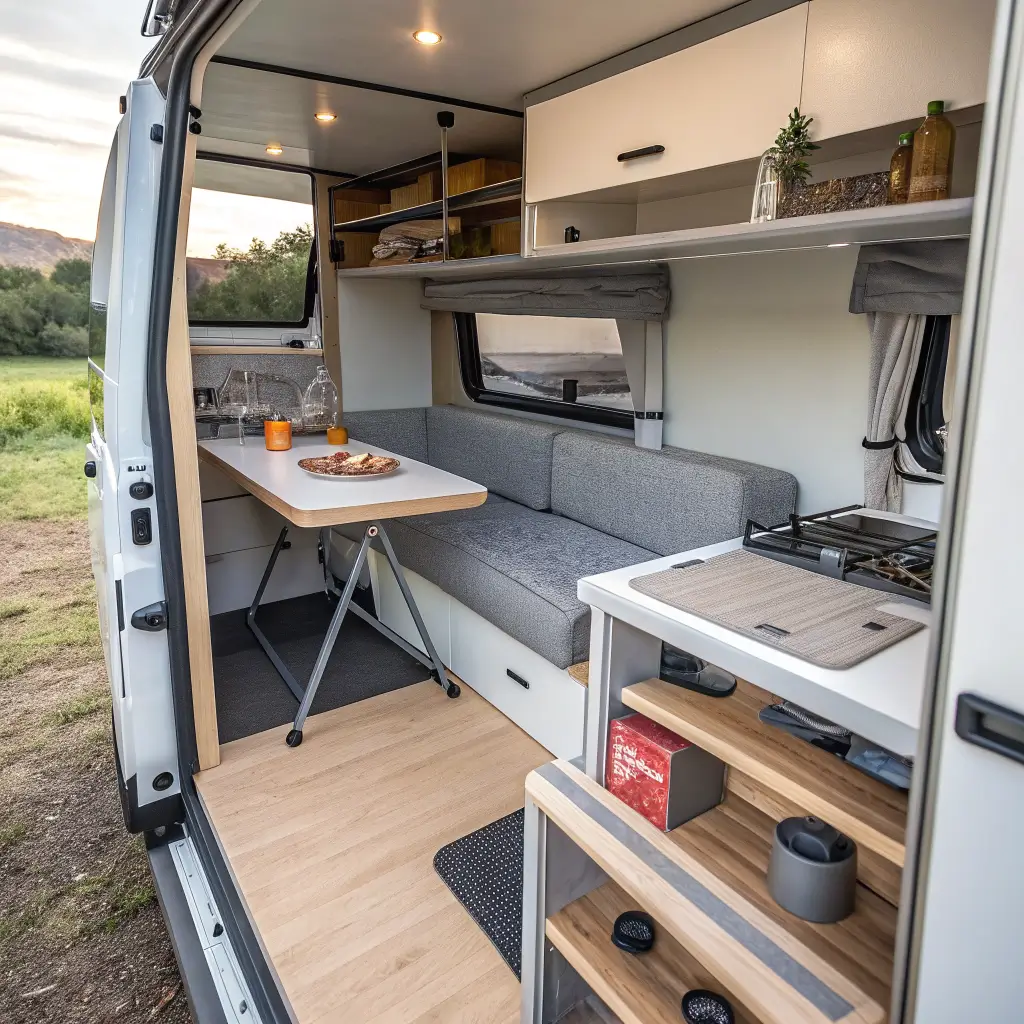
Tiny camper space-saving hacks become essential survival strategies when every inch counts. These clever solutions maximize functionality without sacrificing style or comfort.
Vertical space is the most underutilized resource in camper design. Walls, ceiling areas, and door backs all offer storage opportunities that most renovators overlook. I added tension rod shoe storage to an awkward corner, magnetic spice strips to a narrow wall, and suddenly my tiny camper held twice as much.
Multi-level thinking solves the smallest camper challenges. Raised beds with storage underneath, hinged countertops revealing hidden compartments, and nested furniture create usable space that didn’t exist before. FYI, every professional camper renovator I’ve met obsesses over these hidden opportunities.
Space Maximization Strategies
Clever tiny camper solutions:
- Overhead cabinets using ceiling space
- Under-bed storage with organized compartments
- Door-mounted organizers for small items
- Foldaway furniture that disappears when unused
- Magnetic strips for spices, tools, and metal items
- Stackable containers in all storage areas
Space-saving design is essential for van conversions, vintage trailers, and any camper under 20 feet where square footage comes at a premium.
5. Modern Scandinavian Camper Style
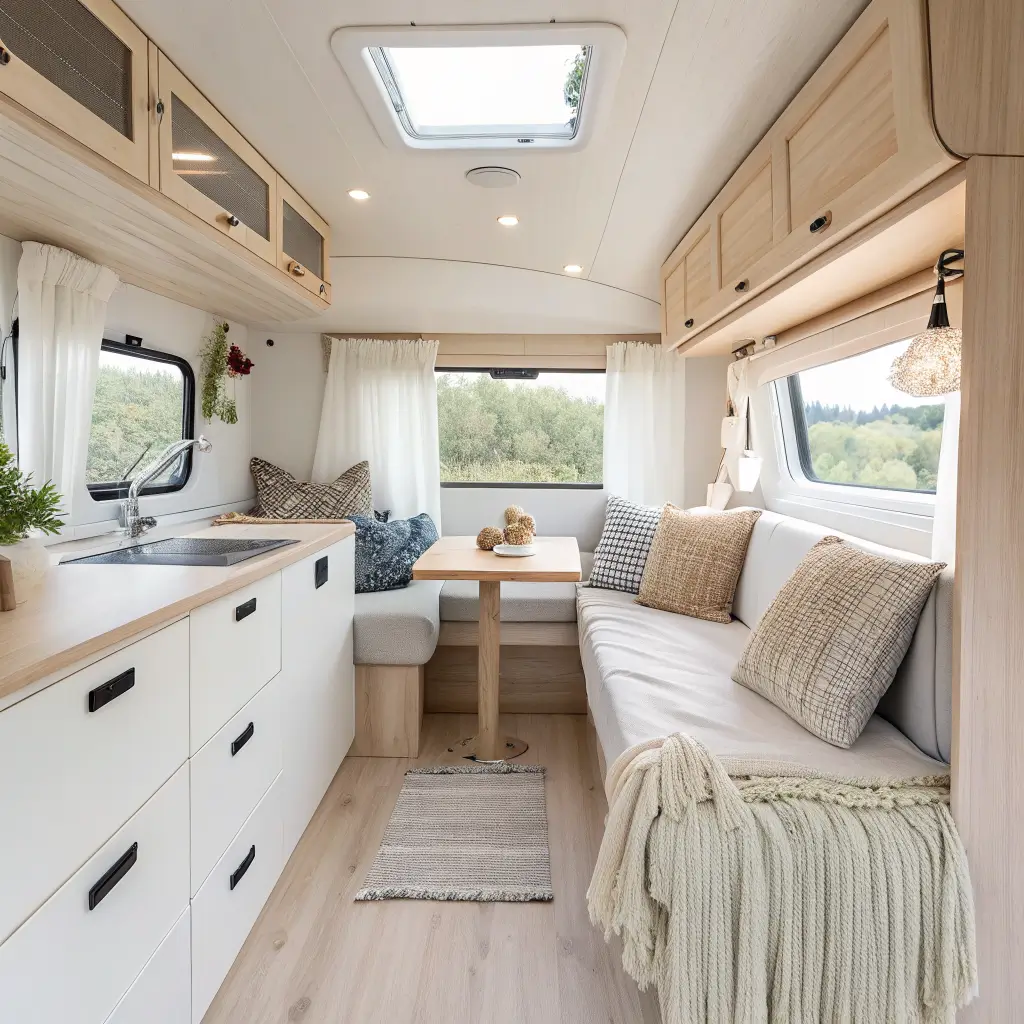
Modern Scandinavian camper style brings hygge comfort with clean contemporary lines. This approach creates bright, functional spaces that feel both minimal and warm – the Nordic specialty.
The Scandinavian palette keeps things light and bright. White walls, light wood tones, and strategic black accents create spaces that feel larger and more open than darker color schemes allow. Natural light becomes your best friend with this approach.
Functionality drives every Scandinavian design choice. Beautiful objects that actually serve purposes fill these spaces – no decorative-only items allowed. The coffee maker looks attractive, the storage boxes are aesthetically pleasing, and everything earns its place.
Scandinavian Camper Elements
Nordic design principles:
- Light wood finishes throughout cabinetry
- White or very light wall colors
- Minimal decorations with maximum impact
- Natural textiles in neutral tones
- Plants and greenery for life and freshness
- Cozy lighting creating hygge atmosphere
Scandinavian design works perfectly for modern camper builds and minimalist travelers who value simplicity without coldness.
6. Luxury Camper on a Budget
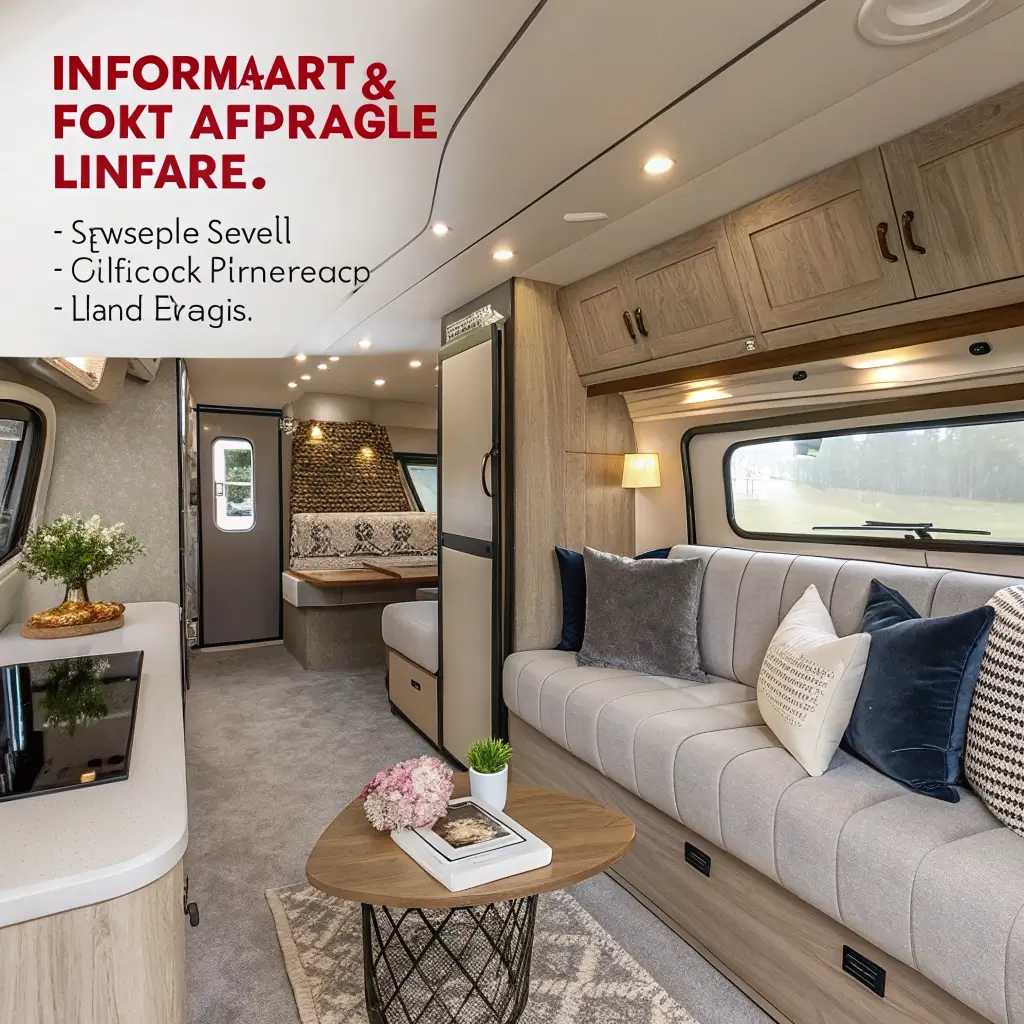
Luxury camper design on a budget proves expensive-looking interiors don’t require expensive budgets. This approach uses smart material choices, strategic upgrades, and DIY creativity to achieve high-end results.
Paint transforms campers faster than any other single change. Cabinet paint, wall color updates, and painted countertop treatments can make a 1990s disaster look like a 2024 custom build. I spent $200 on paint and supplies and added thousands in perceived value to my camper.
The luxury perception comes from details, not price tags. Quality hardware, consistent finishes, and attention to small touches create expensive-looking results without luxury budgets. Those $10 cabinet pulls look identical to $50 versions when you choose wisely.
Budget Luxury Strategies
Achieving high-end looks affordably:
- Premium-look paint on existing surfaces
- Updated hardware throughout
- Contact paper mimicking marble or wood
- Thrifted finds that look expensive
- DIY upholstery with quality fabric
- Strategic splurges on high-impact visible items
Budget luxury design benefits first-time renovators, flippers, and budget-conscious travelers who want style without financial stress.
Also Read: 12 Unique Interior Design Portfolio Ideas and Room Inspirations
7. Multi-Functional Camper Furniture Ideas
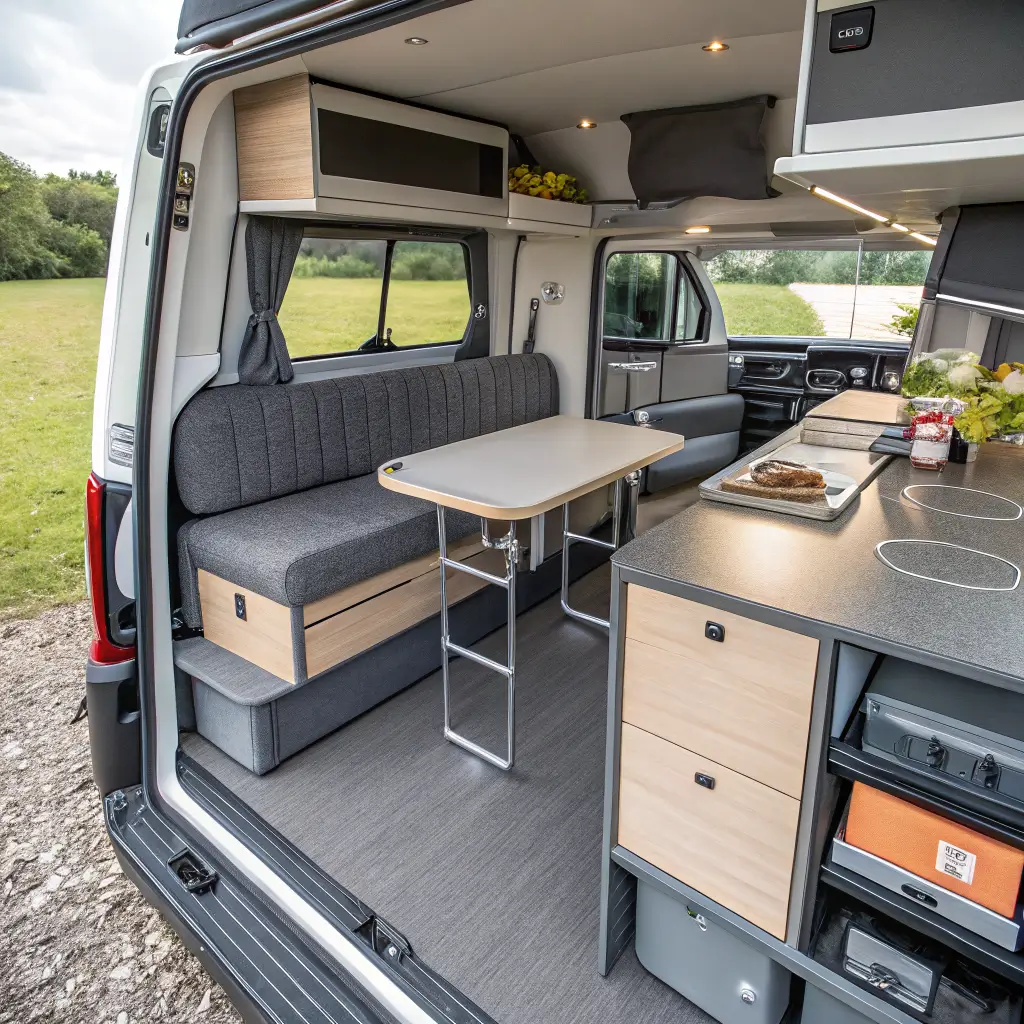
Multi-functional camper furniture becomes essential for spaces that need to serve every life function – sleeping, eating, working, relaxing – within a few square feet.
Convertible seating defines successful camper layouts. Dinettes that become beds, benches with hidden storage, and coffee tables that transform into workstations multiply your usable space without expanding your footprint. My dinette converts to a guest bed in under two minutes – a transformation that felt like magic when I first figured it out.
Building multi-functional furniture requires thinking through daily routines. How do you actually spend time in your camper? Design furniture that supports real use patterns rather than theoretical floor plans. If you never eat breakfast at a table but always work on a laptop, design accordingly.
Multi-Functional Furniture Options
Dual-purpose design solutions:
- Fold-down tables that disappear after meals
- Convertible bed-seating combinations
- Storage ottomans providing seating and hiding gear
- Murphy beds freeing daytime floor space
- Swing-out desks for occasional work needs
- Modular pieces that reconfigure for different uses
Multi-functional design is critical for full-timers, van conversions, and anyone prioritizing functionality over single-purpose spaces.
8. Bright and Airy Camper Layouts
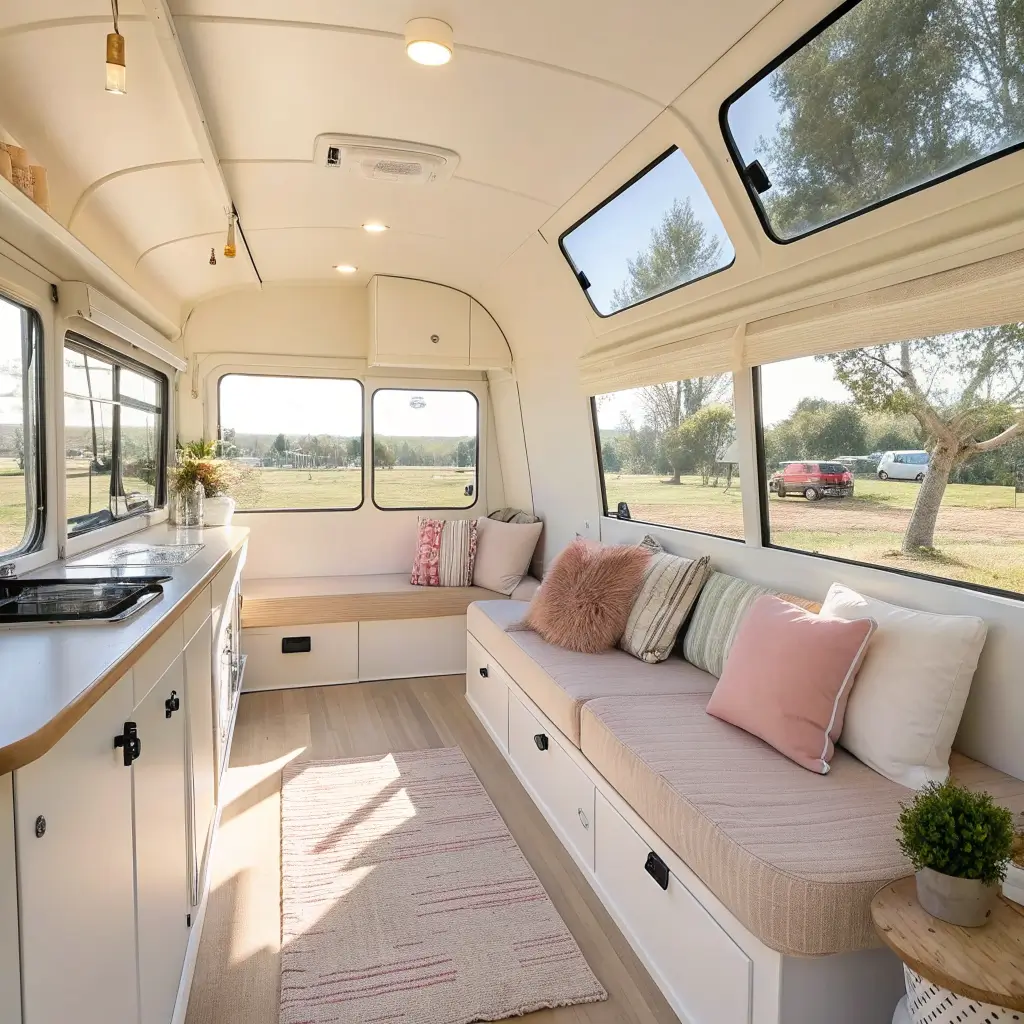
Bright and airy camper layouts prove that small spaces can feel expansive with the right design choices. This approach maximizes natural light and creates visual openness that defies actual square footage.
Window treatments make or break the airy aesthetic. Remove heavy curtains and replace with light, sheer options or roman shades that stack compactly. My camper has twelve windows, and switching from dark curtains to white linen panels added visual square footage I didn’t know existed.
Color psychology affects how we perceive space. White walls, light flooring, and minimal visual weight trick our brains into seeing more room than actually exists. The reflective quality of light surfaces bounces natural light throughout the space.
Creating Airiness in Compact Spaces
Light and open design strategies:
- White or very light paint colors throughout
- Light-toned flooring expanding visual space
- Minimal window coverings maximizing light
- Strategic mirrors reflecting and brightening
- Clear or acrylic furniture elements reducing visual weight
- Decluttered surfaces preventing cramped feelings
Bright design approaches suit summer campers, desert dwellers, and anyone who feels claustrophobic in traditional dark camper interiors.
9. Compact Kitchen & Dining Camper Designs
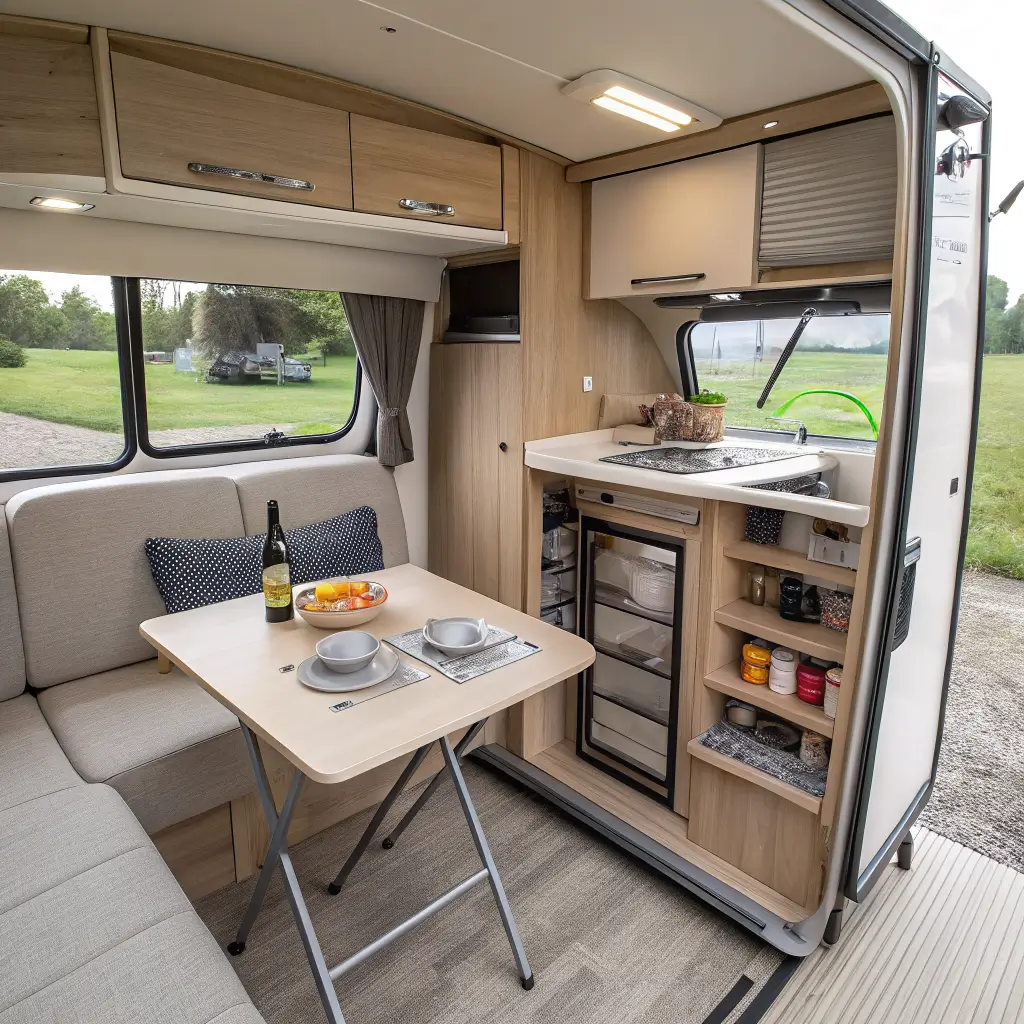
Compact kitchen and dining designs require maximum functionality within minimum footprint – because you still need to cook and eat even when your kitchen measures four feet wide.
Counter space is the most precious kitchen commodity in campers. Create additional surfaces with cutting board covers, fold-down extensions, and removable shelf systems that expand your workspace temporarily. I tripled my available counter space using a combination of sink covers and a flip-up section – breakfast prep finally became possible.
Vertical kitchen storage prevents the dreaded camper cabinet avalanche. Use risers inside cabinets, door-mounted racks, and pegboard systems to organize kitchen tools without stacking everything precariously. Nothing ruins a camping trip like opening a cabinet and getting attacked by falling cookware.
Compact Kitchen Solutions
Maximizing tiny kitchen functionality:
- Sink covers creating additional counter space
- Magnetic knife strips saving drawer space
- Nested cookware minimizing storage needs
- Wall-mounted pot racks utilizing vertical space
- Fold-down dining surfaces for meals
- Over-counter shelving for frequently used items
Compact kitchen design benefits serious camp cooks, full-timers, and anyone who refuses to survive on campfire hot dogs alone.
Also Read: 10 Timeless Japanese Interior Design Ideas for Serene Homes
10. Travel-Ready Stylish Camper Interiors
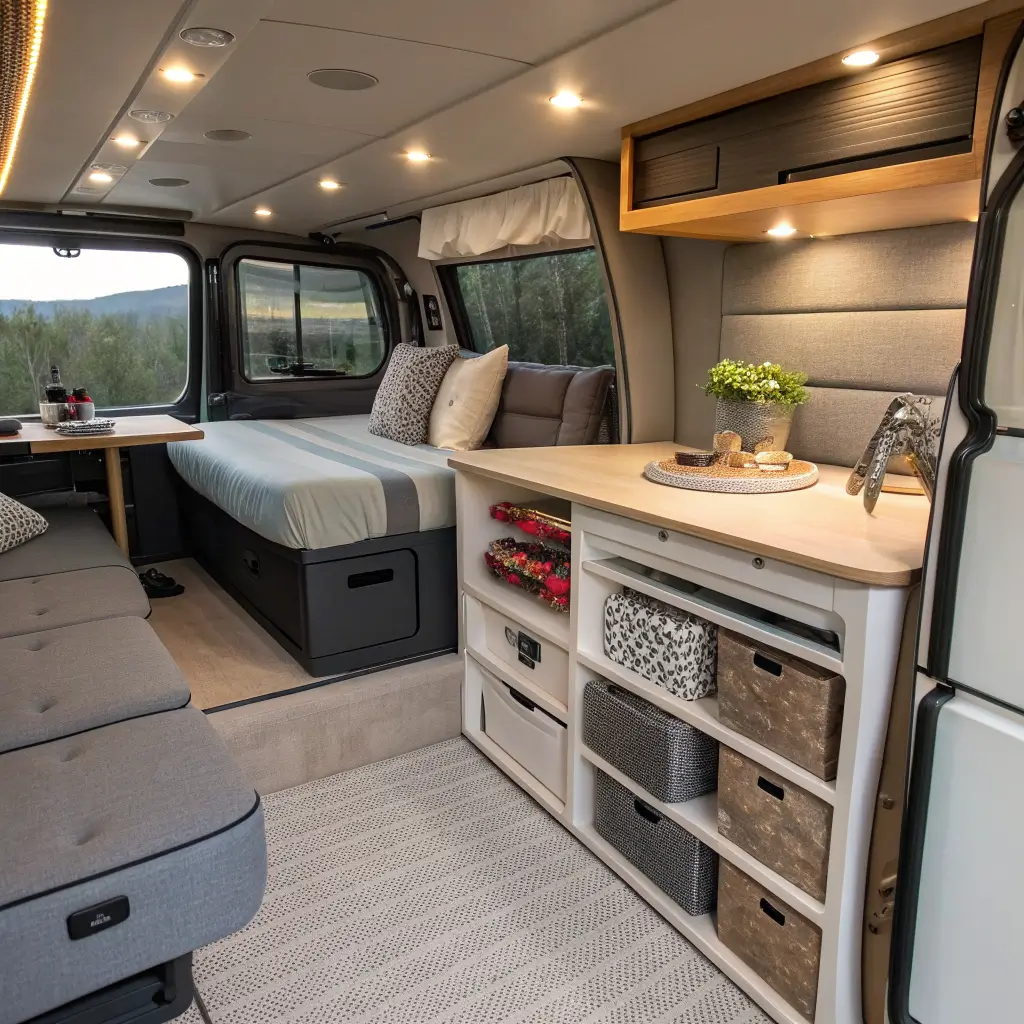
Travel-ready stylish camper interiors balance aesthetic goals with practical road-life demands – because beautiful design means nothing if everything crashes to the floor at the first pothole.
Securing decorative items separates travel-ready design from stationary interior design. Velcro, museum putty, bungee cords, and tension systems keep your carefully arranged displays in place while you’re moving. I learned this lesson after my first drive turned my camper into a blender – never again.
Material durability matters on the road. Choose fabrics that resist stains, surfaces that clean easily, and decorations that survive vibration without falling apart. That delicate vintage vase might look perfect, but can it handle mountain roads?
Travel-Ready Design Considerations
Practical styling strategies:
- Secured decorations using velcro or putty
- Durable fabrics that clean easily
- Locked storage preventing opening during travel
- Minimal breakables reducing risk
- Cushioned surfaces protecting fragile items
- Quick setup and breakdown for frequently moving
Travel-ready design is essential for active travelers who move frequently rather than seasonal campers who park for extended periods IMO :/
Creating Your Perfect Camper Interior
After exploring these ten camper interior design ideas, you’ve probably noticed that the best camper interiors balance aesthetics with practicality.
A beautiful space that doesn’t function well on the road isn’t really a successful design – and neither is a purely functional space that feels soulless.
Start by understanding how you’ll actually use your camper. Weekend warrior? Full-time traveler? Seasonal snowbird?
Your lifestyle determines which design approaches make sense and which will frustrate you within weeks.
Budget honestly from the beginning. Renovation costs multiply quickly in camper projects as you discover hidden problems, change plans mid-project, and decide certain things need to be “just right.”
Build in contingency funds and prioritize expenditures based on impact.
Don’t feel pressured to complete everything immediately. Many successful camper renovations happen in phases as budgets allow, skills develop, and priorities clarify through actual use.
Living with a space reveals what really matters versus what seemed important initially.
Your camper interior should reflect your personality while serving your travel needs. Choose a design direction that excites you and adapt these ideas to your specific camper, budget, and lifestyle.
The goal isn’t creating someone else’s Pinterest-perfect space – it’s building a rolling home that makes you happy every time you step inside.
The camper renovation journey rewards patience, creativity, and willingness to learn. Every mistake becomes a lesson, every challenge becomes a solved problem, and eventually, that beige box transforms into something uniquely yours.
And honestly? That transformation – watching your vision become reality – might be the best part of camper ownership. Although having a cute home that goes anywhere you want definitely comes in a close second 🙂