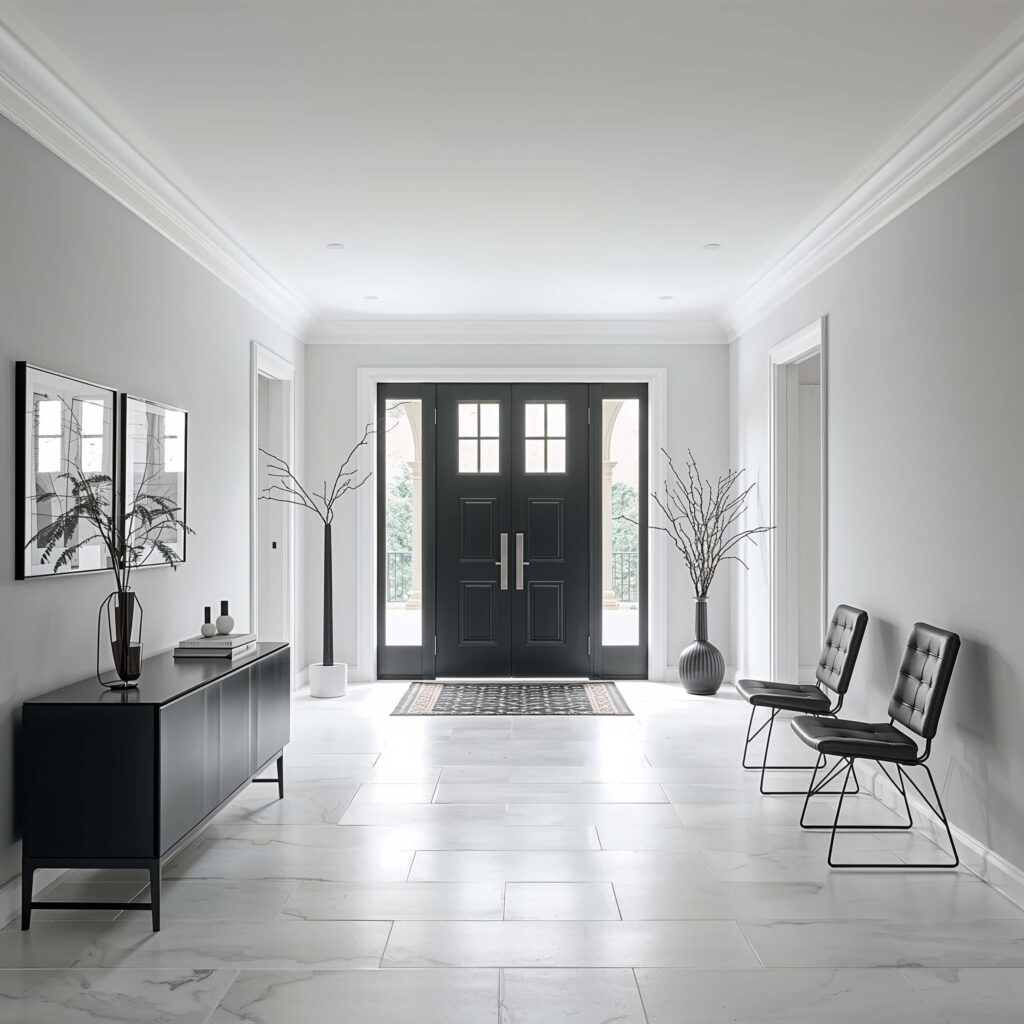
10 Inspiring Ceiling Design Living Room Ideas for Every Style
- Ceiling Design
 Ben
Ben- 0
- 25 minutes read
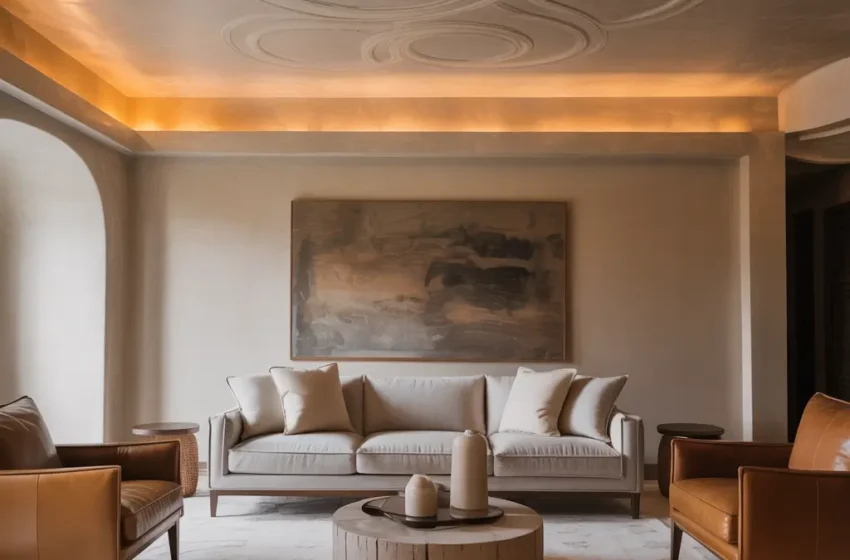
Living room ceilings are the most underrated design opportunity in your entire house. I discovered this the hard way after spending three months obsessing over paint colors, furniture arrangements, and throw pillows, only to realize my living room still felt incomplete.
Then one day, lying on my couch during a particularly boring Netflix binge, I stared up at my plain white ceiling and thought, “Why does this look like the inside of a shoebox?”
That revelation led me down a rabbit hole of ceiling design possibilities that completely transformed how I think about living rooms. The ceiling isn’t just a lid on your room – it’s a blank canvas that can define your entire space’s personality.
Whether you want drama, coziness, or modern sophistication, the right ceiling design pulls everything together in ways that new furniture never could.
I’ve since experimented with five different ceiling designs in various living rooms (mine, my mom’s, and a few brave friends who trusted my vision).
Some worked brilliantly, others taught me expensive lessons about why you should measure twice before ordering custom beams. Let me share ten ceiling design ideas that’ll transform your living room from forgettable to unforgettable.
1. Modern False Ceiling with LED Lighting
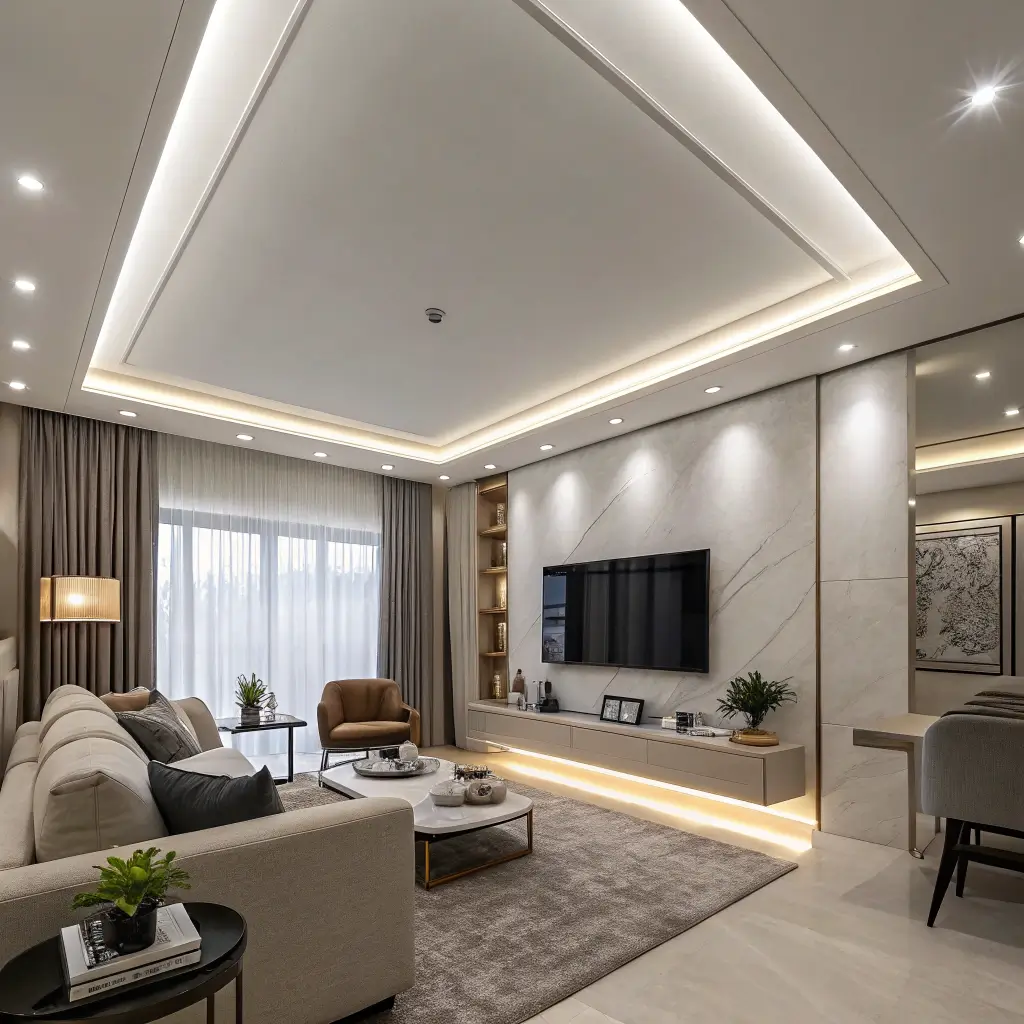
False ceilings with integrated LED lighting turned my living room from cave-like to magazine-worthy. I installed a dropped ceiling around the perimeter with hidden LED strips, creating this floating effect that makes everyone ask if I hired a designer. Spoiler: I didn’t, but YouTube University taught me everything.
The magic happens in that gap between the false ceiling and the original one. The LED strips wash the walls with soft light that eliminates harsh shadows and makes everyone look good during video calls. My living room went from needing three lamps to create ambiance to having perfect lighting at the touch of a dimmer switch.
Making LED Magic Work
Plan your zones before installing anything. I created three lighting zones – one for the TV area, one for the reading corner, and one for general ambiance. Smart LED strips let me control each zone separately through my phone. Movie night? Dim the TV zone. Reading? Brighten that corner. Party? Rainbow mode (just kidding, but you could).
Choose your LED color temperature based on your living room’s purpose. I went with tunable white strips that shift from energizing daylight for morning coffee to warm candlelight for evening relaxation. The mood change throughout the day feels natural and deliberate.
Don’t skimp on the LED quality. Cheap strips create uneven light with dark spots that ruin the whole effect. I learned this lesson the hard way when my bargain strips started flickering after two months. Quality strips cost more but deliver consistent, beautiful light for years.
2. Wooden Beam Ceiling for Cozy Living Room
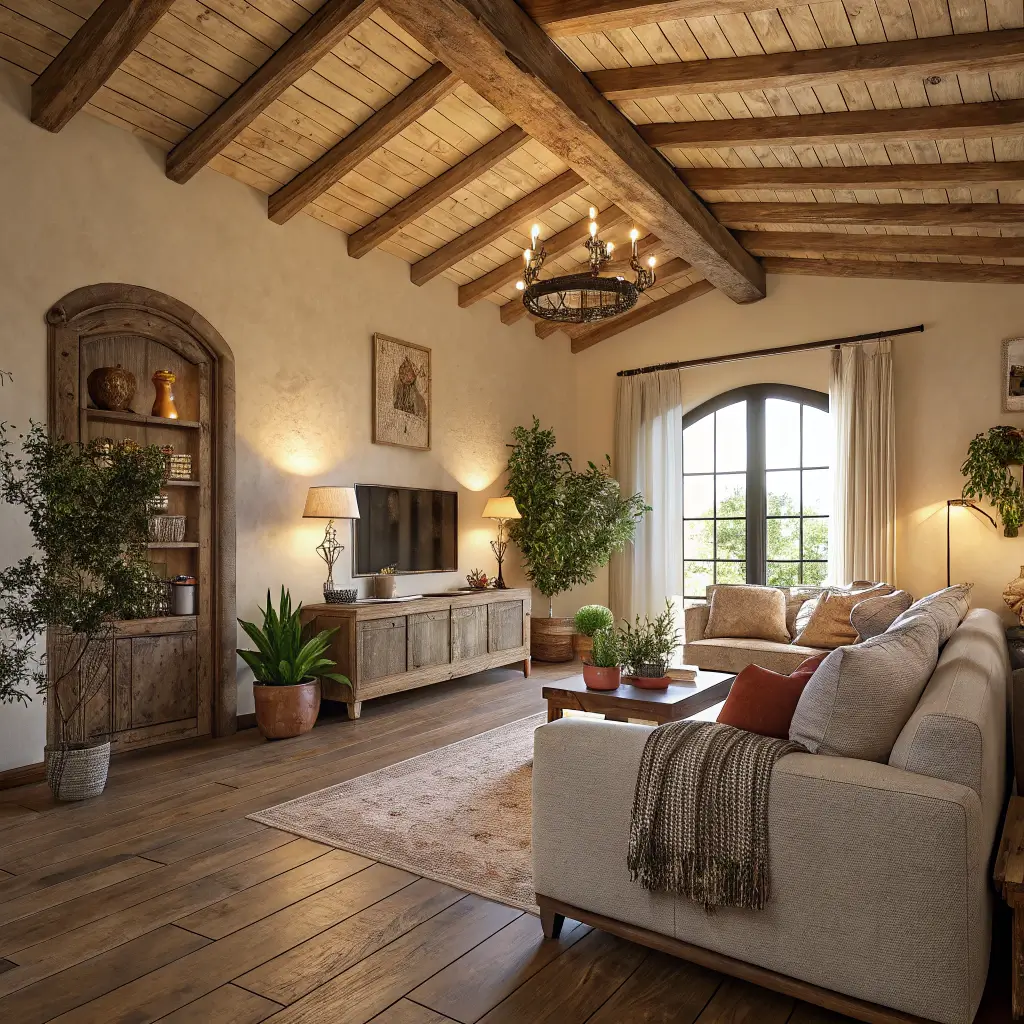
Wooden beams transformed my friend’s sterile living room into the coziest space I’ve ever experienced. We installed faux wood beams (because real ones would’ve required structural reinforcement and a second mortgage), and now her living room feels like a mountain lodge despite being in suburban Minneapolis.
The beams add architectural interest and break up the vast ceiling plane, making the room feel more intimate. The best part? Modern faux beams look so realistic that even my carpenter father couldn’t tell they weren’t real wood until he touched them.
Beaming with Success
Consider your room’s scale when choosing beam size. Massive beams in a small living room look ridiculous – like wearing a winter coat in July. My friend’s 15×20 living room handles 6-inch beams perfectly. They’re substantial enough to make a statement without overwhelming the space.
Think about beam placement strategically. We created a grid pattern with one central beam and four cross beams, defining different areas within the open living room. The beam over the seating area creates a cozy conversation zone, while the dining area has its own defined ceiling space.
Stain or paint your beams to match your vibe. Dark walnut stains create drama and tradition. White-washed beams feel coastal and fresh. We chose a medium honey tone that adds warmth without making the ceiling feel heavy. The color ties in with her hardwood floors beautifully.
3. Minimalist White Layered Ceiling Design
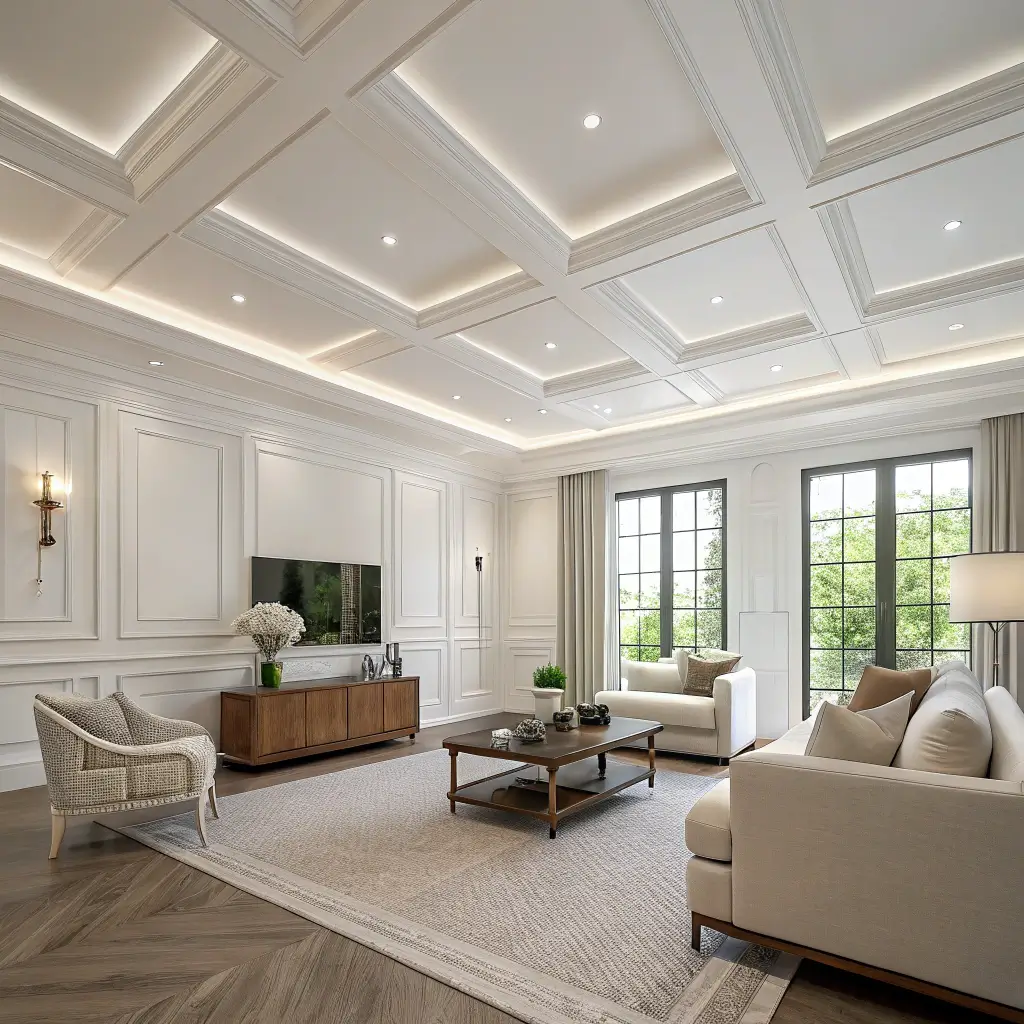
Minimalist layered ceilings prove that simple doesn’t mean boring. My living room features three subtle layers – the main ceiling, a dropped border, and a raised center section. All white, no fuss, but the dimension creates shadows and depth that make the room feel architecturally sophisticated.
The layers serve a purpose beyond aesthetics. The dropped section hides curtain tracks and speakers, while the raised center houses the chandelier junction box. Everything looks intentional and clean, with zero visible wires or hardware.
Layering Without Overdoing It
Keep layer height differences subtle for minimalist impact. My layers vary by just 3-4 inches each. Dramatic drops work for other styles, but minimalism calls for restraint. The slight variations create visual interest without screaming for attention.
Use the same color throughout all layers. Different colors would break the minimalist aesthetic. I chose the same warm white for everything, but the layers create natural shadows that add tonal variation. It’s like a monochrome painting with depth.
Add recessed lighting strategically within layers. I placed small LED downlights along the dropped border, washing the walls with light. The effect enhances the layered look while providing functional illumination. No dangling fixtures disrupting those clean lines.
Also Read: 12 Modern PVC Ceiling Design Ideas to Upgrade Interiors
4. Geometric Patterned Ceiling with Paint Accents
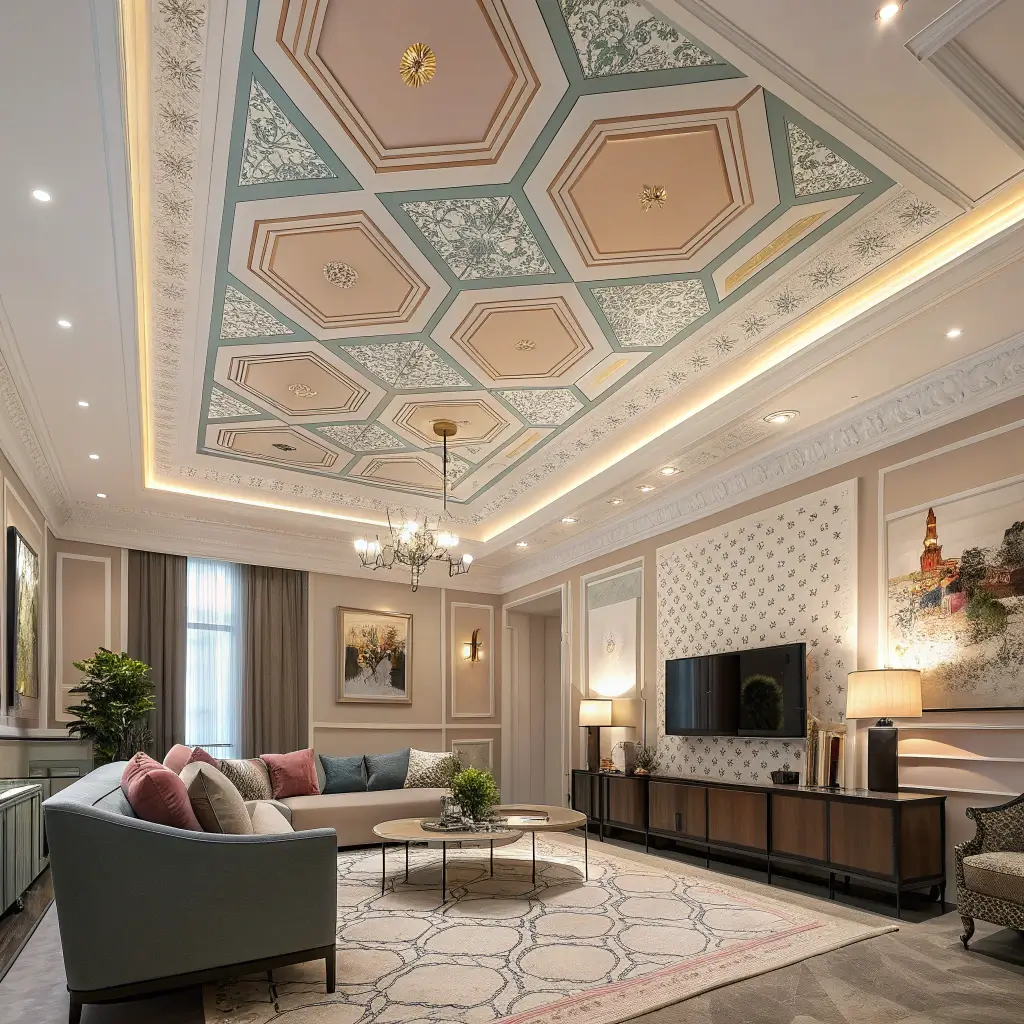
Geometric painted ceilings cost almost nothing but deliver maximum impact. I transformed my sister’s living room ceiling with triangular patterns in three shades of blue, and it became the room’s focal point. Total cost? About $60 in paint and tape. Impact? Priceless.
The pattern draws the eye upward and makes her standard 8-foot ceiling feel special. Everyone who visits comments on the “wallpapered” ceiling. When we reveal it’s just paint and patience, jaws drop.
Geometry That Works
Map your pattern on paper first. We spent a whole Saturday with graph paper, scaling the ceiling and testing different patterns. The triangle pattern we chose fits perfectly without awkward partial shapes at the edges. This planning prevented disaster.
Use high-quality painter’s tape and seal the edges. Bleeding paint ruins crisp geometric lines faster than you can say “renovation fail.” I learned to run a credit card along tape edges to seal them, then paint the base color first to seal any gaps. The extra step ensures razor-sharp lines.
FYI, geometric patterns can affect room perception. Diagonal lines add dynamism and can make rooms feel larger. Horizontal patterns widen spaces. Vertical patterns add height. Our triangles point toward the windows, drawing attention to natural light and views.
5. Coffered Ceiling for Elegant Interiors
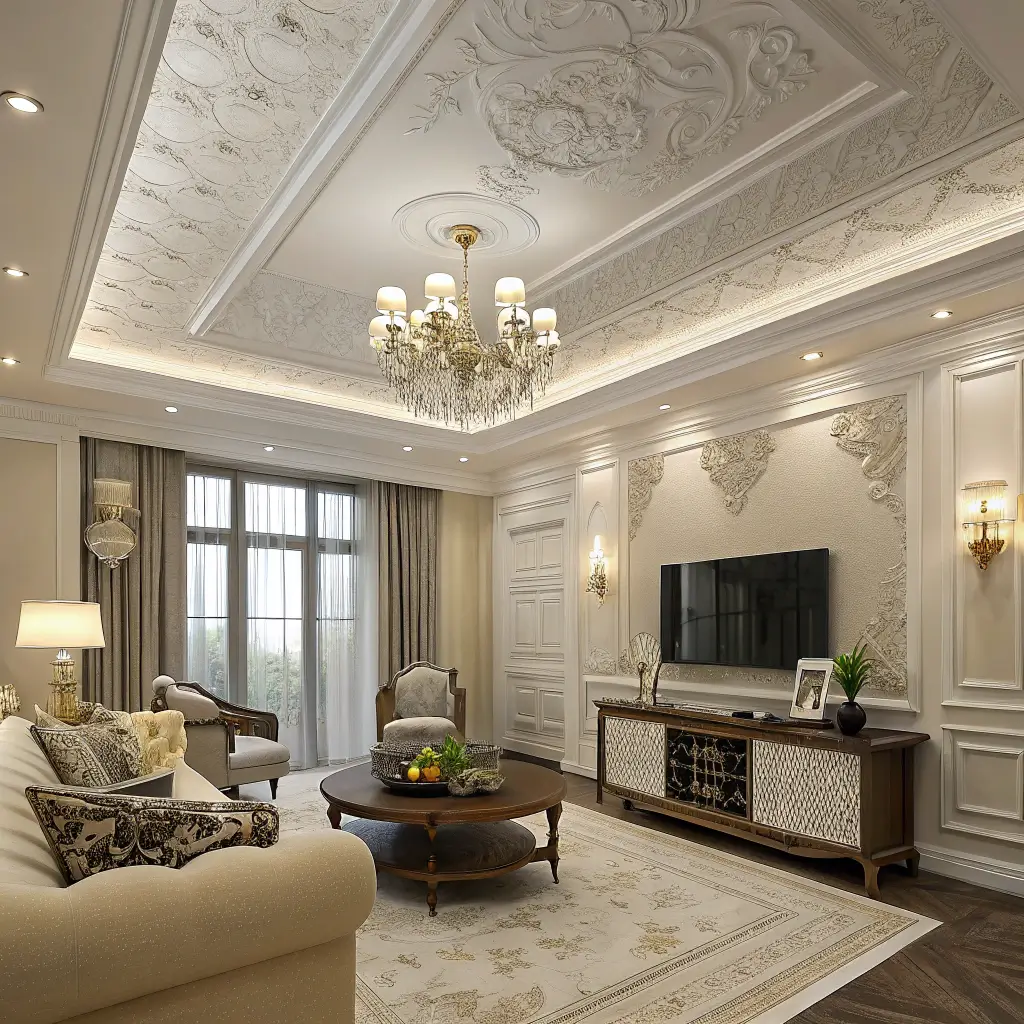
Coffered ceilings scream elegance louder than a tuxedo at a pool party. I helped install a coffered ceiling in my parents’ formal living room, and it transformed the space from “nice” to “are you sure you’re not secretly wealthy?”
The grid of recessed panels adds incredible architectural detail that makes everything else in the room look more expensive. Their mismatched furniture suddenly looked curated rather than accumulated over 30 years.
Creating Coffered Class
Size your coffers based on room dimensions. Their 18×16 living room has twelve coffers in a 3×4 grid. Each coffer is roughly 4×4 feet – large enough to make a statement but not so large they look empty. Tiny coffers look busy; huge ones look weird.
Paint strategy matters with coffered ceilings. We painted the recessed panels a shade darker than the beams, creating depth without using actual deep coffers. This shadow trick saved thousands in construction costs while delivering the same visual impact.
Don’t forget the crown molding details. Each coffer needs proper trim to look finished. We used lightweight polyurethane molding that looks exactly like traditional wood but installs easily and costs way less. The details make the difference between DIY and professional.
6. Textured Plaster Ceiling with Subtle Lighting
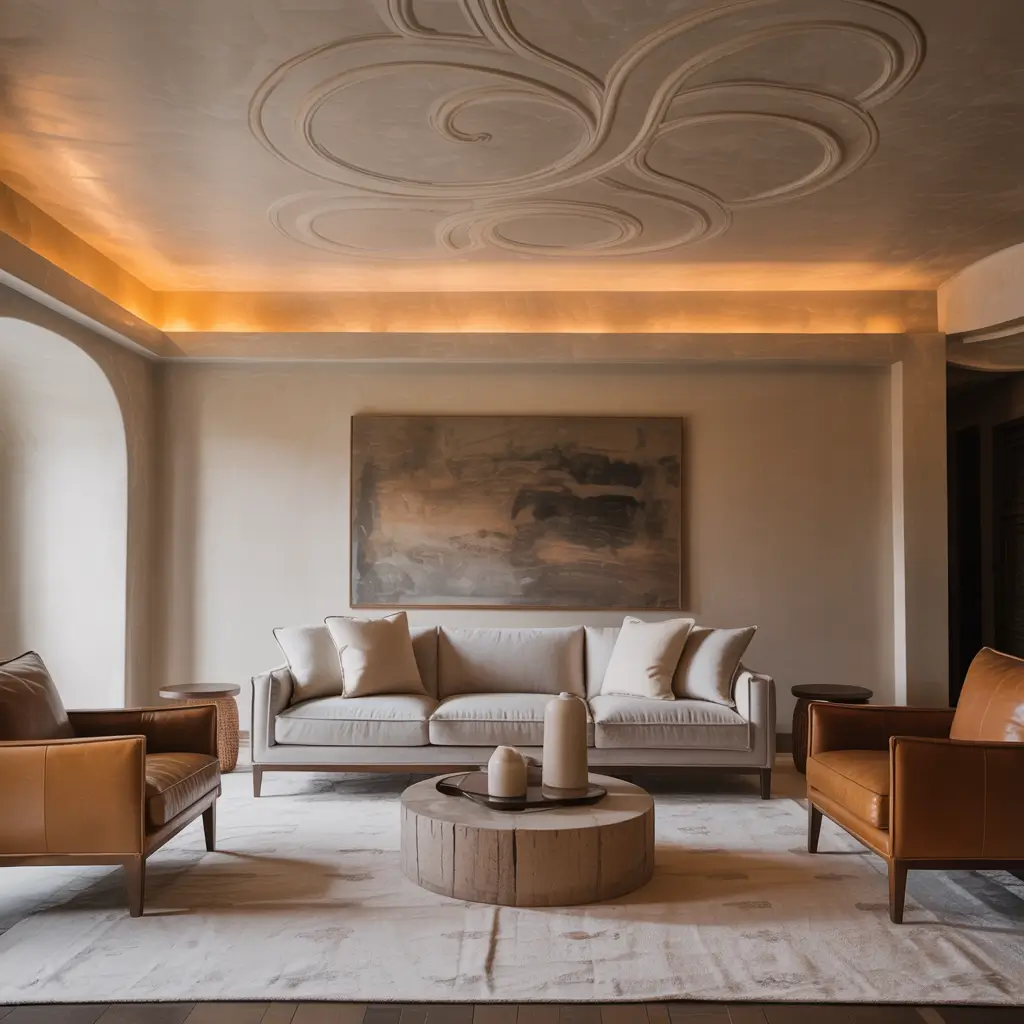
Textured plaster ceilings add artistic flair that smooth ceilings can’t match. My living room features hand-troweled swirl patterns that catch light differently throughout the day, creating an ever-changing canvas overhead.
The texture isn’t your grandmother’s popcorn ceiling. Modern plaster techniques create sophisticated patterns that look like expensive artwork. My swirls are subtle enough to feel elegant but visible enough to add interest.
Texturing Like an Artist
Practice your technique before touching the actual ceiling. I spent two days practicing on drywall scraps, perfecting my swirl pattern. The ceiling is permanent – mistakes aren’t easily fixed. My practice paid off with consistent, professional-looking results.
Lighting placement becomes crucial with textured ceilings. I installed adjustable spotlights that graze across the texture, emphasizing the patterns with shadows. Direct overhead lighting would flatten the texture, wasting all that effort.
Consider maintenance before committing to texture. Some patterns trap dust like crazy. My swirls are shallow enough to clean with a vacuum brush attachment. Deep textures might require professional cleaning or complete removal eventually :/
Also Read: 10 Cozy Ceiling Design Modern Ideas for Stylish Living Spaces
7. Floating Panel Ceiling with Recessed Lights
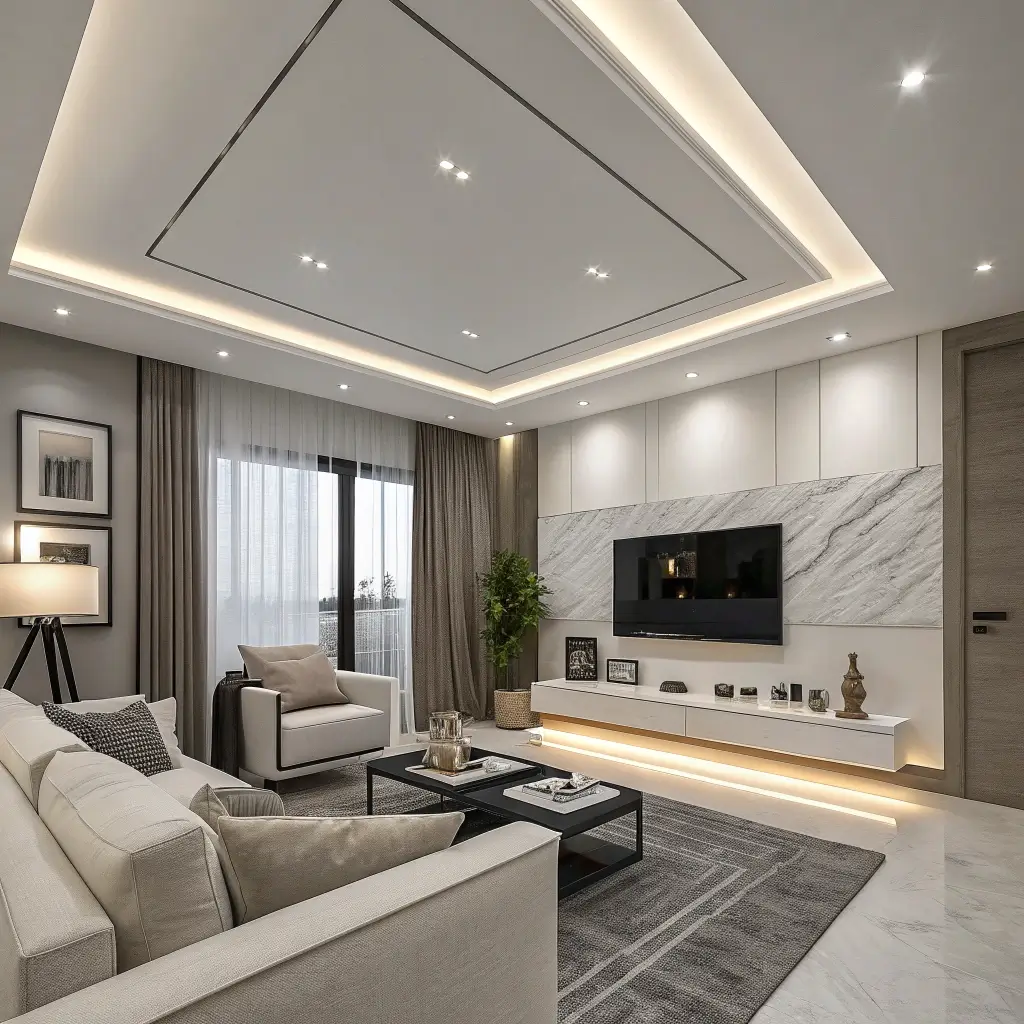
Floating ceiling panels create depth and hide mechanicals while looking impossibly modern. My open-concept living room has three floating panels at different heights, each defining a specific zone – TV area, reading nook, and dining space.
The panels appear to hover thanks to hidden mounting systems and perimeter lighting. Visitors always ask how they’re “floating.” The illusion never gets old, and the functionality is even better than the aesthetics.
Making Panels Float
Plan mechanical integration before installation. Each panel hides something – speakers, projector, ventilation. We mapped every wire and duct before building, ensuring access panels where needed. Pretty but non-functional is just pretty useless.
Vary panel heights for visual interest. My panels hang at 6, 9, and 12 inches below the main ceiling. The variation creates movement and prevents the monotonous look of uniform drops. Different heights also accommodate different mechanical needs.
Use the panels to improve acoustics. We added acoustic insulation above each panel, dramatically reducing echo in the open space. Conversations became clearer, TV dialogue more distinct. The panels look good AND sound better.
8. Tray Ceiling with Contrasting Colors
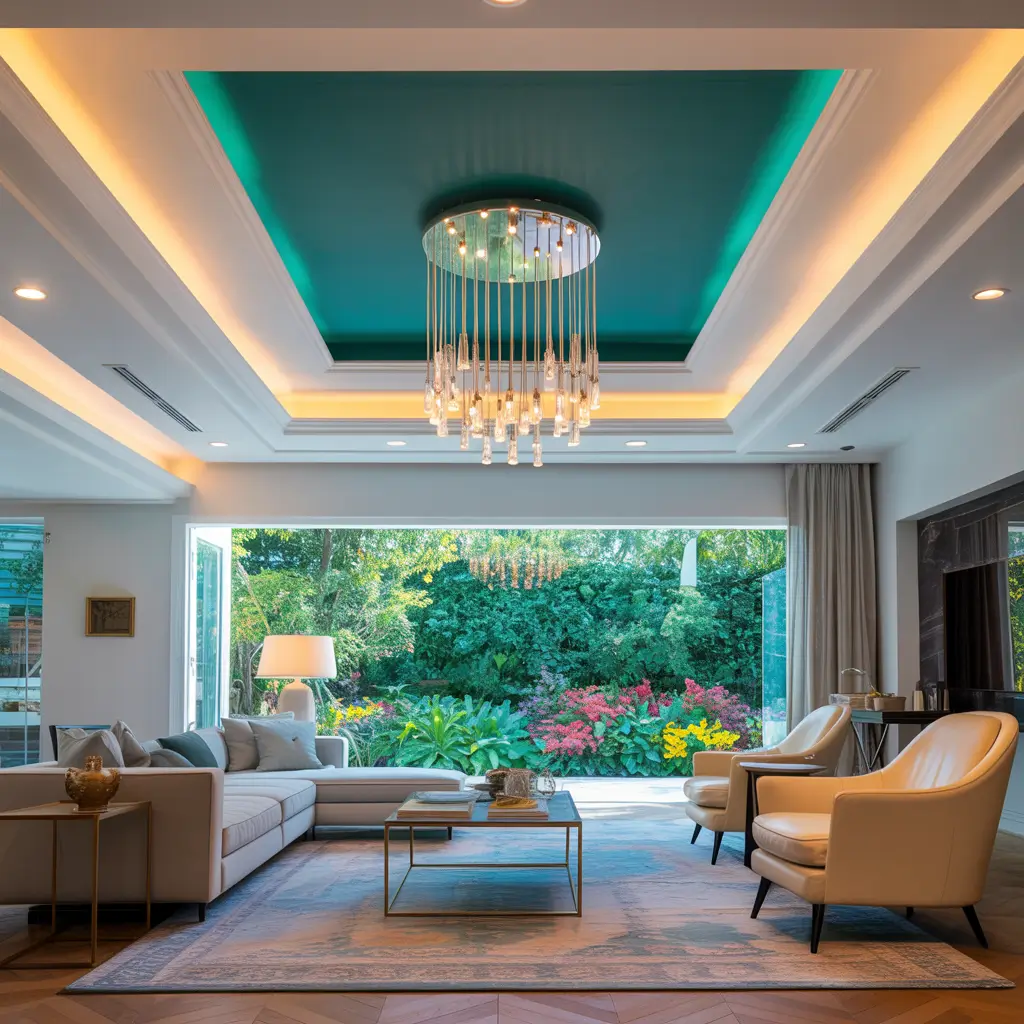
Tray ceilings with bold color contrasts turned my bland living room into a designer showcase. The recessed center painted in deep navy while keeping the raised border white creates incredible depth and drama overhead.
The color contrast defines the room’s boundaries and makes my standard ceiling height feel cathedral-like. The navy center makes the white border appear to float, adding architectural interest without actual construction.
Tray Ceiling Triumph
Choose colors that complement your decor but don’t match exactly. My navy ceiling plays off blue accents in artwork and pillows without being matchy-matchy. The white border ties into trim and furniture, creating cohesion without monotony.
Layer your lighting for maximum impact. LED strips along the tray step create a glowing border. A statement chandelier in the center adds sparkle. Recessed lights in corners provide task lighting. Each layer serves a purpose while enhancing the tray effect.
IMO, painted tray ceilings deliver the most bang for your buck. Creating the same effect with actual construction costs thousands. Paint and some crown molding to define edges? Maybe $200. The visual impact rivals expensive architectural changes.
9. Metallic Finish Ceiling for Luxury Look
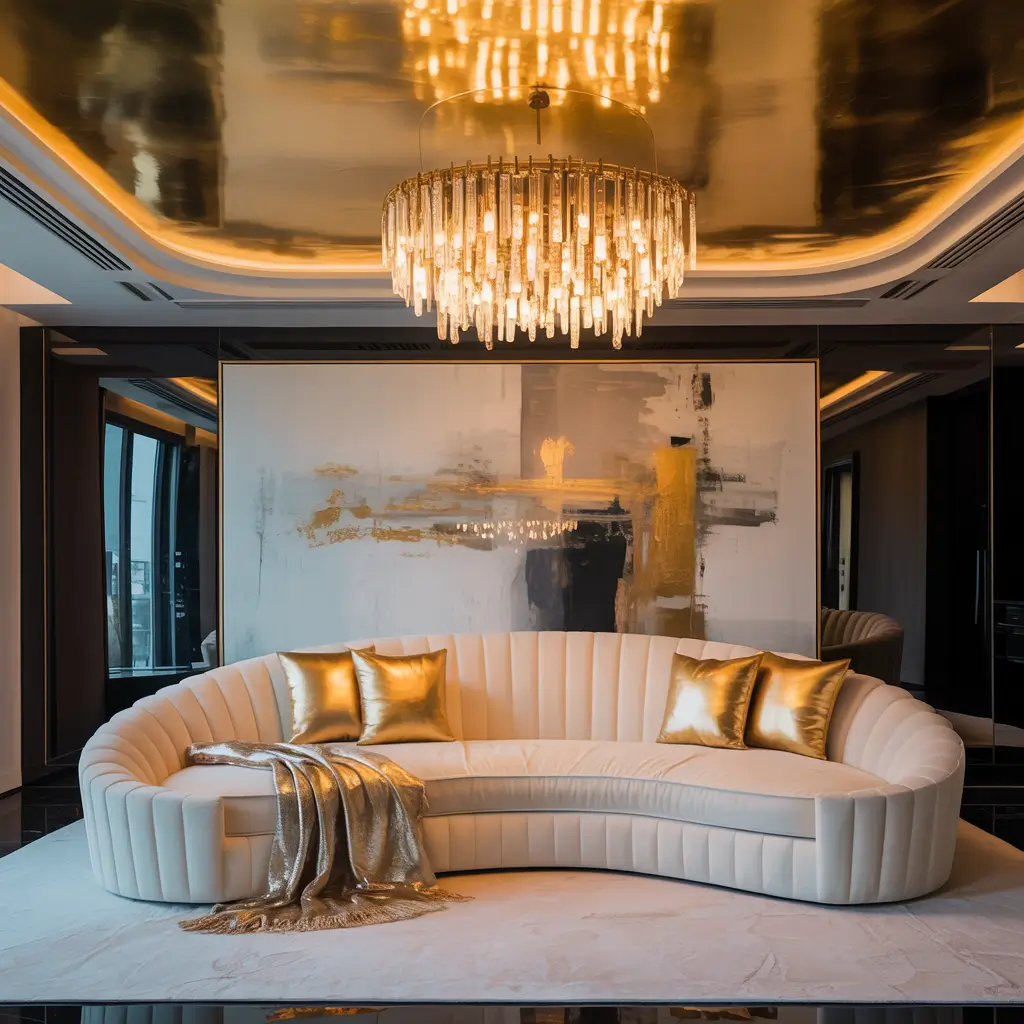
Metallic ceiling finishes bring glamour that makes every living room moment feel special. I applied copper metallic paint to my ceiling last year, and the way it reflects candlelight during dinner parties makes everyone feel like they’re dining at a five-star restaurant.
The metallic finish doesn’t mean disco ball. Modern metallic paints create subtle shimmer rather than mirror-like reflection. My copper ceiling looks sophisticated during the day and absolutely magical under evening lighting.
Metallic Without Looking Vegas
Choose your metallic finish based on room lighting. North-facing rooms benefit from warm metals like copper or gold that add warmth. South-facing rooms can handle cooler metals like silver or pewter. My west-facing living room glows at sunset with copper.
Apply metallic paint properly for best results. Base coats matter enormously – I used a gray primer under my copper for depth. Multiple thin coats beat one thick coat. The buildup creates dimension that single coats can’t achieve.
Balance metallic ceilings with matte surfaces. Everything shiny creates sensory overload. My walls stay matte white, furniture is mostly fabric and wood. The ceiling gets to be the star without competition.
Also Read: 12 Stylish False Ceiling Design Ideas and Home Makeovers
10. Rustic Exposed Beam Ceiling Design
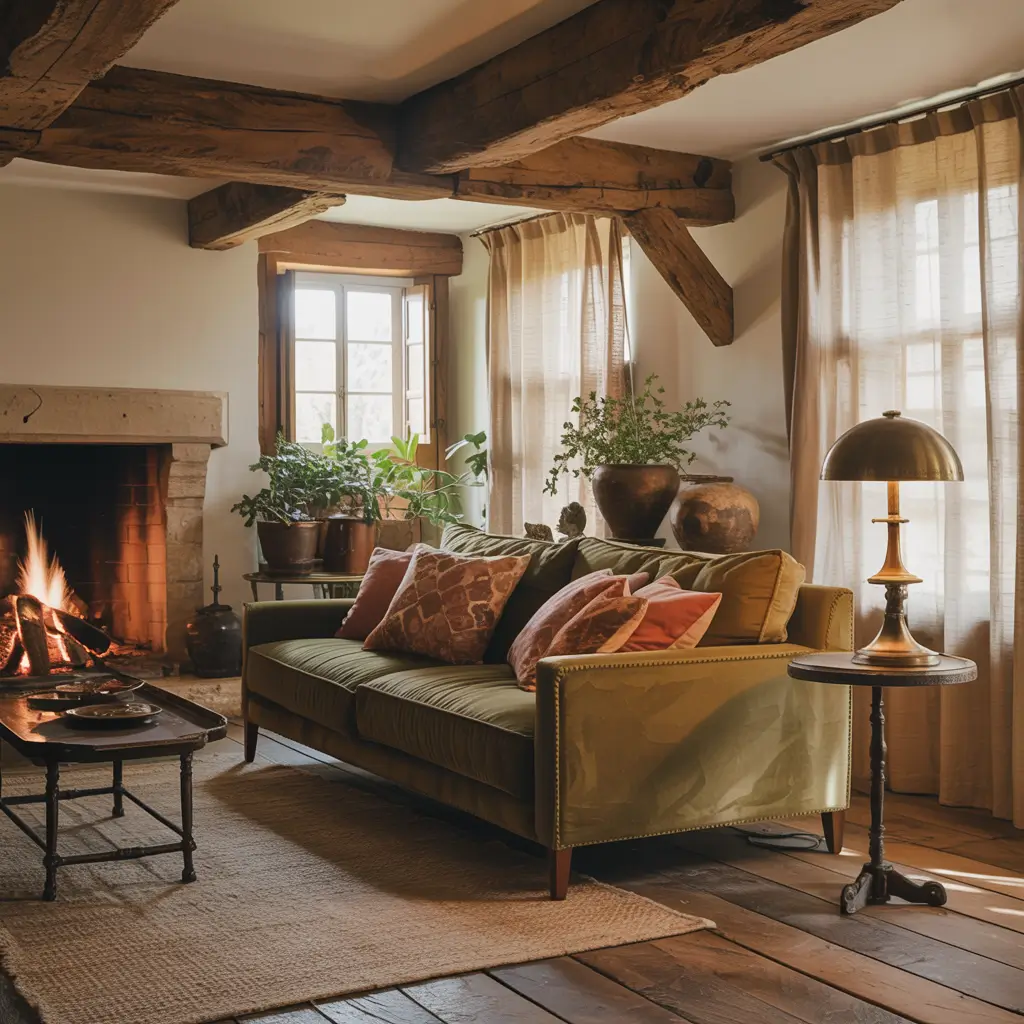
Exposed beam ceilings bring authentic character that new construction often lacks. When we removed the drop ceiling in my friend’s 1920s living room, we discovered original beams that just needed cleaning and sealing. The transformation from dated to dramatic took one weekend.
Real exposed beams tell your home’s story. The saw marks, old nail holes, and natural weathering add character money can’t buy. Every imperfection becomes a design feature rather than something to hide.
Exposing Beauty
Check structural integrity before exposing beams. Old beams might need reinforcement. We had an engineer inspect ours – better safe than sorry when dealing with structural elements. The peace of mind justified the consultation cost.
Clean beams carefully to preserve character. We used gentle cleaning methods to remove decades of dirt while keeping the patina. Aggressive sanding would’ve erased the history. The goal is refreshed, not renewed.
Highlight beams with strategic lighting. We installed small uplights that wash the beams from below, emphasizing their texture. The shadows created add depth and drama. Original architectural features deserve the spotlight.
Looking Up to Transform Your Living Room
There you have it – ten ceiling designs that prove your living room’s fifth wall deserves serious attention.
Each approach offers unique benefits, but they all share one truth: a well-designed ceiling completely transforms how a room feels and functions.
The best ceiling design for your living room depends on your home’s architecture, your lifestyle, and your design courage.
Start by really looking at your ceiling – what’s working, what isn’t, what potential exists? Sometimes a simple paint treatment delivers everything you need. Other times, structural changes create the impact you’re after.
Remember that ceiling design isn’t just about aesthetics. These treatments affect lighting quality, room acoustics, perceived space, and even energy efficiency.
The investment in your ceiling pays dividends every time you or guests enter the room.
Don’t let fear of commitment paralyze you. Start with something reversible like paint if you’re nervous. Once you see how much a ceiling transformation improves your living room, you’ll gain confidence for bigger changes.
Your ceiling has been patiently waiting to become more than just a white plane overhead. Time to look up and give it the attention it deserves 🙂