12 Joyful Church Nursery Ideas and Interactive Reading Nooks
- Bedroom Design
 Ben
Ben- 0
- 44 minutes read
Let me guess – you’ve been volunteered (voluntold?) to redesign your church nursery, and you’re staring at a room full of mismatched toys from 1987, beige walls, and fluorescent lighting that could wake the dead.
Been there, friend. I spent two years on our church nursery committee, and let me tell you, transforming a church nursery is like trying to please everyone at Thanksgiving dinner – challenging but totally doable with the right approach.
Here’s what makes church nurseries different from home nurseries: you’re designing for multiple ages, unknown numbers of kids each week, volunteer workers with varying experience levels, and a budget that makes shoestring look generous.
Oh, and everything needs to be durable enough to survive the apocalypse because church furniture apparently lasts forever.
After helping redesign three church nurseries (our own plus two sister churches), I’ve learned what actually works versus what looks good on Pinterest but fails in real life.
These 12 church nursery ideas focus on creating spaces that are welcoming, functional, faith-centered, and won’t require constant maintenance. Let’s turn that sad church nursery into a space parents actually trust with their kids.
1. Cozy Bible-Themed Nursery Corner
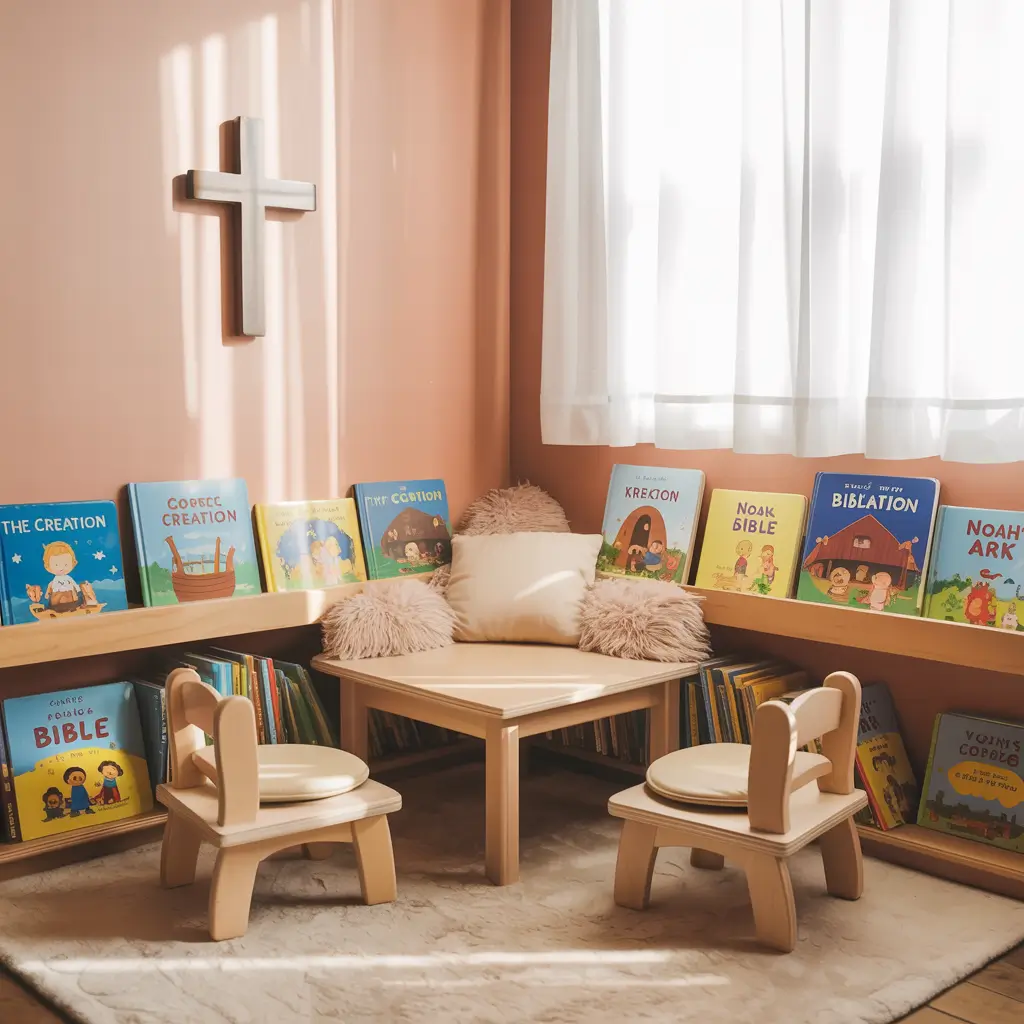
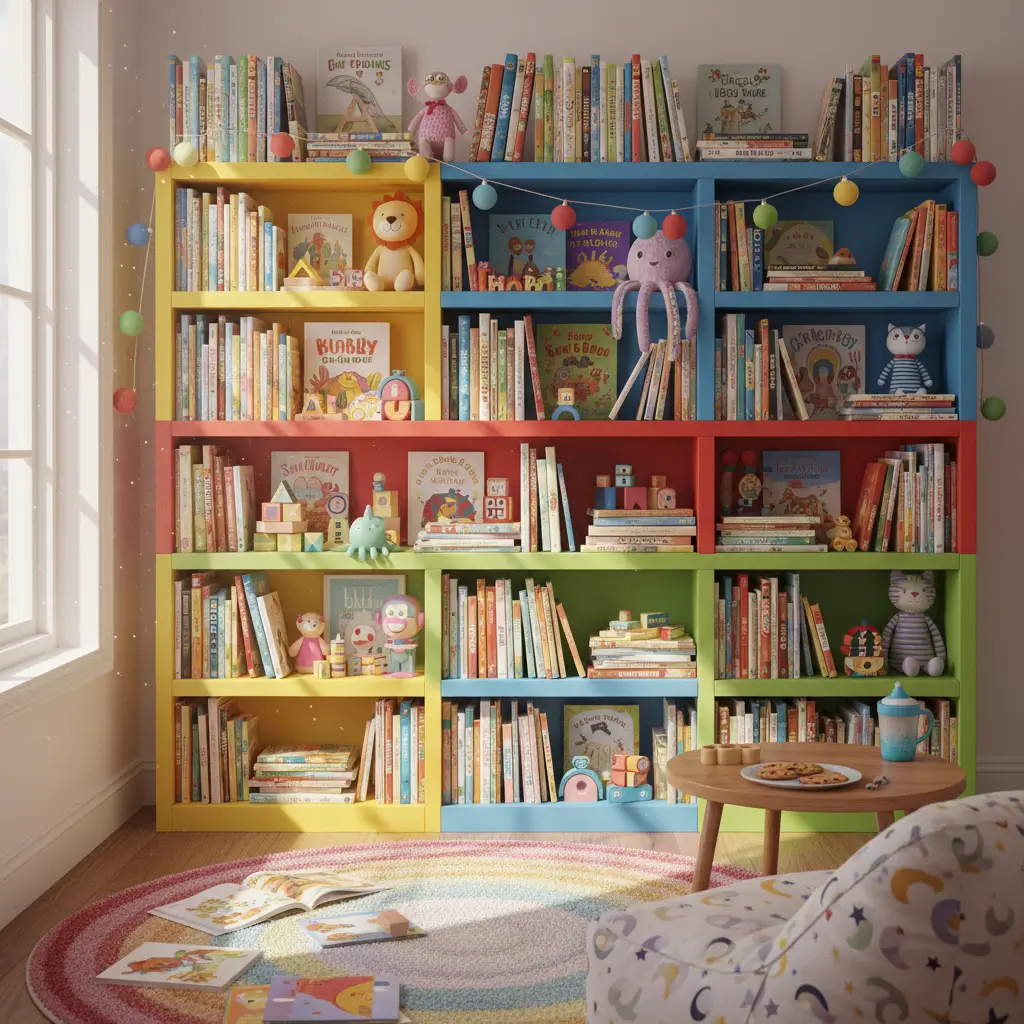
Every church nursery needs a dedicated Bible story corner, but most churches get this wrong by making it too formal or preachy. My favorite Bible corner features a low bookshelf with children’s Bibles, plush animals representing Noah’s ark animals, and a soft rug where kids can sit.
The key is making Bible stories accessible and inviting, not intimidating. Think cozy library nook meets Sunday school, with an emphasis on the cozy part.
Creating Your Bible Corner
Essential elements that actually work:
• Low, accessible bookshelf for children’s Bibles and Bible storybooks
• Soft seating (bean bags, floor cushions, or a small couch)
• Bible story artwork at kid height
• Stuffed animals that connect to stories (lambs, doves, fish)
• Gentle lighting that’s reading-friendly
• Maybe a small cross or simple faith symbol
• Washable everything (church nurseries get messy)
I learned the hard way that fancy decorative Bibles belong on high shelves. The pretty illustrated Bible I bought? Covered in sticky handprints within a week. Now we use board book versions for the littles and save nicer books for supervised reading.
Making It Engaging
Keep kids interested with:
- Rotating Bible stories seasonally
- Simple, colorful illustrations
- Books with textures and interactive elements
- Characters kids recognize (Noah, David, Daniel)
- Stories about animals and nature
Bible corners work best when they’re inviting, not instructional. Save the teaching for Sunday school – the nursery should plant seeds of comfort with faith.
2. Soft Pastel Church Nursery Design
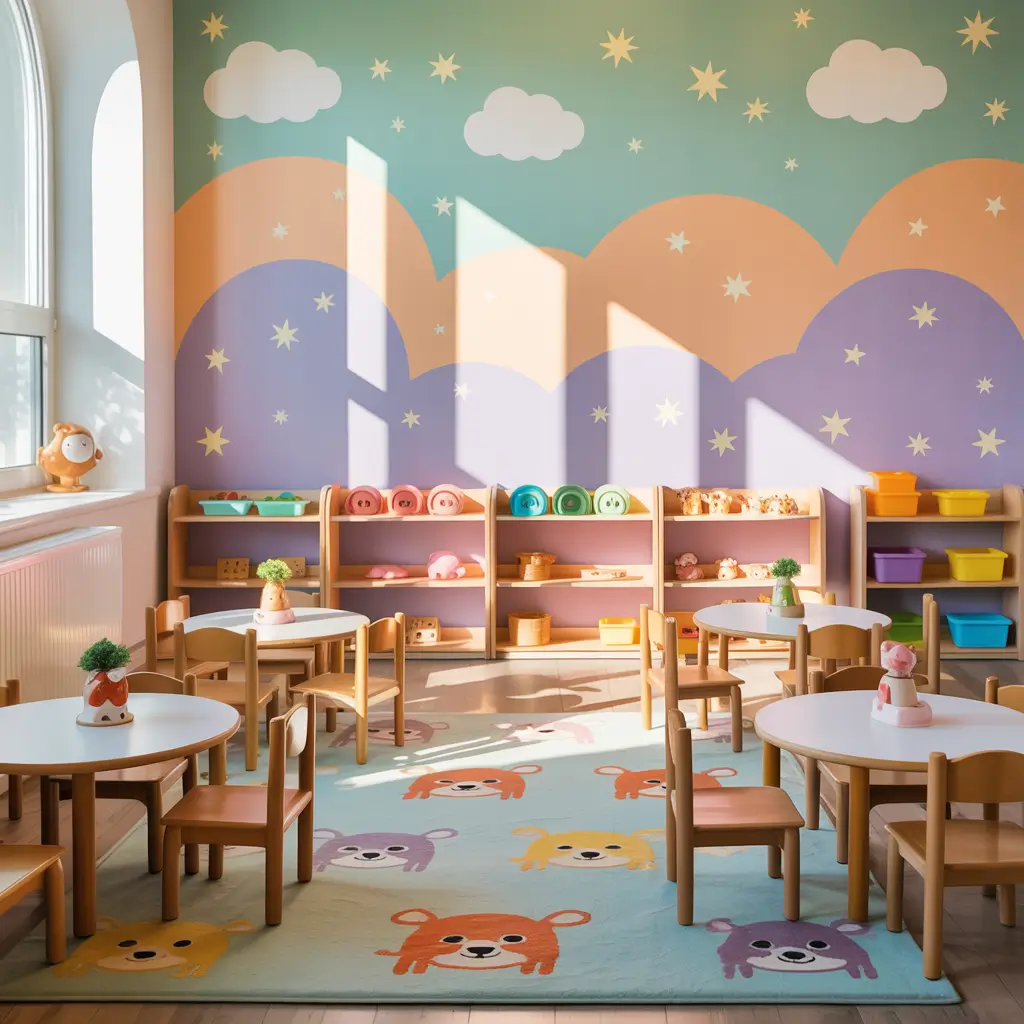
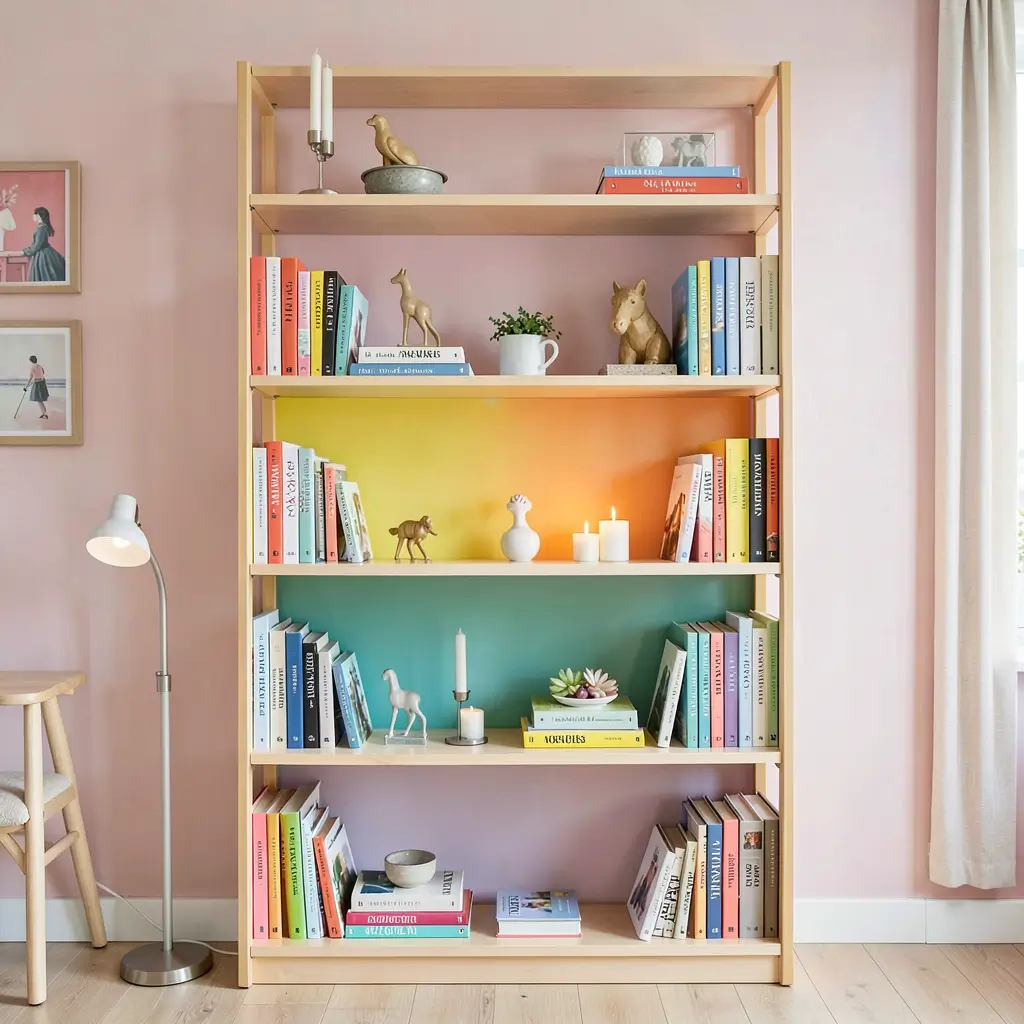
Forget those aggressive primary colors that make every church nursery look like a fast-food playground. Soft pastels create calm environments that actually help kids (and volunteers) feel peaceful. Our nursery went from bright red and yellow to soft sage, blush, and cream – game changer.
Pastels work especially well in church nurseries because they’re gender-neutral, calming, and photograph beautifully for church directories and social media.
Pastel Palette Success
Choose soothing combinations:
• Soft sage green with cream
• Blush pink with light gray
• Pale yellow with white
• Lavender with beige
• Soft aqua with tan
• Multiple pastels together (keep saturation consistent)
The beauty of pastels? They hide minor scuffs and marks better than stark white while still feeling clean and fresh.
Implementing Pastels Throughout
Where to use soft colors:
- Walls (obviously the biggest impact)
- Furniture pieces
- Storage bins and baskets
- Textiles (rugs, curtains, cushions)
- Artwork and decorations
- Even toys if you’re feeling ambitious
FYI, parents respond incredibly well to pastel nurseries. Soft colors signal “safe and clean” in ways that bright colors don’t, which matters when you’re asking people to trust you with their babies.
3. DIY Faith-Inspired Wall Art for Kids
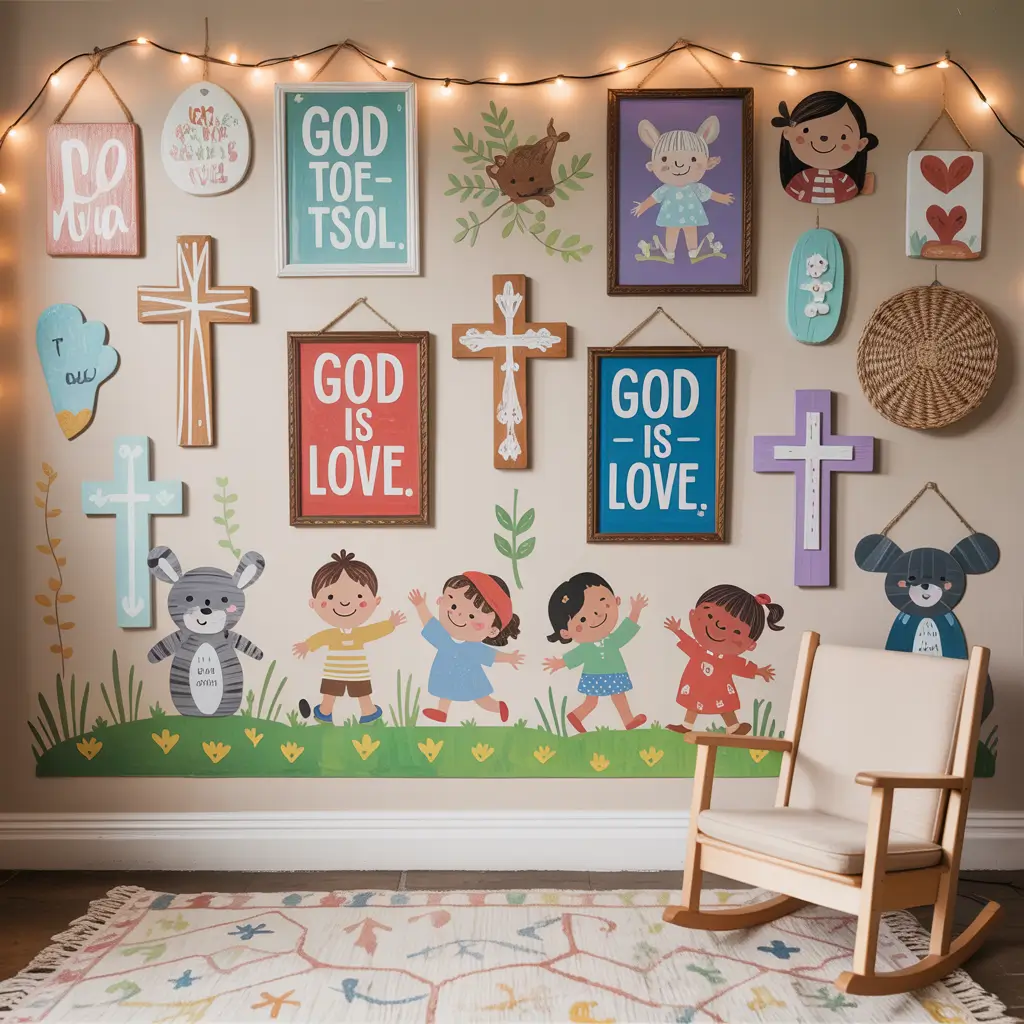
Church budgets are tight (I’m being generous here), so DIY wall art saves money while adding personality. I’ve created probably 20 pieces of faith-inspired art for our nursery using basic supplies from craft stores and free printables online.
The key is keeping it simple, colorful, and age-appropriate. “Jesus loves you” hits different than complex theological concepts for toddlers.
Easy DIY Art Projects
Anyone can create these:
• Printed Bible verses in fun fonts (frame them!)
• Painted wooden letters spelling faith words
• Hand-traced and colored Bible story scenes
• Fabric-wrapped canvas boards with crosses
• Photo collages of church community
• Seasonal faith-themed decorations
• Kids’ handprint art with Bible verses
My favorite project? We had kids make handprint rainbows with “God keeps His promises” written underneath. Parents loved seeing their kids’ art, and it made the space feel personal.
Budget-Friendly Materials
Shop smart with these supplies:
- Dollar store frames (paint them to match!)
- Free printables from Christian websites
- Craft store coupons (never pay full price)
- Donated fabric scraps
- Leftover paint from other church projects
- Thrifted items you can upcycle
DIY art also builds community when you involve congregation members. We had a craft day where volunteers made nursery art together – bonding plus free decorations!
Also Read: 12 Inspiring Unisex Nursery Ideas and Modern Design Touches
4. Interactive Storytime Reading Nook
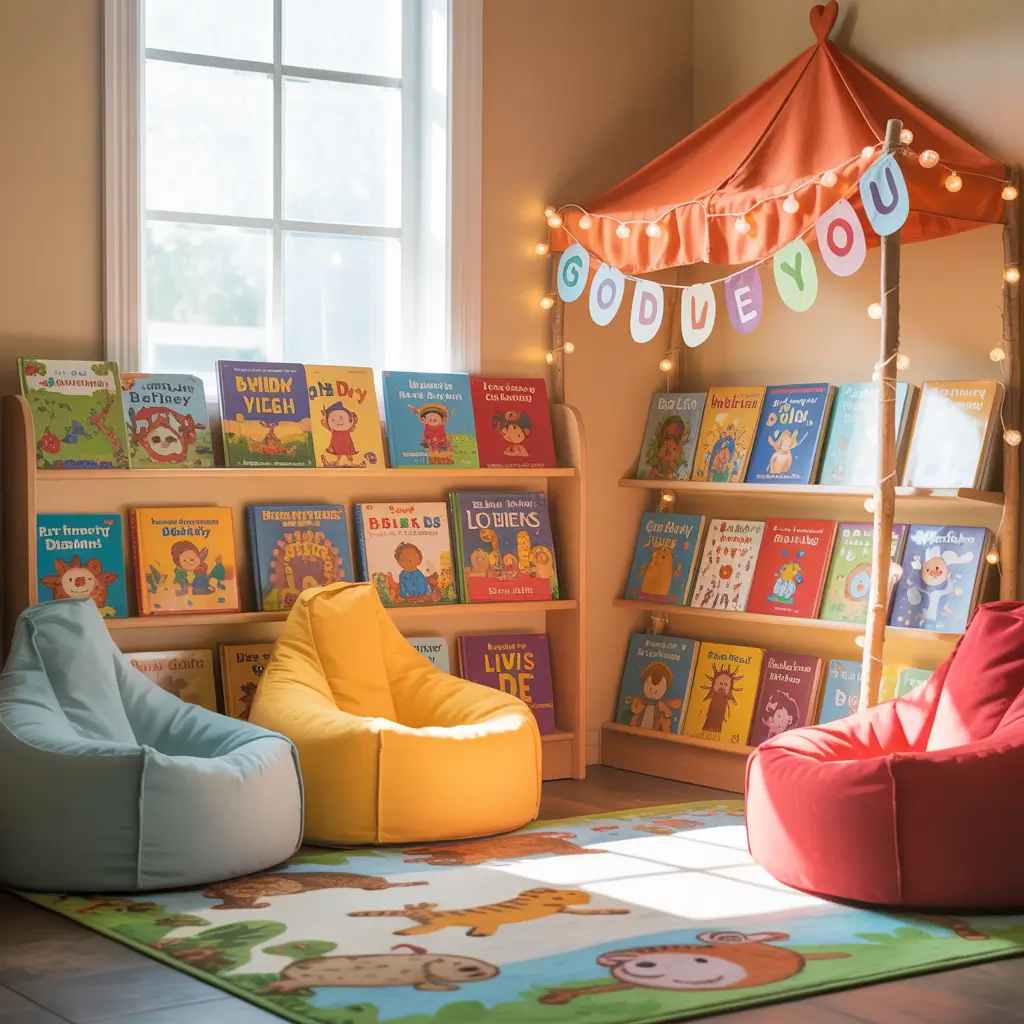
Reading nooks aren’t just for home nurseries – church nurseries desperately need dedicated quiet spaces. Our storytime nook gets used every single Sunday for volunteer-led story time and for kids who need a break from active play.
The trick is making it clearly defined but not isolated. You want a cozy corner, not a timeout spot.
Building Your Reading Nook
Create the perfect story space:
• Defined area with rug or mat
• Comfortable seating for adult + multiple kids
• Forward-facing book display
• Good lighting (crucial for reading)
• Sound-dampening elements if possible
• Stuffed animals for cuddles
• Basket of Bible stories and picture books
Location matters. We positioned our reading nook in a corner with good natural light but away from the main toy area to minimize distractions.
Stocking Your Library
Include these book types:
- Board books for babies
- Picture books for toddlers
- Interactive books with flaps and textures
- Bible story books at various levels
- Diverse representation in characters
- Seasonal and holiday stories
Ever notice how kids gravitate to specific spots? A well-designed reading nook becomes the favorite space for certain kids, giving them comfort and routine.
5. Budget-Friendly Church Nursery Makeover
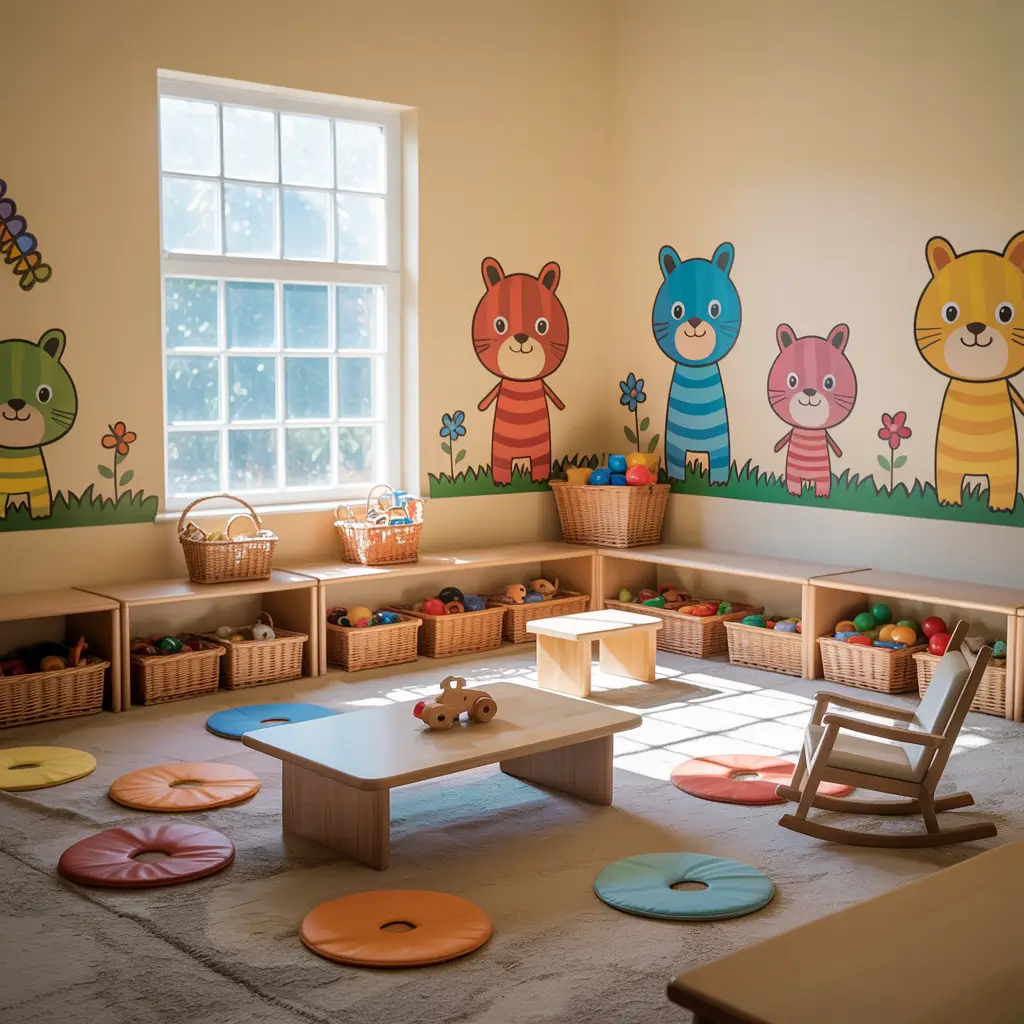
Church nursery budgets make me laugh (or cry). When our committee got $300 for a complete makeover, I nearly gave up. But creativity beats cash every single time, and our budget makeover turned out better than expensive renovations I’d seen.
The secret? Prioritize what makes the biggest visual impact for the least money.
Maximum Impact, Minimum Cost
Focus your tiny budget here:
• Paint (biggest transformation for $50-100)
• Organizational systems (bins from dollar stores)
• DIY artwork (basically free)
• Rearranging existing furniture (free!)
• Deep cleaning (elbow grease only)
• Strategic donations (ask the congregation)
• Repurposing items from other church areas
We painted one accent wall sage green, organized toys into labeled bins, and deep-cleaned everything. Total cost: $127. Impact: people thought we’d spent thousands.
Free or Nearly Free Ideas
Stretch that budget with:
- Paint donations from members
- Hand-me-down furniture (clean and paint it)
- Volunteer labor for painting and building
- Borrowed tools and equipment
- Social media requests for specific items
- Garage sale shopping
- Thrift store treasure hunting
IMO, budget constraints force better design because you can’t just throw money at problems. You actually have to think creatively :/
6. Nature-Inspired Christian Nursery Decor
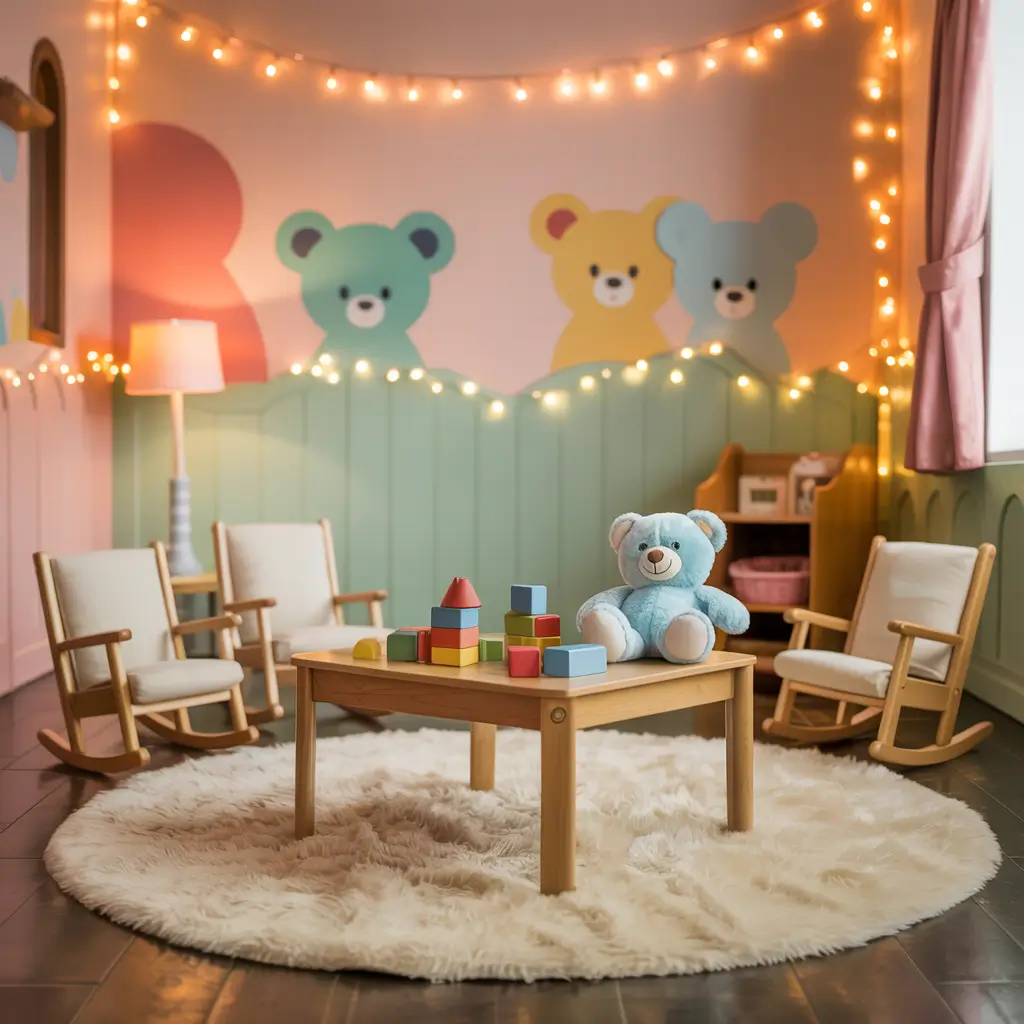
God created nature, so bringing it into church nurseries makes perfect sense. Nature themes work beautifully because they’re automatically faith-connected – creation speaks to the Creator. Our nature-inspired nursery features plants, natural materials, and earthy colors.
The bonus? Nature elements are often budget-friendly and easy to source.
Natural Elements to Include
Bring creation indoors:
• Real or high-quality fake plants
• Natural wood furniture and toys
• Stone or wood slice decorations
• Nature-themed artwork (trees, animals, sky)
• Earth-tone color palette
• Natural fiber rugs and textiles
• Windows that showcase outdoor views
We created a “God’s Creation” wall with photos of nature – mountains, oceans, forests, animals. Kids love pointing at the pictures, and it naturally leads to conversations about God making everything.
Connection to Faith
Tie nature to Christian teachings:
- “God made everything” themes
- Creation story artwork
- Seasons showing God’s patterns
- Animal stories from the Bible
- Growth and nature metaphors
- Stewardship messages
Nature-inspired nurseries feel automatically peaceful because natural elements create calming environments. Science backs this up, and so does my experience with overstimulated toddlers.
Also Read: 10 Beautiful Western Nursery Ideas and Western Adventure Decor
7. Colorful Toy Storage & Organization Ideas
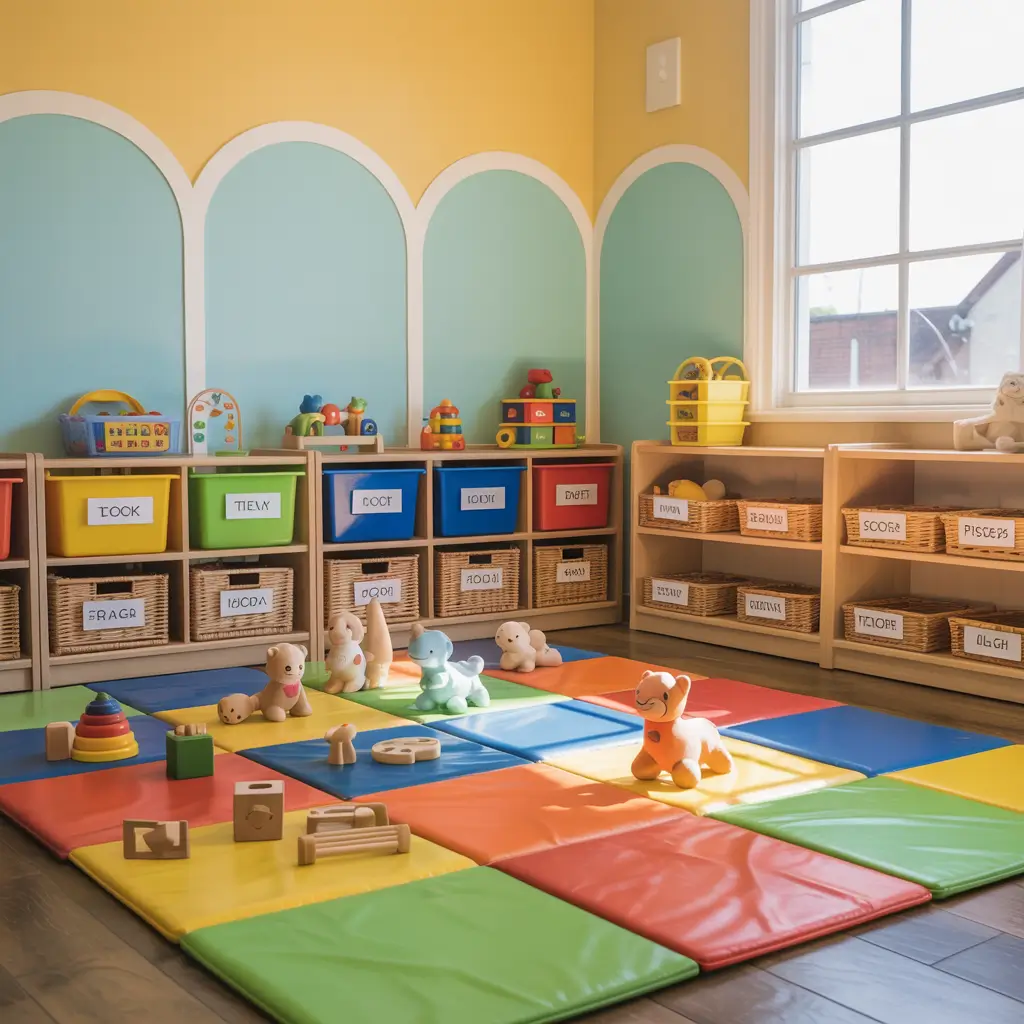
Church nurseries accumulate toys like nobody’s business, and chaos ensues without serious organization. I’ve tried every organization system imaginable, and I’ll tell you what actually works with volunteer staff who rotate weekly.
The key is making organization so simple that anyone can maintain it, even if they’ve never been in the nursery before.
Organization Systems That Work
Simplify with these solutions:
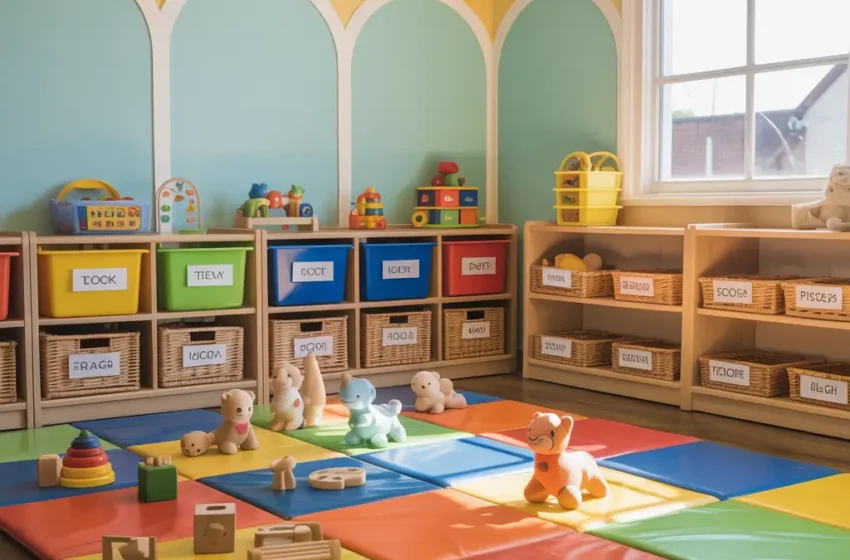
• Clear bins with picture labels
• Color-coded storage by toy type
• Low shelving kids can access
• Rotating toy system (less overwhelming)
• Donation bins for broken items
• Regular purging schedule
• Everything has a designated spot
Picture labels changed our lives. Volunteers can see exactly where blocks go, where stuffed animals belong, and where to find specific items. No more asking where things go!
Strategic Storage Placement
Put things where they make sense:
- Heavy items on bottom shelves
- Small choking hazards up high
- Active toys away from reading nook
- Art supplies near wipeable surfaces
- Outdoor toys by the door
- Most popular items easily accessible
Good organization makes volunteers’ lives easier, which means they’re more likely to keep volunteering. Happy volunteers = sustainable nursery program.
8. Gentle Lighting for Calm Church Nursery
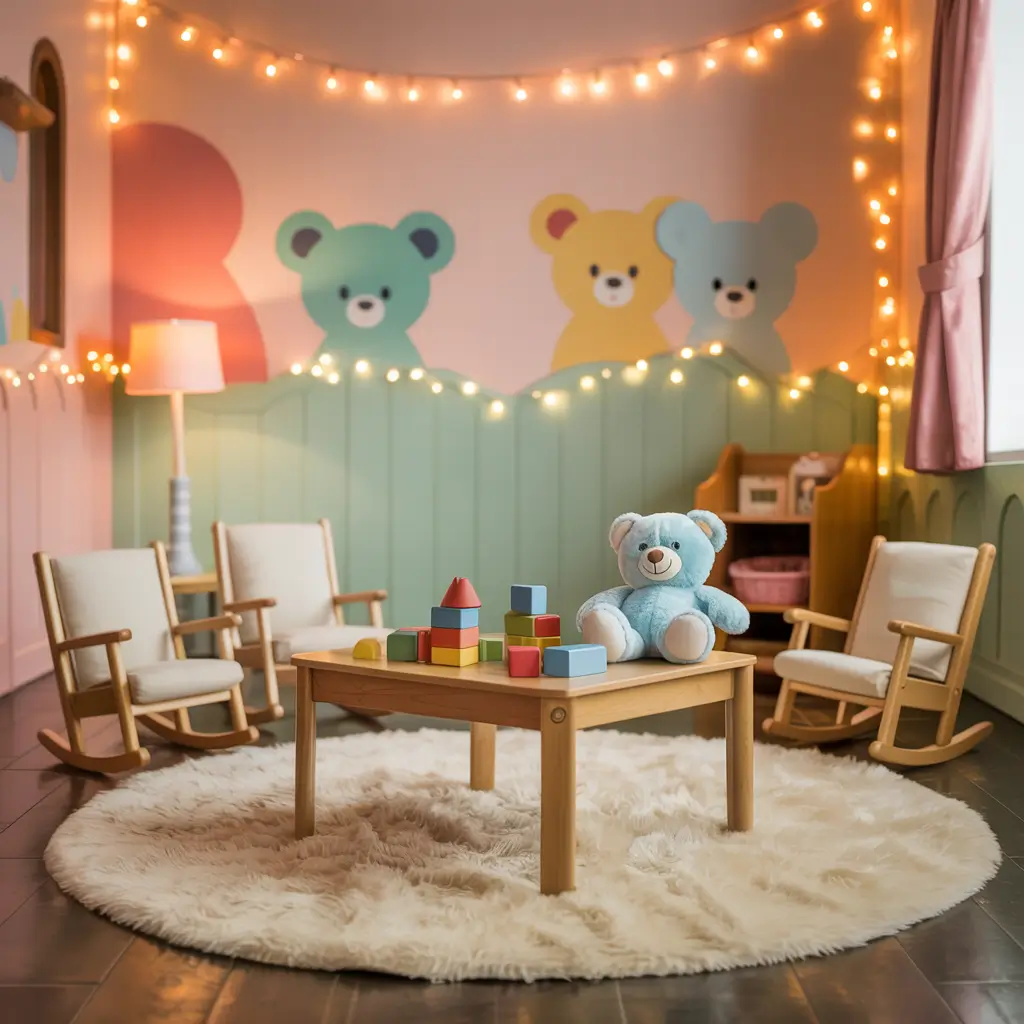
Church nurseries love overhead fluorescent lighting, and I hate it with a passion. Harsh lighting creates harsh moods in both kids and adults. Our nursery transformation included a complete lighting overhaul, and the difference was night and day (pun intended).
Gentle lighting doesn’t mean dark – it means layered, warm, and adjustable for different needs.
Lighting Strategy for Churches
Layer your light sources:
• Multiple table and floor lamps
• Dimmer switches on overhead lights
• Warm bulbs (2700-3000K)
• Natural light maximized with sheer curtains
• Nightlights for nap areas
• Task lighting at changing tables
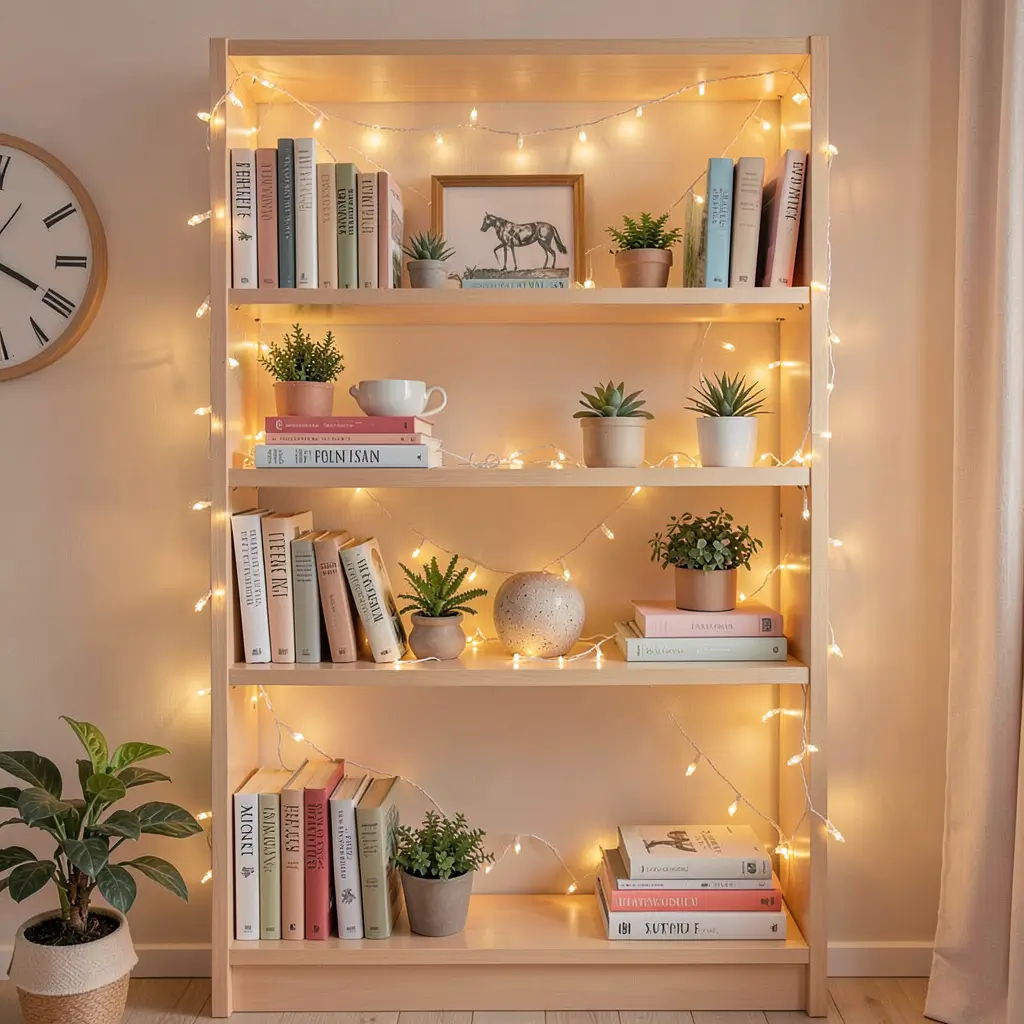
• Decorative string lights for ambiance
We replaced the fluorescent tubes with warm LED panels and added three floor lamps. Parents immediately commented on how much calmer the room felt.
Special Lighting Considerations
Think about these factors:
- Emergency lighting requirements (check fire codes!)
- Visibility for safety monitoring
- Reading light for story time
- Diaper changing task lighting
- Calming options for upset children
- Energy efficiency (church budgets!)
Lighting affects everything – mood, behavior, volunteer stress levels, and parents’ first impressions. Worth every penny to get it right.
9. Christian Alphabet & Number Wall Ideas
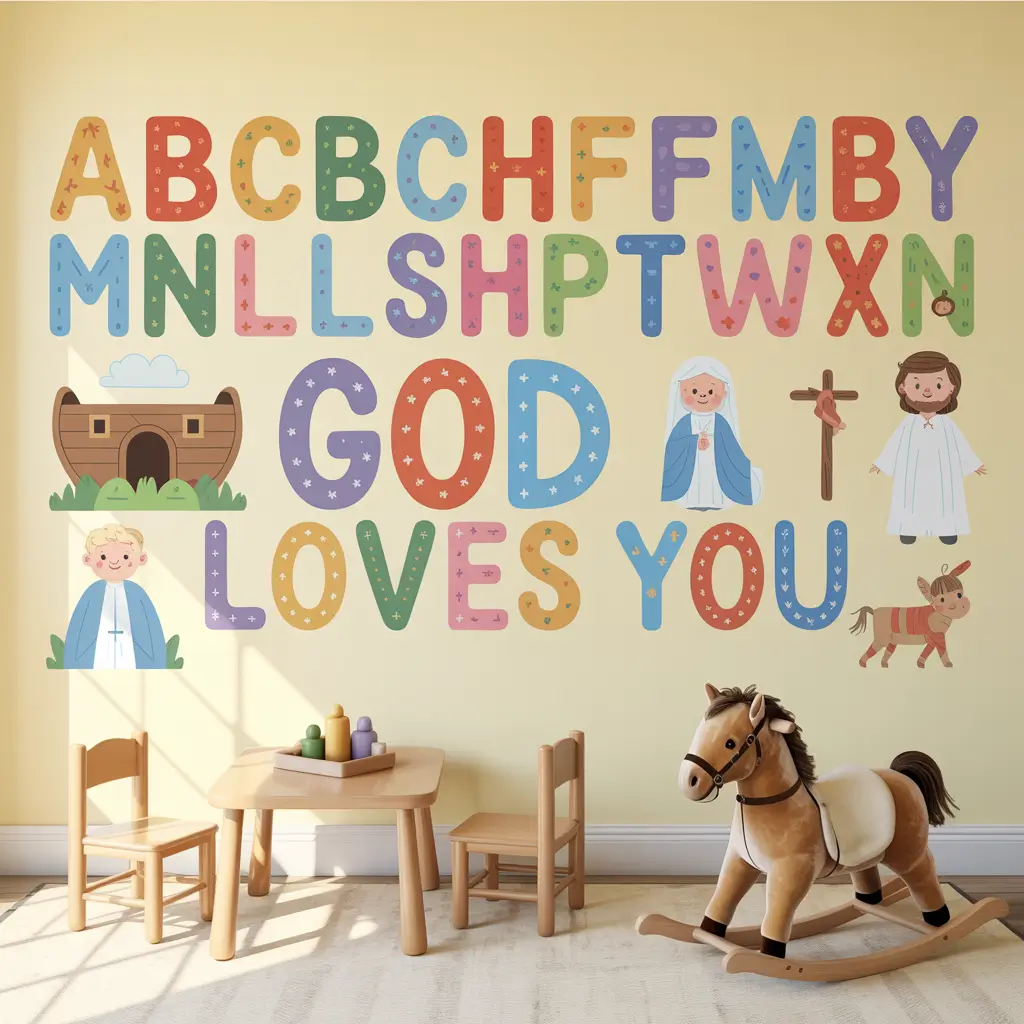
Educational elements belong in church nurseries too, and faith-based alphabet and number displays teach while decorating. Our ABC wall features “A is for Ark, B is for Bible” and the kids love it.
The trick is making learning elements decorative rather than classroom-like. You want it to enhance the space, not make it look like school.
Creating Faith-Based Learning Walls
Design educational displays:
• Alphabet with Christian themes for each letter
• Number walls with Bible story counting
• Colors using creation elements
• Shapes incorporated into faith symbols
• Days of creation sequence
• Books of the Bible (for older kids)
We used vinyl decals for our alphabet because they’re removable and relatively inexpensive. Each letter has a colorful illustration that kids can point to and discuss.
Making It Interactive
Engage kids with learning:
- Touchable textures on letters
- Removable elements kids can manipulate
- Matching games with themes
- Seasonal rotation options
- Multiple languages if your church is multilingual
Educational walls serve double duty as decoration and teaching tools. Plus, parents love seeing learning elements in the nursery.
Also Read: 10 Inspiring Pink Nursery Ideas and Modern Baby Spaces
10. Multi-Age Friendly Nursery Layout

Most church nurseries serve ages 0-4 or even 0-5, which is a massive developmental range. Designing for multiple ages simultaneously is tricky but totally doable. Our nursery created distinct zones for different age groups while maintaining visual cohesion.
The key is separation without isolation – everyone’s in the same room but has appropriate spaces.
Zone-Based Layout
Divide your space strategically:
• Infant area with cribs, changing table, rockers
• Crawler zone with soft mats and age-appropriate toys
• Toddler section with active play options
• Preschool corner with puzzles and creative activities
• Shared reading nook for all ages
• Central check-in area
• Clear sightlines for volunteers
We used low shelving units as visual dividers between zones. Volunteers can see everyone, but babies aren’t getting trampled by rambunctious four-year-olds.
Age-Appropriate Elements
Include these for different stages:
- Infant swings or bouncers
- Baby-safe floor mats
- Toddler-height tables and chairs
- Preschool-level activities
- Varied toy complexity
- Multiple book reading levels
Multi-age layouts require more planning but serve your congregation better than age-segregated spaces that might sit empty.
11. Seasonal Church Nursery Decoration Ideas
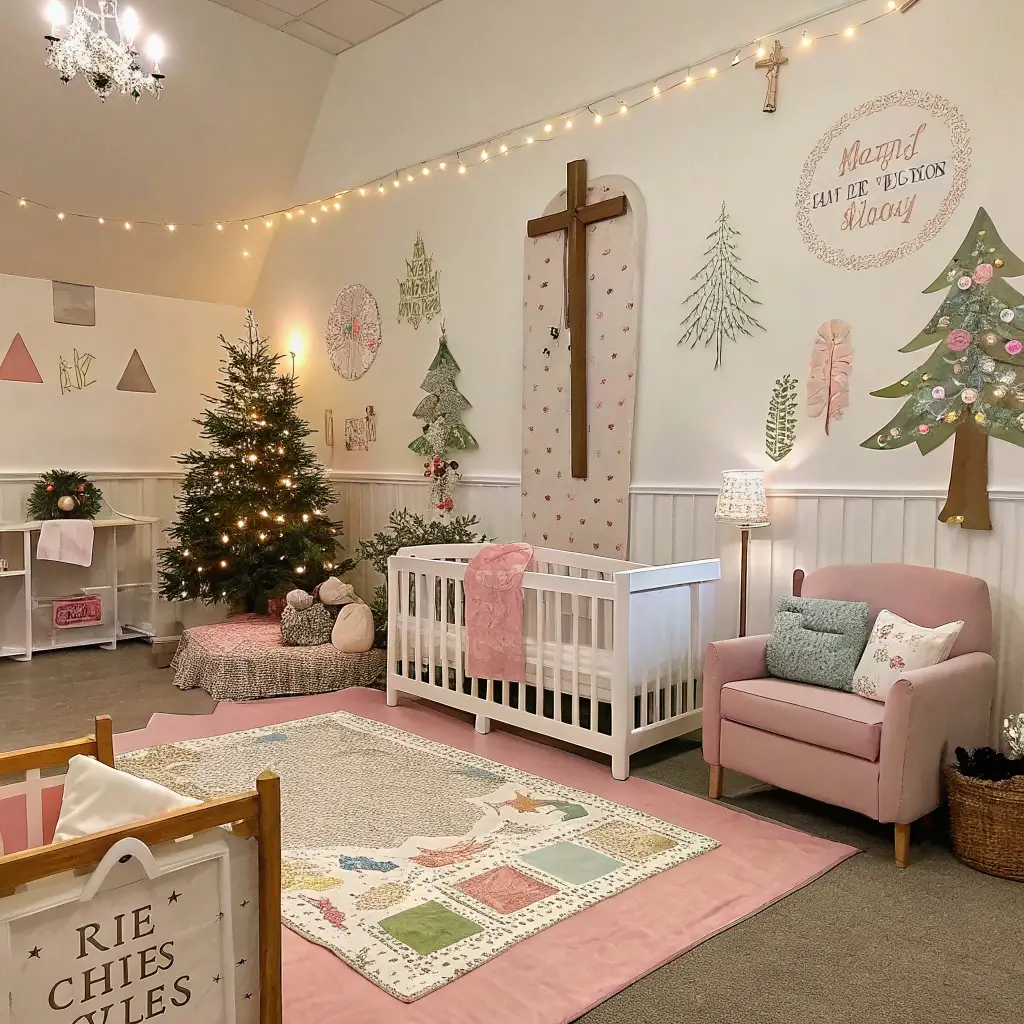
Church calendars follow seasons – liturgical and regular – so rotating seasonal decorations keeps nurseries fresh and relevant. I created a simple system for seasonal updates that volunteers can execute without stress.
The secret is keeping a decoration bin for each season, clearly labeled and easy to swap out.
Seasonal Rotation Strategy
Organize by church calendar:
• Advent/Christmas season (purple/blue, nativity themes)
• Epiphany/Winter (stars, light themes)
• Lent/Easter (purple, crosses, resurrection themes)
• Spring/Growth season (creation, new life)
• Summer (VBS themes, outdoor elements)
• Fall/Harvest (thanksgiving, abundance themes)
We swap decorations four times yearly – Christmas, Easter, Summer, and Fall. Simple rotations prevent volunteer burnout while keeping things interesting.
Easy Seasonal Updates
Make changes simple:
- Wall decals that change seasonally
- Rotating artwork themes
- Seasonal book collections
- Holiday-specific toys
- Nature elements reflecting seasons
- Bulletin boards with seasonal themes
Seasonal decorations signal that someone cares about the nursery enough to keep it current. Parents notice these details.
12. Safe & Fun Activity Stations for Toddlers
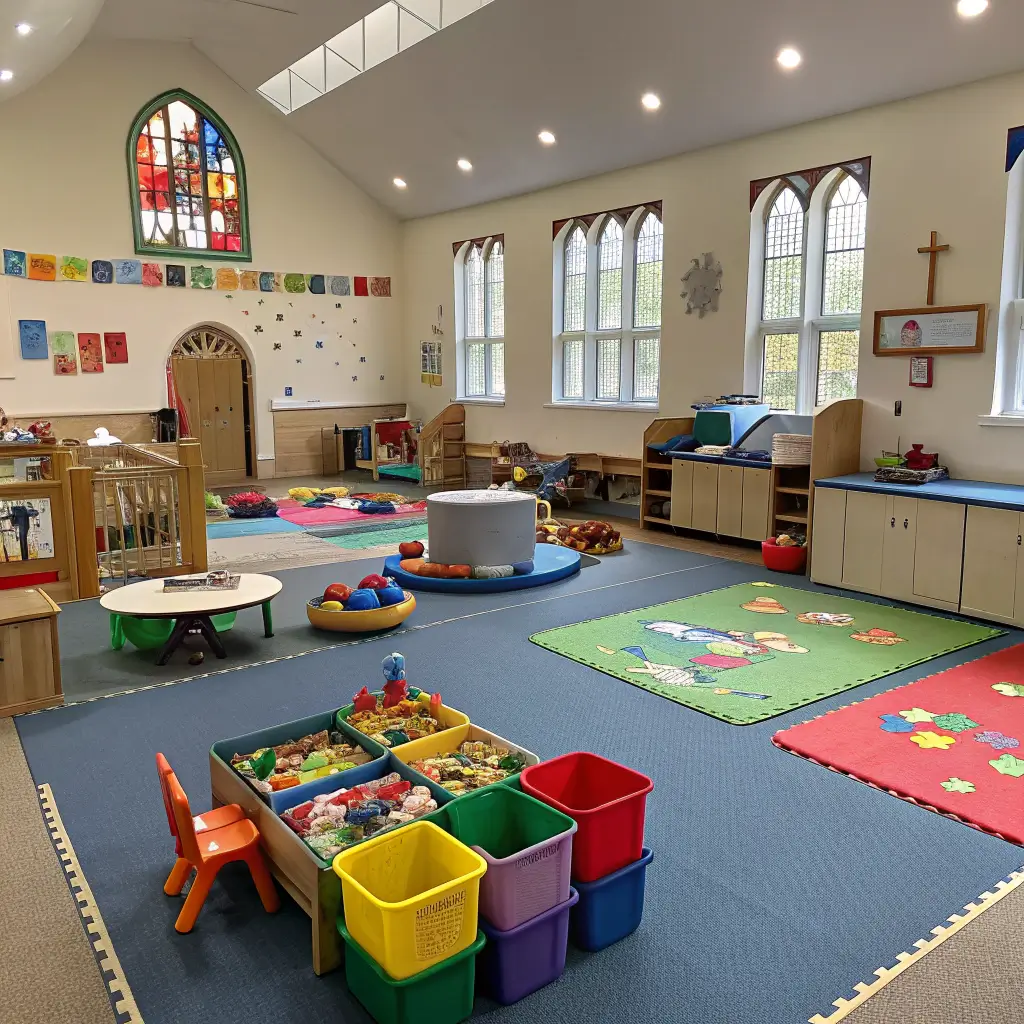
Activity stations give kids options while helping volunteers manage multiple children. Defined activity areas prevent chaos better than random toy scattering. Our nursery has five permanent stations that always stay set up.
The key is variety – something for every kid’s interest and energy level.
Essential Activity Stations
Create these dedicated areas:
• Building/blocks station (floor mat, various blocks)
• Art corner (wipeable surfaces, washable supplies)
• Dramatic play area (kitchen, dolls, dress-up)
• Sensory table (rice, water beads, sand)
• Music and movement zone (instruments, scarves)
• Quiet manipulatives (puzzles, sorting games)
Each station has clear boundaries, appropriate storage, and contains all necessary supplies. Volunteers don’t have to hunt for materials.
Safety Considerations
Keep every station safe:
- Age-appropriate toys only
- Regular safety checks
- Anchored furniture and shelving
- Covered outlets
- Rounded corners
- Washable surfaces
- Allergy-friendly materials
Activity stations transform chaos into organized play. Kids know where to find what they want, and volunteers can monitor multiple stations simultaneously.
Making Your Church Nursery Work
After all these nursery projects, here’s my biggest takeaway – the best church nurseries prioritize people over perfection. You’re creating a space for volunteer workers (bless them) to care for congregation members’ most precious gifts. Functionality beats aesthetics every single time.
The most successful church nurseries I’ve seen have a few things in common: they’re clean, organized, staffed by caring volunteers, and designed with both kids and adults in mind.
Church Nursery Success Principles
Keep these priorities straight:
- Safety first, always
- Easy maintenance for volunteers
- Welcoming for parents and kids
- Budget-conscious decisions
- Faith-integrated naturally
- Age-appropriate everything
- Community input valued
Start with one area and build from there. You don’t need to transform everything at once. Our nursery took eight months to complete, tackling one project monthly.
Getting Congregation Buy-In
Involve your church community:
- Share before/after photos
- Celebrate volunteers publicly
- Create donation wishlists
- Host workdays for projects
- Ask for specific skills
- Update regularly on progress
Church nursery projects build community when you involve people. Our nursery renovation brought together members who’d never met before.
Your Church Nursery Transformation
Look, transforming a church nursery isn’t glamorous. You’ll find crackers from 2015, navigate committee politics, and work with budgets that make you laugh.
But creating a space where families feel their kids are loved and cared for matters deeply to your church’s witness.
These 12 church nursery ideas focus on practical, budget-friendly solutions that actually work in real church settings with real volunteers and real kids.
Whether you tackle all 12 or just one, every improvement makes a difference.
So gather your committee, pitch these ideas (or cherry-pick your favorites), and start creating a church nursery that serves your congregation well.
And when parents start commenting on how much their kids love the nursery, or how they finally trust leaving their baby, you’ll know every hour of work was worth it.
Now go forth and transform that nursery – your church families are counting on you! 🙂