15 Stunning Coastal Farmhouse Kitchen Ideas for Dreamy Spaces
- Kitchen ideas
 Ben
Ben- 0
- 40 minutes read
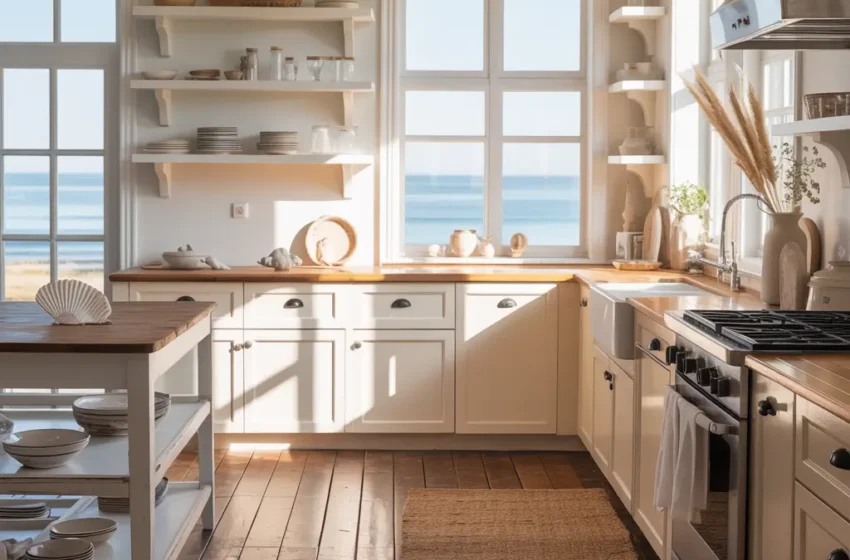
Okay, let’s talk about the kitchen trend that’s basically taking over Pinterest boards everywhere – the coastal farmhouse kitchen. You know that perfect mix of breezy beach house meets cozy country cottage? Yeah, that’s the one. I’ve spent the last year renovating my own kitchen with this exact style in mind, and trust me, I’ve learned a thing or two about what works and what definitely doesn’t.
The beauty of this style? You get the best of both worlds – that relaxed, vacation-like atmosphere combined with the warmth and functionality of farmhouse design. And honestly, who doesn’t want their kitchen to feel like a permanent beach vacation?
Bright Coastal Farmhouse Kitchen with White Cabinets
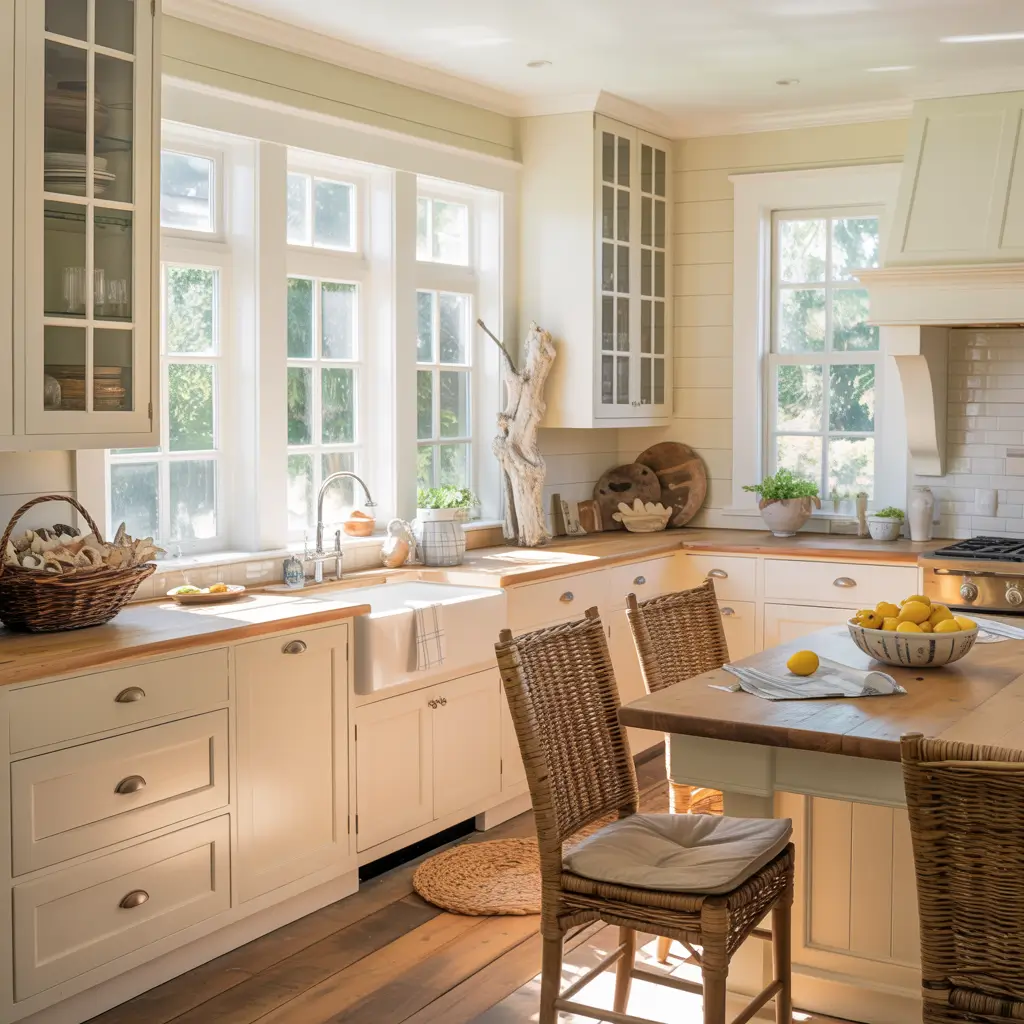
Let me start with the classic – white cabinets. They’re basically the little black dress of coastal farmhouse kitchens. I went with shaker-style cabinets in my own space, and here’s why they work so well:
White cabinets instantly brighten up your kitchen and create that clean, fresh canvas you need for this style. They reflect natural light beautifully, which is crucial when you’re trying to capture that breezy coastal feel. Plus, they’re surprisingly forgiving when it comes to showing wear and tear (unlike my previous dark cabinets that showed every single fingerprint).
When choosing white cabinets, consider these options:
- Pure white for maximum brightness
- Off-white or cream for a softer, warmer look
- Antique white if you want subtle character
The trick here? Don’t go too sterile. I learned this the hard way when my first attempt looked more like a hospital than a home. Add some texture through hardware – think brushed brass pulls or matte black handles. These little details make all the difference between “boring white kitchen” and “stunning coastal farmhouse masterpiece.”
Making White Cabinets Work
Here’s what I discovered works best with white cabinets in this style. First, you need contrast. White on white on white gets old fast. Mix in some natural wood elements or colored accessories to break things up.
Second, quality matters more than you’d think. Cheap white cabinets look, well, cheap. Invest in solid construction and good paint that won’t yellow over time. FYI, I made the mistake of going budget on my first set, and they started looking dingy within a year.
Rustic Wood Accents in Coastal Farmhouse Kitchen
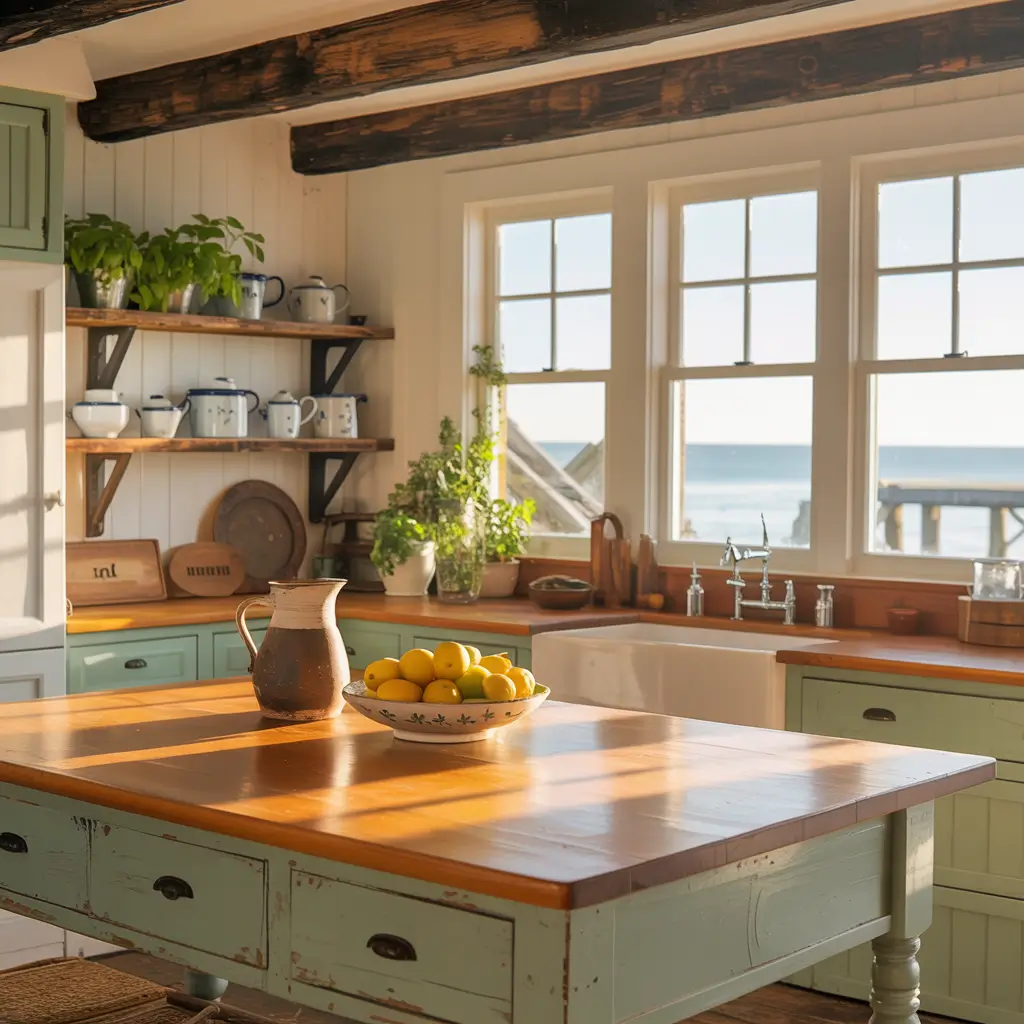
Now we’re talking about my favorite element – rustic wood accents. They bring that farmhouse warmth that prevents your coastal kitchen from feeling too cold or nautical-themed (because nobody wants their kitchen looking like a seafood restaurant, right?).
I incorporated wood through floating shelves, ceiling beams, and a gorgeous reclaimed wood island top. The contrast between weathered wood and crisp whites creates visual interest that draws people in. Every time someone visits, they immediately comment on the wooden elements.
Best Wood Choices for Coastal Farmhouse
Not all wood works equally well in this style. Here’s what I’ve found works best:
- Reclaimed barn wood – brings authentic farmhouse character
- Driftwood finishes – perfect coastal connection
- Light oak or pine – keeps things bright and airy
- Weathered gray wood – bridges coastal and farmhouse perfectly
The key? Don’t overdo it. You want strategic placement of wood elements, not a log cabin situation. Think of wood as your accent color rather than your main player.
Nautical Inspired Coastal Farmhouse Kitchen
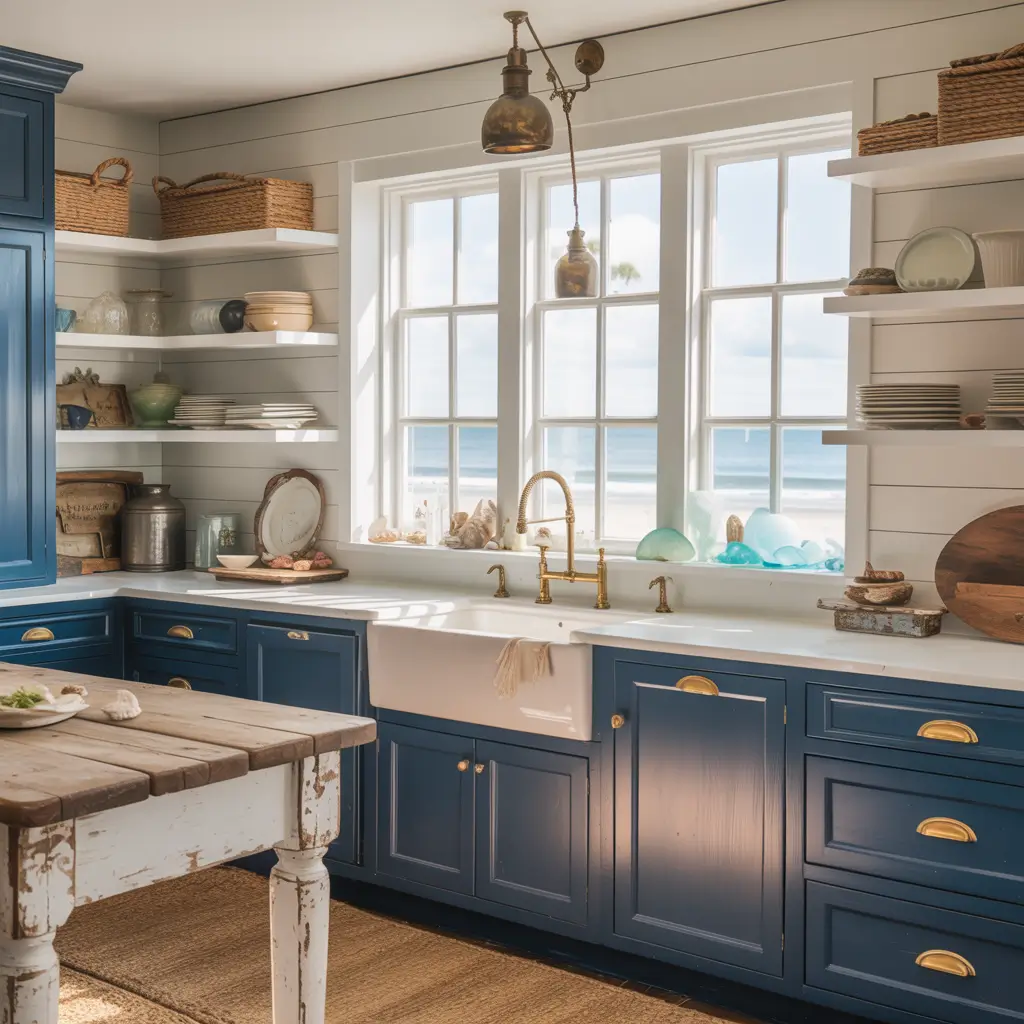
Ever wondered how to add nautical touches without going full “anchor everything”? The secret lies in subtle maritime hints rather than obvious sailor themes.
I incorporated nautical elements through rope-wrapped pendant light cords, a ship’s wheel clock (okay, maybe that’s slightly obvious), and some navy blue accents. The result? A kitchen that whispers “coastal” rather than screaming “I live on a boat!”
Nautical Elements That Actually Work
Here’s what brings coastal charm without the cheese factor:
- Rope details on cabinet handles or light fixtures
- Navy and white striped textiles (but sparingly!)
- Brass or copper fixtures reminiscent of ship hardware
- Glass fishing floats as decorative accents
Remember, one or two nautical elements go a long way. You’re creating a sophisticated coastal vibe, not decorating for a themed party.
Also Read; 15 Stunning Farmhouse Sink Kitchen Ideas and Cozy Designs
Minimalist Coastal Farmhouse Kitchen Design
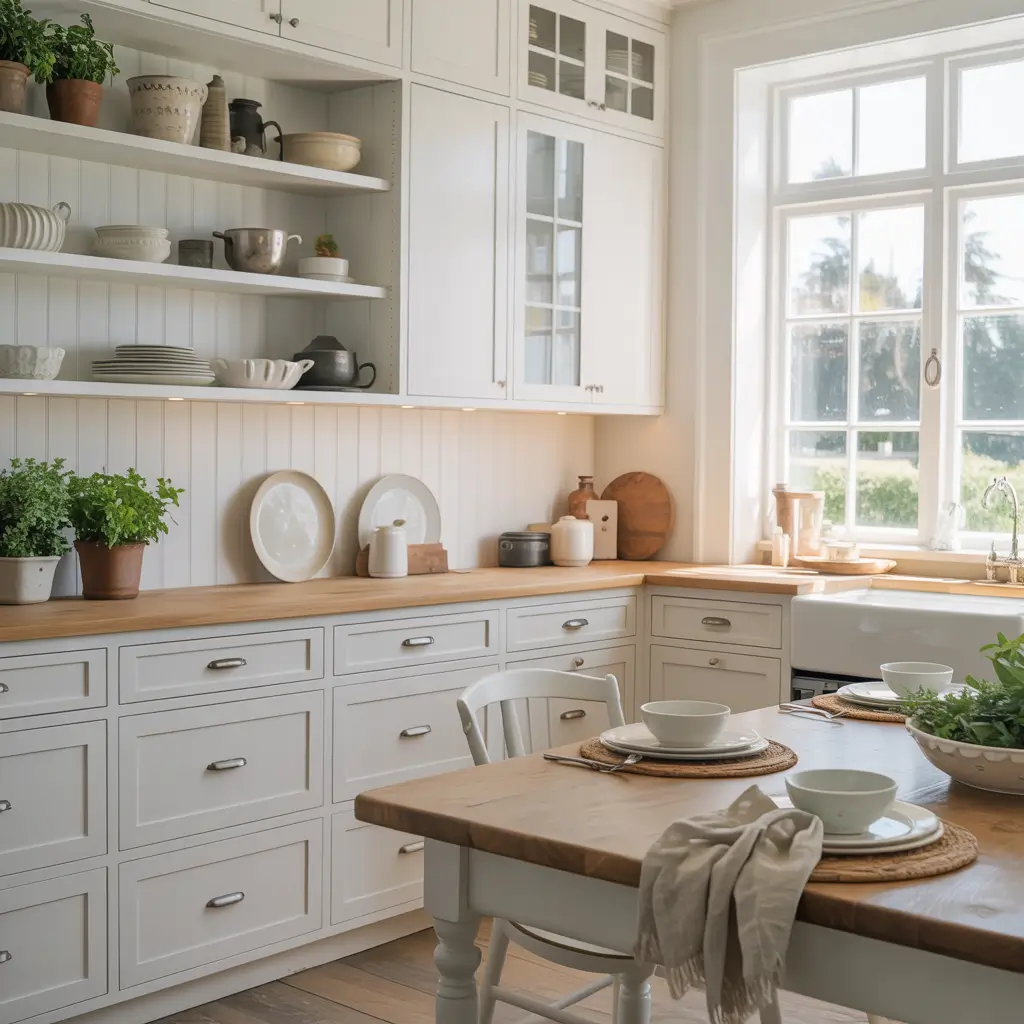
Who says farmhouse has to mean cluttered? The minimalist coastal farmhouse approach strips things back to essentials while maintaining warmth and character.
I’ll admit, this wasn’t my initial plan, but after living with a cluttered countertop for months, I embraced minimalism out of necessity. The result? My kitchen feels twice as spacious and infinitely more peaceful.
The minimalist approach focuses on:
- Clean lines and uncluttered surfaces
- Hidden storage solutions
- Quality over quantity in decorative elements
- Neutral color palette with maybe one accent color
Making Minimalism Work in Farmhouse Style
The challenge with minimalist farmhouse? Avoiding that cold, sterile feel. You need warmth through texture rather than through stuff. Think linen curtains, a single wooden cutting board displayed on the counter, or one perfectly placed vintage pitcher.
I keep my counters mostly clear except for a white ceramic utensil holder and a small potted herb. Everything else hides in drawers or cabinets. The visual calm this creates? Absolutely worth the discipline it takes to maintain.
Beachy Blue and White Farmhouse Kitchen
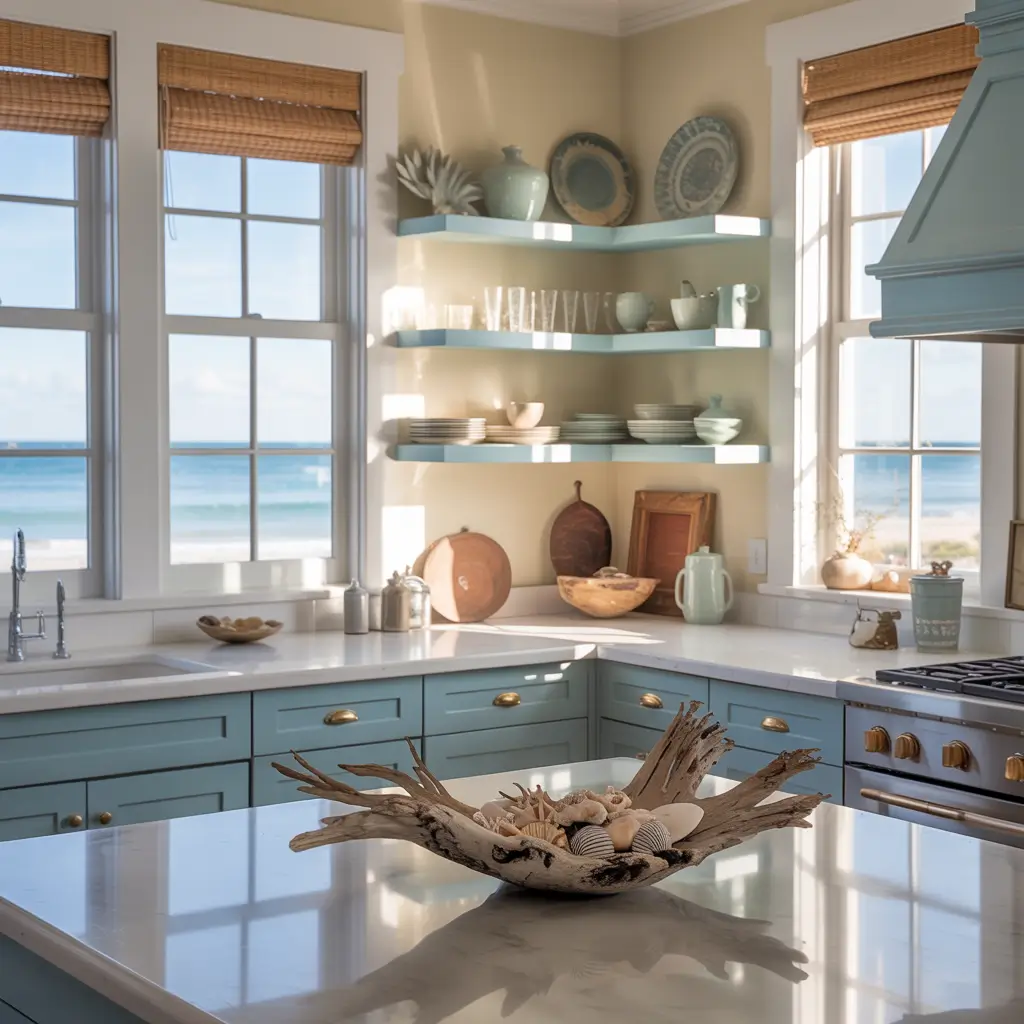
Let’s talk color – specifically, that perfect beachy blue that makes you think of ocean waves and clear skies. I spent weeks (okay, months) agonizing over the right shade of blue for my kitchen accents.
The winning combination? Crisp white as the base with soft, muted blues as accents. Think powder blue, seafoam, or that gorgeous blue-gray that changes with the light. These colors create that coastal atmosphere without overwhelming the farmhouse elements.
Where to Add Blue in Your Kitchen
Strategic blue placement makes all the difference:
- Kitchen island painted in soft blue
- Bar stools with blue cushions
- Backsplash tiles with blue accents
- Window treatments in blue and white patterns
I painted my island in Benjamin Moore’s Palladian Blue, and it’s become the focal point everyone notices. The color shifts from blue to green-gray depending on the light – totally magical and never boring.
Open Shelving Coastal Farmhouse Kitchen
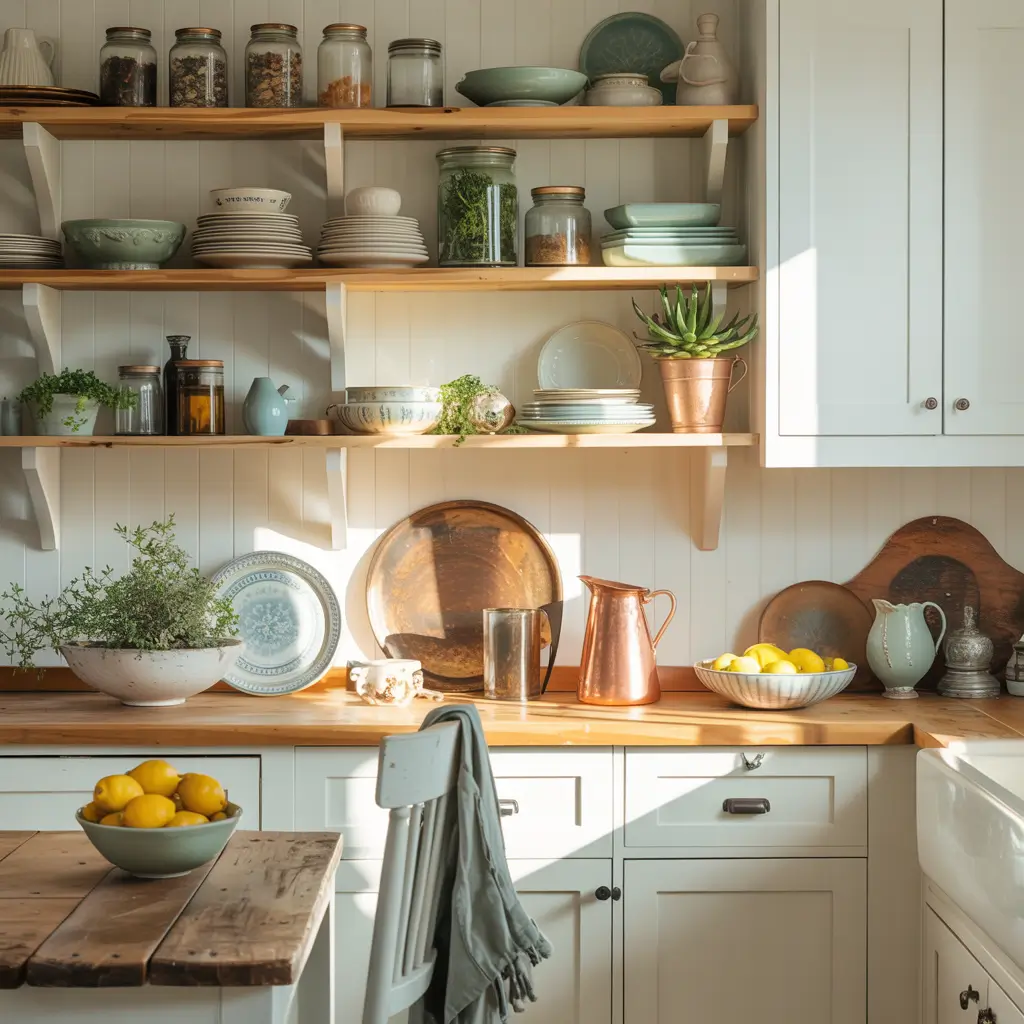
Open shelving – you either love it or hate it, right? I was firmly in the hate camp until I tried it. Now? I’m a complete convert.
The trick with open shelving in a coastal farmhouse kitchen? Curated display rather than everyday storage. I use my open shelves for pretty dishes, mason jars filled with pantry staples, and a few decorative pieces. Everything else stays hidden.
Making Open Shelving Practical
Here’s how to make open shelving work without constant dusting:
- Use dishes you actually use (they won’t get dusty)
- Group items by color for visual cohesion
- Mix functional and decorative pieces
- Leave breathing room between items
My shelves hold white dishes, clear glass containers, and a few vintage blue mason jars. The look stays cohesive because everything follows the same color scheme. Plus, having dishes on display actually encourages me to keep them organized 🙂
Also Read: 15 Stunning Farmhouse Kitchen Table Ideas for Cozy Homes
Cozy Coastal Farmhouse Kitchen with Island
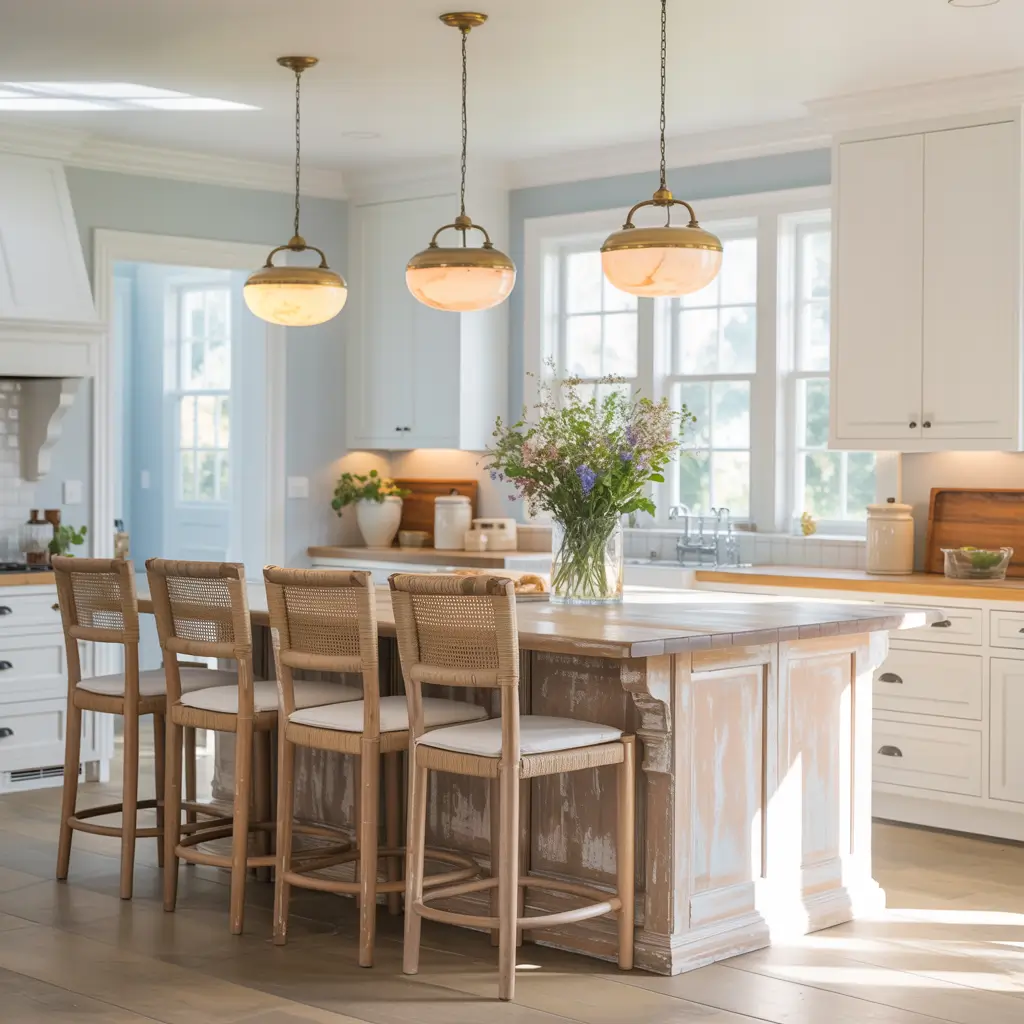
Kitchen islands – they’re basically the heart of any farmhouse kitchen, coastal or otherwise. Mine serves as prep space, casual dining area, and let’s be honest, the place where everyone congregates during parties.
For that cozy coastal farmhouse feel, your island needs to be both functional and inviting. I chose a design with open shelving on one side for cookbooks and decorative baskets, drawers on the cook’s side for utensils, and an overhang for bar seating.
Island Features That Make a Difference
Consider these elements for maximum coziness:
- Butcher block or reclaimed wood top for warmth
- Comfortable bar stools with backs (trust me on this)
- Built-in wine rack or bookshelf
- Pendant lighting overhead for ambiance
The island becomes a natural gathering spot when you make it comfortable. Add some cushioned stools and good lighting, and watch it become everyone’s favorite spot.
Light and Airy Coastal Farmhouse Kitchen
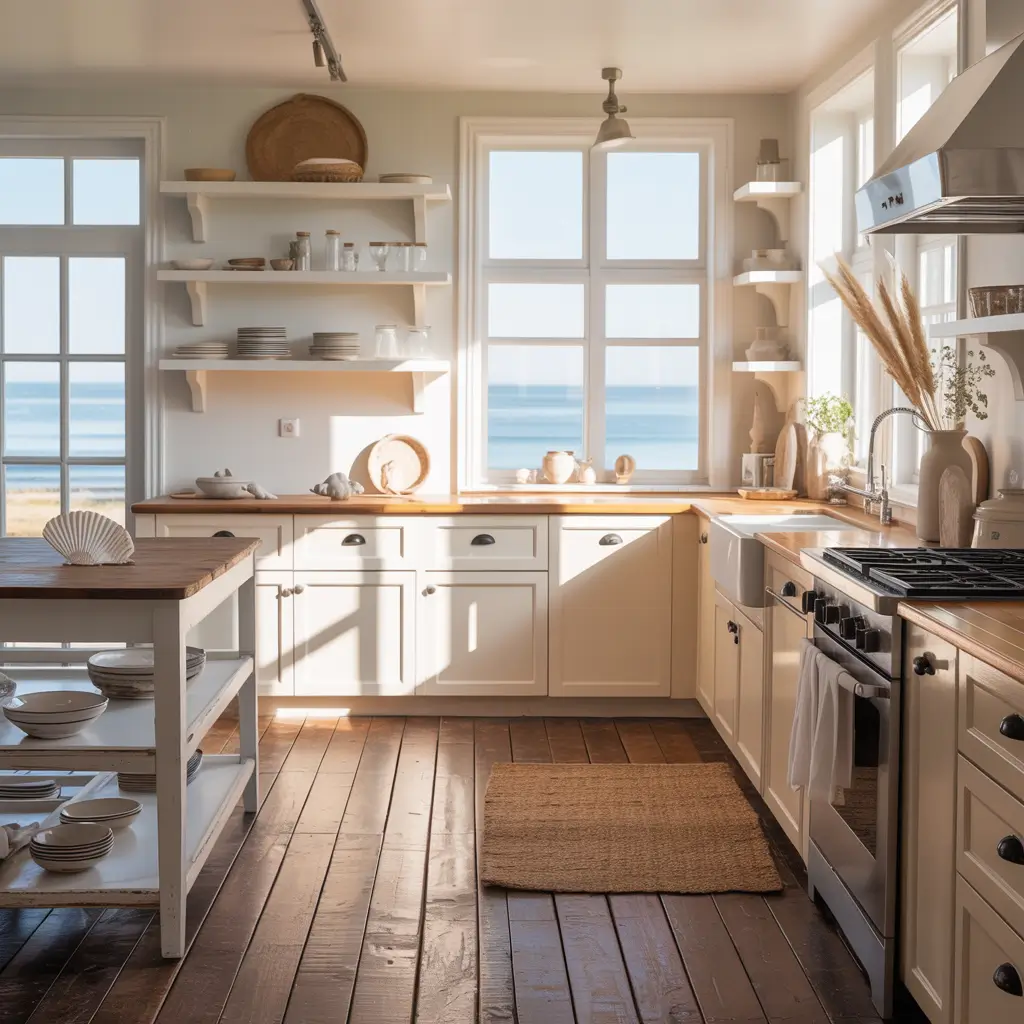
Creating that light and airy feeling requires more than just white paint. You need to think about light sources, color choices, and even the visual weight of your furniture and fixtures.
I maximized natural light by removing heavy curtains and installing sheer linen panels instead. The difference? Night and day (literally). The whole space feels larger and more welcoming.
Elements That Create Airiness
Focus on these aspects:
- Multiple light sources (natural, overhead, task)
- Light-colored flooring (whitewashed wood or light tile)
- Minimal upper cabinets or glass-front doors
- Reflective surfaces like subway tile backsplashes
Remember, dark colors and heavy materials visually weigh down a space. Keep things light in both color and visual weight for that floating, airy feel.
Modern Coastal Farmhouse Kitchen with Pendant Lights
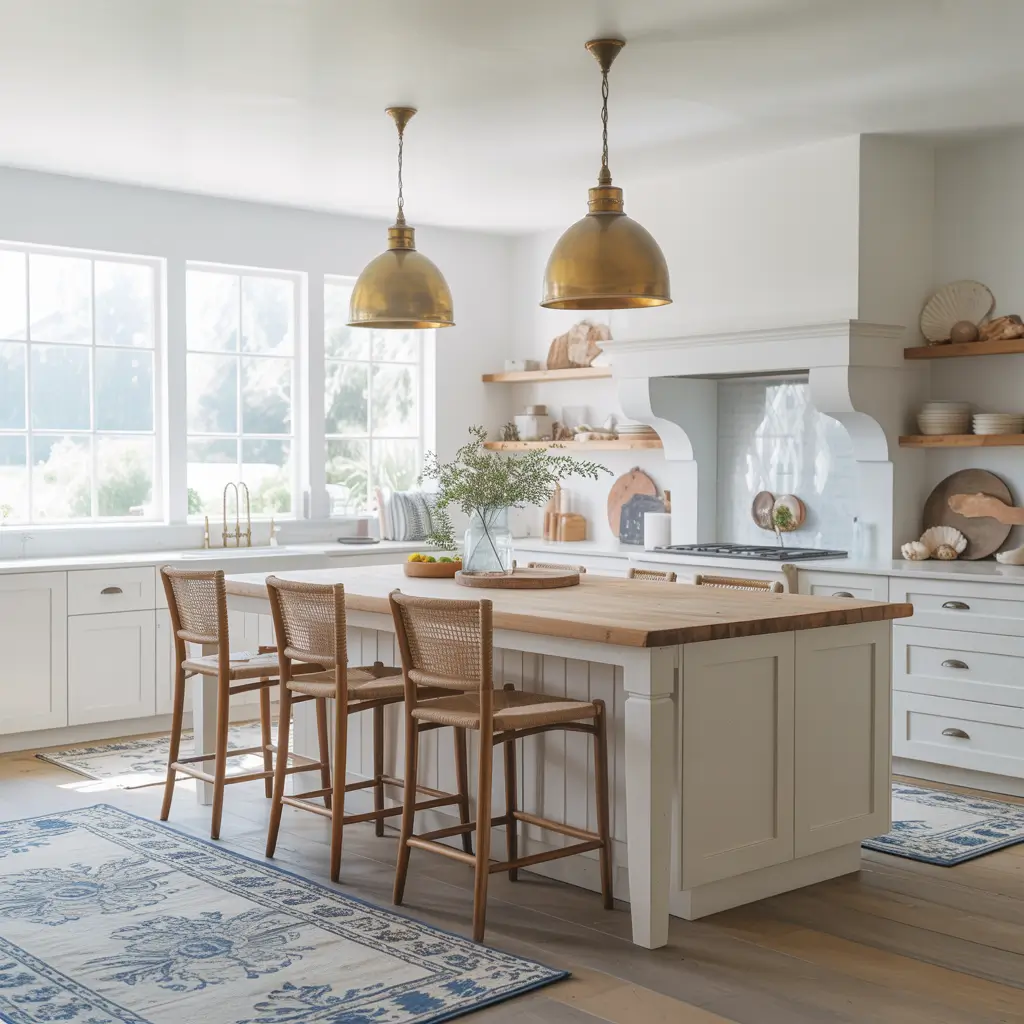
Pendant lights can make or break your coastal farmhouse kitchen. I learned this after installing boring flush-mount lights initially – the whole space fell flat.
The right pendants add personality, style, and crucial task lighting. I went with oversized glass pendants over my island, and they’ve become a conversation starter. The clear glass keeps things airy while the substantial size makes a statement.
Choosing the Perfect Pendants
Consider these pendant styles:
- Clear or seeded glass for transparency
- Woven or rattan for texture
- Industrial metal in white or black
- Nautical-inspired rope details
The scale matters too. Don’t go too small – substantial pendants anchor the space and create visual interest. I hung mine about 30 inches above the island counter, perfect for task lighting without blocking sightlines.
Also Read: 15 Stunning Farmhouse Kitchen Cabinets Ideas to Transform Your Space
Shiplap Walls in Coastal Farmhouse Kitchen
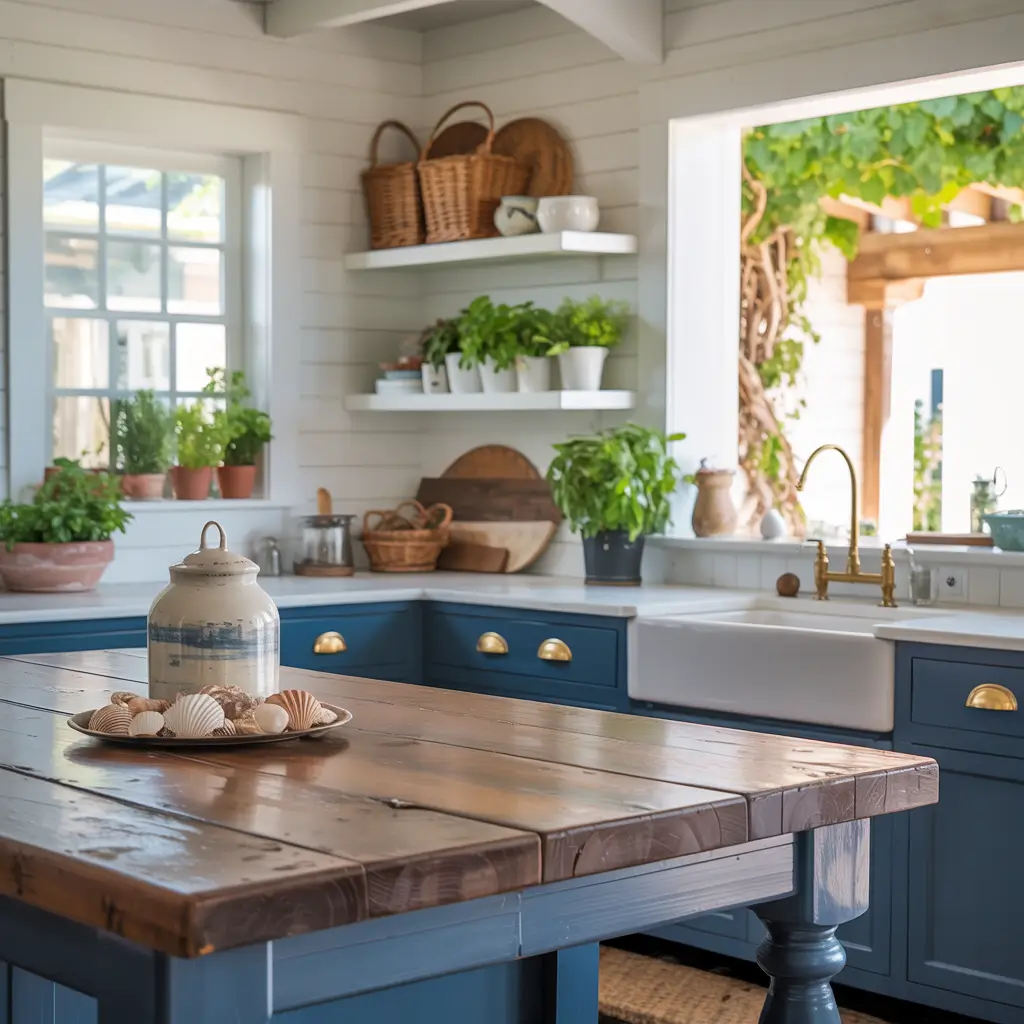
Ah, shiplap – the darling of farmhouse design. But does it work in a coastal kitchen? Absolutely, when done right.
I installed horizontal shiplap on my breakfast nook wall, painted it white, and it instantly added texture and interest without overwhelming the space. The horizontal lines actually make the room feel wider (bonus!).
Shiplap Do’s and Don’ts
Here’s what I’ve learned about shiplap:
Do:
- Paint it white or soft colors
- Use it as an accent wall rather than everywhere
- Consider vertical installation for height
- Seal it properly in kitchen areas
Don’t:
- Overdo it (one or two walls max)
- Leave it unfinished near cooking areas
- Forget to clean the grooves regularly
IMO, shiplap works best when it feels intentional rather than trendy. Use it where it makes sense architecturally.
Farmhouse Kitchen with Coastal Tile Backsplash
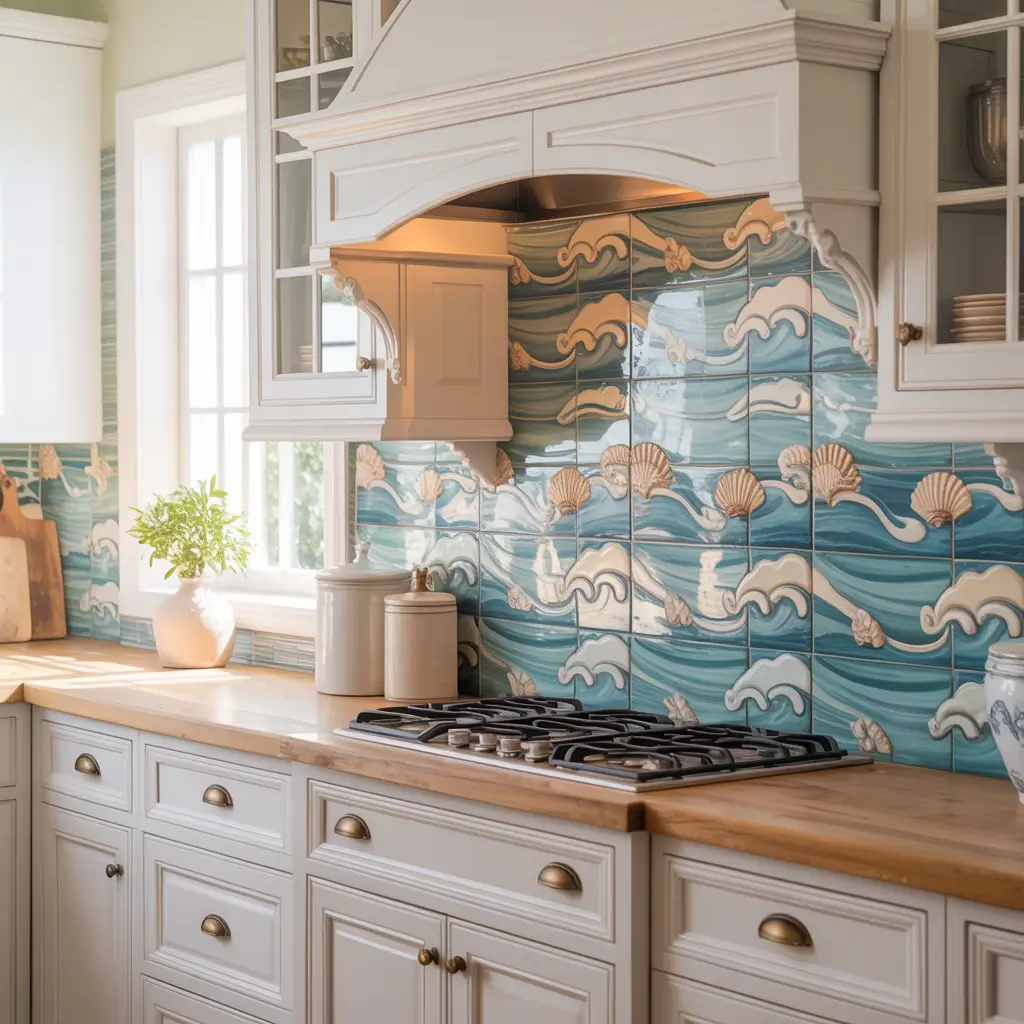
The backsplash offers a perfect opportunity to blend coastal and farmhouse elements. I chose handmade subway tiles with a slightly wavy edge – they look like sea glass but maintain that classic farmhouse simplicity.
The color? A soft blue-green that picks up different tones throughout the day. It’s subtle enough not to overwhelm but interesting enough to catch the eye.
Backsplash Options That Work
Consider these coastal-farmhouse friendly options:
- White subway tile with colored grout
- Moroccan fish scale tiles in soft blues
- Natural stone in beach-inspired colors
- Penny rounds in white or soft blue
The installation pattern matters too. I went with a vertical stack instead of the traditional brick pattern – it feels more modern while still reading as classic.
Vintage Coastal Farmhouse Kitchen Decor
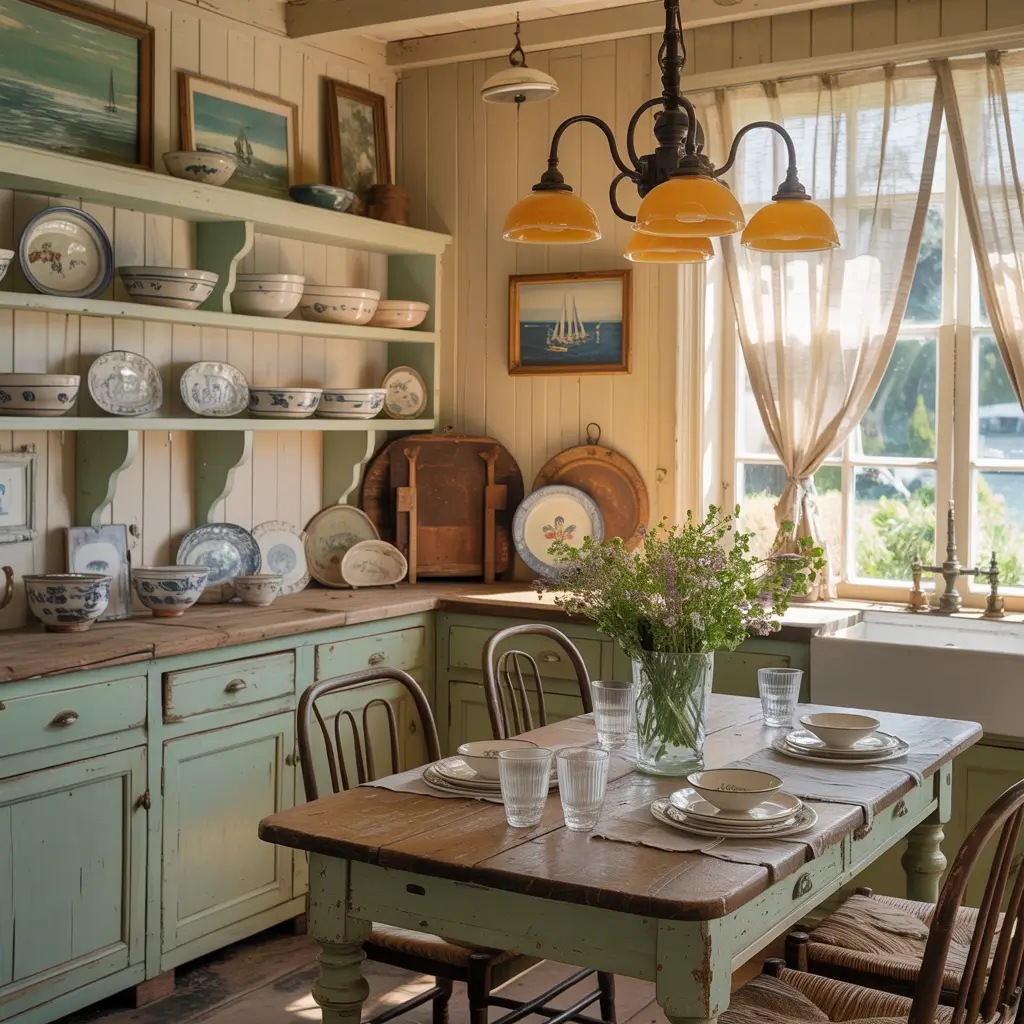
Vintage pieces add soul and character that new items just can’t replicate. My kitchen features an old ship’s porthole as wall art, vintage glass fishing floats in a bowl, and my grandmother’s enamelware displayed on open shelves.
The key with vintage decor? Restraint and intention. You want curated vintage, not garage sale explosion.
Finding the Right Vintage Pieces
Look for items that bridge both styles:
- Antique breadboards or cutting boards
- Vintage glass bottles in coastal colors
- Old maritime maps or botanical prints
- Weathered wooden crates for storage
I found most of my pieces at estate sales and antique shops near coastal towns. They have authentic maritime pieces that aren’t mass-produced “vintage-style” items.
Coastal Farmhouse Kitchen with Natural Stone Countertops
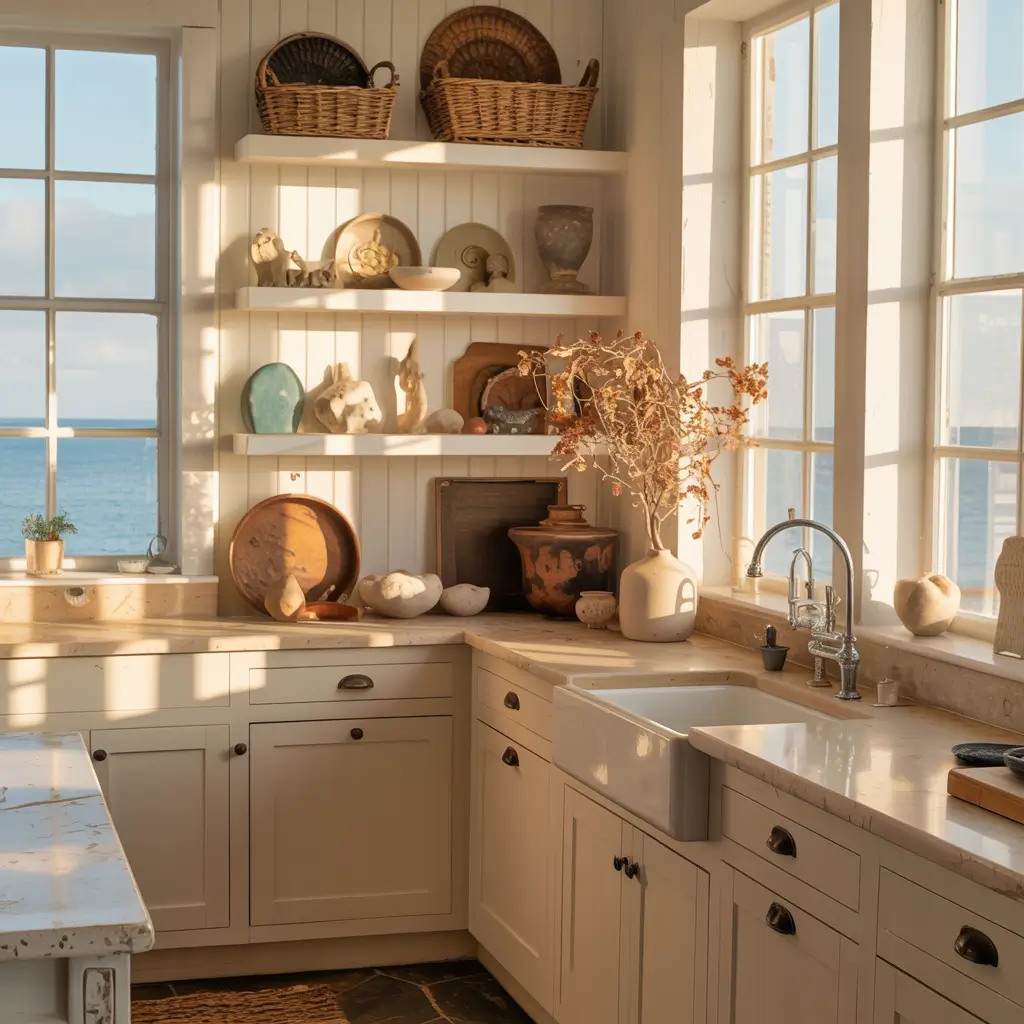
Let’s talk countertops – specifically, natural stone options that work for this style. I went with honed Carrara marble, and yes, I know it’s high maintenance, but the look? Absolutely worth it.
Natural stone brings an organic element that perfectly bridges the coastal-farmhouse gap. The veining in marble reminds me of seafoam, while granite can echo beach pebbles.
Best Stone Choices
Consider these options:
- Carrara or Calacatta marble for classic elegance
- Soapstone for durability with character
- Light granite with minimal pattern
- Quartzite for marble look with less maintenance
The finish matters too. Honed finishes feel more farmhouse-appropriate than high polish, plus they hide water spots better (practical win!).
Warm and Inviting Coastal Farmhouse Kitchen
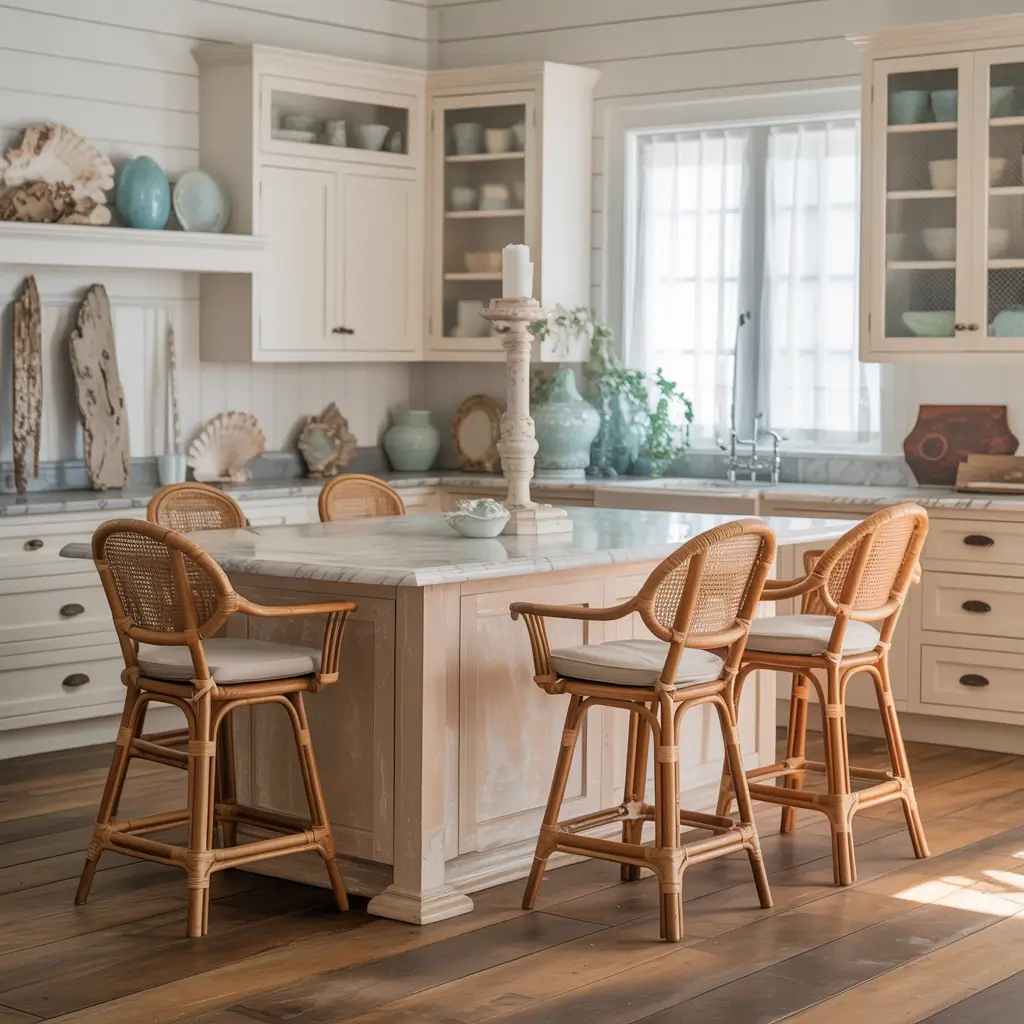
Creating warmth in a style known for whites and blues requires thoughtful layering. I achieve this through texture, warm metals, and strategic color placement.
Brass hardware warms up my white cabinets, while woven placemats and linen dish towels add tactile warmth. A vintage runner in muted coral tones brings unexpected warmth without clashing with the coastal palette.
Elements That Add Warmth
Focus on these warming elements:
- Warm metal finishes (brass, copper, gold)
- Natural fiber rugs in jute or sisal
- Wood cutting boards and serving pieces
- Warm white paint instead of stark white
The goal? A kitchen that feels welcoming year-round, not just during summer months.
Elegant Coastal Farmhouse Kitchen with Mixed Metals
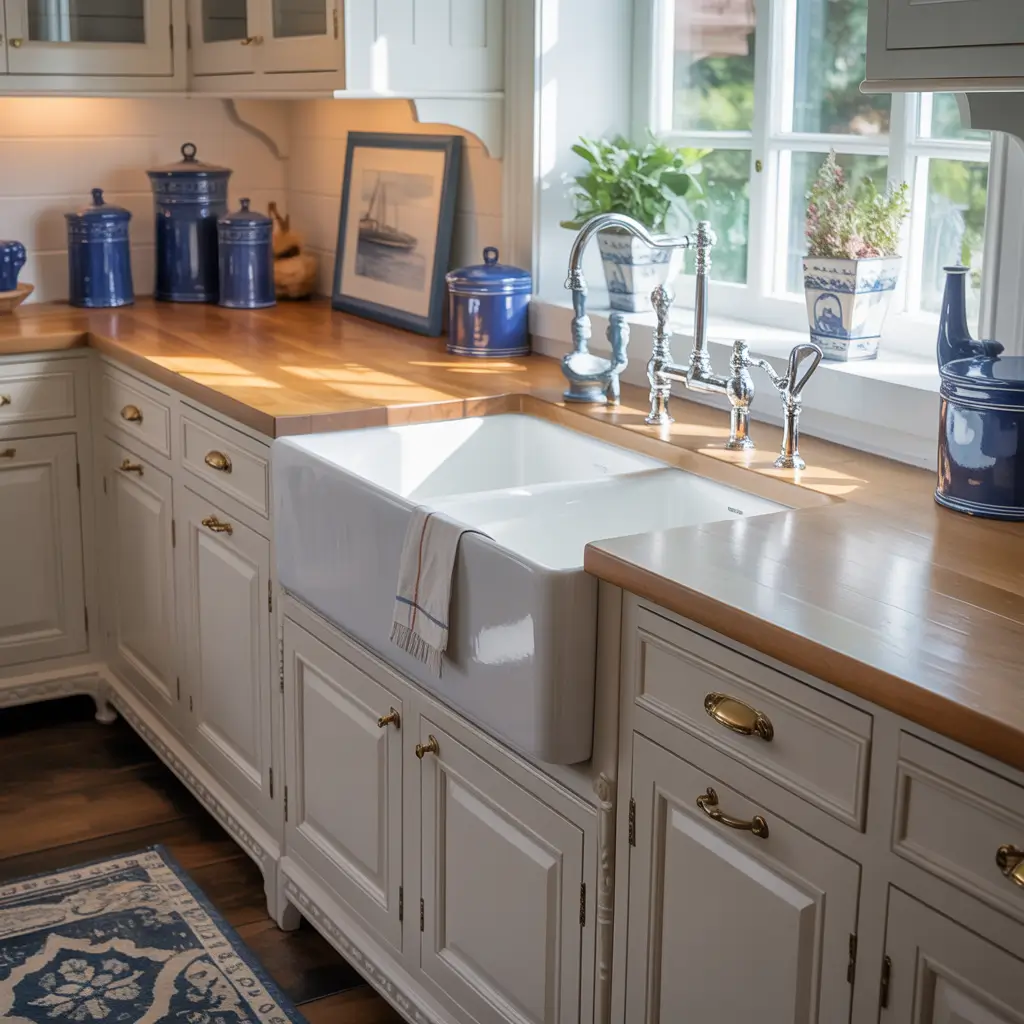
Who says you have to pick just one metal finish? Mixed metals add sophistication and visual interest to coastal farmhouse kitchens.
I combined brass cabinet pulls, a stainless steel range, copper pendant lights, and matte black faucets. Sounds chaotic? It actually works beautifully when you follow the right rules.
Rules for Mixing Metals Successfully
Here’s my formula for metal mixing:
- Choose a dominant metal (mine’s brass)
- Use 2-3 finishes maximum
- Repeat each finish at least twice
- Spread them throughout the space
The trick is balance and repetition. Each metal should appear in multiple places so nothing looks like an afterthought. My brass appears in cabinet hardware, light fixtures, and bar stool details, creating visual continuity.
Bringing It All Together
Creating your perfect coastal farmhouse kitchen isn’t about following every trend or copying someone else’s space exactly. It’s about finding the right balance between beach house relaxation and farmhouse comfort that works for your lifestyle.
After living in my coastal farmhouse kitchen for over a year now, I can tell you what really matters: functionality wrapped in style. Sure, the aesthetic draws compliments, but what I love most? How the space actually works for real life – from messy weekend pancake sessions to elegant dinner parties.
The best part about this style? Its flexibility and timelessness. Unlike super trendy designs that’ll look dated in five years, coastal farmhouse has staying power. The natural materials, classic color palette, and comfortable functionality never really go out of style.
Whether you’re doing a complete renovation or just adding some coastal farmhouse touches, remember this: authenticity beats perfection every time. Choose elements that speak to you, mix in pieces with meaning, and don’t stress about getting everything “right.” Your kitchen should tell your story, not look like a catalog page.
Start small if you need to – maybe swap out your hardware for brass pulls or add some open shelving. Every little change brings you closer to that dreamy coastal farmhouse kitchen you’re envisioning. Trust me, once you start, you’ll wonder why you waited so long to embrace this perfectly imperfect, beautifully relaxed style.