12 Beautiful Coffee Shop Interior Design Ideas for Rustic Charm
- Home Interior Design
 Ben
Ben- 0
- 39 minutes read
Remember that coffee shop where you accidentally spent six hours “just grabbing a quick coffee”? The one with the perfect lighting, that chair that hugged your back just right, and somehow made your laptop productivity skyrocket? That wasn’t an accident.
That was brilliant interior design doing exactly what it’s supposed to do – creating spaces so inviting that customers forget they’re spending $7 on beans and water.
After helping design five coffee shops (and spending approximately half my life in various cafés pretending to write), I’ve learned that coffee shop interior design isn’t just about looking Instagram-worthy.
It’s about creating environments that turn one-time visitors into regulars, casual coffee drinkers into loyal fanatics, and empty spaces into thriving community hubs.
These twelve coffee shop interior design ideas come from real projects, real failures (oh, the failures), and real successes.
Whether you’re opening your first café or desperately trying to figure out why customers grab their coffee and run, these ideas will transform your space from just another coffee shop into the neighborhood’s living room.
1. Rustic Industrial Coffee Haven
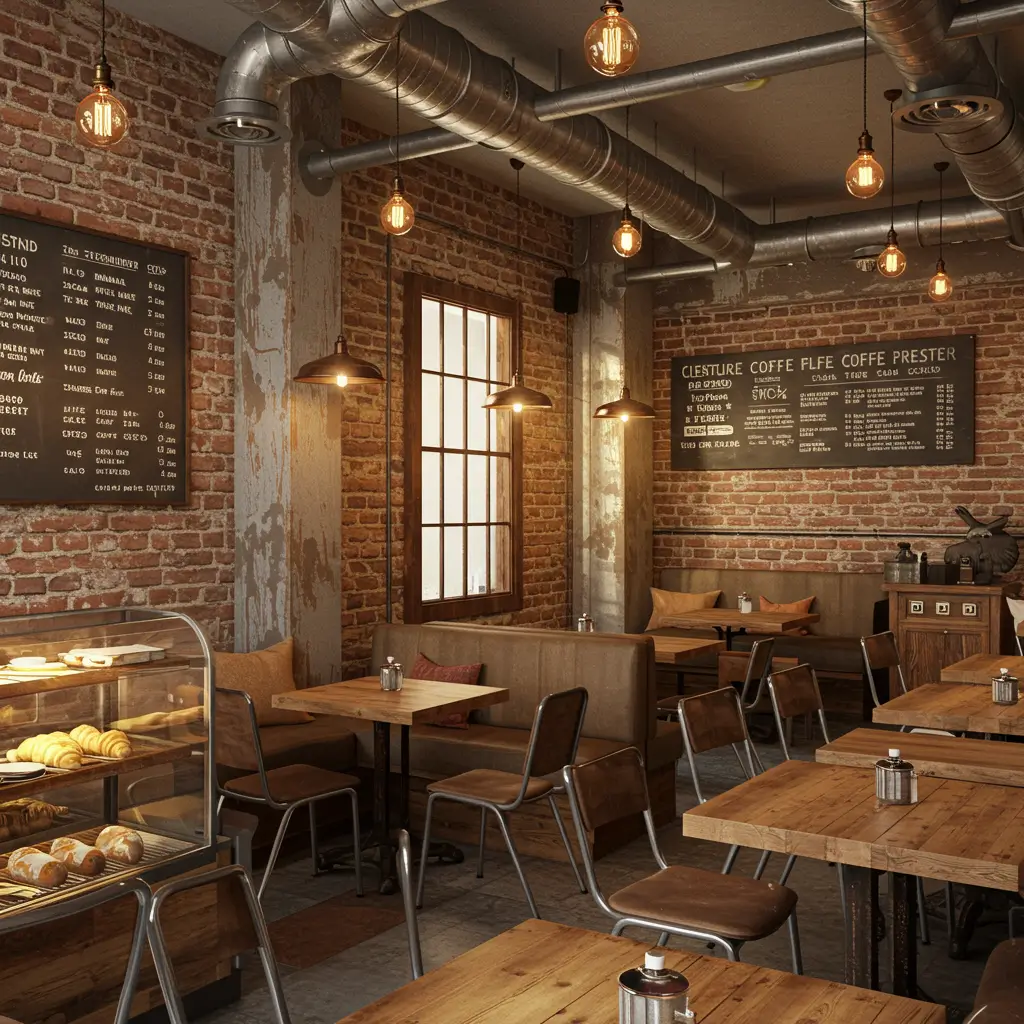
Rustic industrial design turns coffee shops into urban sanctuaries that feel both raw and refined. This style basically says “we’re serious about coffee but cool enough to have exposed brick.” And honestly? It works every single time.
The magic happens when rough industrial elements meet warm rustic touches. Exposed pipes and concrete floors get softened by reclaimed wood tables and leather seating. I worked on a coffee shop that kept the building’s original factory ceiling – complete with rust stains and peeling paint – then added Edison bulbs and live-edge wood counters. The contrast made people stop mid-sentence to look around.
The color palette stays masculine but inviting. Deep browns, charcoal grays, and black metals dominate, with warm lighting preventing the cave effect. Natural materials add the warmth that makes people want to stay. That cold metal chair might look cool, but nobody’s camping out for three hours on it.
Essential Rustic Industrial Elements
Creating the perfect industrial blend:
- Exposed brick walls or convincing alternatives
- Metal and wood furniture combinations
- Vintage industrial lighting with warm bulbs
- Concrete or distressed wood floors
- Open shelving displaying coffee equipment
- Leather accents on seating for comfort
The maintenance reality check: industrial materials hide wear beautifully. That scratched table? Character. That scuffed floor? Patina. Your customers’ spills actually improve the aesthetic over time.
2. Minimalist Scandinavian Café Vibes
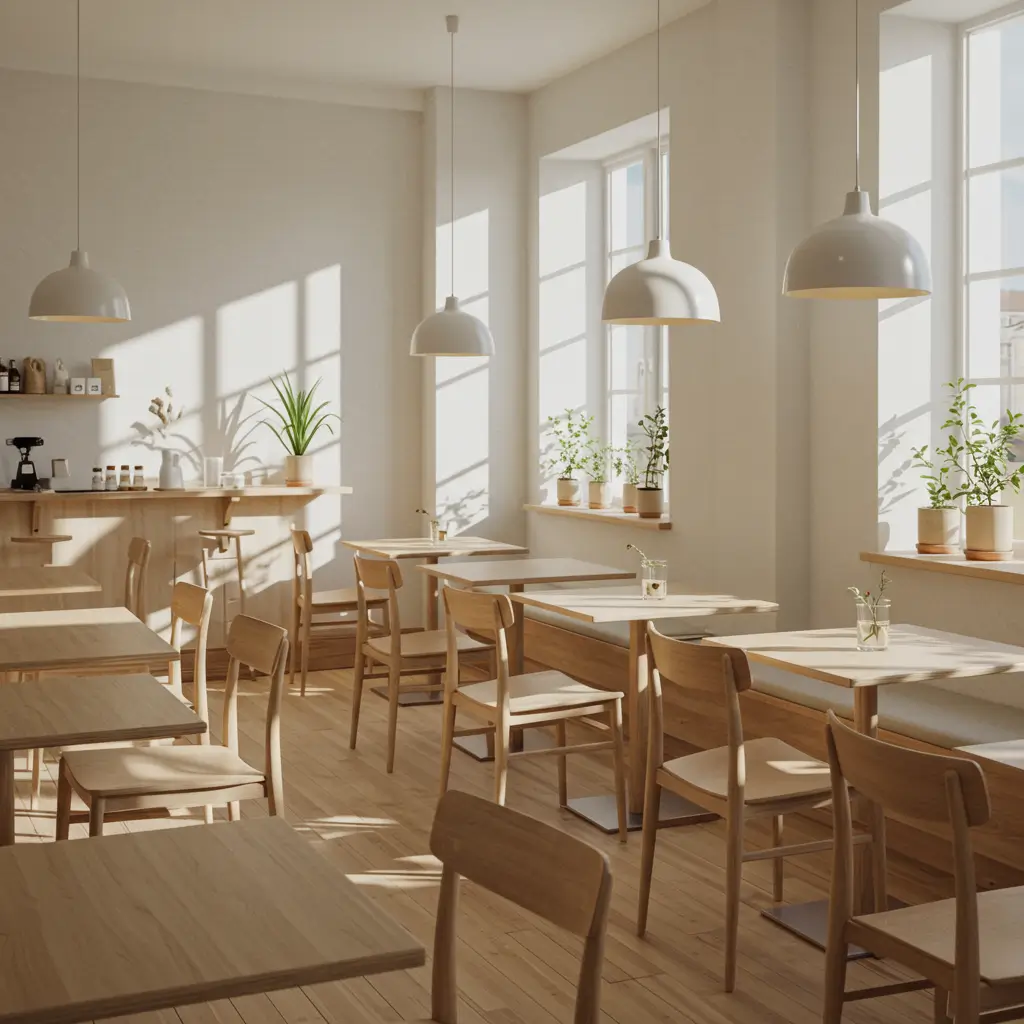
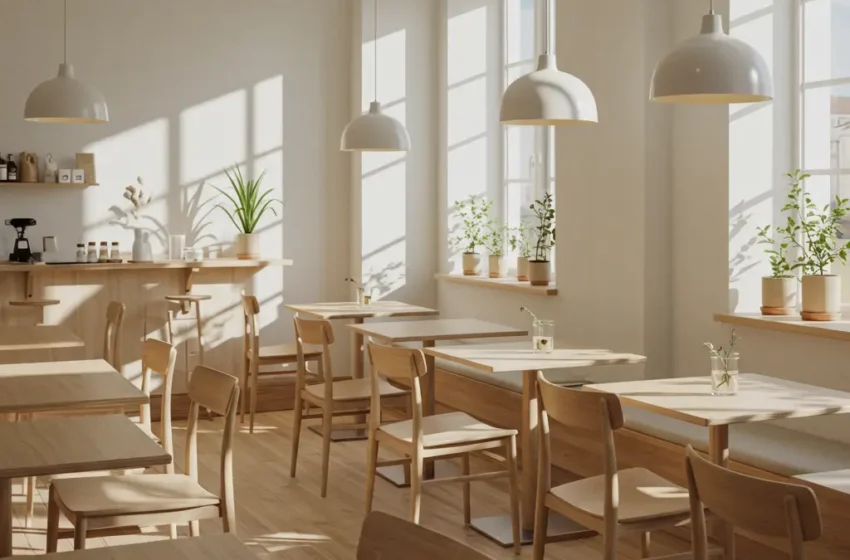
Scandinavian coffee shop design creates spaces that feel like a warm hug on a cold day. This isn’t cold minimalism – it’s hygge in commercial form, where less stuff somehow creates more comfort.
The foundation starts with light – lots of it. White walls, light wood, and massive windows make even tiny spaces feel expansive. A Scandinavian café I designed had exactly twelve pieces of furniture total, but the space felt fuller and more inviting than cluttered coffee shops twice its size.
Textures replace colors as the main design element. Smooth wood, nubby linen, soft wool, rough ceramics – these create visual interest without chaos. The coffee becomes the star when the space doesn’t compete for attention. Plus, that Instagram-perfect flat white looks amazing against a minimalist backdrop.
Scandinavian Café Essentials
Nordic coffee shop must-haves:
- Light wood everything – floors, furniture, counters
- White or pale gray walls throughout
- Minimal decorations but meaningful ones
- Cozy textiles on seating areas
- Plants for life and color
- Warm lighting despite the minimal aesthetic
The lifestyle factor matters here. Scandinavian cafés encourage slow coffee culture – sitting, talking, being present. Fast grab-and-go doesn’t work with this aesthetic.
3. Boho Chic Cozy Coffee Corner
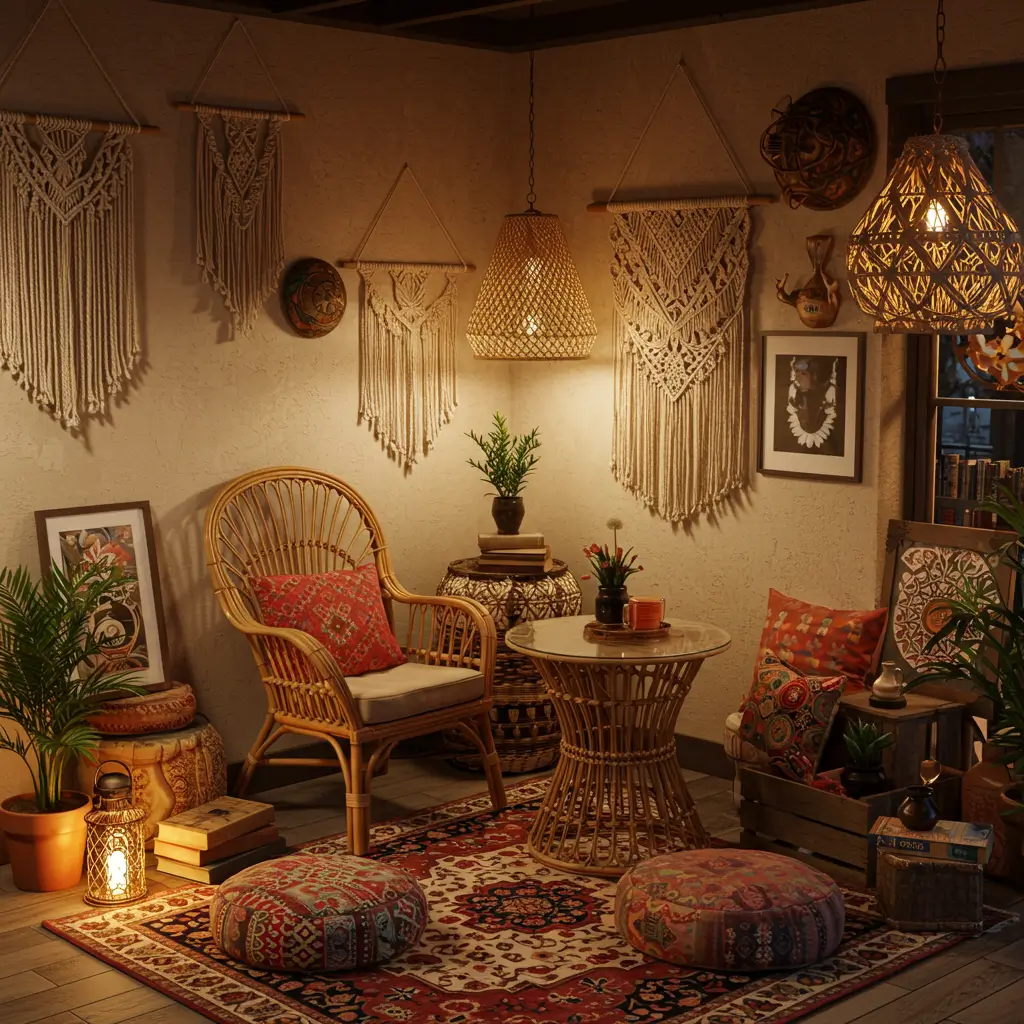
Boho chic coffee shops feel like your coolest friend’s living room had a baby with a café. This style gives customers permission to stay all day, spreading out their stuff and treating the space like home.
Layering defines boho coffee shop design. Mismatched furniture that somehow works, rugs on rugs, plants hanging from every possible surface. One boho café I frequent has seventeen different chair styles, and finding your favorite becomes part of the experience. Regular customers have “their” chairs and get genuinely upset when someone else sits there.
The color story stays warm but varied. Earth tones anchor the space while jewel tones add pops of interest. Patterns mix freely – geometric, floral, tribal – but a common color thread prevents chaos. The goal is organized eclecticism, not thrift store explosion.
Boho Coffee Shop Elements
Creating that perfectly imperfect vibe:
- Vintage furniture from multiple eras
- Macramé and woven wall hangings
- Abundant plants at varying heights
- Floor cushions and low seating options
- Warm string lighting or lanterns
- Global textiles and patterns
FYI, boho spaces require constant curation. Without regular editing, they tip from eclectic to cluttered faster than you can say “oat milk latte.”
Also Read: 10 Cozy Interior Design Styles Ideas for Comfortable Living
4. Vintage Retro Coffee Lounge
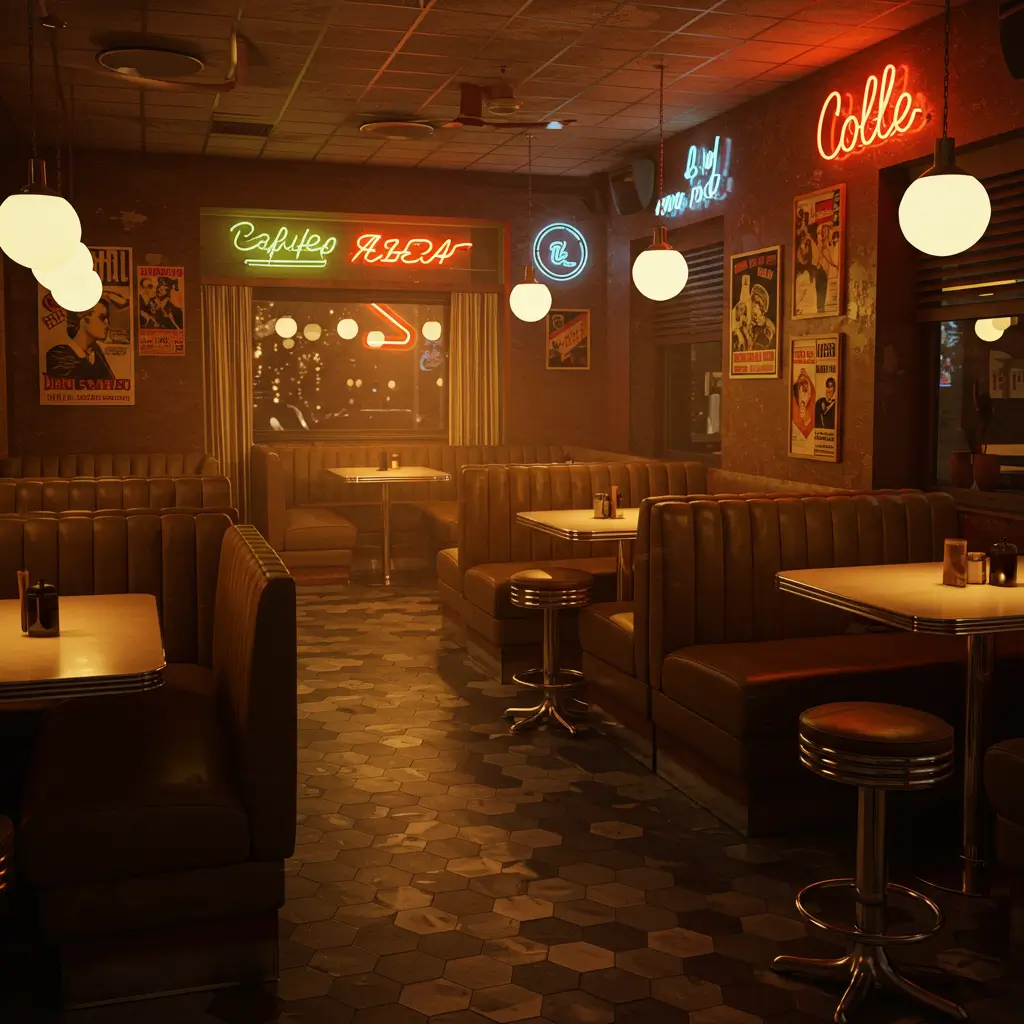
Vintage retro coffee lounges transport customers to a romanticized past where coffee was simple and conversations were analog. Whether you’re channeling 1950s diner or 1970s conversation pit, retro design creates instant atmosphere.
Authenticity makes or breaks retro spaces. Real vintage pieces mixed with quality reproductions beat cheap knockoffs every time. I helped design a 1960s-inspired coffee lounge using actual furniture from the era (estate sales are goldmines), and customers literally gasp when they walk in. The velvet banquettes alone generate more Instagram posts than our actual coffee.
Color becomes your playground in retro design. Mint green, bubble gum pink, sunshine yellow – colors that would be ridiculous elsewhere work perfectly here. The key is committing fully. Half-hearted retro just looks confused.
Retro Coffee Lounge Features
Time machine essentials:
- Period-appropriate furniture or reproductions
- Bold geometric patterns on floors or walls
- Vintage signage and typography
- Chrome and Formica surfaces
- Jukebox or vintage sound system
- Neon lighting accents
The nostalgia factor drives customer loyalty. People return for the feeling, not just the caffeine. That’s powerful for business.
5. Modern Urban Coffee Hub
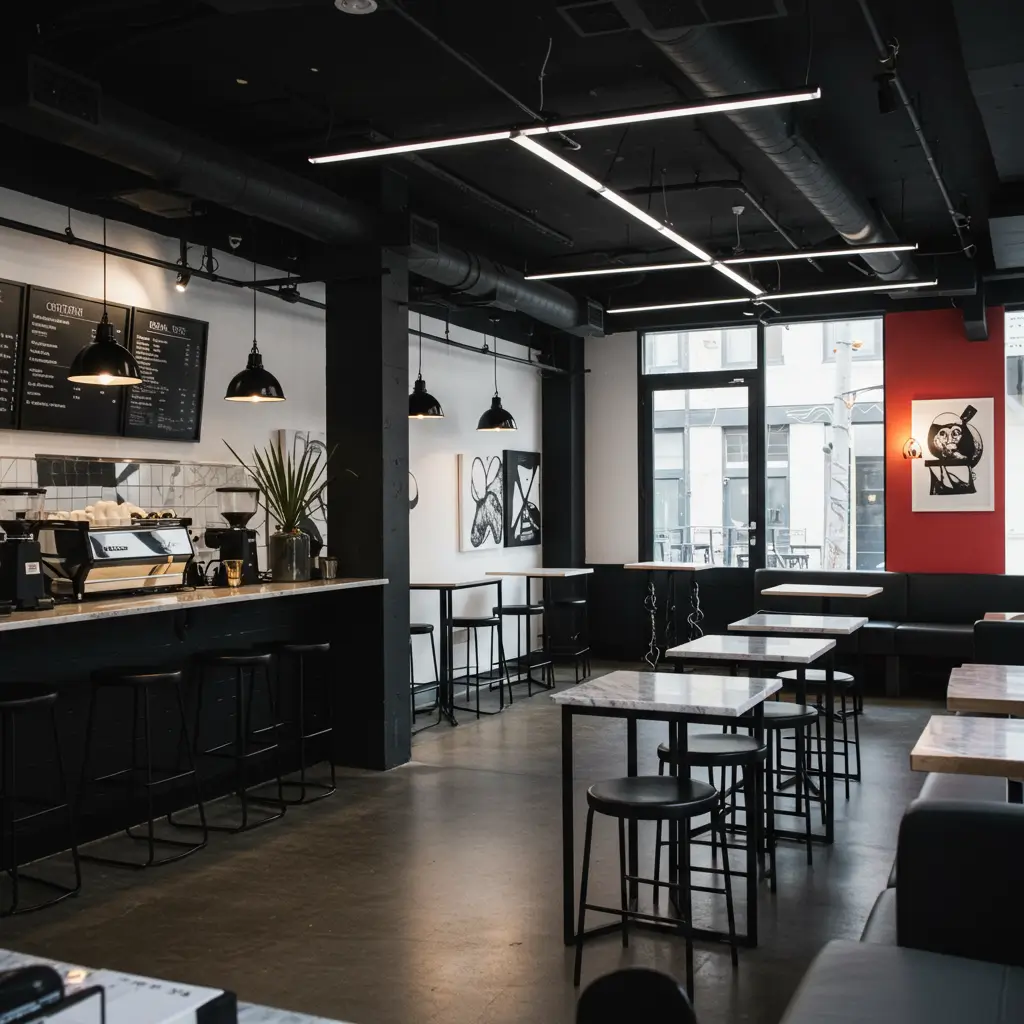
Modern urban coffee hubs acknowledge that most customers are here to work, so let’s make that experience amazing. This isn’t about forcing community – it’s about creating productive spaces where community happens naturally.
Technology integration defines modern coffee hubs. Power outlets everywhere, USB ports in tables, strong WiFi that actually works. One urban hub I designed has wireless charging surfaces built into every table. Excessive? Maybe. But their average customer stay is four hours with multiple purchases. That’s ROI.
The aesthetic stays sleek but not cold. Clean lines, neutral colors, and minimal decoration keep distractions low. But comfortable seating and good lighting prevent the corporate feel. Think high-end coworking space that happens to serve exceptional coffee.
Modern Hub Necessities
Urban productivity essentials:
- Abundant power access at every seat
- Mix of seating types for different work styles
- Sound management for conversation and calls
- Excellent lighting for screens and reading
- Standing counters for quick meetings
- Private nooks for video calls
The balance is tricky. Too corporate kills the coffee shop vibe, too casual frustrates the workers. Find the sweet spot.
6. Nature-Inspired Green Café
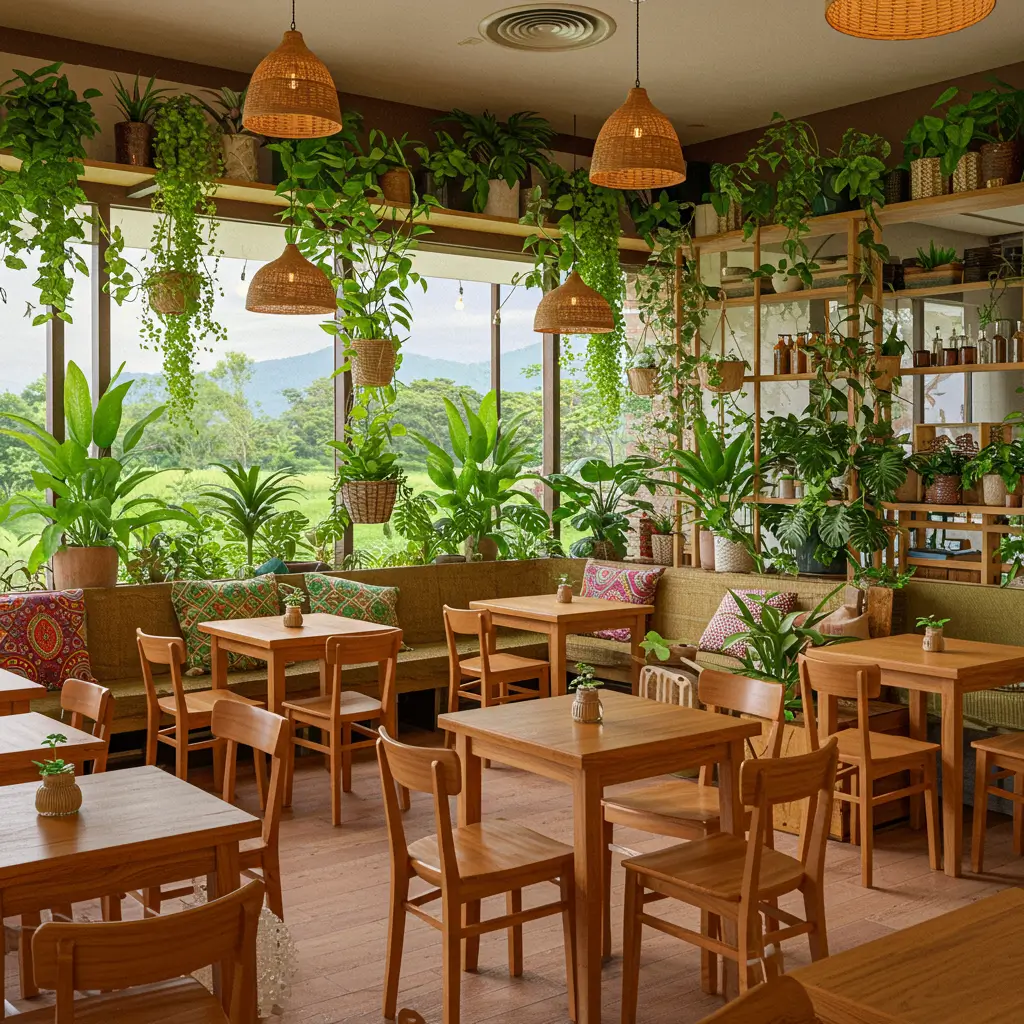
Nature-inspired cafés bring the outside in, creating oases in concrete jungles. This goes beyond a few potted plants – we’re talking full botanical immersion that makes customers forget they’re indoors.
Living walls transform spaces instantly. Vertical gardens covering entire walls create natural air filtration while providing stunning visuals. A green café I visit has a living wall behind the counter, and watching baristas work against that backdrop feels like a nature documentary about coffee.
Natural materials reinforce the green theme. Raw wood, stone, bamboo, cork – everything reminds customers of nature. The color palette pulls from the plants – greens obviously, but also earth tones that ground the space.
Green Café Design Elements
Bringing nature inside:
- Living walls or vertical gardens
- Abundance of potted plants throughout
- Natural material furniture and finishes
- Skylights or solar tubes for natural light
- Water features for ambient sound
- Outdoor-indoor flow when possible
The maintenance commitment is real. Dead plants kill the vibe instantly, so factor in plant care costs from day one.
Also Read: 10 Unique Luxury Interior Design Ideas to Transform Homes
7. Art Gallery Style Coffee Space
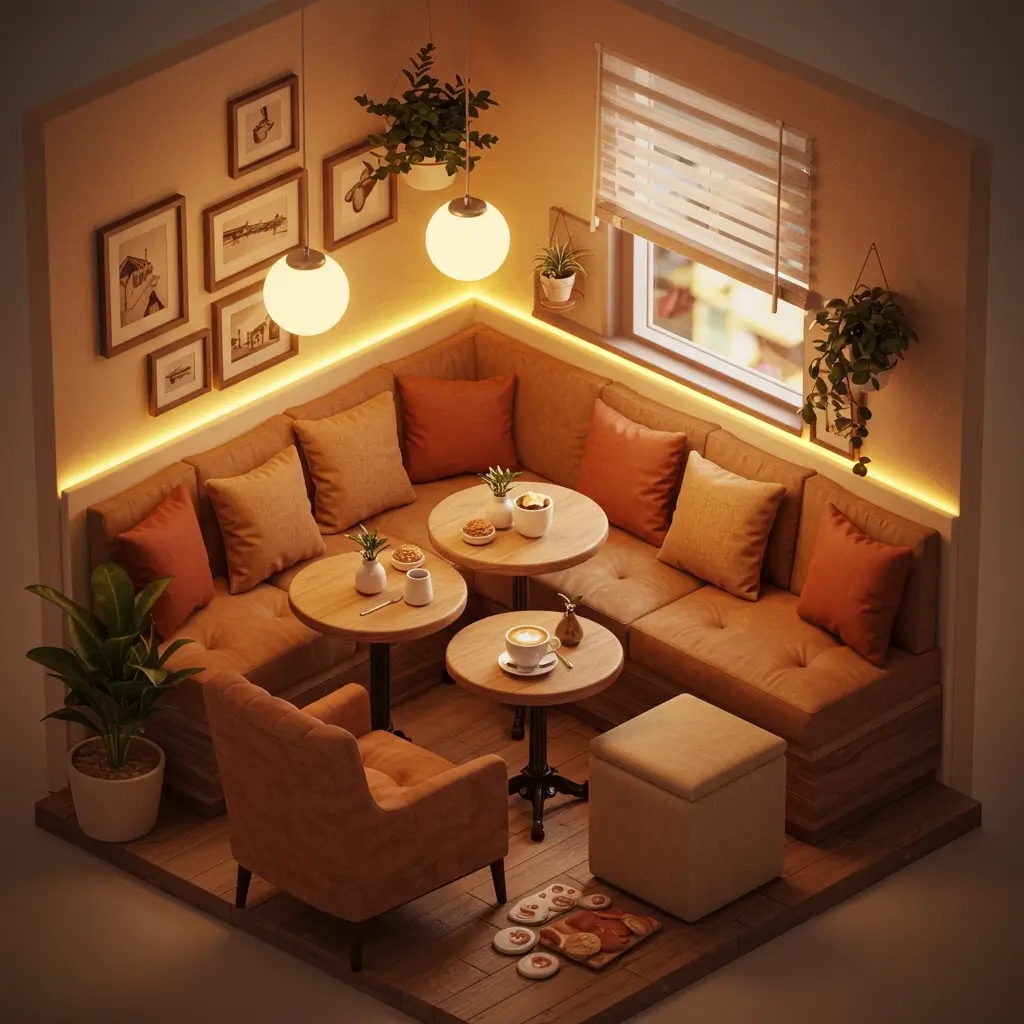
Art gallery coffee shops create cultural hubs where caffeine meets creativity. These spaces acknowledge that coffee and art have been best friends since the first Parisian café.
Rotating exhibitions keep the space fresh. New art every month means customers have reasons to return beyond their caffeine addiction. One gallery café I know books artists a year in advance, and opening nights pack the place with wine-sipping art lovers who become morning coffee regulars.
The design supports the art, not competes. White walls, track lighting, minimal furniture – everything exists to showcase creativity. The coffee bar itself becomes sculptural, often the only permanent “art” in the space.
Gallery Café Essentials
Supporting art with design:
- Flexible lighting systems for different exhibitions
- Neutral backgrounds that don’t compete
- Moveable furniture for events
- Quality hanging systems for artwork
- Clear sightlines to displayed pieces
- Event space for openings and gatherings
The community building is incredible. Artists, art lovers, and coffee enthusiasts create vibrant customer bases that support each other.
8. Cozy Nook with Warm Lighting
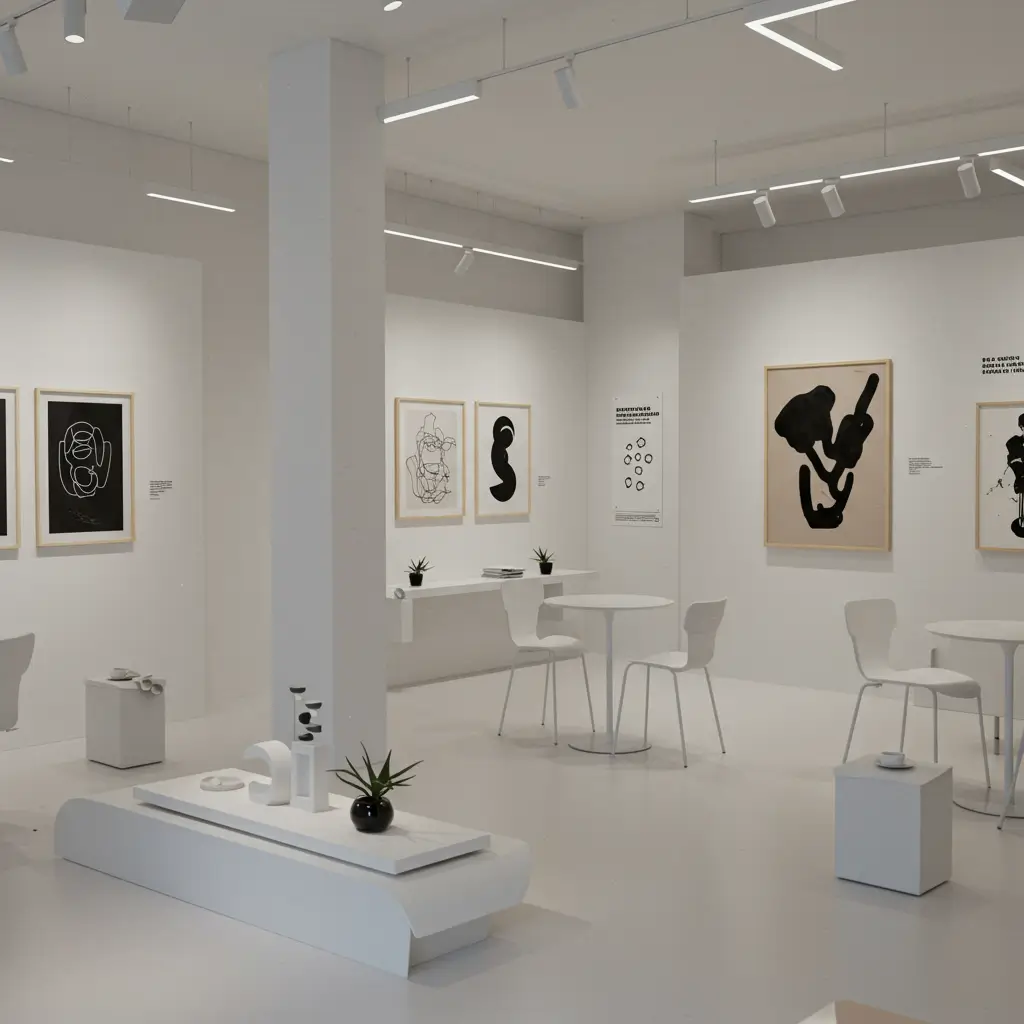
Cozy nook coffee shops embrace the idea that sometimes people want to disappear into comfort. These spaces create multiple mini-environments where customers can find their perfect spot.
Lighting makes everything in cozy designs. Layered, warm, dimmable lighting creates atmosphere that changes throughout the day. Morning needs bright productivity light, afternoon calls for softer ambiance, evening demands intimate glow. I installed a lighting system with four different “moods” in one café, and customer stay times increased 40%.
Seating variety defines the nook concept. Window seats, corner banquettes, fireside chairs – each spot offers different experiences. Regular customers develop fierce loyalty to specific nooks. One café has a waiting list for their “writer’s corner” – a perfectly lit nook with built-in desk space.
Creating Cozy Nooks
Comfort-first design elements:
- Multiple seating areas with different vibes
- Soft, warm lighting throughout
- Plush seating with proper support
- Textiles and cushions for comfort
- Book-lined walls or shelving
- Fireplace or faux fireplace focal point
The challenge? Balancing cozy with commercial viability. Too many nooks can reduce seating capacity IMO :/
9. Elegant Monochrome Coffee Spot
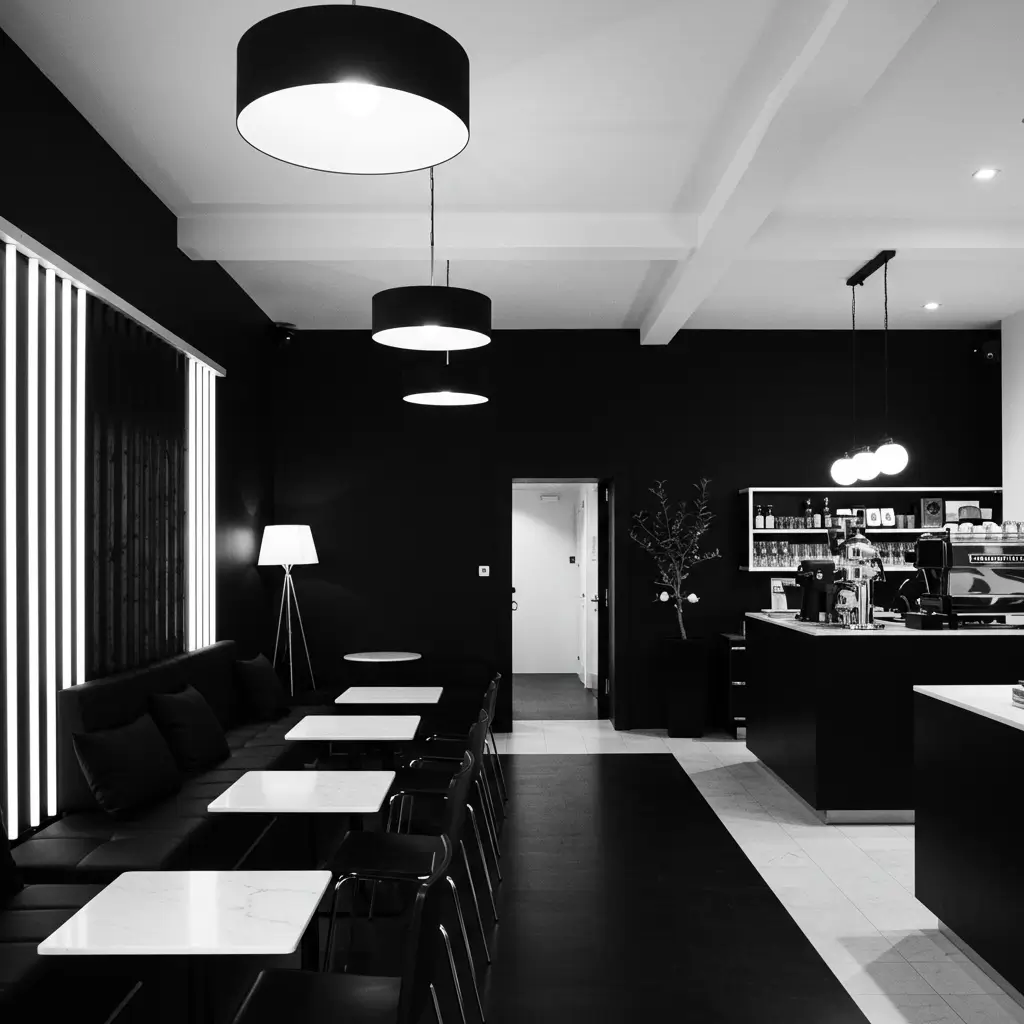
Monochrome coffee shops prove that limitation breeds creativity. Working within one color family forces focus on texture, material, and form in ways that multicolor designs never require.
The execution determines success. Different shades, finishes, and textures within your chosen color create depth. An all-black coffee shop I designed uses matte black walls, glossy black tiles, charcoal wood, and black metal – same color, completely different effects.
White monochrome spaces feel different from black ones. White feels clean and energizing, black feels sophisticated and intimate. Gray splits the difference, creating neutral spaces that let the coffee and customers provide color.
Monochrome Design Strategy
Single-color success factors:
- Varied textures within the color scheme
- Multiple shades of your chosen color
- Strategic lighting to create depth
- One accent color for wayfinding or branding
- Material variety preventing flatness
- Clear focal points despite color limitation
The Instagram factor can’t be ignored. Monochrome spaces photograph beautifully, driving social media marketing naturally.
Also Read: 12 Modern Clinic Interior Design Ideas for Sleek Layouts
10. Colorful Eclectic Coffee Studio
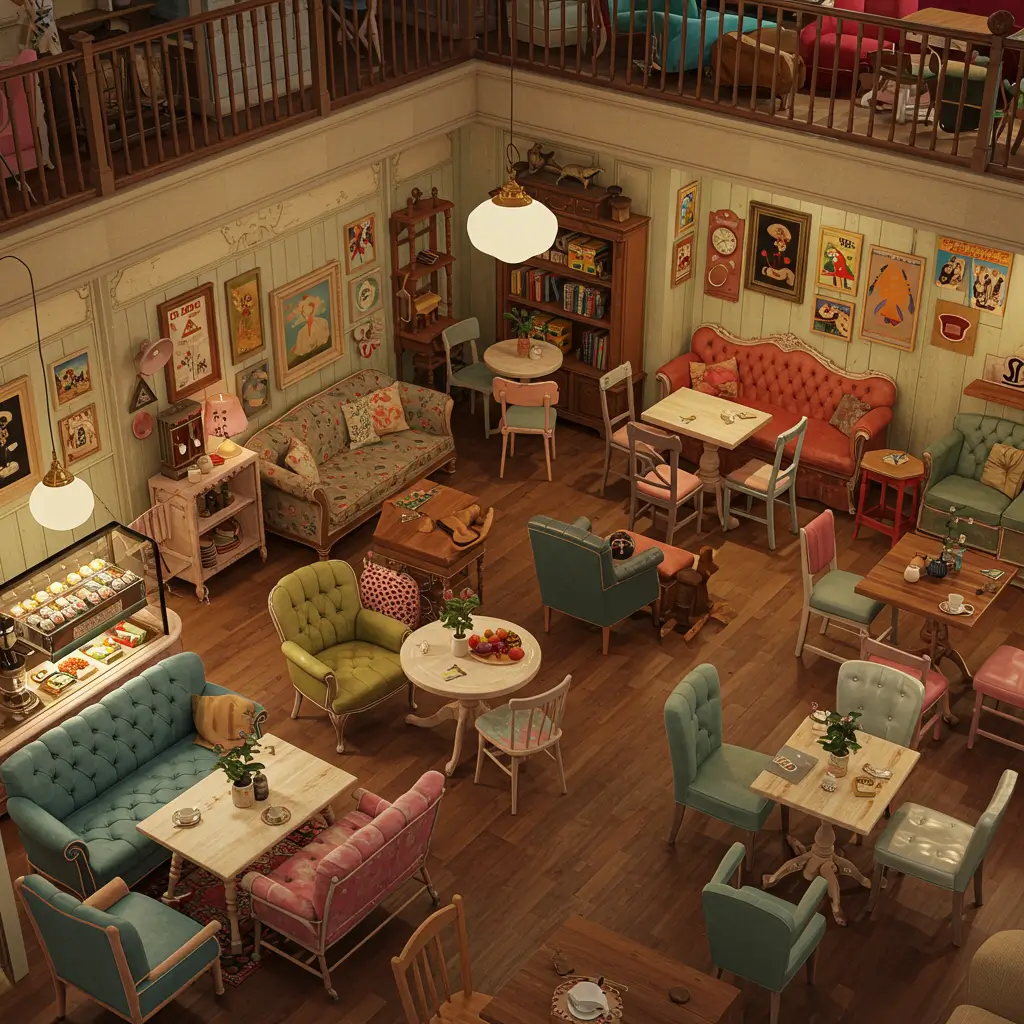
Colorful eclectic coffee studios celebrate the joy and energy that coffee brings. These spaces reject the notion that coffee shops must be neutral or serious.
Color psychology drives the design. Energizing colors like orange and yellow boost mood and creativity. One eclectic studio uses a different bold color in each zone – blue for quiet work, yellow for social areas, green for reading nooks. Customers naturally gravitate to zones matching their mood.
The key to colorful success? Confident execution and quality materials. Bright colors in cheap materials look childish. The same colors in quality finishes look designer. That neon pink velvet chair? Stunning. Neon pink plastic? Not so much.
Eclectic Color Guidelines
Making bold colors work:
- Color zoning for different areas
- Neutral anchors preventing overwhelm
- Quality materials elevating bright colors
- Pattern mixing with color coordination
- Natural light showing true colors
- White space giving eyes rest
The energy is contagious. Colorful spaces create happier customers who stay longer and spend more.
11. Outdoor Garden Coffee Retreat
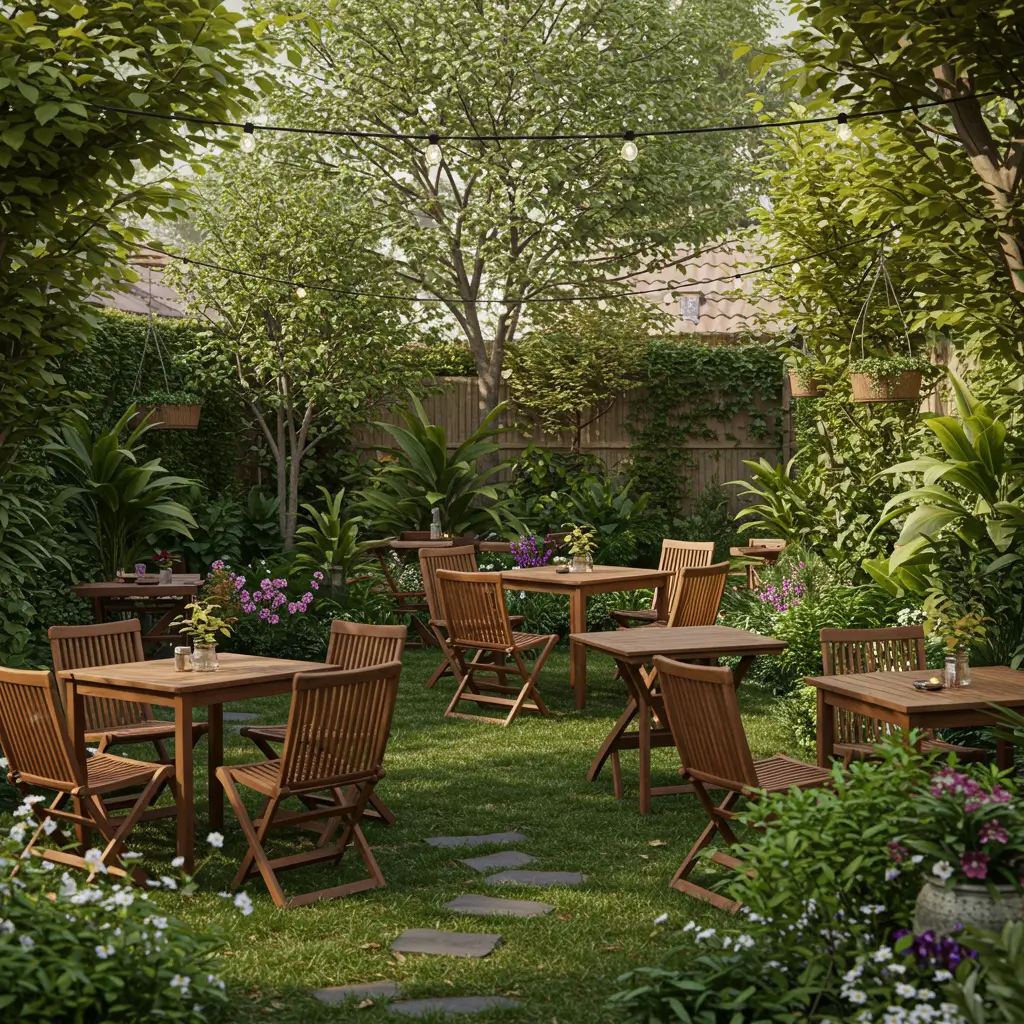
Outdoor garden coffee retreats maximize the universal desire to drink coffee in nature. Even urban locations can create garden oases that transport customers from city stress.
The plant selection matters enormously. Native plants requiring minimal maintenance beat exotic options that die dramatically. A garden café I love uses only local plants, and their water bill dropped 60% while the garden thrived.
Weather management extends usability. Retractable awnings, heating elements, misting systems – these investments pay off through extended seasons. That beautiful garden is worthless if customers can only use it three months per year.
Garden Retreat Essentials
Outdoor coffee paradise features:
- Multiple seating zones for different weather
- Weather protection extending seasons
- Ambient lighting for evenings
- Natural sound buffers from traffic
- Easy maintenance plant choices
- Indoor-outdoor flow for service
The surprise benefit? Garden spaces become community gathering spots for events, increasing revenue beyond daily coffee sales.
12. Industrial Loft Coffee Experience
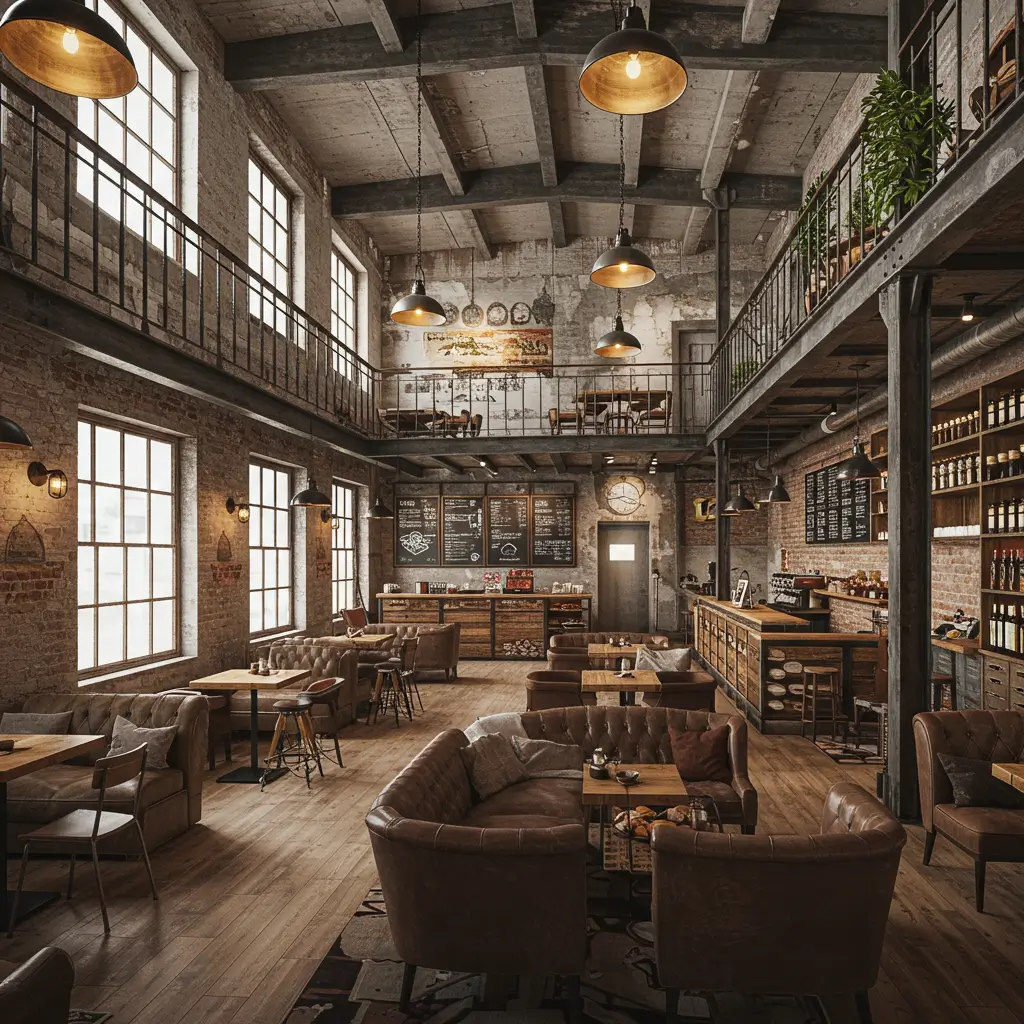
Industrial loft coffee experiences create dramatic spaces that make customers feel cooler just by being there. These aren’t cozy – they’re impressive, making every visit feel like an event.
Height becomes your friend in loft designs. Soaring ceilings, mezzanine levels, dramatic lighting – everything emphasizes vertical space. One loft café has a 30-foot ceiling with suspended box seating areas. Completely impractical, absolutely unforgettable.
The scale requires careful planning. Huge spaces can feel empty or echo-heavy without proper design. Strategic furniture placement, sound absorption, and visual anchors prevent the warehouse feeling while maintaining drama.
Loft Design Strategies
Making big spaces work:
- Zone creation within open space
- Vertical elements using height
- Sound management preventing echo
- Dramatic lighting filling volume
- Mixed seating levels adding interest
- Statement pieces matching scale
The operational challenges are real. Heating, cooling, and maintaining loft spaces costs more. But the impact on customer experience justifies the investment.
Creating Your Coffee Shop’s Identity
After exploring these twelve coffee shop interior design ideas, here’s what really matters: your design should reflect your coffee philosophy and target customer.
A third-wave coffee shop focusing on pour-over perfection needs different design than a community-focused neighborhood café.
Start by understanding your customers’ needs. Are they remote workers needing productivity spaces? Students seeking study spots? Neighbors wanting community connection? Your design should solve their problems while serving great coffee.
Remember that coffee shop design directly impacts profitability. The right interior increases stay time, purchase frequency, and customer loyalty.
That expensive design investment pays for itself through increased sales and word-of-mouth marketing.
The perfect coffee shop interior makes customers choose you over the seventeen other options within walking distance. Whether you go full industrial or cozy nook, commit completely to your vision. Because half-hearted design is like weak coffee – nobody comes back for seconds.
Now stop reading about coffee shop design and go create that space where people accidentally spend their entire afternoon. Your future regulars are waiting 🙂