10 Beautiful Dark Powder Room Ideas for a Trendy Bold Style
- Bathroom Design
 Ben
Ben- 0
- 37 minutes read
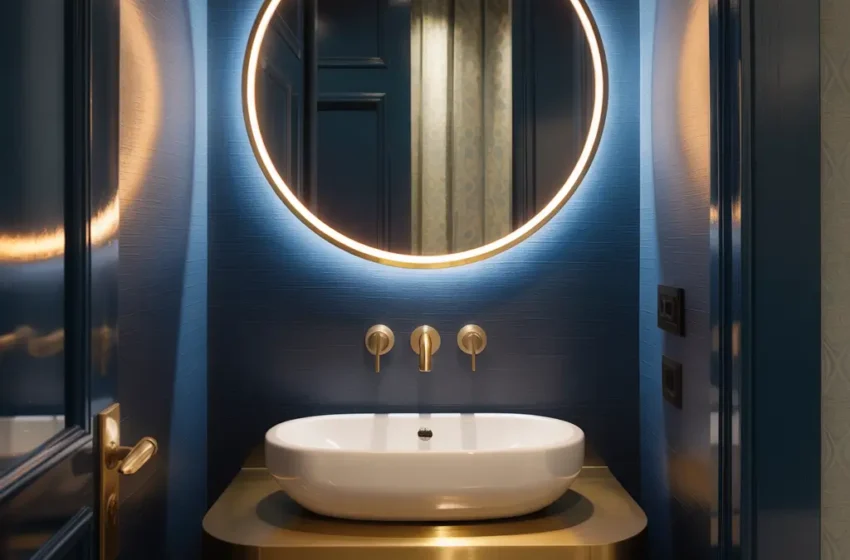
Remember when everyone said dark bathrooms were a terrible idea? Yeah, those people have never experienced the pure drama of stepping into a moody powder room that feels like a luxury hotel.
I made the leap to the dark side three years ago with my own powder room renovation, and let me tell you – going dark was the best design decision I ever made.
Here’s the thing about powder rooms: they’re tiny, windowless boxes that guests use for about two minutes. So why not make those two minutes memorable?
Dark powder rooms create instant atmosphere, hide every imperfection, and honestly, they make everyone look better in the mirror (thank you, moody lighting).
I’ve spent way too much time obsessing over dark powder room designs, testing different combinations in my own space and helping friends transform theirs.
What I’ve learned? Dark doesn’t mean depressing – it means sophisticated, dramatic, and surprisingly versatile. Ready to embrace your powder room’s dark side? Let’s talk about the ideas that actually work.
Midnight Marble Elegance
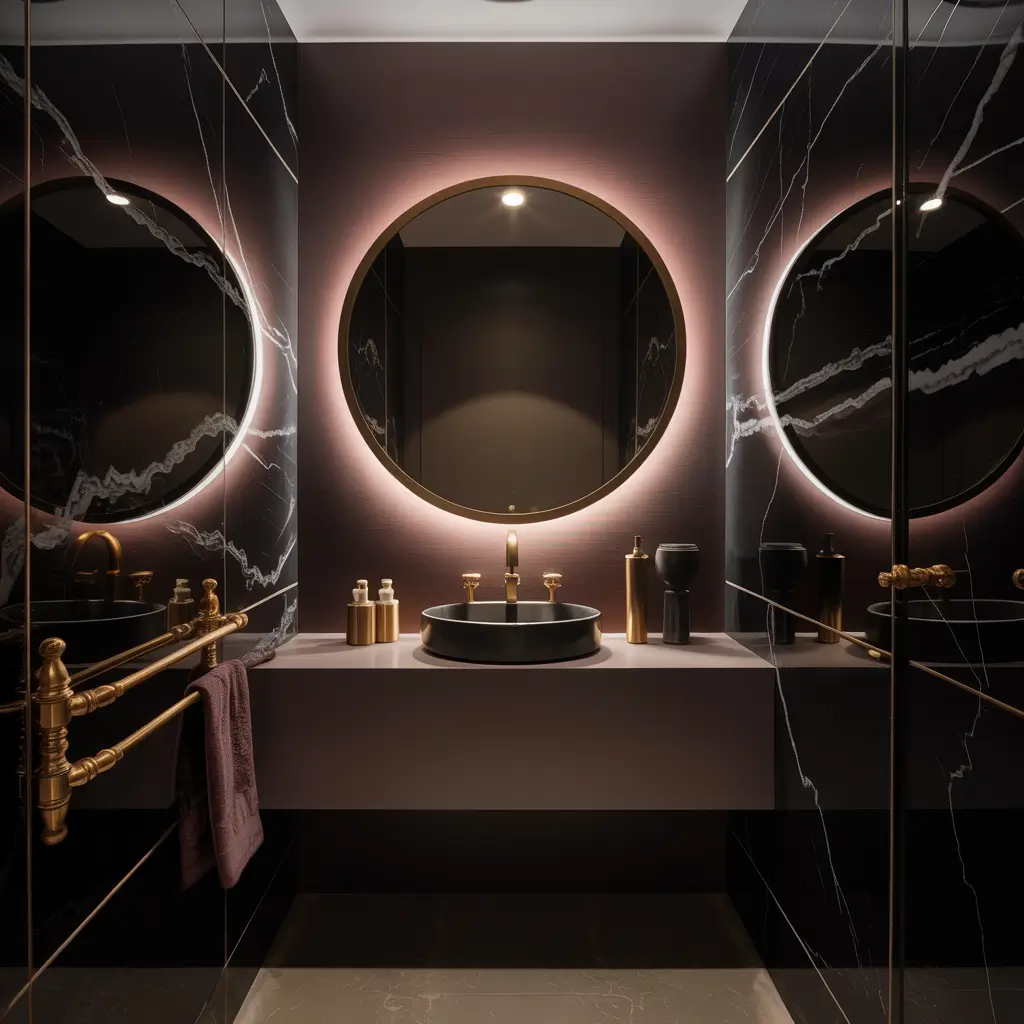
Nothing screams luxury quite like dark marble covering every surface of your powder room. I installed midnight black marble with white veining last year, and my powder room went from basic to boutique hotel instantly. The natural patterns in dark marble create movement and interest without needing any additional decoration.
The trick with marble is choosing the right finish. Polished marble reflects light and keeps the space from feeling cave-like, while honed marble gives you that sophisticated matte look. I went polished for the walls and honed for the floor – best of both worlds, and nobody slips on wet tiles anymore.
Making Marble Work in Small Spaces
Here’s what I’ve learned about dark marble in powder rooms:
- Book-match your marble slabs for a symmetrical, high-end look
- Use large format tiles to minimize grout lines
- Extend marble up the walls for maximum drama
- Mix marble types (Nero Marquina with Calacatta, for example)
- Consider marble-look porcelain if real marble breaks the budget
The maintenance question always comes up. Real talk? Dark marble hides water spots and fingerprints way better than light marble. I seal mine twice a year, and that’s literally it. Way less work than the white Carrara in my kitchen that shows every coffee drip.
Lighting Your Marble Masterpiece
Strategic lighting transforms dark marble from gloomy to glamorous. I installed LED strips behind my mirror and under the floating vanity, creating this incredible glow that makes the marble veining pop. Add a statement pendant or chandelier, and you’ve got instant sophistication.
Don’t forget about the ceiling! I painted mine in high-gloss black to match the marble, and it reflects light beautifully while making the room feel taller. Who knew a tiny powder room could feel so expansive?
Charcoal Paneling Chic
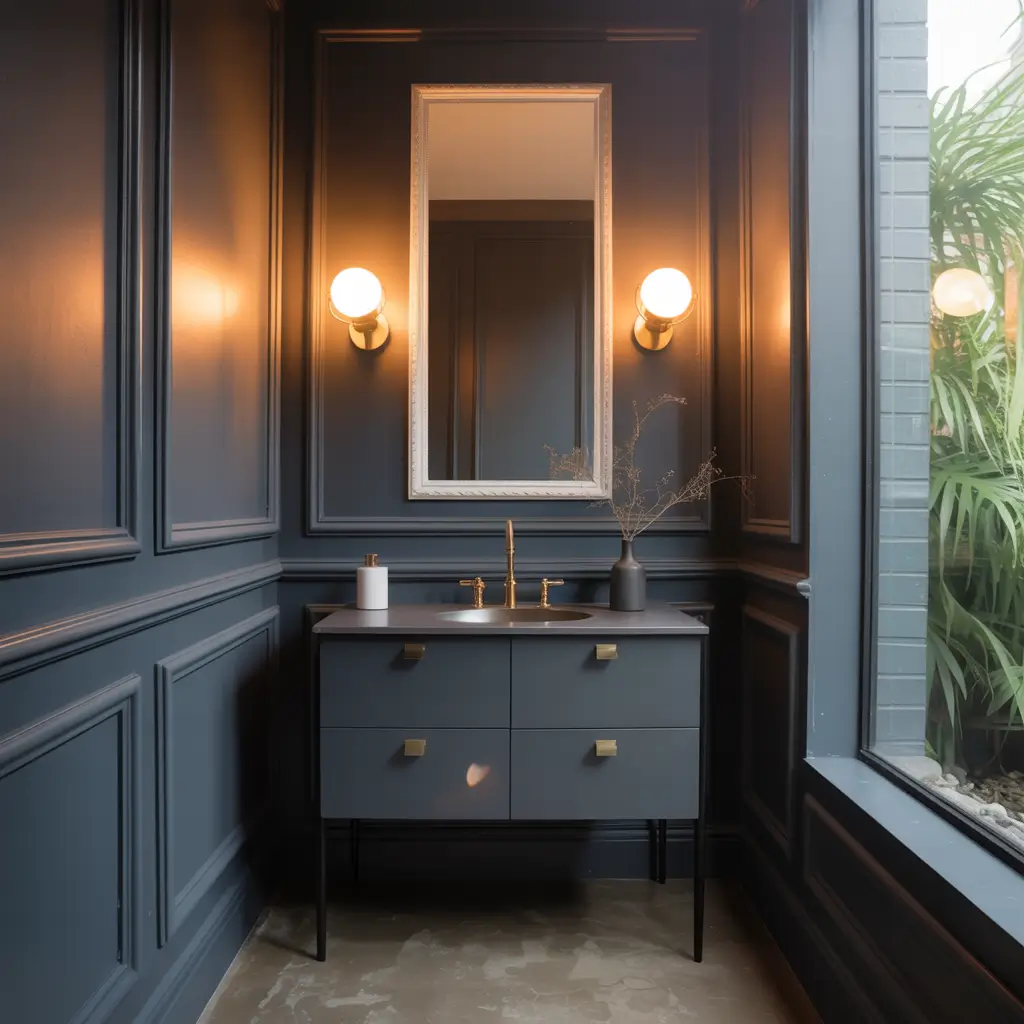
Wall paneling in charcoal tones adds texture and architectural interest that flat paint can’t touch. I helped my sister install charcoal beadboard in her powder room, and the transformation was insane – it went from builder-grade boring to magazine-worthy in a weekend.
The beauty of dark paneling is how it plays with shadows. Every groove and ridge creates depth, making your tiny powder room feel layered and intentional. Plus, paneling is way more forgiving than perfectly smooth walls. Got imperfections? Paneling laughs at your wall flaws.
Paneling Styles That Kill It
Not all paneling is created equal. Here are the styles that work best in dark powder rooms:
- Vertical shiplap elongates low ceilings
- Board and batten adds traditional elegance
- Geometric paneling creates modern art vibes
- Wainscoting keeps things classic but interesting
- Full-wall beadboard brings cottage charm with an edge
I personally love mixing paneling heights. Try charcoal wainscoting on the bottom with a slightly lighter gray paint above. It grounds the space while preventing that closed-in feeling.
The Installation Reality Check
Installing paneling yourself? Totally doable. I did mine over a three-day weekend with basic tools and YouTube University. Pre-painted MDF panels save tons of time – just cut, nail, caulk, and touch up. Skip the real wood unless you’re going for a specific grain pattern; nobody can tell the difference once it’s painted charcoal.
The game-changer was using a laser level. Seriously, spend the $30. Crooked paneling in a small space is like a crooked picture frame – once you see it, you can’t unsee it :/
Noir Floral Wallpaper
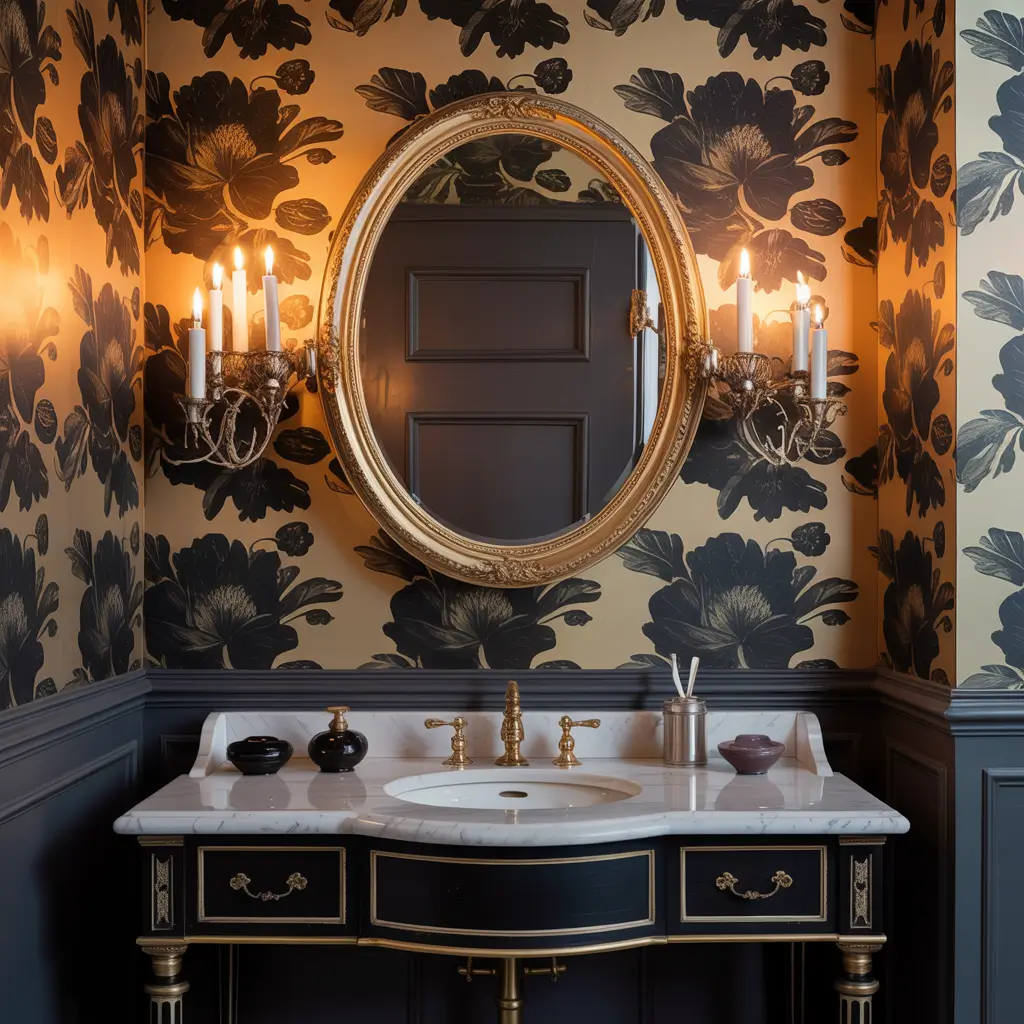
Dark floral wallpaper strikes the perfect balance between dramatic and feminine, and I’m absolutely here for it. My best friend installed a black background wallpaper with oversized peonies in her powder room, and every single person who uses it takes a selfie. Every. Single. One.
The key is choosing a pattern scale that works with your space. Tiny powder room? Go big and bold with the pattern. Larger powder room? You can get away with smaller, more intricate designs. I learned this after installing a tiny print in my first apartment – it just looked muddy from normal viewing distance.
Pattern Selection That Works
Consider these dark floral options:
- Oversized blooms on black backgrounds for maximum drama
- Vintage botanical prints in deep charcoal
- Abstract florals for modern spaces
- Metallic accented florals for subtle glamour
- Tone-on-tone florals for texture without chaos
The commitment-phobic among us (guilty!) should know that removable wallpaper technology has gotten seriously good. I tested three different patterns before settling on my current dark Dutch masters-inspired floral, and removal was actually easier than installation.
Balancing Bold Patterns
When you go bold with wallpaper, everything else needs to calm down. I keep my fixtures simple – matte black faucets, a plain white vessel sink, minimal accessories. Let the wallpaper be the star; everything else is supporting cast.
One trick I love? Wallpaper the ceiling too. Yeah, you heard that right. It creates this immersive jewel box effect that makes people stop and stare. Just make sure your pattern isn’t directional, or you’ll drive yourself crazy trying to match it up.
Also Read: 10 Stylish Small Powder Room Wallpaper Ideas to Try Now
Deep Emerald Luxe
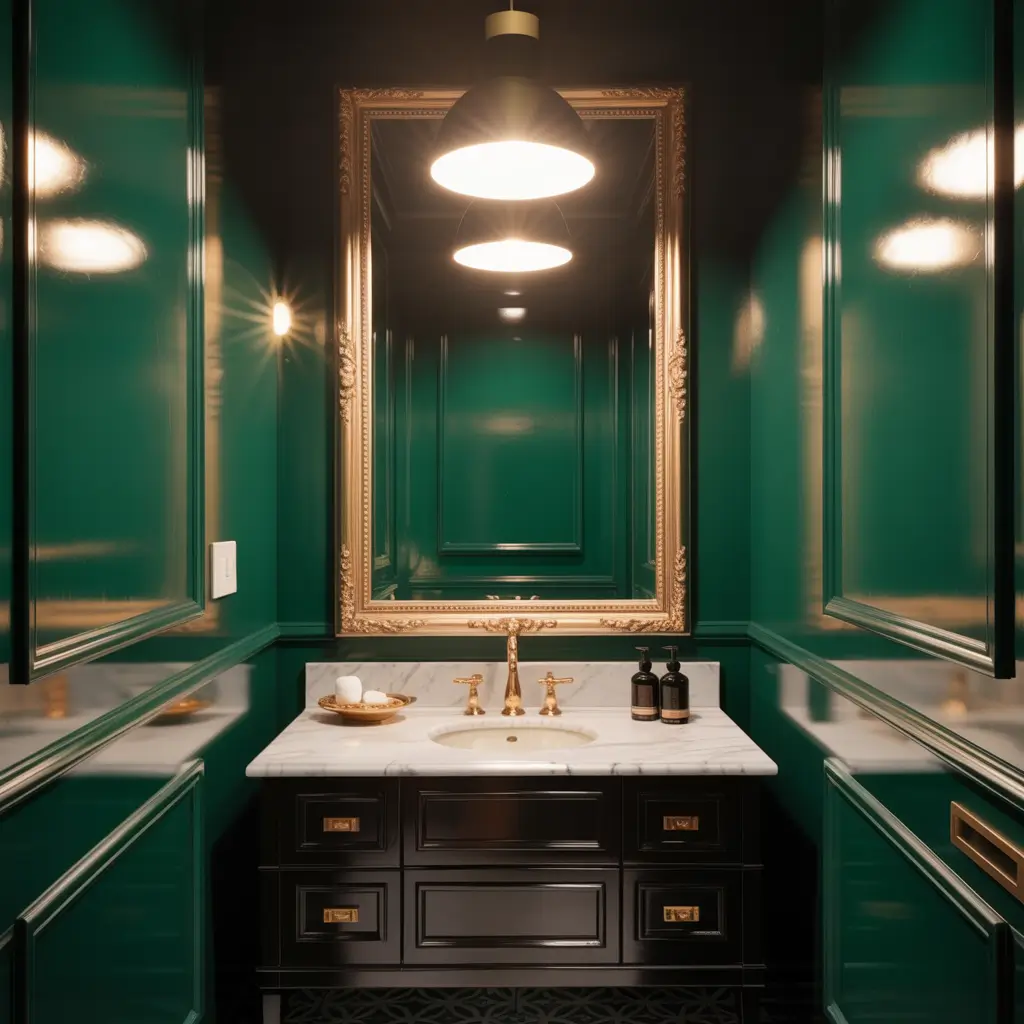
Who says dark powder rooms have to be black or gray? Deep emerald green creates richness and sophistication while still keeping things moody. I painted my powder room Benjamin Moore’s Hunter Green two years ago, and it still makes me happy every time I walk in.
Emerald works because it’s a color found in nature, so our brains don’t register it as oppressive. It’s dark enough to create drama but has enough color to keep things interesting. Plus, it pairs beautifully with both gold and black fixtures, giving you flexibility in your hardware choices.
Creating Your Emerald Oasis
Here’s how to nail the deep emerald look:
- Use high-gloss or semi-gloss paint for light reflection
- Layer different shades of green through accessories
- Add natural wood elements for warmth
- Incorporate plants (real or faux) to enhance the nature vibe
- Mix in brass or gold fixtures for instant luxury
The biggest mistake people make? Not testing the color in their actual space. That gorgeous emerald on the paint chip might look like swamp water under your LED bulbs. I always paint a large poster board and move it around the room at different times of day.
Emerald Accent Strategies
Strategic emerald placement maximizes impact. You don’t need to paint every surface green. Try emerald on just the vanity wall, or create an emerald ceiling moment. I’ve seen stunning powder rooms with emerald only on the lower half of the walls, paired with black upper walls.
BTW, emerald tile is having a major moment. Subway tiles, hexagons, or even emerald marble – the options are endless and absolutely stunning when done right.
Black Slate Minimalist
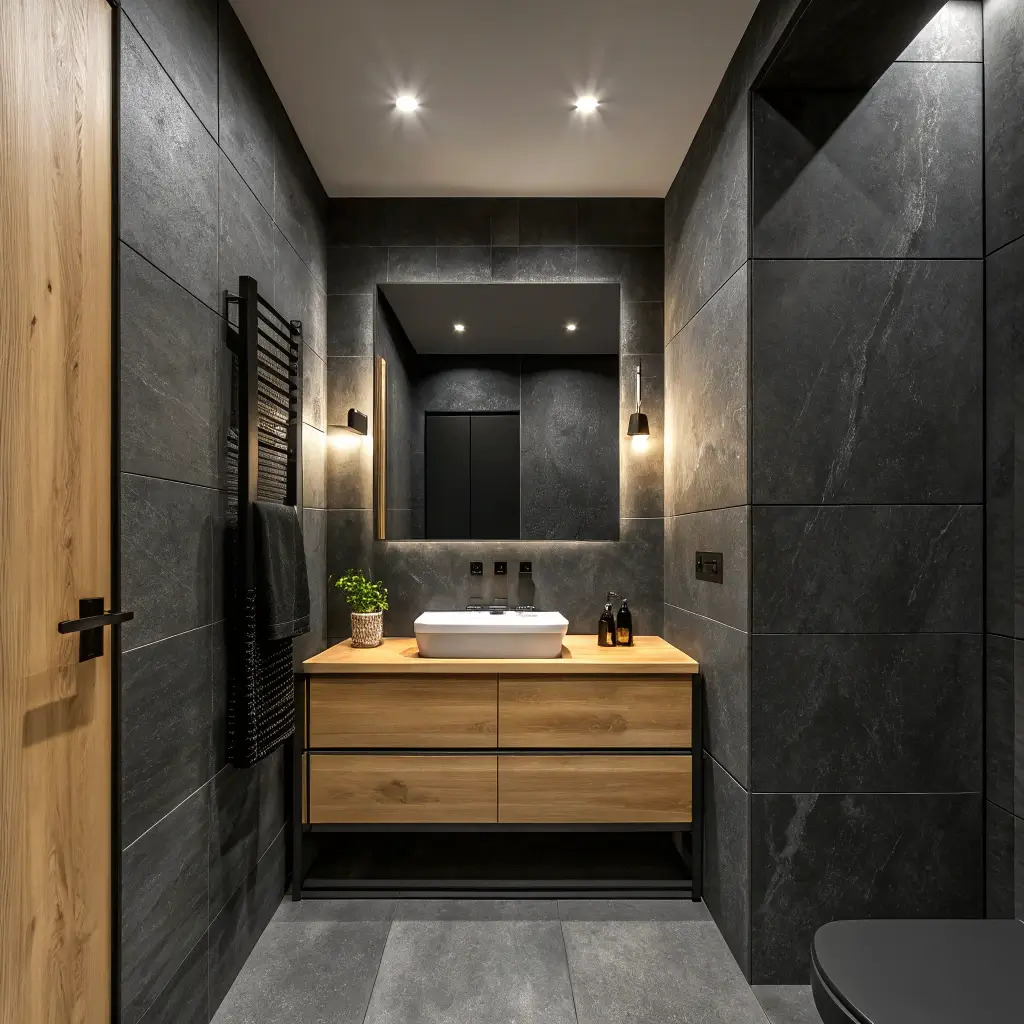
Sometimes less really is more, especially in tiny powder rooms. Black slate tile creates a minimalist canvas that feels both natural and sophisticated. I used gauged slate on my floor and one accent wall, and the texture is absolutely hypnotic.
The thing about slate is its natural variation. Even “black” slate has subtle blues, grays, and sometimes rust tones that add depth without busy-ness. It’s minimalist without being boring, which is exactly what you want in a small space.
Working with Natural Stone
Slate requires some special consideration:
- Seal it properly – unsealed slate will show every water mark
- Choose gauged slate for easier installation
- Mix slate sizes for visual interest
- Consider slate-look porcelain for less maintenance
- Use contrasting grout for a graphic look
I made the mistake of using black grout with my black slate initially. Big error. The slight contrast of charcoal grout makes the tiles pop and defines the space beautifully.
Minimalist Doesn’t Mean Boring
The key to minimalist design is quality over quantity. Every element needs to earn its place. I chose a wall-mounted faucet to keep the vanity surface clear, hidden storage to eliminate clutter, and one piece of statement art. That’s it.
The result? A powder room that feels like a meditation space rather than a utility room. My contractor friends say it’s the most expensive-looking room in my house, and the whole renovation cost less than $2,000.
Moody Navy Contrast
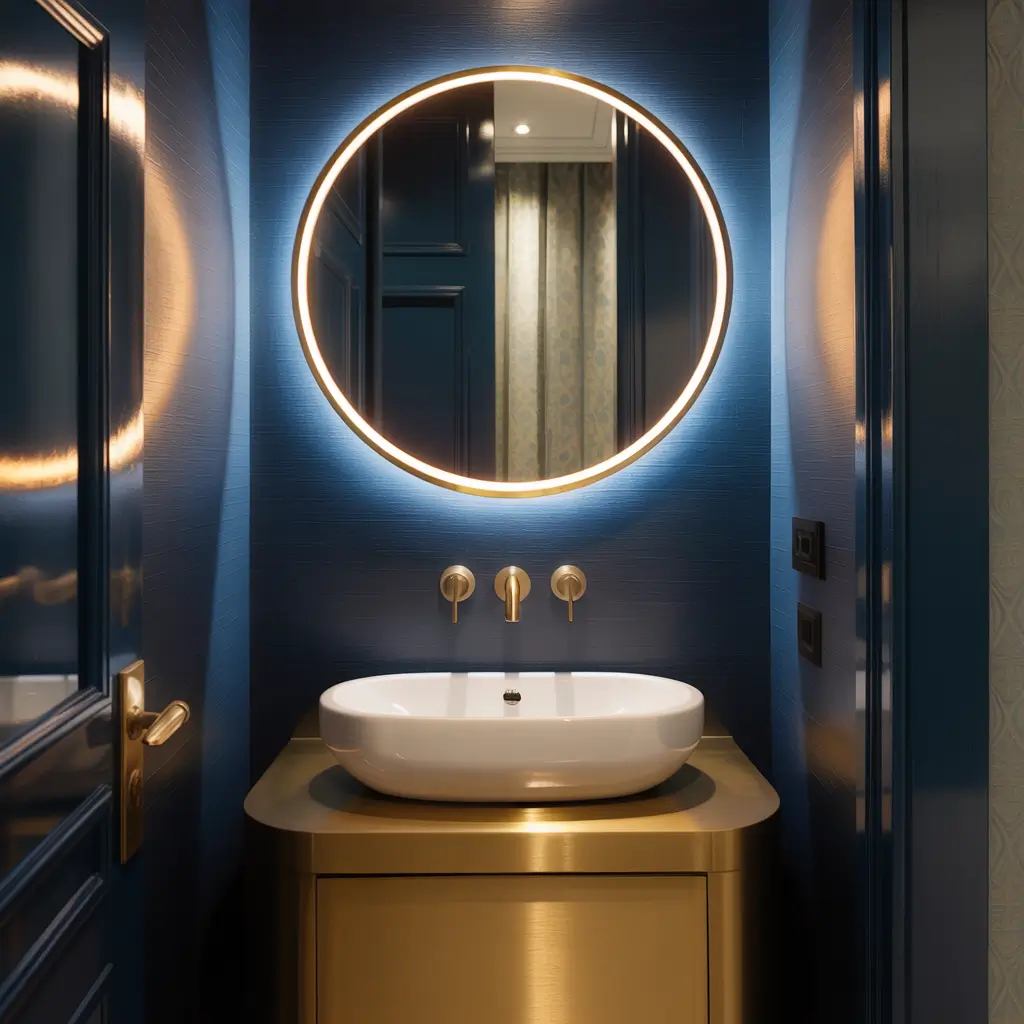
Navy blue hits that sweet spot between bold and classic that makes it perfect for powder rooms. I’ve installed navy in three different powder rooms now, and each one feels completely different depending on what you pair it with.
Navy plays well with literally everything. White trim? Classic nautical. Brass fixtures? Instant glamour. Black accents? Modern and moody. I currently have navy walls with a white marble vanity top and unlacquered brass fixtures, and it feels like a tiny luxury yacht bathroom (in the best way).
Navy Color Psychology
Here’s why navy works so well:
- It’s a confident color without being aggressive
- Natural light makes it shift from midnight to sapphire
- It’s unexpected but not shocking
- Pairs with warm and cool tones equally well
- Ages gracefully (unlike trendy colors)
The biggest decision is which navy to choose. Benjamin Moore’s Hale Navy is my go-to, but Farrow & Ball’s Hague Blue is gorgeous if you want something with more gray undertones. Test, test, test before committing!
Creating Contrast Points
Contrast is what makes navy sing in a powder room. I love pairing navy walls with:
- Crisp white shiplap or wainscoting
- Natural wood vanities
- Marble with heavy veining
- Metallic wallpaper on the ceiling
- Black and white geometric floor tiles
Don’t forget about your textiles. A navy powder room with white Turkish towels and a small Persian rug is chef’s kiss perfection.
Also Read: 12 Stylish Black Powder Room Ideas and Luxe Decor Inspiration
Bronze Accented Darkness
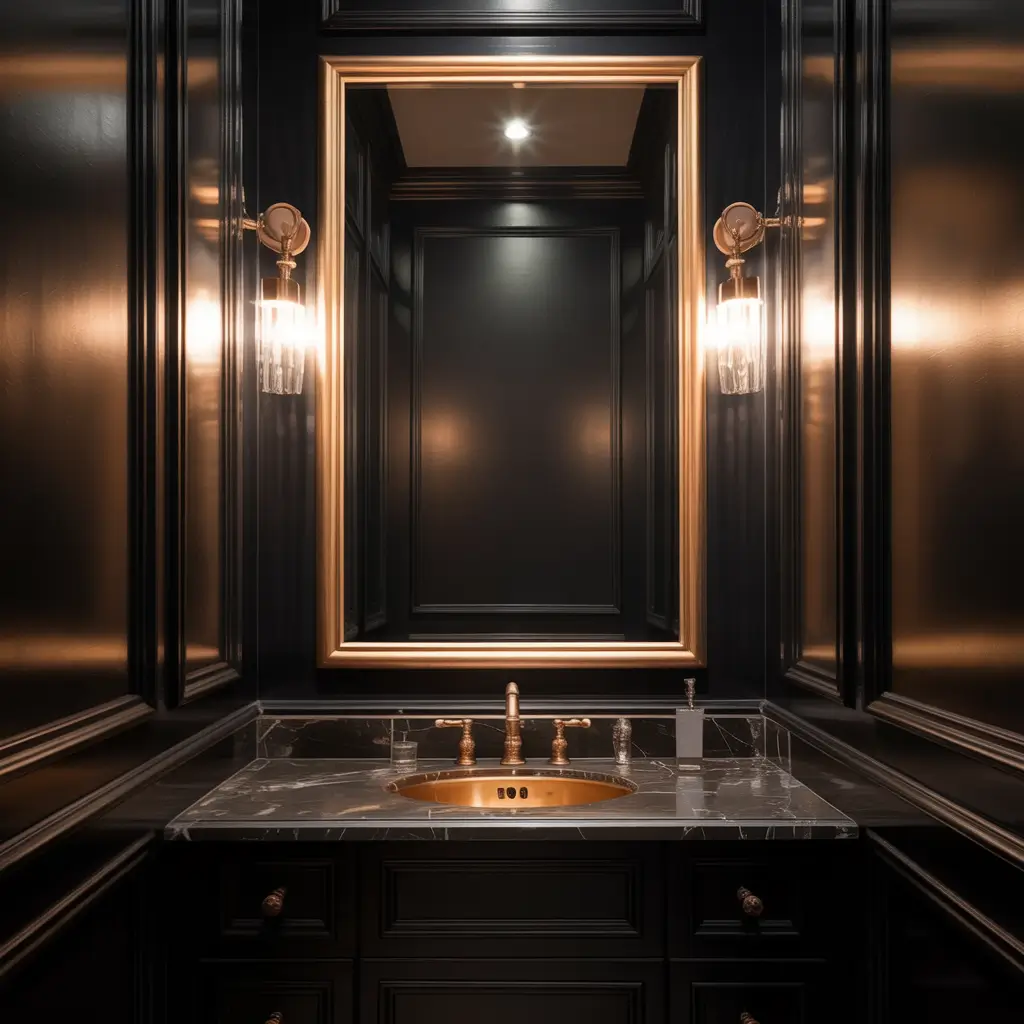
Bronze fixtures and accents against dark walls create warmth and sophistication that cold silver tones can’t match. I swapped out all my chrome fixtures for oil-rubbed bronze last year, and my charcoal powder room instantly felt twice as expensive.
The warmth of bronze prevents dark rooms from feeling cold or sterile. It adds that layer of richness that makes people want to touch everything. Plus, bronze fixtures hide water spots and fingerprints like nobody’s business – practical luxury at its finest.
Bronze Selection Guide
Not all bronze is created equal:
- Oil-rubbed bronze for traditional warmth
- Brushed bronze for modern sophistication
- Antique bronze for vintage charm
- Champagne bronze for subtle glamour
- Dark bronze for maximum drama
I mix bronze finishes intentionally. My faucet is oil-rubbed, the mirror frame is brushed, and the light fixture is antique. The slight variation adds depth while maintaining cohesion.
Layering Bronze Elements
Strategic bronze placement creates visual flow. Here’s my formula:
- Bronze faucet and shower fixtures (obviously)
- Bronze mirror frame or decorative mirror
- Bronze light fixtures or sconces
- Bronze cabinet hardware
- Bronze accessories (soap dispenser, towel hooks)
The secret is balancing bronze with other finishes. I keep about 70% bronze and 30% other metals (usually black or aged brass). This prevents the space from feeling too matchy-matchy while maintaining that warm, sophisticated vibe.
Textured Graphite Walls
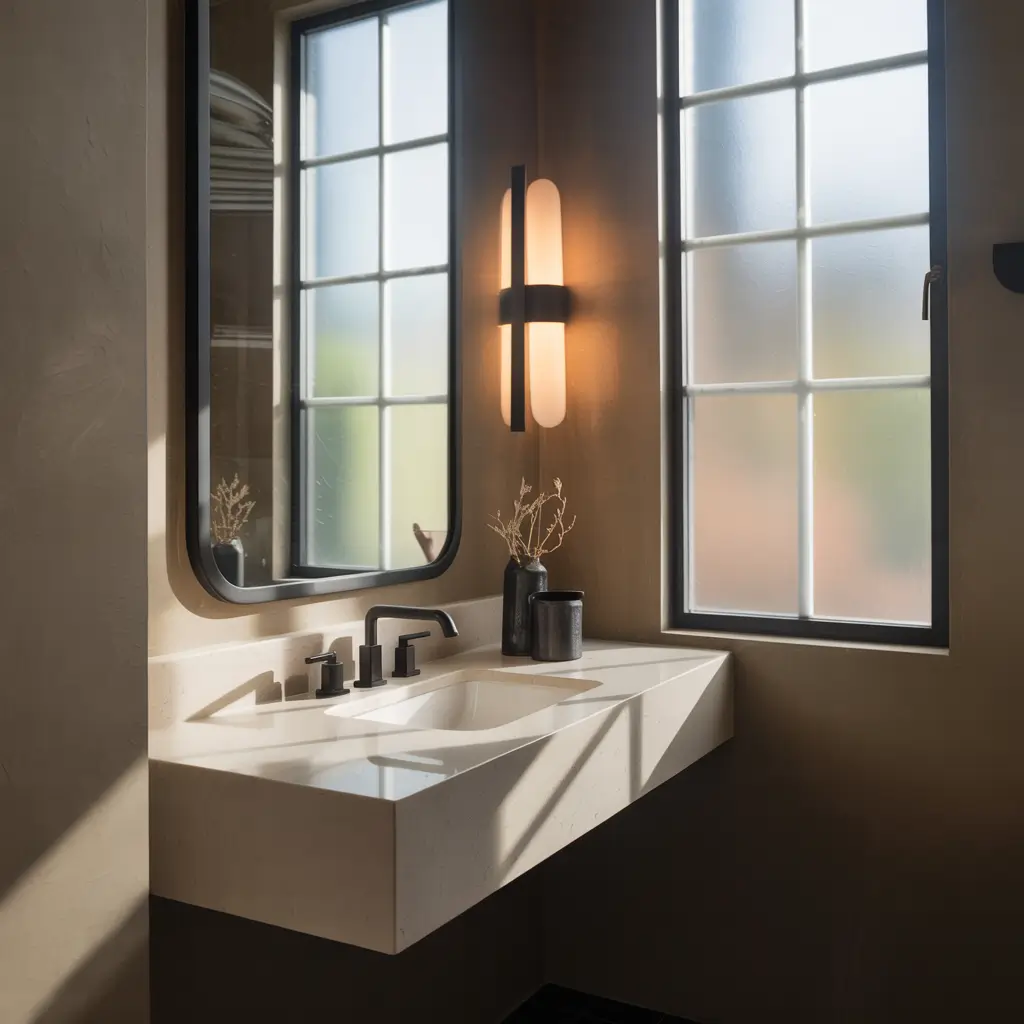
Texture takes dark walls from flat to fascinating, and graphite gray is the perfect canvas. I experimented with textured paint in my powder room, creating a subtle linen finish that catches light differently throughout the day.
You don’t need to be an artist to create textured walls. Specialty rollers, combs, and even sponges can create incredible effects. My favorite technique? A crosshatch pattern using a notched trowel – it looks like expensive wallcovering but costs about $50 in materials.
DIY Texture Techniques
Try these texture methods for graphite walls:
- Venetian plaster for old-world elegance
- Limewash for organic, cloudy texture
- Raised stenciling for geometric patterns
- Grass cloth wallpaper for natural texture
- Textured paint additives for subtle interest
FYI, practice on a piece of drywall first. I definitely didn’t nail the technique on my first try, and spackling over texture is a nightmare. Ask me how I know 🙂
Lighting Textured Surfaces
Grazing light brings texture to life. I installed wall sconces that shine up and down, creating shadows that emphasize every ridge and valley. Without proper lighting, textured walls just look bumpy. With it, they look like art.
Consider backlighting your mirror too. The soft glow reflects off the textured walls, creating depth and ambiance that makes everyone look amazing. My friends joke that my powder room has “Instagram filter” lighting, and honestly, they’re not wrong.
Shadowed Wood Vanity
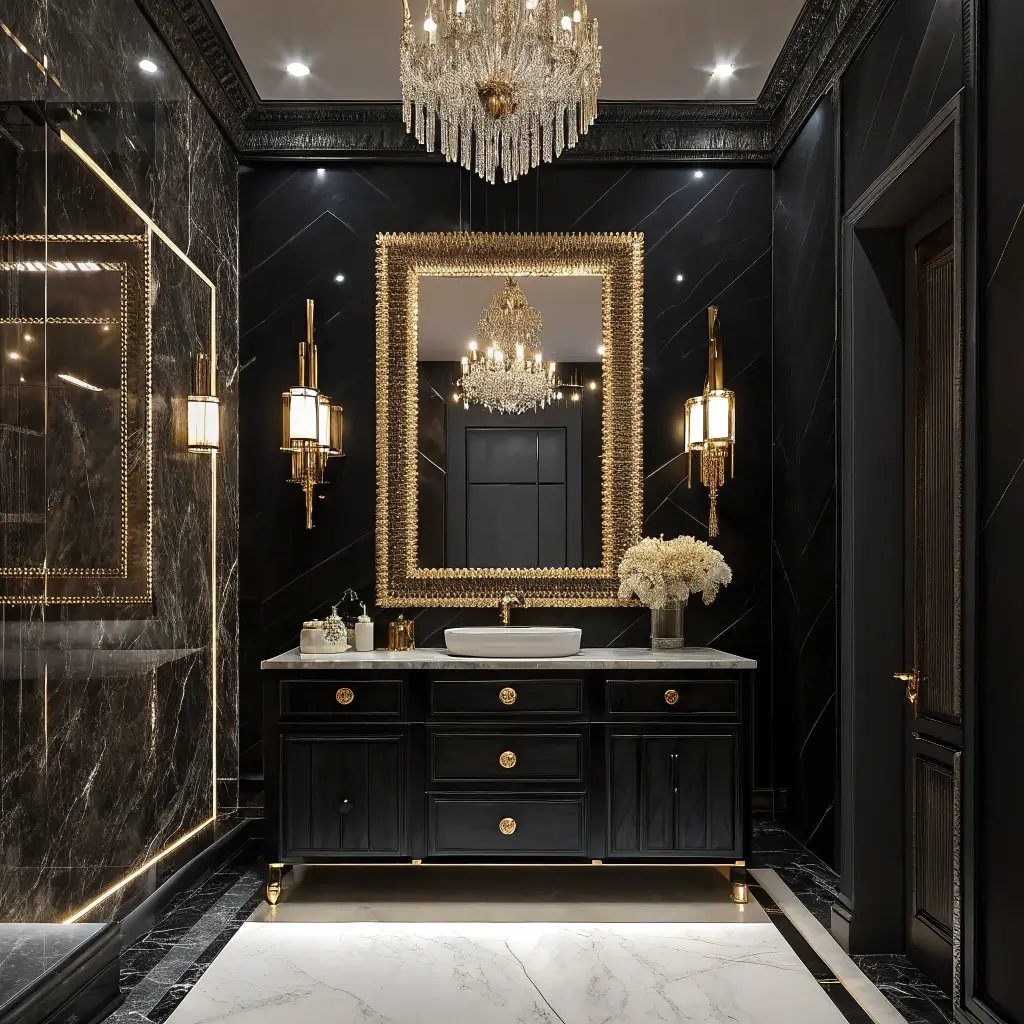
Dark wood vanities bring natural warmth and organic beauty to powder rooms. I scored a vintage ebony-stained dresser at an estate sale, converted it to a vanity, and it’s now the showpiece of my powder room.
The grain pattern in dark wood adds subtle visual interest without overwhelming small spaces. Whether you choose walnut, ebony-stained oak, or even dark bamboo, wood brings life to otherwise cold spaces. Plus, it ages beautifully – those little scratches and dings just add character.
Choosing Your Dark Wood
Consider these dark wood options:
- Walnut for rich, chocolate tones
- Ebony-stained oak for dramatic grain
- Dark mahogany for traditional elegance
- Shou sugi ban cedar for Japanese-inspired char
- Reclaimed dark wood for sustainable character
IMO, mixing wood tones is totally fine in a powder room. My vanity is dark walnut, but I have a lighter wood mirror frame. The contrast actually makes both pieces stand out more.
Vanity Vessel Combinations
The vessel sink you choose changes everything. Dark wood pairs beautifully with:
- White marble vessels for classic contrast
- Concrete basins for industrial edge
- Copper sinks for warm metallic glow
- Black granite for monochromatic drama
- Glass vessels for unexpected lightness
I chose a white marble vessel with gray veining, and it creates this perfect bridge between the dark vanity and my charcoal walls. The key is choosing a vessel that complements, not competes.
Dark Glam Mirror Glow
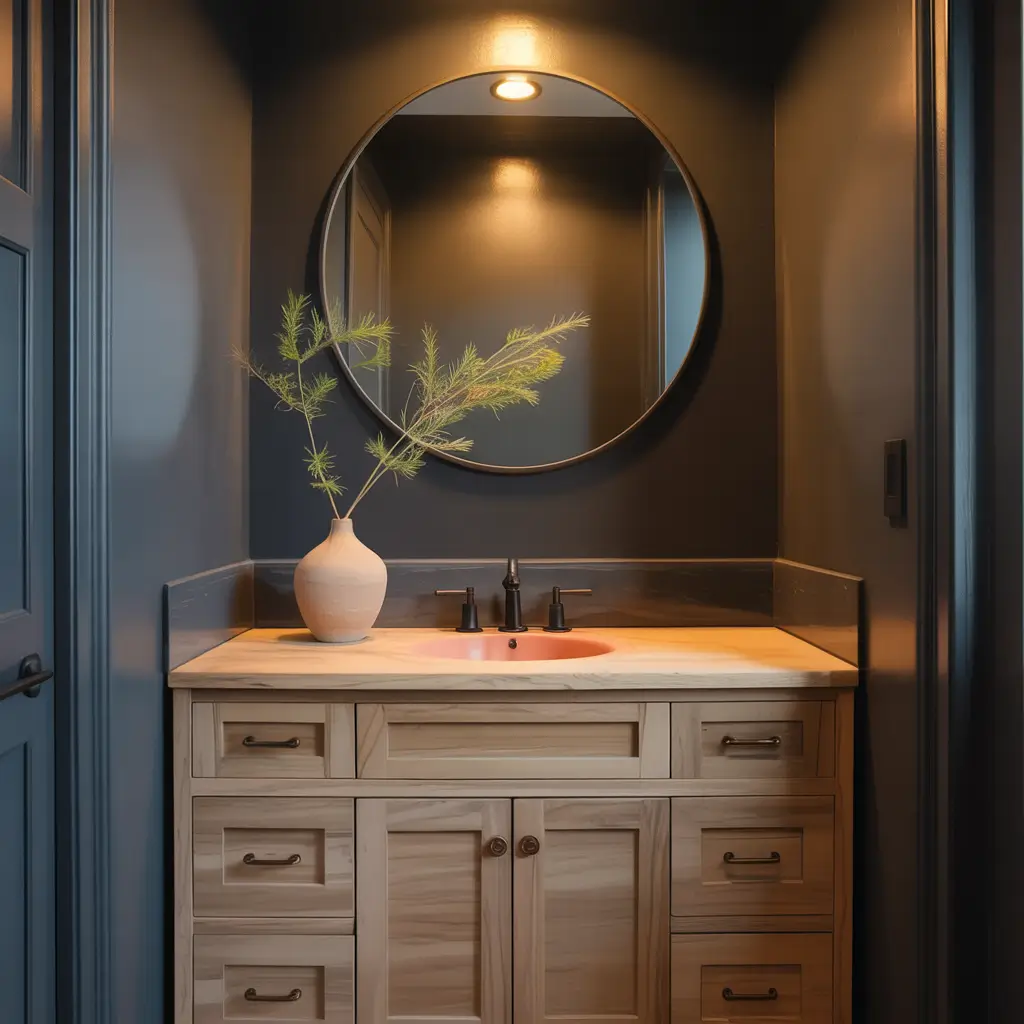
The right mirror transforms a dark powder room from cave to glam sanctuary. I invested in a backlit mirror with a matte black frame, and it’s literally the jewelry of my powder room.
Mirrors in dark spaces need to work harder. They’re not just functional – they’re light multipliers, art pieces, and focal points all in one. That builder-grade mirror isn’t cutting it anymore. You need something with presence.
Mirror Styles That Steal the Show
Go big with these mirror options:
- Backlit LED mirrors for Hollywood glamour
- Sunburst mirrors for dramatic flair
- Vintage gilded mirrors for antique luxury
- Geometric mirrors for modern edge
- Multiple mirrors for gallery effect
Size matters here. In my tiny powder room, I installed a mirror that covers nearly the entire wall above the vanity. It doubles the visual space and reflects light from multiple angles.
Creating the Glow Effect
Backlighting is the secret weapon of dark powder rooms. I installed LED strips behind my mirror, creating a soft halo effect that’s both functional and gorgeous. The indirect light is flattering (goodbye, harsh shadows) and creates ambiance that overhead lighting can’t match.
Don’t stop at the mirror. Under-vanity lighting, toe-kick lights, and even illuminated toilet seats (yes, really) add layers of light that make dark powder rooms feel luxurious rather than dim.
Final Thoughts
Creating a dark powder room isn’t about following rules – it’s about embracing drama and trusting your instincts. Every single one of these ideas works because they lean into the darkness rather than fighting it.
My own powder room journey started with fear (what if it’s too dark?) and ended with obsession (how dark can I go?).
The best part about powder rooms? They’re small enough to take risks without massive commitment or budget. You can create a completely different world in 20 square feet.
Paint it midnight blue, cover it in dramatic wallpaper, or go full-on black marble – this is your chance to do something unexpected.
Start with one bold choice – maybe that dark paint color you’ve been eyeing or that dramatic wallpaper you bookmarked months ago.
Once you see how incredible dark can be, you’ll wonder why you ever played it safe. Your powder room is waiting for its dark and dramatic transformation. Time to give your guests something to talk about at dinner parties.