10 Bright Divided Bedroom Kids Ideas and Playful Designs
- Bedroom Design
 Ben
Ben- 0
- 32 minutes read
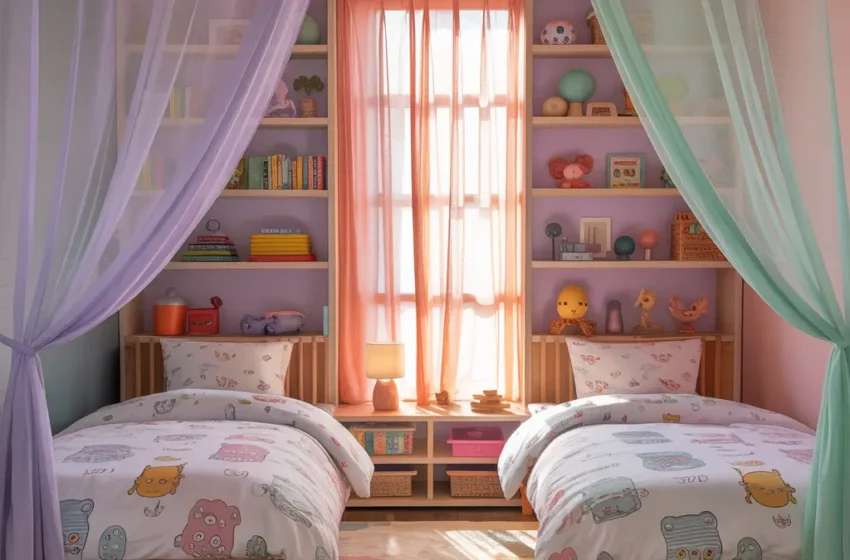
Remember that masking tape line you drew down the middle of your shared childhood bedroom? Yeah, that didn’t work then, and it definitely won’t work for your kids now.
After watching my own children turn their shared bedroom into a daily battlefield over “crossing the invisible line,” I knew there had to be better solutions.
Dividing a kids’ bedroom properly means creating actual boundaries that respect both privacy and peace – without building an actual wall.
The reality is, most of us don’t have enough bedrooms for each kid to have their own space. But that doesn’t mean siblings have to live in constant conflict over territory.
I’ve tested, failed, and finally succeeded with various room division strategies, and let me tell you – the right setup changes everything.
Suddenly, bedtime doesn’t sound like WWE SmackDown, and both kids actually want to hang out in their room.
Loft Bed with Study Nook Underneath
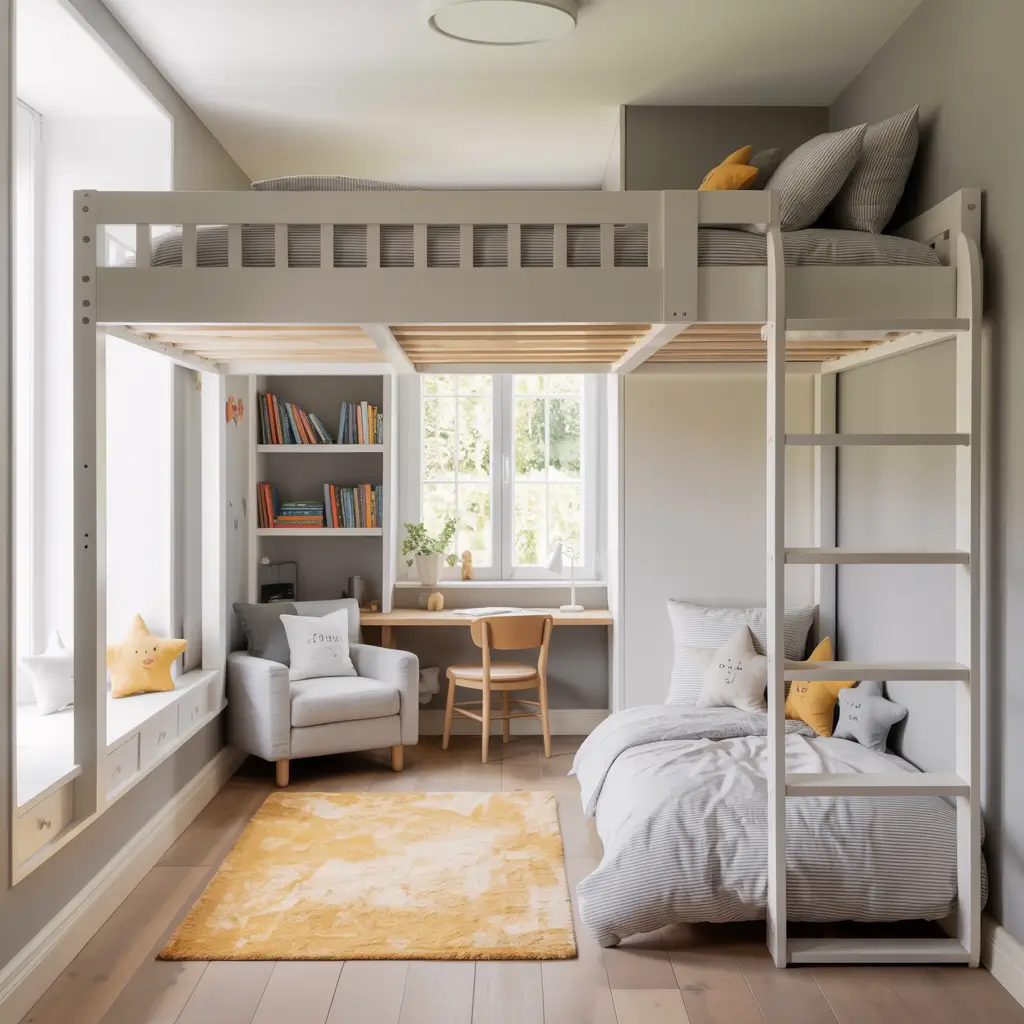
This solution literally changed our lives when my kids started needing homework space. A loft bed with a study nook underneath creates two distinct zones in one footprint – sleeping sanctuary above, productivity central below.
My daughter’s loft bed setup has her bed up top (her “cloud castle,” as she calls it) and a full study area underneath complete with desk, chair, and bookshelves. Her brother has the other side of the room, but this vertical division means they’re not constantly in each other’s space during homework time.
Making the Study Nook Functional
Key elements for success:
- Proper lighting (clip-on LED lamps work great)
- Ergonomic chair that fits underneath when not in use
- Wall-mounted organizers to maximize desk space
- Cork board or whiteboard for personal expression
- Power strip with USB ports for devices
What really sold me on this setup? Each kid gets their own “room within a room.” The child up top has privacy for reading or quiet time, while the study nook below becomes a semi-private workspace. No more kitchen table homework battles with siblings poking each other.
Height Considerations
Before you rush out to buy a loft bed, measure your ceiling height. You need at least 8 feet, but 9 feet is better for comfortable sitting space underneath. My nephew learned this the hard way – his dad can’t sit upright at the desk without hitting his head on the bed above.
Sliding Partition Wall with Shelves
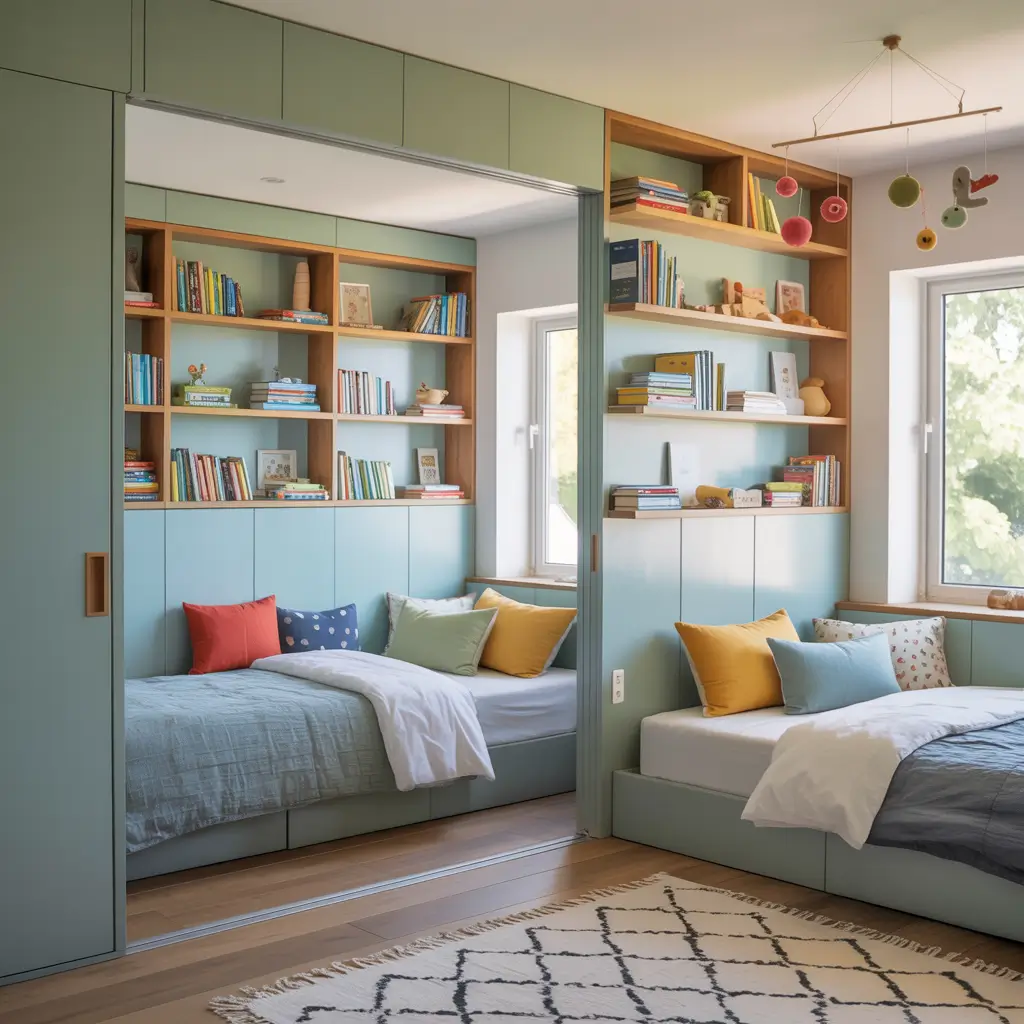
Want to know what’s genius? A sliding partition wall that doubles as storage. We installed one of these in my friend’s kids’ room, and it’s basically furniture magic. The partition slides along a ceiling track, creating instant privacy when needed and opening up for playtime.
The shelving units on both sides mean each kid gets their own display and storage space. One side holds dinosaurs and rocks; the other side showcases art supplies and stuffed animals. When homework time comes, slide it closed. When friends visit for playdates, slide it open for maximum floor space.
Installation Reality Check
Here’s what nobody tells you about sliding partitions:
- Professional installation is worth it (trust me on this)
- Ceiling tracks need proper mounting into joists
- Choose lightweight materials for easier sliding
- Add soft-close mechanisms to prevent slamming
- Include locks for safety with younger kids
My brother tried DIY-ing this with a heavy bookshelf on casters. Spoiler alert: it fell over during a particularly enthusiastic game of hide-and-seek. Invest in proper hardware, folks.
Color-Zoned Room with Rugs and Curtains
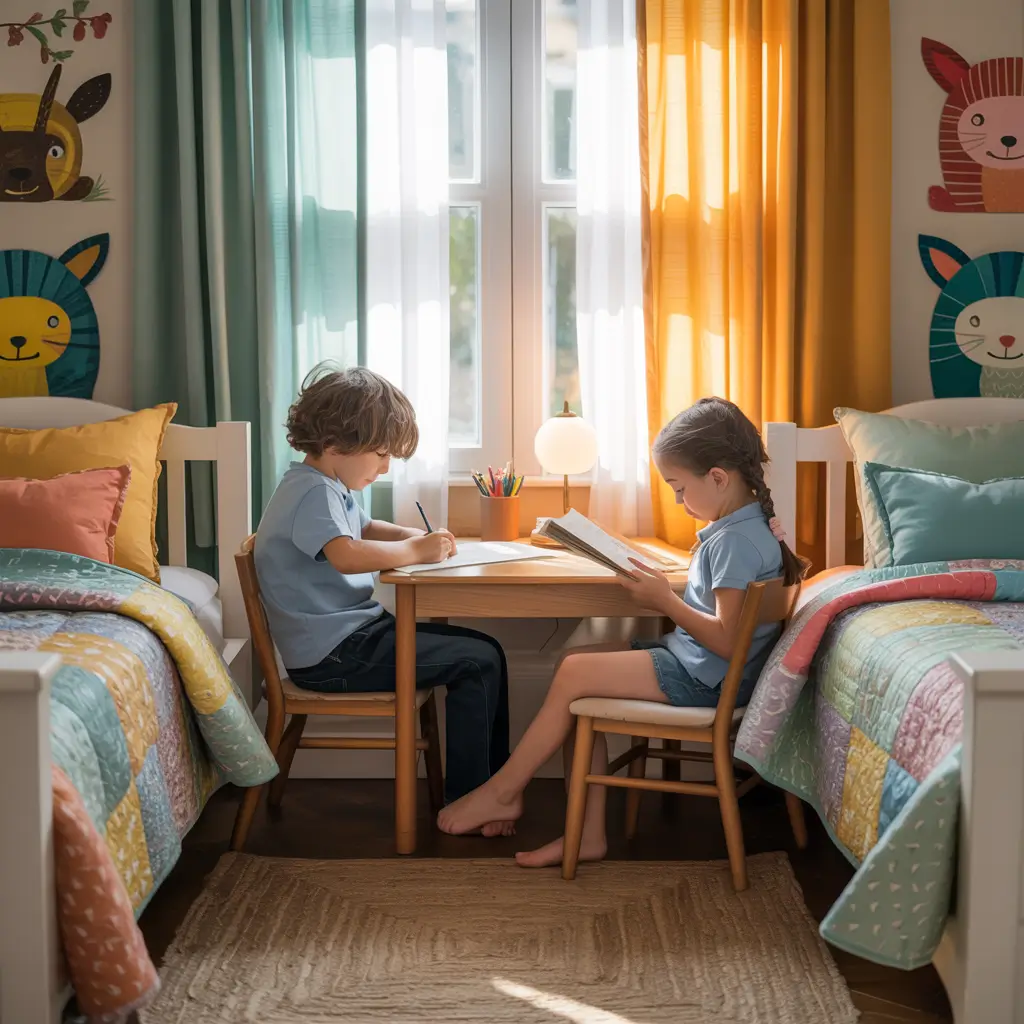
Sometimes the simplest solutions work best. Color-zoning creates visual boundaries without any construction or expensive furniture. Each child claims their color, and suddenly the room division becomes crystal clear.
We implemented this in my kids’ room with zero tools required. Blue rug on one side, green rug on the other. Blue curtains on one window, green on another. Even their bedding follows the color scheme. The visual division is so clear that visitors immediately understand whose space is whose.
Making Color-Zoning Work
Successful color-zoning strategies:
- Let each child choose their color (buy-in is everything)
- Use rugs to define floor territories
- Coordinate bedding without being matchy-matchy
- Paint accent walls if you’re feeling brave
- Add colored storage bins for each zone
The unexpected benefit? Gift-giving became foolproof. Grandparents know exactly which color belongs to which kid. No more duplicate gifts or confusion about ownership.
Avoiding the Rainbow Explosion
Here’s the trick: stick to two or three colors maximum. We use each kid’s chosen color plus white as a neutral. This prevents the room from looking like a paint store exploded while still maintaining clear divisions.
Also Read: 12 Fun Kids Bedroom Boys Ideas and Cool Study Zones
Bunk Beds with Individual Canopies
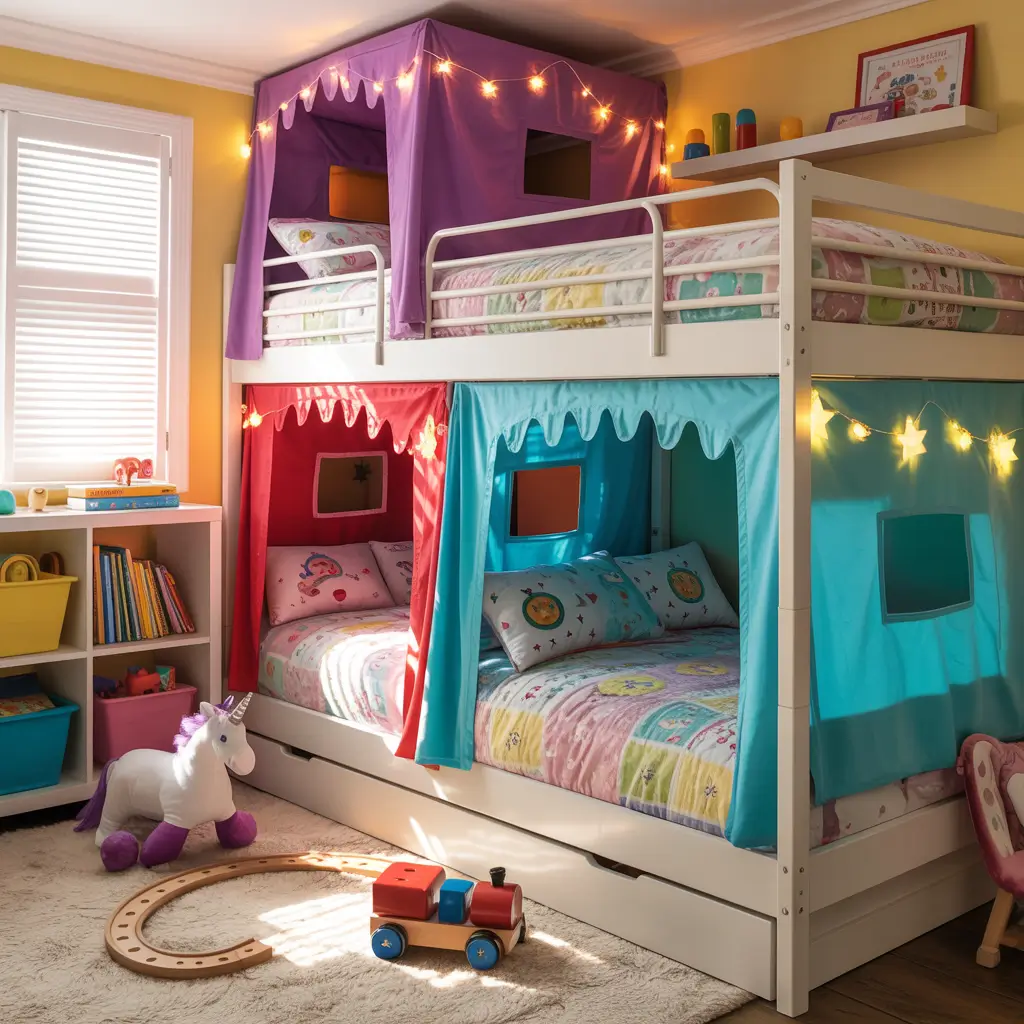
Bunk beds save space, but they don’t offer much privacy. Enter the individual canopy solution. Each bunk gets its own fabric canopy, creating a private cocoon for each child.
My sister’s boys have this setup, and it’s brilliant. The top bunk has a tent-like canopy that makes it feel like a treehouse. The bottom bunk has curtains that close completely, creating a cozy cave. Both kids can retreat to their personal spaces even though they’re literally stacked on top of each other.
Choosing the Right Canopies
Canopy considerations:
- Fire-resistant fabric (safety first, always)
- Easy-to-wash materials (because kids)
- Secure attachment systems that won’t fall
- Breathable fabric for air circulation
- Fun patterns that reflect each kid’s personality
FYI, avoid heavy blackout curtains unless you want sweaty, grumpy kids. Light, breathable cotton or mesh works best for maintaining airflow while providing privacy.
Foldable Room Divider Panels
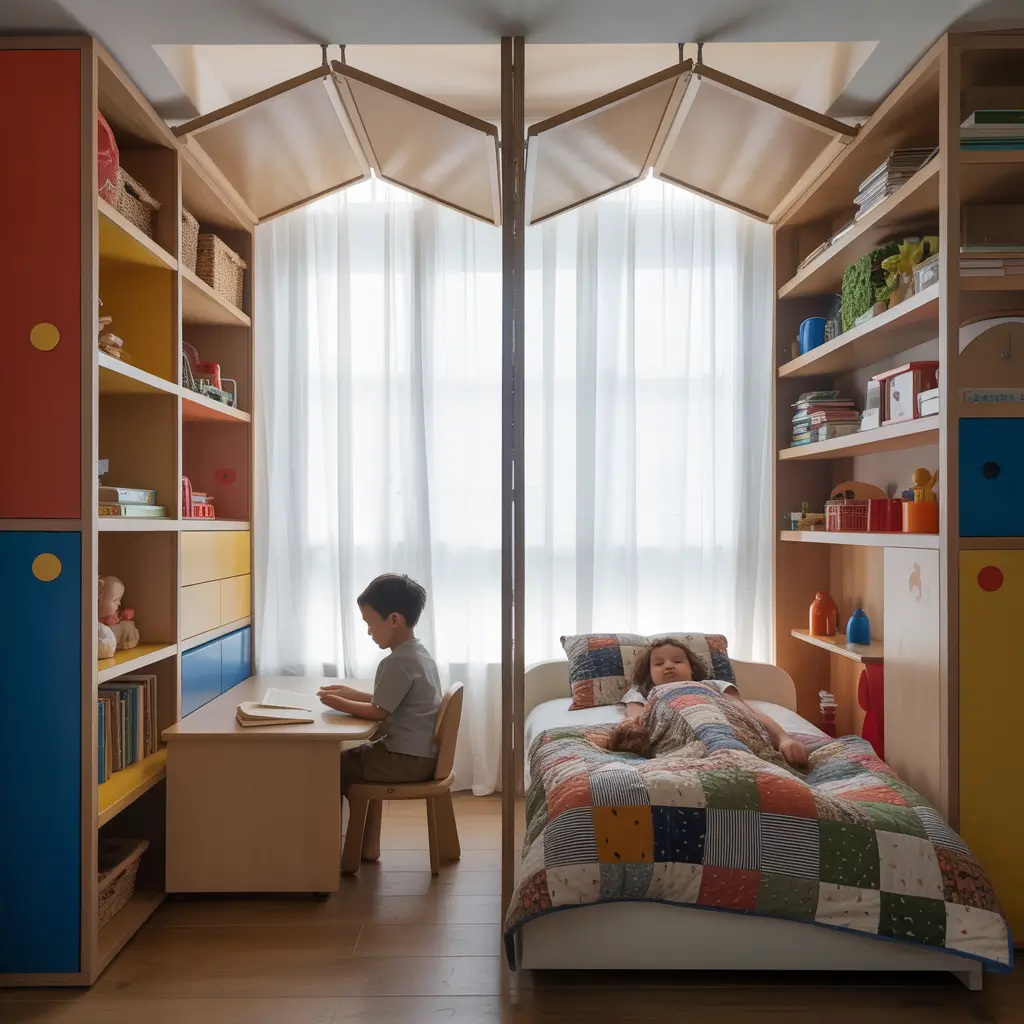
Flexibility is key when dividing kids’ rooms, and foldable panels deliver. These accordion-style dividers create instant walls that disappear when not needed. Perfect for kids who sometimes want togetherness and sometimes want to pretend their sibling doesn’t exist.
We bought a three-panel divider for $100, and it’s been worth every penny. During the day, it folds flat against the wall. At bedtime or homework time, it extends to create separate spaces. My kids even use it as a backdrop for puppet shows and video calls.
Making Panels Work Long-Term
Smart panel strategies:
- Choose double-sided designs so both kids get nice views
- Look for panels with pockets for extra storage
- Ensure they’re sturdy enough to withstand daily use
- Consider height – taller isn’t always better
- Add wheels for easier movement
The best part about panels? They grow with your kids. What starts as a play divider becomes a privacy screen for tweens getting dressed. Same furniture, evolving purpose.
Bookshelf Room Separator
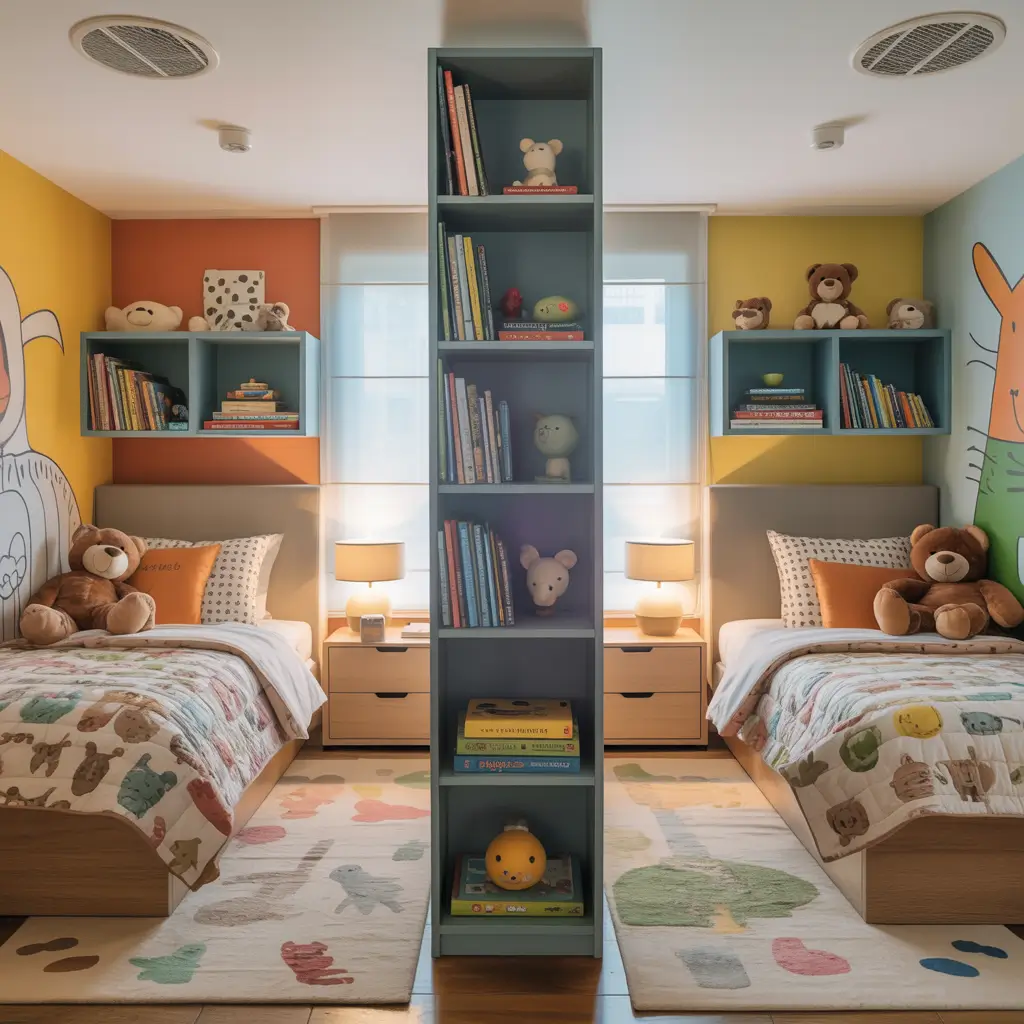
A bookshelf room divider kills two birds with one stone – division and storage. Open shelving units create boundaries while keeping the room feeling spacious. Plus, books and toys become part of the decor instead of clutter.
I helped my neighbor set up a cube organizer as a room divider, and it transformed their kids’ shared space. One side faces one child’s area, the other side faces the sibling’s zone. Each kid decorates their side differently, and the center cubes hold shared items like board games.
Choosing the Right Bookshelf
Essential bookshelf divider features:
- Sturdy construction that won’t topple
- Open back for light flow
- Appropriate height (not too tall for kids to reach)
- Modular options for reconfiguration
- Anchoring system for safety
Safety tip: always anchor tall furniture to the wall, even if it’s “freestanding.” Kids climb everything, and a falling bookshelf is no joke. We learned this during a near-miss when my son decided to scale his bookshelf like a ladder :/
Maximizing Both Sides
The trick to bookshelf dividers is making both sides functional. Use bins and baskets for neat storage, display special items at eye level, and keep frequently used items within easy reach. My kids have a “trading shelf” in the middle where they can share toys – diplomatic relations at their finest.
Also Read: 10 Practical Small Shared Kids Bedroom Ideas and Storage Hacks
Hanging Curtain Dividers
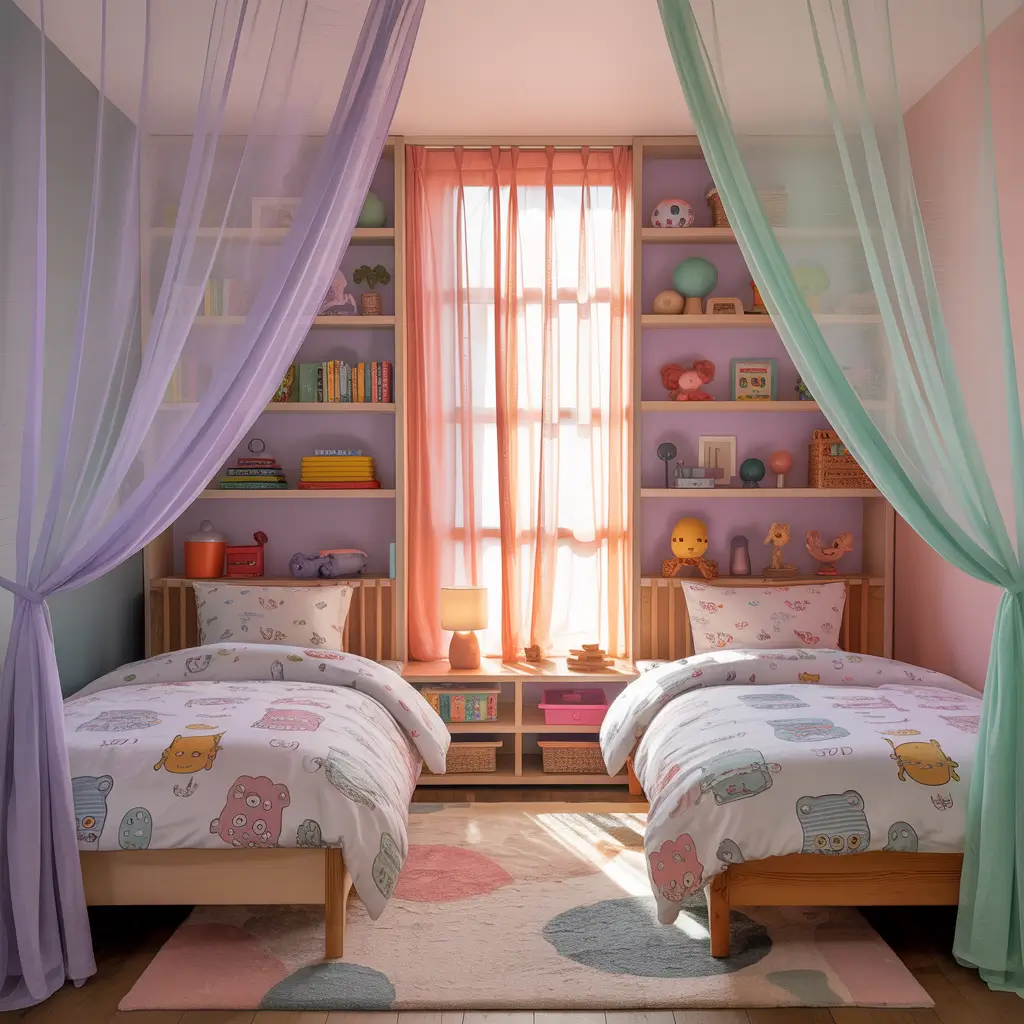
Sometimes the oldest solutions are the best. Hanging curtains from the ceiling creates instant, affordable room division. Modern curtain dividers go way beyond a sheet on a rope – we’re talking about stylish, functional privacy solutions.
We installed a ceiling-mounted curtain track in my daughter’s shared room for under $50. The curtains slide smoothly, bunch neatly when open, and provide instant privacy when needed. Best investment ever for maintaining sibling harmony during those moody pre-teen moments.
Curtain Installation Tips
Getting curtains right:
- Use ceiling-mounted tracks instead of tension rods
- Choose medium-weight fabric (not too heavy, not too sheer)
- Install at least 6 inches from the ceiling for height illusion
- Add tiebacks for daytime openness
- Consider double tracks for layered options
My favorite hack? We use sheer curtains during the day for light flow and add blackout panels at night for the child who needs complete darkness to sleep. Flexibility without reconstruction.
Modular Furniture Zones
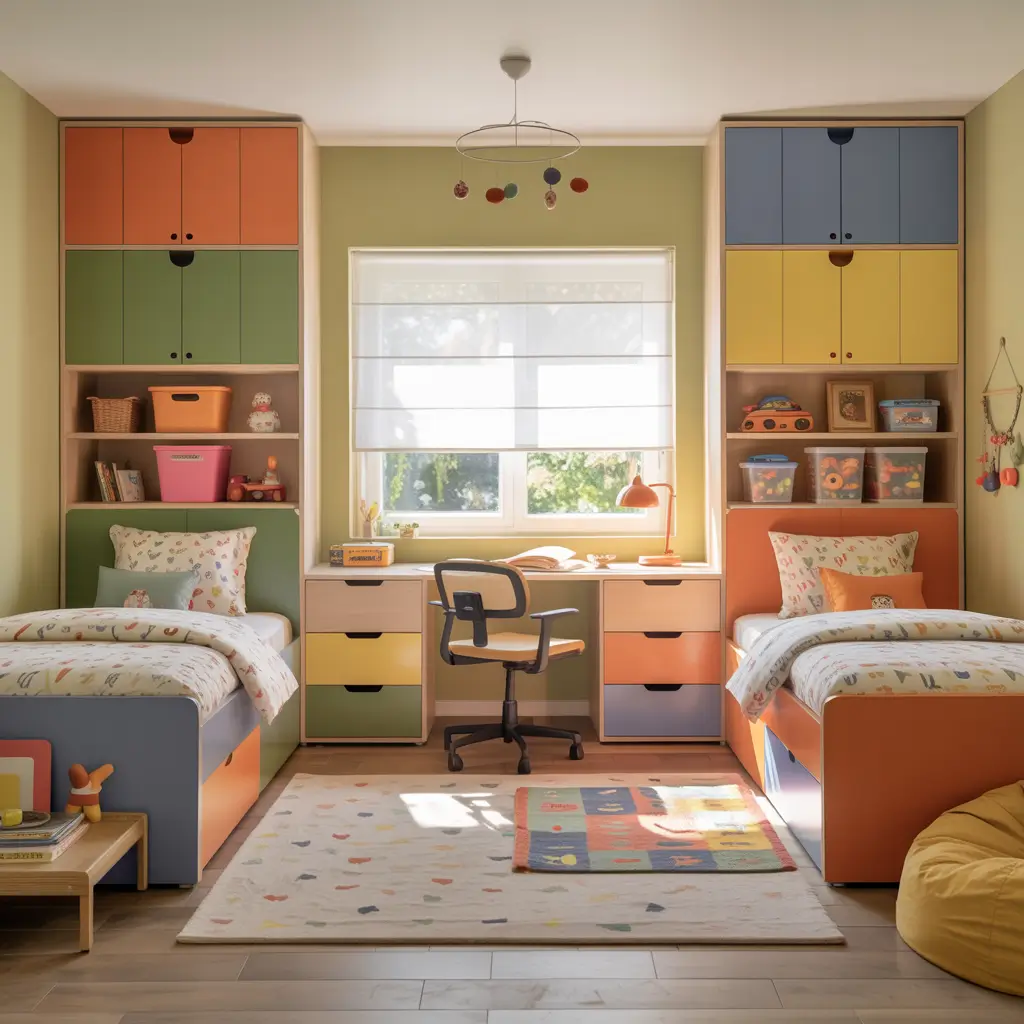
Modular furniture adapts as kids grow and needs change. These pieces can be reconfigured endlessly, creating new room divisions without buying new furniture.
My kids have modular cube storage that we’ve rearranged at least six times. It’s been a wall, an L-shaped reading nook boundary, parallel dividers for a center aisle, and currently, it’s creating study zones in opposite corners. Same furniture, completely different room layouts.
Building with Modules
Modular must-haves:
- Consistent sizing within the system
- Stackable and connectable pieces
- Variety of insert options (drawers, bins, shelves)
- Sturdy connectors for safety
- Neutral colors that work with changing decor
What I love about modular systems? They eliminate the “this furniture doesn’t work anymore” problem. Kids outgrow interests, not modules. The dinosaur display becomes trophy storage becomes a bookshelf – all with the same basic pieces.
Cost-Effective Expansion
Start small with modular furniture. Buy a few pieces and add more as budget allows. My friend started with four cubes and now has twelve, accumulated over two years during sales. The room evolved gradually without any shocking credit card bills.
Elevated Platform Beds with Storage
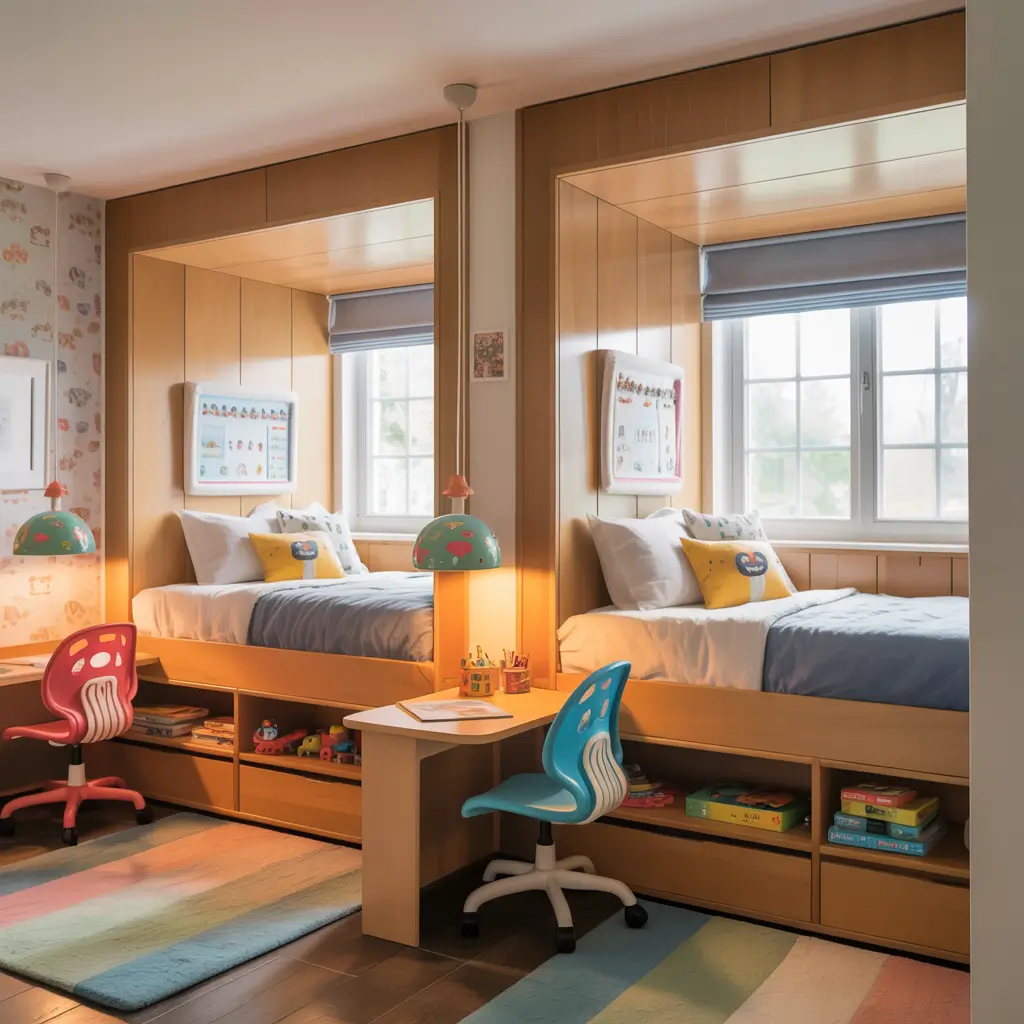
Platform beds with built-in storage create natural room division through elevation changes. One child’s bed sits higher, creating a distinct zone while maximizing every inch of floor space for storage.
We built a platform bed for my son that rises 3 feet off the ground with drawers underneath. His sister’s regular bed sits at normal height across the room. The height difference creates psychological separation – his “upper level” versus her “ground floor” – and they love having different perspectives of the same room.
Platform Bed Advantages
Why platforms work:
- Massive storage potential underneath
- Creates visual interest and division
- Makes small rooms feel larger
- Provides a special “stage” feeling for one child
- Can include desk or play space below
The storage aspect can’t be overstated. We fit an entire season of clothes, all sports equipment, and roughly 1,000 art projects under that platform. It’s like finding an extra closet you didn’t know existed.
Building Safety Into Platforms
Platform beds need safety features:
- Rails at least 5 inches above mattress
- Sturdy ladder or stairs (not just pegs)
- Non-slip surfaces on steps
- Rounded edges everywhere
- Weight limits clearly established
My contractor friend built ours, and his advice was golden: “Build it like teenagers will jump on it, because eventually, they will.”
Also Read: 12 Chic Modern Kids Bedroom Ideas and Playful Décor Touches
DIY Wall-Mounted Desk and Play Areas
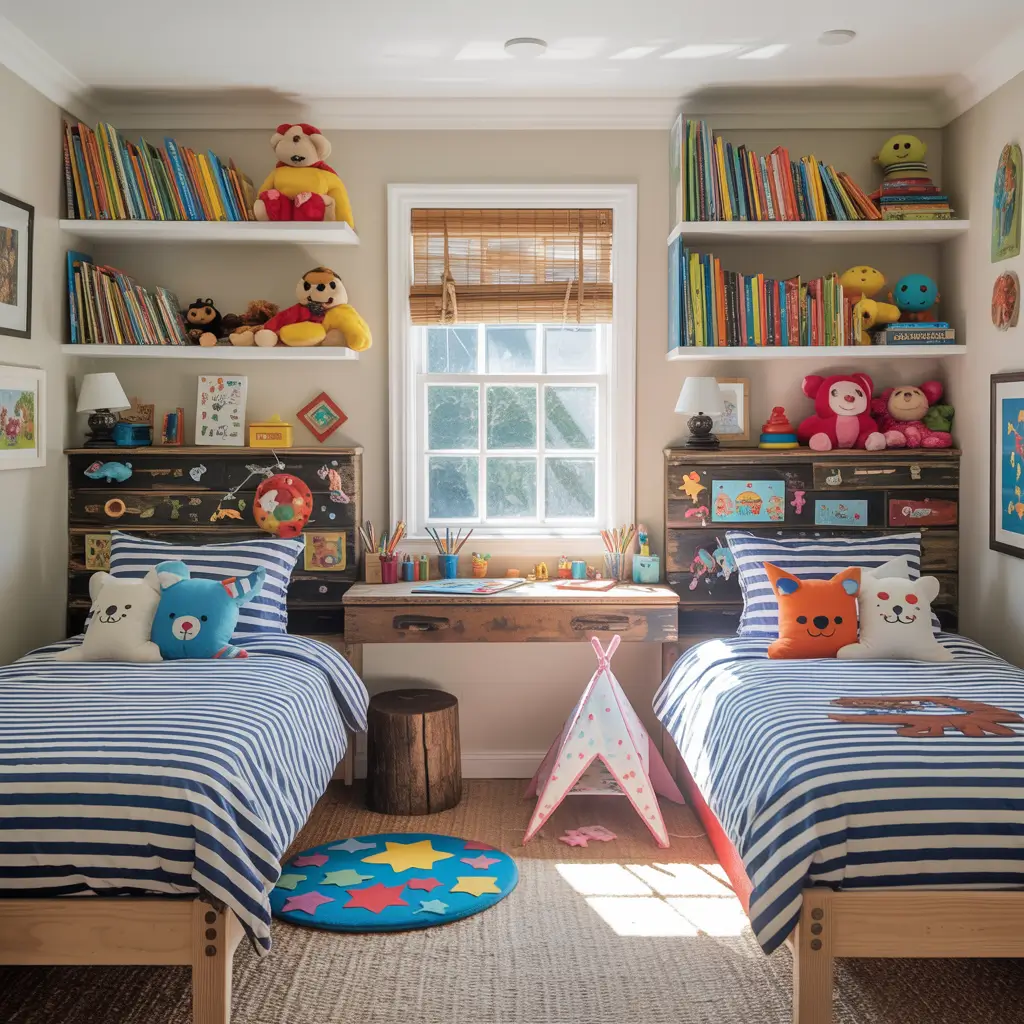
Wall-mounted furniture creates distinct zones without eating floor space. Desks and play tables that fold against the wall give each child their own dedicated area that disappears when not in use.
I installed fold-down desks on opposite walls in my kids’ room. When homework time comes, each child has their own workspace. When playtime arrives, desks fold up, and the floor is clear for activities. Total cost? Under $100 for both desks.
DIY Installation Success
Essential DIY tips:
- Find and mark wall studs (this isn’t optional)
- Use heavy-duty hinges rated for the weight
- Install at appropriate heights for each child
- Add magnetic or cork backing for display
- Include cord management for devices
IMO, the best part about wall-mounted solutions is customization. You can install them at perfect heights for each child, paint them to match their zones, and add personal touches like name plates or favorite stickers.
Making It Multi-Functional
Wall-mounted desks can be more than just homework stations. Add pegboard above for supplies, install shelving on either side, or include a fold-down bench for seating. My daughter’s desk area doubles as her art studio with clips for hanging artwork to dry.
Creating Long-Term Solutions
After implementing these divided bedroom ideas across multiple families (mine included), here’s what I know works: the bedroom divisions are the ones your specific kids will actually respect and use.
Some kids need solid boundaries; others do fine with visual cues.
Start with your biggest pain point. If privacy is the issue, go with curtains or panels. If it’s organization, try the bookshelf divider. If it’s study space, wall-mounted desks might be your answer.
You don’t have to implement everything at once – in fact, you probably shouldn’t.
Remember, the goal isn’t perfection – it’s peace. A well-divided room gives each child autonomy while teaching them to coexist. Some days the dividers will be closed tight with “keep out” signs posted.
Other days you’ll find both kids on one side, giggling over a shared joke. That’s the beauty of flexible division solutions – they adapt to your kids’ ever-changing relationship dynamics.
The best divided kids’ bedroom is one where both children feel heard, respected, and like they have their own space within the shared room. Get that right, and you’ll drastically reduce the “Mom, they’re on my side!” complaints.
Will they disappear completely? Let’s be realistic – they’re siblings. But at least now when they argue, they can retreat to their own clearly defined territories to cool off. And honestly, sometimes that’s the best outcome we can hope for 🙂