
Do Electric Fireplaces Give Off Heat? Read before Getting One

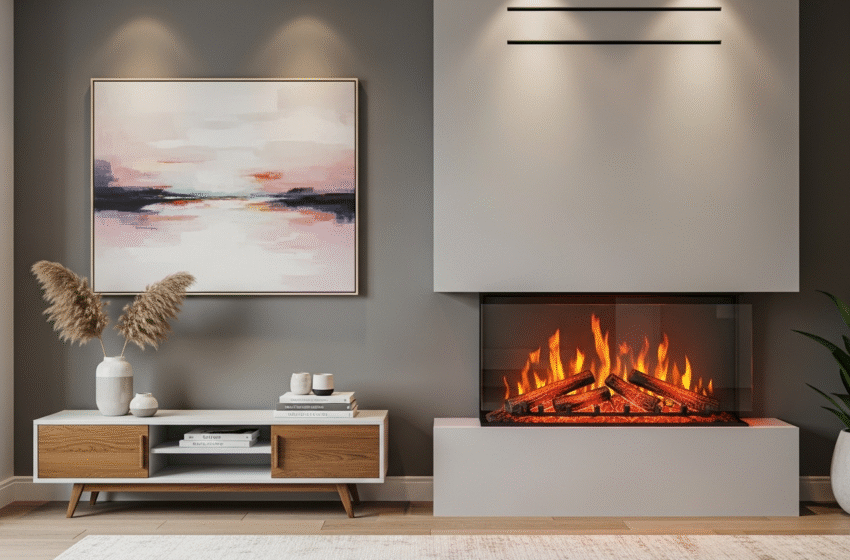
The short answer to the question “do electric fireplaces give off heat?” is a definitive yes. However, the complete answer is far more nuanced and important for any homeowner considering this modern heating solution. Electric fireplaces are not just decorative illusions; they are fully functional heating appliances designed to provide supplemental warmth efficiently and safely. Unlike traditional wood-burning or gas fireplaces that lose a significant portion of their heat up the chimney, electric models convert almost all the energy they consume directly into usable warmth for your room .
The heating performance of an electric fireplace depends on several factors, including its technology, size, and BTU rating. The most common models act as effective space heaters for areas up to 400-500 square feet, while more powerful units can warm spaces as large as 1,000 square feet . Furthermore, one of their standout features is the ability to operate the mesmerizing flame effects completely independently of the heat. This means you can enjoy the cozy ambiance of a flickering fire all year round—even on a summer evening—without raising the room’s temperature .
This definitive guide will delve into every aspect of how electric fireplaces produce heat. We will explore the technology behind them, quantify their heating capacity, compare them to traditional options, and highlight the top models for 2025 to help you make an informed decision for your home.
Section 1: Demystifying Electric Fireplace Heat Output
To truly understand the heating capability of an electric fireplace, it’s essential to look at the standard units of measurement: BTUs and watts. These metrics provide a clear, comparable way to gauge whether a particular model is suitable for your space.
Understanding BTUs and Watts
The heating capacity of fireplaces is most accurately compared using British Thermal Units (BTUs). A single BTU is defined as the amount of energy required to heat one pound of water by one degree Fahrenheit. In practical terms, a higher BTU rating indicates a more powerful heater .
Most standard plug-in electric fireplaces produce heat output in the range of 4,600 to 5,600 BTUs . This is typical for a 1,500-watt unit, which is the standard for most household outlets. However, high-end or hardwired models can be significantly more powerful. For example, the Dimplex IgniteXL Bold is noted for its ability to heat rooms up to 1,000 square feet, which correlates to an output of approximately 8,600 BTUs . In comparison, gas fireplaces often produce between 20,000 and 40,000 BTUs, making them suitable as a primary heat source for larger areas, but with different installation and venting requirements .
Heating Capacity by Room Size
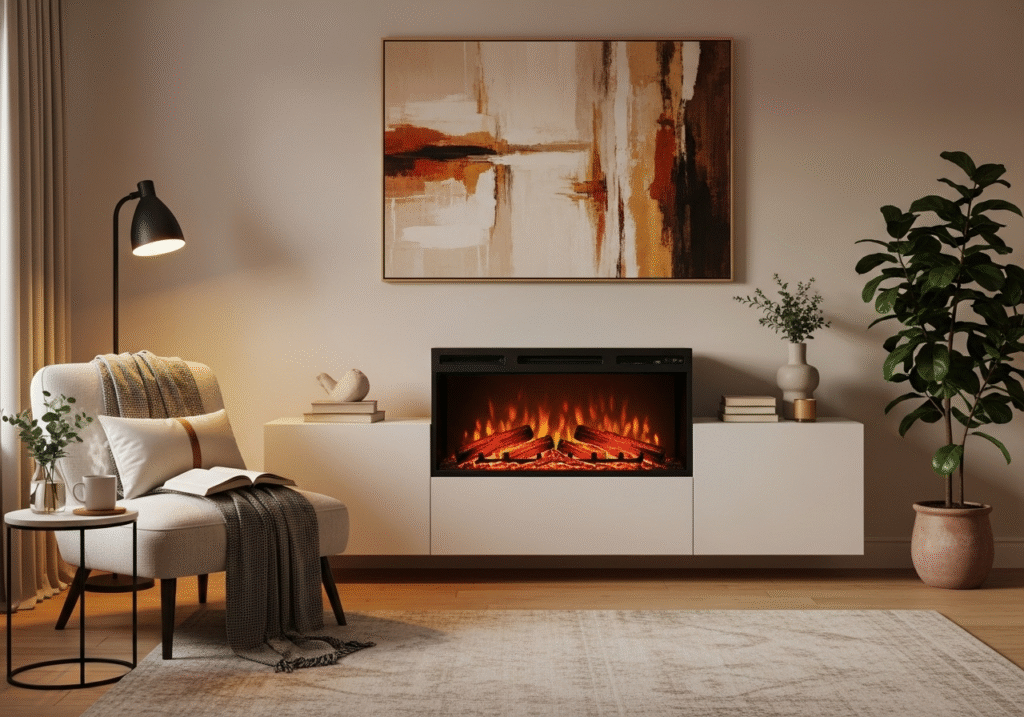
Matching the fireplace’s output to your room size is critical for efficiency and comfort. An undersized unit will run constantly without adequately warming the space, while an oversized unit may create uncomfortable, stuffy heat.
The following table provides a general guideline for what you can expect from a typical electric fireplace :
| Room Size (Square Feet) | Electric Fireplace Suitability | Expected Heat Output (BTUs) | Best Fireplace Type |
|---|---|---|---|
| Up to 400 sq. ft. | Excellent | ~5,000 BTUs | Standard plug-in models, wall-mounted, slim units |
| 400 – 500 sq. ft. | Good | 5,000 – 5,600 BTUs | Standard or mid-range plug-in models |
| 500 – 1,000 sq. ft. | Fair to Good (requires powerful model) | 5,600 – 8,600+ BTUs | High-output plug-in or hardwired models |
| Over 1,000 sq. ft. | Limited (supplementary only) | Varies | Best for “zone heating” within a larger open space |
This concept of “zone heating” is a key benefit of electric fireplaces. Instead of turning up the thermostat for your entire house, you can use an electric fireplace to heat only the room you are using, which can lead to significant savings on your energy bills .
Section 2: How Electric Fireplaces Generate and Distribute Heat
The ability of an electric fireplace to heat a room effectively hinges on its internal technology. There are two primary methods used to generate and circulate warmth, each with its own advantages.
The Role of the Heating Element and Fan
The most common heating mechanism in electric fireplaces involves an electric resistance heating element—similar to what is found in a space heater or an oven. When electricity passes through this element, it becomes hot. A quiet, built-in fan then draws cool air from the room into the fireplace unit, forces it over the heated element, and circulates the resulting warm air back into the room . This process, known as fan-forced convection, efficiently distributes heat and prevents the unit from overheating. This is why the exterior glass and body of most electric fireplaces remain cool to the touch, a major safety advantage for households with children and pets .
Infrared Heating Technology
A growing trend in the market, particularly for 2025, is the use of infrared heating technology . Instead of heating the air directly, infrared fireplaces use electricity to generate invisible infrared light waves. These waves travel through the air and heat the solid objects and people in the room directly, much like the sun warms your skin on a cold day.
This method offers distinct benefits:
- Humidity Retention: Infrared heat does not dry out the air like conventional forced-air systems, making it more comfortable for those with allergies or respiratory sensitivities .
- Instantaneous Warmth: You feel the heat almost immediately, as there is no need to wait for the air in the room to warm up first.
- Energy Efficiency: Since it heats objects directly, less heat is lost to drafts or air movement, making it highly efficient .
Models like the Duraflame 3D Infrared Fireplace exemplify this technology, offering powerful and comfortable heating while maintaining realistic flame effects .
Section 3: The Multifaceted Benefits of Electric Fireplace Heat
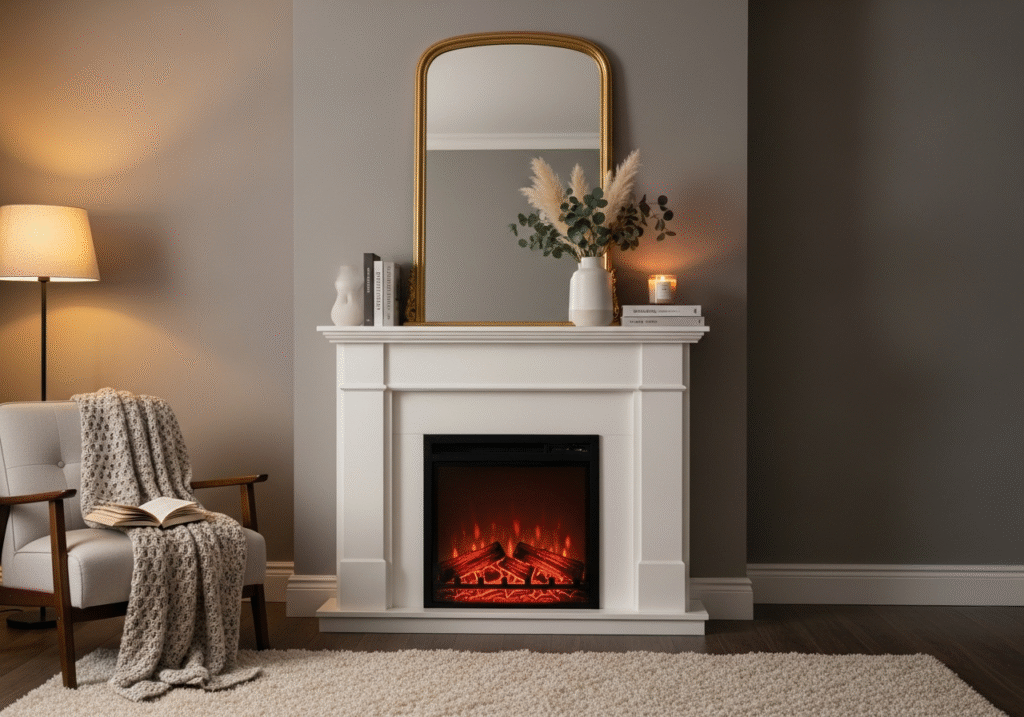
Choosing an electric fireplace for heat comes with a suite of advantages that extend far beyond simple warmth. These benefits encompass efficiency, safety, convenience, and environmental impact.
Unmatched Energy Efficiency
Electric fireplaces are 100% energy efficient at the point of use. This means that virtually all the electricity they consume is converted directly into heat for your room . In contrast, a significant amount of heat from a wood-burning fireplace is lost up the chimney, and even high-efficiency gas fireplaces lose some heat through their venting systems . This efficiency translates to cost-effectiveness. According to 2025 estimates, operating a 1,500-watt electric fireplace costs about $0.18 per hour, compared to approximately $1.10 per hour for a propane fireplace .
Superior Safety Profile
Safety is perhaps the most significant benefit. Electric fireplaces eliminate the risks associated with real flames:
- No Real Fire: There are no sparks, embers, or flying ash that could ignite nearby furnishings or carpets .
- Cool-to-the-Touch Surfaces: The exterior, especially the viewing glass, remains safe to touch, preventing burns .
- No Harmful Emissions: They produce no carbon monoxide, smoke, or other combustion gases, making them safe for indoor air quality and not requiring a vent or chimney .
- Built-in Safety Features: Most models include automatic overheat protection, which shuts the unit off if it gets too hot .
Ultimate Convenience and Low Maintenance
The convenience factor of electric fireplaces is a major draw for modern homeowners. They offer:
- Easy Installation: Most units require no renovation. You simply plug them into a standard 120-volt outlet . This makes them ideal for apartments and condos where gas lines or chimneys are not available.
- Zero Maintenance: There is no ash to clean, no soot on the glass, no chimney to sweep, and no gas lines to inspect. Maintenance is typically limited to occasional dusting .
- Instant Activation: With the push of a button or a click of a remote, you get immediate flames and heat. There is no need to build a fire or wait for logs to catch .
Section 4: Heat and Ambiance: Independent Control for Year-Round Use
A feature that truly sets electric fireplaces apart is the independent operation of the flame effect and the heater. This dual functionality maximizes their utility throughout every season.
The Flame-Only Function
During warmer months, you can operate the flame effect without any heat. This allows you to create the relaxing, romantic ambiance of a fireplace to enhance a room’s atmosphere without contributing unwanted warmth . The technology used to create these flames—either LED lights reflected on moving mechanisms or advanced LCD screens displaying high-definition video of real fires—consumes very little electricity, similar to a standard light bulb .
Supplemental Heat When Needed
When the temperature drops, the heater can be activated as needed. Most models offer multiple heat settings (e.g., low and high) and some even include a built-in thermostat. This allows you to set a desired room temperature, and the fireplace will cycle on and off to maintain it, providing consistent comfort and optimizing energy use .
Section 5: Limitations and Key Considerations
While electric fireplaces offer numerous benefits, it is crucial to have realistic expectations about their limitations to ensure they meet your needs.
Realistic Expectations for Heat Output
An electric fireplace is generally designed as a supplemental or zone heater . It is perfect for taking the chill off a family room, bedroom, or home office. However, it is not typically intended to serve as the primary heat source for an entire home, especially in regions with very cold winters. The heat output, while effective for a defined space, may be insufficient to heat a large, open-concept great room on its own during a deep freeze.
Dependence on Electricity
As the name implies, electric fireplaces require a continuous source of electricity to operate. During a power outage, both the heat and flame effects will cease to function . This is a key difference from certain gas fireplace models that can operate during an outage if they have a standing pilot light or a battery backup for ignition.
Section 6: Top Electric Fireplace Models for Heat in 2025
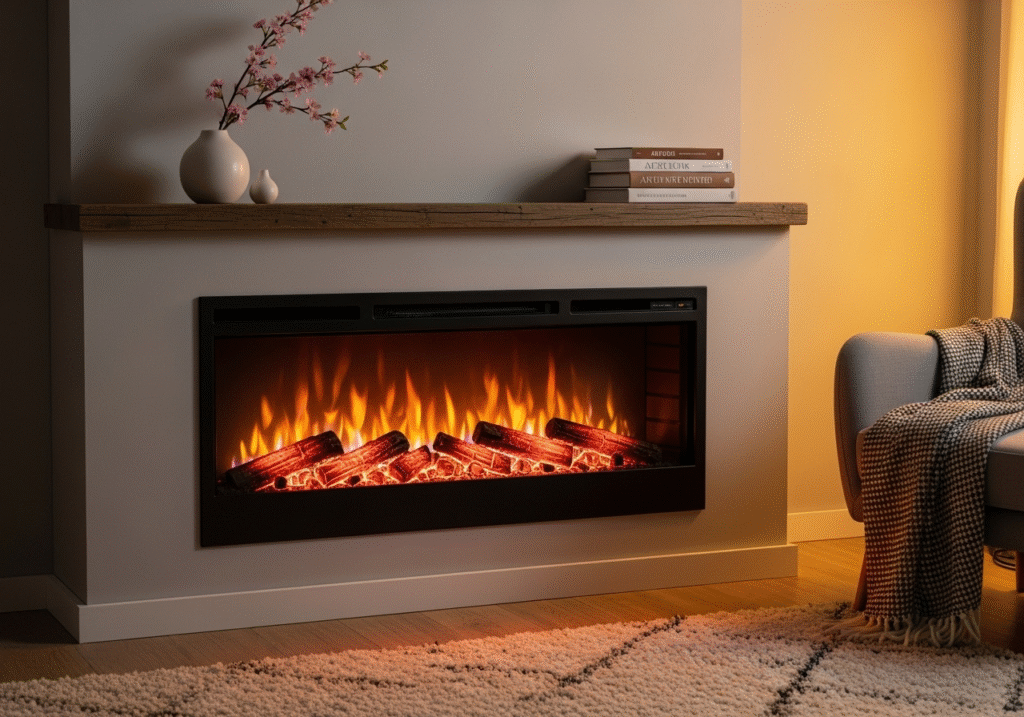
The market in 2025 offers a range of models renowned for their heating performance and realistic aesthetics. Here are some standout options from leading brands :
- Dimplex IgniteXL Bold (3-Sided Smart Electric Fireplace): Praised for its high heat output, this model can effectively heat spaces up to 1,000 square feet. It combines powerful performance with modern smart features for integrated home control .
- Duraflame 3D Infrared Electric Fireplace: This model utilizes efficient infrared technology to provide comfortable, humidifying heat. It is known for its realistic 3D flame effects and ability to heat large areas without a dry feeling .
- SimpliFire Allusion Platinum Linear Fireplace: A top choice for sleek, contemporary design, this model offers excellent heating capabilities along with highly customizable flame and ember bed colors. SimpliFire is also noted for its reliability and ease of service .
- Modern Flames Orion Multi: For those prioritizing flame realism, Modern Flames uses advanced LED and LCD technologies (like their proprietary HELIOVISION) to create stunningly realistic fires, paired with effective heating .
Conclusion
So, do electric fireplaces give off heat? Absolutely. They are capable, efficient, and safe heating appliances that provide valuable supplemental warmth while creating a cozy atmosphere. Their 100% efficiency, superior safety features, and the flexibility of year-round ambiance make them an excellent choice for modern homes, apartments, and anyone seeking a low-maintenance alternative to wood or gas.
When selecting a model, prioritize finding one with a BTU output that matches your room size and consider the heating technology (fan-forced vs. infrared) that best suits your comfort preferences. By understanding their capabilities and limitations, you can confidently choose an electric fireplace that will deliver warmth and beauty to your home for years to come.
Key Takeaways
- Electric fireplaces do provide heat, typically between 4,600-8,600 BTUs, suitable for spaces up to 1,000 sq. ft. as a supplemental heat source .
- They are 100% energy efficient at the point of use, converting all electricity directly into room heat with no loss through vents .
- A major benefit is independent operation: you can enjoy the flame effects without the heat during any season .
- They are exceptionally safe, with cool-to-the-touch surfaces and no risk of carbon monoxide emissions .
- For the best results, match the fireplace’s BTU rating to your room size and consider advanced technologies like infrared for a more comfortable, sun-like warmth .