10 Amazing Door Design Ideas and Trendy Home Makeovers
- Door Design
 Ben
Ben- 0
- 50 minutes read
You’ve probably never thought twice about your doors until now. Admit it—they’re the unsung heroes of your home, quietly doing their job while your fancy light fixtures and trendy backsplash get all the attention.
But here’s the thing: a well-designed door can transform a space from “nice” to “wow, who’s your designer?” faster than you can say “pivot!”
I’ve spent years obsessing over home design elements that others overlook, and doors top my list of most underappreciated features.
After replacing six doors in my own home (and making at least three mistakes along the way), I’ve learned that doors aren’t just functional necessities—they’re design opportunities waiting to happen.
So whether you’re building from scratch, renovating, or just looking to upgrade a single door that’s driving you crazy, these ten door design ideas will inspire you to think beyond the basic six-panel colonial that builders slap up everywhere.
Ready to get door-obsessed with me? Let’s go!
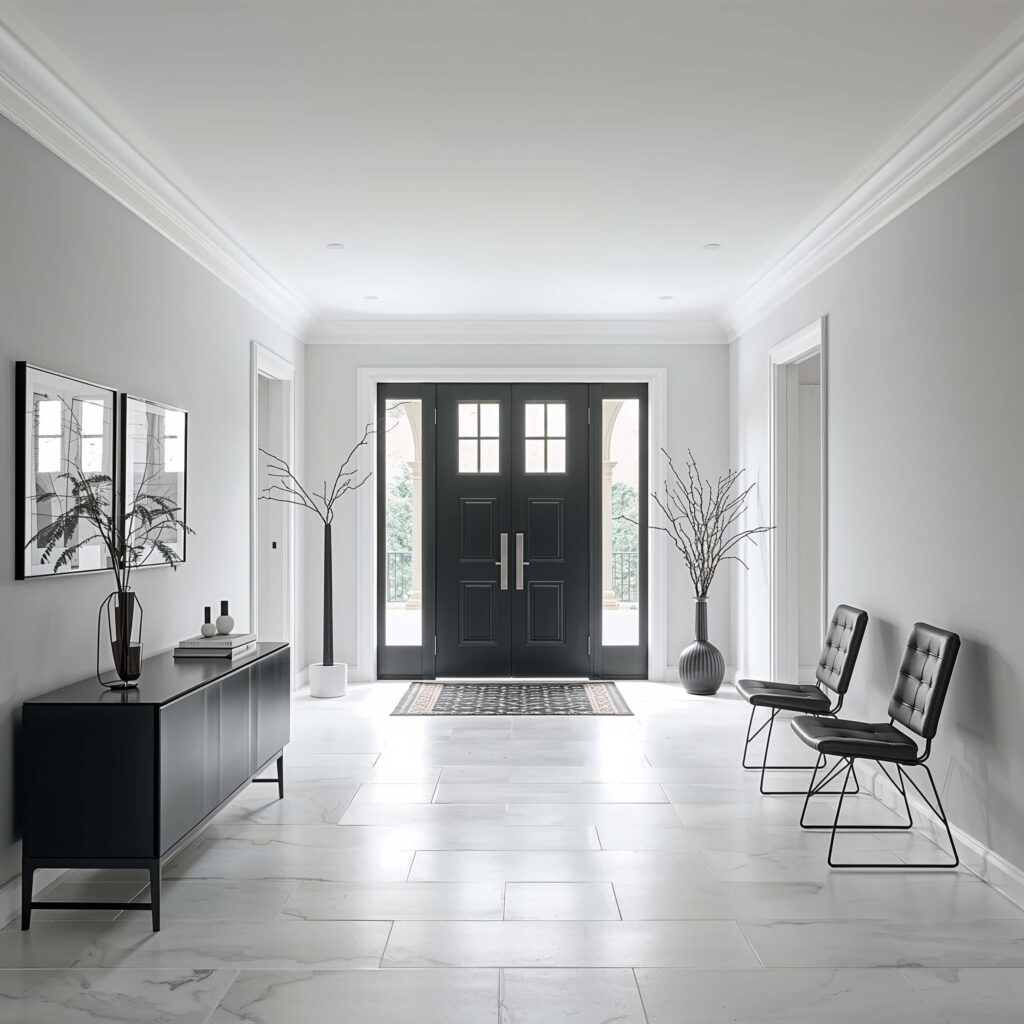
Modern Minimalist Wooden Doors
Clean lines, uncluttered design, and natural beauty—modern minimalist wooden doors bring all three to your space without screaming for attention.
The Appeal of Simplicity
These doors embody the “less is more” philosophy that defines minimalist design. I installed a flat-panel white oak door in my home office, and it’s amazing how something so simple can look so intentional. The beauty comes from what’s not there—no raised panels, ornate hardware, or unnecessary details.
Modern minimalist doors typically feature:
- Flat, smooth surfaces
- Natural wood grains as the decorative element
- Hidden or minimal hardware
- Floor-to-ceiling heights when possible
- Clean, precise edges and consistent gaps
Wood Selection Matters
The wood you choose becomes the star of the show with minimalist doors. Different species create dramatically different effects:
- White Oak: Light, contemporary, with distinctive grain patterns
- Walnut: Rich, warm, sophisticated
- Maple: Bright, clean, with subtle grain
- Teak: Honey tones with natural water resistance
- Ash: Light with beautiful grain patterns
I originally wanted walnut for my office door but went with white oak after realizing the walnut would make my tiny office feel like a cave. Wood species isn’t just about looks—it affects the entire feel of your space.
Hardware That Disappears
The most sophisticated minimalist doors feature hardware that barely registers visually. Think:
- Concealed hinges
- Magnetic door stops
- Flush or recessed pulls
- Hidden door closers
- Integrated handles carved into the door itself
Have you ever noticed how cheap doors announce themselves with chunky, obvious hardware? Quality minimalist doors whisper rather than shout.
Rustic Barn Sliding Doors
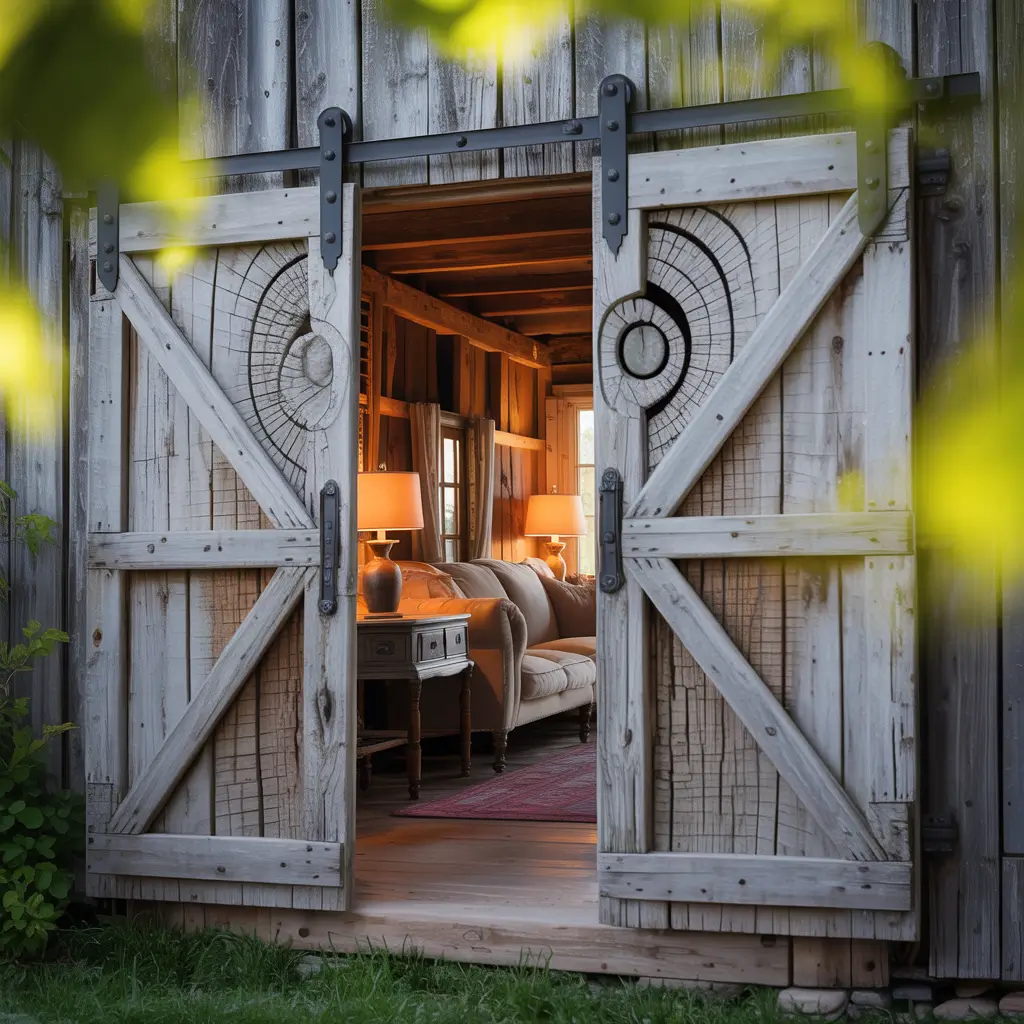
Nothing adds character to a basic opening like a barn door. These sliding beauties combine practicality with serious design impact.
When to Choose Barn Doors
Barn doors work best when:
- You need to save swing space
- You want a architectural focal point
- The opening doesn’t require complete sound isolation
- You’re trying to define zones in an open space
- You want to add texture and warmth
I installed a barn door between my kitchen and dining room, and beyond looking amazing, it’s incredibly practical. I can close it when we have dinner guests, but it doesn’t take up valuable floor space like a swinging door would.
Material Options Beyond Basic Wood
While classic barn doors feature reclaimed wood, today’s options include:
- Weathered wood in various finishes
- Steel panels with industrial appeal
- Glass inserts for light flow
- Painted panels with contrasting hardware
- Mixed materials for custom looks
The hardware becomes jewelry for these doors—black matte finishes look particularly striking against lighter woods, while oil-rubbed bronze adds warmth to any material.
Installation Realities
Let’s get real about barn doors for a second. They look amazing on Instagram, but before you commit, consider:
- You need proper structural support for the heavy hardware
- They don’t seal as tightly as swinging doors
- They’re not ideal for bathroom privacy
- They require wall space equal to the door width for sliding
- Quality hardware makes a huge difference in operation
I learned this the hard way when I cheaped out on hardware for my first barn door. The constant squeaking drove me crazy until I finally invested in quality rollers. Trust me—splurge on the hardware.
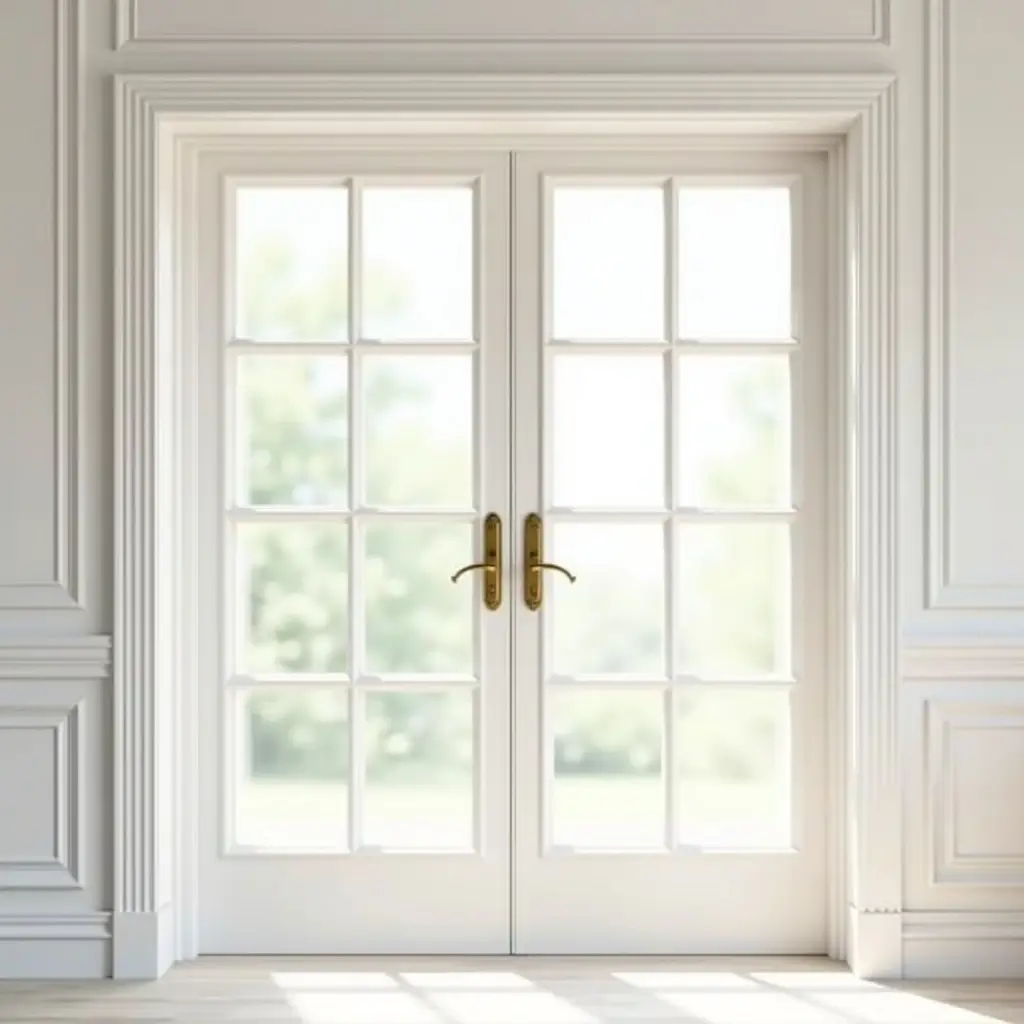
Glass Panel French Doors

French doors bring elegance, light, and openness to any space. They’re the design equivalent of taking a deep breath.
Light Flow Champions
The primary appeal of French doors is how they maintain separation while allowing light to flow between spaces. They’re perfect for:
- Home offices that need separation but not isolation
- Dining rooms connected to living spaces
- Entryways that need weather protection without darkness
- Bedrooms with access to outdoor spaces
I added interior French doors between my living room and sunroom, and the amount of light that now floods my formerly cave-like living room is nothing short of miraculous.
Glass Options for Every Need
Today’s French doors offer glass options beyond the standard clear panes:
- Frosted glass for privacy with light
- Seeded glass for vintage appeal
- Tempered safety glass for durability
- Low-E glass for energy efficiency
- Decorative film options for customization
Frame Styles That Matter
The frame design dramatically changes the look of French doors:
- Traditional mullioned designs with multiple panes
- Modern single-pane minimalist looks
- Craftsman-inspired stile and rail configurations
- Industrial black metal frames
- Arched tops for traditional spaces
Ever wondered why some French doors look elegant while others feel builder-grade? It’s all about the proportions of the frames and the quality of the glass. Well-designed French doors have precise, intentional dimensions that reflect classical proportions.
Also Read: 15 Cozy Christmas Outdoor Decor Ideas for Small Spaces
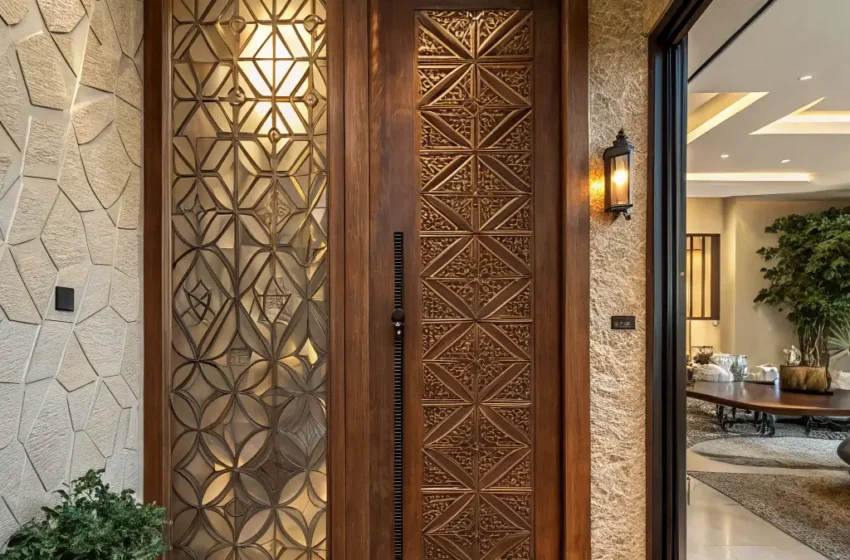
Elegant Carved Wooden Doors

For sheer “wow” factor, nothing beats a carved wooden door. These detailed masterpieces serve as functional art pieces in your home.
Making a Statement
Carved doors work best as singular statement pieces, typically in:
- Main entrances
- Wine cellars
- Home libraries
- Master bedroom entrances
- Heritage homes
I visited a friend’s newly renovated colonial home where they installed a hand-carved front door, and I’m not exaggerating when I say it transformed the entire façade of the house from “nice” to “stop the car, I need to look at that.”
Carving Styles from Around the World
Different cultural traditions offer distinct carving styles:
- Intricate Moroccan geometric patterns
- Flowing Art Nouveau botanical designs
- Traditional Spanish mission-inspired panels
- Indian chakra and mandala motifs
- Chinese luck and prosperity symbols
The Craftsmanship Factor
With carved doors, you truly get what you pay for:
- Hand-carved doors require skilled artisans and command premium prices
- Machine-carved options offer similar looks at lower price points
- Depth of carving affects both visual impact and cost
- Solid wood carved doors outperform applied carvings over time
- Proper sealing and maintenance is essential for longevity
FYI, if you’re going the carved door route, expect to pay significantly more than for standard doors—quality carving is a dying art, and true artisans charge accordingly. But unlike many home elements, a carved door can literally last generations.
Bold Colored Accent Doors

Who says doors have to blend in? A bold colored door creates instant personality and becomes a focal point in your design.
Color Psychology in Door Selection
Different colors create different effects:
- Red doors signify welcome in many cultures
- Yellow creates cheerful energy
- Blue promotes calm and tranquility
- Black adds sophisticated drama
- Green connects to nature and growth
I painted my front door a glossy Chinese red, and not only does it make me happy every time I come home, but delivery people never have trouble finding my house—”The one with the red door” has become my standard direction.
Interior vs. Exterior Considerations
Bold color works differently depending on placement:
- Exterior colored doors should complement architectural style and surrounding landscape
- Interior colored doors need to work with your overall color scheme
- Exterior doors require paint with UV resistance and weather protection
- Interior doors can use higher gloss finishes for impact
- Consider the view of the door from both sides when selecting colors
The Power of Contrast
The most striking colored doors play with contrast:
- Dark doors against light walls
- Bright doors within neutral spaces
- Complementary colors that pop against each other
- Matching door color to a key accent within the space
- Contrasting door and trim colors
Have you noticed how even the most basic door looks intentional when painted a bold color? It’s the easiest and most affordable door upgrade you can make. One weekend and a quart of good quality paint can completely transform your space.
Industrial Metal Frame Doors

Industrial-style doors bring edge, architectural interest, and urban sophistication to residential spaces.
The Factory Aesthetic
Industrial doors reference commercial spaces with:
- Steel or aluminum frames
- Minimal profiles
- Grid patterns
- Raw or matte black finishes
- Glass panels within metal frameworks
I installed steel-framed French doors with factory-style grid patterns between my dining room and kitchen, and they instantly elevated my standard suburban home to something that feels custom and architecturally significant.
Glass and Metal Combinations
The industrial look offers various combinations:
- Clear glass for maximum light
- Reeded or fluted glass for texture and partial privacy
- Smoked glass for moodier spaces
- Metal mesh inserts instead of glass for industrial authenticity
- Solid metal panels with riveted details
Practical Considerations
Before jumping on the industrial door bandwagon, consider:
- Metal-framed doors conduct temperature
- They’re typically heavier than wood doors
- Custom sizes often require specialized fabrication
- They require precise installation for proper operation
- They generally cost more than standard wood doors
Industrial doors make the biggest impact in transitional spaces where you want definition without complete separation. Think kitchen to dining room, office to hallway, or primary bedroom to sitting area.
Also Read: 15 Beautiful Outdoor Christmas Decor Ideas to Inspire You
Mirrored Interior Doors
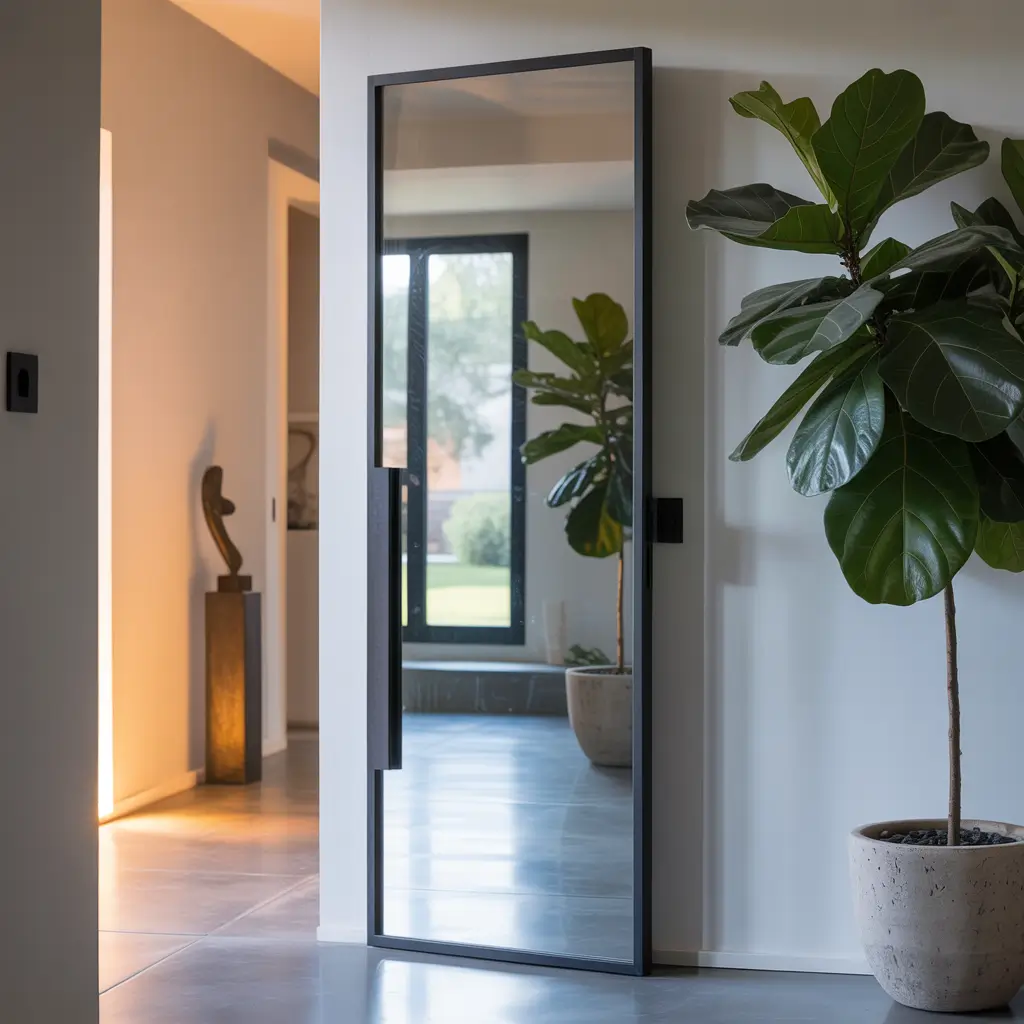
Mirrored doors perform double duty—they function as doors while making spaces feel larger and brighter.
Space-Expanding Magic
Mirrored doors create several visual effects:
- They reflect light to brighten spaces
- They create the illusion of additional square footage
- They bounce existing design elements throughout the room
- They provide practical mirrors for dressing and checking appearance
- They add glamour to ordinary spaces
Beyond Closet Applications
While we typically associate mirrored doors with closets, they work beautifully in:
- Small bedrooms to create the illusion of space
- Narrow hallways to widen visual perception
- Dressing areas as functional design elements
- Home gyms for practical fitness use
- Powder rooms for unexpected glamour
Modern Interpretations
Today’s mirrored doors go beyond the 80s floor-to-ceiling look:
- Antiqued mirror panels for vintage appeal
- Smoked mirror for subtle reflection
- Mirror inserts within traditional door frames
- Geometric mirror patterns
- Mirrored panels with decorative overlay grilles
I added antique mirror panels to my bedroom closet doors, and it completely transformed the space. The slight cloudiness of vintage-style mirrors adds character while still providing all the benefits of reflection.
Geometric Patterned Doors

Geometry brings order, pattern, and visual interest to doors, turning them into architectural features.
Pattern Possibilities
Geometric door designs span from subtle to dramatic:
- Simple grid patterns for transitional spaces
- Diamond patterns for traditional looks
- Hexagonal honeycomb patterns for modern spaces
- Overlapping circles for art deco appeal
- Abstract asymmetrical designs for contemporary settings
Construction Methods
Geometric patterns appear through various techniques:
- Applied molding creating raised patterns
- Inlaid wood or metal for flush designs
- CNC-cut patterns for precise repetition
- Stained glass inserts within geometric frameworks
- Painted patterns on flat doors
Where Pattern Works Best
Geometric doors make the biggest impact when:
- Used as a focal point in a simple space
- Coordinated with other geometric elements in your design
- Placed where they’ll be viewed head-on
- Sized proportionally to the space they occupy
- Finished in contrasting colors to highlight the pattern
Ever wondered why some patterned doors look elegant while others feel busy? It’s all about scale and proportion. The pattern should be sized appropriately for the door and the space it occupies.
Pocket Sliding Space-Saving Doors

Pocket doors slide completely into the wall when open, making them the ultimate space-savers for tight floor plans.
Space-Challenged Solutions
Pocket doors shine in:
- Small bathrooms where door swing limits fixture placement
- Tight hallways with multiple room entrances
- Studio apartments needing flexible division
- Pantries and closets in compact kitchens
- Home offices that need occasional privacy
I installed a pocket door in my tiny guest bathroom, and it allowed me to fit a full-sized vanity that would have been impossible with a swinging door. Sometimes the space you save makes all the difference between cramped and comfortable.
Modern Innovations
Today’s pocket doors offer improvements over their sticky, rattling predecessors:
- Soft-close mechanisms preventing slamming
- Better quality rollers for smooth operation
- Sound-insulating options for privacy
- Security locks that work properly
- Double pocket doors for wider openings
Installation Realities
Be aware that pocket doors:
- Require wall cavity space equal to the door width
- Need specialized framing during construction
- Limit electrical outlets and switches in the pocket wall
- May present challenges for retrofitting in existing walls
- Require quality hardware for reliable operation
One practical tip: if you’re installing pocket doors, invest in quality hardware. Nothing is more frustrating than a pocket door that constantly jumps its track or gets stuck halfway. Trust me on this one—I learned it the expensive way.
Also Read: 15 Easy Christmas Door Hanger Ideas for Quick Decorating
Vintage Antique Reclaimed Doors

Salvaged doors bring history, character, and sustainability to new and renovated spaces.
The Authenticity Factor
Reclaimed doors offer benefits that new doors can’t match:
- Genuine patina and wear that tells a story
- Old-growth wood quality rarely found in new products
- Craftsmanship details from eras of superior woodworking
- Environmental benefits of reuse
- Unique character that can’t be replicated
Finding Your Perfect Match
Sources for quality vintage doors include:
- Architectural salvage yards
- Historic home demolition sales
- Online marketplaces specializing in reclaimed materials
- Estate sales in older neighborhoods
- Renovation contractors with salvage connections
I found an incredible 100-year-old solid oak door with the original hardware at a salvage yard for less than I would have paid for a new hollow-core door. It took some work to refinish, but the character it adds to my home is priceless.
Adaptation Considerations
Working with vintage doors often requires:
- Customizing the frame to fit non-standard door sizes
- Replacing or restoring hardware for proper function
- Addressing issues like lead paint on older finishes
- Adding weatherstripping for exterior applications
- Potentially reinforcing structure for heavier doors
The quirks and imperfections of vintage doors are part of their charm. If you want everything perfectly square and precisely aligned, reclaimed doors probably aren’t for you. But if you value character, sustainability, and pieces with stories to tell, nothing compares.
Making Your Door Decision
With all these incredible options, how do you choose the right doors for your home? Consider these factors:
Function First
Start by asking practical questions:
- How much space do you have for door operation?
- What level of privacy does the space require?
- Does the door need to block sound?
- Will it be exposed to moisture or weather?
- How frequently will it be used?
Style Alignment
Your doors should complement your overall design:
- Modern minimalist doors suit contemporary architecture
- Carved doors work in traditional or globally-inspired spaces
- Industrial doors complement urban loft aesthetics
- French doors bridge traditional and contemporary styles
- Bold colors work in eclectic or personality-driven designs
Budget Realities
Door costs vary dramatically:
- Stock hollow-core doors represent the budget option
- Solid wood doors offer midrange quality and price
- Custom designs and specialty materials command premium prices
- Installation complexity affects overall cost
- Hardware quality significantly impacts both price and performance
Don’t forget that doors are long-term investments. Unlike trendy accessories you might change seasonally, doors typically remain in place for decades. This makes them worth careful consideration and appropriate investment.
The Cohesion Factor
For whole-home harmony:
- Consider consistency throughout primary spaces
- Use statement doors strategically as focal points
- Maintain consistent hardware finishes
- Ensure door styles complement architectural elements
- Balance practicality with aesthetics
You don’t need to use identical doors throughout your home, but they should feel intentionally selected rather than randomly applied. Think of doors as part of your overall design story.
Final Thoughts
Doors do more than separate spaces—they establish transitions, create first impressions, and contribute to the overall character of your home. Whether you choose the clean simplicity of modern minimalist designs, the dramatic impact of bold colors, or the sustainable charm of reclaimed materials, your doors deserve thoughtful consideration.
I’ve replaced, refinished, and redesigned enough doors to know that they’re often the missing piece in otherwise well-designed homes. People spend thousands on furniture and decor while ignoring the dated hollow-core doors that came with the house. Yet a door upgrade can transform a space for a fraction of what a full renovation costs.
So take a good look at your doors. Are they contributing positively to your space, or are they just… there? Could a sliding barn door solve that awkward hallway issue? Would French doors bring needed light to your home office? Could a bold splash of color on your front door express your personality before guests even enter?