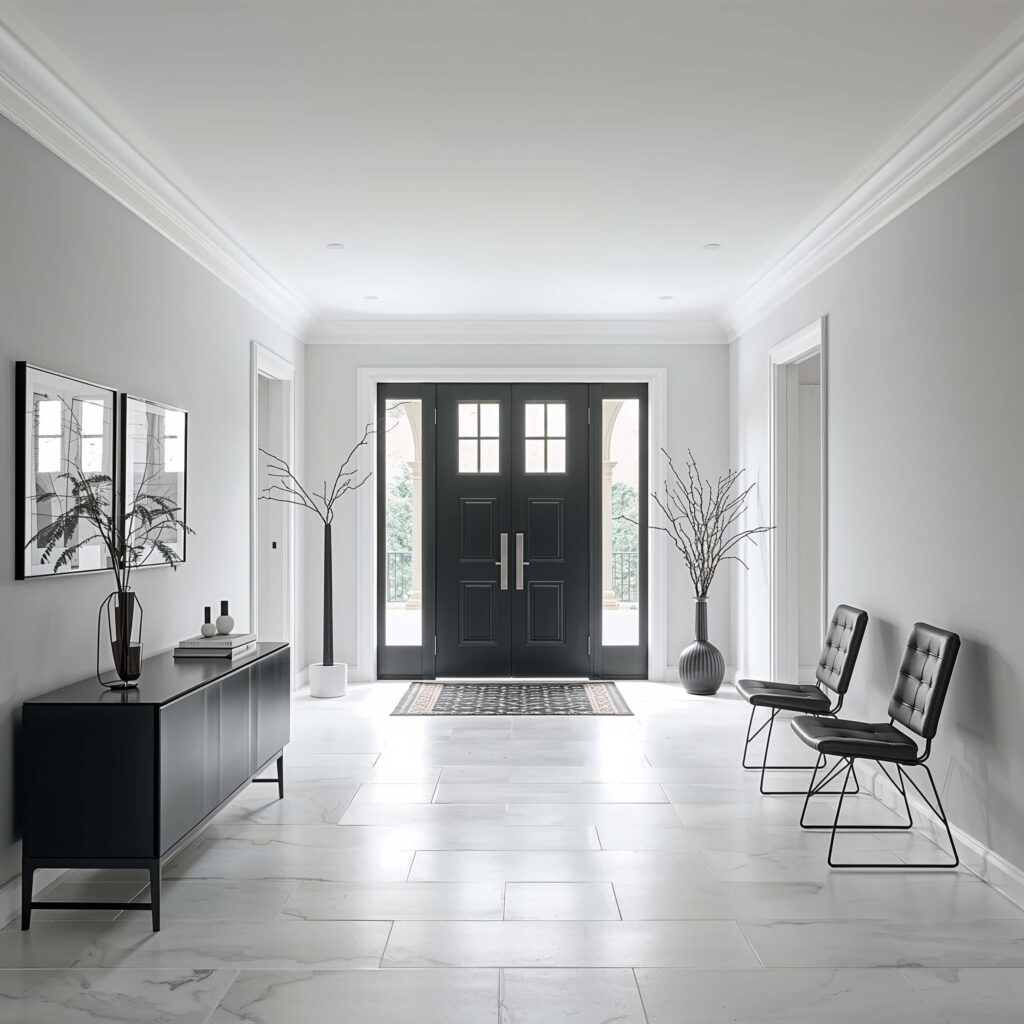
10 Inspiring Door Design Interior Ideas for Small Spaces
- Door Design
 Ben
Ben- 0
- 40 minutes read
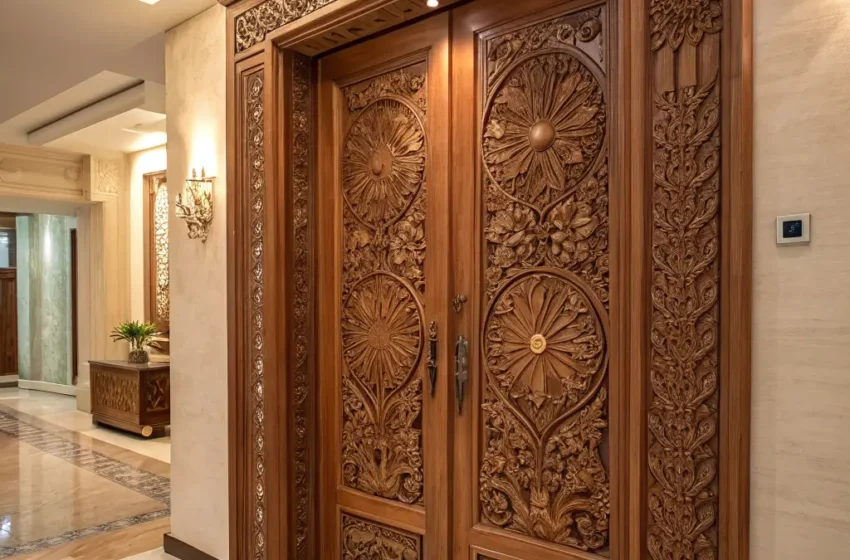
Interior doors are the unsung heroes of home design—they’re working 24/7 to separate spaces, provide privacy, and set the vibe, yet most of us treat them like wallflowers at a party.
Walk through any average home and you’ll find boring, beige, builder-grade doors that scream “I gave up on design after choosing paint colors.”
I learned this lesson the embarrassing way when I hosted a dinner party and my friend (who happens to be an interior designer) spent five minutes studying my doors.
Not my carefully curated gallery wall. Not my statement chandelier. My completely forgettable hollow-core doors.
Her verdict? “Your doors are killing your vibe.” Ouch. That comment sent me down a rabbit hole of interior door designs, and now I’m basically that person who gets excited about doors at home improvement stores.
Whether you’re renovating your entire home, fixing up a single room, or just realizing your doors are design dead zones, these ten interior door design ideas will transform those forgotten rectangles into features worth noticing.
Let’s explore some options that prove doors can be so much more than just barriers between rooms.
Minimalist Wooden Panel Doors
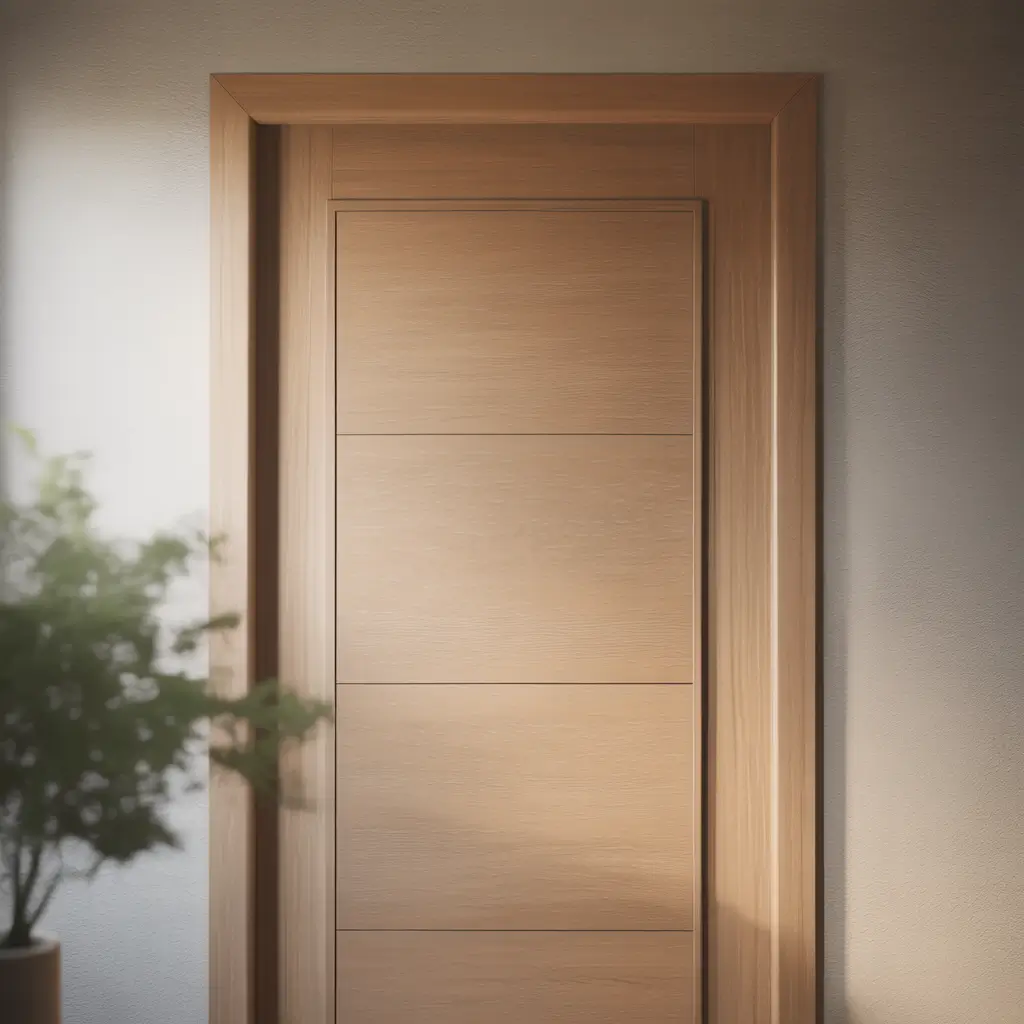
Minimalist wooden panel doors are like the perfect little black dress of interior design—simple, sophisticated, and they make everything else in the room look better. These clean-lined beauties strip away all the Victorian fussiness and colonial clichés, leaving you with pure, uncluttered elegance.
The Beauty of Less
Minimalist doors celebrate what’s not there. No raised panels screaming for attention, no ornate moldings collecting dust, no decorative elements fighting with your carefully chosen furniture. Just smooth, flat surfaces that let the natural wood grain do all the talking.
I replaced my six-panel colonial doors with minimalist flush oak panels last year, and the transformation was instant. My hallway suddenly felt twice as wide and infinitely more sophisticated. Sometimes the simplest changes create the biggest impact.
Material Choices That Matter
The wood you choose becomes the star when you go minimalist:
- Oak: Shows beautiful grain without being overwhelming
- Walnut: Rich, dark tones for dramatic statements
- Maple: Light and bright for airy spaces
- Ash: Affordable with subtle character
- Engineered wood: Budget-friendly consistency
Hardware as the Only Accent
Since minimalist doors lack decorative elements, hardware becomes crucial. Think long, linear handles in brushed nickel or matte black. Consider hidden hinges that maintain clean sight lines. Maybe add a smart lock that looks more like sculpture than security.
The key is choosing hardware substantial enough to feel quality but simple enough not to overwhelm the door’s minimalist aesthetic. Cheap hardware on expensive minimalist doors is like wearing plastic jewelry with a designer outfit—it ruins everything.
Glass Frosted Sliding Doors
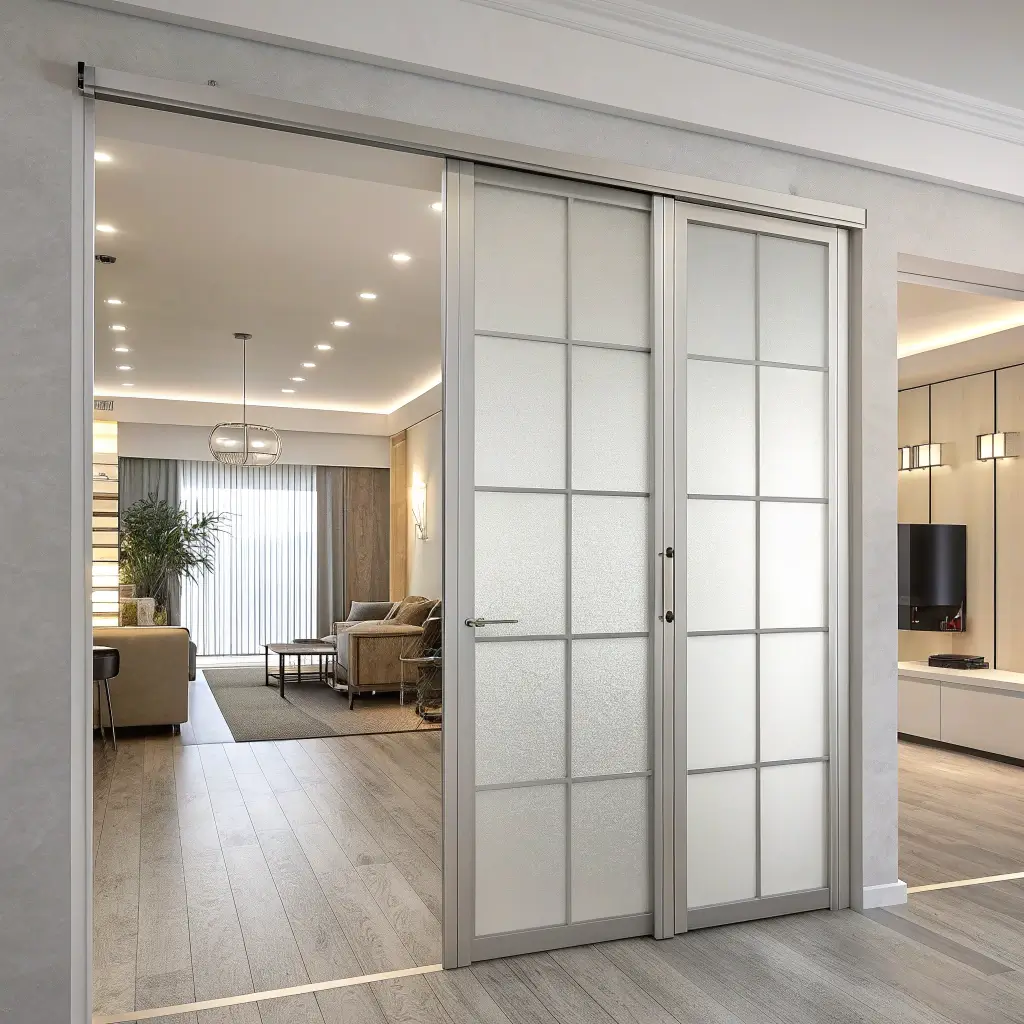
Glass frosted sliding doors are basically magic—they give you privacy without turning your home into a series of dark boxes. These translucent beauties solve the age-old problem of wanting natural light to flow while still being able to change clothes without broadcasting to the entire house.
The Light and Privacy Sweet Spot
Frosted glass creates this dreamy, soft-focus effect that diffuses light beautifully while obscuring details. You can see movement and shapes but zero specifics, which makes them perfect for bathrooms, bedrooms, or home offices where you need separation without isolation.
My home office has frosted sliding doors, and they’re a game-changer. I get natural light from the hallway while maintaining privacy for video calls. Plus, the soft glow they create makes the whole space feel more expensive than it actually is.
Frosting Techniques and Effects
Different frosting methods create different looks:
- Acid-etched: Permanent and smooth
- Sandblasted: Textured with depth
- Frosted film: Budget-friendly and removable
- Gradient frosting: Clear to opaque transitions
- Patterned frosting: Adding decorative elements
Sliding Mechanism Benefits
The sliding mechanism adds another layer of functionality. No door swing means you get back that precious floor space for furniture or just breathing room. I gained enough space in my bedroom to add a reading chair simply by switching from swinging to sliding doors.
Ever wondered why hotels love frosted sliding doors? They create that spa-like serenity while maximizing usable space in compact rooms. Smart design, basically.
Rustic Barn-Style Interior Doors
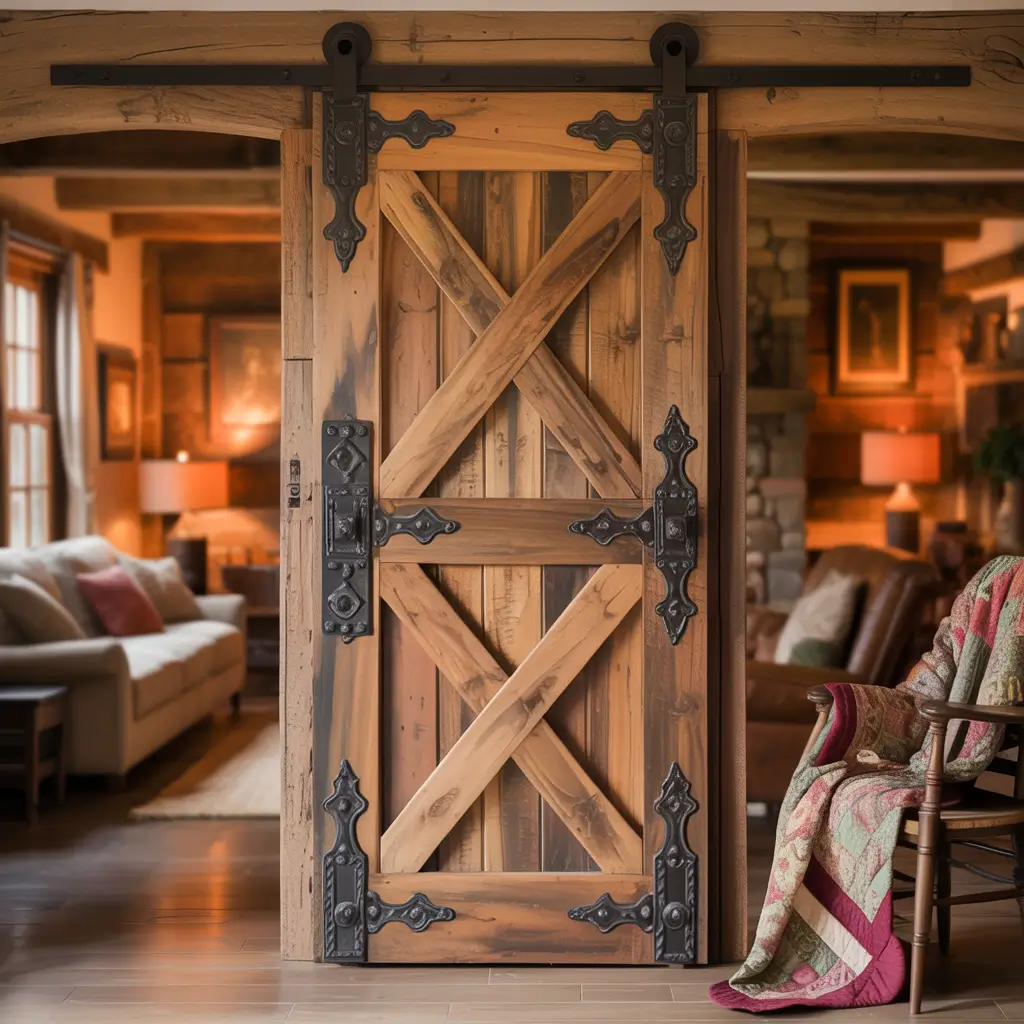
Rustic barn-style doors bring farmhouse charm without requiring an actual farm. These sliding beauties have gone from Pinterest trend to design classic faster than you can say “fixer upper,” and honestly, they deserve the hype.
Beyond the Farmhouse
Modern barn doors work in way more settings than you’d think. I’ve seen them look amazing in industrial lofts, contemporary homes, traditional spaces, and everything in between. The key is choosing the right wood, finish, and hardware to match your overall aesthetic.
The sliding mechanism isn’t just trendy—it’s genuinely practical. Barn doors eliminate door swing, making them perfect for tight spaces or awkward room configurations where traditional doors just don’t work.
Material and Finish Options
Barn doors offer incredible variety:
- Reclaimed wood: Authentic character and history
- New wood with distressing: Faux age that looks real
- Painted finishes: From white to navy to black
- Natural wood with clear finish: Showing grain beauty
- Mixed materials: Wood with metal accents
Hardware as Design Element
Unlike traditional doors where hardware hides, barn door hardware becomes part of the design story. The exposed track, rolling mechanism, and handles add industrial charm that complements the door itself.
I splurged on quality barn door hardware for my laundry room, and three years later, it still operates smoothly. Cheap hardware squeaks, sticks, and eventually fails. This isn’t the place to cut corners.
Also Read: 12 Inspiring Iron Door Design Ideas and Elegant Door Designs
Modern Black Frame Doors
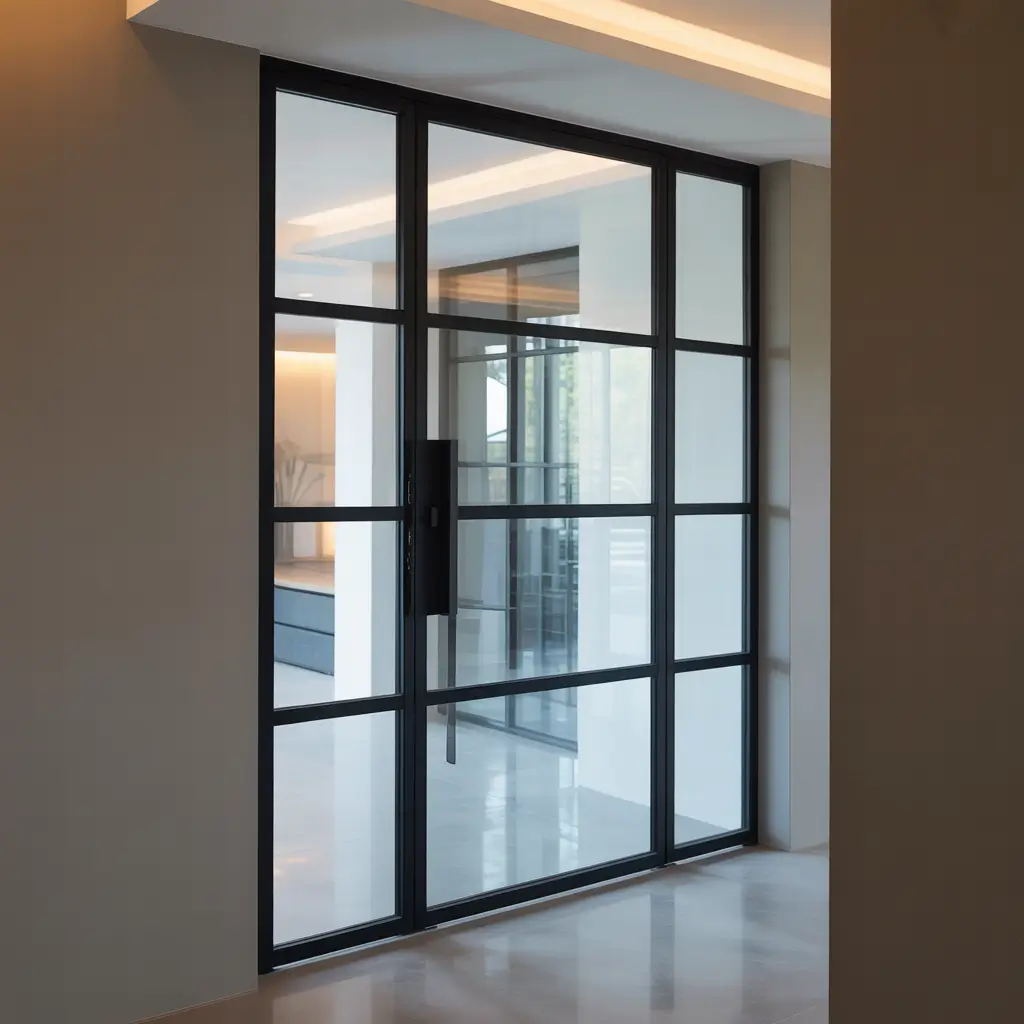
Modern black frame doors are having their moment, and that moment shows no signs of ending. These bold beauties add instant architectural interest while somehow remaining versatile enough to work in virtually any space.
The Power of Black Frames
Black frames create definition and drama without overwhelming the room. They act like architectural eyeliner—defining and emphasizing the glass or panels they surround while adding visual weight that grounds the design.
I added black-framed French doors between my dining room and living room, and suddenly my open floor plan felt more intentional. The black frames delineate spaces without walls, creating flow while maintaining definition.
Glass and Panel Configurations
Black frames work with various infill options:
- Clear glass: Maximum transparency and light
- Frosted glass: Privacy with brightness
- Grid patterns: Traditional or contemporary styling
- Solid panels: When you need complete privacy
- Mixed configurations: Combining glass and solid sections
Coordinating With Other Elements
The beauty of black-framed doors lies in their ability to tie together other black elements in your home. Black light fixtures, cabinet hardware, window frames—the doors create cohesion that makes everything feel intentional rather than random.
FYI, black shows dust and fingerprints, so these doors work best in low-traffic areas or homes where you don’t mind regular cleaning. But honestly, the visual impact is worth the maintenance.
Mirror-Accented Bedroom Doors
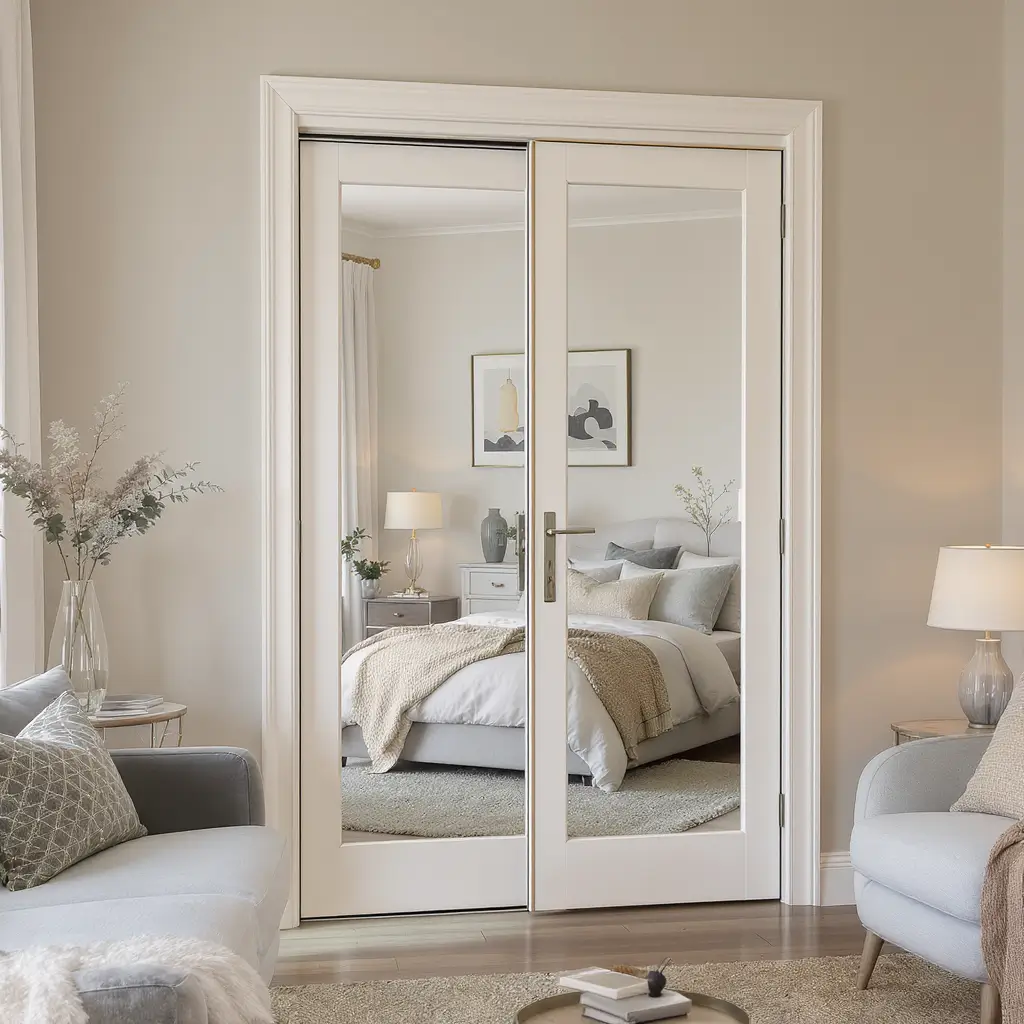
Mirror-accented bedroom doors are multitasking champions—they provide privacy, reflect light, make spaces feel larger, AND eliminate the need for a separate full-length mirror. That’s serious efficiency.
The Space-Expanding Effect
Mirrors literally double the visual space of your bedroom. A mirrored door reflects the opposite wall, windows, and any light sources, creating an illusion of depth that makes even tiny bedrooms feel more spacious.
My sister’s small bedroom went from cramped to cozy simply by replacing her solid door with a mirror-accented version. Guests always comment on how spacious her room feels, not realizing they’re looking at a reflection of half the room.
Mirror Application Methods
Different approaches create different effects:
- Full mirror: Maximum impact and function
- Framed mirror panels: Adding decorative elements
- Antique mirror: Character with imperfect reflection
- Mirror strips: Modern and graphic
- Partial mirror: Combining mirror with other materials
Practical Considerations
Mirror doors come with unique challenges. They’re heavier than regular doors, requiring sturdy hardware. They show every fingerprint and smudge. And some people find them psychologically uncomfortable in private spaces.
But for closets, dressing areas, or bedrooms where the benefits outweigh the drawbacks, mirror doors deliver both form and serious function.
Colorful Statement Doors
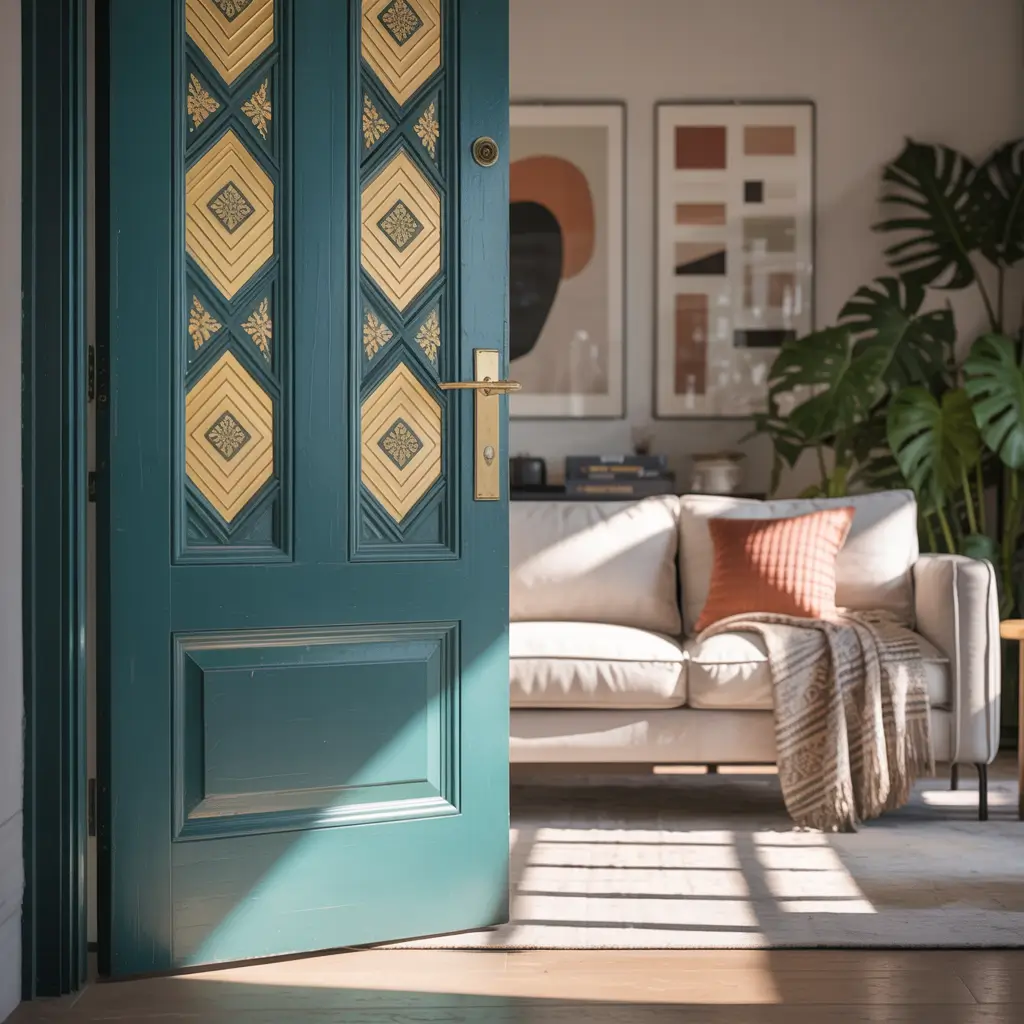
Colorful statement doors are for people who believe entrances should be memorable. These bold beauties transform boring transitions into personality-packed moments that make you smile every time you walk through.
The Psychology of Color
Different colors create different moods and messages:
- Coral: Energizing and welcoming
- Navy: Sophisticated and calming
- Emerald green: Rich and natural
- Mustard yellow: Cheerful and optimistic
- Deep purple: Creative and luxurious
I painted my bathroom door a gorgeous teal, and it completely transformed the hallway. What was once a boring beige corridor became a design feature that actually makes me happy. Sometimes doors deserve to be the star of the show.
Making Bold Colors Work
The key to successful colored doors is confidence and context:
- Choose colors that complement your overall palette
- Consider how the door looks from both sides
- Think about whether you’ll tire of the color
- Balance bold doors with neutral surroundings
- Use quality paint that won’t fade or chip
Finish Options for Maximum Impact
The finish affects how colors appear and perform:
- High-gloss: Dramatic and reflective
- Satin: Sophisticated balance
- Matte: Modern and rich
- Semi-gloss: Easy maintenance
- Eggshell: Subtle sheen
Also Read: 10 Bold Steel Door Design Ideas and Statement Entrances
Teak Wood Carved Doors
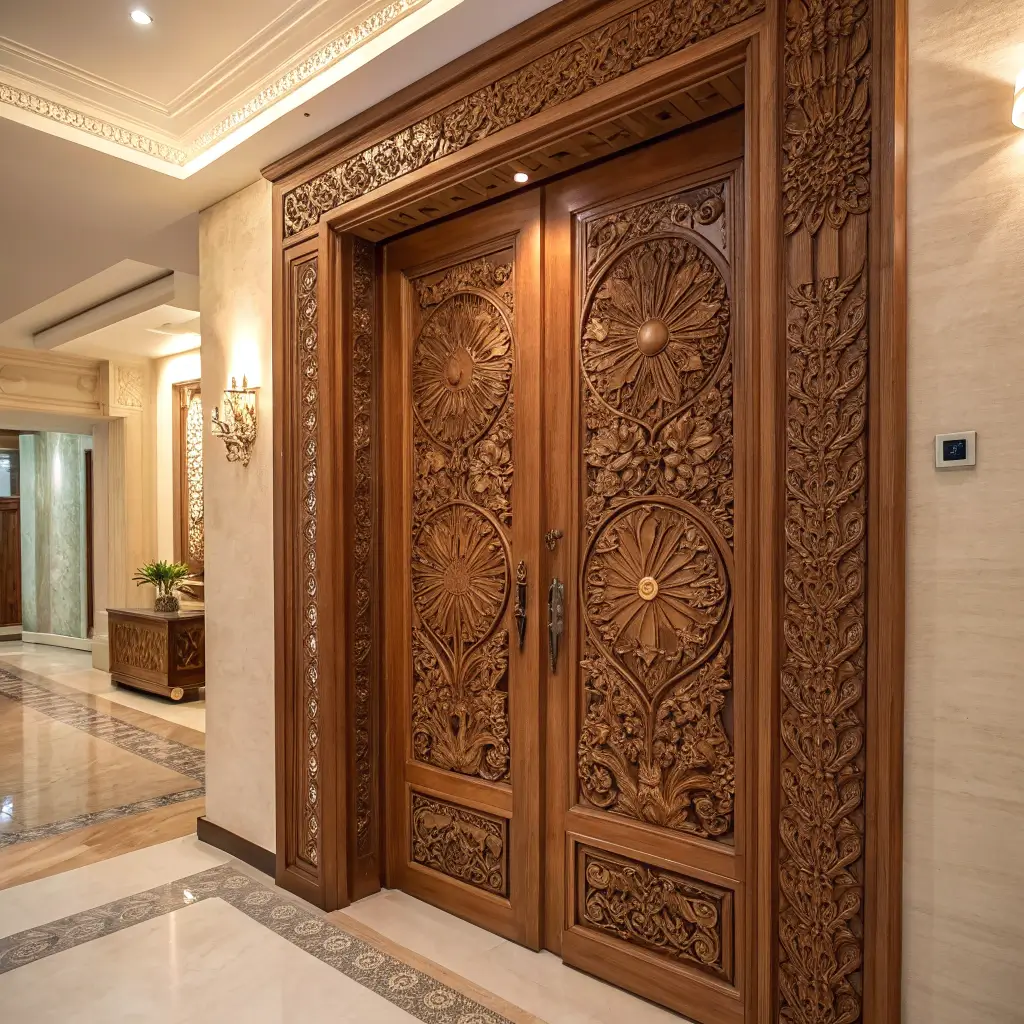
Teak wood carved doors bring artisan craftsmanship and exotic beauty to interior spaces. These detailed masterpieces turn functional necessities into conversation-starting focal points.
The Luxury of Teak
Teak’s natural oils make it incredibly durable while its golden honey color adds warmth to any space. The wood’s density holds intricate carving details beautifully, creating shadows and depth that change throughout the day as light shifts.
I visited a friend’s home with hand-carved teak bedroom doors featuring traditional Indonesian patterns. Every guest who visits comments on those doors before noticing anything else. That’s the power of genuine craftsmanship.
Carving Styles and Traditions
Different cultures offer distinct carving approaches:
- Balinese: Organic, nature-inspired flowing designs
- Indian: Intricate florals and spiritual symbols
- Thai: Geometric patterns with cultural meaning
- Contemporary: Modern interpretations of traditional techniques
- Abstract: Artistic rather than representational
Investment and Maintenance
Teak carved doors represent significant investments, but they’re heirlooms rather than purchases. These doors last generations with proper care, developing richer patina over time. The occasional oil treatment keeps them looking beautiful while protecting the wood.
IMO, if you’re going to splurge on one interior element, carved teak doors deliver daily satisfaction that justifies the cost.
Pocket Doors for Small Spaces
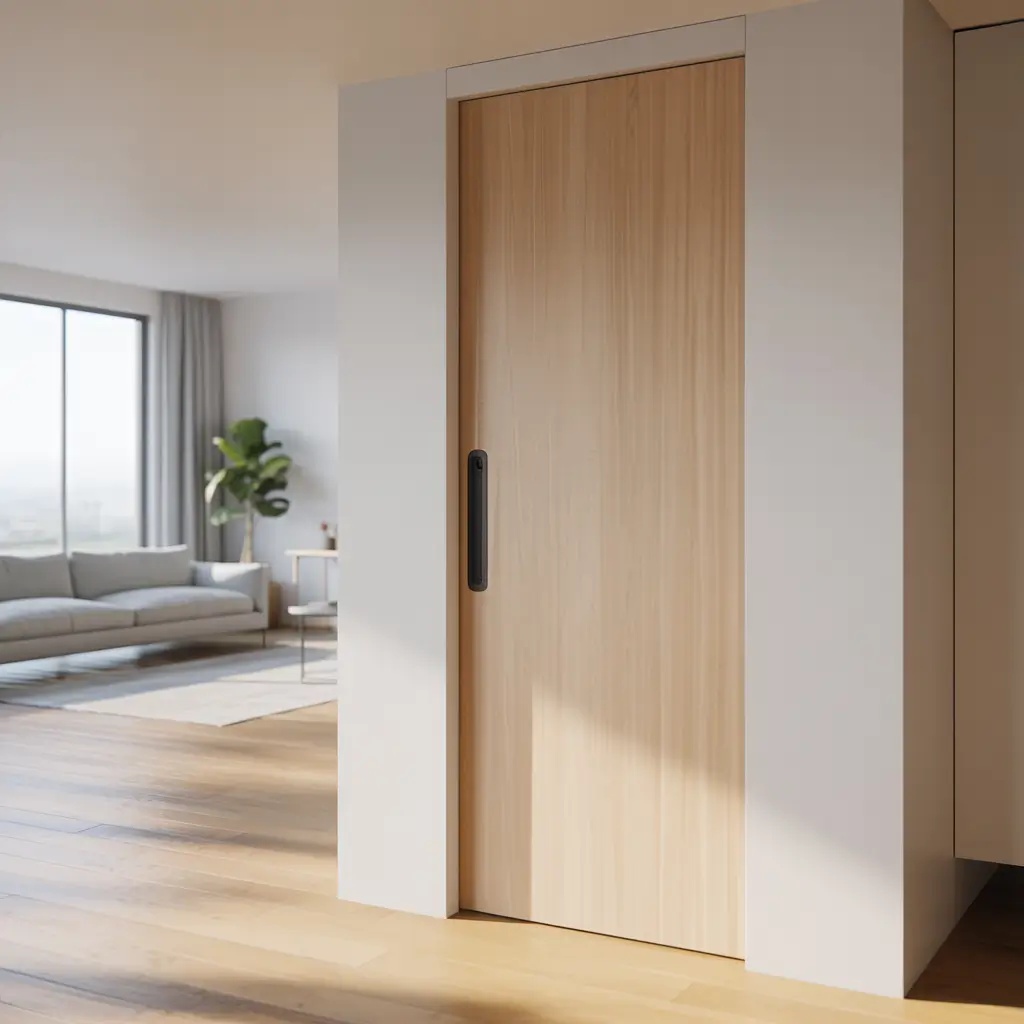
Pocket doors are the ninjas of interior design—they completely disappear when you don’t need them, giving you back precious square footage in tight spaces. These space-saving magicians prove that sometimes the best door is an invisible one.
The Disappearing Act
When open, pocket doors slide completely into the wall cavity, vanishing from sight. This eliminates door swing entirely, freeing up floor space for furniture or just making small rooms feel less cramped.
I installed pocket doors in my tiny guest bathroom, and suddenly there was room for a proper vanity instead of a pedestal sink. Sometimes saving nine square feet of door swing makes the difference between functional and frustrating.
Installation Realities
Pocket doors require specific conditions:
- Wall cavity free of plumbing and electrical
- Proper framing during construction or renovation
- Quality hardware for smooth operation
- Professional installation for best results
- Adequate wall thickness for the pocket
Modern Pocket Door Innovations
Today’s pocket doors have evolved beyond the squeaky, stuck nightmares of the past:
- Soft-close mechanisms preventing slams
- Better rollers for smooth operation
- Sound-dampening options for privacy
- Security locks that actually work
- Wider openings than traditional doors
The technology has improved dramatically, making modern pocket doors reliable rather than regrettable.
Geometric Patterned Doors
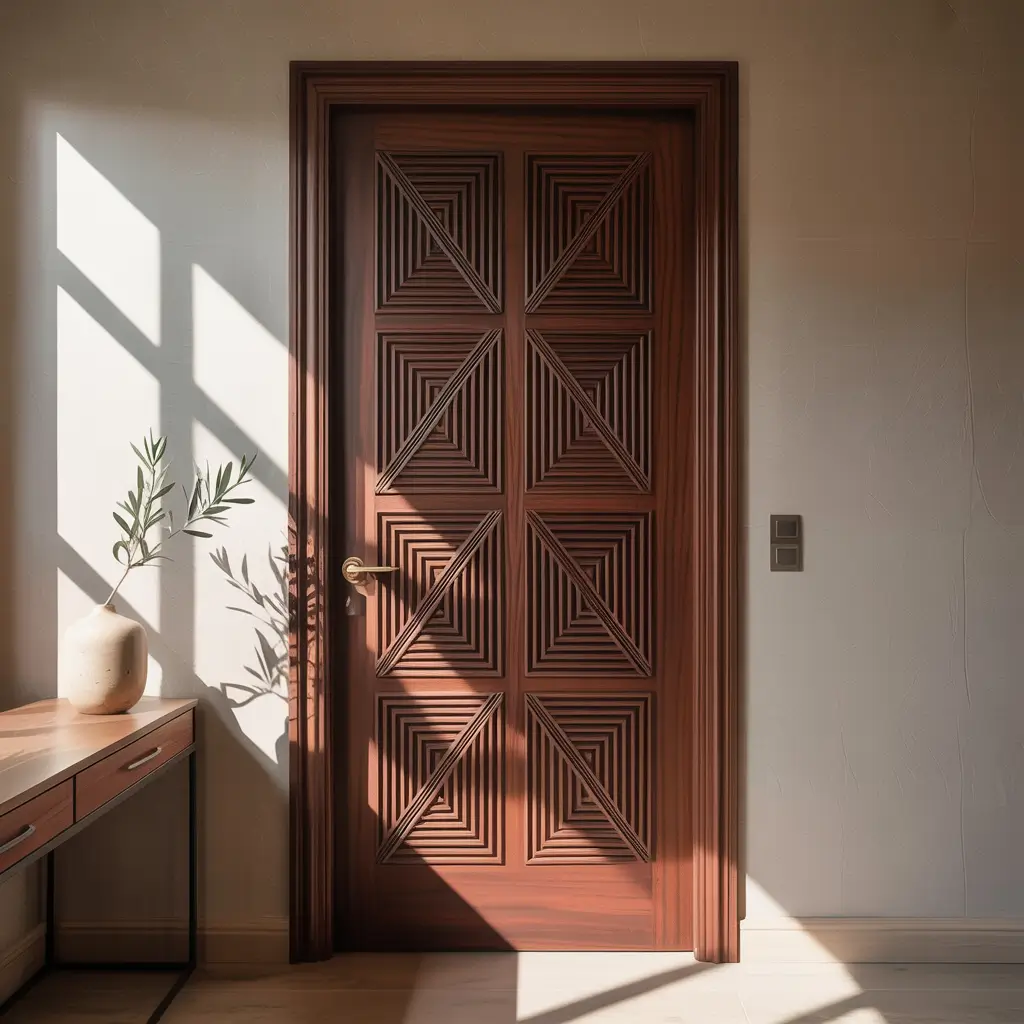
Geometric patterned doors turn mathematics into art. These precision-designed beauties use repeating shapes and patterns to create visual interest that’s both modern and timeless.
Pattern Possibilities
Geometric patterns can range from simple to complex:
- Chevron and herringbone: Creating movement
- Hexagonal honeycomb: Organic geometry
- Diamond lattice: Classic with updates
- Abstract asymmetry: Breaking expectations
- Grid variations: Simple but effective
Creating the Pattern
Geometric patterns can be achieved through:
- Applied molding creating raised designs
- Routed grooves in solid doors
- Inlay work with contrasting materials
- Painted patterns on flat surfaces
- Mixed wood species showing through grain
I designed a door with a subtle chevron pattern using alternating wood grain directions. The pattern is barely visible until light hits it at certain angles, creating this sophisticated surprise element that I never tire of.
Scale and Proportion
The pattern scale dramatically affects the door’s impact. Small patterns create texture and richness up close, while larger patterns read from across the room. Consider your viewing distance when designing geometric patterns.
Also Read: 12 Creative Veneer Door Design Ideas and Trendy Looks
Industrial Metal Frame Doors
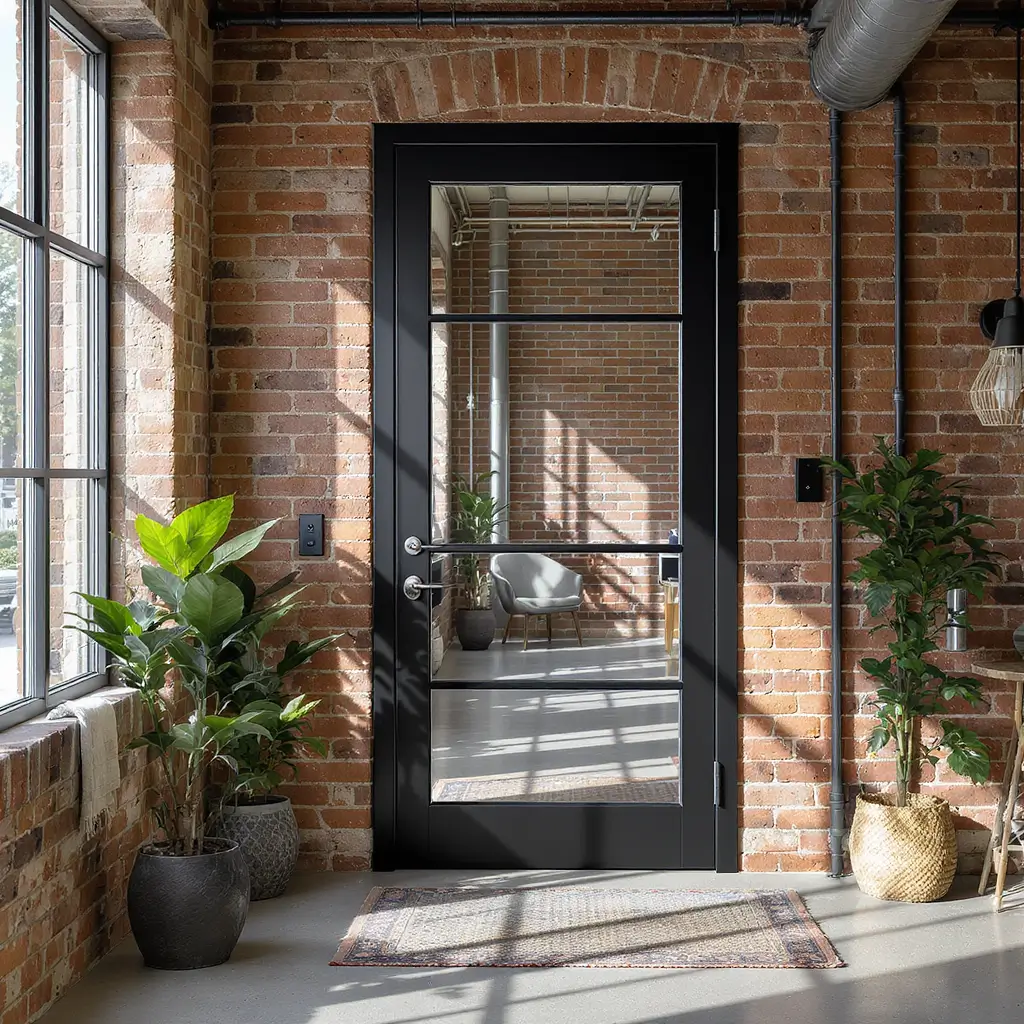
Industrial metal frame doors bring urban edge and factory-chic style to residential interiors. These warehouse-inspired designs prove that commercial aesthetics can feel surprisingly homey when done right.
The Industrial Appeal
Metal frame doors reference commercial and industrial spaces while maintaining residential appropriateness. The thin metal profiles maximize glass area while providing structure and style that feels both raw and refined.
My home office has an industrial metal frame door with grid glass panels, and it’s become my favorite feature. The door adds character while flooding the space with natural light, creating this perfect balance of separation and connection.
Frame Materials and Finishes
Different metals create different moods:
- Steel: Authentic industrial with strength
- Aluminum: Lighter weight and corrosion-resistant
- Iron: Traditional with substantial feel
- Black powder coat: Classic and versatile
- Raw metal: Developing natural patina
Glass and Panel Options
Industrial frames work with various infills:
- Clear glass for maximum transparency
- Grid patterns referencing factory windows
- Frosted glass for industrial privacy
- Mixed glass types for visual interest
- Solid panels when glass isn’t appropriate
The versatility means you can have industrial style while meeting your specific privacy and light needs.
Making Your Interior Door Decision
Choosing the right interior doors involves balancing aesthetics, function, budget, and your overall design vision. But here’s the thing—doors affect your daily life more than most decorative elements, so they’re worth getting right.
Consider your home’s architectural style first. Modern spaces might lean toward minimalist or industrial doors, while traditional homes might prefer carved wood or classic panels. The key is choosing doors that enhance rather than fight your existing architecture.
Don’t forget about practical needs. High-traffic areas benefit from durable materials and finishes. Bedrooms need privacy. Small spaces demand space-saving solutions. Let function guide your aesthetic choices.
Budget matters, but remember that interior doors last decades. Sometimes saving for the doors you really want beats settling for something that’ll bug you every day. These aren’t trendy throw pillows you’ll replace next season—they’re long-term investments in your daily environment.
Final Thoughts
Interior doors have evolved from purely functional barriers to design opportunities that enhance every space they occupy.
Whether you choose minimalist simplicity or carved complexity, colorful boldness or industrial edge, the right doors transform your home’s flow and feel.
I’ve learned through multiple door upgrades that these overlooked elements make outsized impacts on how spaces feel.
Good doors create seamless transitions, define spaces elegantly, and add personality that makes your home distinctly yours.
The key is treating interior doors as the design elements they are rather than necessary evils. Choose them with intention, install them with care, and maintain them with respect.
Do these things, and your doors will reward you with decades of daily satisfaction.
So stop accepting boring builder-grade doors as permanent fixtures. Your home deserves entrances and transitions that contribute to its story rather than just filling openings.
Pick a design that speaks to you, invest in quality materials and installation, and enjoy the transformation 🙂
After all, you walk through these doors every single day. Shouldn’t they make you smile rather than sigh?