10 Creative English Classroom Decor Ideas to Boost Engagement
- Classroom Decor
 Ben
Ben- 0
- 31 minutes read
Picture this: You walk into an English classroom, and instead of the usual sterile walls and boring posters, you’re hit with an explosion of colors, words, and creativity that makes you actually want to learn. Sounds like a dream? Well, I’m about to show you how to turn any drab classroom into a space where students genuinely get excited about language arts.
After spending years tweaking my own classroom setup (and stealing ideas from colleagues – we all do it!), I’ve discovered that the right decor doesn’t just make your room Instagram-worthy; it literally transforms how students engage with English. Trust me, when kids walk in asking what’s new on the walls, you know you’re onto something good.
Vocabulary Wall of Fame
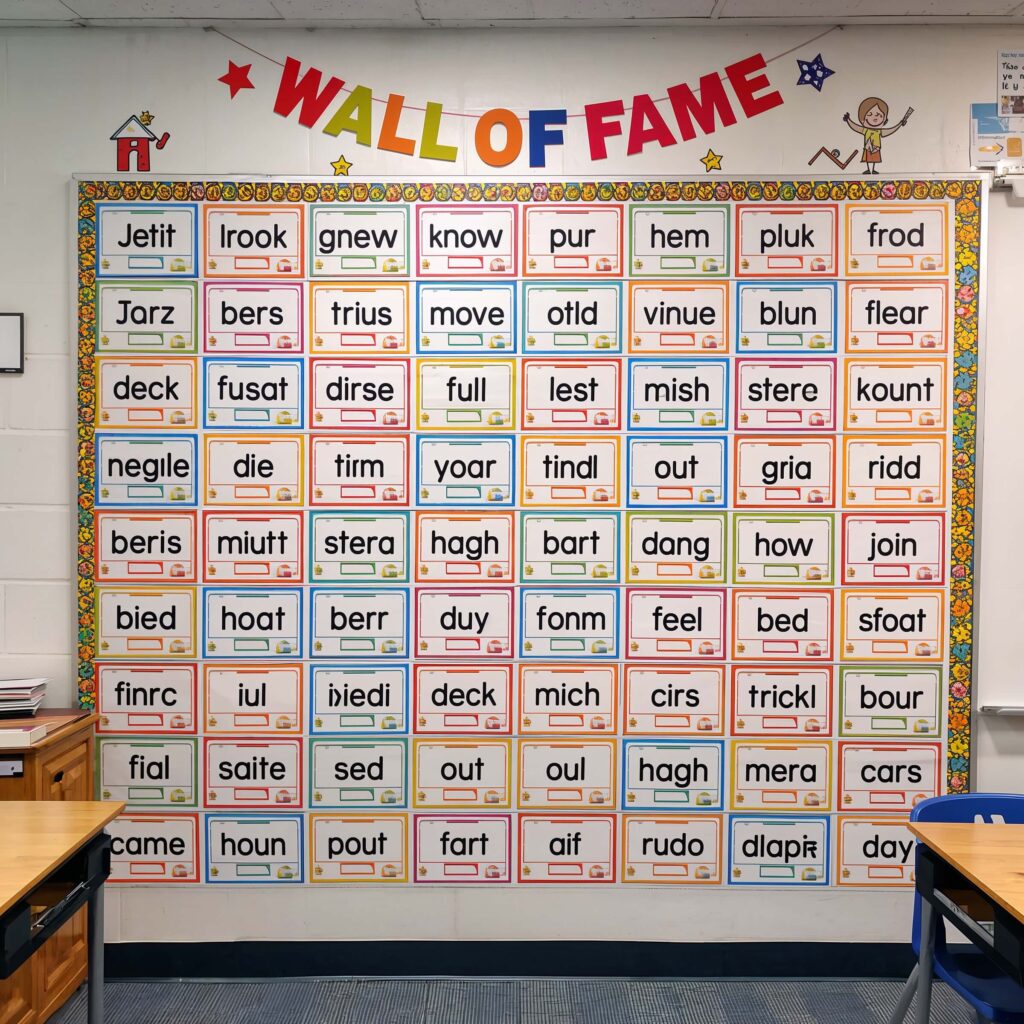
Let’s kick things off with my personal favorite – the Vocabulary Wall of Fame. This isn’t your grandmother’s word wall with index cards taped to the board. We’re talking about creating a celebrity-style showcase where words become the stars of your classroom.
I started this in my classroom three years ago, and the results blew my mind. Students actually compete to get their vocabulary discoveries featured! Here’s what makes it work: instead of just listing words, you create profiles for each one. Think of it like a dating app for vocabulary – each word gets its own card with its definition, pronunciation guide, example sentences, and even a fun fact or two.
Making It Interactive
The magic happens when you let students nominate words for the wall. Every week, they submit their candidates with a brief “campaign speech” explaining why their word deserves fame. The class votes on Friday, and winners get added with full ceremony – I’m talking drumroll sound effects and everything. Is it a bit theatrical? Absolutely. Does it work? You bet it does!
Want to take it up a notch? Add QR codes that link to videos of students using the words in context. Kids love seeing themselves on screen, and suddenly everyone wants to create content for the wall. Plus, parents visiting during open house get a kick out of scanning the codes and watching their children teach vocabulary.
Design Tips That Actually Matter
Keep your color scheme consistent – I learned this the hard way when my first attempt looked like a rainbow threw up on my wall. Choose three main colors max, and stick with them throughout. I use gold stars for the frame (hence the “fame”), black for the text, and one accent color that changes monthly.
Position matters too. Place this wall where students naturally look when they’re stuck for words – near the writing center or opposite the main seating area works brilliantly.
Literary Quote Corner
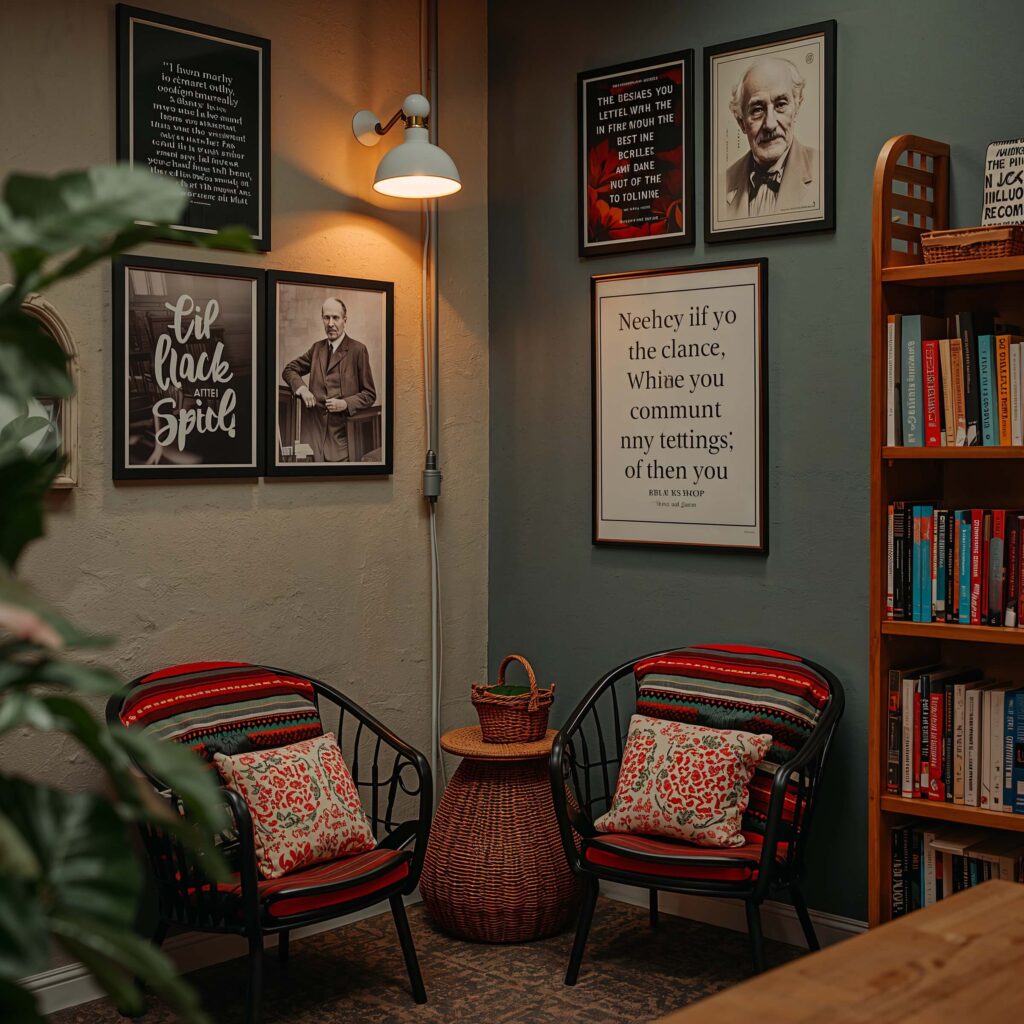
Who says teenagers don’t appreciate good quotes? They share them on social media all the time! The Literary Quote Corner taps into this by creating a dedicated space where literature’s greatest hits meet modern-day relevance.
Start with the classics – Shakespeare, Maya Angelou, Mark Twain – but here’s the twist: pair each quote with a modern interpretation or meme. Yeah, you heard that right. When students see Hamlet’s “To be or not to be” next to a relatable meme about choosing between Netflix and homework, suddenly Shakespeare doesn’t seem so distant.
Student Contributions Make It Shine
Every month, challenge students to find quotes from their independent reading books. The catch? They have to explain why the quote matters to them personally. This personal connection transforms passive reading into active engagement. I’ve had kids bring in quotes from graphic novels, song lyrics, and even video games – if it’s written and meaningful, it counts!
Create a submission box decorated like an old-school mailbox. Students drop in their quotes with explanations, and you feature a new one each week. The anticipation of seeing their quote displayed motivates even reluctant readers to pay attention while reading.
Visual Impact Strategies
Frame your quotes using unexpected materials. Old window frames from thrift stores, vintage mirrors, or even repurposed tablet screens create visual interest. Vary the sizes and heights to create a gallery wall effect that draws the eye around the corner.
Lighting makes a huge difference here. String lights or small spotlights can turn your quote corner into a cozy, Instagram-worthy spot where students actually want to hang out during lunch.
Interactive Grammar Board
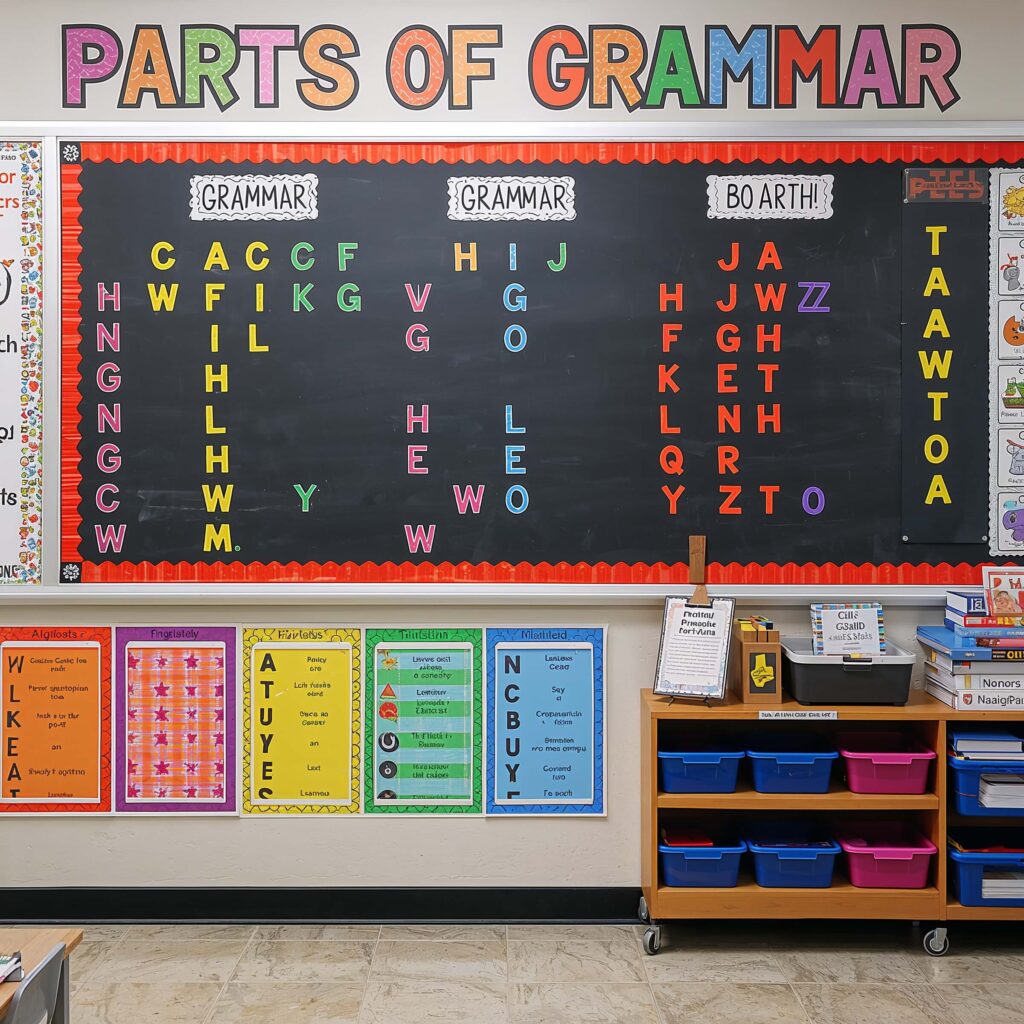
Grammar doesn’t have to be the boring uncle at the English party. An Interactive Grammar Board transforms those yawn-inducing rules into hands-on activities that students actually enjoy. Shocking, right?
The key word here is “interactive” – this isn’t a static display of comma rules. Create moveable pieces using Velcro or magnets so students can physically manipulate sentence parts. I have sentence strips where students can literally pick up subjects and predicates, moving them around to see how meaning changes.
Games That Teach Without Preaching
Turn grammar practice into a competitive sport. Set up a “Grammar Challenge of the Week” where students race to fix sentences, identify parts of speech, or create the longest grammatically correct sentence using word cards. Winners get their names on a special “Grammar Guru” badge displayed prominently on the board.
My favorite addition? The “Grammar Hospital” where students bring “sick” sentences (ones with errors) they find in the real world. They diagnose the problem and prescribe the cure, complete with prescription pads and everything. It’s nerdy, sure, but kids eat it up.
Organization That Makes Sense
Divide your board into clear sections: one for parts of speech (with color coding – nouns in blue, verbs in red, etc.), another for punctuation rules, and a third for common errors. Use pocket charts or clear plastic sleeves so you can switch content based on what you’re teaching.
Don’t forget to include a “Grammar Emergency Kit” – a small box with quick reference cards students can grab when they’re stuck. It empowers them to find answers independently instead of always asking you.
Reading Nook with Cushions
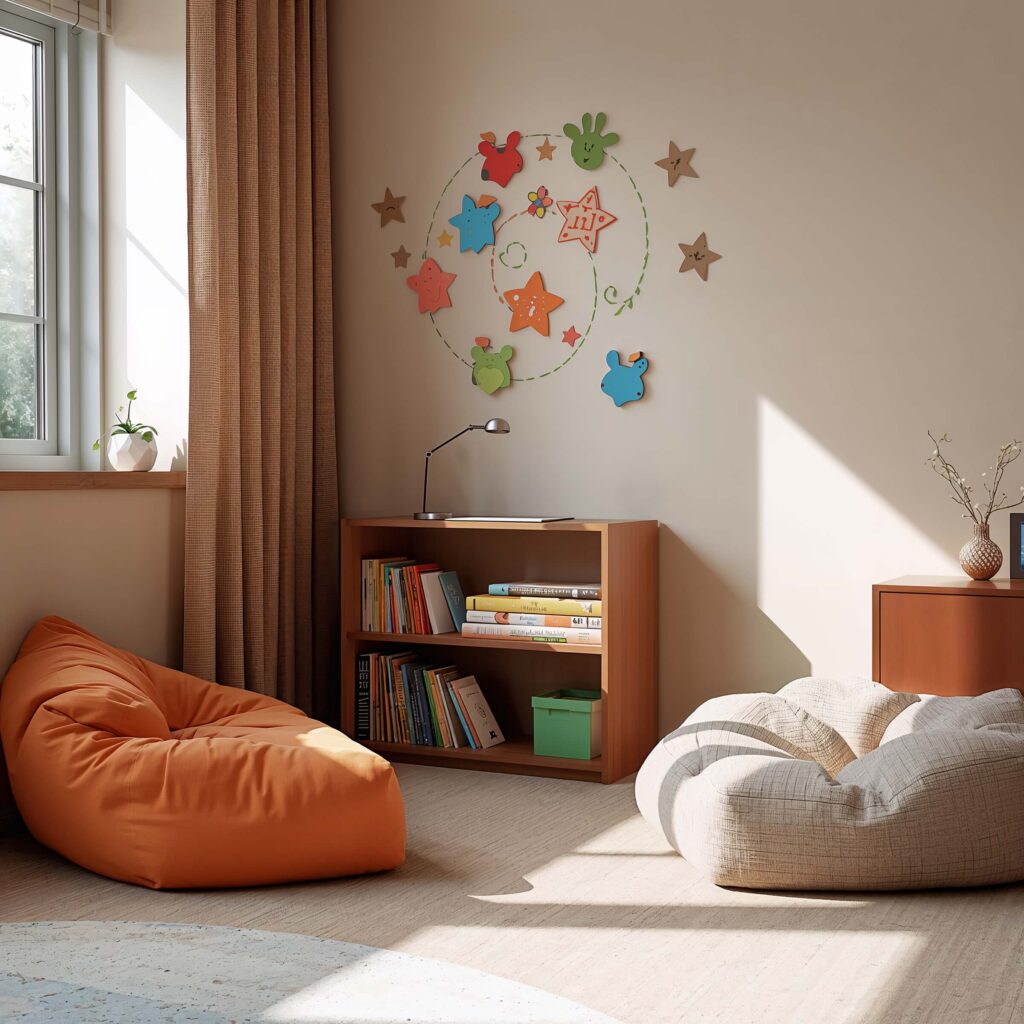
Every classroom needs that one spot where the magic happens, and nothing beats a cozy reading nook. But we’re not just throwing some pillows in a corner and calling it a day. A truly engaging reading nook becomes a destination, not just a decoration.
Location is everything. Find a corner with natural light if possible – near a window is golden. If you’re stuck with no windows (I feel your pain), create ambiance with warm lamp lighting. The goal? Make it feel nothing like a classroom and everything like their favorite coffee shop or bedroom.
Comfort Meets Functionality
Here’s what I learned after multiple iterations: bean bags look cool but become gross surprisingly fast. Instead, invest in washable floor cushions and a small bookshelf that doubles as a bench. Add a couple of inflatable chairs that you can deflate and store when you need the space – flexibility is key in cramped classrooms.
The secret sauce? Let students help design it. Run a contest where they submit nook design proposals. When they have ownership, they respect the space more. Plus, you get free interior design consultation from people who actually use the space!
Rules That Keep It Special
Make the reading nook a privilege, not a right. Students earn nook time through reading goals, improved test scores, or simply being caught reading outside class. Create a simple booking system – I use a pocket chart with time slots where students can reserve their spot.
Stock it with high-interest books that might not be curriculum standards. Graphic novels, magazines, poetry collections – variety keeps them coming back. Rotate the selection monthly to maintain novelty.
Also Read: 10 Charming Preschool Classroom Decor Ideas for Cozy Classrooms
Word of the Week Display
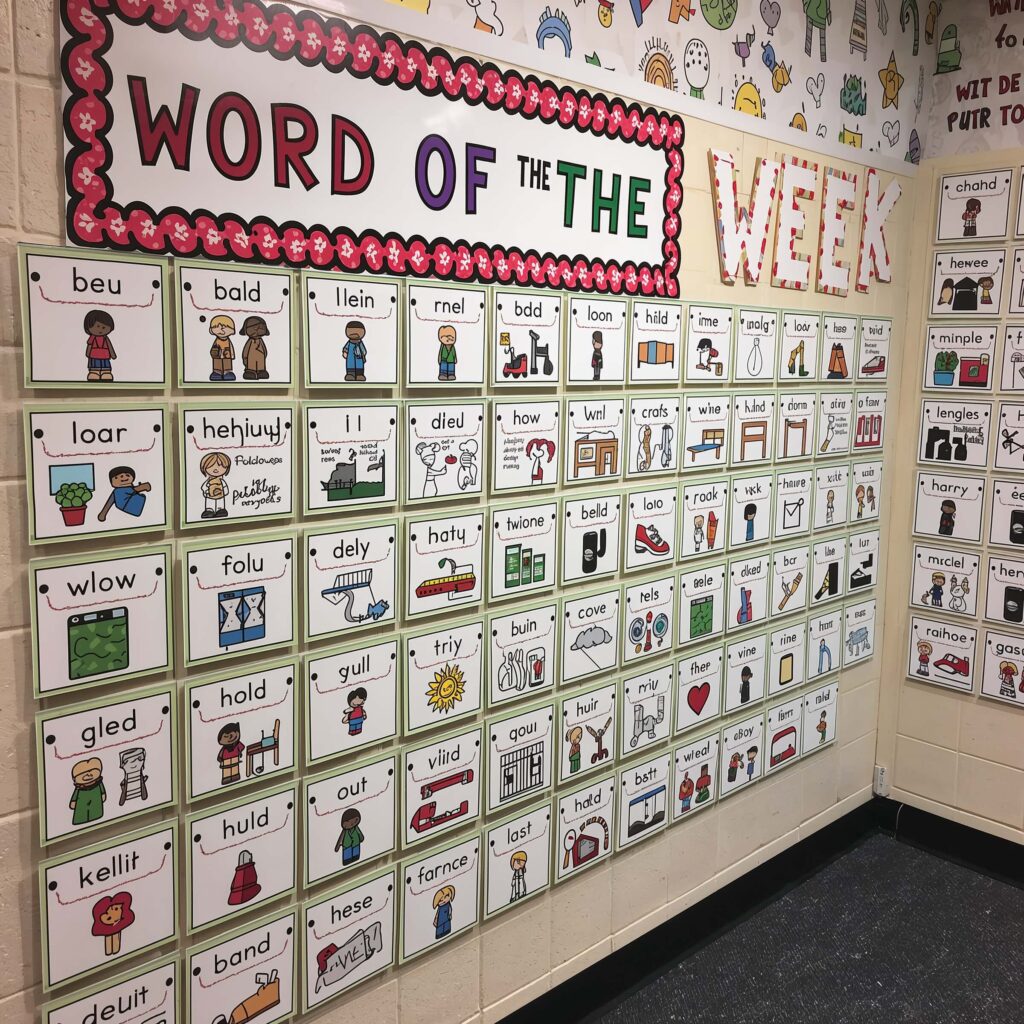
Remember when we all learned “supercalifragilisticexpialidocious” just because it was fun to say? The Word of the Week Display captures that same energy but with words students might actually use. IMO, this is one of the easiest ways to expand vocabulary without making it feel like work.
Choose words that are useful but interesting – “serendipity,” “ephemeral,” “petrichor” – words that make students go “ooh, what’s that?” Display the word prominently with its pronunciation, definition, origin story, and use it in context throughout the week.
Making It Stick
Here’s the trick: you have to use the word naturally in conversation all week. When something good happens unexpectedly, casually mention “what a serendipitous moment!” Students pick up on it and start using it too, often incorrectly at first (which leads to hilarious moments), but that’s how learning happens.
Create a challenge where students get points for using the word correctly in their writing or speech. Keep a tally chart visible, and the student who uses it most effectively gets to choose next week’s word from a pre-selected list.
Display Design That Pops
Use a large picture frame or shadow box as your display case. Include visual elements – photos, drawings, or objects that represent the word. For “petrichor,” I brought in a small vial of dirt and a spray bottle. Students could literally smell what the word meant!
Add a “Word History” timeline showing how the word evolved. Kids find it fascinating that “nice” used to mean “ignorant” in the 13th century. These etymology lessons stick better than any vocabulary worksheet ever could.
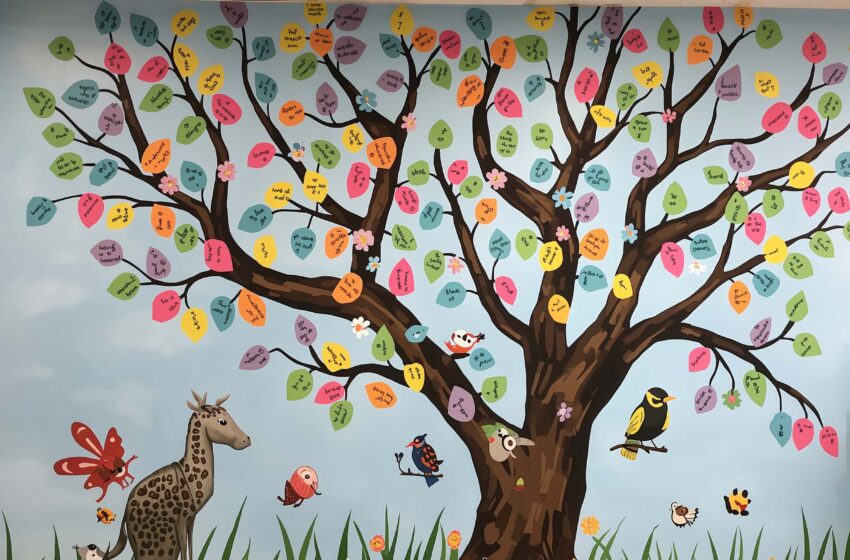
Storytelling Tree Mural
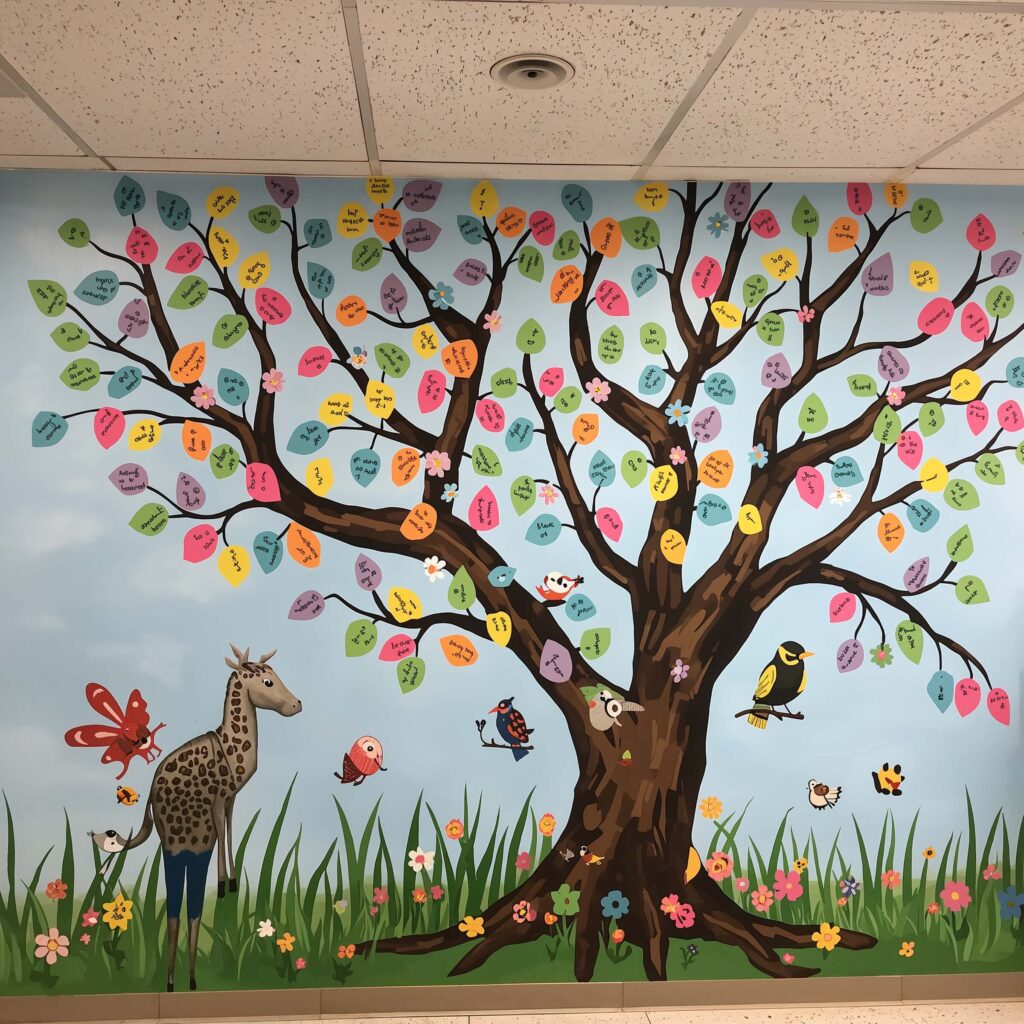
Want to transform an entire wall into something magical? Enter the Storytelling Tree Mural – a massive tree painted or created on your wall where branches literally grow stories throughout the year.
Start with the trunk and main branches (recruit artistic students or parents – someone always knows someone who can paint). Leave the branches bare at first. As students read books or write stories, they add leaves, flowers, or fruits to the branches. Each addition represents a completed book or original story.
Building the Story Ecosystem
Color-code by genre: green leaves for realistic fiction, orange for fantasy, purple for poetry, etc. Students write book titles and authors on their additions, creating a visual library of everything your class has read.
Add bird nests containing “story starter” eggs – small papers with writing prompts. Students can pick one when they’re stuck for ideas. Hang small envelopes from branches containing “character cards” or “plot twist suggestions” that students can use in their writing.
Seasonal Evolution
Let your tree change with the seasons and curriculum. In fall, add leaves with scary stories for Halloween. Winter brings snowflakes with holiday tales. Spring flowers bloom with poetry. This evolution keeps the mural fresh and gives students something to anticipate.
Create a “root system” at the base where you display the foundations of storytelling – plot diagrams, character development guides, writing process steps. It’s educational and artistic 🙂
Also Read: 10 Bright Elementary Classroom Decor Ideas for Happy Students
Alphabet Adventure Path
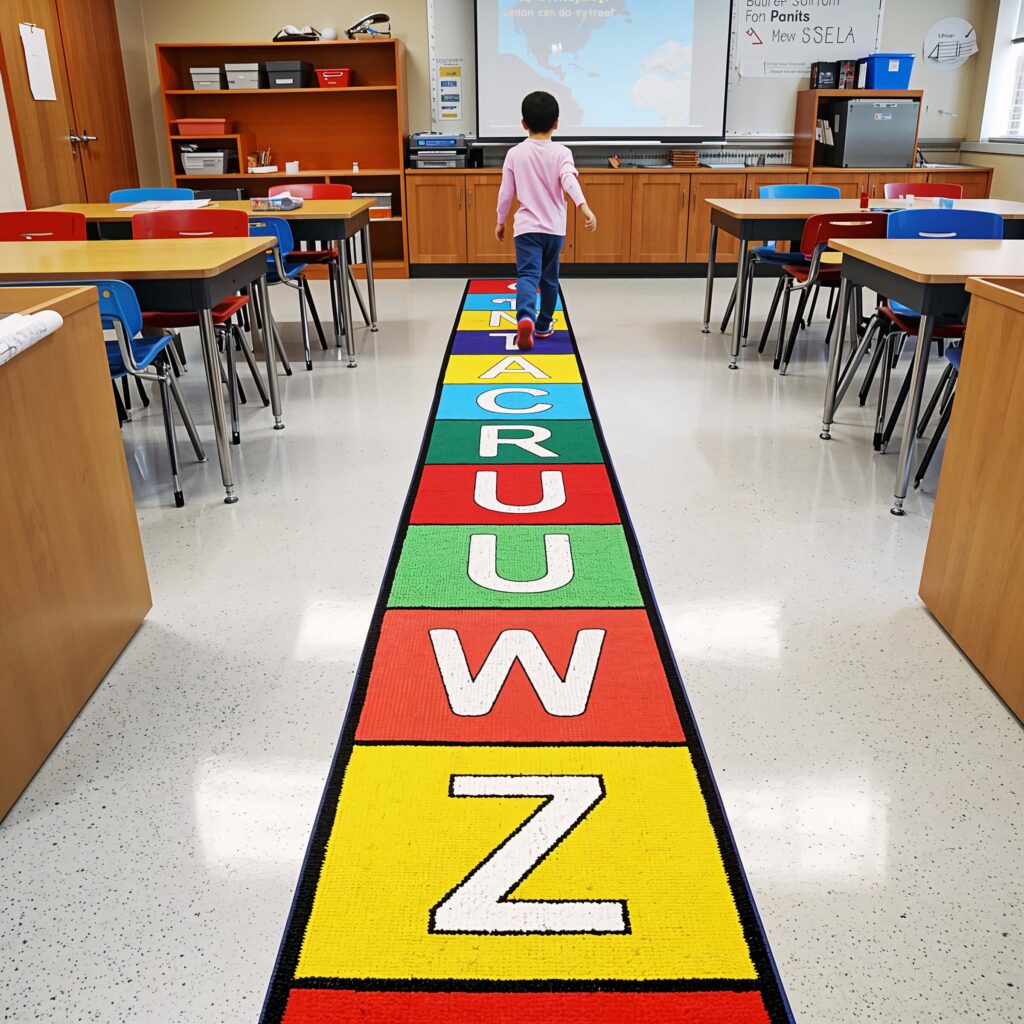
Who says alphabet displays are just for elementary classrooms? The Alphabet Adventure Path takes this concept and matures it for older students. Create a pathway around your room where each letter showcases advanced vocabulary, literary terms, or author names.
Instead of “A is for Apple,” you get “A is for Alliteration, Austen, and Antagonist.” Each letter becomes a mini-lesson in itself. The path physically guides students around the room, making it perfect for kinesthetic learners who need to move while learning.
Interactive Elements
Add QR codes or NFC tags to each letter that link to videos, games, or additional resources. Students can explore deeper during free time or when they finish work early. It’s self-directed learning that doesn’t feel like extra work.
Create scavenger hunts using the path. “Find three literary devices that start with different letters” or “Locate five authors from five different centuries.” These activities get students up and moving while reinforcing content.
Design for Maximum Impact
Use floor decals if possible – students love walking on them. If floor decals aren’t feasible, create a border around the room at student eye level. Vary the fonts and styles for each letter to represent different literary periods or genres.
Include student work examples for each letter. When studying metaphors, display the best student-created metaphors under ‘M’. This recognition motivates others to step up their game.
Student Writing Showcase
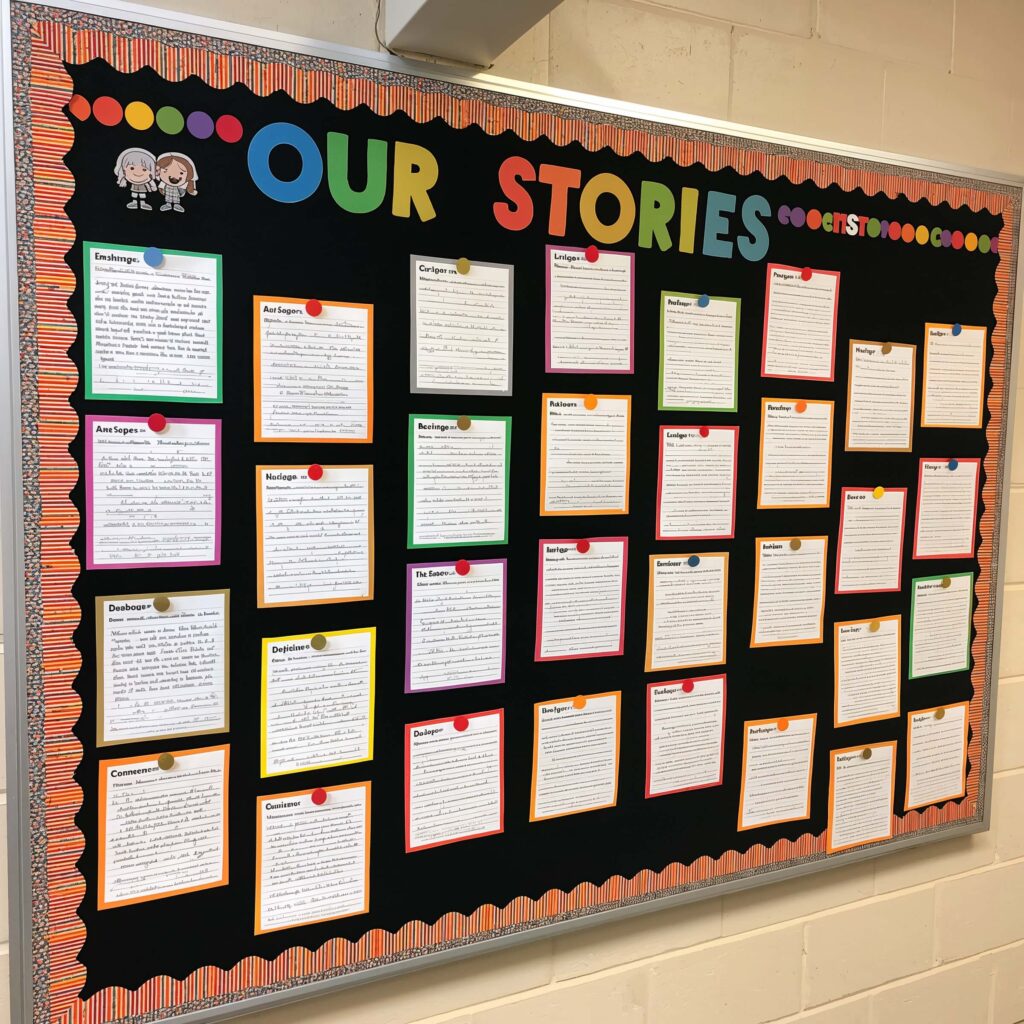
Nothing motivates young writers like seeing their work displayed professionally. The Student Writing Showcase isn’t just a bulletin board with essays tacked up – it’s a legitimate gallery that treats student work with the respect it deserves.
Invest in document frames that you can easily update. Hang them gallery-style with small plaques listing the author’s name and title. Add artist statements where students explain their inspiration or writing process. Suddenly, that five-paragraph essay becomes a piece of art.
Rotation System That Works
Establish a clear rotation schedule – I change displays every three weeks. Keep a waiting list visible so students know when their work will be featured. This anticipation drives them to polish their pieces.
Create different categories: “Editor’s Choice” for exceptional work, “Most Improved” for growth, “Risk Taker” for experimental writing. This ensures various skill levels get recognition.
Professional Presentation
Type up student work or have them submit digital copies that you can print in a consistent format. Add a brief bio for each featured writer. Include QR codes linking to audio recordings of students reading their work – parents love this feature during conferences.
Host quarterly “gallery openings” where students present their work to invited guests. Serve juice and cookies, play some background music, and watch your students transform into confident authors.
English Idioms Gallery
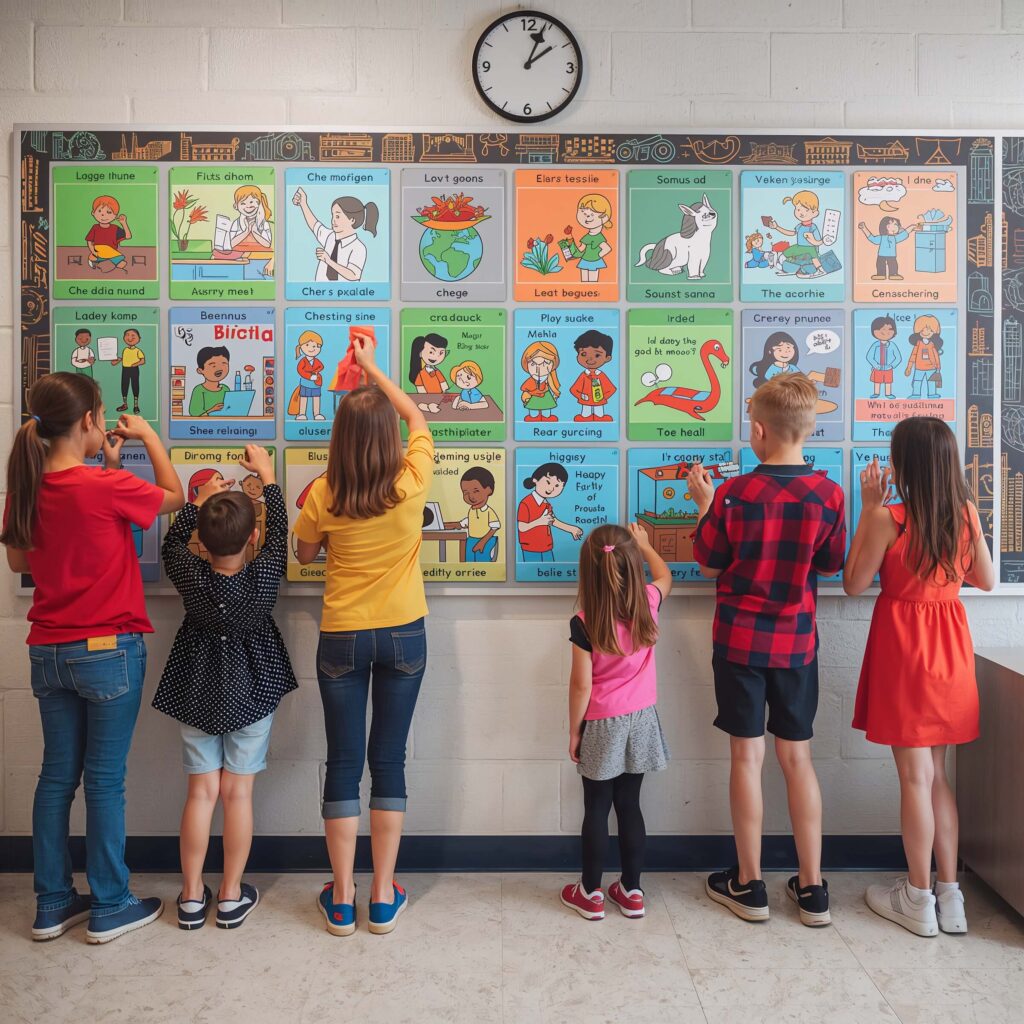
Idioms are weird. “It’s raining cats and dogs”? “Break a leg”? For many students (especially English language learners), these expressions are absolutely baffling. The English Idioms Gallery turns confusion into curiosity by creating visual representations that make abstract expressions concrete.
Partner with your art teacher if possible. Students illustrate idioms literally, then explain the actual meaning below. Seeing someone actually crying over spilled milk while the explanation clarifies the real meaning creates a memorable learning moment.
Cultural Exchange Corner
Include idioms from other languages translated literally into English. When students see that Germans say “I only understand train station” to mean “I don’t understand anything,” they realize every language has its weird expressions. This cultural awareness builds empathy and understanding.
Create an “Idiom of the Week” challenge where students must use it correctly in conversation or writing. Keep track of creative uses on a display board. The most creative or humorous correct usage wins a small prize.
Interactive Display Elements
Set up an “Idiom Matching Game” where students connect literal meanings with actual meanings using string and pushpins. Change these weekly to maintain interest. Add a suggestion box where students can submit idioms they’ve encountered in their reading or daily life.
Include origin stories when possible. Kids find it fascinating that “break a leg” might come from ancient Greek theater traditions. These historical connections make language come alive.
Also Read: 10 Easy Kindergarten Classroom Decor Ideas for Organized Classrooms
Themed Bulletin Boards
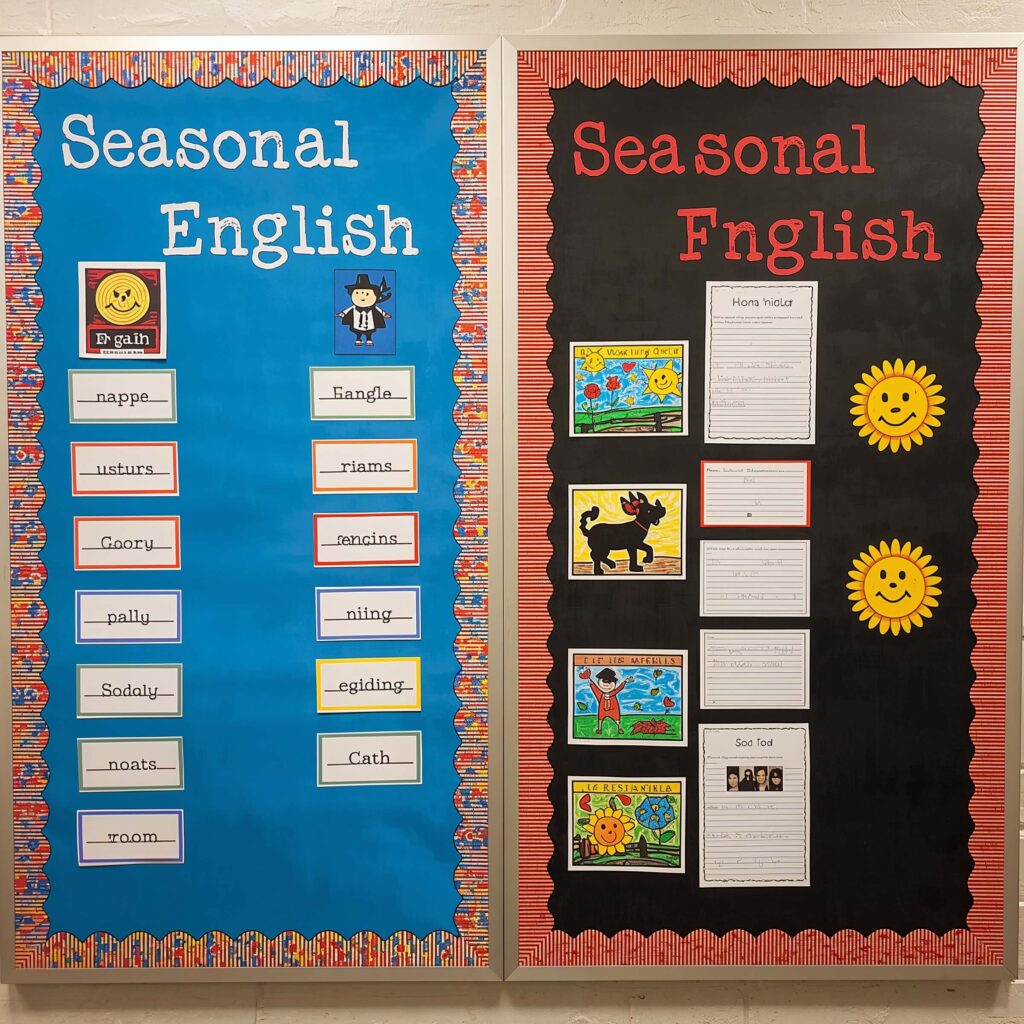
Last but definitely not least, Themed Bulletin Boards are your chance to go all out with creativity. But here’s the thing – themes should enhance learning, not distract from it. FYI, I’ve seen too many boards that look pretty but teach nothing.
Rotate themes monthly to align with curriculum or seasons. During poetry month, create a “Poetry Café” board complete with paper coffee cups containing different poems. For Shakespeare units, design a “Globe Theatre” display with character profiles and plot summaries.
Student Ownership Is Key
Assign different groups to design boards throughout the year. Give them the learning objectives and let them run with it. The creativity students bring often exceeds teacher expectations. Plus, they learn more creating the display than looking at one you made.
Provide a rubric so they know expectations: must include key vocabulary, visual elements, interactive components, and clear information. The best boards become templates you can use in future years.
Beyond Basic Borders
Skip the store-bought borders and create custom ones that reinforce learning. For a mystery unit, create a border of magnifying glasses with clues. During research units, make a border from note cards with research tips. Every element should serve a purpose beyond just looking nice :/
Add 3D elements when possible. Pop-up books, paper sculptures, or hanging elements create visual interest and draw students in. Just make sure they’re secure – learned that one the hard way when my paper chandelier came crashing down mid-lesson.
Bringing It All Together
Creating an engaging English classroom isn’t about having the biggest budget or being the craftiest teacher. It’s about intentionally designing spaces that inspire students to interact with language arts in meaningful ways. Every element should serve a purpose, whether that’s building vocabulary, encouraging reading, or celebrating student work.
Start small if you’re feeling overwhelmed. Pick one or two ideas that resonate with you and your teaching style. Build from there based on what works for your students. Remember, the best classroom decor evolves with your students’ needs and interests throughout the year.
The transformation won’t happen overnight, but when you see students voluntarily spending time in your classroom, referencing your displays in their writing, or excitedly showing their parents around during open house, you’ll know you’ve created something special. These aren’t just decorations; they’re learning tools disguised as art, and they make all the difference in student engagement.
Your classroom should reflect the dynamic, creative nature of language arts itself. By implementing these ideas thoughtfully, you’re not just decorating walls – you’re building an environment where students feel inspired, valued, and excited to learn. And honestly? That’s what great teaching is all about.