12 Cozy Entrance Foyer Design Ideas for Every Entryway
- Home Decor
 Ben
Ben- 0
- 58 minutes read
Your entrance foyer is basically the handshake of your home, and right now it’s giving off “awkward wave from across the room” vibes.
You know what I’m talking about—shoes scattered everywhere, coats draped over whatever surface exists, and that general sense of “we’ll deal with this space… eventually.”
I’ve obsessed over entrance design across four different homes, made countless mistakes (that bright yellow paint seemed like such a good idea at 2 AM), and finally cracked the code on what actually works.
Your foyer might be tiny or grand, but either way, it needs to work hard while looking effortlessly put together.
Ready to transform that neglected entrance into something you’re actually proud of? Let’s break down twelve solid approaches that work in real life, not just on Pinterest boards.
1. Minimalist Entrance Foyer Ideas
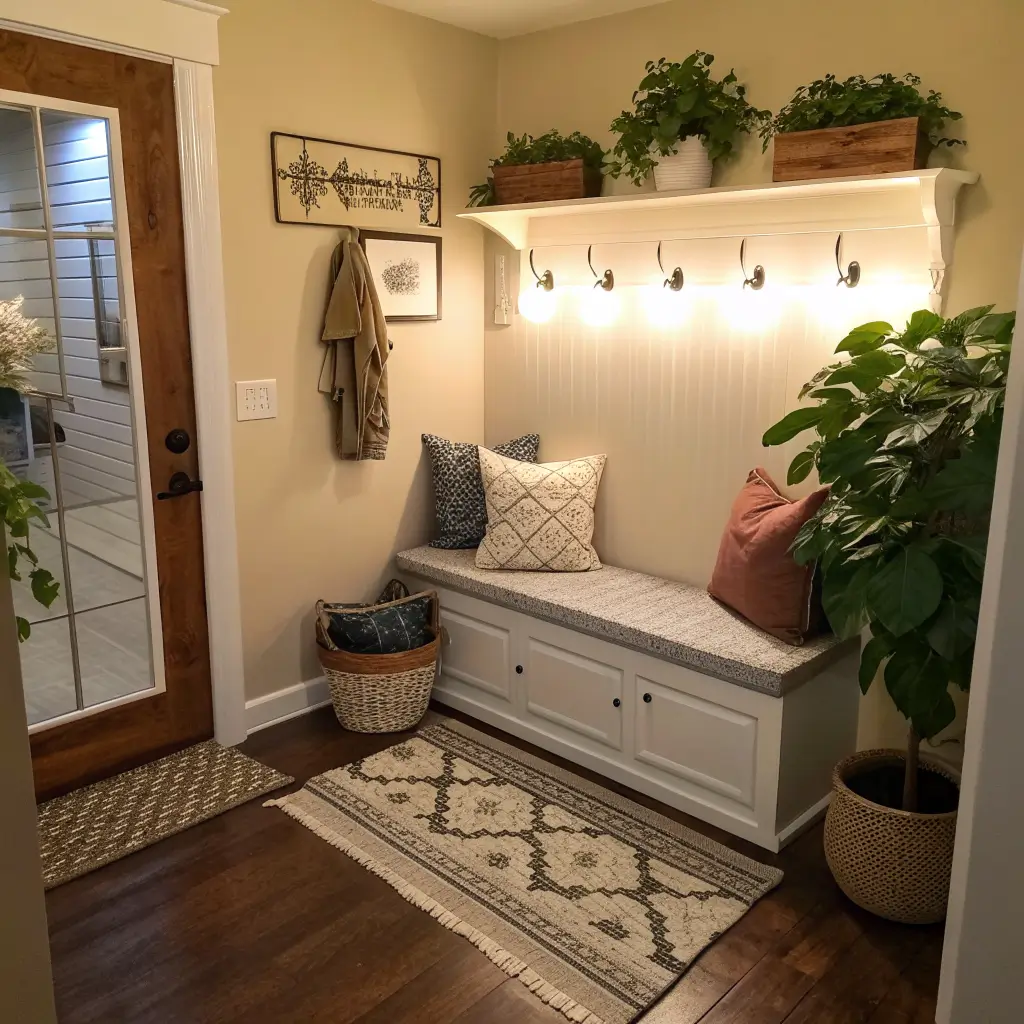
Minimalist foyers are the design equivalent of that friend who always looks effortlessly chic with like three wardrobe pieces. Less really is more here, but you’ve got to nail every single choice because there’s nowhere to hide mistakes.
I went minimalist in my current place, and honestly? Walking into a clutter-free space every single day hits different. Your brain doesn’t have to process visual noise, and somehow getting out the door becomes less chaotic.
Minimalist essentials:
- Neutral color schemes (whites, grays, blacks, warm beiges)
- Single statement furniture piece instead of multiple items
- Hidden storage solutions to maintain clean surfaces
- Quality over quantity in every decision
- Intentional negative space as a design element
Furniture strategy: Pick one hero piece and let it shine. A sleek console table or a floating shelf unit beats cramming three mediocre pieces into your entrance. I use a single walnut console with hidden drawers—looks minimal, hides everything.
Color discipline: Stick to 2-3 colors maximum and commit. My palette is white walls, black accents, and natural wood. Every additional color you add dilutes the minimalist impact and edges toward regular cluttered territory.
Storage secrets: Everything needs a hidden home or it doesn’t exist in your foyer. Wall-mounted cabinets with push-open doors, concealed hooks behind mirrors, benches with secret storage compartments—if it’s visible, it better be intentionally decorative.
Lighting matters: Simple geometric pendants or recessed spots work best. Skip anything ornate or fussy. The lighting should provide function and maybe act as subtle sculpture, but never distract from the overall calm.
Common mistakes: Minimalist doesn’t mean sterile and boring. Add warmth through material choices—wood texture, a soft rug, maybe one meaningful art piece. Cold minimalism just makes people uncomfortable.
2. Cozy Small Foyer Design Ideas
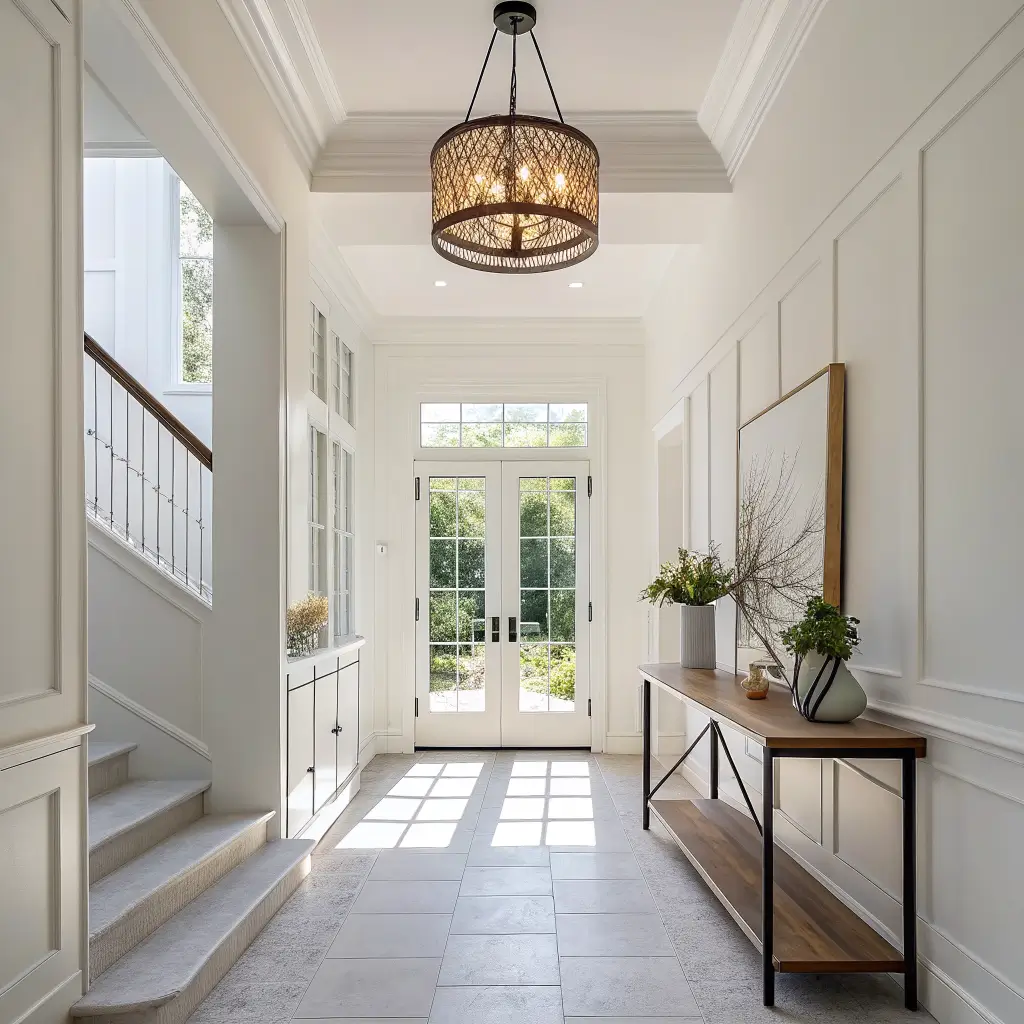
Small foyers are puzzles where you need to fit storage, style, and function into a space smaller than most people’s closets. Fun challenge, right?
My last apartment’s foyer was maybe 4×4 feet. I somehow made it work through vertical thinking and ruthless editing. Small spaces force creativity, which honestly makes you a better designer.
Small foyer strategies:
- Wall-mounted solutions free precious floor space
- Narrow furniture (nothing over 10-12 inches deep)
- Vertical storage floor to ceiling
- Light colors prevent cave vibes
- Mirrors for space multiplication
Smart furniture picks:
Slim consoles: 10-inch deep tables provide function without bulk. I found one at IKEA for $50, painted it matte black, and suddenly my entrance looked intentional instead of desperate.
Floating shelves: Mount a few shelves at different heights for keys, small plants, and daily essentials. They take zero floor space and look way more designed than clunky furniture.
Compact shoe cabinets: Vertical shoe storage that goes up instead of out saves your floor for actually walking. Revolutionary concept, I know.
Visual tricks: Large mirrors genuinely make small spaces feel bigger. Not just design BS—the reflection adds perceived depth. Mount one opposite your door or above your console for maximum impact.
Organization systems: In small foyers, chaos happens fast. Assign specific homes for everything—hooks for keys, a tray for mail, designated shoe spots. The more systematic you are, the less overwhelmed the space feels.
Color choices: Light colors expand space visually. White or light gray walls with warm wood accents create airiness without feeling cold. You can go dark and moody, but commit fully or it’ll just feel cramped.
3. Luxury Modern Foyer Inspiration
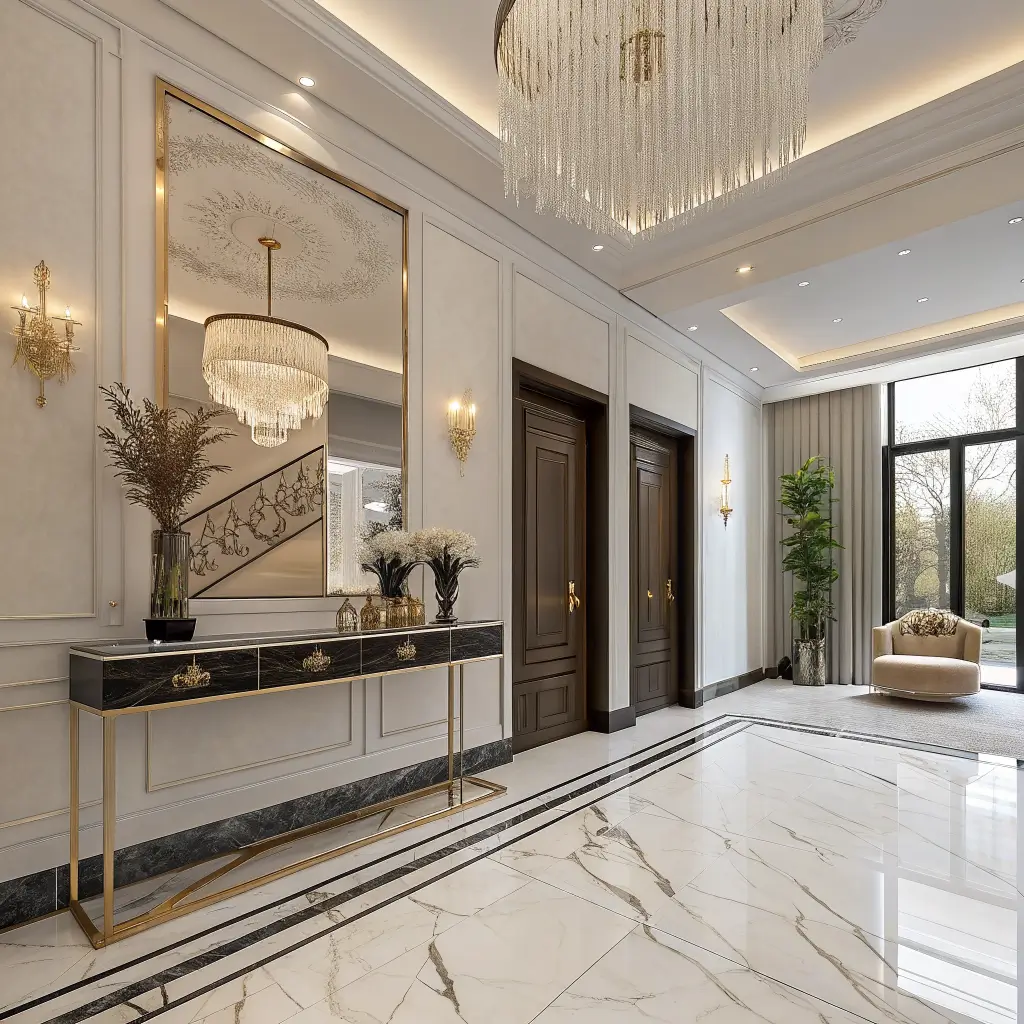
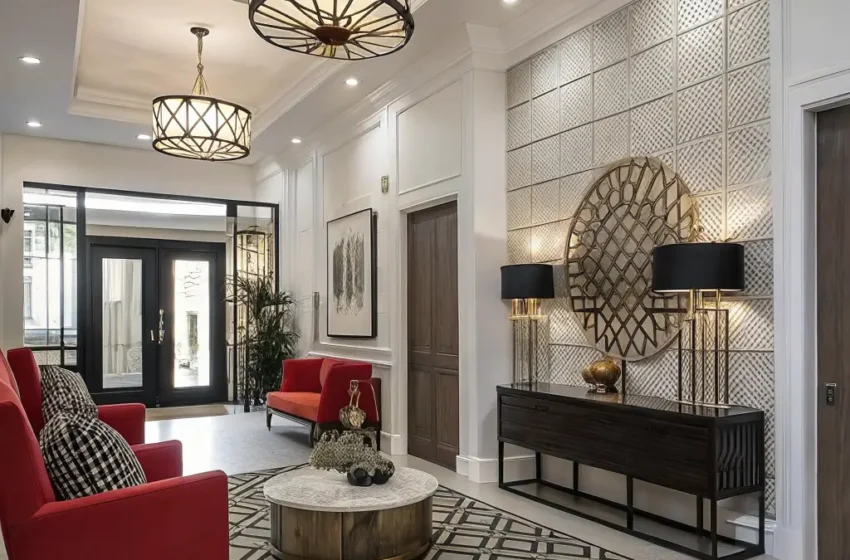
Want your entrance to feel like walking into a boutique hotel? Luxury modern foyers combine high-end finishes, thoughtful details, and that polished aesthetic that screams “we hired a designer” even if you didn’t.
I stayed at this insanely nice hotel in Chicago, and I literally took photos of their entrance to recreate at home. Turns out luxury isn’t just about expensive stuff—it’s about considered choices and quality materials.
Creating luxury vibes:
- Statement lighting as the focal point
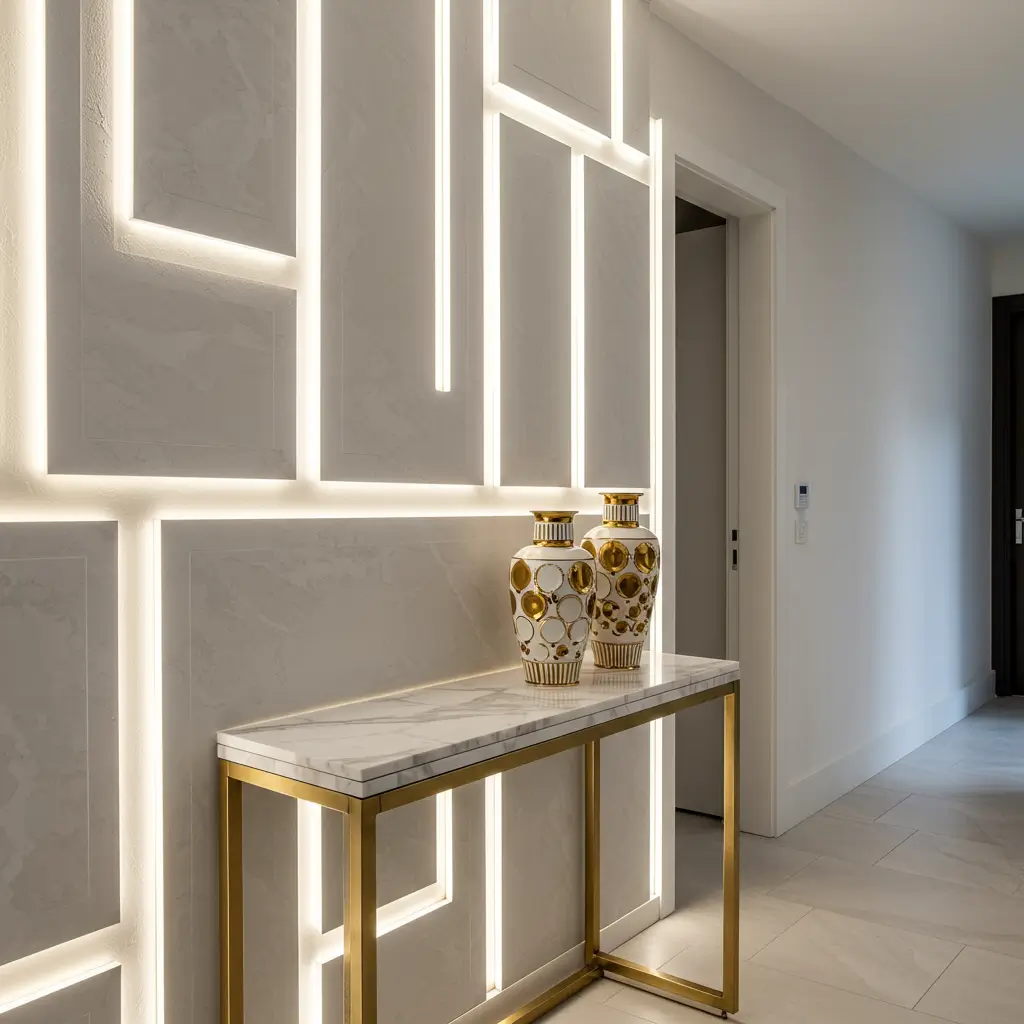
- Rich materials (marble, brass, velvet, quality hardwoods)
- Symmetrical arrangements for formal elegance
- Layered lighting for ambiance control
- Fresh elements (flowers, plants, or seasonal decor)
Key luxury pieces:
Oversized mirror: Large-scale mirrors with substantial frames create instant drama. I found a floor-length mirror with a brass frame, and it transformed my entire entrance from basic to elevated.
Upholstered bench: Velvet or leather seating says luxury louder than words. Even a small bench in rich fabric changes the whole vibe. Just avoid anything that screams “I bought this at a big box store.”
Quality console: Solid wood or lacquered finishes beat cheap veneer every time. You can see and feel the difference, and so can everyone walking through your door.
Material mixing: Hotels nail texture layering. Smooth marble with warm wood, shiny brass with soft textiles, hard surfaces with plush elements. This contrast creates that expensive, curated feel.
Decor approach:
- Large-scale art that commands attention
- Decorative objects with actual presence (not tiny trinkets)
- Coffee table books stacked purposefully
- Fresh flowers in quality vases
- Sculptural pieces as conversation starters
Scent element: High-end spaces smell amazing. A subtle luxury candle or reed diffuser adds that sensory layer. Just keep it sophisticated—no aggressive synthetic fragrances that smell like cheap car fresheners.
Also Read: 10 Elegant Foyer Design Ideas for a Luxurious Look
4. Rustic Farmhouse Entryway Ideas
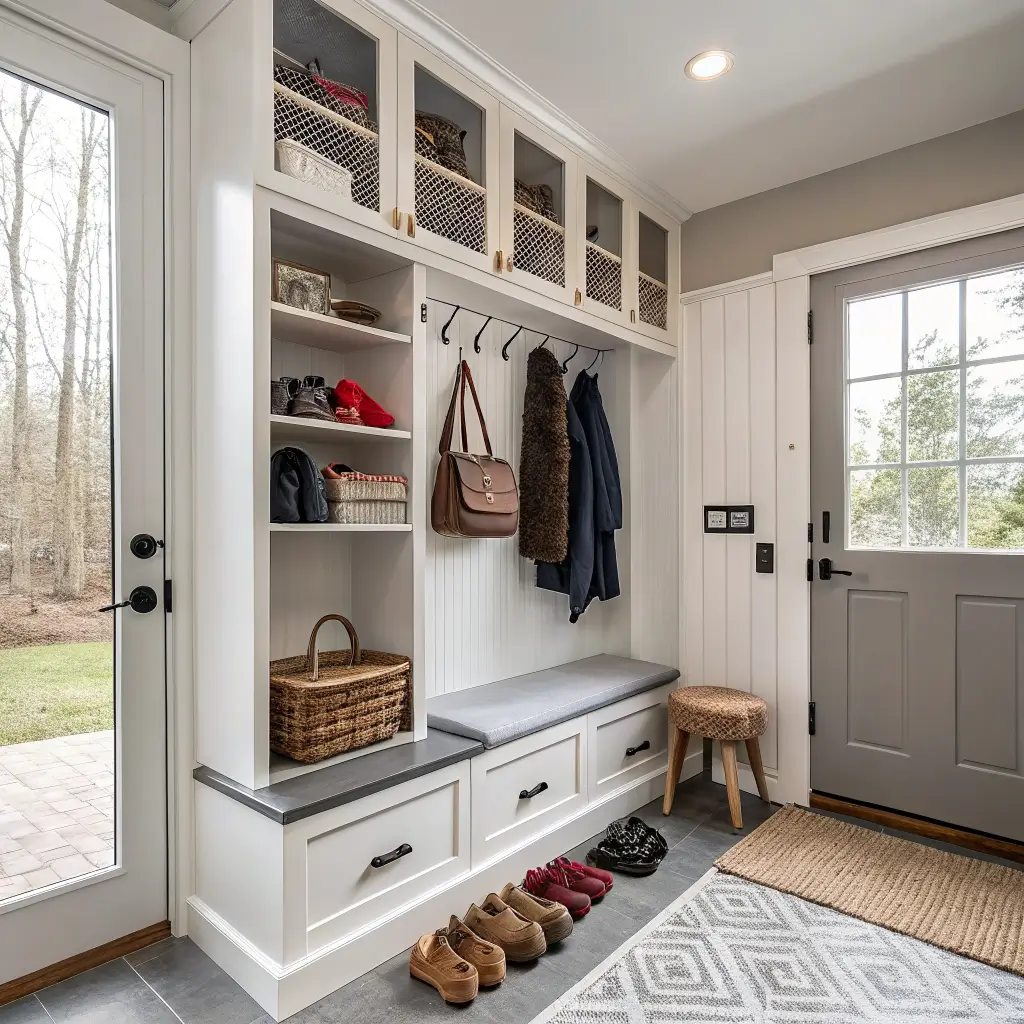
Farmhouse entrances bring that lived-in warmth that makes people immediately feel welcome. Reclaimed wood, vintage finds, and cozy textures create spaces that feel like home, not showrooms.
My best friend’s farmhouse foyer is the space I reference constantly. It’s impossibly inviting without being cluttered—achieving that balance is the whole farmhouse game.
Farmhouse must-haves:
- Reclaimed or distressed wood furniture
- Vintage pieces with history and character
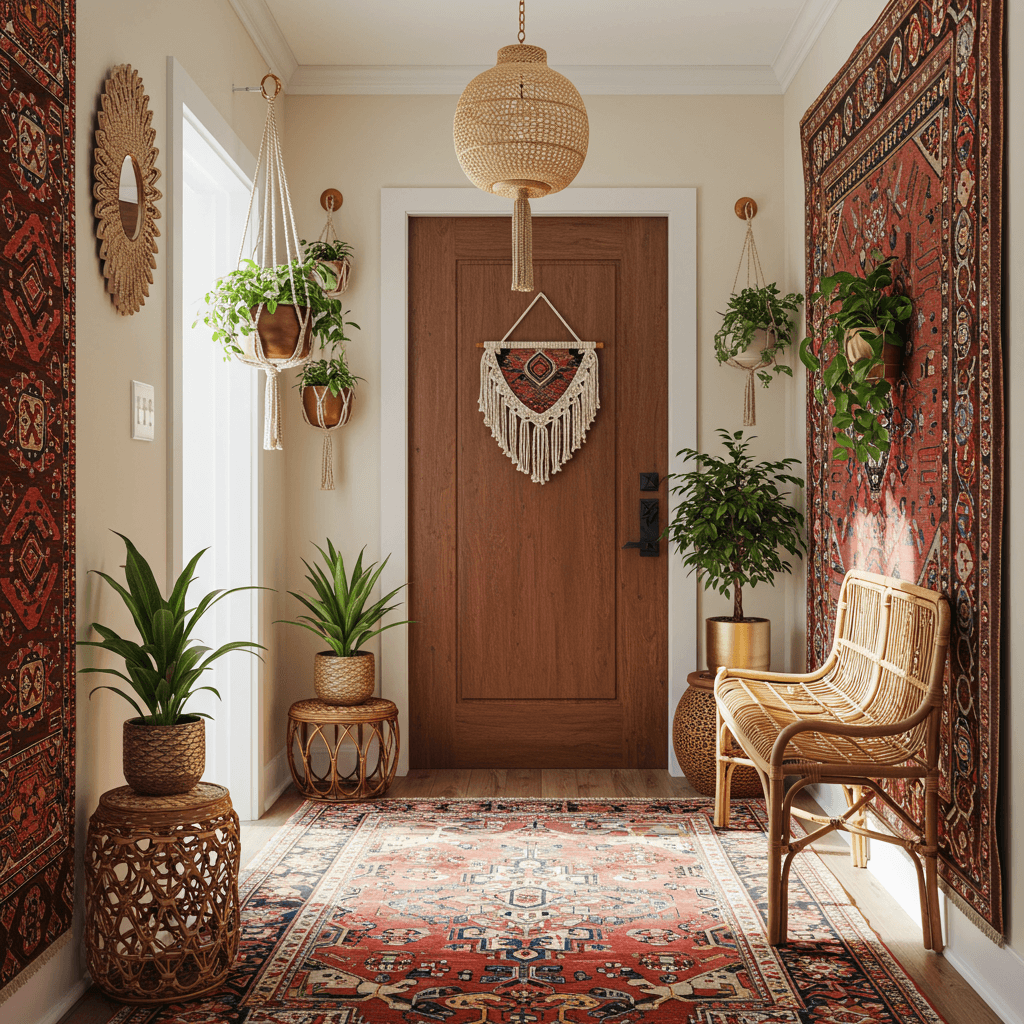
- Natural textures (wood, metal, cotton, jute, wicker)
- Neutral color base with organic variety
- Functional beauty (everything looks good AND works)
Furniture selections:
Rustic benches: Solid wood with visible grain and maybe some distressing creates that authentic farmhouse foundation. Storage underneath is clutch for keeping the cozy vibe organized.
Weathered consoles: Tables with worn finishes or natural imperfections tell stories. Perfect doesn’t exist in farmhouse design—character beats pristine every time.
Vintage finds: Actual antique pieces, not mass-produced “farmhouse style” stuff from big box stores. Hit up estate sales, antique shops, or even Facebook Marketplace for authentic finds.
Decor elements:
- Galvanized metal accents (buckets, signs, hooks)
- Woven baskets for practical storage that looks intentional
- Vintage mirrors with patina and wear
- Simple vases with seasonal stems or dried flowers
- Wooden signs (if you’re into that, no judgment)
Color palette: Whites, creams, soft grays, and natural wood tones create classic farmhouse. You can add subtle pops through textiles, but the base should feel earthy and neutral.
Avoiding kitsch: Farmhouse done wrong becomes “Live Laugh Love” territory fast. Keep it authentic with genuine materials and real vintage pieces. Mass-produced farmhouse decor usually misses the mark.
5. Space-Saving Foyer Storage Designs
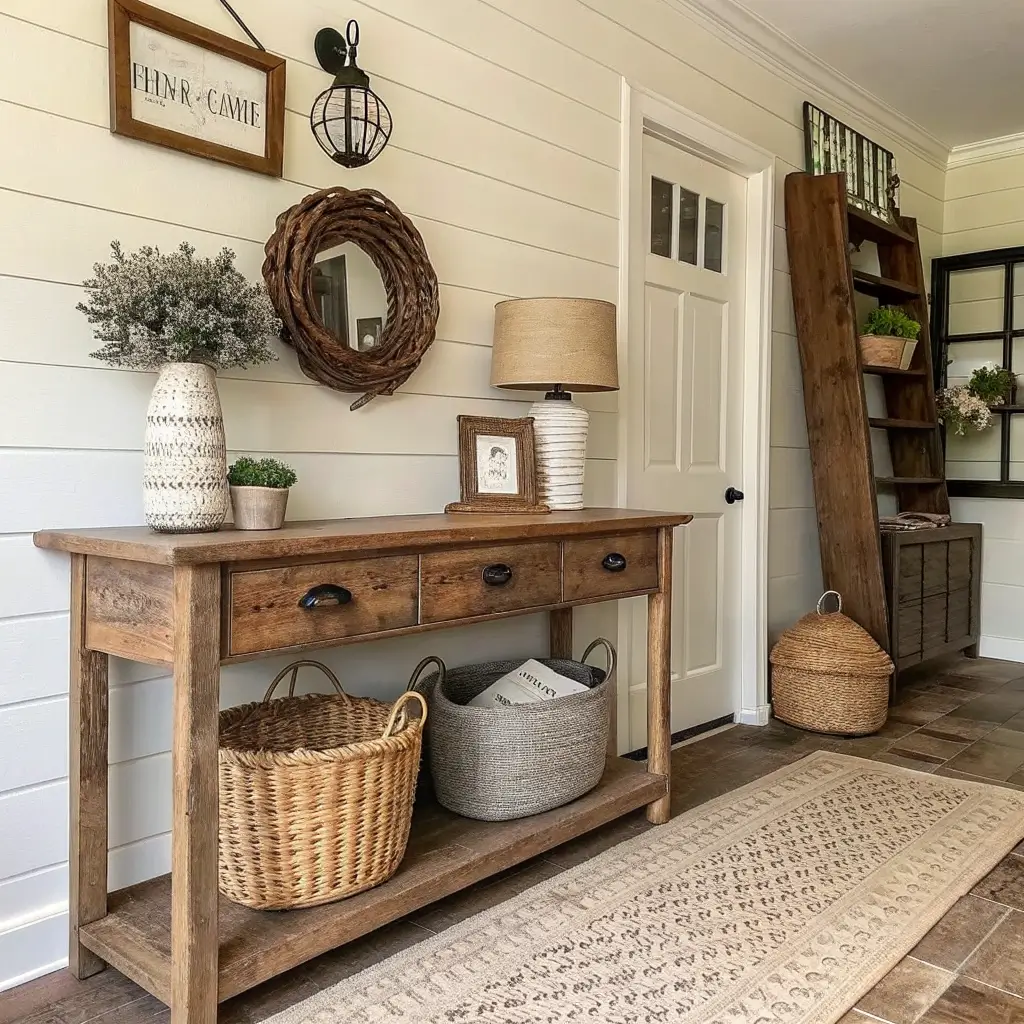
When your foyer is basically a hallway, storage becomes a creative challenge. You need functionality without sacrificing floor space or creating visual clutter.
I’ve lived in apartments where “foyer” was a generous description for the 2-foot space inside the door. Vertical storage and multi-functional pieces saved my sanity in those tight spaces.
Space-saving storage solutions:
- Floor-to-ceiling cabinets maximize vertical space
- Pull-out drawer systems use depth efficiently
- Behind-door organizers utilize wasted space
- Fold-down furniture tucks away when not needed
- Built-in solutions custom-fit to your dimensions
Clever storage ideas:
Vertical shoe racks: Tower designs hold 20+ pairs while taking up maybe 12 inches of floor space. I’m currently using one that goes 6 feet tall—holds my entire everyday shoe collection.
Floating cabinets: Wall-mounted storage keeps floors clear for cleaning and creates that airy feel. Plus, you can customize height for your specific needs instead of accepting standard furniture dimensions.
Over-door systems: That space behind your door is completely wasted right now. Over-door hooks, racks, or pocket organizers add storage without taking any floor or wall space.
Modular units: Stackable storage cubes or boxes let you build exactly the storage you need. Add units as your collection grows, remove them if you downsize. Flexibility is key in evolving spaces.
Hidden storage tricks:
Hollow consoles: Tables with cabinet doors or drawers hide clutter while providing surface space for daily essentials. The outside stays clean, the inside handles reality.
Storage ottomans: Seating that doubles as storage is peak efficiency. Lift the top, store seasonal items or bulk supplies, sit down to put on shoes. Triple function from one piece.
Wall pockets: Mounted organizers for mail, keys, and small items keep surfaces clear. I use leather wall pockets—they look intentional while being supremely practical.
6. Bright and Airy Entrance Ideas
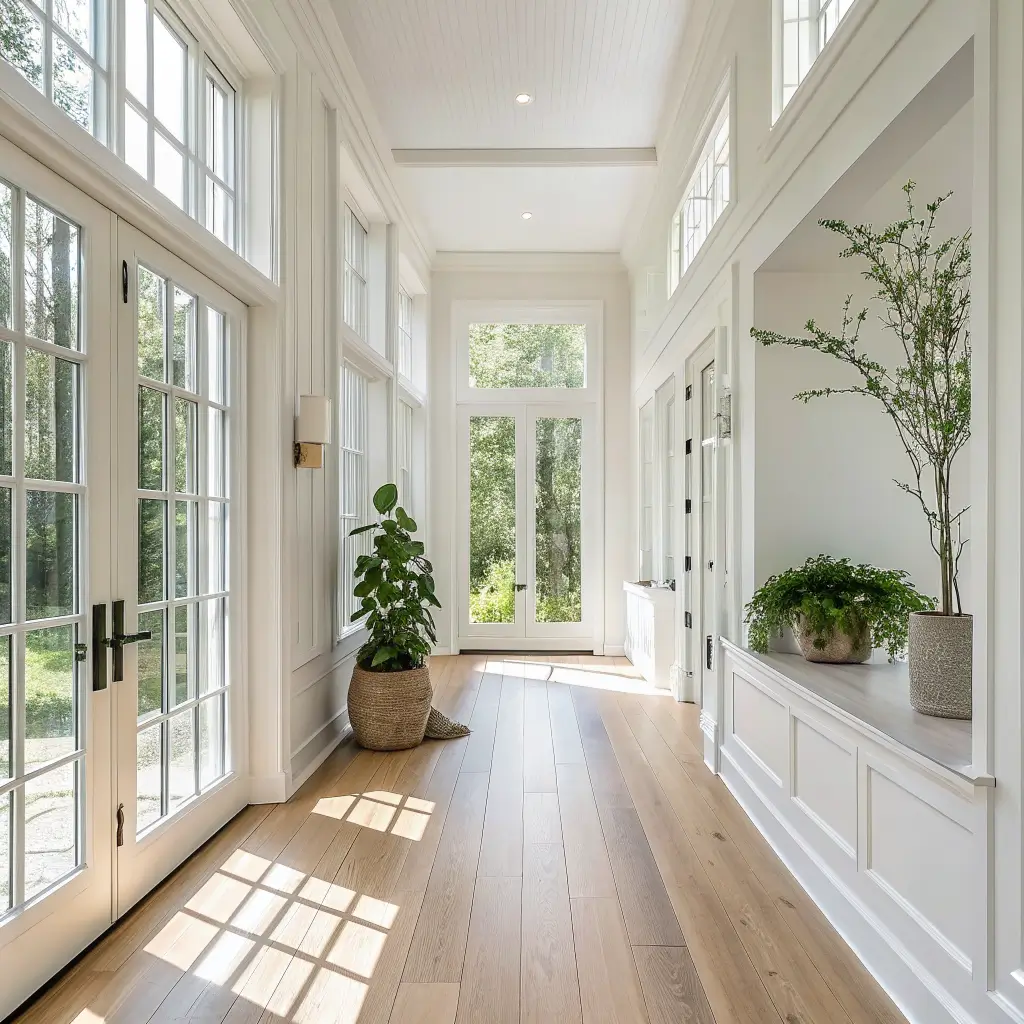
Some entrances need to feel light, open, and energizing. Bright and airy designs use color, light, and strategic choices to create spaces that feel larger and more welcoming.
My current entrance faces north and gets limited natural light. I had to actively work to make it feel bright instead of cave-like. Mission accomplished through intentional design choices.
Creating brightness:
- White or light color palette reflects maximum light
- Large mirrors multiply existing light
- Multiple light sources layer brightness
- Minimal window treatments if you have windows
- Reflective surfaces (glass, polished metal, glossy finishes)
Color strategy: White walls are the obvious choice, but warm whites or soft creams feel more inviting than stark cold whites. I used a warm white with slight yellow undertones—bright without being sterile.
Lighting layers:
Overhead fixture: Ceiling-mounted lights or pendants provide general illumination. Choose fixtures with multiple bulbs or high lumens to really brighten the space.
Wall sconces: Flank your mirror or artwork with sconces for layered light that adds dimension. They fill in shadows that single overhead lights create.
Table lamps: If you have console space, a lamp adds warm accent lighting that makes the brightness feel inviting instead of harsh.
Mirror placement: Position mirrors to reflect windows or light sources. This multiplies the brightness naturally. I mounted a large mirror opposite my door to catch light from the living room—instantly brighter entrance.
Material choices:
- Glass or lucite furniture feels lighter than solid wood
- White or light wood furniture maintains brightness
- Glossy finishes reflect more light than matte
- Metallic accents (chrome, brass, silver) bounce light around
Window treatments: If you’re lucky enough to have foyer windows, keep treatments minimal. Sheer curtains or top-down shades give privacy while maximizing daylight.
Also Read: 15 Amazing Two Story Foyer Ideas and Modern Entryway Styles
7. Elegant Classic Foyer Designs
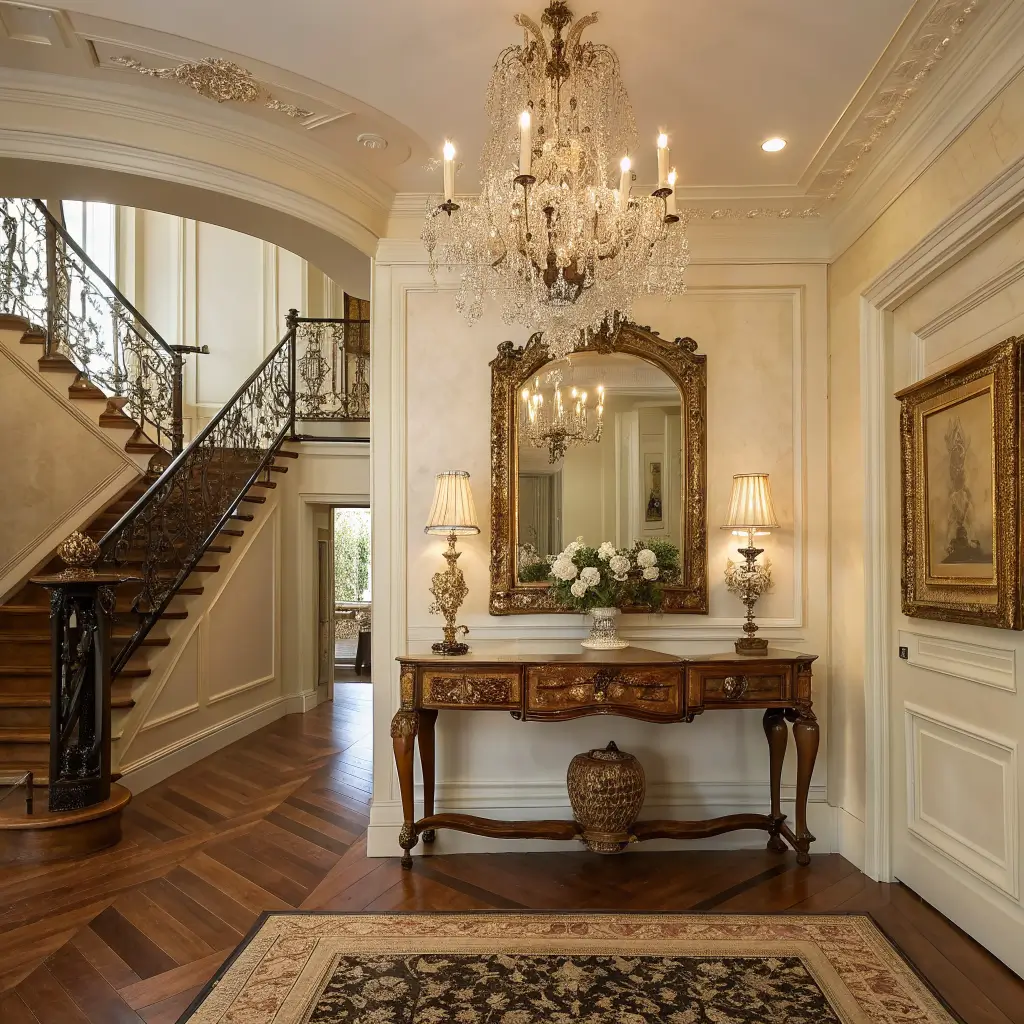
Classic elegance never goes out of style. Traditional foyer designs emphasize symmetry, quality materials, and timeless choices that look sophisticated without trying too hard.
My parents’ home has a classically designed entrance, and twenty years later it still looks current. That’s the power of traditional design done well—it doesn’t date itself.
Classic design elements:
- Symmetrical arrangements create formal balance
- Traditional furniture styles with refined details
- Quality materials (real wood, marble, brass)
- Neutral sophistication in color choices
- Timeless decor that won’t feel dated
Furniture selections:
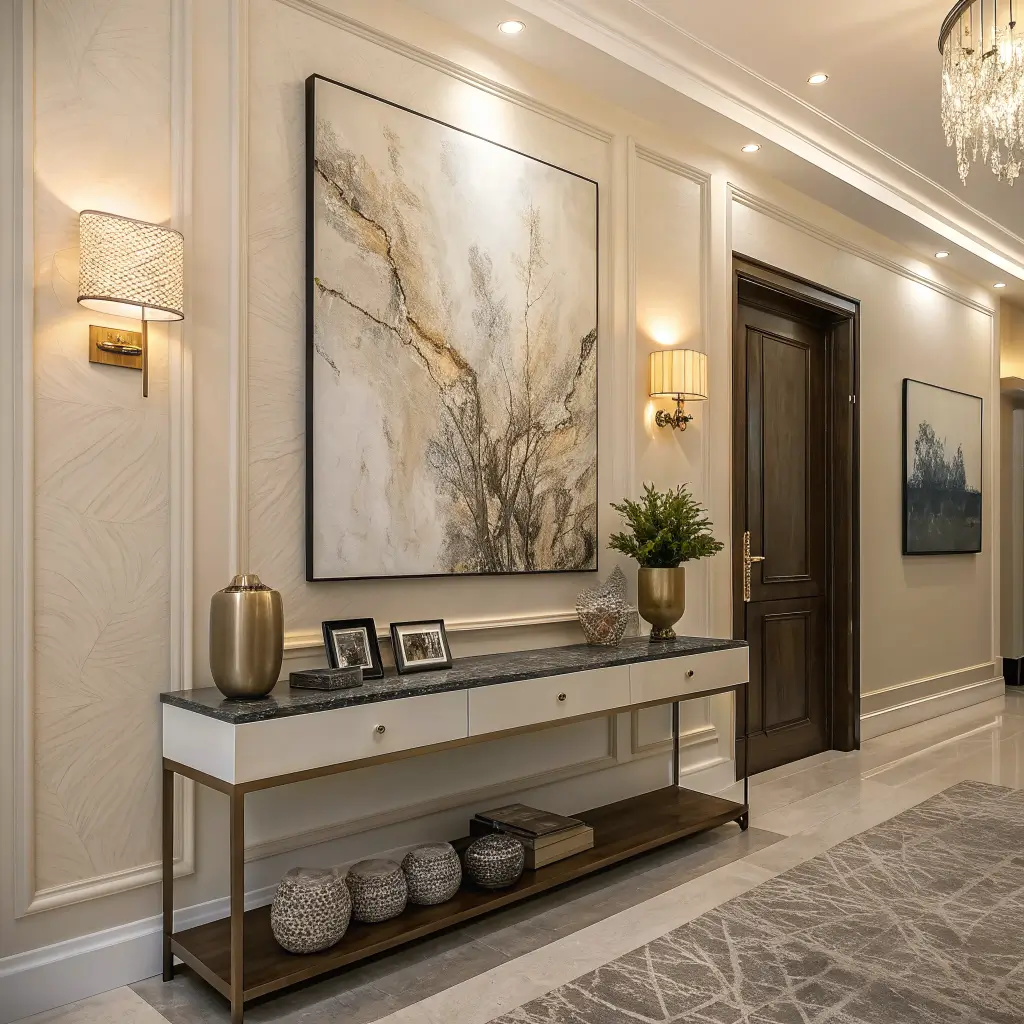
Console tables: Traditional styles with turned legs, drawer details, or carved elements provide that classic foundation. Choose solid wood in rich finishes like cherry, walnut, or mahogany.
Accent chairs: If space allows, a pair of matching chairs flanking a console creates perfect symmetry. Upholstered seats in neutral fabrics keep it comfortable and elegant.
Round tables: Circular entrance tables work beautifully in classic designs, especially in center-hall foyers. They soften rectangular architecture and create natural flow.
Color palette: Neutrals rule classic design. Creams, taupes, soft grays, navy blues, and rich wood tones create sophisticated backdrops. Bold color exists in accents, not base choices.
Lighting approach:
Chandeliers: If your ceiling height allows, a chandelier makes an immediate elegant statement. Even small spaces can handle mini chandeliers scaled appropriately.
Lantern fixtures: Classic lantern-style pendants bring traditional charm without requiring high ceilings. They work in various sizes and finish options.
Wall sconces: Traditional brass or bronze sconces add ambient lighting while reinforcing the classic aesthetic. Mount them symmetrically for maximum impact.
Decor choices:
- Framed artwork in traditional styles or classic prints
- Table lamps with classic silhouettes
- Decorative bowls or trays for organization
- Fresh flowers in traditional arrangements
- Area rugs in Persian or Oriental patterns
Achieving timelessness: Avoid trendy finishes or overly specific styles. Classic design draws from established traditions and proven combinations that have staying power.
8. Contemporary Chic Entryway Ideas
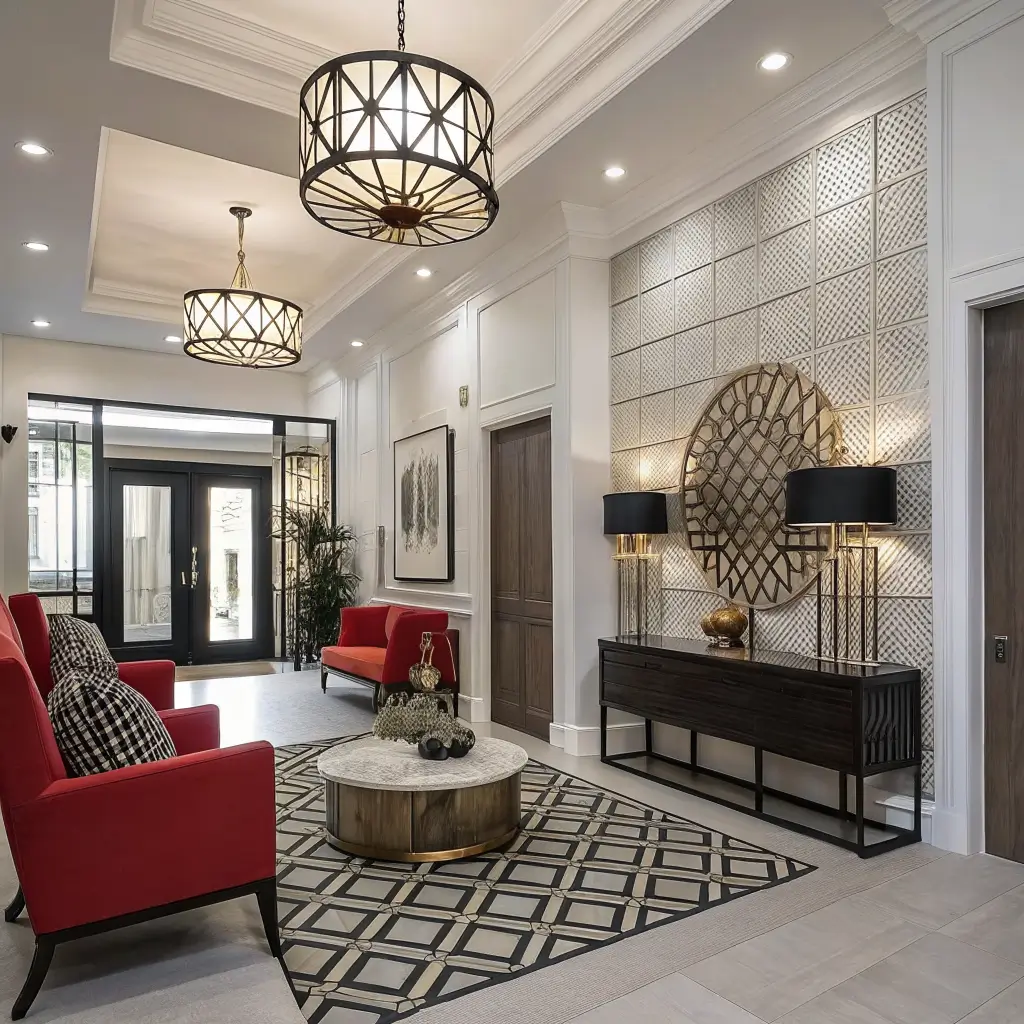
Contemporary design brings current aesthetics without chasing fleeting trends. It’s modern sensibility with staying power—cleaner than traditional, warmer than stark minimalism.
I lean contemporary in most of my design choices. It feels current without being trendy, and I don’t worry about it looking dated in five years.
Contemporary characteristics:
- Clean lines without excessive ornamentation
- Mixed materials (wood + metal + glass)
- Neutral base with strategic pops of color
- Streamlined furniture with subtle details
- Balanced asymmetry instead of rigid symmetry
Furniture approach:
Sleek consoles: Contemporary tables feature simple profiles, interesting materials, or unexpected details. Think waterfall edges, mixed materials, or geometric bases—interesting without being fussy.
Modern benches: Low-profile seating with clean lines and quality upholstery fits perfectly. Leather, linen, or velvet in neutral tones works beautifully.
Statement pieces: Contemporary design allows for bold furniture choices. A sculptural console or uniquely designed bench becomes art and function simultaneously.
Material mixing: Combine wood with metal, add glass elements, incorporate stone or concrete. Contemporary thrives on unexpected material combinations that feel intentional and current.
Color strategy: Start with neutrals (white, gray, beige, black) and add one accent color strategically. I use gray walls with warm wood and brass accents, then add deep blue through accessories 🙂
Lighting selections:
Modern pendants: Geometric designs, clean metal fixtures, or sculptural glass pieces work beautifully. Skip anything traditional or ornate—contemporary lighting makes statements through form, not decoration.
Linear fixtures: Long horizontal lights or multiple pendants in a row create contemporary drama. They work especially well in longer narrow foyers.
Recessed lighting: Sometimes the best lighting disappears into architecture. Recessed spots provide function without visual competition, letting your furniture and decor shine.
Decor elements:
- Abstract or modern art in simple frames
- Sculptural objects with clean lines
- Minimal vases in interesting shapes
- Geometric patterns in textiles or accessories
- Indoor plants in modern planters
9. Budget-Friendly Foyer Makeovers
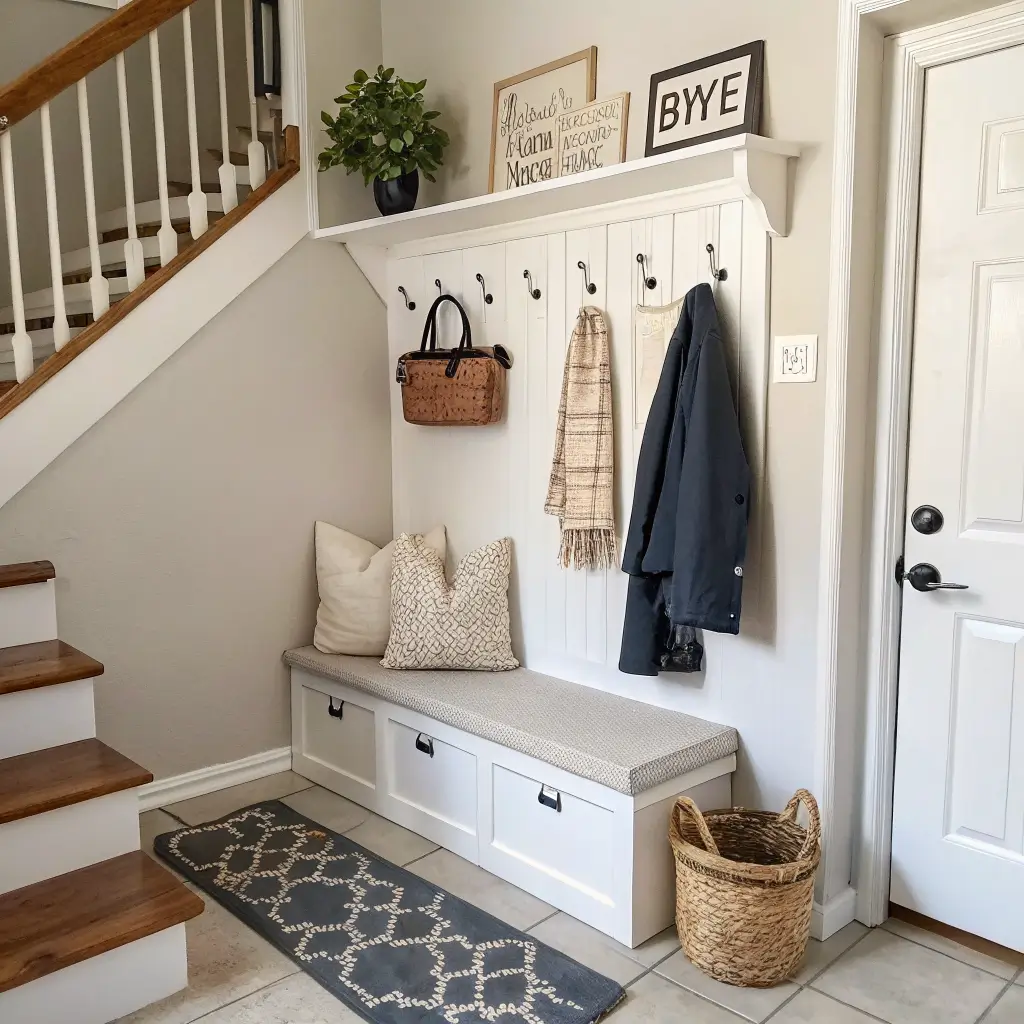
Transforming your entrance doesn’t require maxing out credit cards. Strategic choices, DIY projects, and smart shopping create impressive results on surprisingly small budgets.
My first foyer makeover cost under $150 total. Paint, thrifted furniture, and some DIY shelving created a transformation that people assumed cost thousands. Budget limitations force creativity, which often leads to better results.
High-impact, low-cost changes:
- Paint transformation (biggest bang for minimal bucks)
- Thrifted furniture refinished or painted
- DIY shelving from budget lumber
- Peel-and-stick solutions (wallpaper, tiles, or accents)
- Updated hardware on existing pieces
Budget DIY projects:
Paint makeover: Fresh paint costs $30-40 and changes everything. I painted my entrance a moody green, and the entire vibe shifted from forgotten hallway to intentional space.
Furniture refinishing: Thrift stores have solid wood pieces for $20-50. Sand them, paint or stain them, add new hardware—suddenly you have “custom” furniture for a fraction of retail. FYI, this takes time but saves serious money.
Simple shelving: Buy a board and brackets at the hardware store for under $25. Stain or paint the board, mount it yourself, and you’ve got custom shelving instead of expensive store-bought options.
Smart shopping strategies:
- Thrift stores for unique solid pieces
- Facebook Marketplace for secondhand furniture
- End-of-season sales at major retailers
- IKEA hacks (basic pieces customized with paint or new hardware)
- Dollar stores for organizational accessories
Where to invest: If you can afford one quality piece, make it count. A good mirror, solid console, or nice light fixture elevates everything around it. Let that one investment piece carry the space while surrounding it with budget items.
DIY art: Large-scale art is expensive. Print oversized photos or graphics at office supply stores for $10-20, frame them simply, and you’ve got affordable impact. Nobody needs to know your “art” cost less than lunch.
Also Read: 15 Timeless Foyer Tile Ideas Entryway Ideas for Classic Charm
10. Scandinavian Style Entrance Ideas
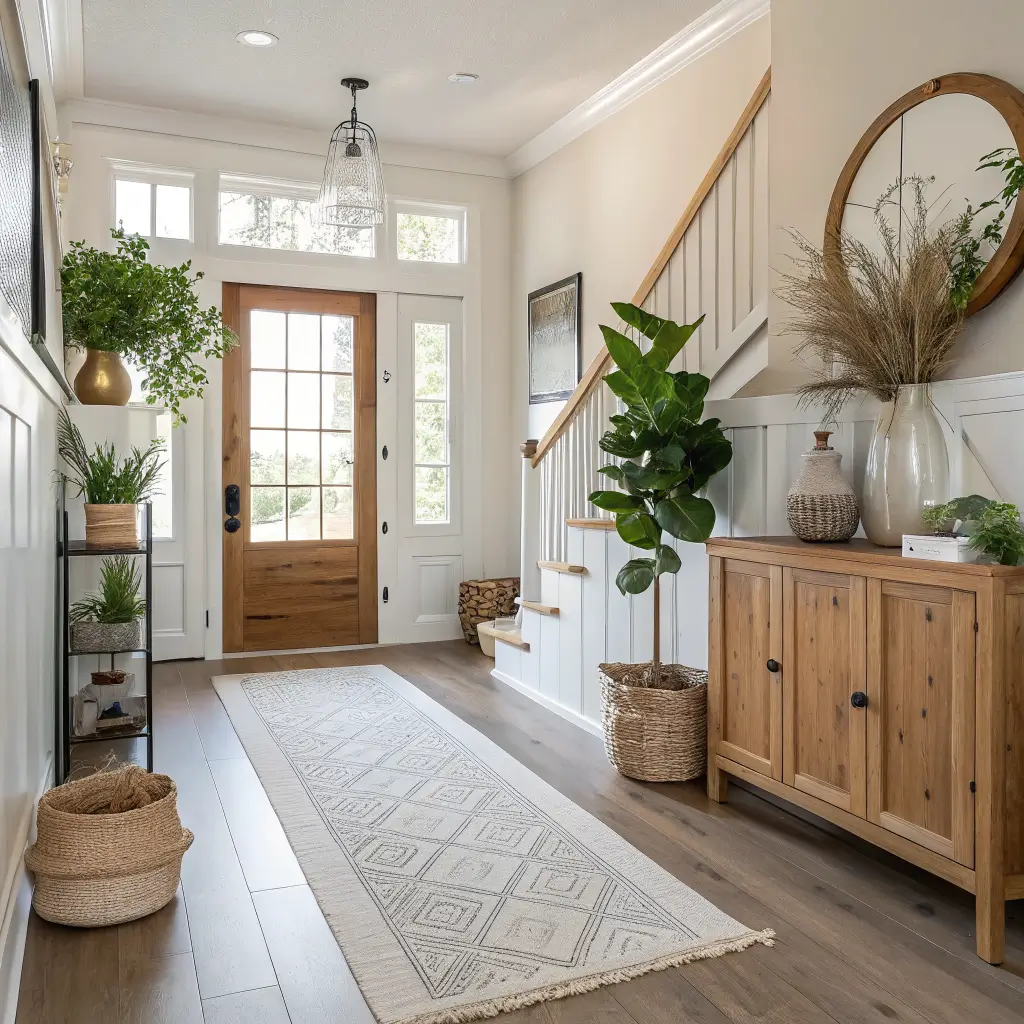
Scandinavian design brings that effortlessly cool Nordic aesthetic—functional beauty with warmth, simplicity without coldness. It’s minimal but inviting, practical but pretty.
I’m borderline obsessed with Scandi design (my saved Instagram folders are embarrassing). The entrance is perfect for this aesthetic because it prioritizes both function and calm equally.
Scandinavian essentials:
- Light wood tones (birch, ash, pine, light oak)
- White or light gray wall colors
- Functional minimalism where everything earns its place
- Natural materials throughout
- Cozy textiles for warmth (the hygge factor)
Furniture choices:
Wooden benches: Simple designs with tapered legs and light wood finishes epitomize Scandi style. Add a sheepskin throw for texture and instant coziness.
Minimal consoles: Clean-lined tables in natural wood with maybe one drawer for storage. Nothing ornate, nothing fussy—just beautiful functional furniture.
Wall-mounted storage: Pegboards, simple hooks, or floating shelves keep things minimal and organized. Scandinavian design loves wall-mounted solutions that free floor space.
Color approach: Light and bright is the rule. White or very light gray walls with natural wood furniture create that signature Scandi look. Add black accents for contrast, but the base stays light.
Textile additions:
- Wool or cotton rugs in neutral tones or simple patterns
- Sheepskin throws on seating for texture
- Woven baskets for practical storage
- Linen or cotton curtains if you have windows
Lighting: Scandinavian countries deal with limited daylight, so lighting is crucial. Paper pendants, simple globe fixtures, or even candles create that warm glow that makes Scandi spaces inviting.
Plant life: Greenery is essential in Scandinavian design. A few potted plants add life and color without cluttering the minimal aesthetic. Snake plants, pothos, or small fiddle leaf figs work well in entrances.
The hygge element: Despite the minimalism, Scandi design should feel warm and cozy. Soft textures, warm lighting, and natural materials create that welcoming comfort that defines hygge.
11. Bold Colorful Foyer Designs
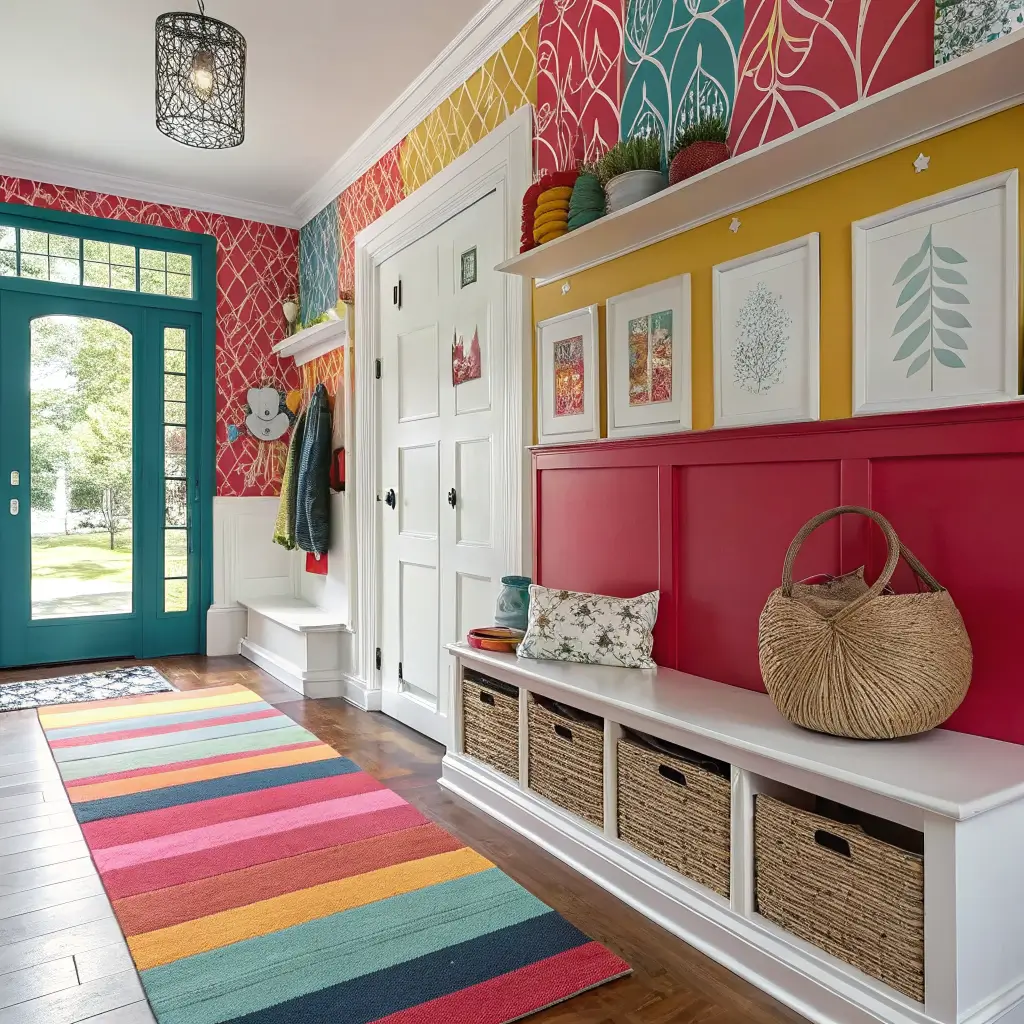
Tired of playing it safe with neutrals? Bold color in your foyer makes an immediate impact and shows personality from the first step through your door.
I painted my last foyer a deep emerald green, and people’s reactions ranged from “that’s amazing” to “you’re insane.” Either way, nobody forgot it. Bold color demands attention and creates memorable entrances.
Bold color approaches:
- Saturated wall colors in jewel tones or vibrant hues
- Colorful furniture against neutral backgrounds
- Bold patterned wallpaper as the statement
- Vibrant accent walls with coordinating neutrals
- Colorful art or accessories in otherwise neutral spaces
Choosing your color: Pick something you genuinely love, not what’s trending. You see your foyer multiple times daily—make sure the color energizes you instead of exhausting you. I love deep blues and greens, but maybe you’re all about terracotta or sunny yellow.
Making bold work:
Commitment level: Timid bold looks indecisive. If you’re going bold, commit fully. Choose a saturated shade and own it completely. Wishy-washy “bold” just looks like you couldn’t decide on a real color.
Balance the intensity: Bold walls work best with neutral furniture and decor. Let the color be the star. Too many competing bold elements create visual chaos instead of intentional drama.
Lighting considerations: Color looks different under various lighting. Test samples in your actual foyer lighting before buying gallons of paint. That gorgeous navy might look purple-ish in your specific light conditions.
Bold color combinations:
- Emerald green + brass + cream accents
- Deep navy + white + natural wood
- Terracotta + sage + black details
- Rich plum + gold + marble elements
- Charcoal + mustard + white trim
Testing first: Buy sample sizes and paint large swatches on your wall. Live with them for a few days in different lighting before committing. Paint is changeable, but testing saves money and regret.
The confidence factor: Bold color requires confidence. If you second-guess your choice constantly, you’ll never love it. Make the decision, execute it well, and embrace the personality it brings.
12. Multifunctional Entryway Solutions
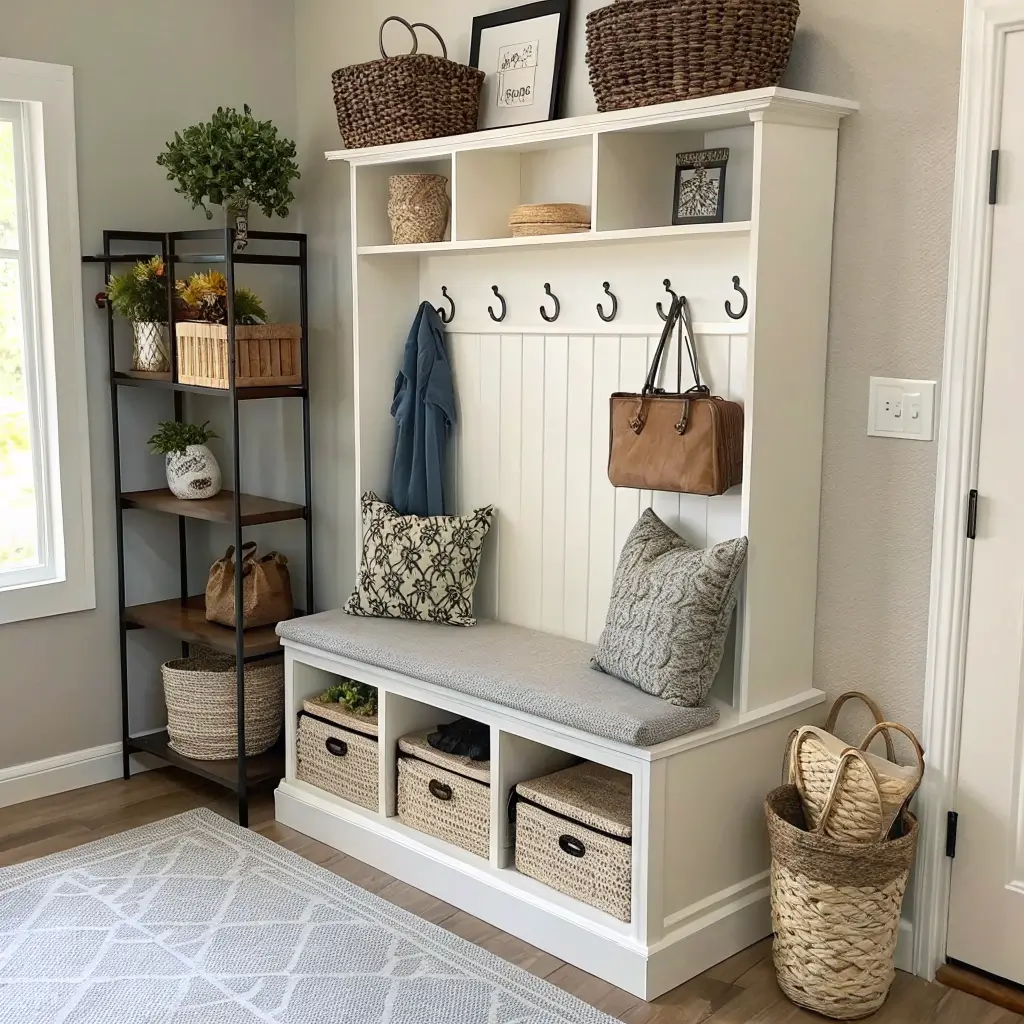
The smartest foyers work overtime. They’re not just pretty transition spaces—they’re storage hubs, charging stations, organization centers, and style statements all wrapped into one hardworking zone.
My current entrance is small, so multi-functionality isn’t optional—it’s survival. Every piece serves multiple purposes, or it doesn’t earn its spot in the limited space.
Multi-functional must-haves:
- Storage benches (seating + concealed storage)
- Console with drawers (display + hidden organization)
- Wall hooks (coats + bags + accessories)
- Charging station (tech management + drop zone)
- Mirror (function + space enhancement)
Zoning your entrance:
Drop zone: Designate specific spots for keys, phone, wallet, and mail the moment you walk in. I use a leather tray on my console—everything goes there immediately, preventing the daily “where are my keys” panic.
Outerwear area: Coats, bags, and scarves need designated homes. Whether it’s a closet, wall hooks, or a coat rack, contain the outerwear or it spreads across your furniture like a fabric plague.
Shoe management: Contain your shoe situation. Cabinet storage, a designated rack, or bench cubbies—just give shoes a specific home instead of letting them multiply across your floor.
Seating strategy: Somewhere to sit while handling shoes changes daily life. I added a small upholstered bench, and putting on shoes became so much easier. Hopping around on one foot is for amateurs, IMO.
Organization systems:
Mail station: Incoming mail needs immediate sorting or it multiplies into overwhelming piles. A wall-mounted organizer or small basket keeps it contained until you process it properly.
Key management: Hooks, bowls, or wall-mounted organizers prevent daily searching. I installed small brass hooks inside a cabinet door—keys have a home but stay hidden from view :/
Bag storage: Purses, backpacks, gym bags—they all need designated spots. Multiple hooks at different heights or a cabinet with shelves keeps them organized instead of randomly piled.
Tech charging: A small charging station with cable management prevents cord chaos. Phones, tablets, smart watches—create one organized spot where everything charges conveniently.
Vertical maximization: Floor space is limited, but walls offer tons of potential. Mount shelves, hooks, cabinets, and organizational systems vertically to maximize storage without crowding the floor.
Choosing Your Direction
Picking a foyer design style depends on your space, lifestyle, budget, and what makes you happy every time you walk through that door.
Quick decision framework:
Tiny entrance? Focus on space-saving storage or minimalist approaches to prevent overwhelm.
Love color and personality? Bold designs let you express yourself immediately.
Want luxury vibes? Hotel-inspired elegance brings that elevated feeling home.
Limited budget? DIY makeovers and rustic farmhouse styles work beautifully without major investment.
Crave calm? Scandinavian or minimalist designs create peaceful entries.
Need serious function? Multi-functional layouts maximize every inch efficiently.
Here’s my honest take after designing multiple foyers: the best design serves your actual daily life, not Instagram perfection. Your entrance needs to function first, look good second. When you nail both aspects, that’s the sweet spot.
Start with one element that excites you—a paint color, a furniture piece, a storage solution—and build from there. Foyers don’t need complete overhauls to improve dramatically. Sometimes one strategic change creates the transformation you’re craving.
Your entrance is literally the first and last space you experience daily. Make it functional. Make it beautiful. Make it feel like you. Everything else is just decoration around those core priorities.
Now go create a foyer that makes you smile instead of sigh when you walk through it. Life’s too short for disappointing entrances.