10 Sleek Entrance Shoe Storage Ideas Modern and Organized
- Shoe Storage
 Ben
Ben- 0
- 41 minutes read
Your entrance looks like a sneaker explosion happened, doesn’t it? Every time someone walks through the door, another pair of shoes joins the chaos.
Guests do that awkward shuffle-step over your shoe pile, and you’ve given up trying to explain why there are flip-flops next to winter boots in March.
I’ve been obsessing over modern entrance storage for way longer than any sane person should. After living in three apartments with increasingly weird entrance layouts, I’ve tested more storage solutions than I care to admit.
Some were total fails (looking at you, wobbly wire rack), but others completely transformed how my entrance functions.
The good news? Modern shoe storage has evolved way beyond those clunky old cabinets your parents had. We’re talking sleek, space-efficient designs that actually look like intentional decor.
Let me walk you through the solutions that actually work.
1. Floating Minimal Shoe Cabinet
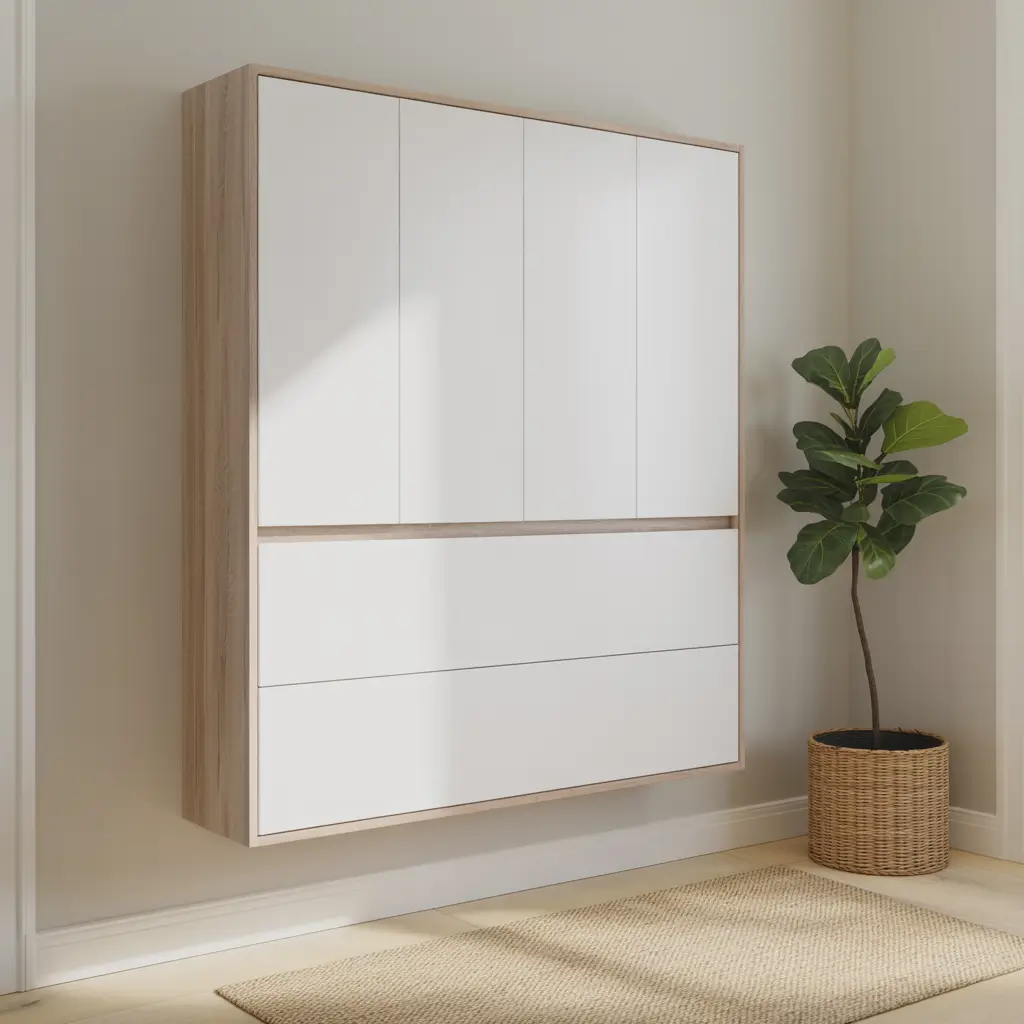
Floating cabinets are basically the iPhone of shoe storage—clean lines, minimal footprint, and that satisfying “less is more” vibe. These wall-mounted units hover above your floor, creating this illusion of more space while hiding your shoe collection behind sleek cabinet doors.
I installed one of these in my current place about eight months ago, and the difference is wild. The floating design makes my tiny entrance feel less cramped, plus I can actually sweep underneath it. Revolutionary for someone who hates moving furniture to clean.
What makes floating cabinets worth it:
- Wall-mounted design frees up floor space completely
- Slim profile (usually 6-8 inches deep) perfect for tight entrances
- Hidden storage keeps visual clutter at bay
- Modern aesthetic that works with contemporary interiors
- Easy floor cleaning since nothing’s blocking your path
Installation reality check: You’ll need to mount these properly into wall studs or use heavy-duty anchors. A poorly installed floating cabinet loaded with shoes will rip right out of your drywall. Ask me how I know. (Kidding—I watched it happen to my neighbor. Learn from their mistakes, folks.)
Capacity considerations: Most floating cabinets hold 8-12 pairs depending on size. They work best for everyday shoes and low-profile footwear. Chunky boots might be a tight squeeze, so plan accordingly.
The clean, floating look screams “I have my life together,” even if your sock drawer tells a completely different story 🙂
2. Hidden Shoe Storage Bench
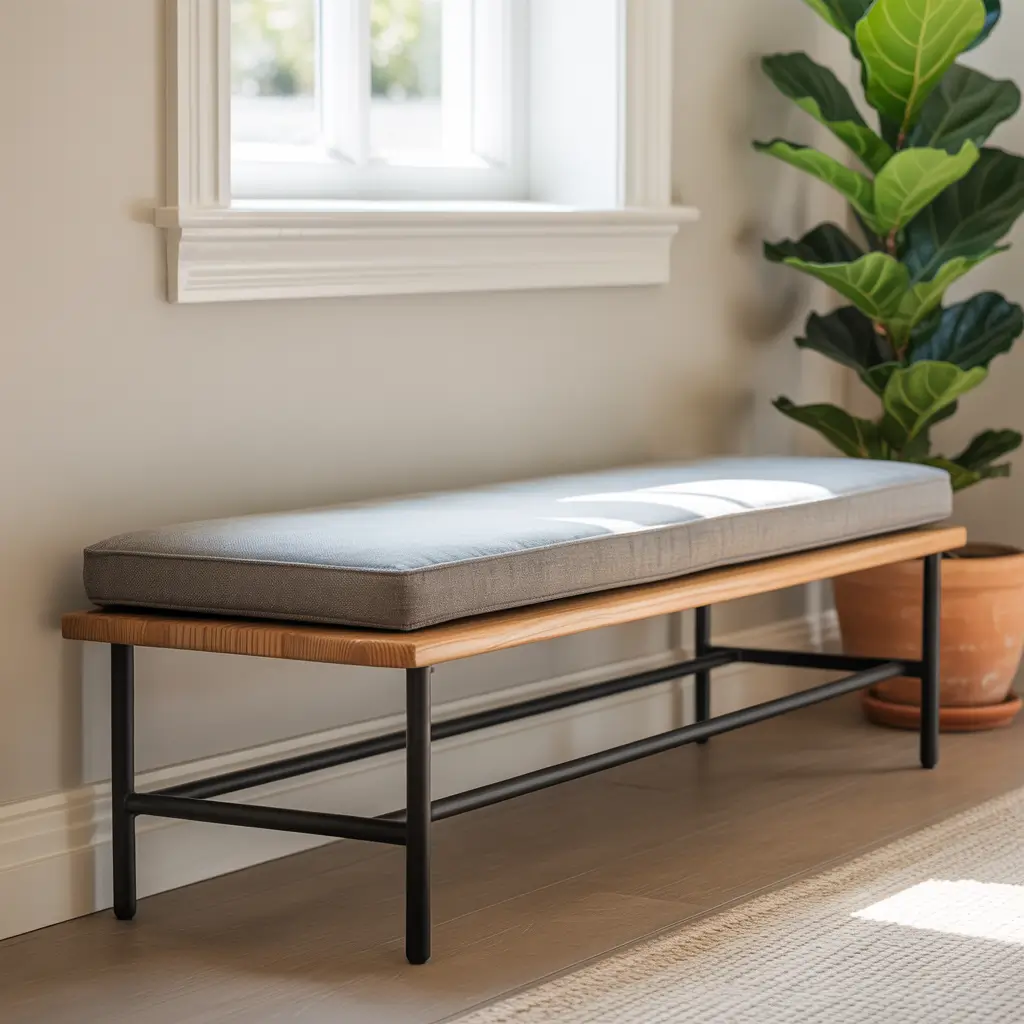
Want to trick everyone into thinking you’re organized? Hidden storage benches are your secret weapon. They look like regular seating until you lift that cushioned top and reveal the shoe stash underneath.
My friend swears by hers, and after house-sitting for her last summer, I totally get the hype. You plop down to put your shoes on, then immediately store them in the same spot. The efficiency is chef’s kiss.
Key features to hunt for:
- Padded top for comfortable sitting (because balance is hard)
- Soft-close hinges that won’t guillotine your fingers
- Divided compartments to prevent shoe chaos inside
- Sturdy construction that supports adult weight without creaking
- Neutral colors that blend with modern decor
The psychology angle: Out of sight really does equal out of mind. Closed storage creates that calm, minimalist vibe modern interiors crave. Your shoes are there when you need them, invisible when you don’t.
Sizing strategy: Measure your entrance width before buying. Standard benches run 36-48 inches wide, but you can find smaller or larger options. Just make sure it doesn’t block your door swing or create a hallway obstacle course.
Storage capacity: Expect to fit 6-10 pairs in a standard bench. Not massive, but perfect for high-rotation everyday shoes. Winter boots and specialty footwear can live elsewhere.
3. Vertical Slim Shoe Tower
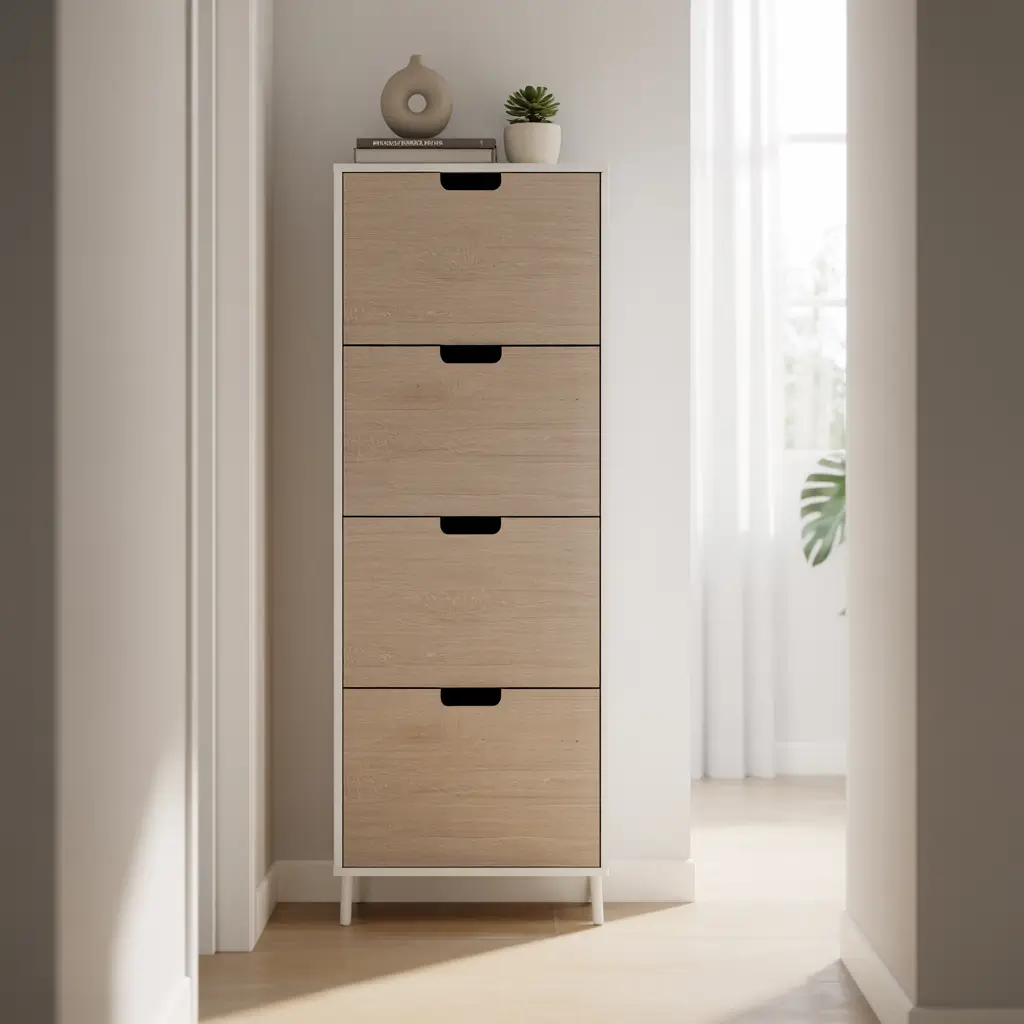
When floor space is premium real estate, think vertical. Slim shoe towers maximize height while taking up minimal width—perfect for those narrow entrances that make furniture shopping a nightmare.
I’m currently using a five-tier tower that’s literally 10 inches wide but holds 20 pairs of shoes. It tucks right next to my door without blocking anything. If that’s not entrance storage magic, I don’t know what is.
Modern tower essentials:
- Narrow footprint (8-12 inches max)
- Multiple angled shelves for easy shoe visibility
- Open or minimal design that doesn’t feel bulky
- Tall construction (5-7 feet) to maximize vertical storage
- Sturdy base so it doesn’t tip when you grab shoes
Material matters: Modern towers come in metal, wood, or mixed materials. Metal frames with wood shelves hit that contemporary aesthetic sweet spot. All-wood versions lean more Scandinavian minimal. Choose based on your existing entrance vibe.
Placement tip: Position your tower in the “dead zone” next to your door where you can’t put anything else anyway. That awkward corner suddenly becomes prime storage real estate.
Pro move: Keep your most-worn shoes at eye level. Seasonal or occasional shoes go up top. This strategy saves you from doing the awkward reach-and-stand-on-tiptoes dance every morning.
Also Read: 10 Modern Hallway Shoe Storage Ideas for Busy Homes
4. Wall-Mounted Shoe Drawers
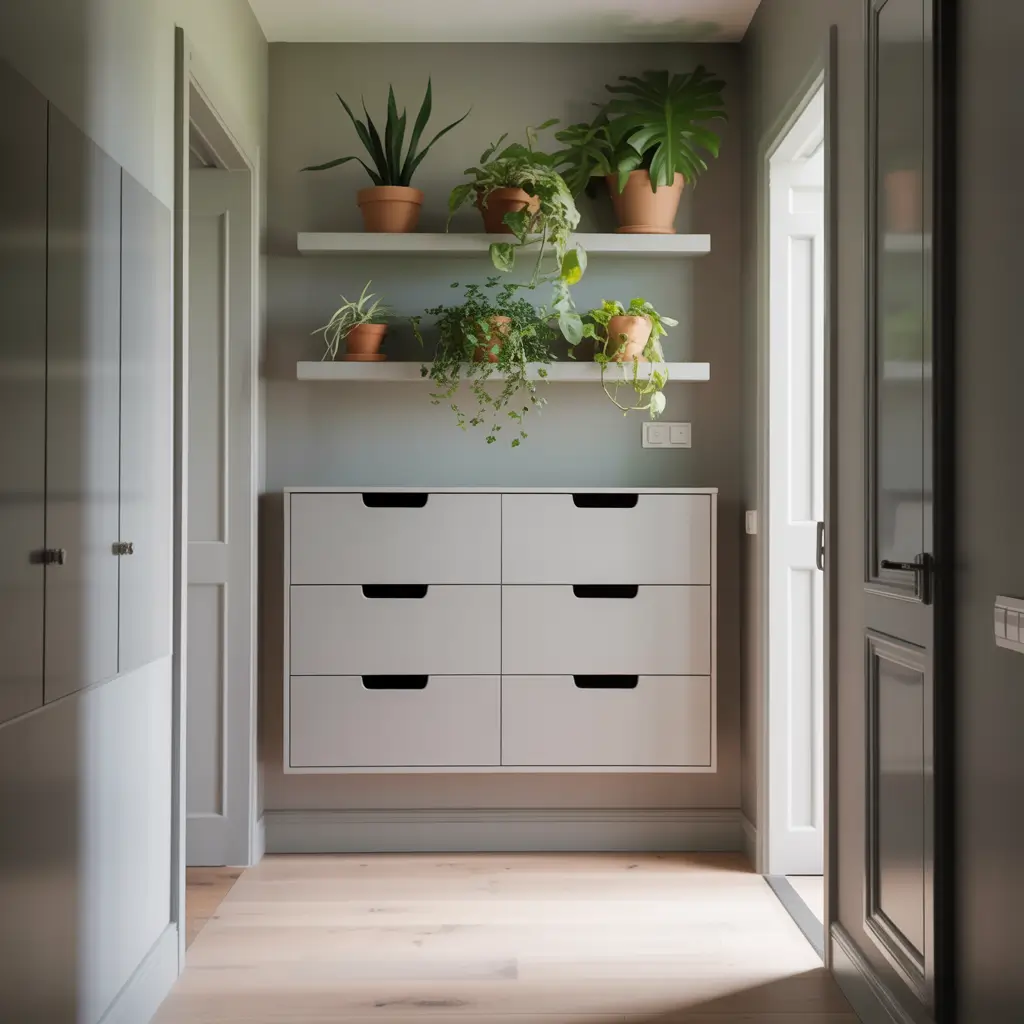
Ever seen those super sleek wall-mounted drawer systems that look like they belong in a fancy boutique? Yeah, those. Wall-mounted shoe drawers are next-level entrance storage that combines function with serious style points.
These aren’t your grandma’s dresser drawers. Modern versions feature angled interiors so shoes sit tilted for easy viewing, soft-close mechanisms for that luxury feel, and slim profiles that barely protrude from your wall.
Why these feel premium:
- Space-efficient mounting uses vertical wall space
- Soft-close action feels expensive (because it is, FYI)
- Angled drawer interiors let you see everything at once
- Modular stacking customize height to your collection
- Dust protection keeps shoes cleaner than open storage
The investment conversation: These cost more than basic shelving. Significantly more. But if you value that boutique-organized aesthetic and want shoe storage that doubles as a design statement, they deliver.
Installation requirements: Plan for professional mounting if you’re not handy with power tools. These need secure wall attachment, and DIY disasters are expensive to fix. Trust me on this.
Best for: The person who wants their entrance to look like it was professionally designed. If you’re going for that “featured in Architectural Digest” vibe, wall-mounted drawers nail it.
5. Built-In Entryway Shoe Wall
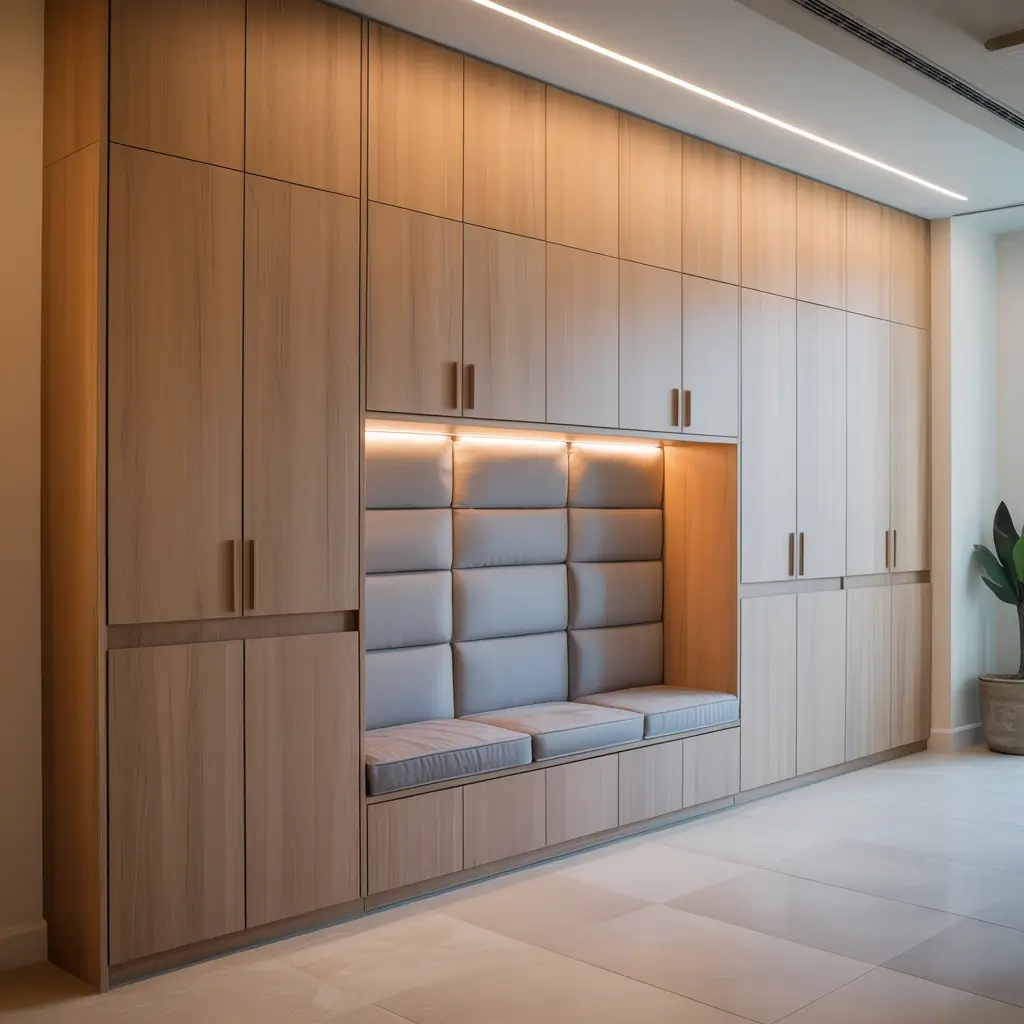
Okay, this one requires either construction skills or paying someone who has them. Built-in shoe walls transform your entrance into custom storage heaven, but they’re definitely a commitment.
My cousin did this during their renovation, and I’m still jealous two years later. Floor-to-ceiling custom cubbies, integrated seating, the works. It’s like their entrance was designed by someone who actually thinks about shoe storage (revolutionary concept, right?).
Built-in advantages:
- Custom fit for your exact space dimensions
- Maximizes every inch of available wall space
- Adds home value with permanent, quality storage
- Seamless integration looks professionally designed
- Endless configuration options for your needs
Planning essentials:
- Measure your shoe collection before designing (seriously)
- Include adjustable shelving for flexibility
- Plan for ventilation to prevent musty shoe smell
- Consider lighting if the wall lacks natural light
- Think about future needs because this is permanent
Budget reality: You’re looking at $1,000-$5,000+ depending on size and materials. This isn’t a “quick weekend project” situation. But if you own your place and plan to stay, built-ins are the ultimate entrance upgrade.
Design tip: Mix open cubbies with closed cabinets. Open sections for everyday shoes, closed storage for seasonal stuff or items you don’t want guests seeing. Best of both worlds.
6. Under-Bench Pull-Out Shoe Storage
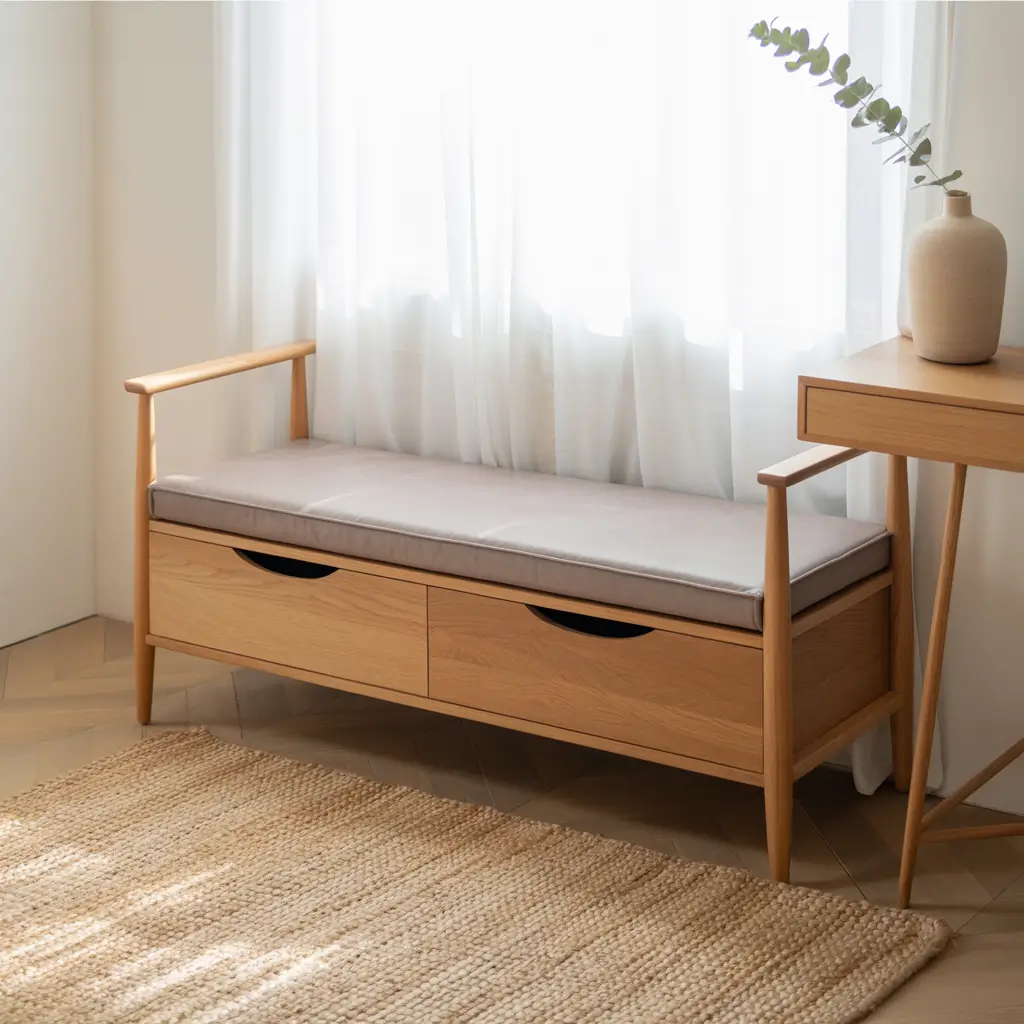
Hidden pull-out storage beneath benches is sneaky genius. You get seating on top and concealed shoe organization underneath, but unlike lift-top benches, these feature smooth pull-out drawers or trays for easier access.
I tried one of these at a friend’s place, and the convenience factor is unreal. No lifting heavy bench tops or digging through piles—just pull out the drawer and grab your shoes. It’s the small things that make daily life better, you know?
What makes pull-outs superior:
- Easy access without lifting heavy bench seats
- Organized compartments prevent shoe jumbles
- Smooth gliding mechanism (when done right)
- Seating above for putting shoes on comfortably
- Hidden storage maintains clean visual lines
Mechanism quality matters: Cheap drawer slides will frustrate you daily. Invest in benches with quality ball-bearing slides that glide smoothly even when loaded with shoes. Your future self will thank you.
Configuration options:
- Single large drawer for unified storage
- Multiple smaller drawers for categorization
- Pull-out trays with individual shoe slots
- Combination designs mixing drawer types
Space requirements: These need clearance for drawers to extend fully. Measure your entrance depth before buying, or you’ll end up with drawers that can’t open properly. Been there, returned that.
Also Read: 10 Gorgeous Shoe Storage Cabinet Ideas for Every Room
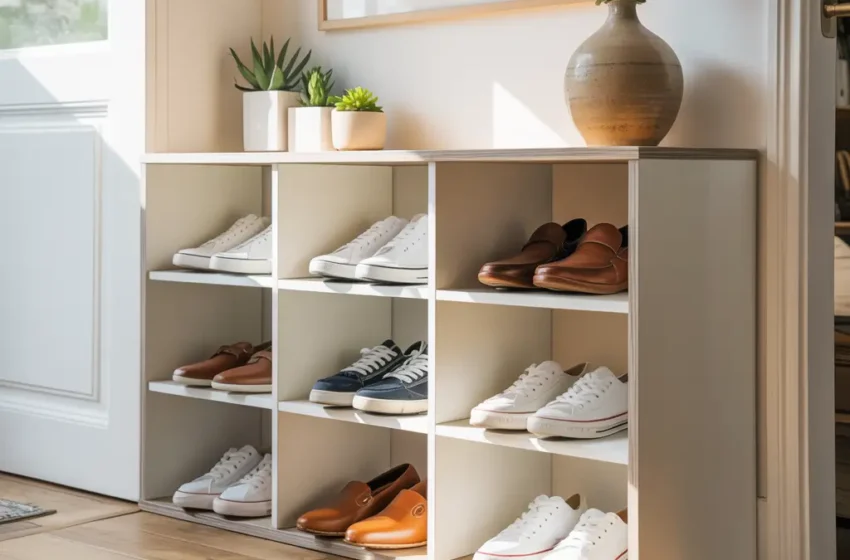
7. Modern Open Cubby Shoe Unit
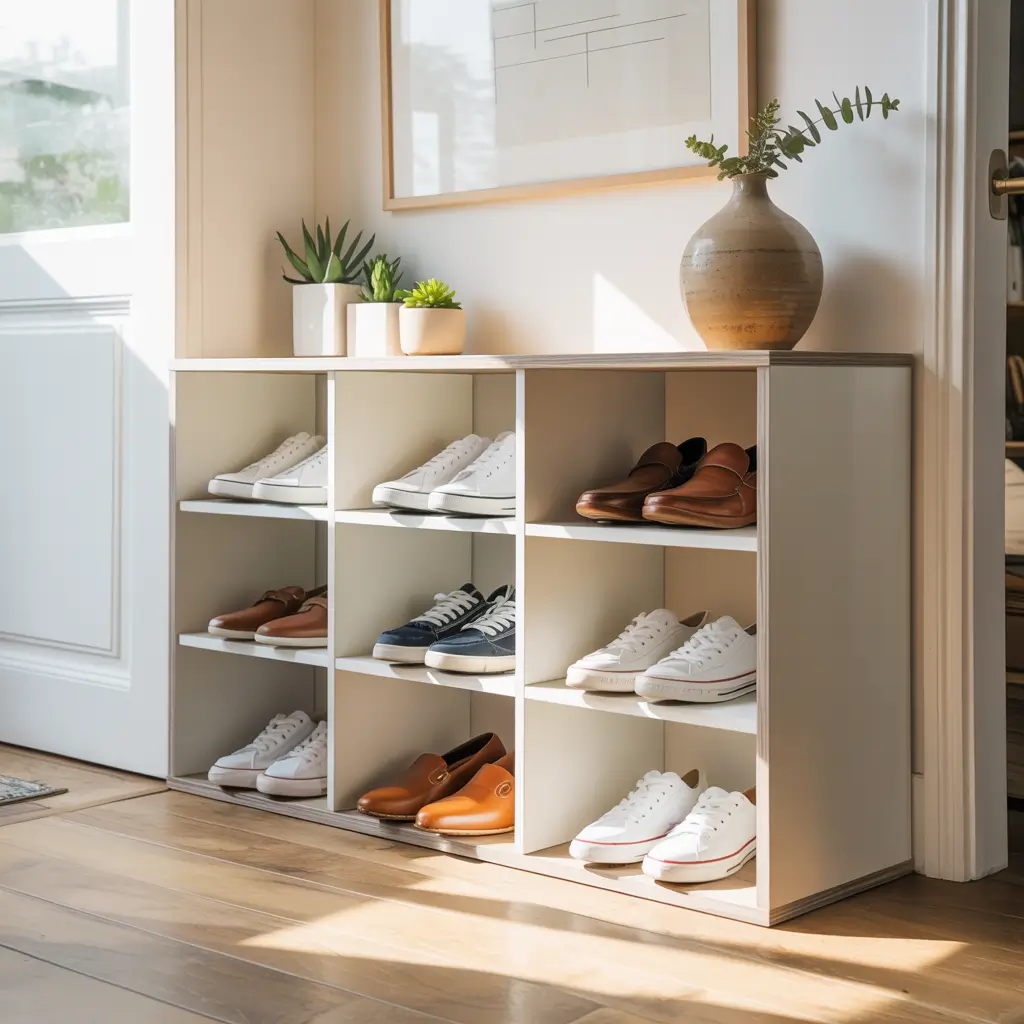
Sometimes simple is best. Modern open cubby units offer straightforward shoe storage without the fuss of doors, drawers, or complicated mechanisms. Just clean-lined cubbies that hold shoes and look intentionally minimal.
I appreciate these for their honesty. They don’t pretend to be something they’re not—they’re shoe storage, pure and simple. Plus, the open design makes grabbing shoes ridiculously easy when you’re rushing out the door.
Modern cubby characteristics:
- Clean geometric design (usually square or rectangular cubbies)
- Low profile doesn’t overwhelm entrances
- Open accessibility for quick shoe access
- Affordable pricing compared to complex systems
- Easy assembly because nobody wants furniture projects lasting hours
Material choices:
- Wood (natural, walnut, oak) for warm, organic feel
- Metal frames with wood shelves for industrial-modern
- Laminate for budget-friendly modern looks
- Powder-coated steel for Scandinavian minimal vibes
Styling approach: The open design means your shoes become part of the decor. Keep them organized and presentable, or embrace the “lived-in” aesthetic. Either works if you commit to it.
Best scenarios: Small households, minimalists who don’t own 50 pairs of shoes, or people who value convenience over concealment. If you’re okay with visible shoe storage, these units deliver solid function without unnecessary complexity.
8. Mirror Front Shoe Cabinet
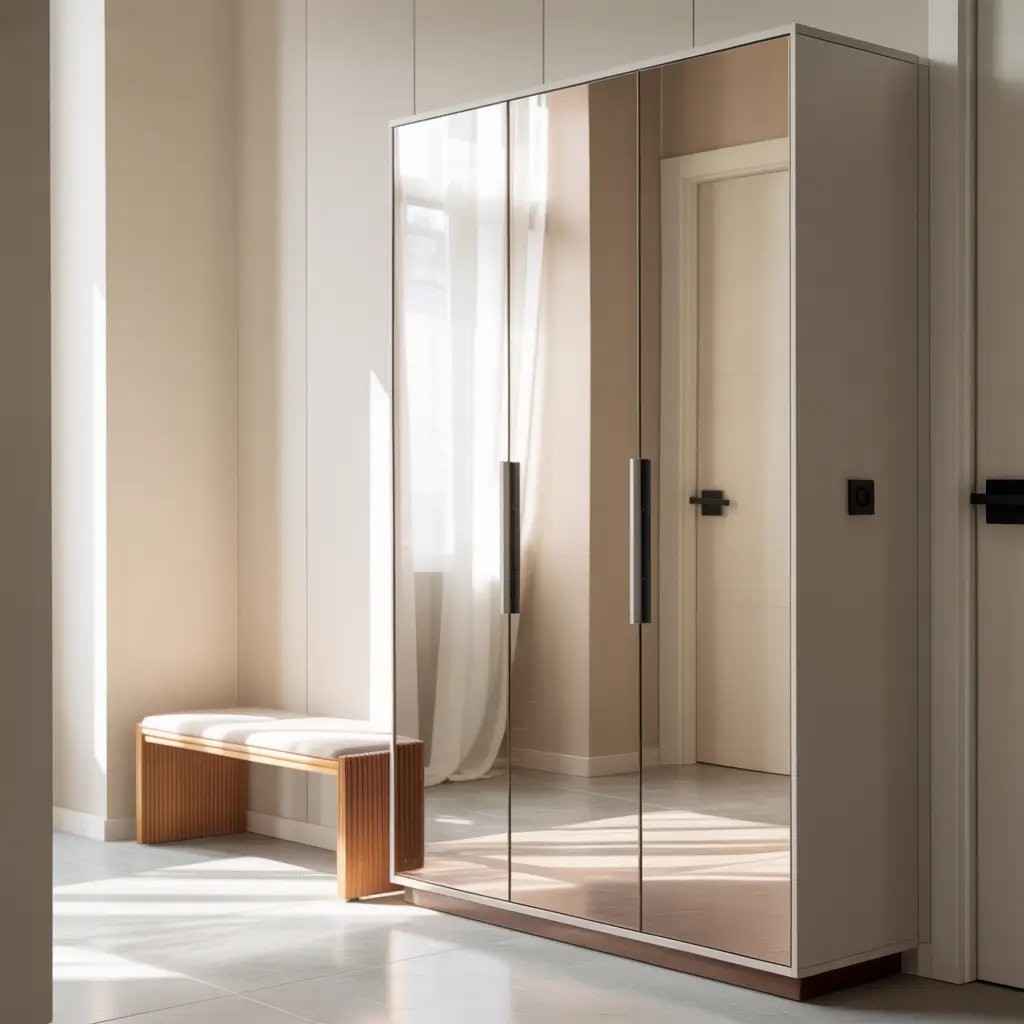
Mirror-front cabinets are multitasking overachievers. Store shoes behind the cabinet doors while the mirrored exterior serves double duty for last-minute appearance checks and making your entrance feel larger.
I installed one of these in my last apartment’s tiny entrance, and the mirror factor legitimately made the space feel less claustrophobic. The shoe storage was great, but that optical illusion of added space? Total game-changer.
Dual-purpose benefits:
- Full-length mirror for outfit checks before leaving
- Hidden shoe storage behind reflective doors
- Space-expanding effect through mirror reflection
- Slim cabinet depth (6-8 inches typically)
- Modern aesthetic with sleek mirror panels
Mirror quality considerations: Not all mirrors are created equal. Look for distortion-free glass, quality mounting, and frames that actually look modern (not like repurposed bedroom furniture). The mirror is front and center in your entrance—make it count.
Installation location: Position where the mirror reflects light or an attractive view, not directly facing the door (some people find that unsettling). Side walls usually work best for functional reflection angles.
Storage capacity: Shallow cabinets with mirror fronts typically hold 10-15 pairs depending on internal configuration. Perfect for everyday shoes, tight for boots or bulky footwear.
Bonus feature: Some models include hooks on the side for keys or bags. These little extras add functionality without complicating the clean mirror aesthetic.
9. Scandinavian Entry Shoe Console
Scandinavian design hits that modern-minimal sweet spot—functional, beautiful, and somehow calming to look at. Scandinavian-style shoe consoles feature natural wood, clean lines, and that effortless “hygge” vibe everyone’s always talking about.
My Scandinavian console has been the most complimented piece of entrance furniture I’ve ever owned. People think I’m design-savvy. Little do they know I just bought something labeled “Scandinavian” and got lucky 🙂
Scandinavian design hallmarks:
- Light wood tones (birch, ash, beech, light oak)
- Minimal hardware or handleless designs
- Clean geometric lines without ornate details
- Open and closed storage mix for flexibility
- Low-profile construction that doesn’t dominate spaces
Functional features:
- Top surface for keys, mail, or decorative items
- Mix of shelves and cabinets for varied storage
- Slim depth respects narrow entrances
- Tapered legs create that classic Scandi look
Styling tips: Pair with simple ceramic vases, minimal coat hooks, or a geometric mirror above. Scandinavian design thrives on restraint—less is genuinely more here. Don’t overcrowd the aesthetic.
Price range: Quality Scandinavian furniture costs more than flat-pack basics but less than high-end designer pieces. You’re paying for real wood, thoughtful design, and durability. IMO, worth it if you appreciate the aesthetic.
Perfect for: Anyone drawn to minimal, natural, calm design. If you screenshot Scandinavian interiors on Instagram, you’ll love these consoles in real life.
Also Read: 10 Smart Outdoor Shoe Storage Ideas That Save Space
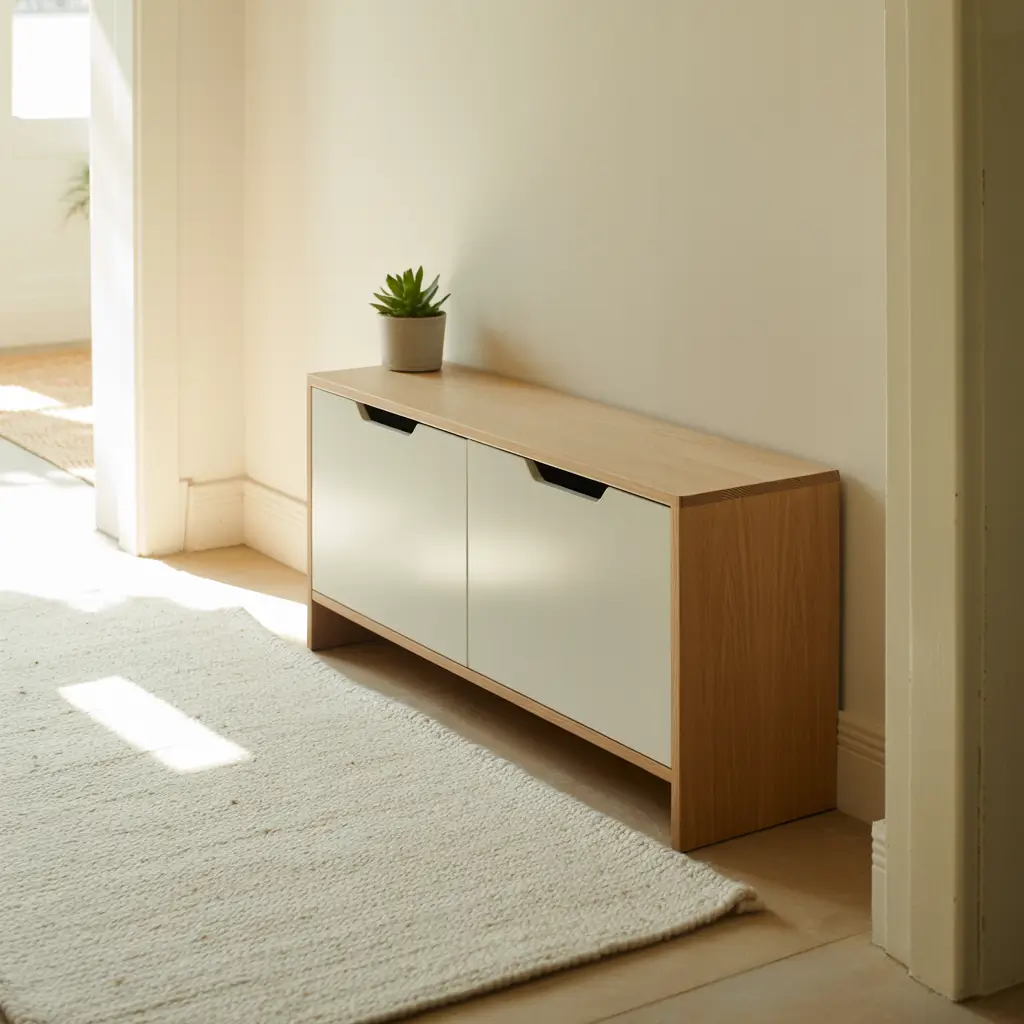
10. Closed Minimal Shoe Sideboard
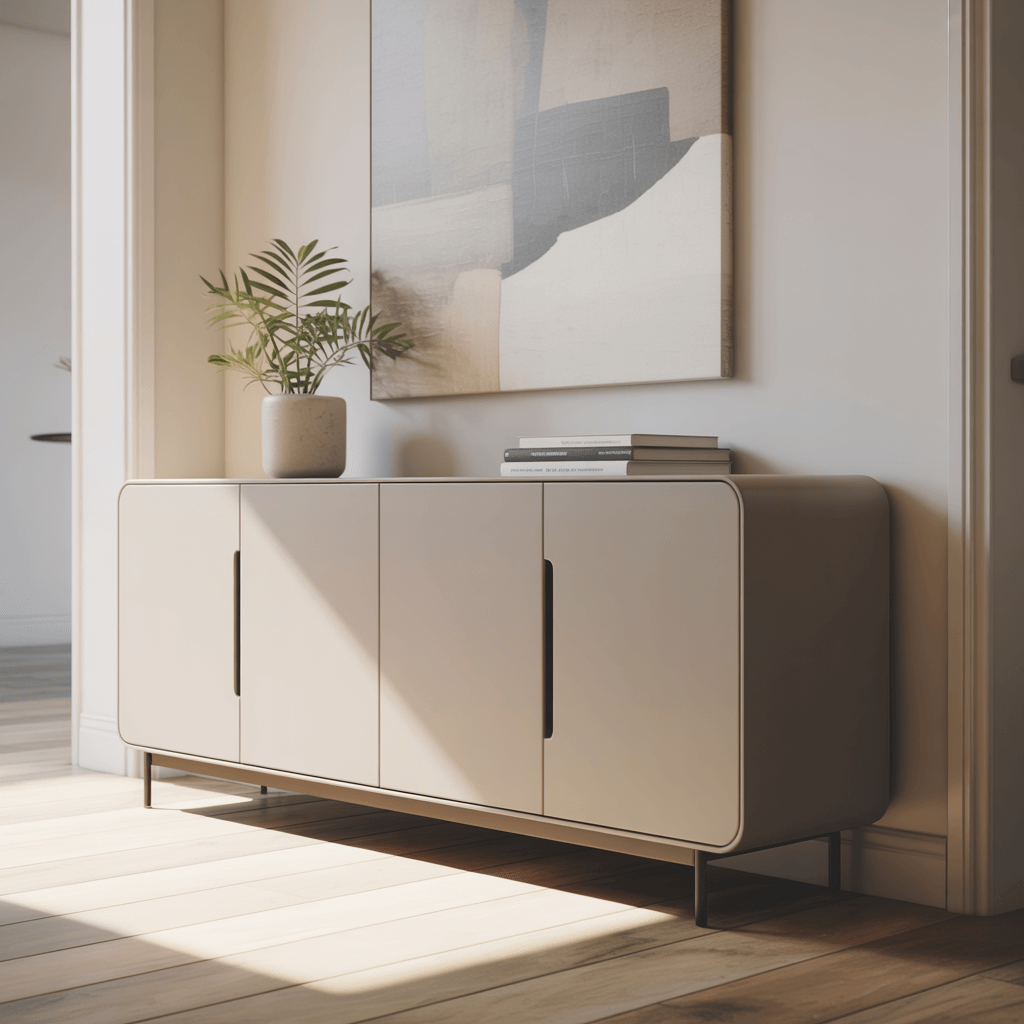
Think of these as grown-up shoe storage that could pass for regular furniture. Closed minimal sideboards hide shoe storage behind clean cabinet doors while looking sophisticated enough for any modern entrance.
The beauty here is subtlety. Guests don’t immediately clock it as shoe storage—it just looks like tasteful entrance furniture. Meanwhile, you’re smugly hiding 20 pairs of shoes inside while maintaining that “uncluttered modern home” aesthetic.
Minimal sideboard features:
- Closed cabinet doors (no visible shoe chaos)
- Long, low profile works in various entrance sizes
- Top surface for lamps, plants, or entry accessories
- Adjustable internal shelving for different shoe heights
- Hardware-free or minimal handle designs
Material and finish options:
- Matte lacquer for ultra-modern sleek looks
- Natural wood grain for organic warmth
- Two-tone designs mixing wood and painted surfaces
- Textured fronts (grooved, ribbed, 3D patterns)
Capacity expectations: Sideboards vary widely, but standard 48-60 inch models hold 15-25 pairs depending on internal configuration. Bigger than you’d think from the outside.
Placement flexibility: These work against any wall in your entrance. Not door-specific like some storage solutions, giving you more layout options. Center them, corner them, or float them—all work.
The upgrade factor: If you’re tired of obvious “shoe storage furniture” and want something that elevates your entire entrance aesthetic, sideboards deliver. They’re the difference between “we store shoes here” and “we have a beautifully designed entrance that happens to include shoe storage.”
Choosing Your Modern Solution
Alright, so which option should you actually pick? Here’s how I think about it:
For tiny entrances: Floating cabinets or vertical towers maximize space without overwhelming the area. Go up, not out.
For style-first folks: Scandinavian consoles or closed sideboards bring that “designed interior” vibe while hiding practical storage.
For DIY-averse people: Modern open cubbies or hidden benches offer simple setup with immediate functionality.
For serious shoe collectors: Built-in walls or modular wall-mounted systems accommodate larger collections properly.
For budget-conscious: Open cubby units or simple benches deliver solid function without premium pricing.
For renters: Avoid built-ins. Stick with freestanding options like towers, benches, or consoles you can take when you move.
Here’s my honest take after trying too many solutions: modern shoe storage works best when it matches your actual behavior. That gorgeous wall-mounted drawer system is useless if you’re too lazy to open drawers and just kick shoes underneath instead. Pick storage that fits your real-life habits, not your aspirational ones.
Modern Design Principles to Remember
Less is more: Modern design thrives on restraint. Choose streamlined storage over ornate options.
Function first: Pretty storage that doesn’t work well just creates frustration. Prioritize usability.
Cohesive materials: Match your storage materials to existing entrance elements for a pulled-together look.
Negative space: Don’t cram storage everywhere. Modern design needs breathing room to work properly.
Quality over quantity: One well-made piece beats multiple cheap solutions that fall apart.
Maintenance for Modern Storage
Keep it clean: Modern minimal designs show dirt and clutter easily. Quick weekly wipes keep things looking sharp.
Rotate seasonally: Store off-season shoes elsewhere. Modern storage looks best when it’s not crammed to capacity.
Use shoe trees: Helps shoes maintain shape, especially important when storing them in closed cabinets for extended periods.
Control moisture: Entrance storage can trap moisture. Occasional airing out prevents musty smells and shoe damage.
Edit regularly: Modern minimalism means being honest about what you actually wear. Donate shoes that haven’t left storage in six months.
Final Thoughts
Modern entrance shoe storage has come a long way from those bulky old cabinets that looked like they belonged in a 1990s sitcom.
Today’s options combine sleek aesthetics with genuine functionality—when you choose the right solution for your space.
Your entrance sets the tone for your entire home. Shoe chaos creates stress, while organized storage creates calm. It’s not just about hiding shoes; it’s about creating a space that actually works for your daily life.
Pick storage that matches your entrance size, your shoe collection size, your design preferences, and most importantly, your actual habits.
The perfect modern solution is the one you’ll realistically use every single day without thinking about it.
Start with one solution and see how it works. You can always add more storage, switch systems, or combine multiple approaches later. The important thing is making a change from the current shoe-pile situation.
Your entrance can be both modern and functional. Those aren’t mutually exclusive goals—they actually work together when you find the right storage solution.
Now go create an entrance that doesn’t make you sigh every time you walk through the door. You deserve better than shoe chaos.
And hey, when guests compliment your organized entrance, you can act like you’ve always been this put-together. I won’t tell :/