12 Stylish Entryway Shoe Storage Ideas for Small Spaces
- Shoe Storage
 Ben
Ben- 0
- 37 minutes read
Let’s be real—your entryway probably looks like a shoe explosion happened every single day. I get it. You walk in, kick off your shoes, and suddenly there’s a chaotic pile that makes you question all your life choices.
But here’s the thing: you don’t need a massive mudroom or a Pinterest-perfect home to keep your shoes organized. You just need the right storage solution that actually works for your space.
I’ve tried everything from cheap plastic racks that collapsed under pressure to DIY projects that looked amazing in my head but… well, let’s not talk about those disasters.
After years of trial and error (and stepping on way too many shoes in the dark), I’ve figured out what actually works.
So grab your coffee, and let’s chat about 12 shoe storage ideas that’ll transform your entryway from disaster zone to functional space you’re actually proud of.
1. Floating Shoe Racks for Small Entryways
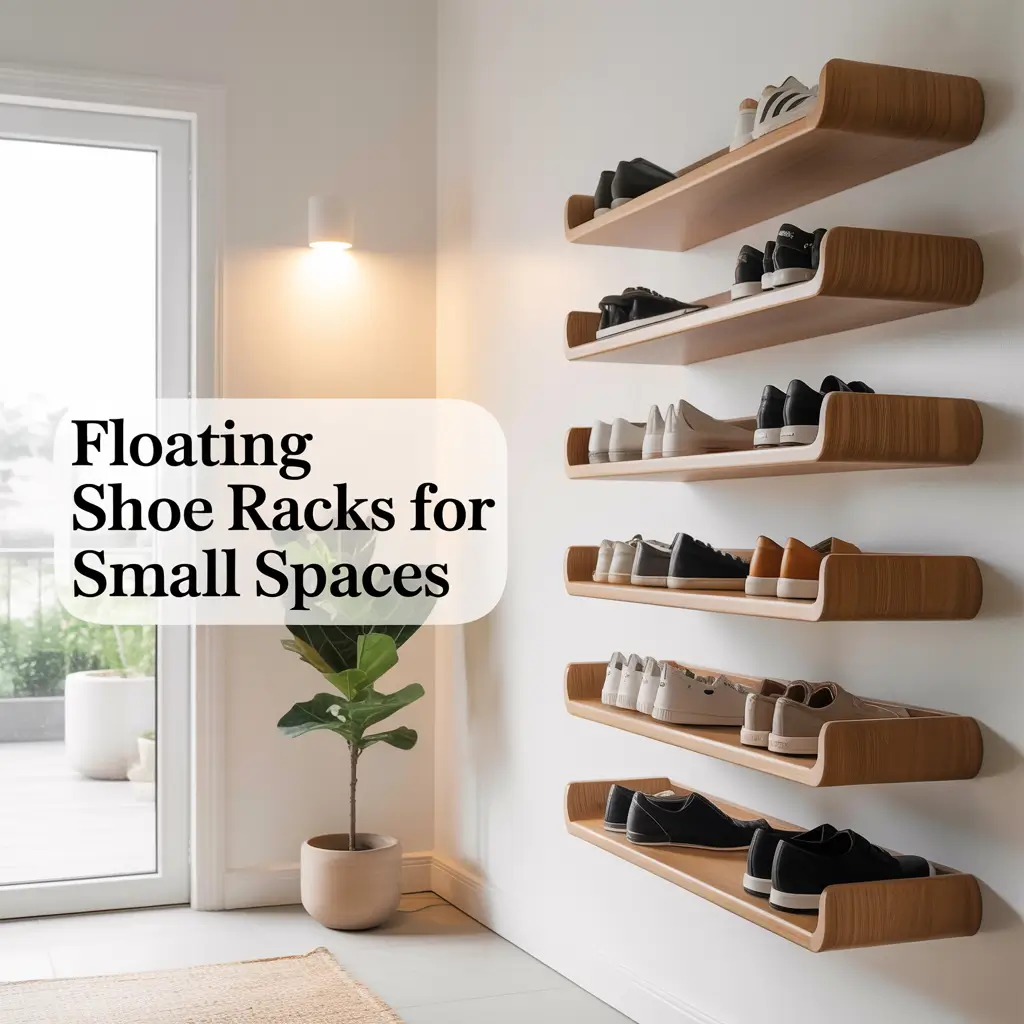
If you’re working with limited floor space, floating shoe racks are about to become your new best friend. I installed one in my tiny apartment entryway, and honestly? Game-changer.
These wall-mounted beauties keep your shoes off the floor while maximizing every inch of vertical space. You mount them directly to the wall, and suddenly you’ve got organized shoe storage without sacrificing precious square footage. The best part? Your floor stays clear, which makes sweeping and mopping actually possible again.
Here’s what makes floating racks so genius:
- No floor footprint: Perfect for narrow entryways where every inch counts
- Adjustable heights: Mount them at whatever level works for your space
- Modern aesthetic: They look intentional, not like an afterthought
- Easy cleaning: No more dust bunnies hiding under shoe racks
I went with a sleek metal design that holds about 6 pairs of shoes. Pro tip: install them low enough that you can actually reach your shoes without a step stool, but high enough that they don’t become a tripping hazard. You’d think this would be obvious, but my first attempt was… let’s just say I learned the hard way.
The downside? You’ll need to be comfortable with some basic wall mounting. If you’re renting, make sure you’re okay with putting holes in the wall, or check if your landlord will let you. But honestly, the trade-off is worth it.
2. DIY Wooden Shoe Bench with Storage
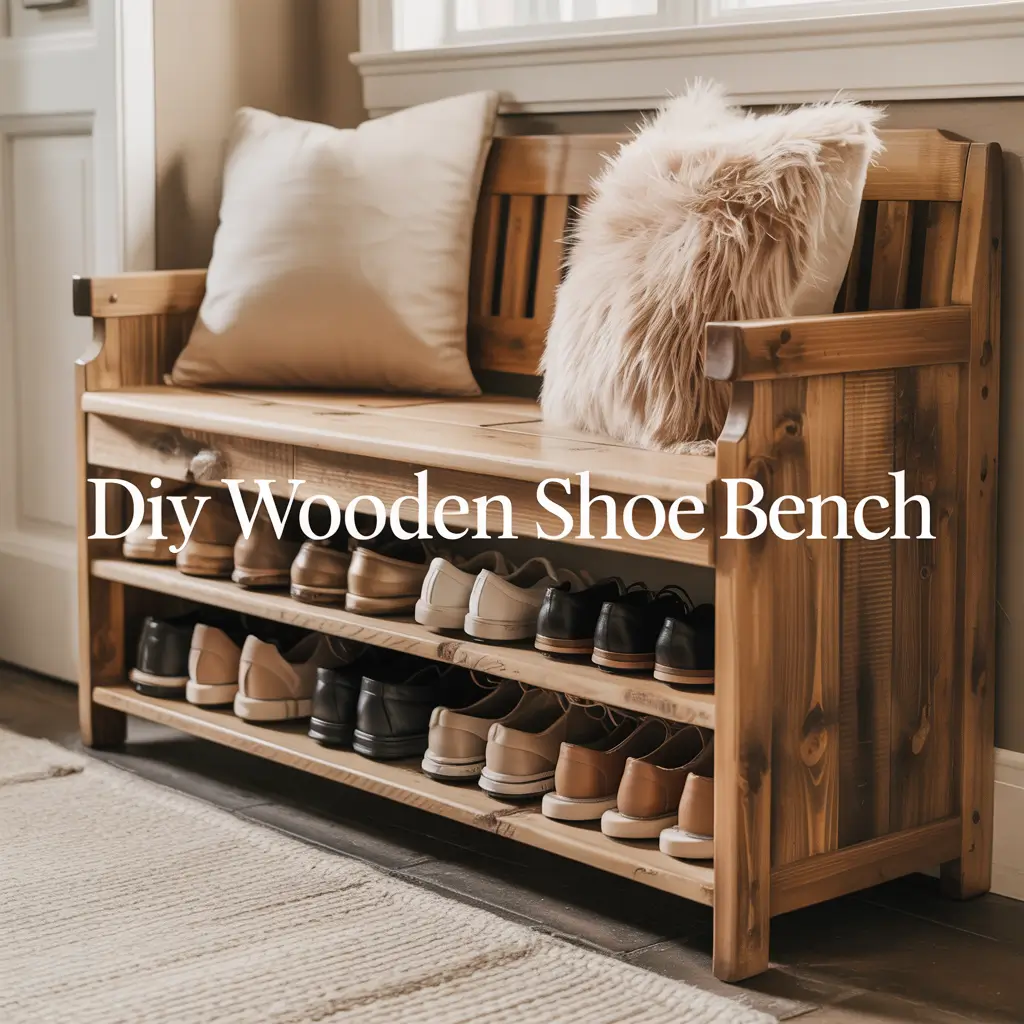
Want something that serves double duty? A wooden shoe bench with storage underneath is like the Swiss Army knife of entryway furniture.
I built one last year using reclaimed wood (sounds fancy, but it was literally old fence boards from my neighbor), and it cost me about $40 total. You get a place to sit while putting on your shoes and storage for multiple pairs underneath. It’s the kind of practical furniture that makes you feel like a functional adult.
The construction is surprisingly straightforward:
- Basic frame: Four legs, a top board, and a bottom shelf
- Cushion option: Add a foam pad on top for extra comfort
- Hidden storage: The space underneath keeps shoes out of sight
- Customizable size: Build it to fit your exact space
Here’s the thing about DIY projects—they’re not always perfect, but they’re yours. My bench has a few wonky angles because apparently I can’t measure twice and cut once like normal people, but you know what? It holds shoes, it’s sturdy, and visitors always compliment it. FYI, if you’re not into power tools, most hardware stores will cut wood to your specifications. No judgment here.
The bench also gives you that crucial sitting spot for wrestling with winter boots. Ever tried putting on boots while standing on one foot? It’s basically an Olympic sport, and I’m terrible at it.
3. Over-the-Door Shoe Organizers
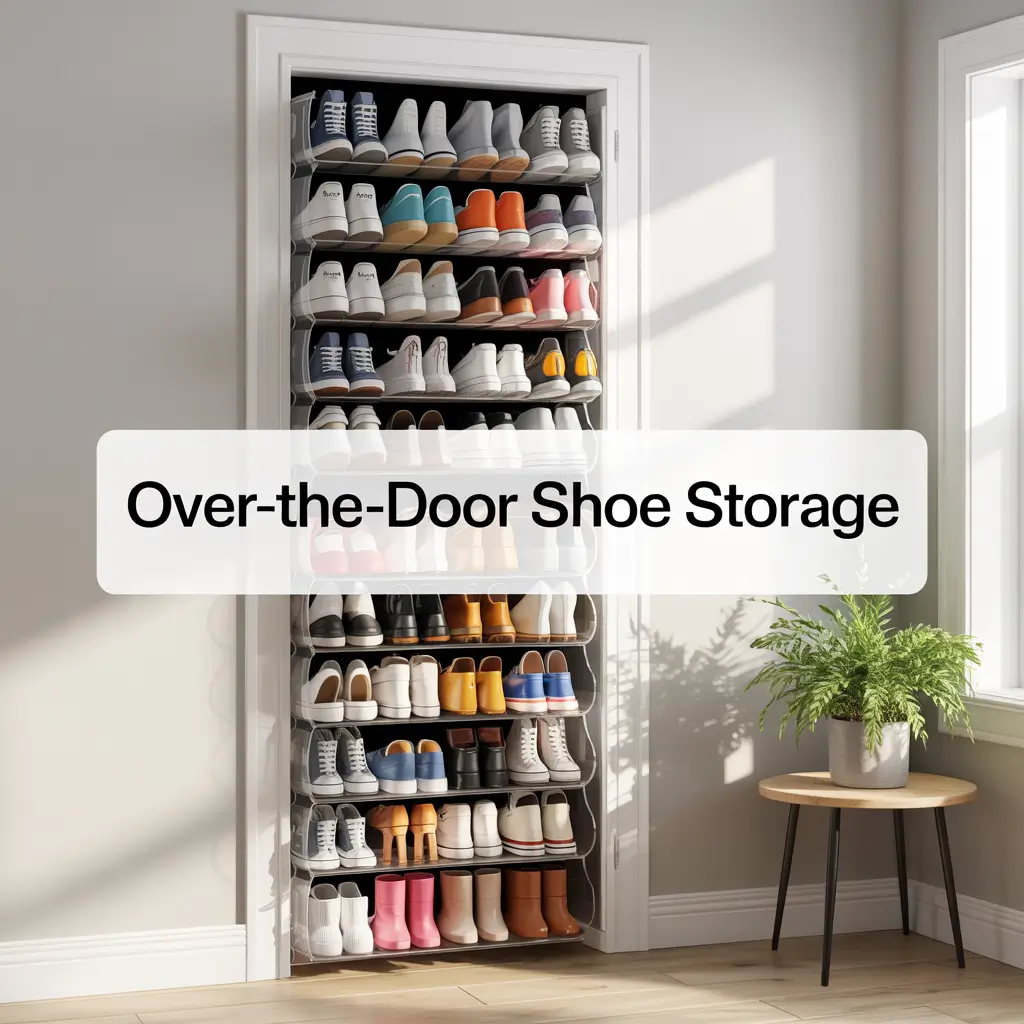
Okay, I know what you’re thinking—aren’t these a bit… basic? Yeah, maybe, but hear me out. Over-the-door organizers are the unsung heroes of shoe storage, especially if you literally have zero floor or wall space to spare.
I resisted these for years because I thought they looked cheap and college-dorm-ish. Then my shoe situation reached critical mass, and I caved. Best decision ever. These things hold an insane number of shoes (we’re talking 20+ pairs), and they’re completely out of the way.
What makes them actually useful:
- Instant storage: No installation required, just hang and go
- Massive capacity: Clear pockets let you see everything at once
- Renter-friendly: Zero holes, zero commitment
- Affordable: Usually under $20 for a decent one
The clear pocket versions are clutch because you can actually see what shoes you have without playing a guessing game. I organized mine by season—winter boots up top where I can barely reach them in summer, everyday shoes at eye level, and fancy heels at the bottom because let’s be real, I wear those maybe twice a year.
One word of caution: make sure your door can actually close properly with the organizer hanging on it. My bathroom door now closes with a satisfying whomp sound because I didn’t account for the thickness. Oops 🙂
Also Read: 10 Smart IKEA Shoe Storage Ideas for Tiny Apartments
4. Minimalist Open Shelving for Shoes
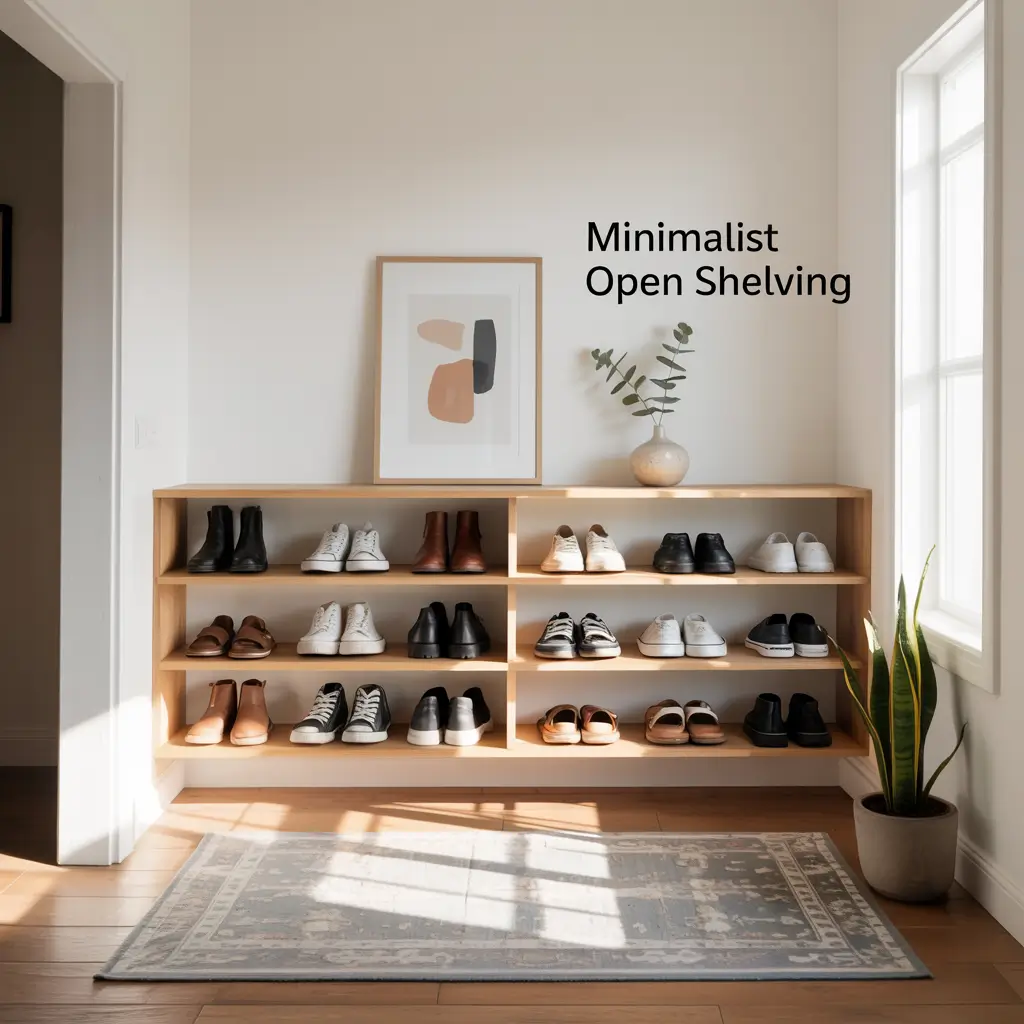
If you’re into that clean, minimalist aesthetic, open shelving is where it’s at. I’m talking simple wooden or metal shelves mounted to the wall—no doors, no fuss, just your shoes on display.
This works especially well if you actually like your shoes and want to show them off. Think of it as a curated shoe gallery. Plus, open shelving forces you to keep things tidy because everything’s visible. Nothing motivates organization quite like the fear of guests seeing your mess.
Key benefits of going the open route:
- Visual appeal: Your shoe collection becomes part of the decor
- Easy access: Grab and go without opening any doors
- Flexible arrangement: Rearrange shoes whenever you feel like it
- Cost-effective: Basic shelving is usually pretty affordable
I installed three floating shelves in my entryway, each about 10 inches deep. That’s the sweet spot for most shoes—sneakers, flats, even some ankle boots fit perfectly. Pro tip: stick with a consistent shoe display method. I keep all my shoes facing the same direction because I’m weirdly particular about that stuff.
The obvious downside? Dust. Open shelving means your shoes collect dust faster than enclosed storage. But honestly, a quick wipe-down once a week takes like two minutes. Small price to pay for an organized, good-looking entryway.
5. Hidden Shoe Cabinets Behind Mirrors
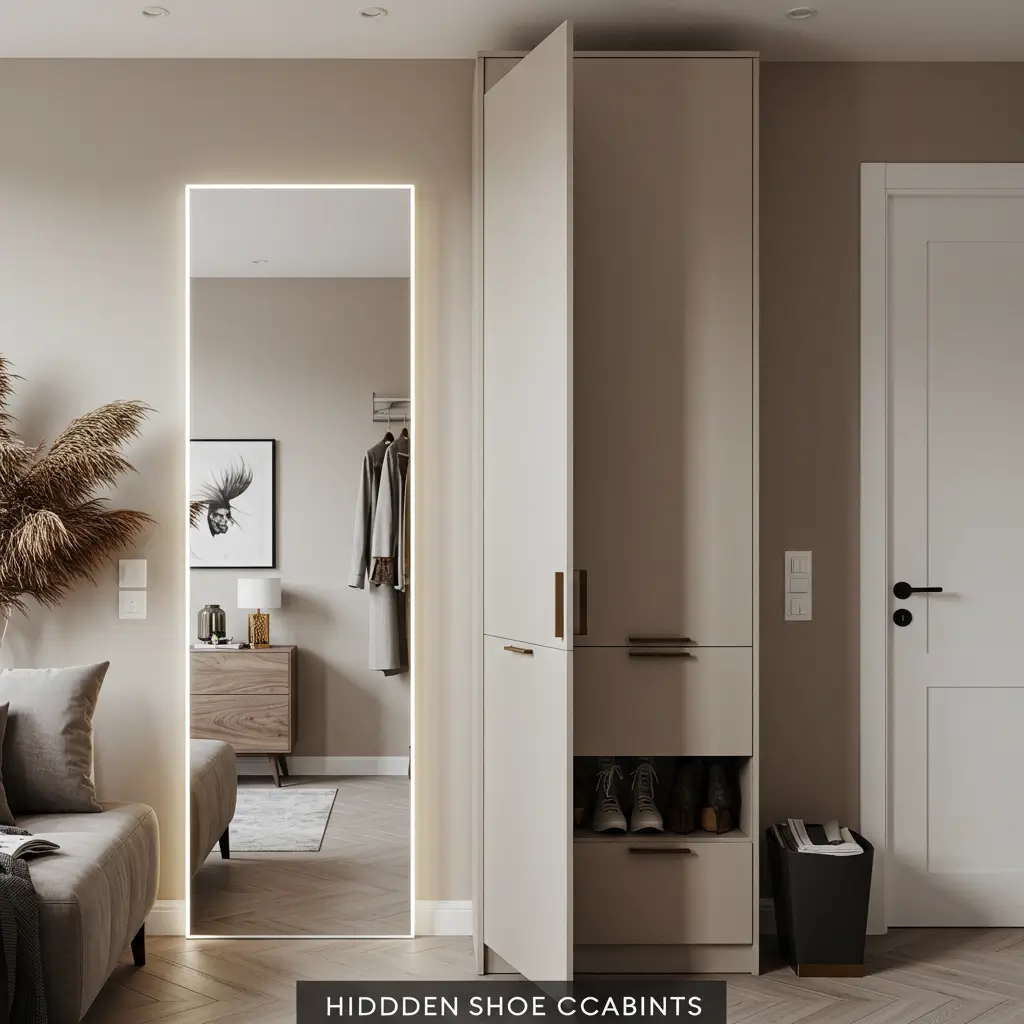
This is the kind of clever design that makes you feel like you’re living in a spy movie. Shoe cabinets hidden behind mirrors are sneaky genius—you get a full-length mirror for last-minute outfit checks and concealed shoe storage.
I first saw these in a friend’s apartment and literally didn’t know they stored shoes until she showed me. The mirror swings open to reveal slim shelves that hold shoes vertically, which maximizes space like crazy. It’s the ultimate “everything has its place” solution.
Why these are legitimately brilliant:
- Dual purpose: Mirror and storage in one unit
- Space-saving design: Shoes stored vertically take up way less room
- Hidden mess: Nobody knows your shoes are there
- Sleek appearance: Just looks like a nice mirror
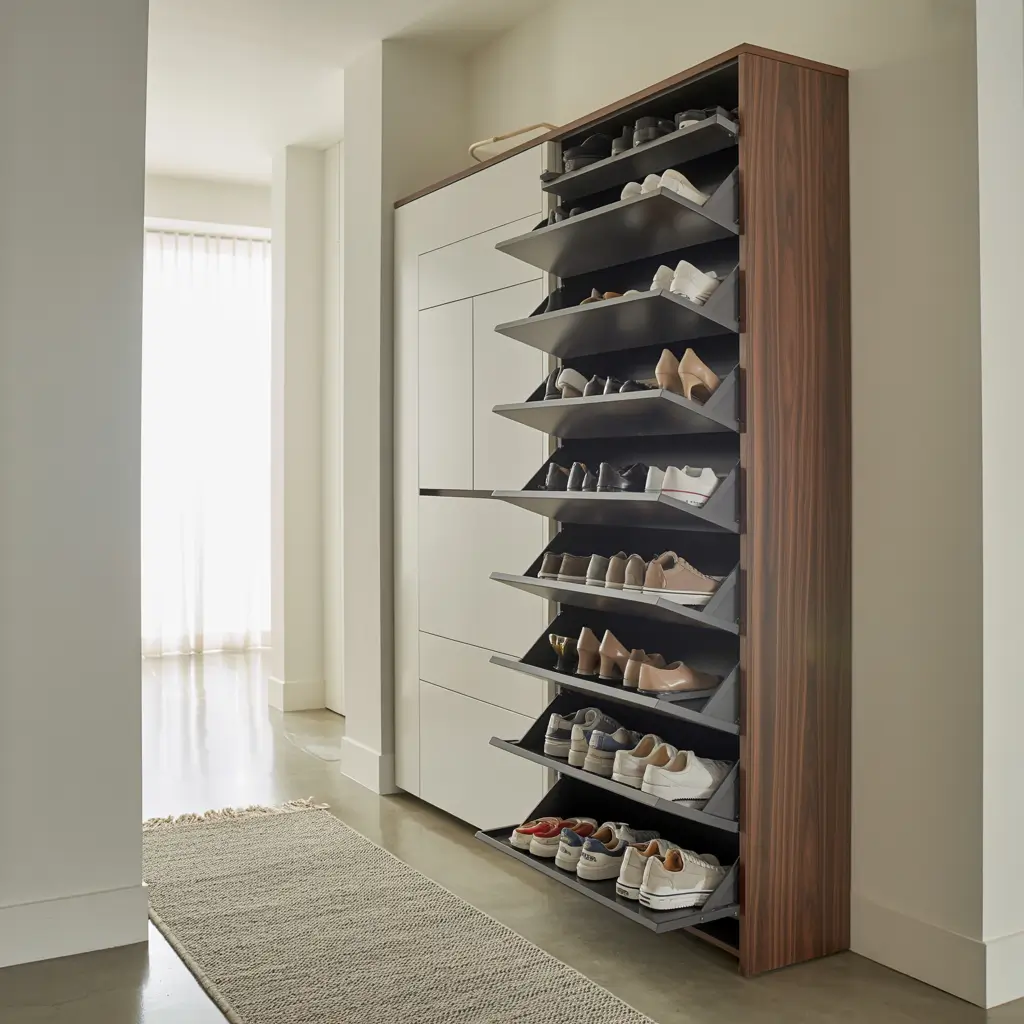
The slim profile is perfect for narrow hallways where a traditional shoe cabinet would stick out too far. Most of these units are only about 6-8 inches deep but can hold 15-20 pairs depending on the size. The vertical storage means you’re stacking shoes on their sides, which works great for flats, sneakers, and low-profile shoes.
Full transparency though—if you’re a boot person, this might not be your solution. Tall boots don’t fit in these slim cabinets, and squishing them in there will just ruin the shape. But for everyday shoes? Absolutely perfect.
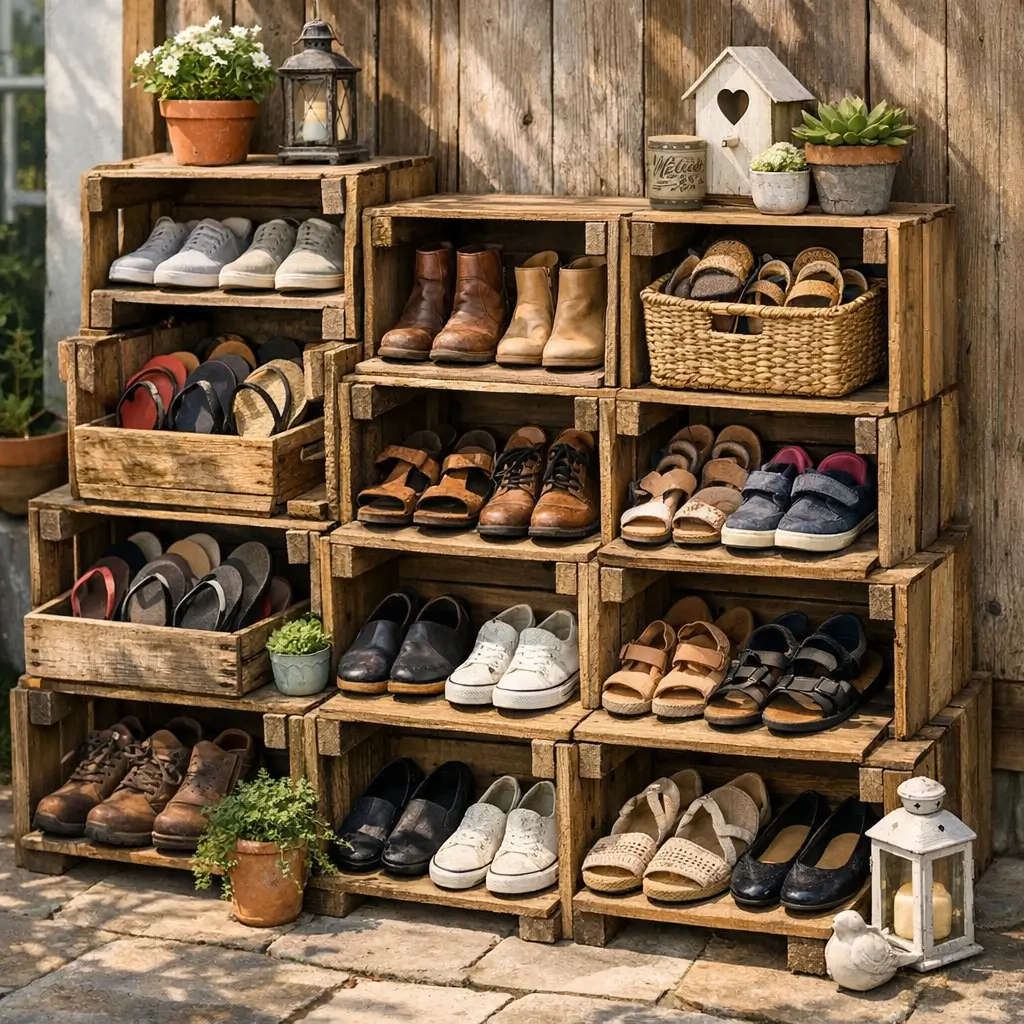
6. Tiered Shoe Storage Cubbies
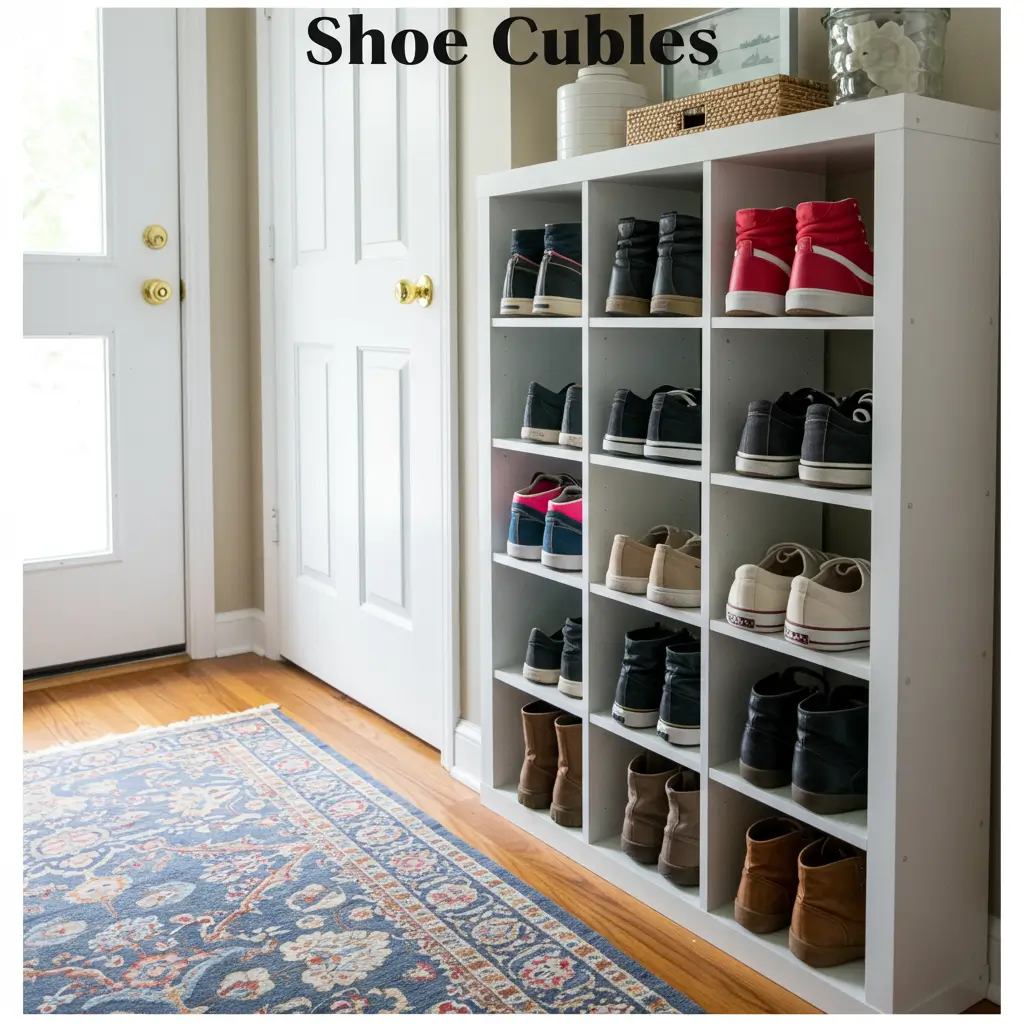
Cubbies are basically the organizational equivalent of comfort food—familiar, reliable, and they just work. Tiered storage cubbies give each pair of shoes its own dedicated spot, which means no more digging through a pile to find the matching shoe.
I went with a three-tier system that sits right by my front door. Each cubby fits one pair of shoes perfectly, and there’s something deeply satisfying about everything having its designated home. It’s like a tiny apartment complex for your footwear.
What makes cubbies a solid choice:
- Individual compartments: Each pair gets its own space
- Prevents shoe pile-ups: No more avalanches when you grab one pair
- Variety of sizes: Find cubbies for any space configuration
- Stackable options: Add more tiers as your collection grows
The visual organization is chef’s kiss. You can see exactly what you have, and returning shoes to their spot becomes automatic. I labeled mine at first (yeah, I’m that person), but eventually I just memorized where everything goes.
One thing to consider: measure your largest shoes first. I bought cubbies that technically fit most of my shoes, but my winter boots had to live elsewhere because the cubbies weren’t tall enough. Learn from my mistake and measure before you buy. IMO, it’s better to have cubbies that are slightly too big than struggle to cram shoes in.
Also Read: 12 Affordable DIY Shoe Storage Ideas for Any Home
7. Stylish Woven Basket Shoe Storage
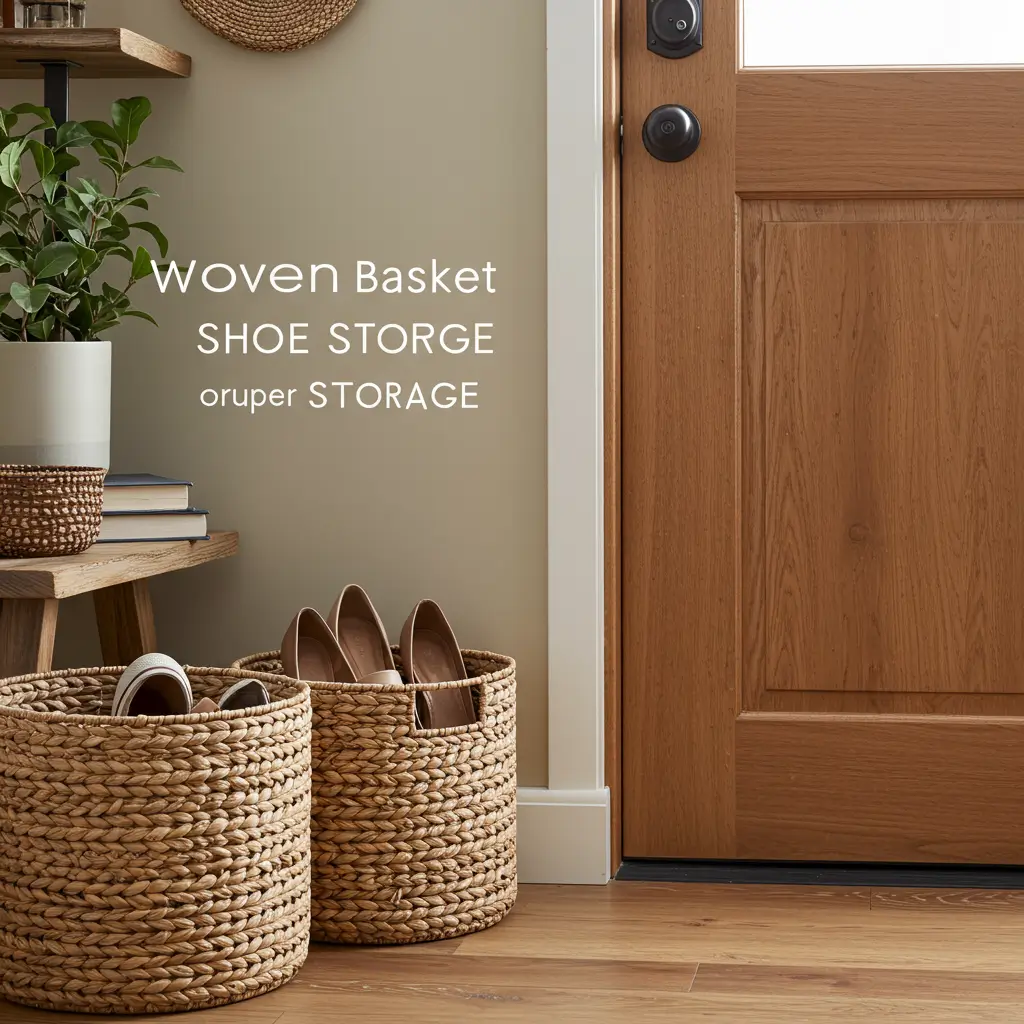
Sometimes the best storage solutions are the ones that don’t scream “STORAGE!” Woven baskets are perfect for the entryway because they look intentionally decorative while hiding your shoe chaos.
I’ve got three large seagrass baskets lined up in my entryway, and guests constantly ask where I got them. They blend right into my decor while keeping shoes corralled and out of sight. Plus, baskets are ridiculously easy to move around when you’re cleaning or rearranging furniture.
Why baskets are underrated for shoe storage:
- Aesthetic versatility: Work with virtually any decor style
- Easy to move: Lightweight and portable
- Texture adds warmth: Natural materials make spaces feel cozy
- Affordable: Usually way cheaper than dedicated shoe furniture
The trick is choosing baskets that are tall and wide enough to actually hold multiple pairs of shoes. Those tiny decorative baskets that hold maybe two pairs? Waste of money. Go bigger than you think you need—you’ll fill the space eventually.
I line mine with small drawer organizers inside to keep shoes from getting jumbled together. Without some internal structure, baskets can become black holes where shoes disappear into a tangled mess. A little extra organization inside goes a long way.
8. Wall-Mounted Shoe Hooks and Racks
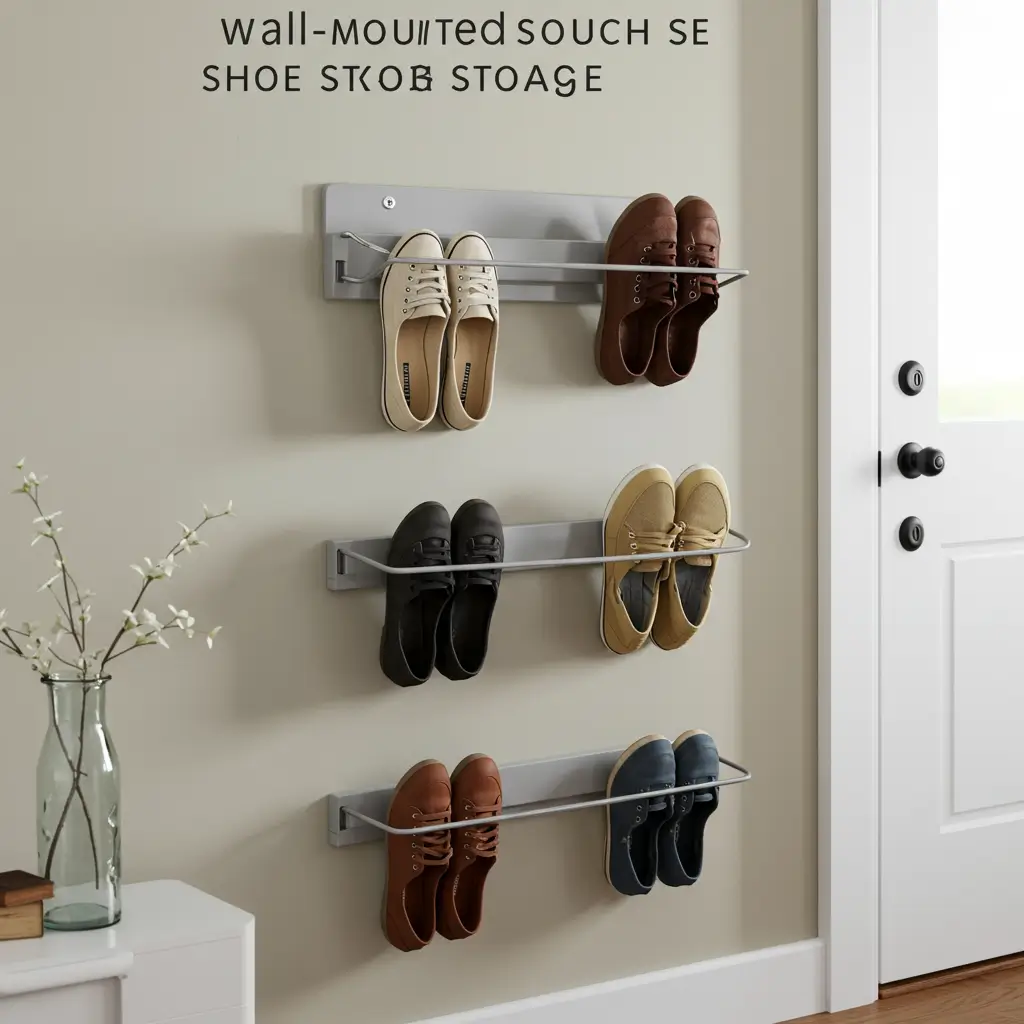
Ever thought about hanging your shoes on the wall? Sounds weird at first, but wall-mounted hooks and racks are actually super practical for certain types of footwear.
This works best for shoes that have a back loop or structure you can hang—think sneakers, boots with pull tabs, or even flip-flops with thick straps. I installed a row of sturdy hooks specifically for my everyday sneakers, and now they’re always right at eye level when I need them.
The advantages of going vertical:
- Quick access: Grab shoes without bending down
- Dries wet shoes faster: Air circulation helps shoes dry
- Great for kids’ shoes: Lower hooks make it easy for kids to help
- Customizable layout: Add or remove hooks as needed
The key is using hooks that are actually strong enough to hold shoes without drooping. I made the mistake of buying decorative hooks that bent under the weight of my boots. Total fail. Get heavy-duty hooks rated for at least 10 pounds if you’re hanging anything substantial.
Position matters too. Mount hooks low enough that you’re not doing awkward reaching but high enough that shoes aren’t dragging on the floor. I keep mine about 4 feet up, which works perfectly for my height and keeps shoes completely off the ground.
9. Vintage Trunk Shoe Storage Bench
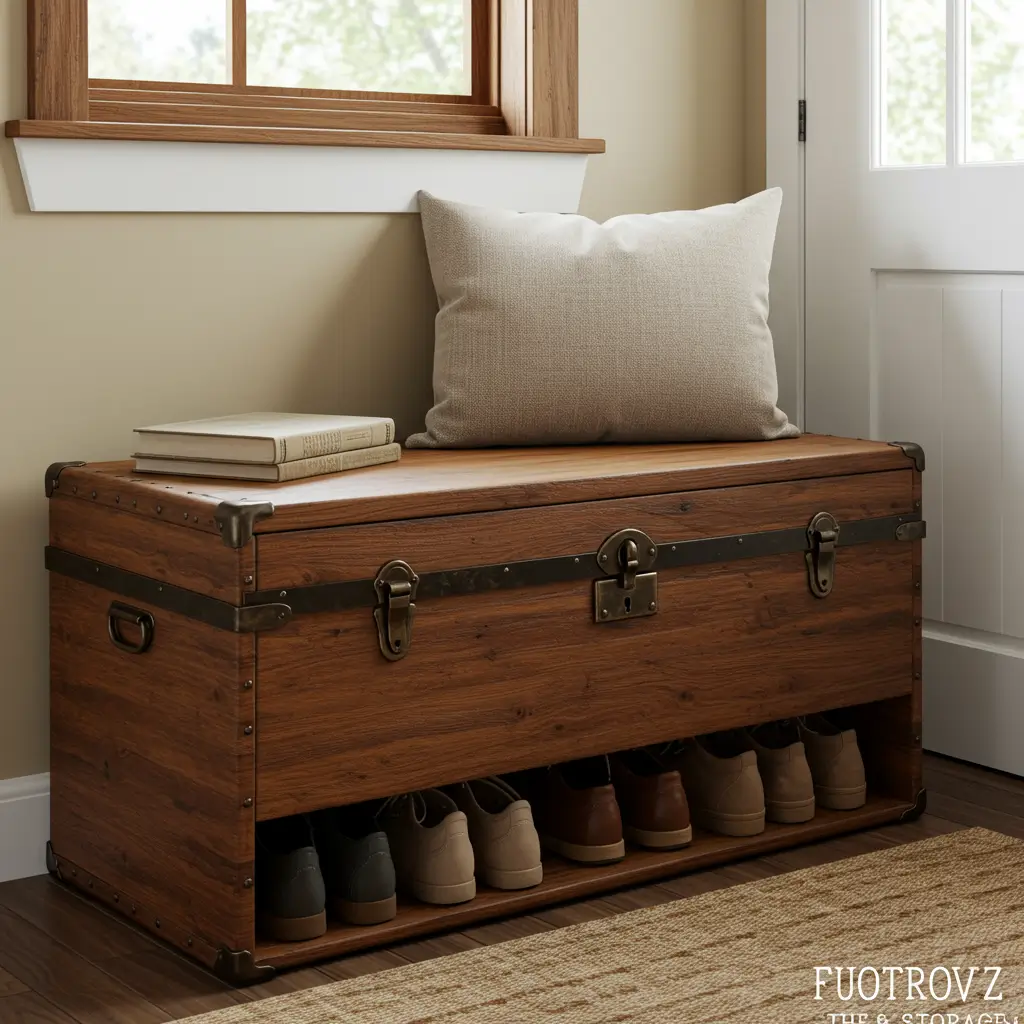
Want storage that doubles as a conversation piece? A vintage trunk repurposed as a shoe storage bench is equal parts functional and stylish.
I scored an old steamer trunk at an estate sale for $30, cleaned it up, added a cushion on top, and boom—instant entryway seating with hidden shoe storage. It holds about 8-10 pairs inside, and people always comment on it. There’s something about vintage pieces that just adds character to a space.
Why vintage trunks are awesome for this:
- Unique character: No two trunks are exactly alike
- Hidden storage: Shoes stay completely out of sight
- Sturdy seating: Most vintage trunks are built like tanks
- Conversation starter: Way more interesting than standard furniture
The hunt for the right trunk is half the fun. Check estate sales, thrift stores, and online marketplaces. You want something sturdy with a lid that closes properly. Some trunks have that musty vintage smell, but a good cleaning with baking soda takes care of that.
Pro tip: add felt pads to the bottom of the trunk. Vintage trunks often have metal corners or rough bottoms that can scratch your floors. A $3 pack of furniture pads saves you from that headache.
Also Read: 10 Elegant Shoe Storage Cabinet Entryway Ideas for Every Home
10. Sliding Shoe Drawers Under Console Table
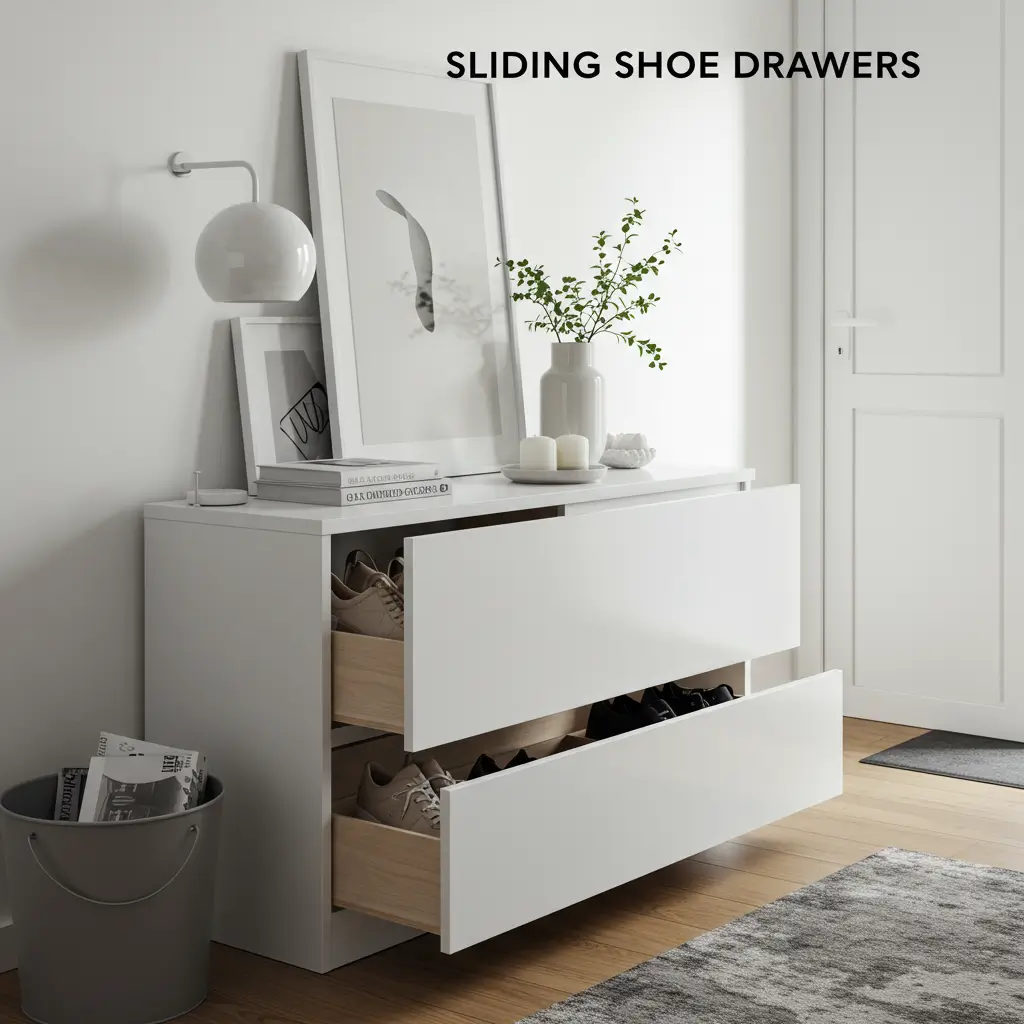
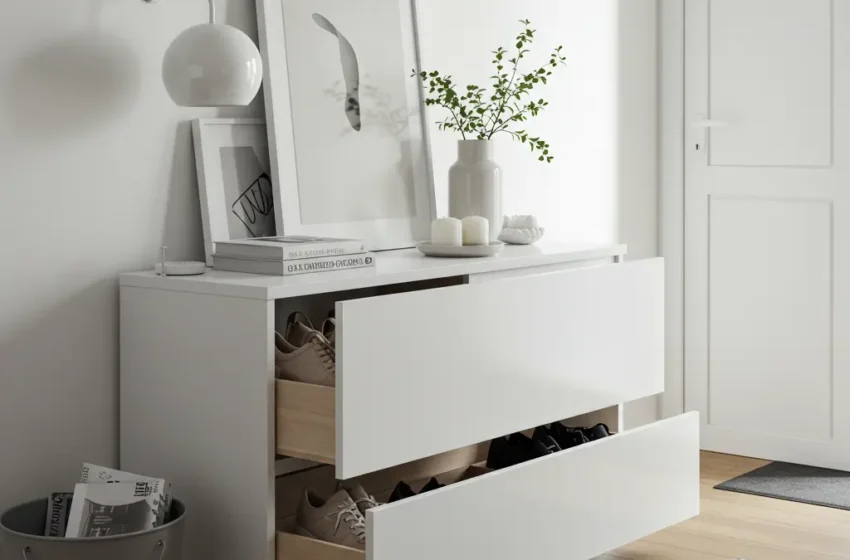
This is next-level sneaky storage that uses space you probably didn’t even know you had. Sliding drawers installed under a console table create hidden shoe storage that’s completely invisible until you open them.
I built shallow rolling drawers that slide under my entryway console table. From a visitor’s perspective, it’s just a nice table with a lamp and some decor. But underneath? That’s where the shoe magic happens. Each drawer glides out on casters and holds multiple pairs of shoes.
What makes under-console storage so clever:
- Uses dead space: That area under tables is usually wasted
- Completely hidden: Maintains a clean visual aesthetic
- Easy DIY project: Simple drawer boxes with wheels
- Keeps shoes dust-free: Enclosed storage protects your shoes
The construction is pretty straightforward—you’re basically building shallow boxes with wheels. I used simple pine boards and cheap furniture casters from the hardware store. Each drawer is about 4 inches tall, which is perfect for flats, sandals, and low-profile sneakers.
Measure your console table height first to figure out how tall you can make the drawers. Leave at least half an inch of clearance so the drawers slide smoothly. I learned this the hard way when my first drawer scraped against the bottom of the table every time I opened it. Annoying doesn’t even cover it :/
11. Modern Ladder Shoe Display
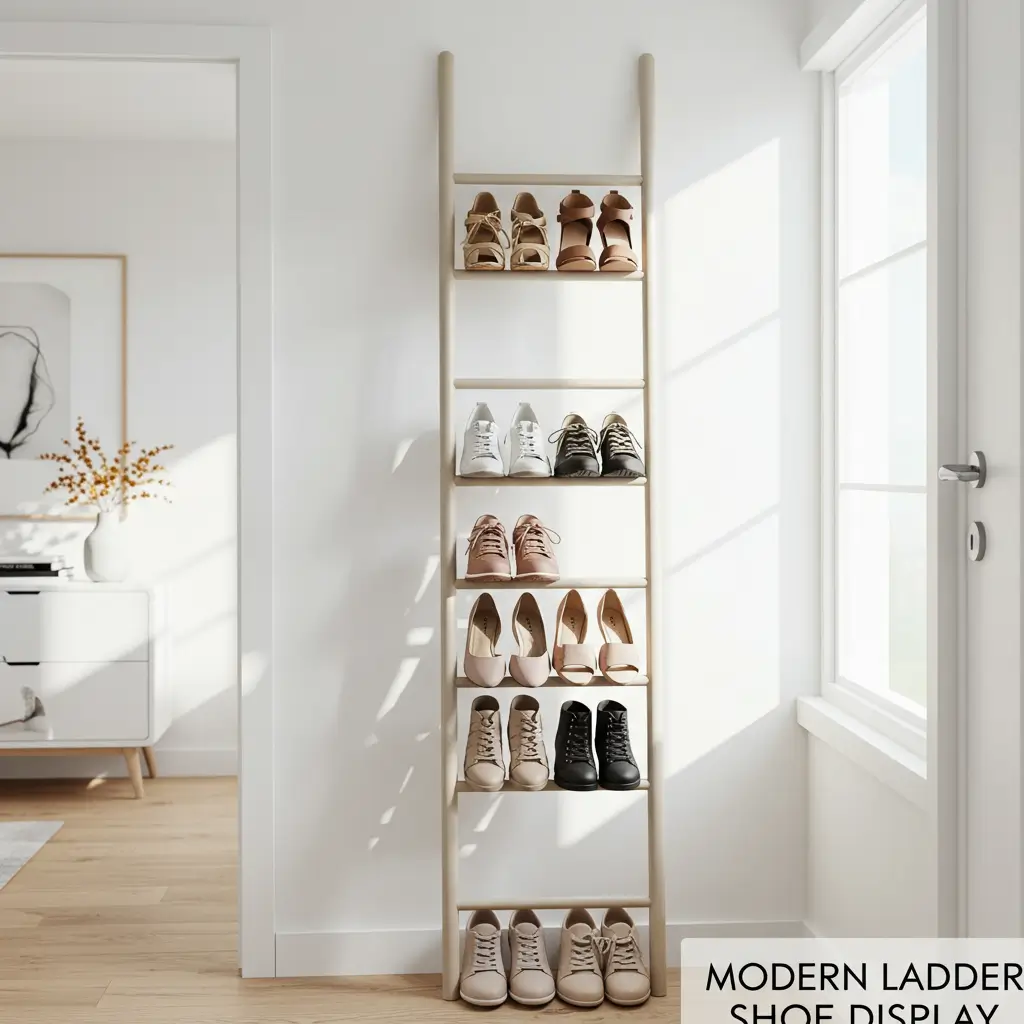
Leaning ladder shelves have been trendy for a while, and honestly? They’re perfect for shoes. I was skeptical at first because they seemed more style than substance, but these things are surprisingly functional.
The angled design means you’re not drilling into walls, which is perfect for renters or people who hate commitment. I have a five-tier ladder shelf in my entryway that holds about 15 pairs of shoes. It leans against the wall at just the right angle to be stable while keeping everything easily accessible.
Why ladder shelves work for shoes:
- No installation required: Just lean and load
- Graduated shelf depths: Different sized shelves for different shoes
- Modern aesthetic: Looks intentional and curated
- Portable: Move it wherever you need it
The graduated shelf design is actually genius for shoes. The bottom shelves are deeper, perfect for boots or chunky sneakers. The top shelves are narrower, ideal for sandals or flats. It’s like the shelves were designed with shoes in mind, even though most are marketed for books or plants.
One consideration: stability. Make sure the ladder is properly weighted at the bottom and the angle is correct. Mine occasionally tips forward if I’m too aggressive grabbing shoes from the top shelf, which is my cue to slow down and be a normal human being.
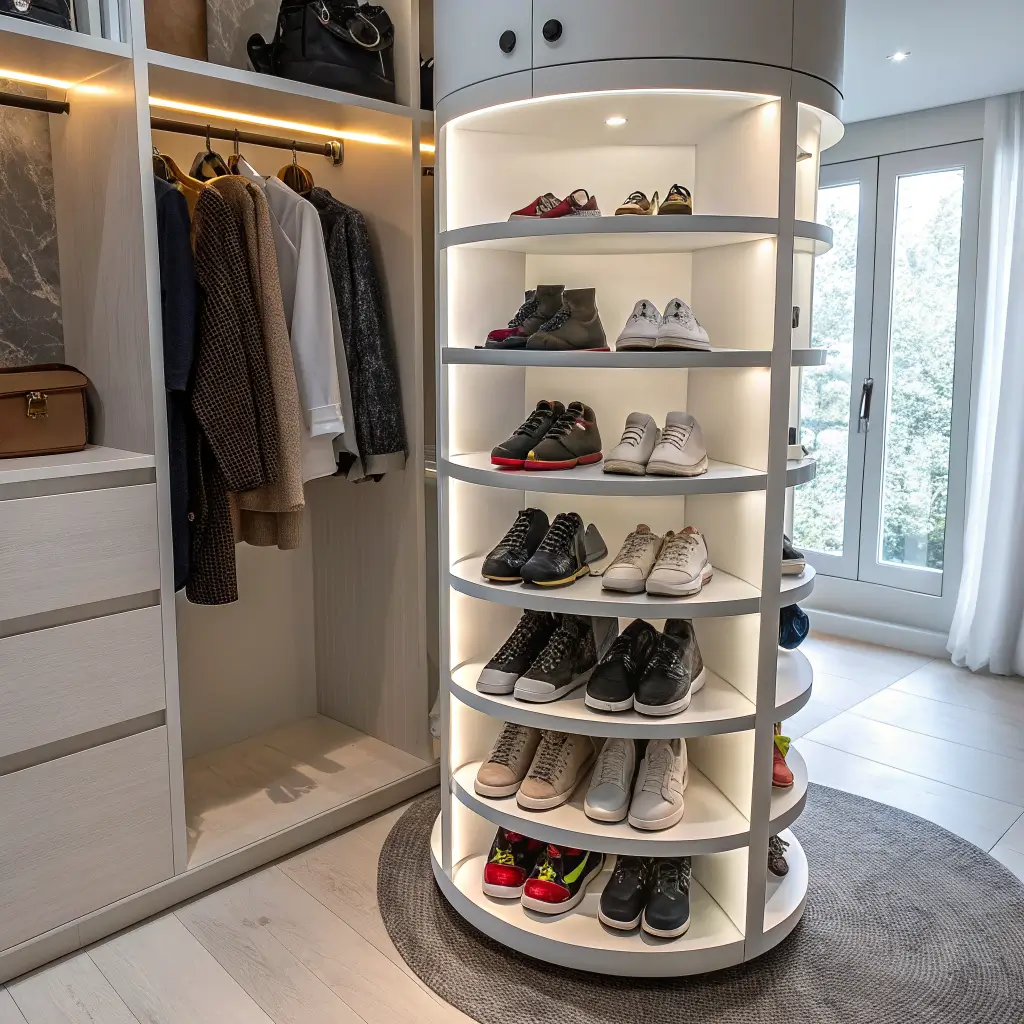
12. Multi-Level Shoe Storage Tower
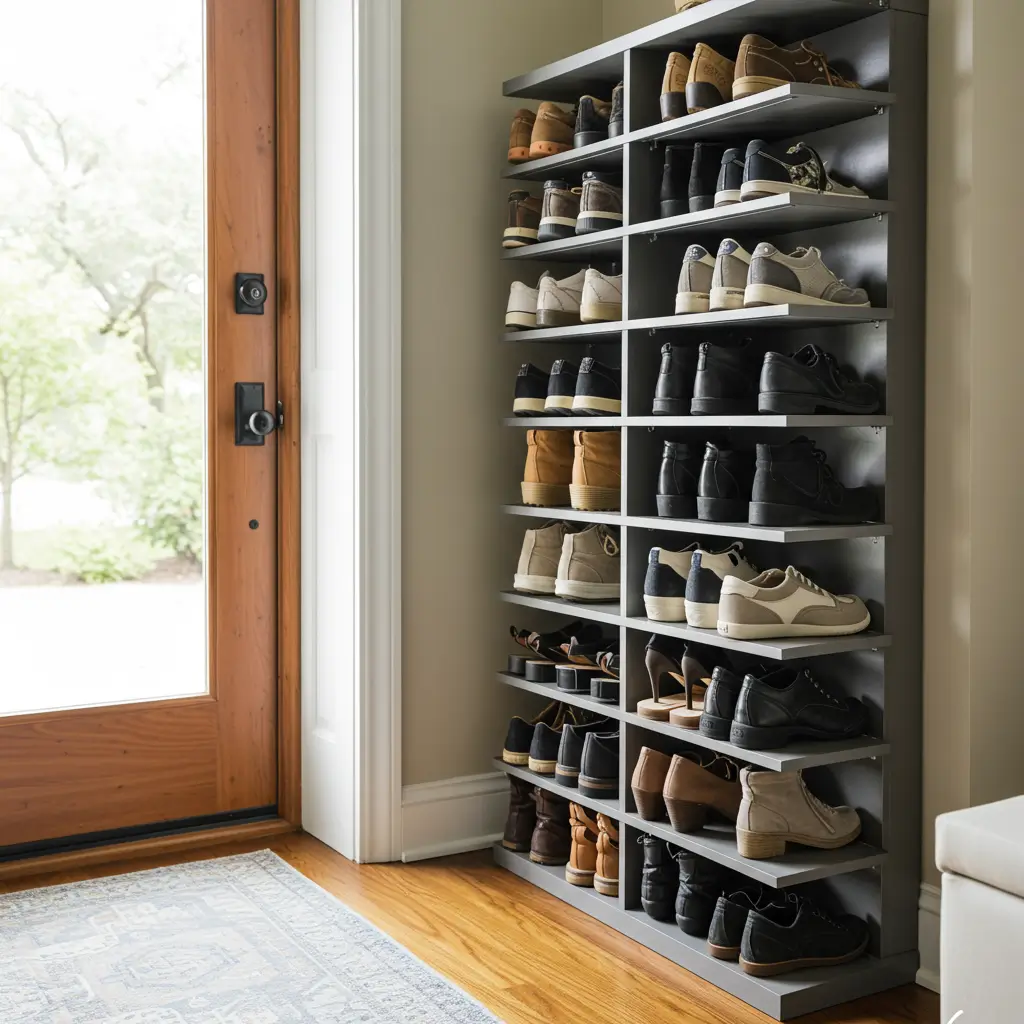
When you need serious shoe storage capacity, towers are the way to go. These vertical units maximize height and can hold anywhere from 20 to 50 pairs depending on the model.
I held off on getting a shoe tower for years because I thought it would look too utilitarian, like I was running a shoe warehouse. But modern designs are actually pretty sleek, and when you have a legit shoe collection, you need real storage solutions.
Why shoe towers are practical powerhouses:
- Massive capacity: Store your entire shoe collection in one place
- Vertical design: Uses height instead of valuable floor space
- Often includes enclosed options: Keeps dust off your shoes
- Multiple configuration options: Adjust shelves to fit different shoe heights
The tower I eventually bought has 10 tiers and holds about 40 pairs of shoes. It fits in a corner of my entryway where nothing else would work, and suddenly I had room for shoes I’d been storing in random closets around my apartment. Everything in one spot? Revolutionary.
Rotating towers are especially cool if you want easy access from all sides. They spin like a lazy Susan, so you can find what you’re looking for without moving the whole unit. Slightly gimmicky? Maybe. But also undeniably convenient when you’re running late and need specific shoes immediately.
Final Thoughts
Look, there’s no one-size-fits-all solution for shoe storage. What works in my cramped apartment might be overkill for your space, or vice versa.
The key is being honest about how many shoes you actually have (we always underestimate), how much space you’re working with, and what kind of maintenance you’re willing to do.
Start by measuring your entryway. I cannot stress this enough. Knowing your exact dimensions prevents those disappointing moments when furniture arrives and doesn’t fit.
Also, count your shoes—yes, all of them, including the ones hiding in random closets. You probably have way more than you think.
Mix and match these ideas if that’s what works for you. I use a combination of floating racks, baskets, and a DIY bench in my space.
There’s no rule that says you have to pick one storage method and stick with it. The goal is keeping shoes organized and your entryway looking like a place where humans live, not a shoe store aftermath.
And remember, whatever system you choose, it only works if you actually use it. The fanciest shoe storage in the world doesn’t help if you still kick off your shoes and leave them wherever they land.
Trust me, I spent a solid month building that DIY bench and still managed to leave shoes scattered everywhere until I forced myself into the habit.
Your entryway deserves better than a shoe pile. You deserve better than tripping over shoes in the dark.
Pick a solution that makes sense for your space, commit to it, and enjoy actually being able to see your floor again. You’ve got this!