12 Stylish False Ceiling Design Ideas and Home Makeovers
- Ceiling Design
 Ben
Ben- 0
- 29 minutes read
Let me tell you about my false ceiling awakening. I lived with the same boring, flat ceiling for five years, thinking that’s just how ceilings were supposed to be.
Then I visited a friend’s newly renovated apartment with this stunning multi-level false ceiling with hidden LED lighting, and my mind was completely blown.
Suddenly, my ceiling looked about as exciting as watching paint dry (which, ironically, I’d done plenty of times without ever thinking about the ceiling above).
False ceilings aren’t just about hiding ugly wires and pipes anymore – though they do that brilliantly.
They’re about creating atmosphere, adding architectural interest, and making your room feel like it was designed by someone who actually knows what they’re doing. The best part? You don’t need to tear down your house or sell a kidney to install one.
After installing false ceilings in four different rooms over the past three years (yes, I got slightly obsessed), I’ve learned what works, what’s worth the investment, and what’ll have you wondering why you thought that mirror ceiling was a good idea.
Here are twelve false ceiling design ideas that’ll make you look up and smile every time you enter the room.
1. Minimalist Gypsum False Ceiling
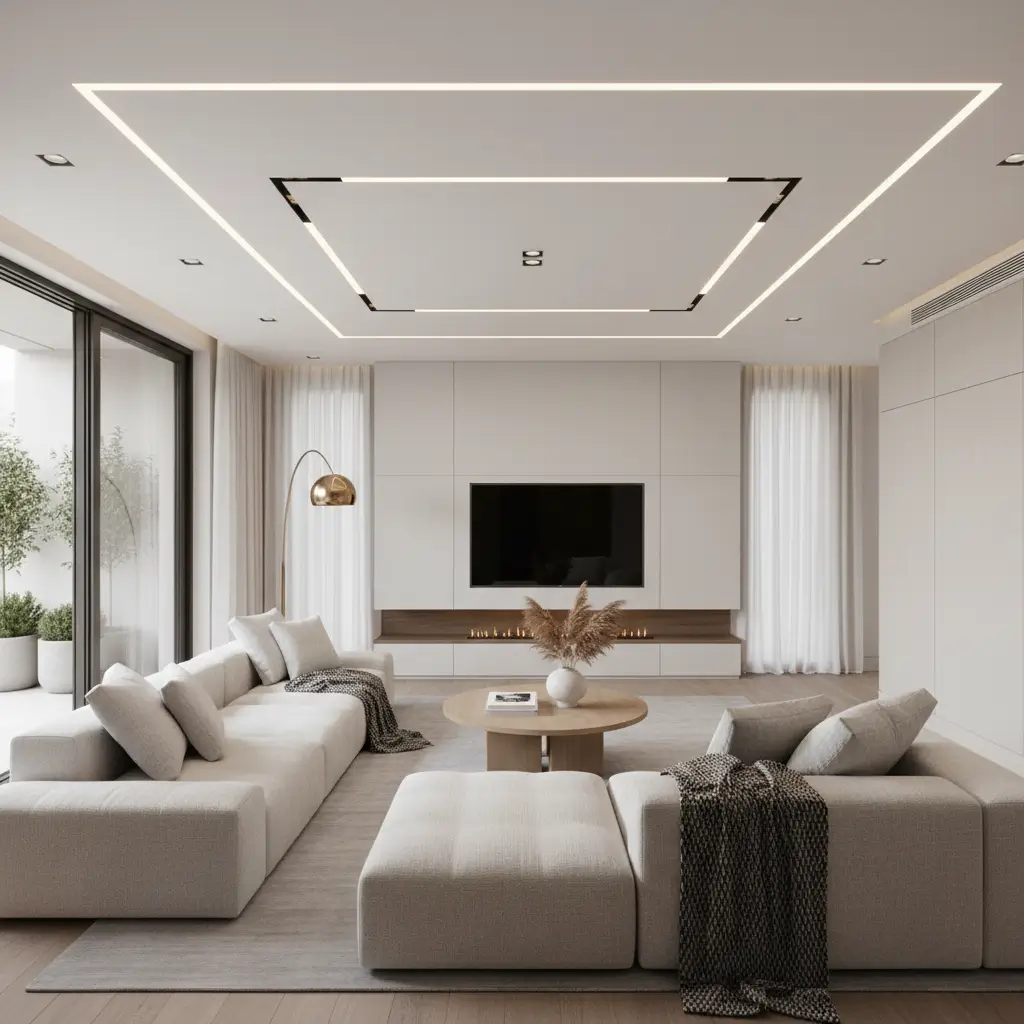
Gypsum false ceilings are like the little black dress of ceiling design – classic, versatile, and always in style. I installed my first gypsum ceiling in my living room, and the transformation from “rental apartment vibes” to “I actually own this place” happened instantly.
The beauty of gypsum lies in its clean lines and smooth finish. No texture, no fuss, just pure architectural elegance floating above your head. My contractor initially suggested adding fancy curves and multiple levels, but sometimes the simplest solution creates the biggest impact.
Why Gypsum Works Everywhere
Start with a simple peripheral false ceiling if you’re nervous about commitment. This design drops down around the edges while keeping the center at original height. I did this in my bedroom, and it created the perfect spot for hidden LED strips while making the room feel taller.
Choose your finish wisely – matte white isn’t your only option. I went with an off-white eggshell finish that reflects just enough light to feel warm without showing every imperfection. Pure matte looked too flat, while high gloss turned my ceiling into a mirror I didn’t want.
Consider adding subtle recessed lights in a grid pattern. My living room has nine recessed lights arranged in a perfect square, and the symmetry satisfies my inner perfectionist while providing amazing ambient lighting. No more harsh single bulb creating weird shadows.
2. Wooden Panel False Ceiling
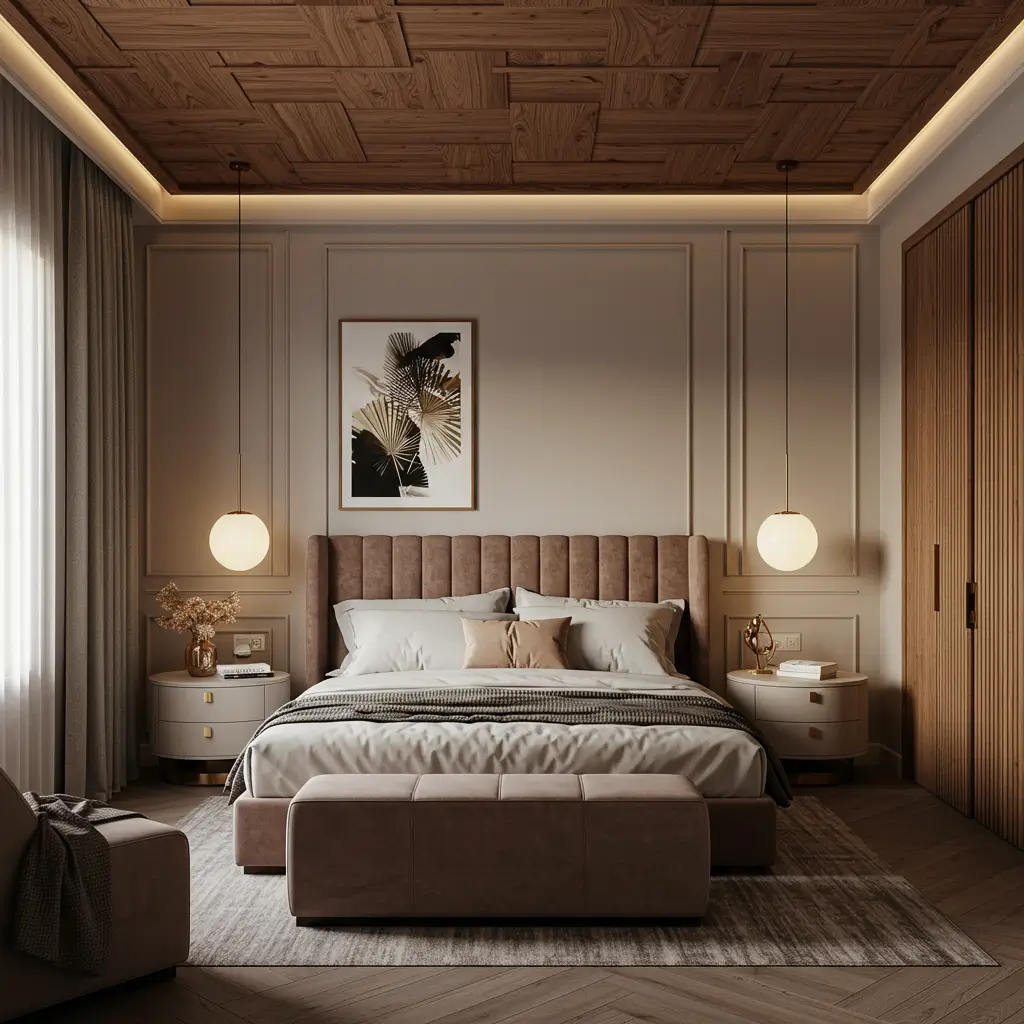
Wooden false ceilings bring warmth that no other material can match. I installed wood panels in my home office, and suddenly the space went from “corporate cubicle at home” to “creative studio where brilliant ideas happen.” The psychological difference is real, trust me.
The options range from real wood veneers to engineered wood panels that look identical but cost half as much. I splurged on real oak veneer for the office but used high-quality laminate panels in the guest bedroom. Nobody can tell the difference, and my wallet appreciates the compromise.
Making Wood Work Overhead
Pay attention to panel direction – it matters more than you’d think. Horizontal panels make rooms feel wider, vertical ones add length. I ran mine diagonally in a herringbone pattern because I apparently enjoy making installation complicated. Looks amazing though.
Mix wood tones for a modern look rather than matching everything perfectly. My ceiling combines light oak and walnut panels in alternating strips. The contrast adds visual interest without overwhelming the space. Matchy-matchy wood everywhere feels like a 1970s time capsule.
Don’t forget about acoustic benefits. Wood panels significantly reduce echo and ambient noise. My Zoom calls sound professional now instead of like I’m broadcasting from a cave. The improved acoustics alone justified the investment.
3. LED Cove Lighting Ceiling
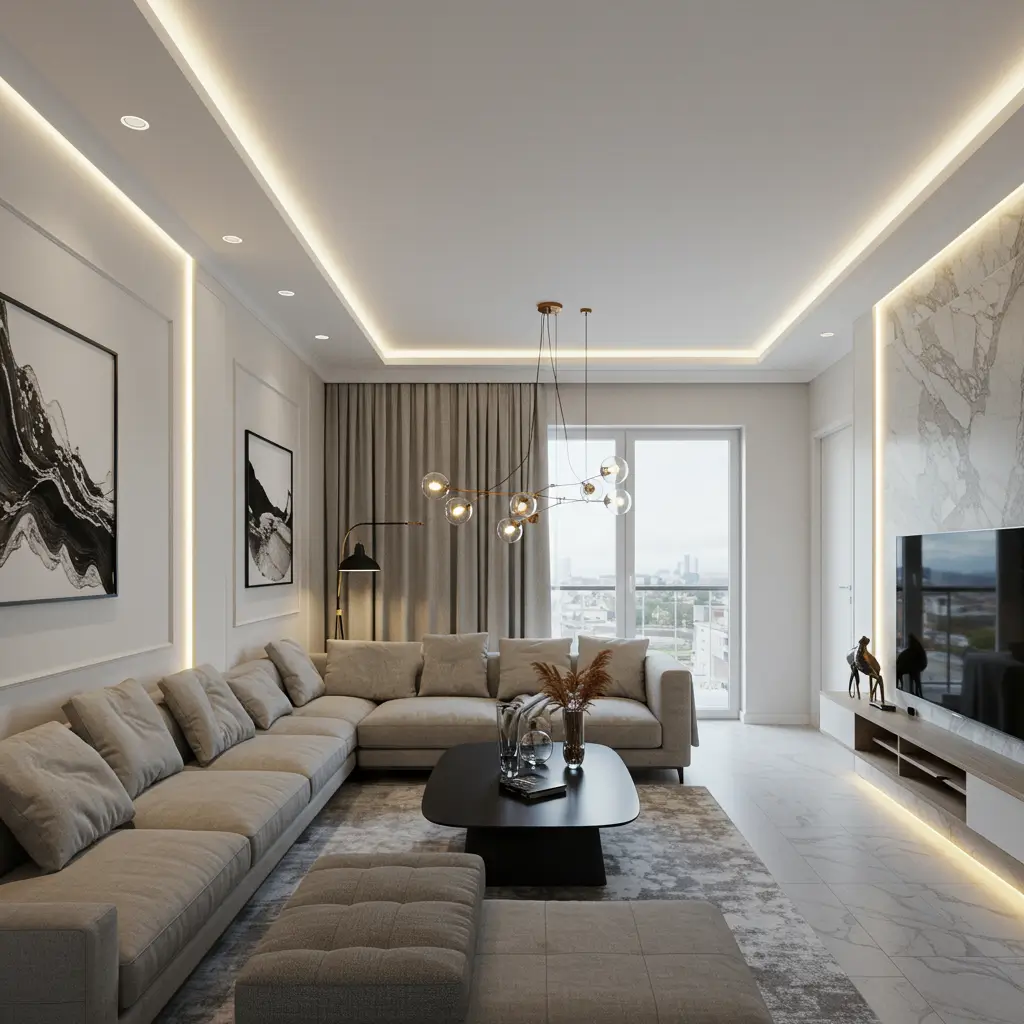
Cove lighting changed everything I thought I knew about room ambiance. My first cove ceiling experiment turned my harsh, unflattering bathroom into a spa-like sanctuary where even my morning face looks somewhat human. The soft, indirect light creates magic that no regular fixture can achieve.
The design involves creating a recessed ledge around your ceiling perimeter where LED strips hide and cast light upward. The result? Your entire ceiling becomes a light source without a single visible bulb. It’s like having permanent golden hour lighting.
Creating the Perfect Glow
Choose your LED temperature carefully – this isn’t the place for daylight bulbs. I installed tunable LEDs that shift from warm white to cool depending on the time of day. Morning meetings get energizing cool light, evening relaxation gets cozy warm tones.
Layer your lighting for flexibility. Cove lighting alone can feel too ambient for task work. I combined mine with strategic spotlights for reading and pendant lights over the dining table. The combination lets me create any mood from romantic dinner to work session.
Install dimmers or smart controls – non-negotiable for cove lighting. The ability to adjust intensity transforms the space completely. My living room goes from bright and social to moody and intimate with one slider adjustment.
Also Read: 10 Inspiring Ceiling Design Ideas and Cozy Living Spaces
4. Multi-Level Modern False Ceiling
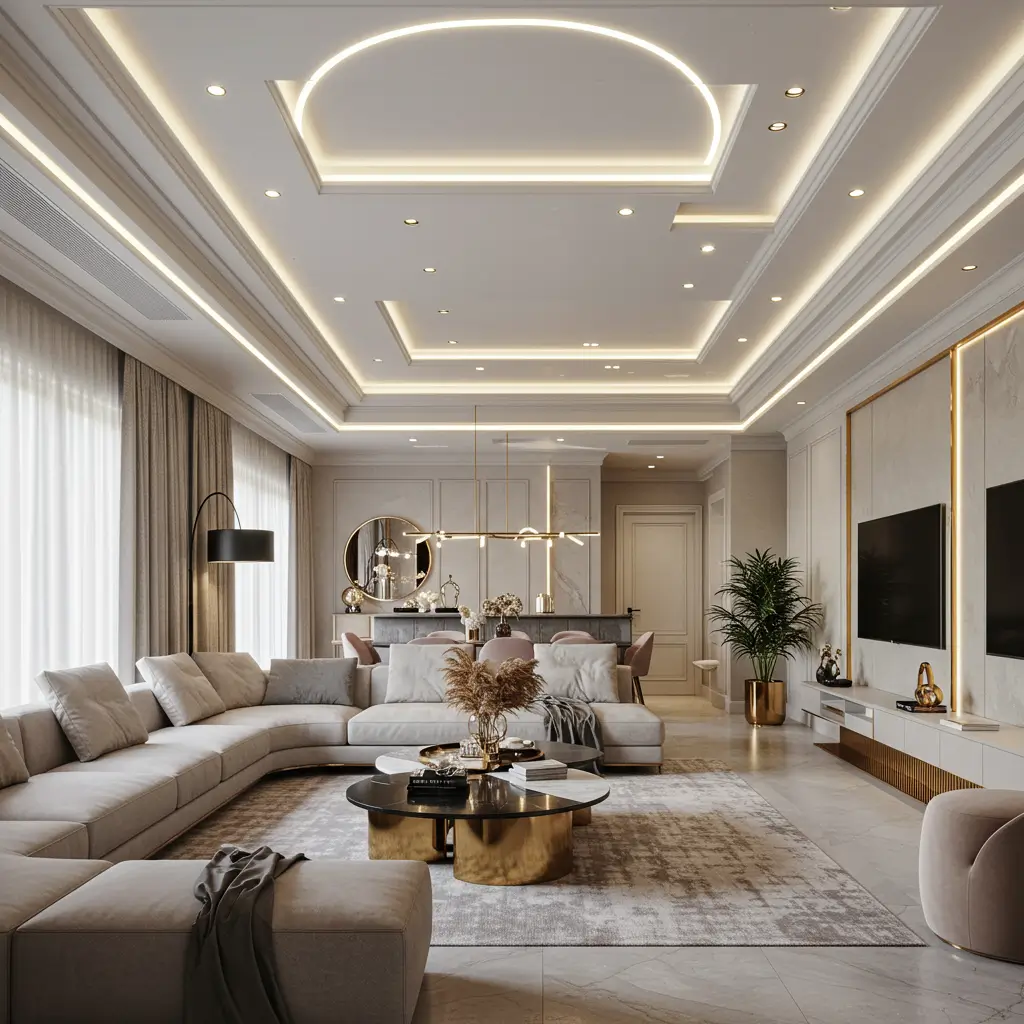
Multi-level ceilings add architectural drama that makes flat ceilings look positively prehistoric. I created a three-level design in my living room that defines different zones without walls – the conversation area, dining space, and reading nook each have their own ceiling height.
The key lies in subtle level changes rather than dramatic drops. My levels differ by just 4-6 inches, enough to create visual interest without making anyone feel like the ceiling is falling. The deepest drop frames my TV area, creating a natural focal point.
Mastering Multiple Levels
Plan your levels based on room function, not random aesthetics. Lower ceilings over seating areas create intimacy. Higher sections over walkways maintain flow. I learned this after initially designing purely for looks – pretty but impractical.
Use level changes to hide necessary evils. My deepest drop conceals the AC ducts and electrical conduits that used to run exposed. Now they’re invisible, and the room looks intentionally designed rather than retrofitted.
FYI, lighting between levels creates incredible depth. I installed LED strips at each level transition, and the layered lighting makes my standard 9-foot ceiling feel cathedral-like. The shadows and highlights add dimension that paint alone never could.
5. Circular Pop Design Ceiling
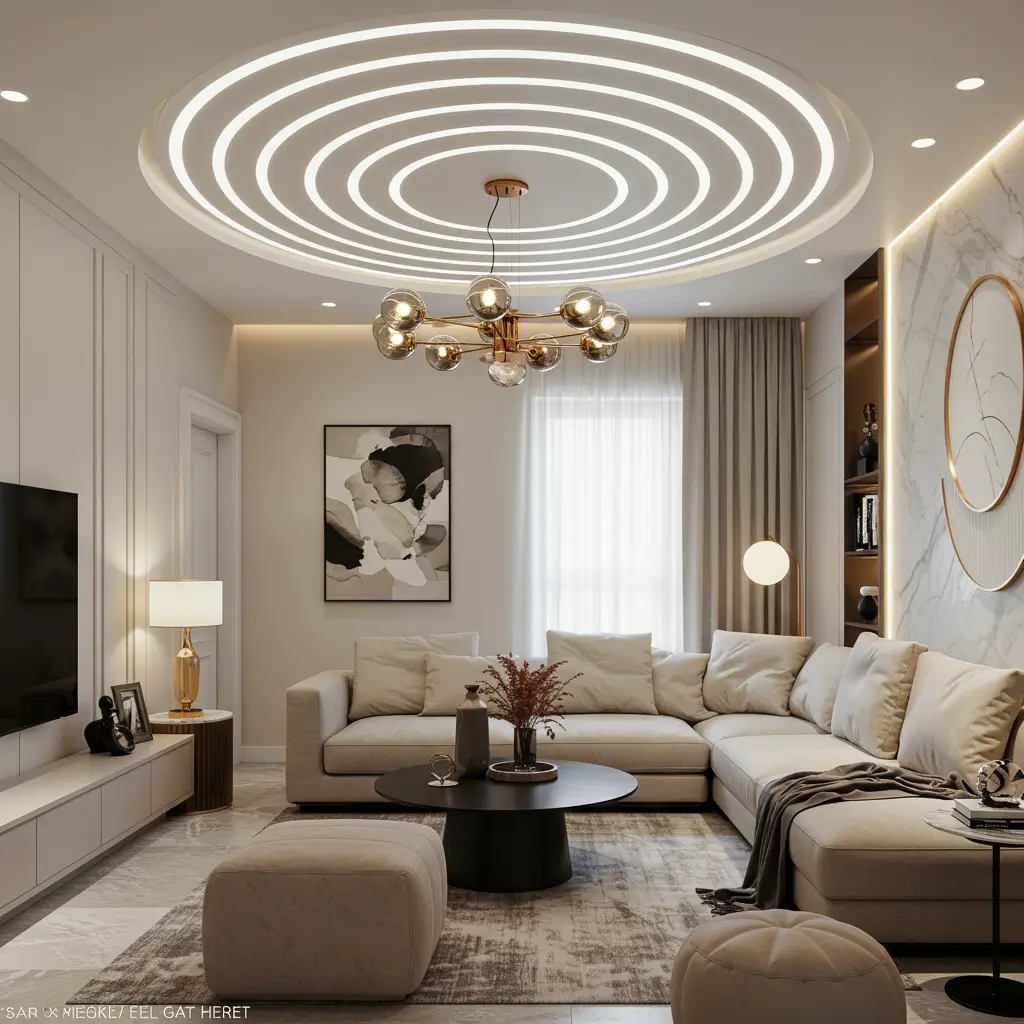
Circular designs break up all those rigid right angles that dominate our boxy rooms. My daughter’s room features a circular false ceiling with a color-changing LED ring, and it transformed the space from standard bedroom to something out of a sci-fi movie (in the best way).
POP (Plaster of Paris) allows for smooth curves that other materials can’t achieve. The installation requires skilled craftsmen, but the results justify the extra cost. My circular design centers over the bed, creating a subtle zone that makes the sleeping area feel special.
Circling Back to Good Design
Size your circles proportionally to room dimensions. Tiny circles in huge rooms disappear. Massive circles in small spaces feel oppressive. My 12×12 room has a 6-foot diameter circle – big enough to notice, small enough to not dominate.
Consider multiple circles for larger spaces. My friend’s living room features three overlapping circles of different sizes, creating a Venn diagram effect that’s surprisingly sophisticated. Single circles work best in bedrooms and smaller spaces.
Add color to your circles for extra impact. I painted the recessed circle in my daughter’s room a soft lavender while keeping the rest white. The subtle color adds personality without overwhelming. Her friends think it’s the coolest thing ever.
6. Textured Patterned Ceiling
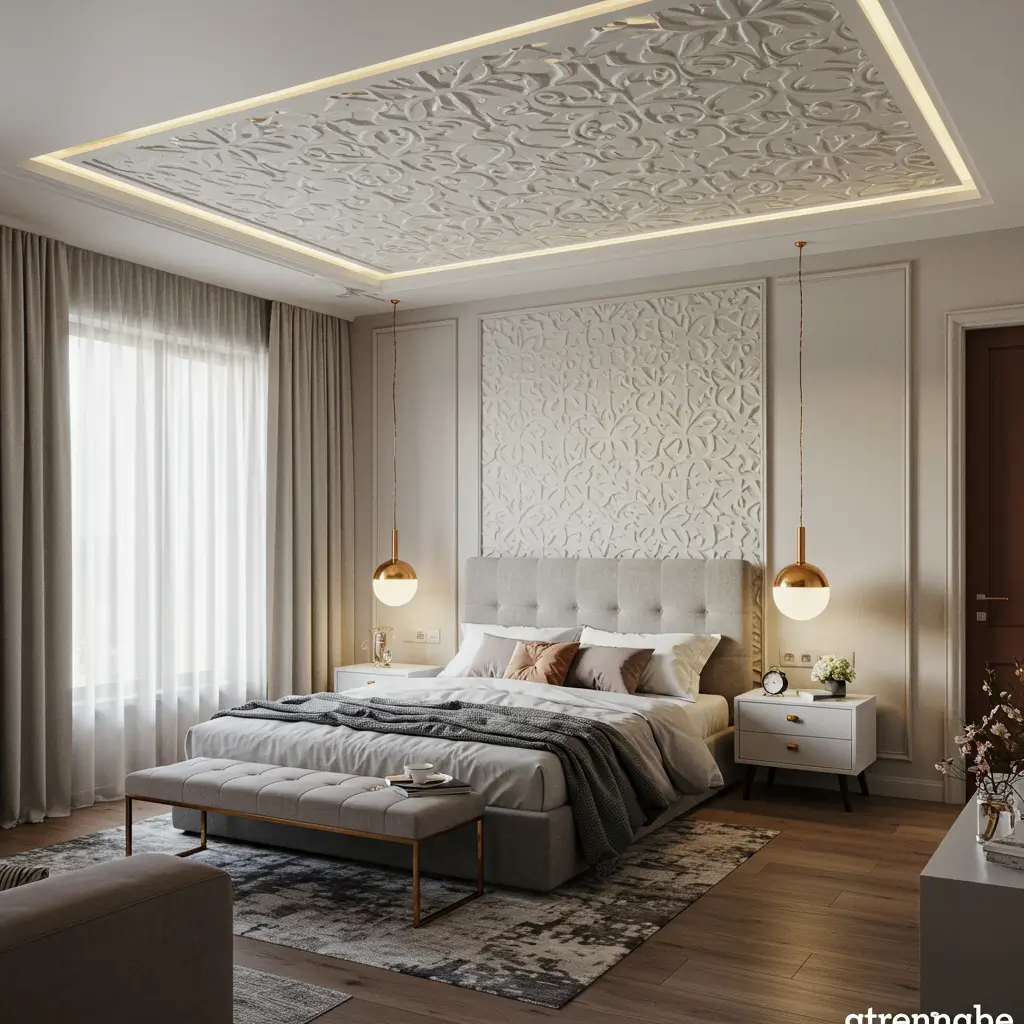
Textured false ceilings add tactile interest that smooth surfaces can’t match. I installed a geometric textured pattern in my dining room, and now dinner guests spend half the meal looking up. The play of shadows across the texture creates constant visual interest as lighting changes.
Modern texture goes beyond old-school popcorn or stipple. Think geometric patterns, wave designs, or even custom motifs. My dining room features an Art Deco-inspired pattern that required a custom mold but looks absolutely stunning.
Texture Without Torture
Test your pattern on a small sample before committing. Texture is permanent and mistakes are expensive to fix. I created three sample boards with different patterns before choosing. The winner was actually my third choice on paper but looked best in reality.
Consider how texture affects lighting. Deep textures create dramatic shadows but can make rooms feel darker. Subtle textures add interest without eating light. My pattern has just 1/4 inch depth – enough for shadows, not enough to feel heavy.
Remember maintenance when choosing textures. Intricate patterns collect dust like crazy. My geometric pattern cleans easily with a vacuum brush attachment. My friend’s elaborate floral texture requires professional cleaning. Guess whose ceiling looks better year-round?
Also Read: 15 Elegant Bedroom Ceiling Design Modern Ideas for Cozy Vibes
7. Glass Insert False Ceiling
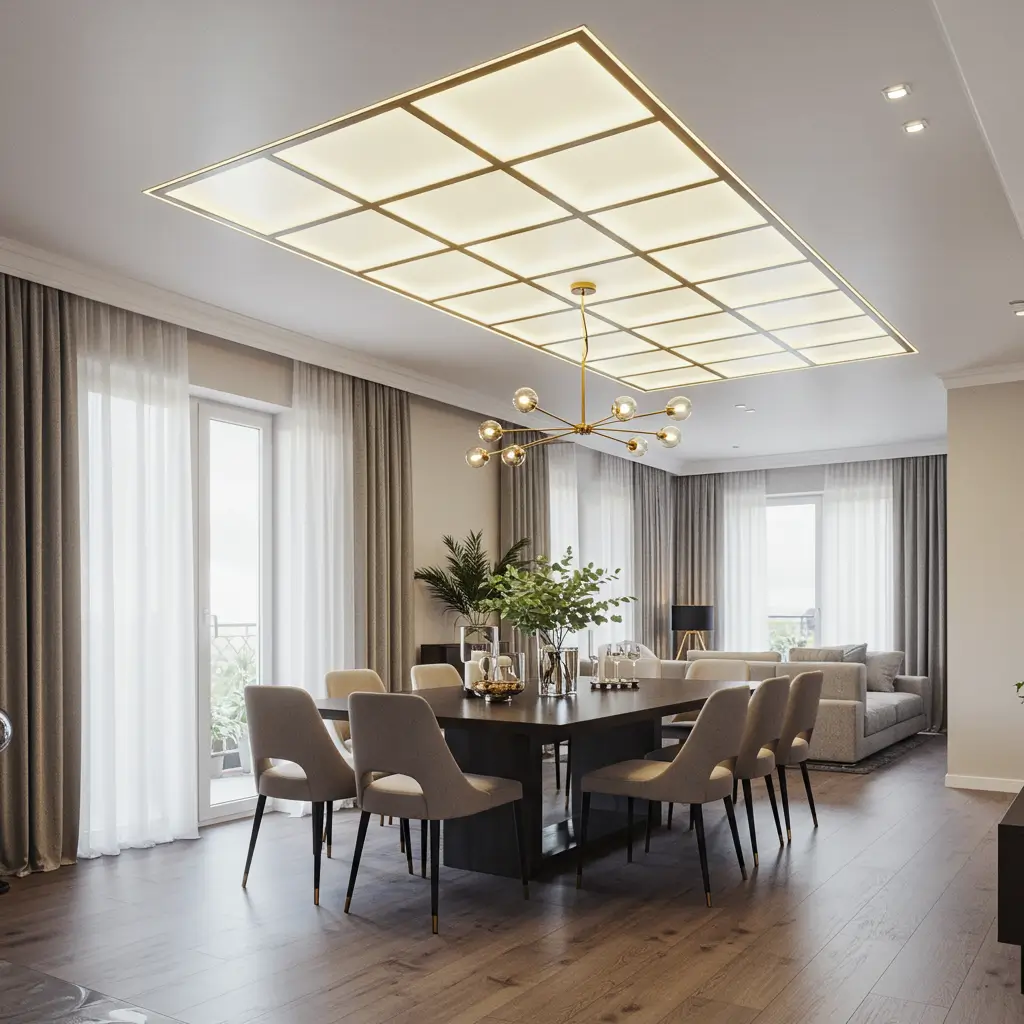
Glass inserts in false ceilings create luminous panels that feel both modern and timeless. I installed frosted glass panels with LED backlighting in my kitchen, and the result looks like something from a high-end restaurant.
The glass doesn’t have to be clear – in fact, it shouldn’t be unless you want to see all the mechanical stuff above. Frosted, textured, or even colored glass creates beautiful effects while maintaining privacy from the ceiling cavity.
Clearly Better Design
Choose your glass type based on the room’s purpose. Frosted glass diffuses light beautifully for general ambiance. Textured glass creates patterns when backlit. I used rain-textured glass in the bathroom for a spa-like effect that’s absolutely gorgeous.
Safety first – always use tempered or laminated glass overhead. Regular glass is dangerous if it breaks. The extra cost for safety glass is nothing compared to potential injury. My contractor insisted on this, and I’m grateful he did.
Plan access panels carefully. Glass looks seamless but you still need ceiling cavity access. I strategically placed my access panel in a corner where furniture hides it. Beautiful design shouldn’t sacrifice functionality.
8. Suspended Box Design Ceiling
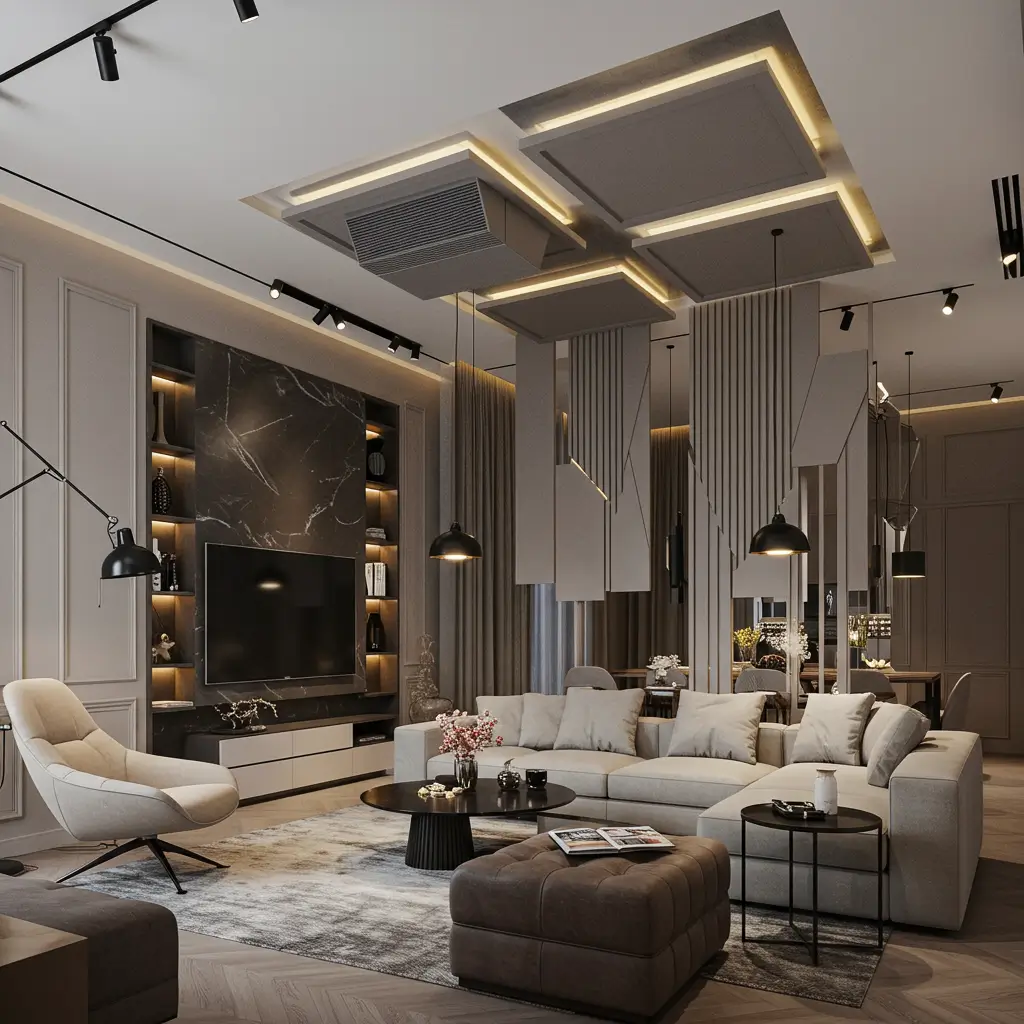
Suspended box designs create floating geometric elements that add dimension without lowering the entire ceiling. My home theater features suspended black boxes that hide speakers while looking like intentional design elements.
The boxes can be any shape, size, or configuration. I’ve seen everything from single statement boxes to complex grids. My design uses three rectangular boxes at different heights, creating a dynamic composition that draws the eye upward.
Boxing Clever
Use boxes to define spaces in open floor plans. A suspended box over the dining table creates an intimate zone in my open-concept space. It’s like having a room within a room without walls.
Integrate lighting into your boxes for maximum impact. Each of my boxes has perimeter lighting plus downlights. The combination creates both ambient and task lighting while the boxes themselves become illuminated sculptures.
Vary box sizes and heights for visual interest. Identical boxes at the same height look institutional. My staggered arrangement feels organic and designed rather than stamped out. The largest box anchors the seating area while smaller ones create balance.
9. Rustic Beam False Ceiling
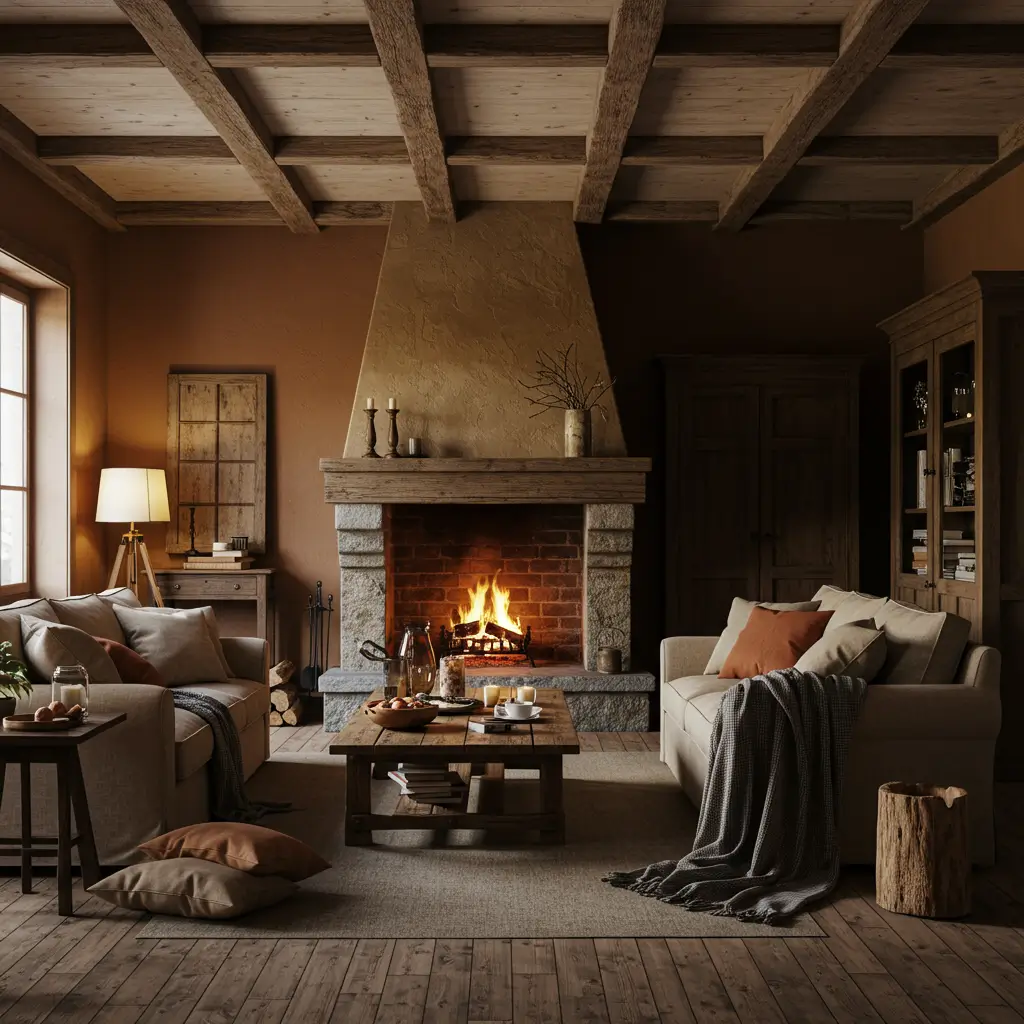
False ceiling beams bring rustic charm without the weight and cost of real timber. I installed faux beams in my bedroom, and now it feels like a cozy mountain cabin despite being in suburban sprawl.
Modern faux beams look incredibly realistic. Mine are high-density polyurethane molded from actual reclaimed wood, complete with grain, knots, and age marks. Even my carpenter friend couldn’t tell they were fake until he touched them.
Beaming with Success
Create a beam layout that makes structural sense. Random beams look fake. Traditional patterns like grid or cathedral styles look authentic. I chose a simple ridge beam with perpendiculars – classic and believable.
Stain or paint beams to match your aesthetic. I stained mine dark walnut for contrast against white. My friend went with whitewashed beams for a coastal vibe. Same product, completely different looks. The flexibility is amazing.
Don’t overdo the beam quantity. Too many beams make ceilings feel heavy and rooms feel smaller. My 14×12 bedroom has five beams total – enough for impact without overwhelming. Less really is more here :/
Alos Read: 15 Stunning Hallway Ceiling Lights Ideas and Elegant Designs
10. Geometric Shapes Ceiling Design
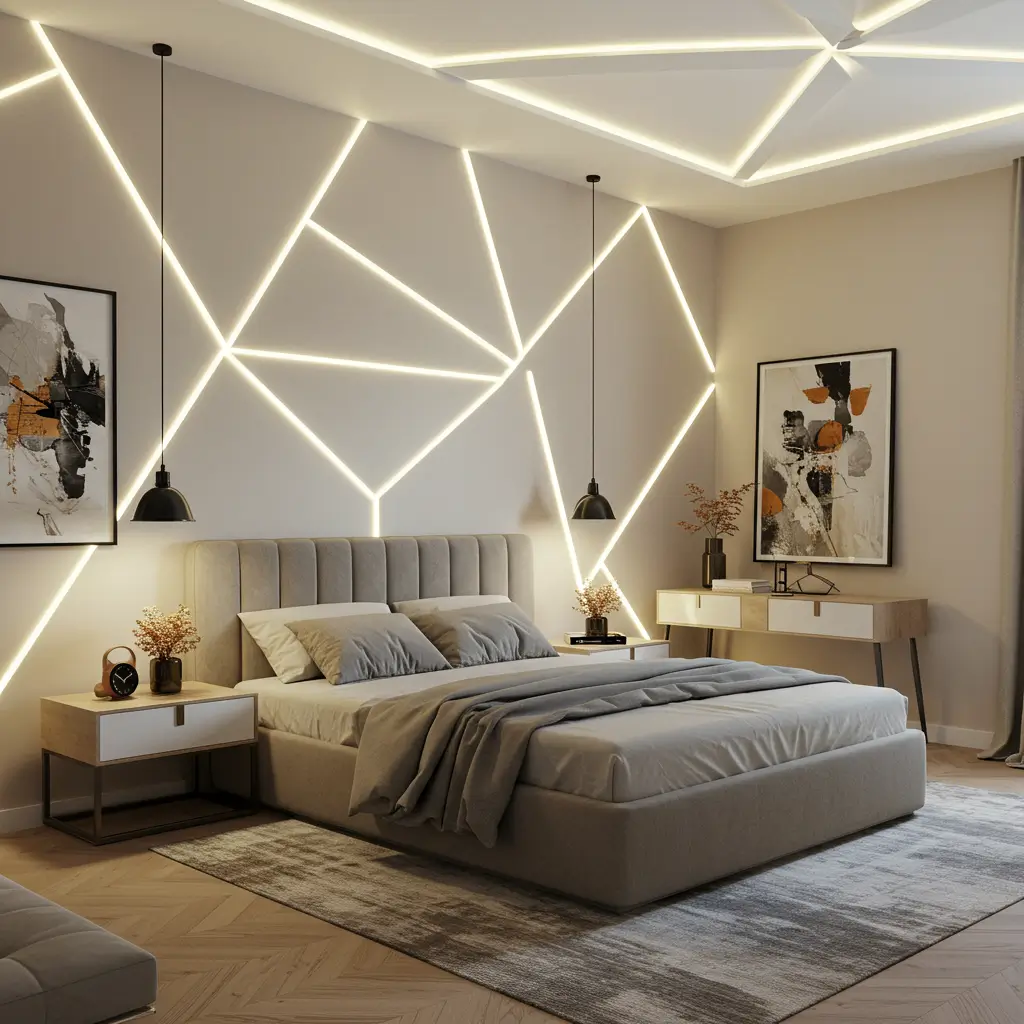
Geometric false ceilings turn boring planes into three-dimensional art. My study features interlocking hexagons at varying depths, creating shadows and highlights that change throughout the day. It’s like having kinetic sculpture overhead.
The beauty of geometric designs lies in their versatility. Simple triangles work in minimalist spaces. Complex tessellations suit maximalist styles. My hexagons hit the sweet spot – interesting but not overwhelming.
Getting Into Shape
Start with paper models to visualize your design. I spent a weekend creating scale models before committing. The design that looked best on paper didn’t work in 3D. Testing saved me from an expensive mistake.
Consider how shapes interact with room proportions. Rectangular rooms benefit from diagonal or diamond patterns that break up parallel lines. Square rooms can handle radial patterns. My rectangular study uses hexagons oriented to create diagonal sight lines.
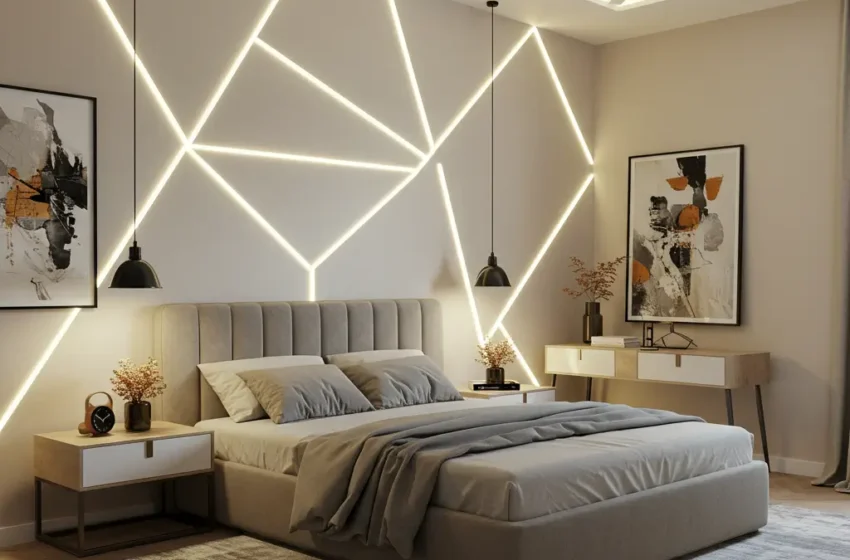
Use lighting to emphasize geometry. I installed LED strips along the edges of each hexagon. The result at night is absolutely stunning – like looking up at a geometric constellation. Visitors always ask if it’s custom made (it is, but they assume it cost way more than it did).
11. Mirror Accent False Ceiling
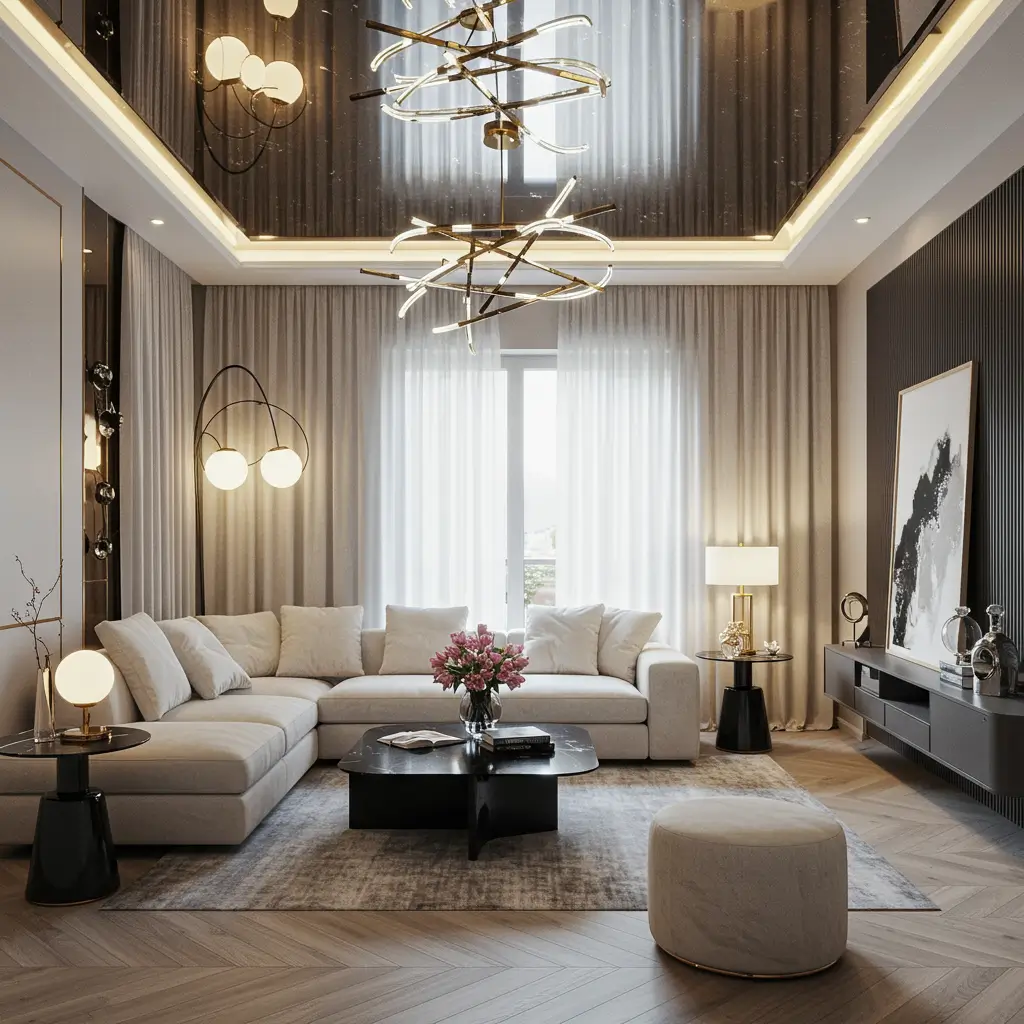
Strategic mirror accents in false ceilings create the illusion of infinite height. I added mirror strips between gypsum panels in my small hallway, and suddenly the cramped corridor feels like a gallery.
The trick lies in using mirrors as accents, not covering the entire ceiling. Full mirror ceilings scream “1980s nightclub” or worse. Subtle strips or panels add glamour without the disco ball effect.
Reflecting on Design
Position mirrors to reflect interesting elements, not random ceiling bits. My hallway mirrors reflect artwork on the walls, doubling the visual interest. Poor positioning reflects air vents and smoke detectors – not the look you want.
Use antiqued or tinted mirrors for sophistication. Clear mirrors can feel harsh. My bronze-tinted strips add warmth while still creating expansion. The subtle tint prevents that harsh reflection that makes everyone look up their own nose.
Clean mirrors regularly or regret it forever. Ceiling mirrors show every speck of dust and fingerprint. I installed mine three months ago and already appreciate why most people avoid them. They look incredible when clean, but maintenance is real.
12. Backlit Fabric Stretch Ceiling
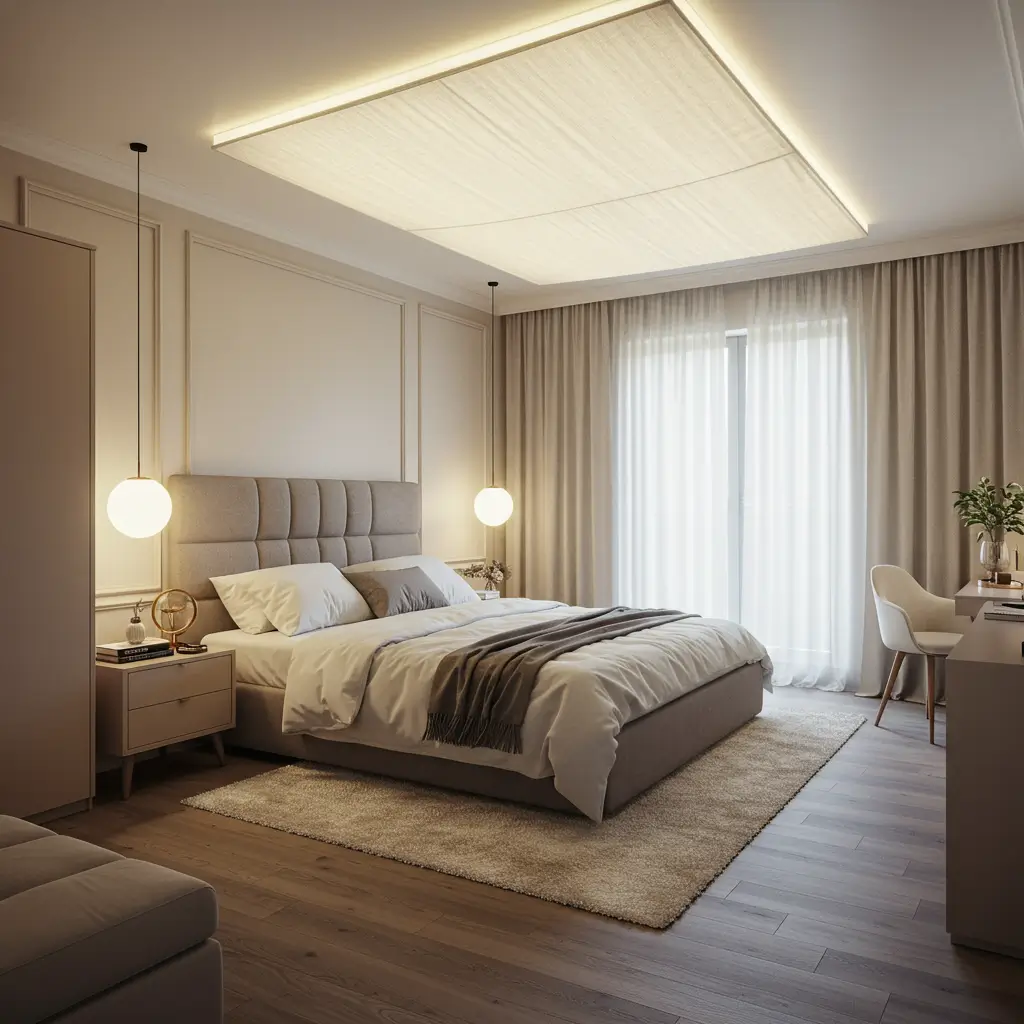
Stretch ceilings with backlighting create the most ethereal effect I’ve ever seen overhead. My friend’s yoga studio has one, and it literally looks like you’re exercising under a glowing cloud. I immediately started planning one for my meditation corner.
The fabric stretches tight across a frame while LED panels above create even, diffused light. The result eliminates all shadows and creates the most flattering light possible. My bathroom mirror has never made me look better.
Stretching Your Design Muscles
Choose fabric opacity based on desired light levels. Translucent fabrics create bright, even light. More opaque options provide subtle glow. I went with medium translucency – bright enough for tasks but soft enough for relaxation.
Consider printed fabrics for added interest. Sky prints, abstract patterns, even custom photography can be printed on stretch ceiling material. My meditation corner features a subtle cloud print that’s visible when backlit. IMO, it’s the coolest ceiling feature I’ve installed.
Plan for temperature changes. Fabric can sag slightly in heat or tighten in cold. Professional installation includes tension adjustments to handle climate variations. My DIY attempt in the guest bathroom resulted in saggy fabric after the first hot shower. Lesson learned.
Elevating Your Ceiling Game
There you have it – twelve false ceiling designs that prove there’s more to life than flat, white expanses overhead.
Each design offers unique benefits and challenges, but they all share one thing: the ability to completely transform a room’s character.
The best false ceiling for your space depends on your room’s purpose, your budget, and your commitment to maintenance.
Start with one room, learn from the experience, then tackle others. My journey began with a simple gypsum ceiling and evolved into increasingly complex designs as my confidence grew.
Remember that false ceilings aren’t just about aesthetics. They improve acoustics, hide imperfections, enable better lighting, and can even improve energy efficiency.
The initial investment pays dividends in both functionality and joy every time you look up.
Don’t let fear of complexity keep you from exploring false ceiling options. Start simple, work with experienced contractors, and remember that even basic false ceilings create dramatic improvements.
Your room’s fifth wall is waiting to become something special – isn’t it time you looked up to new possibilities? 🙂