10 Fresh Farmhouse Classroom Decor Ideas for Modern Classrooms
- Classroom Decor
 Ben
Ben- 0
- 24 minutes read
Remember walking into that one teacher’s classroom that just felt right? You know, the kind of space where learning didn’t feel like a chore and you actually wanted to hang out after class? Well, I’m about to spill the tea on creating exactly that vibe with farmhouse decor that’ll make your classroom the talk of the school—in the best way possible.
Let’s be real: classroom decor has come a long way from those sad, curling posters about the periodic table. Today’s educators are creating spaces that feel more like cozy coffee shops than institutional learning factories. And honestly? The kids love it, parents notice it, and you’ll actually enjoy spending 8+ hours a day in your own space.
I’ve spent the last five years transforming classrooms (including my own disaster of a space that once looked like a beige prison cell), and farmhouse style has consistently delivered the perfect blend of warmth, functionality, and that Instagram-worthy aesthetic we’re all secretly chasing. Plus, it doesn’t have to break your already-stretched teacher budget.
Rustic Wood Bulletin Boards
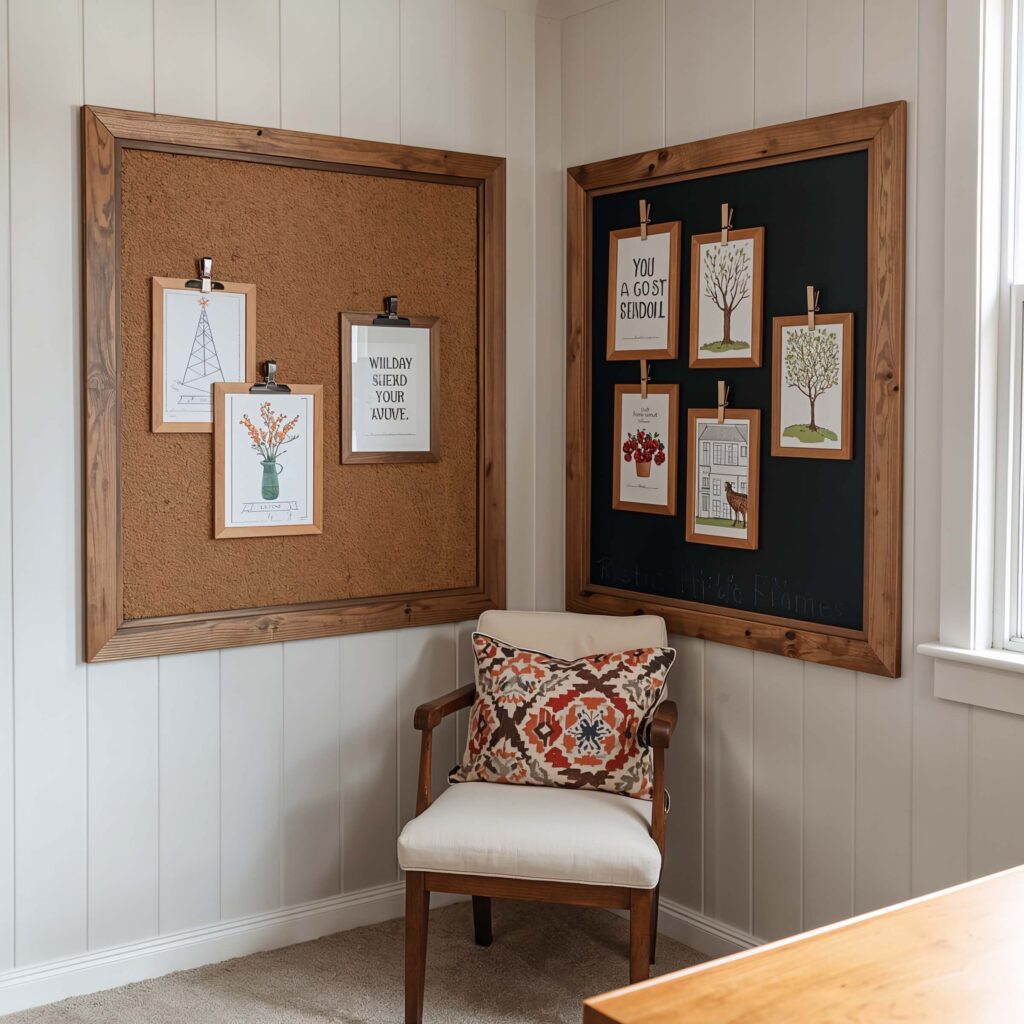
Gone are the days when bulletin boards meant those boring cork squares that shed little brown crumbs everywhere. Rustic wood bulletin boards transform your classroom walls into functional art pieces that actually make kids want to look at them.
I discovered this game-changer three years ago when I stumbled upon a reclaimed wood board at a garage sale. Twenty bucks and some elbow grease later, I had a centerpiece that parents still compliment during conferences. The natural wood grain adds texture and warmth that standard boards simply can’t match.
What makes these boards special? They frame student work like it belongs in an art gallery. Instead of pushpins stabbing through assignments, you can use clothespins, small clips, or even magnetic strips attached to the wood. The contrast between the rustic frame and colorful student work creates visual interest that draws eyes naturally.
Making It Work in Your Space
Start with pallet wood or reclaimed lumber from local hardware stores—many will practically give away their scraps. Sand down any rough edges (splinters and kids don’t mix), then seal with a clear coat to preserve that natural look. Mount it at student eye level, not yours. Trust me on this one; I learned that lesson the hard way.
Consider creating different sized boards for various purposes. A large central board showcases current projects, while smaller ones highlight student achievements or weekly schedules. The wood’s natural variations mean no two boards look identical, giving your classroom unique character.
Mason Jar Supply Holders
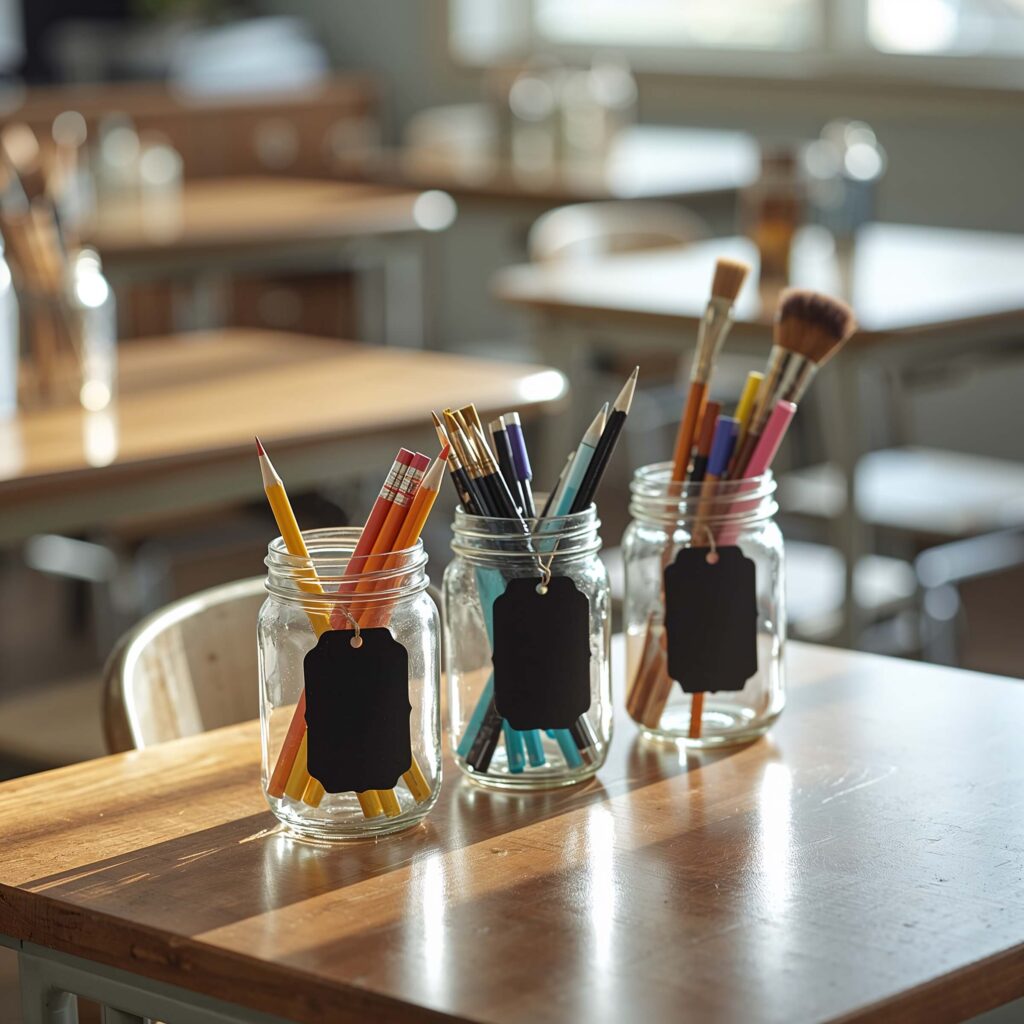
Who decided pencil holders had to be plastic and boring? Mason jars bring that perfect farmhouse functionality while solving your organizational nightmares. And before you roll your eyes thinking this is too Pinterest-y, hear me out.
These glass beauties handle everything from markers to scissors to that collection of glue sticks that somehow always disappears by October. I started with three jars and now have an entire wall of them—it’s basically a supply command center that students can actually navigate independently.
The transparency factor changes everything. Kids can see exactly what’s inside without dumping everything out first (revolutionary, right?). Plus, when little Sarah asks for the hundredth time where the colored pencils are, you just point to the clearly visible jar instead of stopping your lesson.
Creative Organization Hacks
Label each jar with chalkboard paint strips or cute farmhouse-style tags. Group supplies by activity type rather than just throwing all writing implements together. One jar for regular pencils, another for colored pencils, a third for special art supplies—you get the idea.
Mount jars on a wooden board using hose clamps for a wall-mounted solution that saves precious desk space. Or create portable supply caddies by securing jars in wooden crates that students can carry to group work areas. The best part? When jars get grimy (and they will), just toss them in the dishwasher.
Farmhouse Chalkboard Wall
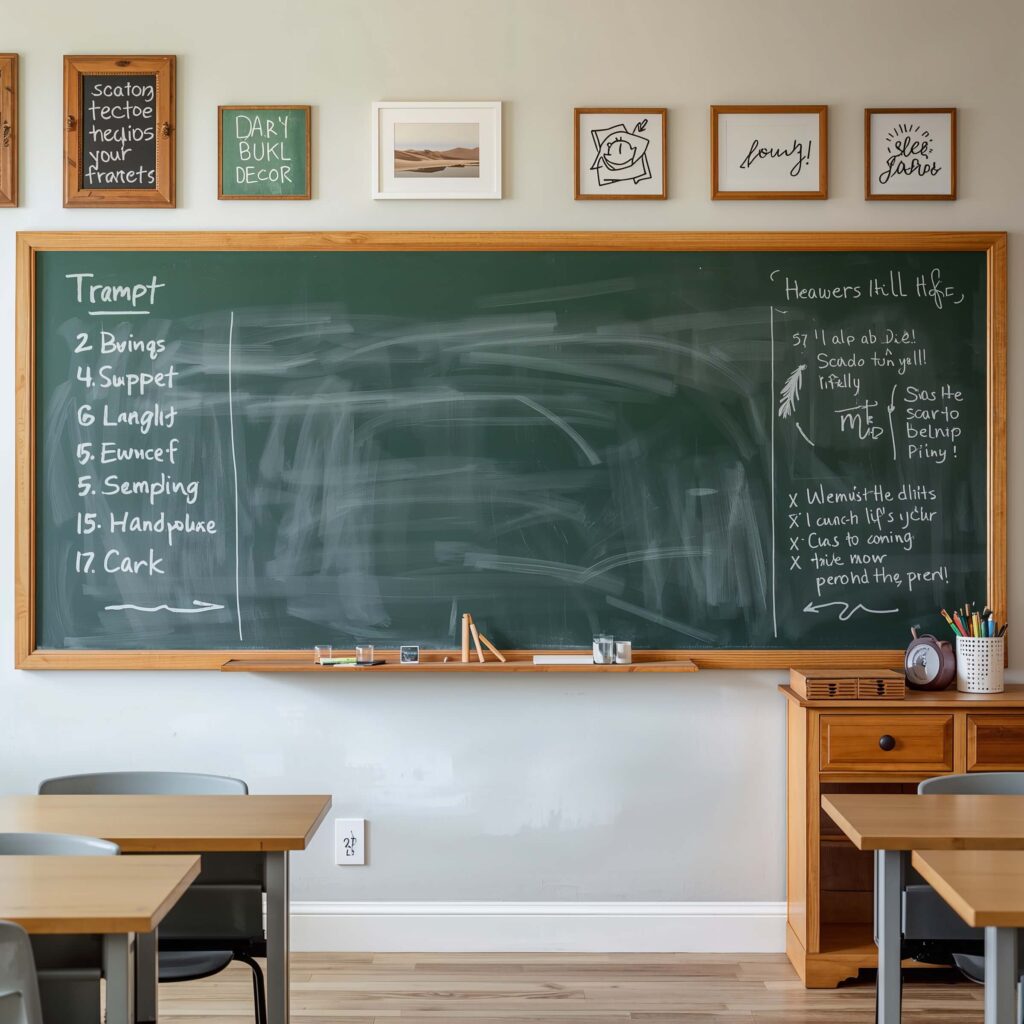
Remember when chalkboards were those green monstrosities that squeaked and created dust clouds? Modern chalkboard walls are nothing like that ancient torture device. A farmhouse chalkboard wall becomes an interactive canvas that transforms learning into an experience.
I painted my first chalkboard wall during spring break two years ago, and it completely changed how my students engage with lessons. Instead of being confined to a small board, we suddenly had an entire wall for brainstorming, problem-solving, and creative expression. The farmhouse twist? Frame it with reclaimed wood trim or shiplap for that authentic rustic charm.
Beyond Basic Black
Consider navy blue or forest green chalkboard paint for a softer look that still reads as farmhouse-appropriate. These colors reduce eye strain and create less stark contrast than traditional black. Plus, they photograph better for those classroom social media posts (because let’s be honest, we all do it).
Section off areas for different purposes using painted or wooden borders. Create a daily schedule section, a vocabulary wall, and a free-draw zone where early finishers can express themselves. Pro tip: invest in dustless chalk and quality erasers—your respiratory system will thank you.
Also Read: 10 Genius Neutral Classroom Decor Ideas for Organized Rooms
Burlap Accent Curtains
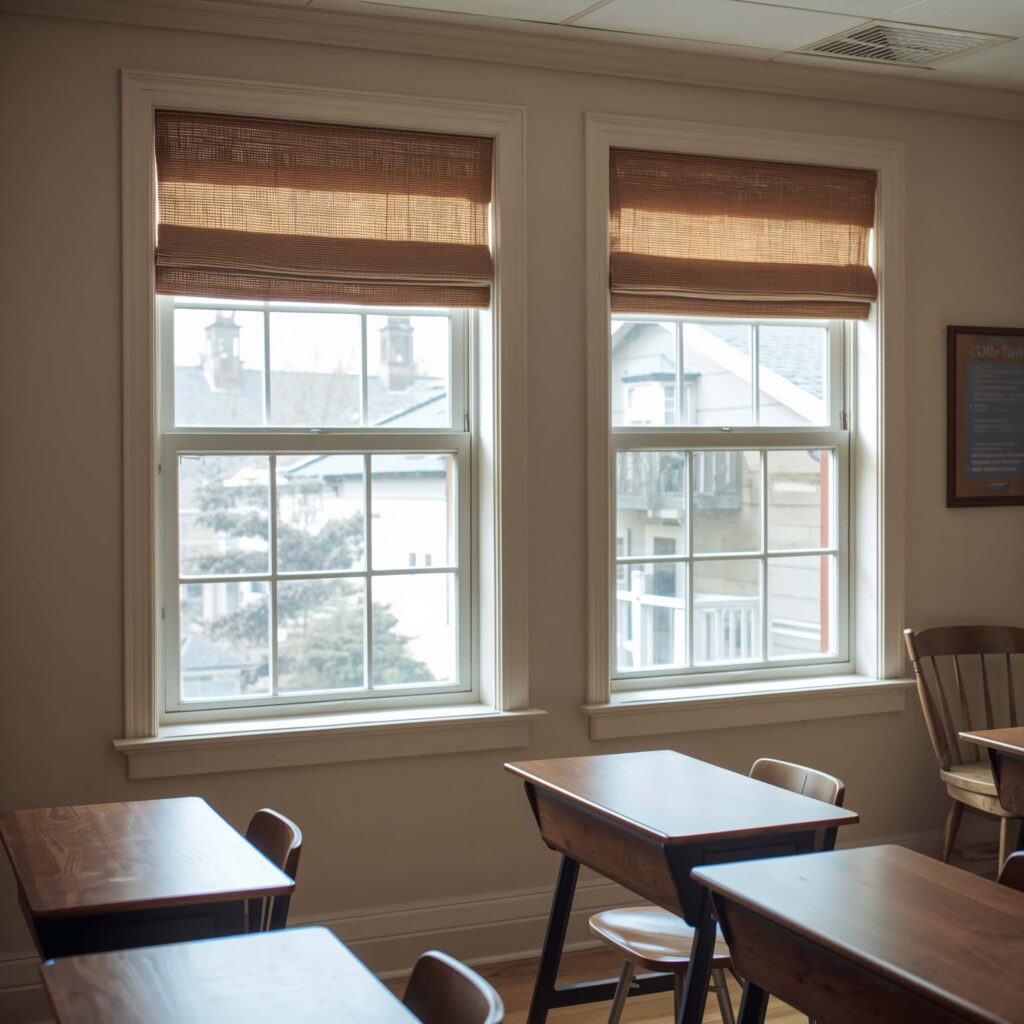
Window treatments might seem like a minor detail, but burlap curtains instantly warm up those industrial classroom windows that make your space feel like a hospital ward. They filter harsh fluorescent light while adding texture that screams farmhouse chic.
I’ll admit I was skeptical about fabric near 25 elementary schoolers. Wouldn’t they get destroyed? Surprisingly, burlap’s durability makes it nearly kid-proof. Mine survived a particularly enthusiastic science experiment involving volcano “lava” that went rogue.
Light Control That Works
Layer sheer curtains behind burlap panels for adjustable light control. This combo lets you darken the room for videos without creating a cave atmosphere. The natural fibers also help with sound absorption—a blessing when your neighbor’s class is having indoor recess.
Choose lighter burlap weaves to maintain brightness while adding privacy. Tie them back with rope or twine for that authentic farmhouse touch. And FYI, burlap is incredibly affordable compared to traditional classroom curtains, leaving more budget for actual teaching supplies.
Vintage Crate Bookshelves
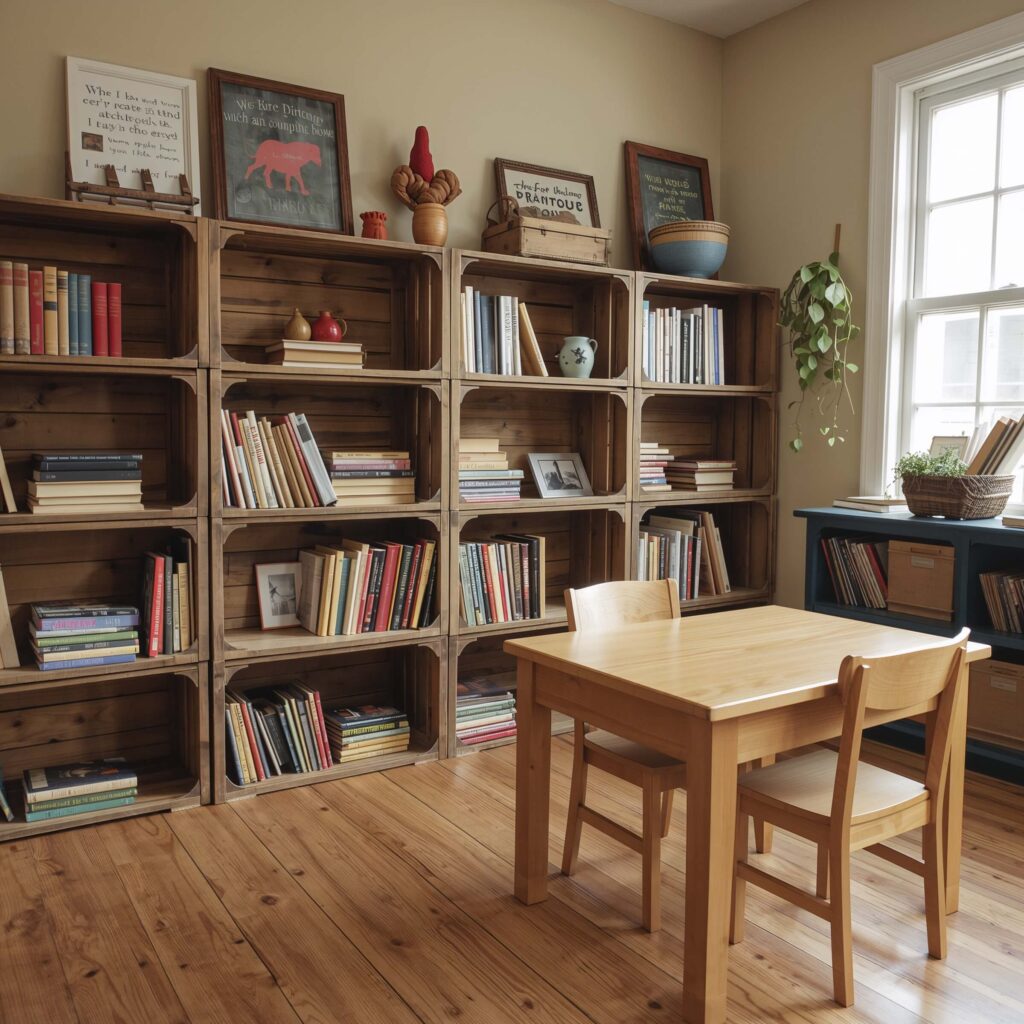
Traditional metal bookshelves are functional but about as inspiring as watching paint dry. Vintage wooden crates stacked and arranged creatively turn your classroom library into a destination students actually want to visit.
My crate system started with three apple crates from a local orchard (free if you ask nicely in the off-season). Now I have an entire reading corner that looks like it belongs in a trendy bookstore. Students actually argue over who gets to be the librarian because organizing these shelves is genuinely fun.
Building Your Library Display
Arrange crates at various heights and angles to create visual interest. Some facing out for display, others turned sideways for traditional spine-out storage. This variety helps different types of readers find books that appeal to them—browsers can see covers while systematic searchers can scan spines.
Sand any rough spots and seal the wood to prevent snags on book covers. Add small labels or chalkboard tags to designate genres or reading levels. The crates’ portability means you can reorganize based on current units or seasons without heavy lifting.
Cozy Neutral Reading Nook
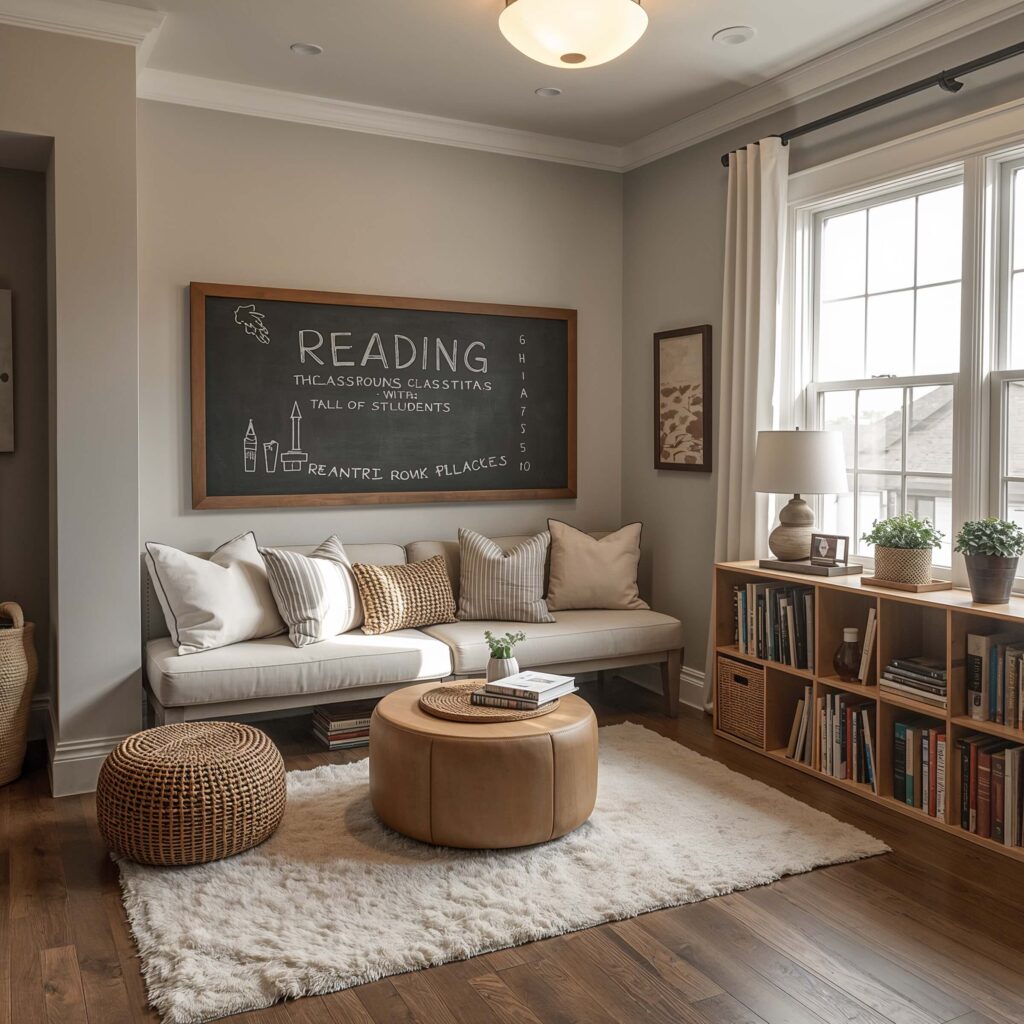
Every classroom needs that special spot where magic happens, and a farmhouse-style reading nook creates an irresistible learning sanctuary. Think less “institutional reading corner” and more “grandma’s cozy living room.”
I transformed a dead corner of my classroom using a small area rug, some floor pillows in neutral tones, and a few strategic farmhouse touches. The result? Students beg for reading time and actually stay focused longer. Who knew beige and cream could be so powerful?
Creating Comfort Without Chaos
Start with a neutral base palette—whites, creams, soft grays—then add texture through different fabrics. Knit throws, linen pillows, and maybe a faux fur accent (machine washable, obviously) create layers of coziness without overwhelming the space.
Include a small side table or vintage stool for book stacks and a mason jar full of bookmarks. String some warm LED lights (battery-operated for safety) along the wall for ambiance. The key is creating a defined space that feels separate from the classroom’s hustle while remaining visible for supervision.
Also Read: 10 Trendy High School Classroom Decor Ideas That Wow Students
Wooden Name Tag Labels
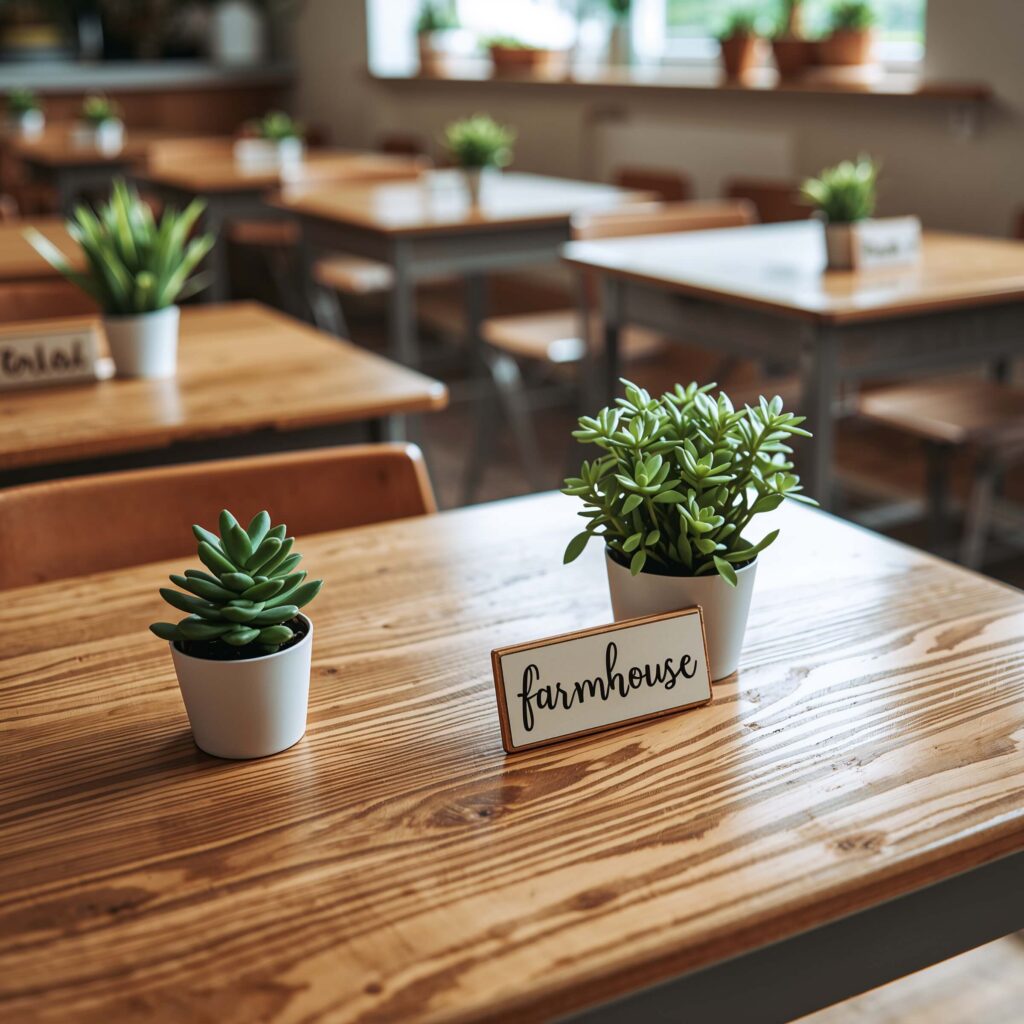
Forget those paper name tags that peel off by week two. Wooden name tags add a personal, lasting touch that makes students feel like their space truly belongs to them.
I started making these after watching kids constantly fix their falling paper labels. Small wood slices or rectangular pieces become miniature works of art that students help create. They take ownership because they invested effort in making them.
Personalization That Lasts
Use wood burning tools (teacher only!) or paint pens to add names and simple designs. Let students decorate their tags during the first week—it’s a perfect ice breaker activity that produces functional decor. Some kids add small drawings that represent their interests, making each tag unique.
Attach tags to desks with velcro strips for easy rearrangement when you switch seating charts. Create matching tags for cubbies, coat hooks, and supply bins. This cohesive labeling system helps younger students develop organizational skills while maintaining your farmhouse aesthetic.
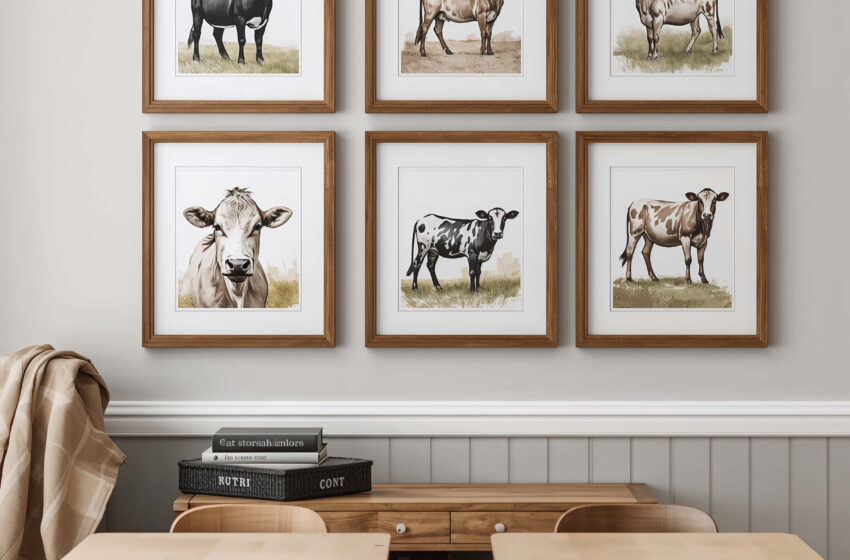
Farm Animal Wall Prints
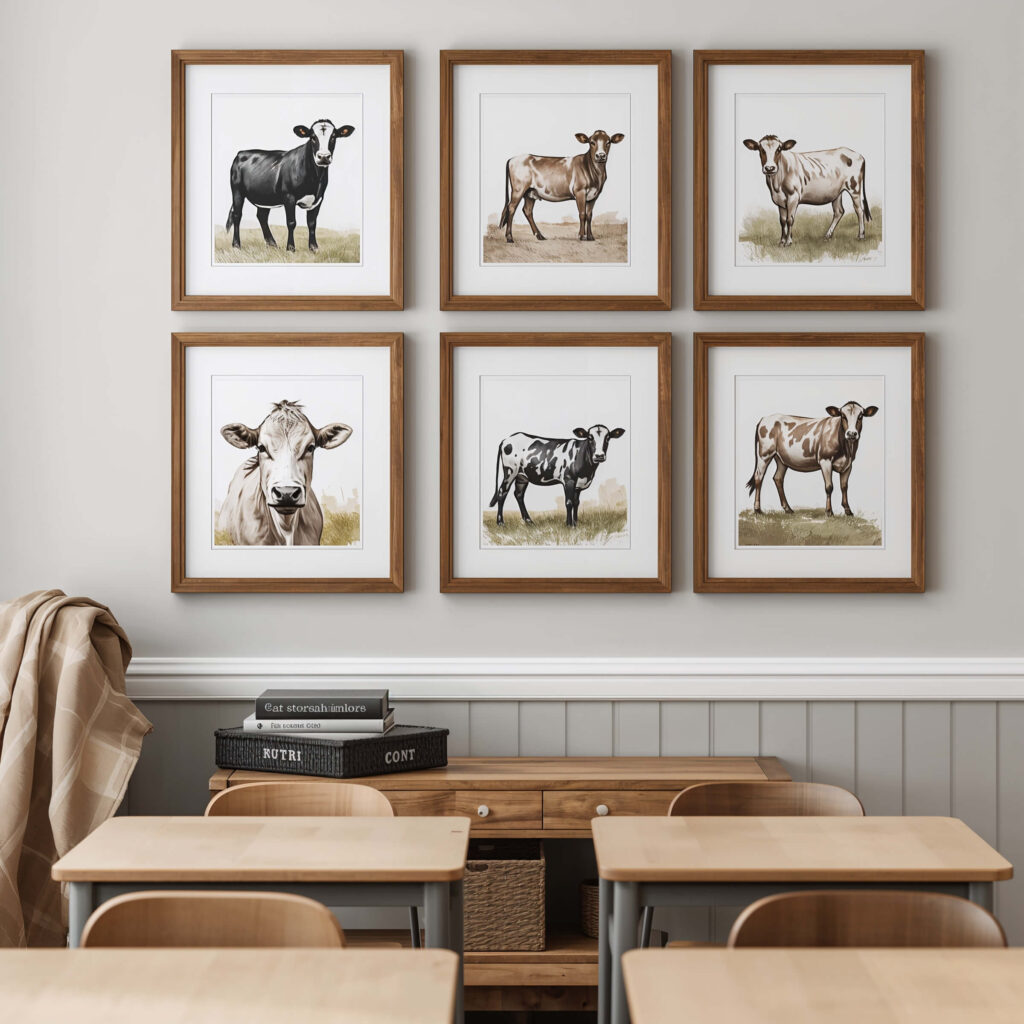
Who says educational posters can’t be stylish? Farm animal prints combine learning opportunities with legitimate decor that doesn’t scream “classroom” from a mile away.
Instead of those glossy, primary-colored alphabet animals, I chose watercolor-style prints featuring realistic farm animals. They spark conversations about science, agriculture, and even creative writing prompts. Plus, they’re actually pleasant to look at during your millionth hour of grading.
Educational Meets Aesthetic
Select prints that serve double duty—beautiful enough for decor but detailed enough for teaching moments. A anatomically correct chicken can teach life cycles. A cow illustration leads to discussions about dairy farming. Even preschoolers can identify and discuss different animals and their purposes.
Frame prints in mismatched vintage frames for authentic farmhouse charm. Thrift stores are goldmines for frames that just need a quick coat of chalk paint. Arrange them gallery-style at student height, creating an ever-changing display as you rotate seasonal or thematic content.
Galvanized Metal Storage Bins
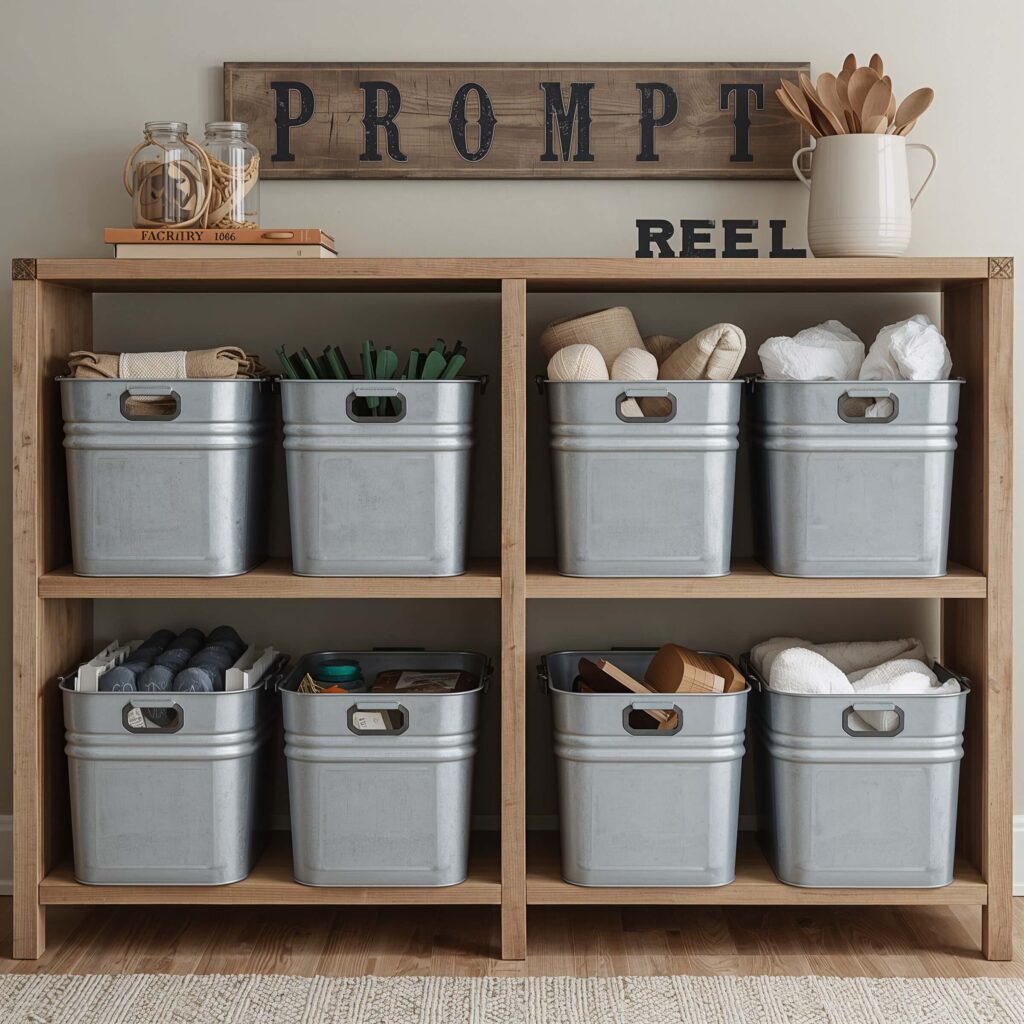
Plastic bins are practical but they’re also…well, plastic. Galvanized metal bins bring industrial farmhouse flair while handling the daily abuse only elementary students can dish out.
These bins changed my storage game completely. They’re practically indestructible (I’ve seen one survive being used as a step stool by an ambitious third-grader), and they actually look better with age and use. The silver tone complements any color scheme without competing for attention.
Organization That Actually Works
Label bins with chalkboard labels or metal tags that can change as your needs shift. Use different sizes for various supplies—large bins for construction paper, medium for workbooks, small for math manipulatives.
Stack them on shelves or slide them under tables for hidden storage. The metal construction means they’re easy to sanitize (hello, flu season), and they don’t absorb odors like plastic. IMO, they’re worth the slightly higher initial investment for the longevity alone 🙂
Create a mobile supplies station by placing bins in a wooden wagon or cart. Students can wheel supplies wherever needed, and cleanup becomes part of the fun when everything has a designated metallic home.
Also Read: 10 Inspiring Middle School Classroom Decor Ideas Cozy Space
Rope and Wood Hanging Shelves
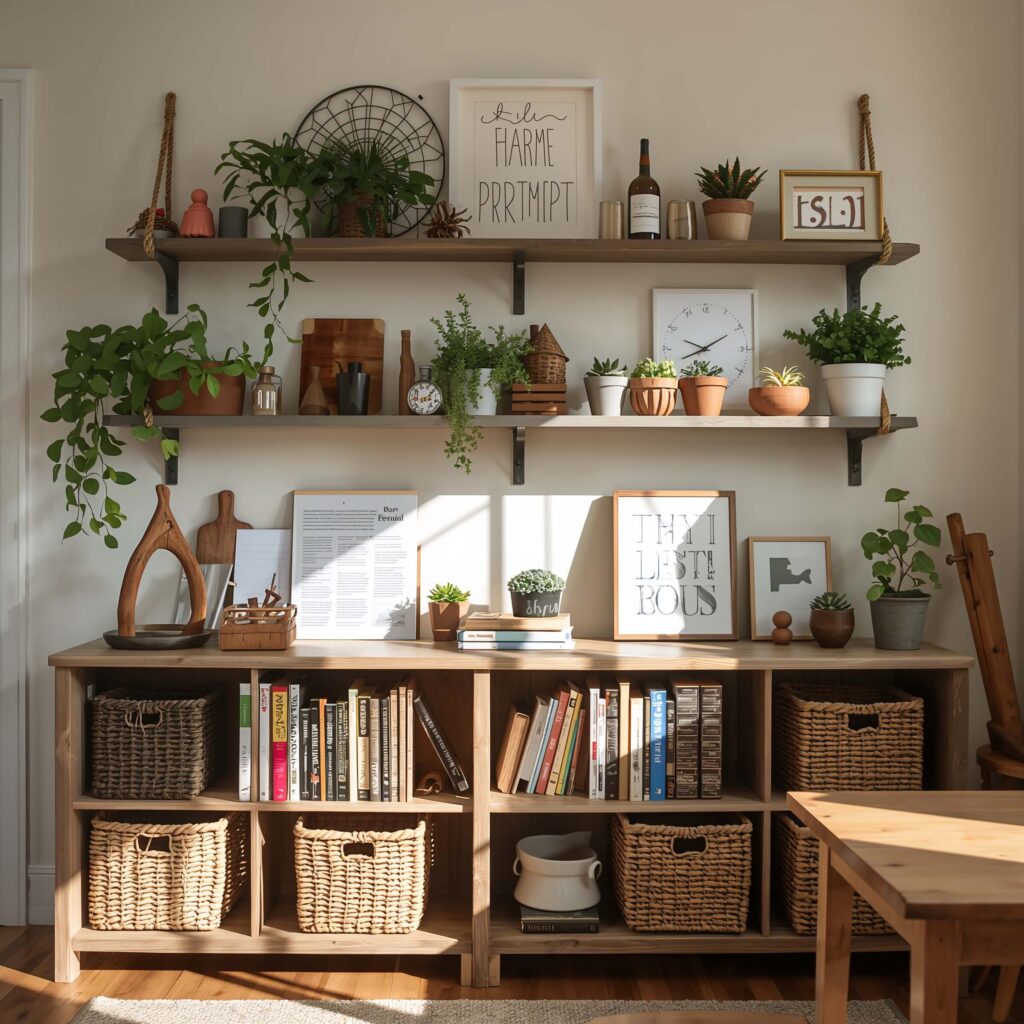
Wall space is precious real estate in any classroom. Rope and wood hanging shelves maximize vertical storage while adding that perfect farmhouse touch without permanent installation damage.
I installed my first set after running out of surface space for displaying student projects. These shelves now hold everything from small potted plants (fake ones, because let’s be realistic) to rotating displays of student work. The rope adds movement and visual interest that fixed shelves can’t provide.
Installation Without Intimidation
Choose thick natural rope and sturdy wood planks for safety and durability. Pre-drill holes in the wood corners, thread rope through, and secure with knots underneath. Most classroom walls can handle the weight with proper wall anchors.
Adjust shelf heights by simply retying knots—perfect for accommodating different display needs throughout the year. Use multiple shelves at varying heights to create visual rhythm. The swaying motion actually helps draw attention to displayed items without being distracting.
Bringing It All Together
Creating a farmhouse classroom isn’t about perfection or spending your entire paycheck at Target (though heaven knows we’ve all been there). Start with one or two elements that speak to you and build gradually. Maybe it’s those mason jar organizers that’ll finally tame your marker chaos. Or perhaps it’s transforming that sad bulletin board into something worth looking at.
The real magic happens when students walk in and immediately feel comfortable. When parents comment that your room feels “homey.” When you actually enjoy spending those long hours in your space because it reflects your personality while serving your students’ needs. The farmhouse aesthetic works because it’s approachable, warm, and unpretentious—exactly what education should feel like.
Remember, rules are meant to be bent in creative spaces. Mix in modern elements if pure farmhouse feels too rustic. Add pops of color if neutrals bore you. The goal is creating an environment where learning thrives, not winning any decor competitions.
Take what works, leave what doesn’t, and make it yours. Your students won’t remember every lesson, but they’ll remember how your classroom made them feel. And with these farmhouse touches, that feeling will be something special—like being welcomed home every single day.
Happy decorating, teacher friends. May your coffee be strong, your patience be endless, and your classroom be the farmhouse haven you and your students deserve.