
Cracking the Color Code: Flame Color Temperature Chart Guide

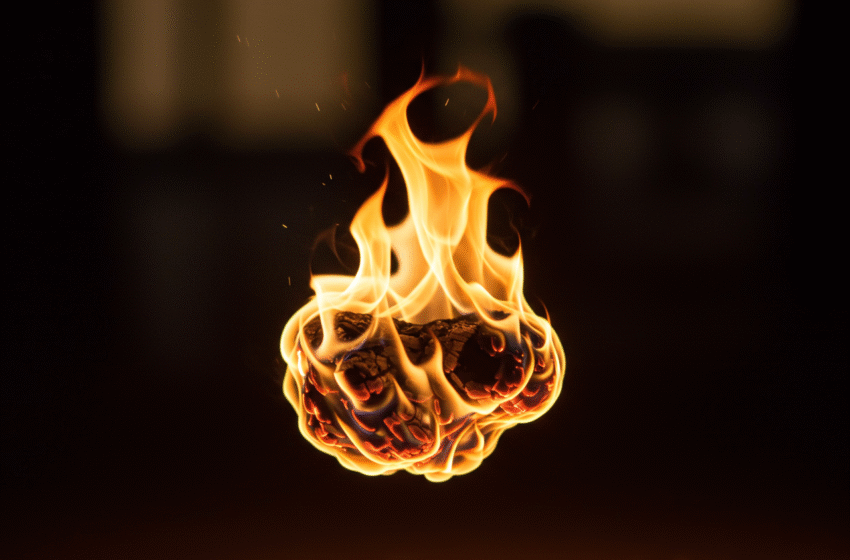
Have you ever gazed into a fire and wondered why flames dance in different colors? That brilliant display is more than just a visual spectacle; it’s a visible language speaking directly to the temperature and efficiency of the fire. A flame color temperature chart is the key to decoding this language, transforming you from a passive observer into an informed expert who can gauge a fire’s heat and safety at a glance.
This comprehensive guide will take you deep into the science of flame colors. You will learn not only what each color signifies but also the fundamental physics and chemistry that create these stunning visual effects. We will explore practical applications for cooking, heating, and metalworking, and provide you with clear, actionable charts to use as a reference. By the end of this article, you’ll be able to look at any fire and instantly understand the story its colors are telling.
Chapter 1: The Science Behind the Spectrum – Why Fire Has Color
At its core, fire is a chemical reaction known as combustion, where a fuel combines with an oxidizer (usually oxygen from the air), releasing heat and light. The colors we see are a direct result of this process, governed by two primary phenomena: black-body radiation and atomic emission.
Black-Body Radiation: The Glow of Heat
Imagine heating a piece of iron. As it gets hotter, it first glows a dull red, then bright red, then orange, and eventually, if hot enough, a blinding white. This is the principle of black-body radiation in action. It is the light emitted by any object due to its heat alone. The temperature of the object directly determines the wavelength of light it emits:
- Lower Temperatures: Produce longer wavelengths, which we see as red or orange.
- Higher Temperatures: Produce shorter wavelengths, which we see as yellow, white, and eventually blue .
This principle is a major contributor to the colors we see in a typical wood or candle flame.
Atomic Emission: The Signature of Elements
While black-body radiation explains the general color progression, it doesn’t account for vivid blues or greens. This is where atomic emission comes into play. When atoms in a flame are heated, their electrons absorb energy and jump to a higher energy level. When these excited electrons fall back to their normal state, they release that energy in the form of light at specific, characteristic wavelengths .
For example:
- Carbon and hydrogen molecules emit light in the blue and violet range .
- Sodium, common in wood, produces a bright yellow color .
- Copper compounds can create a vivid green flame .
In many flames, especially those from hydrocarbons like propane or wood, we see a combination of both effects: the white-hot glow of soot particles (black-body radiation) and the specific blue light from excited gas molecules (atomic emission) .
Chapter 2: Decoding the Hues – Your Flame Color Temperature Chart Explained
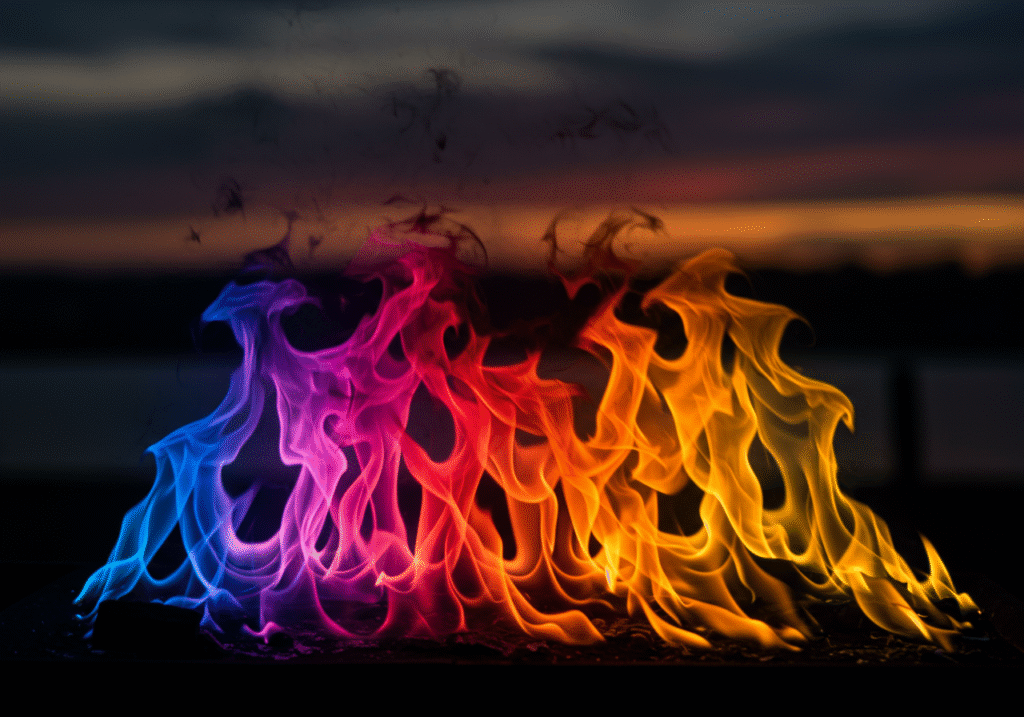
Now that we understand the “why,” let’s delve into the “what.” The following chart provides a general guide to what different flame colors tell us about temperature and combustion efficiency. It’s important to remember that these temperatures are approximations and can vary based on fuel type, oxygen supply, and other conditions .
Table: General Flame Color Temperature Chart
A Deeper Look at Each Color
Red Flames: The Cool Signal
Red flames are a clear sign of the lowest fire temperatures. You’ll often see them in smoldering coals or a dying fire. In a structural fire, red flames can signal a dangerous, oxygen-depleted environment ripe for a backdraft .
Orange and Yellow Flames: The Icons of Fire
These are the classic fire colors, most associated with wood-burning campfires and candles. The orange and yellow hues are created by the incandescence of millions of tiny, unburned carbon soot particles glowing hot within the flame . While they provide a cozy ambiance, they indicate that combustion is not entirely complete, meaning some fuel is being wasted as soot and smoke.
White Flames: The Peak of Incandescence
A bright white flame signifies an intensely hot and efficient burn. It represents the upper end of the black-body radiation scale before blue atomic emission becomes dominant. In a candle, the tiny white “halo” at the base of the wick is actually the hottest part of the flame .
Blue Flames: The Mark of Efficiency
A blue flame is the hallmark of high efficiency and complete combustion. In a blue flame, the fuel is burning so completely that there are very few soot particles to glow yellow. Instead, the color comes from the excited molecular radicals like CH and C₂ . This is why well-adjusted gas stoves and Bunsen burners burn blue—they are designed to mix fuel and air perfectly for a clean, hot, and efficient flame.
Chapter 3: Beyond Temperature – How Fuel and Chemistry Alter Flame Color
While temperature is the primary driver of flame color, the type of fuel and the presence of specific chemicals can dramatically alter the palette of a fire.
Common Fuels and Their Flame Colors
Different fuels burn at characteristic temperatures and with distinct colors. The table below compares some everyday fuels based on data from the search results.
Table: Flame Temperatures of Common Materials
The Impact of Chemicals and Additives
Introducing certain chemicals or compounds into a fire can override the normal temperature-based colors. This is the science behind colorful fireworks and is also used in analytical chemistry in “flame tests” to identify metal ions .
- Copper Compounds: Produce a vibrant blue or green flame .
- Strontium Chloride: Produces a brilliant red flame .
- Lithium Chloride: Creates a pink flame .
- Sodium Compounds: Produce an intense yellow flame, which is so bright it often masks other colors .
| Flame Color | Temperature Range (°C) | Temperature Range (°F) | Chemical Cause |
|---|---|---|---|
| Green | 900-1,000 °C | 1,652-1,832 °F | CuSO₄ or B(OH)₃ |
| Purple | ~982 °C | ~1,800 °F | Blue & Red Combo |
| Red Visible | ~525 °C | ~980 °F | SrCl₂ or Sr(NO₃)₂ |
| Red Dull | ~700 °C | ~1,300 °F | SrCl₂ or Sr(NO₃)₂ |
| Red Cherry Dull | ~800 °C | ~1,500 °F | SrCl₂ or Sr(NO₃)₂ |
| Red Cherry Full | ~900 °C | ~1,700 °F | SrCl₂ or Sr(NO₃)₂ |
| Red Cherry Clear | ~1,000 °C | ~1,800 °F | SrCl₂ or Sr(NO₃)₂ |
| Blue Visible | 900-1,000 °C | 1,652-1,832 °F | C₄H₁₀ or CuCl |
| Yellow | ~1,148 °C | ~2,100 °F | Fe or Na |
| Orange Deep | ~1,100 °C | ~2,000 °F | C or CaCl₂ |
| Orange Clear | ~1,200 °C | ~2,200 °F | C or CaCl₂ |
| Whitish | ~1,300 °C | ~2,400 °F | MgSO₄ |
| Blue Dull | 1,100-1,300 °C | 2,012-2,372 °F | C₄H₁₀ or CuCl |
| White Bright | ~1,400 °C | ~2,600 °F | MgSO₄ |
| Blue Clear | 1,400-1,600 °C | 2,552-2,912 °F | C₄H₁₀ or CuCl |
| White Dazzling | ~1,500 °C | ~2,700 °F | MgSO₄ |
| Violet | >1,600 °C | >2,912 °F | Blue & Red Combo |
🔥 Pro Tip: Reading the Chart
This chart illustrates a key principle of black-body radiation: as temperature increases, the color of the emitted light shifts from red to orange, yellow, white, and finally blue. The chemical causes listed are additives or elements that produce colored flames through atomic emission at specific wavelengths, which is how colored signal flares and fireworks are created.
💡 A Note on Color Consistency
The appearance of flame colors can be influenced by several factors, including the specific fuel being burned, the oxygen supply for combustion, and ambient lighting conditions. The temperatures and colors shown should be used as a reliable guide rather than absolute values.
Chapter 4: Practical Applications – Using the Flame Color Temperature Chart in the Real World
Understanding flame color isn’t just academic; it has critical and practical applications in everyday life, from ensuring home safety to perfecting a craft.
Home Appliance Safety and Efficiency
Your home’s gas appliances are a prime example of where flame color is a direct indicator of performance and safety.
- The Gas Stove: A healthy gas stove should burn with a vigorous blue flame with perhaps a small yellow tip. If your stove burns with a yellow or orange flame, it is a sign of incomplete combustion . This not only wastes gas but also produces carbon monoxide, a colorless, odorless, and poisonous gas. A yellow flame on a gas appliance is a signal to have it inspected by a qualified technician immediately .
- The Gas Fireplace: It’s important to note that many modern gas fireplaces are an exception to the rule. They are often designed to burn with yellow or orange flames to mimic the look of a real wood fire. These appliances are engineered to do this safely with proper venting, so the colored flames do not indicate a hazard in this specific context .
Optimizing Heating and Cooking
Whether you’re grilling or heating your home with a wood stove, flame color can guide you to better results.
- Grilling: For searing meat, you want high, consistent heat. A blue flame on a gas grill indicates it is operating at peak efficiency and temperature. For smoking, the lower, slower heat associated with the yellow-orange flame of smoldering wood chips is actually desirable, as it produces the flavorful smoke that permeates the food .
- Wood Stoves and Fireplaces: A fire that burns with bright, lively flames and minimal smoke is operating efficiently. A fire that smolders with dark, red, and smoky flames is not getting enough oxygen, leading to creosote buildup in the chimney—a significant fire hazard .
Professional and Industrial Uses
In fields like metalworking and firefighting, reading flame and temperature color is an essential skill.
- Metalworking: Blacksmiths and welders rely on the color of heated metal to gauge its temperature for processes like forging, tempering, and annealing. They use a metal temperature color chart, which is a direct application of the black-body radiation principle, to know when the metal is at the perfect state for work .
- Firefighting: Firefighters are trained to read the color of smoke and flames to assess a fire’s behavior. A sudden shift from dark, smoky flames to a quieter, red glow can indicate an oxygen-starved fire that is at high risk of a deadly backdraft explosion if oxygen is suddenly introduced .
Conclusion: Seeing Fire in a New Light
A flame color temperature chart is more than just a list of colors and numbers; it is a fundamental tool for understanding one of nature’s most basic elements. From the inefficient but cozy yellow of a campfire to the clean, powerful blue of a welding torch, each color tells a precise story about temperature, efficiency, and chemistry.
By learning this visual language, you empower yourself to operate appliances more safely, use fuel more efficiently, and appreciate the complex science happening within every flicker and flare. The next time you light a stove, sit by a fireplace, or watch a fireworks display, you’ll see more than just fire—you’ll see a dynamic, energetic system whose colors are the key to understanding its inner workings.