12 Cozy Floating Book Shelves Ideas to Transform Your Walls
- Floating Shelves
 Ben
Ben- 0
- 31 minutes read

Remember that moment when you realized you had more books than shelf space? Yeah, me too. I was literally stacking books on top of books, creating these precarious towers that threatened to topple every time someone walked by.
My coffee table had become a book table, my nightstand was buried under paperbacks, and don’t even get me started on the “temporary” pile in the corner that had been there for six months.
That’s when I discovered the magic of floating book shelves. These space-saving wonders don’t just hold your books they turn them into art, maximize your wall space, and make you look like you’ve got your life together (even if you’re still eating cereal for dinner three nights a week).
Whether you’re a minimalist with a carefully curated collection or a book hoarder who needs every inch of wall space, these twelve floating book shelf ideas will transform your reading collection from chaotic piles to organized displays that’ll make every visitor ask, “Where did you get those shelves?”
Let’s dive into the wonderful world of gravity-defying book storage.
1. Floating Book Shelves for Small Spaces
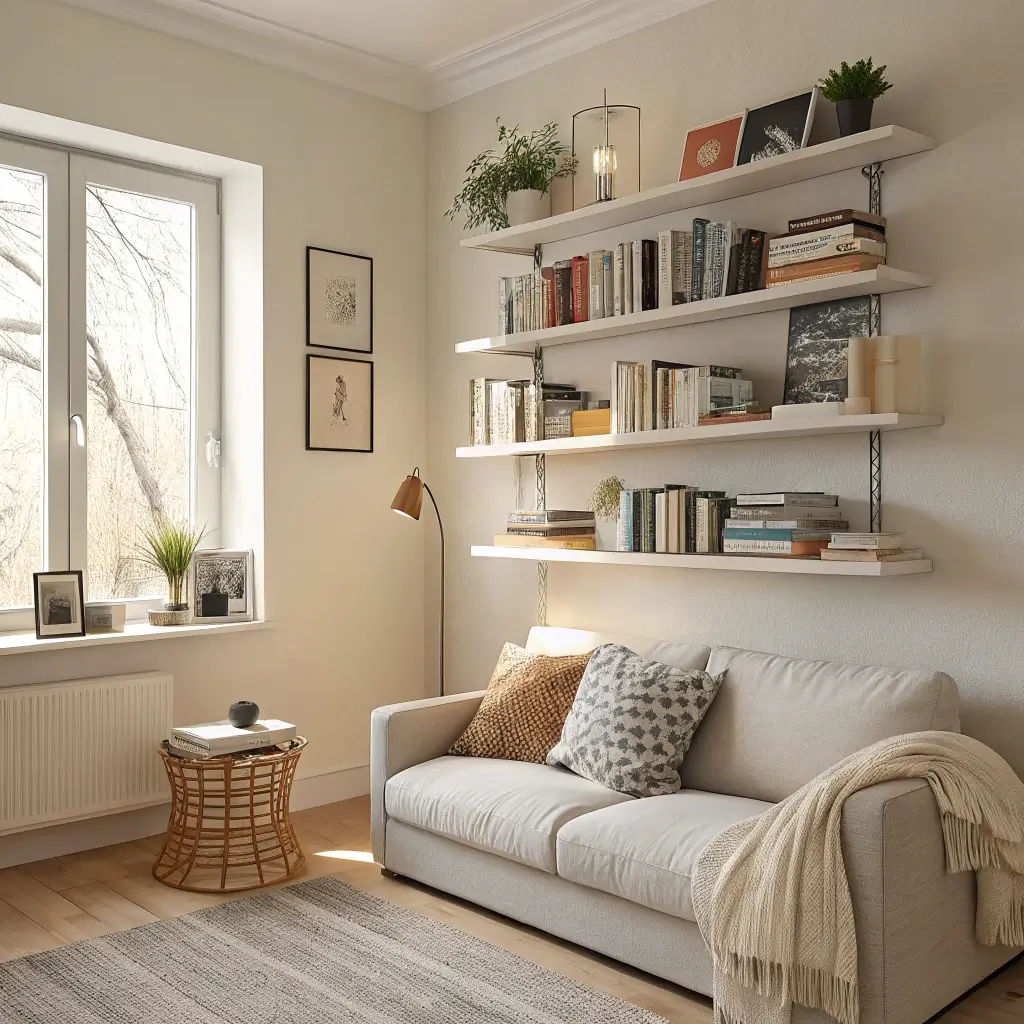
Living in a shoebox apartment doesn’t mean you have to give up your book collection. Trust me, I’ve lived in places where the bathroom was bigger than the bedroom, and I still managed to display my books beautifully.
Maximizing Vertical Real Estate
The secret to small space book storage is thinking up, not out. Install floating shelves from floor to ceiling on a single wall, creating a library ladder effect without the actual ladder. Space them about 10-12 inches apart—enough to accommodate most book sizes while maximizing the number of shelves you can fit.
I learned this trick in my first studio apartment where floor space was basically mythical. By installing seven narrow floating shelves on one wall, I created storage for over 200 books without sacrificing a single square foot of floor space. The vertical arrangement also drew the eye upward, making my tiny space feel taller and more spacious.
Strategic Placement in Tight Spots
Look for unexpected spaces—above doorways, in hallways, beside windows, or even in that awkward gap between your fridge and wall. These dead zones are perfect for narrow floating shelves that can hold paperbacks or smaller hardcovers.
Corner floating shelves are absolute game-changers for small spaces. They utilize that weird corner space that usually just collects dust bunnies and make it functional. Plus, books arranged in corners create this cozy, library-nook feeling that makes small spaces feel intentional rather than cramped.
2. Modern Minimalist Floating Book Shelves

Sometimes less really is more, especially when your book collection is carefully curated and you want each spine to shine like the literary gem it is.
The Art of Invisible Support
Modern minimalist floating shelves often feature invisible brackets or ultra-thin supports that make books appear to float magically against your wall. These create incredibly clean lines and let your books be the star of the show without any distracting hardware.
The key to nailing the minimalist look is restraint. Choose shelves in simple materials—think white lacquer, light wood, or even acrylic for that truly invisible effect. Keep them perfectly level (seriously, use a laser level if you have to) and space them evenly. The precision is what makes it look expensive and intentional.
Curating Your Display
Minimalist doesn’t mean empty. It means thoughtful. Arrange books by height, color, or even cover design to create visual harmony. Leave breathing room between groups—maybe 6-8 books, then a small gap, then another group. This negative space is crucial for the minimalist aesthetic.
I once helped a friend style her minimalist shelves, and we spent two hours arranging and rearranging 30 books. Sounds excessive? Maybe. But the end result looked like something from a design magazine, and she still gets compliments on it three years later.
3. DIY Rustic Floating Book Shelves

There’s something deeply satisfying about building your own book shelves, especially when they look like they came from a trendy farmhouse boutique but actually cost less than a hardcover bestseller.
Choosing Your Wood
Reclaimed wood is the holy grail of rustic DIY shelves. Check salvage yards, old barns (with permission!), or even Craigslist for weathered planks with character. If you can’t find reclaimed wood, new lumber can be aged with stain, sandpaper, and a little creative distressing.
Pine is budget-friendly and takes stain beautifully. Oak is sturdier but pricier. Whatever you choose, make sure it’s at least 1.5 inches thick to support the weight of books without sagging. I learned this the hard way when my first attempt with thin wood turned into a smile-shaped shelf after a few months.
The DIY Process
Creating rustic floating shelves is surprisingly straightforward. Cut your wood to size, sand it smooth (but not too smooth—you want some texture), apply your chosen stain or finish, and attach heavy-duty floating shelf brackets. The brackets should be rated for at least 50 pounds per shelf for book storage.
Pro tip: Install brackets into wall studs whenever possible. Books are heavier than they look, especially when you stack 20 of them on one shelf. If you can’t hit studs, use toggle bolts rated for the weight. Your future self will thank you when your shelves don’t come crashing down at 2 AM.
Also Read: 10 Beautiful Staggered Floating Shelves Ideas for Modern Walls
4. Creative Geometric Floating Shelves for Books
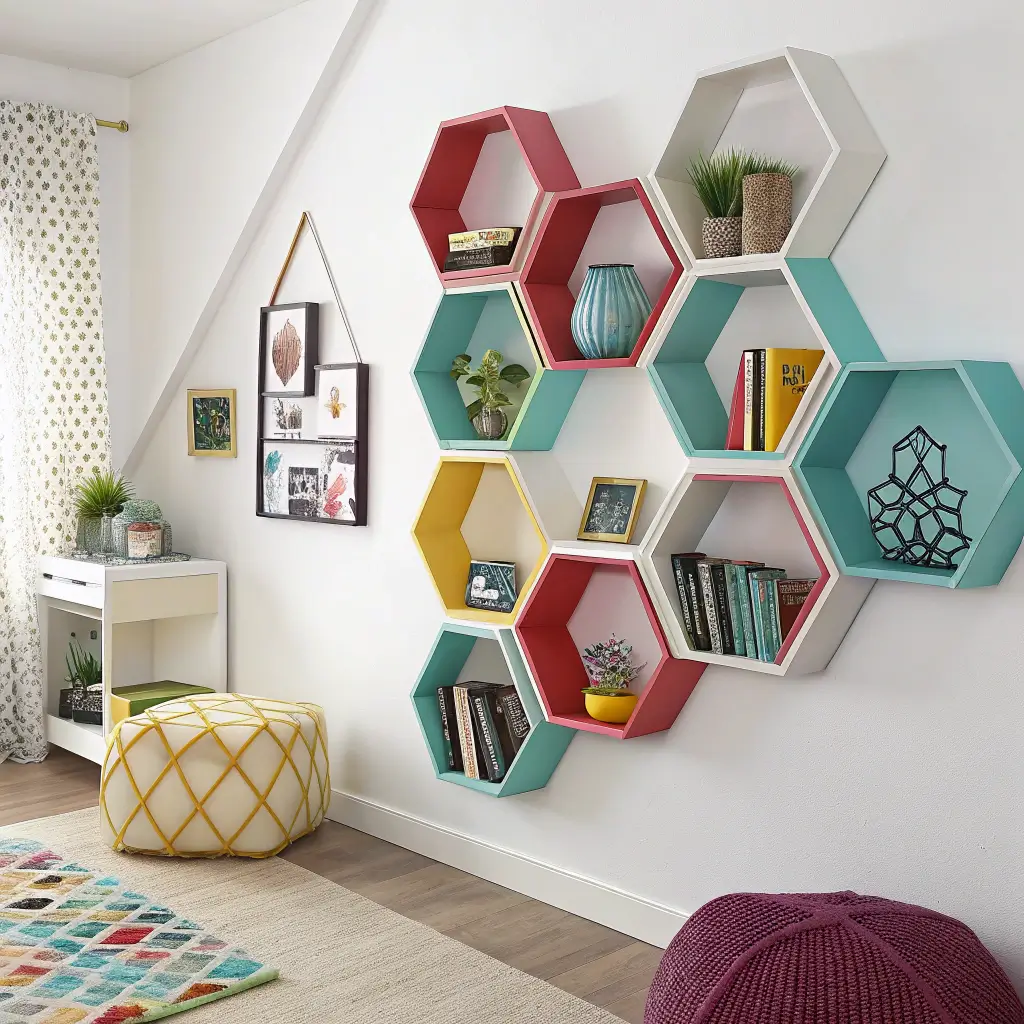
Who says book shelves have to be boring rectangles? Geometric floating shelves turn your book storage into functional art that makes people do a double-take.
Shapes That Work
Hexagonal shelves are having a moment, and for good reason. They create honeycomb patterns on your wall that look modern and organic at the same time. Triangle shelves work brilliantly in sets, creating larger geometric patterns. Even simple L-shaped shelves can create interesting negative spaces when arranged creatively.
The trick with geometric shelves is planning your arrangement before you start drilling. Use paper templates taped to the wall to visualize different configurations. What looks good in your head might look chaotic in reality, and it’s better to discover that before you’ve made 15 holes in your wall.
Styling Geometric Shelves
These shelves work best with a mix of books and decorative objects. The unusual shapes mean you can’t just line up books spine-out—you need to get creative. Try stacking some books horizontally, displaying others cover-out, and interspersing with small plants or decorative objects.
Keep the overall look balanced by distributing visual weight evenly. If you have a heavy art book in one hexagon, balance it with something of similar visual weight in another section. The geometric shapes create their own pattern, so your styling should complement, not compete.
5. Floating Shelves as a Home Library Wall
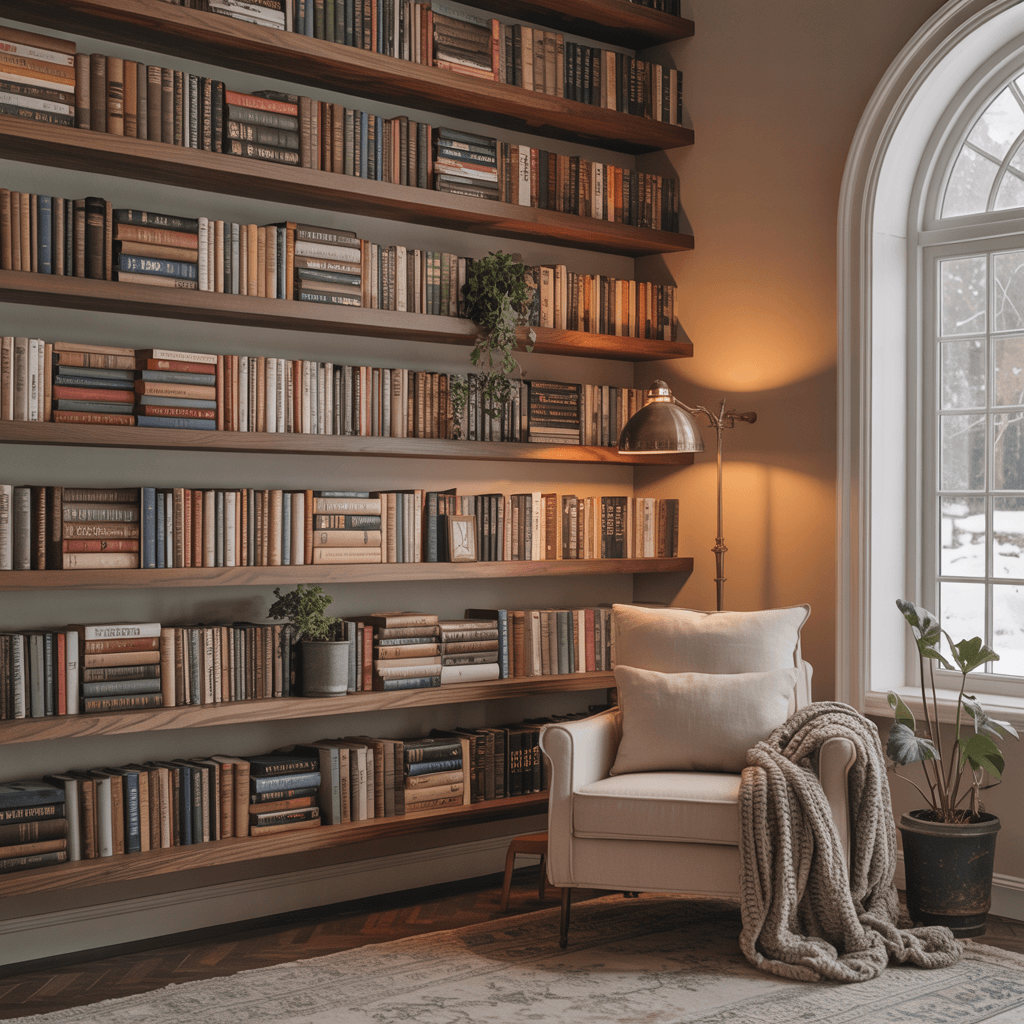
This is the dream, right? An entire wall dedicated to your books, styled so beautifully that it could be in a magazine spread titled “Libraries We Want to Live In.”
Planning Your Library Wall
Start by measuring your wall and doing some math. How many shelves can you fit? How many books do you need to accommodate? Add 25% more space than you think you need because, let’s be honest, you’re going to buy more books.
Create visual interest by varying shelf lengths. Maybe alternate between 4-foot and 6-foot shelves, or create a pattern with different sizes. This prevents the monotony of identical shelves marching up your wall and adds architectural interest.
The Full Library Treatment
Don’t just think shelves—think experience. Add a comfortable reading chair positioned to enjoy your library wall. Include good lighting, whether it’s picture lights above the shelves or a reading lamp nearby. Maybe even add a small side table for your coffee and current read.
I transformed my spare bedroom into a library using floating shelves, and it’s become everyone’s favorite room in the house. The key was treating it like a real library—organizing books by genre, adding small labels, and even creating a “new acquisitions” shelf. Yes, I’m that person, and no, I’m not sorry.
6. Floating Book Shelves with Hidden Storage
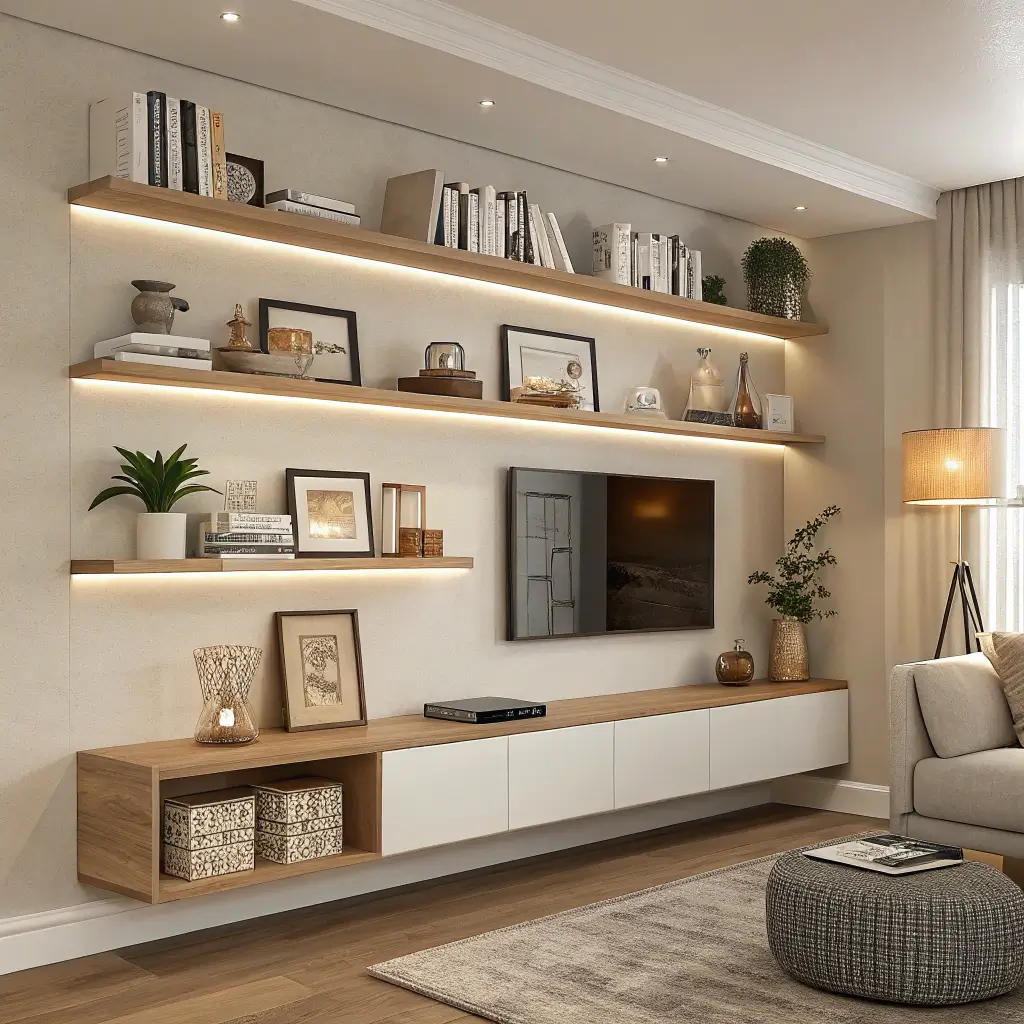
Sometimes you need your shelves to work overtime, storing not just books but also all those things you don’t want on display—like bills, chargers, or that embarrassing collection of romance novels you’re not ready to publicly own.
Clever Concealment
Look for floating shelves with built-in drawers or compartments. These usually have a lip or raised edge that hides a shallow storage area perfect for small items. Some designs feature a groove that holds items behind the books, invisible to casual observers.
Another option is creating your own hidden storage by installing a deeper shelf and using decorative boxes or baskets to hide items. Position these storage containers between book groupings for a styled look that’s also functional.
Double-Duty Design
The best hidden storage shelves look intentional, not like an afterthought. Choose shelves where the storage element adds to the design—maybe a shelf with a sliding panel that reveals compartments, or one with a beautiful wood grain that makes the drawer pull almost invisible.
I have floating shelves with hidden LED strip lighting in the back compartment. Not only does it create amazing ambiance, but the compartment also hides all the ugly cords and controllers. Visitors always ask about the magical glowing shelves, having no idea there’s storage hiding back there.
Also Read: 10 Cozy Coffee Bar with Floating Shelves Ideas for Your
7. Colorful Floating Shelves for Kids’ Books

Kids’ books are often too beautiful to hide away, with their vibrant covers and whimsical illustrations. Colorful floating shelves turn these books into room decor while keeping them accessible for little hands.
Kid-Friendly Heights
Install shelves at child height—typically starting around 24 inches from the floor for toddlers. This encourages independent reading and helps kids learn to put books away properly. As they grow, you can add higher shelves for books they’ve outgrown but aren’t ready to part with.
Use forward-facing shelves or ledges for younger kids so they can see book covers. This is especially helpful for pre-readers who choose books by pictures rather than titles. Plus, those colorful covers become part of the room’s decor.
Making It Fun
Paint shelves in rainbow colors, or let kids help choose colors that match their room theme. Shaped shelves—like clouds, trees, or even dinosaurs—add whimsy while serving a practical purpose. Just make sure any shaped shelves are securely mounted and have smooth edges.
Create reading zones by grouping shelves with a small bean bag or floor cushions below. This dedicated space makes reading feel special and gives kids ownership of their book collection. My nephew’s room has cloud-shaped shelves above a cozy reading tent, and he spends hours there with his books.
8. Corner Floating Book Shelves Ideas
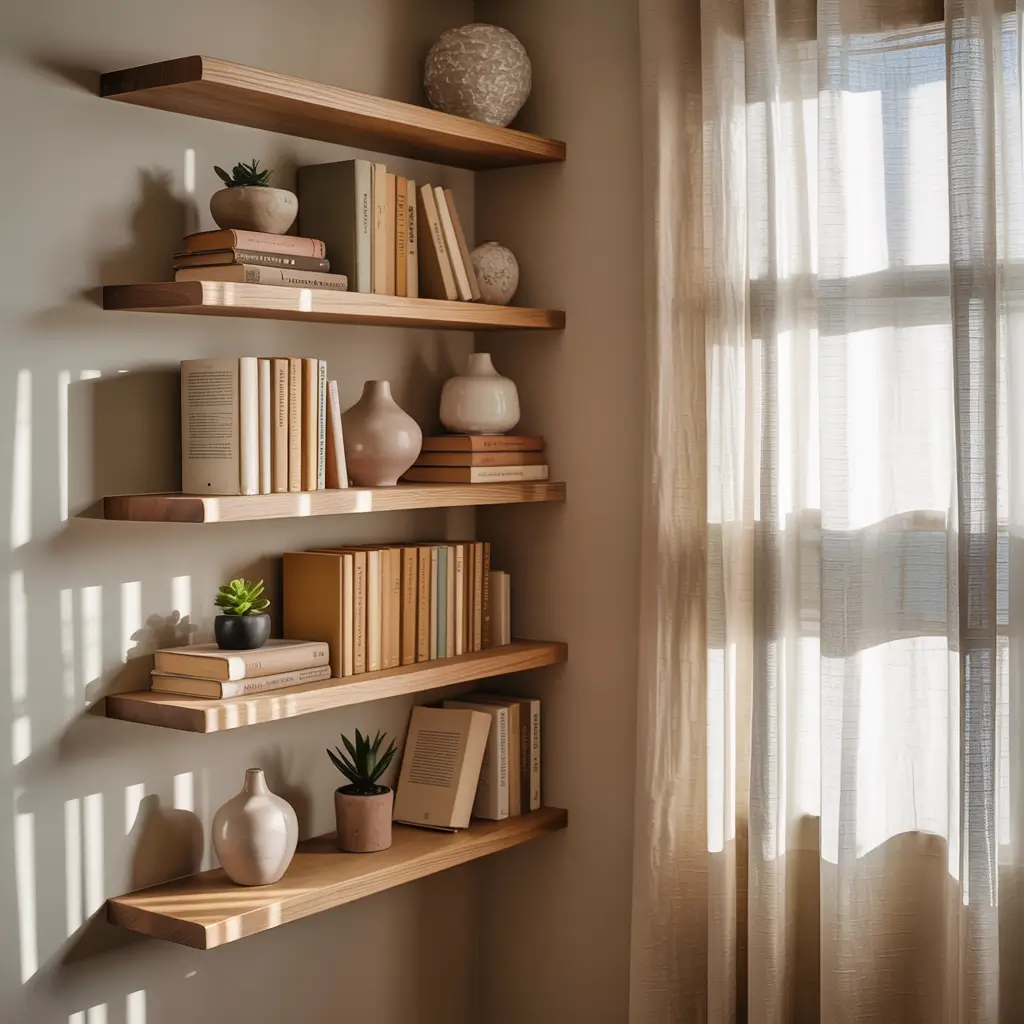
Corners are the Bermuda Triangle of room design—stuff goes in and never quite fits right. But with the right floating shelves, corners become prime book storage real estate.
Making Corners Work
Corner floating shelves come in two main styles: wraparound shelves that follow the corner’s angle, and diagonal shelves that cut across the corner. Wraparound shelves maximize storage but can be trickier to install. Diagonal shelves create interesting angles and are easier to mount.
The key to corner shelves is ensuring they’re level on both walls. Use a corner level tool and take your time with installation. Nothing looks worse than corner shelves that meet at weird angles because one side is slightly off.
Corner Styling Strategies
Corner shelves create natural book nooks that beg for cozy styling. Add a small lamp on one shelf to create a reading spotlight. Mix vertical and horizontal book arrangements to add visual interest from both angles.
These shelves work brilliantly for creating genre sections—maybe your corner becomes the poetry nook or the cookbook collection. The defined space helps with organization and makes finding specific books easier.
9. Floating Shelves Styled with Books & Décor
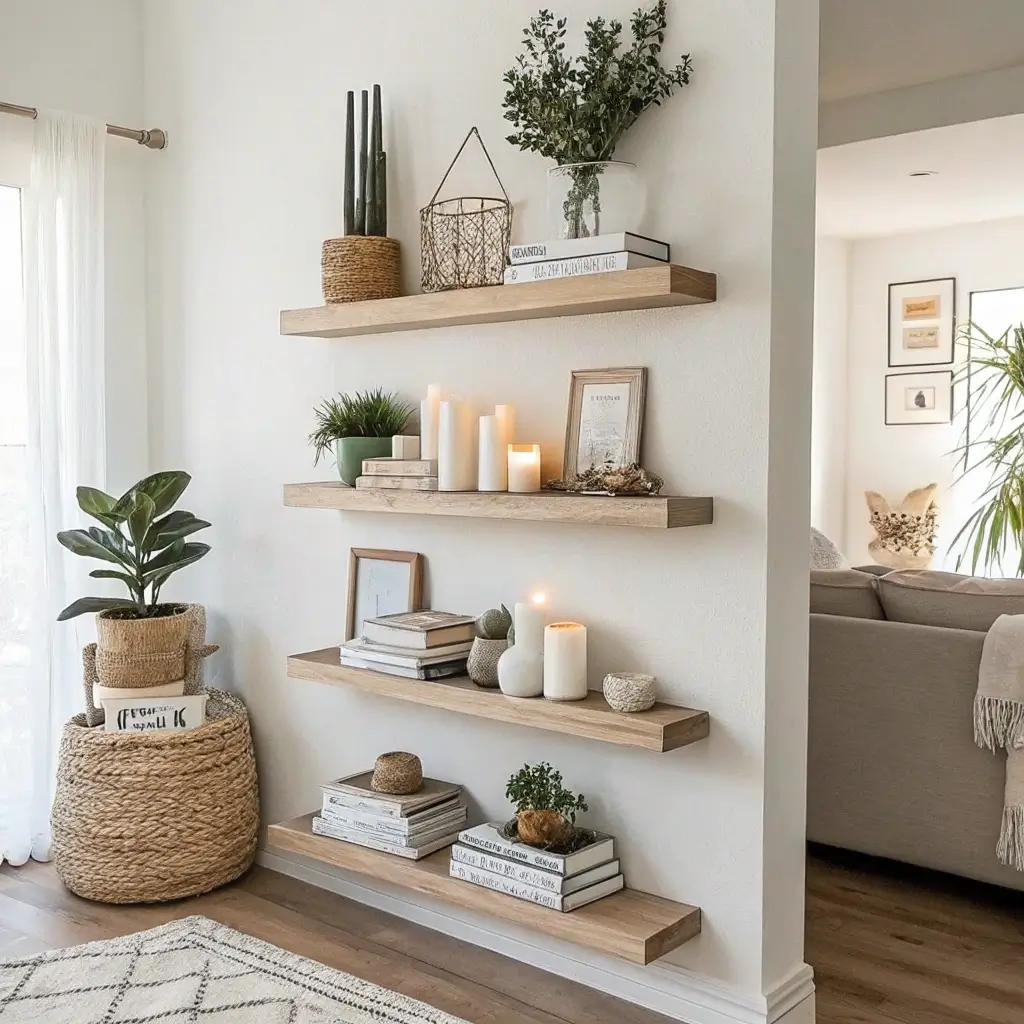
Books are beautiful, but sometimes they need a little help from their decorative friends to create a truly styled shelf.
The Rule of Thirds
Think of each shelf in thirds. One third books, one third decorative objects, and one third negative space. This creates a balanced look that feels curated rather than cluttered. Of course, you can adjust these proportions based on your style—minimalists might want more negative space, while maximalists might fill every inch.
Mix horizontal and vertical book placement. Stack some books flat to create platforms for small objects. Lean others against the wall for a casual, lived-in look. This variety prevents the library-strict feeling and makes shelves feel more like part of your home.
Choosing Complementary Décor
Select decorative objects that enhance rather than compete with your books. Small plants (pothos and succulents are practically indestructible), ceramic vessels, small sculptures, or framed photos work well. Keep a cohesive color palette to prevent visual chaos.
I like to use decorative objects as bookends—a heavy ceramic vase on one end, balanced by a sculptural object on the other. This serves a practical purpose while adding style points. Just make sure your decorative bookends are actually heavy enough to hold books upright.
Also Read: 12 Elegant Corner Floating Shelves Ideas and Home Styling
10. Floating Book Shelves for Home Office
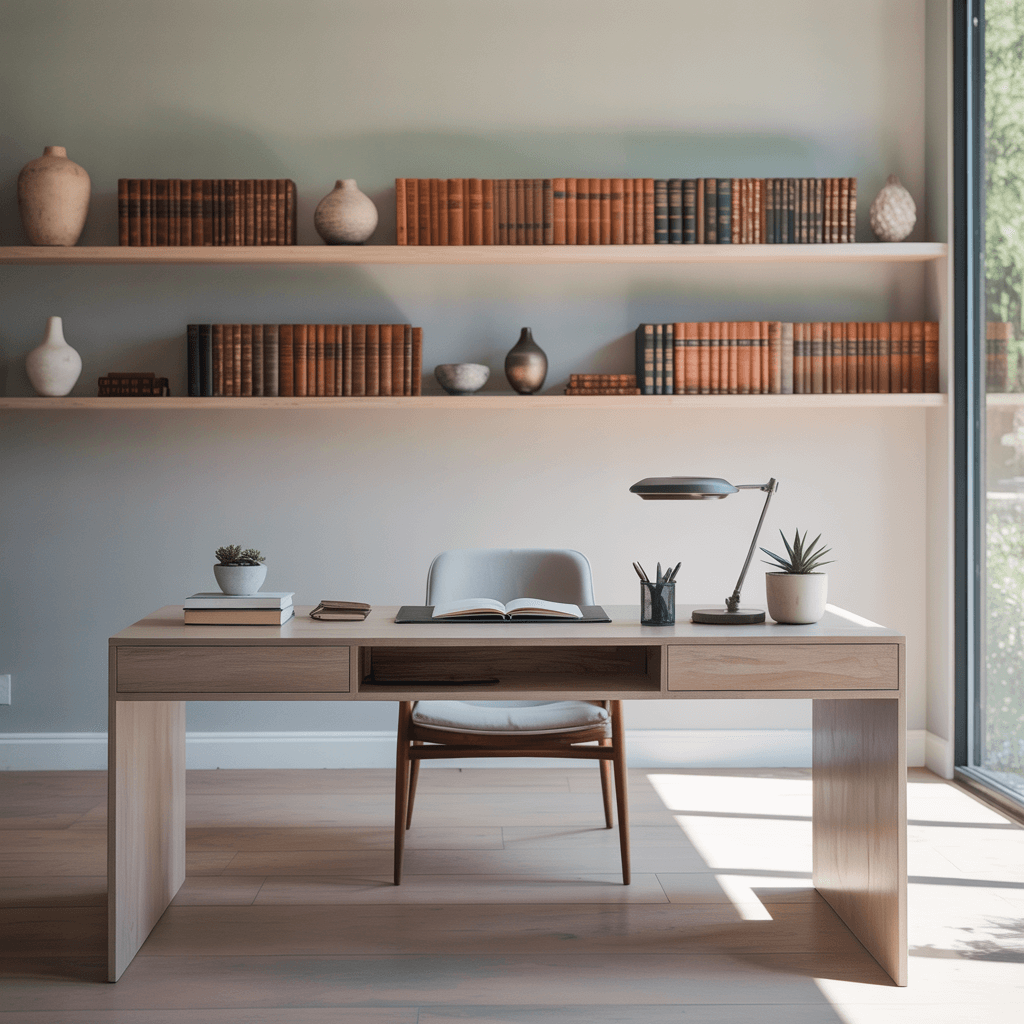
Your home office needs to be functional, but who says it can’t also be beautiful? Floating book shelves in your workspace keep references handy while adding personality to Zoom backgrounds.
Strategic Office Placement
Install floating shelves within arm’s reach of your desk for frequently referenced books. This might mean shelves on the wall beside your desk rather than behind it. Nothing’s worse than having to get up every time you need to check something.
Consider the height carefully. Shelves should be high enough that you don’t bump your head when standing but low enough to reach books while seated. The sweet spot is usually between 12-24 inches above desk height.
Professional Yet Personal
In a home office, your book display says something about you professionally. Organize books by subject matter, keeping work-related books prominent. But don’t forget to include some personal touches—maybe a fiction section or books related to hobbies—to show you’re a well-rounded human.
Use bookends or dividers to create clear sections. This helps with organization and makes your shelves look intentional during video calls. Trust me, people notice backgrounds, and a well-styled bookshelf beats a blank wall every time.
11. Floating Shelves with Built-In Lighting

Good lighting can transform floating book shelves from simple storage to dramatic focal points. Built-in lighting makes your books glow like the treasures they are.
Types of Integrated Lighting
LED strip lights are the easiest to integrate, running along the underside of shelves to create a warm glow. Some floating shelves come with channels built in for light strips, making installation clean and cord-free.
Puck lights or small spotlights can be mounted under shelves to create dramatic downlighting. These work especially well for highlighting special editions or creating ambiance. Just make sure the light temperature is warm (2700-3000K) to avoid that harsh, clinical look.
Installation Considerations
Plan your lighting before installing shelves. Running cords after the fact is a nightmare, and visible cords ruin the floating effect. If possible, install outlets behind shelves or use battery-operated lights with remote controls.
Consider dimmable options for versatility. Bright light for finding specific titles, dimmed for ambiance during evening reading sessions. Smart bulbs that change color temperature throughout the day are amazing but might be overkill unless you’re really into mood lighting.
12. Budget-Friendly DIY Floating Book Shelves
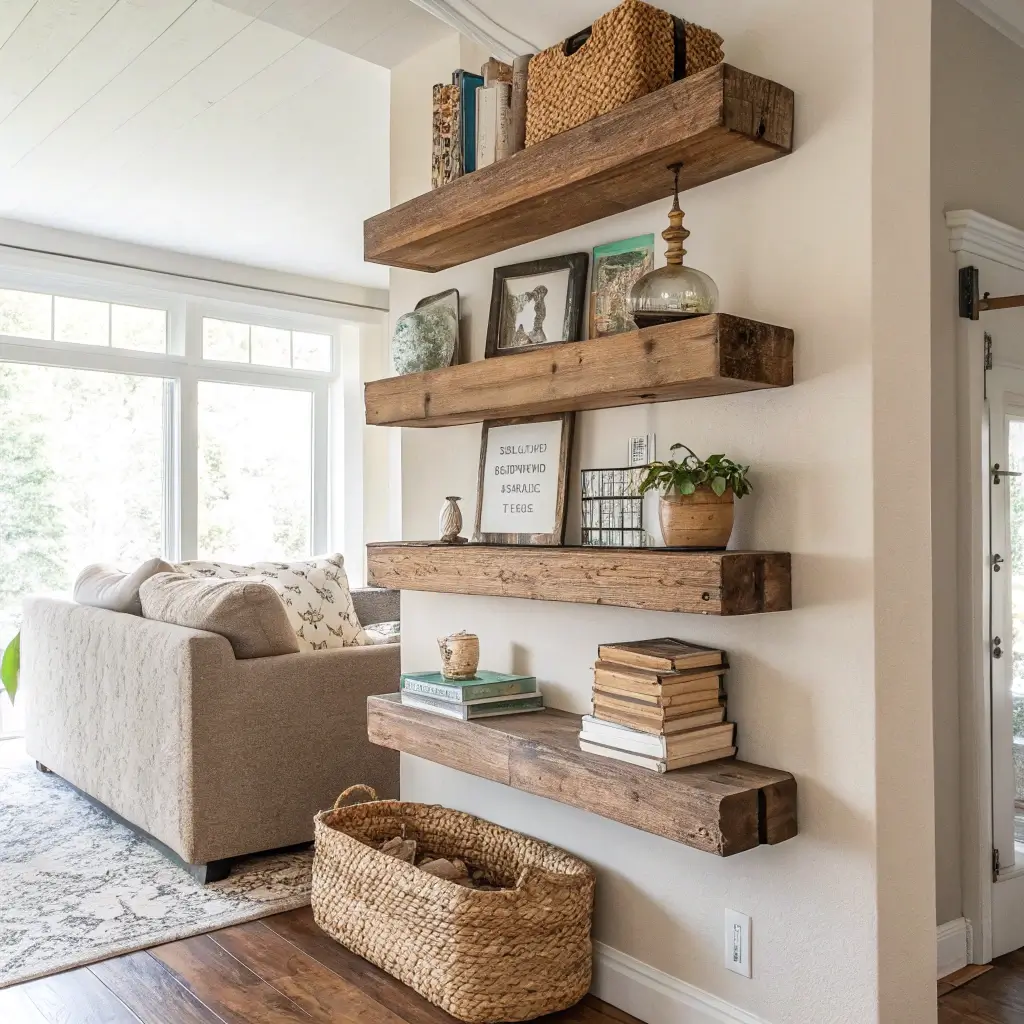
Great book storage doesn’t require a trust fund. Some of the best floating shelf solutions cost less than a single hardcover new release.
Thrifty Materials
IKEA’s LACK shelves are the budget champion—simple, sturdy, and cheap enough to buy in bulk. Paint them to match your decor or leave them as-is for a clean look. For an even cheaper option, use sturdy boards from the hardware store with basic L-brackets painted to match.
Check thrift stores for old shelves you can repurpose. Sometimes you can find solid wood shelves for a fraction of retail price. Strip off old paint, sand them smooth, and refinish for a custom look that costs almost nothing.
Creative Alternatives
Wooden crates mounted sideways create instant floating shelves with built-in bookends. Old drawers can be mounted as shadow box shelves. Even sturdy vintage suitcases can be wall-mounted with the lid open for unique book storage.
FYI, the invisible shelf trick using a hardcover book and L-bracket is fun for one or two books but isn’t practical for serious storage. It’s more Instagram-worthy than functional, and the books tend to get damaged over time.
Making It All Work Together
The best floating shelf setup combines elements from multiple ideas. Maybe you want minimalist shelves with built-in lighting, or rustic corner shelves in your kids’ room.
The beauty of floating shelves is their flexibility—you can always add more, rearrange, or completely change your approach.
Start small if you’re feeling overwhelmed. A single floating shelf can make a big impact and help you figure out what works in your space. You can always expand your book display empire from there.
Remember to consider the weight of books when choosing shelves and mounting hardware. A shelf that looks perfect might not be rated for the 50-pound encyclopedia set you inherited from grandma.
When in doubt, overengineer—it’s better to have shelves that could hold bowling balls than ones that sag under paperback weight.
Most importantly, have fun with it. Your books are a reflection of your interests, experiences, and dreams. Displaying them on floating shelves turns them from mere objects into a personal gallery that tells your story.
Whether you go minimal or maximal, colorful or neutral, the best floating book shelf is the one that