10 Modern Foyer Area Design Ideas with Chic Decor
- Home Decor
 Ben
Ben- 0
- 44 minutes read
Your foyer area is making a statement whether you’ve designed it or not. The question is: what statement is it making?
“Someone thoughtful lives here”? Or “someone threw a coat over a chair and stopped caring”? Most of us land somewhere in the middle — a space that functions just barely enough that we’ve never quite gotten around to doing anything intentional with it.
I’ve redesigned foyer areas in four different homes now, ranging from a 4-foot wide rented corridor to a proper double-height entrance hall. The lesson every single time has been the same: the foyer area rewards attention more than any other room in the house.
A few well-considered decisions and it transforms completely. Here are 10 foyer area design ideas that genuinely deliver — from minimalist and modern to cozy and bohemian.
1. Minimalist Monochrome Foyer
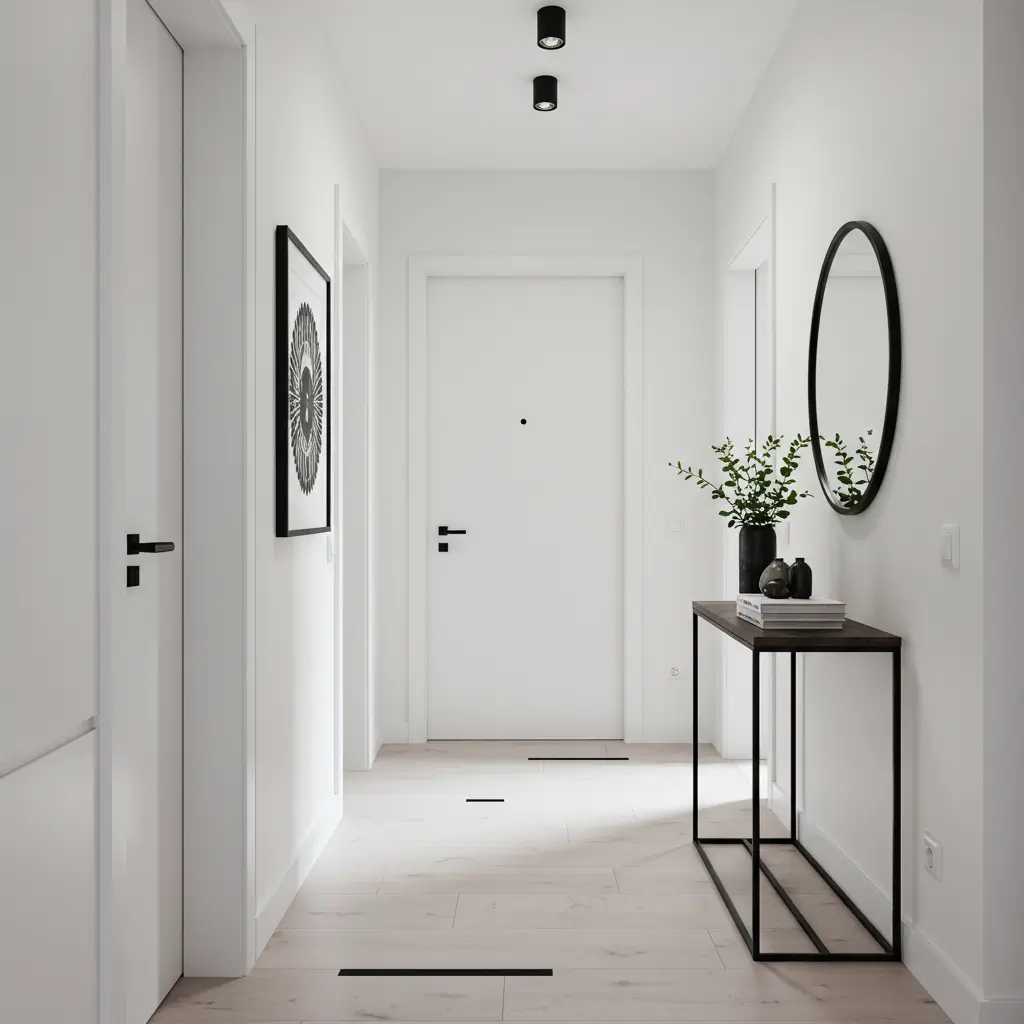
One Color Family, Endless Sophistication
A minimalist monochrome foyer area uses a single color palette — typically white, black, grey, or a deep neutral — across all surfaces and elements, creating a space that feels architectural, composed, and effortlessly sophisticated. The power of the monochrome approach lies in tonal variation rather than color contrast. Different shades, textures, and finishes within the same color family create depth and interest without visual noise.
Think matte white walls against a glossy white console. A textured grey rug against a smooth grey tile floor. A charcoal pendant against an off-white ceiling. The eye perceives these as variations of a theme — and the result is a foyer area that feels like it was designed by someone who really knew what they were doing.
Key elements for a minimalist monochrome foyer:
- Strict color discipline — choose your neutral and stay within two to three shades of it
- Varied surface textures to create visual interest — matte, gloss, brushed, woven
- One statement fixture — a sculptural light, an oversized mirror, or a piece of abstract art in the same tonal family
- Concealed storage to keep the minimalist quality intact
- Consistent hardware finish throughout — matte black or brushed nickel work best in monochrome foyers
The monochrome foyer area design might be the most adaptable idea on this list. It suits contemporary homes, older architectural styles, rental apartments, and owned properties equally well. And because it doesn’t rely on color trends, it stays looking intentional and fresh for years without updating.
2. Rustic Wooden Entryway Charm
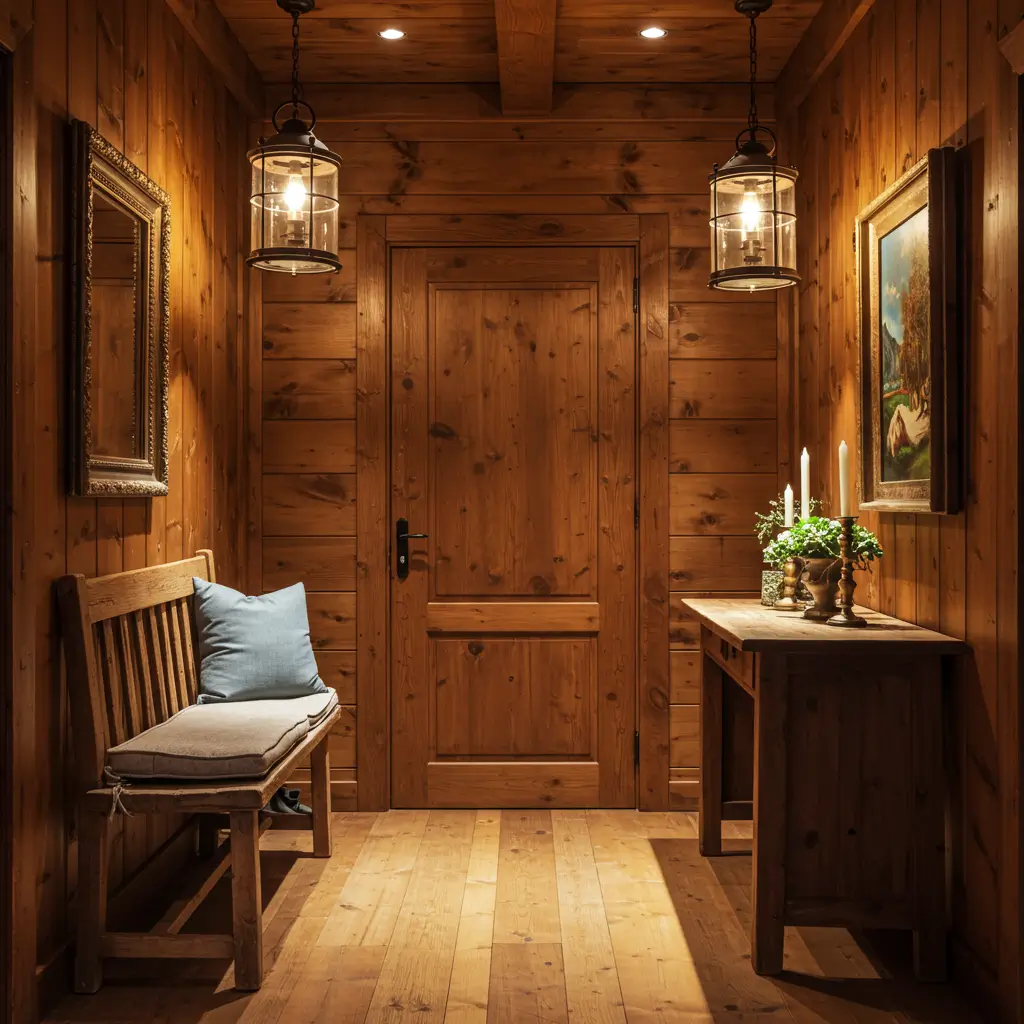
The Welcome That Comes From Natural Material
Step into a foyer area finished with warm wood and your nervous system immediately responds. There’s something deeply human about natural wood — the grain, the warmth, the sense of something honest and crafted rather than manufactured. A rustic wooden entryway delivers that response from the very first step inside, making guests feel genuinely welcomed rather than merely admitted.
The rustic wood foyer area design works across a much wider range of homes than people expect. It suits farmhouses and cottages obviously, but executed with clean lines and careful material selection, it looks equally at home in a contemporary urban apartment or a suburban family home.
Where to introduce wood into your foyer area:
- An accent wall in planks, shiplap, or vertical slats behind the main entrance
- A reclaimed wood console table — each piece unique, full of character
- Wooden floating shelves for display and light storage
- Wood-effect flooring if your existing floor needs updating
- A framed mirror with a weathered wood surround
Wood finishes and their effects:
- Light natural or honey-toned wood — bright, Scandinavian-influenced, maximizes light
- Medium walnut or oak stain — warm, balanced, universally appealing
- Dark espresso or ebony — dramatic and luxurious; requires good natural or artificial light
- Whitewashed or grey-washed — coastal and relaxed; lightens the wood’s visual weight
Pair your wooden foyer elements with natural fiber rugs, ceramic or stone accessories, and warm-toned lighting to reinforce the organic, grounded quality of the material. Rustic wood paired with cold, harsh lighting is a common mistake that undermines the whole effect. Keep everything warm.
3. Luxury Marble Foyer with Gold Accents
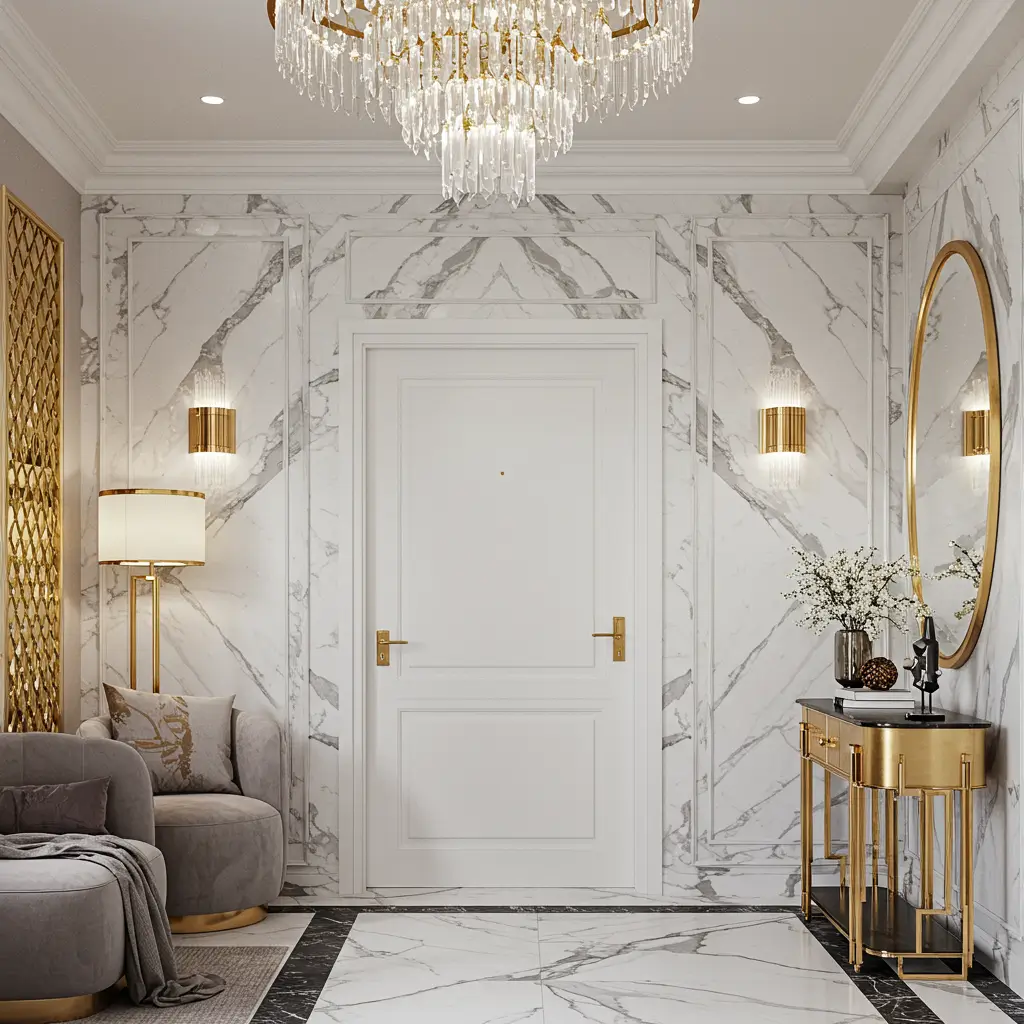
A Grand Entrance Worth the Investment
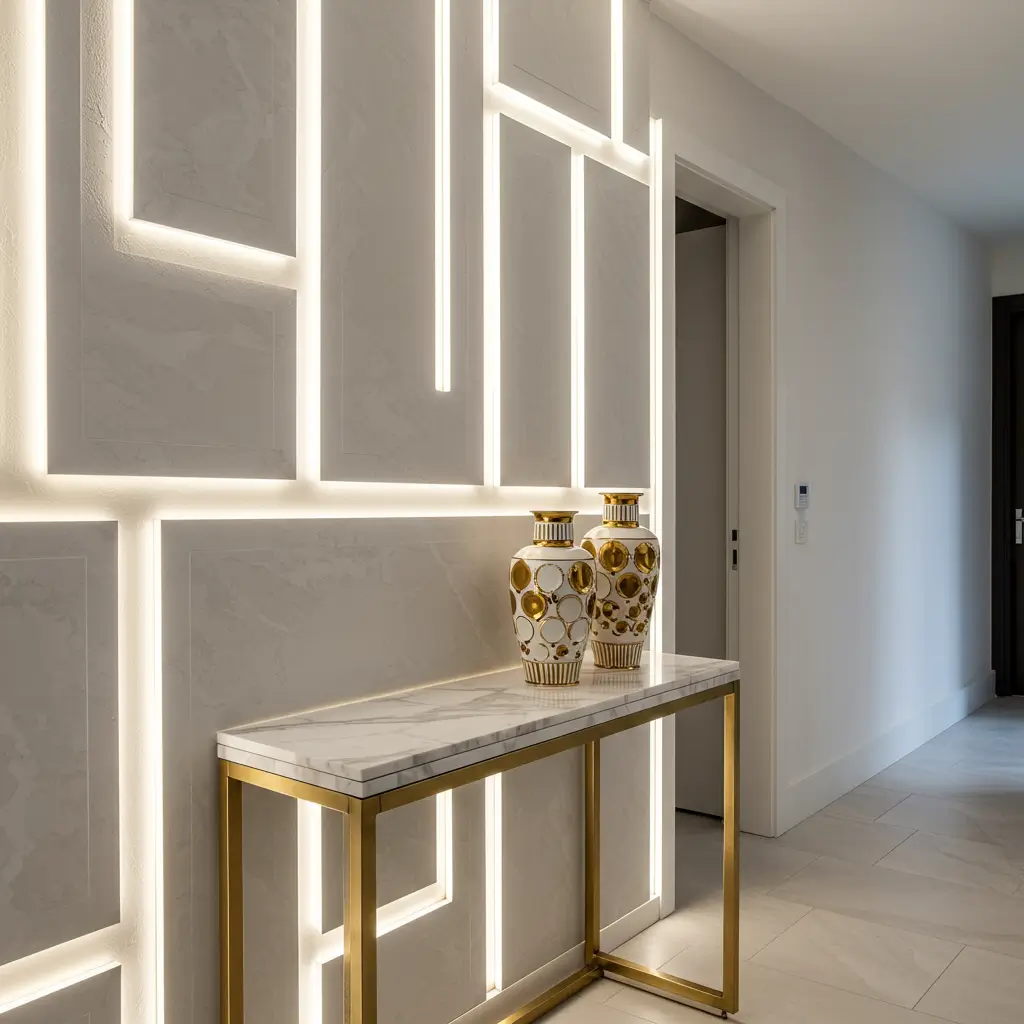
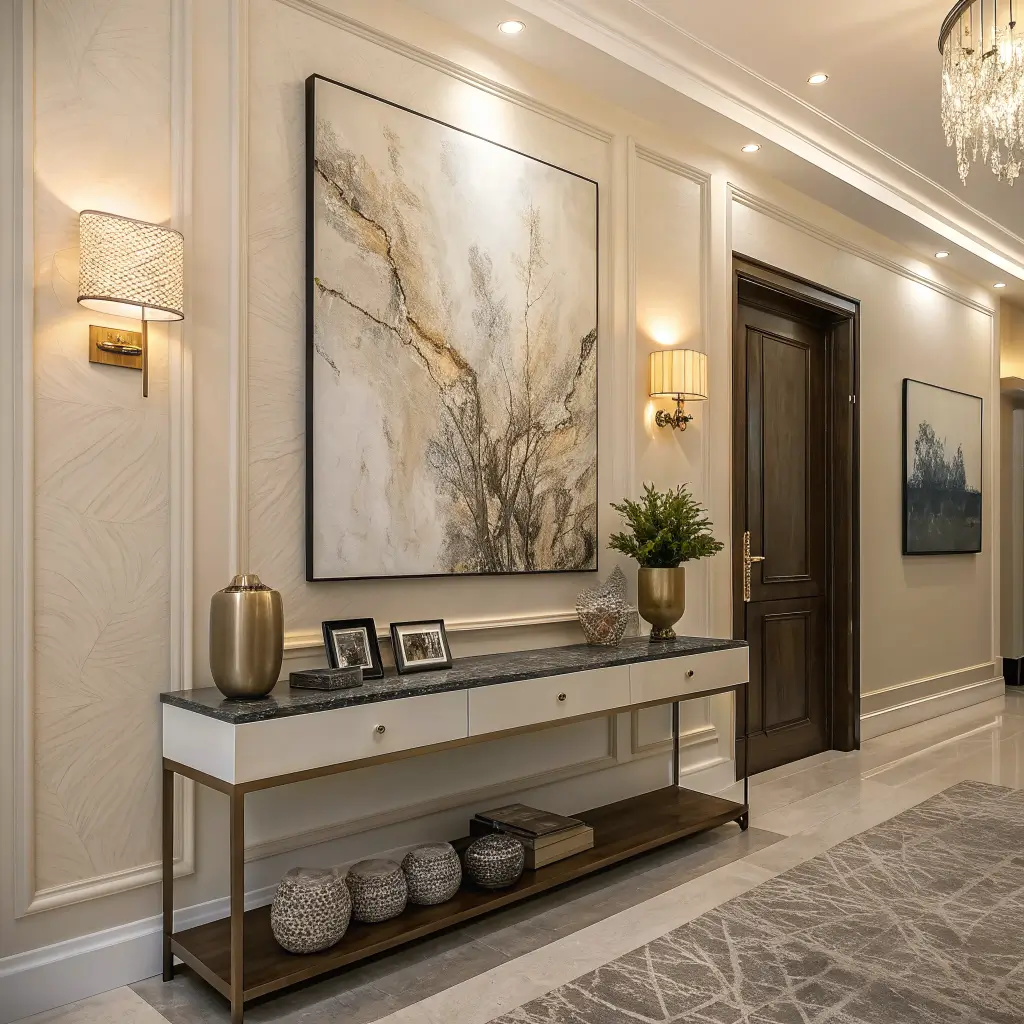
The combination of marble and gold in a foyer area has signaled luxury for centuries — and it still does, because the pairing simply works. Marble brings coolness, elegance, and natural variation. Gold brings warmth, richness, and glamour. Together they create a foyer area that feels genuinely special — the kind of entrance that makes people stop and take it in before they move into the rest of the house.
The genuinely great news: you don’t need an unlimited renovation budget to achieve this effect. Strategic use of marble or high-quality marble-effect materials in combination with gold-finish accessories creates the impression of luxury at a wide range of price points.
Where marble makes the biggest impact in a foyer area:
- Flooring — the most dramatic application; large-format marble or marble-effect tile transforms the entire feel of the space
- A marble-top console table — a relatively affordable piece that reads as deeply luxurious
- Wall panel or feature surface — a single marble slab or large-format tile panel on one wall
- Smaller accessories — a marble tray, stone bookends, a sculptural marble vase
Gold accents that complete the luxury foyer look:
- Brushed brass light fixtures — a pendant or pair of sconces in warm gold tones
- Brass console table legs against a marble top
- Gold-finish mirror frame — either ornate for a classical look or geometric for a contemporary feel
- Brass hardware on any cabinetry or storage units
- A gold-toned key dish or tray on the console surface
Marble Alternatives That Deliver the Same Effect
If natural marble sits outside your budget or you’re working with a rental space, large-format porcelain marble-effect tiles offer a genuinely impressive alternative. The best versions require close inspection to distinguish from the real material, they’re more durable, and they cost significantly less. Marble-effect luxury vinyl plank flooring also works beautifully in foyer areas and suits households with children or pets.
Also Read: 10 Creative Foyer Wall Design Ideas That Wow Guests Instantly
4. Small Space Smart Storage Foyer
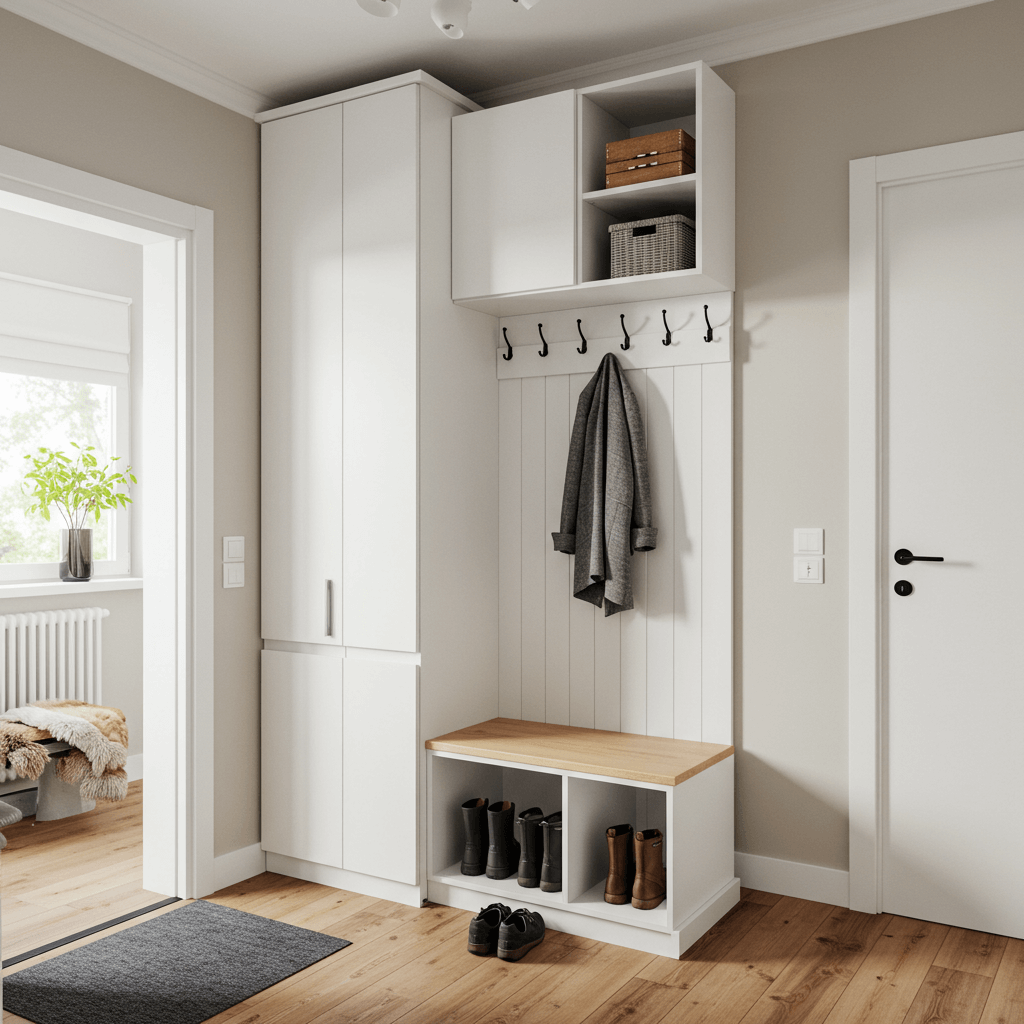
Making Every Inch Work Twice as Hard
A small foyer area presents a genuine design challenge — but the constraints force a level of creative problem-solving that often produces the most impressive results. A compact foyer area that functions brilliantly and looks intentional demonstrates better design thinking than a large, carelessly arranged entrance. Size isn’t the measure of quality; intentionality is.
The core principle for small foyer area design is efficiency without sacrifice. Every element should serve at least two purposes. Storage should be concealed. Furniture should be scaled down but not absent. The visual effect should feel considered, not cramped.
Smart storage strategies for small foyer areas:
- Floor-to-ceiling built-in cabinetry on one wall — maximizes storage while keeping the floor clear
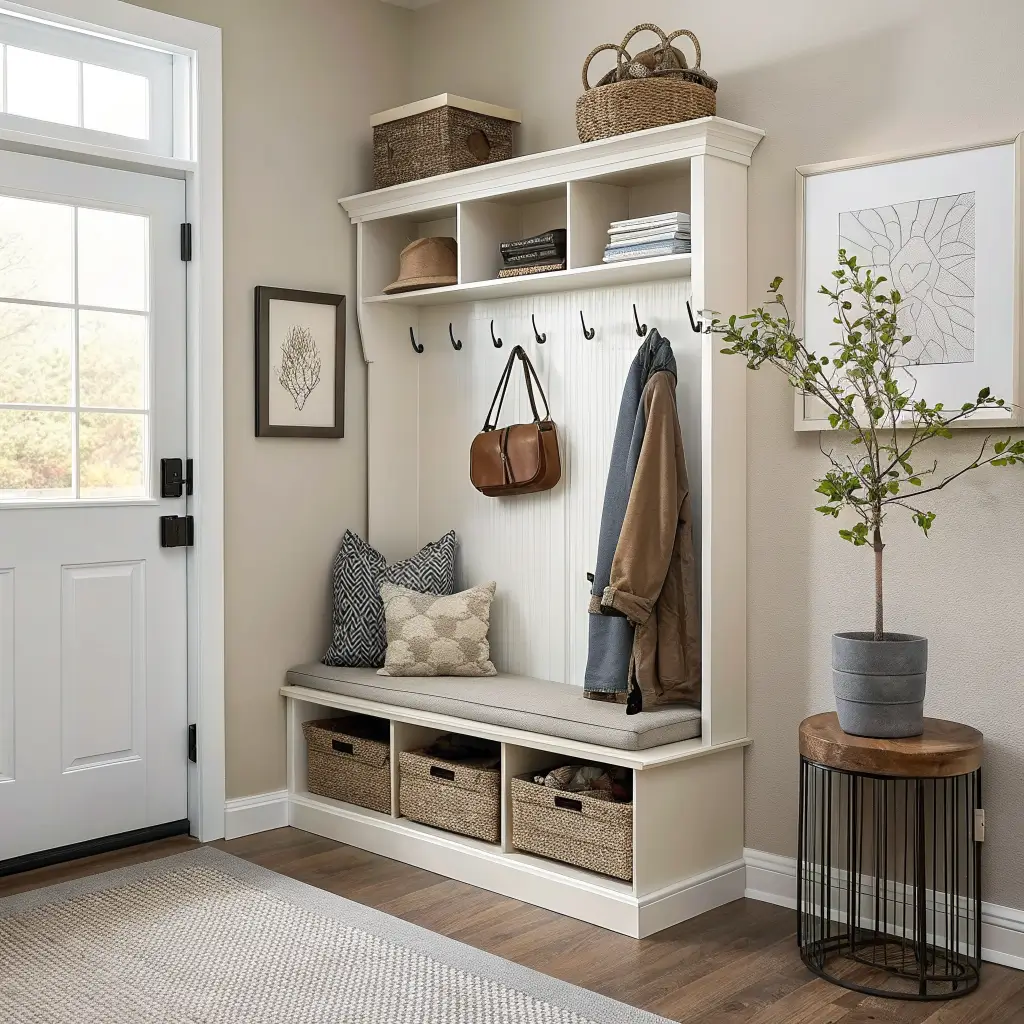
- A slim wall-mounted bench with a fold-down seat and shoe storage beneath
- Vertical stacking — hooks at different heights, shelves arranged from floor to near-ceiling
- A narrow floating console (as slim as 4 inches deep) that acts as a surface without projecting into the room
- Over-door organizers for shoes, scarves, or accessories — uses space that would otherwise contribute nothing
Visual tricks that make small foyer areas feel larger:
- Light walls and ceiling — pale colors recede and expand the perception of space
- A large mirror on one wall — the single most effective tool for visually doubling a small foyer
- Consistent flooring that runs through from the entrance into adjacent rooms — removes visual breaks that make spaces feel smaller
- Pendant or wall-mounted lighting rather than floor lamps that eat into limited floor space
- Glass or lucite accessories — transparent materials take up visual space without blocking sightlines
FYI — the biggest enemy of a small foyer area isn’t its dimensions. It’s the accumulation of stuff. A small foyer with excellent storage and a disciplined edit looks beautiful. A small foyer with clutter looks like a crisis, regardless of how much you’ve spent on it.
5. Bohemian Chic Welcoming Entry
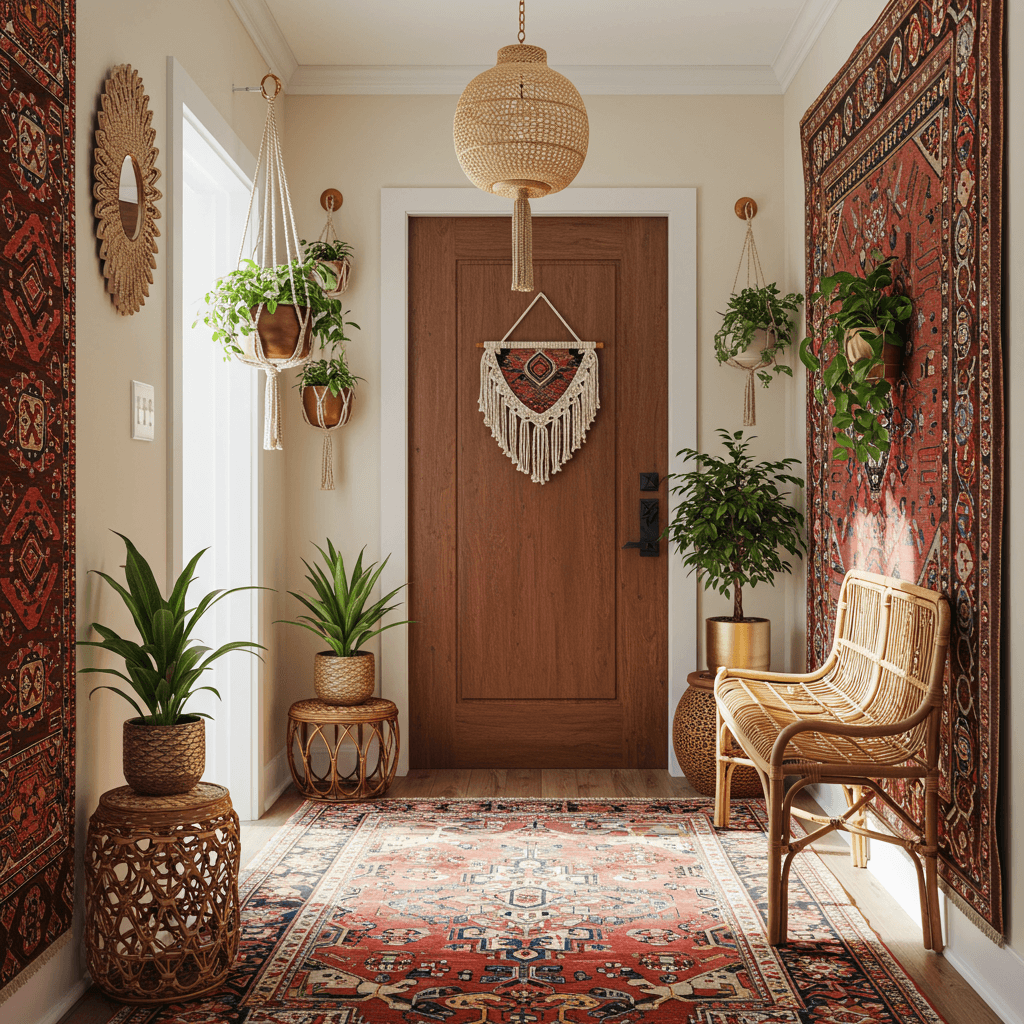
Collected, Layered, and Beautifully Personal
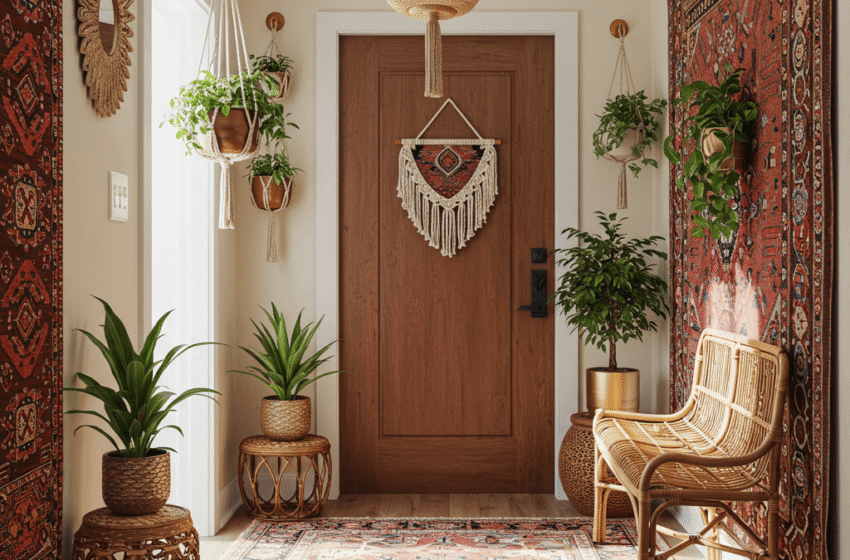
A bohemian chic foyer area operates on a completely different design logic from minimalism or contemporary design — and that difference is the point. Boho foyer design is about accumulation, personality, and the particular beauty that comes from objects with history. It looks gathered over time, from places and moments that matter. It tells a story about the person who lives there.
The challenge is keeping it from tipping from “beautifully eclectic” into “genuinely chaotic.” Boho foyer area design achieves the former through a loose but consistent color palette and a sense of compositional intention — even if that intention is informal.
Elements that define bohemian chic foyer area design:
- Macramé or woven textile wall hangings as the primary wall feature
- Layered rugs — a jute base with a patterned kilim or Moroccan rug on top
- Rattan furniture — a small rattan chair, a woven console, a rattan mirror frame
- Abundant plants in varied terracotta, ceramic, and woven pot covers
- Collected objects on display — vintage finds, travel souvenirs, handmade ceramics
- Mixed lighting — a beaded pendant, a small vintage table lamp, possibly string lights
- Warm, earthy tones as the palette base — terracotta, sand, warm white, rust, mustard
The boho foyer area is also the most forgiving design approach on this list. Imperfections add character. Asymmetry is a feature. Worn edges on vintage furniture read as authenticity rather than neglect. Give yourself permission to experiment, add gradually, and evolve the look over time.
6. Modern Glass & Metal Foyer
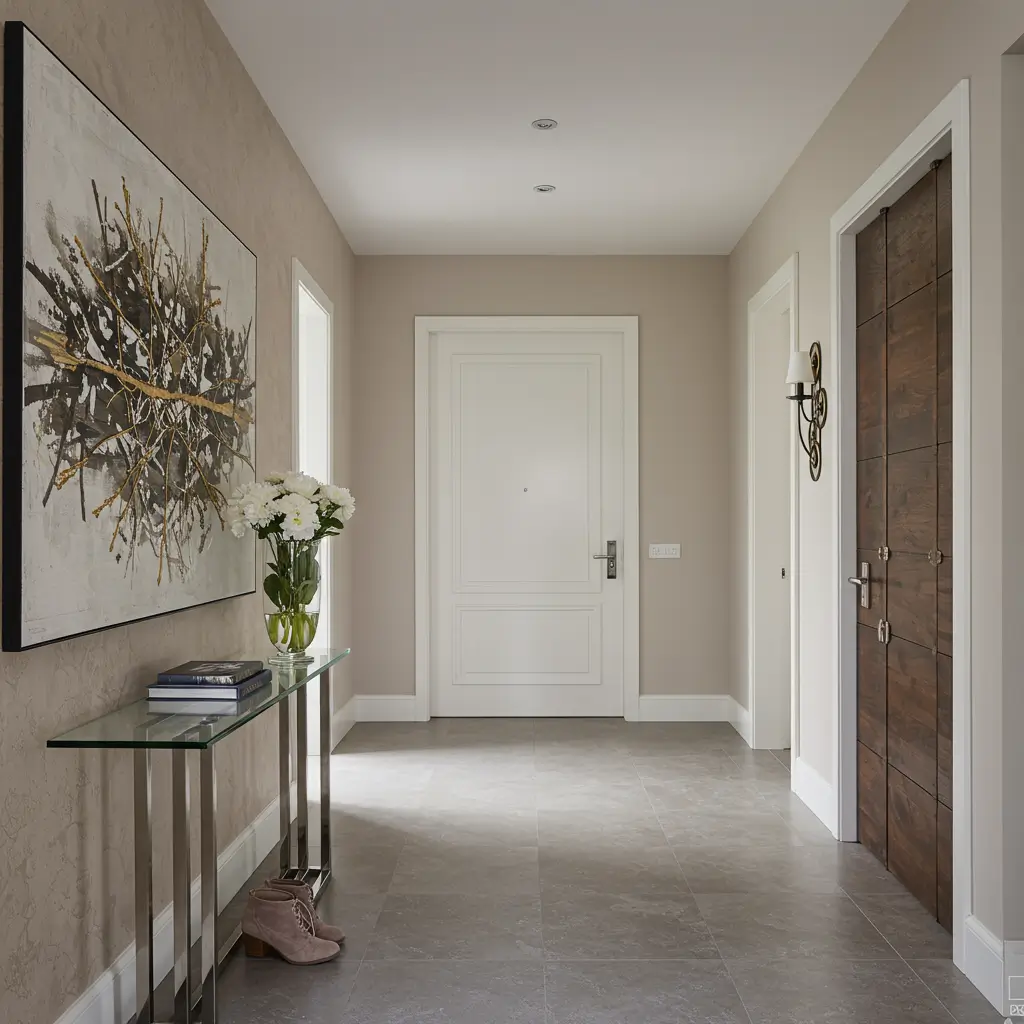
Architecture You Can See Through
A modern glass and metal foyer area design brings a completely different energy from warm, organic approaches — it’s sharp, structural, and deliberately contemporary. Glass and metal together create a foyer that feels open, light, and architecturally significant. The transparency of glass keeps a foyer area feeling spacious even when the footprint is small, while metal adds precision and a sense of industrial refinement.
This approach works particularly well in homes with strong architectural character — modern builds, converted industrial spaces, or mid-century properties where the structure itself wants to be celebrated.
How to use glass and metal in a foyer area:
- A glass-paneled internal door or sidelight beside the front door — brings light from the rest of the house into the foyer
- A metal-framed console table with glass or stone top — sleek and visually light
- Powder-coated or brushed metal shelving — industrial and clean
- A large metal-framed mirror — geometric, lean-to, or floor-length
- Metal wall hooks and rail systems in a consistent finish — matte black, brushed steel, or brass
Metal finishes and their design personalities:
- Matte black — graphic, bold, contemporary; pairs with white, concrete, or pale wood
- Brushed steel or chrome — cool, precise, very modern; suits industrial or minimal foyer designs
- Brushed brass or gold — warm metallics; softens the hardness of glass and structural metal
- Copper — warm, organic feel despite being metallic; ages beautifully
The glass and metal foyer area requires disciplined maintenance — fingerprints on glass surfaces and smudges on polished metal are more visible than on other materials. If you have children or pets, choose brushed or matte metal finishes over polished ones and accept that you’ll need a glass cloth nearby at all times :/
Also Read: 12 Modern Entrance Foyer Wall Design Ideas for Chic Interiors
7. Vintage Classic Foyer Makeover
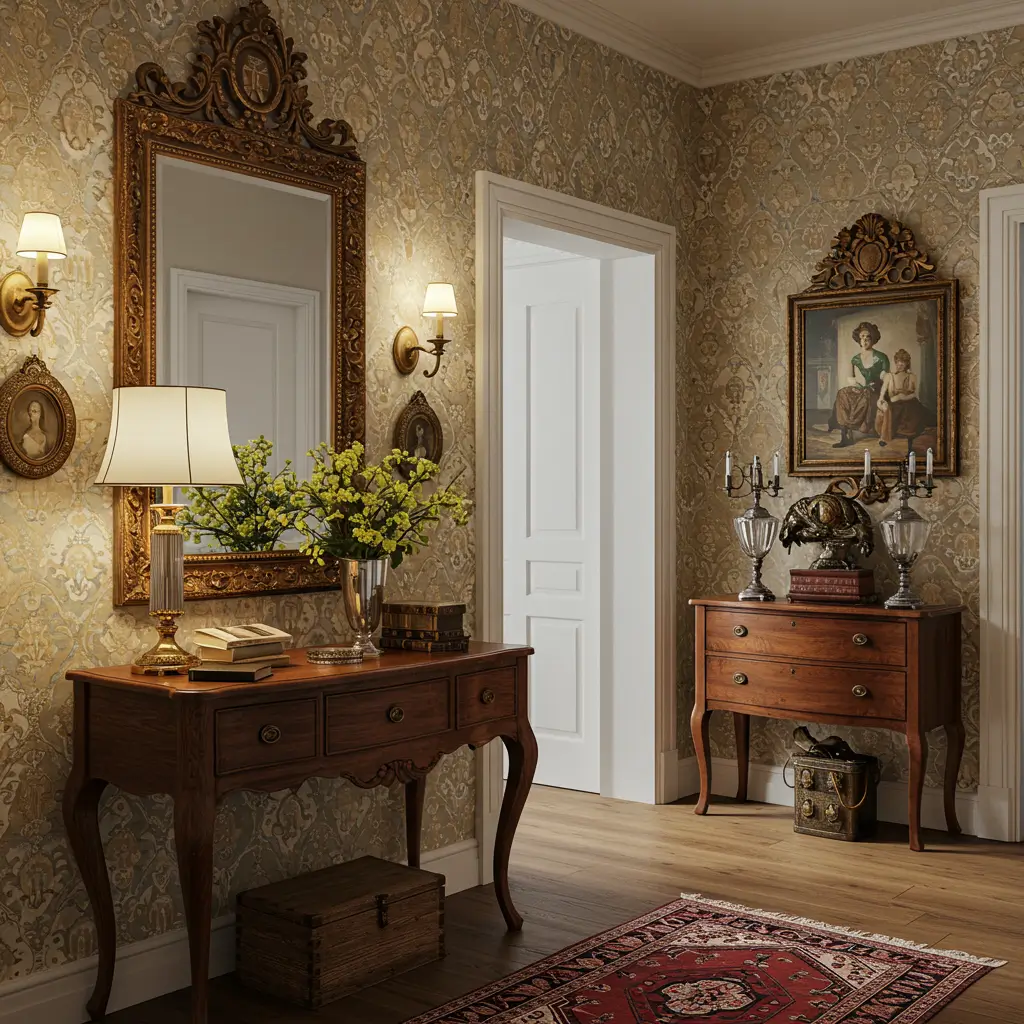
Layers of History, Thoughtfully Assembled
A vintage classic foyer area design doesn’t recreate a historical period — it draws from the most beautiful elements of various eras and assembles them with a contemporary sensibility. The result feels layered, characterful, and genuinely unlike anything in a catalog. Vintage foyer design is the antidote to the uniformity of mass-produced interior décor, and it achieves something deeply personal in the process.
The sources for vintage foyer elements are broad: estate sales, auction houses, antique markets, charity shops, and online vintage platforms all yield exactly the kind of furniture, mirrors, lighting, and accessories this approach demands.
Period elements that translate beautifully into vintage foyer area design:
Mid-century modern (1950s–60s):
- Tapered leg console tables in walnut or teak
- Sputnik-inspired light fixtures
- Organic ceramic accessories
Art Deco (1920s–30s):
- Bold geometric mirrors in lacquered or gilded frames
- Inlaid or lacquered console surfaces
- Chevron or fan-pattern rugs
Victorian or Edwardian:
- Ornate console tables with carved detail
- Patterned encaustic tile flooring
- Dark wood coat and hat stands
How to keep vintage foyer design from feeling dated:
- Pair strong vintage anchor pieces with cleaner contemporary elements — one ornate mirror against a freshly painted plain wall
- Limit the number of genuine period pieces — two or three maximum in a foyer; more starts to feel like a museum
- Choose vintage pieces with strong proportions over those with heavy ornamental detail
- Keep the background neutral so vintage elements stand out rather than compete
8. Green Indoor Plant Foyer Oasis
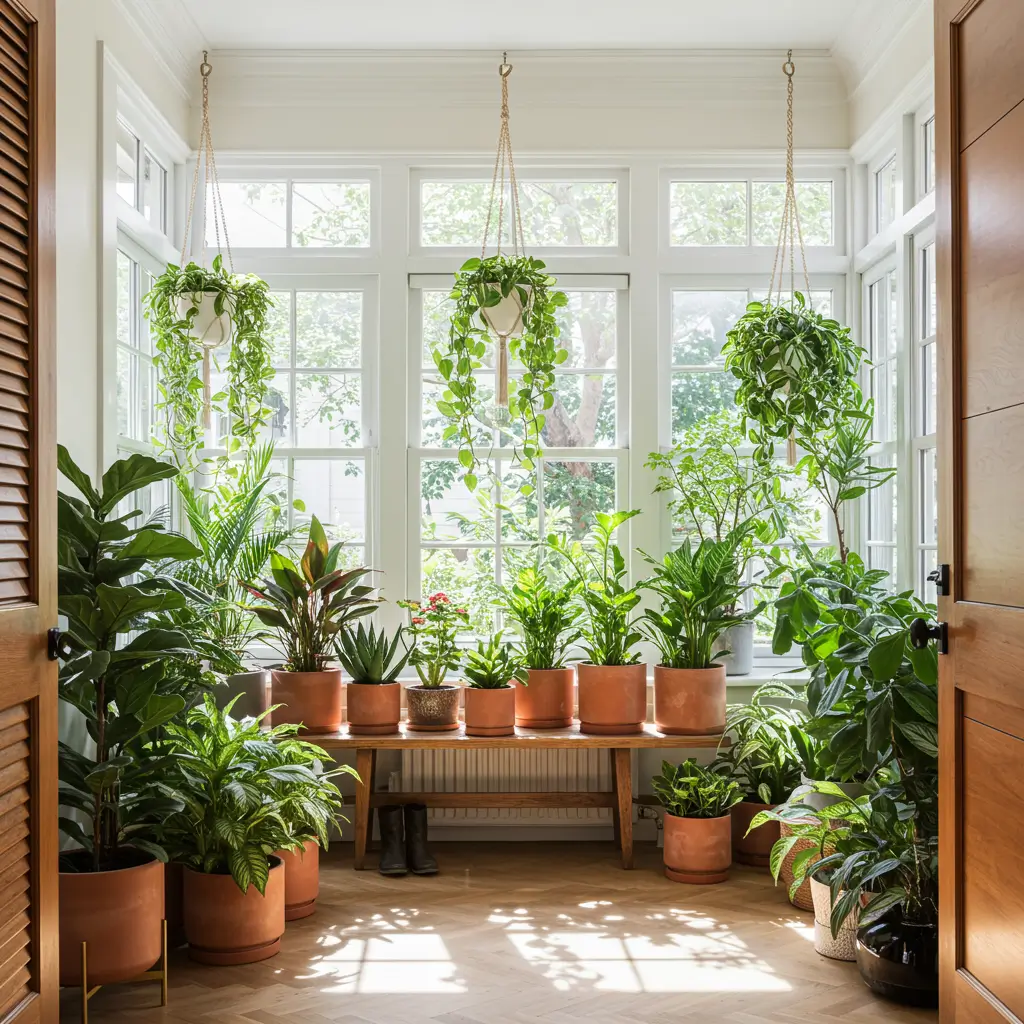
Walking Into Somewhere That Breathes
A foyer area filled with plants does something remarkable: it makes the transition from outside to inside feel like a positive experience rather than just a functional one. Plants bring oxygen, humidity, color, organic texture, and genuine vitality to a space. They respond to light and seasons, they grow and change, and they make a foyer feel alive in a way that no object or artwork can replicate.
The scale of your plant foyer oasis can range from a single dramatic corner specimen to a full living wall installation. Both work. The right approach depends on your space, your commitment to maintenance, and how dramatic you want the effect to be.
Creating a plant-forward foyer area:
- One large statement plant positioned to be seen immediately on entry — a fiddle leaf fig, large monstera, or tall snake plant in a quality pot
- A cluster of varied plants at different heights on a console or shelf arrangement
- Hanging planters at varying heights from ceiling hooks or wall-mounted brackets
- A vertical planter panel on one foyer wall — modular pocket systems make this achievable without major installation work
- Small plants on floating shelves as a supporting cast to a larger hero plant
The best foyer-friendly plants — honest assessment:
| Plant | Light Needs | Maintenance | Visual Impact |
|---|---|---|---|
| Fiddle Leaf Fig | Bright indirect | Moderate | Very high |
| Monstera | Medium indirect | Low-moderate | Very high |
| Snake Plant | Any light | Very low | High |
| ZZ Plant | Low light | Very low | High |
| Pothos | Any light | Very low | Medium |
| Rubber Plant | Bright indirect | Low | High |
IMO, the single biggest upgrade most foyer areas can make is adding one properly sized plant in a beautiful pot. The impact is immediate, the cost is modest, and it makes the whole space feel considered and alive.
9. Coastal Light & Airy Entrance
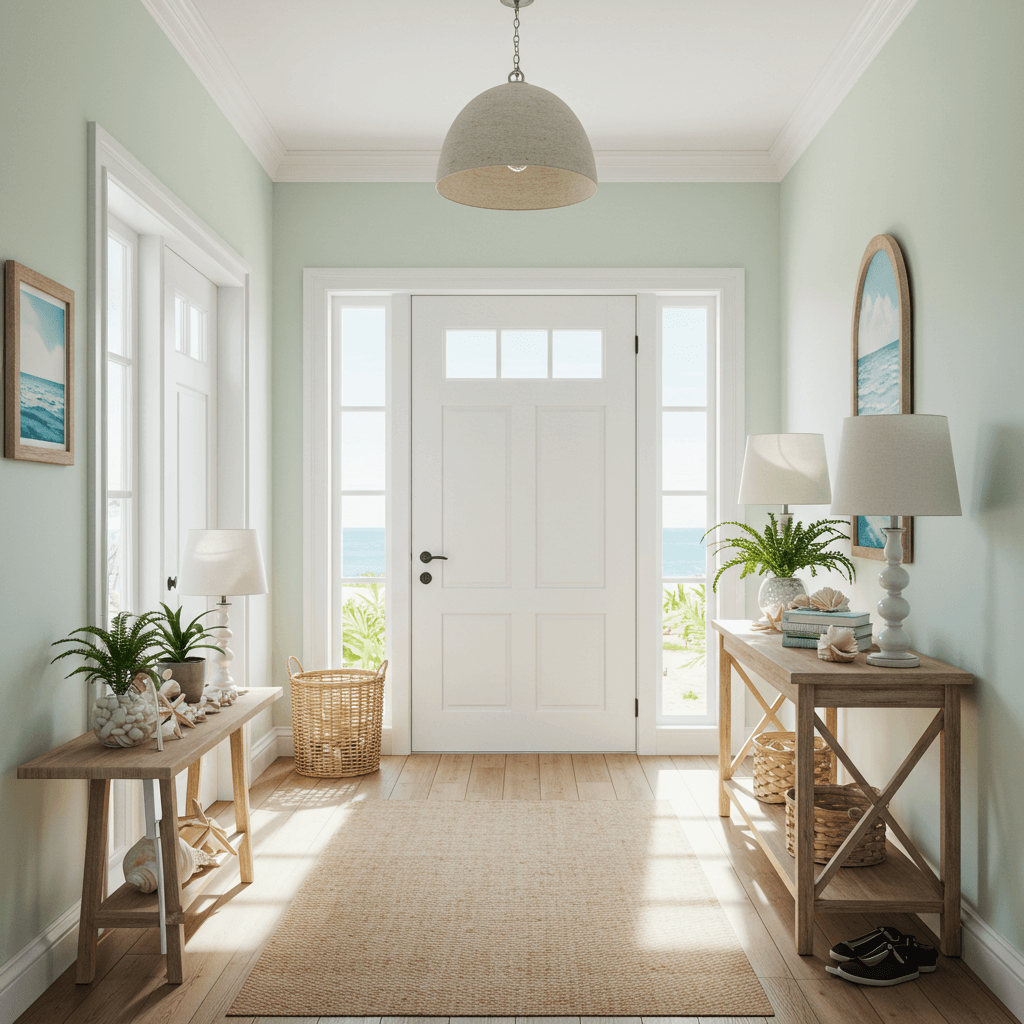
The Feeling of a Breath of Fresh Air
A coastal-inspired foyer area captures something specific: the lightness, openness, and ease of being near the sea, translated into an interior space. This isn’t about seashell collections and anchors printed on cushions. It’s about light-filled, breezy, relaxed design that uses a palette of soft whites, sandy neutrals, ocean blues, and natural textures to create an entrance that immediately makes people feel calm and welcome.
The coastal foyer area design works particularly well in homes where the architecture already brings good natural light into the entrance — but even darker foyers benefit from the pale, reflective palette and light-enhancing strategies of the coastal approach.
Defining elements of a coastal light and airy foyer area:
- White or very pale walls — pure white, warm white, or soft sea-glass green
- Natural material textures — rattan, jute, weathered wood, linen throughout
- Large mirrors to maximize light reflection
- Sheer window treatments if the foyer has a window — light in, privacy maintained
- Pale wood flooring or white-painted boards underfoot
- Blue and green accents — a coastal ceramic, a sea glass vase, a navy stripe rug
Lighting for coastal foyer areas: The coastal look depends on light — both natural and artificial. Use warm white LED bulbs (2700K to 3000K) in any fixtures to replicate the quality of warm afternoon light. A simple rattan or woven pendant in the foyer fits the aesthetic perfectly while adding texture overhead. Avoid cool white or daylight bulbs — they make a coastal palette look clinical rather than breezy.
Also Read: 10 Modern Foyer Area Design Entrance Ideas with Style Touch
10. Industrial Loft Style Foyer
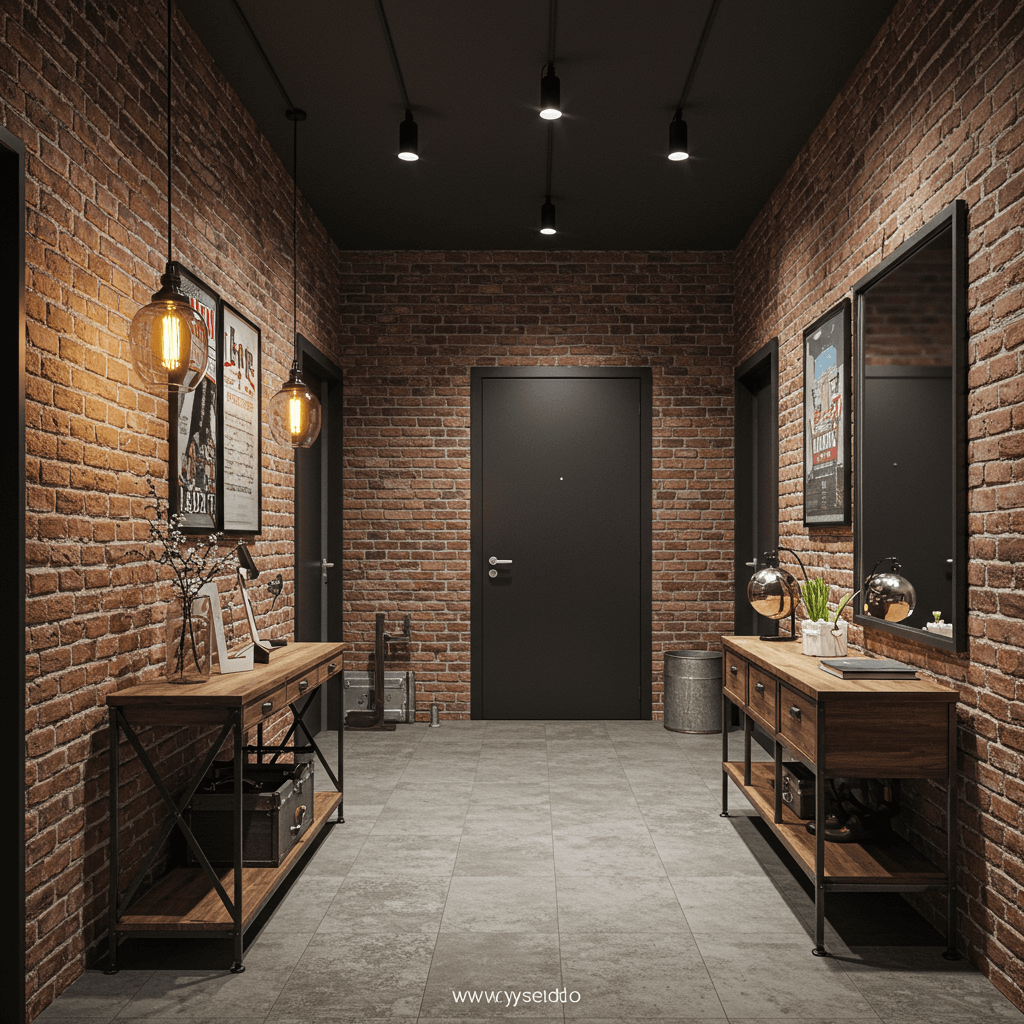
Raw, Honest, and Deeply Considered
Industrial loft foyer area design strips everything back to its structural honesty — exposed brick, raw concrete, bare metal, and dark surfaces combine to create an entrance that feels bold, uncompromising, and genuinely cool. The industrial foyer doesn’t hide what it’s made of. It celebrates material quality, scale, and the particular beauty of things that were built to last.
This approach works most naturally in homes with existing industrial features — converted warehouses, older urban buildings with exposed concrete or brick. But the industrial aesthetic translates to newer builds and suburban homes through careful material selection and a commitment to the design vocabulary.
Core materials for an industrial loft foyer area:
- Exposed brick — original if available; brick veneer as an achievable alternative
- Raw or polished concrete flooring or wall surfaces
- Matte black metal throughout — hooks, fixtures, shelf brackets, mirror frames
- Reclaimed or dark-stained wood for warmth against the harder surfaces
- Edison bulb lighting — bare bulbs in metal cage pendants or industrial sconces
Furniture choices for industrial foyer areas:
- Metal and wood console tables — welded metal frames with reclaimed timber tops
- Industrial shelving units — open steel pipe and board systems
- Leather or waxed canvas accessories — a leather key hook, a canvas tote hung on a metal peg
- Vintage factory or warehouse finds — old metal signs, industrial clocks, factory-style lighting
The industrial foyer area can feel cold if warmth isn’t deliberately introduced. Dark walls, pale flooring, and warm lighting temperature counteract the hardness of the metal and concrete and make the space feel dramatic rather than unwelcoming. One well-chosen plant also does remarkable work in softening an otherwise stark industrial entrance.
Bringing It All Together
Ten foyer area design ideas, each one capable of transforming your entrance from an afterthought into a genuine design statement.
Your foyer area deserves real attention — it shapes how your home feels from the very first moment, and the right design approach makes that moment count.
Here’s the full recap:
- Minimalist monochrome — tonal variation, discipline, and quiet architectural sophistication
- Rustic wooden entryway — natural material warmth that makes people feel genuinely welcome
- Luxury marble with gold accents — elegance and glamour at a range of budgets
- Small space smart storage — efficiency, vertical thinking, and brilliant concealment
- Bohemian chic — layered personality and collected beauty
- Modern glass and metal — openness, precision, and contemporary edge
- Vintage classic — period elements anchored by contemporary restraint
- Green plant oasis — living texture that breathes life into the entrance
- Coastal light and airy — pale, breezy, and genuinely calming
- Industrial loft style — raw honesty in material and structure
Pick the idea that speaks to your home’s character and your personal aesthetic — then commit to doing it well. A foyer area that reflects genuine thought and intention changes how you feel about coming home every single day. That’s worth more than most home improvements you’ll ever make.
Now go do something about those blank walls. 🙂