12 Elegant Foyer Ceiling Design Ideas and Timeless Charm
- Home Decor
 Ben
Ben- 0
- 39 minutes read

Most people look down at their shoes the moment they walk through a front door. I look up. Call it an occupational hazard or just a design obsession, but I firmly believe the ceiling acts as the fifth wall of your home.
Your foyer provides the first impression of your sanctuary, yet so many homeowners leave the ceiling as a boring, flat, white afterthought. Why settle for a generic entrance when you can create a masterpiece above your head?
I spent years helping friends renovate their “entryway tunnels” into grand welcomes. I noticed one consistent pattern: a dramatic ceiling changes the entire psychological feel of the house. It signals that you care about the details.
Whether you have a tiny apartment vestibule or a grand two-story entrance, a thoughtful foyer ceiling design elevates the space from a mere transition zone to a legitimate destination.
Let’s walk through twelve foyer ceiling design ideas that actually work in the real world.
1. Coffered Ceiling Foyer Designs
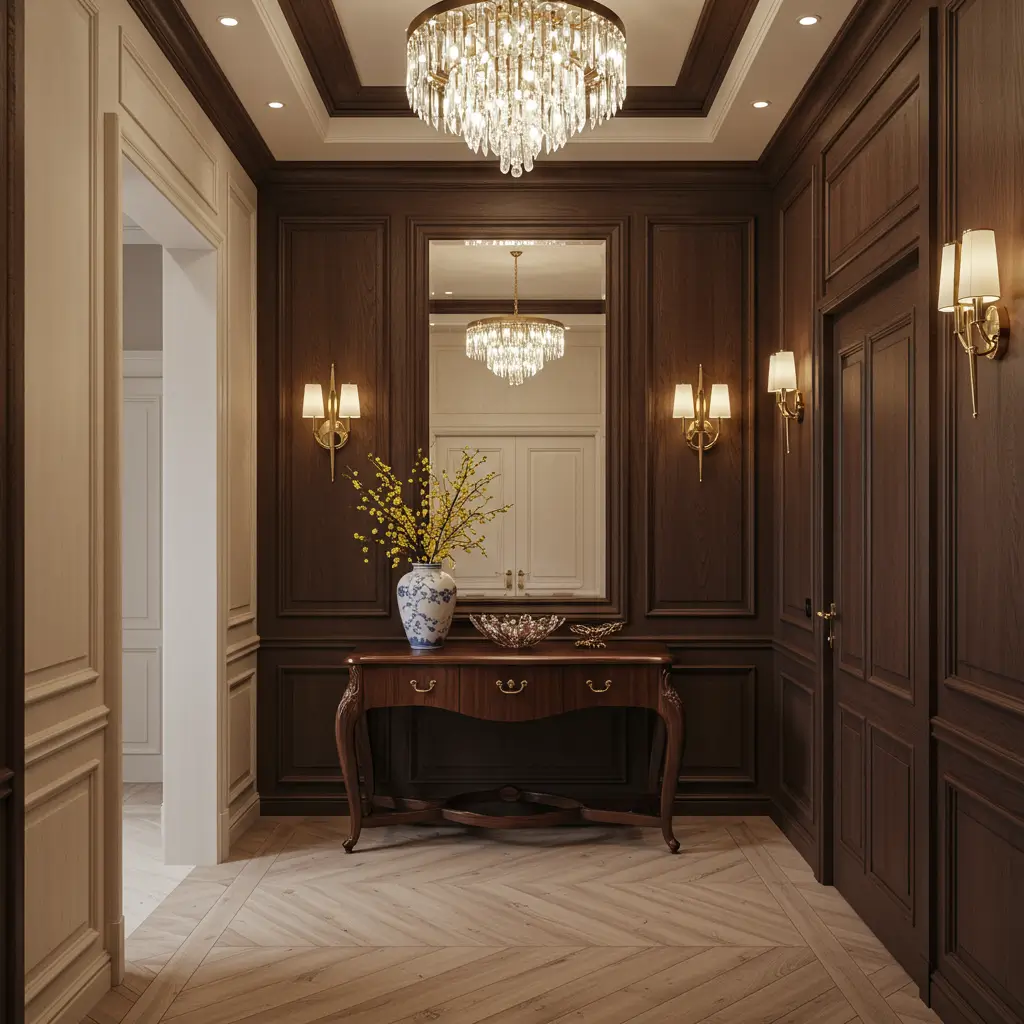
If you want your home to scream “classic elegance” without saying a word, I suggest the coffered ceiling. This design uses a grid of recessed panels, typically framed by heavy beams. It adds an architectural depth that flat drywall simply cannot mimic.
Why Coffers Change the Vibe
A coffered layout creates a sense of rhythm. I love how it makes a long, narrow hallway feel intentional rather than just a path to the kitchen. You can paint the interior of the coffers a contrasting color to pull the eyes upward. Think about the historical libraries or grand ballrooms you see in films; they almost always feature coffers.
Tips for Implementation
- Scale the beams correctly. Thick beams crush a small foyer, while thin ones look cheap in a large space.
- Match your molding. Use the same crown molding on the beams as you do on the walls for a seamless look.
- Incorporate lighting. I recommend placing a small recessed light in each panel or a central chandelier in the middle square.
IMO, the coffered look works best in traditional or transitional homes where you want to add some serious “gravitas” to the architecture.
2. Tray Ceiling Inspiration for Entrances
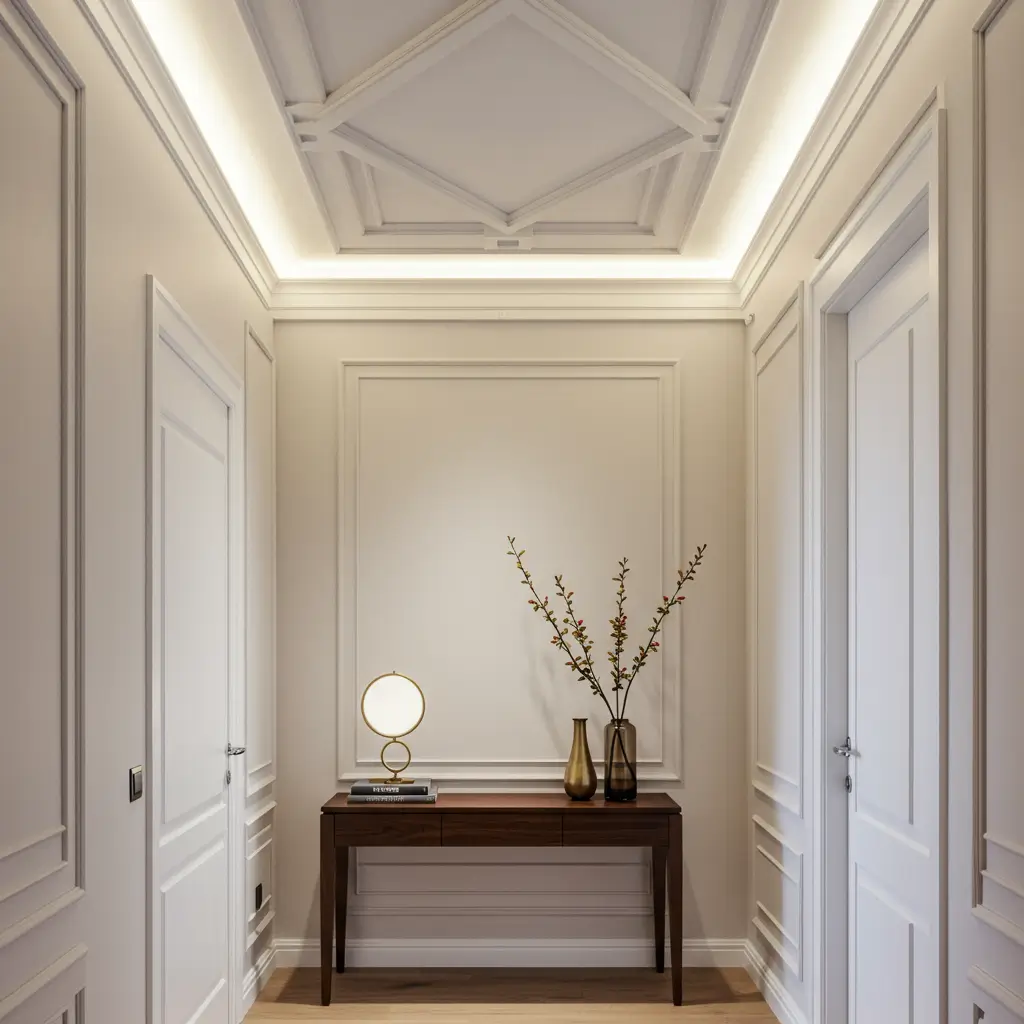
The tray ceiling remains a fan favorite for a reason. It looks like an upside-down tray, with the center section sitting several inches higher than the perimeter. This foyer ceiling design adds height to your entrance, which helps if you feel claustrophobic in your current space.
Creating the Illusion of Height
Ever wondered why some small foyers feel surprisingly airy? A tray ceiling often does the heavy lifting. By stepping the ceiling up, you create a vertical escape for the eyes. I personally like to paint the vertical “step” a slightly different shade than the horizontal surfaces to emphasize the transition.
Decorative Options for Trays
- Double Trays: Add two steps instead of one for a “telescopic” effect.
- Contrasting Finishes: Use a wood stain on the inner part of the tray to warm up a white foyer.
- Cove Lighting: Hide LED strips in the ledge of the tray. This provides a soft, ethereal glow that makes the ceiling look like it’s floating.
3. Modern Minimalist Foyer Ceilings
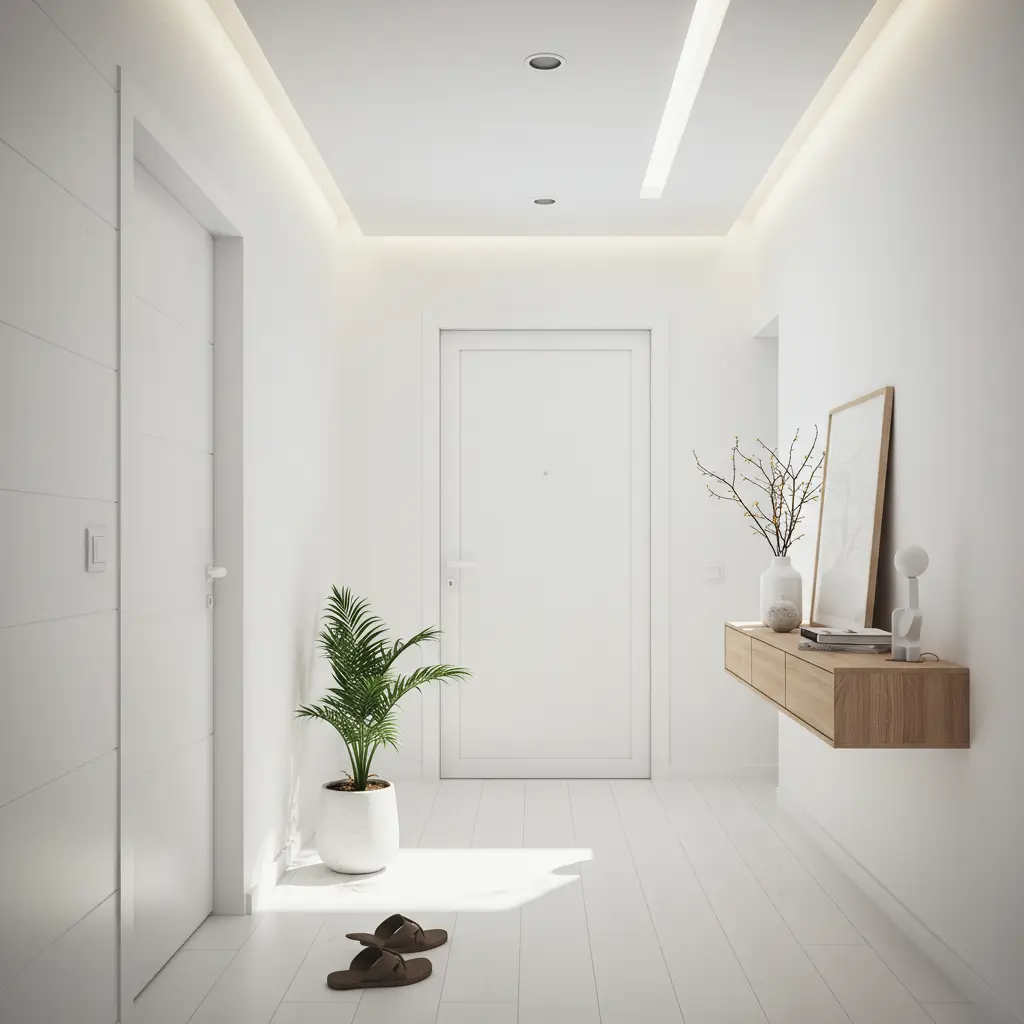
Minimalism doesn’t mean boring. A modern minimalist foyer ceiling focuses on clean lines, flawless surfaces, and hidden details. If you hate clutter and “fussy” moldings, this is your lane.
The Power of the Shadow Gap
Instead of traditional crown molding, I recommend a shadow gap or a “Reglet” trim. This creates a tiny, intentional recessed line where the wall meets the ceiling. It makes the ceiling appear disconnected from the walls, giving it a sleek, architectural look.
Using Large-Format Elements
- Seamless Drywall: Hire a pro to ensure your ceiling is perfectly flat. Any hump or bump ruins the minimalist vibe.
- Monochromatic Palettes: Paint the ceiling the exact same color and sheen as the walls. This erases the boundaries of the room.
- Linear Lighting: Use long, slim LED channels instead of round canned lights. These draw a line through the space, guiding guests into the house.
Minimalist designs work beautifully in urban lofts or contemporary builds where the architecture should speak for itself.
Also Read: 10 Sophisticated Foyer Interior Design Ideas and Luxe Details
4. Rustic Wood Beam Ceiling Ideas
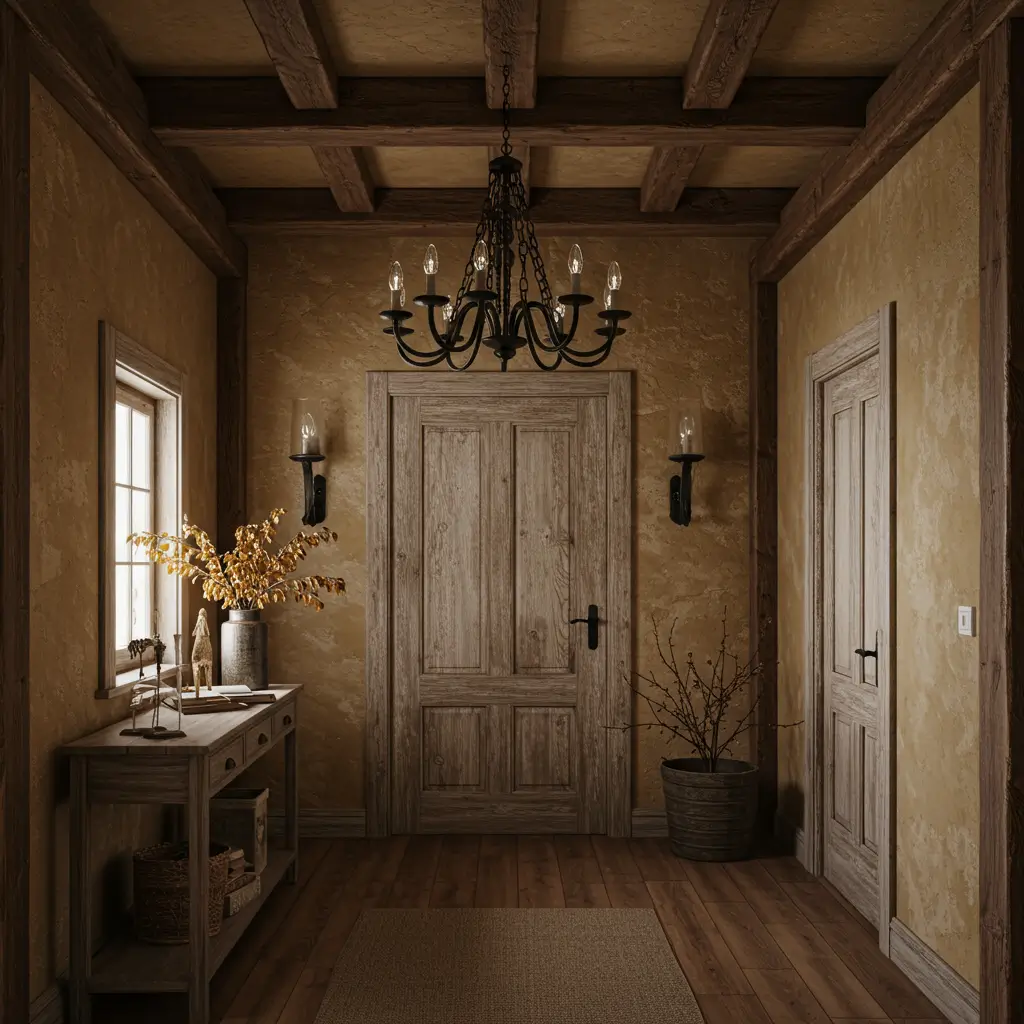
Nothing beats the warmth of natural wood. If you want your home to feel like a cozy retreat or a high-end farmhouse, install wood beams on your foyer ceiling.
Reclaimed vs. Box Beams
You have two main paths here. You can find authentic reclaimed timber from old barns, which adds incredible history and texture. However, these beams weigh a ton and require structural reinforcement. I usually suggest “box beams” to my clients. These are three-sided wooden shells that look like solid timber but weigh very little. They also allow you to hide ugly wiring inside!
Beam Layouts That Pop
- Standard Cross-Beams: Run them perpendicular to the longest wall.
- The “Ladder” Look: Place several beams close together for a cozy, cabin feel.
- Central Ridge Beam: If you have a vaulted foyer, a single massive beam running down the peak anchors the room.
I remember helping a friend install rough-sawn cedar beams in her entryway. The smell of the wood every time she opened the front door was better than any candle she could have bought.
5. Luxury Chandelier Foyer Ceiling Designs
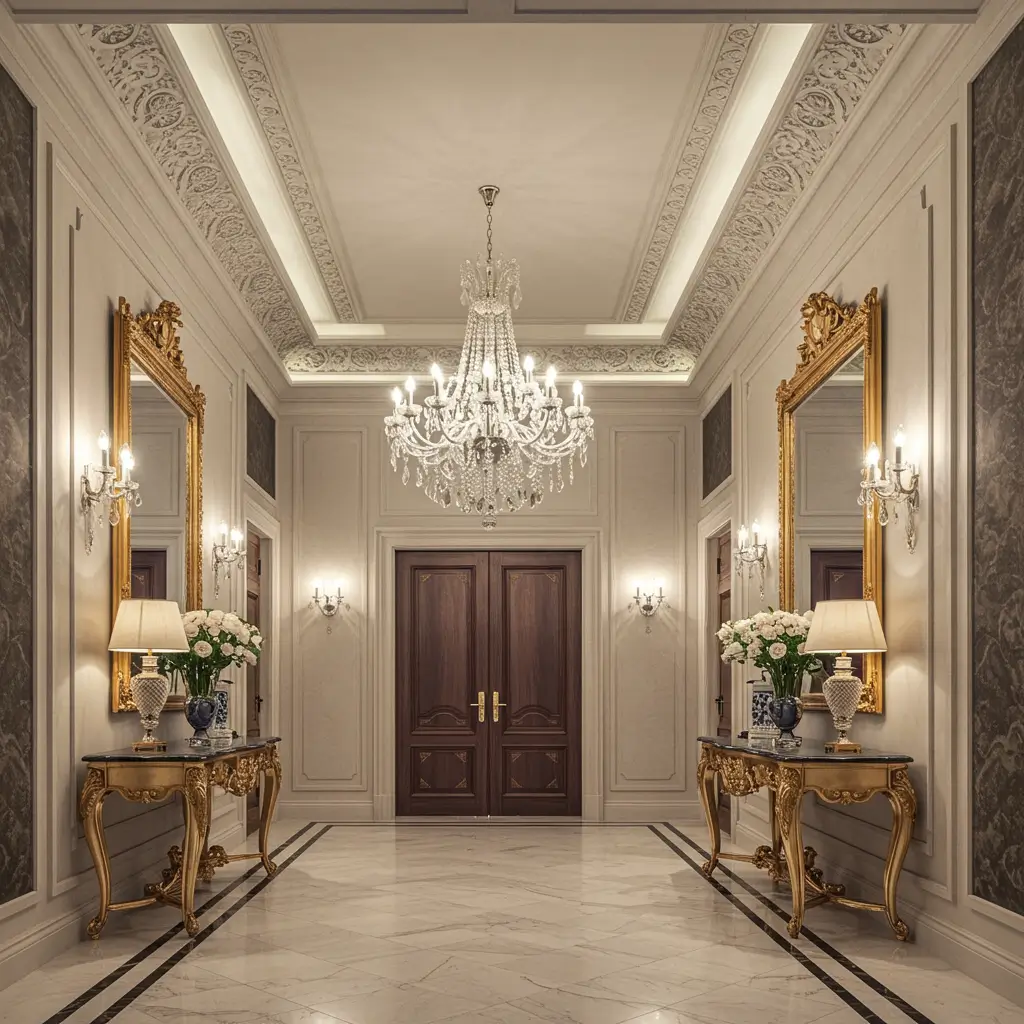
Sometimes the ceiling exists specifically to showcase the jewelry of the home: the chandelier. A luxury chandelier foyer ceiling creates a focal point that demands attention.
Framing the Light
Don’t just hang a light and call it a day. Frame it! I suggest adding a plaster or polyurethane ceiling medallion. These decorative discs provide a transition between the light fixture and the ceiling. If you have a grand, two-story foyer, you need a chandelier with enough “mass” to fill the vertical void.
Lighting Specs for Impact
- Go big. Most people buy light fixtures that are way too small for their foyers.
- Check your clearance. Ensure the bottom of the chandelier sits at least 7 feet above the floor so your tall uncle doesn’t head-butt the crystals.
- Dimmer switches are mandatory. You want to control the mood, not live in a stadium.
A massive crystal fixture reflecting off a high-gloss ceiling creates a level of glamour that makes every arrival feel like a red-carpet event.
6. Painted Patterned Ceilings for Foyers
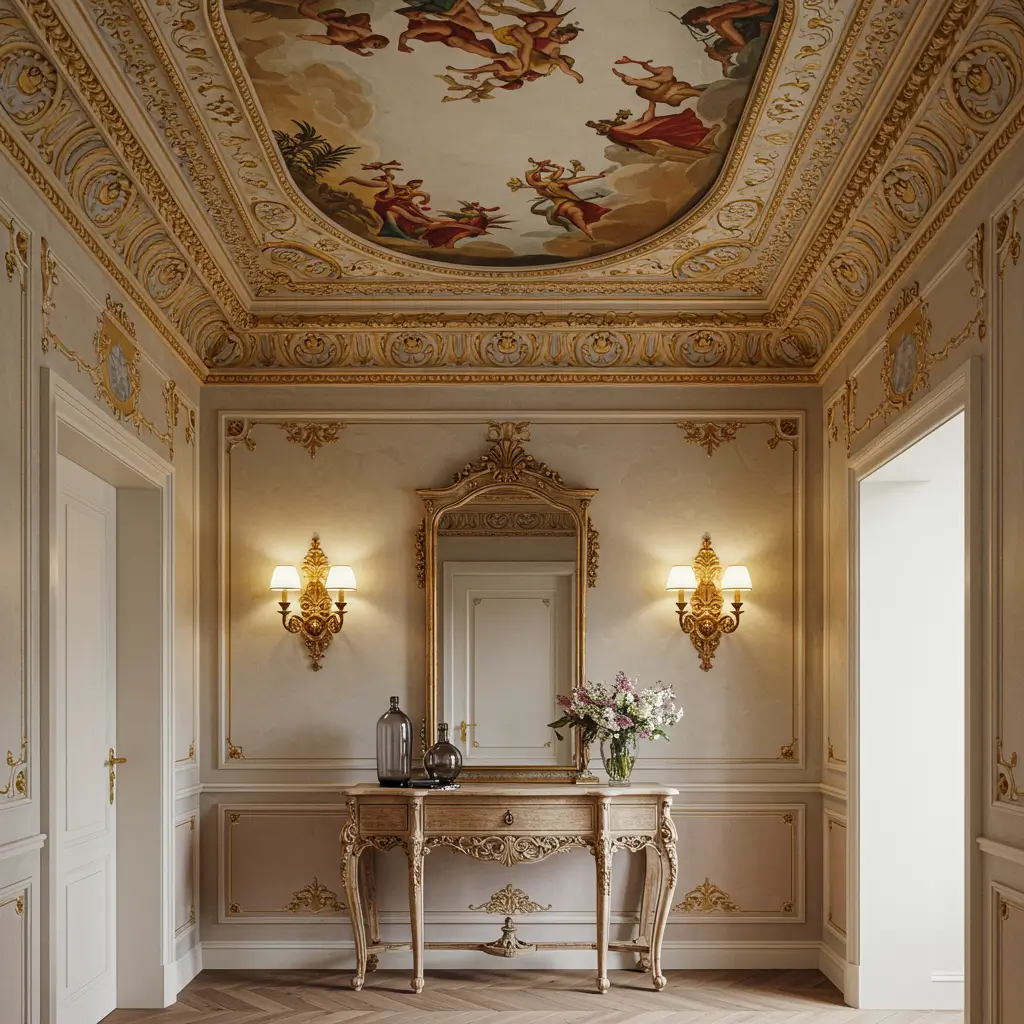
If you feel brave, grab a paintbrush. A painted patterned ceiling transforms your entrance into a literal art gallery.
Choosing the Right Pattern
I’ve seen stunning foyers featuring hand-painted stripes, chevrons, or even complex stencils that mimic Moroccan tile. The trick involves keeping the walls relatively simple so they don’t compete with the art above. Stripes running the length of the foyer make the hall look longer, while stripes running the width make it feel wider.
Color Psychology in the Foyer
- Navy or Black: These dark colors make the ceiling recede, creating a moody, intimate vibe.
- Pale Blue: This mimics the sky, making the foyer feel open and fresh.
- Metallic Gold: A gold-leaf or metallic paint finish reflects light downwards, warming up the skin tones of your guests.
Rhetorical question: Why paint a mural on a wall where furniture will hide it, when the ceiling offers a perfectly clear canvas?
Also Read: 10 Beautiful Foyer Area Design Ideas That Look Expensive
7. False Ceiling with LED Lighting
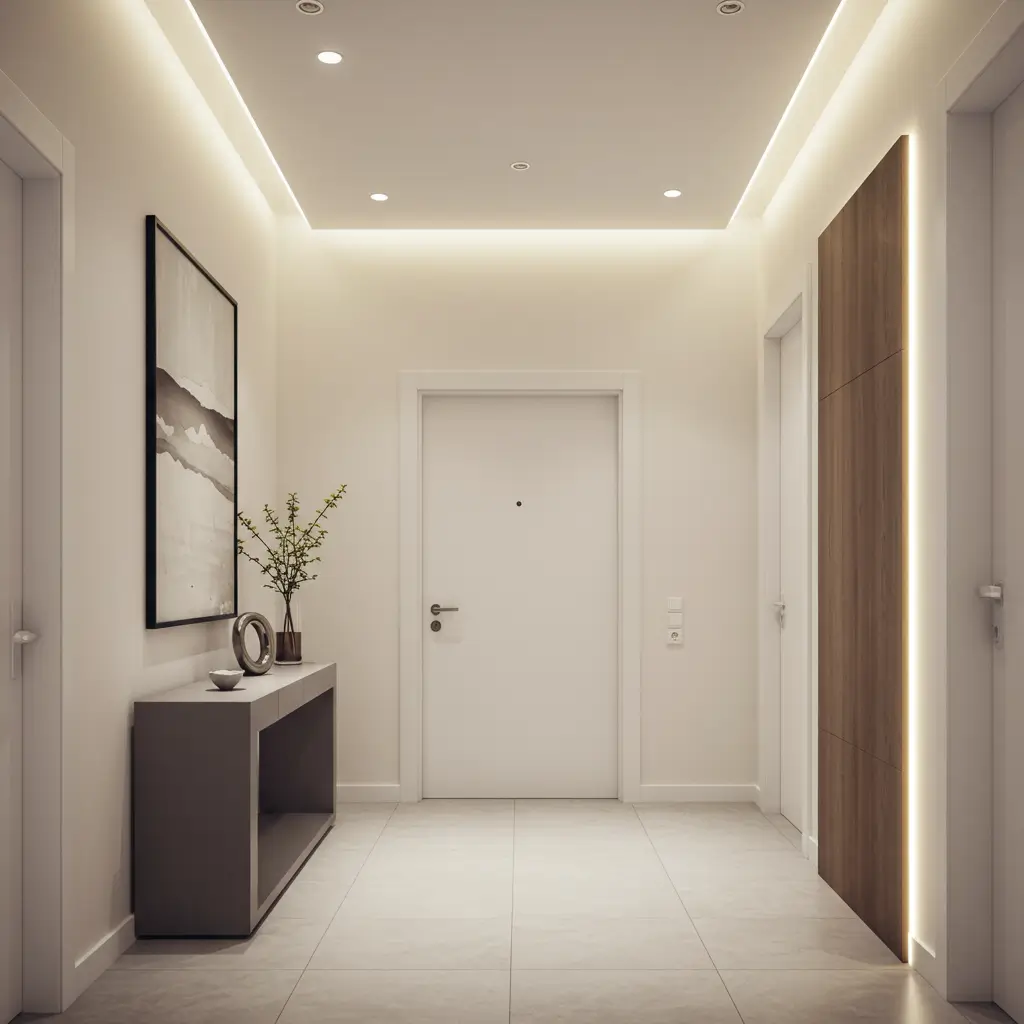
The “false ceiling” or drop ceiling has evolved far beyond those depressing office tiles from the 1980s. Modern versions use drywall or high-quality PVC panels to create multi-layered looks with integrated tech.
The “Floating” Effect
I love a false ceiling design that stops about six inches short of the walls. When you tuck LED strips into that gap, the entire center of the ceiling appears to float in mid-air. It provides a soft “wash” of light down the walls, which highlights any artwork or texture you have there.
Tech Integration
- Smart LED Strips: Change the color of your foyer lighting via your phone. Go with warm white for daily use and maybe a festive green or red for the holidays.
- Hidden Speakers: If you install a false ceiling, you can hide architectural speakers for a seamless “whole home” audio experience.
- AC Vents: You can hide ugly plastic vents behind slim, linear slots in the false ceiling.
8. High Gloss Reflective Ceiling Ideas
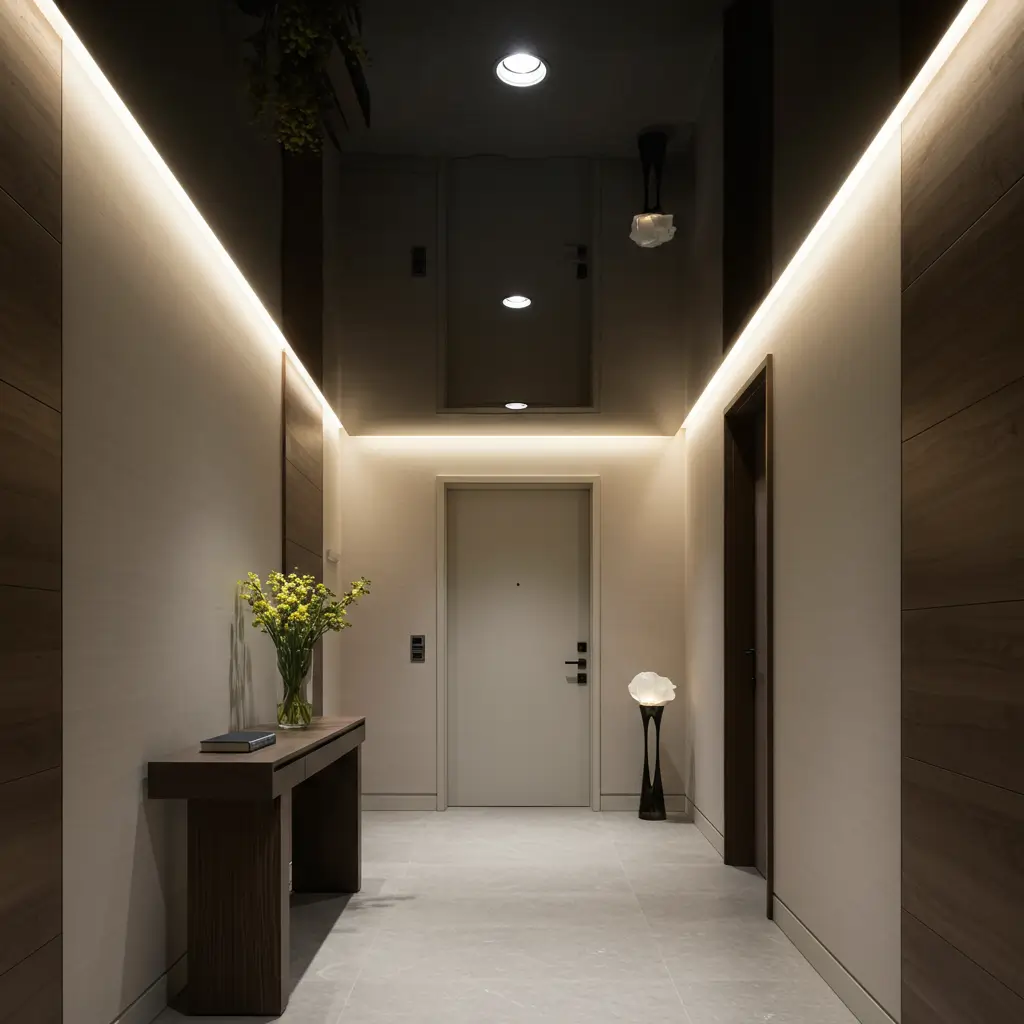
Want to make a statement without adding any physical structures? Try a high-gloss or “lacquer” finish. A high-gloss foyer ceiling acts like a mirror, reflecting everything below it.
The Visual Magic of Reflection
High gloss finishes create the illusion of infinite height. Because the ceiling reflects the floor and the furniture, the boundaries of the room disappear. This works exceptionally well in dark entryways where natural light is scarce. The ceiling bounces whatever light you have around the room like a disco ball (but much classier).
Application Warnings
- Surface preparation is everything. A shiny finish reveals every single flaw. Your drywall must be “Level 5” smooth.
- Use professional sprayers. You cannot achieve this look with a standard roller; you’ll see the texture of the nap.
- Consider Stretch Ceilings. Some companies offer a PVC membrane that they heat and stretch across the ceiling for a perfectly mirror-like finish.
9. Geometric Design Ceilings for Entryways
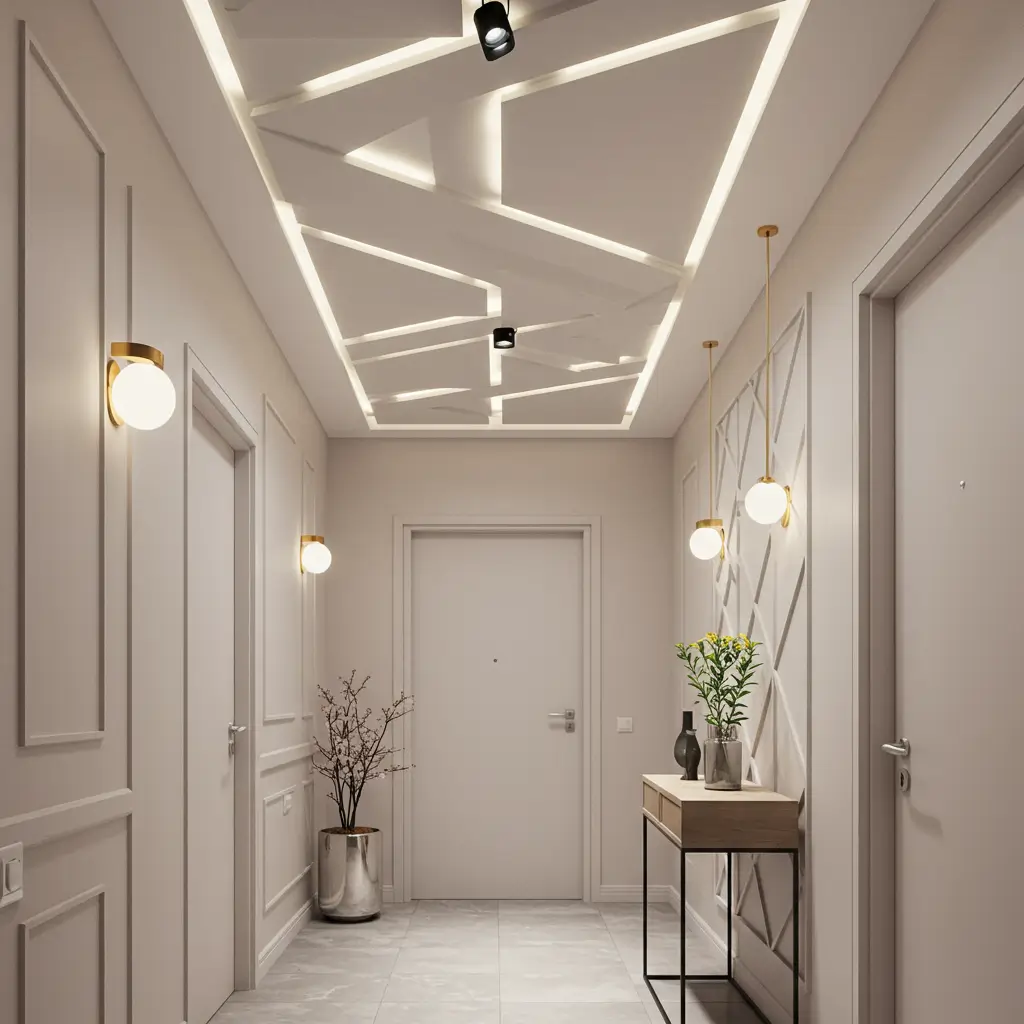
For the fans of bold, graphic looks, I suggest geometric foyer ceilings. This involves using wood slats, moldings, or even drywall to create shapes like hexagons, diamonds, or overlapping triangles.
Bringing Architecture to Life
Geometric designs offer a more modern take on the coffered ceiling. Instead of a standard grid, you create a pattern that flows across the space. I once saw an entryway where the homeowner used thin oak slats to create a “sunburst” pattern centered on the door. It was breathtaking.
Where to Use Geometry
- Small Vestibules: A bold pattern in a small space makes it feel like a “jewel box.”
- Ultra-Modern Homes: Stick to sharp angles and monochromatic colors.
- Mid-Century Modern: Use walnut slats in a linear or grid pattern for that authentic 1950s feel.
10. Textured Plaster Foyer Ceilings
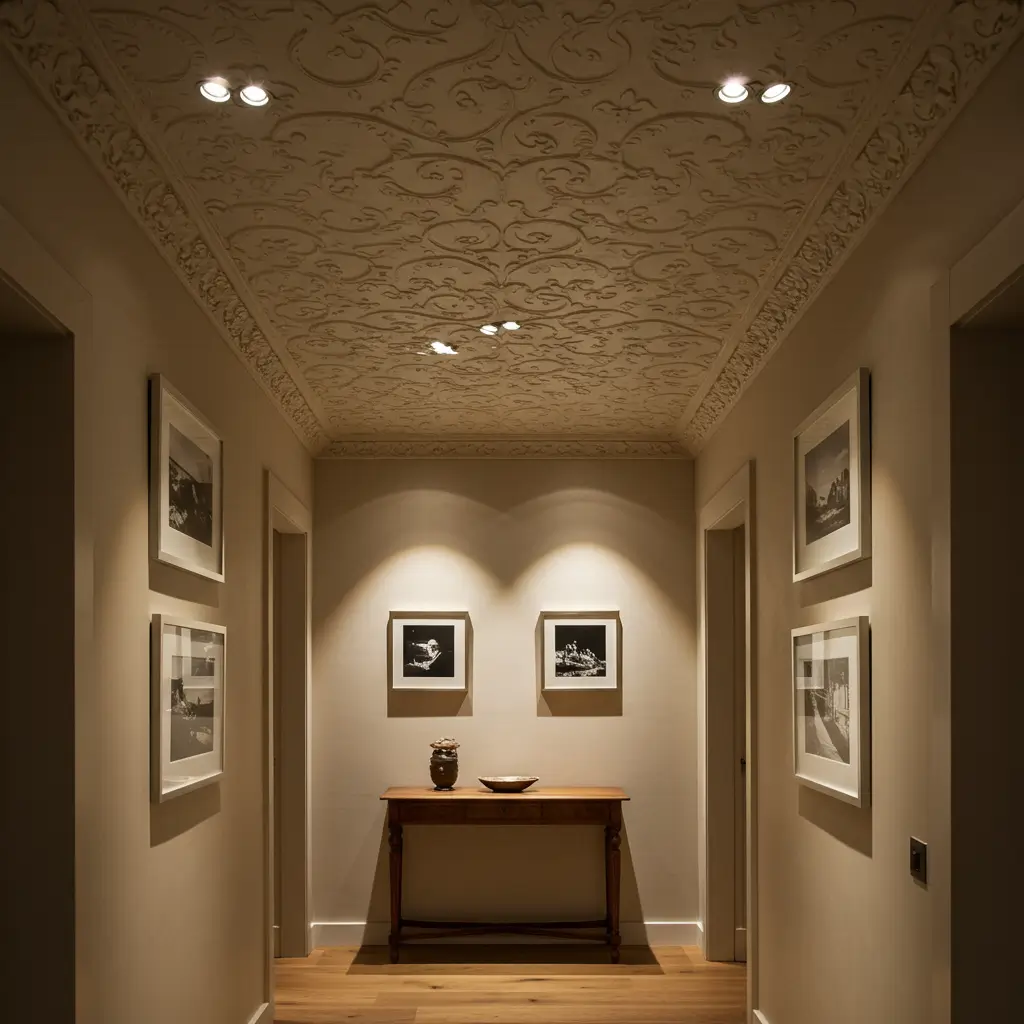
Textured plaster brings an “Old World” soul to a new house. I’m not talking about that “popcorn” texture from your childhood home (the stuff that catches every cobweb in existence). I’m talking about artisan finishes like Venetian plaster or Roman clay.
The Beauty of Imperfection
Venetian plaster involves applying multiple thin layers of tinted plaster with a trowel. You then burnish it to a soft sheen. The result looks like aged stone or marble. It feels cool to the touch and catches the light with a subtle, pearlescent glow.
Why Choose Plaster?
- Durability: Plaster is much tougher than paint and lasts for decades.
- Depth: The slight color variations in the plaster give the ceiling a three-dimensional quality.
- Eco-Friendly: Most traditional plasters are lime-based and naturally mold-resistant.
If you have a Mediterranean or Spanish-style home, a hand-troweled plaster ceiling provides the perfect authentic touch.
11. Skylight and Natural Light Ceiling Ideas
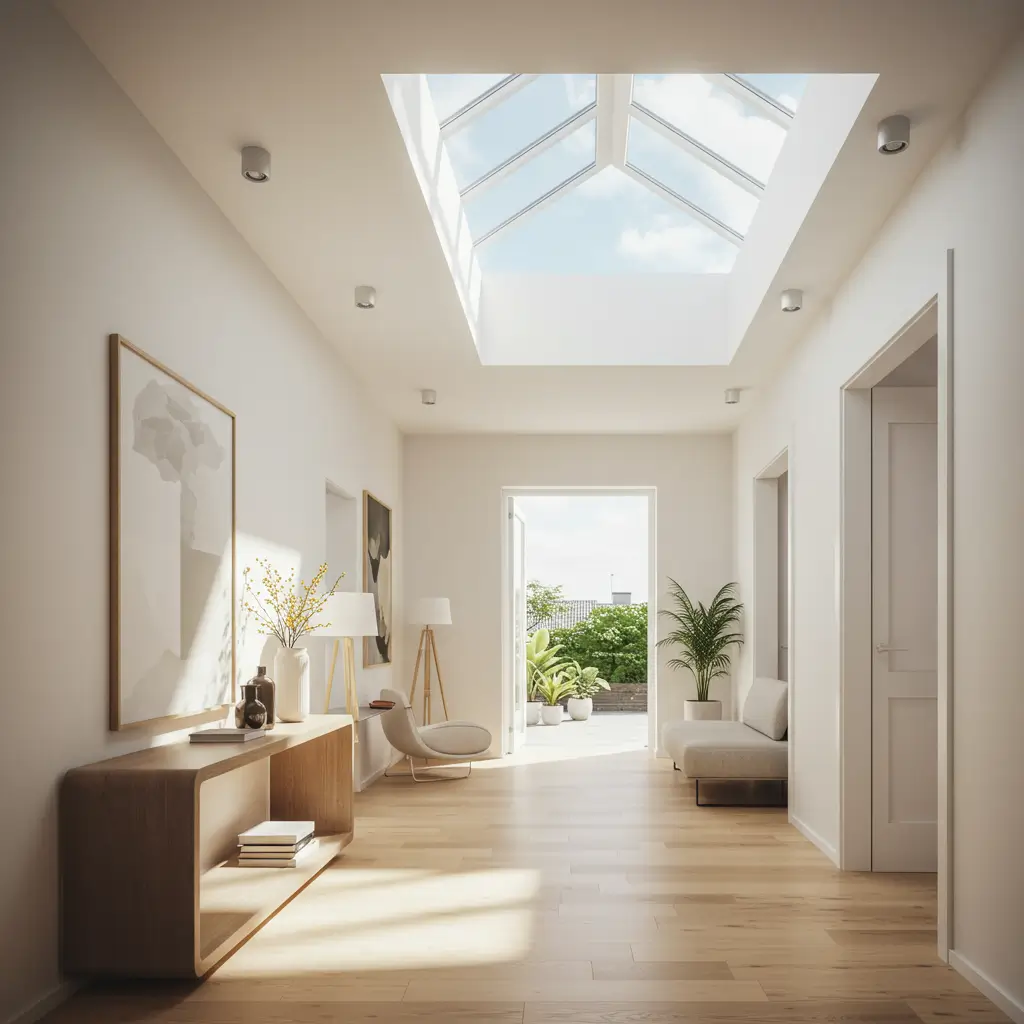
If your foyer sits on the top floor or in a single-story home, why not use the sun? A skylight foyer ceiling provides the best light source known to man: the sky. 🙂
Bringing the Outdoors In
Natural light changes throughout the day, which means your foyer will look different at 10 AM than it does at 4 PM. I love how a skylight makes a cramped hallway feel like an outdoor garden path. If you can’t install a full window, check out “solar tubes.” These use highly reflective pipes to funnel sunlight from your roof into a small dome on your ceiling.
Skylight Styles
- The “Light Well”: A deep, flared opening that spreads light over a wide area.
- The Modern Pyramid: A glass pyramid that adds architectural interest to your roofline and your foyer.
- Ventilating Skylights: These open to allow hot air to escape, which acts like a natural chimney for your house.
12. Classic Molded Ceiling Designs
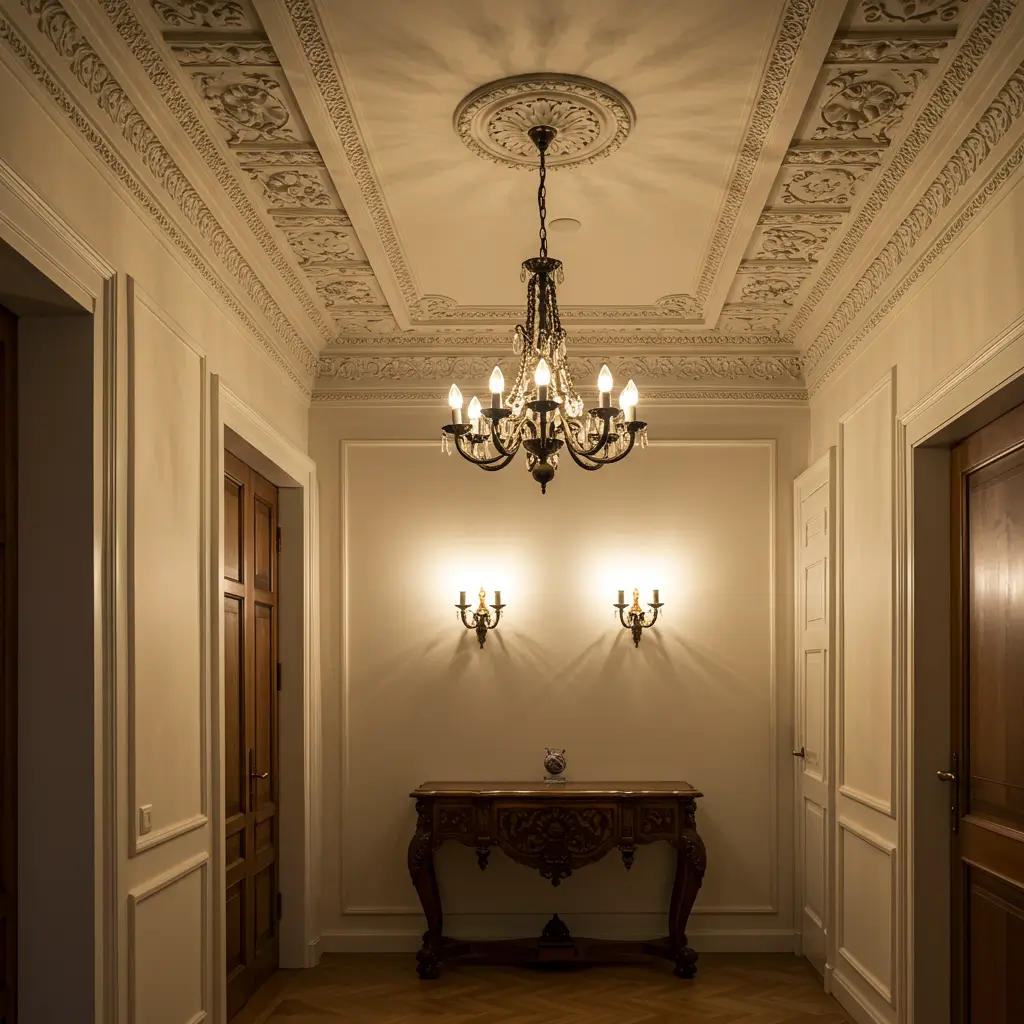
Finally, we have the “grand dame” of design: the classic molded ceiling. This involves using intricate plaster or polyurethane moldings to create borders, corner pieces, and ornate central designs.
Embracing Neo-Classical Style
If you love the look of Parisian apartments or Victorian estates, you need molding. I suggest starting with a “picture frame” layout on the ceiling. You create a large rectangle out of molding about 12 inches from the walls. You then add “corner fan” pieces for that extra touch of luxury.
DIY Molding Tips
- Use lightweight materials. Polyurethane molding looks exactly like plaster but stays up with simple construction adhesive.
- Miter your corners carefully. A 45-degree angle that doesn’t meet perfectly will haunt your dreams every time you walk in.
- Caulk is your best friend. Use it to fill any tiny gaps before painting.
Classic molding adds an immediate sense of history and value to any home. It makes a new build feel like it has “good bones.”
Comparison of Foyer Ceiling Styles
To help you decide which foyer ceiling design fits your life, look at this quick breakdown:
| Style | Vibe | Cost Factor | Ceiling Height Needed |
|---|---|---|---|
| Coffered | Formal/Grand | $$$ | 9ft+ |
| Tray | Airy/Open | $$ | 8ft+ |
| Minimalist | Sleek/Clean | $ | Any |
| Wood Beams | Warm/Rustic | $$$ | 8ft+ |
| Painted | Artistic/Bold | $ | Any |
| False/LED | High-Tech | $$ | Any |
Technical Considerations You Shouldn’t Ignore
Before you start ripping down drywall, you must consider the “boring” stuff.
Weight Loads
Authentic beams or heavy plaster coffers add significant weight to your ceiling joists. I always recommend consulting a structural engineer if you plan on adding more than 50 pounds of material to your foyer.
Wiring and Safety
Ceiling projects often involve moving lights or adding LEDs. Make sure you or your electrician follows local codes. Always use “IC-rated” (Insulation Contact) housings for recessed lights if they will sit near attic insulation.
Visual Proportions
A huge mistake I see often: placing a massive tray ceiling in a tiny room. It makes the space feel like a well rather than a foyer. Proportion determines the success of your design. If your foyer is under 50 square feet, stick to paint, light molding, or high-gloss finishes. Save the beams and coffers for the big entrances.
Frequently Asked Questions
Does a dark ceiling make a foyer look smaller?
Actually, no! A dark, matte color makes the ceiling “recede” or disappear, which can actually make a room feel taller. However, a dark ceiling in a windowless room requires very strong lighting to avoid the “cave” effect.
How do I choose between wood beams and coffers?
Think about your floor. If you have busy, patterned tile, I suggest a simpler wood beam layout. If you have plain wood floors, a complex coffered ceiling balances the room perfectly.
Are false ceilings expensive to install?
They fall in the “middle” range. The materials are relatively cheap, but the labor for framing and finishing the drywall “steps” adds up.
Final Thoughts on Foyer Ceilings
Designing your foyer ceiling is one of the most rewarding home improvement projects you can tackle. It’s an area
where you can take a risk because you don’t spend hours sitting there staring at it like you do in a living room. You want a design that makes you smile every time you fumble for your keys.
I’ve lived in houses with flat white ceilings and houses with grand vaulted beams. The feeling of coming home to a space that feels “finished” from floor to ceiling is incomparable.
Start small if you’re nervous—maybe just a new paint color or some simple molding. Once you see the impact, I bet you’ll want to do the whole house!
Remember, your home should reflect who you are. If you’re a minimalist, keep it sleek. If you’re a romantic, go for the chandelier and molding.
Just don’t let that foyer ceiling stay a blank, white rectangle any longer. You deserve a grand entrance.
Happy designing, and don’t forget to keep those paint samples on the ceiling for a few days to see how the light hits them. You’ll thank me later! 🙂