10 Charming Front Door Design Wood Ideas for Rustic Homes
- Door Design
 Ben
Ben- 0
- 52 minutes read
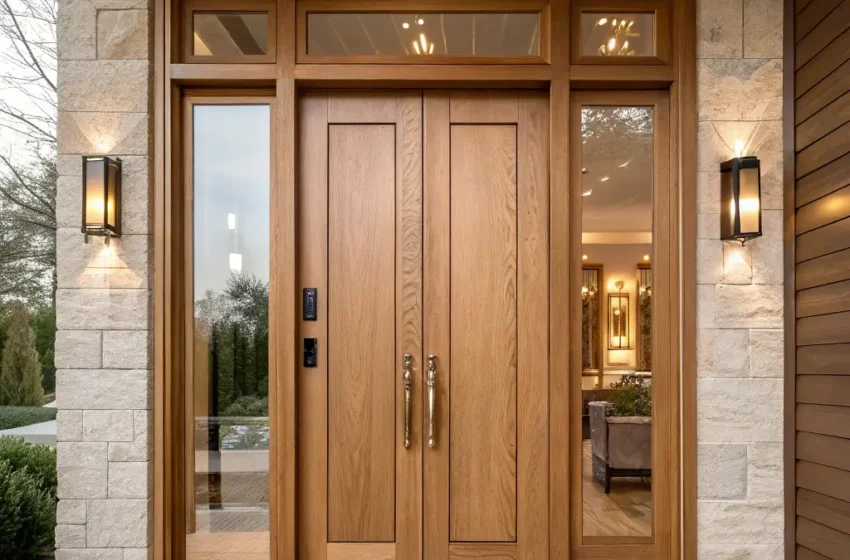
Let’s be real—your front door is doing a lot of heavy lifting. It’s security guard, weather barrier, and the face of your home all rolled into one.
But most of us treat our front doors like that reliable friend we never really appreciate until they’re gone. Mine was a sad, faded piece of oak that screamed “I gave up in 2005” until I finally decided to do something about it.
Here’s what nobody tells you about wooden front doors: they’re not just slabs of timber keeping the outside out and the inside in.
They’re the first thing people see, the last thing you touch when leaving home, and probably the most photographed part of your house (thanks, Amazon delivery confirmations).
After spending three months researching and eventually installing my dream wooden door, I discovered that the right wooden front door can completely transform your home’s personality.
Whether you’re building new, replacing that contractor-grade disaster, or just dreaming about the day you can finally upgrade, these 10 front door design wood ideas will give you all the inspiration you need to create an entrance that makes coming home feel special every single time.
1. Modern Minimalist Teak Door
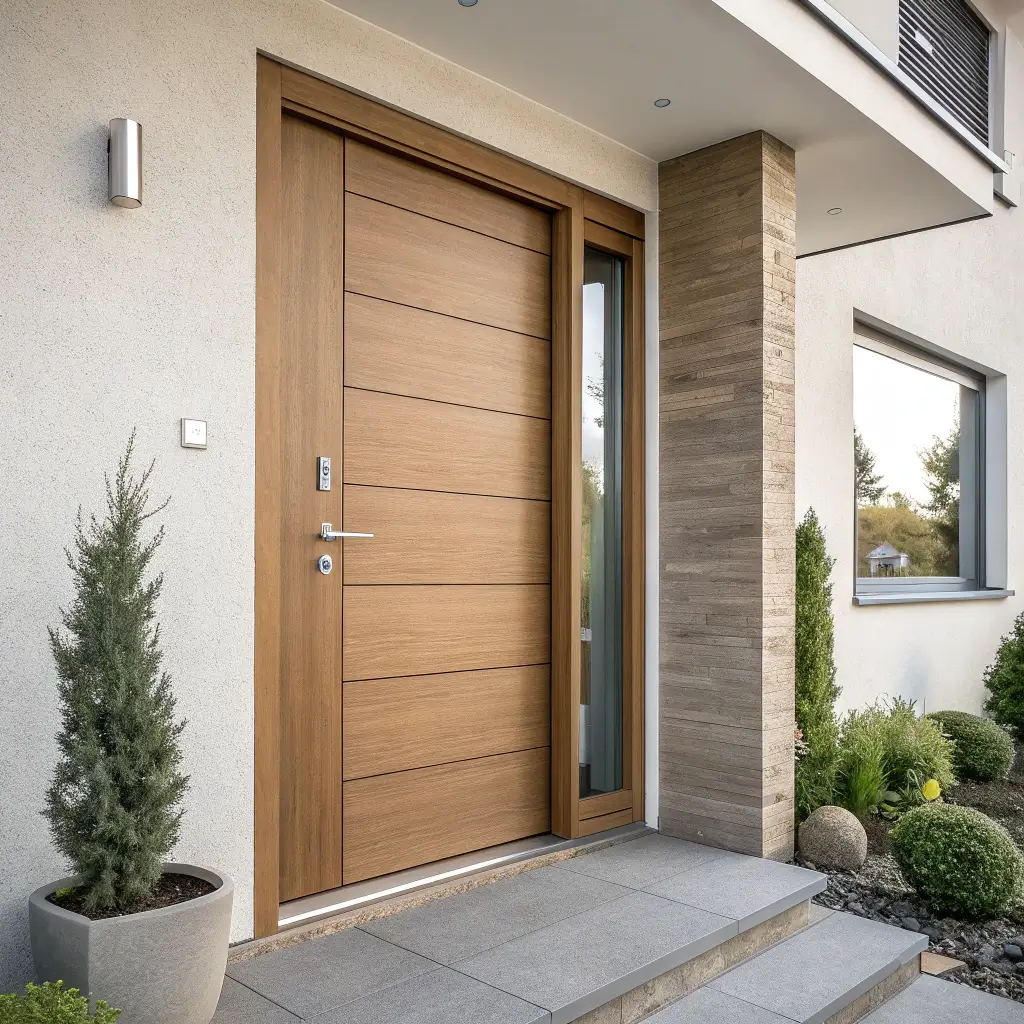
Teak doors are like that friend who looks effortlessly put-together at 6 AM—naturally gorgeous without trying too hard. Modern minimalist teak doors take this natural beauty and strip away everything unnecessary, leaving you with pure, sophisticated simplicity.
Why Teak Works for Modern Design
Teak brings natural oils and weather resistance that other woods can only dream about. It literally protects itself from the elements, which means less maintenance for you and more time to enjoy that beautiful entrance. The wood’s tight grain and golden-brown color create visual warmth without needing any decorative extras.
I installed a flat-panel teak door last year, and my maintenance routine consists of… well, nothing. Okay, I oil it once a year, but that’s more because I enjoy the process than necessity. Meanwhile, my neighbor’s pine door needs repainting every two years. Guess who made the better investment?
Design Elements That Define Modern Minimalist
- Completely flat surfaces with no raised panels or decorations
- Natural teak finish showcasing the wood’s inherent beauty
- Hidden or integrated hardware that doesn’t disrupt clean lines
- Tall, narrow proportions emphasizing vertical space
- Optional narrow windows for light without compromising privacy
- Matching teak frame for cohesive appearance
Making Minimalist Teak Stand Out
The beauty of minimalist design lies in the details:
- Choose hardware in matte black or brushed steel
- Consider a pivot door system for extra modern flair
- Add subtle lighting to highlight the wood grain at night
- Keep surrounding elements simple to let the door star
- Resist the urge to over-accessorize
Ever notice how the most expensive homes often have the simplest doors? There’s a reason for that—confidence doesn’t need to shout.
2. Rustic Reclaimed Wood Entrance
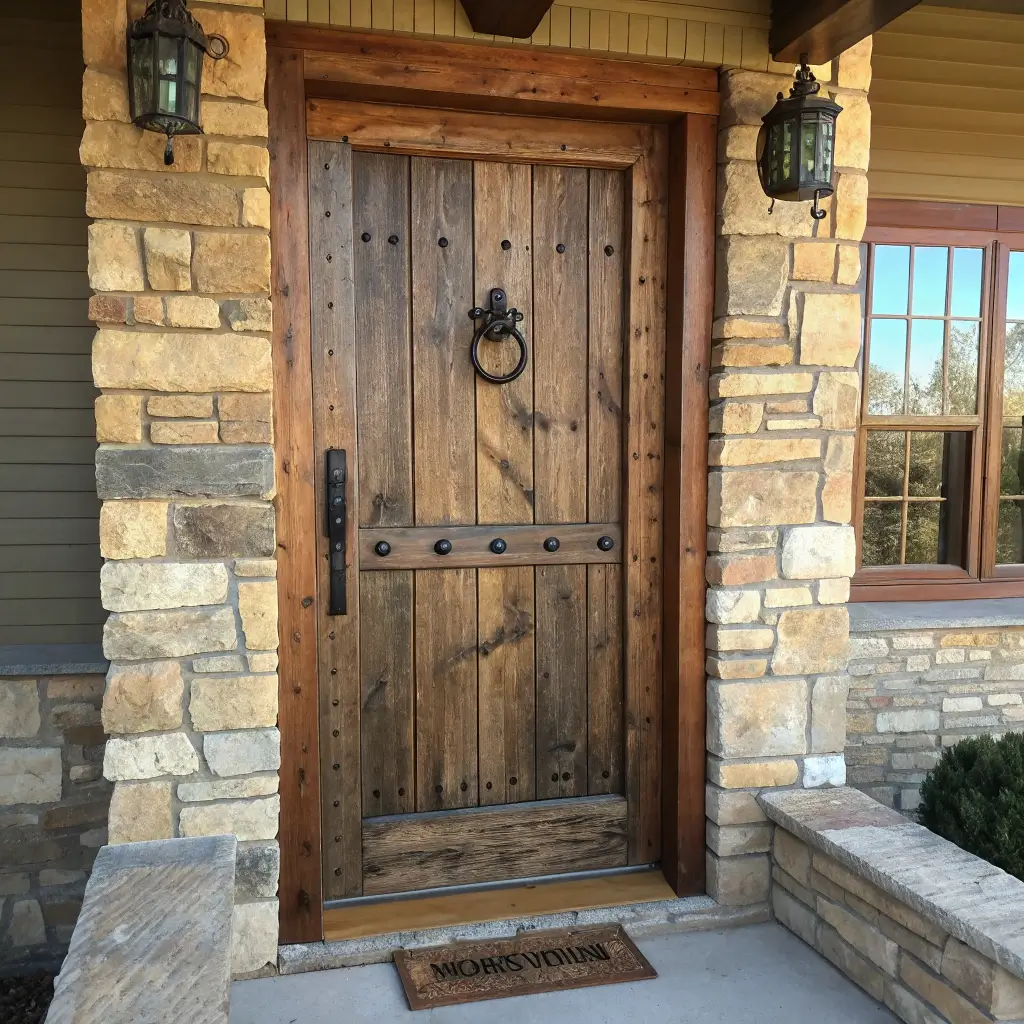
Reclaimed wood doors are like finding a vintage leather jacket at a thrift store—they come with built-in character, a mysterious past, and the satisfaction of knowing you’re being environmentally responsible. Plus, they make every entrance feel like a story.
The Character You Can’t Fake
Reclaimed wood brings authentic weathering and patina that new wood simply can’t replicate, no matter how much you distress it. Every nail hole, saw mark, and weather stain tells a piece of history that becomes part of your home’s narrative.
My friend Sarah built her door from barn wood she salvaged from her grandfather’s farm. Not only does it look incredible with its natural gray weathering and original nail marks, but she literally tears up telling people about it. That’s the power of reclaimed wood—it connects us to something bigger than just home improvement.
Finding and Working with Reclaimed Wood
- Source from reputable salvage yards to ensure proper treatment
- Check for lead paint and chemicals before bringing it home
- Expect irregularities and embrace them as features
- Consider mixing wood types for visual interest
- Protect with appropriate sealers while maintaining character
- Work with experienced craftspeople who understand old wood
Design Approaches for Reclaimed Doors
Making old wood work in modern settings:
- Combine with contemporary hardware for contrast
- Frame with clean, modern trim
- Add glass panels for light while preserving character
- Use metal strapping for structural support and style
- Keep the finish minimal to showcase natural aging
The Sustainability Factor
Here’s what makes reclaimed wood special:
- Zero trees cut for your door
- Keeps materials out of landfills
- Often stronger than new growth lumber
- Unique appearance impossible to replicate
- Story and heritage add intangible value
3. Carved Traditional Wooden Door
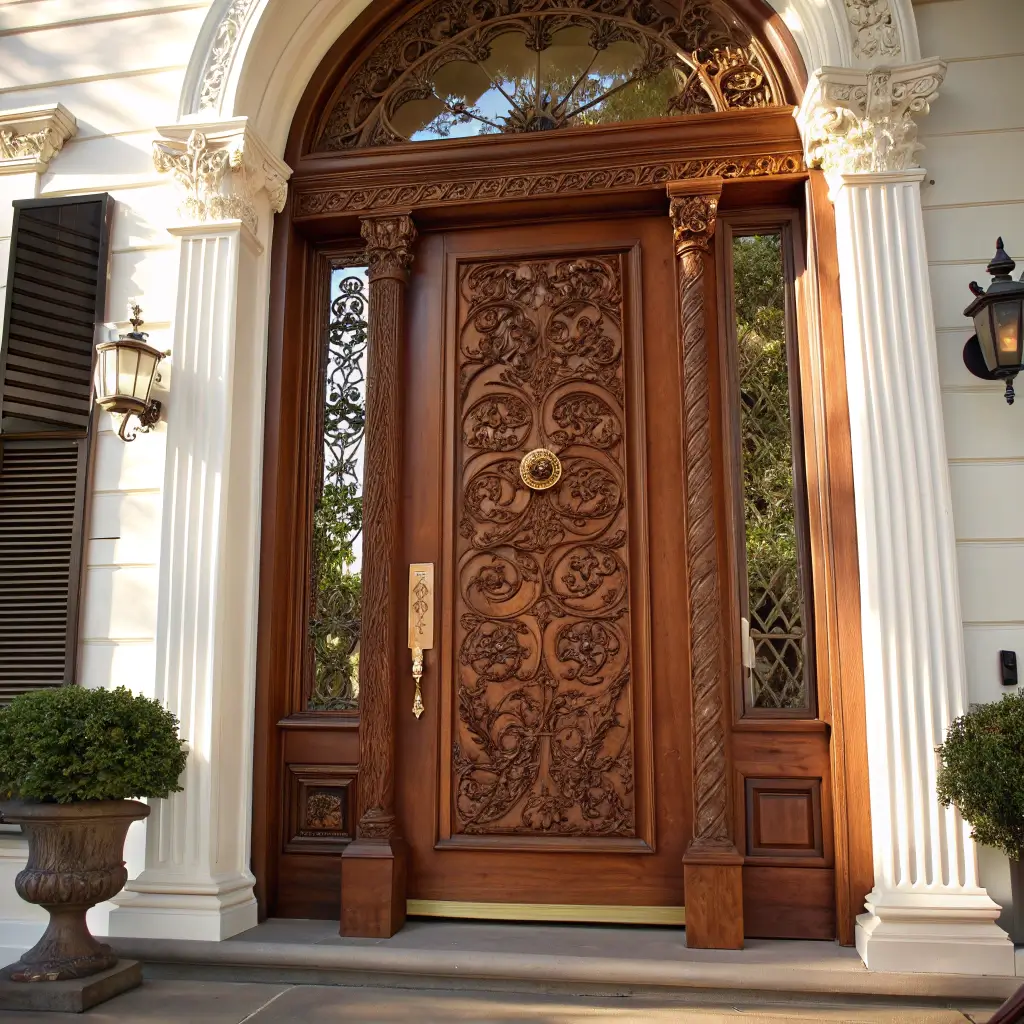
Carved wooden doors are like functional art galleries—except instead of “please don’t touch,” they invite interaction every single day. They’re for people who believe entrances should make statements, not whisper apologies.
The Art of Wood Carving
Hand-carved doors showcase craftsmanship that machines simply cannot replicate. The depth, variation, and subtle imperfections of hand carving create shadows and textures that change throughout the day as light shifts.
I once stood mesmerized watching a craftsman carve a door in Ubud, Bali. Three weeks of work for one door panel. When I commented on the time investment, he smiled and said, “But it will last three generations.” That perspective shift hit different—suddenly, the price tag made perfect sense.
Popular Carving Motifs
- Floral designs: Roses, lotus, or local flowers
- Geometric patterns: Islamic or modern abstract
- Nature scenes: Trees, birds, mountains
- Cultural symbols: Family crests or heritage designs
- Religious imagery: Crosses, mandalas, or spiritual symbols
- Abstract art: Contemporary flowing designs
Choosing Your Carving Style
Consider these factors:
- Match carving complexity to your home’s architecture
- Think about viewing distance for detail appreciation
- Balance carved areas with smooth surfaces
- Consider maintenance requirements for deep carvings
- Ensure carvings don’t compromise door structure
Wood Selection for Carving
Best woods for carved doors:
- Mahogany: Fine grain holds detail beautifully
- Teak: Natural oils protect intricate work
- Cedar: Soft enough to carve, naturally resistant
- Oak: Hard but workable, very durable
- Walnut: Rich color enhances carved shadows
FYI, carved doors aren’t just for traditional homes—modern geometric carvings can look incredibly contemporary.
Also Read: 12 Creative Double Door Design Wood Ideas for Dream Homes
4. Double Panel Elegant Oak Door
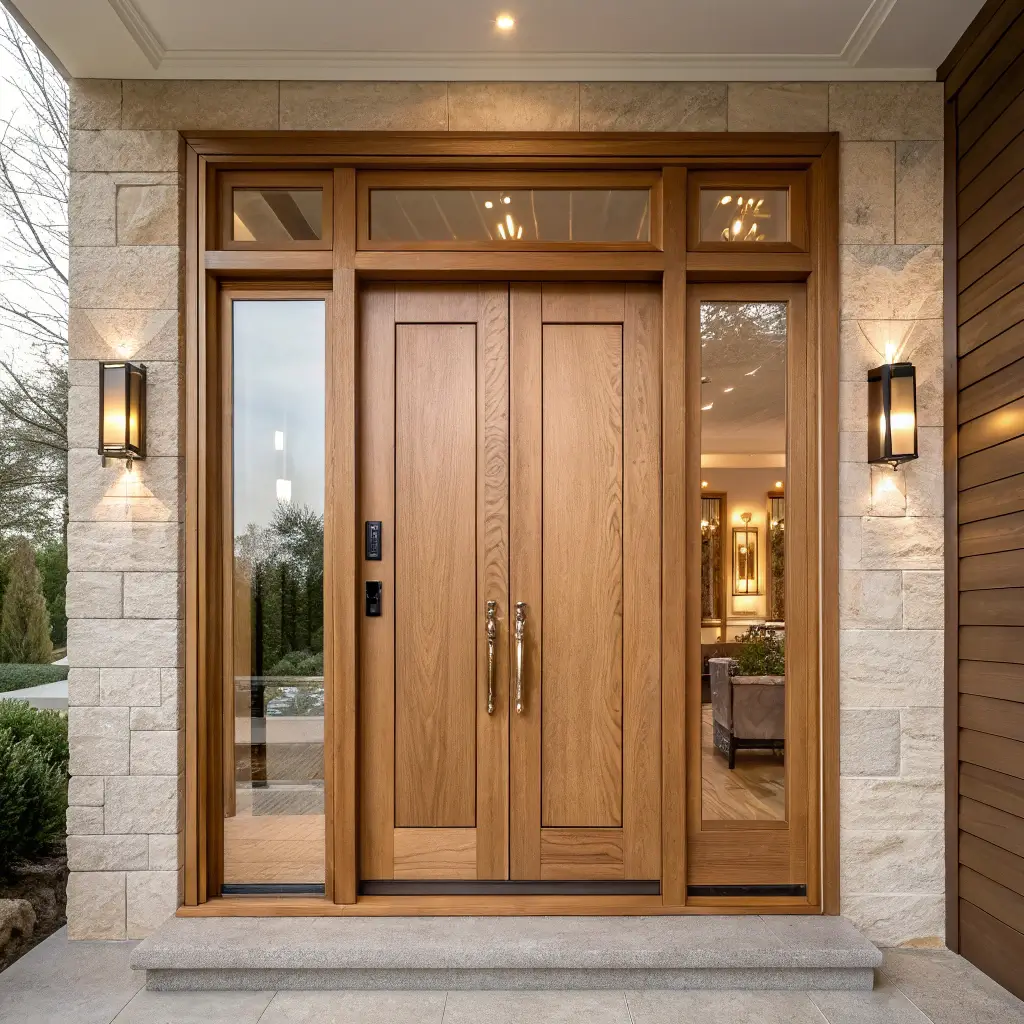
Double panel oak doors are like a perfectly tailored suit—classic, impressive, and somehow appropriate for every occasion. They manage to be both welcoming and commanding, which is exactly what you want in an entrance.
The Timeless Appeal of Oak
Oak combines durability with distinctive grain patterns that add visual interest without overwhelming. It’s the wood equivalent of that friend who’s equally comfortable at dive bars and five-star restaurants—versatile and always appropriate.
We installed double panel oak doors five years ago, and they’ve aged like fine wine. The grain has deepened, the color has riched, and somehow they look more expensive now than when new. That’s the magic of quality oak—it gets better with time.
Panel Configuration Options
- Twin vertical panels: Modern, elongating
- Four-panel traditional: Classic, balanced
- Six-panel colonial: Formal, sophisticated
- Mixed panel sizes: Visual hierarchy
- Raised panels: Traditional depth
- Recessed panels: Contemporary subtlety
Finishing Options for Oak
Transform oak’s appearance:
- Natural clear finish to showcase grain
- Golden oak stain for warmth
- Ebony stain for dramatic modern look
- Whitewash for coastal/Scandinavian vibes
- Gray stain for contemporary feel
- Paint for complete transformation
Hardware Considerations
Elevate your oak doors:
- Brass hardware for traditional elegance
- Black iron for modern farmhouse
- Brushed nickel for contemporary
- Antique bronze for old-world charm
- Chrome for ultra-modern
5. Sleek Contemporary Walnut Door

Walnut doors are the sports cars of the wood door world—sleek, expensive-looking, and guaranteed to turn heads. They’re for people who appreciate the finer things and aren’t afraid to show it.
The Luxury of Walnut
Walnut offers rich chocolate tones and stunning grain that needs zero embellishment to impress. It’s naturally gorgeous in a way that makes other woods jealous, like that friend with perfect hair who “just woke up like this.”
I’ll admit, I had sticker shock when pricing walnut doors. Then I saw them in person, ran my hand over that silky grain, and understood. You’re not buying a door; you’re investing in daily joy every time you come home.
Contemporary Design Elements
- Horizontal grain orientation for modern appeal
- Flush surfaces highlighting natural beauty
- Minimal hardware in complementary metals
- Integrated pull handles maintaining clean lines
- Optional glass strips for light and interest
- Book-matched panels for symmetrical grain
Why Walnut Works Contemporary
Natural characteristics perfect for modern design:
- Color variation adds depth without busy-ness
- Smooth grain allows for sleek finishes
- Takes both oil and lacquer beautifully
- Ages gracefully with minimal maintenance
- Natural oils provide some weather resistance
Protecting Your Investment
Walnut care essentials:
- Use high-quality exterior finish
- Avoid direct sun exposure when possible
- Oil annually to maintain richness
- Address scratches promptly
- Consider UV-protective finishes
IMO, walnut doors are worth the splurge if you can swing it—they’re the kind of upgrade you’ll appreciate every single day.
6. Vintage Antique Mahogany Door
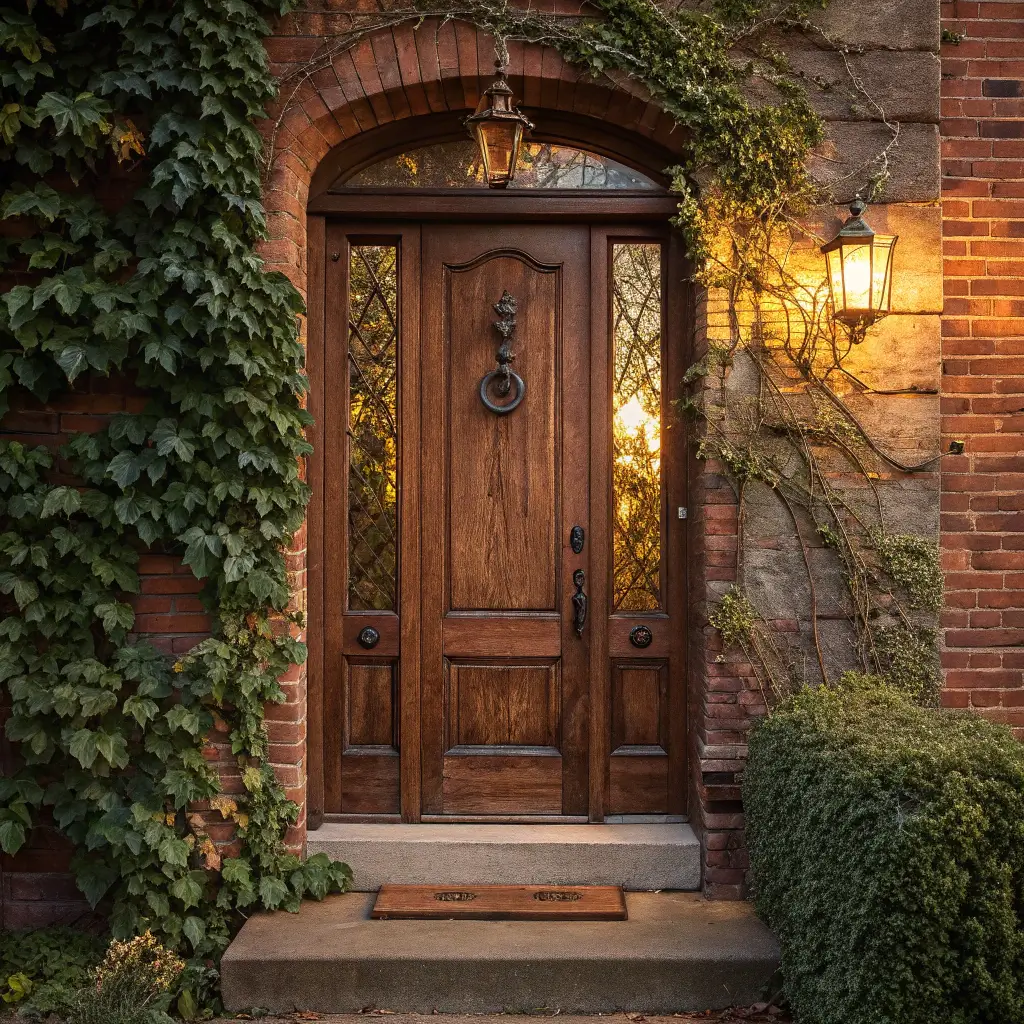
Antique mahogany doors are like that vintage Rolex at the estate sale—they reek of old money elegance and get more valuable with age. They’re for people who appreciate craftsmanship that simply doesn’t exist anymore.
The Prestige of Mahogany
Mahogany represents the pinnacle of traditional door woods, with a deep, rich color that develops incredible patina over decades. It’s the wood of ship captains and bank presidents, now gracing your entrance.
My parents inherited a 1920s mahogany door when they bought their historic home. Every refinisher who’s seen it offers to buy it. That door has survived hurricanes, renovations, and my teenage years—and still looks magnificent. Try getting that durability from today’s materials.
Identifying Quality Vintage Doors
What to look for:
- Solid construction (not veneered)
- Tight, straight grain indicating old-growth wood
- Original hardware holes showing authenticity
- Natural patina that can’t be faked
- Weight (quality mahogany is heavy)
- Mortise and tenon joinery not modern fasteners
Restoration vs. Preservation
Deciding how to treat vintage doors:
- Strip and refinish for like-new appearance
- Clean and oil to preserve patina
- Repair only structural issues
- Update hardware while saving original holes
- Add modern weatherstripping discretely
- Consider museum-quality restoration for valuable pieces
Incorporating Vintage into Modern Homes
Making antique work today:
- Surround with contemporary elements for contrast
- Update hardware to current finishes
- Add modern security features carefully
- Ensure proper weather sealing
- Consider storm doors for protection
Also Read: 10 Creative Front Door Design Ideas to Brighten Your Entry
7. Geometric Pattern Wooden Door
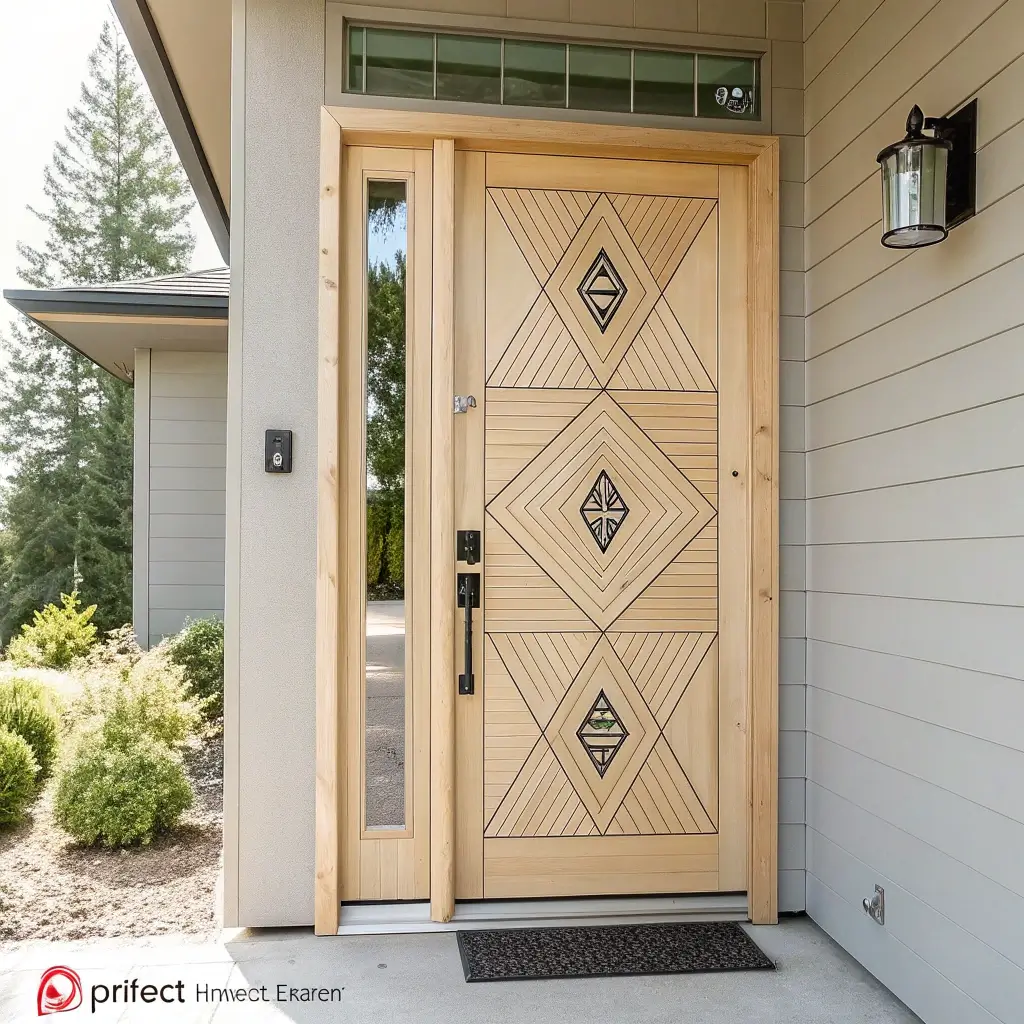
Geometric pattern doors are where math meets art meets your entrance. They’re for people who want something unique but not chaotic, modern but not cold, interesting but not overwhelming.
The Appeal of Geometric Design
Geometric patterns create visual rhythm and interest without the commitment of carved designs or the maintenance of multiple materials. They’re like a perfectly balanced playlist—varied enough to keep attention but cohesive enough to make sense.
I designed a door with interlocking hexagon patterns for my home office entrance, and it’s become the most photographed feature of my house. The pattern creates different shadow effects throughout the day, making it feel alive and dynamic.
Pattern Creation Methods
- Inlaid wood: Different species create patterns
- Routed grooves: Carved patterns in solid wood
- Applied molding: Build patterns on surface
- Laser cutting: Precise, complex possibilities
- Wood marquetry: Artistic veneer patterns
- Combination techniques: Mix methods for depth
Popular Geometric Styles
- Mid-century atomic patterns
- Art Deco fan designs
- Islamic geometric traditions
- Modern minimalist grids
- Hexagon honeycomb patterns
- Chevron or herringbone designs
Making Patterns Work
Design considerations:
- Scale patterns to door proportions
- Consider viewing distance for appreciation
- Balance complexity with surroundings
- Think about light and shadow play
- Ensure patterns don’t weaken structure
Ever wonder why geometric patterns feel so satisfying? It’s because our brains love recognizing and completing patterns—it’s literally neurologically pleasing.
8. Glass-Accented Wooden Front Door
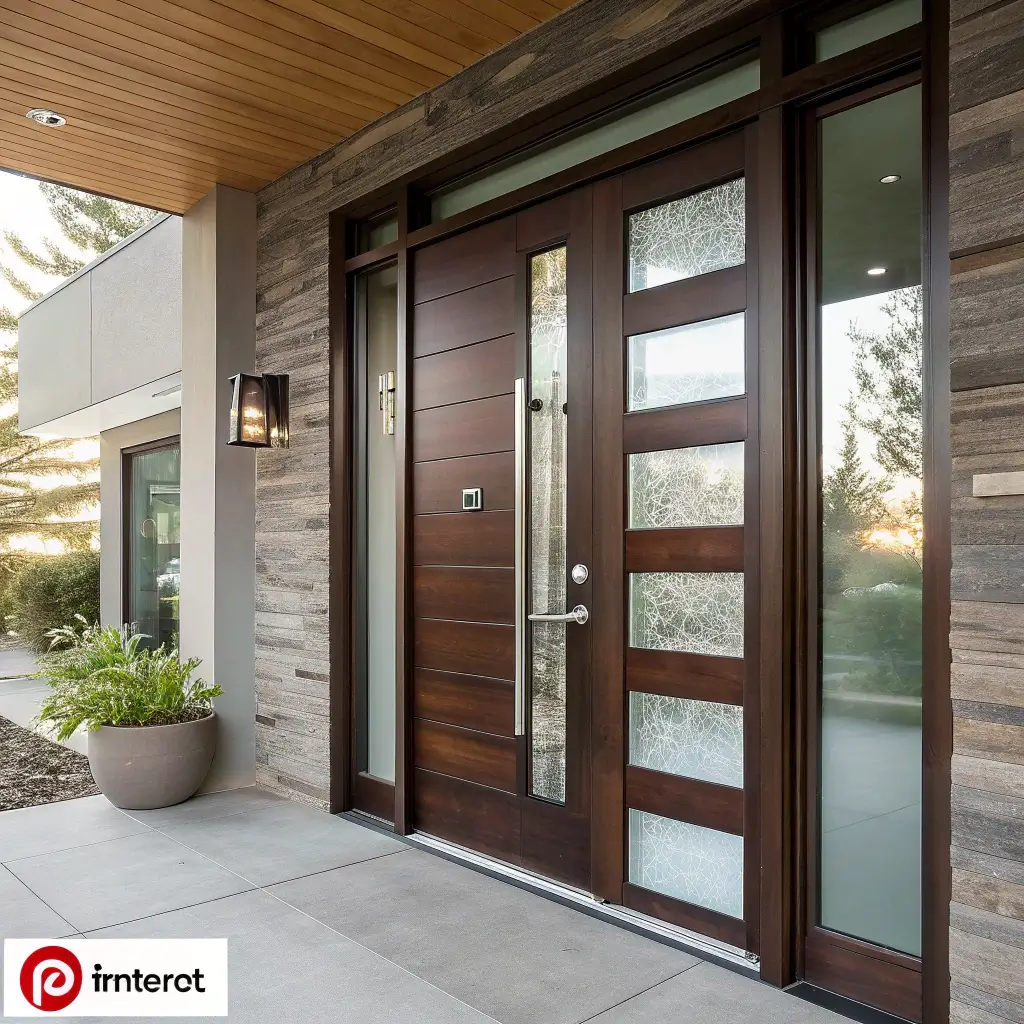
Glass and wood together are like coffee and cream—each good alone, but together they create something perfectly balanced. Glass-accented wooden doors give you privacy, security, AND natural light. Who says you can’t have it all?
The Light and Privacy Balance
Strategic glass placement brings light without sacrificing privacy or security. It’s the architectural equivalent of having your cake and eating it too—visibility when you want it, privacy when you need it.
My wooden door with frosted glass panels transformed my dark foyer into a bright, welcoming space. The UPS guy can’t see in, but beautiful diffused light streams through all day. It cut my daytime lighting costs and made the whole entrance feel larger.
Glass Integration Options
- Top third glass: Privacy below, light above
- Side panels: Narrow windows flanking door
- Geometric inserts: Modern pattern interest
- Frosted center panel: Full light, full privacy
- Stained glass accents: Artistic color
- Clear beveled glass: Classic elegance
Wood and Glass Combinations
Successful pairings:
- Dark wood with frosted glass for contrast
- Light oak with clear glass for airiness
- Mahogany with stained glass for tradition
- Teak with textured glass for modern
- Reclaimed wood with antique glass for character
Practical Considerations
Safety and efficiency:
- Always use tempered safety glass
- Consider double-pane for insulation
- Think about cleaning accessibility
- Plan for privacy at night with lighting
- Check building codes for requirements
- Add security film for extra protection
9. Farmhouse Style Pine Door
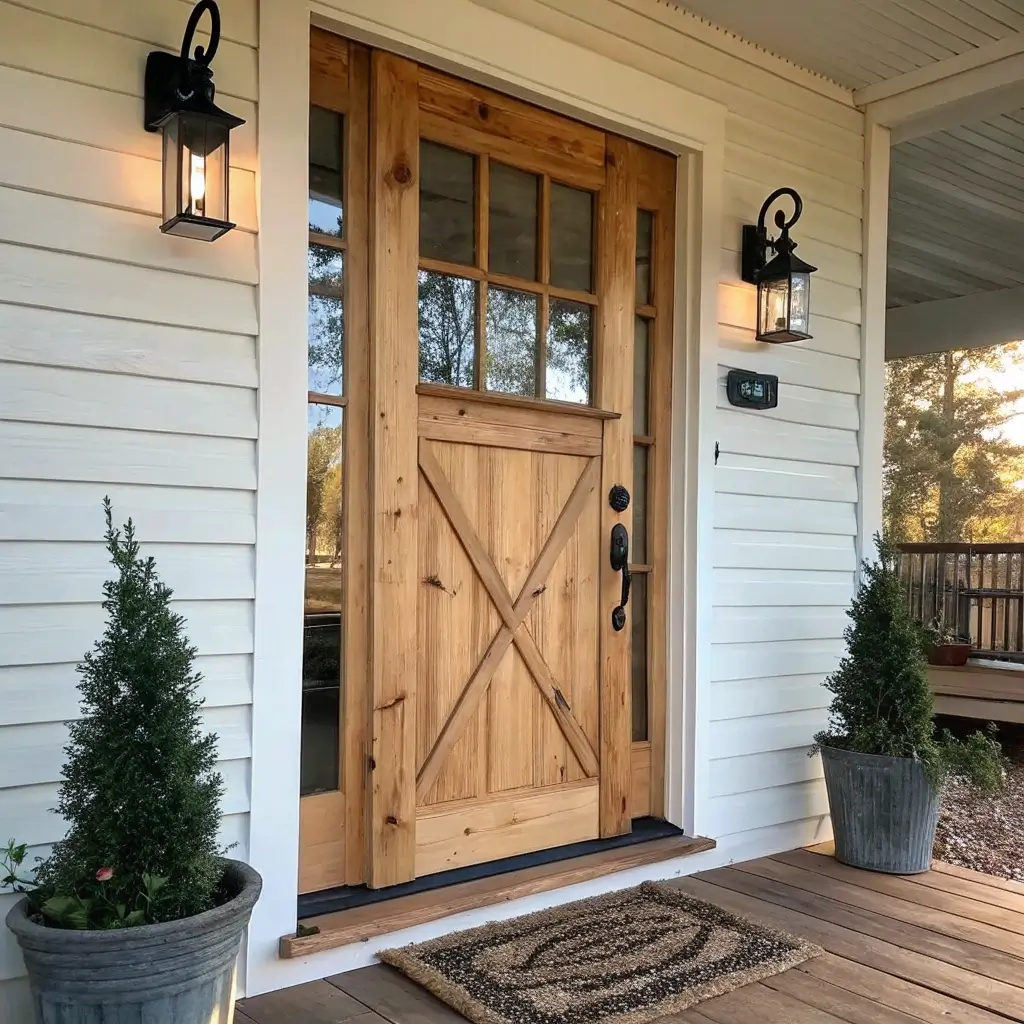
Farmhouse style pine doors are comfort food for your entrance—warm, inviting, and impossibly charming. They make everyone feel welcome before they even knock.
The Farmhouse Appeal
Pine doors embody casual elegance that fancy woods often miss. They’re approachable luxury, like wearing designer jeans with vintage t-shirts—expensive comfort that doesn’t try too hard.
We chose knotty pine for our renovation, and guests always comment on how welcoming it feels. The knots and grain variations that some consider “flaws” create character that manufactured consistency can’t match. It’s perfectly imperfect, just like actual farmhouses.
Farmhouse Design Elements
- Visible knots and grain for authentic character
- Cross-buck or Z-brace patterns
- Board and batten construction
- Divided light windows at the top
- Natural or whitewashed finishes
- Black hardware for contrast
Pine Advantages
Why pine works for farmhouse:
- Affordable compared to hardwoods
- Takes stain and paint beautifully
- Lightweight for easy operation
- Natural variations add character
- Readily available in most regions
- Works with traditional construction
Modern Farmhouse Twists
Update the classic look:
- Paint in unexpected colors (navy, sage)
- Add contemporary hardware
- Include modern glass panels
- Mix with industrial elements
- Choose cleaner lines for modern farmhouse
Protecting Pine Doors
Pine needs more love:
- Seal thoroughly against moisture
- Regular maintenance prevents deterioration
- Consider covered entrances
- Touch up dings and scratches promptly
- Reapply finish every few years
Also Read: 10 Stylish Room Door Design Ideas for Contemporary Room
10. Dark Stained Designer Entry Door
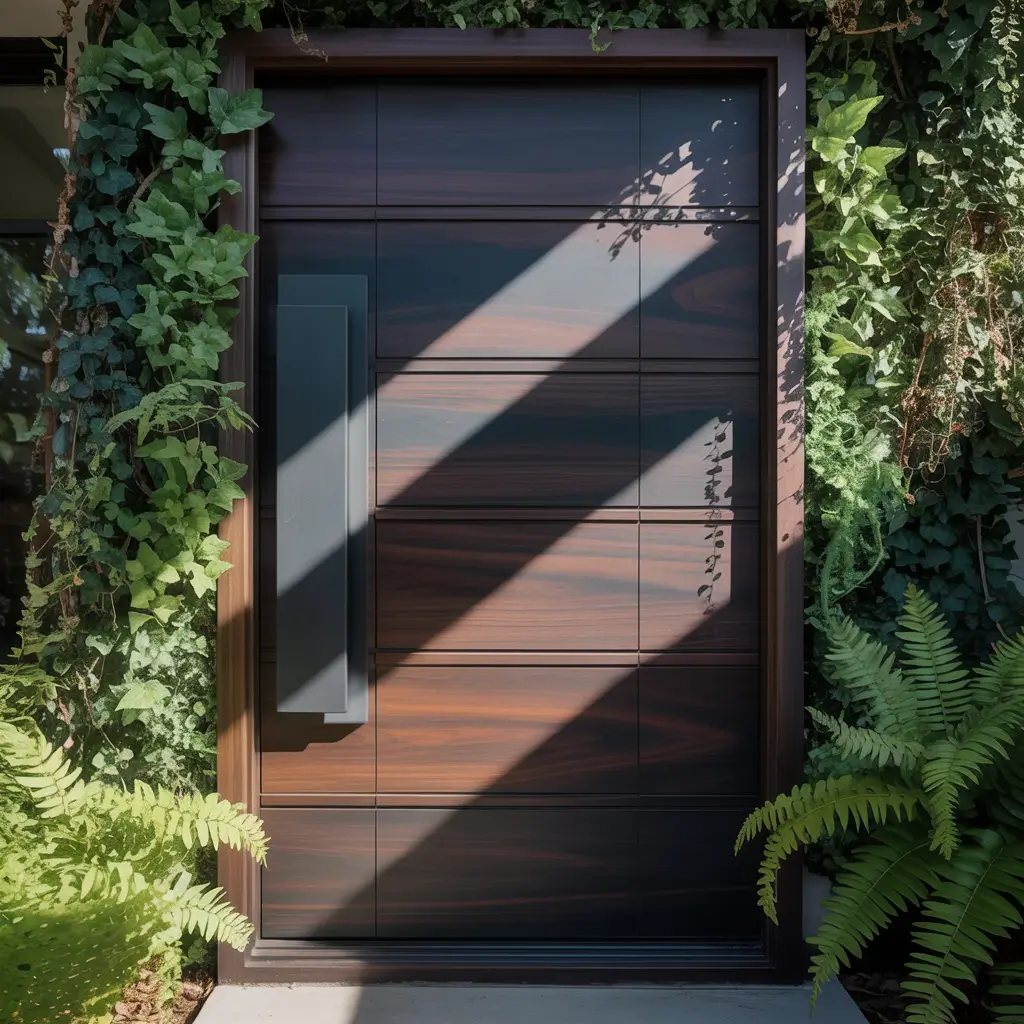
Dark stained doors are the statement jewelry of home entrances—bold, sophisticated, and impossible to ignore. They’re for people who understand that sometimes more is more, and subtle is overrated.
The Drama of Dark Stain
Dark stains create immediate visual weight and presence that commands attention. It’s like wearing all black to a summer party—unexpected, striking, and undeniably chic.
I fought my contractor about staining our oak door ebony. He insisted it would be “too much.” Now he uses photos of it in his portfolio. That door anchors our entire facade and makes our basic colonial look custom. Sometimes you have to trust your gut over conventional wisdom. :/
Popular Dark Stain Options
- Ebony: Near-black sophistication
- Dark walnut: Rich brown with depth
- Jacobean: Complex gray-brown
- Java: Coffee-colored intensity
- Black cherry: Deep red undertones
- Charcoal: Modern gray-black
Making Dark Stains Work
Success strategies:
- Ensure excellent lighting around entrance
- Balance with lighter elements nearby
- Choose high-quality wood that shows grain
- Use semi-gloss finish for subtle richness
- Consider metallic hardware for pop
- Keep surrounding trim lighter for contrast
Maintenance Matters
Dark stains show everything:
- Water spots are more visible
- Dust and pollen stand out
- Scratches may show lighter wood
- Sun fading more noticeable
- Requires regular cleaning
- Touch-ups need exact color matching
When Dark Doors Excel
Perfect scenarios:
- Light-colored houses needing anchoring
- Modern architecture wanting drama
- Traditional homes seeking updates
- Covered entrances protecting finish
- Homes with excellent entrance lighting
Making Your Wooden Front Door Dreams Reality
Here’s what I’ve learned after obsessing over wooden front doors more than any reasonable person should: the right door doesn’t just improve your curb appeal—it changes how you feel about coming home. Every. Single. Day.
Whether you’re drawn to the natural elegance of teak, the character of reclaimed wood, or the drama of dark stains, there’s a wooden front door design that perfectly captures your style.
The key is choosing something that makes you smile when you see it, because trust me, you’ll be seeing it a lot.
Start by honestly assessing your needs. Consider your climate, maintenance tolerance, and budget.
Then think about what would make you genuinely excited to come home. Sometimes the “practical” choice isn’t the right choice if it doesn’t spark joy.