10 Practical Garage Shelving Ideas and Smart Space Layouts
- Garage Decor
 Ben
Ben- 0
- 43 minutes read
Your garage looks like a tornado swept through a hardware store and a sporting goods warehouse at the same time. Rakes tangled with extension cords, holiday decorations crushed under paint cans, and that one box you haven’t opened since 2017 just sitting there—judging you. Sound familiar? Yeah, I’ve been there too. My garage was the place where organization went to die, and I finally hit a breaking point when I tripped over a toolbox at midnight and nearly launched myself into a pile of pool noodles.
That embarrassing moment sent me down a rabbit hole of garage shelving solutions, and honestly, it changed my entire relationship with that neglected room. I tried everything from high-end modular systems to scrappy DIY builds, and I learned that the right shelving setup doesn’t just store your stuff—it transforms your garage into a functional, breathable space you actually enjoy walking into.
So I’m sharing the 10 best garage shelving ideas that worked for me and that I’ve seen work for countless others. Whether you’re a weekend warrior, a full-blown woodworker, or just someone who wants to park their car in the garage again, there’s something here for you. Let’s get into it.
1. Industrial Pipe Garage Shelves
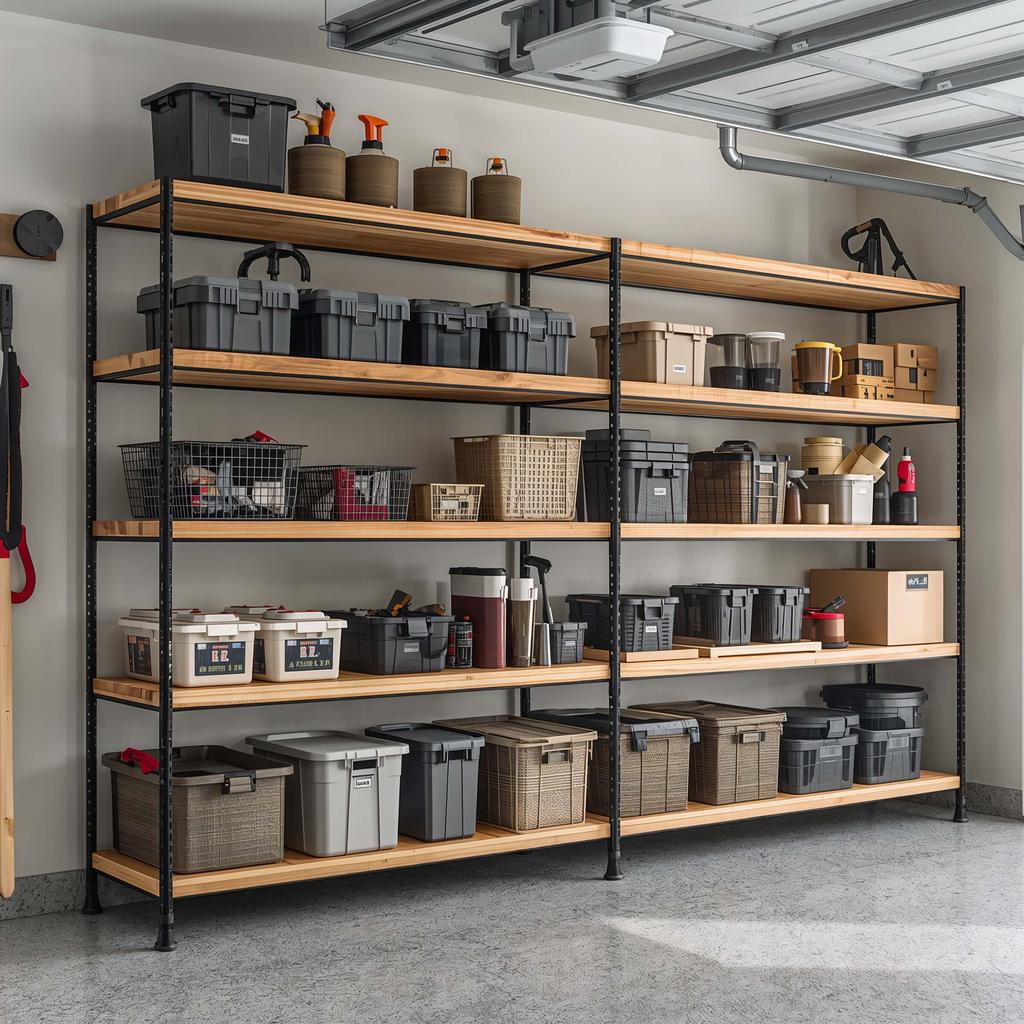
If you want shelving that looks like it belongs in a trendy Brooklyn loft but works hard enough for a greasy garage, industrial pipe shelves are your answer. These bad boys combine raw metal piping with solid wood planks to create a setup that’s equal parts rugged and stylish.
Why They Work So Well in a Garage
Industrial pipe shelving earns its spot in the garage because of sheer durability. We’re talking about steel or iron pipes that can handle serious weight—think power tools, car parts, heavy bins of hardware. Unlike flimsy plastic shelving that bows after a few months, pipe shelves hold firm year after year.
Here’s what makes them a top-tier choice:
- Incredible load-bearing capacity — each shelf can typically support 50–75+ pounds depending on pipe thickness and bracket spacing
- Customizable dimensions — you cut the pipes and boards to fit your exact wall space
- Industrial aesthetic — they look intentional, not like an afterthought
- Corrosion-resistant options — galvanized or black iron pipes resist rust in humid garage environments
How to Set Them Up
You can buy pre-made kits online, but building them from scratch gives you full control over width, depth, and shelf count. I built my first set using ¾-inch black iron pipes and butcher block planks from a home improvement store. The whole project took about three hours, and I’m not exactly a speed demon with a wrench.
The key is anchoring the flanges directly into wall studs, not just drywall. Your garage walls can handle the weight, but only if you hit solid framing. Trust me—I learned this lesson the hard way with a shelf full of paint cans and a very loud crash at 2 AM.
2. Floating Wall-Mounted Shelves
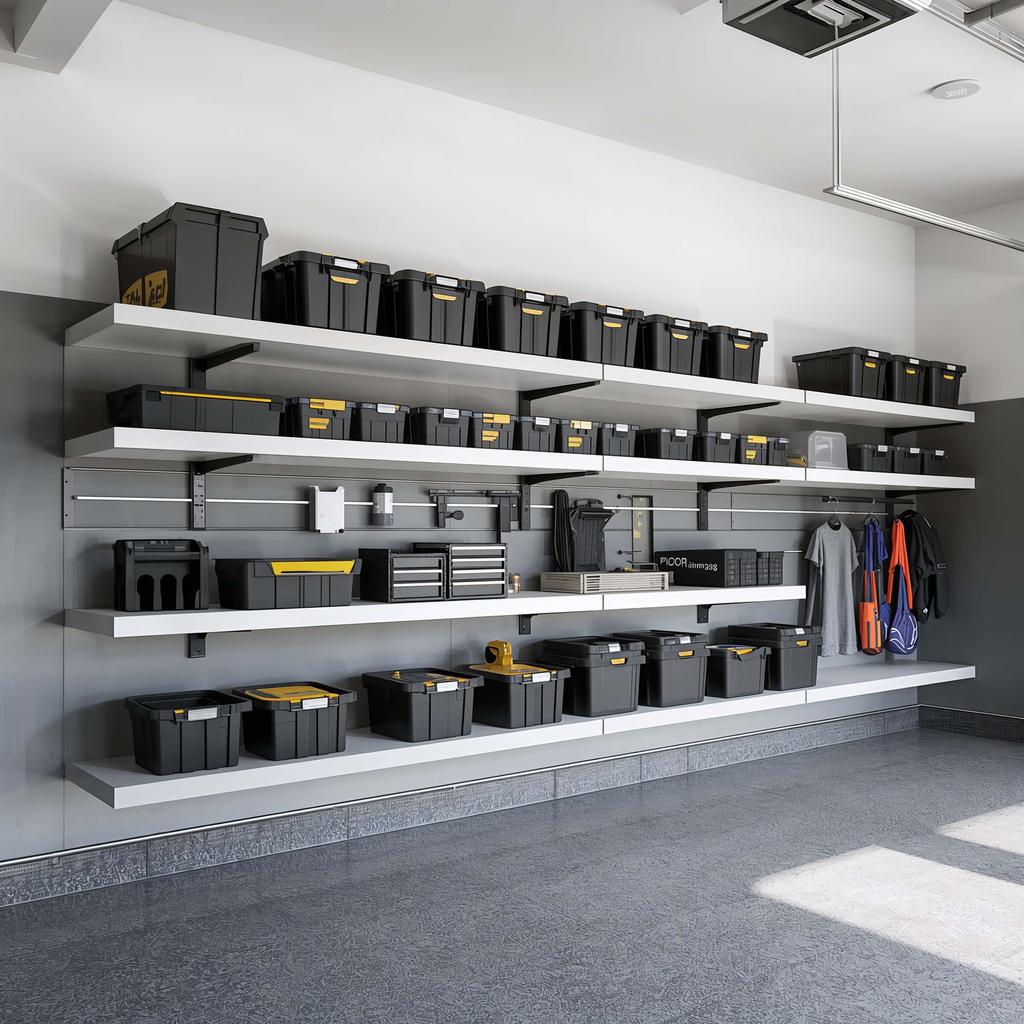
Ever walked into a garage and noticed how much empty wall space just sits there doing absolutely nothing? Floating wall-mounted shelves fix that problem instantly. They mount flush against the wall with no visible brackets, creating a clean, modern look that maximizes every square inch of vertical space.
The Beauty of Going Vertical
Most people think horizontally when they organize a garage. They spread everything across the floor, stack bins in corners, and wonder why there’s no room left. Floating shelves force you to think vertically, and that shift in mindset alone can double your usable storage area.
These shelves work best for:
- Lighter items like spray cans, small toolboxes, and gardening supplies
- Display and quick-access storage — grab what you need without digging through bins
- Narrow garages where floor space is limited and every inch of wall matters
Materials and Installation Tips
You can go with solid wood, MDF, or even metal floating shelves depending on your budget and style preference. Solid wood or plywood shelves offer the best balance of strength and affordability for garage use. I personally prefer ¾-inch birch plywood because it handles moisture better than MDF and doesn’t warp as easily.
For installation, use a French cleat system or heavy-duty concealed bracket hardware. French cleats are my go-to because they distribute weight evenly and let you reposition shelves without drilling new holes. Plus, they’re incredibly satisfying to slide into place—there’s a little click that just hits different.
3. DIY Wooden Pallet Shelving
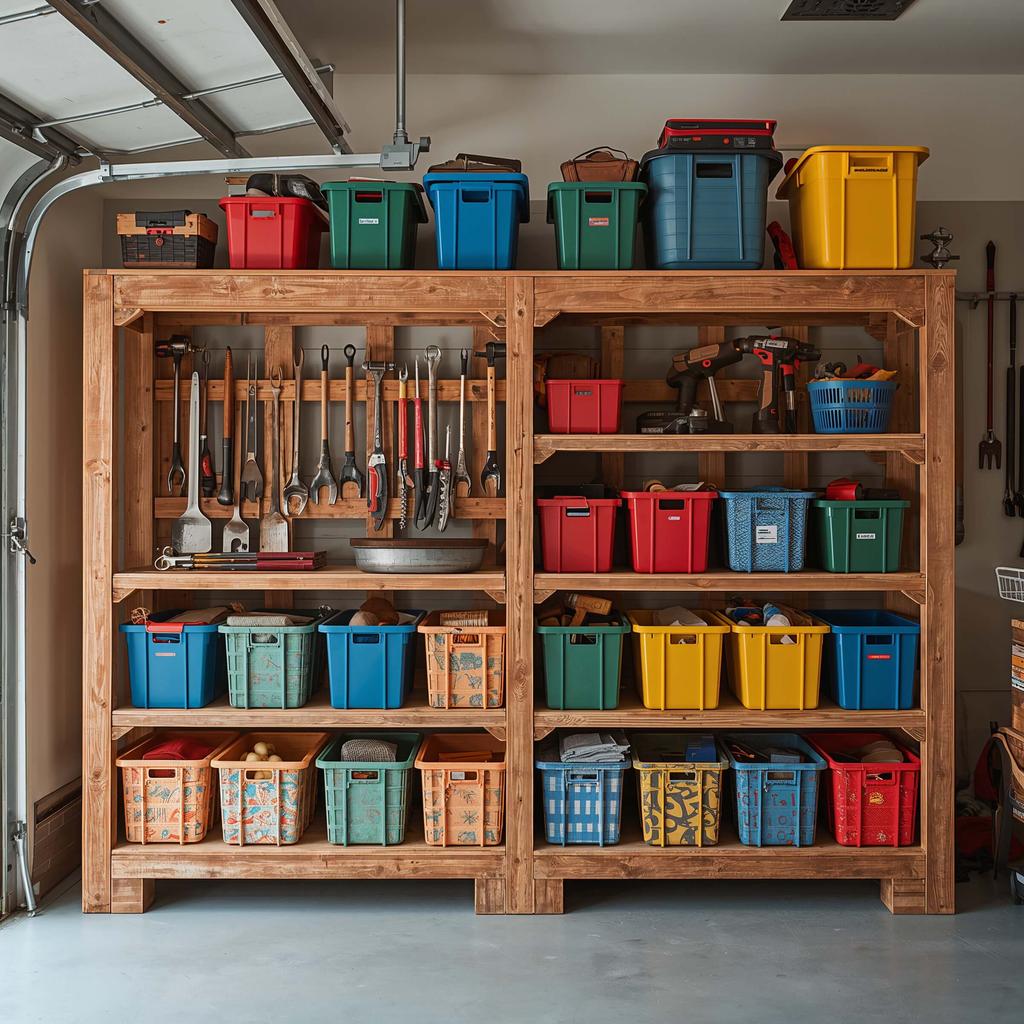
Here’s where things get fun and budget-friendly. Wooden pallet shelves cost next to nothing if you know where to find free pallets, and they bring a raw, rustic charm to your garage that store-bought shelving simply can’t replicate.
Where to Find Pallets (For Free!)
Most local businesses, warehouses, and hardware stores have pallets they’re desperate to get rid of. I’ve picked up dozens of high-quality pallets just by asking politely at the back of a landscaping supply yard. Always look for heat-treated pallets marked with “HT” on the side—these are safe to use indoors and haven’t been chemically treated.
Avoid pallets marked with “MB” (methyl bromide), as these contain chemicals you don’t want anywhere near your living space.
Building Your Pallet Shelves
The simplest approach is to mount a pallet directly to the wall with the slat openings facing outward. Those gaps between the boards become natural slots for tools, spray bottles, and small containers. For wider shelving, you can disassemble two pallets and reassemble the boards into custom-width shelves.
Here’s a quick breakdown of what you’ll need:
- 2–3 clean, HT-stamped pallets
- Sandpaper (80 and 120 grit) to smooth rough edges
- Wood stain or sealant for moisture protection
- Lag bolts or heavy-duty screws for wall mounting
- A level — because crooked shelves will haunt you every time you walk in
I built a full pallet shelving wall in my garage for under $30, and it holds everything from my drill collection to seasonal decorations. It’s not the prettiest setup I’ve ever made, but it’s functional, sturdy, and practically free. Hard to argue with that.
Also Read: 10 Brilliant DIY Garage Storage Ideas and Space-Saving Hacks
4. Overhead Ceiling Storage Racks
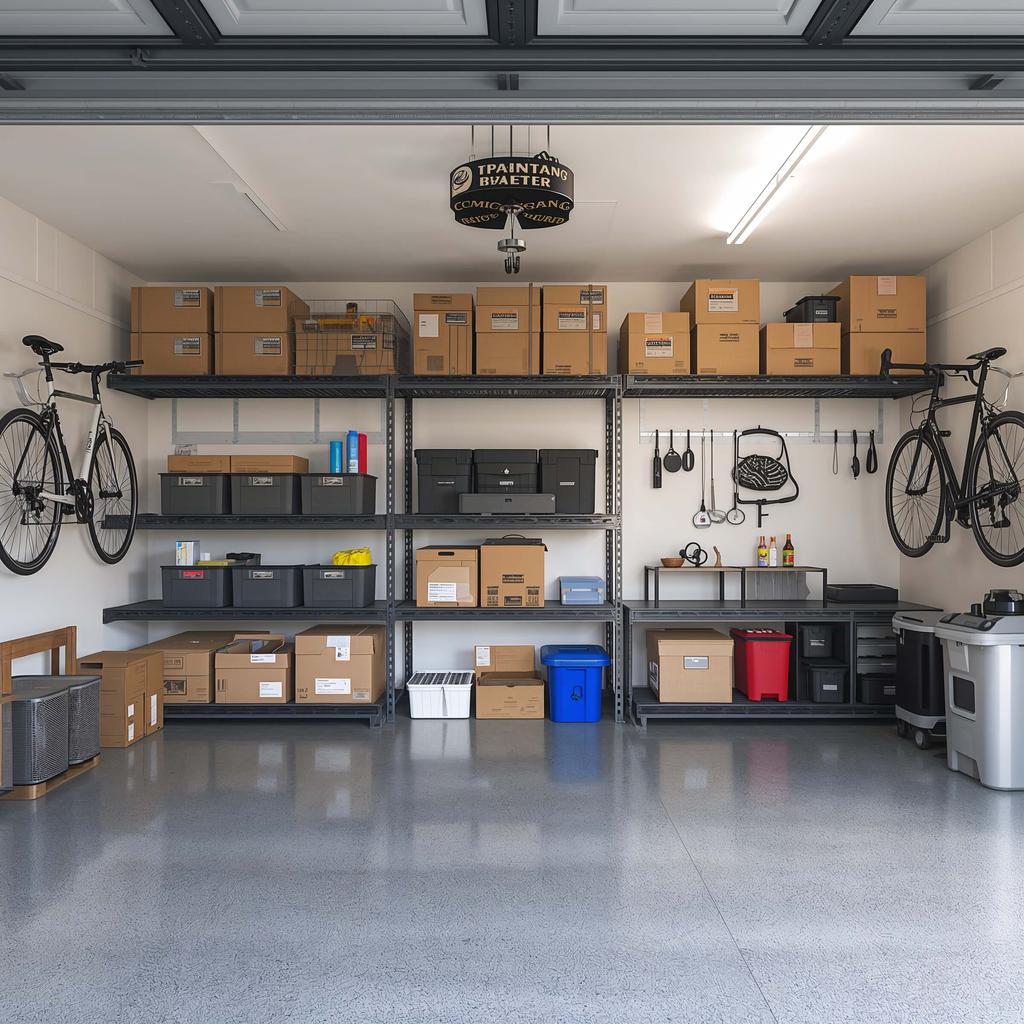
Why does everyone forget about the ceiling? Seriously, you’ve got an entire plane of unused real estate hovering above your head, and most people just ignore it. Overhead ceiling storage racks tap into that wasted space and keep bulky, rarely used items completely out of your way.
What to Store Up There
Ceiling racks are perfect for things you don’t need daily but can’t throw away:
- Seasonal decorations (holiday lights, inflatables, wreaths)
- Camping and outdoor gear (tents, sleeping bags, coolers)
- Luggage and travel bags
- Bulk supplies like paper towels or bottled water
Choosing the Right System
You’ll find two main styles: fixed-mount platforms and adjustable drop-down systems. Fixed platforms bolt directly to your ceiling joists and stay at one height. Adjustable systems use cables or a pulley mechanism to raise and lower the platform, which makes loading and unloading way easier if you don’t love climbing ladders.
IMO, the adjustable systems are worth the extra cost. I installed a 4×8-foot adjustable ceiling rack rated for 600 pounds, and it completely freed up an entire wall of my garage. The installation took about two hours with a buddy helping me hold things in place.
Critical safety note: always mount ceiling racks into structural joists, not just drywall. Use a stud finder, verify twice, and use lag bolts rated for the weight you plan to store. A 200-pound platform crashing down on your car is not a DIY story you want to tell.
5. Modular Cube Storage Units
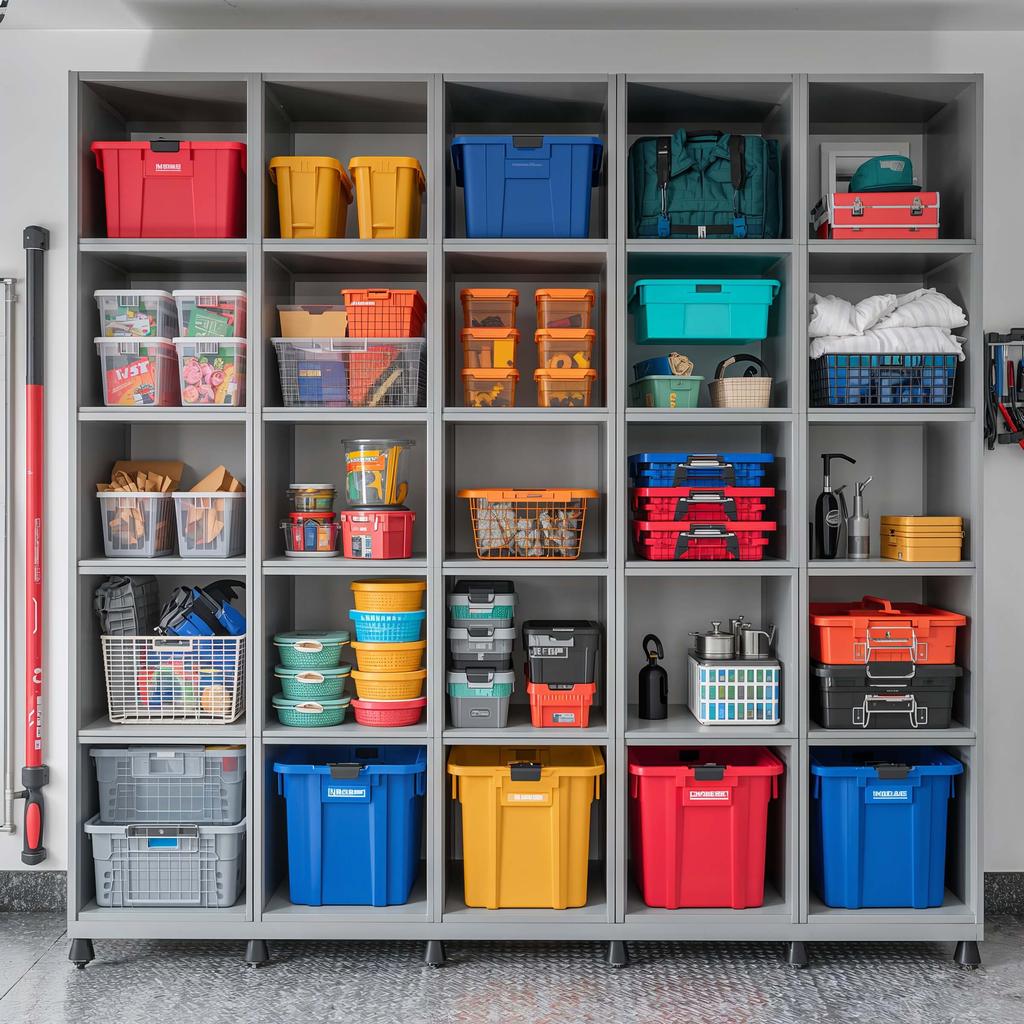
If flexibility is your priority, modular cube storage units deserve your attention. These grid-based systems let you mix and match cubes, drawers, and open compartments to create a shelving layout that fits your exact needs—and you can rearrange them whenever those needs change.
Why Modular Beats One-Size-Fits-All
Traditional shelving forces you to work within fixed dimensions. Modular cubes flip that script. You decide how many rows, how many columns, and what goes in each compartment. Need more space for power tools next month? Add another column. Want to reorganize by category? Just swap the bins around.
Key benefits include:
- Endlessly reconfigurable — your shelving evolves as your storage needs change
- Stackable design — build up, build wide, or build both
- Compatible with bins, baskets, and drawer inserts for organized, hidden storage
- Available in metal, wood, and heavy-duty plastic to suit different environments
Best Use Cases in the Garage
I use a metal cube system near my workbench to organize small parts—screws, nails, washers, electrical connectors. Each cube gets a labeled bin, and I can find anything in seconds instead of rummaging through a chaotic junk drawer. For heavier items, wood or steel cube units offer better structural integrity than plastic alternatives.
One thing I’ll mention: cheap plastic modular cubes from discount stores look appealing, but they sag under weight quickly. If you’re storing anything heavier than towels, invest in metal or solid wood cubes. Your future self will thank you.
6. Rustic Barnwood Garage Shelves
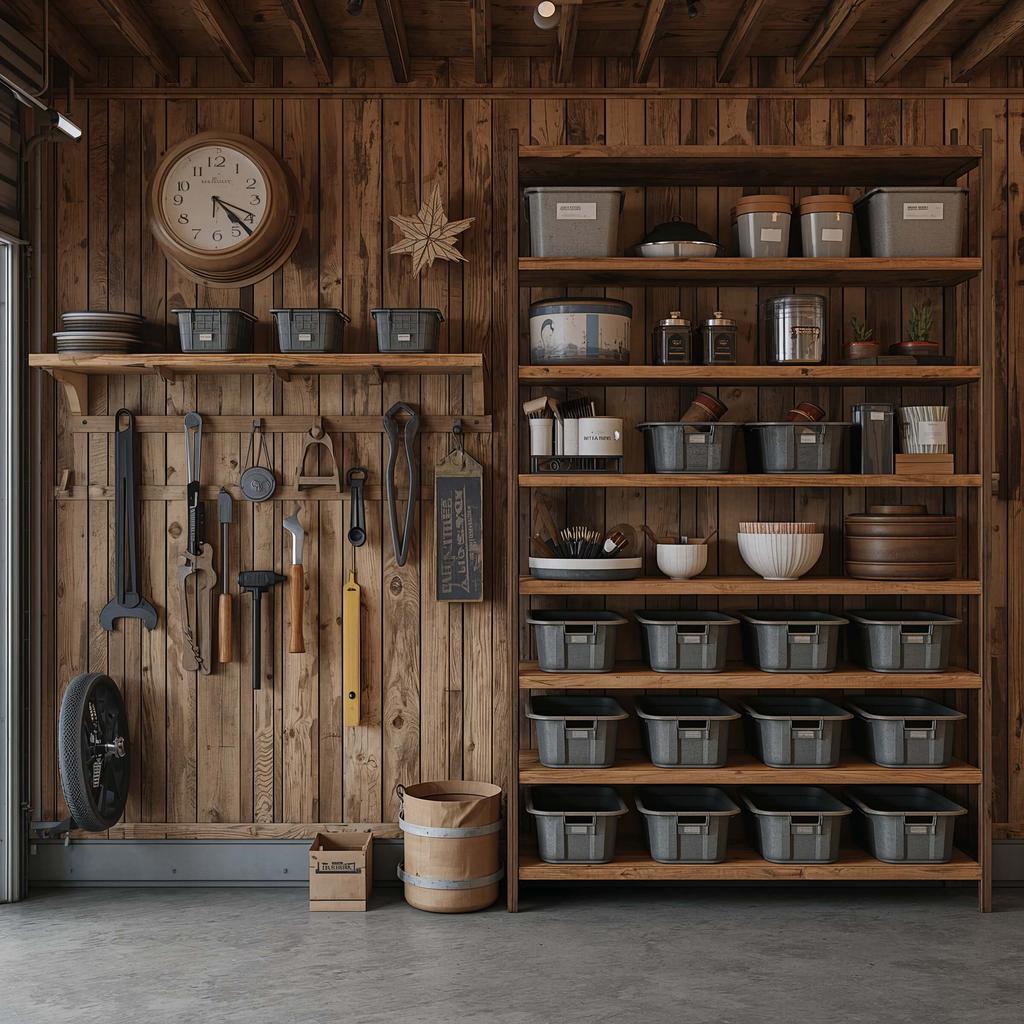
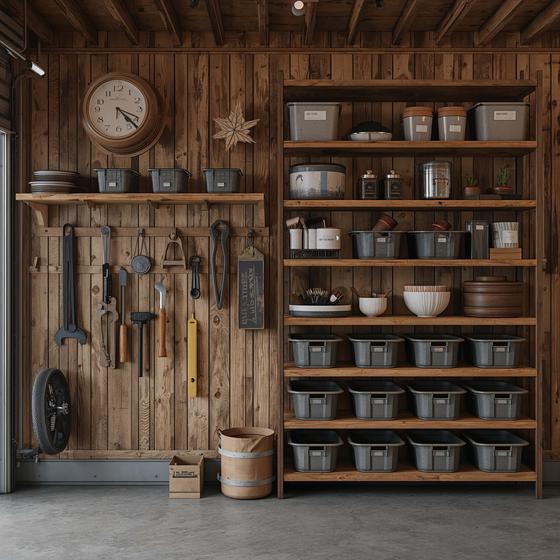
Want your garage to feel like something out of a countryside workshop rather than a sterile storage locker? Rustic barnwood shelves bring warmth, character, and a handcrafted vibe that makes your garage feel like a space you actually want to spend time in.
Sourcing Authentic Barnwood
Reclaimed barnwood comes from demolished barns, old fences, and salvaged structures. You can find it at architectural salvage yards, reclaimed lumber dealers, or online marketplaces like Facebook Marketplace and Craigslist. Prices vary wildly—sometimes you’ll score free boards from a farmer clearing old structures, and other times you’ll pay a premium for perfectly weathered planks.
When selecting barnwood, look for:
- Minimal rot or insect damage — some weathering is charming, but structural integrity matters
- Consistent thickness — warped or uneven boards make poor shelving surfaces
- Nail-free boards — or at least boards where you can easily remove old nails and hardware
Building and Mounting
I paired my barnwood planks with simple black iron L-brackets for a clean contrast between rustic wood and industrial metal. The combination looks incredible and takes maybe 30 minutes per shelf to install. Sand the surface lightly to remove splinters, apply a coat of polyurethane sealant to protect against garage moisture, and mount each bracket into a wall stud.
The result? Shelves that look like they’ve been there for decades and hold up to real garage use. Every visitor to my garage compliments these shelves, and I get to casually drop the “oh yeah, I built those myself” line. It never gets old 🙂
Also Read: 10 Brilliant Garage Mudroom Ideas and Space-Saving Tricks
7. Corner Space Ladder Shelves
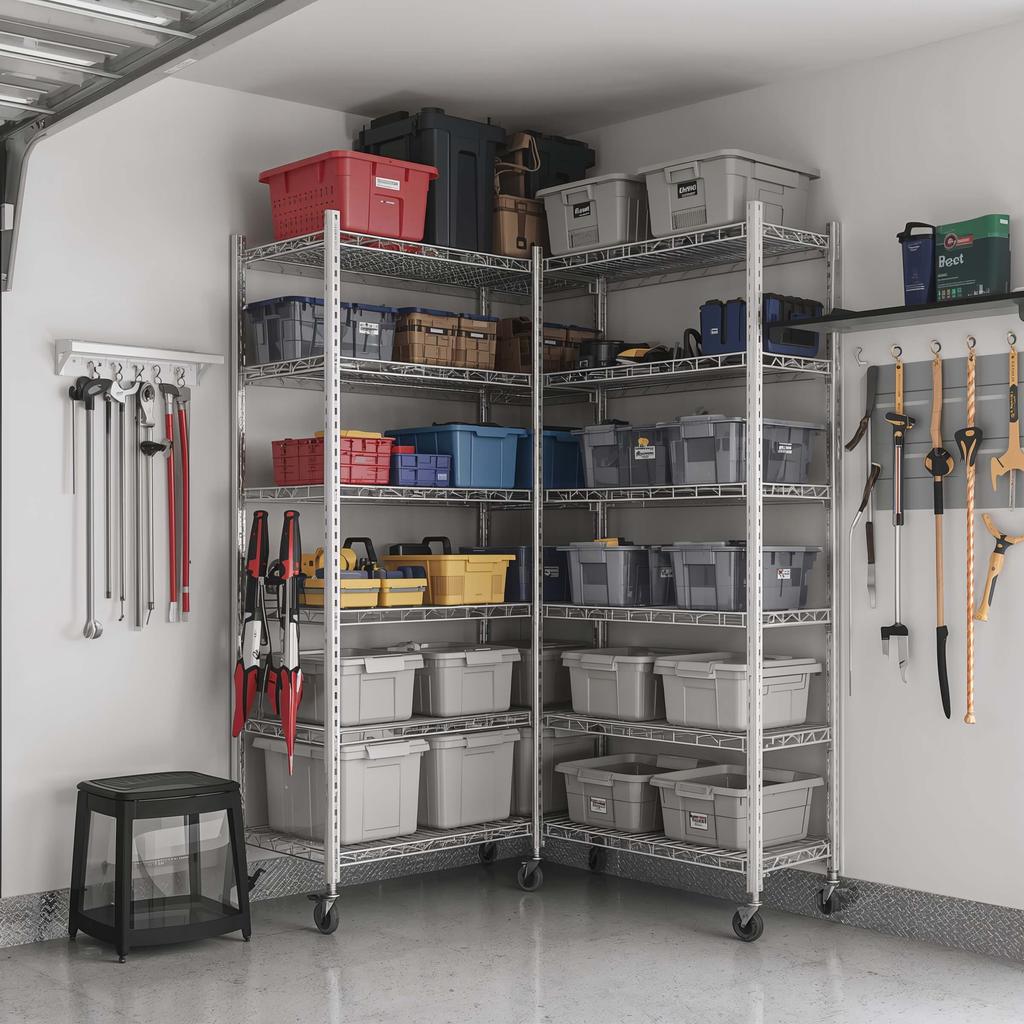
Corners are the black holes of garage organization. Stuff gets shoved in, piled up, and forgotten. Ladder shelves designed for corner spaces rescue those dead zones and turn them into structured, accessible storage areas.
What Makes Ladder Shelves Different
A ladder shelf leans against the wall at a slight angle, with shelves that get progressively narrower as they go up. This A-frame or leaning design makes them inherently stable without heavy wall mounting, and the tiered shelf sizes naturally encourage you to organize by item size—bigger stuff on the bottom, smaller items on top.
They’re especially great for:
- Awkward corner spaces that don’t fit standard rectangular shelving
- Renters who can’t drill into walls (most ladder shelves are freestanding)
- Quick setup — no tools, no mounting hardware, just lean and load
Picking the Right Material
For a garage environment, skip the decorative MDF ladder shelves you see marketed for living rooms. Go with solid wood or metal ladder shelves that can handle temperature swings, humidity, and the general roughness of garage life.
I keep a five-tier metal ladder shelf in my garage corner for gardening supplies. Pots on the bottom tier, hand tools in the middle, seed packets and gloves on top. It transformed a corner that previously held a sad, disorganized pile of stuff into a neat little gardening station. Sometimes the simplest solutions make the biggest difference, right?
8. Metal Pegboard Shelving System
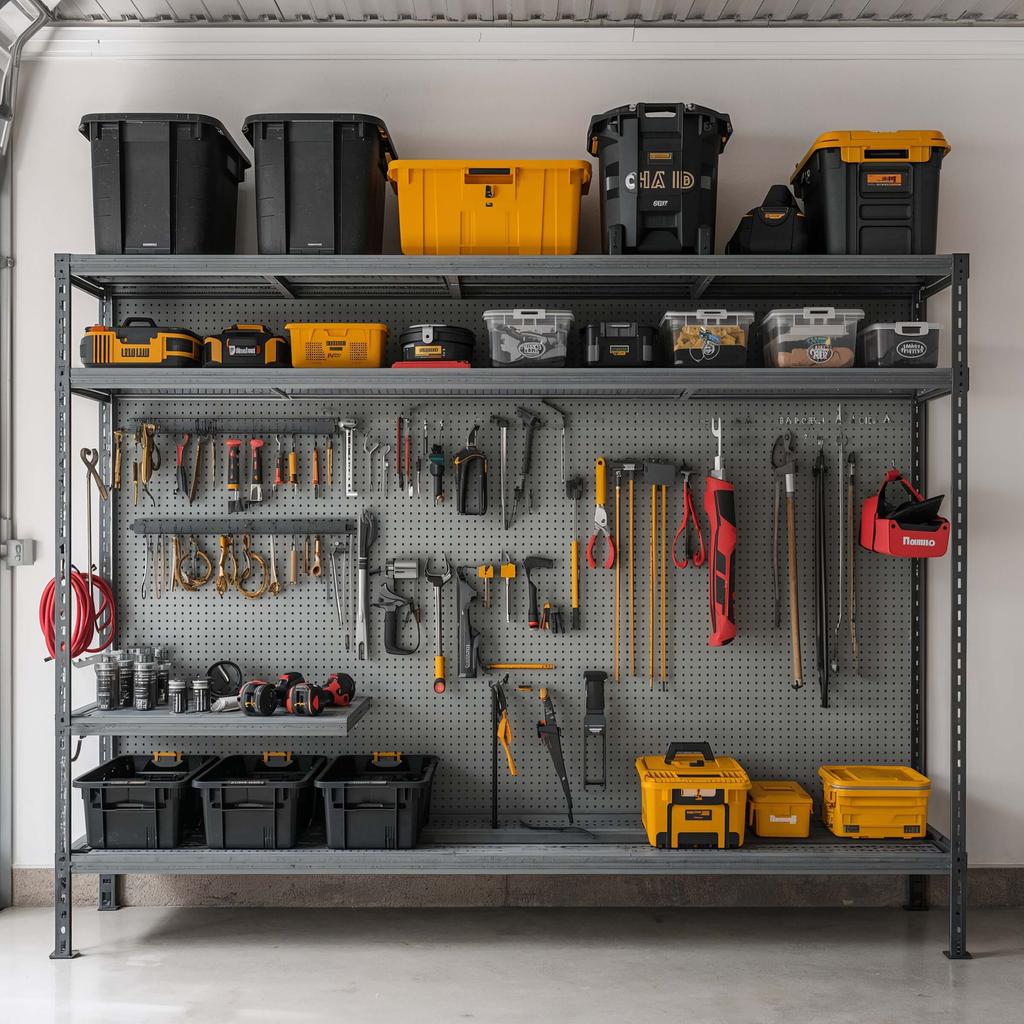
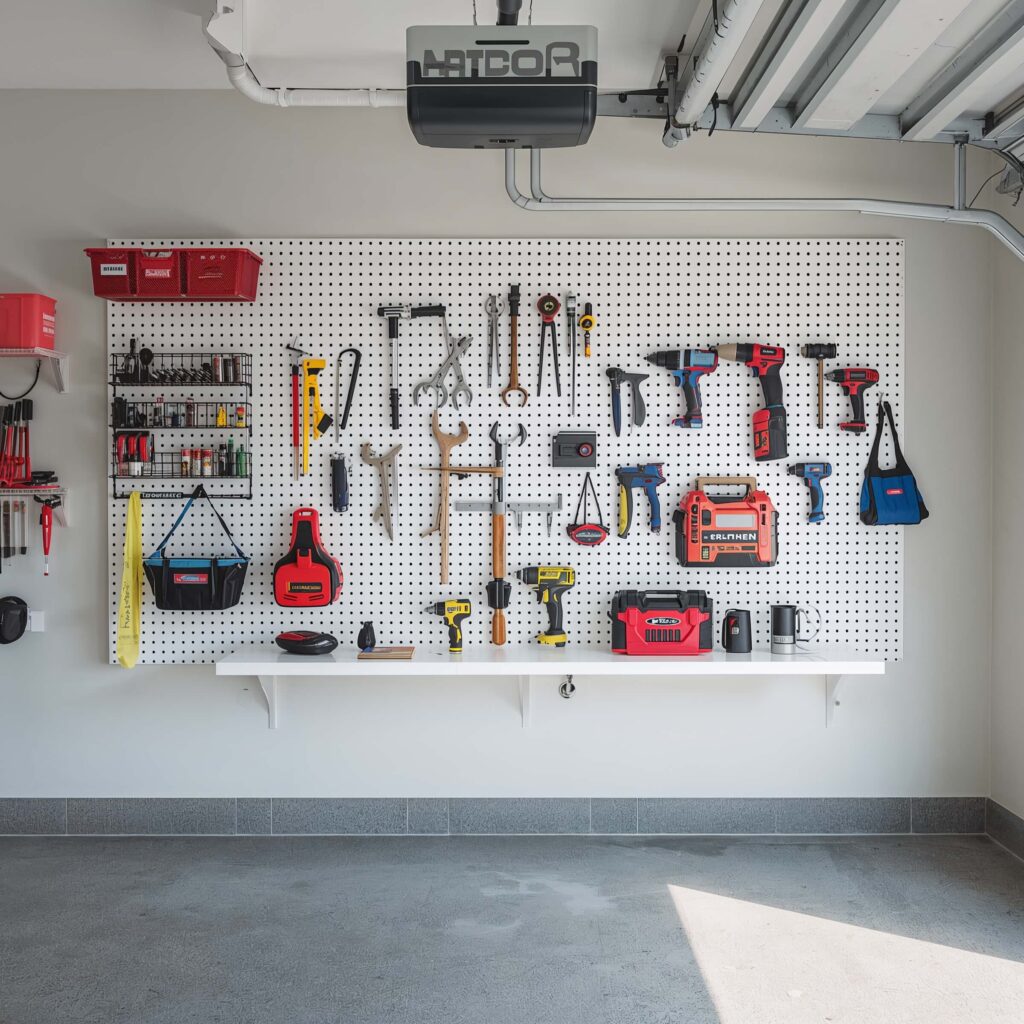
Pegboards aren’t just for tool walls anymore. Metal pegboard shelving systems combine the versatility of a traditional pegboard with actual shelf attachments, hooks, and bins to create a fully customizable wall storage solution that adapts to literally anything you throw at it.
Why Metal Beats Traditional Hardboard
Old-school hardboard pegboards work fine for lightweight items, but they struggle with heavier tools and tend to deteriorate in damp garage conditions. Steel or aluminum pegboards solve both problems. They’re stronger, moisture-resistant, and look significantly more polished.
Here’s a quick comparison:
- Hardboard pegboard: inexpensive, lightweight, prone to warping, limited weight capacity
- Metal pegboard: higher upfront cost, extremely durable, rust-resistant (with proper coating), supports heavy tools and accessories
- Plastic pegboard: mid-range cost, moisture-proof, moderate weight capacity, limited aesthetic appeal
Setting Up a Functional Pegboard Wall
The magic of pegboard shelving lies in the accessories. Most metal pegboard brands sell compatible shelf attachments, hook assortments, bin holders, and even specialized mounts for things like cordless drills, tape rolls, and safety glasses.
I dedicated an 8×4-foot section of my garage wall to a metal pegboard system, and it holds over 40 individual tools plus three shelf attachments for spray cans and small parts bins. The best part? I can reorganize the entire layout in minutes just by moving pegs around. No drilling, no new holes, no commitment. FYI, if you color-code your hook positions with small labels or paint marks, you’ll always know exactly where each tool belongs—and more importantly, you’ll know when something’s missing.
9. Adjustable Wire Shelving Racks
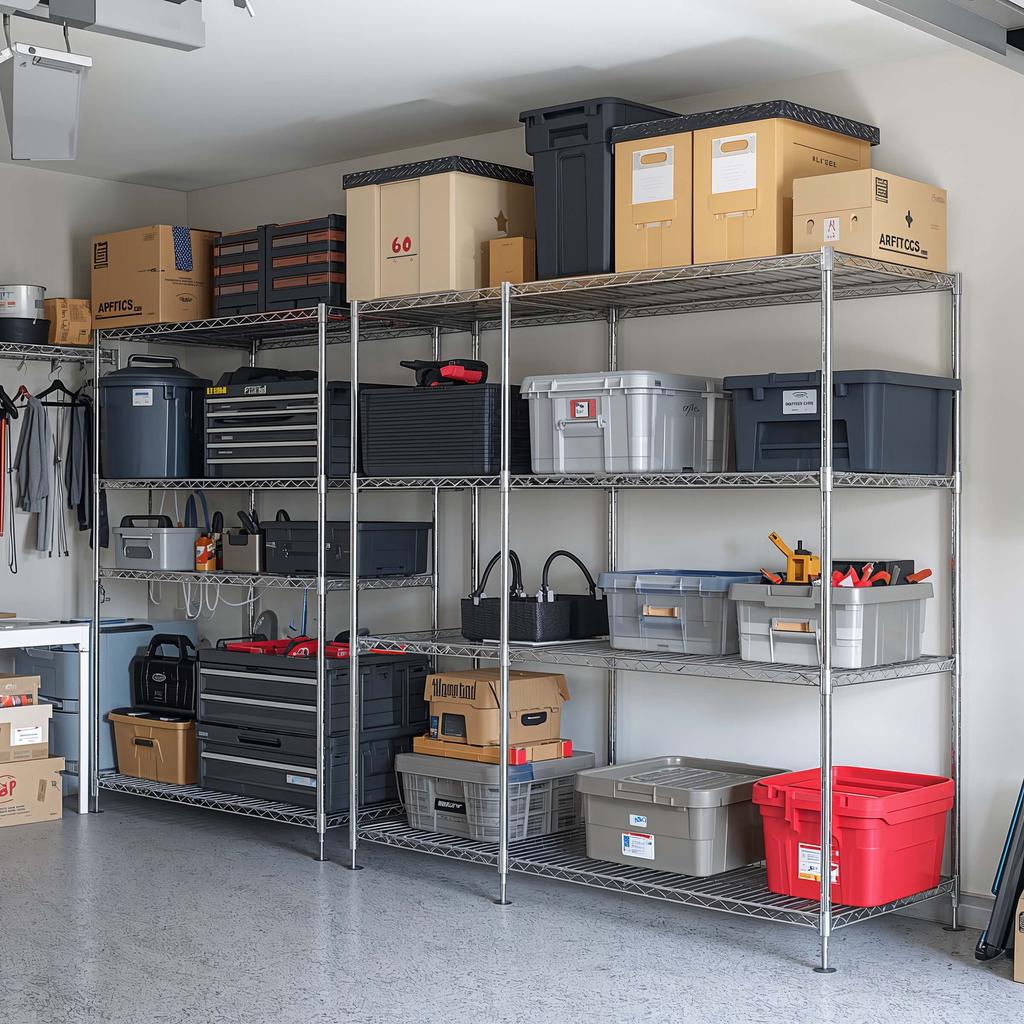
If you’ve ever used wire shelving in a pantry or closet, you already know the format. Adjustable wire shelving racks bring that same practical, no-nonsense storage to your garage with the added bonus of being incredibly easy to reconfigure as your needs evolve.
The Practical Advantages
Wire shelving racks are the workhorses of garage storage—not glamorous, not Instagram-worthy, but relentlessly functional and affordable. Here’s why they deserve a spot in almost every garage:
- Adjustable shelf heights — move shelves up or down in one-inch increments without tools
- Open wire design — dust, dirt, and debris fall through instead of accumulating on surfaces
- Ventilation — air circulates around stored items, preventing mold and mildew in humid garages
- Lightweight yet strong — chrome or powder-coated steel wire supports hundreds of pounds per shelf
- Easy assembly — most units snap together in under 20 minutes with no tools required
Where to Place Them
I run a six-tier wire shelving rack along the back wall of my garage, and it holds everything from storage bins and cleaning supplies to automotive fluids and small power tools. The adjustable heights mean I can fit tall items on one shelf and stack shorter bins tightly on the next, wasting almost zero vertical space.
One tip from experience: add shelf liners to at least a few shelves. The wire grid pattern works great for bins and large items, but smaller things like screws, bolts, and spray nozzles will fall right through those gaps. A cheap rubber or plastic liner solves the problem instantly and costs almost nothing.
Wire shelving might not win any design awards, but when it comes to price-to-performance ratio, nothing else comes close. You can outfit an entire garage wall for under $100, and the shelves will last for years with minimal maintenance.
Also Read: 10 Elegant Garage Loft Ideas and Space-Saving Techniques
10. Hidden Cabinet Garage Storage
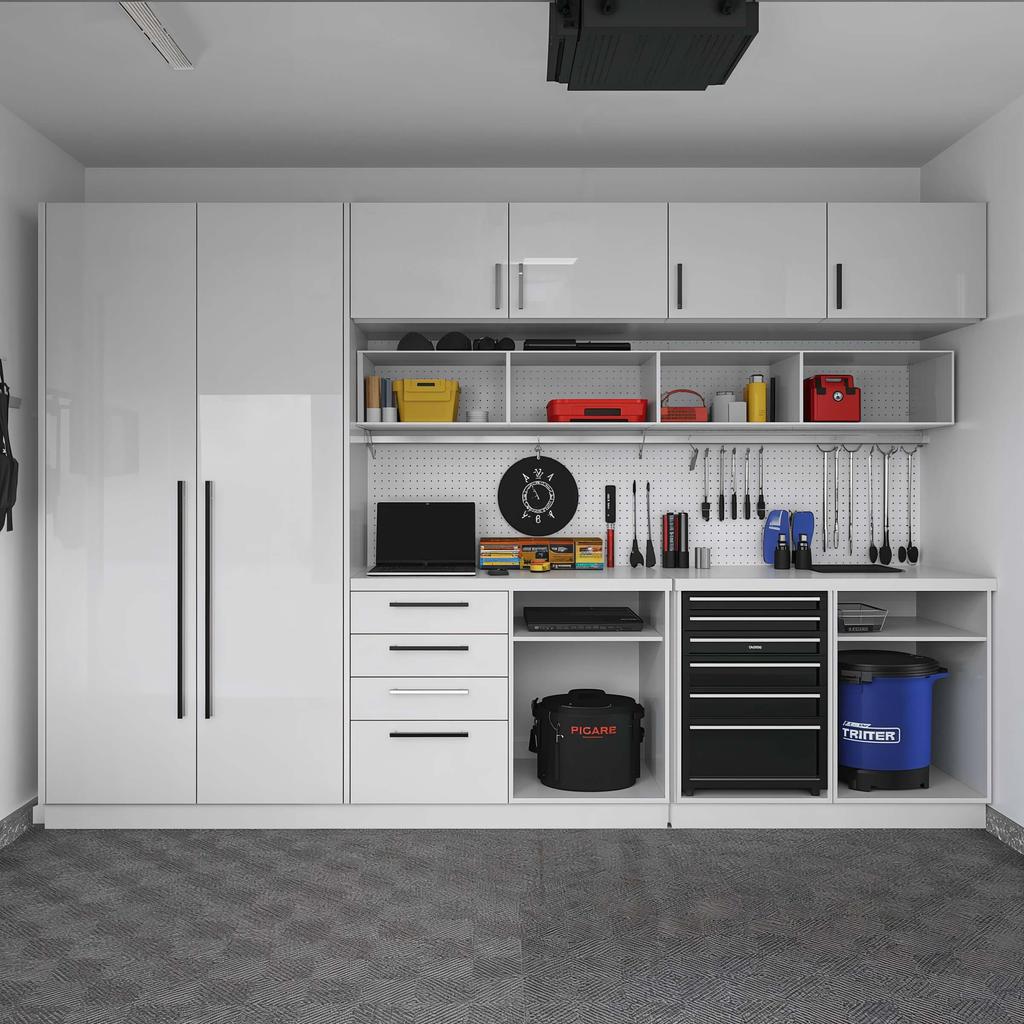
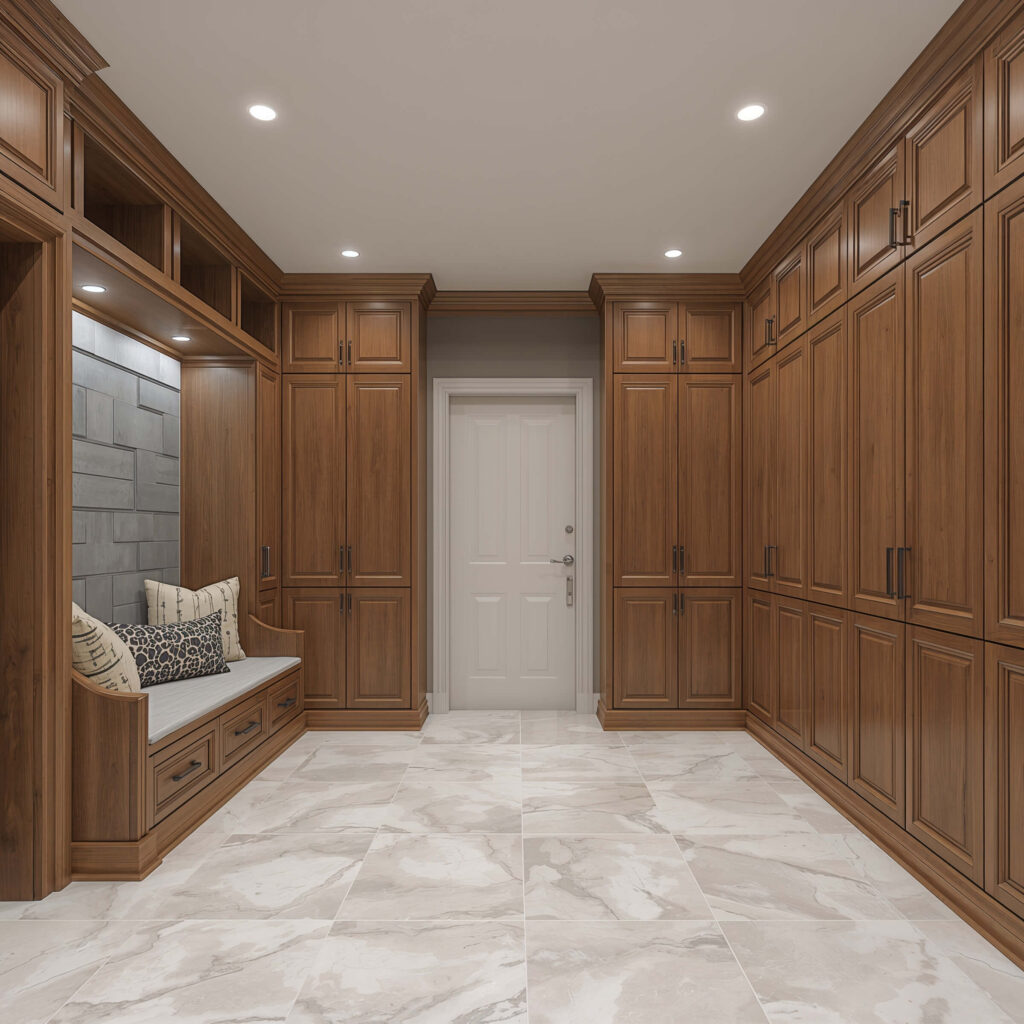
Let’s talk about the unsung hero of garage organization: hidden cabinet storage. While open shelves display everything (including your mess), cabinets tuck it all away behind closed doors. The result is a garage that looks clean, finished, and surprisingly sophisticated.
Open Shelving vs. Hidden Cabinets
Both have their place, but here’s the honest breakdown:
- Open shelving gives you instant visual access and quick retrieval, but everything stays exposed to dust, humidity, and visual clutter
- Hidden cabinets protect your items from the elements, create a streamlined look, and let you be a little less organized behind those doors without anyone knowing (we’ve all done it)
For the best of both worlds, combine open shelving with strategic cabinet placement. Keep frequently used tools and supplies on open shelves, and store chemicals, seasonal items, and rarely used gear inside cabinets.
Types of Garage Cabinets
You’ve got several routes depending on your budget and ambitions:
- Prefabricated steel cabinets — durable, lockable, available in various sizes, easy to install
- Custom-built wooden cabinets — tailored to your exact dimensions, can match your garage aesthetic
- Repurposed kitchen cabinets — an incredible budget hack; many people give away old kitchen cabinets during renovations
- Wall-mounted upper cabinets — keep floor space clear while providing enclosed storage at eye level
My Experience with Repurposed Kitchen Cabinets
This is honestly one of the best moves I’ve made in my garage. A neighbor renovated their kitchen and offered me their old upper cabinets for free. I mounted them along one wall of my garage, painted them a matching dark gray, and added new hardware. The whole project cost me about $40 in paint and handles, and I gained roughly 30 cubic feet of enclosed storage.
Behind those doors, I store automotive chemicals, paint supplies, and small electronics that I don’t want exposed to dust or temperature extremes. Everything stays clean, organized, and completely out of sight. When friends walk in, they think I hired a professional organizer. Little do they know, it’s just free cabinets and some elbow grease.
Smart Space Layout Tips for Any Garage
Beyond individual shelving ideas, how you arrange your garage matters just as much as what you put in it. A great shelving system installed in a terrible layout still creates frustration. Here are a few layout principles I swear by:
Zone Your Garage
Divide your garage into functional zones based on activity:
- Workshop zone — workbench, tool storage, pegboard wall
- Automotive zone — car supplies, fluids, jacks, tire storage
- Sports and recreation zone — bikes, balls, camping gear
- Seasonal storage zone — holiday decorations, winter gear, summer toys
- Utility zone — cleaning supplies, trash and recycling bins, household overflow
Assign each zone a dedicated section of wall and floor space. This prevents the all-too-common problem of everything ending up in one giant mixed pile.
Keep the Floor Clear
The golden rule of garage layout: if it can go on a wall or ceiling, it shouldn’t be on the floor. Wall-mounted shelves, ceiling racks, pegboards, and hooks keep your floor open for parking, walking, and actually using your garage as a workspace. Every item on the floor is an obstacle you’ll trip over, step around, or kick aside—and eventually curse at.
Label Everything
This sounds basic, but labeling your bins, shelves, and cabinets is the difference between a system that lasts and one that devolves into chaos within three months. Use a label maker, masking tape and a marker, or printed tags—whatever works. Just label it. Future you will be grateful.
Wrapping It All Up
Transforming your garage from a chaotic dumping ground into an organized, functional space doesn’t require a massive budget or professional help. It requires the right shelving choices and a smart layout that matches how you actually use the space.
Let’s recap the 10 practical garage shelving ideas we covered:
- Industrial Pipe Shelves — heavy-duty, stylish, and fully customizable
- Floating Wall-Mounted Shelves — clean, modern, and great for vertical storage
- DIY Wooden Pallet Shelving — budget-friendly and surprisingly charming
- Overhead Ceiling Storage Racks — perfect for bulky, seasonal items
- Modular Cube Storage Units — endlessly reconfigurable for changing needs
- Rustic Barnwood Shelves — character-filled and easy to build
- Corner Space Ladder Shelves — rescue dead corner zones without drilling
- Metal Pegboard Shelving Systems — ultimate tool wall flexibility
- Adjustable Wire Shelving Racks — affordable, practical, and low-maintenance
- Hidden Cabinet Storage — clean look with enclosed, protected storage
My honest advice? Start with one or two ideas that match your biggest pain points. If your floor is overwhelmed, go with ceiling racks and wall-mounted shelves first. If you can’t find your tools, a pegboard system will change your life. If you just want the garage to look less like a disaster zone, cabinets and labeled bins work wonders.
The perfect garage doesn’t happen overnight—mine took about six weekends of incremental improvements before it felt truly dialed in. But every shelf you mount and every zone you organize brings you one step closer to a garage that works for you instead of against you. So pick an idea, grab your drill, and take back that space. You’ve got this.