12 Elegant Green Kitchen Tiles Ideas for Timeless Design
- Kitchen Tiles Ideas
 Ben
Ben- 0
- 52 minutes read
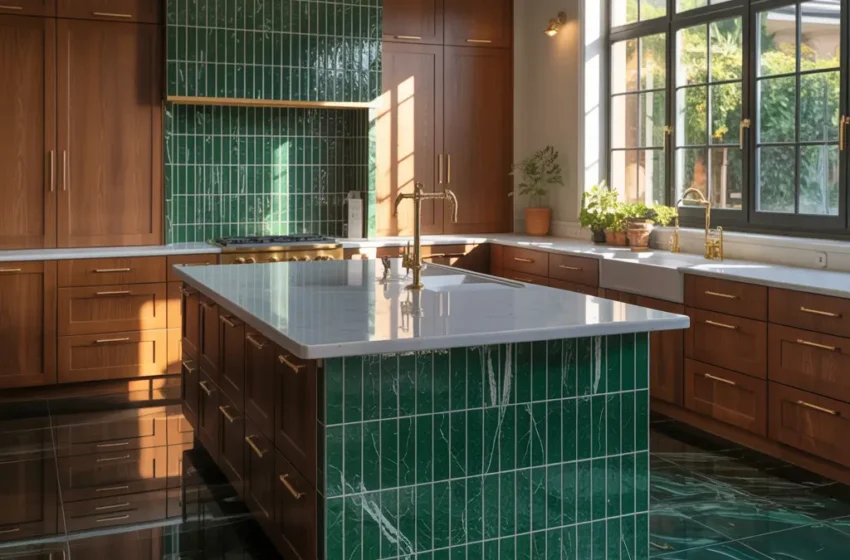
Green kitchens have officially moved from “interesting choice” to “absolutely stunning” territory. And honestly? It’s about time.
I resisted green tiles for years. Something about committing to color felt risky when safe neutrals existed.
Then I visited a friend’s kitchen featuring the most gorgeous sage green backsplash, and everything changed. That space felt alive, calming, and impossibly stylish all at once.
Green connects us to nature in ways that white, gray, and beige simply cannot. It brings freshness to cooking spaces where we spend countless hours chopping, stirring, and inevitably making messes.
Whether you prefer subtle hints of mint or dramatic emerald statements, green kitchen tiles offer something for every aesthetic preference.
Ready to explore the full spectrum of green kitchen tile possibilities? These twelve ideas cover everything from bold jewel tones to delicate pastels, helping you find the perfect shade for your cooking sanctuary.
1. Emerald Green Subway Tile Kitchen
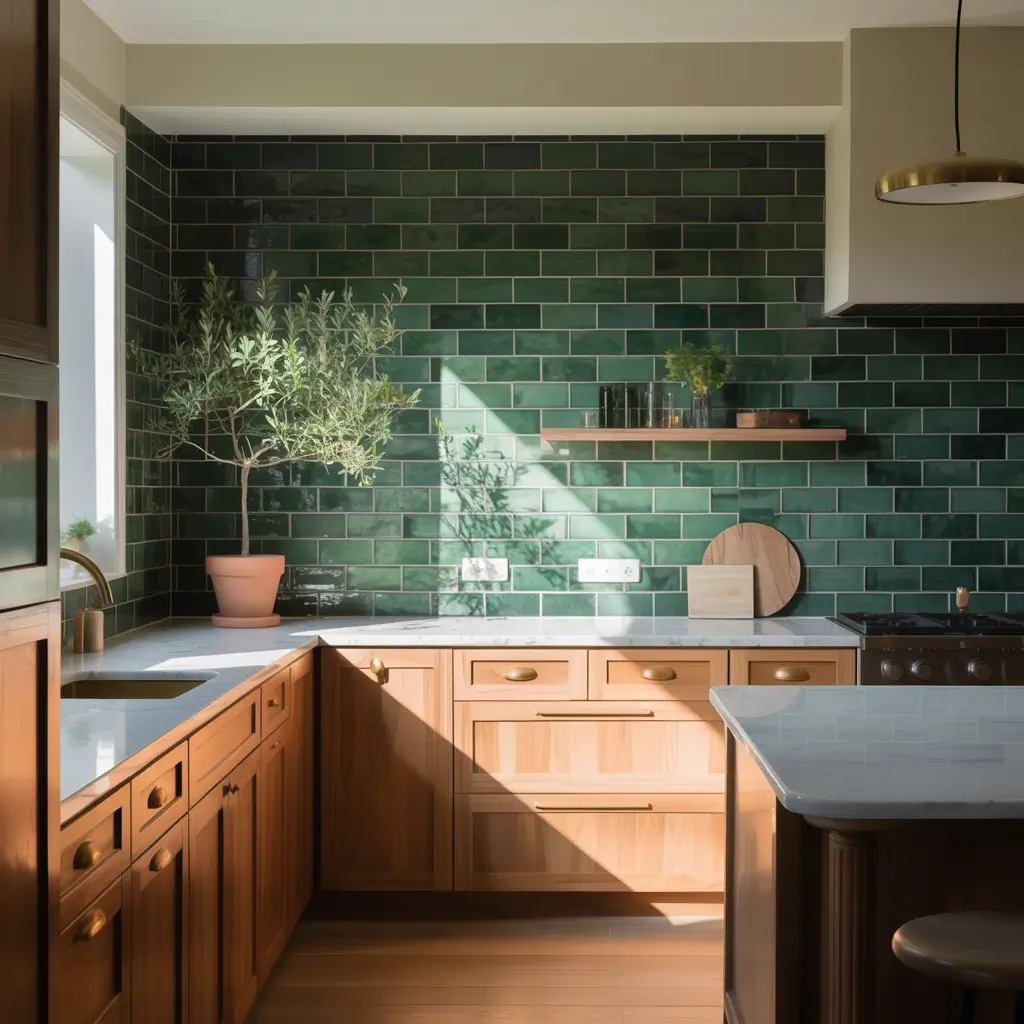
When you want green that commands attention without screaming for it, emerald subway tiles deliver perfectly. This combination marries classic tile format with luxurious jewel-tone coloring.
Why Emerald Works So Well
Emerald green sits right in the sweet spot of the green spectrum—not too yellow, not too blue. This balanced hue reads as sophisticated and intentional rather than quirky or dated.
Subway tiles in emerald create striking focal points while maintaining the familiar, approachable format that works in virtually any kitchen style. The rectangular shape keeps things grounded even when the color makes bold statements.
The appeal of emerald green subway tiles includes:
- Versatile pairing options: Works beautifully with white, cream, black, and brass accents
- Timeless format: Subway shape ensures the design won’t date quickly
- Rich depth: Emerald provides visual weight without feeling heavy
- Light interaction: This shade reflects light beautifully, especially in glossy finishes
- Mood enhancement: Creates calm, grounded atmospheres perfect for kitchens
Styling Your Emerald Subway Kitchen
Pair emerald subway tiles with white countertops and cabinetry for maximum impact. The contrast allows the green to shine as the star of your kitchen design.
For a moodier aesthetic, combine emerald tiles with dark wood cabinets and brass hardware. This combination creates sophisticated, almost Art Deco-inspired spaces that feel both luxurious and welcoming.
I’ve seen emerald subway tiles work particularly well when extended from countertop to ceiling. This full-wall approach maximizes the impact and prevents that awkward stopping point where cheaper renovations often cut corners. Commit to the color fully, and the results genuinely impress.
2. Mint Green Hexagon Tiles Kitchen
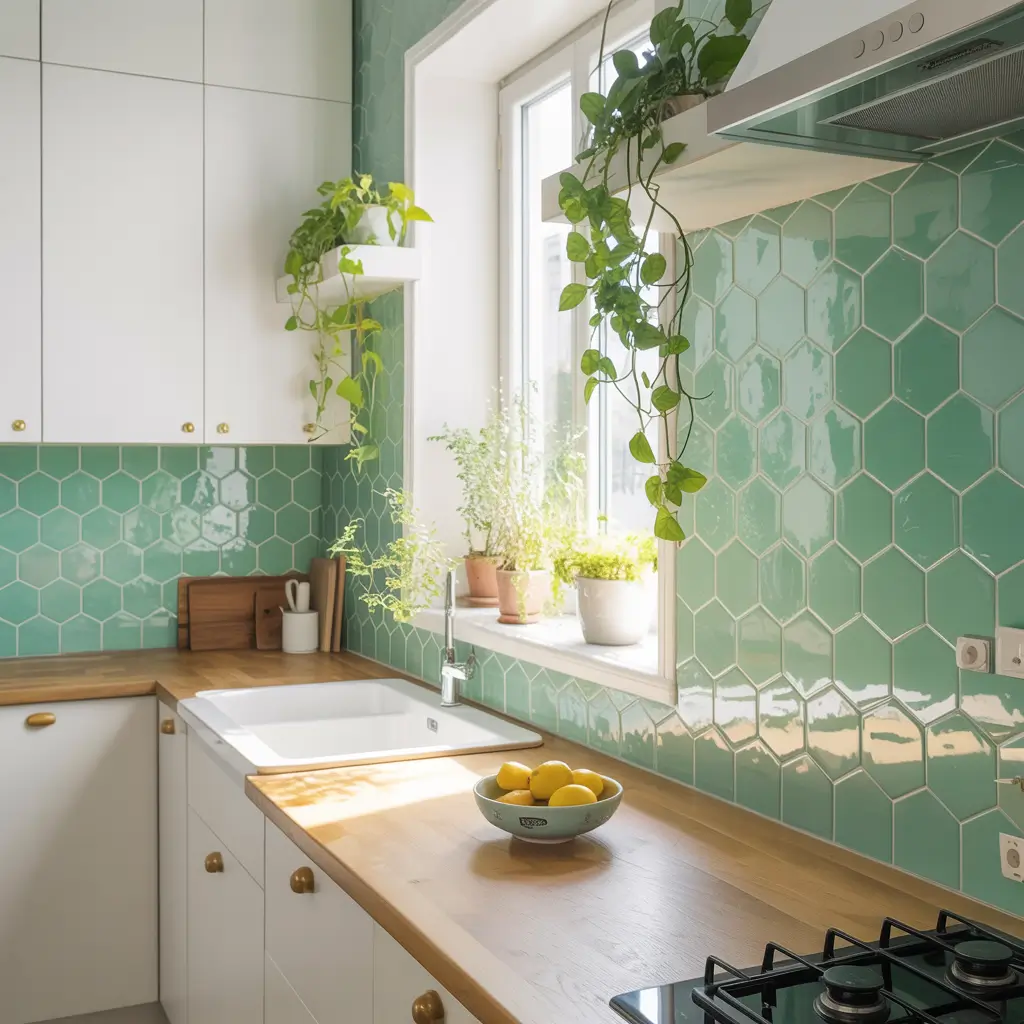
Want something fresh, playful, and undeniably charming? Mint green hexagon tiles bring retro appeal with contemporary relevance.
The Charm of Mint Hexagons
Hexagon tiles naturally add visual interest through their geometric shape. Combine that inherent personality with mint green’s refreshing quality, and you create kitchens that feel both nostalgic and modern.
Mint green occupies the lighter, cooler end of the green spectrum. This shade evokes ice cream parlors, vintage diners, and spring gardens—all pleasant associations for spaces where food preparation happens.
Why mint green hexagon tiles work beautifully:
- Geometric interest: Hexagons create dynamic patterns without additional design effort
- Fresh aesthetic: Mint suggests cleanliness and renewal
- Flexible sizing: Available from tiny mosaics to large statement hexagons
- Retro references: Nods to mid-century design while remaining current
- Light-enhancing: Pale tones brighten spaces naturally
Best Applications for Mint Hexagons
Mint hexagon tiles shine brightest as backsplash features or floor accents in smaller kitchens. Their light coloring and interesting shape add personality without overwhelming compact spaces.
Consider extending mint hexagons partially up walls, creating organic, flowing edges rather than straight horizontal lines. This approach showcases the hexagonal shape dramatically while adding artistic flair.
For floors, larger mint hexagons create retro-inspired surfaces that pair wonderfully with white cabinets and vintage-style fixtures. The combination transports kitchens to cheerful mid-century aesthetics without feeling like museum recreations.
3. Dark Forest Green Matte Tiles
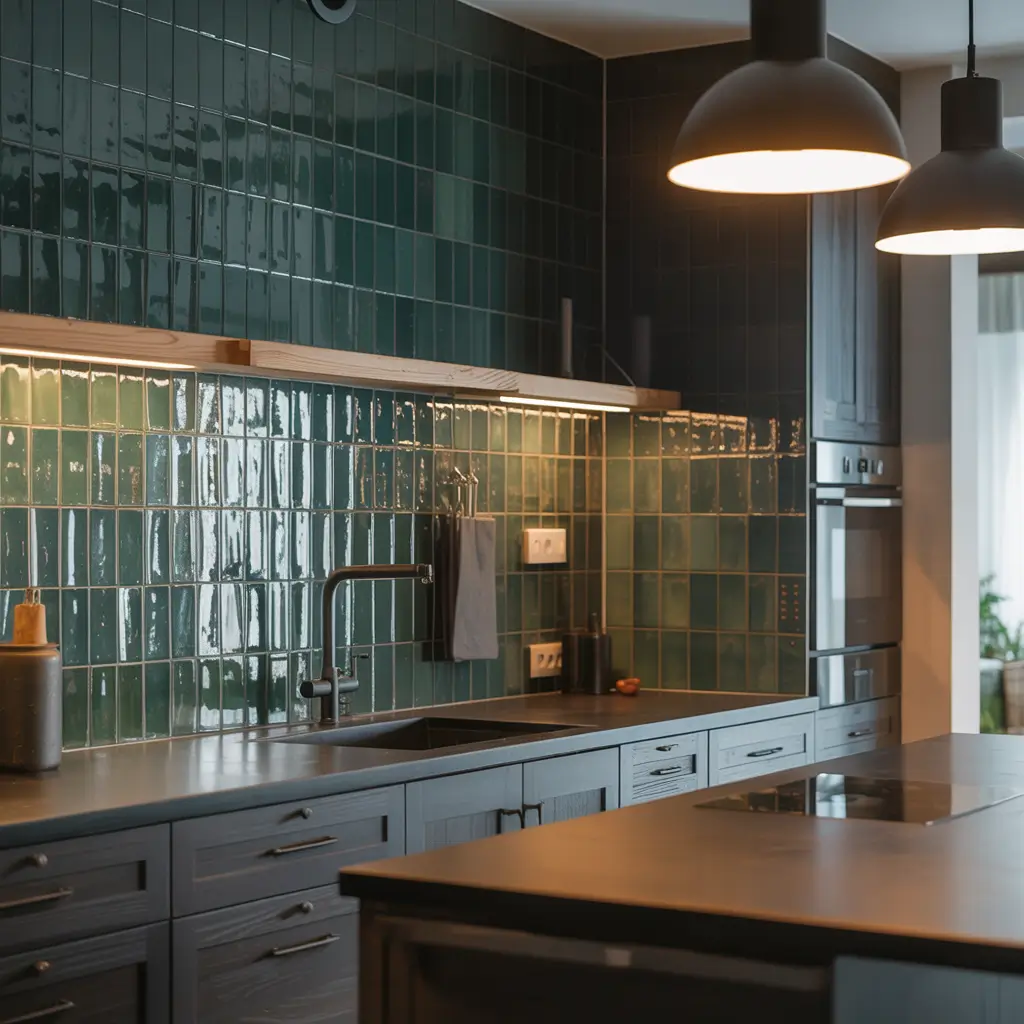
Sometimes you want green that whispers secrets rather than announcing itself. Dark forest green matte tiles create moody, sophisticated kitchen spaces with serious design credibility.
Understanding Forest Green’s Appeal
Forest green draws inspiration from dense woodland canopies—deep, rich, and grounding. When rendered in matte finishes, this shade absorbs light rather than reflecting it, creating intimate atmospheres with undeniable drama.
Matte finishes add to forest green’s sophisticated nature:
- No glare or reflection: Perfect for kitchens with abundant natural light
- Soft visual texture: Matte surfaces feel warmer than glossy alternatives
- Fingerprint resistance: Shows smudges and water spots less than glossy tiles
- Contemporary aesthetic: Matte finishes dominate modern design trends
- Depth without shine: Creates substance without surface distraction
Making Dark Tiles Work in Kitchens
The obvious concern with dark forest green tiles? They might make kitchens feel smaller or cave-like. Here’s the truth: proper lighting and strategic placement eliminate this concern entirely.
Use forest green matte tiles on backsplashes while keeping cabinets and countertops in lighter tones. Install adequate under-cabinet lighting to illuminate the dark tiles beautifully. The contrast between dark tiles and lighter surroundings actually creates depth and visual interest.
IMO, dark forest green matte tiles work best in kitchens with decent natural light. Windowless or basement kitchens might struggle with this shade, though creative lighting solutions can compensate significantly.
Consider forest green matte tiles for kitchen islands or feature walls rather than complete floor-to-ceiling applications. This approach delivers the moody sophistication without risking oppressive darkness.
Also Read: 10 Creative Kitchen Splashback Tiles Ideas for Stylish Spaces
4. Sage Green Kitchen Wall Tiles
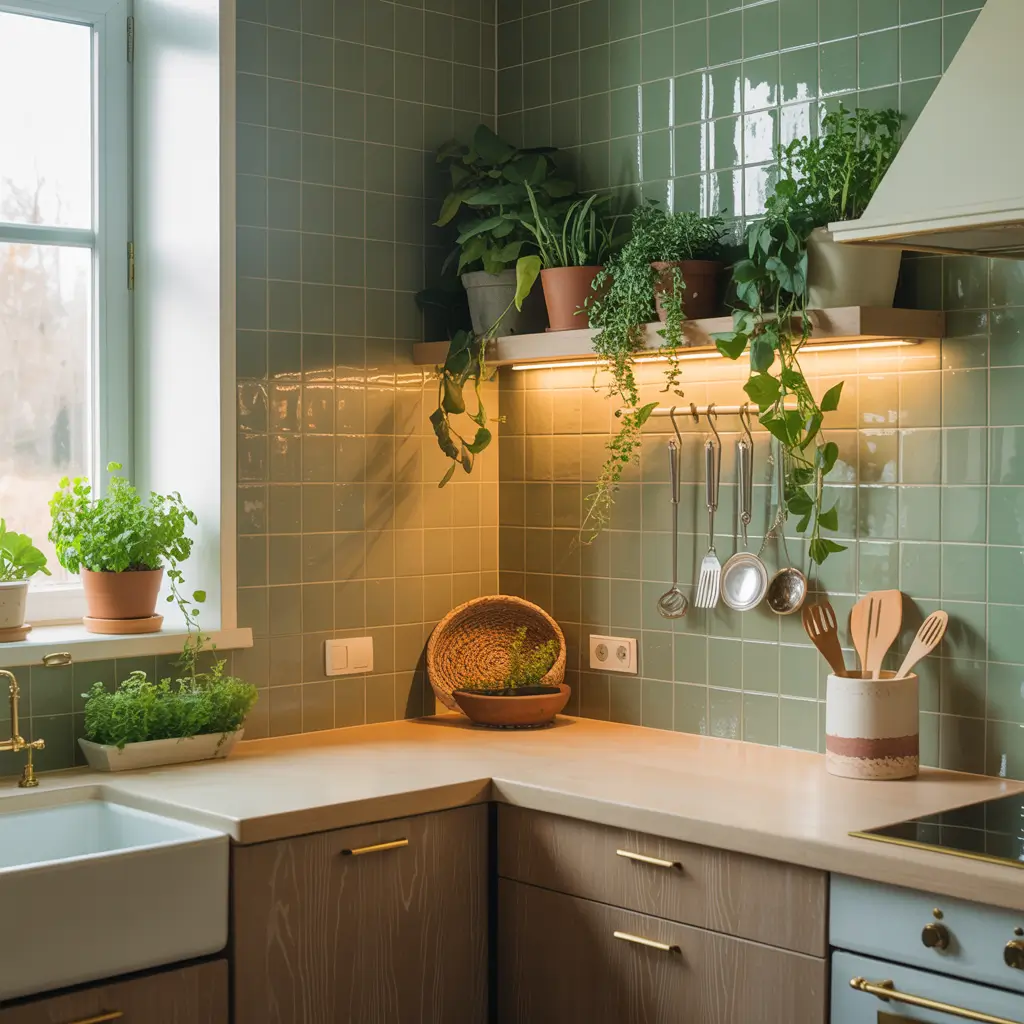
Sage green might just be the most versatile, universally appealing green shade for kitchens. Its muted, earthy quality works with virtually any design style and never feels overwhelming.
Why Designers Love Sage
Sage green bridges the gap between bold color statements and safe neutrals. This dusty, gray-tinged green feels colorful enough to add interest yet subdued enough to serve as a near-neutral background.
The psychology behind sage green’s kitchen appeal:
- Calming properties: Sage reduces stress and promotes relaxation
- Natural connection: Evokes herbs, plants, and organic materials
- Warm undertones: More welcoming than cooler green shades
- Broad compatibility: Works with warm and cool color palettes equally
- Timeless quality: Sage has appeared in design throughout history
Sage Green Tile Applications
Sage works anywhere you might use a neutral—walls, floors, backsplashes, or full kitchen surfaces. Its adaptability makes it the lowest-risk green choice for those nervous about committing to bolder shades.
Pair sage green wall tiles with:
- White cabinets: Classic, clean, and always appropriate
- Natural wood: Creates warm, organic, farmhouse-inspired spaces
- Black accents: Adds contemporary edge to sage’s softness
- Brass hardware: Enhances warmth and sophistication
- Marble countertops: Elevates sage into luxury territory
I particularly love sage green subway tiles with cream-colored grout. The slightly imperfect color match creates intentional, designed aesthetic rather than the sterile perfection of matching grout. This combination feels collected and interesting without trying too hard.
5. Green and White Checkerboard Tiles
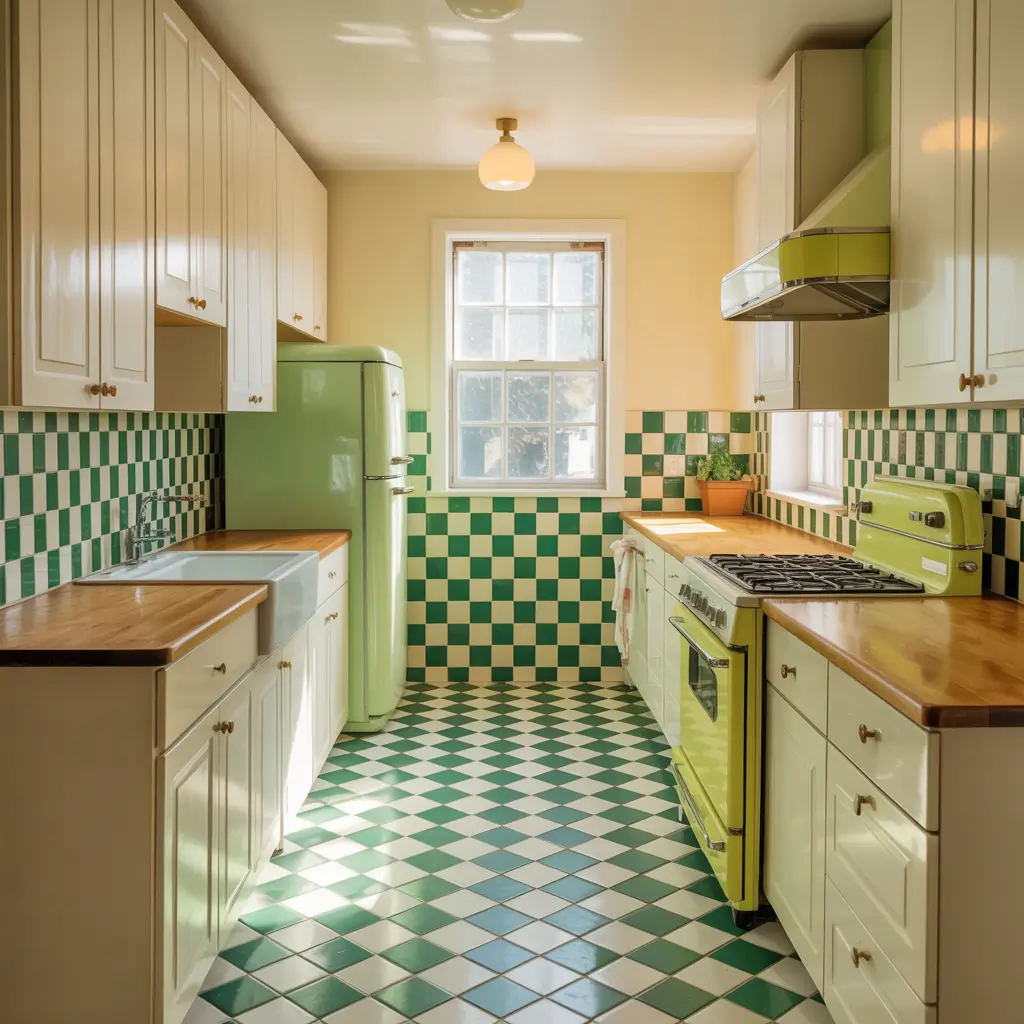
Classic checkerboard patterns never truly disappear from design trends—they just cycle through popularity peaks. Green and white versions offer timeless appeal with more personality than traditional black and white.
The Enduring Checkerboard Appeal
Checkerboard patterns carry design heritage stretching back centuries. From European palaces to American diners, this alternating tile arrangement transcends specific eras or styles.
Green and white checkerboard tiles offer several advantages:
- Softer than black and white: Less stark, more welcoming appearance
- Vintage character: References historic design without feeling dated
- Pattern interest: Geometric arrangement adds visual energy
- Versatile green options: Works with any green shade from mint to forest
- Floor and wall applications: Equally effective on horizontal or vertical surfaces
Choosing Your Checkerboard Green
The green you select dramatically affects your checkerboard’s overall personality.
Mint or sage green with white creates cheerful, cottage-inspired kitchens with vintage charm. These lighter combinations work beautifully in traditional, farmhouse, or eclectic spaces.
Hunter or forest green with white delivers more dramatic, sophisticated results. This combination suits traditional kitchens with formal aspirations or contemporary spaces embracing bold contrast.
Emerald or jade green with white balances drama and playfulness. These mid-range greens provide enough color impact without overwhelming smaller kitchens.
Tile size matters too. Larger checkerboard squares (12×12 inches or bigger) read as sophisticated and contemporary. Smaller squares (4×4 inches) feel more vintage and playful. Choose sizing that matches your kitchen’s scale and desired aesthetic.
6. Olive Green Vintage Kitchen Tiles
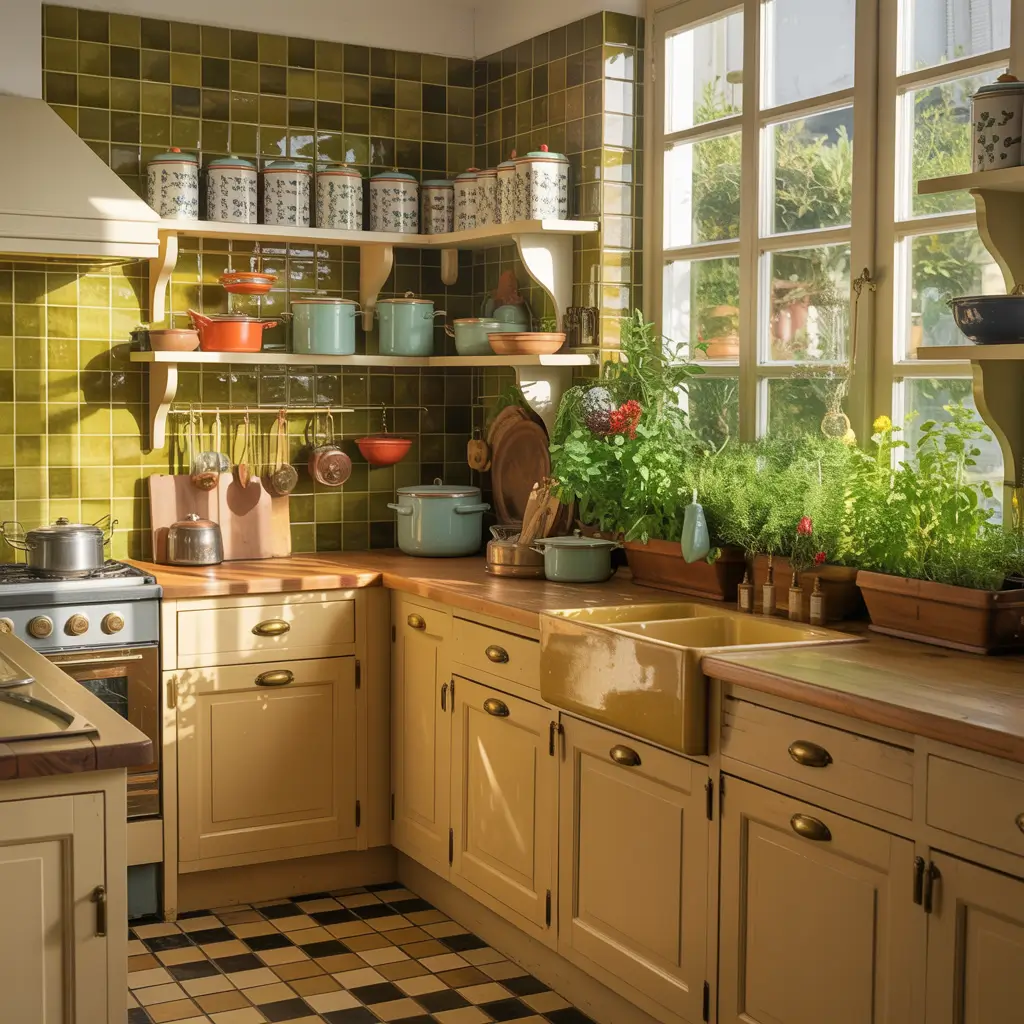
Olive green channels 1970s design heritage—and before you run away, hear me out. When executed thoughtfully, olive creates warm, earthy kitchens with serious style credentials.
Reconsidering Olive Green
Olive green suffered reputation damage from unfortunate 1970s applications (avocado appliances, anyone?). But this yellow-tinged green deserves rehabilitation. Modern olive interpretations feel warm, natural, and surprisingly sophisticated.
What makes olive green work in contemporary kitchens:
- Earthy warmth: More grounded than cooler green shades
- Natural inspiration: References Mediterranean landscapes and olive groves
- Versatile pairing: Complements warm wood tones beautifully
- Unexpected choice: Stands out from predictable sage or emerald options
- Vintage appeal: Perfect for retro-inspired or collected-over-time aesthetics
Creating Modern Olive Kitchens
The key to successful olive green tiles involves modern context and quality materials. Pair olive tiles with contemporary fixtures, updated lighting, and current design elements to prevent dated appearances.
Consider olive green tiles for:
- Mediterranean-style kitchens: Natural fit with terracotta, natural stone, and warm metals
- Rustic contemporary spaces: Balance olive warmth with clean modern lines
- Eclectic kitchens: Mix olive with unexpected colors and varied textures
- Retro-inspired designs: Embrace vintage references intentionally
Olive green patterned tiles—particularly Moroccan-inspired designs—work exceptionally well. The pattern adds visual complexity that elevates olive beyond its 1970s associations into territory that feels curated and intentional.
Also Read: 12 Gorgeous Kitchen Tiles Design Ideas for Small Spaces
7. Glossy Jade Green Backsplash Ideas
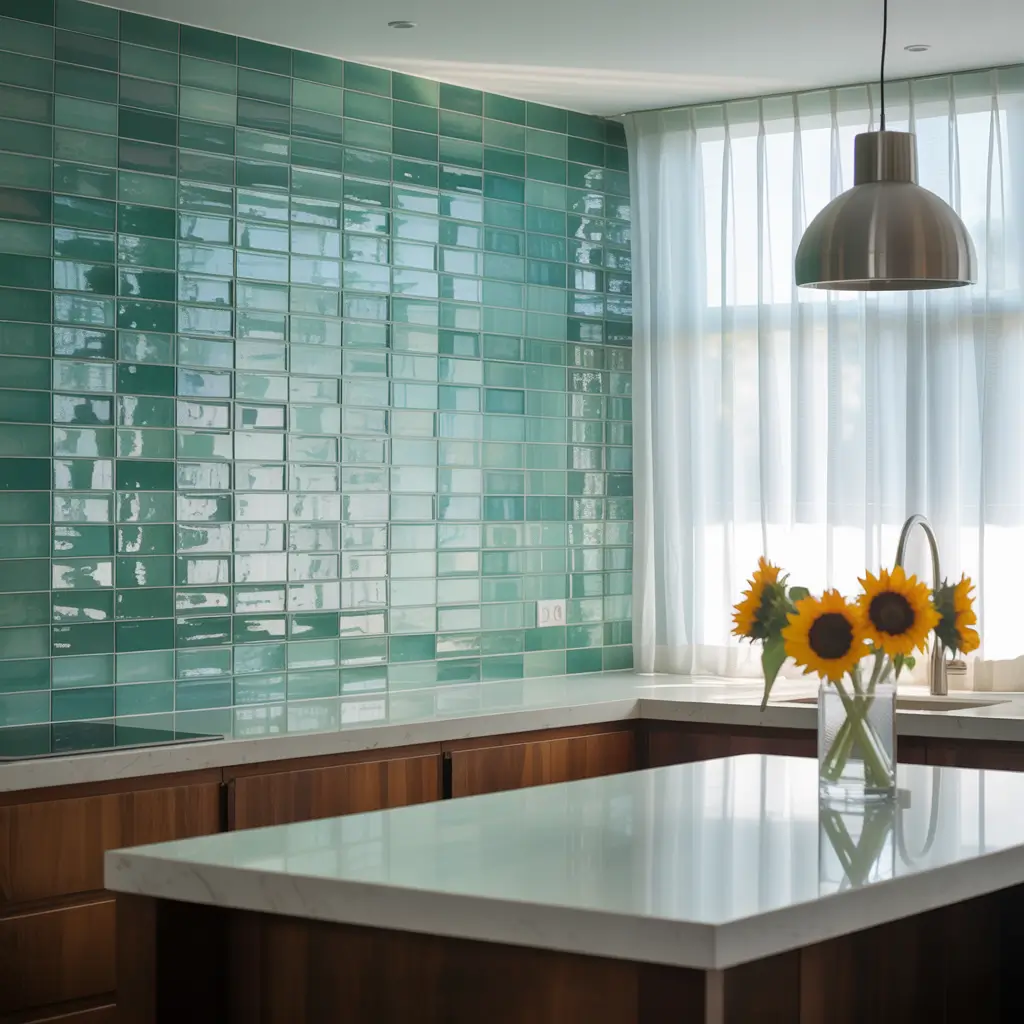
Want your kitchen to sparkle with jewel-like intensity? Glossy jade green tiles catch light beautifully and create genuinely luminous cooking spaces.
The Magic of Glossy Jade
Jade green falls between emerald’s blue undertones and sage’s gray influence. This balanced, slightly blue-leaning green references precious jade stone—and glossy finishes amplify that gemstone quality dramatically.
Why glossy jade backsplashes captivate:
- Light reflection: Glossy surfaces bounce light throughout kitchens
- Depth and dimension: Translucent glazes create layered visual effects
- Luxury associations: Jade references precious materials and Asian design traditions
- Clean appearance: Glossy surfaces wipe clean easily
- Statement quality: Impossible to ignore—in the best way
Maximizing Jade’s Impact
Glossy jade tiles work particularly well in kitchens with limited natural light. Their reflective surfaces maximize available illumination, preventing dark corners and shadowy areas.
For backsplashes, consider these jade green approaches:
- Full wall coverage: Extend jade tiles from counter to ceiling for maximum drama
- Contrast framing: Border jade tiles with white or cream for definition
- Mixed finishes: Combine glossy jade with matte neutral tiles for textural interest
- Handmade variations: Zellige-style jade tiles offer organic irregularity within the glossy surface
I’ve noticed glossy jade tiles photograph exceptionally well—something to consider if you’re planning to showcase your renovation on social media. 🙂 That light-catching quality translates beautifully to images.
8. Green Gradient Mosaic Kitchen Tiles
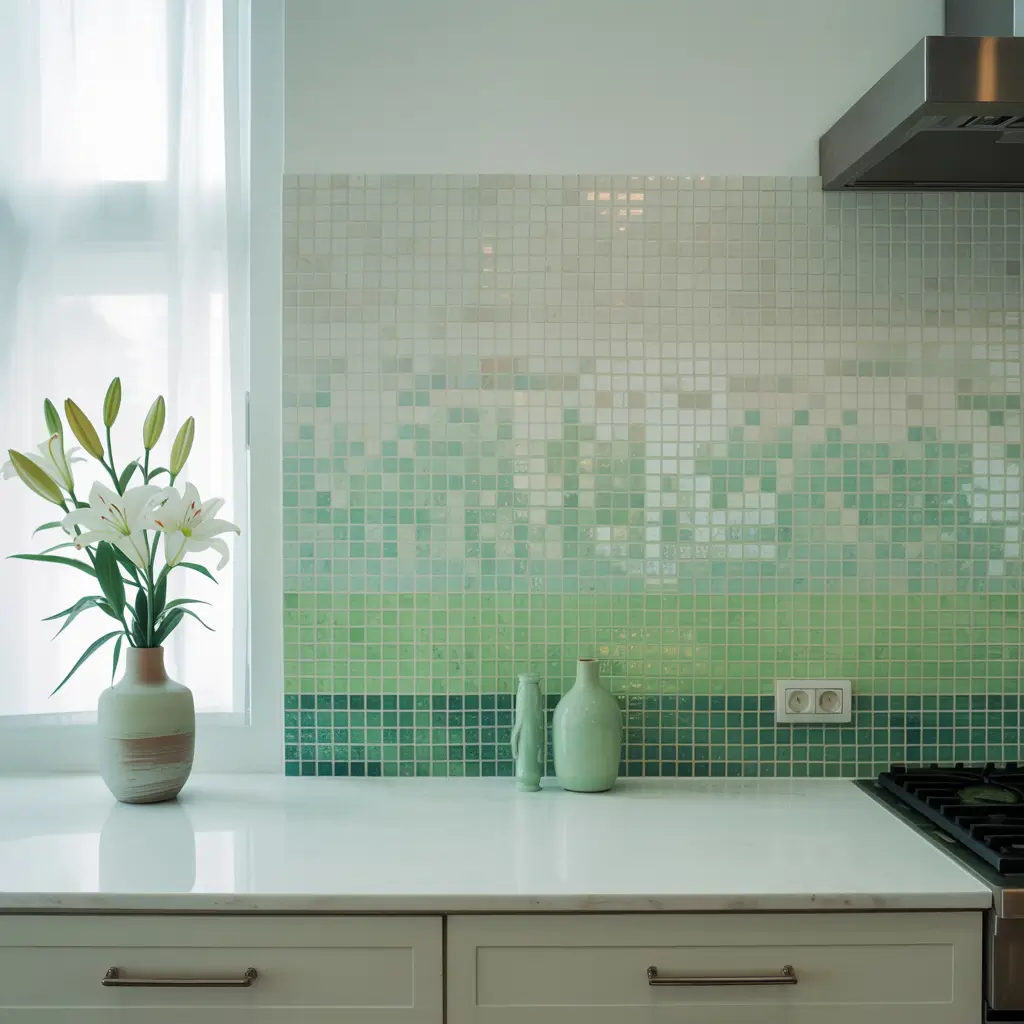
For truly unique kitchen statements, gradient mosaic tiles create artistic effects that no single-color tile can achieve.
Understanding Gradient Mosaics
Gradient mosaic tiles blend multiple green shades across their surface, transitioning smoothly from light to dark or between different green hues. These tiles turn backsplashes into artwork.
The appeal of gradient green mosaics includes:
- Artistic expression: Creates visual interest beyond simple color application
- Custom appearance: Gradient arrangements look intentionally designed
- Depth creation: Color transitions add dimensional quality
- Focal point status: Naturally draws attention without additional decoration
- Conversation starting: Guests inevitably comment on gradient installations
Gradient Options to Consider
Ombre gradients transition from light green at the top to darker shades at the bottom (or vice versa). This approach works beautifully behind ranges or sinks as defined feature areas.
Horizontal gradients shift colors across the width of your backsplash. This orientation creates unique effects as colors progress from one end of your kitchen to another.
Multi-hue gradients blend different green shades—perhaps sage transitioning through jade to emerald. These complex gradients create the most artistic, statement-making results.
FYI, gradient mosaic tiles typically cost more than solid-color options. The additional design complexity and careful color matching justify higher price points. Consider using gradients in smaller feature areas if budget concerns exist.
9. Pastel Green Geometric Tile Patterns
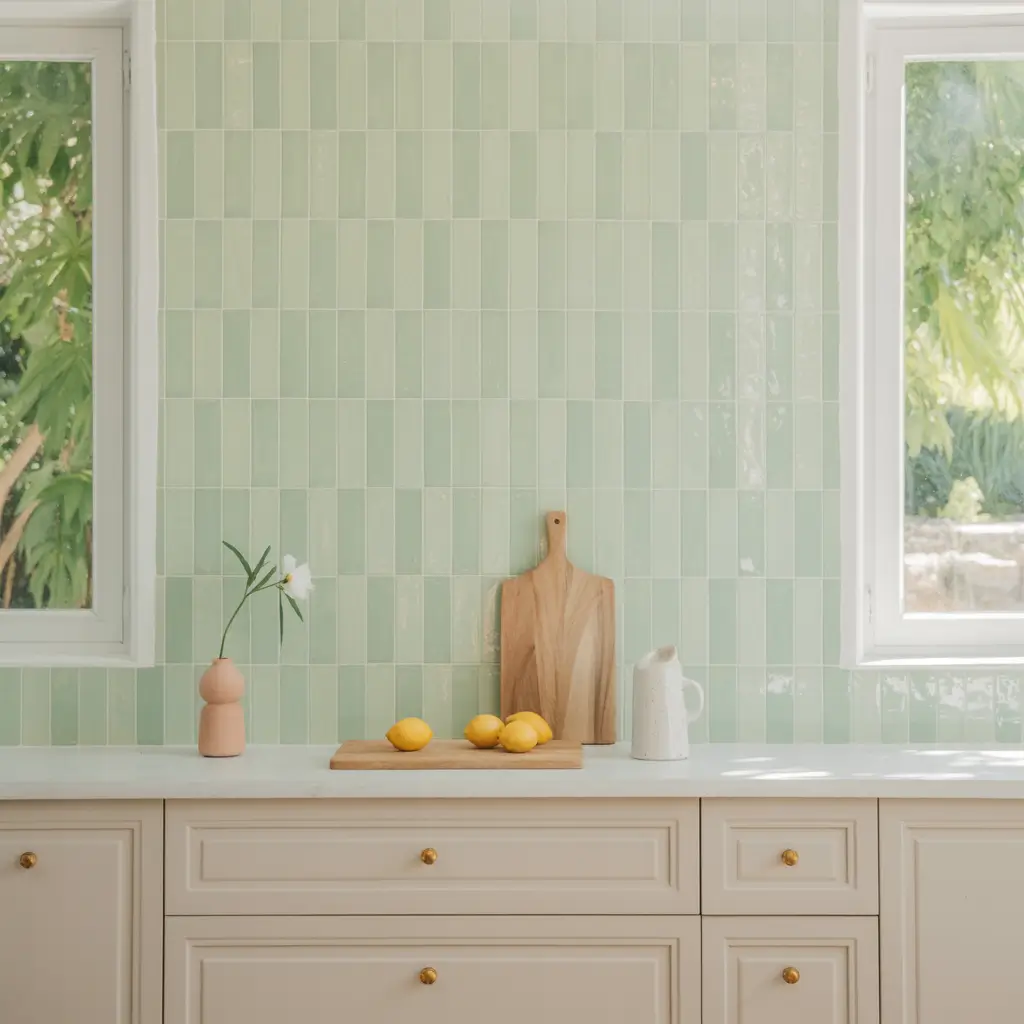
Soft pastel greens combined with geometric tile shapes create kitchens that feel fresh, modern, and effortlessly stylish.
The Pastel Green Advantage
Pastel greens—think mint, seafoam, and pale sage—bring color without overwhelming. These diluted shades work in spaces where bold greens might feel too intense.
Geometric tile shapes amplify pastel green’s contemporary appeal:
- Hexagons: Add honeycomb patterns with gentle color
- Fish scales: Create Art Deco elegance in soft tones
- Triangles: Sharp geometry balanced by soft coloring
- Arabesque: Flowing shapes in calming hues
- Chevron: Directional patterns with subtle color impact
Creating Balanced Pastel Geometric Spaces
The combination of gentle color and interesting shape prevents either element from dominating. Pastel greens need the visual interest that geometric tiles provide, while bold geometric shapes benefit from the softening effect of pale colors.
Consider pastel green geometric tiles for:
- Small kitchen backsplashes: Shape adds interest without color overwhelming
- Accent walls: Geometric patterns create focal points in subtle tones
- Breakfast nook features: Cheerful without being aggressive
- Open-concept kitchens: Gentle enough to flow with adjacent living spaces
White grout typically works best with pastel geometric tiles, emphasizing each shape while maintaining the light, airy aesthetic. Matching pastel grout can look too precious; contrasting dark grout fights against the softness.
Also Read: 10 Elegant Kitchen Floor Tiles Ideas for Stylish Kitchens
10. Deep Green Marble Effect Tiles
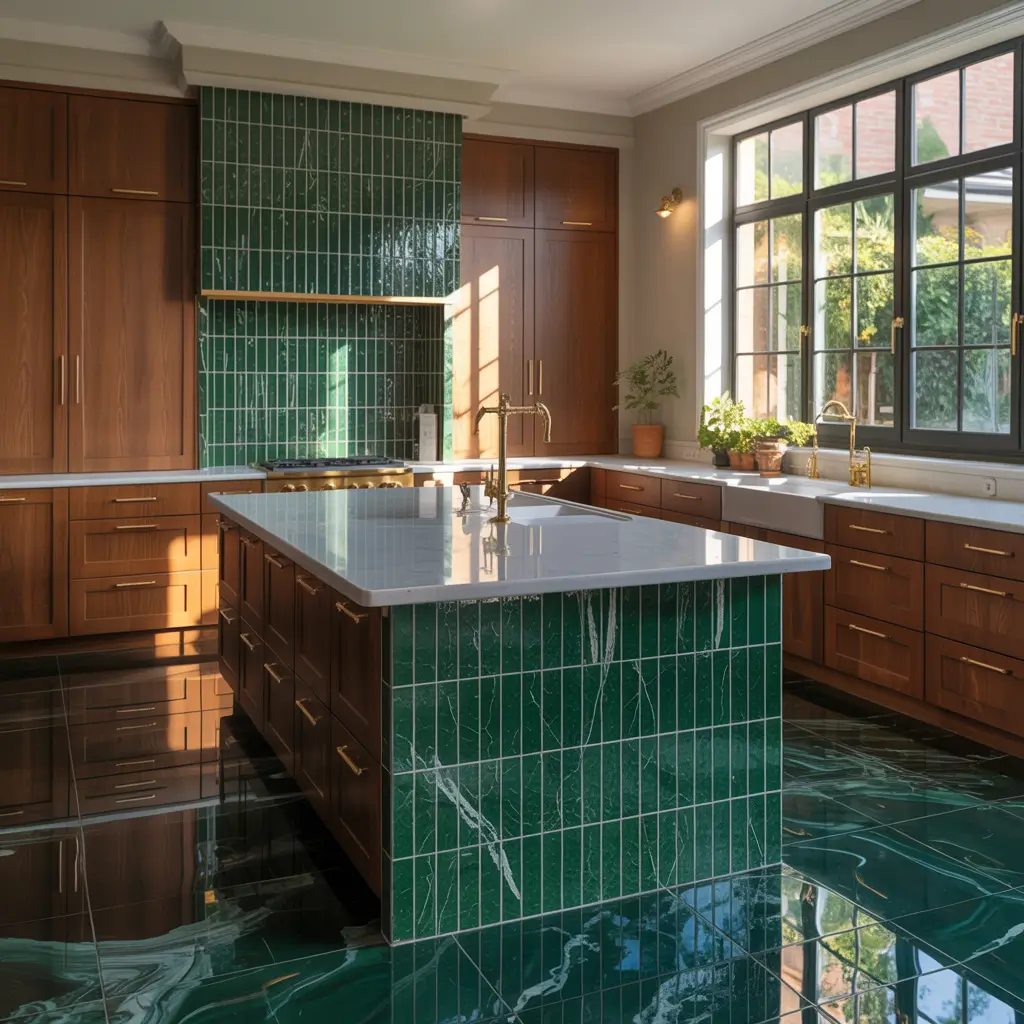
The intersection of deep green and marble veining creates luxury aesthetics that rival natural stone—without the maintenance headaches or premium pricing.
Why Green Marble Effects Captivate
Verde marble and similar green natural stones have graced luxury spaces for centuries. Modern porcelain tiles convincingly replicate these prestigious materials at accessible price points.
Deep green marble-effect tiles offer:
- Luxury appearance: Reference expensive natural stone aesthetics
- Dramatic veining: White or gold veins create visual movement
- Practical performance: Porcelain resists staining and etching
- Consistent quality: No surprise variations between tiles
- Lower maintenance: Standard cleaning products work perfectly
- Cost effectiveness: Fraction of natural marble pricing
Selecting Realistic Green Marble Tiles
Not all marble-effect tiles convince equally. For believable green marble appearances, prioritize:
- Varied veining patterns: Multiple tile designs prevent obvious repetition
- Appropriate scale: Veining proportions should match natural stone
- Depth in printing: Multiple layers create dimensional effects
- Surface texture: Polished or honed finishes matching natural stone
- Color accuracy: Deep, rich greens rather than artificial-looking shades
Large format tiles work best for green marble effects. Bigger tiles mean fewer grout lines, enhancing the seamless slab appearance that natural marble provides. Consider 24×48 inch or larger formats for maximum realism.
11. Green Herringbone Tile Kitchen Walls
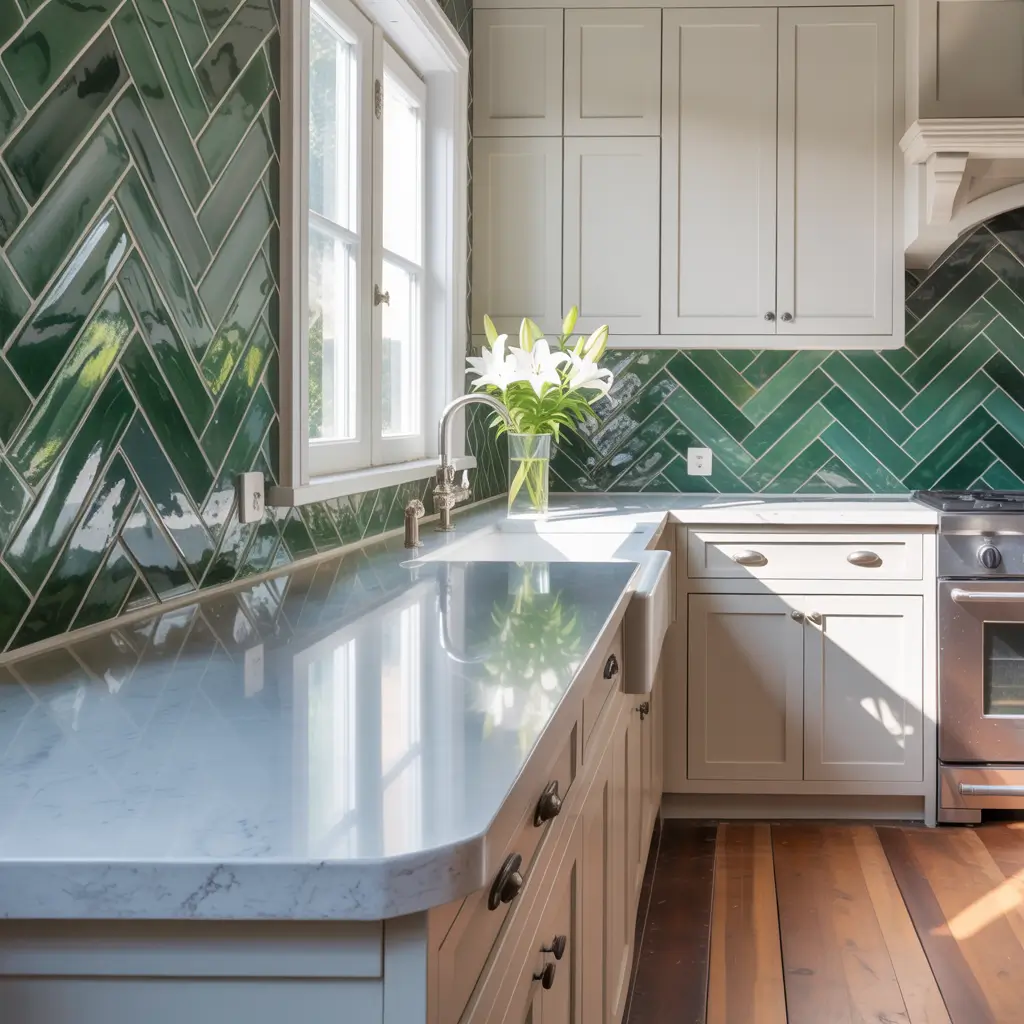
Herringbone patterns add movement, sophistication, and architectural interest to any tile color—but something about green herringbone feels particularly special.
The Herringbone Difference
Herringbone arrangements position rectangular tiles at 45-degree angles, creating V-shaped patterns that draw the eye and add dynamic energy. This classic pattern elevates simple tiles into statement-making installations.
Why green herringbone works so effectively:
- Visual movement: Pattern creates flow and energy
- Directional interest: Draws attention in specific directions
- Architectural quality: Adds sophistication beyond basic tile layouts
- Classic with personality: Traditional pattern, bold color choice
- Vertical emphasis: Can make ceilings appear higher
Herringbone Application Tips
Green herringbone tiles work brilliantly as full-height backsplashes extending from countertop to ceiling. The pattern’s vertical emphasis enhances this application beautifully.
Consider these green options for herringbone:
- Sage green: Subtle pattern, gentle color—sophisticated without shouting
- Emerald green: Bold pattern, bold color—maximum statement impact
- Forest green: Dramatic pattern, moody color—seriously sophisticated
- Mint green: Playful pattern, cheerful color—fresh and inviting
Tile size affects herringbone appearance significantly. Smaller tiles (2×4 or 2×6 inches) create intricate, detailed patterns with more visual complexity. Larger tiles (3×12 inches or bigger) produce cleaner, more contemporary herringbone arrangements.
I personally prefer medium-sized tiles for herringbone—something in the 2.5×8 inch range hits the sweet spot between visual interest and contemporary cleanliness.
12. Two-Tone Green Kitchen Tile Combinations
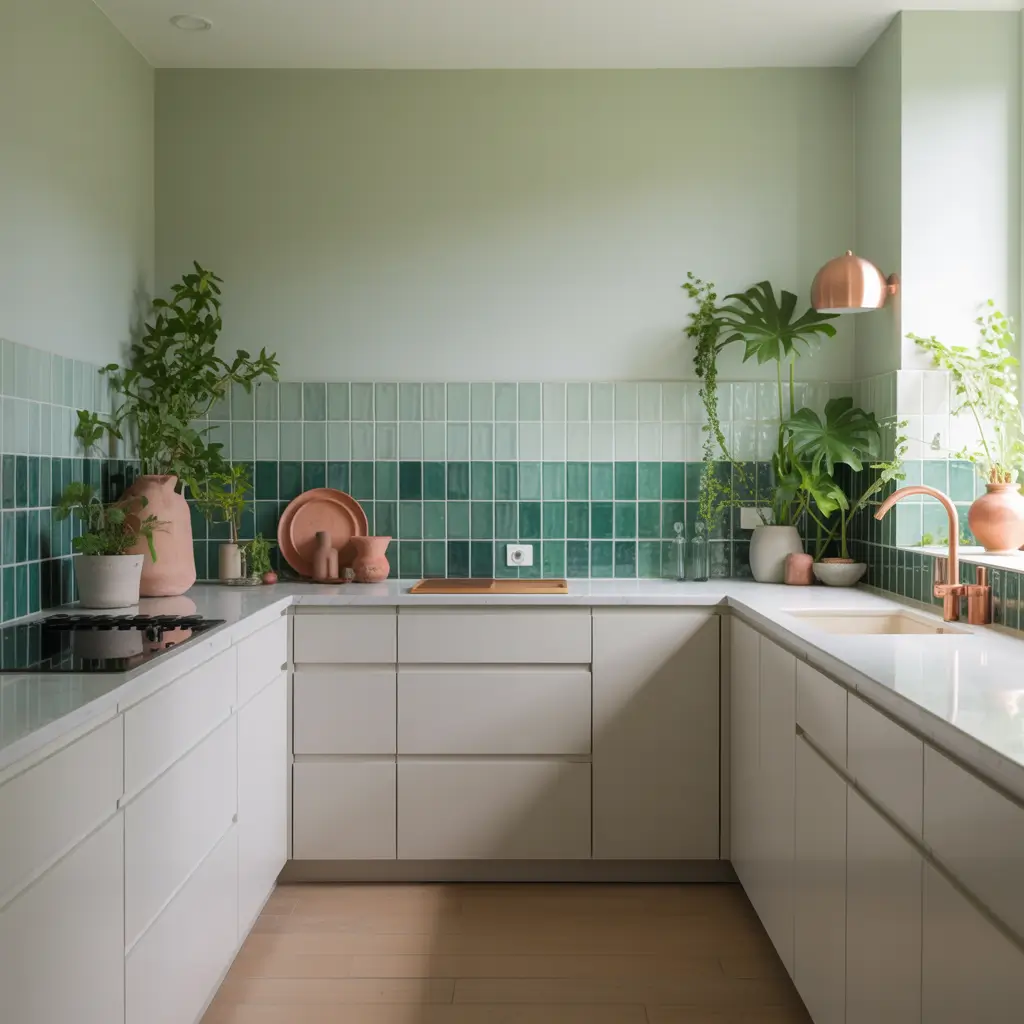
Why limit yourself to one green when two (or more) can create significantly more interesting results? Two-tone green combinations add depth, define zones, and showcase design sophistication.
Understanding Two-Tone Green Concepts
Two-tone green kitchens strategically combine different green shades to create visual interest, architectural definition, or functional zone separation. This approach works particularly well because greens naturally harmonize with each other.
Popular two-tone green approaches include:
- Light and dark pairing: Mint above, forest below (or vice versa)
- Warm and cool mixing: Olive paired with sage for temperature contrast
- Gradient effects: Multiple green shades transitioning across surfaces
- Accent highlighting: Feature areas in contrasting green tones
- Pattern and solid combinations: Patterned green tiles with solid green fields
Creating Cohesive Two-Tone Green Designs
Successful two-tone green kitchens require intentional contrast. The greens you select should differ enough to read as deliberate design choices rather than matching attempts that failed.
Consider these proven two-tone combinations:
- Sage and emerald: Muted background with jewel-tone accents
- Mint and forest: Maximum light-dark contrast within green family
- Olive and jade: Warm and cool balance creating complexity
- Seafoam and hunter: Pastel softness with dramatic depth
- Multiple sage tones: Subtle variation within single shade family
Plan your transition points carefully. Common division approaches include:
- Horizontal splits: Different greens above and below specific heights
- Feature zones: Contrasting greens behind ranges or sinks
- Architectural breaks: Use corners, windows, or appliances as natural transition points
- Gradient blending: Smooth transitions rather than hard lines
Use tile trim pieces or metal strips to create clean transitions when hard lines work best. Without proper transitions, two-tone installations can look unfinished or accidental.
Choosing the Right Green Kitchen Tiles for Your Space
After exploring these twelve green kitchen tile ideas, you probably have favorites calling your name. Before committing, consider these practical factors.
Assess Your Kitchen’s Light
Natural light dramatically affects how green tiles appear. Kitchens with abundant sunlight can handle darker greens beautifully. Kitchens with limited light benefit from lighter, more reflective green options.
Request samples and view them in your actual kitchen at various times of day. The green that looks perfect under showroom lighting might read completely differently at home.
Consider Your Existing Elements
Green tiles should complement your cabinets, countertops, and flooring—not fight them. Warm-toned greens (olive, sage with yellow undertones) work best with warm wood cabinets. Cool-toned greens (mint, jade, emerald) pair better with white or gray cabinetry.
Match Your Maintenance Reality
Glossy tiles show water spots and fingerprints more readily than matte options. Darker greens hide everyday grime better than pale shades. Choose finishes and colors that match your actual cleaning habits.
Think Long-Term
Green kitchen tiles represent significant investments. Select shades you’ll still love years from now, not just what’s trending this season. Classic greens like sage and emerald have proven staying power. Trendier shades might date more quickly.
Final Thoughts
Green kitchen tiles bring something no neutral ever can—genuine connection to the natural world.
Whether you choose calming sage, dramatic emerald, cheerful mint, or sophisticated forest green, you add life and personality that transforms cooking spaces into places you actually want to spend time.
I’ll never forget standing in my friend’s sage-tiled kitchen, realizing how much warmth and character the green added. That moment changed my entire perspective on kitchen color.
Safe neutrals have their place, but green brings joy.
Take your time selecting your perfect green. Order samples generously. Live with options for at least a week. View them morning, noon, and night.
The right green kitchen tiles exist for your space—you just need patience to find them.
Now go order those samples. Your kitchen deserves more than beige. 🙂