12 Creative Green Walls Living Room Ideas to Transform Rooms
- Living Room Decor
 Ben
Ben- 0
- 29 minutes read
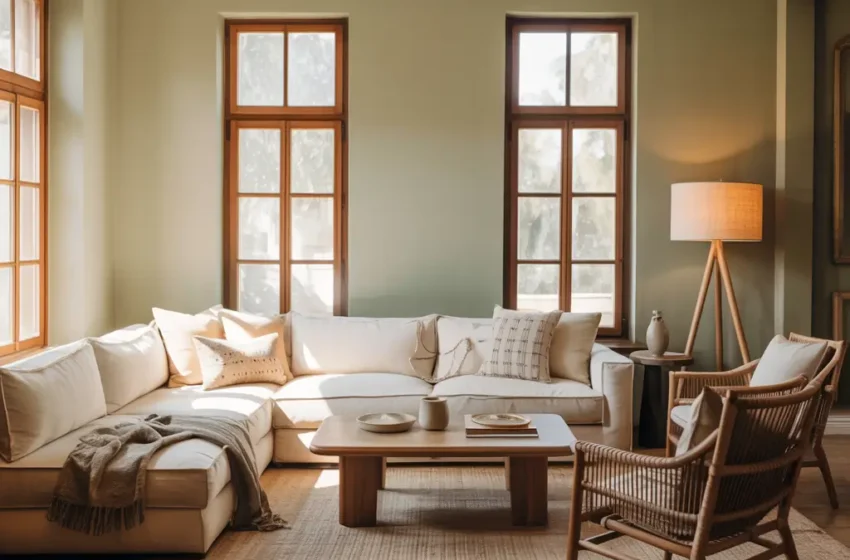
Remember when everyone thought green walls meant you’d committed some kind of design crime? Well, those people are eating their words now.
I painted my first green wall five years ago (against everyone’s advice, naturally), and it completely changed how I think about color in living spaces.
That deep forest green wall became the thing everyone talked about when they visited, and suddenly my “risky” choice didn’t seem so risky anymore.
Green walls bring life to a room in ways that no other color can match. They create depth, add personality, and somehow make everything else in your space look more expensive.
Whether you’re thinking about a subtle sage or ready to go full emerald, I’ve got twelve ideas that’ll show you exactly how to make green walls work in your living room.
The best part? Green walls work with literally any style you’re into. Modern, traditional, boho, minimalist – doesn’t matter. Green adapts like a chameleon while still making a statement.
Let me show you how to nail this trend without making your living room look like a leprechaun’s hideout.
1. Emerald Elegance: Green Walls with Gold Accents
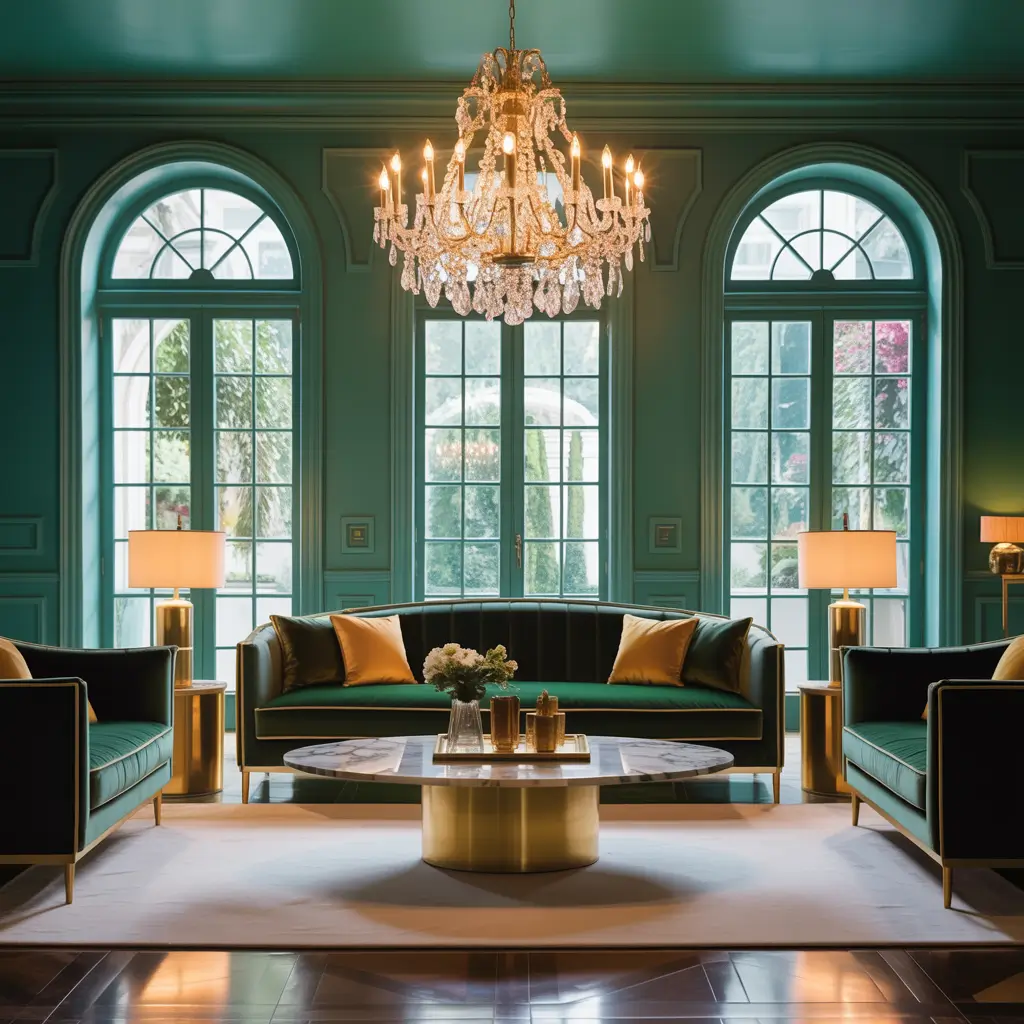
Emerald walls with gold accents create instant luxury that looks like you spent thousands when you probably spent hundreds. I discovered this combination at a swanky hotel bar in New York, and I literally took photos of everything so I could recreate it at home. The emerald walls made the space feel intimate and expensive, while gold accents added warmth that prevented things from feeling too serious.
The trick with emerald walls? You need confidence. This isn’t a whisper color – it’s a full-throated declaration that you know what you’re doing. Paint all four walls if you’re brave, or start with an accent wall if you need to ease into it. Either way, emerald commands attention and respect.
Making Gold Work Without Going Vegas
Gold accents should enhance your emerald walls, not compete with them. Think picture frames, mirror frames, lamp bases – strategic touches that catch light and add glamour. I made the mistake of going overboard with gold on my first attempt, and my living room looked like a casino. Learn from my mistakes.
Choose your gold finish carefully. Brushed or antiqued gold feels more sophisticated than bright, shiny gold. Mix in some brass or copper if you want a more collected-over-time look. The variety prevents your room from looking like you bought everything from the same store on the same day.
Lighting becomes crucial with emerald walls. They absorb light like nobody’s business, so layer your lighting sources. Table lamps, floor lamps, maybe some picture lights – you need them all. Those gold fixtures will reflect light and make both the walls and accents sparkle.
2. Forest-Inspired Cozy Living Room

Want your living room to feel like a sophisticated treehouse? Forest green walls create that cozy, enveloped feeling that makes everyone want to curl up and stay forever. I painted my walls Benjamin Moore’s “Salamander” last winter, and now my living room feels like the coziest cabin even though I live in the suburbs.
Forest green works because it connects us to nature on a primal level. It’s calming, grounding, and somehow makes every piece of furniture look intentional. Plus, it’s the perfect backdrop for all those houseplants you keep buying but don’t know where to put.
Creating Forest Vibes Without the Cabin Cliché
Layer different textures to enhance the forest feeling. Velvet sofas, wool throws, maybe a jute rug – each texture adds depth and prevents your green walls from feeling flat. I’ve got a leather chair, linen curtains, and a chunky knit blanket all living happily together against my forest walls.
Wood furniture obviously works brilliantly here. But don’t match all your wood tones – that’s so 1990s. Mix light and dark woods for a more natural, collected look. My oak coffee table and walnut bookshelf look amazing together against the green.
Add actual greenery to complete the forest vibe. Plants against green walls might sound redundant, but different shades of green create this gorgeous, layered effect. Your fiddle leaf fig will never look better than against a forest green wall, trust me.
3. Olive Toned Minimalist Living Room
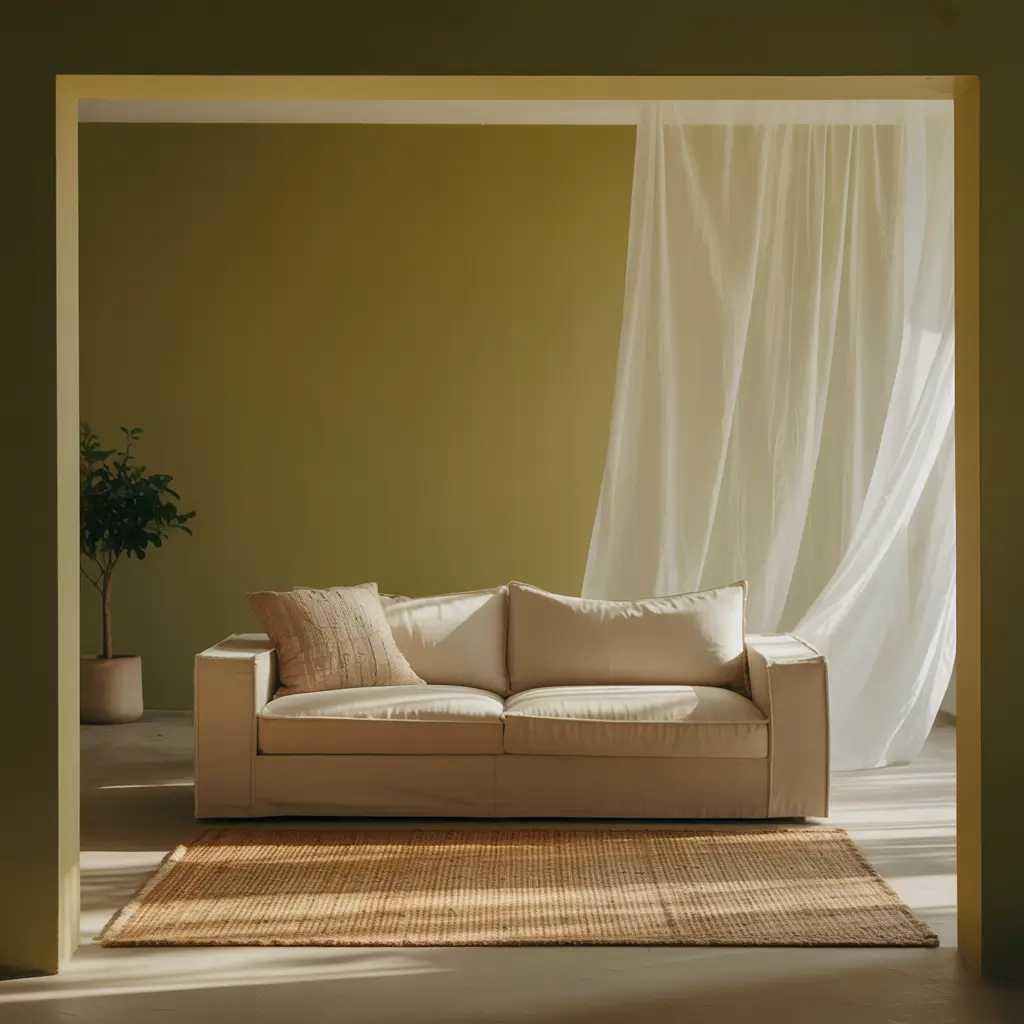
Minimalism and color can coexist, and olive green walls prove it. This muted green adds warmth to minimalist spaces without adding visual clutter. It’s like having a personality without being loud about it.
I helped my minimalist friend paint one wall olive green (it took three wine-fueled conversations to convince her), and the transformation was remarkable. Her sterile white box suddenly had depth and character while maintaining that clean, uncluttered aesthetic she loved.
Keeping It Minimal Without Being Boring
Choose your shade of olive carefully. You want something muted and sophisticated – think military olive or grayish olive, not bright olive. The color should whisper, not shout, in a minimalist space.
Furniture selection becomes even more important against olive walls. Every piece needs to earn its spot. A simple gray sofa, one perfect accent chair, maybe a sleek coffee table. Quality over quantity always, but especially here.
Keep your color palette super restricted. Olive walls, white trim, maybe one or two other colors max. I stick to olive, white, and natural wood in my minimal spaces. The restriction actually makes decorating easier – fewer decisions, less chance of screwing up.
Also Read: 10 Cozy Olive Green Living Room Ideas for Warm Vibes
4. Dark Green Statement Wall with Modern Furniture
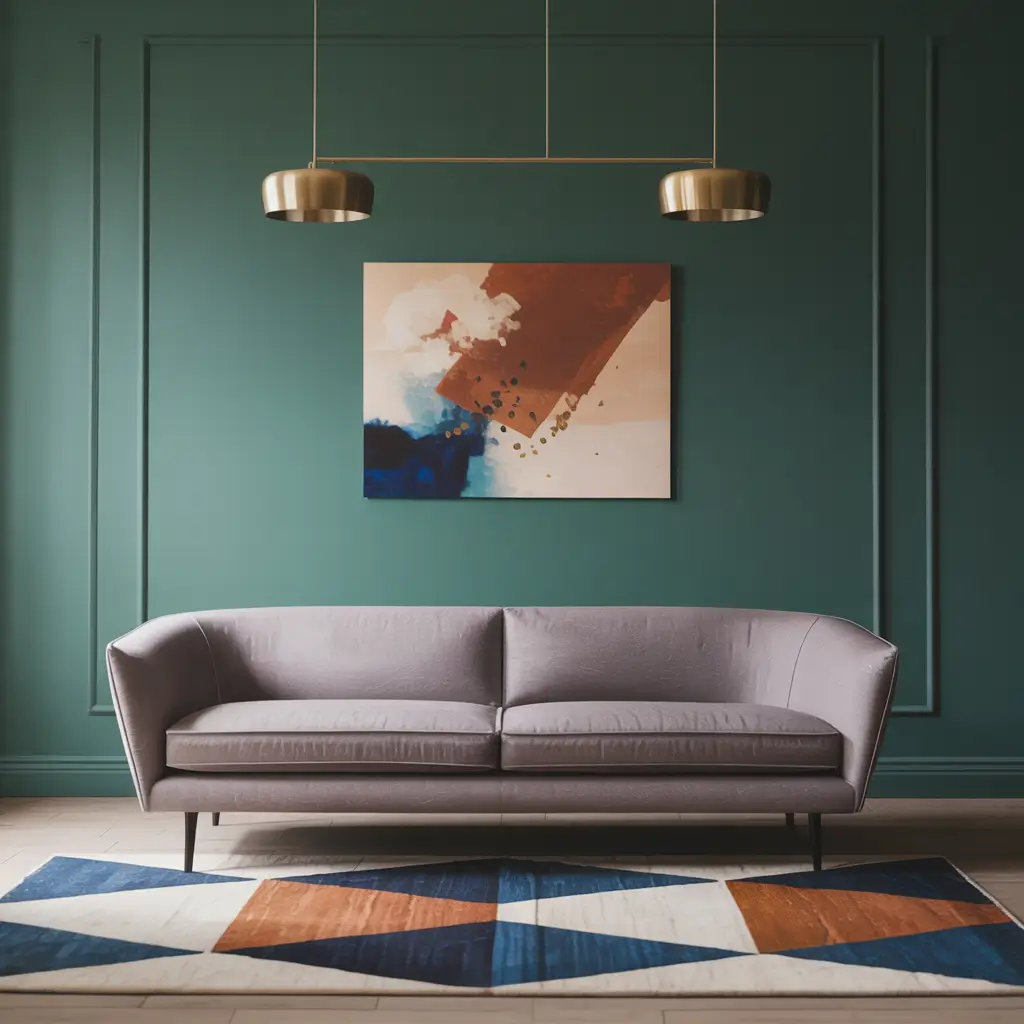
One dark green statement wall changes everything about a room. It creates a focal point, adds drama, and makes your modern furniture pop in ways you didn’t expect. I painted my wall behind the TV dark green, and suddenly my basic IKEA furniture looked custom and expensive.
The contrast between a dark green wall and sleek modern furniture creates visual tension that keeps spaces interesting. Your eye bounces between the organic color and geometric shapes, creating movement even in a static room.
Choosing Your Statement Wall
Pick the wall that makes the most sense architecturally. Behind the sofa usually works great. The wall with the fireplace? Perfect. That random wall that doesn’t have any furniture against it? Maybe reconsider.
Dark green can make walls recede or come forward depending on the lighting. Test your paint color at different times of day. That perfect green at noon might look black at night. I learned this the hard way and had to repaint. Don’t be like me.
Balance your dark statement wall with lighter elements. White or light gray on the other walls, pale furniture, maybe a light rug. The contrast makes the green pop while preventing cave vibes.
5. Mint Green Living Room Refresh
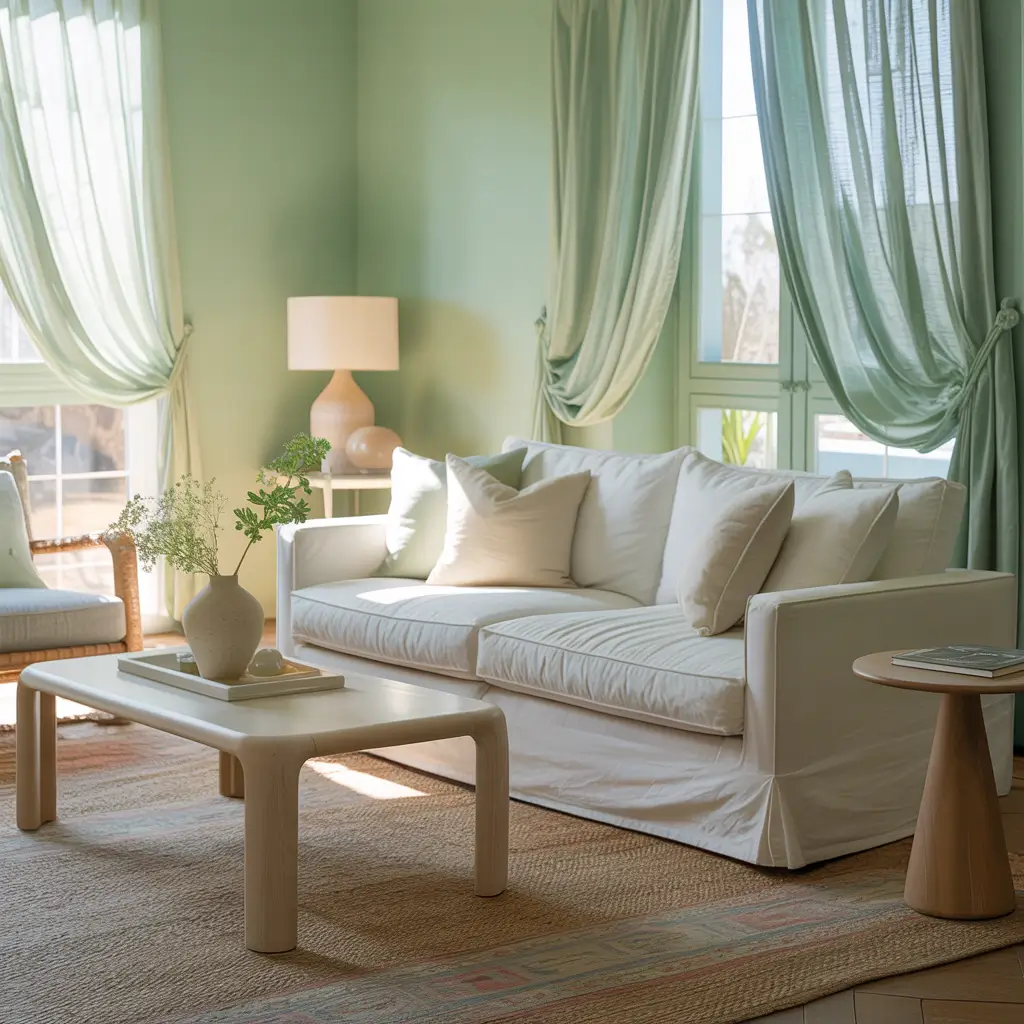
Mint green walls bring freshness that makes every day feel like spring. This isn’t your grandmother’s mint (unless your grandmother was incredibly cool) – modern mint has gray undertones that keep it sophisticated rather than sweet.
I painted my guest room mint on a whim, and now everyone wants to hang out there instead of the living room. The color energizes without overwhelming, making spaces feel clean and happy without being aggressive about it.
Mint Without the Toothpaste Vibes
The biggest risk with mint walls? Looking like the inside of a gum commercial. Choose a mint with gray or sage undertones rather than pure pastel. Benjamin Moore’s “Soft Mint” or Farrow & Ball’s “Teresa’s Green” nail this balance.
Pair mint walls with crisp whites and warm woods. This combination keeps things fresh but grounded. My mint walls with white trim and oak floors create this perfect balance of cool and warm.
Add sophistication through metallic accents. Brass, copper, or even black metal fixtures prevent mint from feeling too juvenile. A black-framed mirror or brass lamp instantly elevates the whole situation.
6. Green and Natural Wood Harmony
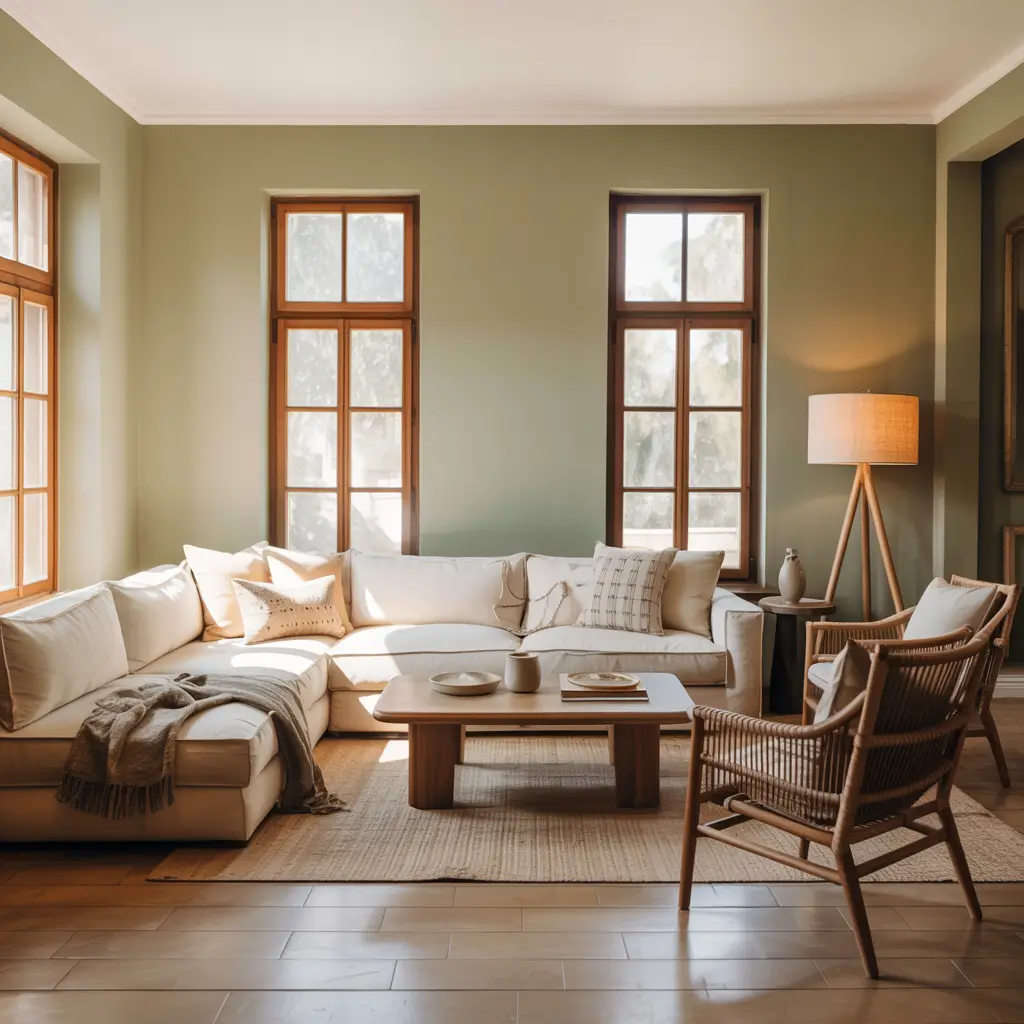
Green walls and natural wood create harmony that feels both intentional and effortless. This combination works because both elements come from nature – they’re literally made to go together. My living room rocks hunter green walls with exposed wood beams, and visitors always assume I hired a designer. Nope, just followed nature’s lead.
The type of wood you pair with your green walls changes everything. Light woods like pine or birch keep things Scandinavian and bright. Dark woods like walnut add richness and sophistication. I’ve tried both, and honestly, they’re both right – just different moods.
Making Wood and Green Sing Together
Don’t try to match your wood tones to your green. The beauty lies in the contrast. Cool green walls make warm wood tones pop. Warm green walls make cool wood tones stand out. It’s basically design chemistry.
Layer different wood finishes for interest. A raw wood coffee table, stained wood frames, painted wood trim – the variety creates depth. My living room has at least five different wood tones, and they all work together because the green walls unify them.
Bring in natural textures beyond wood. Rattan, jute, linen – these materials bridge the gap between your green walls and wood furniture. They’re like the design equivalent of social lubricant, making everything play nicely together.
Also Read: 10 Cozy Green Living Room Color Scheme Ideas for Warm
7. Sage Green Scandinavian Living Room
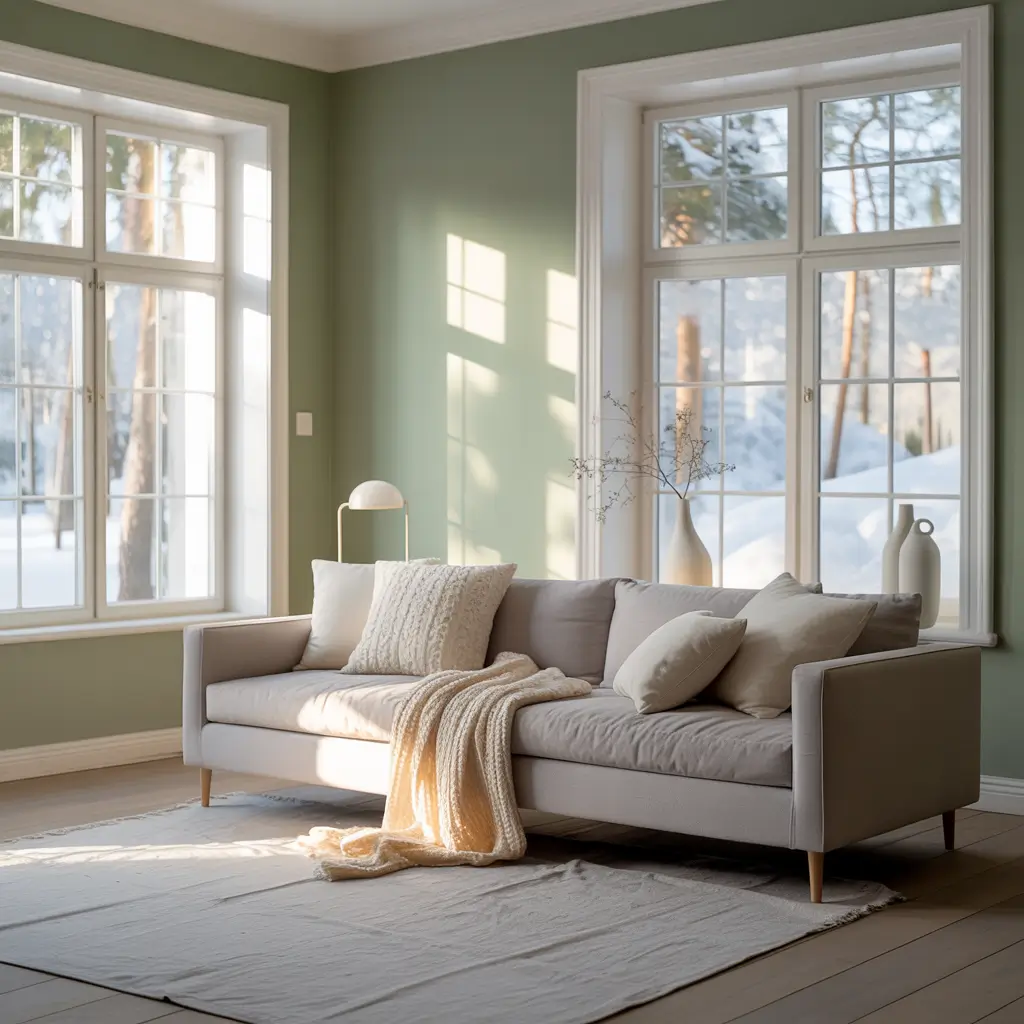
Scandinavian design usually screams “white walls only!” but sage green brings warmth that Nordic spaces sometimes lack. This soft, muted green maintains the clean Scandi aesthetic while adding personality that makes spaces feel less like a furniture catalog and more like a home.
FYI, I fought against white walls for years in my Scandi-inspired space. Then I discovered sage green, and everything clicked. The color adds just enough interest without disrupting that peaceful, minimalist vibe Scandinavian design does so well.
Scandi Style with a Green Twist
Keep your sage subtle and muted. We’re not talking bright sage here – think dusty, grayed sage that whispers rather than shouts. The color should feel like a neutral with benefits.
Stick to the Scandinavian furniture rules. Clean lines, functional design, natural materials. Your sage walls provide the color, so your furniture can stay simple and neutral. A gray linen sofa against sage walls? Chef’s kiss.
Layer textures like crazy. Scandinavian design loves texture, and sage walls provide the perfect backdrop. Chunky knits, sheepskin rugs, linen curtains – pile them on. The textures add warmth and interest without cluttering the space.
8. Two-Toned Green Walls for Depth
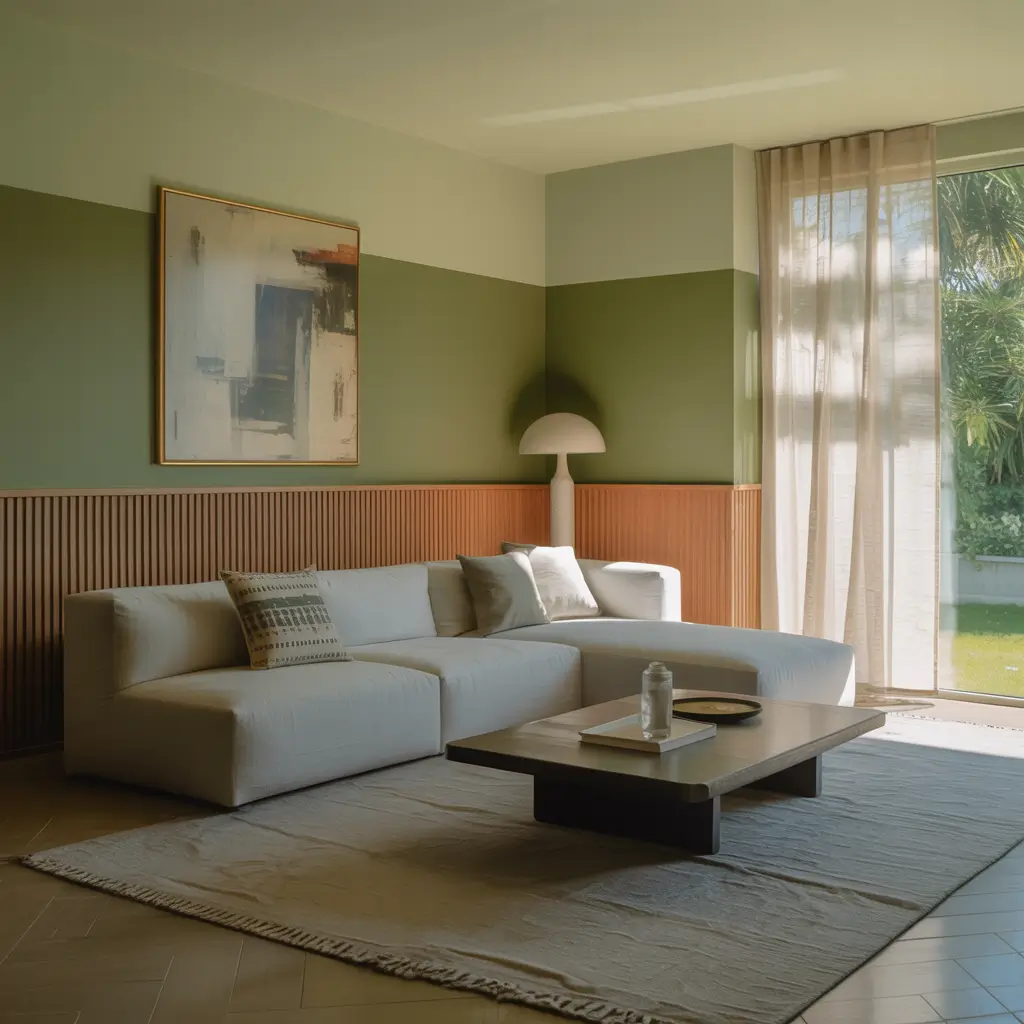
Why choose one green when you can have two? Two-toned green walls create depth and interest that single colors can’t match. I tried this in my dining room (which opens to the living room), painting the bottom half dark green and the top half sage. Everyone thinks I’m some kind of design genius now :/
The two-tone approach works especially well in rooms with high ceilings or awkward proportions. You can visually adjust the space’s dimensions just by changing where you put the color break. It’s basically architectural magic with just paint.
Mastering the Two-Tone Technique
The traditional approach puts darker green on bottom, lighter on top. This grounds the space and draws the eye upward. But rules are meant to be broken – I’ve seen reversed versions that look amazing too.
Use molding or a chair rail to create a clean break between colors. No molding? Create one with painter’s tape and a steady hand. The crisp line makes the difference between intentional and “I ran out of paint.”
Choose greens that relate to each other. They don’t need to be the same color family, but they should have something in common – undertone, intensity, something. When in doubt, use the same brand’s color strips as guides.
9. Green Accent Wall with Bold Artwork

A green accent wall becomes the perfect gallery backdrop when you’ve got art to show off. The green makes colors in artwork pop while providing enough interest that you don’t need to cover every inch with frames. My kelly green accent wall with my random art collection looks like I actually know what I’m doing with curation.
The key here? Let the wall and art have a conversation, not a competition. Your green should enhance your artwork, not fight with it. This means considering the colors in your art before choosing your green.
Creating Gallery Vibes
Choose your green based on your artwork’s dominant colors. Cool artwork? Go with a cool green. Warm artwork? Warm green. Mixed collection? Pick a neutral green like sage or olive that plays well with everything.
Don’t overcrowd your green wall with art. The color itself provides visual interest, so you need less artwork than on a white wall. I learned this after initially hanging everything I owned and creating visual chaos.
Mix frame colors and styles for an collected-over-time look. All matching frames look like you bought them in a set (because you probably did). Different frames unified by the green wall look intentional and interesting.
Also Read: 12 Stylish Blue and Green Living Room Ideas for Cozy
10. Light Green Pastel Living Room Vibes
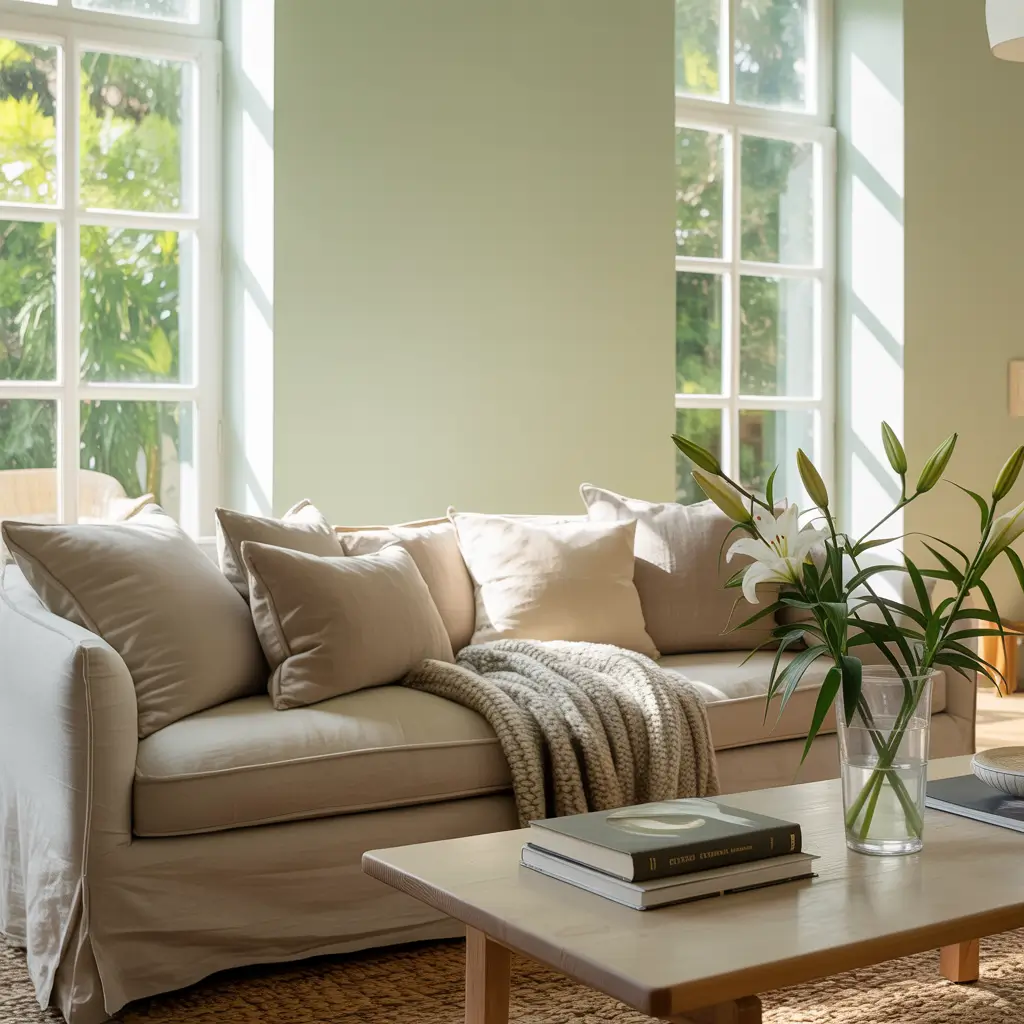
Light green pastel walls create the softest, dreamiest living rooms that feel like a breath of fresh air. This isn’t about being boring – it’s about creating calm in a chaotic world. My best friend painted her living room the palest celadon, and now it’s everyone’s favorite meditation spot.
Pastel green walls work magic in small spaces or rooms with limited light. The color reflects light rather than absorbing it, making rooms feel larger and brighter. It’s like giving your room a natural Instagram filter.
Pastels for Grown-Ups
Avoid the nursery trap by pairing pastel green walls with sophisticated furniture and accessories. Think mid-century modern pieces, metallic accents, or even some edgy black details. The contrast keeps things adult and interesting.
Layer different shades of green for depth. Your walls might be palest mint, but add a sage throw pillow, an olive ottoman, maybe some eucalyptus in a vase. The green gradient creates sophistication that single-color schemes can’t match.
Texture saves pastel rooms from feeling flat. Velvet, bouclé, cable knit – different textures catch light differently and add visual interest. My pastel green room has at least six different textures, and they’re doing all the heavy lifting design-wise.
11. Jungle Chic: Indoor Plants with Green Walls
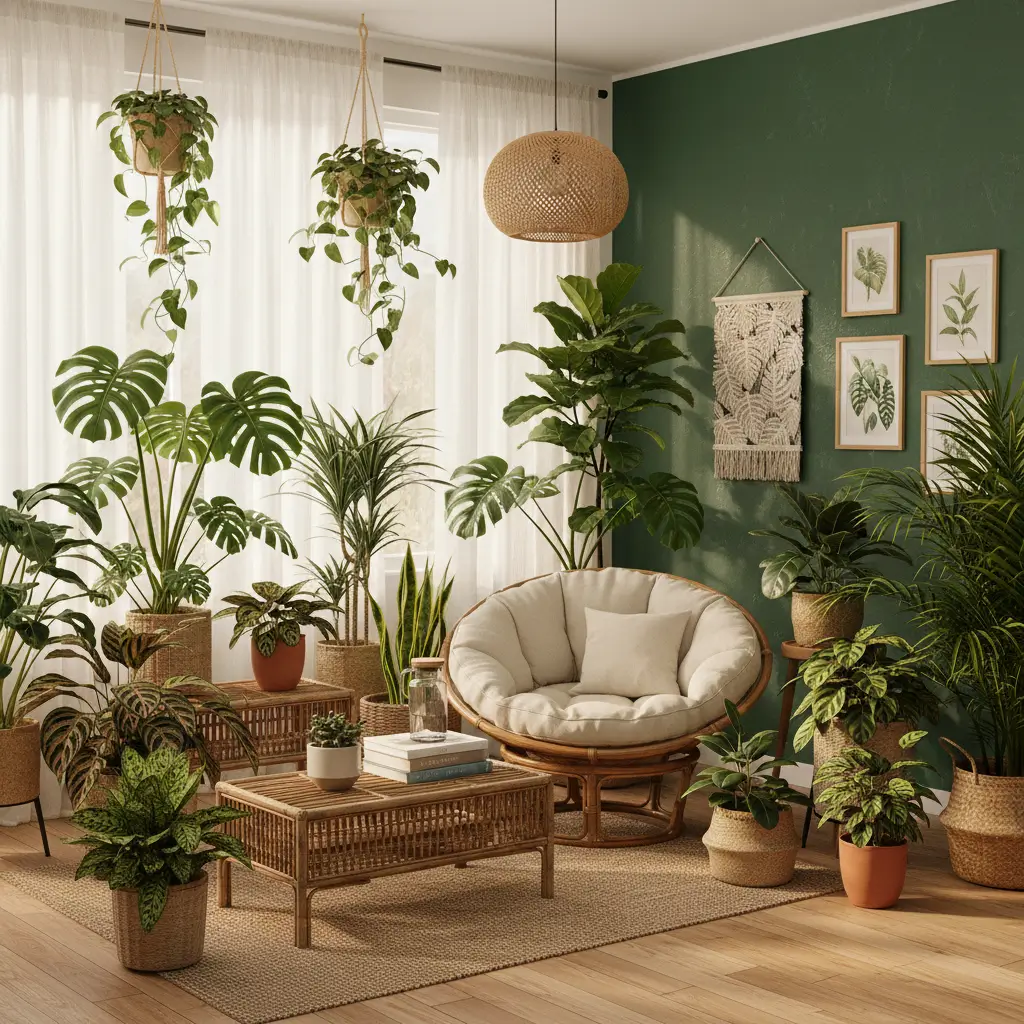
Green walls plus plants equals jungle vibes that don’t require a plane ticket. This combination shouldn’t work (green on green on green?), but it absolutely does. My plant-filled living room with sage walls feels like a chic greenhouse where humans happen to live too.
The secret? Varying your greens creates depth and interest. Your wall green, different plant greens, maybe green accessories – they all layer together creating this rich, complex palette that feels natural rather than matchy-matchy.
Plant Styling Against Green Walls
Choose plants with interesting leaf shapes and colors. Variegated leaves, unusual shapes, different sizes – variety prevents plant monotony. My rubber plant, snake plant, and pothos all bring different greens to the party.
Consider your planters carefully. They become even more important against green walls. Terra cotta adds warmth, white adds contrast, metallic adds glamour. I use all three for visual interest.
Don’t cluster all plants in one spot. Spread them throughout the room at different heights. Hanging plants, floor plants, shelf plants – the variety creates movement and prevents your jungle from looking like a plant store.
12. Deep Green Luxury Living Room
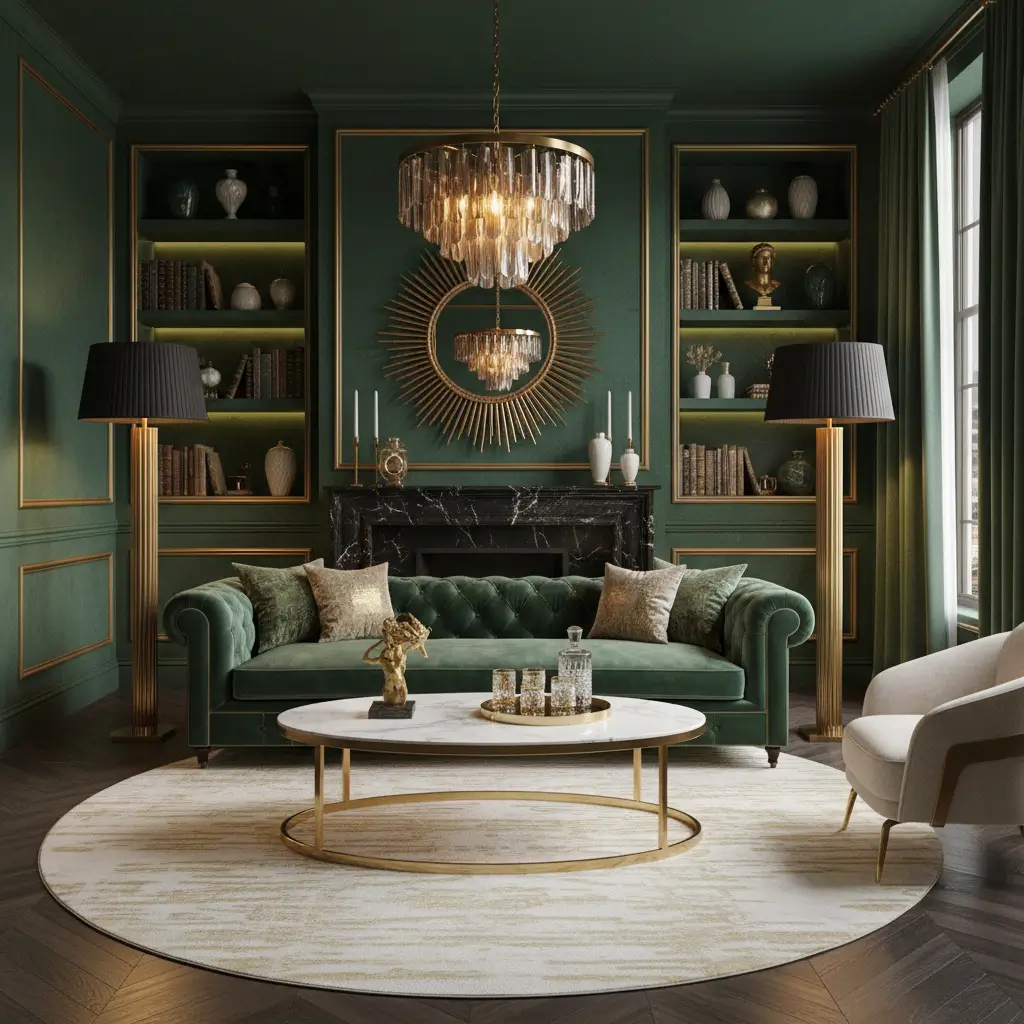
Deep green walls scream luxury without saying a word. This rich, saturated color makes everything in your room look more expensive, from your Target lamp to your thrift store chair. I painted my walls Farrow & Ball’s “Studio Green,” and suddenly my very average living room looked like it belonged in Architectural Digest.
Deep green creates intimacy that makes large rooms feel cozy and small rooms feel intentional. It’s the color equivalent of dim lighting and good wine – instant ambiance. Plus, it’s surprisingly forgiving of imperfect walls and basic furniture.
Achieving Luxury on Any Budget
The paint quality matters more with deep colors. Spring for the good stuff – it’ll cover better and look richer. One gallon of expensive paint beats three gallons of cheap paint that looks streaky.
Layer your lighting to prevent cave syndrome. Deep green eats light, so you need table lamps, floor lamps, sconces – all of it. Warm bulbs make the green glow; cool bulbs make it look sickly. Choose wisely.
Add luxe textures even if you can’t afford luxe furniture. A velvet pillow here, a faux fur throw there – these touches enhance the luxury vibe without the luxury price tag. IMO, texture matters more than the actual pieces with deep green walls.
Making Green Walls Work for You
There you have it – twelve ways to rock green walls without fear. The biggest mistake people make? Overthinking it.
Pick a green that speaks to you, grab some samples, and start testing. Your perfect green is out there waiting.
Remember, paint isn’t permanent. If you hate it, you can change it. But I’m betting once you see how green transforms your living room, you’ll wonder why you waited so long.
Green walls don’t just change your space – they change how you feel in your space.
Start with an accent wall if you’re nervous. Once you see how amazing it looks, you’ll gain confidence for bigger green adventures.
Before you know it, you’ll be that person evangelizing about green walls to anyone who’ll listen. Welcome to the club – we meet on Thursdays, and yes, everyone’s walls are green 🙂