10 Cozy Grey Living Room Ideas With Stylish Decor Touches
- Living Room Decor
 Ben
Ben- 0
- 48 minutes read
Grey gets a bad rap. People hear “grey living room” and immediately picture some sad, sterile space that looks like it belongs in a hospital waiting area. But here’s the thing grey is actually one of the most versatile colors you can work with.
I’ve personally transformed three living rooms using various shades of grey, and trust me, none of them felt cold or boring.
Whether you’re working with a tiny apartment or a sprawling family room, grey offers the perfect backdrop for practically any style. The trick? Knowing how to layer it properly.
You can’t just slap grey paint on the walls, throw in a grey sofa, and call it a day. Well, you could, but you’d end up with that dreary vibe everyone fears.
So, let’s talk about how to nail the grey living room look without accidentally creating a space that screams “I’ve given up on joy.” These ten grey living room ideas range from cozy and warm to sleek and modern and every single one proves that grey deserves way more credit than it typically receives.
Ready to see what grey can really do?
1. Cozy Grey Living Room Ideas That Don’t Feel Cold
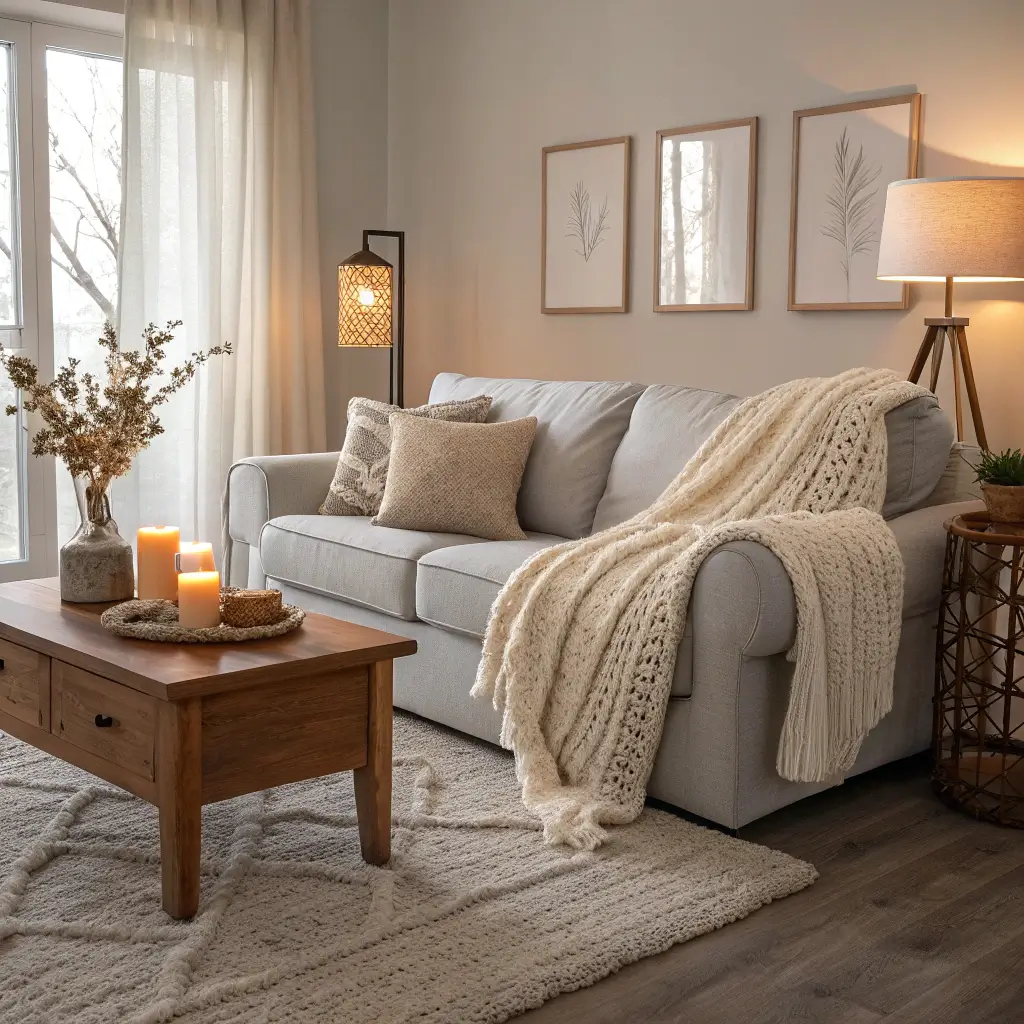
The Warmth Problem (And How to Solve It)
Let’s address the elephant in the room first. Grey can absolutely feel cold and unwelcoming if you approach it wrong. I learned this the hard way when I painted my first living room in a cool-toned grey and furnished it with sleek, minimal pieces. The result? A space that looked like a modern art museum—not exactly the cozy retreat I’d imagined.
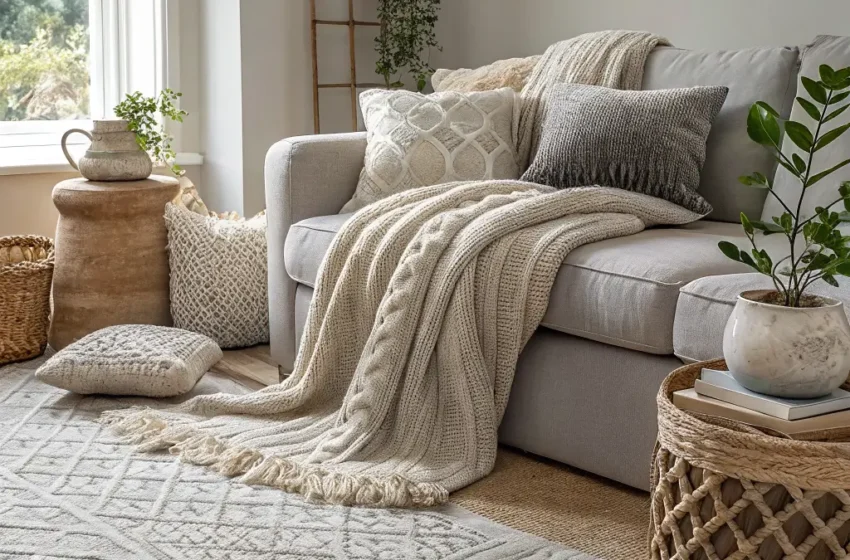
The secret to keeping grey cozy lies in your undertones and textures. Warm greys with hints of beige, taupe, or even blush completely change the game. These shades, sometimes called “greige,” bring warmth without sacrificing that sophisticated grey aesthetic.
Must-Have Elements for a Cozy Grey Living Room
Here’s what you need to prevent the cold factor:
- Chunky knit throws draped over sofas and chairs
- Soft area rugs with high pile or plush textures
- Warm metallic accents like brass or copper (skip the chrome)
- Layered lighting with warm-toned bulbs (aim for 2700K-3000K)
- Natural materials like wood, rattan, and woven baskets
I personally swear by the throw blanket method. Drape two or three different textured blankets across your grey sofa, and suddenly the whole room feels like a warm hug. It’s such a simple fix, but it makes an enormous difference.
Choosing the Right Grey
Not all greys work for cozy spaces. Here’s a quick breakdown:
Warm greys to consider:
- Greige tones (grey + beige)
- Mushroom grey
- Warm concrete grey
- Grey with pink or purple undertones
Cool greys to avoid for cozy vibes:
- Blue-grey tones
- Steel grey
- Silver-grey
The undertone of your grey matters more than the shade itself. Hold those paint swatches up in natural light before committing—what looks warm in the store can turn icy once it’s on your walls.
2. Modern Grey Living Rooms With Warm Wood Accents
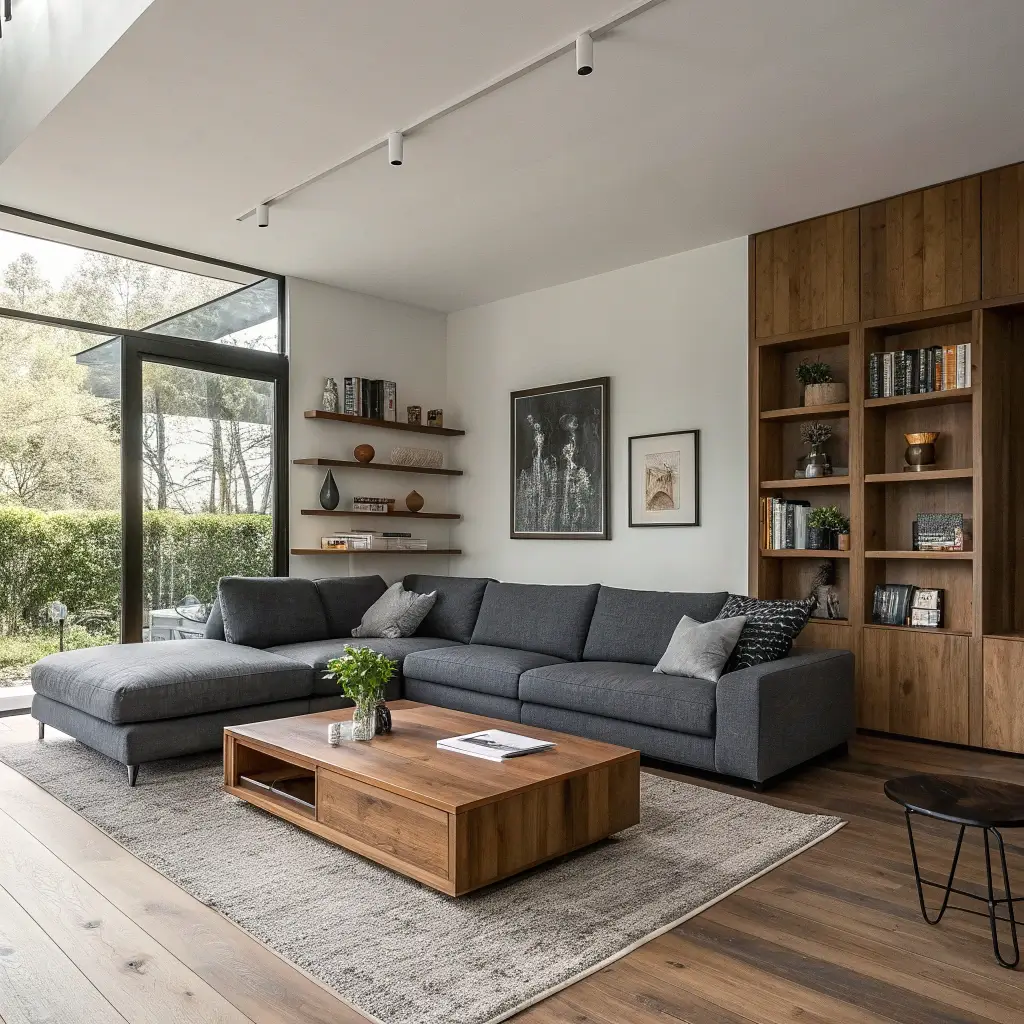
Why Wood and Grey Work So Well Together
Ever notice how those stunning Scandinavian interiors always pair grey with natural wood? There’s actual science behind why this combination works. Grey provides a neutral, sophisticated backdrop while wood introduces warmth, texture, and organic character. They balance each other perfectly.
When I redesigned my own living room, I started with charcoal grey walls and felt something was missing. The moment I added a light oak coffee table and some walnut floating shelves, the whole space transformed. Wood brings life to grey in a way that no other material can replicate.
Best Wood Tones for Grey Living Rooms
Not every wood tone pairs equally well with grey. Here’s what I’ve found works best:
For light grey walls:
- Light oak
- Natural birch
- Blonde wood
- Pale ash
For medium grey walls:
- Walnut
- Mid-tone oak
- Teak
- Honey-toned woods
For dark grey walls:
- Light oak (creates beautiful contrast)
- Natural pine
- Whitewashed wood
- Reclaimed wood with varied tones
Where to Add Wood Elements
You don’t need to overhaul your entire room. Strategic wood accents go a long way:
- Coffee tables and side tables offer the most impact
- Floating shelves create visual interest on grey walls
- Wooden legs on furniture subtly incorporate the material
- Picture frames and decorative objects add smaller touches
- A statement wooden ceiling beam if you’re feeling ambitious
The key here? Don’t match everything. Mix different wood tones for a collected, lived-in look. Matching everything perfectly actually looks less sophisticated—a bit too catalog-perfect, if you know what I mean.
3. Grey Living Room Ideas That Look Expensive on a Budget
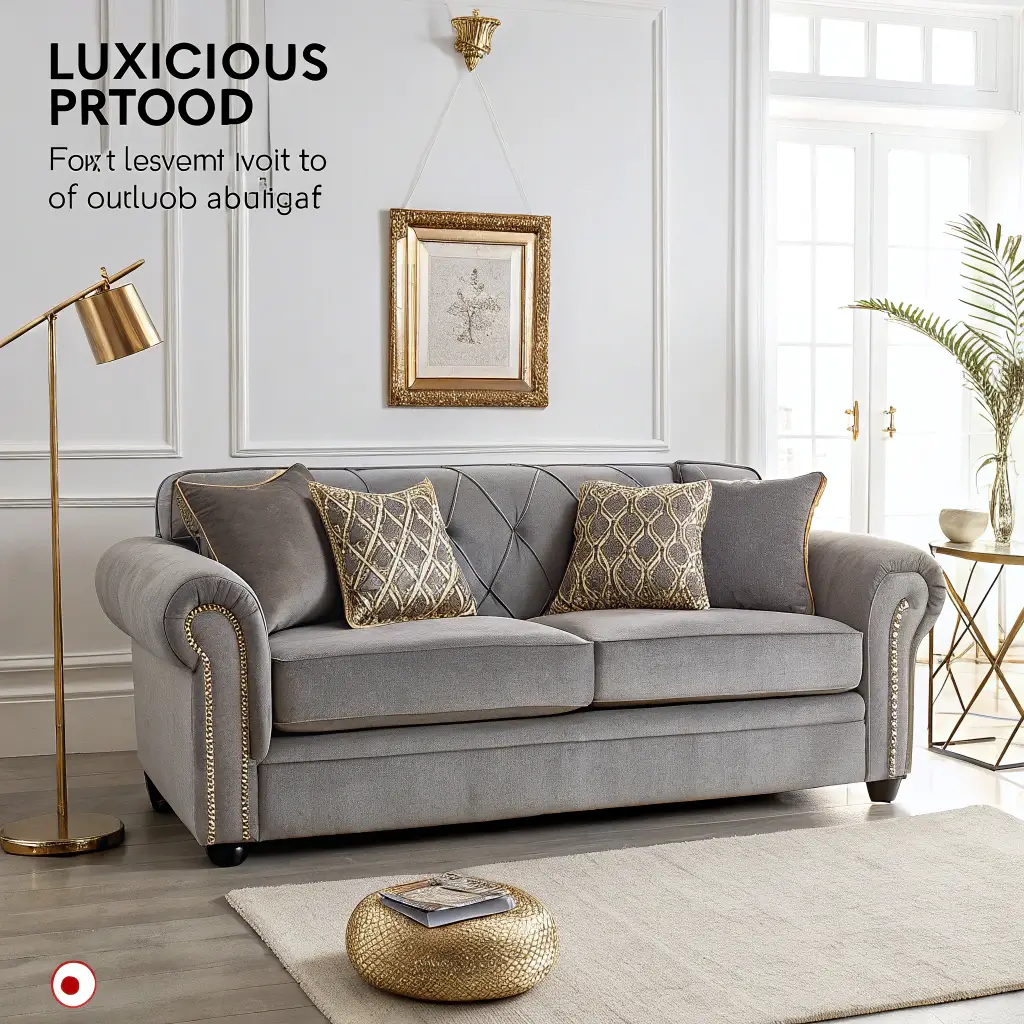
The Expensive-Looking Illusion
Here’s some great news: grey naturally looks expensive. It’s one of those colors that photographs beautifully and reads as sophisticated regardless of your actual budget. But there are specific tricks that can elevate your grey living room from “nice” to “how much did you spend on this?!”
Spoiler alert: probably less than people think.
Budget-Friendly Tips That Look Premium
I’ve furnished rooms on shoestring budgets that had guests asking about my “designer.” Here’s what actually works:
Focus on these high-impact areas:
- Paint quality matters more than you’d think. Spend a little extra on premium paint with good coverage. Cheap paint shows every imperfection and requires more coats.
- Crown molding is criminally underrated. Adding simple crown molding to a grey room instantly makes it look custom and finished. It costs maybe $100-200 for an average room if you DIY.
- Invest in one statement piece. Instead of spreading your budget thin, put 40-50% of your furniture budget into one gorgeous sofa or accent chair. Let that piece anchor the room.
- Edit ruthlessly. Expensive-looking rooms have breathing room. Remove clutter, limit accessories, and let negative space do its thing.
Where to Splurge vs. Save
Splurge on:
- Sofa (you sit on it daily)
- Lighting fixtures (especially overhead lighting)
- Area rug (cheap rugs look cheap)
- Throw pillows (they’re front and center)
Save on:
- Side tables (IKEA has great options)
- Decorative baskets and storage
- Basic shelving
- Curtain rods (no one notices these)
FYI, thrift stores are goldmines for grey living rooms. Grey pairs with practically everything, so you can mix vintage finds without worrying about clashing. Those vintage brass lamps nobody wants? Perfect for your grey space.
Also Read: 12 Chic Grey and Green Living Room Ideas for Bright
4. Small Grey Living Room Ideas That Feel Bigger and Brighter
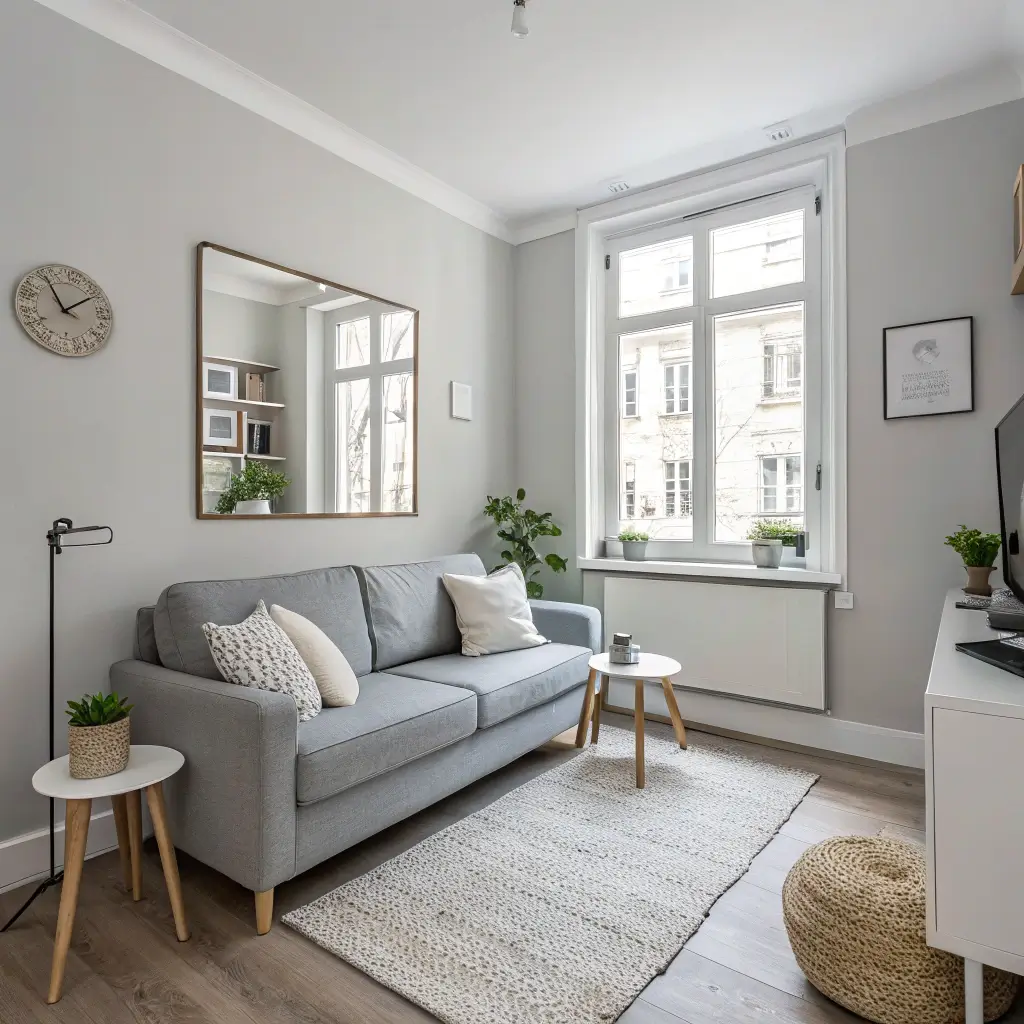
Grey in Small Spaces: Can It Work?
Conventional wisdom says light colors make rooms feel bigger, so grey seems risky for small living rooms. But here’s what conventional wisdom gets wrong: the right grey can absolutely make a small space feel larger.
I lived in a 400-square-foot studio for two years and painted the living area in a light grey. It actually felt more spacious than the dingy white it replaced because light grey reflects light without the harshness of pure white.
Best Grey Shades for Small Rooms
Stick with these characteristics:
- Light to medium tones (save dark grey for larger spaces)
- Cool undertones if you want maximum brightness
- Slight shimmer or satin finish to reflect more light
Some specific shades that work beautifully in small spaces include pale dove grey, silver grey, and light warm greige. Test samples on your actual walls before committing—lighting changes everything.
Tricks to Maximize Space
Beyond color choice, these strategies amplify the spacious feeling:
- Use mirrors strategically. A large mirror opposite a window essentially doubles your light. Don’t be shy—go big.
- Keep furniture legs visible. Leggy sofas and chairs create visual space beneath them, making the room feel less cramped.
- Choose glass or acrylic accent pieces. A glass coffee table practically disappears, maintaining openness.
- Vertical storage wins. Draw the eye upward with tall bookshelves or floor-to-ceiling curtains.
- Match your sofa to the wall tone. A grey sofa against grey walls creates continuity, making furniture feel less bulky.
5. Grey Living Rooms With Perfect Accent Colors
The Accent Color Question
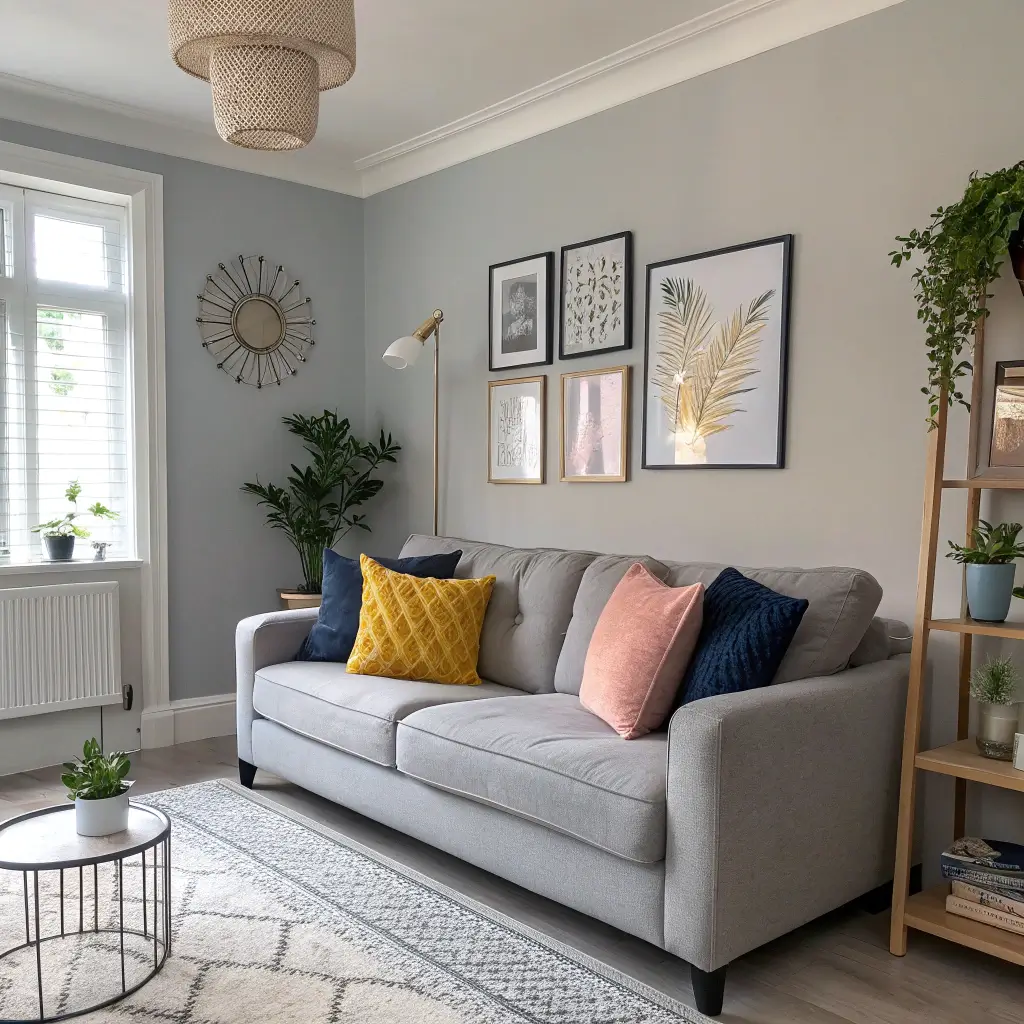
Grey’s superpower? It plays well with nearly every accent color on the planet. Seriously, name a color—grey probably looks good with it. But “good” isn’t the same as “great,” and certain combinations elevate grey rooms to showstopper status.
Best Accent Colors for Grey Living Rooms
Let me break down the most successful pairings I’ve seen (and tried):
Yellow and Grey:
This combination has become almost iconic for good reason. Yellow injects energy and optimism into grey spaces. Mustard yellow works best—it feels sophisticated rather than childish. Think throw pillows, artwork, and one statement chair.
Blush Pink and Grey:
Incredibly elegant and surprisingly gender-neutral. Blush softens grey without making it feel overly feminine. This pairing reads as modern and romantic simultaneously.
Navy Blue and Grey:
A more masculine, classic combination. Navy grounds grey and adds depth. This works especially well in traditional or transitional spaces.
Emerald Green and Grey:
Dramatic and luxurious. Emerald green against grey feels like you’ve stepped into a high-end boutique hotel. Use plants to incorporate this color naturally.
Burnt Orange or Terracotta and Grey:
Warm and earthy. This combination gained huge popularity recently, and honestly, it deserves the hype. Terracotta accents warm up cool greys beautifully.
How Much Accent Color to Use
Here’s the classic formula: 60-30-10.
- 60% dominant color (your grey walls, large furniture)
- 30% secondary color (curtains, area rug, large accessories)
- 10% accent color (throw pillows, artwork, decorative objects)
Going heavier on accent colors can work, but proceed carefully. Too much accent color shifts the balance and makes grey feel like an afterthought rather than the star.
6. Minimal Grey Living Room Ideas With Personality
Minimalism Without the Boring Factor
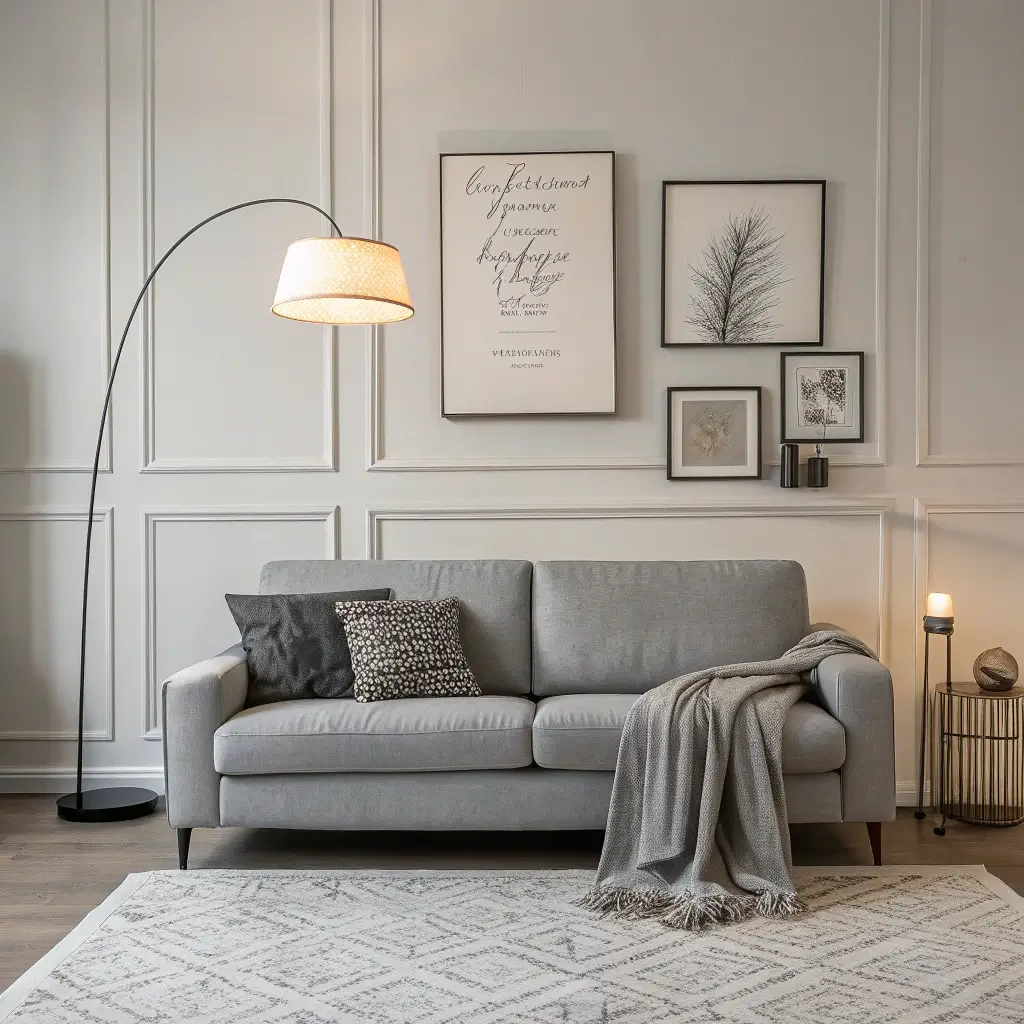
Here’s my honest take: most minimal living rooms look boring because people confuse minimalism with emptiness. True minimalism isn’t about having less—it’s about having the right things and eliminating everything else.
Grey naturally lends itself to minimalist design, but you need personality anchors. Otherwise, your living room looks like a staged home nobody actually lives in.
Adding Personality to Minimal Grey Spaces
Statement artwork makes or breaks minimal rooms. When you strip away clutter, whatever remains carries enormous visual weight. One large, striking piece of art gives your eye somewhere to land and tells people something about who you are.
Other personality-adding strategies:
- One unexpected furniture piece. Maybe an oddly shaped coffee table or a vintage chair that breaks the modern mold.
- Books you actually read. Arranged thoughtfully on a shelf, real books add color and personality without cluttering.
- Greenery with sculptural quality. A fiddle leaf fig or monstera becomes living art in a minimal space.
- Personal objects with meaning. That weird ceramic you bought on vacation? It belongs here.
The “One of Each” Rule
For minimal grey living rooms, I follow the “one of each” rule:
- One statement light fixture
- One major artwork
- One plant
- One throw blanket
- One stack of books
- One personal decorative object
This approach keeps the space minimal while ensuring it doesn’t feel like a furniture showroom. Every item earns its place.
Also Read: 12 Chic Sage Green Living Room Ideas and Minimalist Touches
7. Grey Living Room Ideas for Apartments and Rentals
Working With Landlord Restrictions
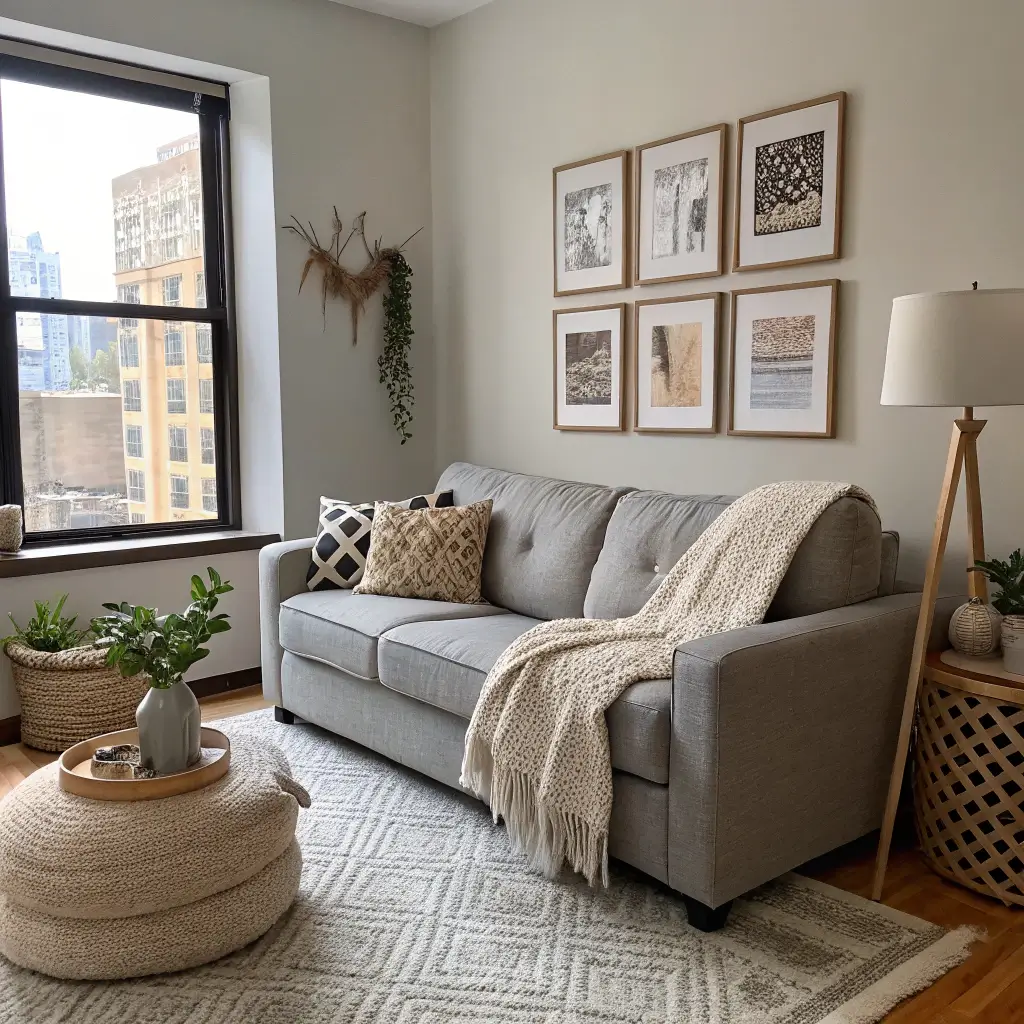
Let’s be real—most renters can’t paint walls or make permanent changes. But that shouldn’t stop you from creating an amazing grey living room. You just need to get creative with how you incorporate grey.
I rented for eight years before buying my first home, and some of my best design work happened within those limitations. Constraints force creativity, right? 🙂
Renter-Friendly Grey Living Room Strategies
Focus grey on these non-permanent elements:
- Large area rugs establish your color story from the ground up
- Statement sofas and chairs dominate visual real estate
- Curtains hung on tension rods add grey without wall damage
- Removable wallpaper accent walls create drama you can peel away at lease end
- Large textile hangings cover blank walls without nail holes
Dealing With Existing Elements
Most rentals come with beige walls, beige carpet, or dated fixtures. Here’s how grey works with common rental issues:
Beige walls: Grey furniture actually looks fantastic against warm beige. Add grey throws, pillows, and rugs to shift the room’s color balance.
White walls: The easiest backdrop for grey! Go bold with charcoal furniture or keep it tonal with lighter greys.
Dated fixtures: Grey helps neutralize awkward brass or oak finishes. Bringing in modern grey elements draws attention away from dated stuff you can’t change.
Carpet you hate: A large enough area rug solves most carpet problems. Invest in the biggest grey rug your budget allows.
8. Dark Grey Living Room Ideas That Still Feel Cozy
Embracing the Dark Side
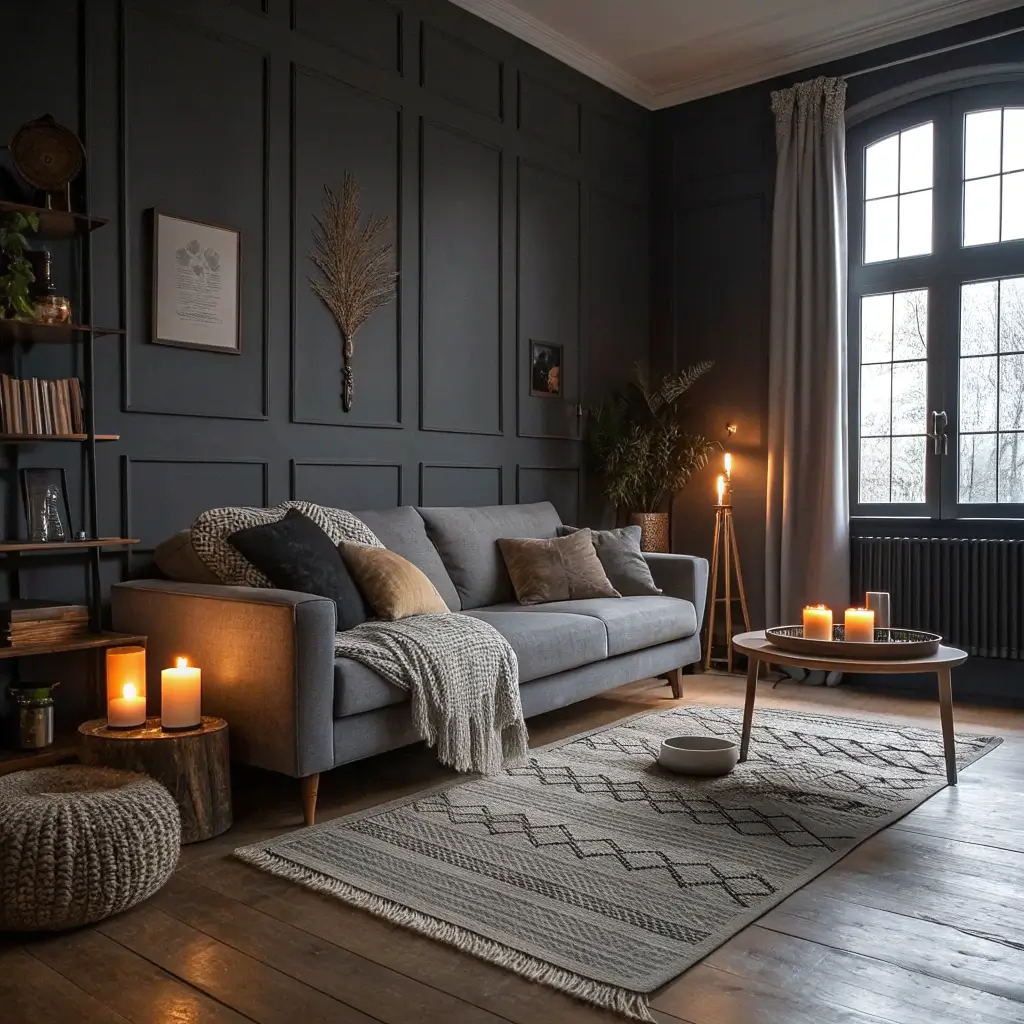
Dark grey living rooms intimidate people. “Won’t it feel like a cave?” they ask. The answer is no—if you do it correctly. Dark grey can actually create the coziest, most enveloping living spaces imaginable.
Think about it: nice restaurants, cozy bars, and luxury hotels often use dark walls. Darkness creates intimacy. Your living room can harness that same magic.
Making Dark Grey Work
Here’s what I’ve learned from going dark:
Lighting becomes absolutely essential. When walls don’t reflect as much light, you need more light sources. Layer floor lamps, table lamps, and candles. Aim for warm pools of light rather than one harsh overhead fixture.
Go big on contrast. Light furniture against dark walls creates beautiful drama. A cream sofa, white shelves, or light oak furniture pops against charcoal or slate grey walls.
Don’t forget the ceiling. A white ceiling prevents the “cave” feeling by drawing the eye upward and reflecting light back down.
Textures matter even more in dark rooms. Matte, velvet, glossy, and woven textures catch light differently, adding depth and preventing flatness.
Best Rooms for Dark Grey
IMO, dark grey works best in these situations:
- Rooms with abundant natural light (darkness balances brightness)
- North-facing rooms that never get harsh sun
- Spaces primarily used in evening hours
- Rooms you want to feel cocooning rather than airy
Living rooms used mainly for evening relaxing and movie watching? Perfect dark grey candidates.
9. Grey Living Room Ideas With Texture and Layered Decor
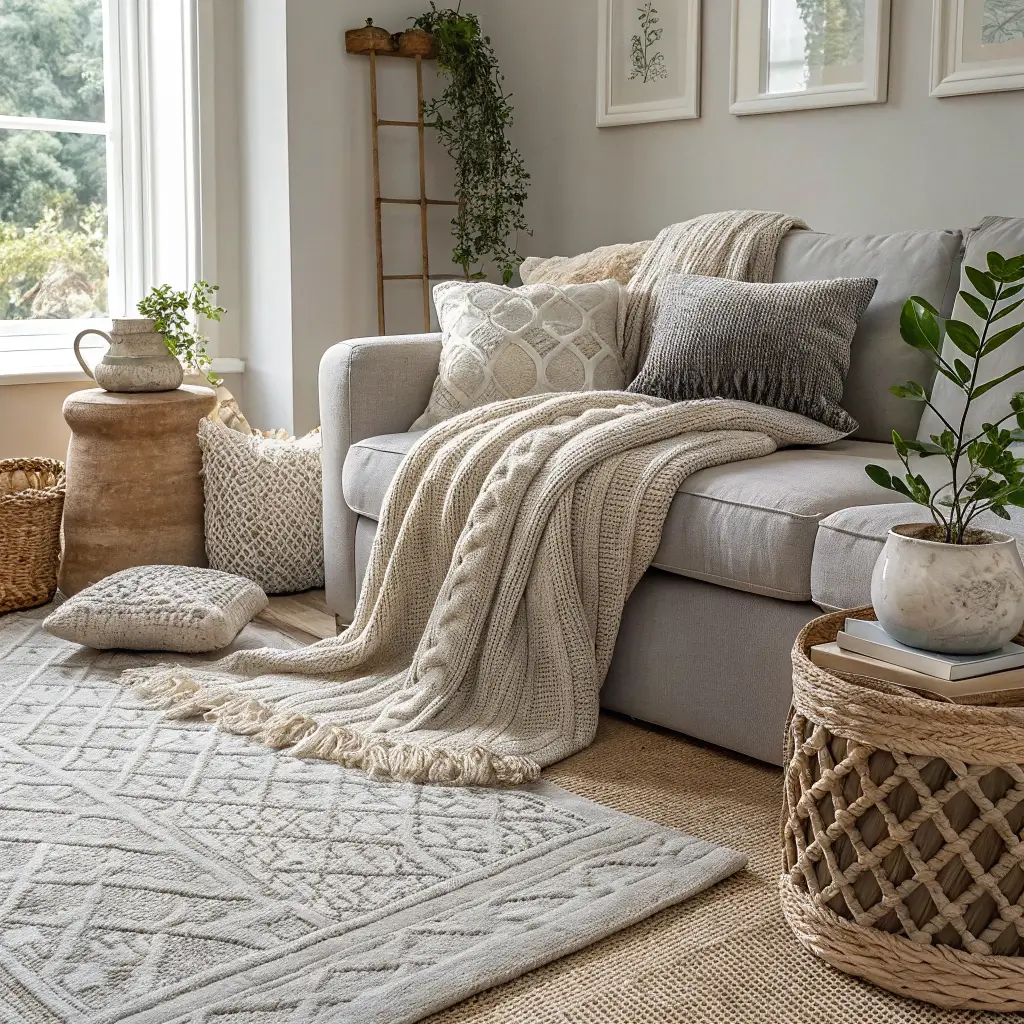
Why Texture Prevents the “Flat” Problem
One-dimensional grey rooms happen when people forget about texture. Every surface in the same smooth finish creates visual boredom. Your eye needs variety—different textures catch light differently and create depth.
This principle matters more with grey than almost any other color. Why? Grey is inherently neutral and calm. Without textural interest, calm becomes boring fast.
Types of Texture to Incorporate
Layer these texture categories throughout your grey living room:
Soft textures:
- Velvet throw pillows
- Chunky knit blankets
- Faux fur accents
- Plush area rugs
Hard textures:
- Marble or stone accessories
- Ceramic vases and objects
- Metal frames and fixtures
- Glass elements
Natural textures:
- Woven baskets
- Rattan furniture pieces
- Jute rugs
- Wooden objects
Fabric textures:
- Linen curtains
- Bouclé upholstery
- Cable knit throws
- Canvas artwork
The Layering Technique
Think of texture layering like making a good sandwich—you need variety in every bite. Here’s how to layer effectively:
Ground layer: Start with your area rug texture (jute, wool, shag, flatweave)
Seating layer: Mix upholstery textures if you have multiple seating pieces (leather chair + velvet sofa, for example)
Accessory layer: Pile on throws, pillows, and decorative objects with varying textures
Vertical layer: Consider textured curtains, woven wall hangings, or dimensional artwork
Also Read: 10 Modern Green Curtains Living Room Ideas Trending Now
10. Grey Living Room Ideas Inspired by Scandinavian Style
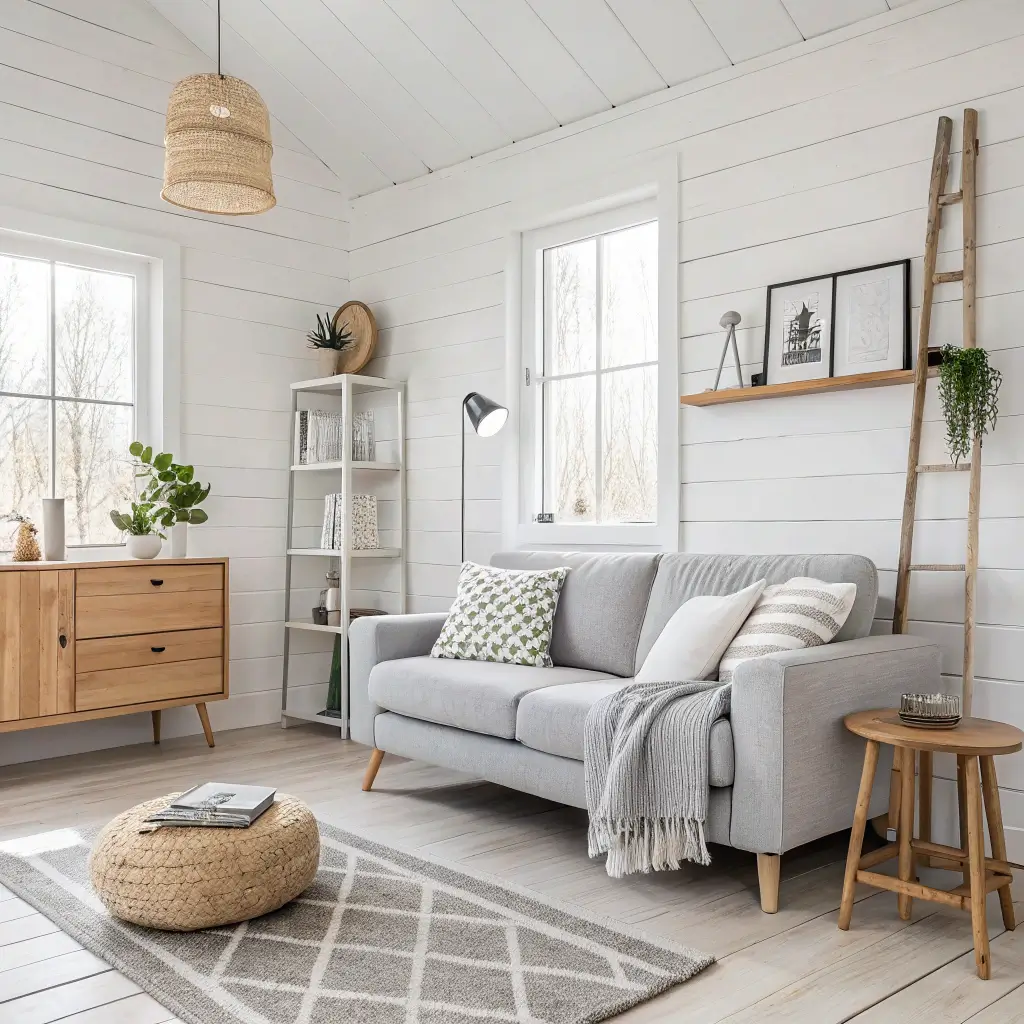
The Scandi Grey Approach
Scandinavian design basically invented the “grey living room done right” concept. Those Nordic designers mastered the art of making grey feel warm, inviting, and alive. No wonder everyone pins those Swedish living rooms on Pinterest.
What makes Scandi grey different? It’s all about balance—grey paired with natural elements, plenty of light, and functional simplicity.
Key Elements of Scandinavian Grey Living Rooms
Light grey walls serve as the foundation. Scandinavian design rarely uses dark grey on walls—they prefer pale, soft greys that maximize light reflection.
Natural materials everywhere. Light woods (oak, birch, ash), wool, linen, and plants balance the cool grey tones with organic warmth.
White accents break things up. White trim, white furniture pieces, and white textiles prevent grey monotony.
Plants, plants, plants. Greenery adds life to minimal Scandi rooms. The contrast of green against grey never fails.
Hygge Elements for Grey Living Rooms
You can’t discuss Scandinavian style without mentioning hygge—that Danish concept of cozy contentment. Grey living rooms embrace hygge through:
- Candles everywhere (Scandinavians burn more candles per capita than any other nation)
- Cozy reading nooks created with sheepskins and floor cushions
- Warm lighting that creates golden pools of warmth
- Books and magazines arranged thoughtfully
- Quality over quantity in every purchase
The Scandi approach reminds us that grey living rooms should feel like sanctuaries—places you actually want to spend time.
Bringing Your Grey Living Room to Life
So there you have it ten grey living room ideas that prove this humble color deserves its moment in the spotlight.
Whether you’re drawn to the cozy warmth of textured layers, the sophistication of dark grey drama, or the airy simplicity of Scandinavian style, grey accommodates your vision without fighting against it.
The beauty of grey lies in its flexibility. It doesn’t demand attention the way bold colors do. Instead, it provides a sophisticated canvas that lets your furniture, art, and personal touches shine.
My biggest piece of advice? Start with one idea that resonates and build from there. You don’t need to implement everything at once. Maybe you begin with a grey sofa, then add textured throws over time, then eventually paint an accent wall. Great rooms evolve.
And remember—the “right” grey living room is the one that makes you feel at home. Follow the principles, sure, but trust your instincts too. If a mustard yellow pillow calls your name, buy it.
If dark grey walls excite you despite everyone’s warnings, go for it.
Grey isn’t boring. Grey isn’t cold. Grey is whatever you make it. Now go make something beautiful. 🙂