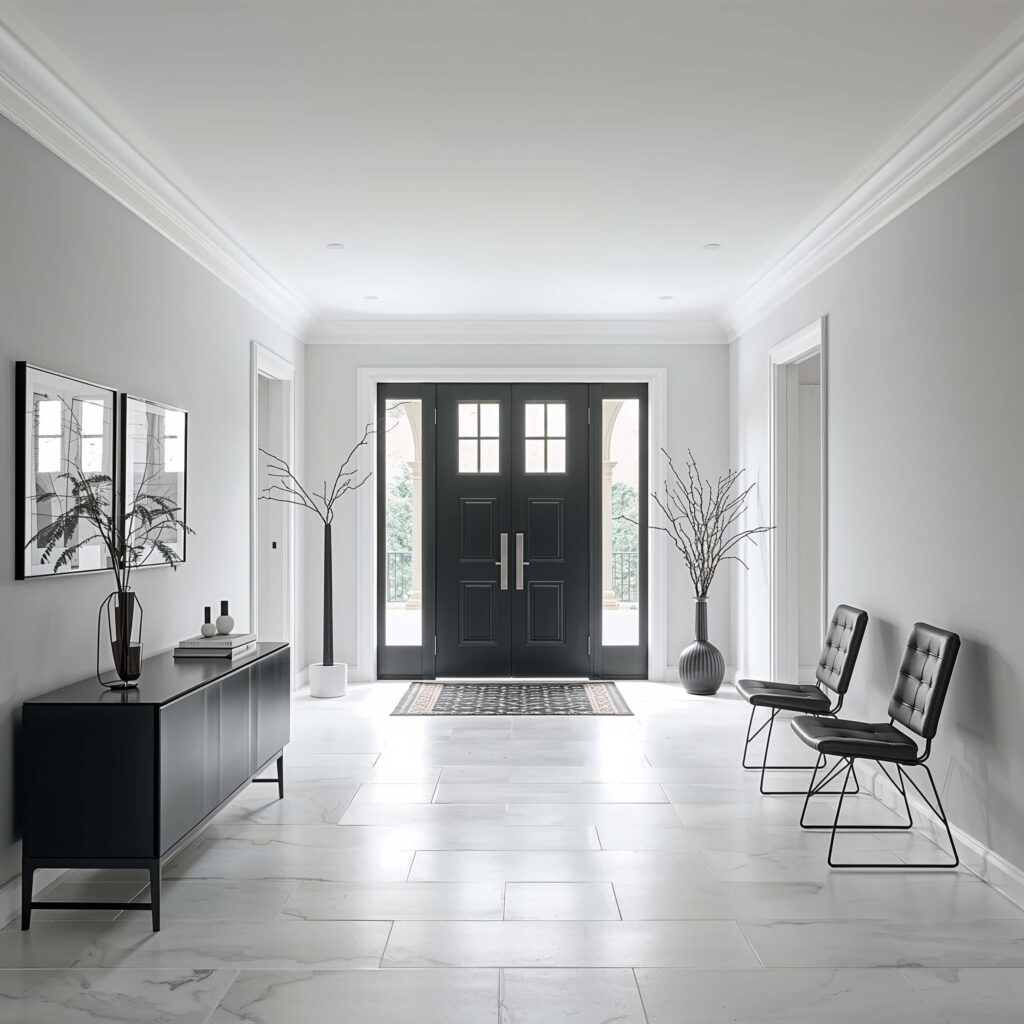
15 Creative Half Open Kitchen and Living Room Ideas to Inspire
- Kitchen ideas
 Ben
Ben- 0
- 35 minutes read

Remember that time you couldn’t decide between keeping your kitchen closed off or going full open plan? Yeah, I spent six months in that exact dilemma before discovering the genius of half-open kitchens.
Turns out, you really can have your cake and eat it in a semi-private kitchen too.
I learned the hard way that fully open kitchens aren’t for everyone. After removing an entire wall in my first house, I quickly realized that not every dinner guest needs to see my disaster zone while I’m cooking.
That’s when half-open designs saved my sanity – and probably my social life. These layouts give you connection without full exposure, like wearing makeup on just the top half of your face for Zoom calls (we’ve all done it).
Let me walk you through fifteen brilliant ways to create that perfect balance between openness and privacy.
These ideas transformed my cooking chaos into something I’m actually proud to partially show off.
Glass Partition Half Open Kitchen
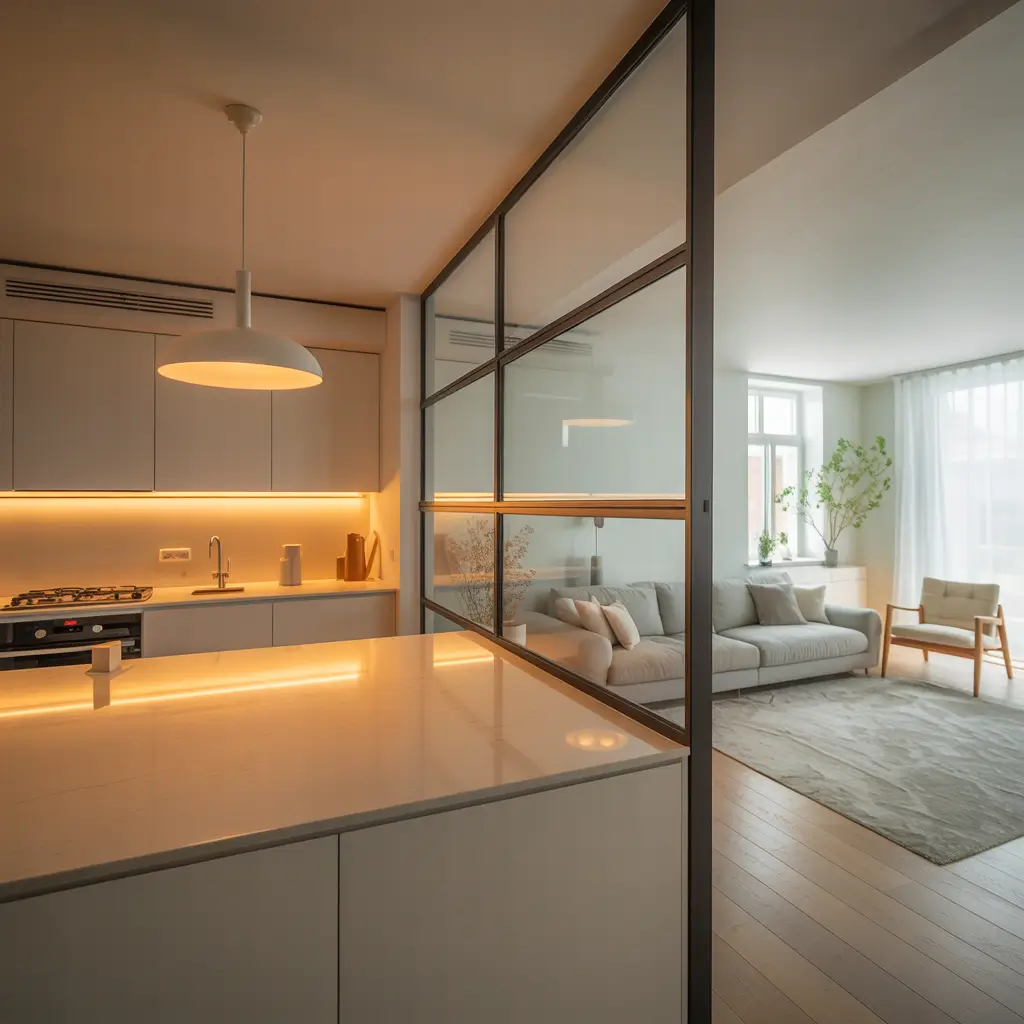
Glass partitions create the illusion of openness while actually providing real separation. This solution keeps cooking smells contained without making you feel like you’re in solitary confinement. I installed floor-to-ceiling glass panels in my current home, and the transformation was mind-blowing.
The transparency maintains visual connection – I can see my kids doing homework while I cook, and they can see me (unfortunately for them when it’s vegetable night). But here’s the kicker: the glass actually blocks sound better than you’d think. No more shouting over the exhaust fan just to have a conversation.
Key benefits of glass partitions:
- Natural light flows freely between spaces
- Easy to clean with standard glass cleaner
- Creates a modern, sophisticated look
- Can be fixed or sliding for flexibility
The only downside? Fingerprints. So many fingerprints. But honestly, the elegance and functionality make the constant wiping worth it. Plus, it forced me to keep my kitchen cleaner since everyone can see in.
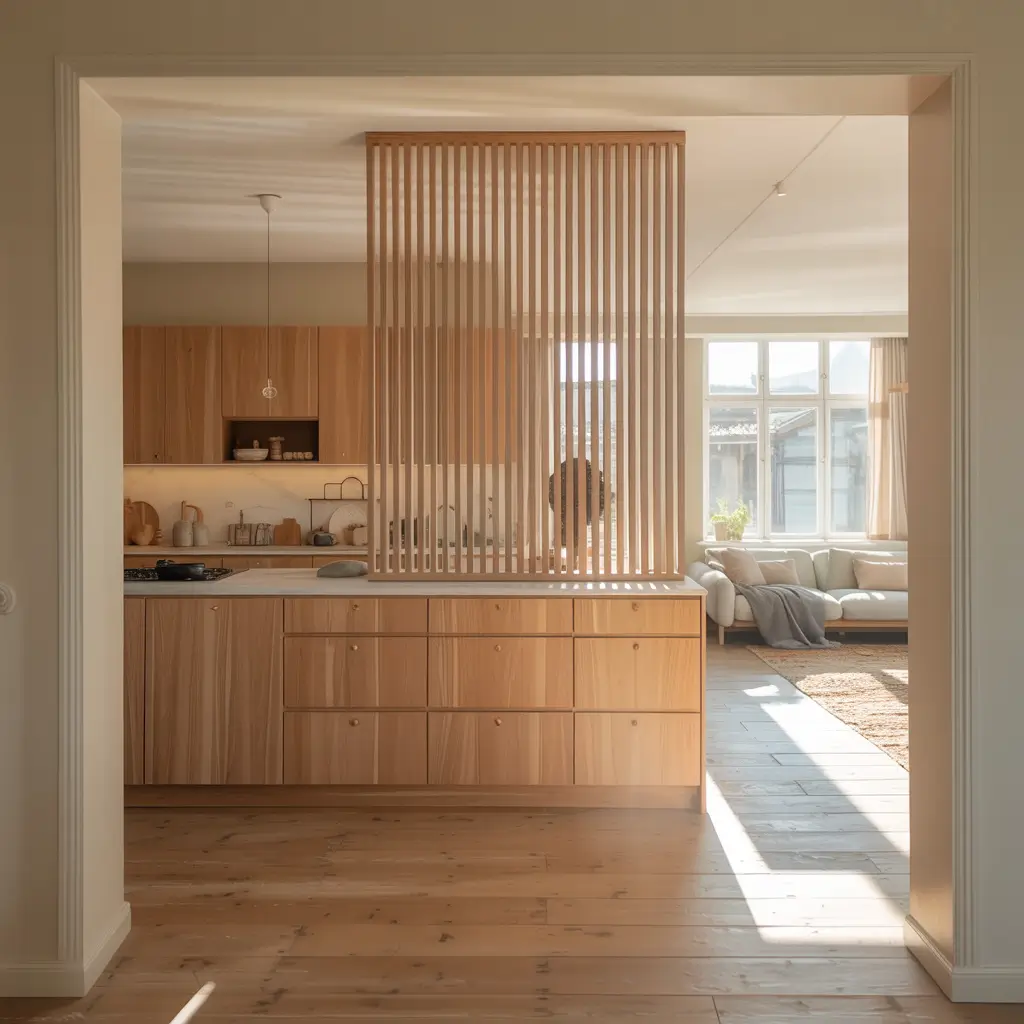
Wooden Slatted Divider Concept
Wooden slats hit that sweet spot between open and closed perfectly. They provide privacy while maintaining airflow and visual connection – like wearing sunglasses indoors but actually making it work. My neighbor installed these last year, and I’m still jealous.
The vertical slats create this rhythmic pattern that adds architectural interest without feeling heavy. You can see through them at certain angles but not others, which means your mess is visible only if someone’s really trying to look. The wood adds warmth that glass or metal dividers can’t match.
Why wooden slats work so well:
- Adjustable privacy based on slat spacing
- Natural material adds organic warmth
- Sound absorption properties
- Can be painted or stained to match any décor
I love how they filter light during sunset, creating these gorgeous striped shadows across the living room. It’s basically free art that changes throughout the day.
Kitchen Island Room Separator
Islands aren’t just for cooking anymore – they’re architectural elements that define spaces without walls. My kitchen island doubles as a room divider, breakfast bar, storage unit, and occasional dance floor (don’t judge).
The beauty of island dividers lies in their functionality. Mine has cabinets facing the living room for board games and books, while the kitchen side holds pots and pans. The countertop extends on the living room side, creating bar seating that makes everyone want to hang out in my kitchen.
Island divider must-haves:
- Different height levels for visual interest
- Storage accessible from both sides
- Electrical outlets on all sides
- Overhang for comfortable seating
The island became the unofficial heart of our home. Kids do homework there, friends gather with wine, and yes, it’s perfectly positioned to hide dirty dishes from living room view.
Also Read: 15 Inspiring Small Open Kitchen Ideas and Bright Interiors
Sliding Panel Half Open Layout
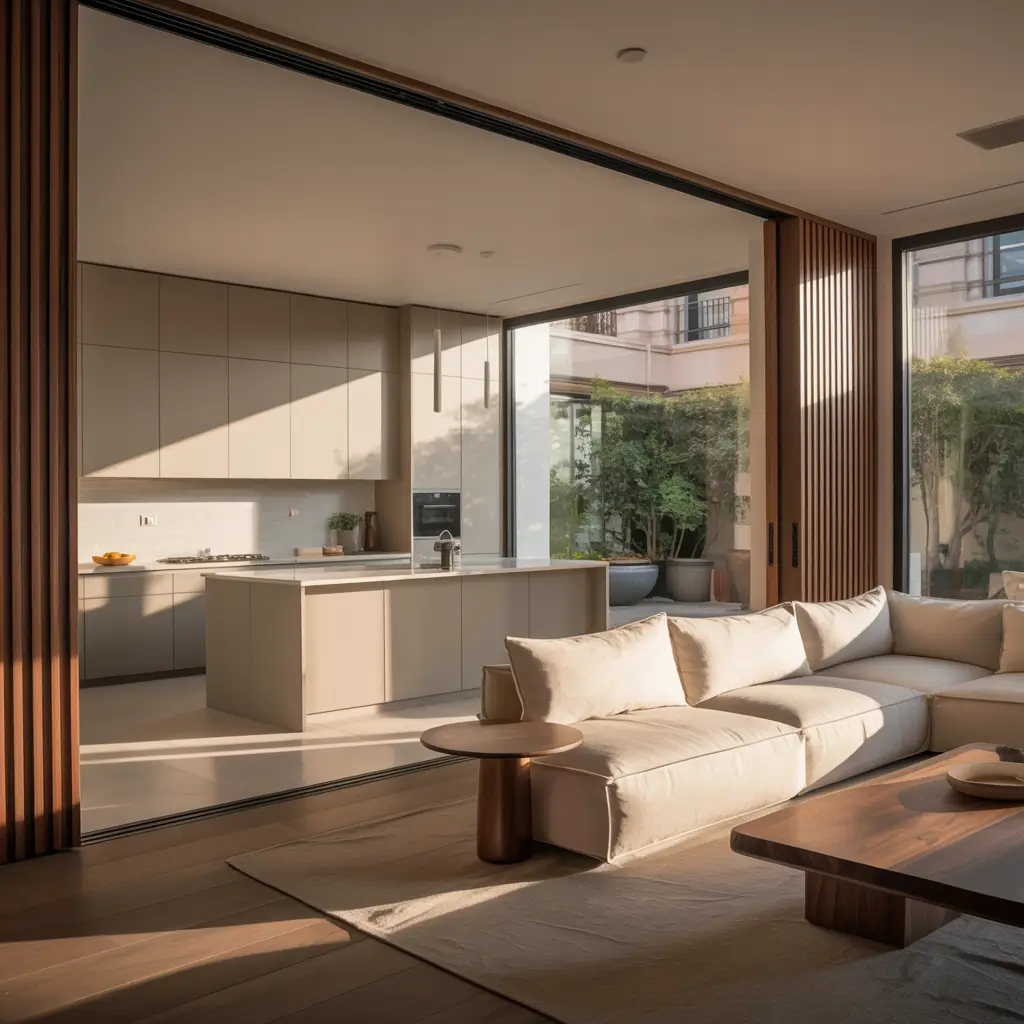
Sliding panels offer the ultimate flexibility – open when you want connection, closed when you need separation. These movable walls let you customize your space based on the moment. I installed barn door-style panels, and now I feel like I have two different homes.
Sunday morning pancakes? Panels wide open so everyone can chat. Attempting a complicated recipe that might fail spectacularly? Panels closed to hide my culinary disasters. The tracks can be ceiling-mounted or floor-based, depending on your preference and structural situation.
Sliding panel advantages:
- Complete flexibility in space configuration
- Various material options (wood, glass, metal)
- Can be decorative elements when open
- No floor space required for door swing
My panels feature frosted glass inserts that maintain light flow even when closed. FYI, the hardware quality matters here – cheap tracks will have you cursing every time you try to slide them.
Open Shelf Partition Design
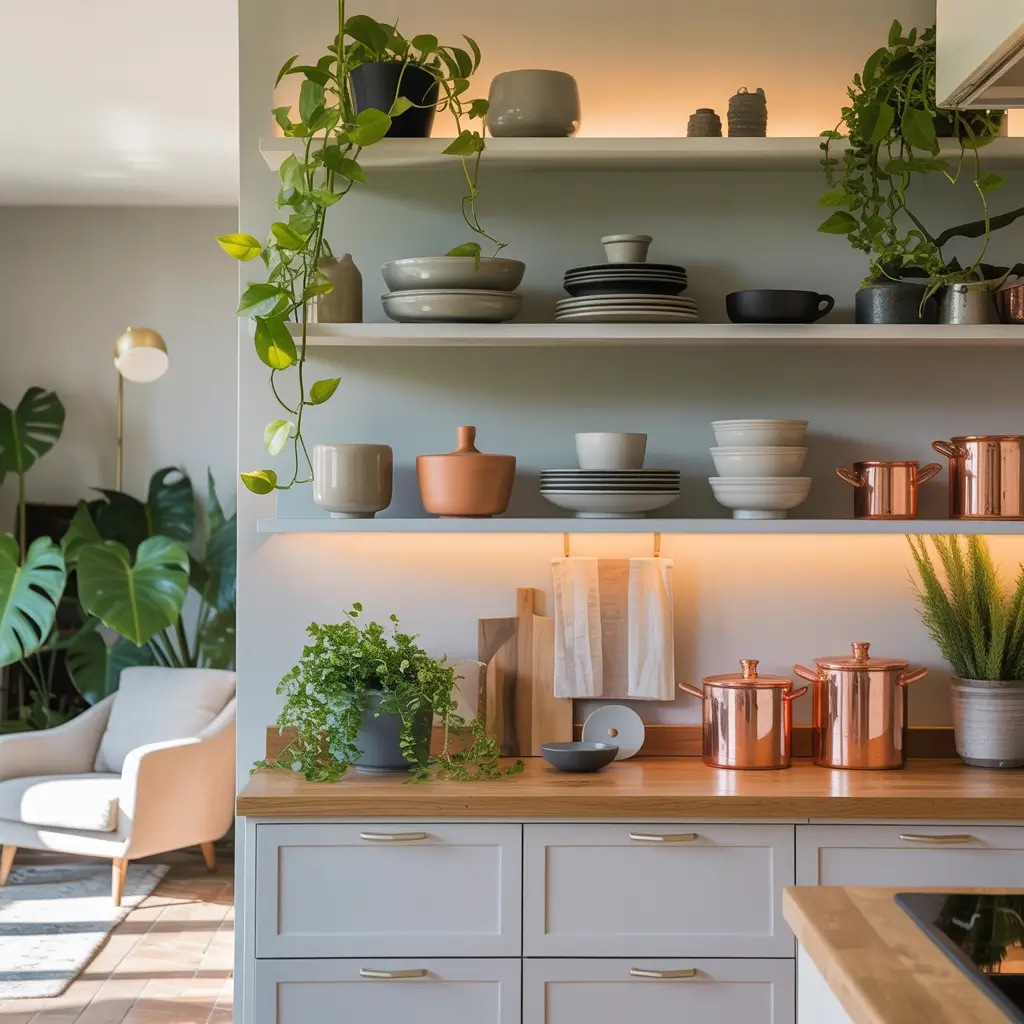
Open shelving as a room divider combines storage with separation brilliantly. These see-through walls display your prettiest items while defining distinct zones. I built floor-to-ceiling open shelves between my kitchen and living room, and they’ve become my favorite design feature.
The shelves hold cookbooks on the kitchen side and decorative items facing the living room. The open design means light flows through, and conversations flow around them. Plus, they forced me to finally organize my stuff since everything’s on display.
Open shelf partition tips:
- Vary shelf heights for different items
- Secure to both floor and ceiling for stability
- Mix functional and decorative items
- Leave some shelves empty for breathing room
The unexpected bonus? My plants love living on these shelves, getting light from both sides. They’ve turned into a living wall that changes with the seasons.
Frosted Glass Half Wall
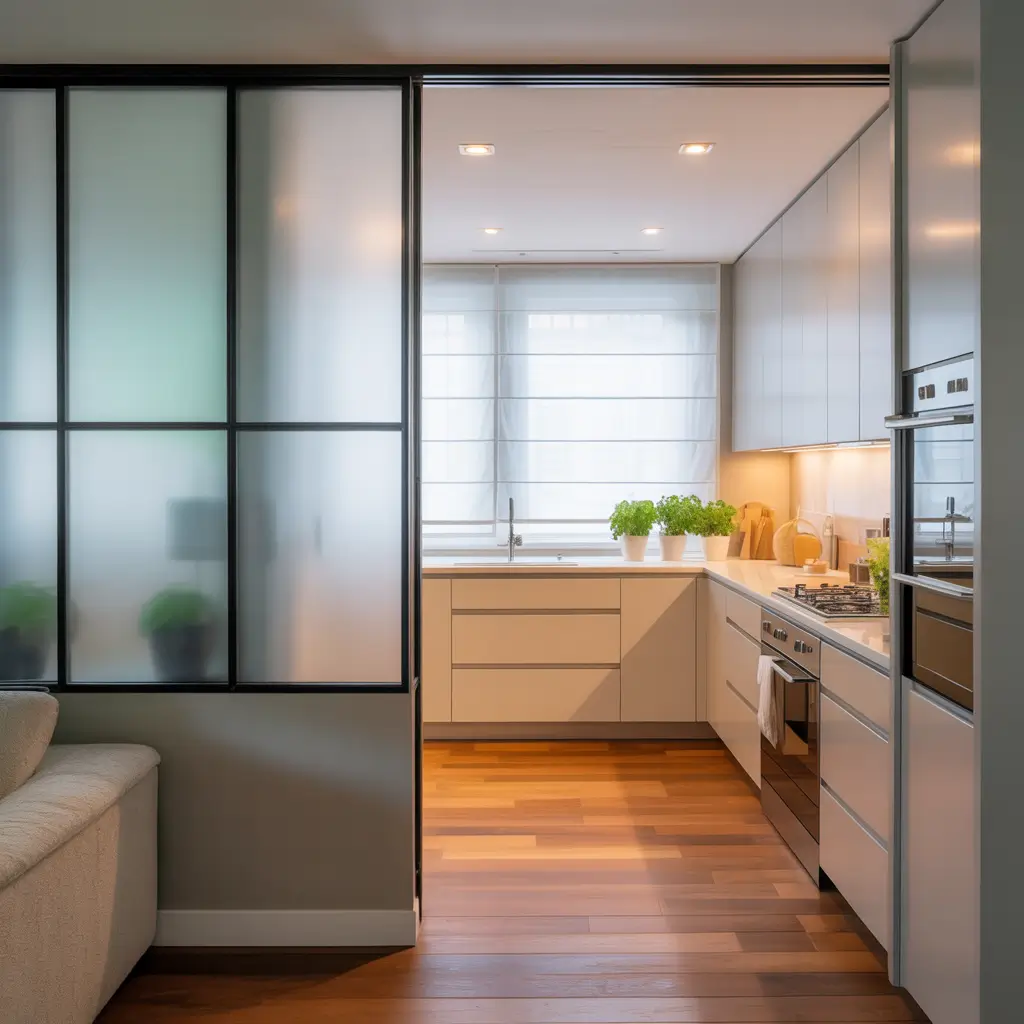
Frosted glass half walls provide privacy at counter level while keeping the upper space open. This design hides prep mess but maintains conversation flow – basically the introvert’s dream kitchen setup.
I chose frosted glass after realizing clear glass showed every splash and splatter. The frosting obscures details while letting light through, creating this soft, diffused glow. The half-height means you can still pass plates over and chat without obstacles.
Frosted glass benefits:
- Hides counter-level chaos effectively
- More forgiving than clear glass
- Creates soft, flattering light
- Available in different opacity levels
The installation was trickier than expected (measure three times, people), but the result looks like it came from a high-end design magazine. Sometimes I just stare at how the light plays through it 🙂
Also Read: 15 Stylish Kitchen Living Area Open Plan Ideas for Small
Minimalist Metal Frame Divider
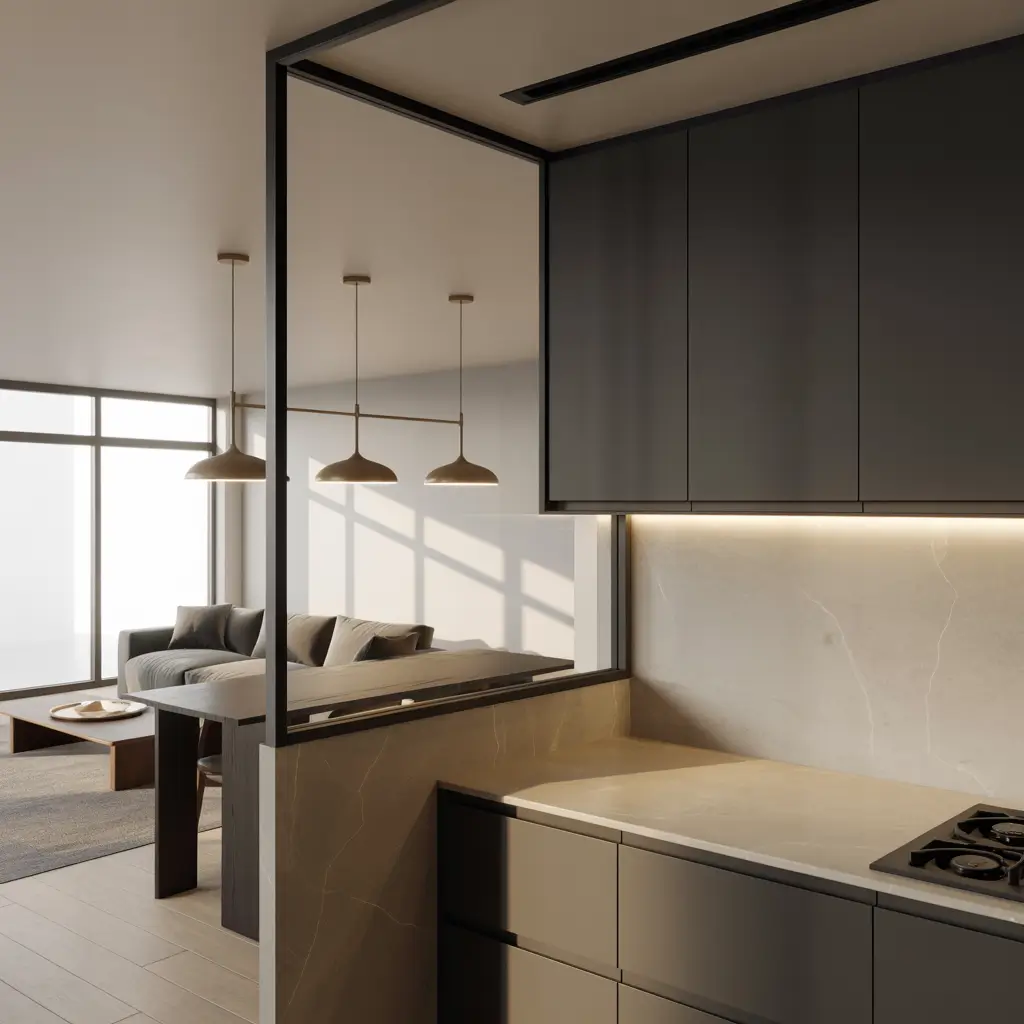
Metal frame dividers with glass or open sections offer structure without bulk. These skeletal partitions define space while maintaining an airy feel. My industrial-loving friend created one using black steel frames, and it looks like modern art.
The thin profiles mean maximum visibility with minimal obstruction. You can add glass panels, mesh inserts, or leave sections open depending on your privacy needs. The metal can be powder-coated in any color, though black remains the most versatile choice.
Metal frame design elements:
- Thin profiles maximize openness
- Customizable panel options
- Industrial chic aesthetic
- Extremely durable construction
The best part? These frames can incorporate shelving, making them functional art pieces. Just remember that metal shows fingerprints too, especially in black.
Breakfast Bar Divider Concept
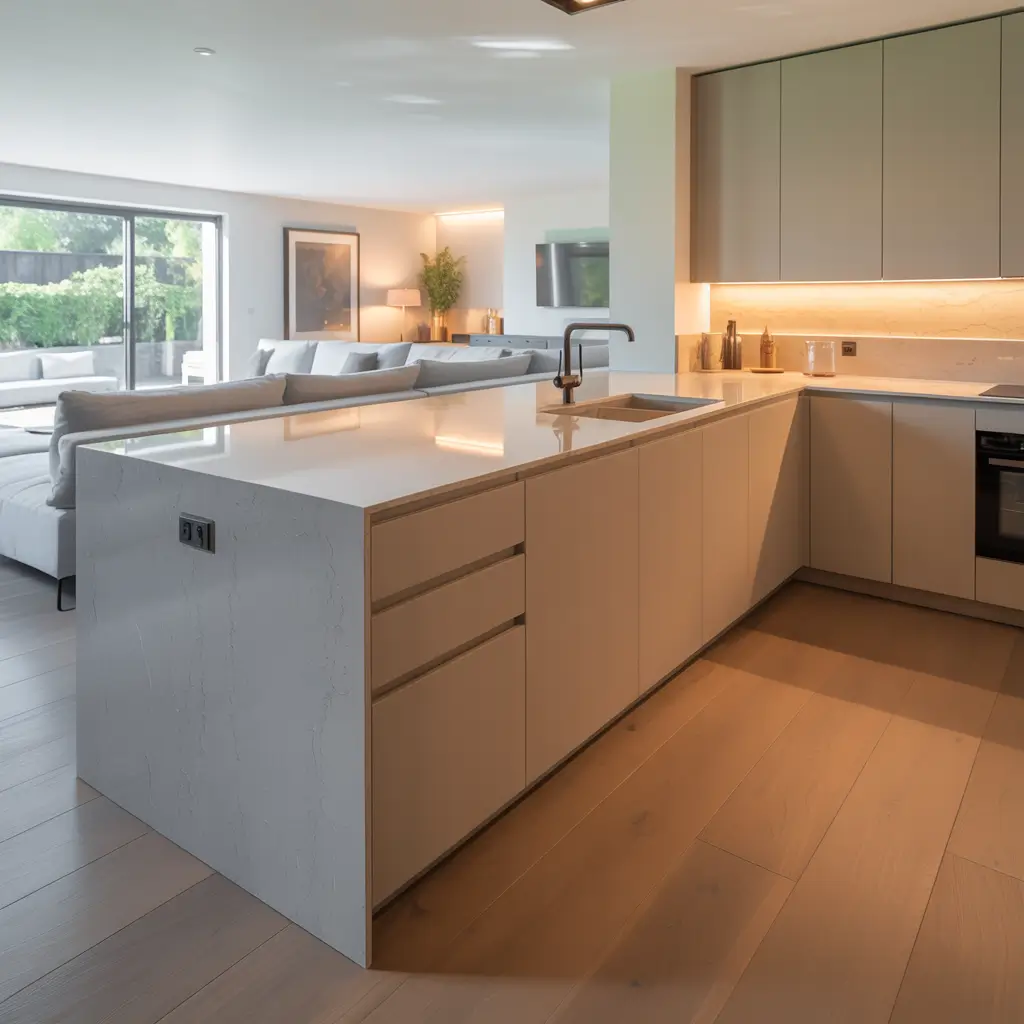
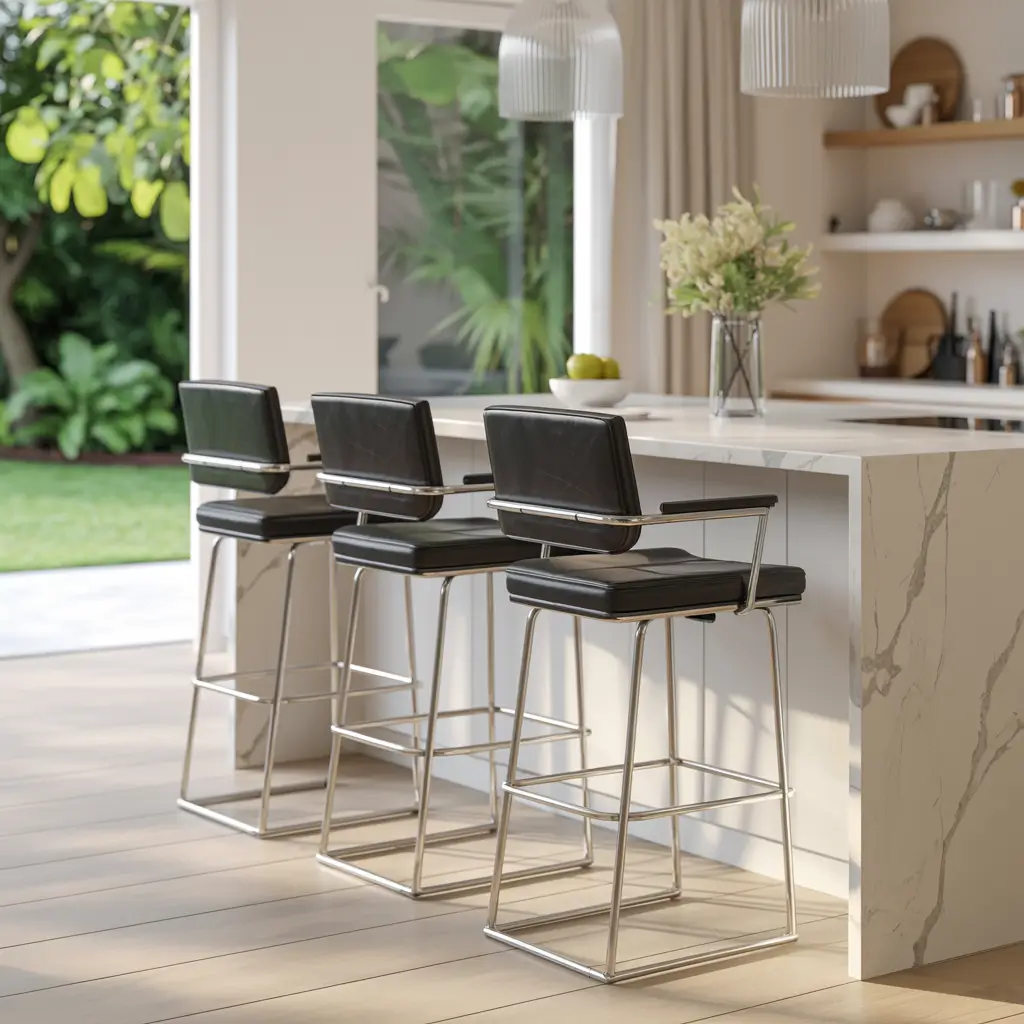
Breakfast bars create natural division while adding dining space. This elevated counter becomes a social hub that connects yet separates your spaces. My breakfast bar sees more action than my dining table ever did.
The bar height (typically 42 inches) creates a visual barrier that hides kitchen mess from seated living room guests. The overhang provides knee space for bar stools while the back can house storage or display. It’s multitasking at its finest.
Breakfast bar essentials:
- Proper overhang (12-15 inches) for comfort
- Support brackets that don’t obstruct legs
- Electrical outlets for laptops/charging
- Mixed height options for visual interest
My bar became the command center for morning coffee, afternoon homework, and evening appetizers. It defines the kitchen boundary without feeling like a wall.
L-Shaped Half Open Kitchen
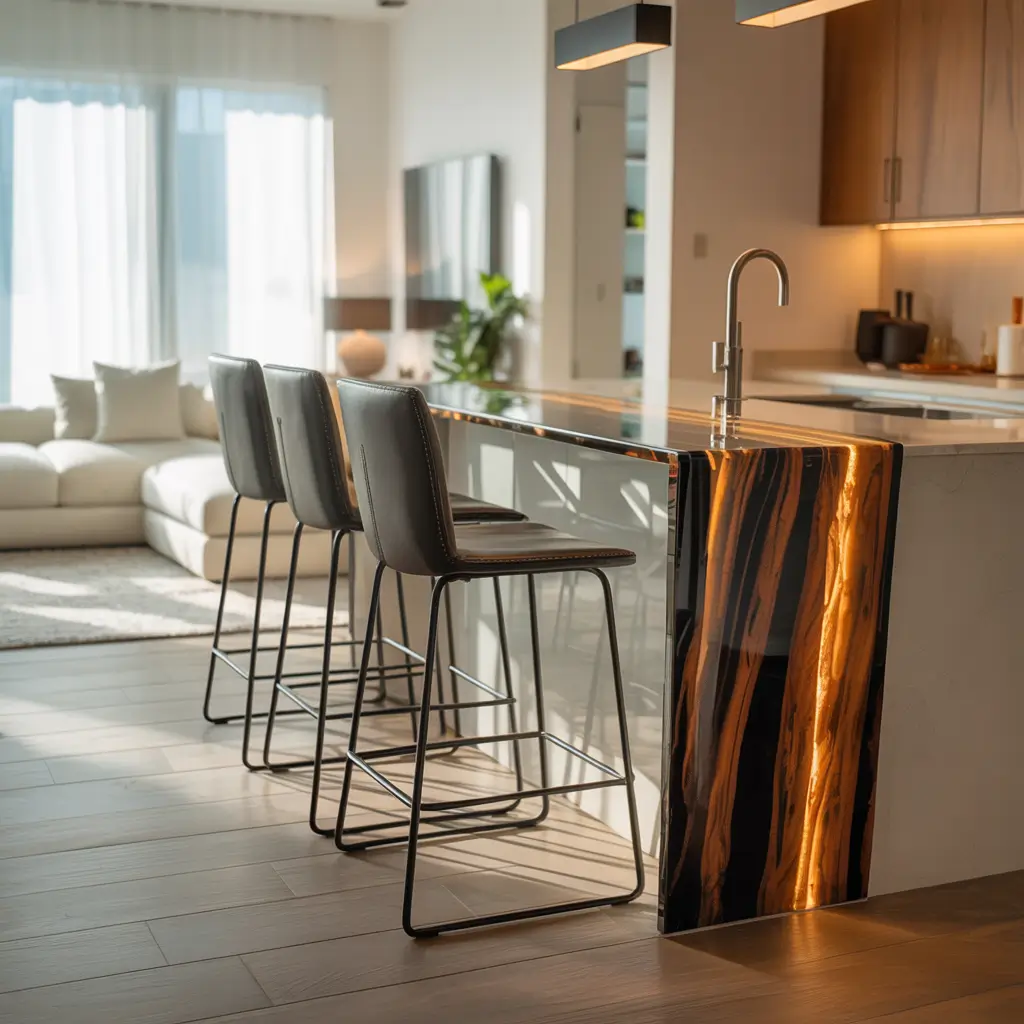
L-shaped layouts naturally create semi-open spaces without additional dividers. The configuration itself provides partial enclosure while maintaining openness. This layout saved me from adding any artificial barriers.
One wall runs along the back, while the other extends partially into the room, creating a natural boundary. The corner becomes a power zone for cooking, while the open side faces the living area. It’s like the kitchen is giving the living room a hug.
L-shaped layout advantages:
- Natural space definition without added elements
- Efficient work triangle
- Corner space utilization
- Multiple zone creation
I positioned my sink on the open side so I can chat while washing dishes. The partial enclosure means cooking splatters stay contained while maintaining social connection.
Also Read: 15 Creative Open Kitchen Cabinets Ideas and Cozy Decor Styles
Indoor Plant Partition Style
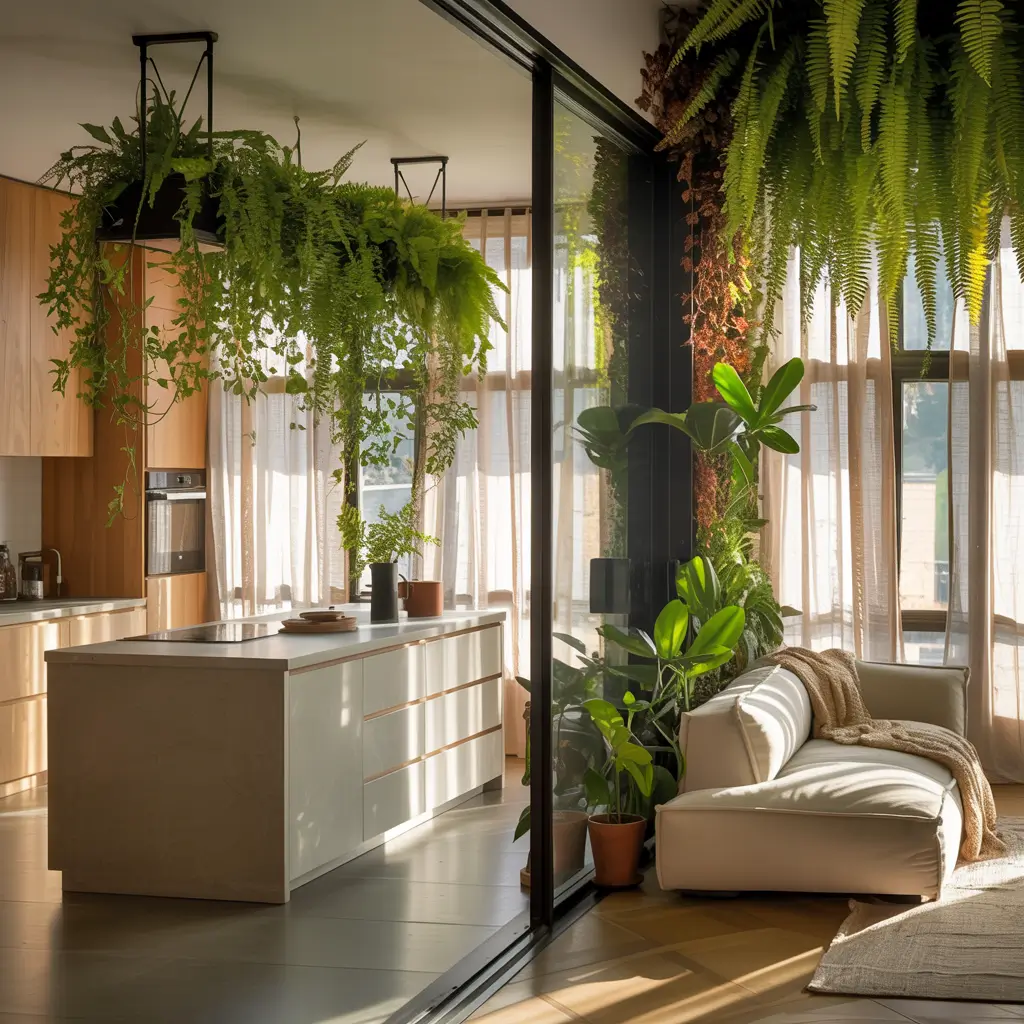
Living walls and plant partitions bring nature indoors while dividing space. These green screens provide separation that literally grows more beautiful over time. My plant partition started as an experiment and became my home’s Instagram-famous feature.
I installed a grid system with planters at various heights, creating a verdant screen between spaces. The plants filter air, add humidity, and create this amazing jungle vibe. Choose low-maintenance varieties unless you want a part-time job as a gardener.
Plant partition considerations:
- Proper drainage systems are essential
- Mix plant heights and textures
- Consider light requirements carefully
- Include trailing plants for fullness
The maintenance requires commitment, but watching your divider literally bloom throughout the seasons? Priceless. Just maybe skip this if you have a black thumb.
Half Wall with Floating Cabinets
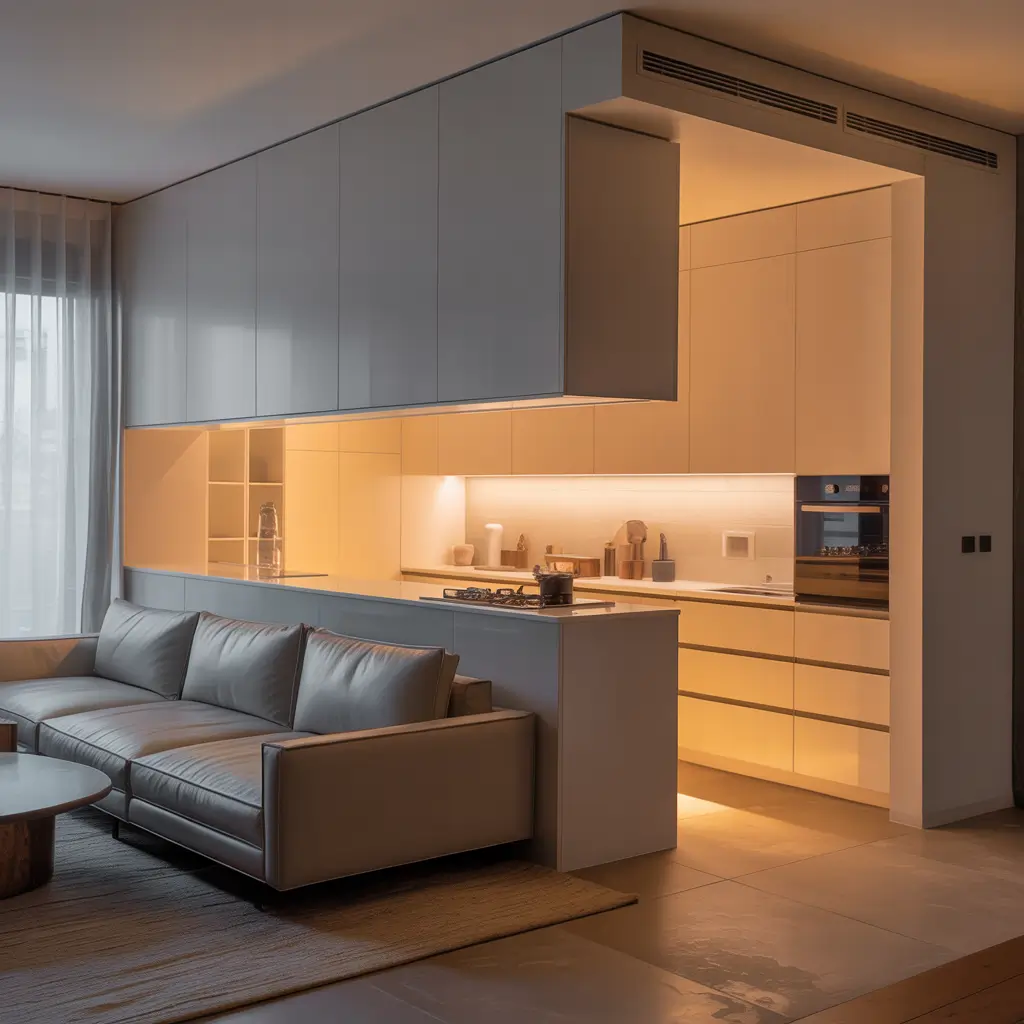
Half walls topped with floating cabinets offer storage and separation without full enclosure. This combo provides counter space, storage, and visual interest in one smart package. My sister’s kitchen uses this, and I’m constantly trying to copy it.
The solid half wall hides kitchen mess while the floating cabinets above maintain openness. You can access storage from both sides, and the gap between wall and cabinets keeps sight lines clear. It’s architectural interest with serious function.
Half wall plus cabinet benefits:
- Double-sided storage opportunities
- Counter space for serving or display
- Maintains light flow
- Creates display niches
The gap between wall and cabinets became perfect for passing plates through during dinner parties. Sometimes the best features are happy accidents.
Modern Brick Partition Kitchen
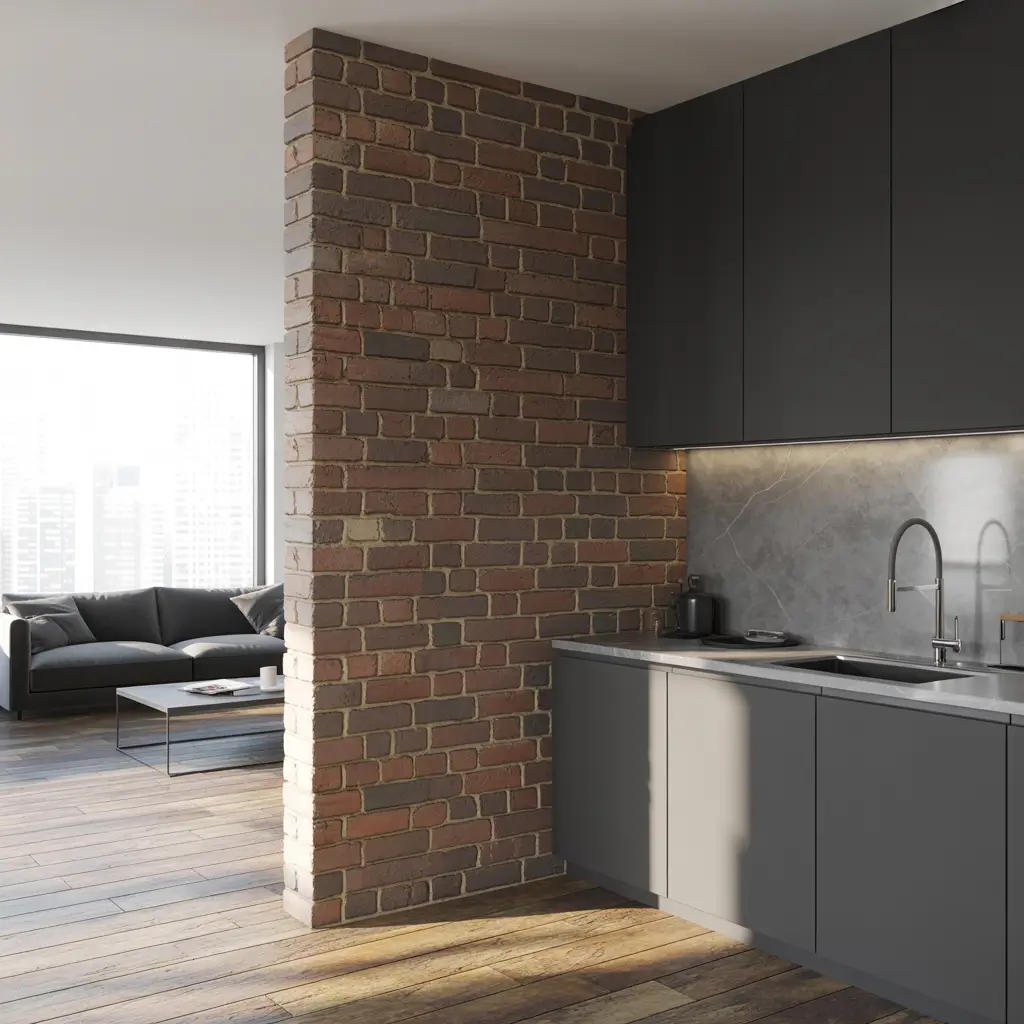
Exposed brick partitions add texture and character while dividing space. These partial walls bring industrial charm without complete separation. I kept an original brick wall during renovation, and it became my kitchen’s signature feature.
The brick can be painted for a softer look or left natural for raw appeal. Half-height brick walls provide substantial separation while maintaining openness above. The texture adds visual weight that anchors the kitchen zone.
Brick partition styling:
- Natural or painted finish options
- Sound absorption properties
- Heat retention benefits
- Virtually maintenance-free
My brick partition holds heat from cooking, creating this cozy warmth that radiates into the living room. Who knew walls could multitask?
Scandinavian Style Divider
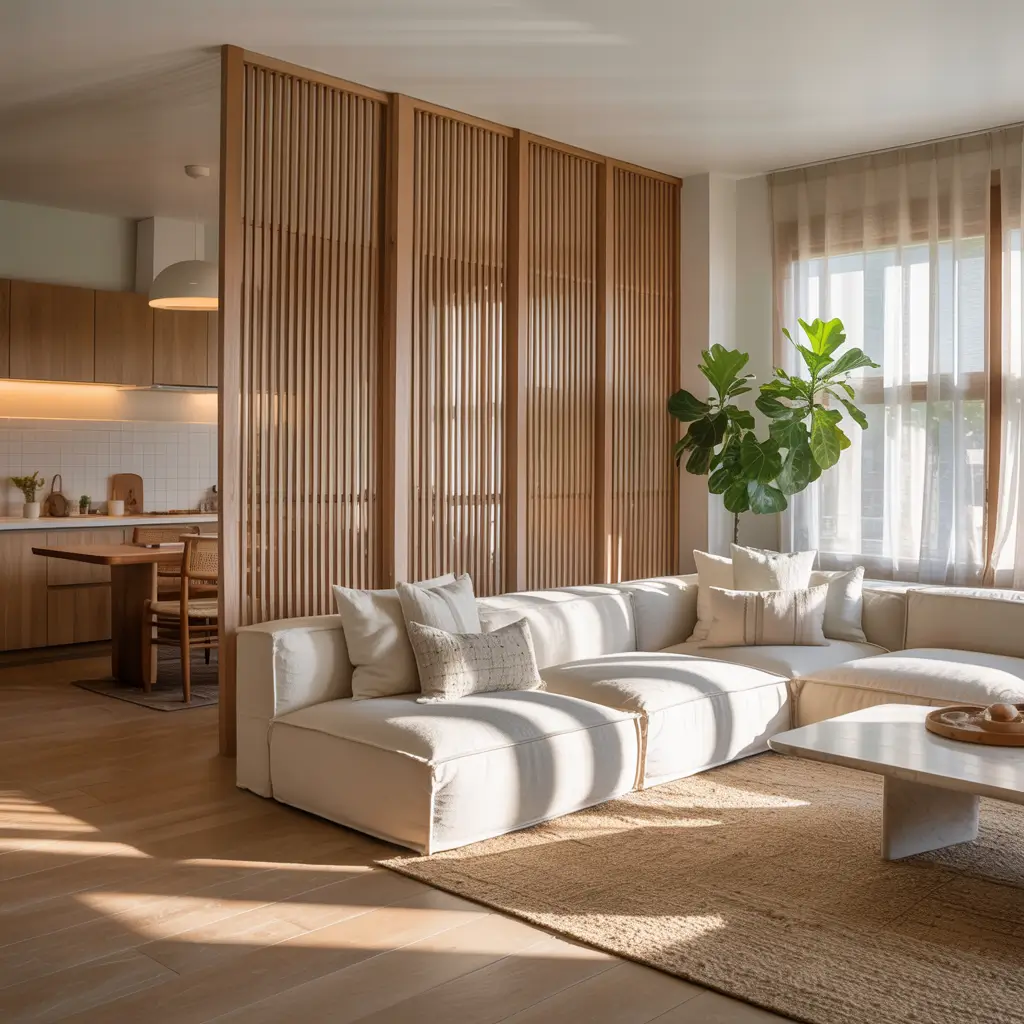
Scandinavian dividers combine function with minimalist beauty. These light, airy partitions separate without overwhelming small spaces. After visiting Stockholm, I came home determined to recreate that effortless Nordic style.
Think white-painted wood frames with simple geometric patterns, or minimal shelving units in light oak. The designs prioritize function without sacrificing form. Every element serves a purpose while looking effortlessly elegant.
Scandinavian divider principles:
- Light materials and colors dominate
- Clean, simple lines
- Natural material emphasis
- Functional beauty focus
My Scandi-inspired divider uses white oak slats with integrated shelving. It separates while displaying my ceramic collection, proving that minimalism doesn’t mean boring.
Transparent Acrylic Room Divider
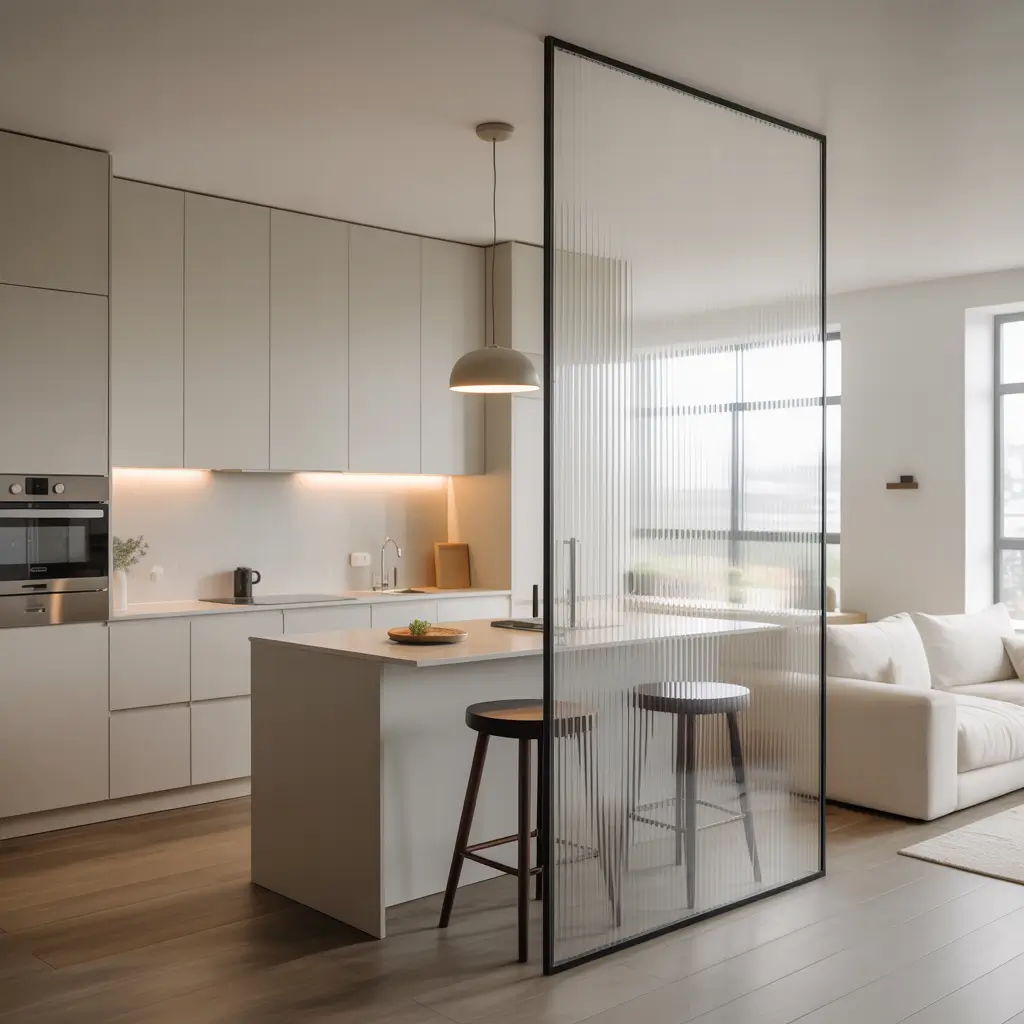
Acrylic dividers offer glass-like transparency with better durability. These lightweight partitions provide separation without visual weight. I chose acrylic after my friend’s glass partition met an unfortunate basketball incident.
Acrylic weighs less than glass, won’t shatter, and costs less too. The material can be clear, frosted, or colored, offering design flexibility. Some versions even have patterns etched or printed on them for added interest.
Acrylic advantages:
- Shatter-resistant safety
- Lightweight installation
- Cost-effective option
- UV-resistant varieties available
The only downside? Acrylic scratches easier than glass. But for families with kids or clutzy cooks (guilty), the safety factor outweighs the scratch risk.
Multi-Functional Storage Partition
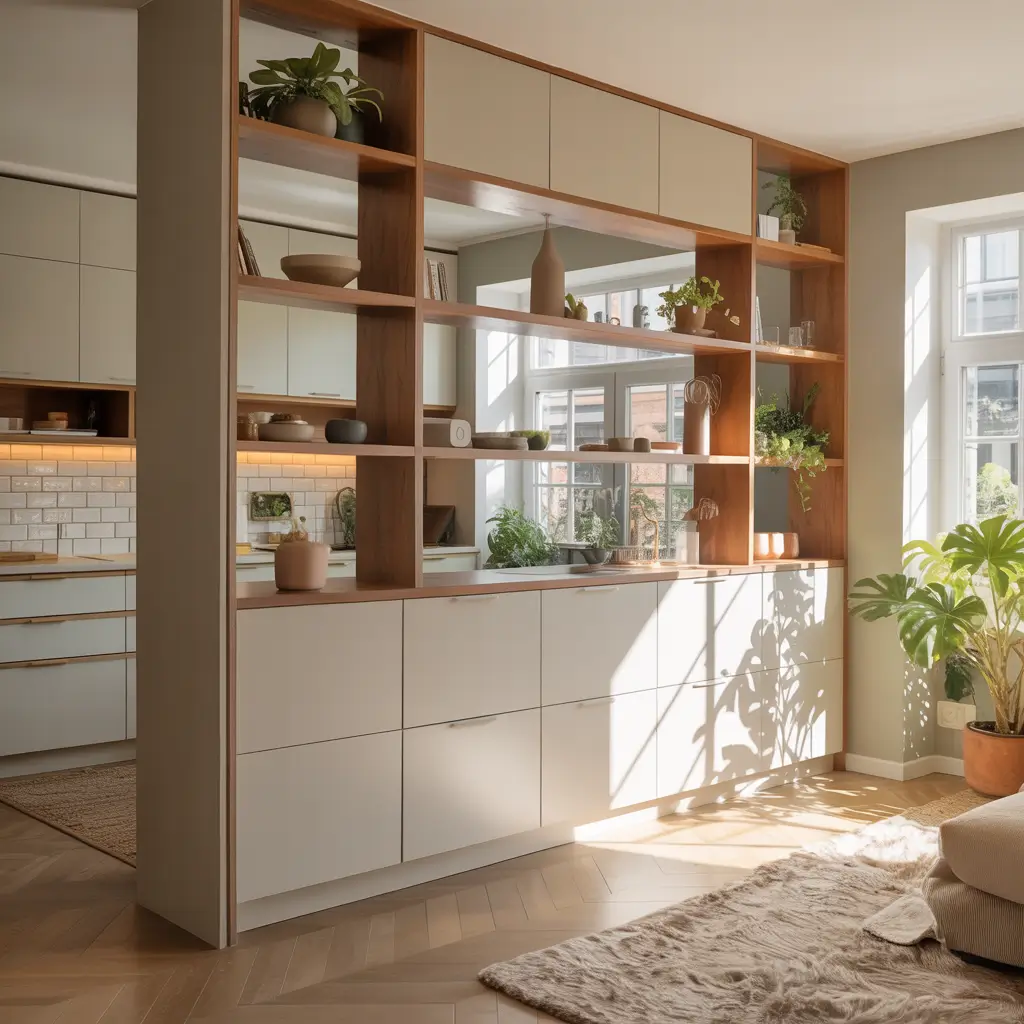
Storage partitions turn room dividers into organizational powerhouses. These units separate spaces while solving storage dilemmas. My storage partition holds everything from dishes to books to that random cord collection we all have.
I designed mine with closed storage facing the living room and open shelving facing the kitchen. The varying depths create visual interest while maximizing storage capacity. Drawers at the bottom hide the ugly stuff, while upper shelves display the pretty things.
Storage partition features:
- Mixed open and closed storage
- Adjustable shelf options
- Integrated lighting possibilities
- Counter height surface on top
This partition eliminated my need for a pantry, bookshelf, and china cabinet. IMO, any divider that replaces three pieces of furniture deserves a medal :/
Creating Your Perfect Half-Open Kitchen
These fifteen ideas prove that half-open kitchens offer the perfect compromise between connection and separation.
You get the social benefits of open-plan living without sacrificing privacy or dealing with cooking chaos on full display.
My journey from closed kitchen to fully open to half-open taught me that the best design matches your actual lifestyle.
Maybe you need flexibility for entertaining, or perhaps you want permanent separation with visual connection. The beauty of half-open designs lies in their adaptability.
Remember, the perfect partition doesn’t just divide space – it enhances both areas while solving practical problems.
Whether you choose sliding panels for flexibility or a planted partition for natural beauty, make sure it reflects how you actually live and cook.
Start by identifying your biggest pain point. Cooking smells invading the living room? Go for glass. Need more storage?
Multi-functional partition it is. Want flexibility? Sliding panels will change your life. The key is choosing solutions that solve problems while adding beauty.
Your half-open kitchen should make you excited to cook and comfortable to live. Mine transformed from a source of stress to my favorite space, all because I found that perfect balance between open and closed.
Now stop overthinking and start creating that dream kitchen-living room combo. Your future dinner parties will thank you, and more importantly, so will your daily life.