10 Inspiring House Layout Plans Ideas and Family-Friendly Designs
- House Plans
 Ben
Ben- 0
- 32 minutes read
Ever walked into a house and immediately thought, “Who designed this place, and what were they smoking?” We’ve all been there.
Bad layouts can turn a potentially great house into a daily frustration fest where you’re constantly bumping into furniture or wondering why the bathroom is a mile away from the bedroom.
I learned about the importance of good house layouts the hard way when I moved into my first apartment. The bedroom door opened directly into the kitchen, the living room felt like a bowling alley, and don’t even get me started on the bathroom situation.
That experience taught me that square footage means nothing if the layout doesn’t work. A well-designed 1,200-square-foot home beats a poorly planned 2,500-square-foot house every single day.
So let’s dive into ten house layout ideas that actually make sense for how real people live.
Whether you’re building from scratch, renovating, or just fantasizing about your dream home while scrolling through Pinterest at 2 AM (we’ve all been there), these layouts will give you plenty to think about.
Why House Layouts Matter More Than You Think
Before we jump into specific layouts, let’s talk about why this stuff actually matters. Your house layout affects literally everything about your daily life—from how you move through your morning routine to how you entertain guests.
A good layout creates natural traffic patterns that make sense. You don’t have to walk through someone’s bedroom to get to the bathroom. The kitchen connects logically to the dining area. Bedrooms sit away from noisy living spaces. These aren’t revolutionary concepts, yet you’d be amazed how many homes get these basics wrong.
The right layout also determines whether your home feels spacious or cramped, regardless of actual size. Smart layouts make small homes feel larger, while bad layouts can make mansions feel claustrophobic. It’s all about flow, proportion, and understanding how people actually use spaces.
1. Modern Open-Concept House Layouts
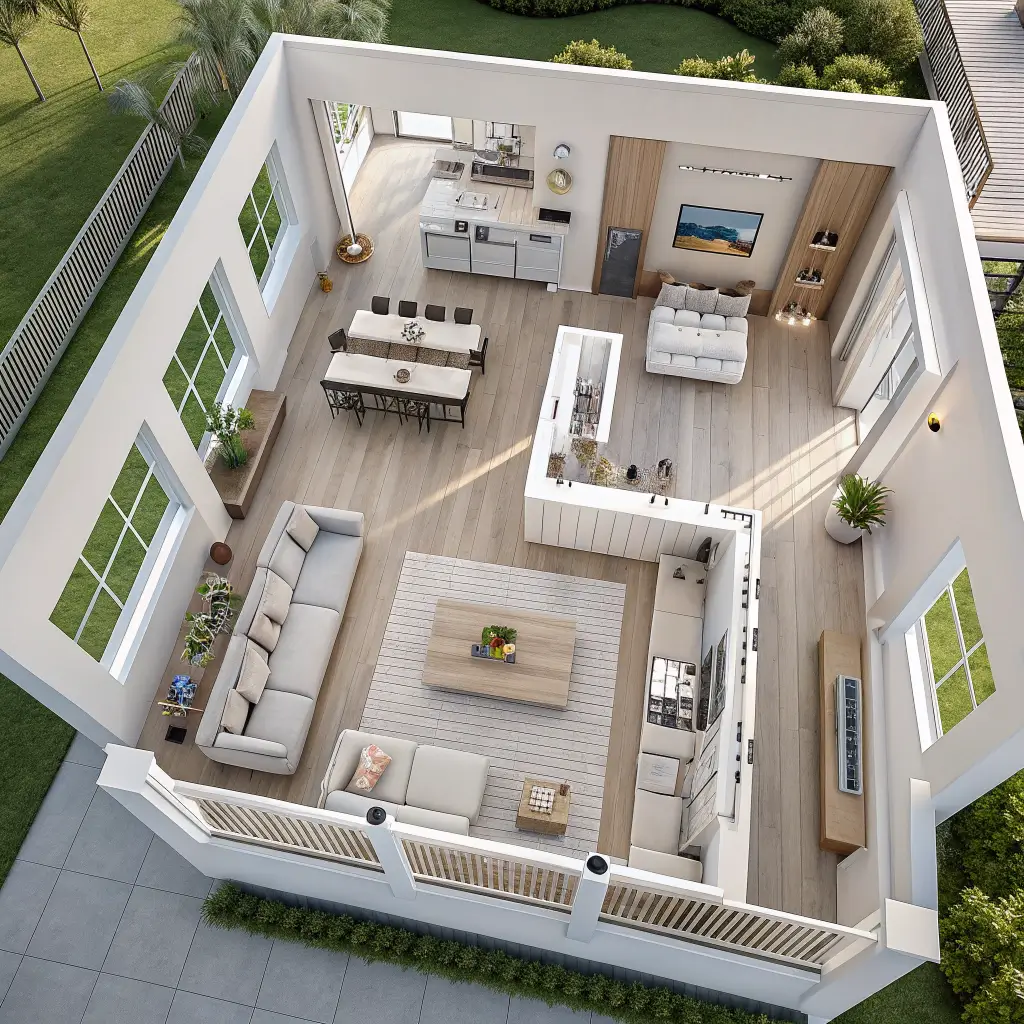
Let’s start with the layout that’s dominated home design for the past two decades—the open-concept floor plan. Love it or hate it, this approach has completely changed how we think about living spaces.
The Magic of Flowing Spaces
Open-concept layouts eliminate walls between the kitchen, dining, and living areas, creating one massive, multifunctional space. This design reflects how modern families actually live—cooking, eating, homework-helping, and TV-watching all happening simultaneously in one connected zone.
The beauty of open-concept living lies in its flexibility. That huge space adapts to whatever you need—intimate family dinners, big parties, or kids playing while adults cook. No more feeling isolated in the kitchen while everyone else has fun in the living room.
Defining Zones Without Walls
The trick with open-concept layouts involves creating distinct areas without physical barriers. Designers use furniture placement, area rugs, different ceiling heights, or changes in flooring to signal transitions between spaces. Your kitchen island becomes more than a prep space—it’s the boundary between cooking and living areas.
I’ve seen brilliant open-concept homes where you clearly understand each zone’s purpose despite zero walls. Strategic lighting helps too—pendant lights over the dining table, recessed lighting in the kitchen, and floor lamps in the living area all help define spaces visually.
The Downsides Nobody Mentions
Here’s what HGTV won’t tell you about open-concept living: cooking smells go everywhere, noise travels like crazy, and forget about hiding messes when guests arrive unexpectedly. You need to actually like the people you live with because privacy becomes a luxury.
Some families thrive in this togetherness, while others discover they desperately miss having doors to close. Know yourself before committing to full open-concept living.
2. Compact Small-Space Layout Plans
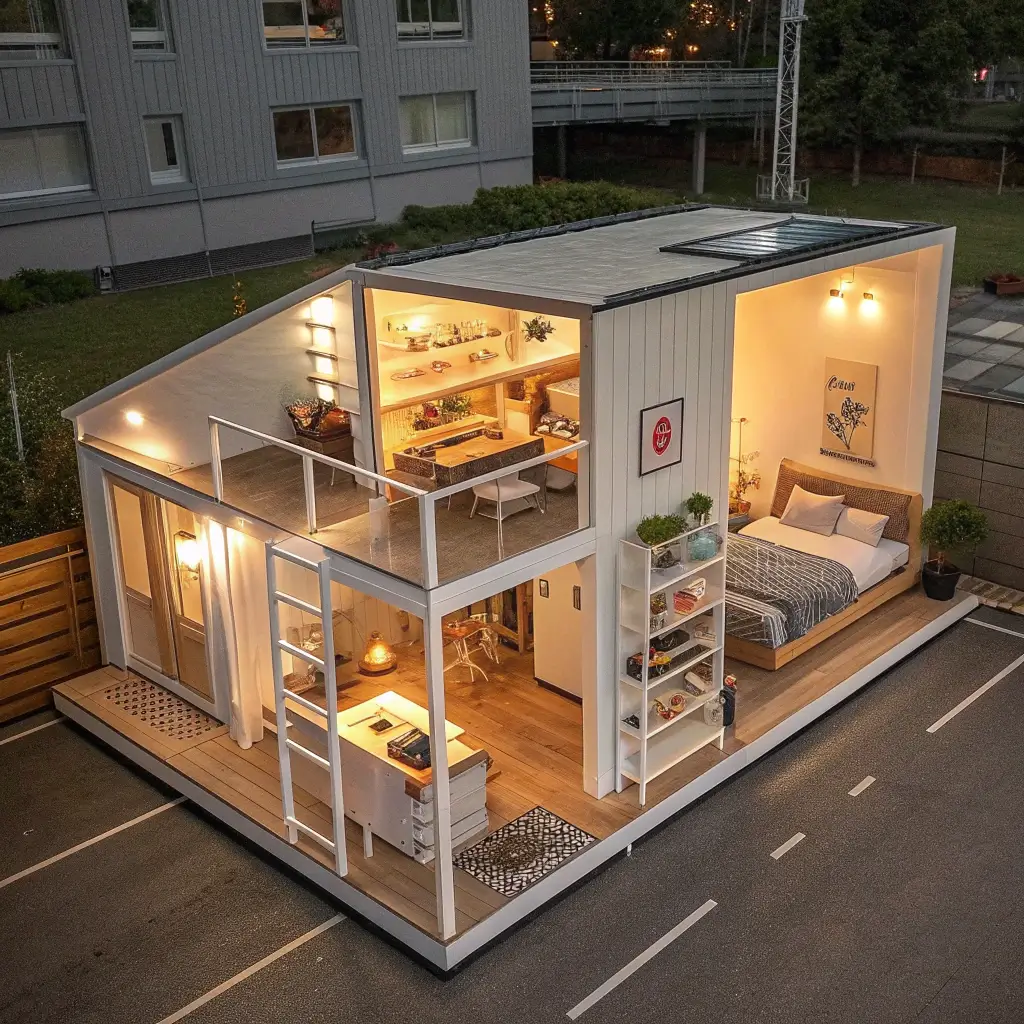
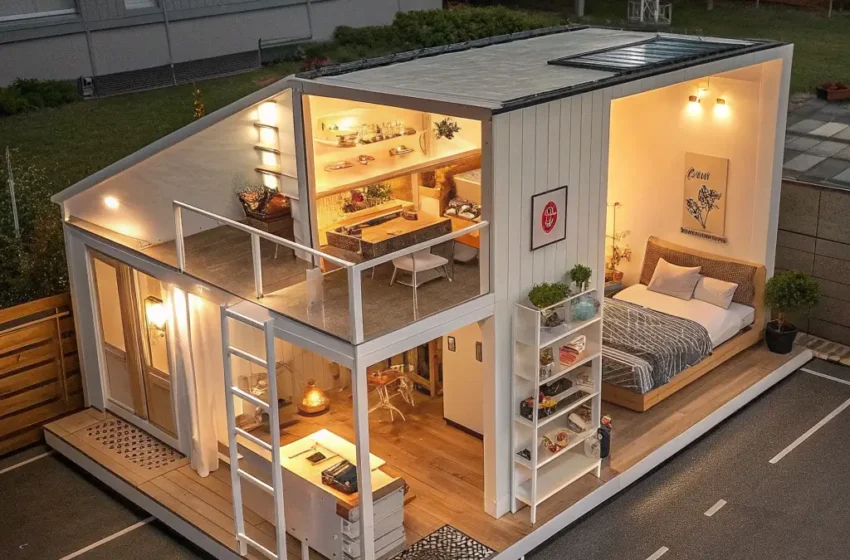
Not everyone has unlimited square footage, and honestly? That’s totally fine. Compact layout plans prove that smart design beats size every time.
Maximizing Every Square Inch
Compact layouts eliminate wasted space through clever planning. Hallways shrink or disappear entirely. Rooms serve multiple purposes. Storage gets built into every possible nook. When you’re working with limited space, every decision counts.
These layouts often embrace vertical space through lofts, tall storage systems, and creative stacking of functions. That space above your head isn’t just air—it’s potential storage, sleeping areas, or architectural interest waiting to happen.
Multi-Functional Magic
The best compact layouts feature rooms that transform based on needs. Your dining table doubles as a home office. The guest room functions as a gym. The living room becomes a bedroom when you pull down that Murphy bed. It’s like having a transformer house that adapts to your daily rhythms.
I stayed in a 650-square-foot apartment in Tokyo that felt more spacious than my friend’s 1,500-square-foot house back home. The difference? Every single element served at least two purposes, and the flow between spaces felt completely natural.
Strategic Storage Solutions
Compact layouts require serious storage creativity. Stairs become drawers. Benches hide blankets. Kitchen islands conceal everything from pots to pet food. The key involves making storage invisible—when everything has a hidden home, small spaces stay uncluttered and peaceful.
3. Family-Friendly Multi-Bedroom Designs
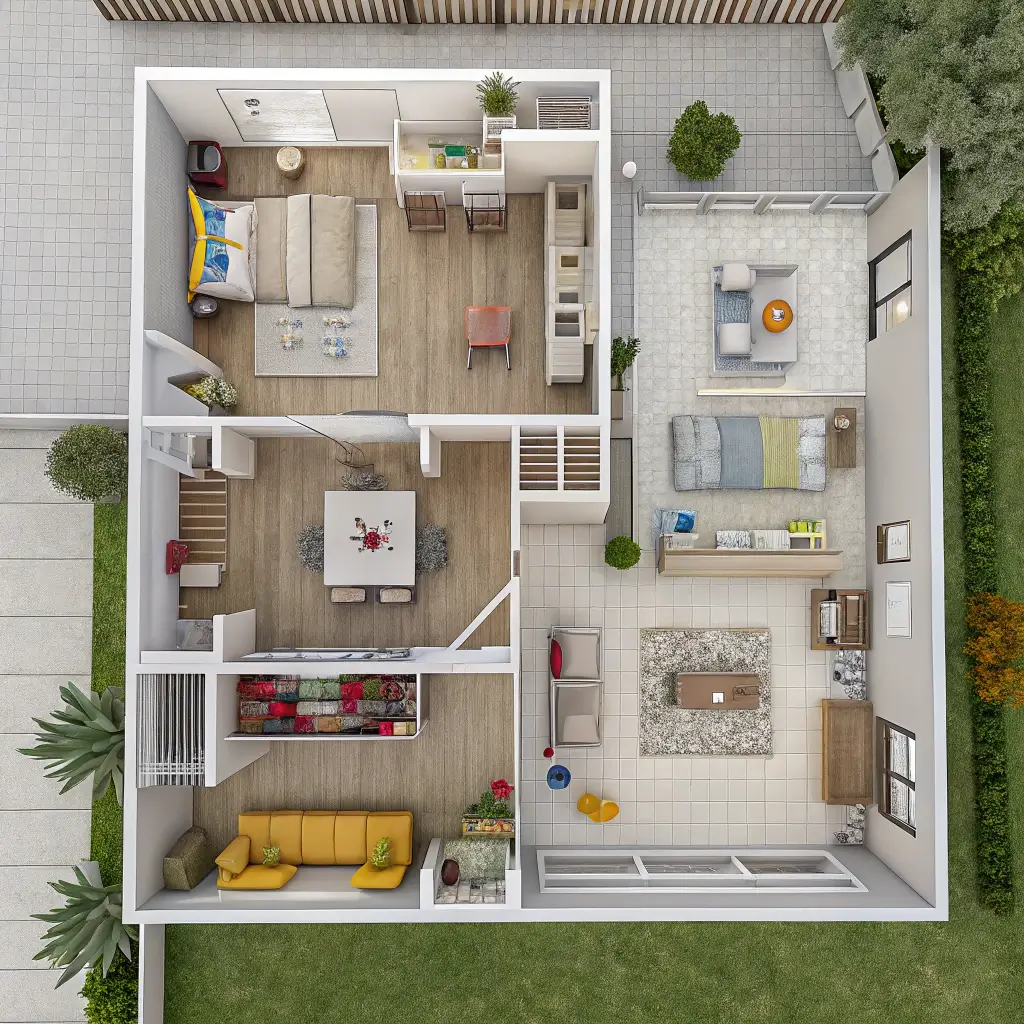
Families need layouts that handle chaos, provide privacy, and somehow keep everyone happy. These multi-bedroom designs tackle the challenge of accommodating different ages, schedules, and sanity levels.
Bedroom Placement Strategy
Family-friendly layouts typically separate the master bedroom from kids’ rooms, giving parents some peace while keeping children accessible. The classic approach puts the master on one end and kids’ rooms on the other, with living spaces as a buffer zone.
Some layouts go further with split-bedroom designs where the master sits on the opposite side of the house from other bedrooms. This works great for families with teenagers who stay up late or parents who wake up early.
Common Areas That Actually Work
Family layouts need living spaces that accommodate different activities simultaneously. Open kitchens with islands become homework stations. Family rooms need space for both adult conversation and kid chaos. Dining areas should handle everything from baby food explosions to formal dinners.
The best family layouts include both formal and informal spaces. That separate living room gives adults somewhere to escape, while the family room handles daily mayhem. Not every moment needs to be a “family moment,” and good layouts respect that.
Practical Considerations
Family layouts require mudrooms for managing the endless stream of backpacks, sports equipment, and muddy shoes. Multiple bathrooms prevent morning traffic jams. Laundry rooms near bedrooms eliminate hauling baskets through the entire house.
FYI, if you’re planning a family home, think about sight lines from the kitchen. Parents need to see kids playing while cooking dinner. It’s not helicopter parenting—it’s practical design.
Also Read: 12 Modern Two Bedroom House Plans Ideas for Smart Layout
4. Minimalist Functional Floor Plans
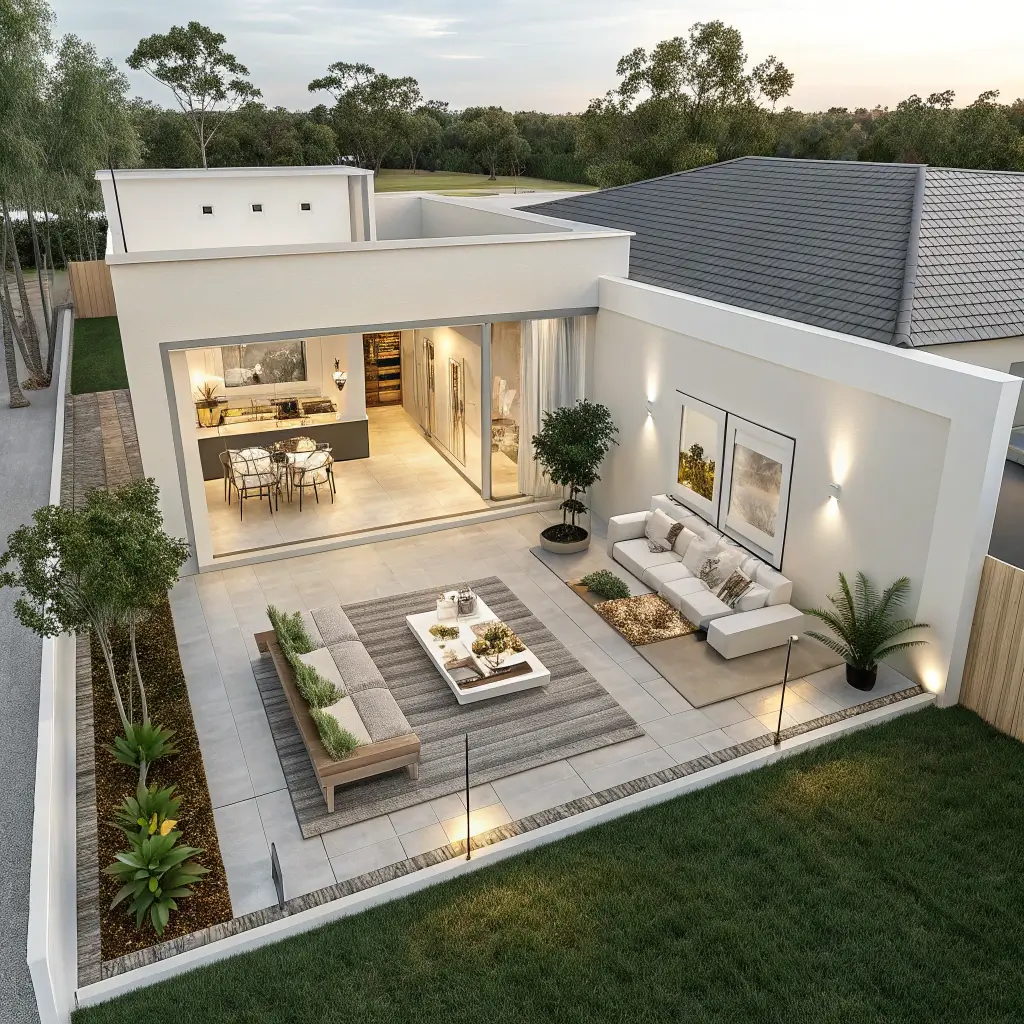
Minimalism isn’t just about owning less stuff—it’s about designing spaces that embrace simplicity, functionality, and intentional living. These layouts strip away everything unnecessary to reveal what truly matters.
Less Really Can Be More
Minimalist layouts eliminate transitional spaces, decorative elements, and single-purpose rooms. Every square foot serves a clear function. There’s no formal dining room gathering dust or guest bedroom that hosts visitors twice a year.
These plans often feature completely open layouts with minimal interior walls. Bedrooms and bathrooms might be the only enclosed spaces, with everything else flowing together in clean, uninterrupted lines.
Hidden Everything
The secret to minimalist layouts lies in concealing life’s necessities. Appliances disappear behind seamless cabinet faces. TVs hide in furniture or retract into ceilings. Storage integrates so completely into walls that you don’t even realize it’s there.
Creating truly minimalist spaces requires more planning than cluttered ones. You need to think through every possession, every daily routine, every possible scenario. Where do holiday decorations go? How about that exercise equipment? Minimalist doesn’t mean impractical—it means intentional.
The Psychology of Simple Spaces
Minimalist layouts create calm through visual quiet. Without visual clutter competing for attention, your mind relaxes. Spaces feel larger, cleaner, and more peaceful. Some people find this emptiness cold or sterile, while others find it absolutely liberating.
5. Luxury Dream Home Layout Ideas
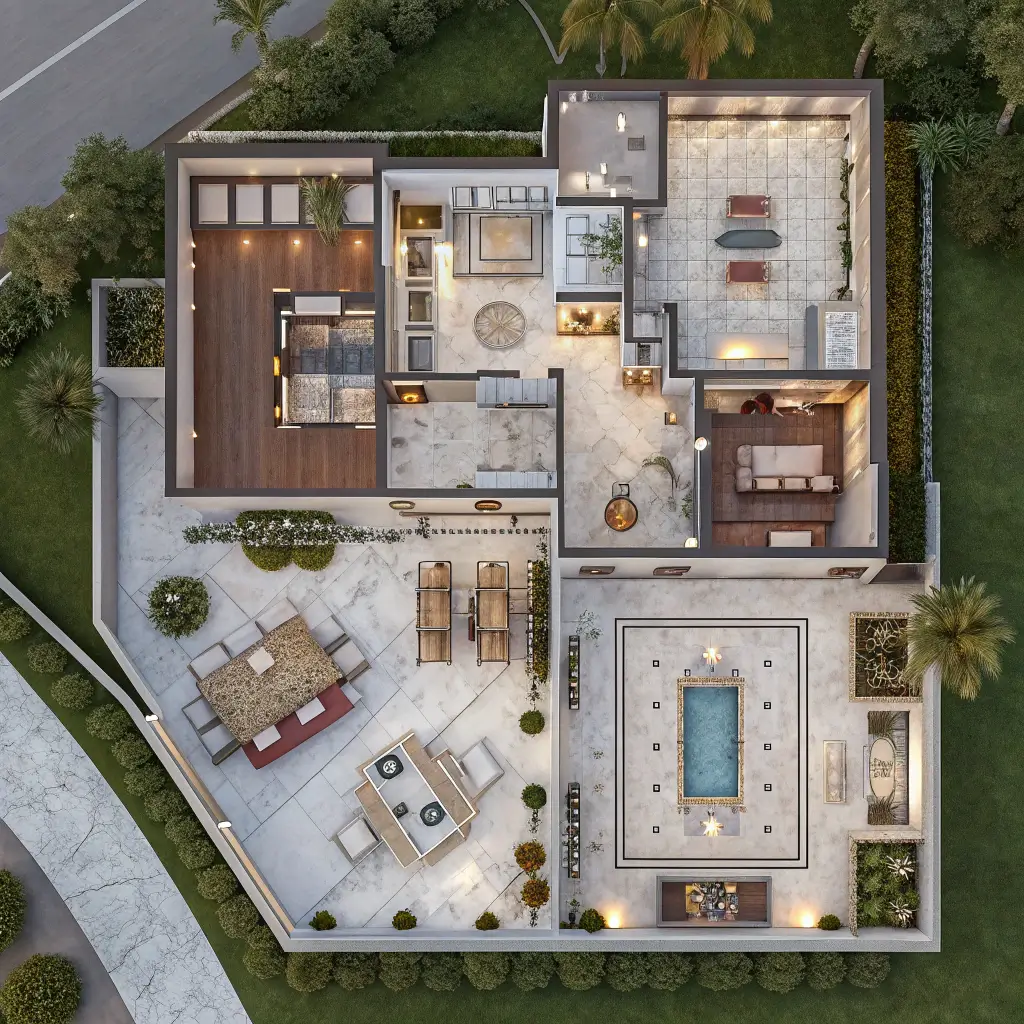
Let’s dream big for a moment. Luxury layouts throw practicality out the window and ask, “What if money were no object?” The answers get pretty interesting.
Spaces You Didn’t Know You Needed
Luxury layouts include rooms most of us never imagined—gift-wrapping rooms, champagne tasting cellars, or separate closets just for handbags. These homes have his-and-hers everything: offices, bathrooms, even entire master bedroom wings.
Entertainment spaces reach resort levels with home theaters, game rooms, bowling alleys, and indoor basketball courts. Some luxury homes include commercial-grade kitchens alongside regular kitchens because apparently one isn’t enough.
Master Suites That Defy Logic
Luxury master suites often exceed the square footage of entire normal homes. We’re talking sitting areas, coffee bars, workout spaces, and bathrooms that rival high-end spas. Walk-in closets become boutiques with islands, seating areas, and outfit-planning stations.
I once toured a luxury home where the master bathroom had its own fireplace, private garden, and steam room. Did they need all that? Absolutely not. Did it look amazing? You bet. 🙂
Indoor-Outdoor Integration
Luxury layouts blur boundaries between inside and outside through disappearing glass walls, covered outdoor living rooms, and courtyards that penetrate deep into floor plans. Outdoor kitchens rival indoor ones. Pools connect to interior spaces through underwater viewing panels.
6. Eco-Friendly Sustainable House Layouts
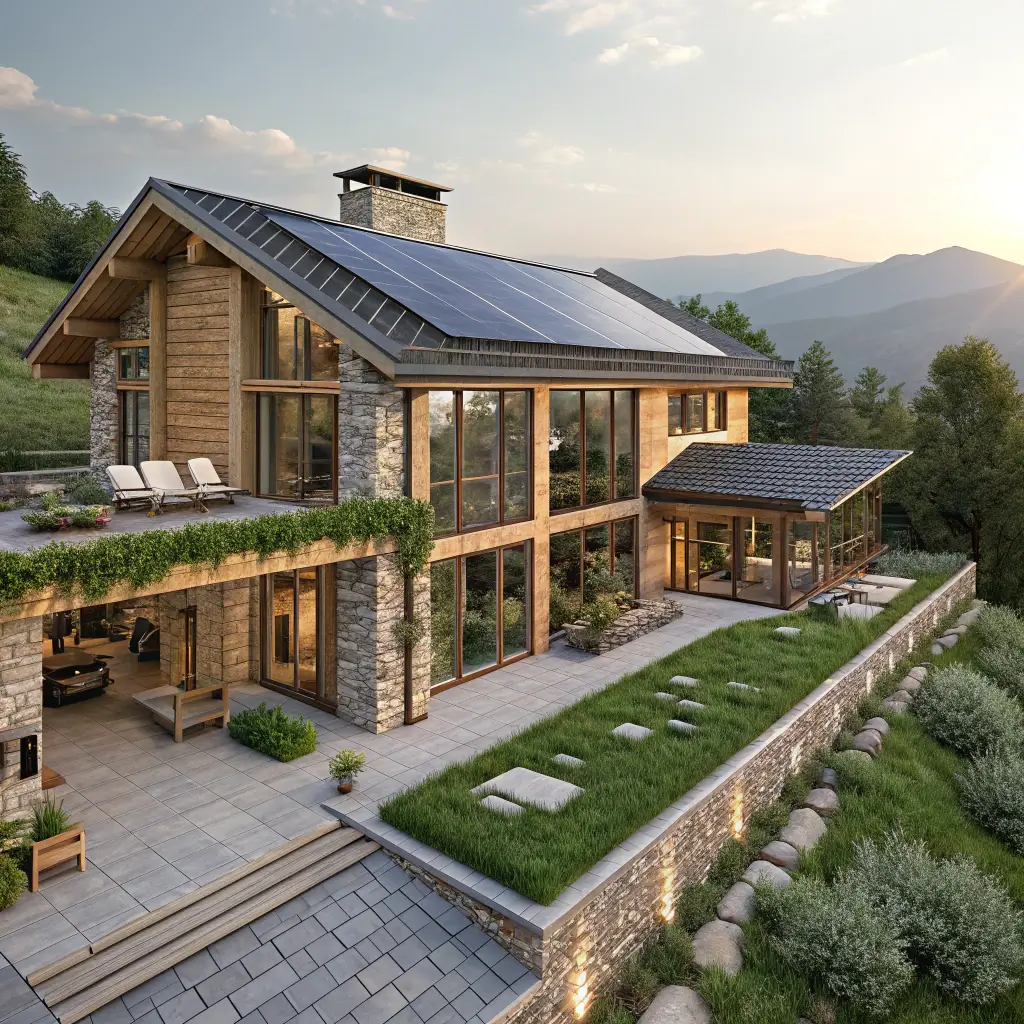
Sustainable layouts prove that environmental responsibility and beautiful design go hand-in-hand. These plans minimize environmental impact while maximizing comfort and efficiency.
Passive Design Principles
Eco-friendly layouts orient homes to work with nature rather than against it. Southern exposures maximize winter sun while overhangs block summer heat. Room placement follows daily sun patterns—bedrooms face east for morning light, living spaces face west for evening warmth.
These layouts incorporate natural ventilation paths that reduce air conditioning needs. Windows align to create cross-breezes. Hot air escapes through high windows while cool air enters below. It’s basically ancient wisdom applied to modern homes.
Smaller Footprints, Smarter Design
Sustainable layouts often embrace smaller footprints to reduce material use and energy consumption. But “smaller” doesn’t mean “worse”—it means more thoughtful. Every space serves multiple purposes. Quality replaces quantity. Natural light eliminates the need for daytime artificial lighting.
Green layouts might include growing spaces—sunrooms for year-round food production, integrated greenhouse spaces, or roof gardens. Your home becomes partially self-sufficient while providing fresh food and improved air quality.
Material and System Integration
Sustainable layouts accommodate green technologies from the start. Solar panels integrate into roof designs rather than looking tacked on. Rainwater collection systems hide within the architecture. Geothermal systems get planned into foundations.
Also Read: 10 Stylish Four Bedroom House Plans Ideas with Open Concepts
7. Multi-Generational Home Floor Plans
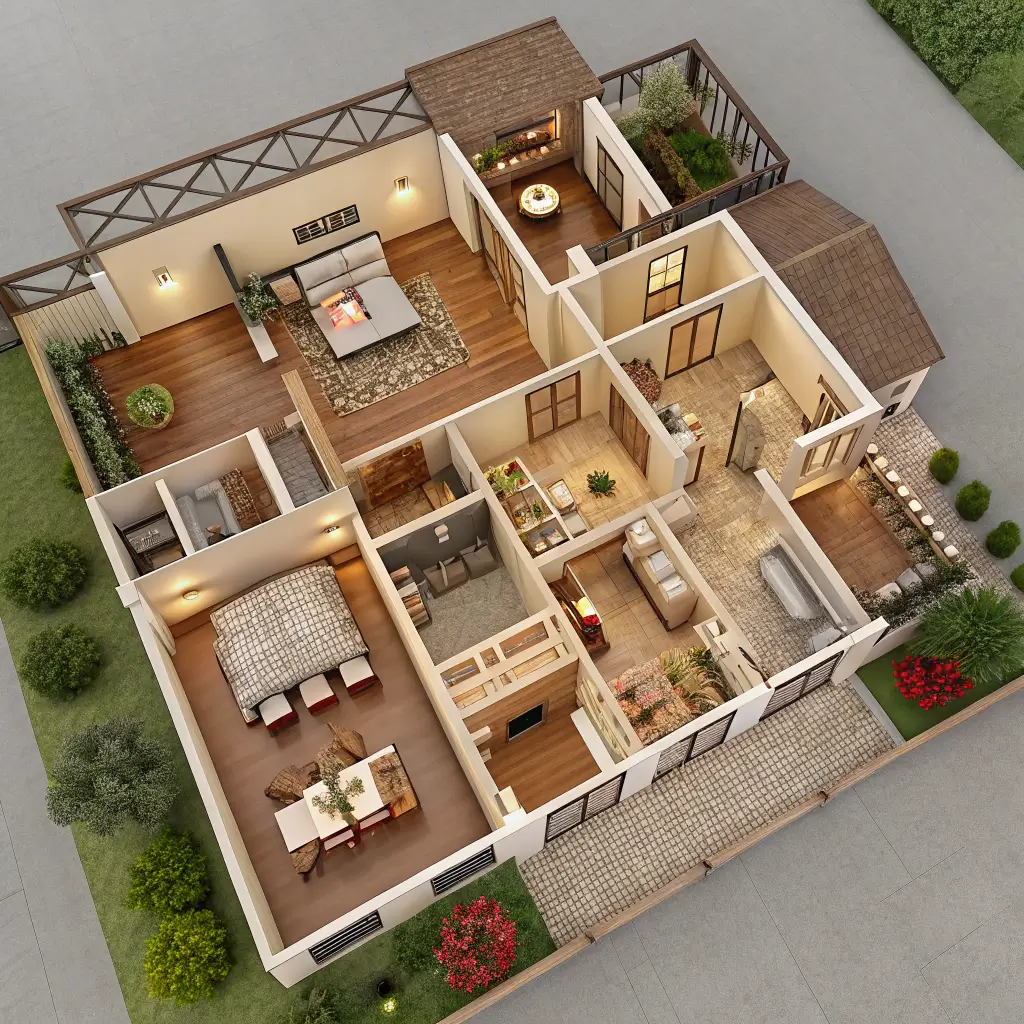
Multi-generational living has surged in popularity, and smart layouts make it actually work without everyone losing their minds.
Creating Separate Togetherness
Multi-generational layouts provide independence within connection. Separate entrances let different generations come and go without disturbing others. Dual master suites give both adult generations equal comfort and privacy. Shared spaces become neutral territory where family gathers by choice.
The best multi-generational plans include kitchenettes or morning bars in secondary suites, allowing basic meal prep without entering main kitchens. Everyone maintains autonomy while sharing one roof.
Accessibility Throughout
Smart multi-generational layouts incorporate universal design principles that work for all ages and abilities. Wider doorways, minimal stairs, and accessible bathrooms benefit everyone from toddlers to grandparents. First-floor bedrooms accommodate those who can’t manage stairs.
These features don’t scream “accessible”—they just make life easier for everyone. That walk-in shower works for elderly parents and parents bathing multiple kids. Those lever door handles help arthritic hands and arms full of groceries.
Shared Spaces That Work
Multi-generational layouts need common areas that accommodate different schedules and preferences. Multiple living spaces let one generation watch movies while another reads quietly. Outdoor spaces provide escape valves when togetherness gets overwhelming.
8. Cozy Cottage Style Layouts
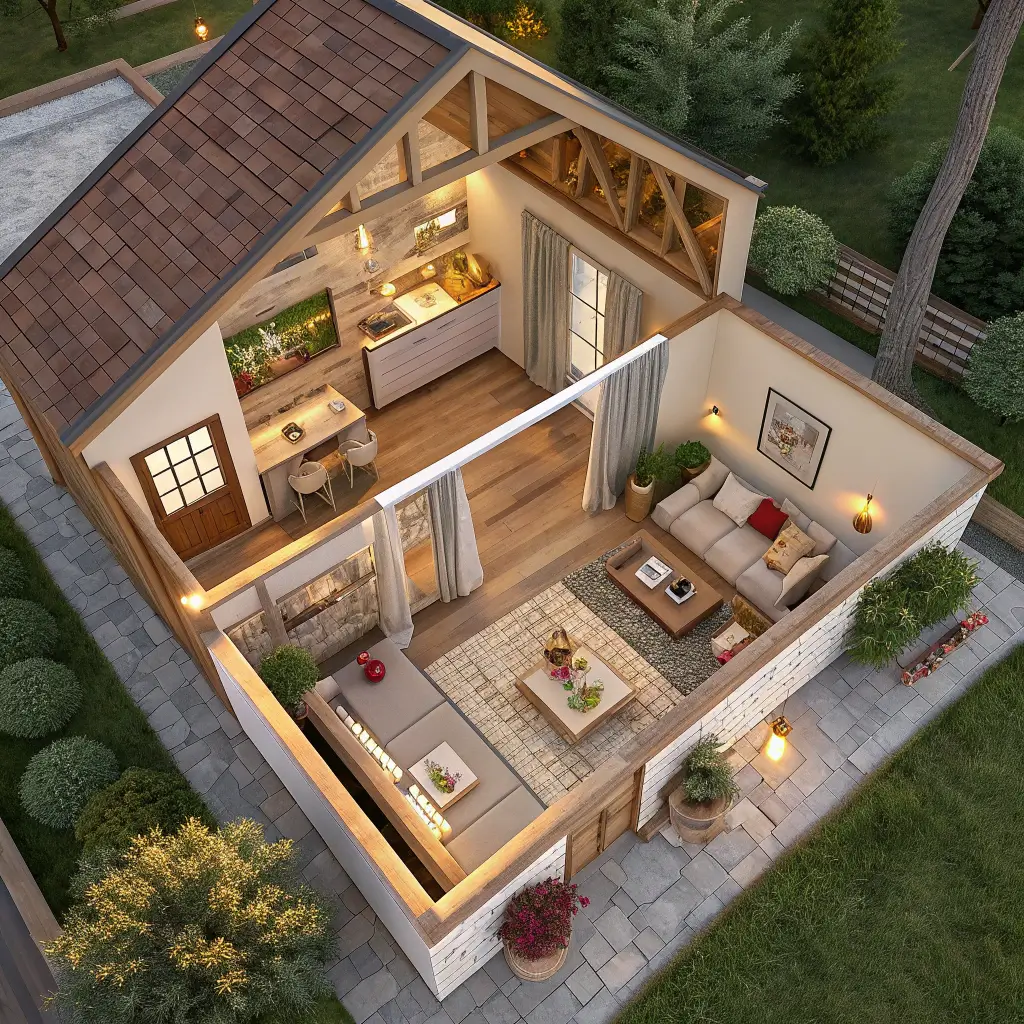
Sometimes you want a house that feels like a warm hug. Cottage layouts prioritize charm, character, and that indefinable coziness that makes you never want to leave.
Intimate Scales and Proportions
Cottage layouts embrace smaller, well-proportioned rooms rather than vast open spaces. Lower ceilings create intimacy. Nooks and alcoves provide quiet retreats. Every space feels human-scaled and comfortable.
These layouts often feature traditional room arrangements—distinct kitchens, separate dining rooms, defined living spaces. The formality isn’t stuffy; it’s structured in a way that creates rhythm and flow through the home.
Character-Building Details
Cottage layouts incorporate architectural elements that create instant character. Window seats beg you to curl up with books. Built-in bookshelves flank fireplaces. Breakfast nooks tuck into corners. These details make spaces feel special and loved.
The layouts often work around quirky features rather than eliminating them. That awkward corner becomes a reading spot. The space under stairs transforms into a cozy office. Imperfections become character.
Connection to Outdoors
Cottage layouts emphasize porches, patios, and gardens as essential living spaces. French doors open to gardens. Kitchen windows frame herb gardens. Covered porches extend living space three seasons. The outdoors isn’t separate—it’s integral.
9. Creative L-Shaped & U-Shaped Designs
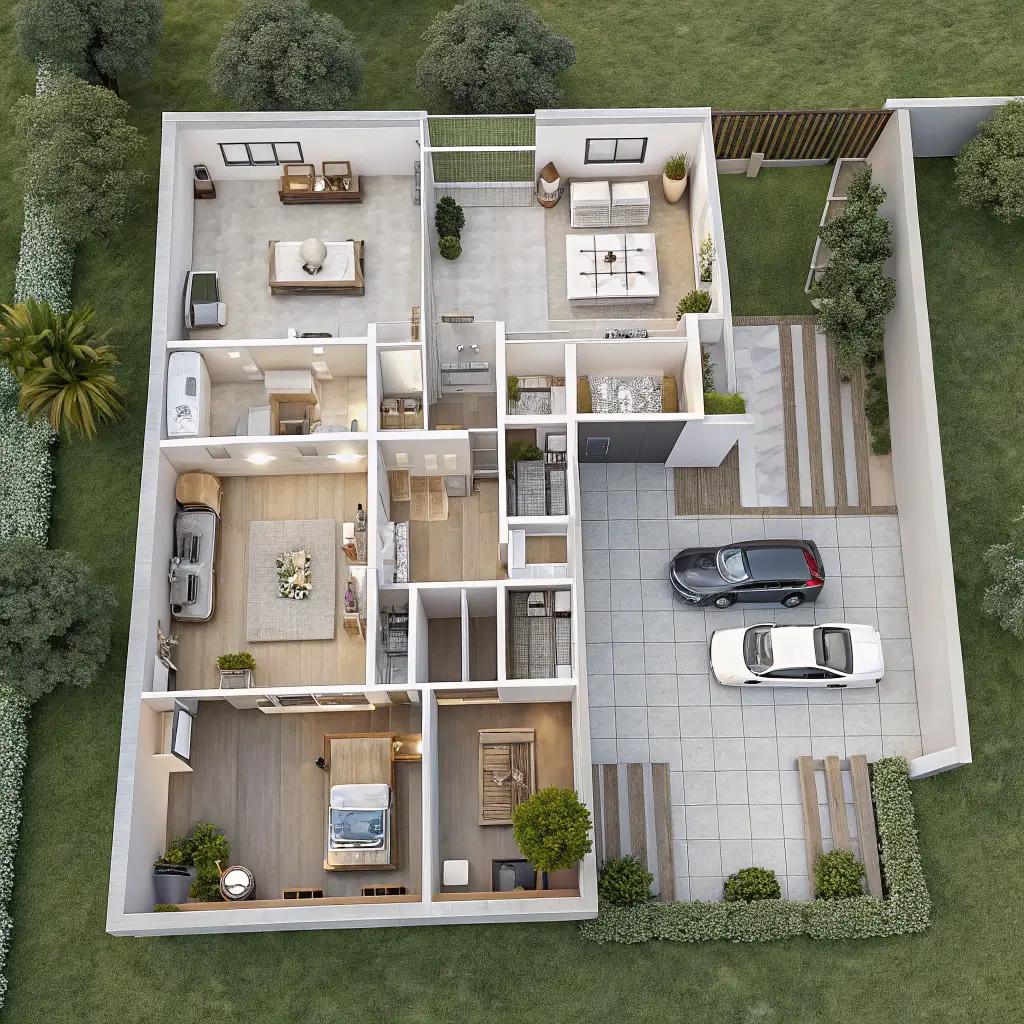
Sometimes the best layouts break free from boring rectangles. L-shaped and U-shaped designs create interesting spaces that solve common layout challenges.
L-Shaped Advantages
L-shaped layouts naturally create protected outdoor spaces in their crooks. Private patios, pools, or gardens nestle into these areas, sheltered from wind and neighbors. The shape also provides natural separation between different zones—public spaces in one leg, private in another.
These layouts work brilliantly on corner lots, maximizing street frontage while maintaining privacy. They also handle sloped sites well, with each leg adapting to different elevations.
U-Shaped Benefits
U-shaped layouts create even more dramatic courtyard spaces, completely surrounded by house on three sides. These courtyards become outdoor rooms with maximum privacy and protection. Some designs incorporate pools, others create garden oases or outdoor living rooms.
The shape naturally divides homes into three zones—typically separating master suites, children’s areas, and living spaces. Everyone gets privacy while maintaining connection through the central courtyard.
Solving Site Challenges
Both L and U shapes solve challenging site conditions that rectangular layouts can’t handle. They work around existing trees, maximize views in multiple directions, or create privacy on busy streets. Sometimes the most creative solution isn’t fighting your site—it’s embracing it. :/
Also Read: 10 Inspiring A-Frame House Plans and Tiny Home Layouts
10. Smart Home Technology Floor Plans
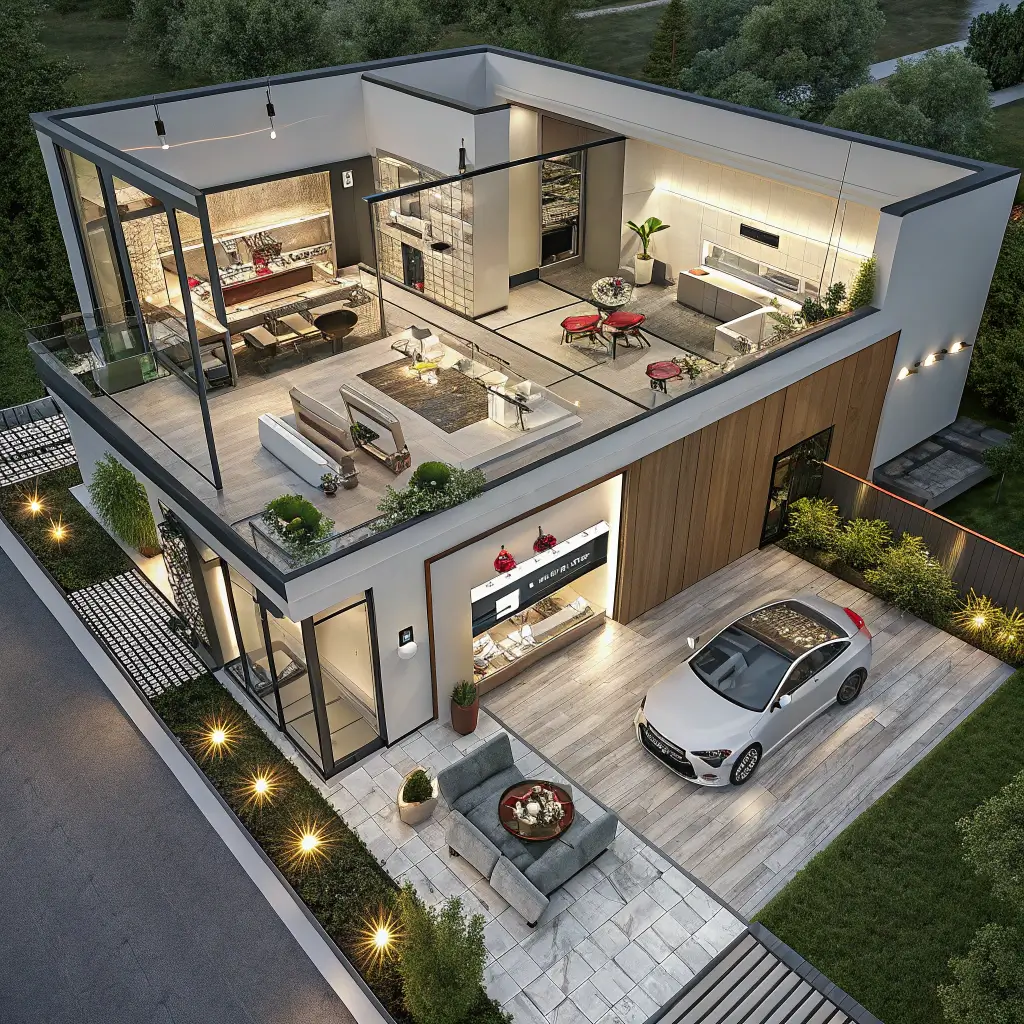
The future has arrived, and smart layouts accommodate technology from the ground up rather than retrofitting it awkwardly later.
Infrastructure Integration
Smart home layouts build technology infrastructure into bones rather than adding it superficially. Structured wiring connects every room. Dedicated equipment closets house servers and smart home hubs. Adequate electrical circuits support increasing device loads.
These plans position smart thermostats, security panels, and control interfaces where they make sense, not wherever they fit. Technology serves the layout rather than disrupting it.
Flexible Future-Proofing
Smart layouts anticipate technological evolution through flexible infrastructure. Empty conduits await future wiring needs. Extra electrical capacity handles unknown future devices. Spaces accommodate changing technology without major renovation.
Home offices get serious treatment in smart layouts—proper sound isolation, dedicated circuits, optimal lighting for video calls. These aren’t afterthought spare bedrooms but purpose-built productivity spaces.
Automated Living Optimization
Smart layouts consider automated systems from the start. Motorized shades align with windows. Smart lighting follows natural paths. Security cameras get unobstructed views. Voice assistants hear commands from optimal positions.
The best smart layouts make technology invisible. You enjoy the benefits—automated climate control, integrated entertainment, enhanced security—without your home looking like a Best Buy showroom.
Finding Your Perfect Layout
After exploring these ten layout approaches, you might feel overwhelmed by options. That’s actually good—it means you understand that no single layout works for everyone.
Start by honestly assessing how you actually live versus how you think you should live. Do you really entertain enough to justify that formal dining room? Will you actually use that home gym? Be realistic about your lifestyle, not your aspirations.
Consider your site carefully too. That modern open-concept plan might look amazing in photos but feel wrong on your wooded lot. That cottage layout might charm you but clash with your urban neighborhood. Context matters as much as personal preference.
The Evolution Factor
Remember that your needs will change over time. The best layouts accommodate evolution—spare bedrooms become home offices, play rooms transform into teen hangouts, formal spaces become casual as lifestyles shift.
Think about your five-year and ten-year plans. Are kids coming? Leaving? Are parents aging? Might you work from home more? Choose layouts that can adapt rather than forcing you to move when life changes.
Making It Happen
Whether you’re building, buying, or just dreaming, remember that the perfect layout balances aspiration with reality.
IMO, the best house layout is one that makes your daily life easier while occasionally making you smile because you love being there.
Don’t get so caught up in trends that you ignore your actual needs. That magazine-worthy open concept might photograph beautifully but drive you crazy if you need quiet spaces.
That cozy cottage might charm you initially but frustrate you if you love entertaining large groups.
The perfect house layout exists at the intersection of how you want to live and how you actually live. Find that sweet spot, and you’ll create a home that serves you beautifully for years to come.
Now get out there and start planning your perfect layout. Your dream home is waiting to be designed!