
How Do Electric Fireplaces Work? Modern Heating Technology


Electric fireplaces have revolutionized home heating, offering the timeless ambiance of a flickering fire without the need for chimneys, venting, or combustible fuels. But have you ever wondered how do electric fireplaces work to create such cozy warmth and mesmerizing flames? The answer lies in clever, efficient technology that separates the flame effect from the heat production, giving you unparalleled control and safety.
This comprehensive guide will demystify the inner workings of electric fireplaces. We will explore the two independent systems—the heating element and the flame effect—that operate together to provide efficient zone heating and year-round visual comfort. You’ll learn about the different types of heating technologies, from fan-forced coils to infrared, and the innovative methods used to create stunningly realistic flames using LED lights and reflective technology.
By understanding the principles behind these appliances, you can make an informed decision about integrating one into your home, enjoying a perfect blend of modern convenience and classic charm.
Section 1: The Core Mechanism: Separating Heat from Flame
The most fundamental concept to understand about electric fireplaces is that the heat and the flame effect are two separate, independent systems . This is a radical departure from traditional wood-burning or gas fireplaces, where the flames are the direct source of heat.
This separation is the key to their versatility and efficiency. It allows you to operate the fireplace in three distinct modes:
- Heat and Flame Mode: For traditional warmth and ambiance on a cold evening.
- Flame-Only Mode: For creating a cozy atmosphere without raising the room temperature, perfect for summer nights or climate-controlled rooms .
- Some models offer a heat-only mode, though this is less common.
This flexibility means an electric fireplace is no longer just a seasonal appliance but a year-round feature for your home.
Section 2: How Electric Fireplaces Generate Heat
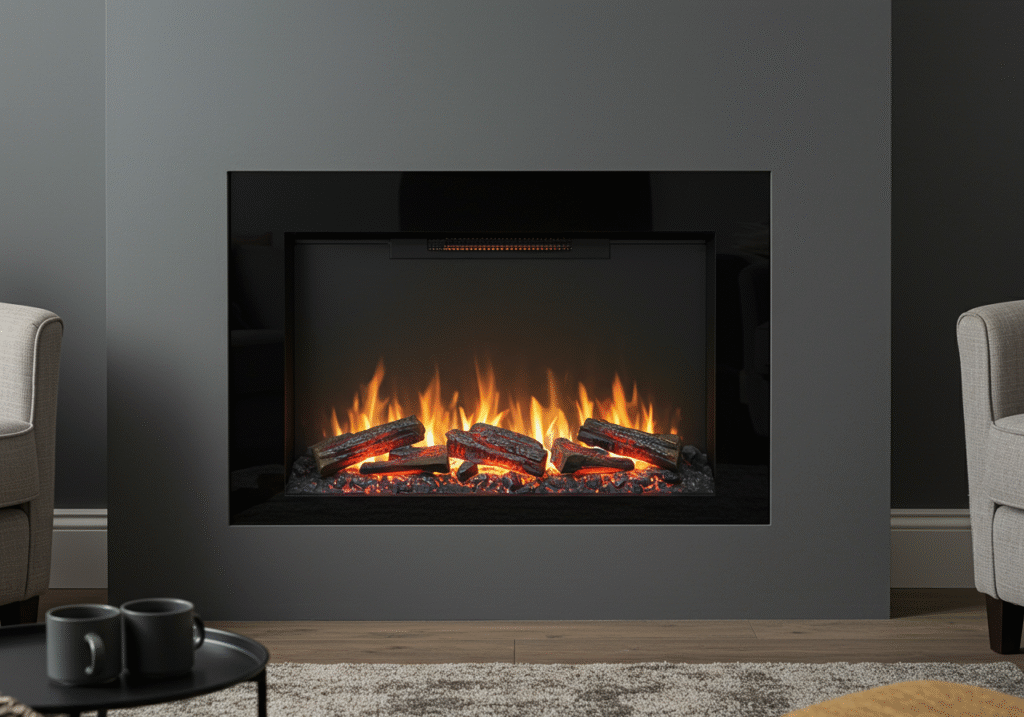
The primary function of an electric fireplace is to provide efficient supplemental heat. Most units are designed to heat spaces from 400 to 1,000 square feet, making them ideal for warming a specific room or “zone” in your house . There are three main technologies used to generate this heat.
2.1 Fan-Forced Heating (The Most Common Method)
This is the most widespread heating technology found in electric fireplaces, functioning similarly to a space heater .
- The Process: The system begins by drawing cool air from the room into the fireplace. This air passes over a heating coil (typically made of metal) that becomes hot when an electric current flows through it. A quiet but powerful fan (or blower) then propels the newly warmed air back out into the room .
- Best For: Quickly and evenly heating a small to medium-sized room. The fan helps distribute the heat, preventing it from staying concentrated around the unit.
2.2 Infrared Heating Technology
Infrared heating offers a different, more direct method of warming that mimics the sun.
- The Process: Instead of heating the air, infrared elements emit invisible infrared rays that travel through the air and directly warm the solid objects and people in the room . The heat is felt immediately upon turning on the unit.
- Advantages: This method is often described as a more “natural” feeling heat. It does not dry out the air as much as fan-forced systems and operates silently since there is no fan .
2.3 Ceramic Heating Elements
Some models use ceramic plates as a heating element.
- The Process: Ceramic plates heat up when electricity passes through them. They are known for their ability to provide a rapid yet efficient warmth .
- Advantages: Ceramic heaters are prized for their ability to maintain a consistent heat level while using less energy than standard coils.
Efficiency and Controls
A major advantage of electric fireplace heat is its high efficiency. Because there is no chimney or flue, almost 100% of the electricity used is converted directly into heat for the room, with minimal energy loss . Users can typically control the heat output via adjustable thermostats and temperature settings on a remote control or a smart app .
Table: Electric Fireplace Heating Technologies Compared
| Heating Technology | How It Works | Best For | Key Feature |
|---|---|---|---|
| Fan-Forced | Heats air with a metal coil; a fan blows warm air into the room. | Quick, even heating of small to medium rooms. | Most common method; effective for distributed heat. |
| Infrared | Emits rays that directly heat objects and people in the room. | Instant, silent warmth; feels like sunlight. | Does not dry out air; operates silently. |
| Ceramic | Uses ceramic plates to radiate efficient warmth. | Energy-efficient and consistent heat. | Heats up quickly and retains heat well. |
Section 3: How Electric Fireplaces Create Realistic Flames
The magic of an electric fireplace lies in its ability to create convincing flames without a single spark of real fire. The flames are an illusion, but modern technology makes them incredibly realistic.
3.1 The Illusion of Fire: LED Lights and Reflective Technology
The most common method involves a combination of light and motion .
- LED Lights: Energy-efficient LED bulbs provide the light source, typically in warm orange, red, and yellow hues .
- The Refractor: A cylindrical rod made of reflective material, often with a three-dimensional pattern, rotates slowly in front of the LED lights .
- Creating the Effect: As the refractor spins, it catches and reflects the LED light in a random, flickering pattern onto a back panel or screen. This creates the dynamic, dancing effect of real flames. The speed of the rotating rod can often be adjusted to change the “flicker” of the flames .
3.2 Advanced Flame Effects: Water Vapor and 3D Technology
For ultra-realism, some high-end models use more advanced techniques.
- Water Vapor (Opti-Myst Technology): Some brands, like Dimplex, use a technology that combines a water reservoir and LED lights. The unit creates a fine mist or water vapor that rises like smoke. LED lights then illuminate this mist, producing a stunningly realistic flame and smoke effect that can fool the eye into seeing a genuine wood-burning fire .
- 3D Holographic and Projection Effects: Other models use projected images or holographic technology to create depth and movement, making the flames appear to leap and dance realistically behind a log set .
3.3 Customization and “Ember Bed” Styles
A key benefit of electric flames is their customizability. Through remote controls or apps, users can often adjust the flame brightness, color (from traditional orange to modern blues), and speed . Furthermore, the “fuel bed”—the area where the flames appear to originate—can be styled with realistic logs, coal, stones, or modern abstract elements to match any home decor .
Section 4: Benefits and Advantages of Electric Fireplaces
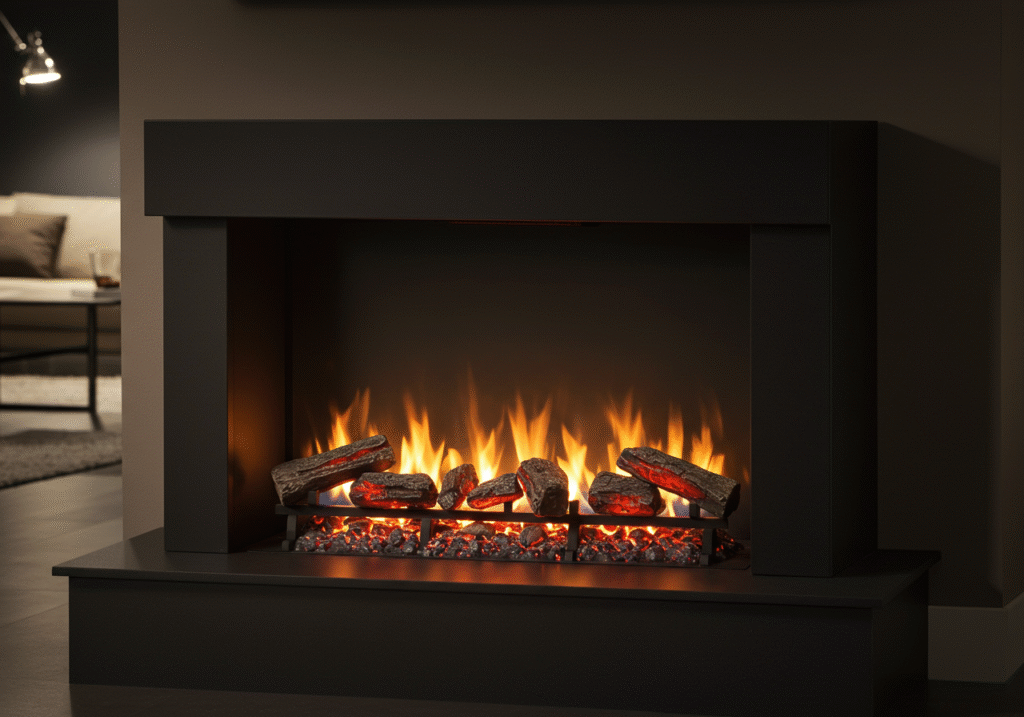
The unique technology behind electric fireplaces translates into a host of practical benefits for homeowners.
4.1 Superior Safety Features
Electric fireplaces are significantly safer than traditional options. Key safety features include :
- No Real Flames: The absence of combustion eliminates the risk of sparks or flying embers setting fire to furnishings.
- Cool-to-Touch Surfaces: While the heating element gets hot, the exterior of the unit, especially the glass front, remains cool enough to touch, preventing burns—a critical advantage for homes with children and pets .
- No Harmful Emissions: Without burning fuel, electric fireplaces produce no smoke, soot, or carbon monoxide, protecting your indoor air quality .
- Overheat Protection: Built-in safety switches automatically shut off the heater if the unit overheats, preventing damage and fire hazards .
4.2 Exceptional Energy Efficiency and Cost-Effectiveness
- Zone Heating: You can lower your home’s central thermostat and heat only the room you are using, which can reduce overall heating bills .
- Low Operating Cost: Operating a flame-only mode costs pennies per hour (as low as half a cent), while running the heater typically costs between 8 to 12 cents per hour .
- 100% Efficient: Since no heat is lost through a vent or chimney, all the energy consumed is converted into room heat .
4.3 Unmatched Installation Flexibility and Low Maintenance
- No Venting Required: The most significant installation advantage is that electric fireplaces do not need a chimney, flue, or gas line. They simply plug into a standard 120-volt wall outlet .
- Placement Options: This allows for installation in virtually any room—living rooms, bedrooms, apartments, condos, and even bathrooms (if rated for moisture) . They come in various forms: wall-mounted, freestanding, built-in, or inserts for existing fireplace openings .
- Zero Maintenance: There is no ash to clean, no chimney to sweep, and no logs to buy. Maintenance is typically limited to occasional dusting .
Section 5: Installation and Maintenance
5.1 Easy Installation Process
Installing an electric fireplace is often a straightforward DIY project .
- Wall-Mounted Units: These are hung on the wall using brackets, similar to a large television.
- Freestanding Units: These are the simplest; just position the unit where you want it and plug it in.
- Inserts: These are designed to fit into an existing masonry fireplace opening, instantly converting it to a clean, efficient heat source.
- Built-In Models: These require creating a framed niche in a wall or cabinetry for a custom, built-in look. It’s recommended to consult a professional for this type .
5.2 Simple Maintenance for Longevity
To keep your electric fireplace in top condition :
- Exterior Cleaning: Wipe the exterior with a soft, dry cloth. For the glass front, use a damp cloth or a cleaner specifically designed for fireplace screens—avoid standard glass cleaners as they can contain flammable chemicals.
- Dusting the Interior: Periodically unplug the unit and use a vacuum with a brush attachment to gently remove dust from the air intake and exhaust vents to ensure proper airflow.
- Fan Maintenance: Keep the fan clean to ensure efficient operation. A soft brush can be used to remove dust buildup.
- Bulb Replacement: LED lights have a very long lifespan, but if one eventually burns out, consult your owner’s manual for safe replacement instructions .
Conclusion: A Smart, Modern Hearth Solution
So, how do electric fireplaces work? They operate through a clever separation of systems: efficient electrical heating elements warm the room, while innovative LED and reflective technologies create customizable, realistic flames. This combination delivers the ambiance and comfort of a traditional fireplace while eliminating the mess, maintenance, safety concerns, and installation limitations.
Whether your priority is efficient zone heating, a stunning visual focal point, or the flexibility to enjoy a fire in any room, an electric fireplace offers a practical and beautiful solution. By understanding the technology inside, you can confidently choose a model that will provide warmth, atmosphere, and modern style to your home for years to come.