How to Build an Outdoor Fireplace: A Complete DIY Guide


There is nothing quite like the warm, inviting ambiance of a fire to transform your backyard into a true outdoor living space. While the project may seem daunting, learning how to build an outdoor fireplace is an achievable goal for a dedicated DIYer, offering immense satisfaction and creating a cherished gathering spot for friends and family. A well-built fireplace becomes the architectural centerpiece of your patio, extending the usability of your outdoor area well into the cooler months and potentially increasing your property value .
This definitive guide will walk you through the entire process, from initial planning and navigating local regulations to the final curing of the masonry. We will explore the advantages of using a pre-designed fireplace kit, which significantly simplifies construction by ensuring proper draft and structural integrity, allowing you to focus on the craftsmanship of the veneer . You will find detailed, sequential instructions for building a solid foundation, constructing the core structure, and adding the finishing touches that make the fireplace uniquely yours. By following these steps and prioritizing safety, you can create a durable and beautiful fireplace that will provide warmth and enjoyment for many years.
Section 1: Planning and Preparation – The Blueprint for Success
Thorough planning is the most critical phase of your project. Rushing this stage can lead to costly mistakes, code violations, or safety hazards. Taking the time to plan carefully will ensure a smooth building process.
Research Local Building Codes and HOA Rules
Before purchasing a single material, your first step must be to check with your local municipal building department and any Homeowners Association (HOA) . Regulations can vary significantly by location and often cover:
- Clearance Requirements: Mandatory distances from property lines, structures, and overhanging trees .
- Permits: Your project may require a building permit.
- Fire Safety: Some areas may have restrictions on open fires or require specific features like spark arrestors .
- Height Restrictions: Local codes may dictate how tall your chimney can be .
Choose Your Fireplace Type and Design
The core decision is whether to build from scratch or use a fireplace kit. A kit is highly recommended for DIYers as it provides pre-cast concrete components designed to fit together perfectly, guaranteeing a proper smoke chamber and draft . Kits can be finished with a variety of veneers for a custom look.
Key design questions to answer include:
- Fuel Source: Will you burn wood or use gas logs? This decision may affect the internal configuration .
- Size and Scale: Ensure the fireplace’s dimensions are proportionate to your patio. A common size is around 7 feet wide and tall, but kits come in various widths like 36″ or 48″ .
- Aesthetic Finish: Choose a veneer material that complements your home’s style, such as stone, brick, stucco, or tile .
Select and Prepare the Site
Choose a level, stable area that meets the clearance requirements you researched. The site must be able to support a significant structure—a mortared and veneered fireplace can weigh up to 4,000 pounds . Consider the flow of your patio and orient the fireplace to serve as a focal point for seating areas.
Section 2: Materials and Tools – Gathering Your Supplies
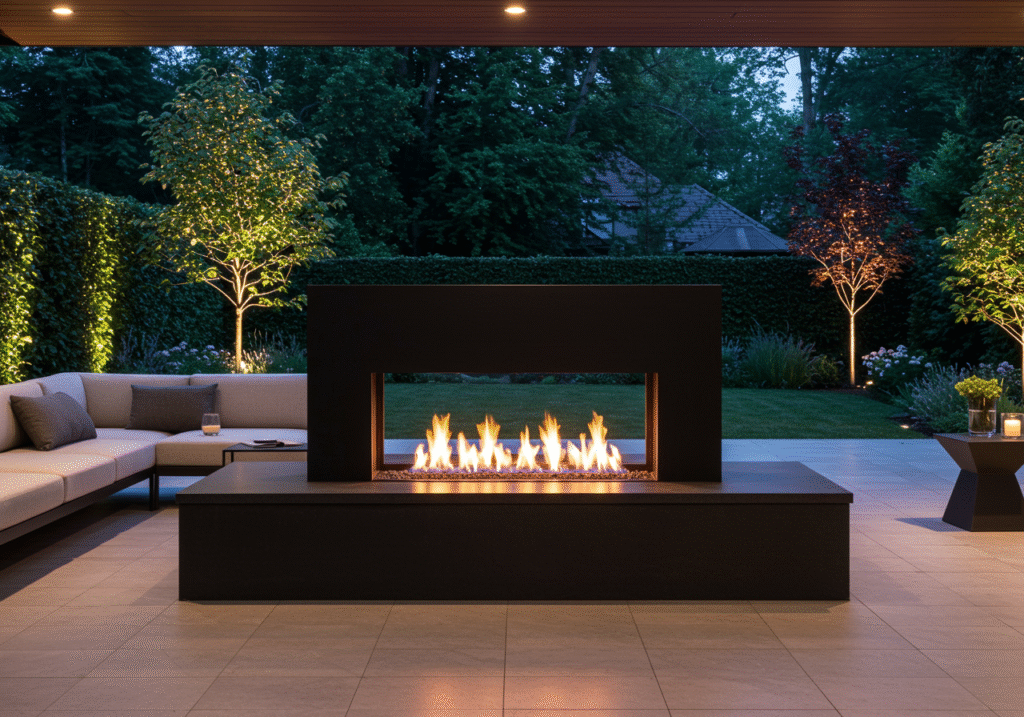
Having all materials and tools on site before you begin will make the construction process more efficient. The following is a comprehensive list based on a typical kit-based build.
Essential Materials List
- Foundation: Crushed aggregate gravel, concrete mix, concrete wire mesh, and rebar for reinforcement .
- Base: Cinder blocks (standard and cap blocks) and masonry mortar .
- Fireplace Kit: Includes the baseplate, side and back walls, throat, flue pipes, and lintel .
- Firebox Lining: Firebrick splits (half-bricks) and high-temperature refractory mortar .
- Veneer: Your choice of stone, brick, or stucco.
- Chimney Cap: A metal spark arrestor or a custom-built stone cap .
Required Tools
- Excavation & Site Prep: Shovel, wheelbarrow, tamper.
- Foundation Work: Wooden stakes and 2×6 boards for concrete forms, a concrete mixing tub or rental cement mixer, a magnesium float, and a concrete screed (a long, straight board) .
- Masonry Work: Mason’s trowel, a 4-foot level, a torpedo level, a large square, a dead blow hammer (for adjusting blocks without chipping them), and a bucket for water .
- General Construction: Tape measure, chalk line, drill with masonry bits, concrete wedge anchors, and safety gear (glasses, gloves).
Section 3: Step-by-Step Construction Guide
This section provides a detailed, sequential guide to building your outdoor fireplace. Work methodically and check your level and square at every stage.
Step 1: Pour a Solid Concrete Foundation
The foundation is the most critical part of the structure; a failure here will compromise the entire fireplace. A proper foundation must extend down to the frost line in your area to prevent “frost heave,” which can cause the heavy structure to lean or crack over time .
- Mark and Excavate: Mark the outline of your foundation using stakes and string. The foundation should be larger than the fireplace’s footprint. Dig down to the frost line and level the soil .
- Build the Form and Add Gravel: Construct a wooden form using 2×6 boards. Add a 1.5- to 2-inch layer of gravel and tamp it down for a stable base .
- Reinforce with Mesh and Rebar: Place a sheet of concrete wire mesh supported by stands inside the form. For added strength, especially at the corners, add rebar in a grid or “crow’s feet” pattern .
- Mix and Pour Concrete: Mix and pour concrete into the form. Use a screed board to level the concrete by dragging it across the top of the form. Smooth the surface with a magnesium float. Allow the concrete to cure fully as specified on the product bag .
Step 2: Build the Cinder Block Base
The base elevates the firebox and provides a stable platform.
- Lay the First Course: Mix masonry mortar and lay the first course of standard cinder blocks on the cured foundation, ensuring they are level and square .
- Lay the Cap Blocks: Lay a second course of solid cap blocks, orienting them perpendicular to the first course. This “cross-wise” placement ties the structure together and prevents cracking along the seams .
- Allow to Cure: Let the mortar dry for at least 24 to 48 hours .
Step 3: Assemble the Fireplace Kit
This is the core of the structure. It’s best to have a helper for this stage, as some pieces can weigh over 100 pounds .
- Set the Baseplate: This is the largest and heaviest piece (around 300 lbs). Set it on the cinder block base using a bed of high-temperature mortar and ensure it is perfectly level .
- Build the Walls: Apply mortar and attach the side wall pieces and the backplate. Use a level to ensure each piece is plumb and square as you go. Splashing a little water on the mortar can improve adhesion .
- Line the Firebox with Firebrick: Before installing the front lintel, use high-temperature mortar to lay firebrick splits inside the firebox in your chosen pattern, leaving a 1/4-inch mortar joint .
- Install the Lintel and Throat: Once the firebrick is in place, add the lintel across the front opening and the throat pieces that direct smoke into the chimney .
Step 4: Construct the Chimney
- Stack the Flues: Add the flue pipes until you reach the desired height, checking local codes for any maximum height restrictions. The chimney should be tall enough to clear nearby obstacles for a good draft .
- Install a Spark Arrestor: Cap the chimney with a spark arrestor to prevent embers from escaping .
Step 5: Apply the Veneer Finish
This step transforms the structural concrete core into a beautiful finished product. You can apply the veneer the same day the kit is assembled .
- For Stone or Brick Veneer: Apply the stone or brick directly to the outside of the firebox using the refractory mortar .
- For Stucco or Tile: If the finish will be stucco, tile, or manufactured stone, you must first wrap the firebox with metal lathe, attached with concrete nails or anchors, to provide a gripping surface .
Step 6: Add the Final Touches
- Install the Mantle: Add a stone or wood mantle as a decorative finish.
- Build a Wood Storage Box: Some kits offer optional side boxes for storing firewood .
Section 4: Curing and Lighting Your First Fire
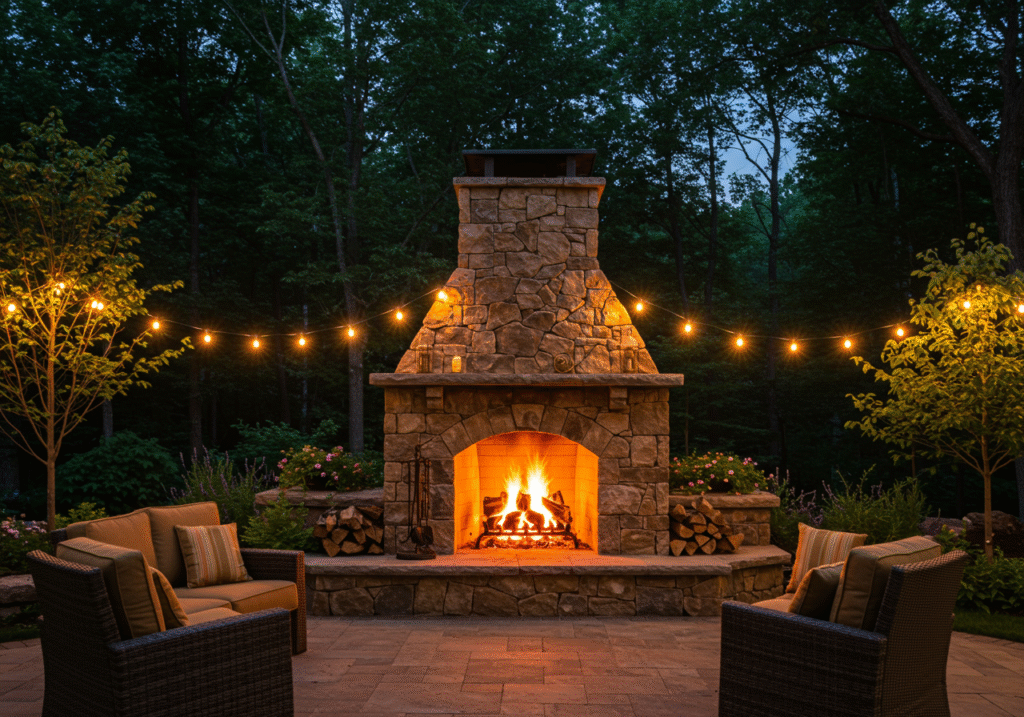
Your fireplace is not ready for a roaring blaze immediately. The masonry and mortar contain moisture that must be driven out slowly to prevent cracking and ensure longevity.
- The Curing Period: It is crucial to allow the fireplace to cure for a significant period before use. Recommendations vary from at least 72 hours to 30 days . Follow the specific advice from your kit manufacturer or mortar provider. When in doubt, waiting longer is safer.
- The First Fire: After the curing period, start with a very small fire using kindling or a few small logs. Let this burn for a short time. The goal is to gently warm the masonry and drive out any remaining moisture. Over the next several fires, gradually increase the size and duration. This slow “seasoning” process will ensure the longevity of your fireplace.
Conclusion
Building an outdoor fireplace is a substantial project that demands careful planning, physical effort, and attention to detail. However, the reward—a permanent, value-adding feature that becomes the heart of your outdoor living space—is immeasurable. By methodically following the steps outlined in this guide—from securing permits and pouring a solid foundation to carefully assembling the kit and applying the final veneer—you can achieve a professional-quality result. This fireplace will stand not only as a testament to your skill and dedication but as a warm, welcoming gathering place for years to come. Remember, patience during the curing process is your greatest ally for ensuring a long-lasting and safe structure. Now, sit back, light a fire, and enjoy the unparalleled satisfaction of relaxing by a fireplace you built with your own hands.
Key Takeaways
- Planning is Paramount: Checking local codes and carefully designing your project is the first and most important step for a safe and compliant build .
- Kits Simplify the Process: Using a pre-designed fireplace kit ensures proper draft (smoke ventilation) and makes construction significantly easier for DIYers .
- Foundation is Critical: A reinforced concrete foundation poured to the frost line is essential to prevent the heavy fireplace from settling or cracking .
- Curing is Non-Negotiable: Allowing the masonry and mortar to cure completely—for up to 30 days—before building a fire is crucial for the structure’s integrity .
- Safety First: Always have a helper for heavy lifting, use appropriate safety gear, and install a spark arrestor on the chimney .