
2 Easy Steps on How to Clean Fireplace Glass for Spotless Crystal-Clear Results


There is nothing quite as comforting as gathering around a warm, inviting fireplace on a chilly evening. The dancing flames create an ambiance that transforms a simple room into a cozy sanctuary. However, this experience can be significantly diminished when your view is obscured by a layer of soot, haze, or residue on the fireplace glass.
Learning how to clean fireplace glass is not just about aesthetics; it is a crucial maintenance task that ensures your fireplace operates safely and efficiently. Dirty glass can indicate improper combustion, which may lead to more serious issues over time, and a clean glass surface allows you to monitor the flame pattern and ensure everything is functioning correctly.
This comprehensive guide will provide you with everything you need to know to achieve and maintain crystal-clear fireplace glass. We will delve into the different types of fireplace glass and why they require specific care, outline essential safety precautions, and compare a variety of cleaning methods—from simple DIY solutions using common household ingredients to specialized commercial products.
You will find detailed, step-by-step instructions tailored to both gas and wood-burning appliances, along with expert tips on preventing rapid buildup of soot and haze. By understanding the science behind the dirt and the proper techniques for removing it, you can extend the life of your fireplace components and enjoy an unobstructed view of the fire for years to come.
Section 1: Understanding Your Fireplace Glass
Before you begin cleaning, it is essential to understand that not all fireplace glass is the same. The type of glass in your unit determines its resistance to heat and its susceptibility to damage, which directly influences how you should clean it. Using the wrong technique on the wrong type of glass can lead to scratches, clouding, or even catastrophic failure.
Ceramic vs. Tempered Glass
Fireplaces typically use one of two types of glass: ceramic or tempered. Ceramic glass, often found on high-heat appliances like wood-burning stoves and fireplaces with large burners, is engineered to withstand extreme temperatures, often exceeding 1000°F. It is stronger than tempered glass of the same thickness and is more resistant to thermal shock, which is the stress caused by rapid temperature changes .
Tempered glass, which is similar to the glass used in car windows, is more common in many gas fireplaces. It is made by heating and cooling standard glass to create surface compression, making it about four times stronger than regular glass. However, it is not as heat-resistant as ceramic glass. If your fireplace has bi-fold doors, it likely uses tempered glass .
The critical takeaway is that ceramic glass often has a microscopic coating of polycrystalline structures. Using abrasive tools like a razor blade on this surface can damage this coating, causing it to peel or chip. This makes specialized cleaners a safer choice for ceramic glass . Tempered glass, while strong, can still be scratched by abrasive pads or harsh chemicals.
Why Fireplace Glass Gets Dirty
The haze or soot that accumulates on your glass is a byproduct of combustion. In wood-burning fireplaces, the primary culprit is incomplete combustion of wood. When wood doesn’t burn hot enough or efficiently—often due to high moisture content or insufficient air supply—it releases unburned gases and particles that condense on the cooler glass surface as creosote and soot .
In gas fireplaces, a white, hazy film can develop for a couple of reasons. In new fireplaces, a “off-gassing” process occurs during the first several hours of use, where manufacturing residues burn off and deposit on the glass. In older units, minerals from the fuel source (like calcium and sulfur) or from the air used for combustion can create this buildup . Understanding the source of the dirt can help you choose the most effective cleaning method and, more importantly, address the root cause to minimize future cleaning.
Section 2: Safety First: Essential Precautions Before You Begin
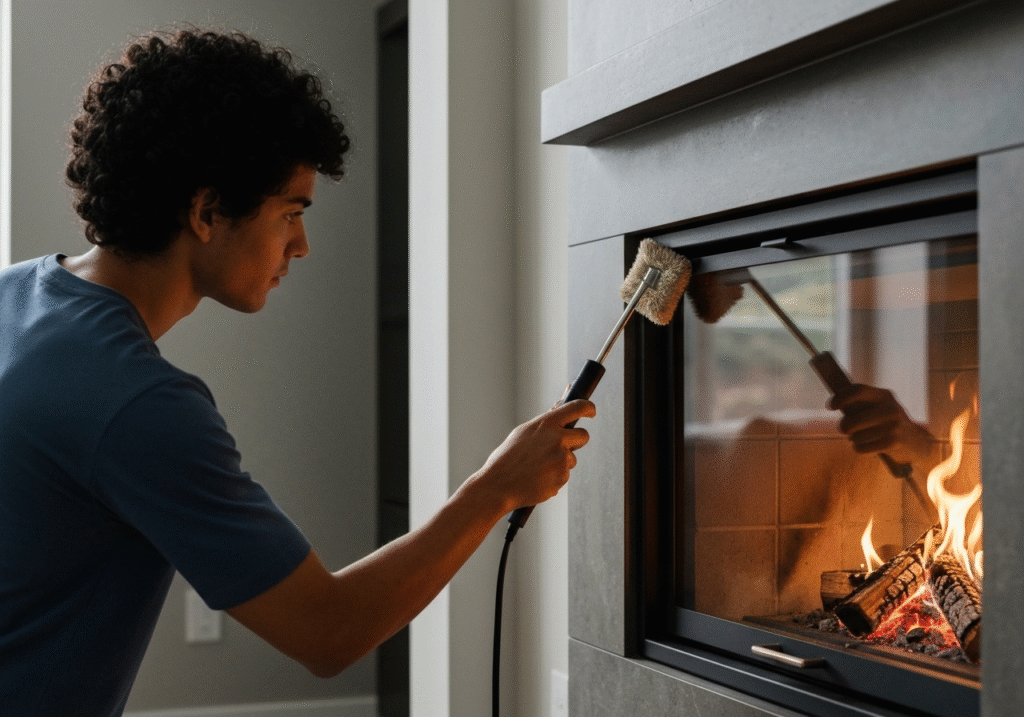
Your safety is the most important step in the cleaning process. Working with a fireplace involves high temperatures, gas lines, and sometimes soot, all of which require careful handling. Rushing this process or skipping safety steps can lead to injuries or damage to your fireplace.
The Golden Rule: Cool Down Completely
Never attempt to clean fireplace glass while it is still warm or hot. Glass retains heat for a long time after the fire has been extinguished. Touching hot glass can cause serious burns, and applying a cold liquid cleaner to hot glass can cause thermal shock, potentially cracking or shattering it . Always wait until the fireplace and glass are completely cool to the touch. This could take several hours, so patience is key.
Gas Fireplace Specific Safety
If you have a gas fireplace, the first step before any maintenance is to turn off the gas supply. This is typically done via a shut-off valve located near the fireplace. Consult your owner’s manual for the specific location and instructions for your model. Turning off the gas prevents any accidental leaks or ignition while you are working . It is also a good practice to ensure the pilot light is extinguished.
Protective Measures
Wear protective gloves to shield your hands from potential sharp edges on the glass frame or any cleaning chemicals. Safety glasses are also recommended to protect your eyes from dripping cleaner or loose soot particles. When handling fire pit glass crystals, gloves are essential to protect against sharp edges . Lay down old towels, sheets, or drop cloths on the floor in front of the fireplace to protect your flooring from spills and drips, especially if you are using liquid cleaners or pastes .
Section 3: Cleaning Methods and Solutions
There are numerous effective ways to clean fireplace glass, ranging from simple, natural solutions you can make at home to specialized commercial products. The best method for you will depend on the type and severity of the buildup.
DIY Natural Cleaning Solutions
For regular maintenance and light to moderate soot, DIY solutions can be highly effective and inexpensive.
- Vinegar and Water Solution: A mixture of equal parts white vinegar and water is a classic, all-purpose cleaner. Vinegar is a mild acid that helps break down residues. For tougher jobs, you can use a stronger vinegar solution or add a tablespoon of cornstarch to create a thicker paste that clings to vertical surfaces .
- Ammonia-Based Solution: For cutting through heavy grime, a solution of diluted ammonia and water can be very effective. The water helps prevent the ammonia from evaporating too quickly. However, it is crucial to note that many fireplace manufacturers, including Napoleon, explicitly warn against using ammonia-based cleaners like Windex on gas fireplace glass, as they can leave a difficult-to-remove film . This method may be better suited for wood-burning fireplace doors where such residues can be more thoroughly rinsed.
- The Ash and Newspaper Method: This is a time-tested, zero-cost method praised by wood stove owners. Simply take a sheet of newspaper, crumple it, and dampen it with water. Then, dip it into the cool ashes from your fireplace. The mild abrasiveness of the ash, combined with the circular scrubbing motion, effectively lifts soot from the glass without scratching it. After scrubbing, wipe the glass clean with a damp cloth to remove the ash residue . This method is particularly popular on enthusiast forums for its simplicity and effectiveness.
Specialized Commercial Cleaners
For heavy buildup or for those who prefer a dedicated product, commercial fireplace glass cleaners are an excellent option. These are specifically formulated to tackle combustion residues without damaging the glass.
- Rutland Glass Cleaner: This is a frequently recommended product on hearth enthusiast forums. It is often described as a semi-paste or cream that is applied with a cloth, allowed to work, and then polished off. Many users note that it contains silicone, which can help create a barrier that makes future cleanings easier .
- Bar Keepers Friend: Available in both powder and soft cleanser forms, Bar Keepers Friend is a versatile cleaner that can be used on fireplace glass. For light soiling, the Soft Cleanser may suffice, while the powdered cleanser can be made into a paste for tougher jobs. It is important to test it on a small area first and ensure it is safe for your specific glass type .
- Ceramic Glass Cooktop Cleaner: Since many fireplace glasses are ceramic, a cleaner designed for ceramic cooktops can be a suitable and readily available alternative .
Table: Comparison of Fireplace Glass Cleaning Methods
Section 4: Step-by-Step Cleaning Guides
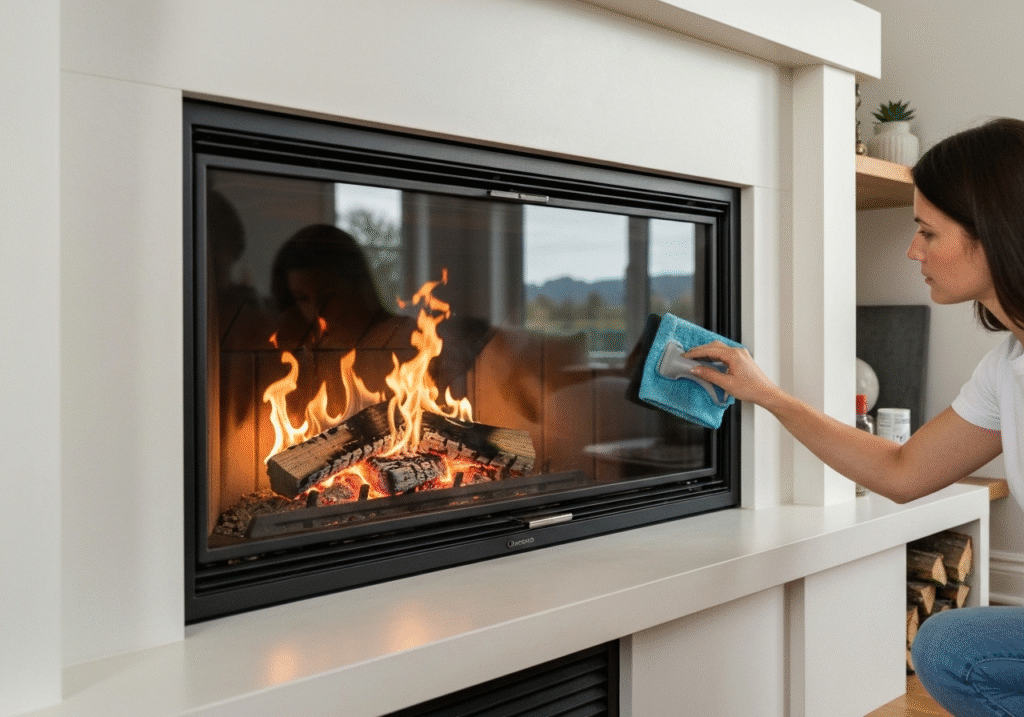
With your safety prep done and cleaner chosen, follow these detailed steps for a thorough and safe cleaning.
How to Clean Gas Fireplace Glass
- Turn Off and Cool Down: Turn off the gas supply to the fireplace at the shut-off valve. Ensure the fireplace has been off long enough for the glass and all components to be completely cool to the touch .
- Remove the Glass: Carefully remove the glass panel from the fireplace. Consult your owner’s manual for the correct procedure, as mechanisms vary by model (e.g., clips, spring-loaded clamps). Never force the glass out . Place the glass on a soft, stable surface like a folded towel on the floor to prevent scratching or cracking .
- Apply Cleaner: If using a commercial cream cleaner, apply a small amount to a soft, clean cloth (like a microfiber cloth) and rub it onto the glass in a circular motion. If using a spray, spray it directly onto the glass or onto your cloth. Avoid using paper towels, as they can be abrasive and may leave lint .
- Clean and Polish: After applying the cleaner, allow it to sit for a moment as per the product instructions. Then, using a clean part of the cloth or a new cloth, buff the glass until it is clean and clear. To avoid streaks, wipe one side of the glass in a horizontal motion and the other side vertically. This way, if you see a streak, you’ll know which side it is on .
- Reinstall Carefully: Once the glass is perfectly clean and dry, carefully reinstall it, following the instructions in your manual. Double-check that all clips or clamps are securely fastened. Finally, you can turn the gas supply back on .
How to Clean Wood-Burning Fireplace or Stove Glass
- Cool Down Completely: Ensure the fire is completely out and the stove or fireplace is cold. This may mean waiting until the next morning after a fire .
- Access the Glass: You may not need to remove the glass. Many wood stove doors can be swung open, and fireplace doors can be cleaned in place. If you need to remove it, refer to the manual .
- Dry Removal First: Use a dry, soft brush or cloth to gently remove any loose ash or soot from the surface.
- Apply Your Chosen Cleaner: Whether using the ash method, a vinegar solution, or a commercial product, apply it to the glass. If using the ash method, dip a damp newspaper in the ash and scrub in small circular motions until the soot is gone. The glass will appear hazy; this is normal .
- Rinse and Dry: Use a clean, damp cloth to wipe away all cleaning residue. Follow with a dry, soft cloth or paper towel to prevent water spots. If using a commercial spray cleaner, simply wipe until clear .
Section 5: Prevention Strategies for Cleaner Glass
The best way to minimize cleaning frequency is to prevent excessive soot and haze from forming in the first place. This is especially true for wood-burning appliances.
For Wood-Burning Fireplaces and Stoves
- Use Seasoned Firewood: This is the single most important factor. Burn only wood that has been properly seasoned for at least six months to a year, with a moisture content of 20% or less. Burning wet or “green” wood creates low-temperature fires that produce significantly more smoke, creosote, and soot, which coats the glass and chimney . You can check moisture content with a moisture meter.
- Create Hot Fires: A hot, efficient fire produces less soot. Avoid smoldering fires by ensuring the air vents are open enough to allow for complete combustion, especially when first starting the fire .
- Practice Top-Down Firing: Igniting the fire from the top, rather than the bottom, leads to more efficient combustion from the start, reducing the amount of unburned gases that can dirty the glass .
For Gas Fireplaces
- Ensure Proper Ventilation: Make sure the air intake vents are not blocked. This ensures the fireplace receives enough air for clean combustion.
- Follow Break-in Instructions: For new fireplaces, expect some hazy film during the first 10 or so hours of use as manufacturing residues burn off. Cleaning it after this break-in period should result in less frequent buildup .
Section 6: Troubleshooting Common Problems
Even with the best techniques, you may encounter challenges. Here’s how to address them.
- Stubborn, Caked-On Residue: For very heavy buildup, a razor blade scraper can be effective, but exercise extreme caution. Hold the blade at a shallow angle (about 40 degrees) to the glass and scrape gently. Important: This method is generally considered safe for tempered glass but should be avoided on ceramic glass, as it can damage the special surface coating .
- White Hazy Film That Won’t Budge: A persistent white haze on gas fireplace glass can be caused by mineral deposits. Some users on hearth forums have had success using a diluted solution of CLR (Calcium, Lime, and Rust remover) to break down these deposits. Always test any harsh chemical on a small, inconspicuous area first and rinse thoroughly .
- Glass Gets Dirty Very Quickly: If your wood-burning glass blackens within a day or two of cleaning, it is almost certainly a combustion issue. Re-evaluate your firewood moisture content and your firing technique. Switching to well-seasoned wood and burning hotter fires will dramatically extend the time between cleanings .
Conclusion
Knowing how to clean fireplace glass is an essential skill for any homeowner who values both the beauty and the safety of their fireplace. By understanding the type of glass you have, prioritizing safety, selecting the appropriate cleaning method for the level of grime, and following a meticulous step-by-step process, you can easily restore a crystal-clear view of your fire. More importantly, by adopting preventive measures like burning only well-seasoned wood and maintaining hot fires, you can significantly reduce the frequency of deep cleans, allowing you to spend less time maintaining your fireplace and more time enjoying its warmth and ambiance. A clean fireplace is not only a joy to behold but also a sign of an efficient and well-cared-for appliance.
Key Takeaways
- Identify Your Glass Type: Ceramic glass, common in high-heat units, can be damaged by razor blades, while tempered glass is more resilient but can still be scratched by abrasives .
- Safety is Paramount: Always ensure the fireplace is completely cool and the gas is turned off before starting any cleaning procedure .
- Choose the Right Cleaner: For light cleaning, DIY solutions like vinegar or ash and newspaper are effective. For heavy buildup, invest in a commercial cleaner designed for fireplace glass .
- Prevention is Key: The most effective way to keep glass clean is to burn properly seasoned wood and maintain hot, efficient fires to minimize soot production .
- Avoid Ammonia and Abrasives: Do not use ammonia-based cleaners on gas fireplace glass, and avoid abrasive pads or harsh scrapers that can cause permanent damage .