10 Creative Interior Ceiling Design Ideas for Stylish Spaces
- Ceiling Design
 Ben
Ben- 0
- 21 minutes read
You know what’s funny? We spend thousands on furniture, obsess over wall colors, and debate throw pillow arrangements for hours – but when’s the last time you actually looked up at your ceiling? Yeah, I thought so.
That blank white expanse above your head is basically the forgotten stepchild of interior design, and honestly, it’s time we changed that.
I’ve been guilty of ceiling neglect too, until I walked into a friend’s house last year and literally stopped mid-sentence because their ceiling was that stunning.
It completely transformed the entire room, and I realized I’d been missing out on a whole dimension of design possibilities. So let’s fix that together, shall we?
Why Your Ceiling Deserves Some Love (And Attention)
Before we dive into the good stuff, let’s talk about why ceilings matter. Think about it – your ceiling takes up the same square footage as your floor, yet most of us treat it like an afterthought.
That’s like buying a gorgeous dress and forgetting to accessorize!
A well-designed ceiling can make your room feel taller, cozier, more luxurious, or dramatically modern. It’s the ultimate mood-setter that most people completely ignore.
Plus, here’s a little secret: ceiling upgrades often cost way less than you’d think but deliver maximum visual impact. Win-win, right?
1. Floating Cove Light Ceiling
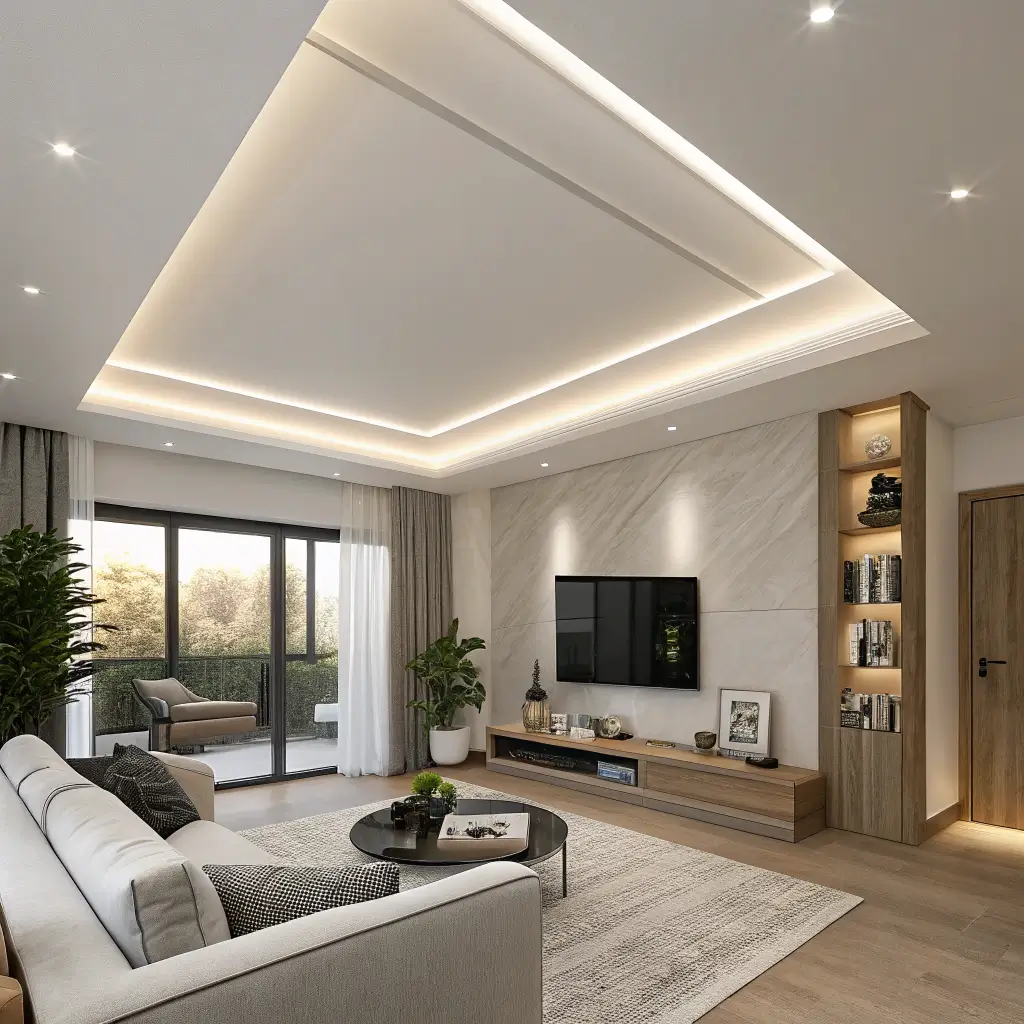
Let me start with my personal favorite – the floating cove light ceiling. This design creates the illusion that your ceiling is literally floating above you, thanks to hidden LED strips around the perimeter. The soft, indirect lighting washes the ceiling in a warm glow that’s both dramatic and incredibly relaxing.
I installed this in my bedroom last year, and guests always ask if I hired a professional lighting designer. Nope – just some LED strips, a bit of drywall work, and YouTube tutorials! The key is getting the spacing right between your main ceiling and the “floating” section. Too narrow and it looks cramped; too wide and you lose that magical floating effect.
The best part? You can customize the lighting color and intensity. Want romantic amber for date nights? Done. Need bright white for reading? Easy. It’s like having a mood ring for your room.
Pro tip: Use warm white LEDs (around 3000K) for living spaces and bedrooms. Cool white feels too clinical unless you’re going for that ultra-modern vibe.
2. Modern Wooden Slat Ceiling
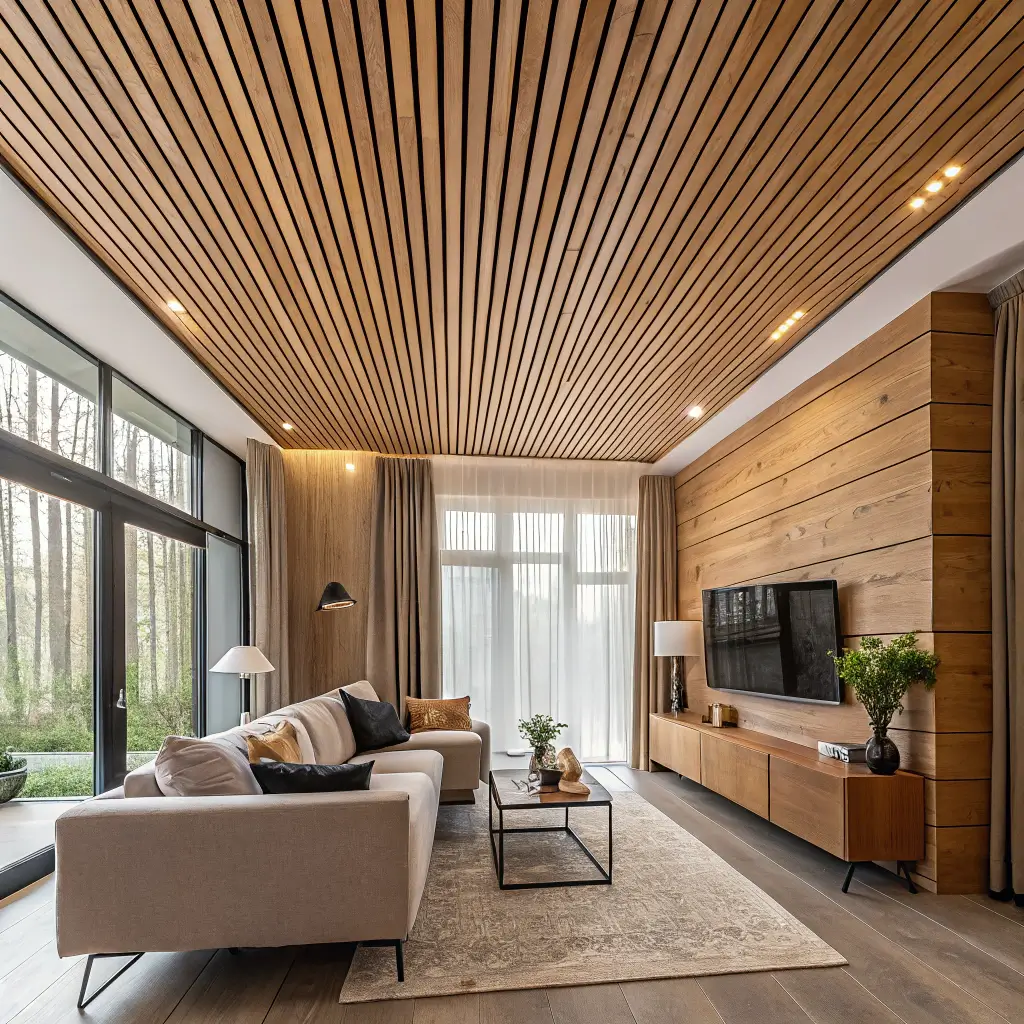
Wood slats on the ceiling might sound rustic, but trust me – when done right, this look is pure modern sophistication. I’m talking clean lines, consistent spacing, and that gorgeous natural texture that makes any room feel instantly warmer and more expensive.
The beauty of wooden slats lies in their versatility. You can run them parallel to the longest wall to make a room feel wider, or perpendicular to create the illusion of length. Want to get really fancy? Try a diagonal pattern – it’s unexpected and adds serious visual interest.
I’ve seen this work beautifully in everything from minimalist living rooms to cozy bedrooms. The key is choosing the right wood tone for your space. Light oak or maple keeps things airy and Scandinavian, while darker walnut or mahogany adds drama and richness.
Installation reality check: This isn’t exactly a weekend DIY project unless you’re pretty handy. The spacing needs to be precise, and you’ll want proper support structures. But the end result? Chef’s kiss
3. Minimalist Tray Ceiling Design
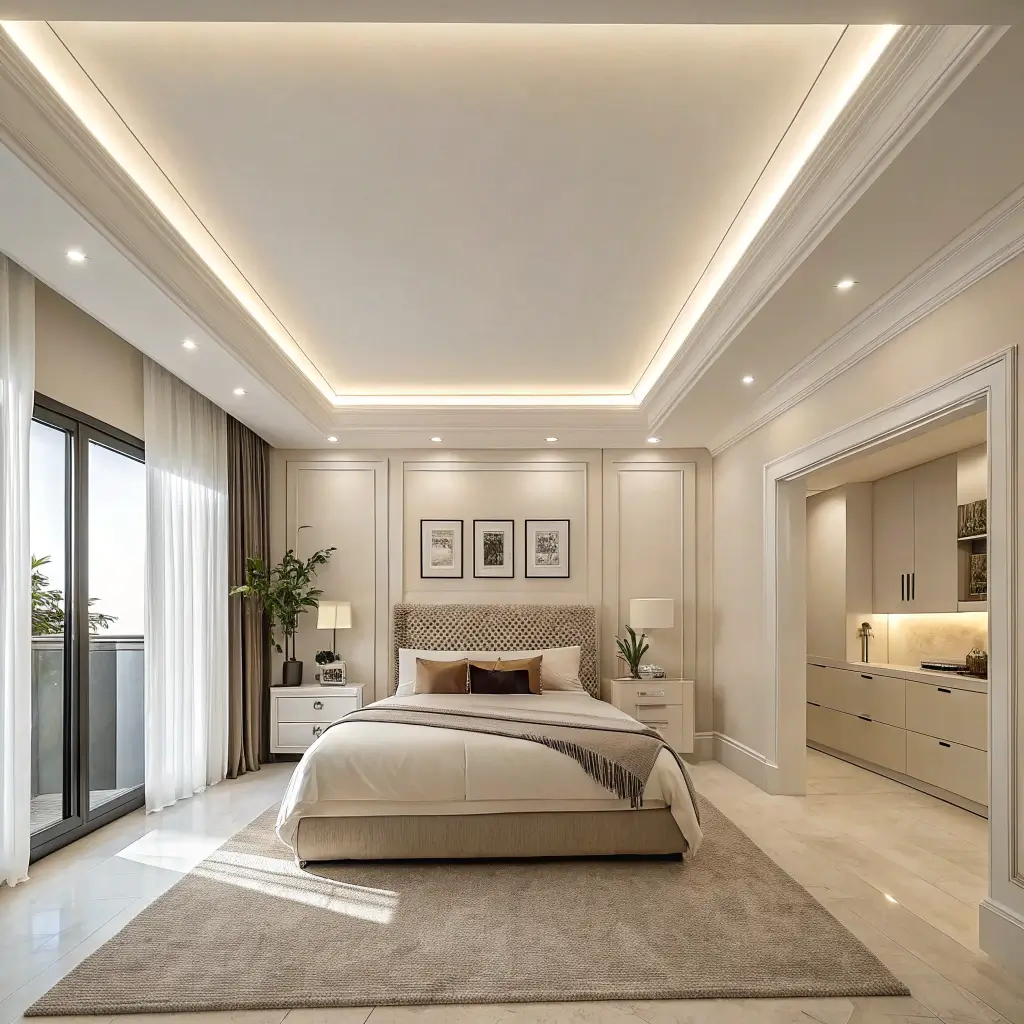
Okay, I know what you’re thinking – “Isn’t a tray ceiling kind of… 2005?” But hear me out! The old-school ornate tray ceilings with heavy molding and multiple layers? Yeah, those can stay in the past. But a clean, minimalist tray ceiling? That’s timeless elegance.
A simple tray ceiling adds architectural interest without overwhelming your space. It’s basically a recessed center section that creates depth and dimension. When painted in a slightly different shade than your walls – maybe a soft gray when your walls are white, or a deeper tone of the same color – it becomes a subtle focal point that elevates the entire room.
I love how this design works in dining rooms especially. It naturally defines the eating area and makes your chandelier or pendant lights look more intentional and grounded.
Color strategy: Go one or two shades deeper than your wall color for the tray section. It creates depth without being jarring.
Also Read: 10 Inspiring Kitchen Ceiling Design Ideas for Small Kitchens
4. Geometric POP Ceiling Pattern
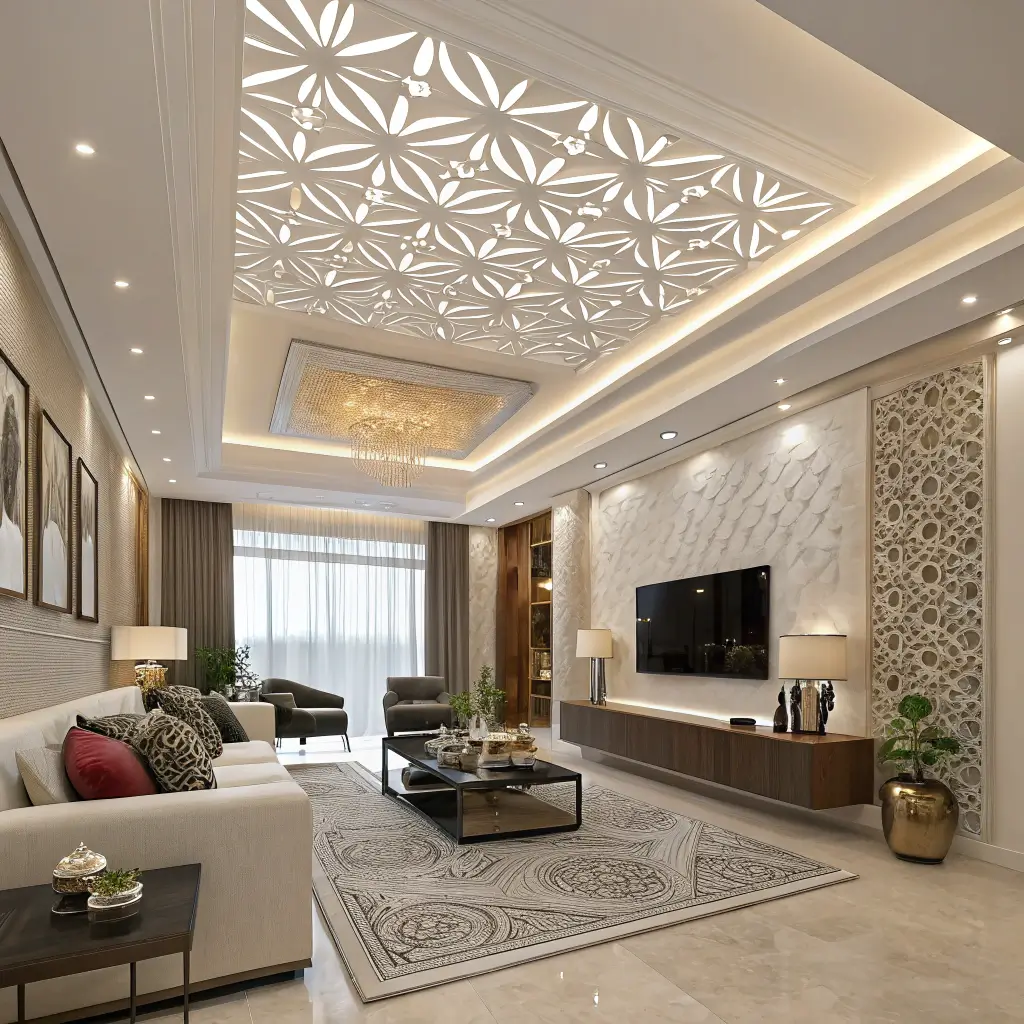
POP (Plaster of Paris) ceilings might sound old-fashioned, but modern geometric patterns are having a serious moment. We’re talking clean triangles, hexagons, or even abstract shapes that create stunning visual texture overhead.
The trick with geometric POP designs is restraint. You don’t want your ceiling competing with your furniture for attention – it should complement and enhance your overall design scheme. I’ve seen gorgeous examples where subtle geometric patterns in neutral tones add just enough interest to make a room feel custom and high-end.
This approach works particularly well in modern homes where you want architectural detail without traditional molding or ornate features. It’s contemporary sophistication that doesn’t scream “look at me” but definitely gets noticed.
Design tip: Stick to one geometric shape per ceiling. Mixing triangles with circles with squares? That’s a recipe for visual chaos.
5. Exposed Beam Statement Ceiling
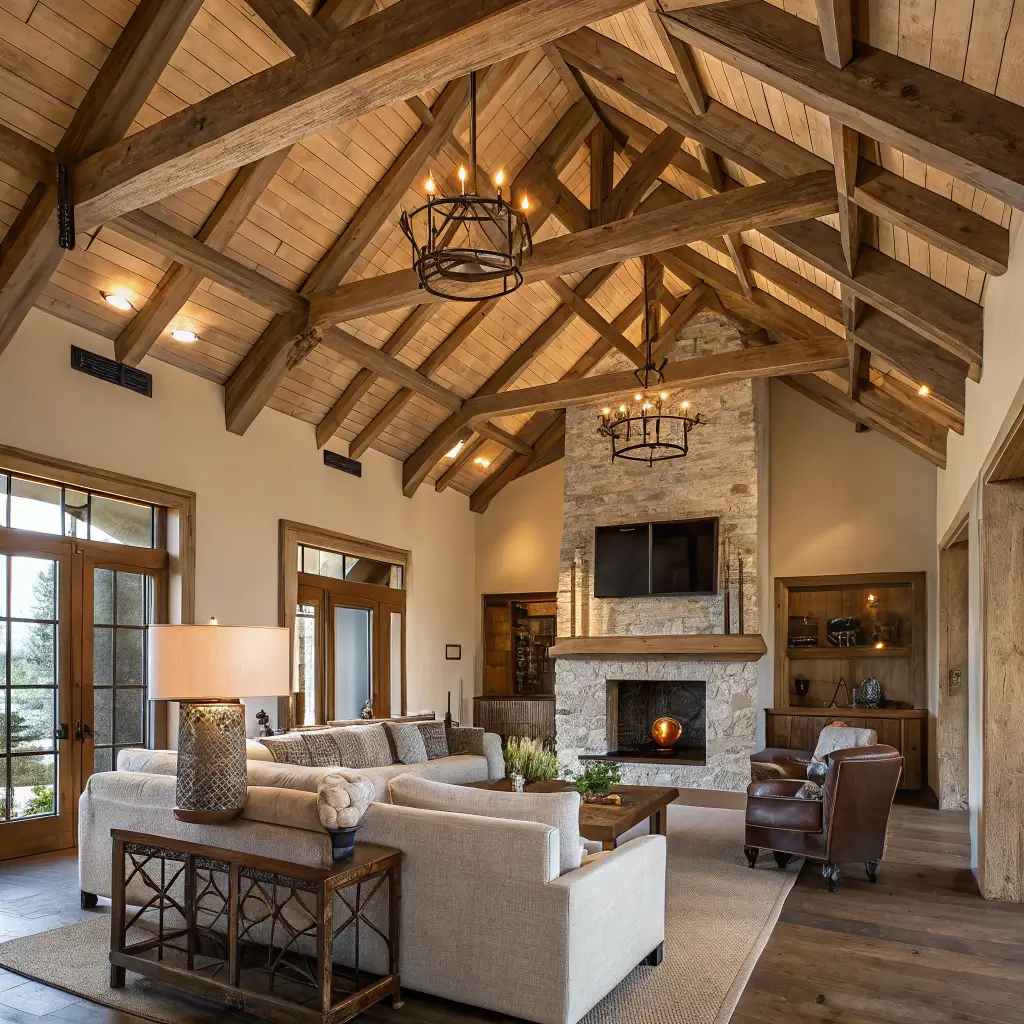
Now we’re talking drama! Exposed beams instantly add character and architectural interest to any space. Whether you’re working with original structural beams or adding faux ones for style, this ceiling treatment never fails to impress.
I absolutely love how exposed beams can completely change a room’s personality. Dark, chunky beams create a cozy, rustic vibe that’s perfect for family rooms or bedrooms. Sleek, painted beams in white or gray feel more contemporary and work beautifully in modern farmhouse or transitional spaces.
The spacing and size of your beams matter more than you might think. Too many beams and your ceiling feels busy; too few and they look random. I typically recommend spacing them evenly across the ceiling’s width, with the number depending on your room size.
Real talk: Faux beams have come a long way. High-quality polyurethane options look incredibly realistic and are way easier to install than the real deal. Your secret’s safe with me! 🙂
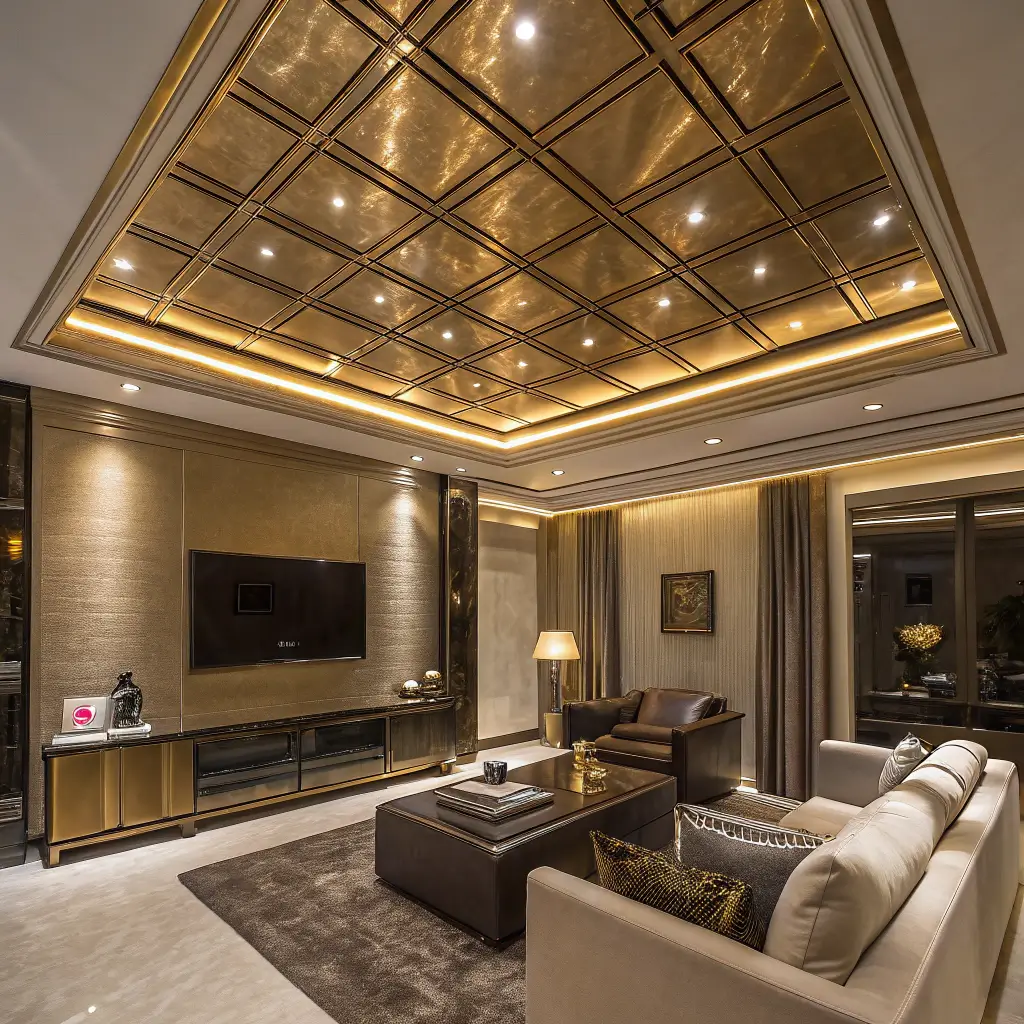
6. Metallic Accent Panel Ceiling
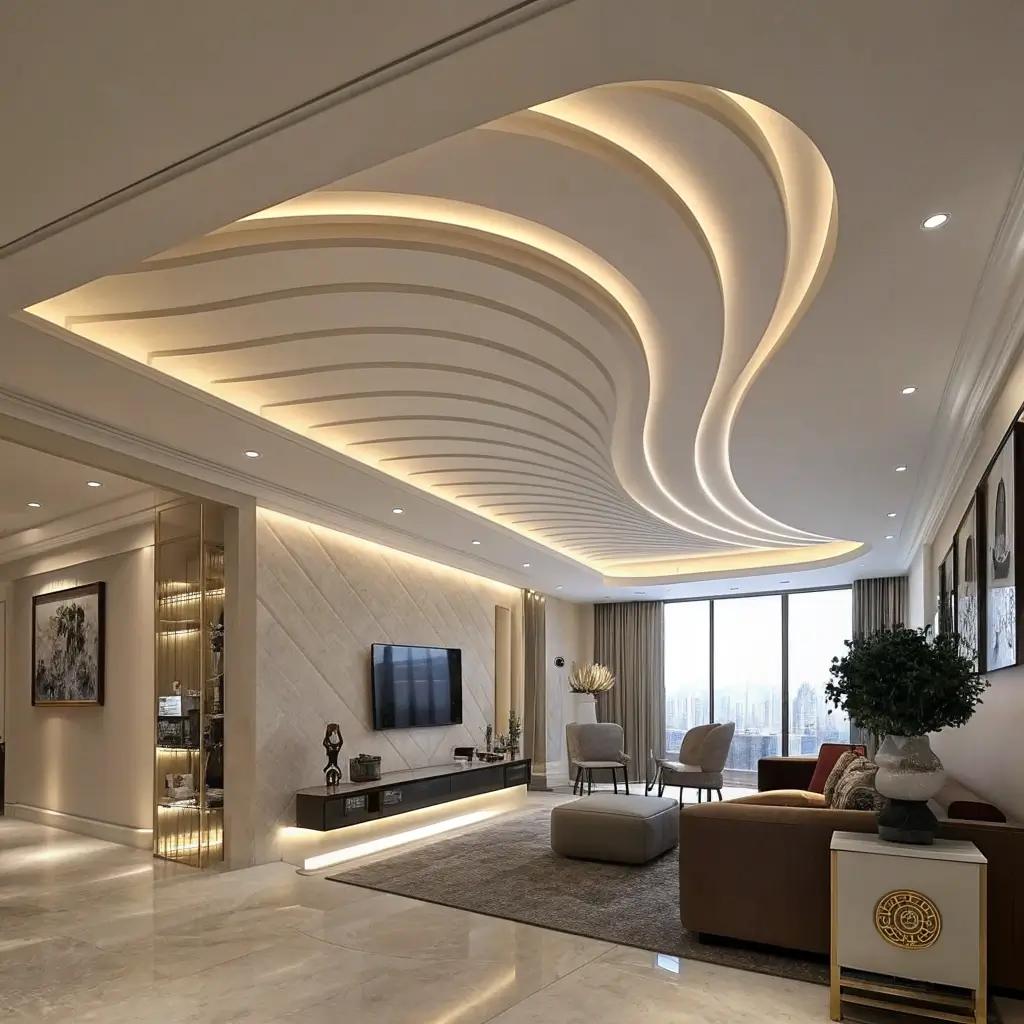
Want to add some serious glamour to your space? Metallic ceiling panels are your answer. I’m not talking about that shiny, disco-ball effect (unless that’s your vibe – no judgment!). Modern metallic panels come in brushed finishes that catch light beautifully without being overwhelming.
Copper panels add warmth and work gorgeously with both modern and industrial design schemes. Brushed steel or aluminum feels sleek and contemporary. Even subtle metallic paint on textured panels can create that perfect hint of luxury.
I installed copper accent panels in my kitchen’s breakfast nook, and the way they reflect the morning light is absolutely magical. It’s like having a piece of jewelry for your ceiling.
Maintenance heads-up: Metallic surfaces show fingerprints and water spots more easily, so factor in cleaning accessibility when planning your design.
Also Read: 12 Beautiful Ceiling Design Bedroom Ideas to Refresh Your Spacez
7. Curved False Ceiling Design
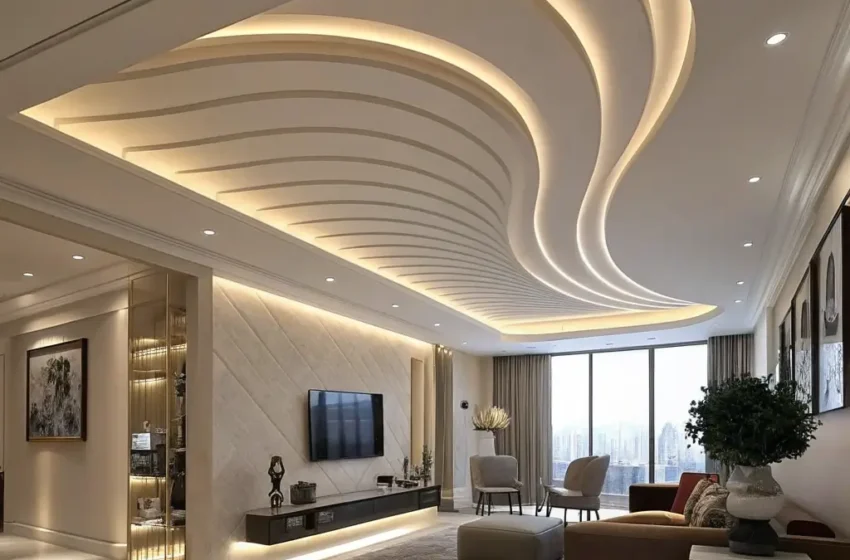
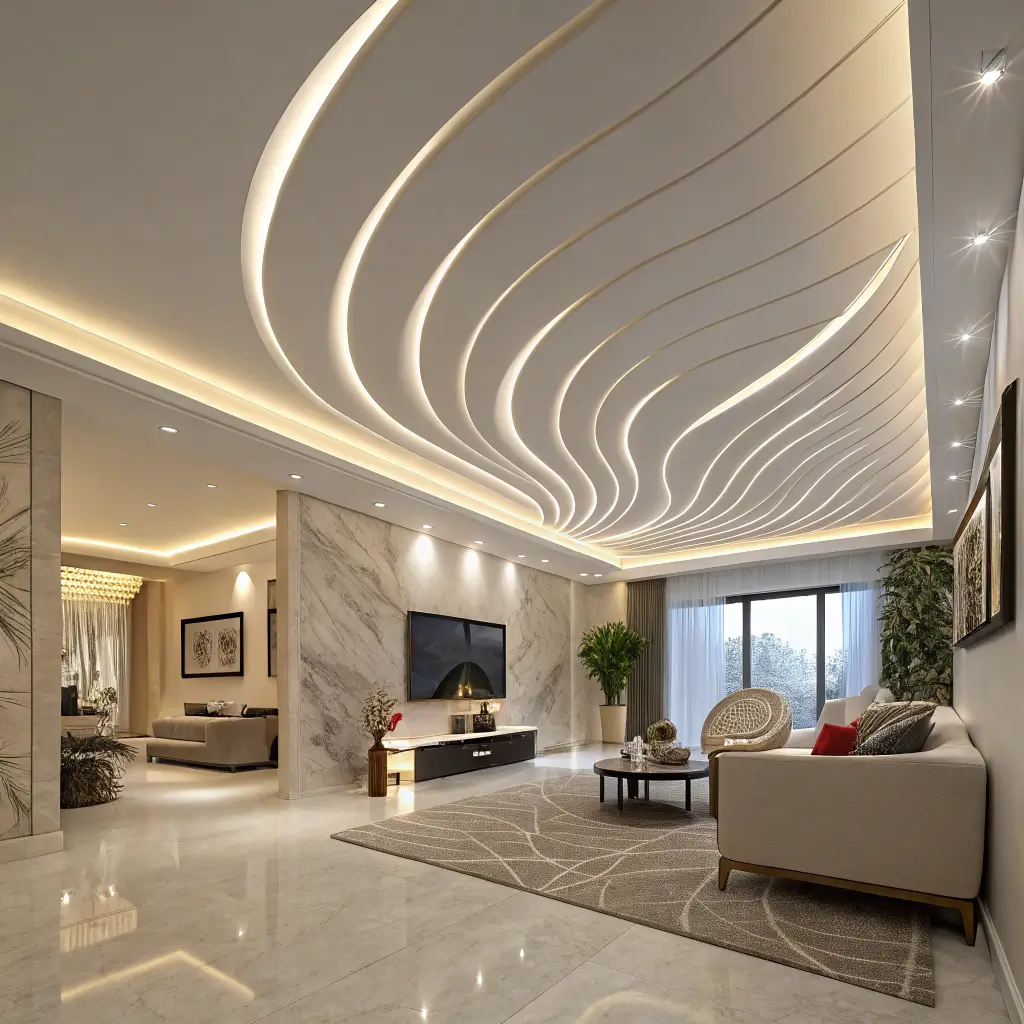
Curves are having a major moment in interior design, and ceilings are no exception. A curved false ceiling creates flowing, organic lines that soften the hard edges of a room and add incredible visual interest.
This design works particularly well in spaces where you want to create zones – like separating a living area from a dining space in an open floor plan. The curved ceiling naturally guides the eye and creates a sense of movement and flow.
I’ve seen stunning examples where curved ceilings incorporate hidden lighting along the curves, creating this gorgeous ribbon of light that follows the ceiling’s contours. It’s architectural art that also serves a functional purpose.
Planning note: Curved ceilings require more complex framing and drywall work. This is definitely a job for professionals unless you’re seriously skilled at construction.
8. Textured Concrete Finish Ceiling
Industrial chic isn’t going anywhere, and a textured concrete ceiling is the ultimate statement piece for this aesthetic. But here’s the thing – it doesn’t have to feel cold or harsh. The right concrete finish can be surprisingly warm and sophisticated.
Modern concrete ceiling treatments range from smooth, polished surfaces that reflect light beautifully to more textured finishes that add visual depth and interest. The key is balancing the industrial element with softer furnishings and warm lighting.
I love how concrete ceilings work in loft-style spaces or modern homes where you want that raw, authentic feel. Pair it with warm wood furniture and soft textiles, and you get this perfect contrast between hard and soft elements.
Cost consideration: Real concrete ceilings are heavy and expensive. Concrete-look paint or panels can give you the aesthetic at a fraction of the cost and weight.
9. Two-Tone Layered Ceiling Design
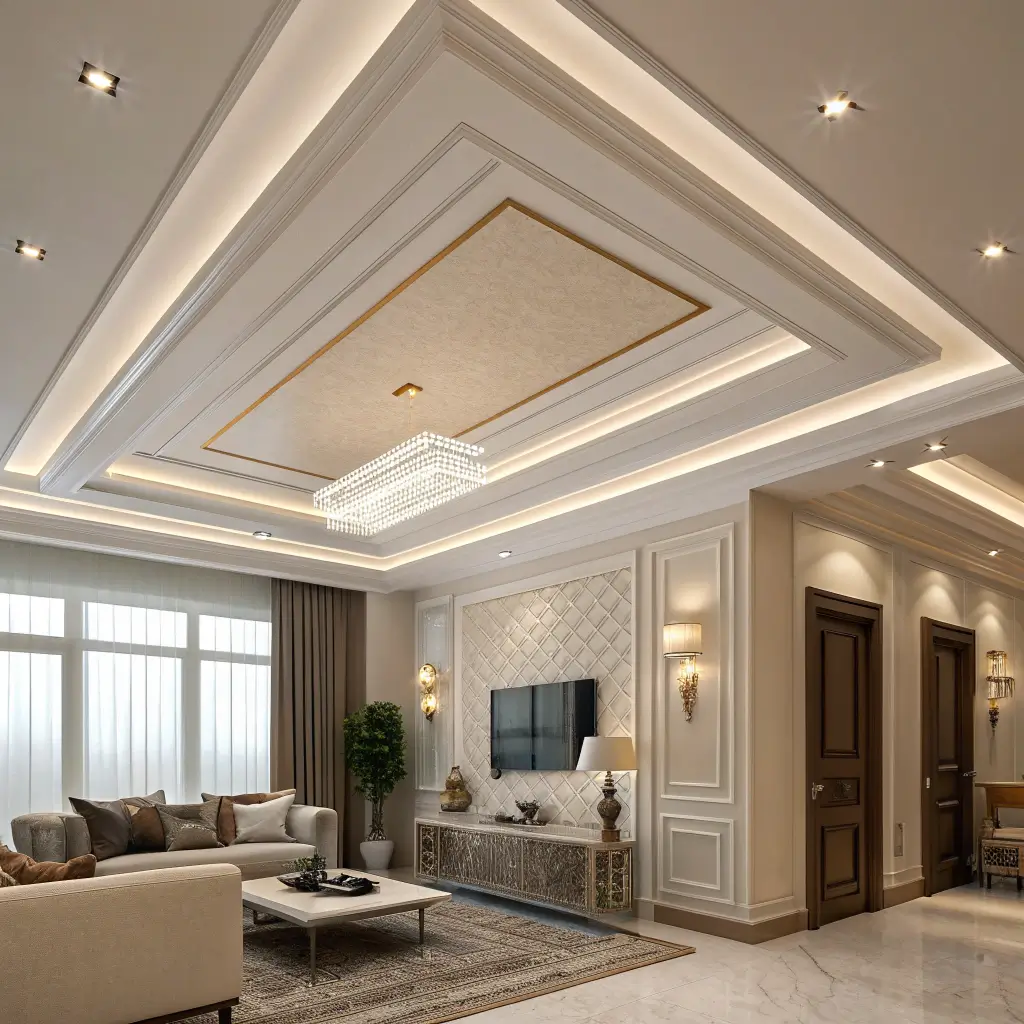
Sometimes the most impactful designs are the simplest ones. A two-tone layered ceiling uses different colors or materials to create depth and visual interest without complex construction.
Picture this: your main ceiling in a soft white, with a lowered section in a complementary color – maybe a warm gray or even a bold accent color that ties into your decor. The contrast creates natural zones in your room and adds architectural detail where none existed before.
I’m particularly fond of this approach in bedrooms, where you can create a cozy, intimate feeling over the bed area while keeping the rest of the ceiling light and airy. It’s like having a built-in headboard that extends overhead.
Color psychology: Darker colors on the ceiling can make a room feel more intimate and cozy, while lighter colors keep things feeling open and spacious.
Also Read: 10 Simple Profile Light Ceiling Design Ideas with Soft Glow
10. Skylight-Inspired Ceiling Design
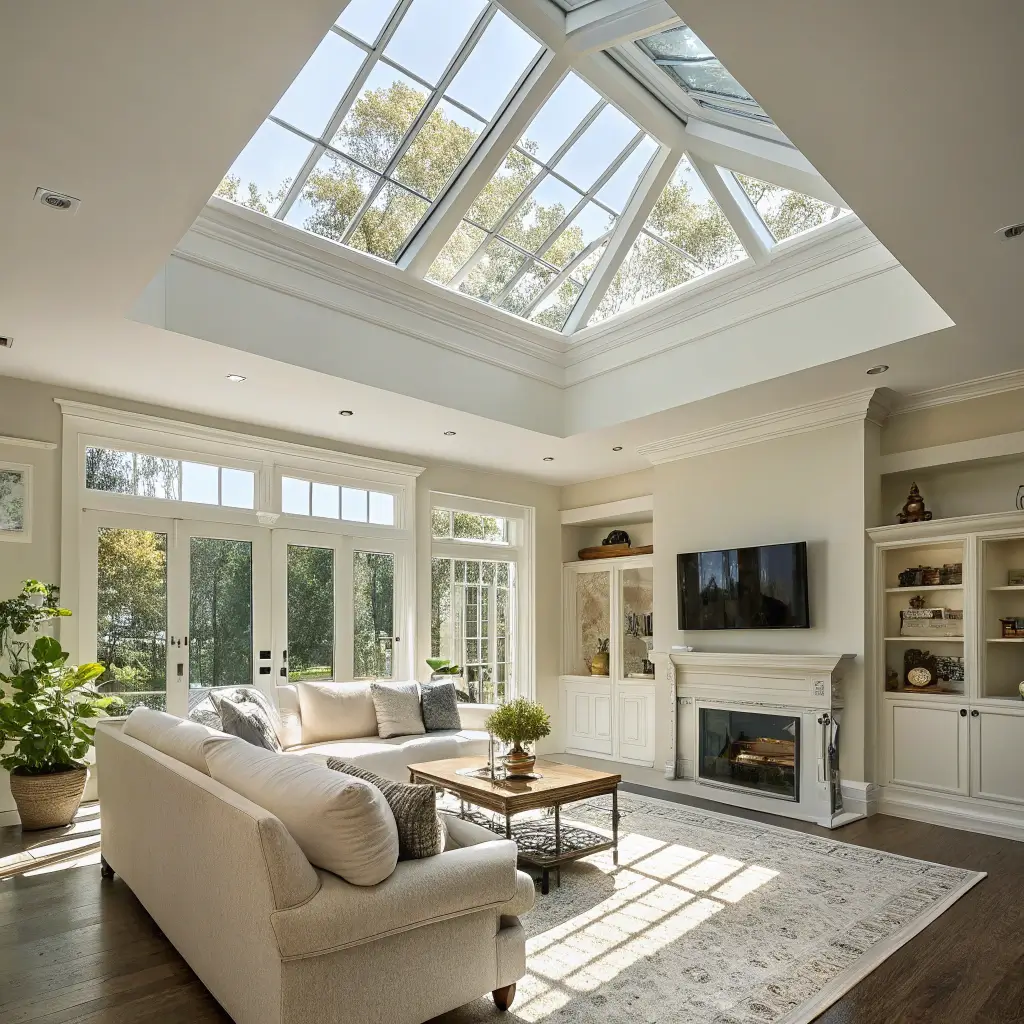
Last but definitely not least – the skylight-inspired ceiling. This design mimics the look of natural skylights using clever lighting and framing techniques, bringing that gorgeous natural light feeling to any room.
You can create faux skylights using LED panels that mimic daylight, complete with subtle cloud patterns or blue sky effects. Frame them with trim work that looks like actual skylight frames, and the illusion is surprisingly convincing.
I’ve seen this work beautifully in basement spaces or interior rooms that don’t have access to natural light. It’s like bringing the outdoors in, and the psychological impact of “natural” light is real – even when it’s artificial.
Tech upgrade: Some LED skylight panels now sync with your local weather and time of day, gradually changing color temperature throughout the day just like real sunlight. Pretty cool, right?
Making Your Choice: What Works for Your Space?
So, which ceiling design speaks to you? Here’s the thing – the best ceiling design for your space depends on your room’s size, existing architecture, and your personal style. A dramatic exposed beam ceiling might be perfect for a spacious living room but overwhelming in a small bedroom.
Consider your room’s proportions, natural light, and how you use the space. Also, think about maintenance – some designs require more upkeep than others. And please, please consider your budget realistically. Some of these designs are definitely DIY-friendly, while others require professional installation.
The Bottom Line
Your ceiling is prime real estate that’s been sitting there unused for way too long.
Whether you go bold with metallic panels or keep it simple with a two-tone design, adding visual interest overhead will transform your entire space in ways you probably haven’t even imagined yet.
The best part? Most ceiling upgrades are permanent improvements that add real value to your home. So you’re not just making your space more beautiful – you’re making a smart investment too.
Ready to look up and get inspired? Your ceiling is waiting for its moment to shine! v