10 Stylish Interior Ceiling Design Ideas and Trendy Room Looks
- Home Interior Design
 Ben
Ben- 0
- 35 minutes read
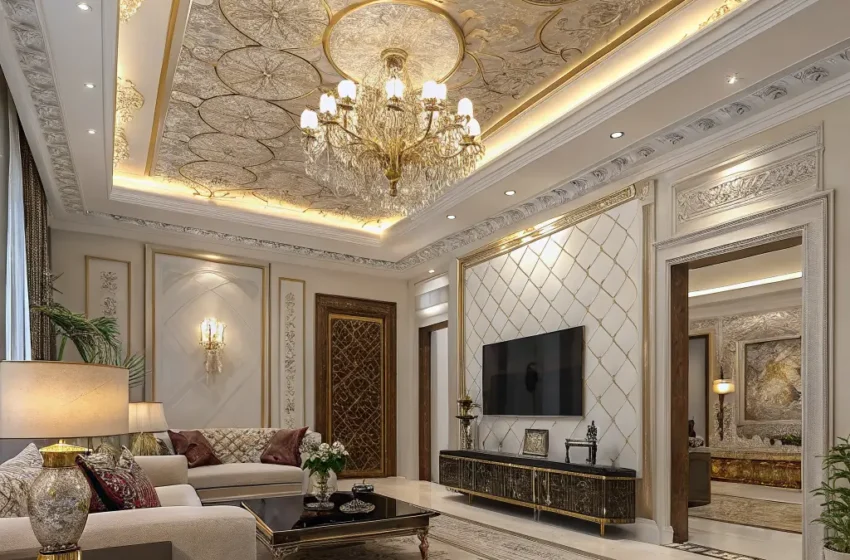
Here’s a design secret nobody talks about: the ceiling is the largest uninterrupted surface in any room, yet most people treat it like it doesn’t exist.
We obsess over wall colors, agonize over flooring choices, and somehow forget there’s an entire canvas above our heads just waiting to transform the entire space.
After accidentally discovering the power of ceiling design (my living room’s boring flat white ceiling felt oppressive until I added beams), I’ve become slightly obsessed with what designers call the “fifth wall.”
That plain ceiling you’re ignoring right now? It’s basically wasted real estate. And trust me, once you see what’s possible, you’ll never look at a flat white ceiling the same way again.
These ten interior ceiling design ideas range from subtle elegance to full-blown statement making. Whether you’re building new, renovating, or just tired of staring at that same boring surface every day, these ceiling designs will completely change how you experience your rooms.
Because let’s be honest – a great ceiling can make a mediocre room spectacular, while a boring ceiling can make even the nicest room feel unfinished.
1. Floating Wooden Beam Ceiling
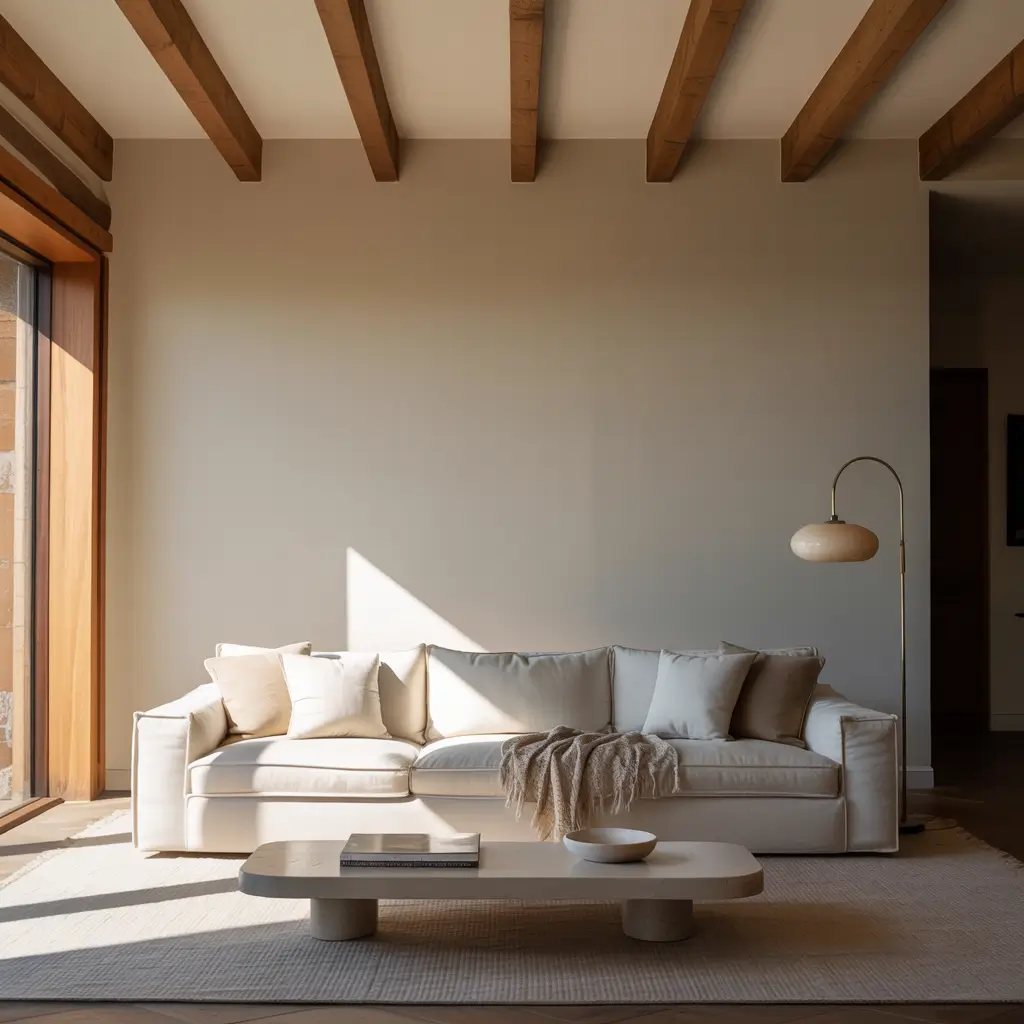
Floating wooden beam ceilings add instant architectural drama without the structural complexity of actual load-bearing beams. These decorative beams create the warmth and character of a century-old farmhouse even in brand-new construction.
The “floating” aspect means these beams attach directly to the ceiling rather than supporting anything. They’re hollow or lightweight solid wood, making installation feasible even for DIY-minded homeowners. I added three floating beams to my dining room ceiling last year, and guests consistently assume my 1990s house is much older and more interesting than it actually is.
Wood species choice determines the entire vibe. Dark walnut beams create drama, reclaimed barn wood adds rustic authenticity, and painted white beams provide subtle texture without heavy visual weight. The beauty lies in customization – your beams can match existing woodwork or create deliberate contrast.
Floating Beam Installation Considerations
What to know before committing:
- Ceiling height matters – beams work best with 9+ foot ceilings
- Beam sizing should match room scale
- Hollow beams cost less and install easier
- Spacing affects impact – closer for cottage, wider for modern
- Direction influences perception – perpendicular to length widens rooms
- Finishing should complement but not necessarily match other wood
The illusion is remarkably convincing. Nobody will know your beams aren’t structural unless you tell them – and why would you?
2. Modern Geometric False Ceiling
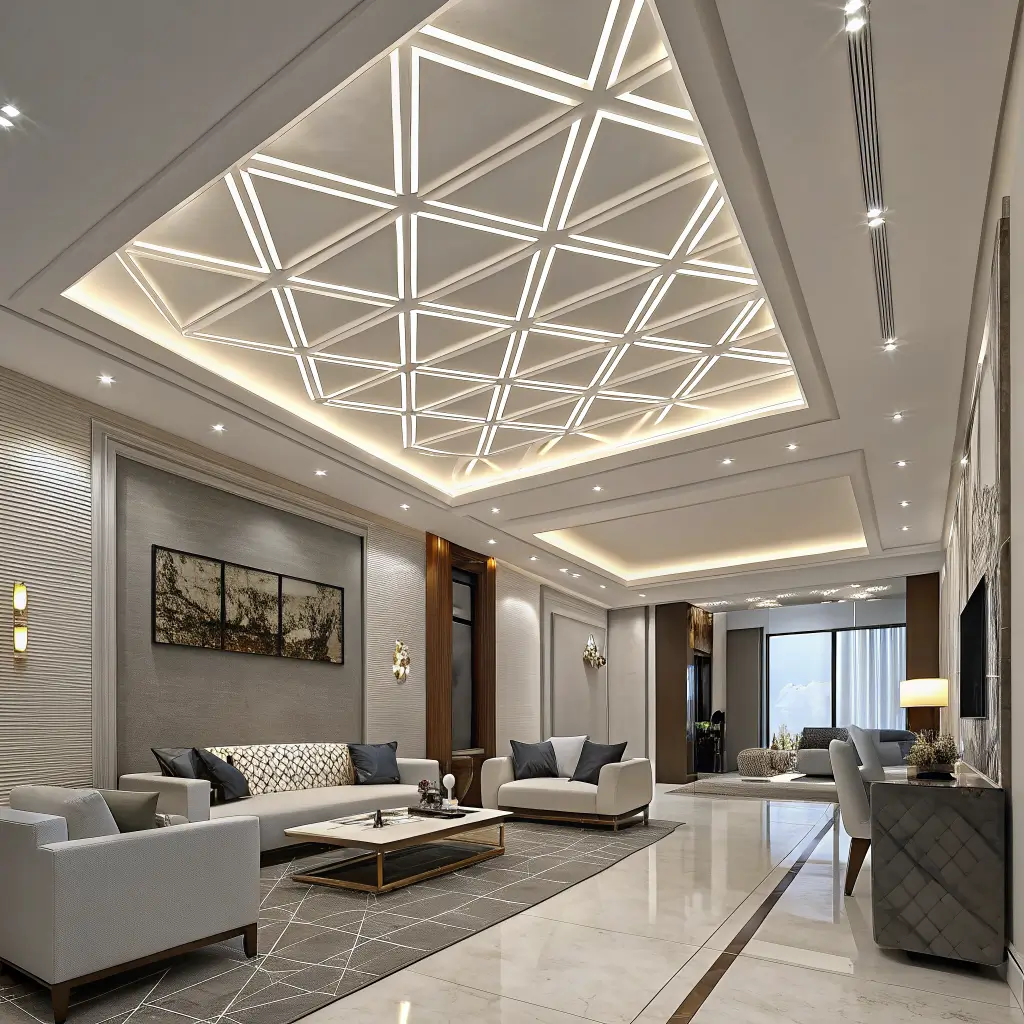
Modern geometric false ceilings turn your ceiling into three-dimensional artwork that creates visual interest from every angle. These aren’t your grandmother’s drop ceilings – we’re talking sculptural geometry that makes rooms feel like galleries.
The design possibilities are essentially unlimited. Hexagonal patterns, angular asymmetry, layered rectangles – geometric false ceilings can be subtle or dramatic depending on depth and complexity. One designer friend created a ceiling with cascading geometric panels that literally stops people in their tracks when they enter.
The functionality extends beyond aesthetics. False ceilings hide ductwork, wiring, and imperfections while providing opportunities for integrated lighting. That ugly ceiling with the weird crack and exposed junction box? A geometric false ceiling makes it disappear while adding serious design cred.
Geometric Ceiling Design Elements
Creating architectural interest:
- Depth variation creates shadow and dimension
- Lighting integration enhances geometric shapes
- Material choice from gypsum to metal panels
- Color options from monochrome to contrasting
- Acoustic benefits through proper material selection
- Zone definition through pattern placement
The investment pays dividends in visual impact. Geometric ceilings become focal points that elevate entire rooms from ordinary to extraordinary.
3. Minimalist White Cove Lighting Ceiling
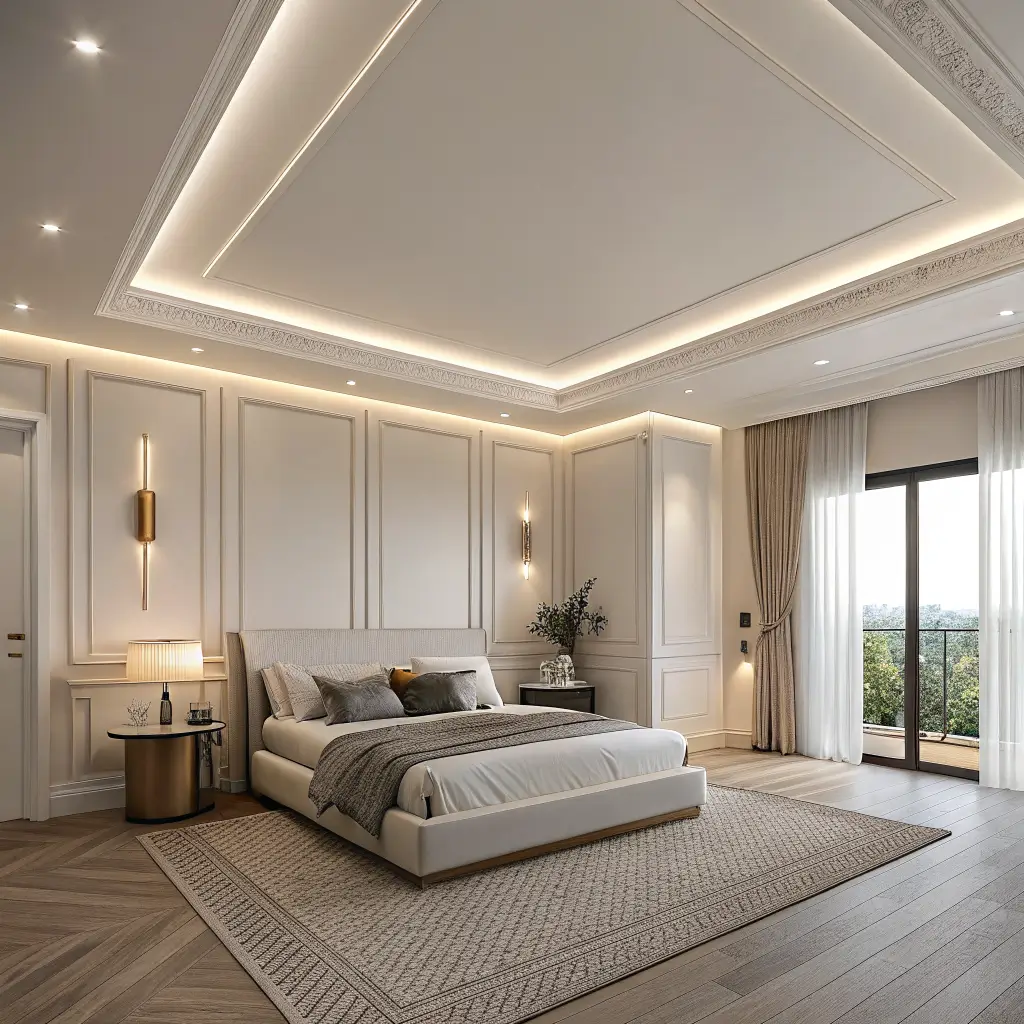
Minimalist white cove lighting ceilings prove that sometimes the most elegant solution is also the simplest. This design creates a gentle glow that appears to emanate from the ceiling itself, eliminating harsh shadows and creating serene ambiance.
The cove conceals LED strips that wash light upward. The ceiling appears to float, separated from walls by a soft luminous border. I installed cove lighting in my bedroom, and the effect completely transformed the sleep environment. No more overhead glare, just gentle ambient light that actually helps you relax.
The minimalist aspect keeps walls and ceiling pristine white or soft neutral. The architecture becomes the decoration through light and shadow alone. This approach works particularly well in contemporary spaces where visual simplicity takes priority.
Cove Lighting Essentials
Creating the glow:
- LED strip selection affects color temperature and brightness
- Cove depth determines light spread
- Dimmer compatibility is essential for ambiance control
- Hidden access for maintenance and replacement
- Color temperature around 2700K for warm residential feel
- Even spacing prevents hot spots and dark zones
The energy efficiency surprises people. LED cove lighting uses minimal electricity while providing significant ambiance – way better than that ceiling fan light combo you’ve been tolerating.
Also Read: 12 Beautiful Interior Design Mood Board Ideas to Try Today
4. Luxury Gold Leaf Accent Ceiling
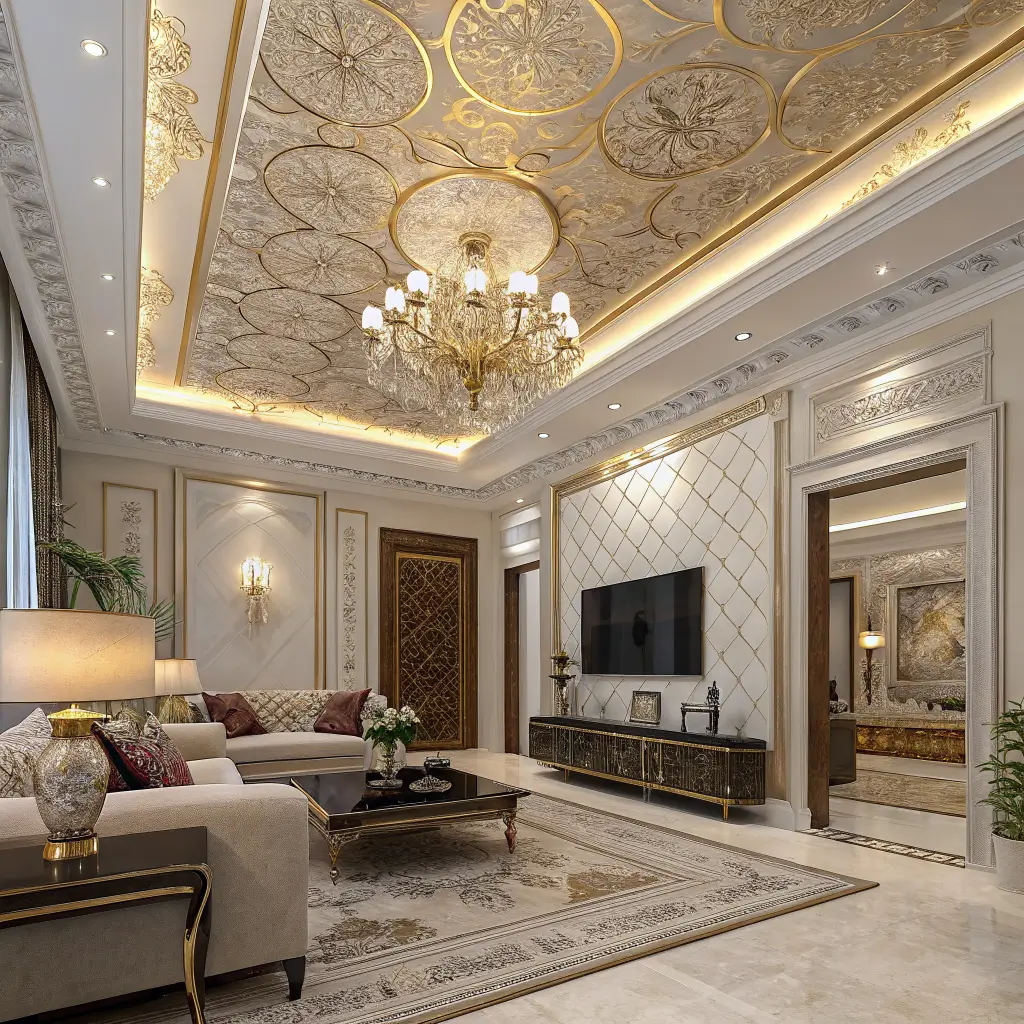
Luxury gold leaf accent ceilings bring old-world glamour into contemporary spaces without requiring a palace-sized budget. Strategic gold leaf application creates stunning impact without overwhelming the room.
The key is restraint. Full gold ceilings belong in Versailles, but accent applications – coffered ceiling details, medallion highlights, or geometric pattern inlays – bring glamour without gaudy. One client gilded just the interior of her coffered ceiling panels, and the effect catches light throughout the day, creating constantly shifting reflections.
Application methods range from authentic gold leaf to more accessible gold leaf alternatives. Real gold leaf lasts centuries but costs more, while composite leaves provide similar impact at fraction of the price. Unless you’re running a museum, nobody will know the difference.
Gold Leaf Application Tips
Achieving luxurious results:
- Surface preparation determines final appearance
- Adhesive sizing affects application difficulty
- Leaf type from genuine gold to imitation
- Sealer selection prevents tarnishing
- Strategic placement maximizes impact
- Professional consultation for complex designs
The lighting interaction makes gold ceilings magical. Different light sources create different effects – warm evening light versus daylight produces completely different moods.
5. Exposed Industrial Pipe Ceiling
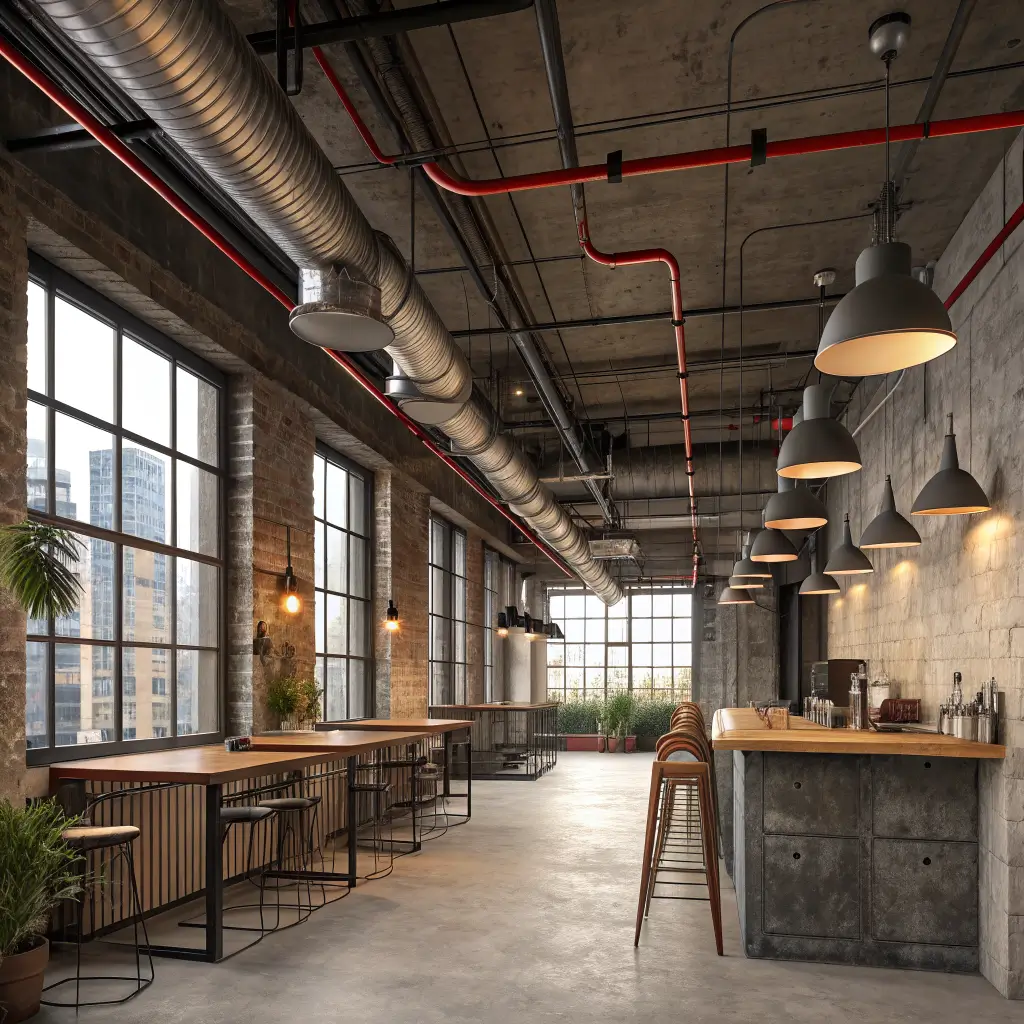
Exposed industrial pipe ceilings celebrate raw functionality as aesthetic feature. Instead of hiding mechanical systems, this approach puts ductwork, pipes, and conduit on display – turning infrastructure into design element.
The honesty of exposed ceilings appeals to those who reject decorative pretense. What you see is what you get – the building’s actual bones become the decoration. My friend’s loft conversion kept all original ceiling infrastructure exposed, then painted everything matte black. The space feels like a Brooklyn gallery, not a converted warehouse.
Color treatment transforms raw industrial into finished design. Painting everything one color – typically black, white, or dark gray – creates cohesion from chaos. Leaving natural metal finishes works in some spaces but risks feeling unfinished rather than intentional.
Industrial Ceiling Considerations
Making exposed work aesthetically:
- Consistent color unifies disparate elements
- Thoughtful routing keeps systems organized
- Adequate height prevents claustrophobic feel
- Lighting strategy compensates for lost ceiling fixtures
- Acoustic treatment addresses sound reflection
- Fire code compliance requires professional verification
The cost savings can be substantial. Skipping drop ceilings eliminates material and labor costs, though you’ll need to invest in making exposed systems presentable.
6. 3D Textured Wall-to-Ceiling Design
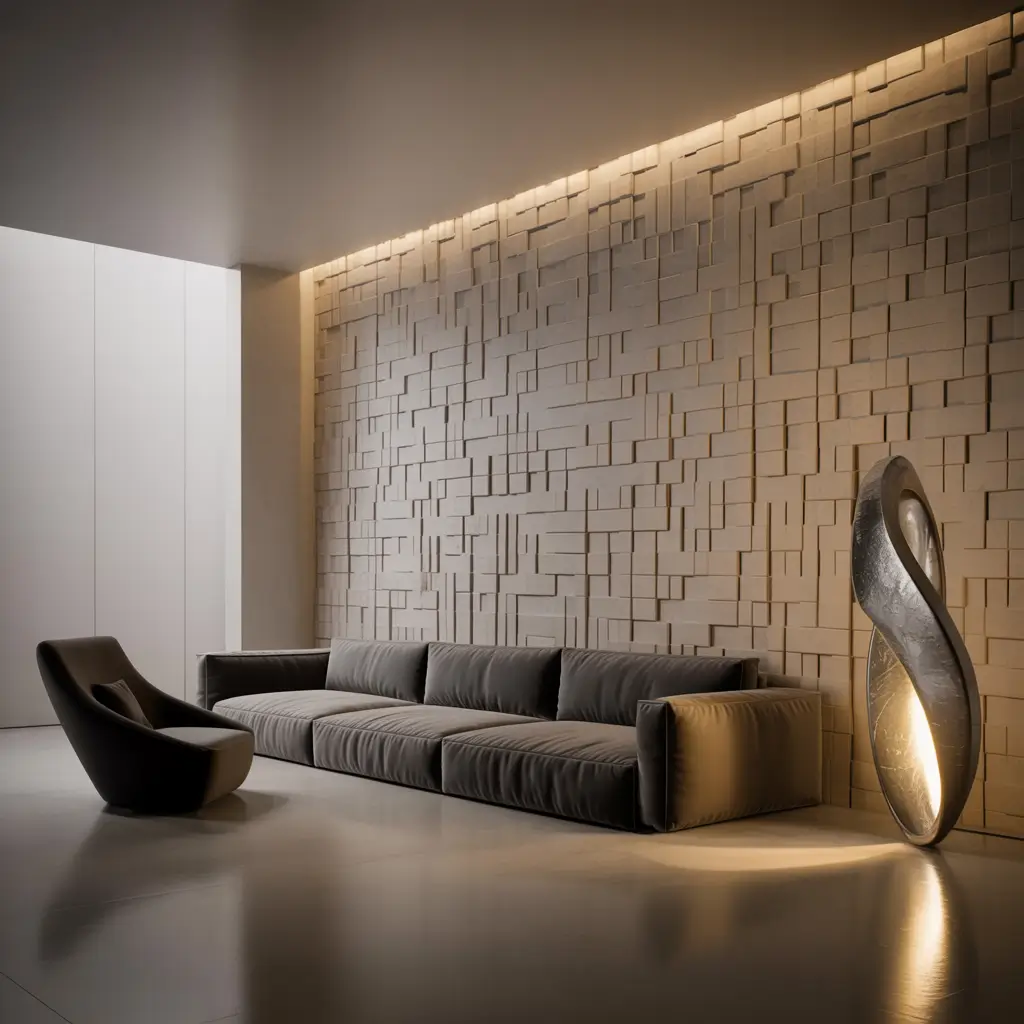
3D textured wall-to-ceiling designs create immersive environments where walls and ceiling become one continuous sculptural surface. This approach blurs boundaries between architectural elements, creating spaces that feel like you’ve stepped inside art.
The texture options span from subtle to dramatic. Gentle waves create flowing movement, geometric patterns add modern edge, and organic textures bring nature indoors. One restaurant I visited has a textured ceiling that flows down into textured walls, and the effect makes you completely forget you’re in a building.
Material technology has made 3D surfaces more accessible. Lightweight panels mimic plaster, concrete, or sculptural forms without the weight or expense of actual dimensional construction. Installation has become DIY-friendly for many products.
3D Surface Options
Creating dimensional interest:
- Panel systems for easier installation
- Material choices from gypsum to polymer
- Pattern scale matching room proportions
- Lighting angles enhancing texture visibility
- Color treatment from monochrome to multi-tonal
- Transition planning for seamless wall-to-ceiling flow
The immersive effect transforms ordinary rooms. Guests don’t just look at these ceilings – they experience them as environments rather than decorations.
Also Read: 10 Modern Kids Room Interior Design Ideas for Growing Kids
7. Rustic Vaulted Wooden Ceiling
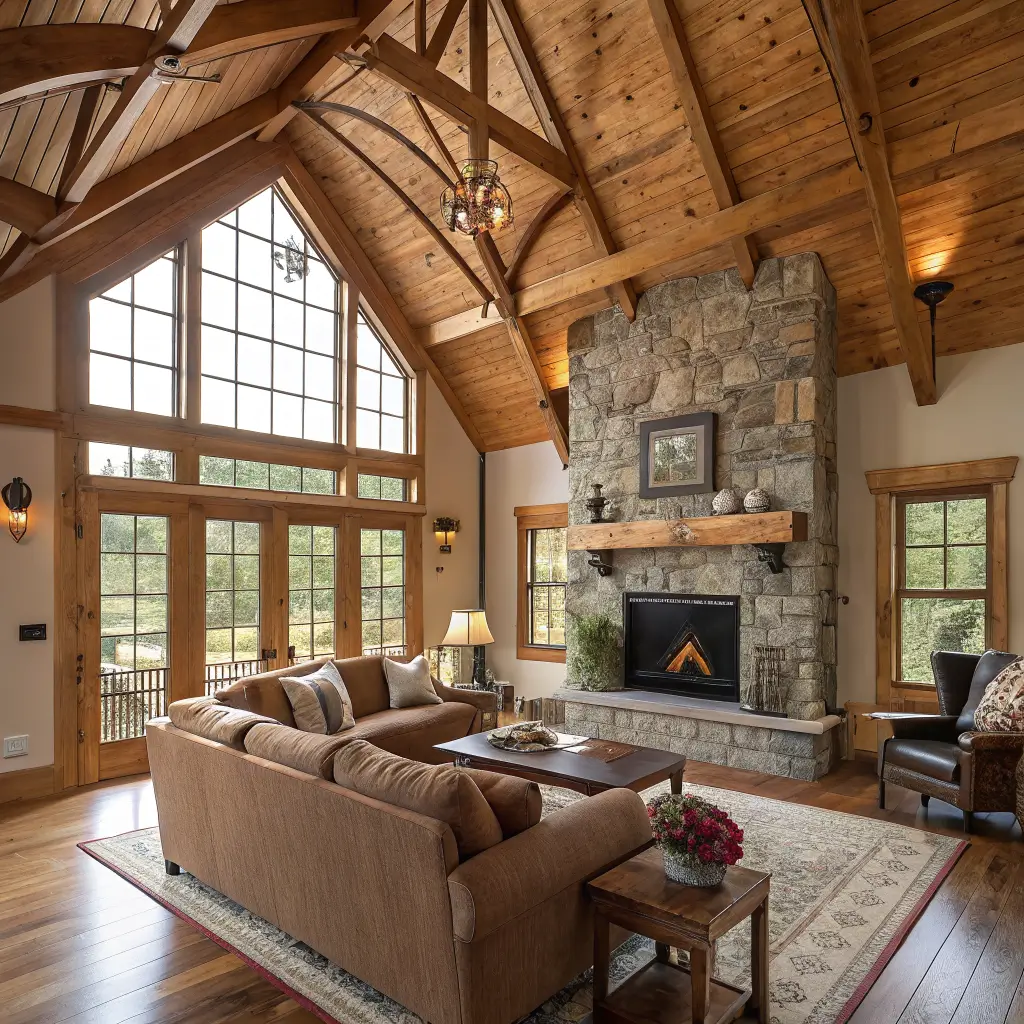
Rustic vaulted wooden ceilings combine soaring height with natural warmth for spaces that feel both grand and cozy simultaneously. The wood softens what could be cold architectural volume, creating cathedral-like drama without the stone-cold atmosphere.
The vault shape itself creates immediate impact. Cathedral, barrel, groin – each vault type offers different character. Combined with natural wood planking or beams, these ceilings become the undisputed focal point of any room. My aunt’s great room features a vaulted wooden ceiling, and honestly, the furniture is irrelevant – everyone just stares upward.
Wood treatment affects the final mood dramatically. Natural finishes maintain rustic authenticity, whitewashed treatments brighten while preserving texture, and stained options create specific color impacts. The same vault looks completely different depending on wood treatment.
Vaulted Ceiling Requirements
Planning for height:
- Structural engineering required for vaulted construction
- Insulation strategy for energy efficiency
- HVAC planning for tall space heating/cooling
- Lighting solutions reaching high spaces
- Acoustic considerations for large volumes
- Maintenance access for eventual refinishing
The investment is significant but transformative. Vaulted ceilings don’t just improve rooms – they define them as architectural experiences.
8. Contemporary LED Panel Ceiling
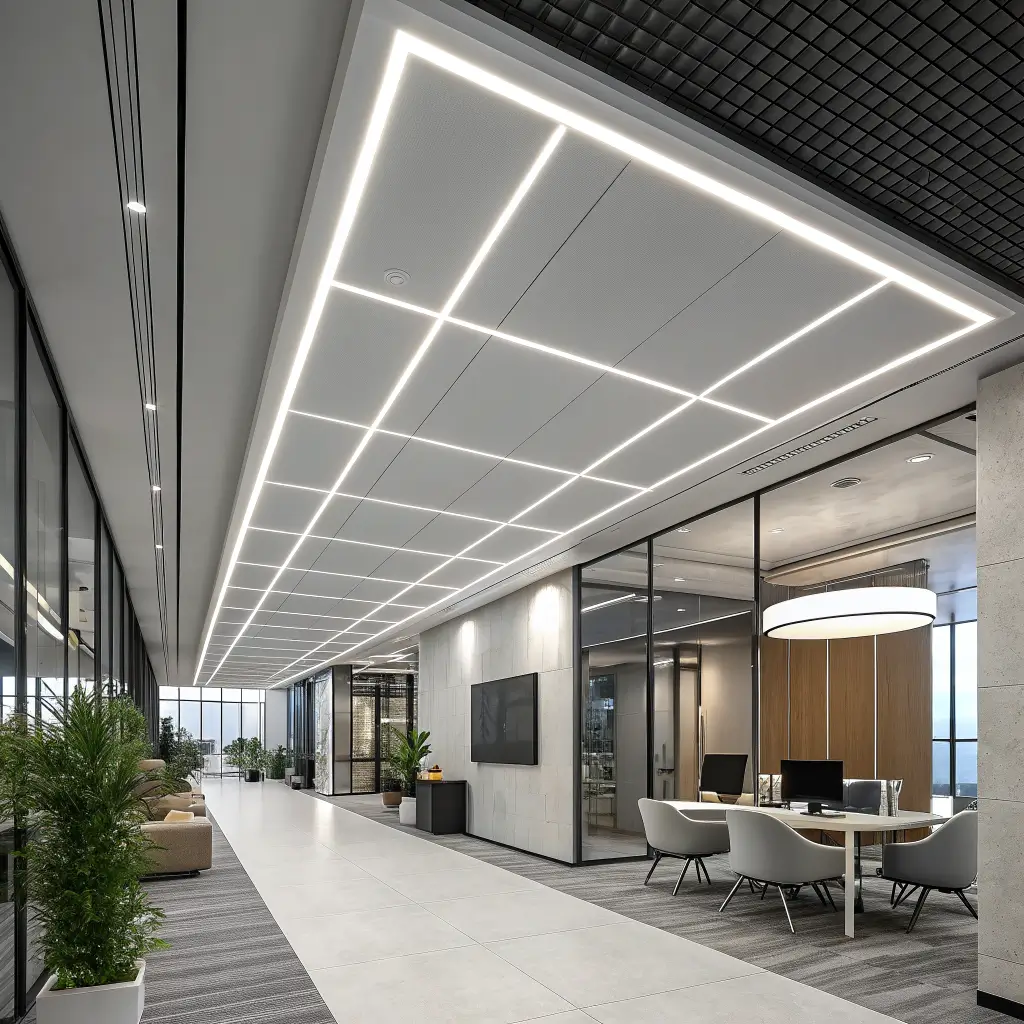
Contemporary LED panel ceilings bring sleek modern illumination while creating architectural interest. These aren’t just lights attached to ceilings – they’re integrated lighting systems that become design elements themselves.
The panel configurations offer tremendous flexibility. Grid patterns, floating rectangles, linear elements – LED panels can follow any design vision. One office I worked in features asymmetrical LED panels that look like minimalist art while providing perfect task lighting. Form meets function beautifully.
Technology advances have revolutionized LED panel options. Color temperature adjustment, RGB color options, smart home integration – modern panels do far more than simply illuminate. Some systems now mimic natural daylight patterns, shifting color temperature throughout the day for better health and productivity.
LED Panel Features
Modern illumination options:
- Color temperature control from warm to cool
- Dimming capability for ambiance adjustment
- Smart integration with home automation
- Energy efficiency reducing electricity costs
- Panel sizing from small accent to full ceiling
- Installation types surface mount, recessed, or suspended
The maintenance advantage is real. LED panels last years before requiring replacement, unlike traditional fixtures that constantly need bulb changes.
9. Floral Patterned Decorative Ceiling
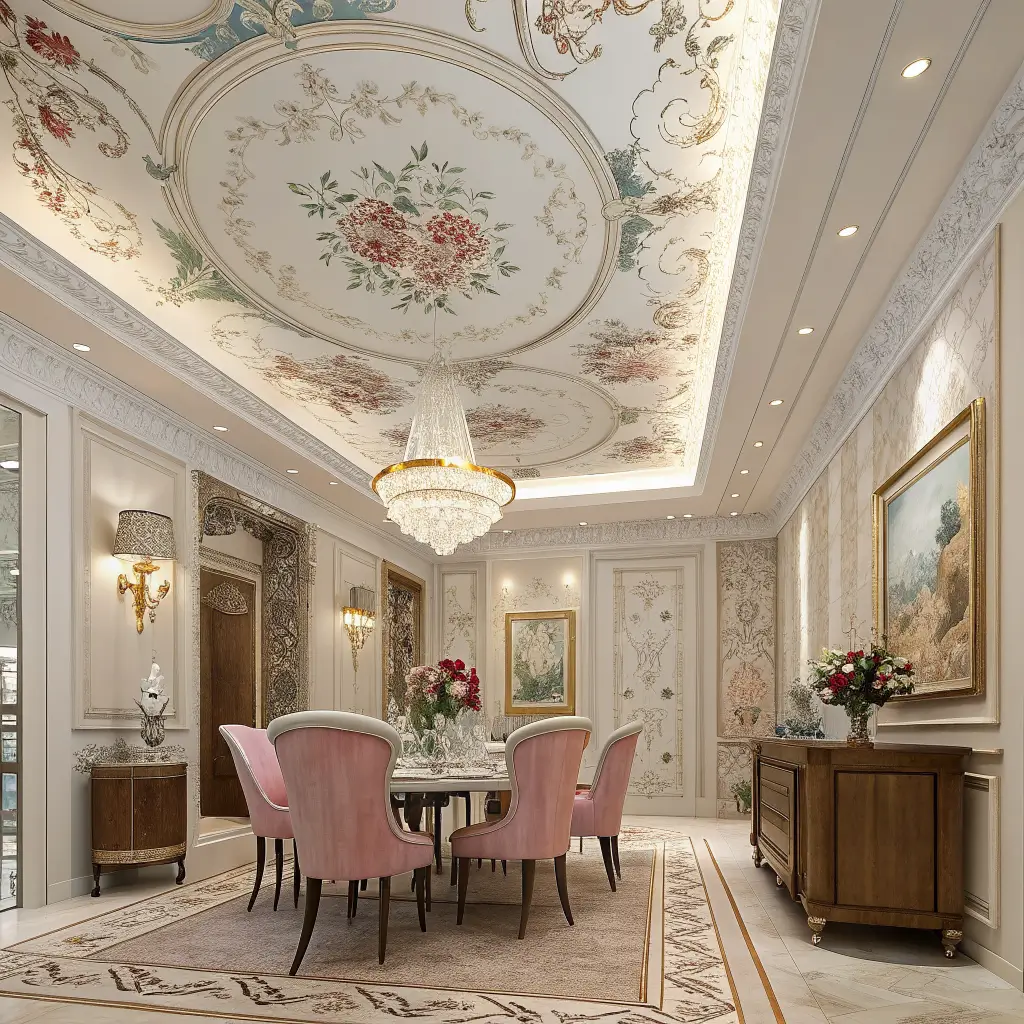
Floral patterned decorative ceilings bring botanical beauty overhead for spaces that feel garden-like regardless of outdoor conditions. This approach ranges from subtle nature references to full botanical immersion.
The execution methods vary widely. Hand-painted murals, pressed tin tiles, wallpaper, or sculptural elements – each delivers different floral impact. A boutique hotel I stayed at featured a ceiling mural of climbing roses, and falling asleep felt like drifting off in a secret garden. Sounds cheesy, but it genuinely worked.
Scale determines impact significantly. Large-scale bold florals make immediate statements, while small repeated patterns create texture without overwhelming. The room’s purpose should guide the intensity – dramatic florals energize entertaining spaces while subtle patterns suit restful bedrooms.
Floral Ceiling Approaches
Bringing nature overhead:
- Painted murals for one-of-a-kind art
- Wallpaper for pattern precision
- Tin ceiling tiles for vintage floral patterns
- Sculptural elements for 3D botanical effects
- Color palettes from realistic to stylized
- Scale choices matching room proportions
The style works broader than expected. Floral ceilings complement both traditional and surprisingly modern spaces depending on execution and color choices. FYI, this isn’t just for grandma’s parlor anymore.
Also Read: 12 Beautiful Coffee Shop Interior Design Ideas for Rustic Charm
10. Mirror-Inlaid Reflective Ceiling
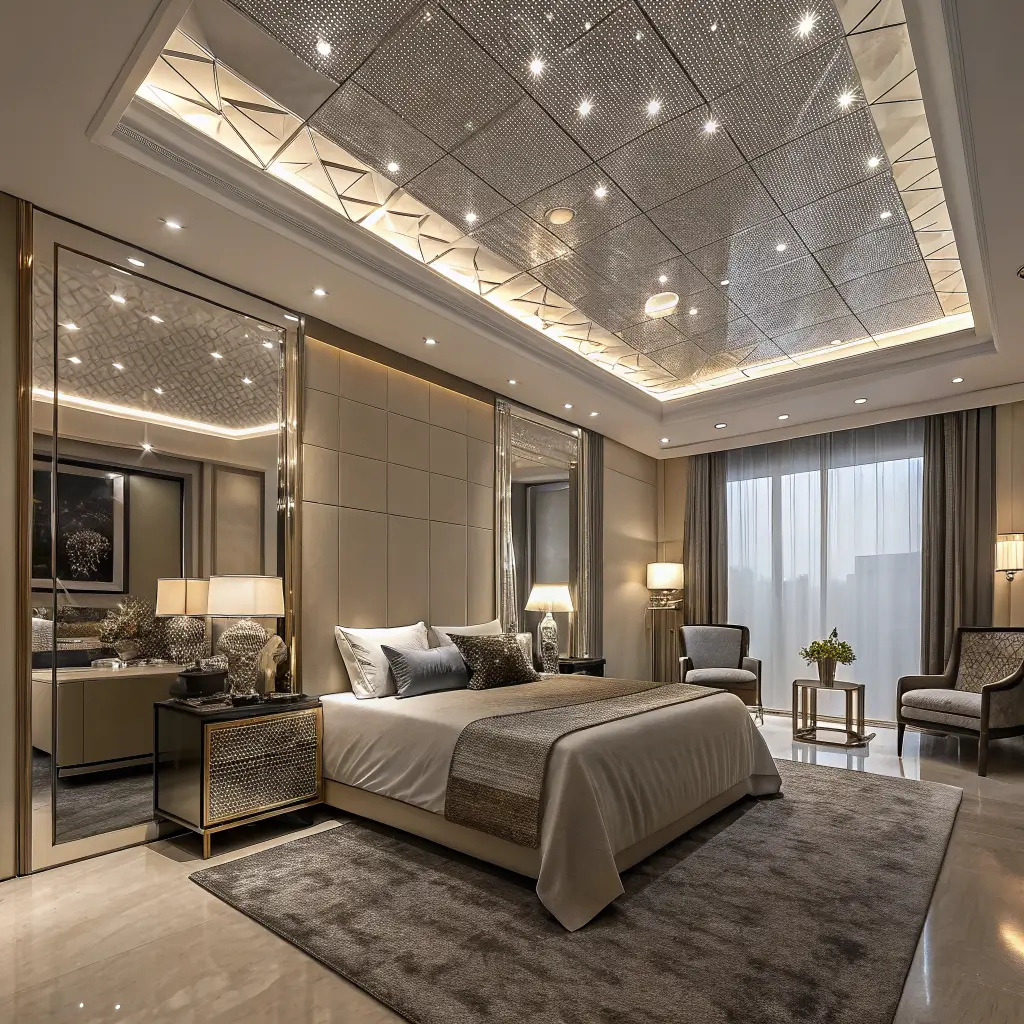
Mirror-inlaid reflective ceilings create instant drama while doubling perceived space. Strategic mirror placement bounces light and creates depth that makes even compact rooms feel expansive.
Full mirror ceilings work in specific contexts – nightclubs, maybe, or very specific design-forward spaces – but most residential applications benefit from selective mirror inlay. Mirrored panels within coffered ceiling grids, reflective accents around lighting fixtures, or mirror strips creating geometric patterns deliver impact without disco-ball vibes.
The light multiplication is genuinely impressive. Mirrors double candle effect, bounce natural light deeper into rooms, and create sparkle from minimal fixtures. One small dining room I designed used mirrored ceiling panels, and the space feels twice its actual size.
Mirror Ceiling Considerations
Reflective design factors:
- Placement affects what reflects – plan views carefully
- Quality matters for distortion-free surfaces
- Safety requirements for overhead mirror installation
- Cleaning access for maintenance
- Lighting coordination maximizing reflections
- Frame or frameless options affecting style
The perception change is immediate. Rooms with mirror ceiling elements feel brighter, larger, and more luxurious than identical spaces with standard ceilings :/
Making Ceiling Design Work for Your Space
After exploring these ten interior ceiling design ideas, here’s the reality check: your ceiling choice should complement your overall design vision, not compete with it.
A dramatic ceiling needs calmer walls and floor. A subtle ceiling enhancement can support bolder choices elsewhere.
Consider your room’s existing features. Low ceilings might need light treatments that lift, while tall ceilings can handle dramatic weight. Dark rooms benefit from reflective or light-colored ceilings, while bright spaces can support deeper tones.
Don’t forget the practical elements. Acoustic properties, maintenance access, lighting integration, and installation requirements all influence which ceiling designs work for your specific situation.
That gorgeous coffered ceiling won’t seem so gorgeous if your 7-foot ceilings make it feel oppressive.
Budget realistically based on your DIY abilities and local contractor rates. Some ceiling projects suit motivated homeowners while others absolutely require professional installation. Know your limits before you’re balancing on a ladder with gold leaf in one hand and panic in your eyes.
The perfect ceiling treatment transforms how you experience your room from the moment you enter. Whether you choose floating beams, geometric patterns, or reflective elements, commit fully to your vision.
Half-measures in ceiling design look exactly like what they are – uncertainty made visible overhead.
Your ceiling has been waiting patiently for attention while you focused on everything below eye level. Maybe it’s time to finally look up and see the potential.
And if nothing else, at least you’ll stop ignoring that water stain you’ve been pretending doesn’t exist IMO 🙂